
Texas Rangers: 7 Questions Entering MLB Opening Day
No matter the amount of off-season planning or on-field training performed in March, there are always lingering questions that will only be answered as the season unfolds.
A team can crunch the numbers, make all the right moves and target specific weaknesses to strengthen via training and drills. Yet baseball never works out as it does on paper, part of the endearing nature of the game that attracts fans year after year.
The Texas Rangers acquired a taste of success last year by progressing to their first World Series in franchise history, and are hungrier than ever to build on that and become a powerhouse in the American League.
Though they earned that success with a dynamic core of exciting talent, a bevy of promising young arms and the strong leadership of Nolan Ryan and his ownership group, each new season is a new adventure.
With Opening Day only a day away, lets look at a few of the most pressing questions facing the Rangers, as they dive headlong into their defense of the 2010 American League pennant.
Can C.J. Wilson Handle the Increased Workload as a Starter?
1 of 7
Now, it's certainly not unprecedented for a player to transition from the bullpen into the starting rotation. After all, many top-flight starters first broke into the big leagues via their team's relief corps.
However, there is a concern raised when a player drastically increases his pitching workload from one season to the next.
Wilson, a reliever for the first five seasons of his Major League career, maxed out at 73.2 innings out of the bullpen in 2009. Jumping into the Texas rotation in 2010, he then tossed 204 innings, and another 24.1 in the postseason.
From 2007-2009, Wilson threw only 188.1 innings combined.
Now, I know Nolan Ryan doesn't believe in pitch counts, but this much of an increase is a fairly significant leap for a modern-day hurler.
The Rangers can take comfort in the stories of pitchers like Derek Lowe, who was converted from a reliever into a full-time starter in 2002, and has never pitched less than 182 innings in a season since.
Ryan Dempster also made the transition, moving from the bullpen to the Cubs' rotation after 2007, jumping from 66.2 innings to three consecutive 200 inning seasons. His story is different though, because the first six years of his big league career were spent as a starter.
Recently injured Adam Wainwright, co-ace of the Cardinal staff in St. Louis, made the leap from 75 innings to 202 in 2007, pitching 200 innings in three of four seasons before badly injuring his elbow in 2011. Though it could very well be unrelated to his innings workload, it has to at least be considered.
There is no definite trend or rule when it comes to increases in the workload of a pitcher, but somewhere deep in the minds of Rangers' brass, there has to be a slight concern, whether Nolan Ryan will admit it or not.
Can Julio Borbon Figure out How to Catch Fly Balls?
2 of 7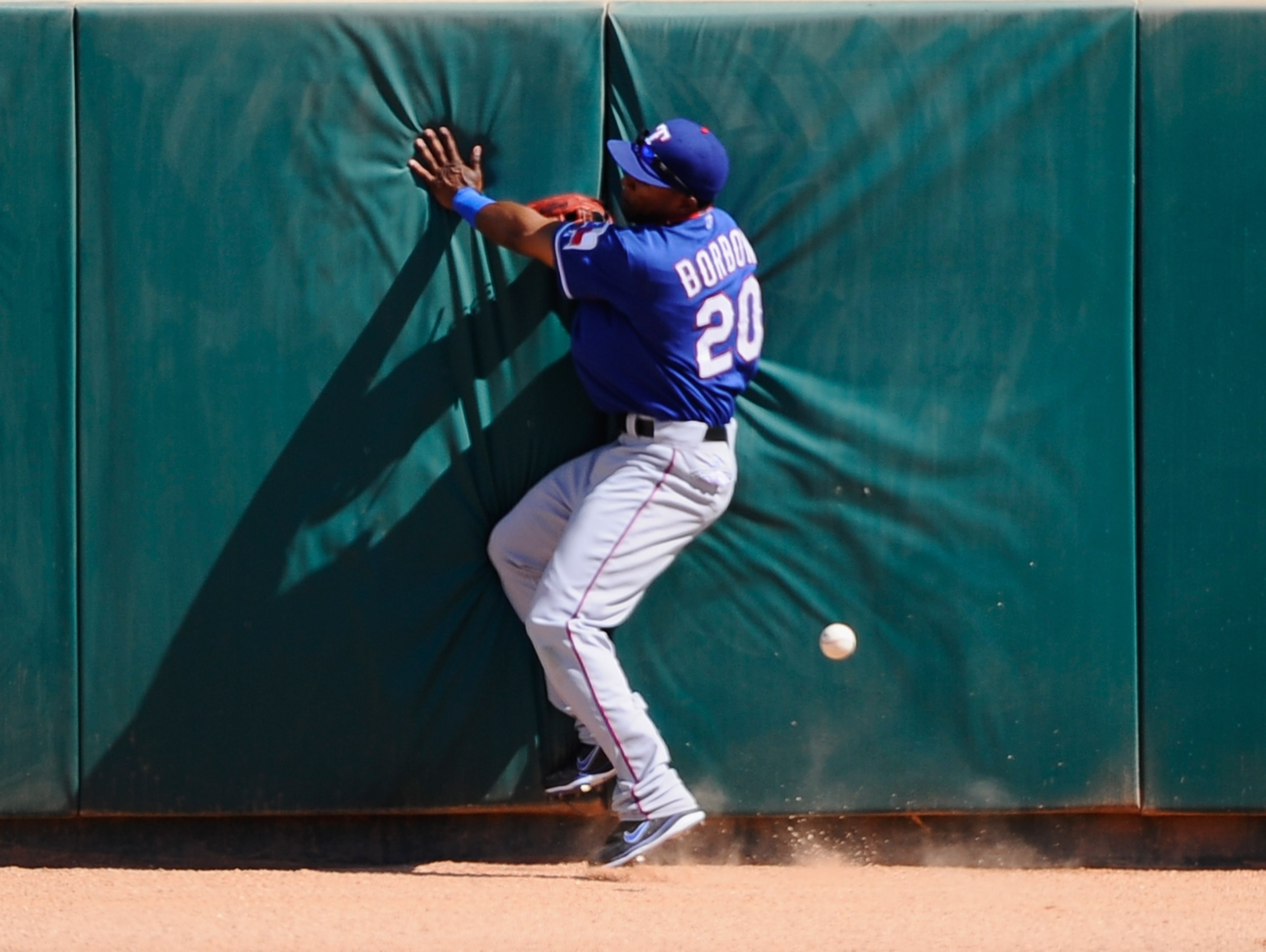
The Rangers have tentatively committed to Julio Borbon as their center fielder, with the ominous caveat "for now" affixed by manager Ron Washington.
Borbon's blistering speed and accompanying range made him the perfect candidate to roam the vast expanses of grass between the outfield gaps in Arlington.
However, the third-year major leaguer has displayed a disturbing tendency to drop fly balls, three of them this spring alone, which gives the Rangers pause when filling out the lineup card on a daily basis.
Ideally, Borbon would assume control of center, allowing Josh Hamilton to play left field to better preserve his health over the course of a 162 game schedule.
If Borbon could rediscover the form of 2009, when he burst upon the Rangers' scene as a speedy on-base machine with incredible range in the outfield, he would add yet another dimension to an already dynamic Texas squad.
For now though, the Rangers must figure out a way to make him more comfortable in center, so they can avoid moving Hamilton back or transitioning David Murphy to center in an effort to solidify the defense.
How Will the Rangers Deal with Stiffer Competition in the AL West This Year?
3 of 7
Let's face the facts: The 2010 Texas Rangers had a great year, but the American League West figures to be a far tougher division in 2011.
Mike Scioscia's Angels, while still a flawed team, do not project as an 80 win team for 2010. With a strong starting staff, and a squad full of veterans, as well as one of the best managers in baseball, Texas can expect more of a challenge out of Anaheim this season.
Following the catastrophic injury to their slugging first base revelation Kendrys Morales on May 29, the Halos never recovered and were unable to make a push toward the playoffs that so many recent Angel teams have.
Though Morales is not yet fully-healed, the Angels have a stronger, deeper squad that will surely push the Rangers harder than they did last year.
The Oakland Athletics, second place finishers at .500 in 2010, are a trendy pick for a surprise team in the American League this year. With a strong stable of young arms throughout their pitching staff, and an interesting mix of youth and a few savvy veterans in the lineup, the A's don't look tremendously different from the 2010 San Francisco Giants.
Of course, that would be a significant leap for Bob Geren's Oakland squad, but it's not out of the question that they could be far better than the .500 team they were last year.
In 2010, the Rangers had a 4.5 game lead in their division by the first week of July, and never looked back the rest of the way. They never faced a significant challenge for the remainder of the season and coasted into the playoffs. There will be no resting on their laurels in 2011, as the AL West figures to be a vigorous battle all year long.


Can the Potent Core of the Team Remain Healthy
4 of 7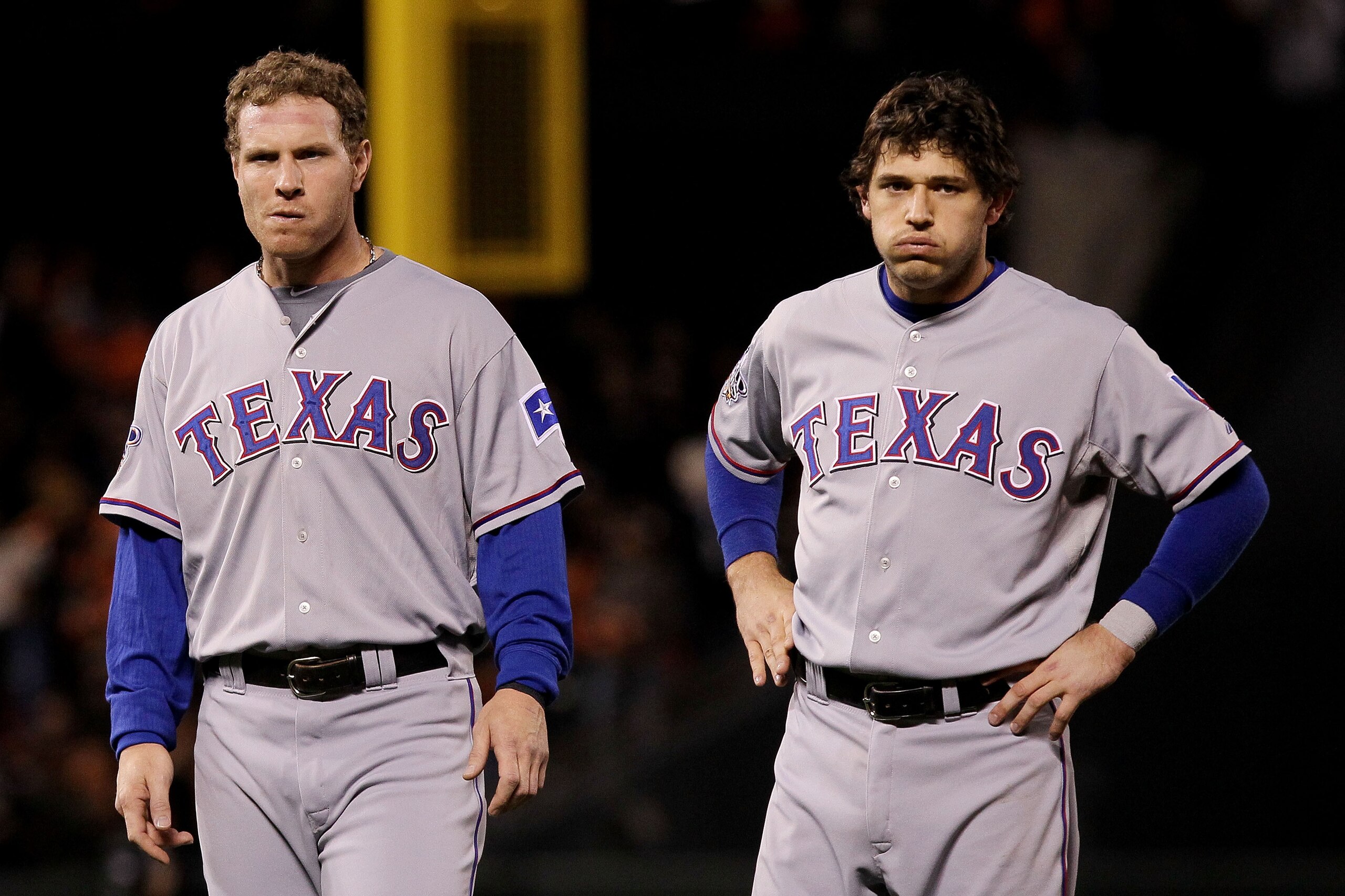
In Josh Hamilton, Nelson Cruz and Ian Kinsler, the Texas Rangers possess a potent core of positional talent, which provides a foundation for a solid contender year after year.
However, that talented trio has exhibited a difficulty in staying on the field regularly. Just last season, the three of them combined to miss 142 games. If not for a strong supporting cast, the Rangers may have encountered more difficulty in striving toward the AL pennant than they did in 2010.
Things won't always come as easily for Texas as they did last season, so they need to be able to count on their stars to produce at the level they are capable of, for as much of the season as possible.
Following his 2010 MVP campaign, Hamilton will look to build on an early career filled with on-field highlights, as well as significant stints among the infirmed. The Rangers will hope that playing him primarily in left will reduce the strain on his body, enabling him to stay healthier in his quest to reprise his heroics of 2010.
Kinsler, after a massive post-season performance and a strong spring training, appears primed for a career year. To truly reach his enormous potential, Kinsler will have to approach the career-best 144 games he played in 2009.
Cruz, a late-bloomer in his big league career, is a five-tool player capable of excelling in all facets of the game. Similar to Kinsler and Hamilton though, he has not played more than 128 games in a season, something that he would love to build upon over the course of 2011.
Can Michael Young Be Satisfied in His New Role?
5 of 7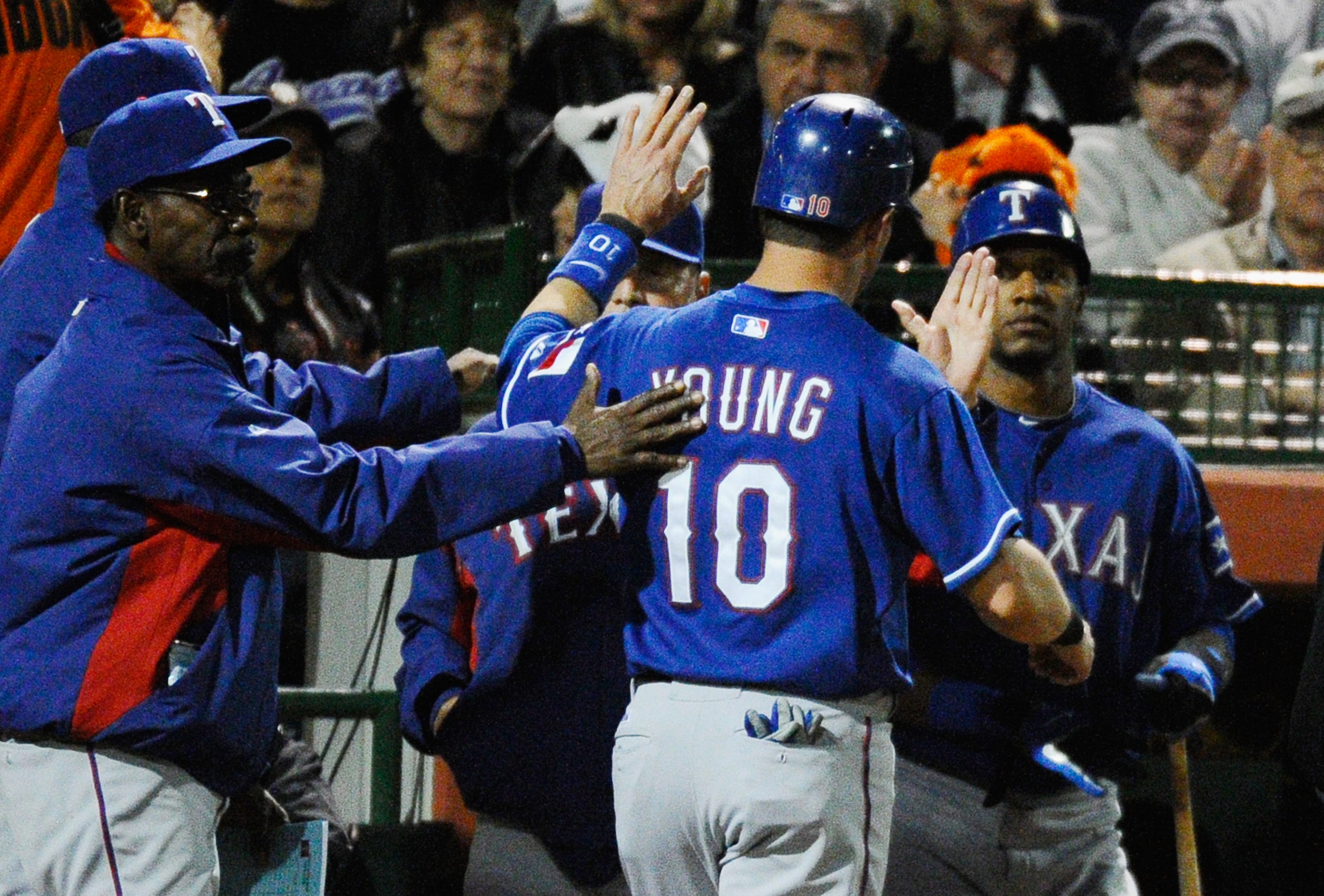
Without further beating the proverbial dead horse, the Michael Young situation at least bears some watching.
We've heard the story a few times now: Young moves positions for Alfonso Soriano, then for Elvis Andrus and now for Adrian Beltre.
Each time, Young has done so without major drama, always putting the team before his own personal desire to stay rooted in one spot. He may have grumbled a time or two, but nothing unreasonable or selfish from the man commonly known as the face of the Rangers' franchise.
This occurrence was different however, as Young very publicly declared his frustration with yet another move, lambasting Texas management and demanding a trade from the team.
Matters have since cooled, and we have hear only the right things from the veteran infielder and Ranger brass.
However, we know that with egos of this nature, both on the field and in the board rooms, there is always potential for further turmoil if someone is not satisfied with how the situation evolves.
For now, the situation remains stable, but it's worth keeping an eye on as the early season progresses.
Will the Unproven Starters Succeed in the Rotation?
6 of 7
As far as the Rangers' starting rotation goes, there isn't much Major League experience to speak of.
C.J. Wilson excelled last year in his first season as a starter, but with only 39 career starts at the big league level, it will be interesting to witness his further progression.
Colby Lewis, another bright spot from 2010, had his breakout season at age 30, and with only 66 career starts at this point, we'll have to see if last year was the beginning of greater things for him or simply an outlier in an otherwise unremarkable career so far.
Tommy Hunter, a 13-game winner in 2010, recently injured his groin during spring training and will reportedly miss six weeks. He has only 44 career starts under his belt, and is another young pitcher that Texas will hope can duplicate his early success.
Filling out the fourth and fifth slots in the rotation are lefties Derek Holland and Matt Harrison. Holland, a highly-touted hurler from the Texas system, has shown flashes of brilliance, but with only 31 career starts he will have to prove that he has the command to be the top-flight starter Texas hopes for.
Harrison, also with only 32 career starts, has struggled in his early Texas career, but will be counted on to fill out the back of the Ranger rotation.
With Hunter out, Michael Kirkman will assume starting duties in his place. Kirkman, another promising young southpaw, has yet to start at the big league level, so the Rangers are making a leap of faith banking upon his inexperienced arm.
While there is much promise in this crop of mostly youthful arms, there is not much of a track record to count on, so the Rangers' hopes of repeating will go only as far as the progression of these young hurlers.
Will the Changeover in the Catching Corps Affect the Pitching Staff?
7 of 7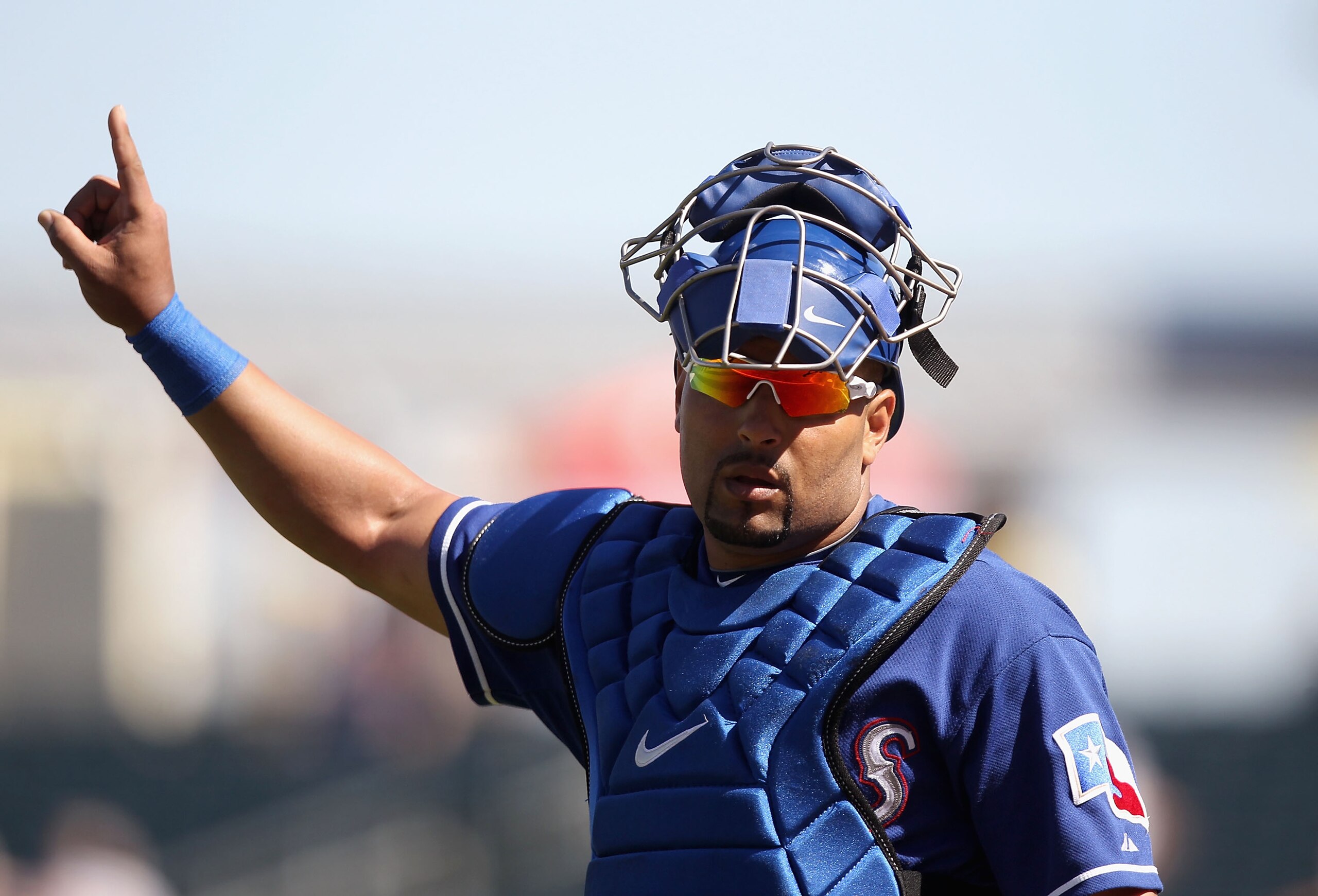
After tasting success that the Rangers' franchise had never known prior to 2010, the team jettisoned both catchers that guided the young pitching staff through the playoffs and World Series.
Bengie Molina retired and Matt Treanor was traded to Kansas City in order to free up playing time for their off-season acquisition Mike Napoli.
With both Treanor and newcomer Yorvit Torrealba in the catching mix, it was difficult to determine where Mike Napoli was going to find as much playing time as it would appear he has earned.
Texas solved that by moving Treanor, but that forces the young Ranger pitchers to quickly become comfortable with a new catching duo they've only known for two months.
It could be meaningless, as they are all professionals, and should be able to pitch to anyone, but it will be interesting to see if there is an adjustment period over the course of the first few months of the 2011 season,


.jpg?w=2560 "Chiefs, Steelers Eye WR Trades")



.jpg?w=2560 "Latest Peyton-Colts Rumors")