
U.S. Men's Soccer: 5 Things We Learned Following 1-1 Tie with Argentina
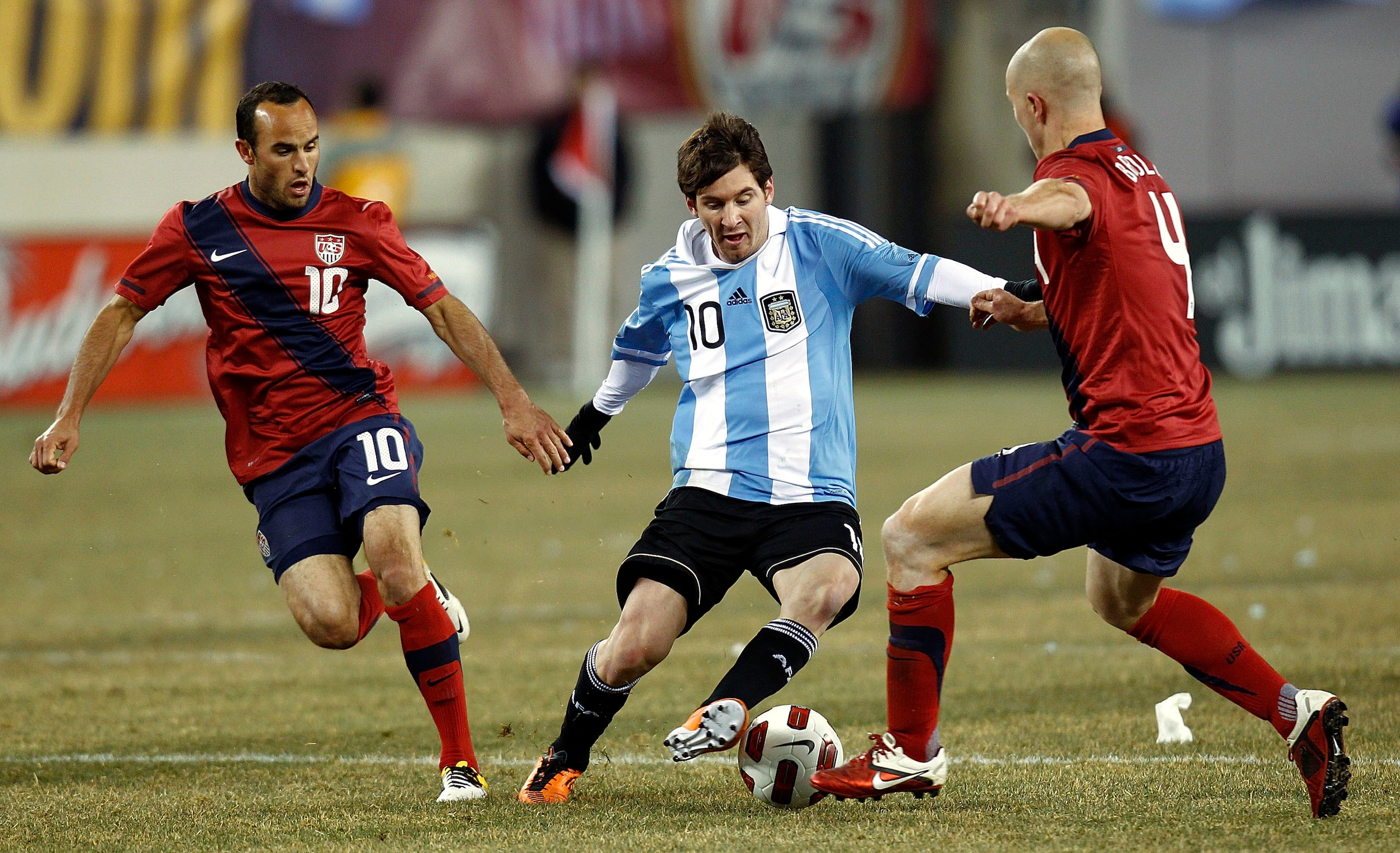
Last night, the United States Men's National Team faced off against one of, if not the best team in the world at the moment in Argentina at the New Meadowlands Stadium in New Jersey. Despite being on the back foot for nearly all of the first half, the Americans were able to head to the locker room down only 1-0 at the half on a rebounded goal after a scramble in front of the net.
The Yanks began the second half with much more attacking ability after the insertions of Juan Agudelo and Timothy Chandler into the lineup, and managed to claw back to earn a draw on an Agudelo goal after a Landon Donovan set piece cross.
This was an impressive draw for the Stars and Stripes, coming against a full-strength Argentina roster that has been resurgent after the departure of the sometimes-entertaining and always-outrageous Diego Maradona. Argentina managed to thrash World Cup champions Spain 4-1 recently, so the Americans earning a draw with such a high-caliber side is impressive indeed.
Now, without any further adieu, let us examine five key takeaways from this encounter...
1. Juan Agudelo Has World Class Talent
1 of 5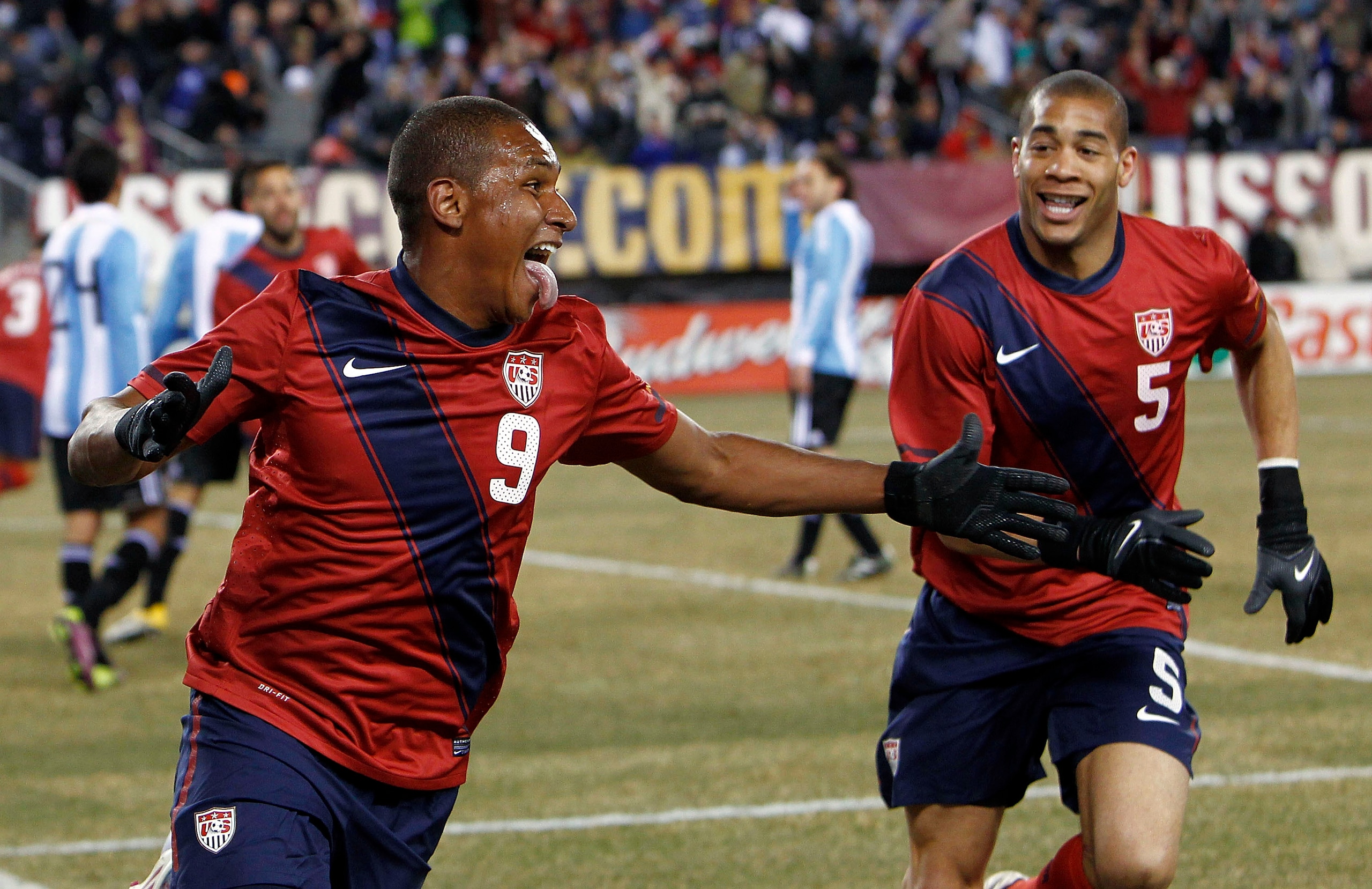
Sure, New York Red Bulls’ striker Juan Agudelo scored in his first international cap, coming on as a substitute and scoring the winner having only 30 minutes on the pitch the whole night. But naysayers responded with, “it was against South Africa, big deal.”
Agudelo got 45 minutes in his second cap for the Yanks, making a hard run into the box to earn a penalty, which fellow young American Teal Bunbury converted. Once again, it came against Chile, a strong opponent, yet not really a world power.
Now, after scoring against an Argentina squad that is playing with incredible fluency at the moment, there should be no doubts as to what this 18-year-old’s future holds. Not only did he notch the goal that tied the match for the Yanks against a full-strength Argentina, but he appeared dangerous as soon as he was subbed into the match to begin the second half.
Had Agudelo not scored, there still would have been sufficient evidence to remove almost all doubts. His insertion into the squad had an immediate and tangible effect, forcing Argentina’s defenders to drop back just a bit more and forcing the midfield to lessen its pressure on the American defense.
Long story short, viewers may have witnessed last night the arrival of a true star for the Americans. Playing in New York, a cauldron of soccer, mentored by teammate and French international legend Thierry Henry, and now having scored twice in three caps, Agudelo’s pedigree is inarguable at this point.
Even more telling is the fact that Agudelo was the first sub off the bench for Bob Bradley. Before this match, many were still unsure whether or not Agudelo would be included in this summer's Gold Cup roster. After the striker's latest goal for the Yanks, not to mention his impressive early season form for his club team, it is difficult to see an eventuality in which Agudelo is not part of the American attack this summer.
2. Jozy Altidore Is Not the Target Striker Necessary for a 4-5-1
2 of 5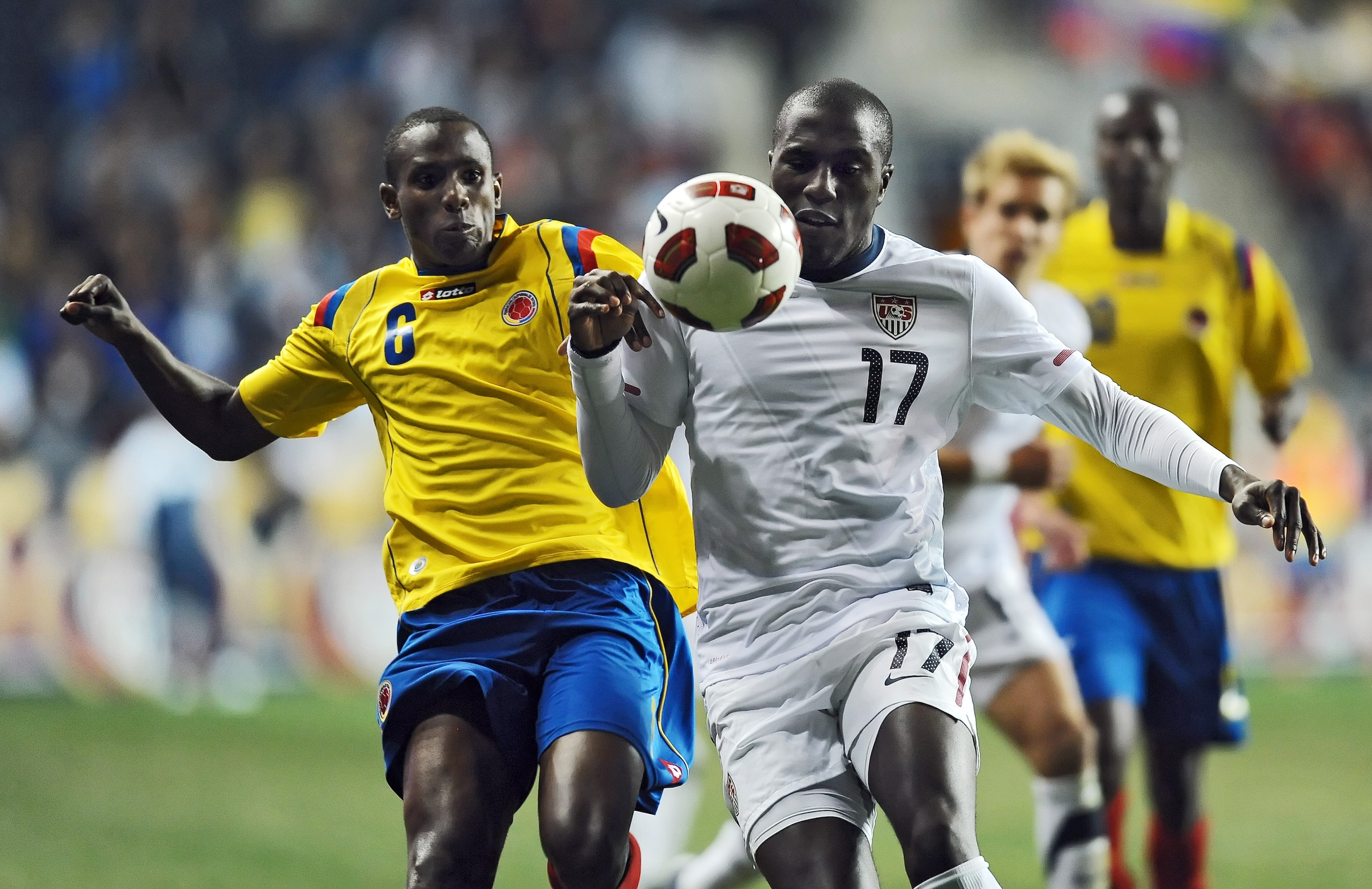
Is it the most awful formation ever used? No. Is it a lineup the US should totally abandon? No. But is last night’s lineup in the 4-5-1 effective when the United States has to go up against top-tier national sides?No.
Jozy Altidore, while still a strong striker and a very hard worker, is not a striker who can create his own shot from nothing. While he has speed and strength, he does not appear comfortable running at/through defenders. He needs plenty of support from the midfield, which he can’t get in a 4-5-1 in which all five midfielders tracking back to defend like banshees.
Now this does not mean that the 4-5-1 needs to be completely abandoned. It can work quite well when the Yanks are in a position in which weathering the storm is an acceptable outcome, but it is not a formation that can easily lead to American goals.
The 4-4-2 that Bob Bradley switched to for the second half has to be the formation the United States adopts moving forward, at least for matches that matter on some level. Yes, it means a more clogged midfield lineup (only two positions for Maurice Edu, Michael Bradley, Jermaine Jones, and eventually a healthy Stuart Holden), but a glut of impact midfielders who can come off the bench is preferable to starting an impotent offense.
The 4-4-2 used in the 2009 Confederations Cup was very effective, partnering a player unafraid to take on defenders with Altidore, who is a great possession-striker. Two players who could do quite well partnering Altidore are Agudelo, on the evidence of last night, and Charlie Davies, provided he continues on his comeback trail (Davies’ now has three goals in two games to begin his MLS career after converting a penalty against New England the same night as the Argentina match).
Either way, the classic 4-4-2 appears to be the most versatile and effective formation for the Yanks.
3. Timothy Chandler Is Yet Another Young, Strong Defensive Option
3 of 5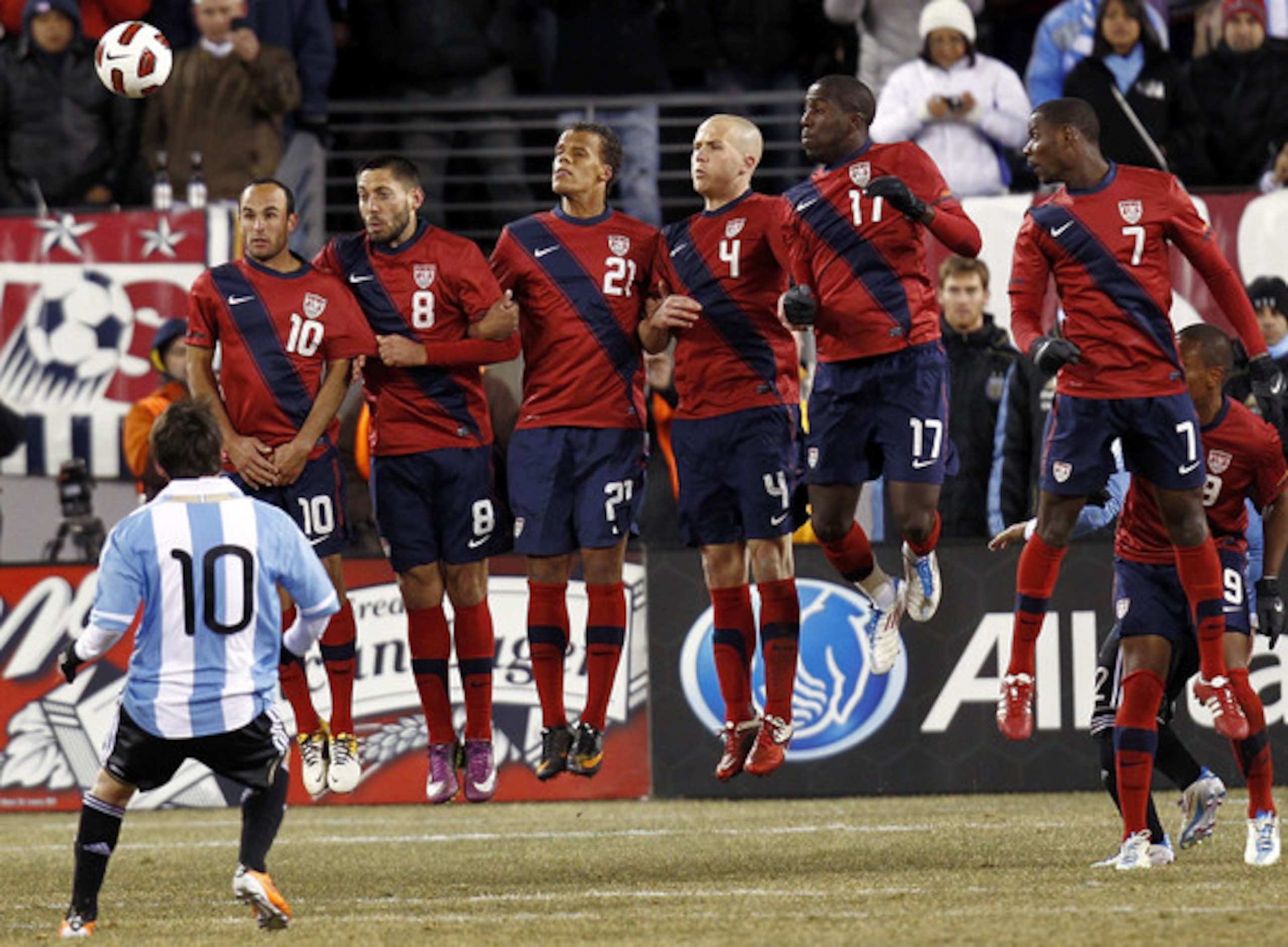
Entering this international break, very little was known by American fans about Chandler. The son of an American serviceman father and a German-national mother, Chandler had equal opportunity to play for the Germans or the Americans, but apparently had wanted to play for the Yanks for some time. When Bob Bradley made his phone call from Carson, California, Chandler was ecstatic.
Still, little was known about Chandler as a player—having only recently broken into the FC Nurnberg starting XI, the 21-year-old is still growing as a player. His English language skills, while according to reports is better than he lets on, is still a work in progress. So, how would he combine with the rest of the players on the pitch? Would Bob Bradley even give him any time against Argentina with Eric Lichaj on the bench?
As it turned out, Chandler did see time and performed quite well in his first opportunity with the Yanks. In 45 minutes of work against, as already stated, one of if not the best team in the world at the moment in Argentina, Chandler managed to, for the most part, hold his own defensively and provide dangerous crosses in the final third. Chandler’s service from the wing was another factor that contributed to the United States finally being able to prize open the Argentine defense, demonstrating an ability that several other young American backs have not.
While Jonathan Spector received acclaim for his crosses in the 2009 Confederations Cup, his drop in form left the United States without an attacking wing on either side of the pitch (with Carlos Bocanegra being the left back). Steve Cherundolo, while still far and away the best right back the United States has, possesses only adequate crossing ability. Eric Lichaj, a young and promising right back playing for Aston Villa (on loan at Leeds, however) in England has demonstrated hard-nosed defending but, at least to this point, not a penchant for dangerous crossing.
Meanwhile, if there is any single thing that American fans will remember Chandler for in his debut, it was the continual stream of crosses he sent into the box for American strikers and midfielders to attempt to latch onto. While a breakout on the left side of the pitch seemed nonexistent, Chandler could be seen constantly galloping up the right side with the ball, head up, looking for a play to make.
While the US still needs help at the left back position, Chandler’s skill and youth make him yet another potential candidate for a switch to the other side of the pitch for the Americans.



4. The Americans Need Someone to Become a Midfield Maestro
4 of 5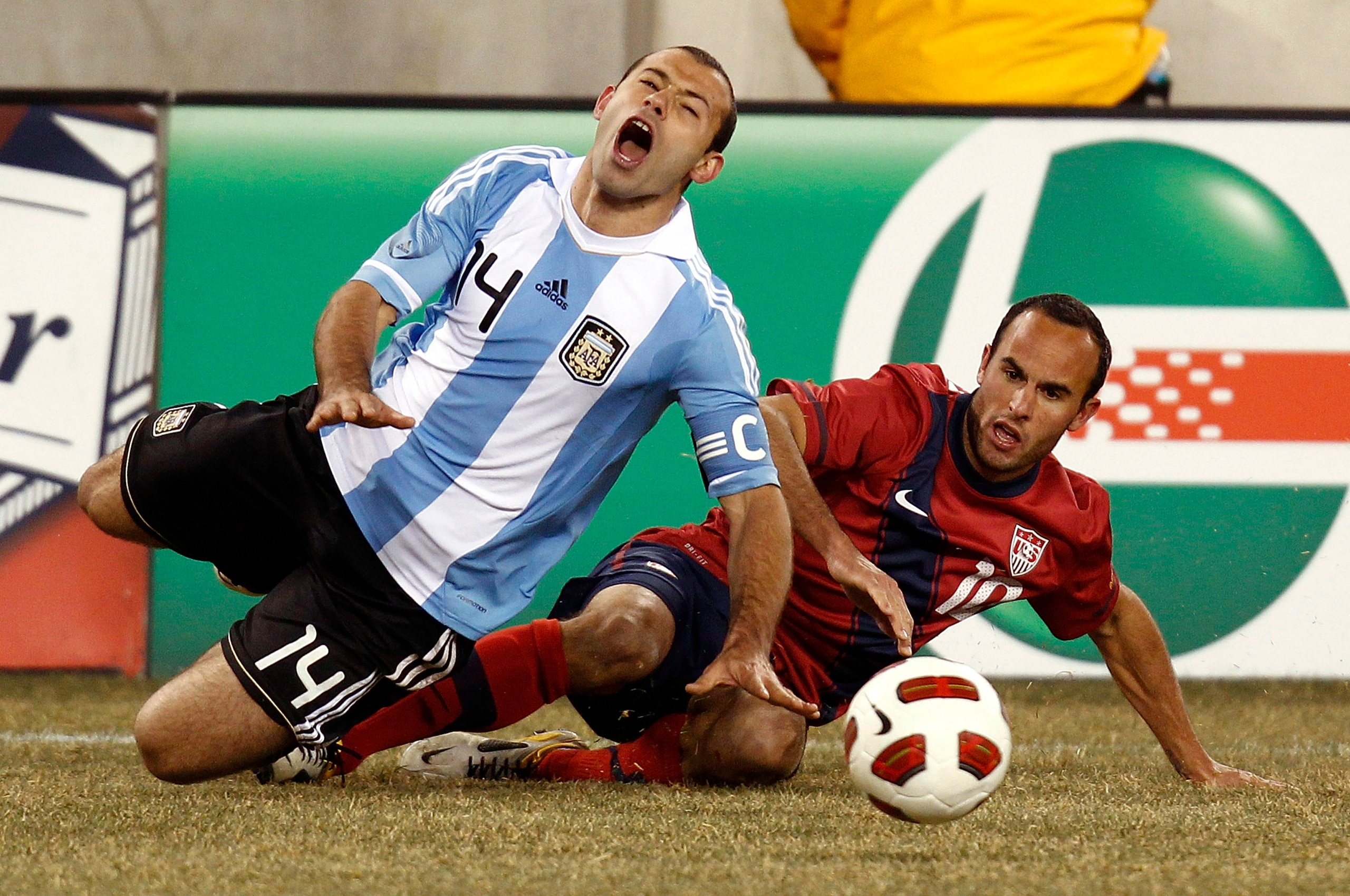
Landon Donovan and Clint Dempsey do a great job of creating along the wing from the midfield. However, the United States appears to lack true playmakers up the middle of the park.
Stuart Holden’s injury was truly cruel as he seemed perfectly suited for this role on the heels of his stellar play in the English Premier League this season, but it now appears that despite the numbers of good central midfielders, there is still a lack of playmaking quality there for the United States.
The three top candidates in the center of the park at the moment are Michael Bradley, Maurice Edu, and Jermaine Jones. Bradley has been a solid performer for the United States over the last four years, playing very well in the World Cup, but his form has been down recently after having not had much time on the field for Aston Villa.
Maurice Edu, while also a solid performer in the World Cup, is more of a defensive-minded midfielder than he is an attacker. In fact, Bob Bradley at one point considered using Edu more often as a center back than as a center mid. Jermaine Jones is the epitome of a midfield enforcer. A very physical player, Jones’ role on the pitch is to provide the link between defense and the attack, not to create an attack on his own.
The Americans, now without Holden for at least six months, find themselves without a true creative midfielder. A potential solution might already be on the pitch, however. Landon Donovan has always been one of the best creators for the Yanks, but his position on the right wing makes it more difficult for him to create for the entire offense.
There are two ways in which Donovan can be utilized more: He can simply be given more freedom to roam in the current formation, or Bob Bradley can start a different player on the wing and allow Donovan to line up centrally.
Either way, the United States does need to find a little more creativity out of the midfield. This won’t hurt them too much yet, as it appears the US has found a striker in Juan Agudelo who can create and run at defenders, but it is certainly an area that Bob Bradley must watch.
5. Strength in Net Means the Americans Always Have a Chance
5 of 5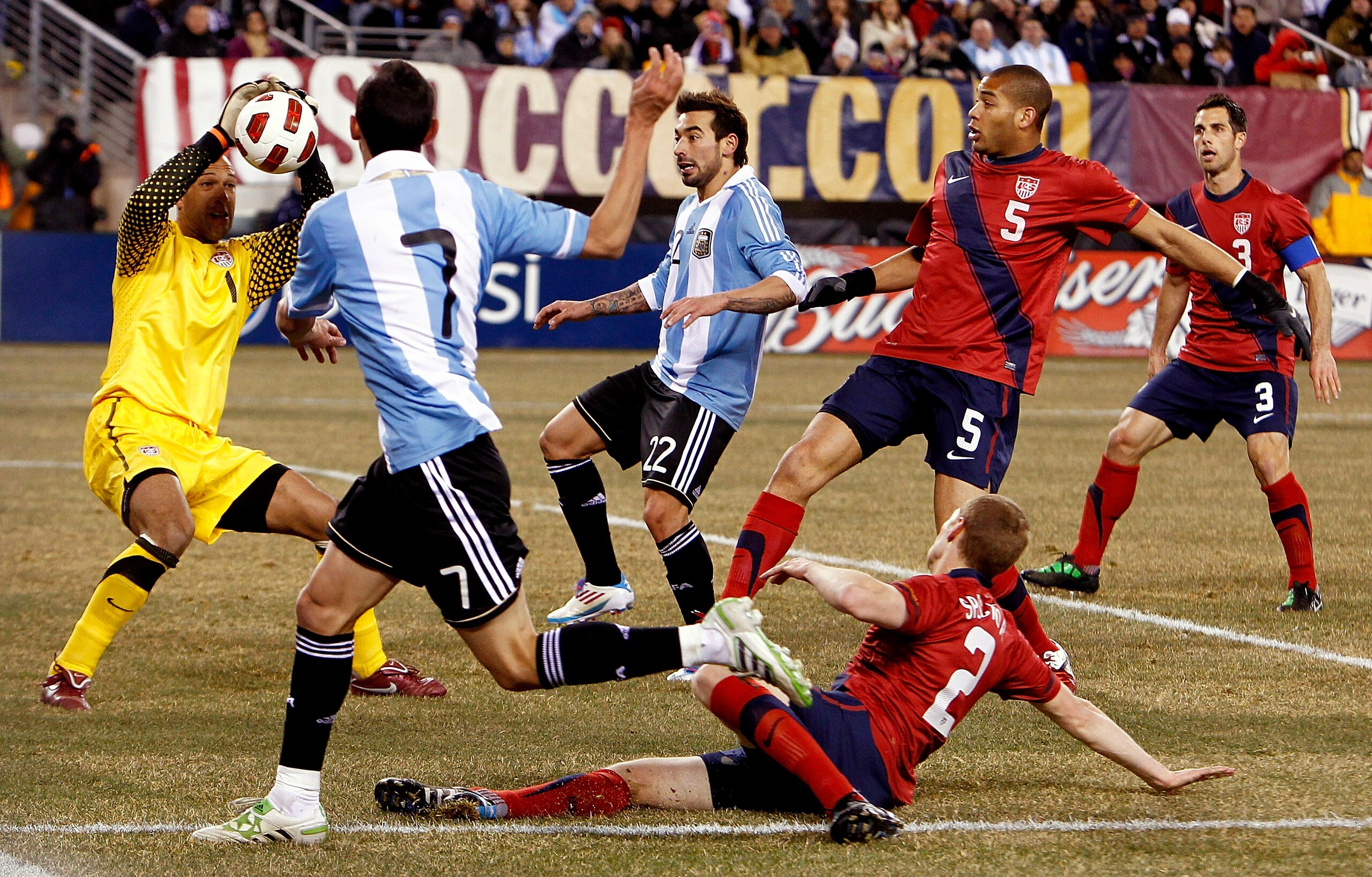
Tim Howard stoned Argentina in 2008.
The goal he let in against Argentina in 2011 was absolutely not his fault—in fact, Howard made an excellent save to deny the first chance on the eventual Argentina goal drive. Howard proved throughout the evening why he is normally in the conversation as one of the top goalies in the world.
The saves Howard made last night against Argentina were, in some cases, just ridiculous. The former Metro Star had to call upon flying leg saves, goal-saving slide tackles, aerial acrobatics, and hair-trigger dives to keep the buzzing Argentine attack at bay, but he managed to do just that for all but one chance on the evening.
Howard is just now entering what is generally the peak of a goalkeeper’s career, normally a four-year window, and is the presumptive starter for the United States in the next World Cup, provided of course that the Americans quality.
But, as we’ve seen in the last few friendlies, it’s not just Howard that always gives the Americans a chance. Brad Guzan, Howard’s erstwhile understudy, demonstrated his own skill not too long ago in the American colors against South Africa why he is also one of the better ‘keepers around.
The Americans have a pair of youngsters rising who also demonstrate an uncanny ability to be in the right place at the right time to make spectacular saves. Chicago Fire ‘keeper Sean Johnson, just 21 years of age, received his first minutes for the Yanks in a friendly in January against Chile, performing well. Johnson’s saves domestically have been eye-popping, appearing on many highlight reels and making him a player in strong contention for the United States moving forward.
DC United ‘keeper Bill Hamid is another very strong ‘keeper. Hampered by injury recently, Hamid will look to return to form in MLS and insert his name back into contention for callups while still very young.
As long as the Americans have fearless goalkeeping, a quality that appears to be plentiful in the player pool, they will always have a shot at winning matches, no matter how highly ranked an opponent they face.
.jpg?w=2560 "Seahawks Chiefs Football")