
Texas Rangers: How the Rangers' Pitching Staff Stacks Up With the A's
The 2011 Texas Rangers, fresh off their first American League pennant and World Series appearance last season, will return one of the most potent lineups in baseball.
The heart of their order features the AL's reigning MVP in Josh Hamilton, slugging second baseman (when healthy) Ian Kinsler and all-around outfielder Nelson Cruz.
The club added third baseman Adrian Beltre, who is coming off a season in which he posted a triple-slash line of .321/.365/.553, via free agency.
They also acquired slugging catcher Mike Napoli to play solely against lefties (Career versus LHP: 404 at-bats, 20 doubles, 27 homers, .928 OPS)
The Rangers have finished in the top 10 for runs scored every year since 2000. They finished fifth in 2010 and first in 2008.
Because of their ballpark, the Rangers shouldn't ever have an issue scoring. With the cast in place for 2011, Texas should have no problem placing in the top five once again, if not higher.
But, as the old adage goes, good pitching beats good hitting in baseball.
With apologies to the Los Angeles Angels, which have a very underrated staff and a lineup that will play tremendous defense, the Oakland A's own the best pitching staff, top to bottom, in the American League West.
Oakland's lineup is filled with contact-based hitters who know how to find their way on base. They too play terrific defense.
But is the quality of their pitching staff enough to overcome the firepower of the Rangers and win their division title as a dark horse?
We'll make a few comparisons and find out that answer after the jump.
Data courtesy of:
www.fangraphs.com
www.baseball-reference.com
Ron Shandler's 2011 Baseball Forecaster
The A's New Big Three
1 of 7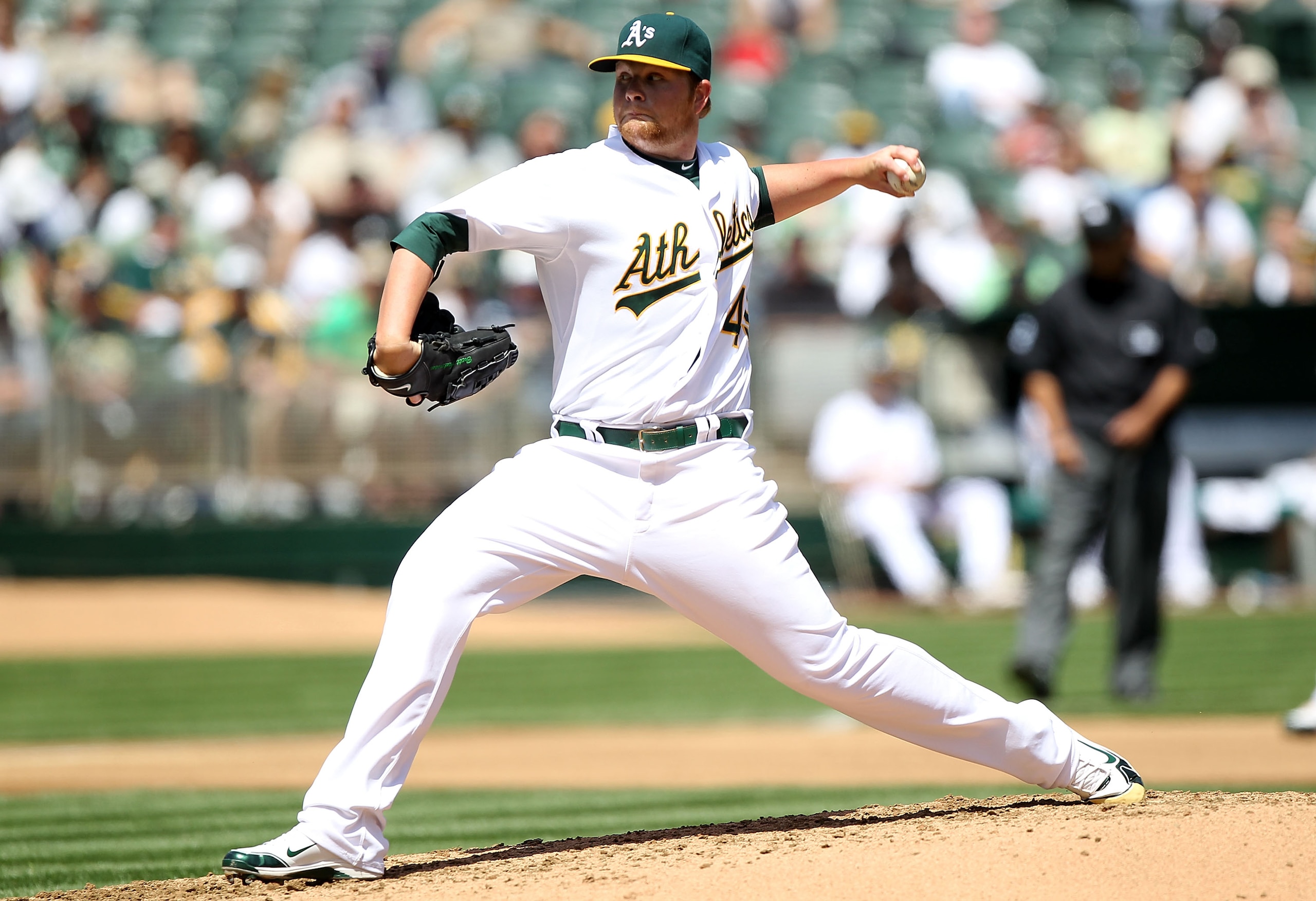
The success of the Oakland A's over the next several seasons hinges on the continued development of pitchers Brett Anderson, Trevor Cahill and Gio Gonzalez.
Their makeup in youth (Anderson and Cahill are 23-years old, Gonzalez is 26), handedness (Anderson and Gonzalez are lefties, Cahill is a righty) and skills have reminded many of Oakland's Hudson-Zito-Mulder trio from the moneyball era.
All three are groundball pitchers as well. Gonzalez has the lowest career groundball rate among the three, at 48 percent. Even still, this rate is above average.
Anderson's career mark is 53 percent, while Cahill's is 52. Trevor Cahill, however, increased his rate from 48 to 56 percent between his first and second years.
Gonzalez is probably the most talented among the three. The only thing holding him back right now is his control.
Gio Gonzalez is more than capable of striking out about a batter per inning (career 8.3 K/9 rate) but he hasn't been able to get his strikeout-to-walk ratio over 2-to-1. If he can cut down on the walks, Gonzalez could be a staff anchor.
Brett Anderson flashed some impressive numbers and he is already the most polished among the group. But injury concerns have cut into his future stock.
Anderson missed time last season for two separate elbow injuries. The fact that he throws a devastating slider repeatedly may be to blame.
Showing up to camp noticeably heavier this year shouldn't help either.
Cahill is the most interesting pitcher of the three. He went 18-8 with a 2.97 ERA last season despite sub-par strikeout and walk numbers.
He relies heavily on his sinker and changeup, forcing opponents to mash the ball into the ground. But, until Cahill can get his strikeout numbers up (5.40 K/9 in 2010), he's little more than a solid No. 3 guy.
Texas' Top Two
2 of 7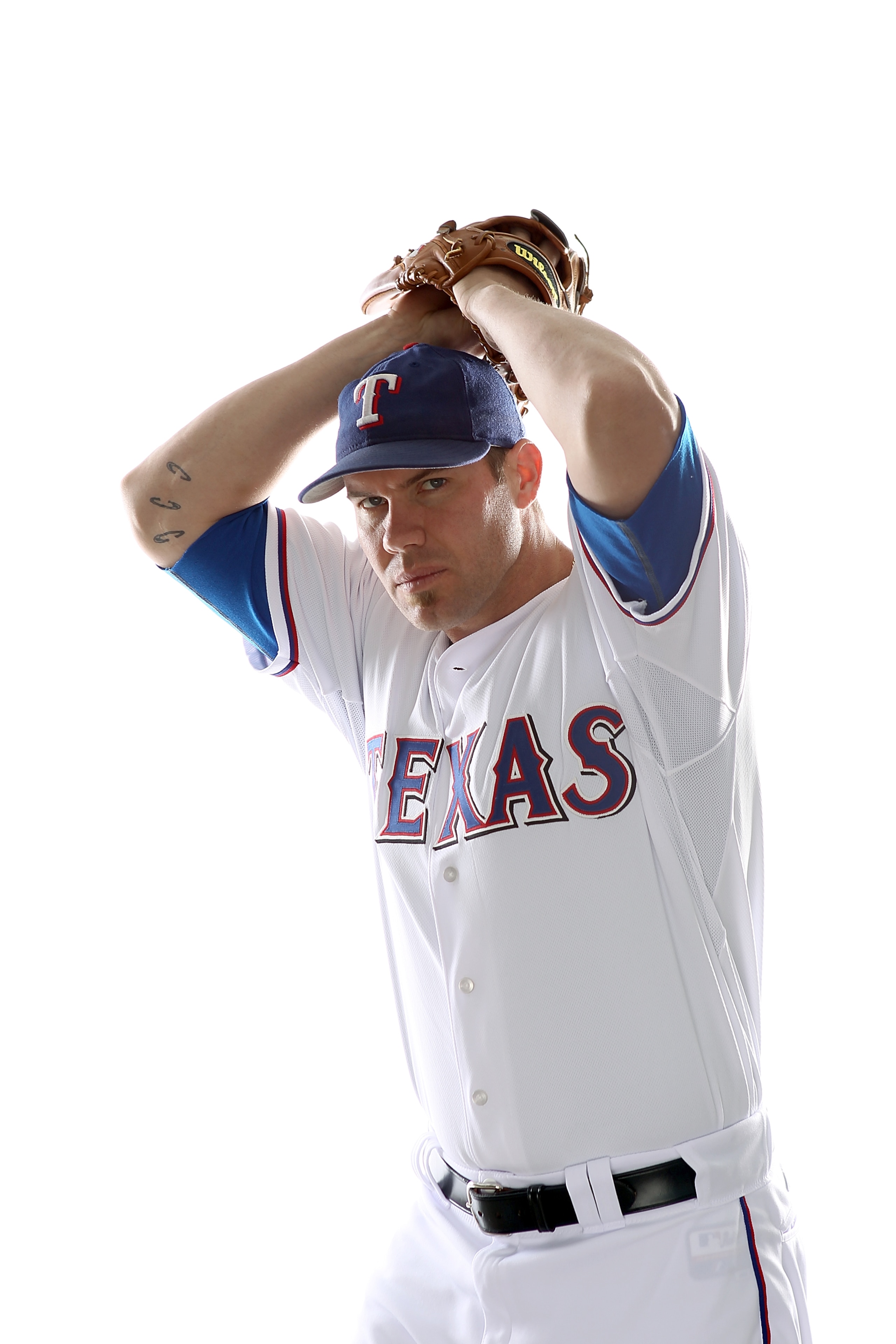
The two arms the Rangers will rely upon this season weren't even in the rotation in 2009. One was the team's closer, the other was pitching overseas in Japan.
C.J. Wilson made a seamless transition to a starting role last year. The 30-year-old lefty went 15-8 with a 3.35 ERA, 170 strikeouts and 93 walks allowed over 204 innings.
His strikeout and walk rates are nothing to write home about, but a 49-percent groundball rate and an ability to prevent home runs (10 allowed in 2010, .7 HR/9 rate for his career) are strong indicators for his future.
The only reason the Rangers should be concerned is from a massive innings increase.
Wilson threw more innings last year than from 2007-2009 combined. His workload jumped 130 innings (154 if you include playoffs) from 2009 to 2010, the type of increase which usually leads to arm trouble in year three.
His rotation mate, Colby Lewis, also logged 201 regular-season innings and 26 more in the playoffs despite last pitching in the majors in 2007.
During his two-year hiatus, the big righty threw two seasons of 175-plus innings each with dominant numbers, leading the Nippon League in K/9 and K/BB both years.
He has fine-tuned his slider, which is now considered to be one of the best in baseball.
Over the past few years Colby Lewis has shown improvement, durability and consistency.
He is one of the most underrated pitchers in baseball, and he is certain to improve upon his 12-13 mark from a year ago.
The Best of the Bunch?
3 of 7
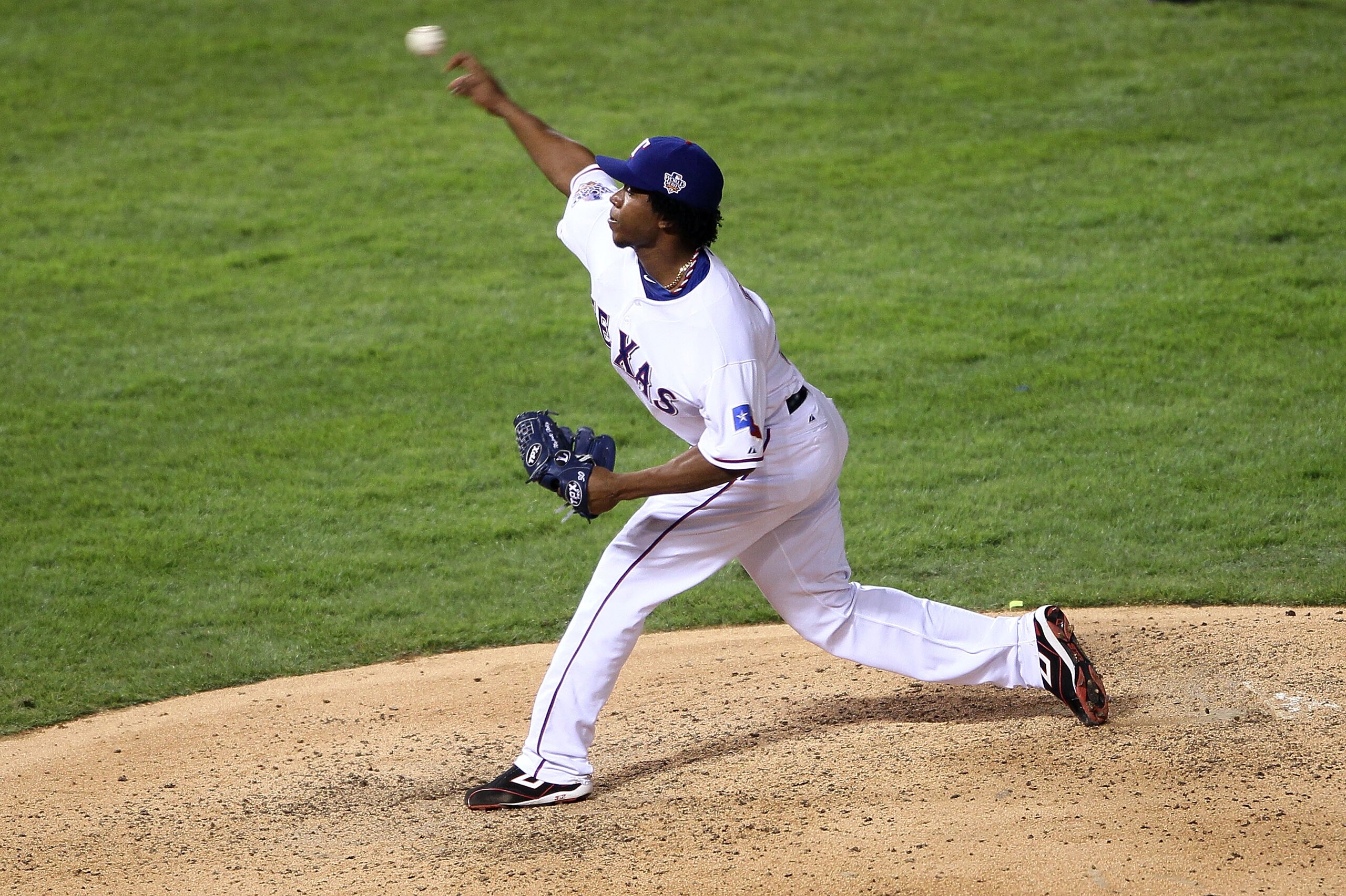
Neftali Feliz is lightning in a bottle, waiting to be unleashed.
There is a reason why I chose him as the cover picture for this piece; of all the arms that will be discussed, none come close to having the talent that Feliz brings to the mound.
After an impressive 31-inning debut in 2009 (39 strikeouts, eight walks, 1.74 ERA), Feliz was named the Rangers closer in 2010.
The now 22-year-old Dominican used his explosive upper-90s fastball and sharp curve to register 40 saves in 43 chances.
Over 69 innings, Feliz struck out 71 batters and walked just 18. He also showed incredible poise on the mound, giving up just one run during the postseason.
He was impressive in his ninth-inning duties and earned the 2010 AL Rookie of the Year.
But Neftali Feliz was a starting pitcher throughout his minor league career. Over 79 games and 53 minor league starts, Feliz stuck out 10.66 batters per nine innings and walked just 3.8.
To succeed in the major leagues as a starter, he'll have to develop his changeup into a realistic third pitch.
There are also concerns that Feliz gives up too many flyballs. An increase in innings could lead to a gaudy total of home runs surrendered.
But a club can't afford to waste an elite arm in the bullpen. Potential starters need to be given an opportunity.
Neftali Feliz has always been special. If he can fulfill his previous expectations as a starting pitcher, there's no doubting that the Rangers will be legitimate contenders for the World Series yet again.
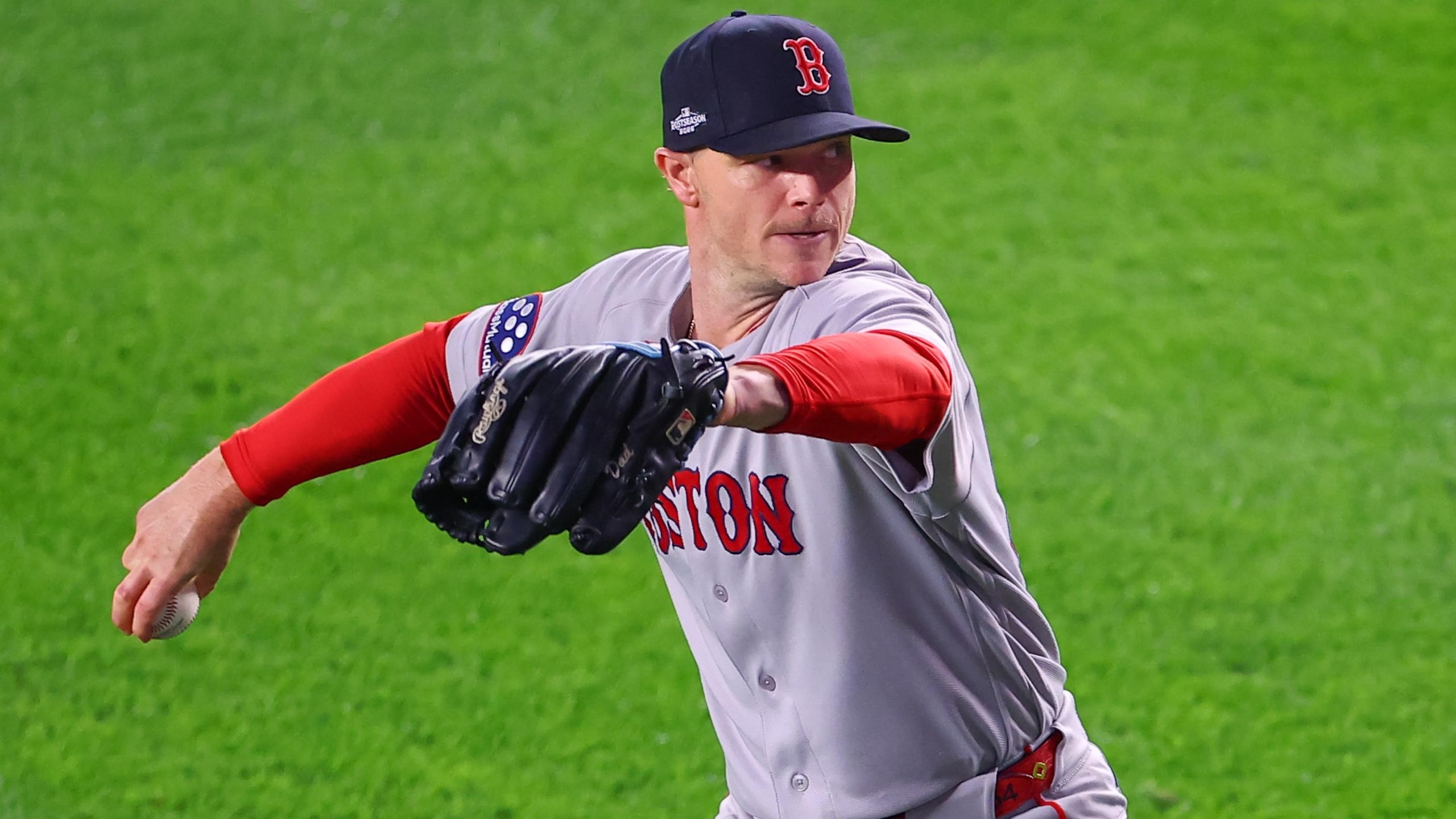


Other Options in Oakland
4 of 7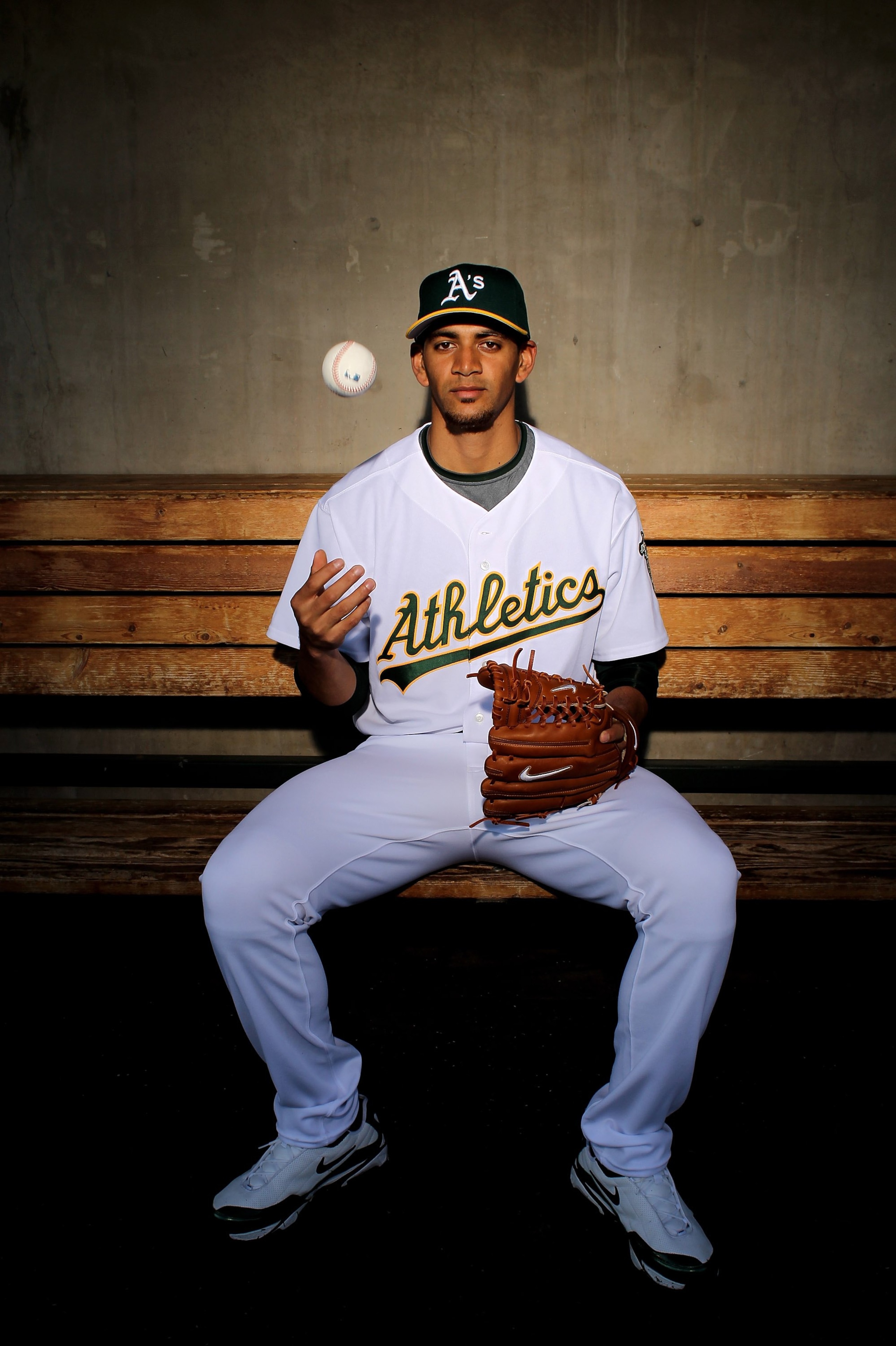
The back end of the A's rotation isn't as exciting as the front, but they do have some interesting options to work with.
Dallas Braden is guaranteed a roster spot after a solid 2010 which included a perfect game effort in early May against the Rays.
Braden doesn't do anything special, other than throw strikes and avoid walks.
If he's able to keep his strikeout-to-walk rate around his 2.6 mark from 2010, Braden should be a solid innings eater who could put up 15 wins with help from his lineup and bullpen.
But he is a reliable No. 4 starter at the most.
Batting for the fifth position are Brandon McCarthy and Tyson Ross.
McCarthy was once a top prospect for both the White Sox and Rangers before a lack of major league success and injuries to his pitching elbow slowed his career path.
Coming off a strong spring training, he's favored to win the job.
Tyson Ross is a former second-round pick out of California. He was rated as the organization's No. 6 prospect last season, but at 23 years old, time is quickly running out for this 6'6", 225-pound righty.
Ross relies on his hard, low-90s sinker and a good, sharp slider as his strikeout pitch.
Although consistency with his mechanics has been an issue at times, Tyson has shown the ability to strikeout almost a batter per inning while maintaing a high groundball rate (52 percent).
If he can improve his control, Ross will certainly take McCarthy's spot by year's end.
Playing the Waiting Game in Texas
5 of 7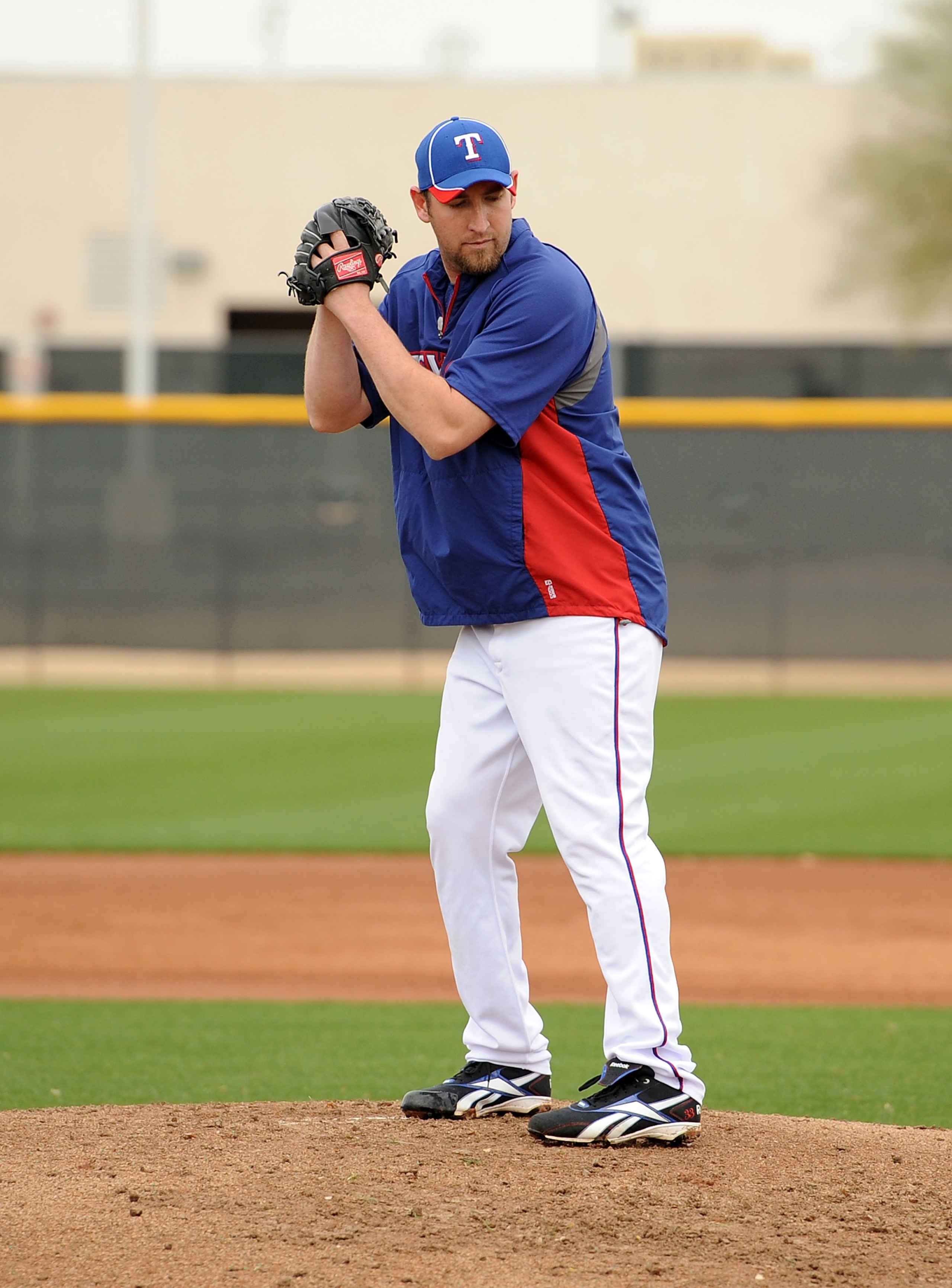
The Rangers have one of the best and deepest farm systems in baseball.
But their top two young pitchers, Martin Perez and Robbie Erlin, are both at least a year or two away.
In the meantime, Texas will turn to some combination of Tommy Hunter, Matt Harrison, Derek Holland and Brandon Webb to fill out the rotation.
Webb is obviously the biggest name among the group. The 2006 NL Cy Young winner is still recovering from Tommy John surgery in August of 2009.
With a power sinker, Brandon Webb has never had to rely much on his velocity.
But scouts were concerned that Webb had lost a few miles per hour off of his pitches while showcasing his skills at offseason workouts.
This type of injury takes nearly two years for a pitcher to return to 100 percent. If the Rangers take care of Webb's arm, he could be a real bonus late in the season.
He has yet to pitch an inning in spring training, and he will likely wait until the minor league season starts to make rehab appearances.
Derek Holland was a former minor-league player of the year for the Rangers.
He has shown impressive numbers in the lower levels, but a lack of success in the major leagues has given Holland the Quadruple-A label.
31 starts into his major league career, it's time for Derek Holland to prove that his long-ball woes are behind him.
Tommy Hunter and Matt Harrison are the least intriguing of the Rangers pitchers. They are similar in that they both have sub-par control, don't strikeout enough guys and don't generate enough groundballs.
Hunter has decent major league numbers, and he is probably the better pitcher, but he is still severely overrated.
I expect Holland to hold onto his rotation spot, and for Brandon Webb to replace whichever of Hunter or Harrison is struggling more.
The A's Deep and Dominant Pen
6 of 7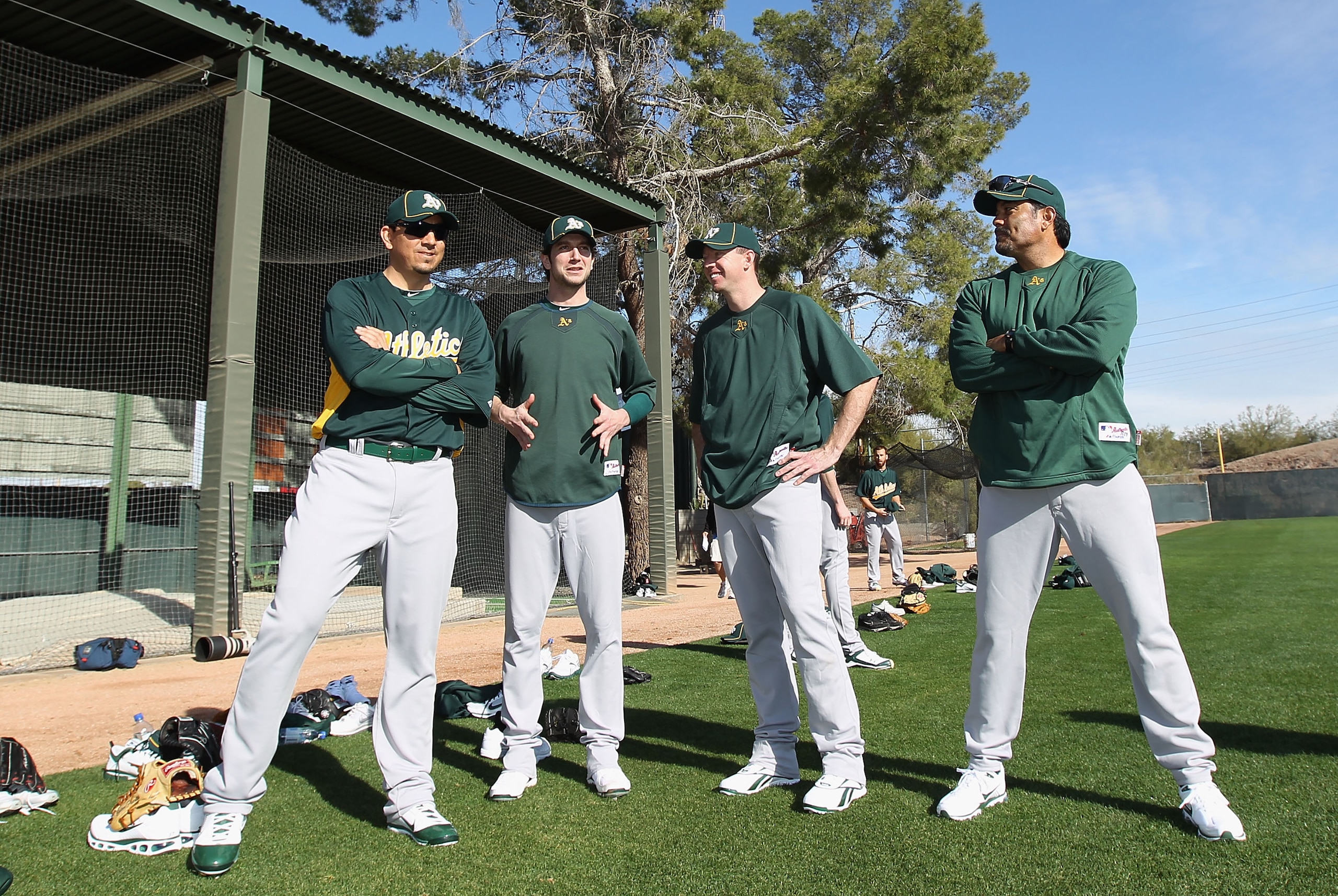
The biggest plus for the 2011 Oakland Athletics should be the bullpen.
Although the health of closer Andrew Bailey is currently a concern, the measures Billy Beane took in the offseason to shore up the team's end-game pitching should prove fortunate if Bailey misses any time.
The incumbent ninth-inning man has 51 career saves in 58 chances with a 133-to-37 strikeout-to-walk ratio over 132.1 innings.
If he's a no-go, the next in line behind Bailey is likely Brian Fuentes.
The former Angel has lost effectiveness the past few seasons, but along with the very underrated Jerry Blevins, the Athletics bullpen should be death to left-handed hitters in the late innings.
Grant Balfour, a hard-throwing Australian with an ironic last name, will combine with Michael Wuertz and his nasty slider as the primary setup men from the right side.
Both are strikeout pitchers, and Balfour might be the best setup man in Oakland since Chad Bradford.
Wuertz's peripherals declined towards the end of last year, but if he rebounds, he would make for a ridiculously good fifth man out of the gate.
Brad Ziegler, while unspectacular, is a more-than-serviceable middle reliever with his ability to churn groundballs at a career 59-percent clip.
Joey Devine, the former first-round pick out of NC State, is also an intriguing name.
Devine is in his second year of recovery from Tommy John surgery. If he is able to return to full strength, he has closer potential and the minor-league numbers to back it up.
Rich Harden has struggled in his return from a lat injury, but if he's able to return, he could also make for a powerful bullpen piece.
This collection of arms is probably the most talented I have ever seen in one bullpen before the start of a season.
The A's staff is deep and they can come at you from multiple angles and directions. This is a scary bunch.
Verdict
7 of 7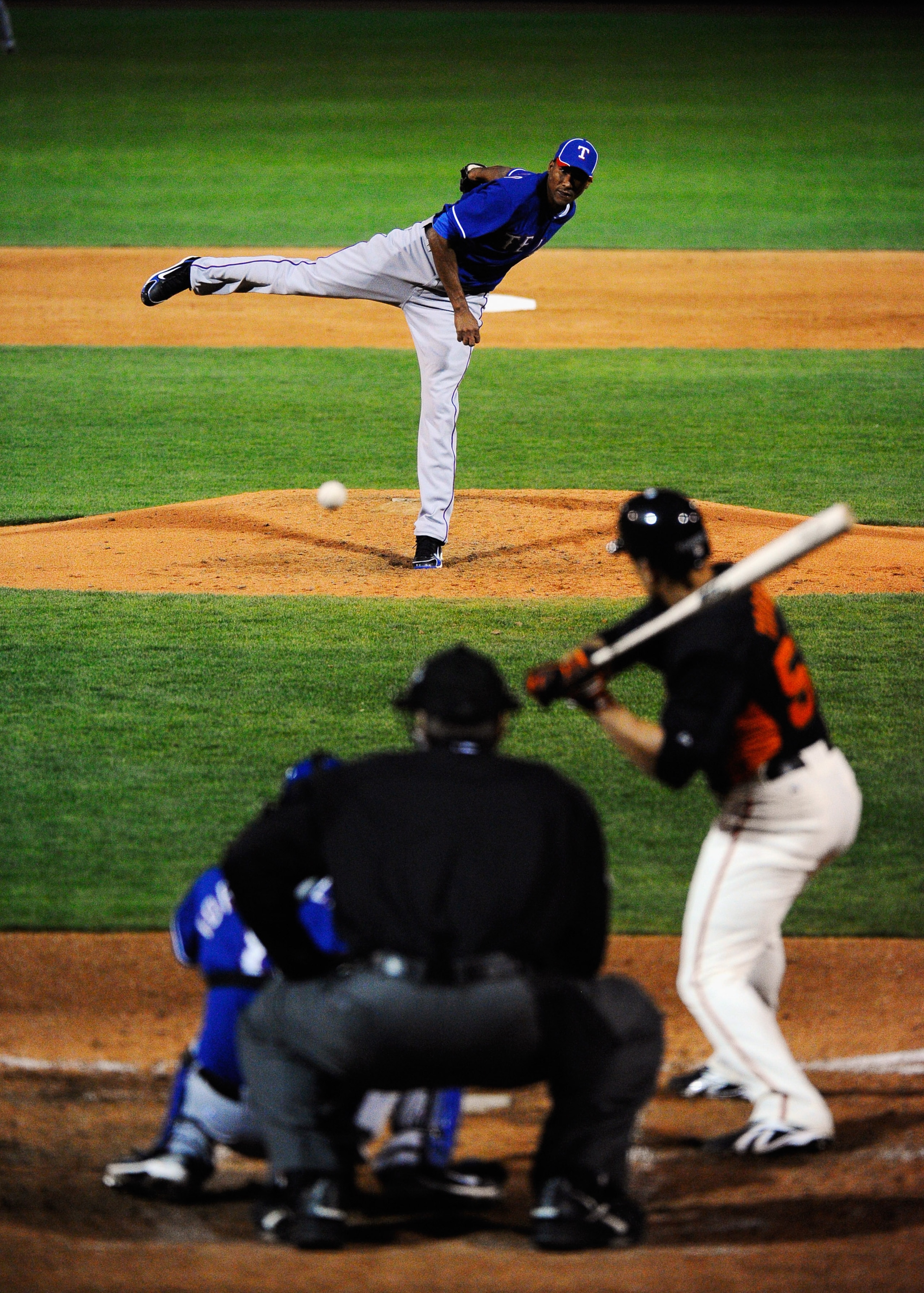
If Neftali Feliz moves to the rotation, the Rangers bullpen will be seriously lacking.
Second-year man Alexi Ogando, a 27-year-old Dominican, would likely be the best remaining arm. He had impressive minor-league totals, with 156 strikeouts and only 23 walks over 111 innings.
In his first taste of the bigs in 2010, Ogando struck out 39 batters and walked just 16 over 41 innings.
He also struck out eight and walked just one during six postseason innings. But for the most part, Ogando is still very unproven against major-league hitters. Less than 50 innings is not much of a sample size.
And beyond Ogando, the bullpen thins out quickly.
Darren O'Day is still a very good reliever. But left-handers Arthur Rhodes and Darren Oliver are both over 40 years old. Their time is nearing an end.
Mark Lowe has talent and the ability to replace Feliz, but poor spring performances will likely dissuade Ron Washington from sticking Lowe with that massive responsibility.
Journeyman Brett Tomko, who will fill out the bullpen, isn't anything special.
The A's greatest strength is the Rangers' most noticeable weakness.
If I were a betting man, I would gamble on these things:
1. The Rangers will acquire at least one relief pitcher by the trade deadline.
2. Even if the A's lose a pitcher (or two) to an injury, they have the depth to stay afloat.
3. If C.J. Wilson (or Colby Lewis) goes down, the Rangers could be in serious trouble against the A's or Angels.
The Oakland A's simply have better defense, better pitching and more depth than the Texas Rangers.
But the Rangers have a potent offense and a staff that can keep keep the ball in the park.
Injuries and luck may decide which team takes this division, though it's already a lot closer than most people think.



.jpg?w=2560 "Weather Channel Trolls Texans-Titans 💀")

.jpg?w=2560 "Report: Seahawks Not Signing Mixon 😯")