Roger Federer: Why Should He Skip the French Open?
 The greatness of all champions is that they play all the majors and the Masters 1000 even if the odds are against them.
Andy Roddick has went on to play at the French Open when his health allowed him to do so, even if his record at the clay court Grand slam were not as good as all the other three.
In a way we have to admire that since it's almost a lost cause 89 percent of the time.
It's clearly not the same problem for the all time great Roger Federer, who claimed the Roland Garros trophy in 2009 achieving at the same time the career Grand Slam.
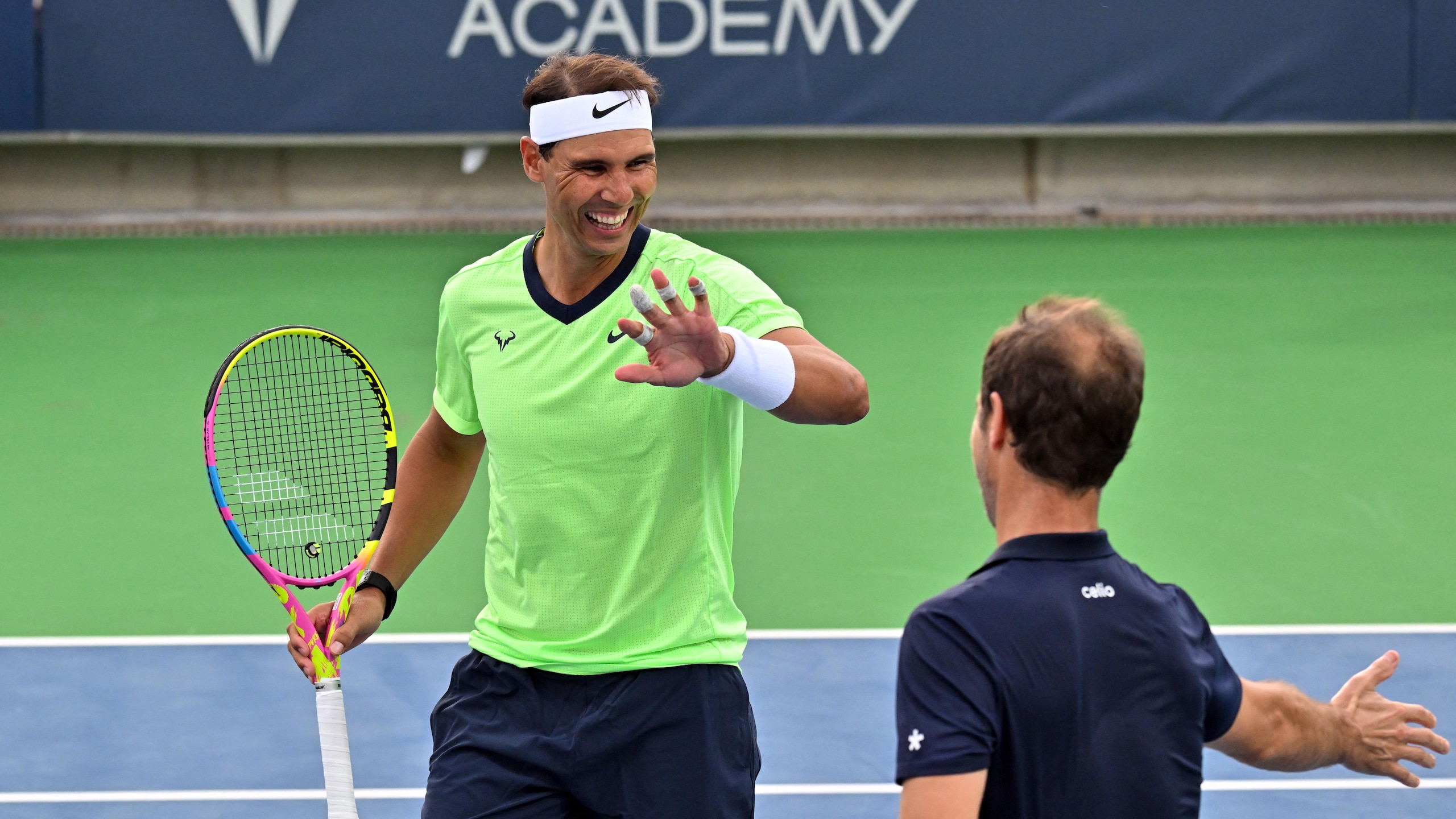
.jpg?w=2560 "Seahawks Chiefs Football")

We have to remember that the Swiss is the owner of 16 Grand Slam titles.
I know a lot of people are going to slam me for this opinion piece but I truly believe Roger Federer should skip the entire clay court season in order to better prepare for Wimbledon.
The good news for Federer is that he has played better at Indian Wells in 2011 than last year where he lost in the third round to Marcos Baghdatis.
However, his draw at Miami suggests he could meet Nadal in the semifinals and possibly Novak Djokovic in the final.
Even if he found a way to beat both players, or win Miami, which he could certainly do, I would still believe his chances on clay are diminishing year after year.
We just saw it is becoming harder and harder to beat Djokovic for reasons I will explain further more.
We are not even mentioning his chances of beating Nadal or Söderling, who knocked Federer out of Roland Garros last year in the quarter-finals.
Of course you can always believe in luck, in the fact that all the top players but Federer could be injured, or that another player like Milos Raonic opens his draw which would widely open his hopes.
I can hardly imagine such a scenario happening in 2011.
In that case, does Federer really believe he could beat Nadal or Djokovic on clay this season—the best defenders on the planet?
It's tough enough to beat the Serb on hard court, which is also Roger's favorite surface with grass. Imagine the result on a clay court.
However I do believe that Federer could still win Wimbledon or the US Open.
Why would Federer take the risk of being crushed once more at Roland Garros?
The former World number one has already won in Paris, which means he does not even have the pressure of winning it.
We also know tennis is such a mind game; accumulating defeats over Djokovic and Nadal on the clay will not help his confidence moving forward.
By skipping the clay court season, Federer would prepare for Wimbledon better than he ever did before. His chances for winning it would be much better than his chances of winning the French.
We all know that Federer has played some of his best tennis at Wimbledon Centre Court.
Some would suggest he lost to Tomas Berdych in the quarterfinals, which is a fact.
Nonetheless, he had back issues which prevented him from playing his best tennis.
Writing this opinion piece suggest Federer should only focus on Wimbledon and the US Open this year, but I also know these Great champions must prove themselves all the time, which is why we will see the Swiss on the clays of Monte-Carlo, Madrid, Rome and Paris.
I will not be surprised, though, if the Swiss were to lose early in these events.
Federer's excellent mindset achieved last summer has been absent since the start of 2011. If we're relying on results, you cannot deny that he has been in decline for a year and a half.
Rafael Nadal is now comfortable at No. 1 while Djokovic has the No. 2 spot.
But is Federer's fall irremediable? Looking at the technical and tactical reasons for his current lack of efficiency, let's have a look at what would need to happen for him to return to the top.
Watching his matches, you are struck by the many unforced errors he is making. He often seems to struggle with his focus, so his matches are always up and down.
He often has winning streaks followed by easy mistakes. He can be up 30-0 with two winners then be pulled back to 30-30 with two errors—then win the game with an ace and a forehand winner.
That is always enough to get through the first rounds, because his margin is so huge - but he's paying the price for it against the top players. At the top level, you cannot allow yourself to play with fire like this.
We were used before to his high first serve efficiency, which gave him a lot of aces or winners. His second serve does not allow him to take charge of the rally in the same way.
That, added to the amazing returning abilities of Nadal, Djokovic and Andy Murray, has beaten one of his key weapons down.
Let us not forget that he basically won the 2009 Wimbledon final against Andy Roddick on the back of his service.
The Swiss has always been at his best when playing short points; as years pass the length of his successful points is becoming shorter and shorter.
I was amazed by another stat against Djokovic: After one set, he had won only 20 percent of the points when the rally lasted more than eight shots.
It is the exact game plan set up by Rafa in order to beat Roger: keeping him on his backhand and prolonging the rally puts Federer out of his comfort zone.
Against Nole, he often gave the impression that he was seeking to get rid of the ball quickly—as if he knew he wouldn't win the point if the rally were too long. Because of this, his shot selection suffered and he took too many risks on the wrong balls.
Federer is still young at 29 and it is reasonable to expect that he has a few more great years in front of him.
His style of play saves a lot of energy while his flexibility and fluidity of movement also help him to save his body.
It is a body perfectly suited to this game: tall—but not too tall—slender and not too muscular. Yet you have to wonder whether he is feeling at his best physically: is the back pain that troubled him in the past over with? How is the Swiss training? Is he able to get through sessions maintaining a high level of physical intensity?
If it seems logical that the Swiss will struggle to last the longer rallies as he grows older, he must keep some offensive weapons at their most dangerous if he wants to succeed with shorter rallies.
He needs at his disposal his serve, forehand, explosive footwork—to take the ball early—chip and charges and, of course, his volleying game.
He should really work on his short game—I do not doubt that that is the wish of his coach Paul Annacone, as evidence of these has been seen in recent times.
It is so important for him to play each match with 100 percent commitment.
Matches will become more intense for him, but likely quicker; Pete Sampras, at the end of his career, was playing only one returning game to the maximum—and it was often enough to win the match.
He knew how to play at his best when the time came, and we must not forget his outstanding serve and net game, which was the basis of his entire career.
Federer's supreme talent means that he can return to the top—no doubt about it.