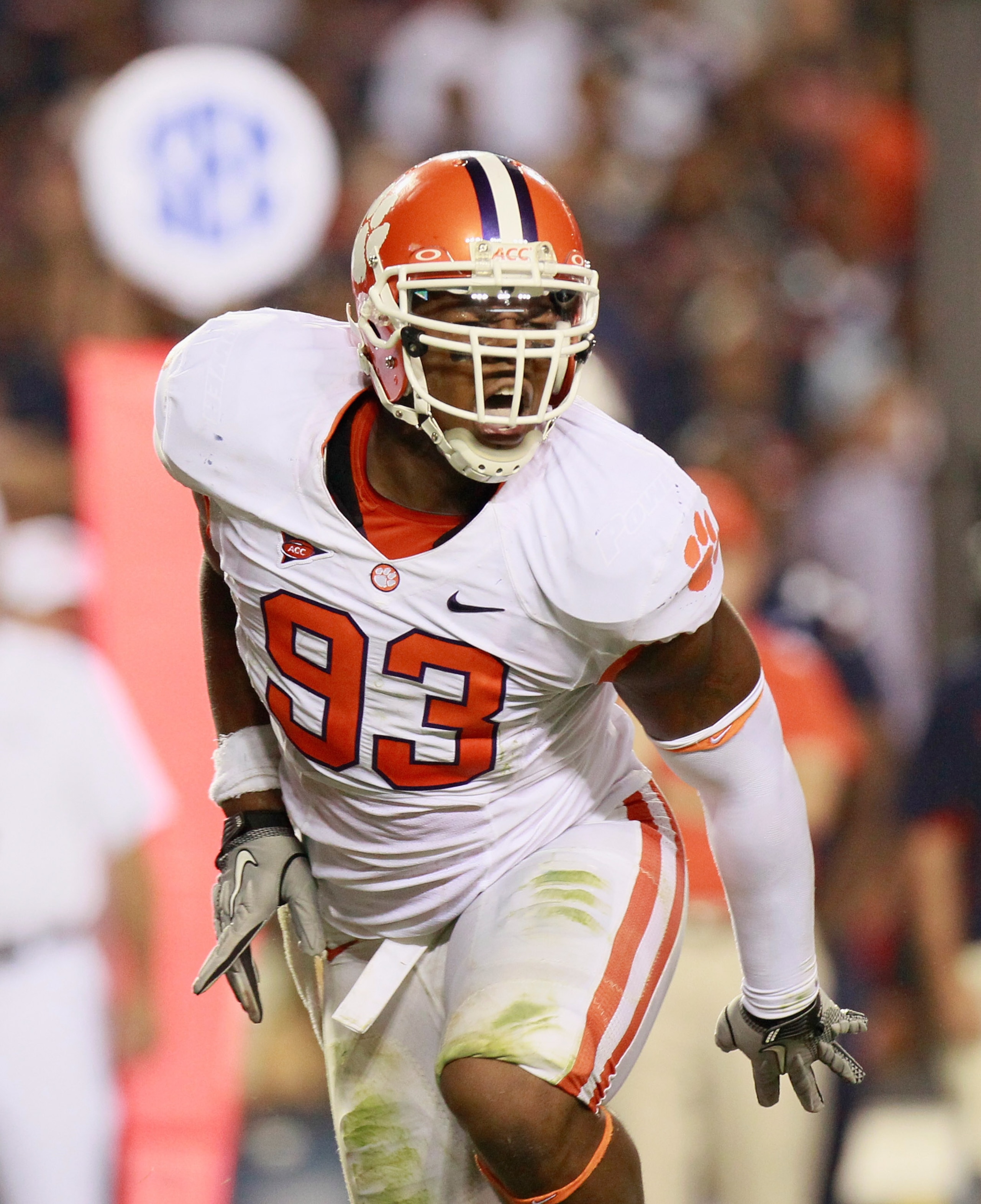

NFL Draft 2011: The Top 50 Draft Prospects and Their NFL Counterparts
We've all heard scouts compare up-and-coming prospects to players already in the league. It's a solid method for putting a college player's NFL value into perspective. While a comparison to Julius Peppers may be taken as a compliment, players seek to detach themselves from names like JaMarcus Russell or Vernon Gholston.
In the slideshow, prospects are compared to their good and bad NFL counterparts. For some prospects, the discrepancy between the two is enormous. For others, their "bad" counterpart may be an above-average player, while the "good" counterpart is an elite player.
CBSSports.com's prospect rankings are incredibly thorough, so this slideshow took their top 50 prospects as a basis for comparison.
50. Jerrel Jernigan, WR, Troy
1 of 50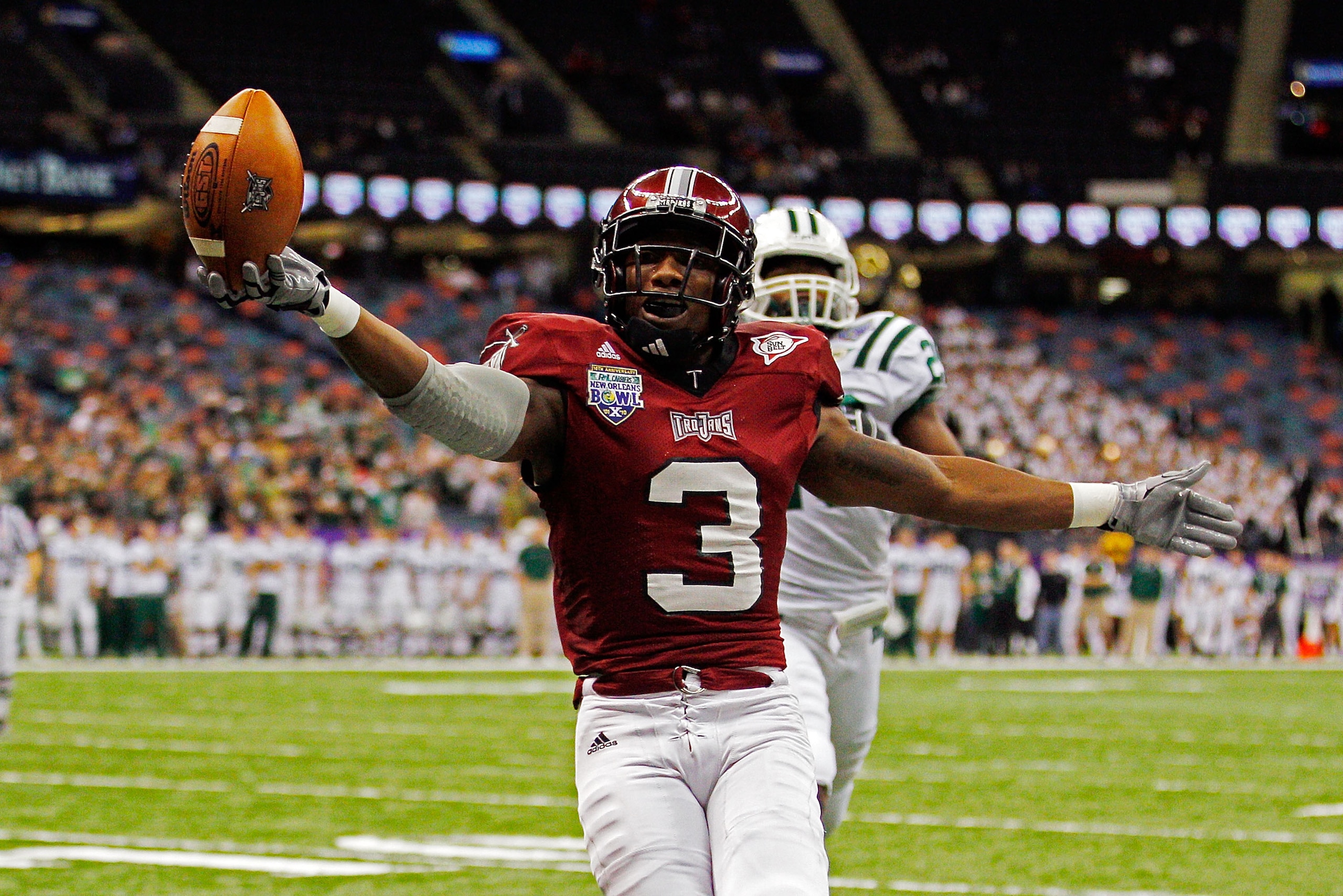
Best-Case Scenario: Steve Smith
Jerrel Jernigan is only 5'9". Carolina's Steve Smith was once an elite deep threat in the NFL, but was scrutinized coming out of college because of his small stature. Smith blazed a trail for smaller receivers with deep-threat potential.
Worst-Case Scenario: Donnie Avery
Donnie Avery is a bit taller than Jernigan, standing at 5'11". He is also a bit faster, but they are the same type of receiver. Avery clocked a sub-4.3 40-yard dash, which trumps Jernigan's. He has seen a somewhat successful NFL career, but has been bogged down by injury. The Rams are starving for a wide receiver and Avery still fails to stand out.
49. Christian Ballard, DE, Iowa
2 of 50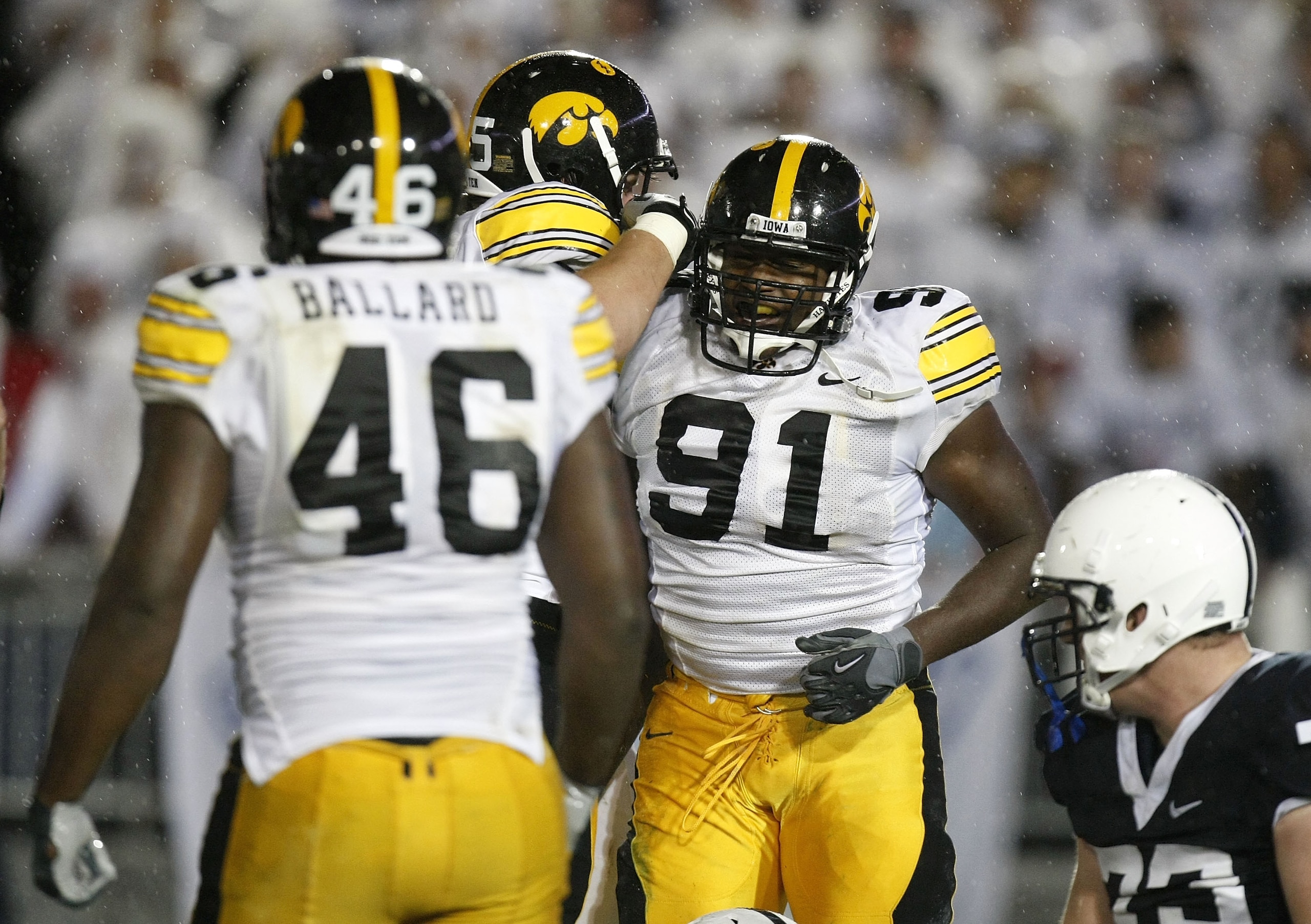
Best-Case Scenario: Justin Smith
Christian Ballard has above-average quickness, but it doesn't take away from his strength. He has a strong work ethic and is completely unselfish. In the NFL, he projects as a 3-4 defensive end. Justin Smith has similar qualities and is constantly involved in Pro Bowl talks. In a class littered with defensive talent, Ballard has been overlooked by many. Smith is a testament to the success an under-the-radar player can see in the NFL.
Worst-Case Scenario: Igor Olshansky
Defensive linemen in a 3-4 have a tendency to be made into role players, allowing for the linebackers to make all the plays. Scouts question Ballard's playmaking ability at the collegiate level, which may even worsen at the next level. Igor Olshansky is an example of a big, role-playing defensive end. He is not really a difference maker and has had a forgettable NFL career.
48. Brooks Reed, OLB, Arizona
3 of 50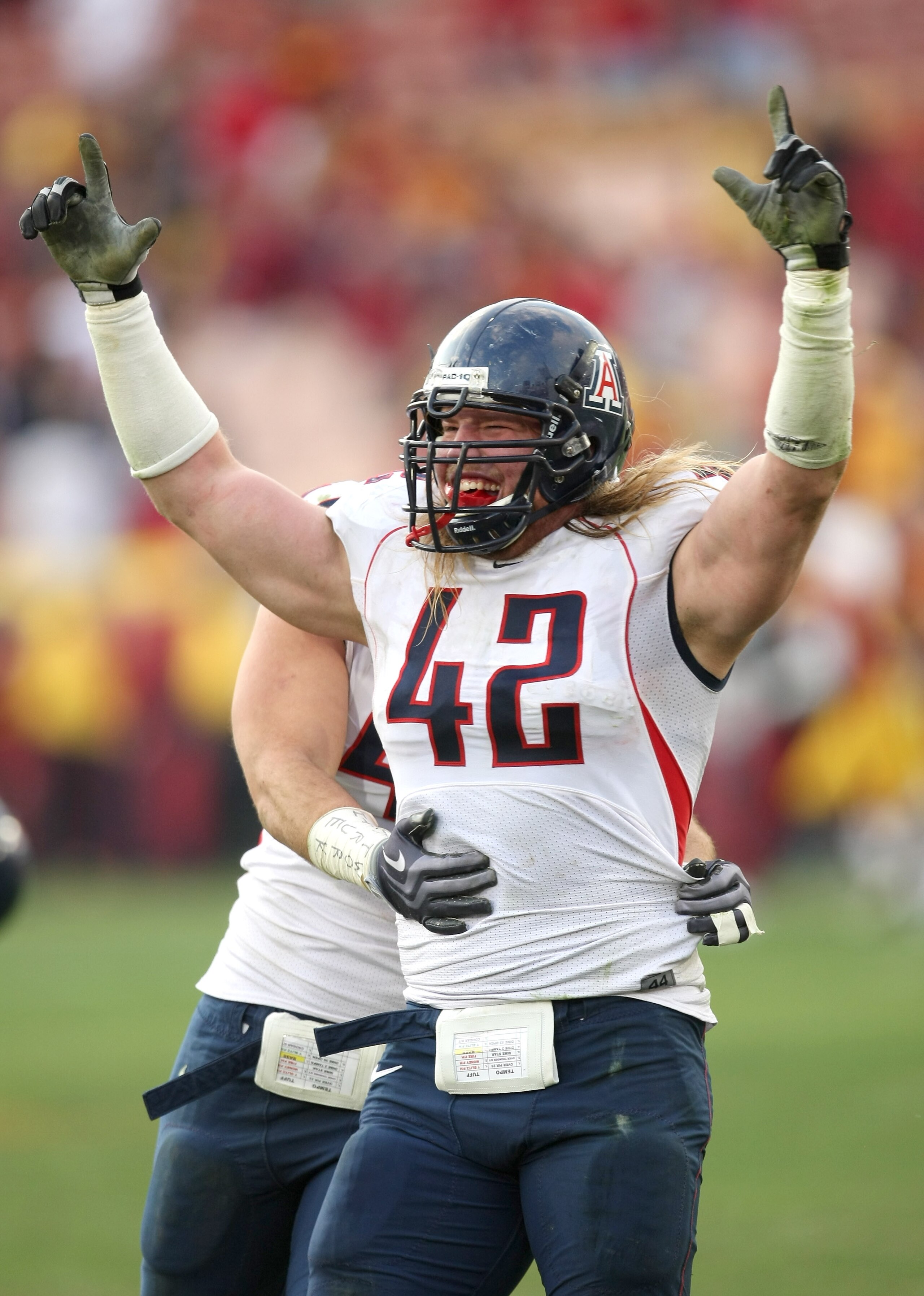
Best-Case Scenario: Clay Matthews
Brooks Reed hustles on every single play, plays to the whistle and attacks the line of scrimmage. Like Christian Ballard, his name is somewhat unheralded in draft discussions, as the 2011 draft class is top-heavy with defensive superstars. Clay Matthews was widely considered to be the third-best linebacker on his own team. Fast forward to the 2010 season and Matthews has become one of the most feared and talented 3-4 outside linebackers in football.
Worst-Case Scenario: Vernon Gholston
Do we stand him up or put his hand in the dirt? Brooks Reed has problems in coverage and doesn't have the length to be an elite 4-3 defensive end. "Tweeners" tend to rise in stock as draft day approaches. Vernon Gholston is an example of a player who got caught in the middle of both positions and could never find a home. Teams need to take a good, hard look at Reed's shortcomings to ensure he maximizes his potential.
.jpg?w=2560 "Seahawks Chiefs Football")


47. Marvin Austin, DT, North Carolina
4 of 50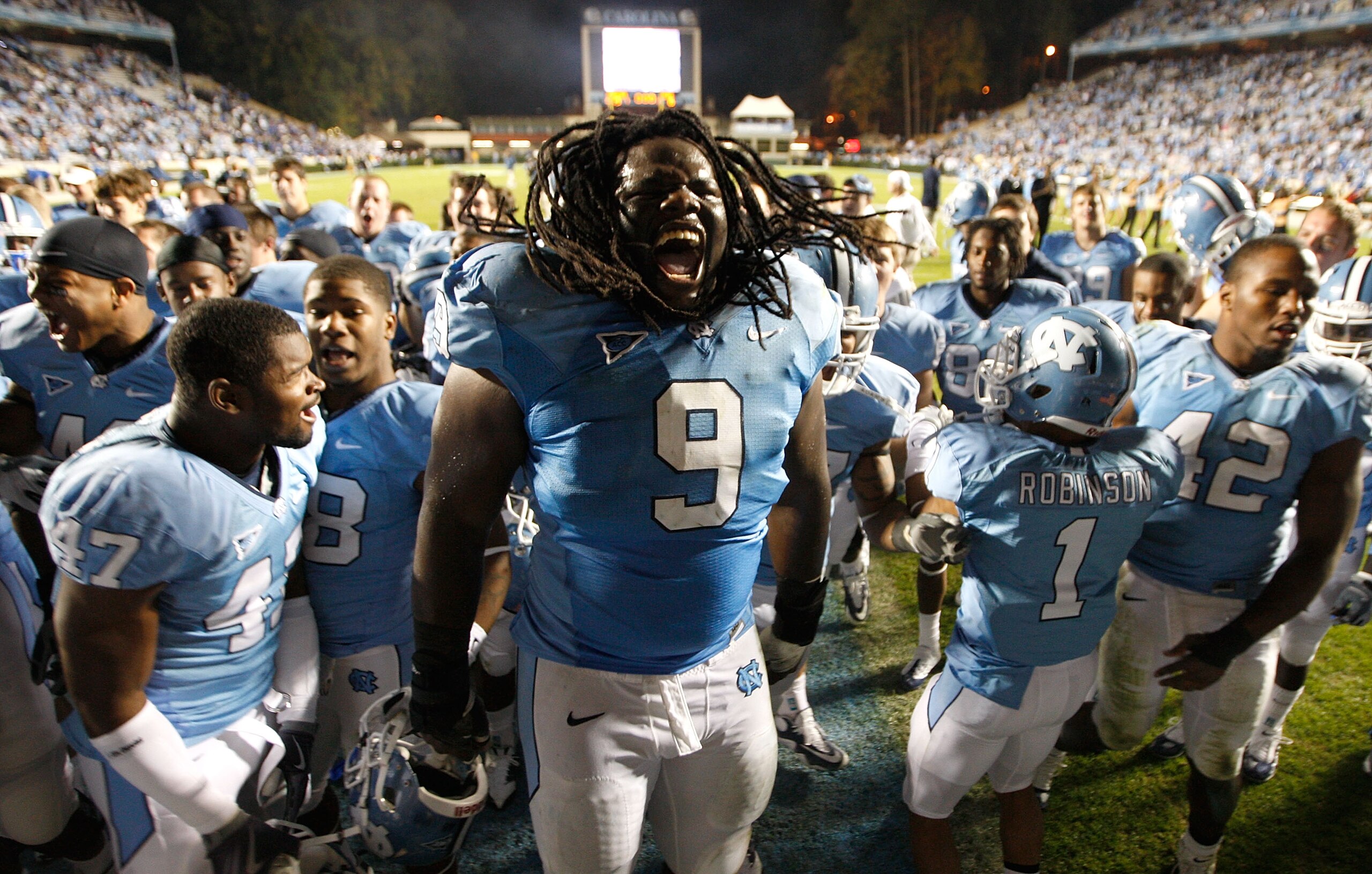
Best-Case Scenario: Tommie Harris
Marvin Austin would likely be a top-five pick had he kept his nose clean throughout his collegiate career. His character concerns may cause him to slip out of the first two rounds entirely. Once upon a time, Tommie Harris was an elite defensive tackle in the NFL, despite his questionable character. At best, Austin's play will be able to move his character concerns to the wayside.
Worst-Case Scenario: Albert Haynesworth
This isn't a reference to the once-All-Pro Albert Haynesworth, but rather the Albert Haynesworth that seems lazy, money hungry and selfish. The Redskins displayed an incredible amount of confidence in Haynesworth by giving him a lucrative $100 million deal with a ton of guaranteed money. Teams may shy away from Austin in fear of his character concerns. The worst possible outcome is that he verifies their concerns.
46. Rodney Hudson, G, Florida State
5 of 50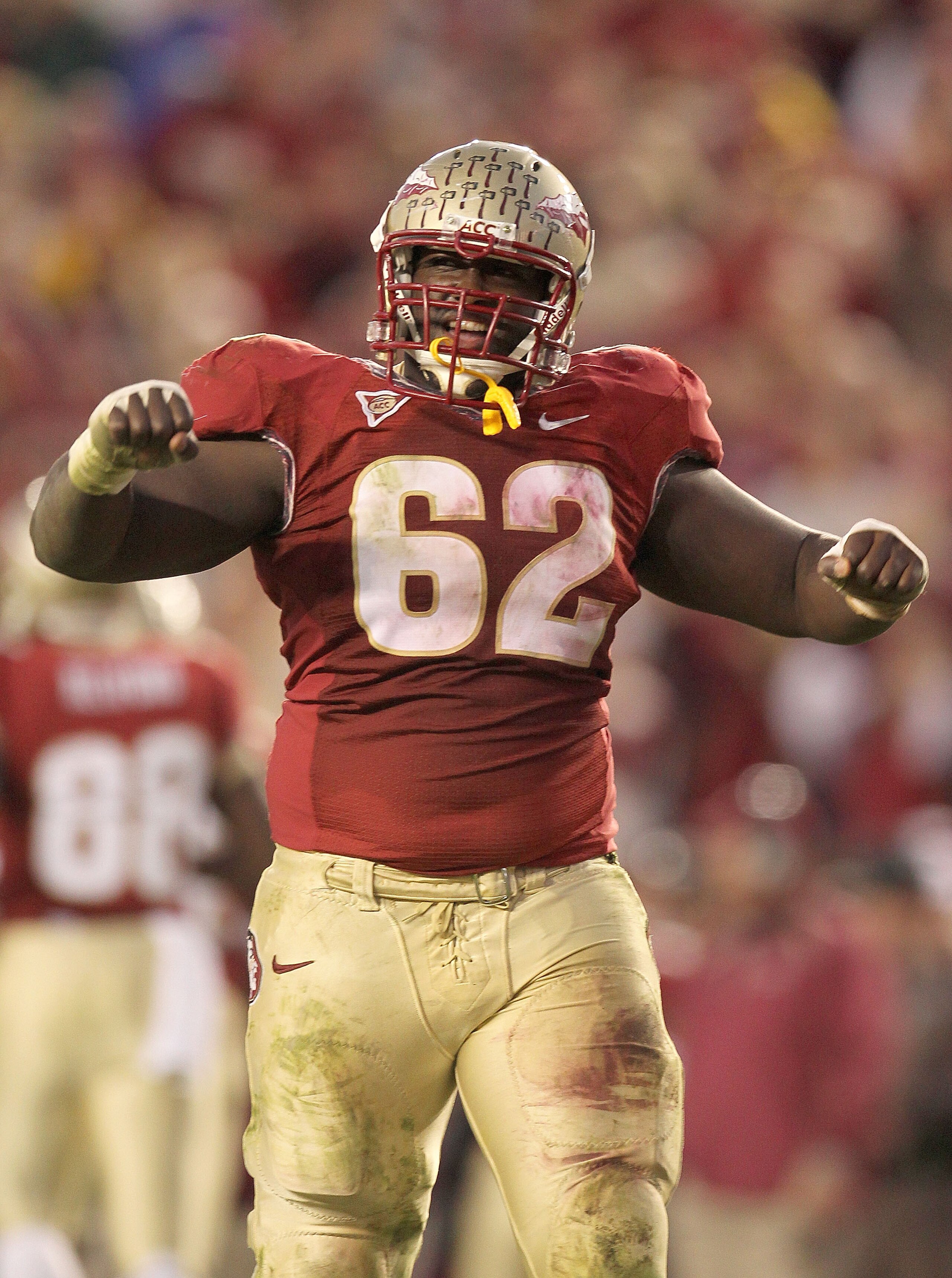
Worst-Case Scenario: Chris Snee
Rodney Hudson poses serious size issues. There are only a select few teams that run a system that caters to an undersized guard with good quickness, but underwhelming strength. Hudson will need to bulk up during his NFL career, but if he is able to acquire technique similar to Chris Snee, Hudson will see a solid NFL career. You don't have to be Larry Allen to play guard, but a lack of size calls for an excess of quickness.
Best-Case Scenario: Rob Sims
Rob Sims is not terrible at guard, but he finds himself being beaten off the line at times. He is comparable in size to Hudson and faces some of the same problems Hudson will likely see in the NFL. Hudson will probably be selected higher than Sims was, but their NFL paths could be similar in nature.
45. Randall Cobb, WR, Kentucky
6 of 50Best-Case Scenario: Antwaan Randle El
Randall Cobb is a former quarterback who made his way to receiver. He contributes in the return game and could be utilized as a gadget player at the next level. Antwaan Randel El had a successful career during his first tenure in Pittsburgh. Cobb might never be the No. 1 target on a team, but he is talented enough to help whatever team he goes to in multiple ways.
Worst-Case Scenario: Pat White
Pat White is a completely different type of slash player, but his designation of "athlete" puts him in a similar class as Cobb. White entered the draft as a guy who could do it all, but has failed to make any sort of impact in the NFL. Wide receiver-slash players tend to transition easier to the NFL. Cobb's pass-catching ability and return potential should help him excel wherever he lands.
44. Leonard Hankerson, WR, Miami
7 of 50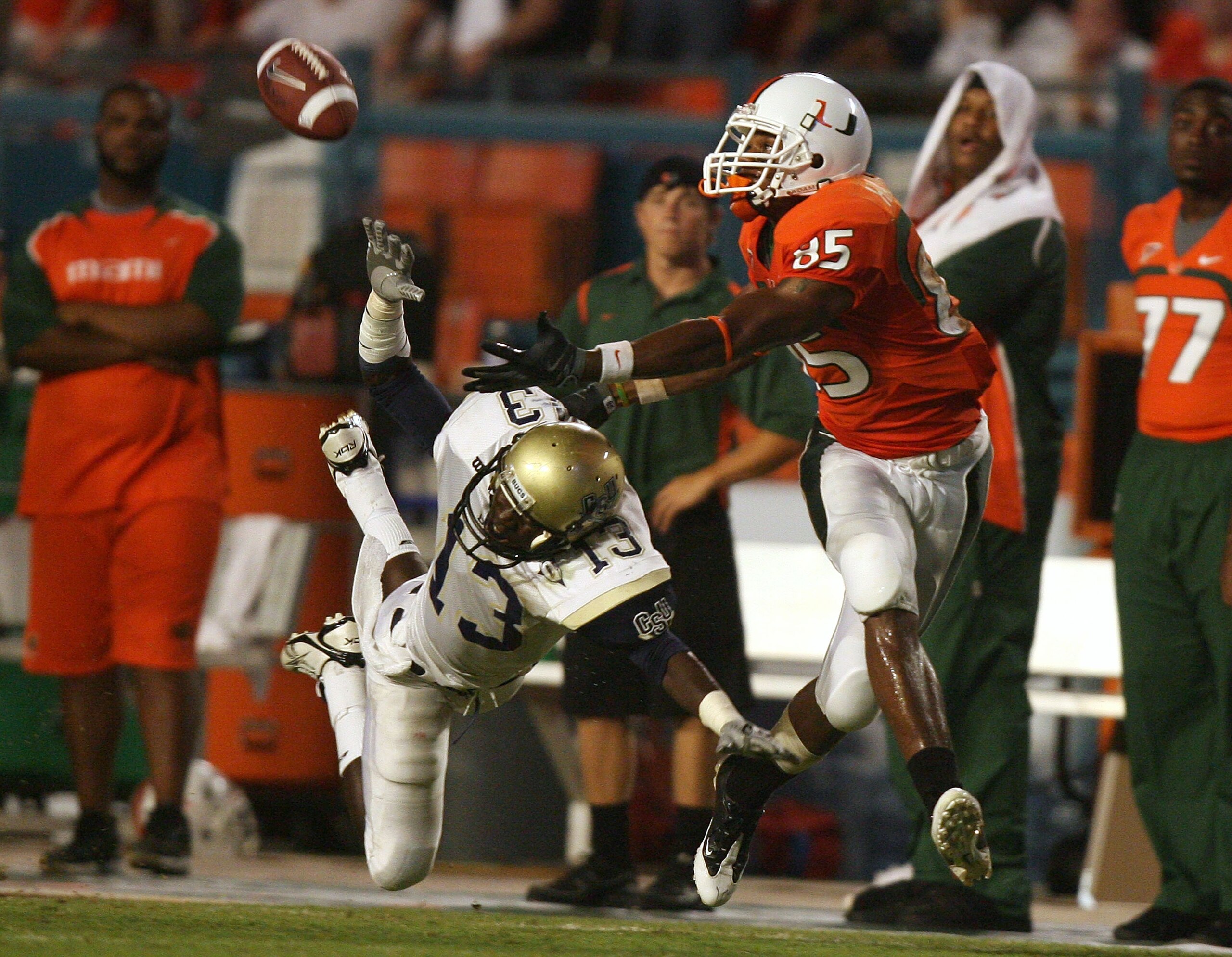
Best-Case Scenario: Miles Austin
Regardless of what his future holds, Leonard Hankerson has cemented his legacy in Miami history. He even broke the 'Canes single-season touchdown record during his stay at the "U." While he may never be Andre Johnson, Hankerson looks a lot like Miles Austin on the field. He has underrated breakaway speed, plays bigger than his frame and maximizes his athleticism.
Worst-Case Scenario: Dwayne Jarrett
Dwayne Jarrett was also a superstar in college. He broke records at USC, whose alumni include Lynn Swann and Keyshawn Johnson. Jarrett is bigger than Hankerson and their playing styles are different, however, both receivers excelled at big schools with a prestigious history. Jarrett's lackluster NFL career shows how a big name at a big school can have a short stay in the NFL.
43. Stephen Paea, DT, Oregon State
8 of 50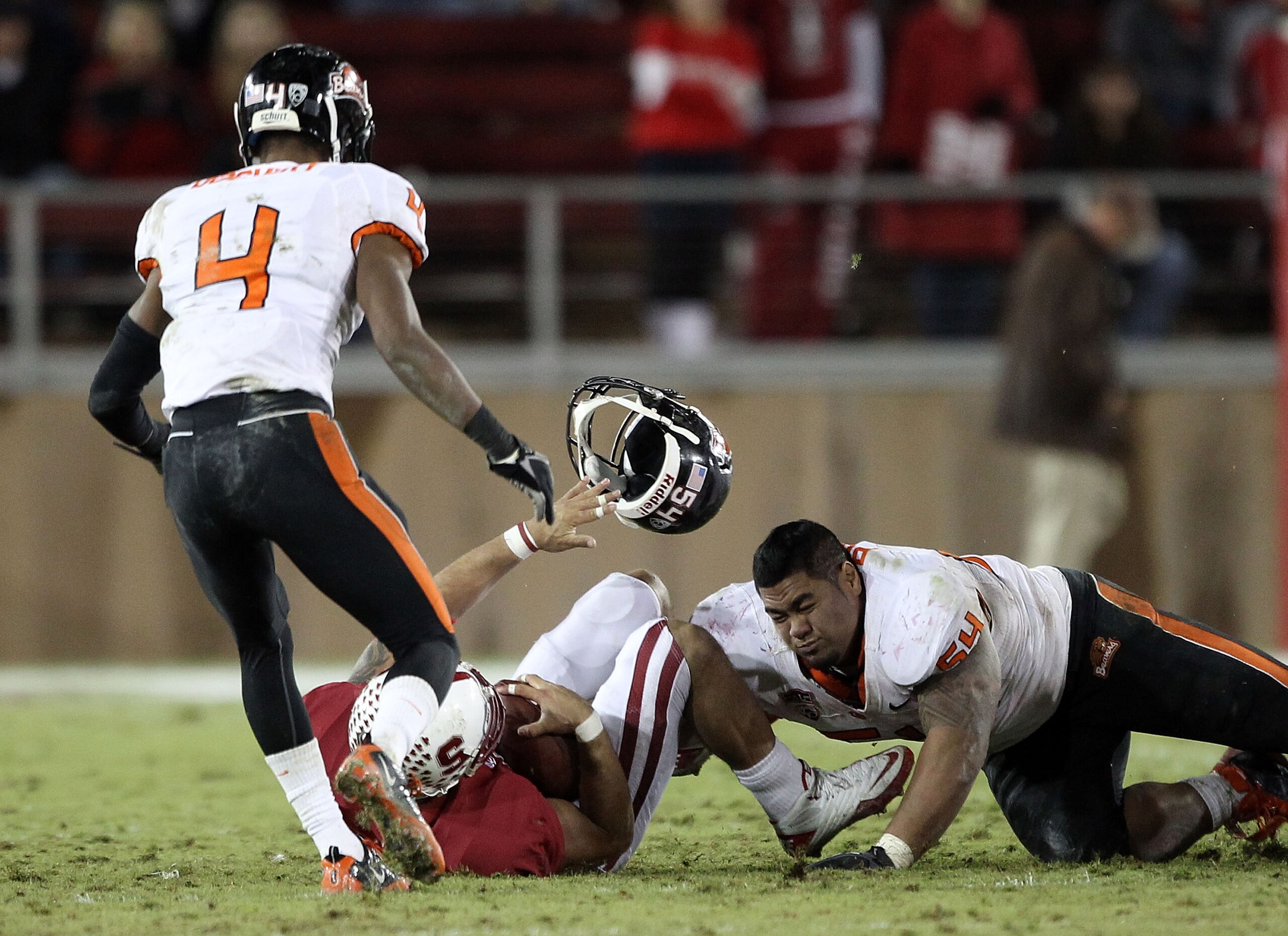
Best-Case Scenario: Kris Jenkins
Stephen Paea broke the all-time combine record for bench reps, putting up 225 pounds an unbelievable 49 times. Unfortunately, being a workout warrior doesn't always transfer over to the NFL. Paea has the tape to back up his strength. He doesn't make a ton of plays, but he is an unmovable object. Kris Jenkins became an All-Pro by simply clogging up the middle and letting everyone else make plays. Paea is a bit smaller than Jenkins, but he has a better center of gravity and is quicker as well.
Worst-Case Scenario: Isaac Sopoaga
Isaac Sopoaga dominated the bench press during his combine workout. He is a solid rotational defensive lineman with the versatility to move inside or drop into a five technique. Sopoaga is a guy you want to have on your team, but isn't anything to write home about. Many who shine on the bench press falter on the field. Hopefully for Paea, he doesn't follow suit.
42. Ryan Mallett, QB, Arkansas
9 of 50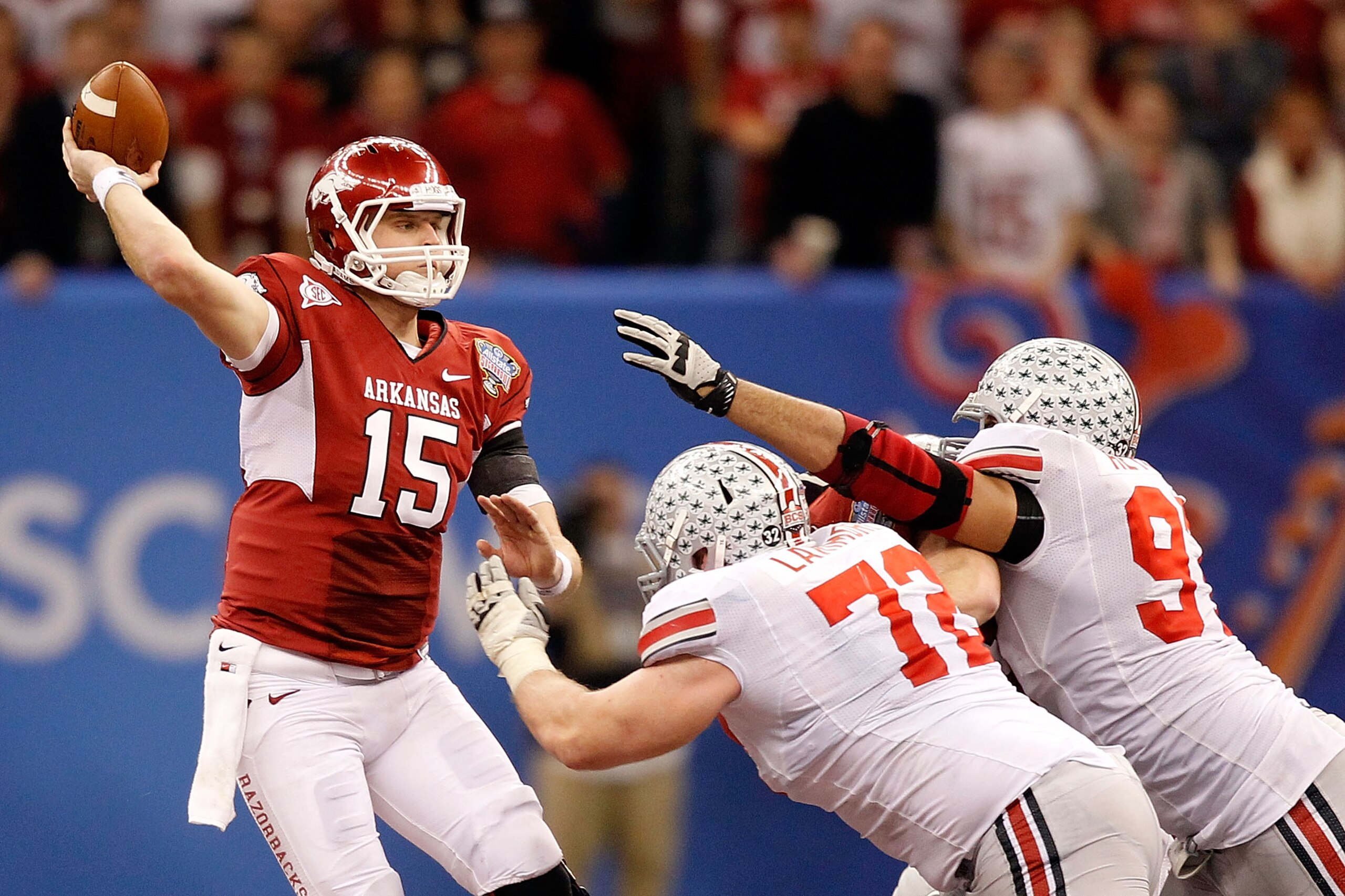
Best-Case Scenario: Peyton Manning
Before there is a massive uproar, this isn't to say Mallett has the opportunity to be one of the best quarterbacks to ever walk the planet. He is a stationary quarterback with a cannon. He has prototypical height and can make all the throws. At the combine, he showcased his ability to throw bombs on a rope. Scouts are going to covet his arm strength, even if his mobility is a concern.
Worst-Case Scenario: JaMarcus Russell
Remember when JaMarcus Russell was regarded as a giant quarterback who could throw the ball a mile? His "look at me" attitude coupled with drug rumors have made him the laughingstock of the NFL. The interview process could be the most important part of the draft process for Mallett. Teams need to pry into his character before investing in him as a project quarterback, especially if they gamble on him in the first round.
41. Justin Houston, OLB, Georgia
10 of 50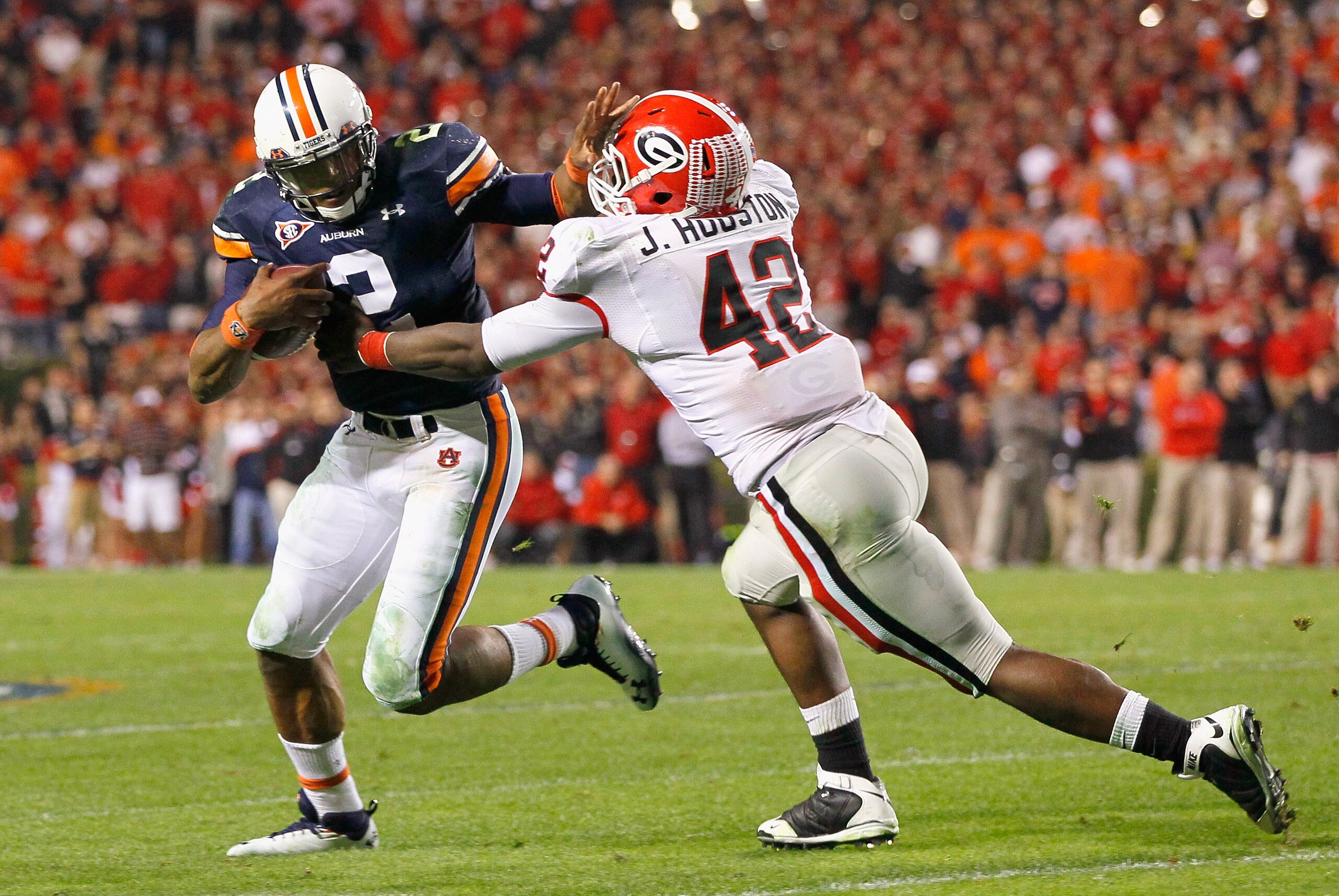
Best-Case Scenario: LaMarr Woodley
There are guys who need to be taught how to stand up and continue to dominate as a rush end. Justin Houston already has experience as a stand-up outside linebacker. He has prototypical size and a knack for getting to the quarterback. LaMarr Woodley saw similar production while he was at Michigan. Everyone knows Houston can rack up huge sack numbers. Like Woodley, he will need to prove he has a complete game.
Worst-Case Scenario: Bruce Davis
Bruce Davis, like Houston, was a sack master in college. Unfortunately, he couldn't even get to the quarterback at the next level. His size and stature are similar to that of Houston, but Houston is more highly touted. Davis' story is not uncommon. Players who excel only at getting to the quarterback in college often find themselves struggling to secure jobs at the next level.
40. Kyle Rudolph, TE, Notre Dame
11 of 50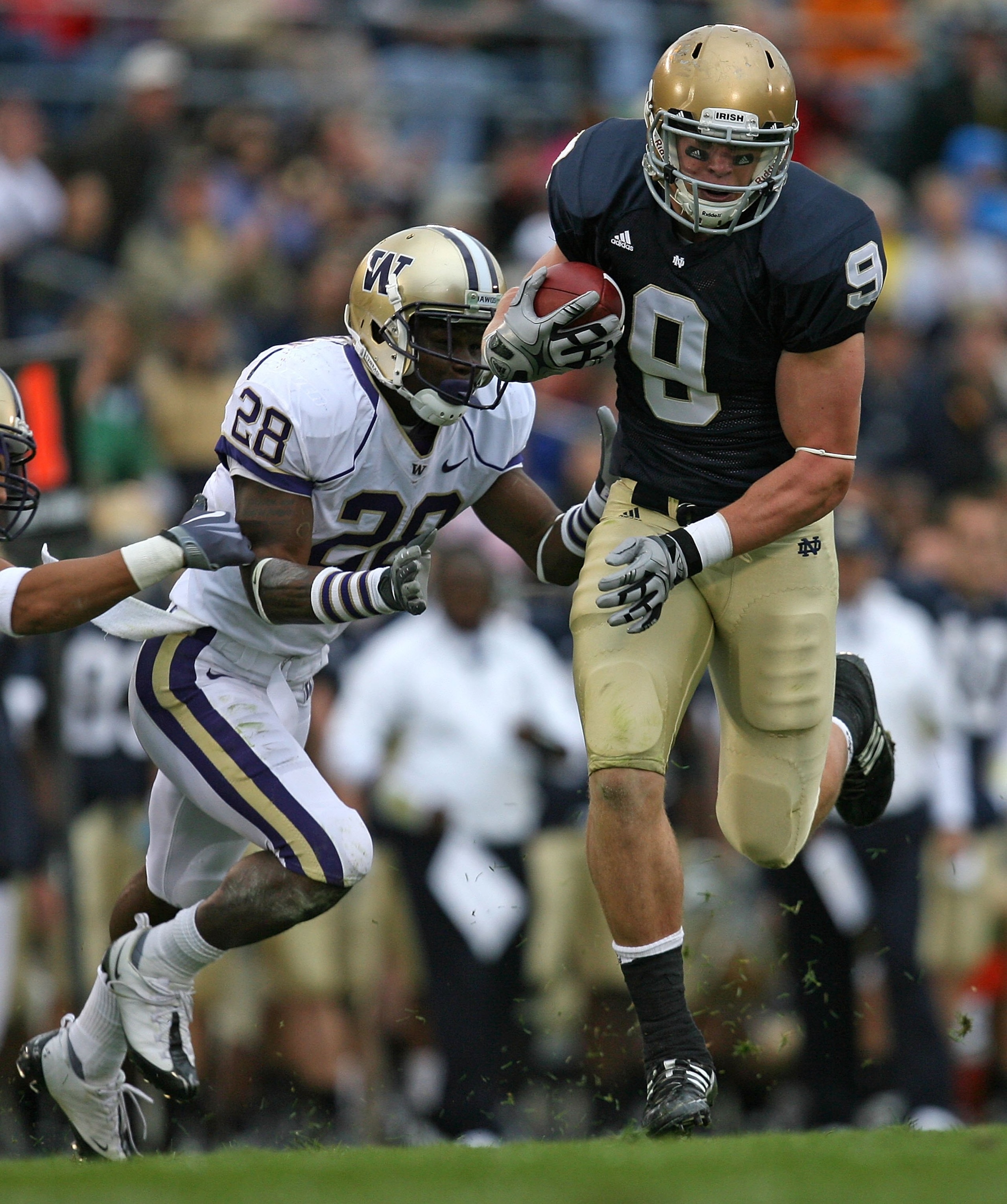
Best-Case Scenario: Todd Heap
Kyle Rudolph is a huge target. His 6'6" frame and reliable hands make him an asset to any passing offense. He will be more valuable as a pass-catching tight end, but should be able to hold his own blocking at the next level. Todd Heap has made a living serving as a reliable target in a smashmouth offense. Being sure-handed and possessing the ability to create mismatches should make for a long NFL career for Rudolph.
Worst-Case Scenario: Kellen Winslow Jr.
Rudolph doesn't have nearly the hype Kellen Winslow Jr. did coming out of Miami. Winslow was the son of a Hall of Famer and seemed like an elite NFL tight end waiting to happen. He could run, catch and at 6'4", he was expected to create mismatches. Although he made the Pro Bowl once, Winslow has not lived up to expectations. Tight ends taken in early rounds are risky acquisitions and Rudolph is no different.
39. Torrey Smith, WR, Maryland
12 of 50Best-Case Scenario: Josh Cribbs
Torrey Smith is an exceptional return man and an above-average receiver. Make no mistake about it, if Smith couldn't contribute in the return game, he wouldn't be nearly as sought after. Josh Cribbs is Mr. Everything for the Cleveland Browns. Smith has the potential to be one of the better returners in the NFL. The fact that he can be a solid No. 2 receiver and a potential first option is a bonus.
Worst-Case Scenario: Brandon Tate
Brandon Tate is a high floor for any up-and-coming return man. Tate holds the record for combined return yards in college football. He has battled through injuries, but had a breakout year last year, even breaking loose for a 97-yard touchdown on a return. Even so, he is not regarded as one of the premier returners in the league. His receiving skills aren't enough to compensate for his relative lack of production on special teams.
38. Ryan Williams, RB, Virginia Tech
13 of 50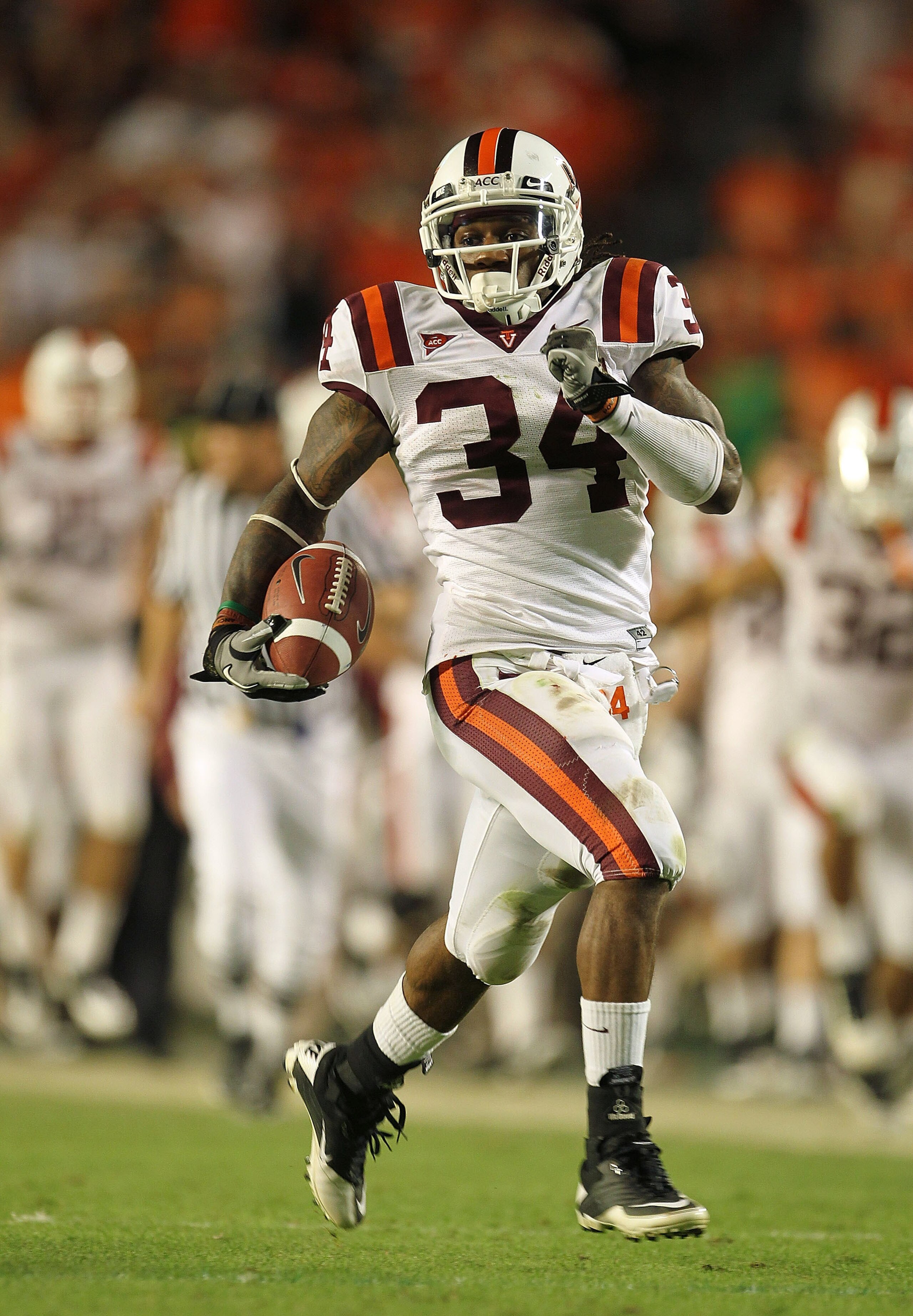
Best-Case Scenario: Ahmad Bradshaw
Ryan Williams is small in stature, but he does not run as such. His compact build and speed make him effective at working his way through the hole inside and getting to the edge outside. Ahmad Bradshaw was criticized for his size, but has found success in the NFL. Shorter backs can succeed at the next level and Williams could be the perfect change-of-pace back for a team with a short-yardage big back.
Worst-Case Scenario: Marshawn Lynch
Aside from the incredible run Marshawn Lynch had against the Saints in the playoffs, his career has been so-so. He doesn't have the game-breaking speed to break to the outside and isn't physical enough to run between the tackles. Lynch proved to be expendable to the Bills this season. Having a back who isn't big, powerful or incredibly fast is undesirable. Also worth noting, Williams has already faced injury issues, as is common for smaller, physical backs.
37. Danny Watkins, G, Baylor
14 of 50Best-Case Scenario: Jahri Evans
Danny Watkins took an unconventional route to the NFL. A former aspiring fireman, Watkins is a 26-year-old rookie hailing from Canada. He is a complete guard and has sound technique in both run blocking and pass protection. His height and weight are comparable to Jahri Evans. Evans is a former fourth-round pick who has developed into an elite guard in the NFL. Watkins hopes to go sooner than the fourth round, but would be fortunate to see the same amount of success.
Worst-Case Scenario: Chris Weinke
They don't play the same position, but Chris Weinke also took an unconventional route to the NFL. After playing minor league baseball, Weinke enrolled in Florida State. He won a Heisman, but his age made him fall to the fourth round. Teams were unwilling to invest in a quarterback who would have a shortened career. Teams will seemingly gamble on Watkins more readily, seeing as he is younger and does not play quarterback. Nevertheless, a few shaky years and Watkins will be all but out of the league. He is playing on borrowed time.
36. Mikel LeShoure, RB, Illinois
15 of 50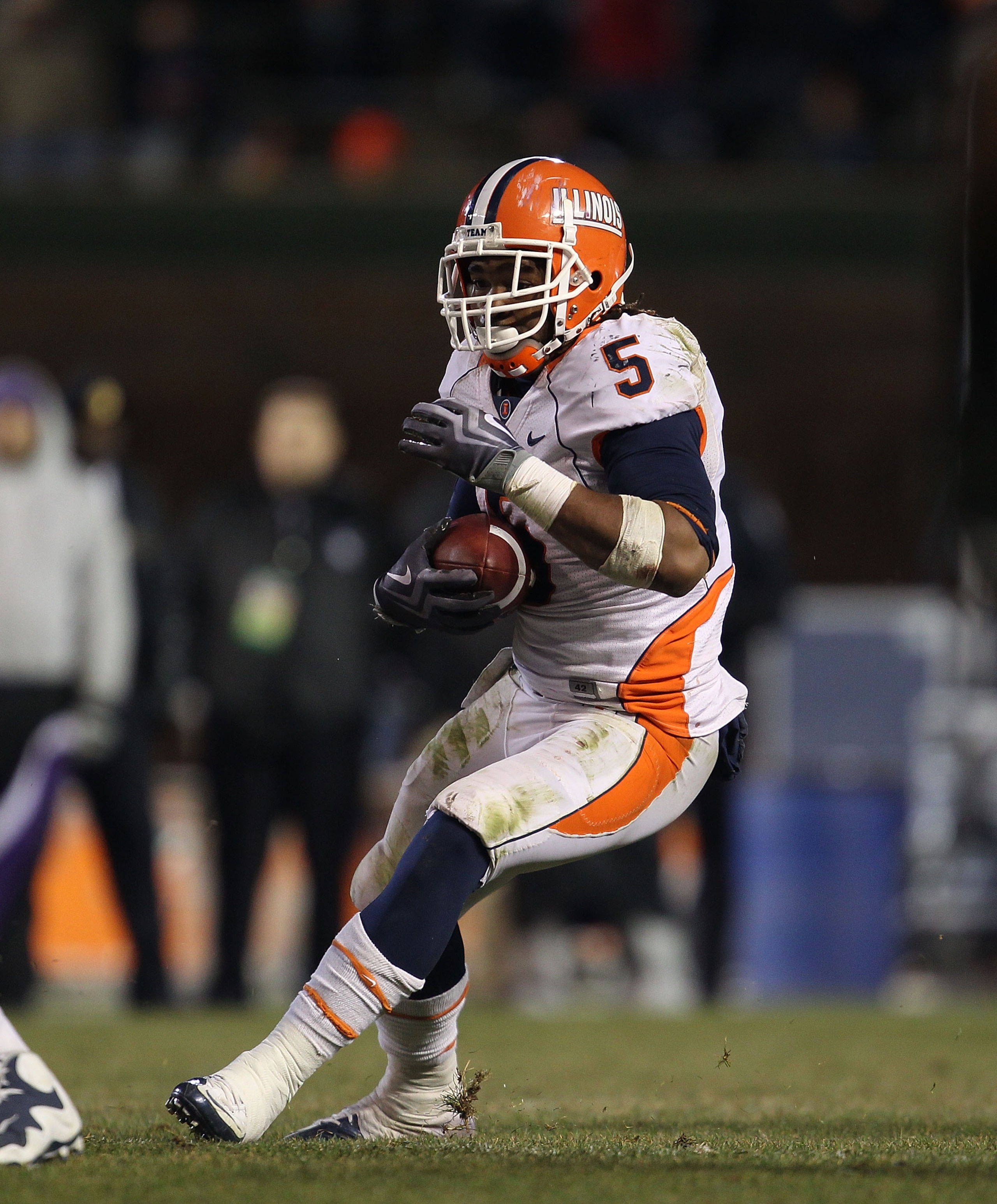
Best-Case Scenario: Arian Foster
Mikel LeShoure is a well-proportioned back. He gets upfield in a hurry and doesn't get caught from behind very often. He lets passes get into his pads at times, but he is an above-average receiving back. LeShoure does not shy away from contact and has no problem catching the ball in traffic. Arian Foster came out of nowhere this season, taking hold of the rushing title and never looking back. Some people overlook the fact that he also caught 66 passes.
Worst-Case Scenario: Donald Brown
Donald Brown came out of UConn with many of the same qualities LeShoure possesses. He was renowned for his tough running style and ability to hit the hole hard. His high-energy play and soft hands were enough to make the Colts expend a first-round pick on Brown. Three years later, Brown continues to struggle and the Colts can't find an identity on the ground.
35. Jabaal Sheard, DE, Pitt
16 of 50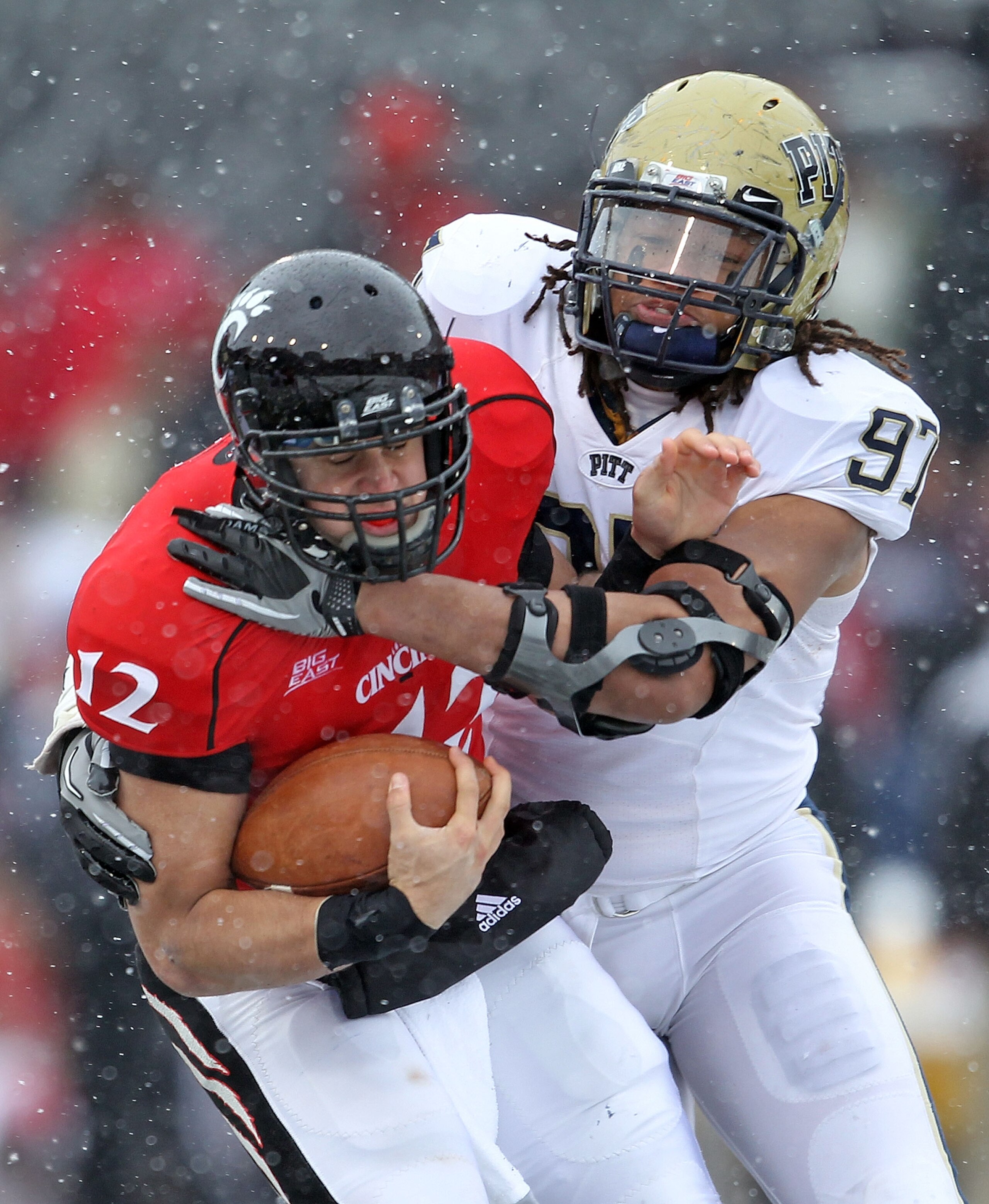
Best-Case Scenario: John Abraham
Jabaal Sheard is a beast in every sense of the word. He is a force at defensive end and makes his presence felt in the backfield. His sack numbers are high, but his tackles for loss and plays behind the line of scrimmage are even more impressive. His play is similar to that of John Abraham. Some teams may look to stand Sheard up, but he is sized well enough to be an Abraham-type defensive end in a 4-3.
Worst-Case Scenario: Spencer Johnson
Sheard does not play the same on every down. That is not to say that he takes downs off, but there is a noticeable difference in his approach to plays with offensive ambiguity and obvious passing situations. Spencer Johnson is a guy who has been around the league a long time. He gets to the quarterback from time to time and produces his fair share of tackles, but he is far from a household name.
34. Aaron Williams, CB, Texas
17 of 50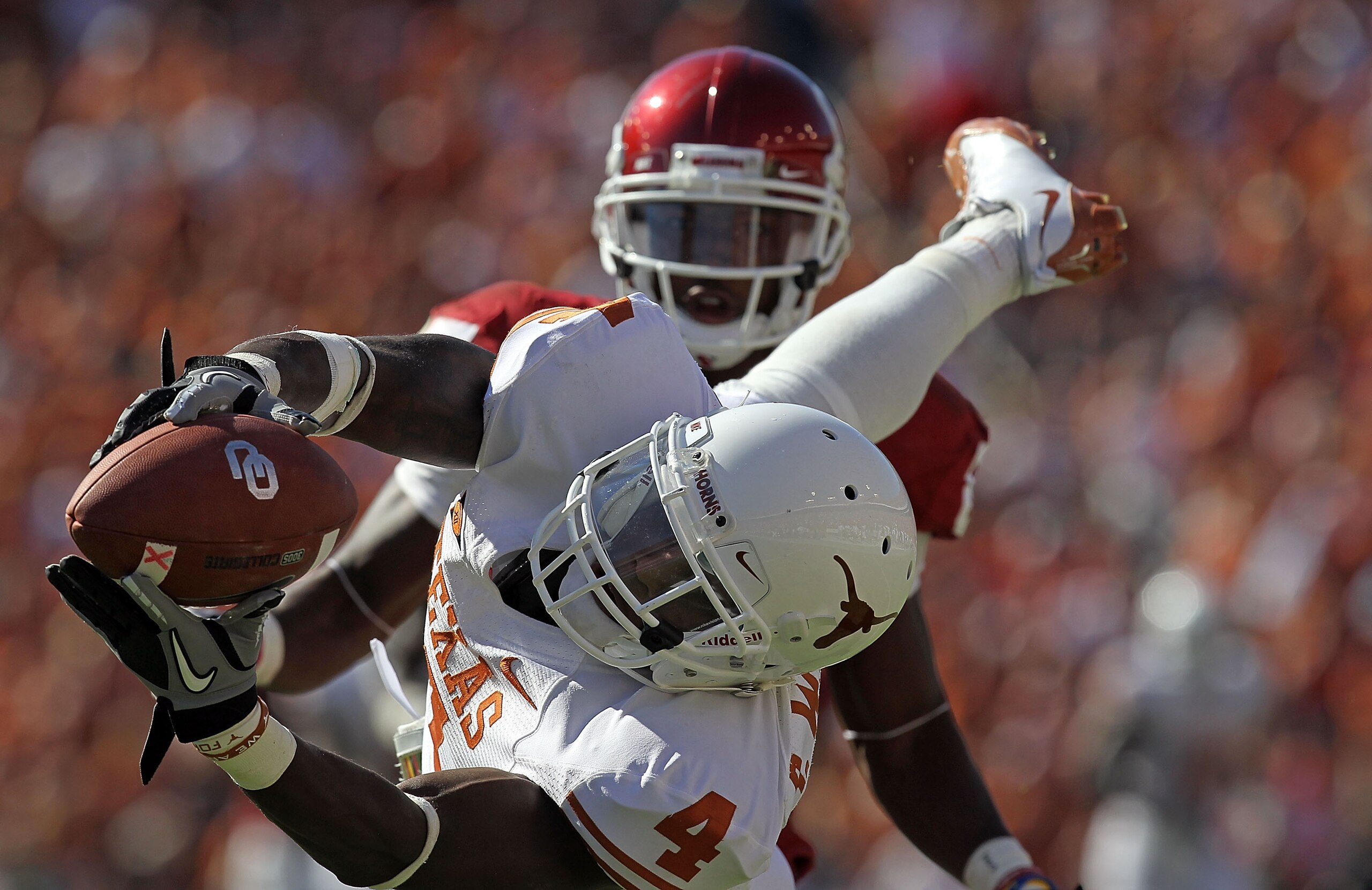
Best-Case Scenario: Tramon Williams
Aaron Williams will be a good No. 1 corner in the NFL, but could be a great No. 2 corner. He struggles at times to jam his receiver, despite being a larger corner. He doesn't shy away from contact, but he fails to wrap up consistently. He has all the tools to succeed. By making Williams the second half of a cornerback tandem, a team could see an elite group in the making, much like the Packers have done with Charles Woodson and Tramon Williams.
Worst-Case Scenario: Aaron Ross
Texas produces promising corners on a regular basis. Such was the case with first-round pick Aaron Ross. Ross isn't necessarily a liability, but he isn't living up to his first-round selection. Selecting Williams in the first round may be a bit of a reach. Teams may see Ross when they look at Williams, causing them to be a bit gun-shy.
33. Derek Sherrod, T, Mississippi State
18 of 50Best-Case Scenario: Matt Light
You can't watch a highlight tape of Derek Sherrod to fully understanding what you are getting. If you see a complete Mississippi State game, you will see Sherrod appearing out of sorts in pass protection at times. He has all the tools to be a left tackle; he just needs to put it together. Matt Light was a second-round pick and has been a pivotal part of the Patriots success. Since Sherrod doesn't have the raw power to be a mauler right tackle, he had better ensure he does not let himself appear to be on the verge of falling over in pass protection. Cue the video.
Worst-Case Scenario: Jonathan Scott
Jonathan Scott stands at nearly the same height and weight as Sherrod. He has trouble being a franchise left tackle and does not seem as though he would excel on the other side of the line. After a series of teams, Scott has shown he always leaves something to be desired. Such could be the case with Sherrod, despite the fact that he presents more upside and talent.
32. Christian Ponder, QB, Florida State
19 of 50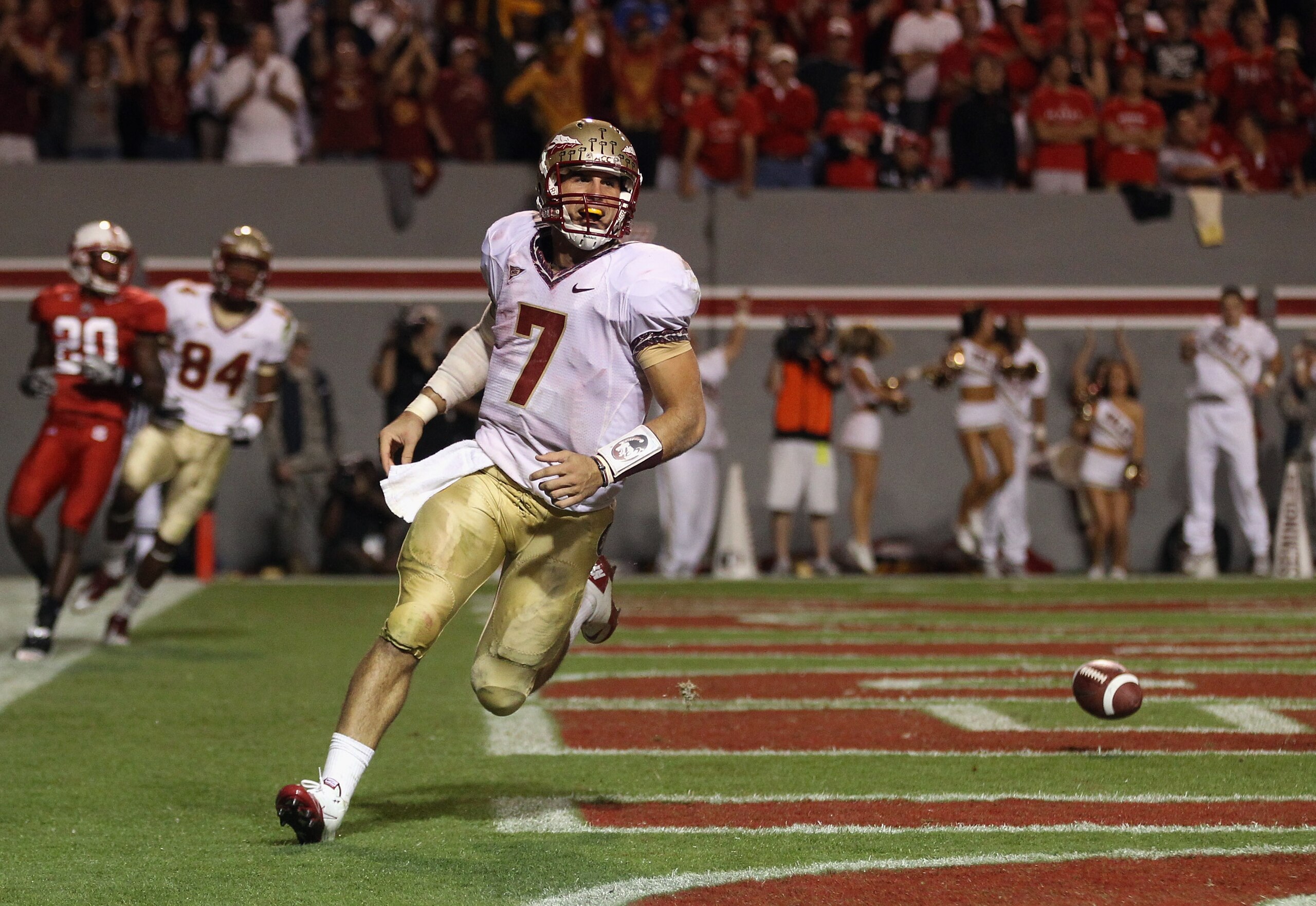
Best-Case Scenario: Kevin Kolb
Christian Ponder faltered a bit his senior season, but is amongst the best senior QBs in the entire draft. He has the ability to move and can operate out of the gun. Ponder seems much more comfortable at throwing to receivers 15 yards and in, but arm strength is not a major concern. A West Coast offense would be ideal for him to fall into. Kevin Kolb hasn't had an opportunity to showcase his talents for a full season, but all indications are he is the perfect QB to command a West Coast offense.
Worst-Case Scenario: Matthew Stafford
Matthew Stafford could be on the verge of becoming an elite NFL quarterback. He could also be one more shoulder injury away from never recovering. Likewise, Ponder has serious lingering shoulder issues on his throwing arm. The Chargers gave up on Drew Brees too soon and there is a chance both Stafford and Ponder can rebound. Hopefully for Ponder's sake, he isn't thrown into the fire with no protection like Stafford was.
31. Martez Wilson, ILB, Illinois
20 of 50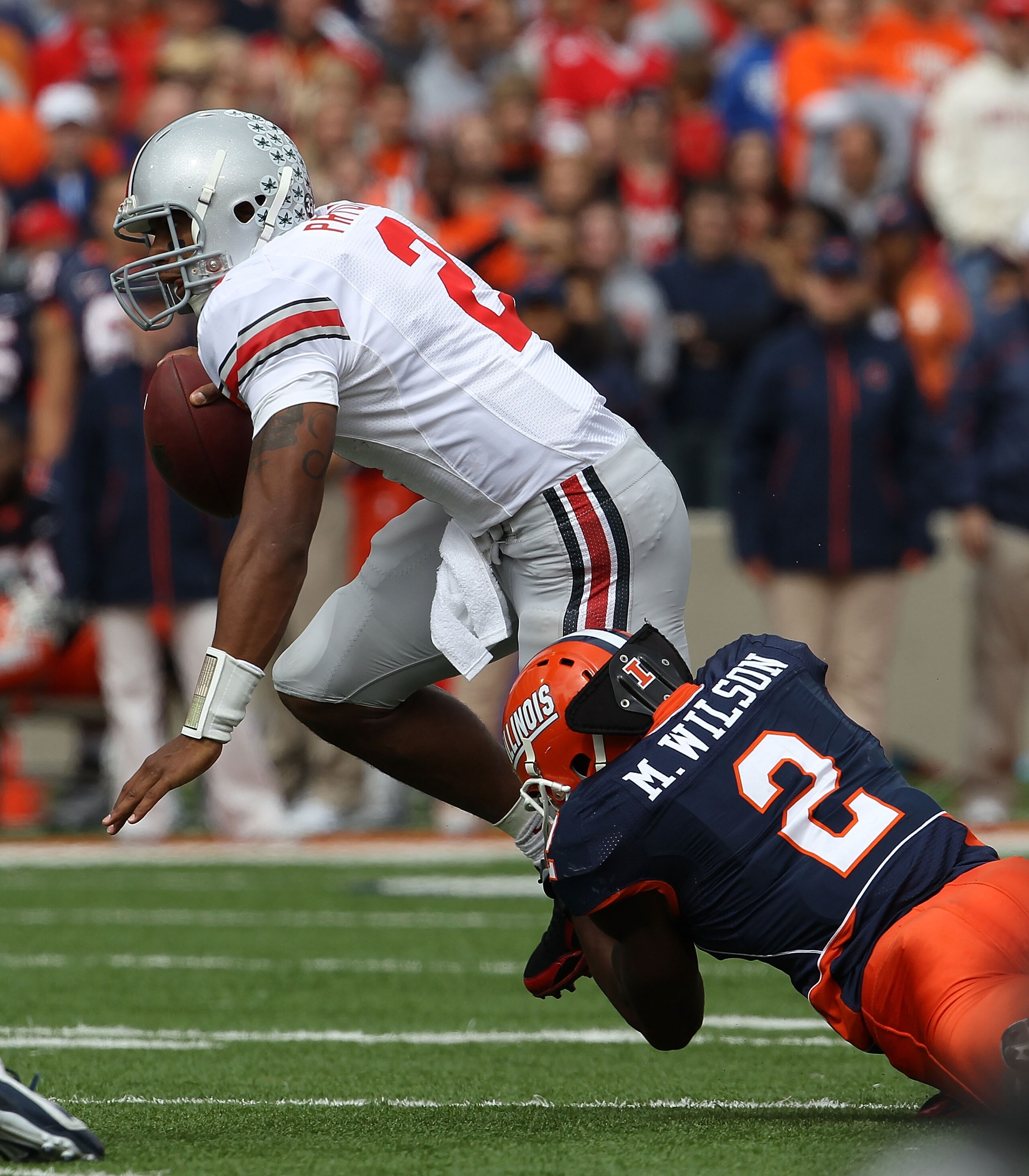
Best-Case Scenario: Lawrence Timmons
Frequently, prospects project as a DE/OLB type. Every once in a while, a player like Martez Wilson comes along who can play ILB or OLB. He is a tremendous athlete and has the size to play either position, though he seems like a more natural inside linebacker. Lawrence Timmons was heavily scrutinized coming out of college by some who thought he would fail to make the move inside. Wilson is already a step ahead of the game in that regard.
Worst-Case Scenario: Aaron Curry
Aaron Curry has a similar body type to Martez Wilson and seemed as though he could play either the same position or move inside if need be. When Curry came out of college, he was perceived as a lock, regardless of whether he was moved inside or kept at his more natural outside linebacker spot. Curry has fizzled thus far in the NFL. He has failed to live up to expectations and his play pales in comparison to his rookie contract. Wilson won't be under nearly as big a microscope when he enters the league, but should do everything in his power to avoid Curry's NFL beginning.
30. Akeem Ayers, OLB, UCLA
21 of 50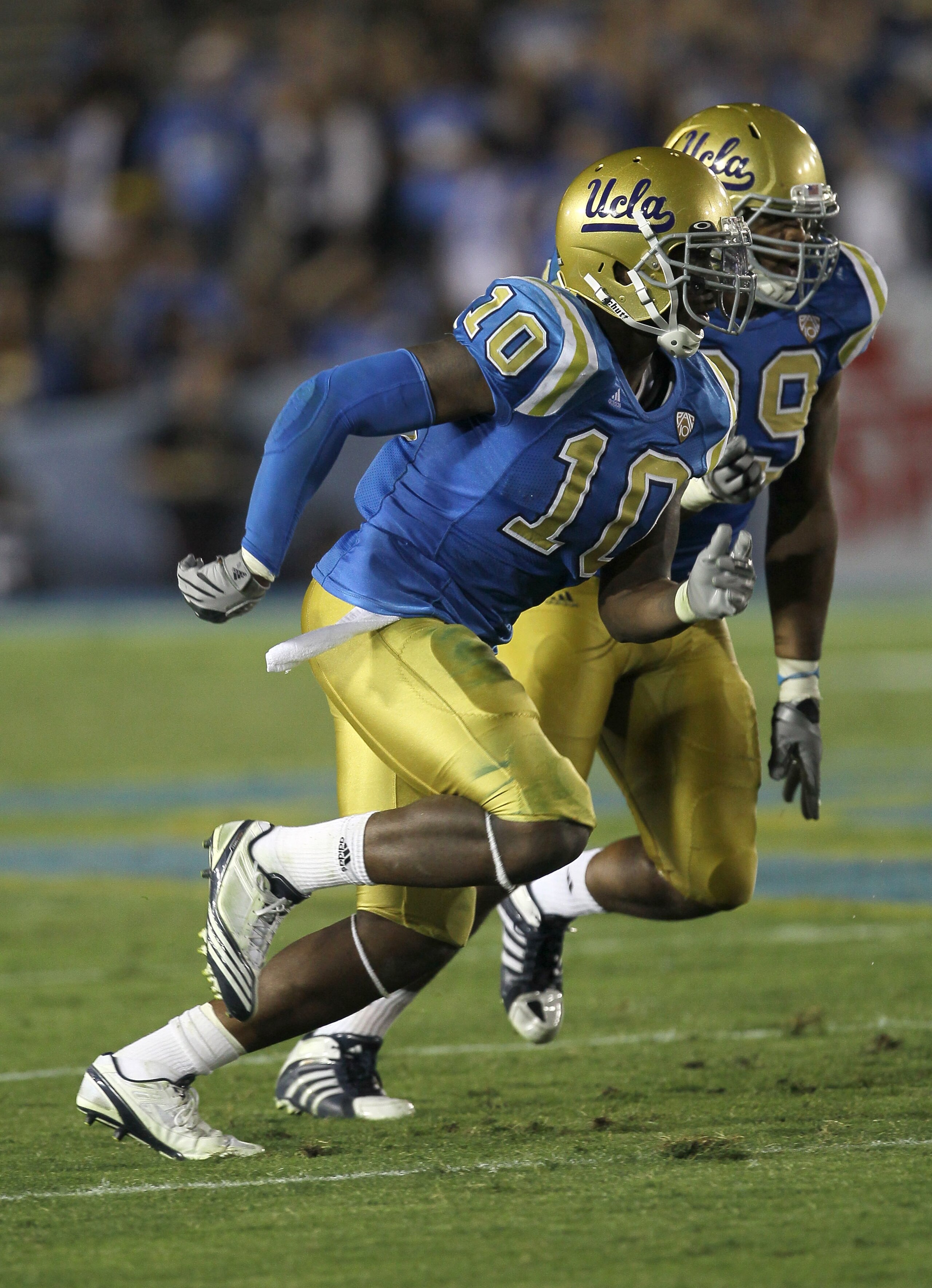
Best-Case Scenario: Shawne Merriman
Akeem Ayers was born to play weakside linebacker in the NFL. He has great length and is bigger than he appears. He possesses the ability to get to the quarterback, but needs to learn how to stay home. Ayers is one of those guys who is just a football player. Only a few short years ago, Shawne Merriman was as good as they came at coming off the edge. Ayers could become that sort of impact player.
Worst-Case Scenario: Kevin Burnett
Kevin Burnett recently made headlines by calling Roger Goodell a "blatant liar." Before those statements, many people didn't even know Burnett existed. Former All-SEC selection Burnett was taken in the second round by the Cowboys. Now a Charger, Burnett is playing inside linebacker. He was thought to be a potential double-digit sack performer to go opposite DeMarcus Ware, but has failed to amass 10 sacks on his entire career. Ayers has a lot of potential, but there are prospects at OLB who were much more productive at getting to the quarterback.
29. Brandon Harris, CB, Miami
22 of 50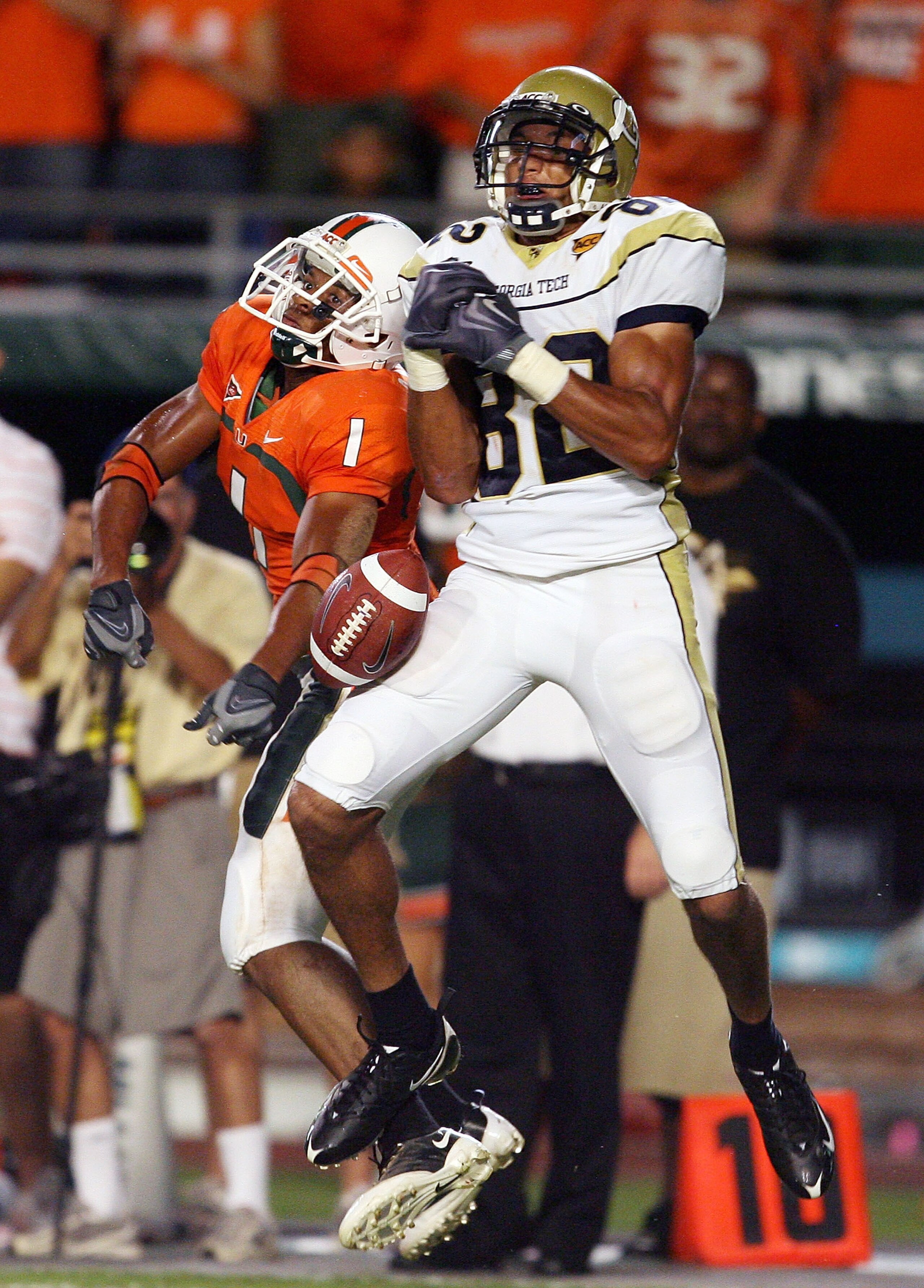
Best-Case Scenario: Charles Woodson
Brandon Harris is a coach's son and a stellar athlete. He is fluid and looks comfortable in coverage. Charles Woodson will go down as one of the best corners in college football history, having won a Heisman at Michigan. Harris didn't see that sort of success in college, but he has the skill set to be the same sort of lockdown corner that teams fear. Quarterbacks were reluctant to throw to his side of the field last year. It may take him some time to get there, but Harris could develop into a true shutdown corner.
Worst-Case Scenario: Antoine Cason
Harris is a great athlete and will probably go in the late first or early second round. Cason was selected in the first round to be a shutdown corner. He is a legitimate starting corner in the NFL, but has not reached his full potential. Harris' numbers don't exactly jump off the page. Part of that lies with the fact that the ball didn't come his direction very often. At least some of the blame belongs with his hands of stone, which he will try to soften once he enters the league.
28. Phil Taylor, DT, Baylor
23 of 50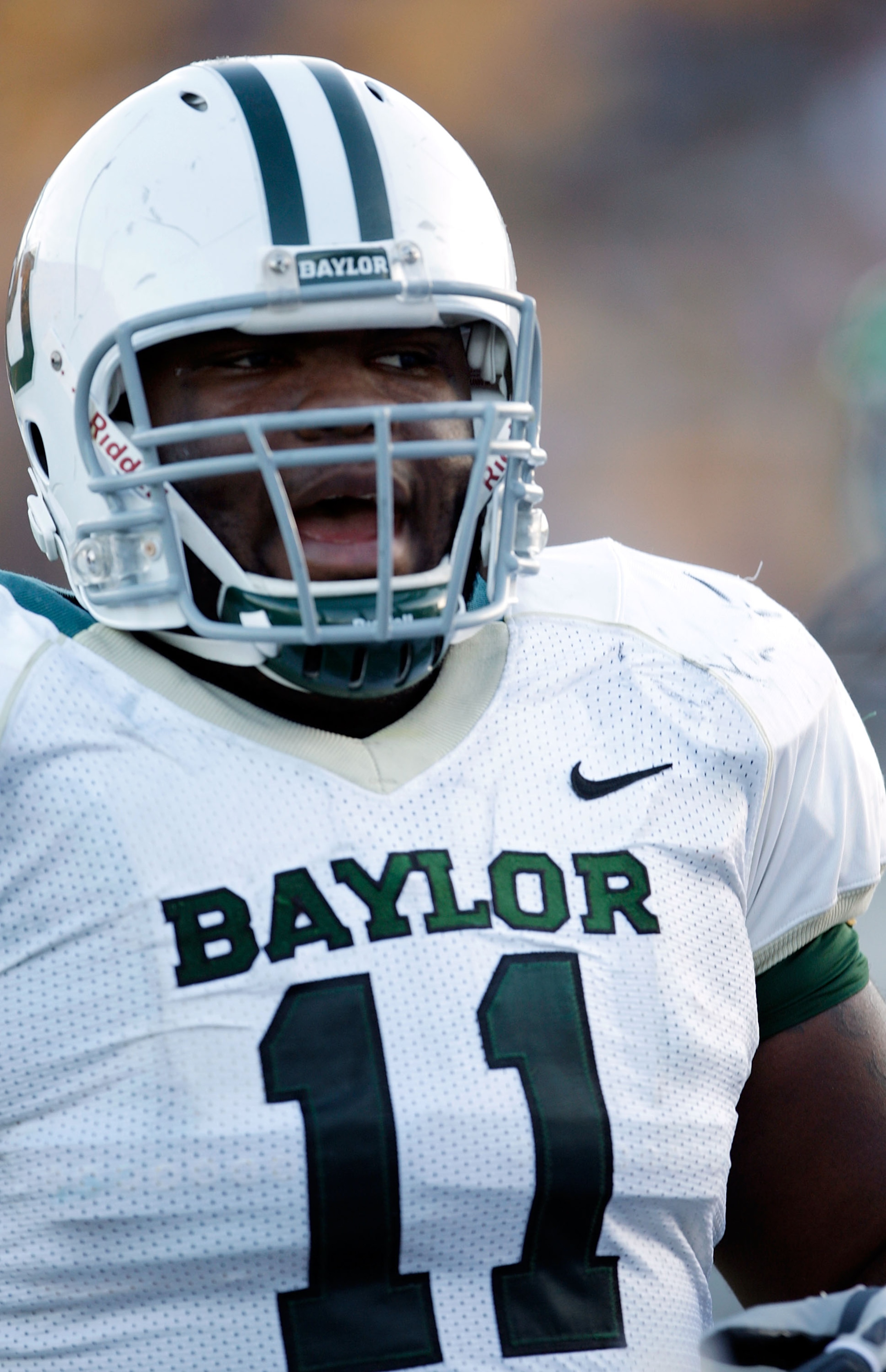
Best-Case Scenario: Casey Hampton
Phil Taylor could be the man in the middle to anchor a 3-4 team in the NFL. Like Casey Hampton, offensive linemen have a difficult time moving Taylor. He has good strength and commands the line of scrimmage. He could potentially play in either scheme, but odds are a team is going to reach for him to fill a need. Wherever Taylor goes, the inside linebackers are going to be incredibly happy.
Worst-Case Scenario: John McCargo
John McCargo was thought to be an immovable object as well. The problem was, he himself could not move. He was drafted in the first round and has failed miserably at warranting that selection. After fainting at training camp, he rode the bench and was eventually traded to the Colts, where he failed a physical and was shipped back to Buffalo thereafter.
27. Muhammad Wilkerson, DT, Temple
24 of 50Best-Case Scenario: Richard Seymour
Muhammad Wilkerson is a huge man who can play in either scheme. He is unbelievably athletic for being 6'5". He is listed as a defensive tackle, but he looks like a 3-4 defensive end waiting to happen. Richard Seymour has seen great success in the NFL. His 48.5 career sack total and run-stopping capabilities make him a tremendous asset even today. It is unclear whether or not Wilkerson has the right hook that Seymour has, but he has the potential to mimic his football playing style.
Worst-Case Scenario: Kentwan Balmer
Kentwan Balmer was drafted as an athletic project who was versatile enough to play in either system. The fact of the matter is that players who are versatile also get the tag "project," and rightfully so. Hybrid players have "boom or bust" potential. Wilkerson could fall into the right hands and see a tremendous career.
26. Jimmy Smith, CB, Colorado
25 of 50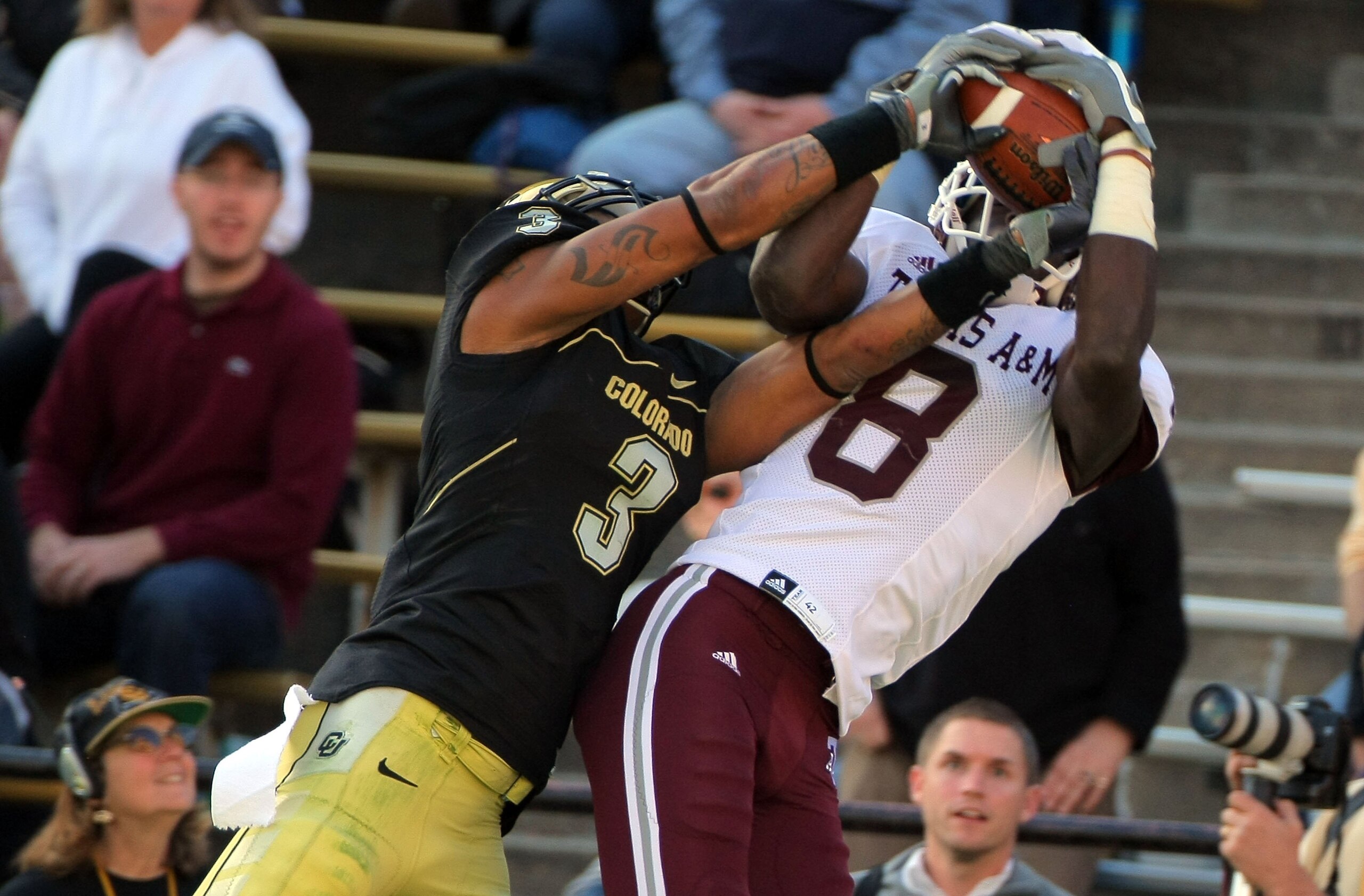
Best-Case Scenario: Antonio Cromartie
Jimmy Smith is 6'2" and ahead of the game at jamming wide receivers at the line of scrimmage. He has active hands and can run with virtually any receiver he comes across. He can tackle, is fluid in his hips and has great recovery speed. Antonio Cromartie is a huge corner as well. He played second fiddle to Darrelle Revis last season, but make no mistake about it—Cromartie is not a No. 2 corner.
Worst-Case Scenario: Chris Gamble
Chris Gamble isn't a terrible corner. He has many of the same qualities as Smith. Both corners even do well at times against top-flight talent. The problem is that something is missing. Gamble isn't Nnamdi Asomugha. Smith isn't Patrick Peterson. It's as though everything is there, but something will always be missing.
25. Corey Liuget, DT, Illinois
26 of 50Best-Case Scenario: Marcus Stroud
Corey Liuget can play a number of positions along the defensive line in both schemes. A 3-4 might bite on him if he falls to the later part of the first round, but ability to penetrate and stuff the run lends him towards a 4-3 scheme. Watch a tape of Marcel Dareus or Nick Fairley and then take a look at Liuget. The discrepancy is much smaller than you would probably think. Marcus Stroud wasn't the first defensive lineman selected, but he still enjoyed a successful career in his prime.
Worst-Case Scenario: Jimmy Kennedy
Jimmy Kennedy was considered a cut below Johnathan Sullivan and Dewayne Robertson when he was drafted. As it turns out, Sullivan and Robertson weren't as talented as anticipated. The 2011 draft class seems as though it possesses a number of defenders with unlimited potential. Hopefully for Liuget, he doesn't round off a class of disappointing defensive tackles like Kennedy did in 2003.
24. Cameron Heyward, DE, Ohio State
27 of 50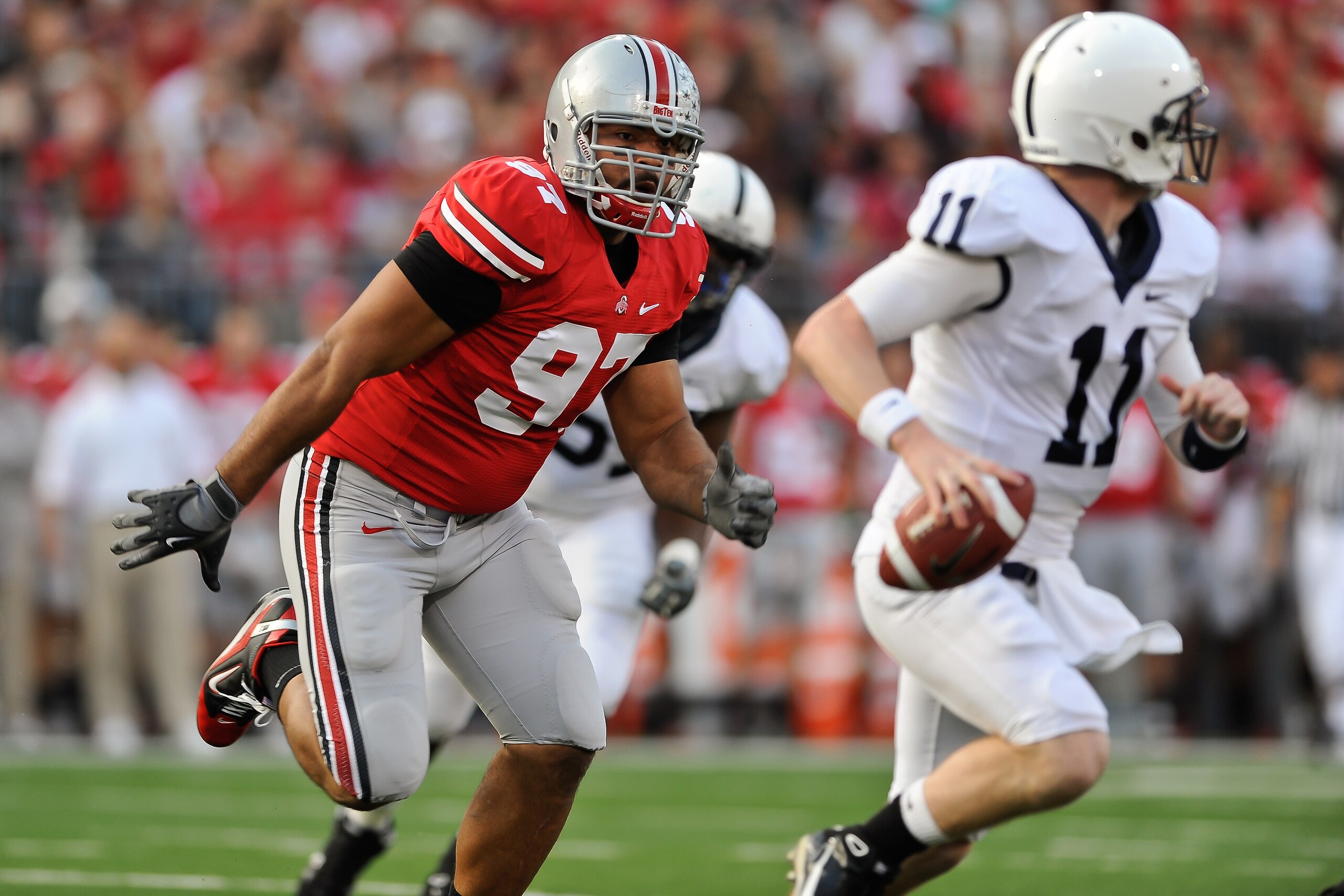
Best-Case Scenario: Justin Tuck
Cameron Heyward is thought to be first-round talent by many draft experts, but seems to be slipping into the second round in most drafts. Ideally, he will be a Justin Tuck-type in the NFL. Much like Tuck, he can attack the quarterback from anywhere along the line in a 4-3. He has the length and size to be a productive edge rusher at the next level.
Worst-Case Scenario: Jamaal Anderson
Jamaal Anderson was supposed to go opposite John Abraham and be the next defensive end to excel in Atlanta. He went to an SEC school, had the size and had the potential. The polarizing views of Anderson are similar to that of Heyward. His NFL lineage and character may make him a safer selection.
23. Jake Locker, QB, Washington
28 of 50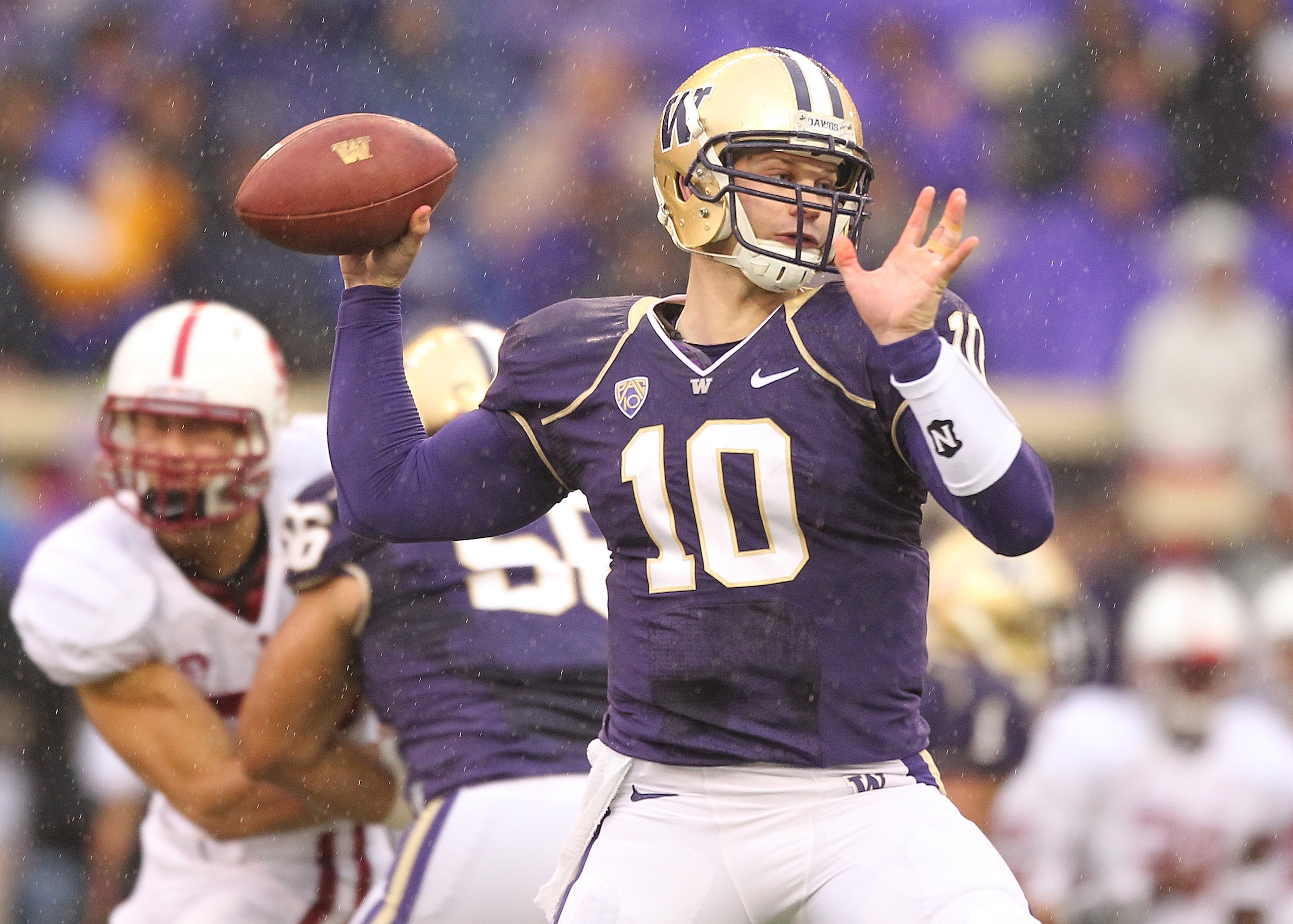
Best-Case Scenario: Aaron Rodgers
Jake Locker probably would have been a top-five selection had he come out in the draft last year. His stock plummeted his senior season at Washington, but he still has a chance to become a first-round selection. Many scouts had doubts about Aaron Rodgers, who was himself a Pac-10 dual-threat QB. Locker may have to wait longer than Rodgers did to hear his name called, but could slip in the same regard.
Worst-Case Scenario: Kyle Boller
On the other end of the spectrum, Kyle Boller was a first-round Pac-10 QB who faltered. He could throw the ball through the goal post while on his knees at the 50-yard line, and that was about it. Boller could move and his arm strength was incredible. Like Boller, Locker may find himself going late in the first round to an established team. Ideally, he will be given a year or two to get his footing as Rodgers did.
22. Gabe Carimi, T, Wisconsin
29 of 50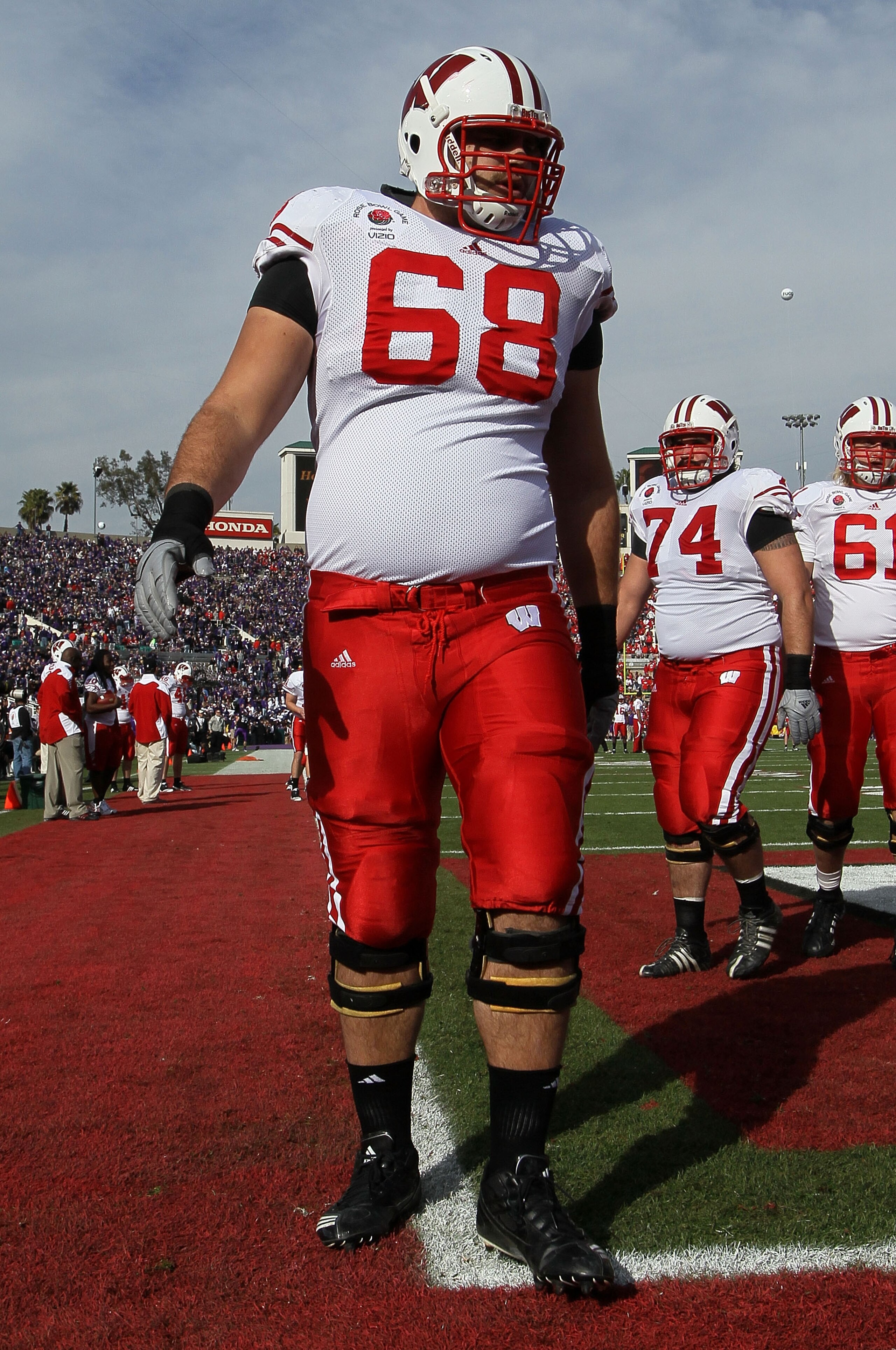
Best-Case Scenario: Jake Long
Gabe Carimi stands at 6'7". His prototypical size and surprising athleticism make him ideal as a franchise left tackle. Carimi was a fantastic run-blocker for a smashmouth Wisconsin Badger offense. His pass blocking isn't as refined as predecessor Joe Thomas or Jake Long, but his game was solid enough to earn him the Outland Trophy. Carimi has the build and talent to be the best left tackle in football.
Worst-Case Scenario: Levi Brown
Levi Brown was highly decorated in college. His mammoth build and feet allowed him to become the fifth selection overall. Brown struggles somewhat in comparison to his projection coming out of college. He isn't a Pro Bowl guy and it seems as though he has a skewed perception of his value. There are certainly worse tackles in the NFL, but Carimi doesn't seem like the type of player to strive for mediocrity.
21. Mike Pouncey, C/G, Florida
30 of 50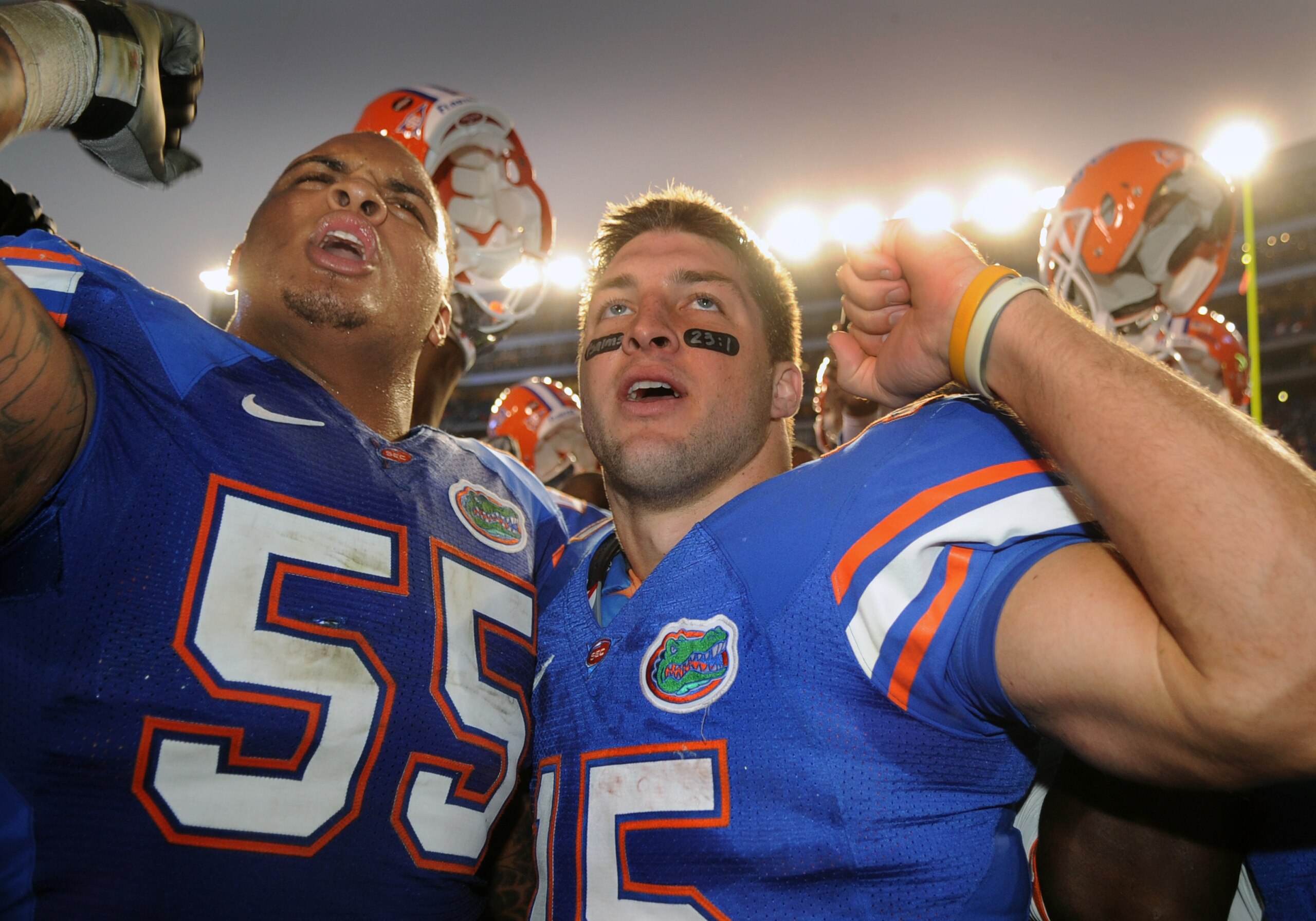
Best-Case Scenario: Maurkice Pouncey
Mike and Maurkice Pouncey made up two-thirds of the interior line at Florida that bulldozed its way to a national championship. Maurkice entered the draft as an underclassman and proceeded to become an All-Pro in his rookie season. Mike Pouncey is his twin brother, so scouts are hoping he can replicate the sort of impact his brother had in Pittsburgh.
Worst-Case Scenario: Samson Satele
It is unclear whether Pouncey will play guard or center at the next level. Drafting an interior lineman in the early rounds can be risky, seeing as impact players in the interior line are few and far between. Everyone wants a plug-and-play center, but many of the NFL's most talented centers and guards are selected in later rounds. Samson Satele didn't play in the SEC, but he was selected in the second round. As his career shows, it can be difficult to get a solid read on how centers will handle the transition to the NFL.
20. Nate Solder, T, Colorado
31 of 50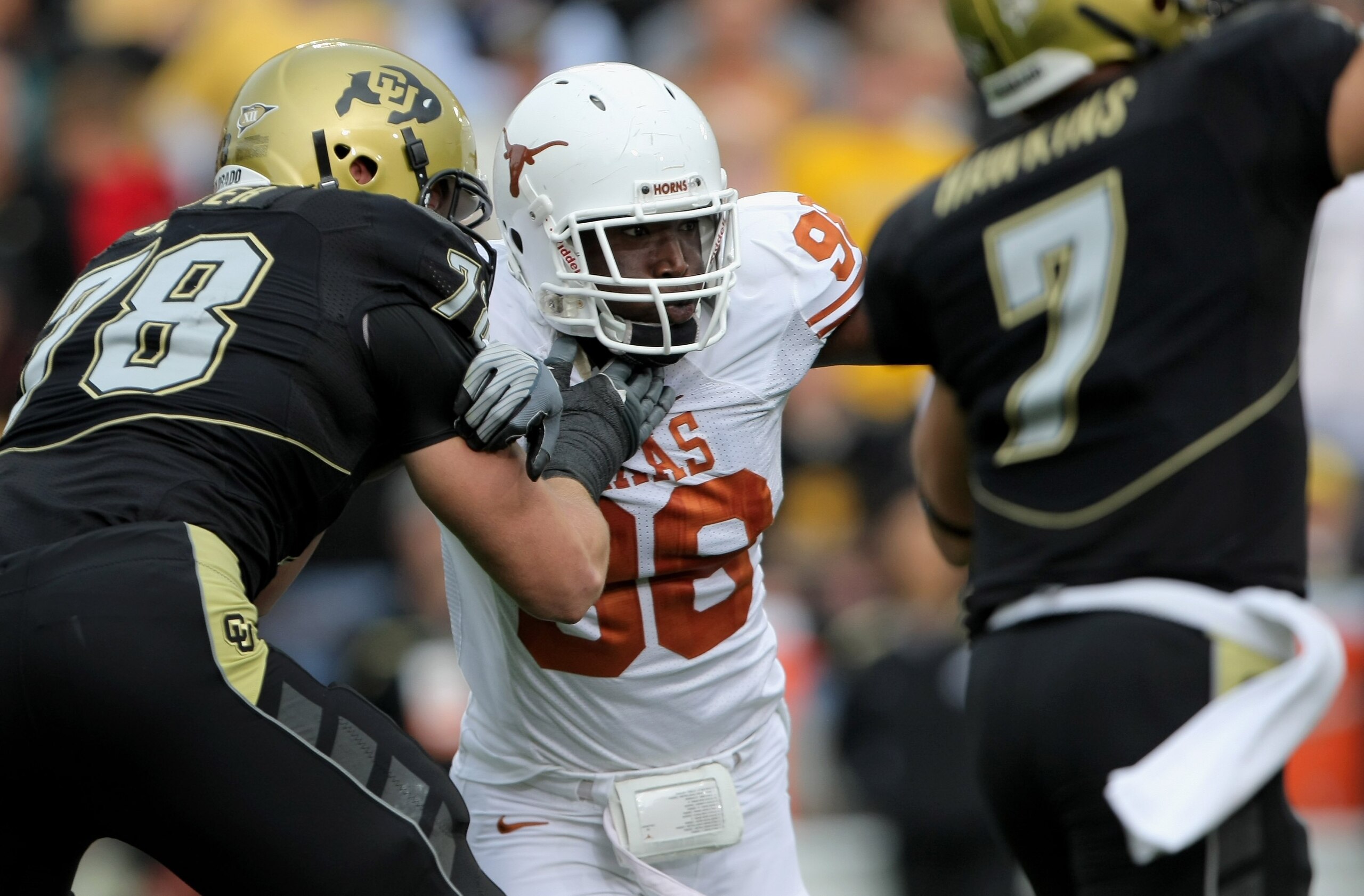
Best-Case Scenario: Joe Thomas
Nate Solder is a 6'8" ex-tight end. He is athletic and rangy, which makes him ideal for the left tackle spot. His size and athleticism draw comparisons to Joe Thomas. He doesn't have nearly the polish or the talent that Thomas had coming out of Wisconsin, but he could get there eventually. Solder has a lot of upside, which can lead to an outstanding career or one that goes down in flames.
Worst-Case Scenario: Jared Gaither
No shame here. Jared Gaither is a solid tackle, but his demotion from blind-side protector to the right side of the line is not something Solder wants to replicate. Gaither is even taller than Solder. He has done well for himself given his size, but his size is a liability at times. Being 6'9" makes it easy to get overextended and difficult to find a center of gravity. Solder will face similar obstacles in his career.
19. Ryan Kerrigan, DE, Purdue
32 of 50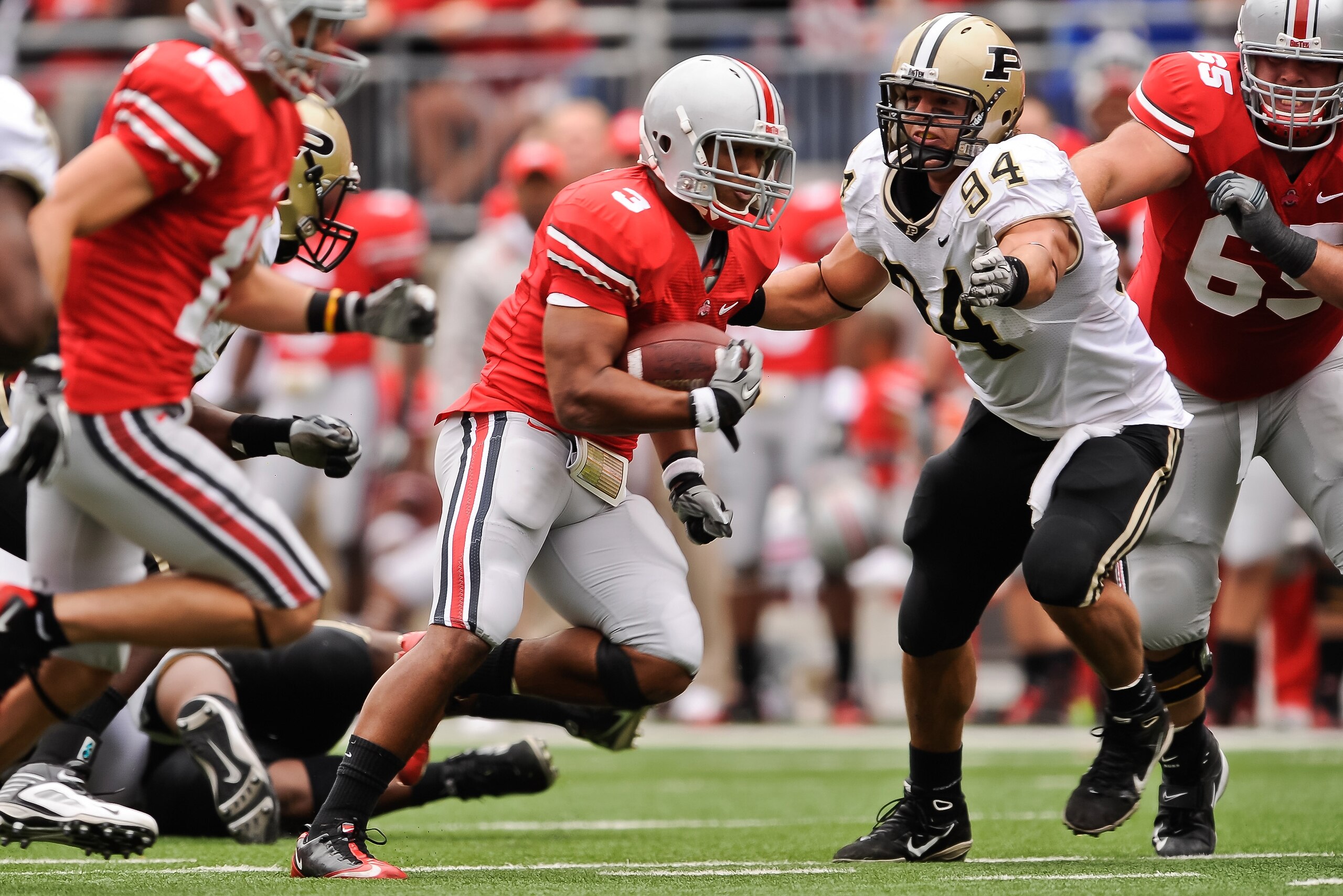
Best-Case Scenario: Aaron Kampman
Ryan Kerrigan is an overpowering force at defensive end. He has terrific burst and great strength once engaged. Kerrigan has solid football instincts and is an unrelenting powerhouse at the defensive end position. Aaron Kampman was kicked to the wayside during the first four rounds of the draft, but he became a terror during his prime with the same qualities Kerrigan had in college.
Worst-Case Scenario: Turk McBride
Kerrigan may lack the ability to switch up his defensive moves. His play looks somewhat repetitious, which will be a liability at the next level. Turk McBride owes much of his downfall to the injury he sustained early on in his career, but his inability to make any sort of waves in the NFL probably would have been the same. As is the case with McBride, Kerrigan may see problems tackling at times at the next level. He gets away with arm tackling at times because of his outstanding strength, but arm tackling is ineffective at the next level.
18. Adrian Clayborn, DE, Iowa
33 of 50Best-Case Scenario: Grant Wistrom
Adrian Clayborn is not as athletic as teams might hope. He is strong and overpowering, which helps him wreak havoc in the backfield. Grant Wistrom was big and strong, but lacked elite speed. It didn't hinder his ability to get into the backfield and make plays, which is a concern for Clayborn. A stocky build and lack of elite athletic talent could cause Clayborn to slide.
Worst-Case Scenario: Frostee Rucker
Frostee Rucker is 6'3" and excelled just as Clayborn did in the collegiate ranks. His production has fallen off noticeably since he came into the NFL. Rucker can't out-man offensive linemen at the next level. Clayborn may struggle when he is no longer a man-child. Refinement in his game is key.
17. Aldon Smith, DE/OLB, Missouri
34 of 50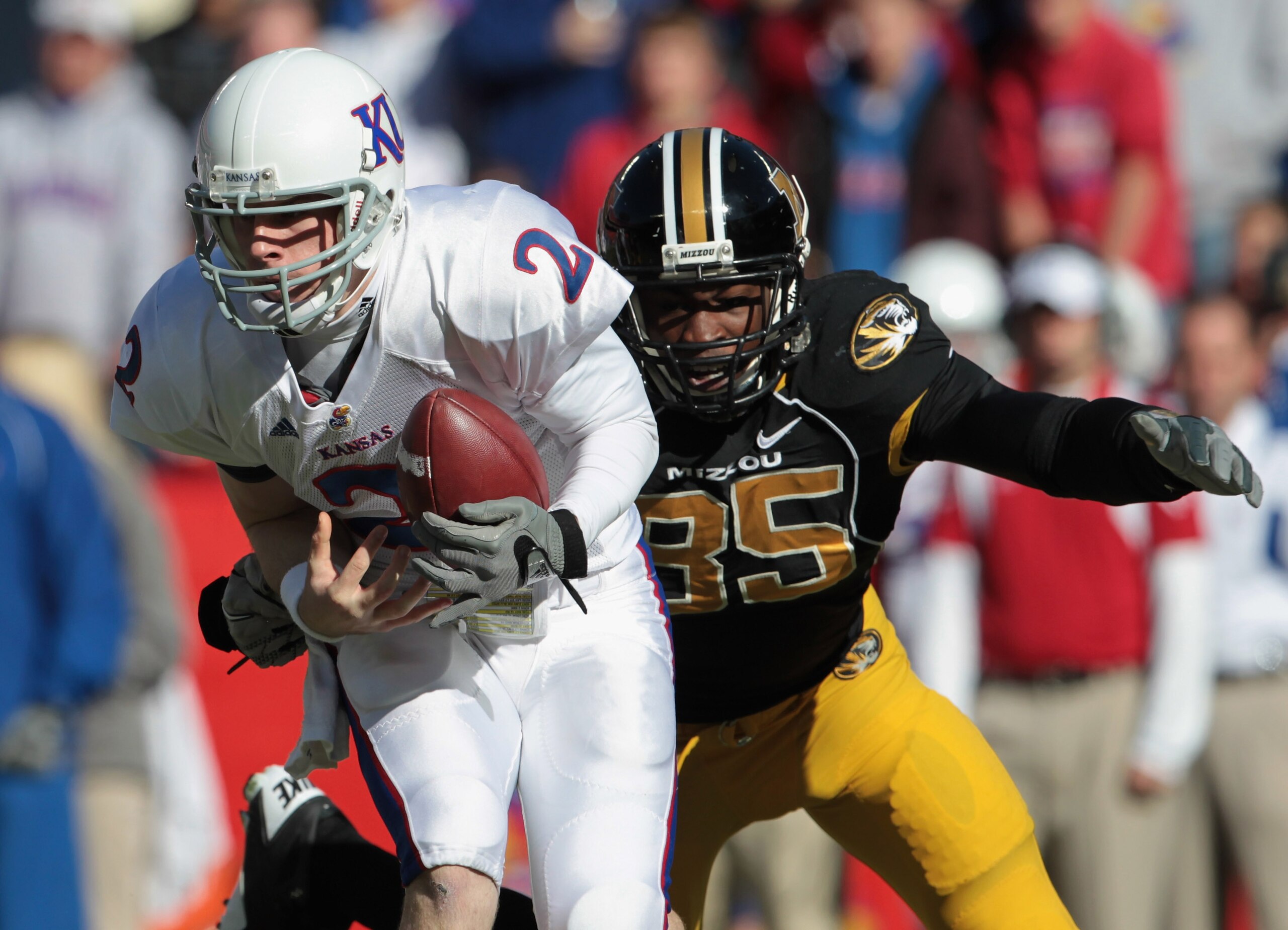
Best-Case Scenario: Terrell Suggs
Aldon Smith is almost too athletic to put down in a stance. His coverage may be cause for concern, which lends him more to be a rush end in a stance, though he may be athletic enough to overcome his coverage flaws. Madden franchise owners rejoice. Like Terrell Suggs, Aldon Smith will likely be the next player to be a 99 when you drop him from the OLB position to DE. Enough with the dorky and uncalled for Madden plug. Suggs is nasty, overpowering and unforgiving. Smith will need to be unapologetic and embody the same "Sizzle-ness."
Worst-Case Scenario: Jarvis Moss
Jarvis Moss is much, much bigger than Smith, but his versatility and athletic ability made him attractive enough to scouts to go 17th overall. Some speed merchants, even big ones, lack the wherewithal to succeed with their hand in the ground. Smith may be more comfortable at outside linebacker, but could struggle between positions.
16. Tyron Smith, T, USC
35 of 50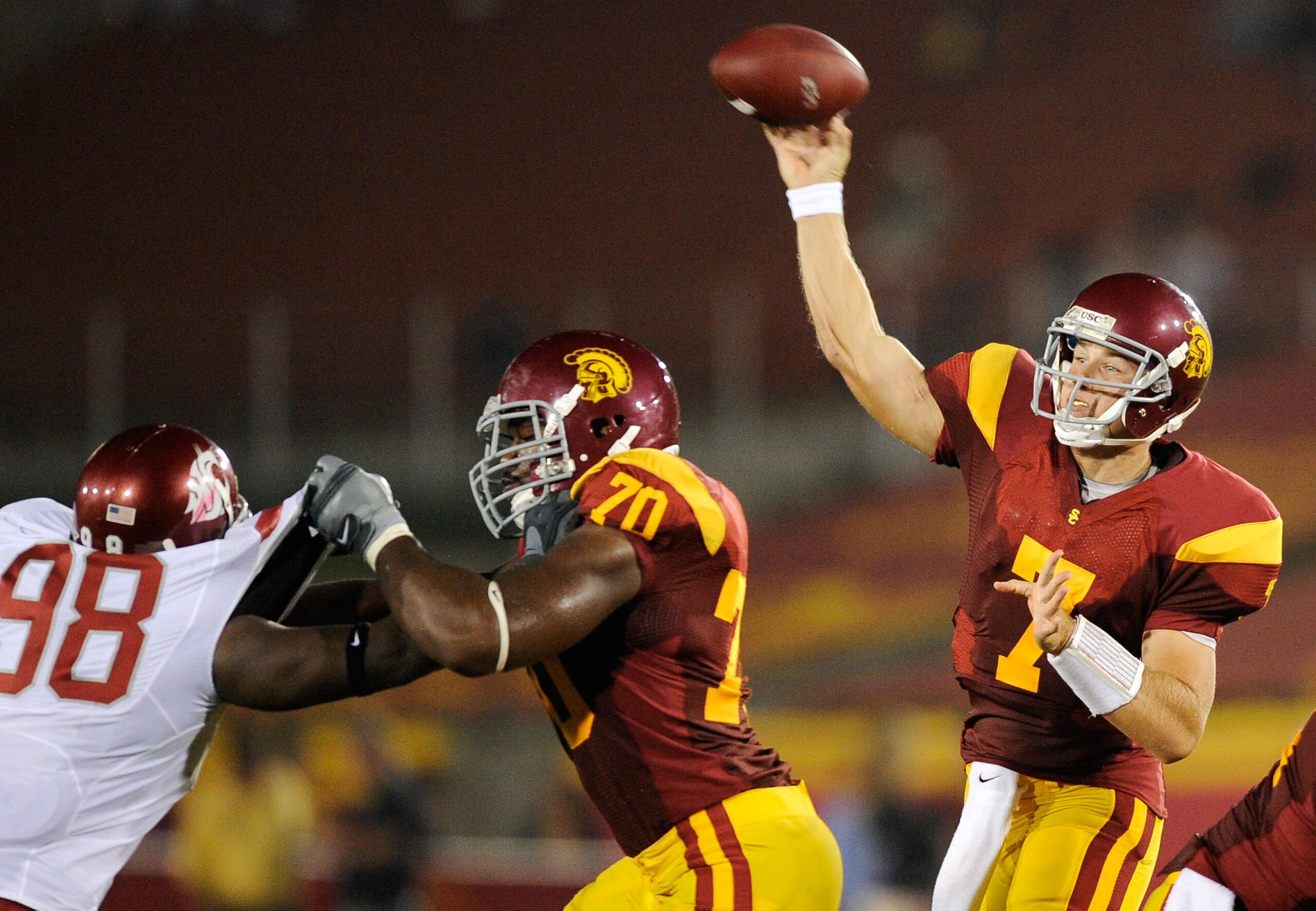
Best-Case Scenario: D'Brickashaw Ferguson
Tyron Smith isn't as pro-ready as D'Brickashaw Ferguson. He lacks the shine necessary to be a plug-and-play left tackle, but there is no shame in developing for a bit before being the franchise left tackle. The good news for Smith is he has everything necessary to be a Ferguson-type one day. It is in his best interest to get comfortable on the other side of the line first, much like Michael Oher did in Baltimore.
Worst-Case Scenario: George Foster
George Foster was a left tackle in the making for his entire stay in Denver. Unfortunately, he got stuck on the right side and failed to shine even as a right tackle. Smith has the run-blocking capabilities that Foster did coming out of college, which could cause him to be a temporary solution on the other side. Hopefully for Smith, he isn't forgotten about as Foster was.
15. J.J. Watt, DE, Wisconsin
36 of 50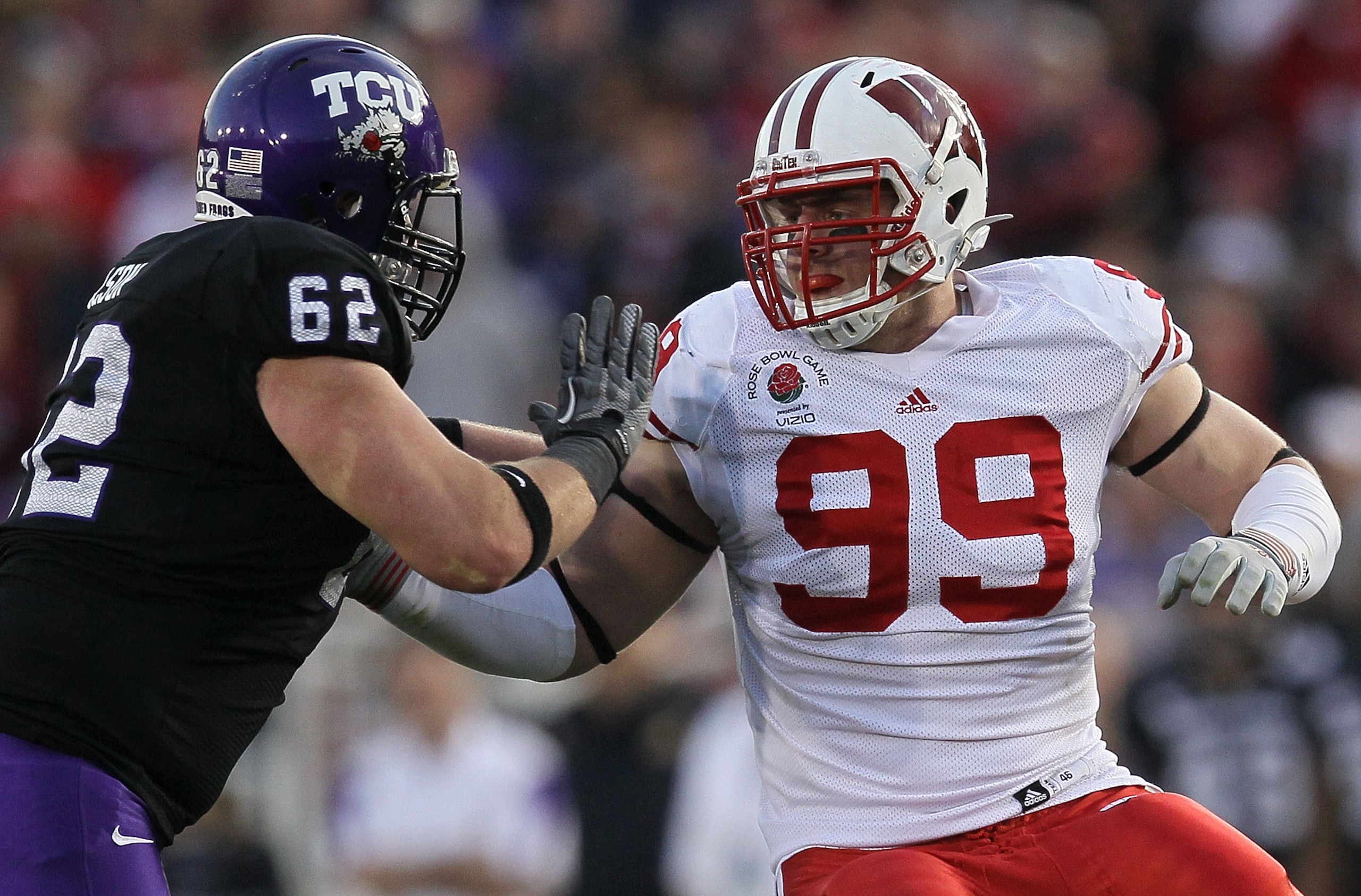
Best-Case Scenario: Mario Williams
J.J. Watt is an incredible athlete. He has the size, the strength and the athleticism to take over the NFL.
When you watch him play football, you feel like something special is transpiring. Watt could fit into either scheme and is a complete football player. Mario Williams may take the cake as the most complete defensive end in football right now. The combination of size and quickness both pose is incredible.
Worst-Case Scenario: Carlos Dunlap
Carlos Dunlap was almost a double-digit sack guy, so this being the worst-case scenario is ideal. At worst, Watt will be a situational defensive lineman. It seems unlikely, given how much he brings to the table on first and second down, but it is a possibility. A defensive ends' success can be measured by the number of sacks they get in certain schemes. There is a chance Watt will become a specialist, but a very slim one.
14. Anthony Castonzo, T, Boston College
37 of 50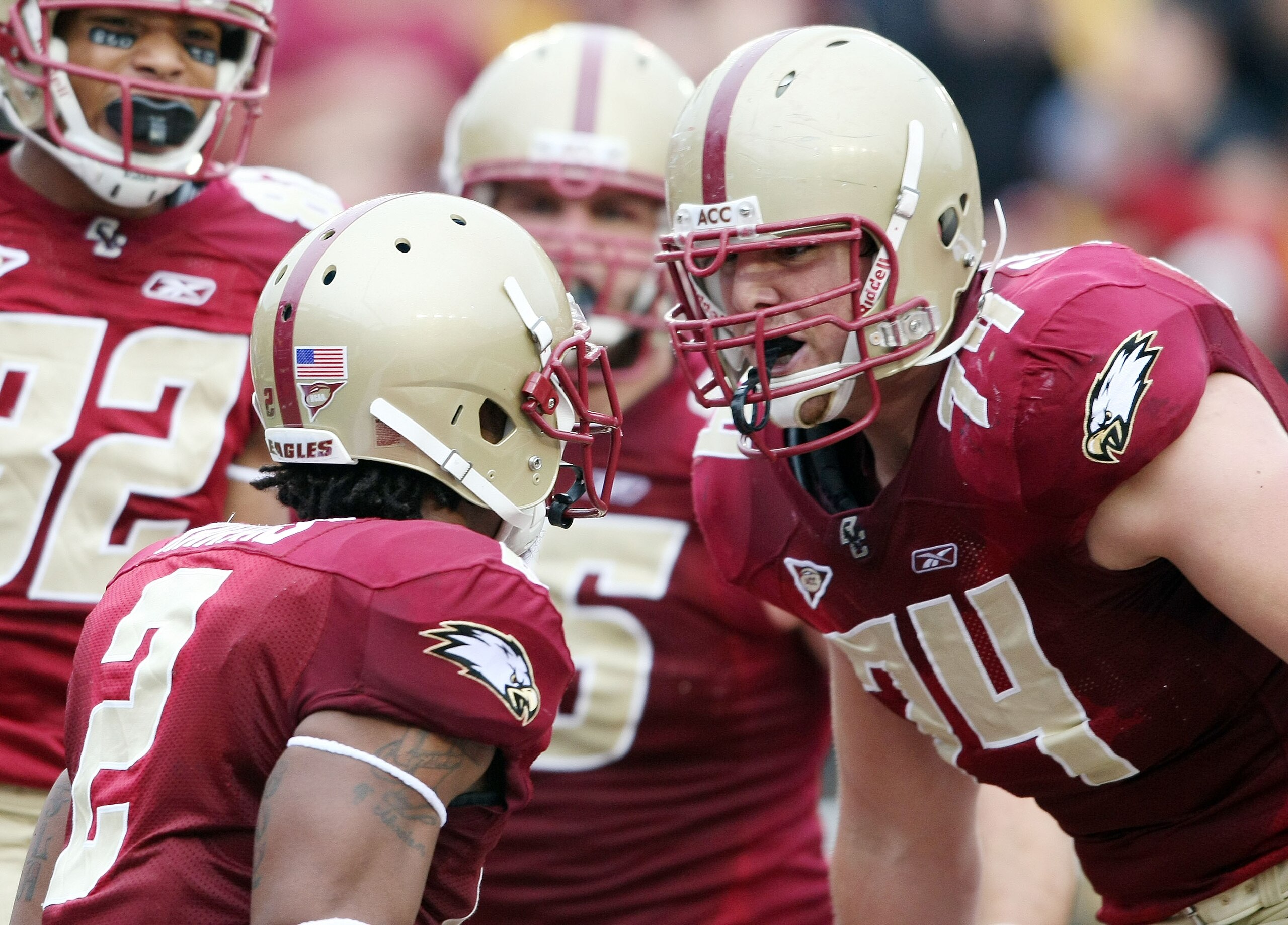
Best-Case Scenario: Jordan Gross
Anthony Castonzo tore the combine apart. He and Gabe Carimi became the benchmarks in nearly every single drill. He moves well, he's big and seems self-motivated. Castonzo was pegged by many to go to the Colts, but his stock has gone through the roof since the season ended. He could easily find himself as a shining star amongst lesser talent, as Jordan Gross has during his Pro Bowl career.
Worst-Case Scenario: Chris Williams
Chris Williams' career hasn't been first-round worthy. Like Castonzo will be, Williams was drafted to be a franchise left tackle. He has battled through injuries and suffered major growing pains in his transition to the NFL.
13. Cameron Jordan, DE, Cal
38 of 50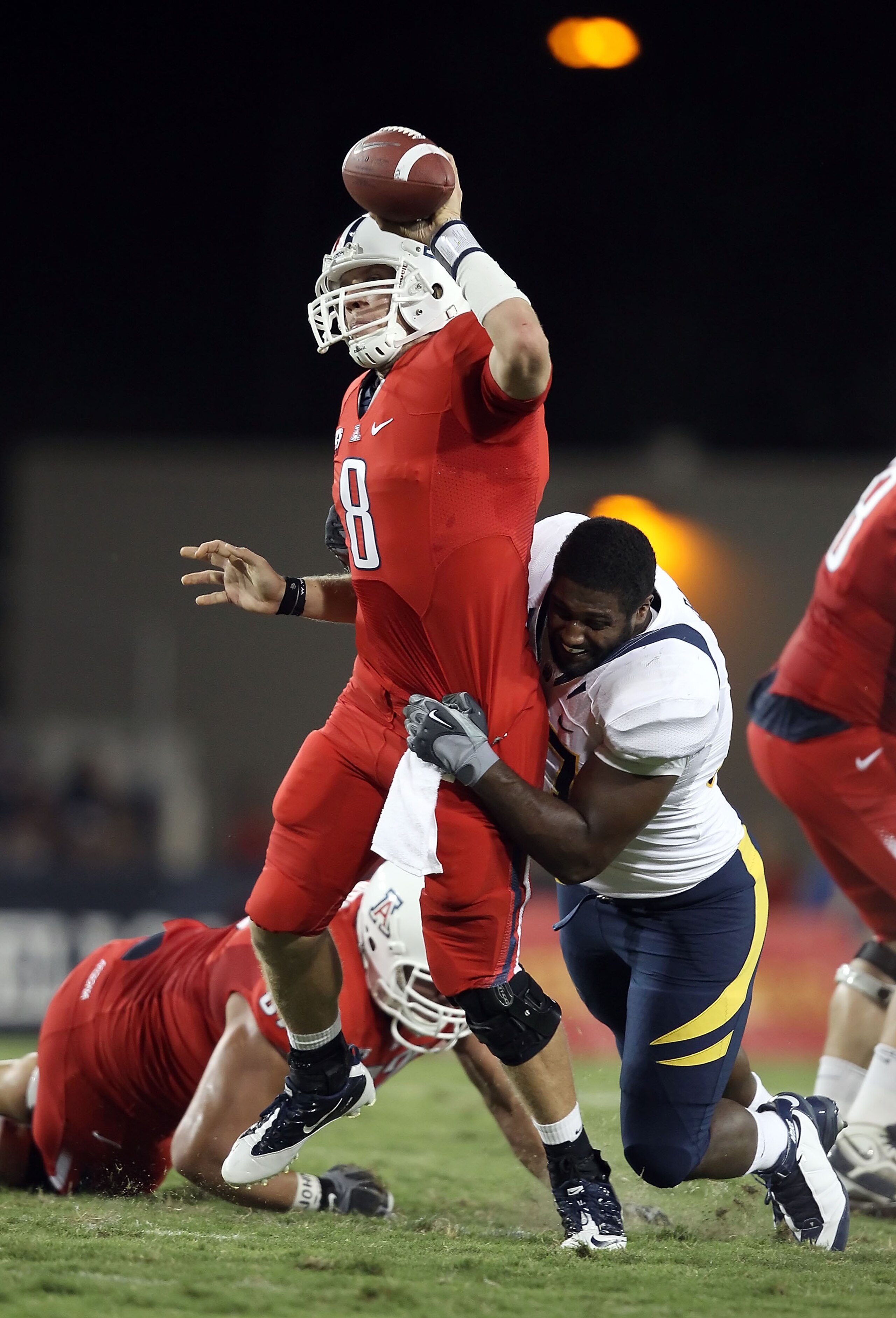
Best-Case Scenario: Osi Umenyiora
Cameron Jordan might be asked to stand up as an outside linebacker, which would be the worst thing that could happen to his NFL career. He is 15 pounds shy of being 300 pounds. Jordan fits much better as a five-technique guy or rush end in a 4-3. Can you imagine the setback Osi Umenyiora may have seen had a team tried to make him an outside linebacker? Guys like this are most valuable when they are getting after the ball carrier, not worrying about coverage.
Worst-Case Scenario: Erasmus James
Erasmus James was a first-round selection who put up ridiculous numbers in his workout. He is big and athletic, yet altogether unproductive. James has battled injuries throughout his career and failed to grasp what it means to be a rush end. James has looked uncomfortable on the football field since he was drafted, despite seeming very natural in college.
12. Mark Ingram, RB, Alabama
39 of 50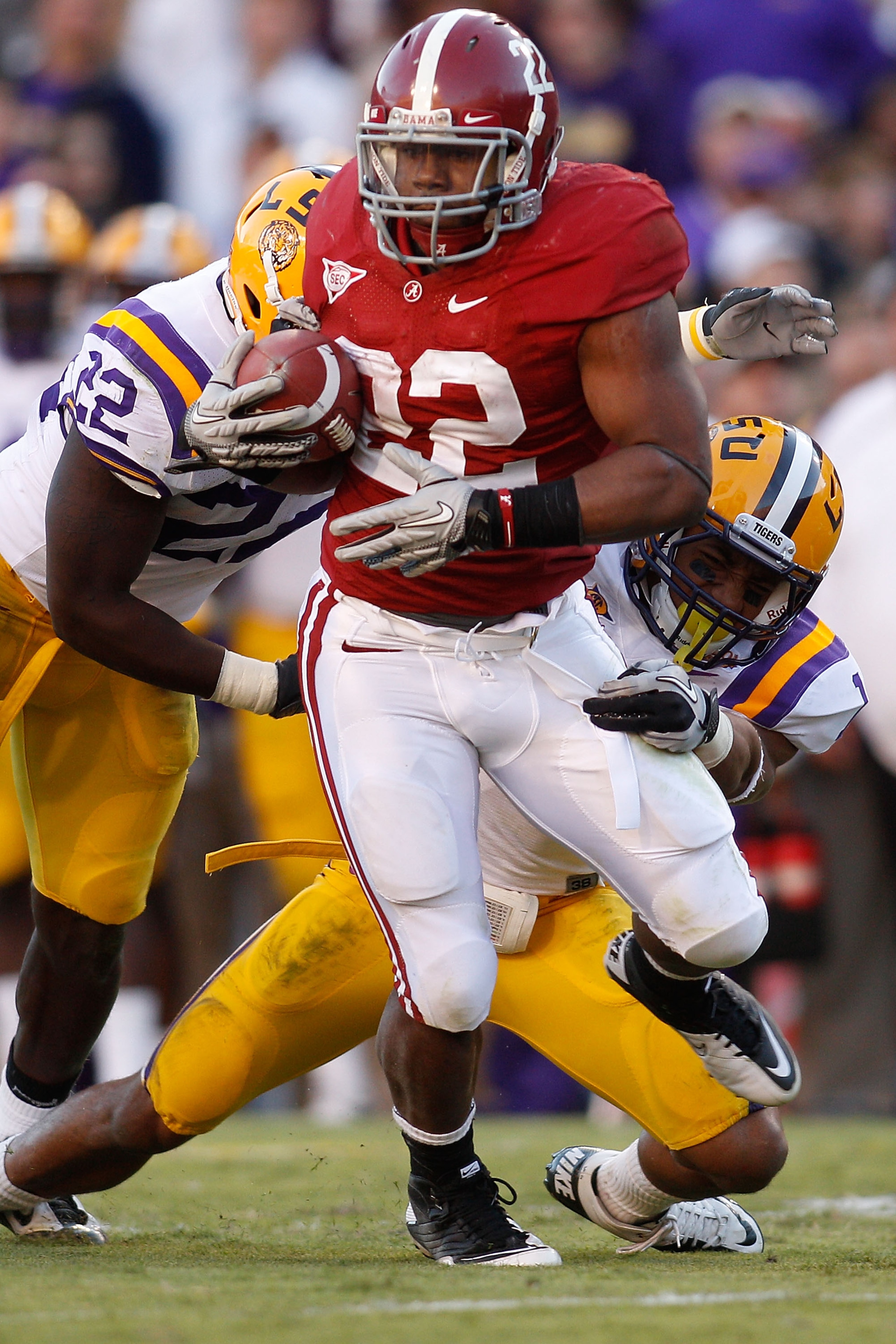
Best-Case Scenario: LaDainian Tomlinson
Mark Ingram is never going to be the biggest, fastest or strongest guy on the field. He may not have even been the most talented running back on his team last season. He is, however, a physical back with the desire to be great. He runs hard on every play and can be fast, elusive and powerful when he needs to be. Ingram doesn't have one attribute that sets him apart, but he knows how to run the football. He may not have the jets LT had in his prime, but he just might have the vision.
Worst-Case Scenario: Fred Jackson
Fred Jackson isn't the biggest, fastest or strongest guy on the field either, and it shows. He has salvaged some highly productive seasons and remains an asset in the NFL, but he doesn't sniff the career LT has had (not that many people do). Jackson is willing to do anything and is solid in a number of areas, but cannot be called great at anything it takes to be an elite running back in the NFL.
11. Cam Newton, QB, Auburn
40 of 50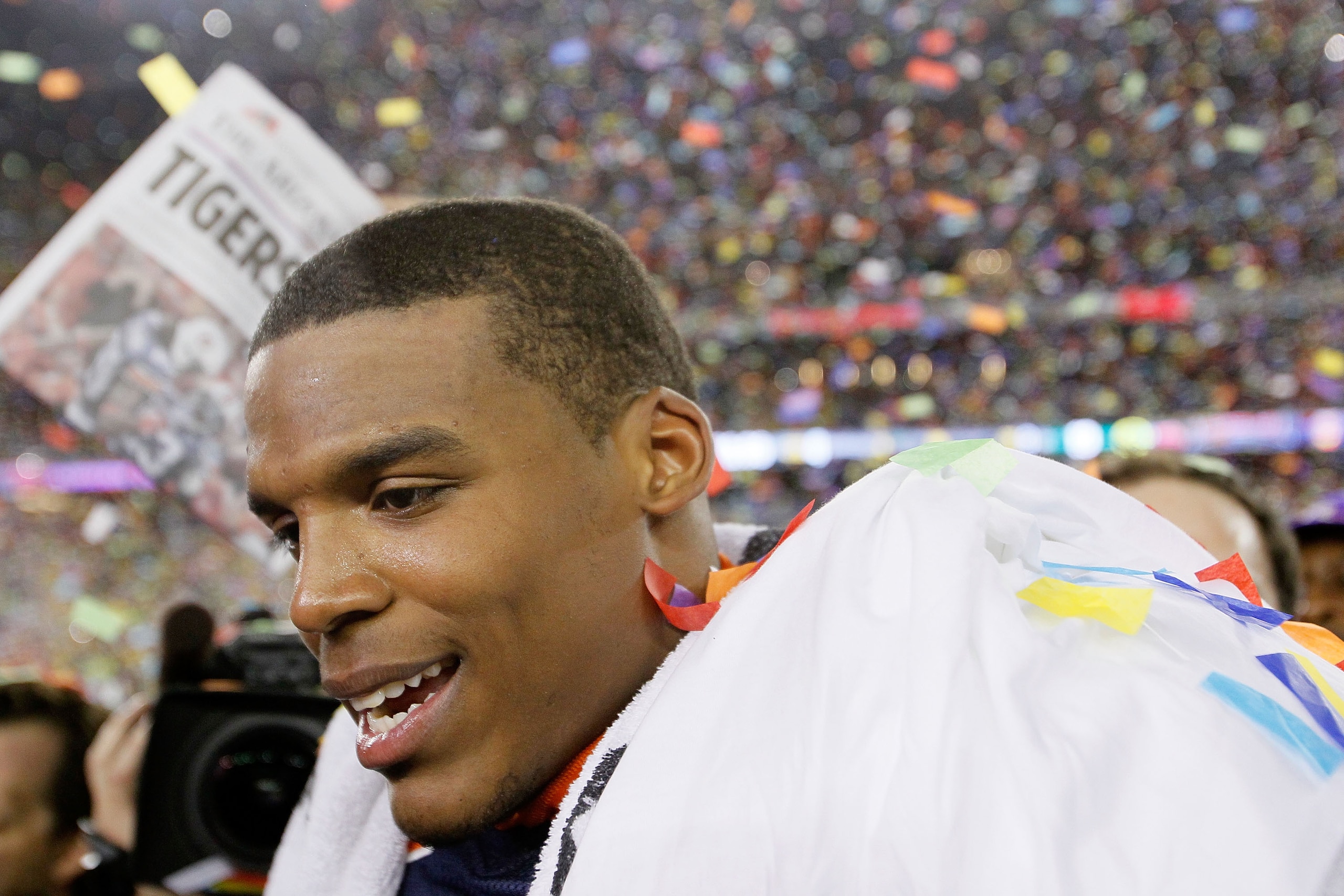
Best-Case Scenario: Donovan McNabb
Cam Newton may be something we have never seen before, or something we have seen time and time again. He has a terrific arm and can turn into a running back when he needs to. He has speed, much like Donovan McNabb did when he came out, and if he can learn to be the leader and passer McNabb was in his prime, Newton will have a fantastic career. The Eagles were ripped apart for taking McNabb early, but it was one of the best decisions they made in their franchise history. Will the Bills see a similar situation?
Worst-Case Scenario: Vince Young
You could do a lot worse than VY at quarterback. A former Rookie of the Year, Young has to be one of the best dual-threat quarterbacks in the game. The problem is that he doesn't dominate the way he did in college. Like Newton, he took his team to a national championship and single-handedly took over the game. His leadership has fallen off significantly and his talent has been questioned. Not to mention, character concerns have surfaced periodically throughout his career.
10. Blaine Gabbert, QB, Missouri
41 of 50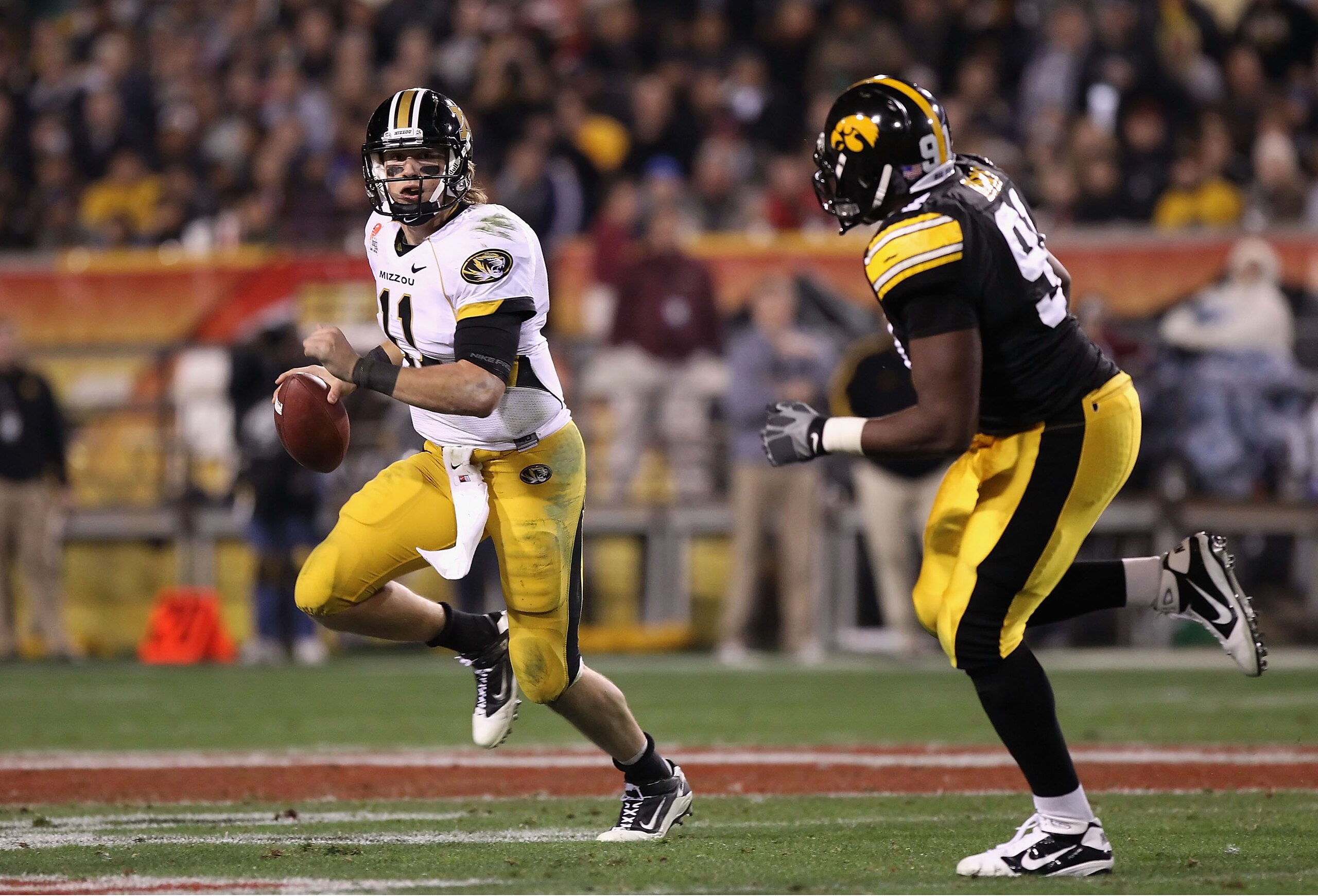
Best-Case Scenario: Carson Palmer
Blaine Gabbert is thought by many to be the product of a draft class that puts forth no great QB prospects. His pro day was impressive and he has created a lot of draft buzz, but before the season ended, many people had never even heard of Gabbert. Carson Palmer didn't have a similar college experience, but Gabbert could be the No. 1 overall pick. He has the build and arm to be a No. 1 overall pick, but would he be able to succeed in spite of the team he is on?
Worst-Case Scenario: Jimmy Clausen
Jimmy Clausen just may have been the first quarterback taken in this draft. He was supposed to have it all coming out of college, but slipped out of the first round and into the hands of the worst team in football. Some have already given up on Clausen and many others have their doubts. His future in Carolina seems bleak and the team has made it clear that they would rather have someone else under center.
9. Julio Jones, WR, Alabama
42 of 50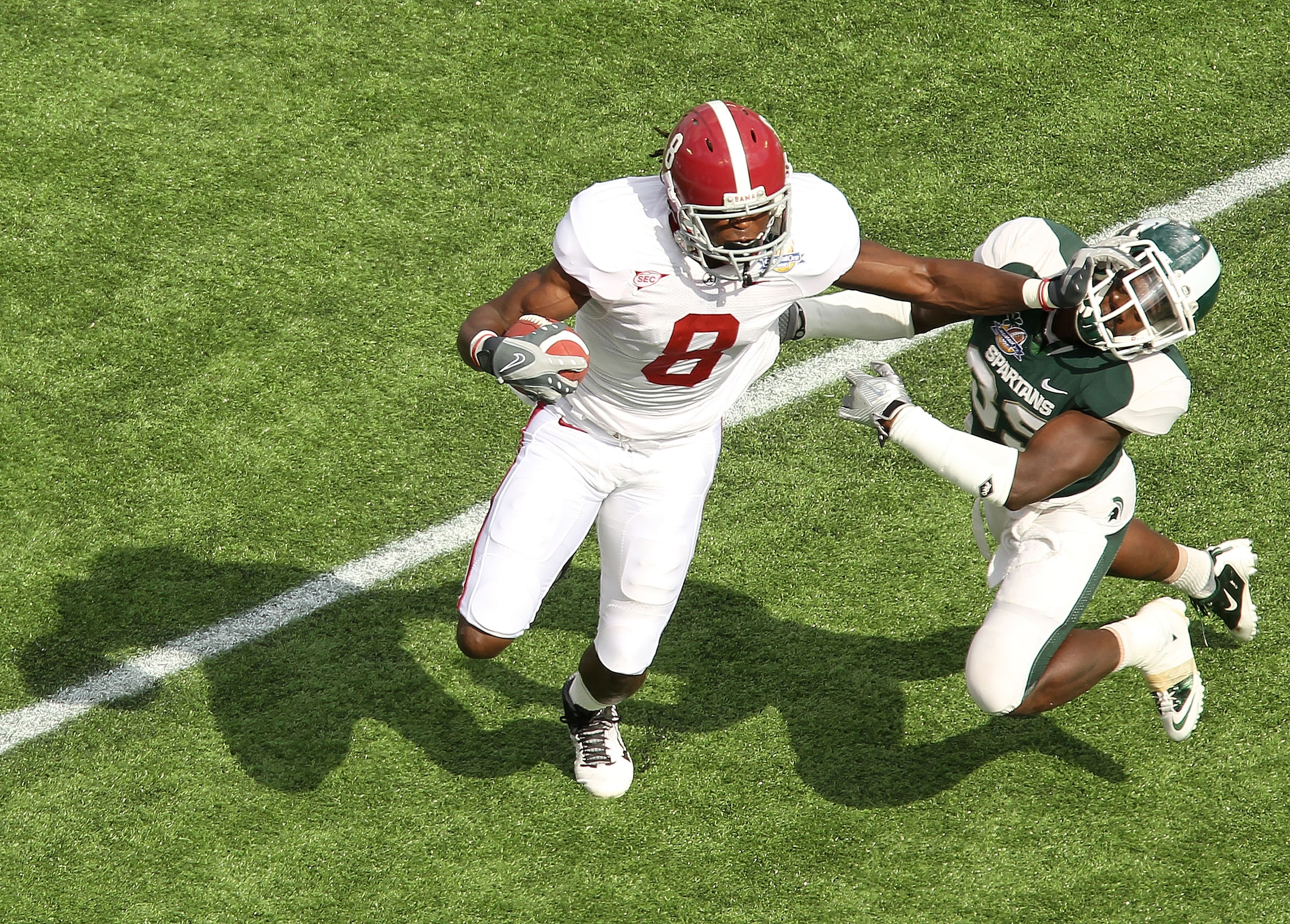
Best-Case Scenario: Andre Johnson
Julio Jones is a big, physical receiver with great straight-line speed. His hands may pose some consistency issues, but his highlight reel doesn't have a shortage of spectacular grabs. His big, dominating presence is ideal for a possession receiver. He can develop into a No. 1 receiver and has the potential to get to where Andre Johnson is today. To do so, he will need to be more consistent.
Worst-Case Scenario: Braylon Edwards
Coming out of college, Braylon Edwards needed to work on his consistency as well. Sometimes when that is the issue in college, it tends to follow receivers into the pro ranks. Such is the case with Edwards, who makes spectacular grabs with a high degree of difficulty, followed by a dropped slant. Edwards could have been an elite receiver, but splotchy QB play in Cleveland and his lack of progress caused him to be shipped out of town.
8. Prince Amukamara, CB, Nebraska
43 of 50Best-Case Scenario: Nnamdi Asomugha
If there were no Patrick Peterson, people would be talking about Prince Amukamara as a top-10 pick. He still stands a chance to sneak into the top 10, though it doesn't appear he will be able to leapfrog Peterson. He has flawless skills in coverage and is a natural cover corner. A true shutdown prospect, he completely wiped out half of the field last season for Nebraska. He has the speed and physicality to be the next Nnamdi Asomugha.
Worst-Case Scenario: DeAngelo Hall
DeAngelo Hall had the speed to be an elite shutdown corner. His inconsistency and attitude problems held him back from being the superstar talent Atlanta hoped he would be, but he still found success and even worked his way into the Pro Bowl last season with Washington. Even so, Hall is a prime example of untapped potential.
7. A.J. Green, WR, Georgia
44 of 50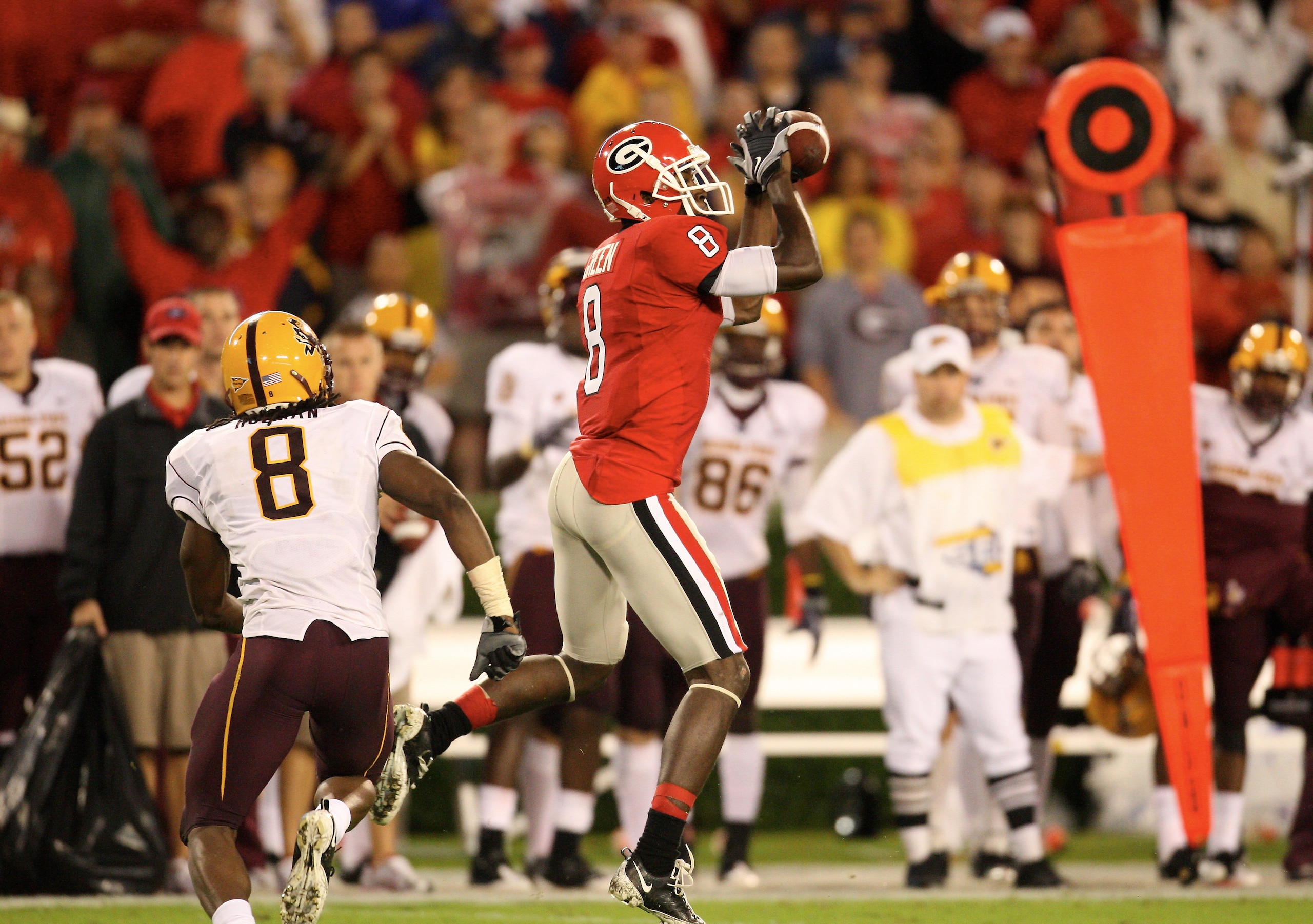
Best-Case Scenario: Randy Moss
What can't A.J. Green do? He's big, fast and has the surest hands of any prospect coming out of the draft. He might not have the freakish athletic ability Moss had, but he doesn't have a shortage of athleticism. He is the complete receiver and should be a difference-maker at the next level. Whether he reaches his ceiling or not, teams are going to have to account for Green on every play.
Worst-Case Scenario: Michael Crabtree
Michael Crabtree is one of the most decorated wide receivers in college football history. Like Green, nearly every mock draft had him being selected in the top five, with only a few having him slipping past the eighth pick. On draft day, Crabtree wasn't selected until the 10th pick. He is currently the No. 1 wide receiver on the San Francisco roster, but isn't the game-changer they thought they were getting.
6. Robert Quinn, DE, North Carolina
45 of 50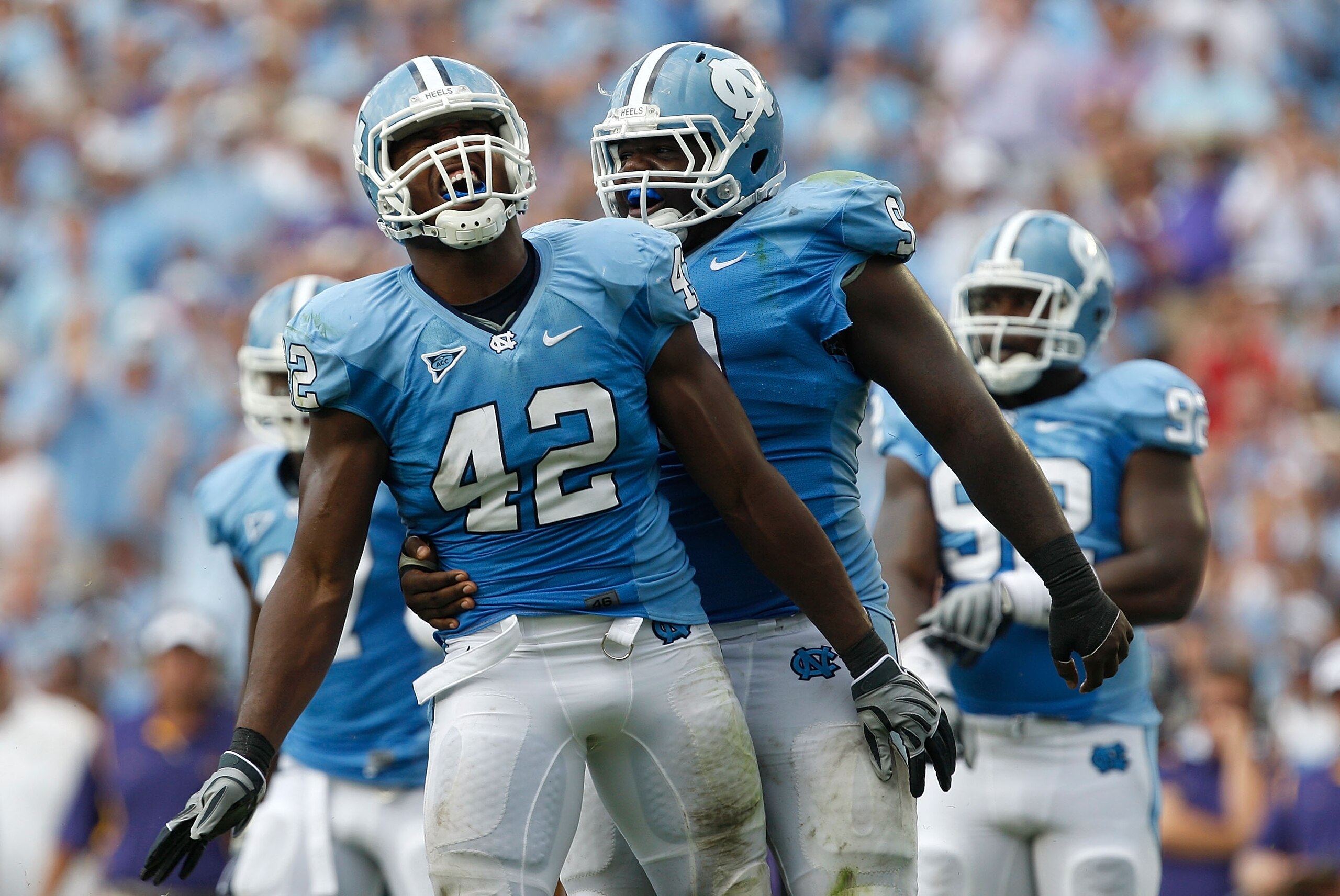
Best-Case Scenario: Cameron Wake
Robert Quinn might be utilized as a 4-3 defensive end, but is probably better suited to be a 3-4 outside linebacker. His ability to come off the edge and cause problems at the point of attack make him a valuable asset to any team that drafts him. Like so many OLB/DE types, teams see significant risk in Quinn. Cameron Wake could have made his case for being Defensive Player of the Year in the 2010 season. Quinn will look to be the type of player that takes over football games as Wake does.
Worst-Case Scenario: Chad Greenway
Chad Greenway is a cautionary tale for NFL teams. He has earned a spot in Minnesota, but is not the sort of difference-maker they were looking for. When teams select a linebacker in the first round, they are expecting a Pro Bowler year in and year out, potentially a Defensive Player of the Year candidate. Quinn poses a lot of upside, as Greenway did when he came out. Greenway is solid, but nowhere near special.
5. Da'Quan Bowers, DE, Clemson
46 of 50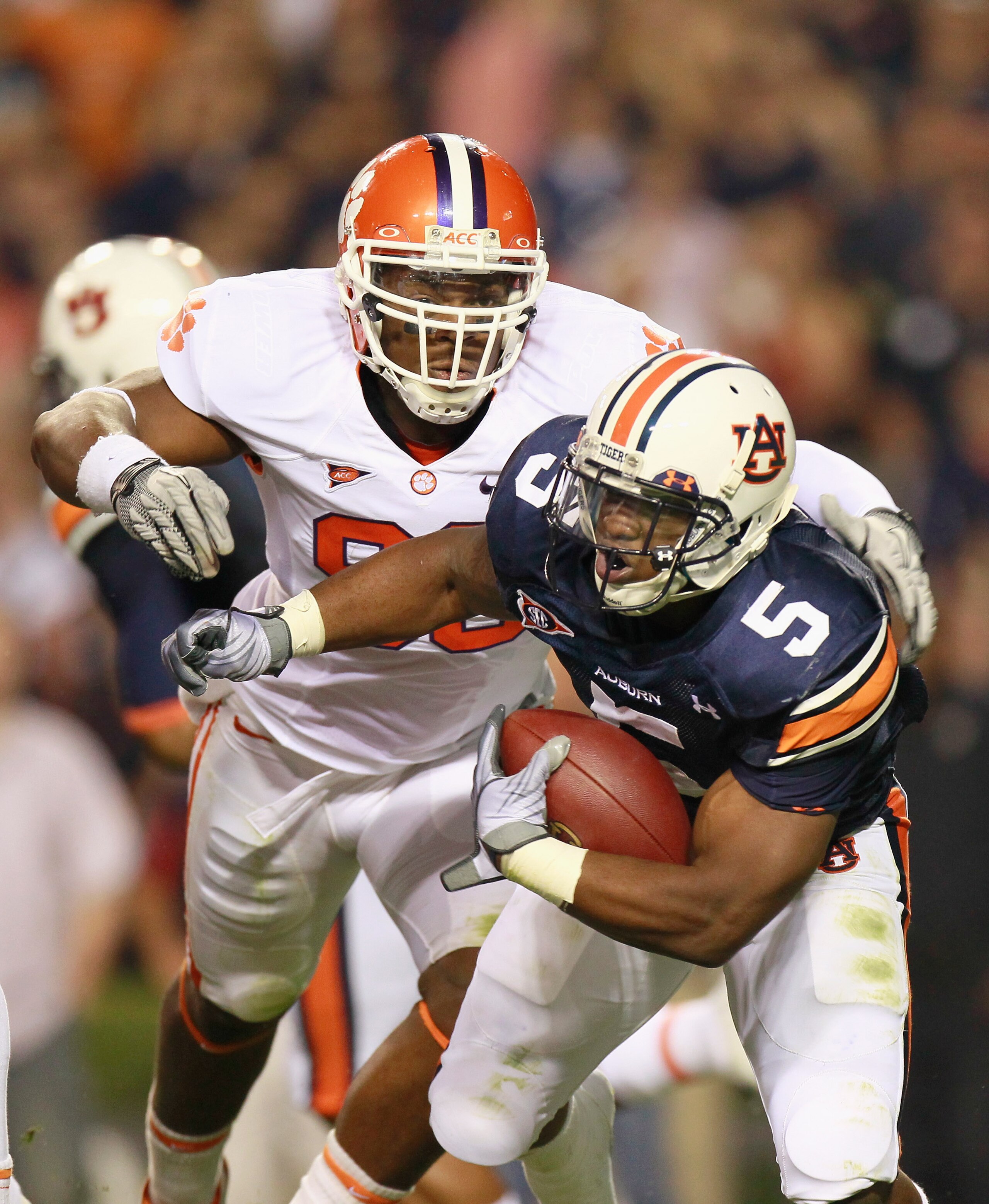
Best-Case Scenario: Julius Peppers
Da'Quan Bowers victimized offensive linemen and inflicted pain on quarterbacks in a way that has many drawing comparisons to Julius Peppers. He has a great burst and is athletic enough to handle left tackles at the next level. At the moment, his stock seems to be slipping a bit. If he gets passed the third overall pick, teams are going to be kicking themselves later.
Worst-Case Scenario: Chris Long
Chris Long is really coming into his own, but it took some time for him to get there. He is emerging as one of the top 4-3 defensive ends in the conference and is the player the Rams thought he would be in his rookie season. Long was just as highly touted coming out of the draft as Bowers is. Bowers will look to make an impact immediately, but Long shows how long it can take to get your bearings as a defensive end in the NFL.
4. Nick Fairley, DT, Auburn
47 of 50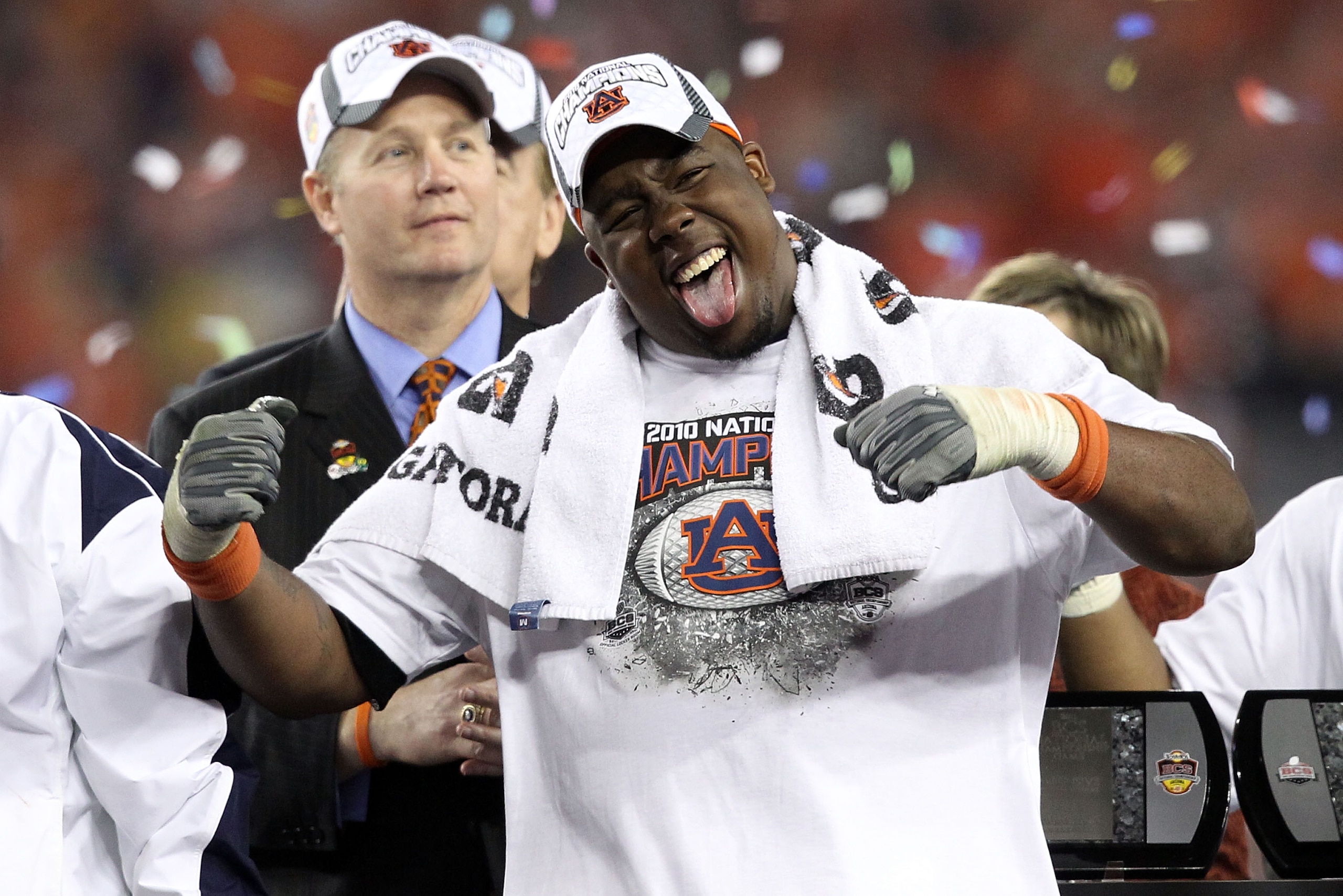
Best-Case Scenario: Ndamukong Suh
Nick Fairley is scaring some teams off. He has a questionable attitude and may be a one-year wonder. There is no arguing with his tenacity though. He is athletic and his motor is noticeable. Very few defensive tackles have been able to take over the game the way Ndamukong Suh did last season. Suh was looking to make a splash in the NFL and did so with ease.
Worst-Case Scenario: Gerald McCoy
It's entirely too early to write off Gerald McCoy. He did his part for Tampa Bay and played a big part in their slight improvement up front, but he didn't have nearly the year Suh did. All the talk about McCoy being better than Suh has been completely thrown out the window. It seems safe to say Fairley's rookie season will fall somewhere in between these two.
3. Marcell Dareus, DT, Alabama
48 of 50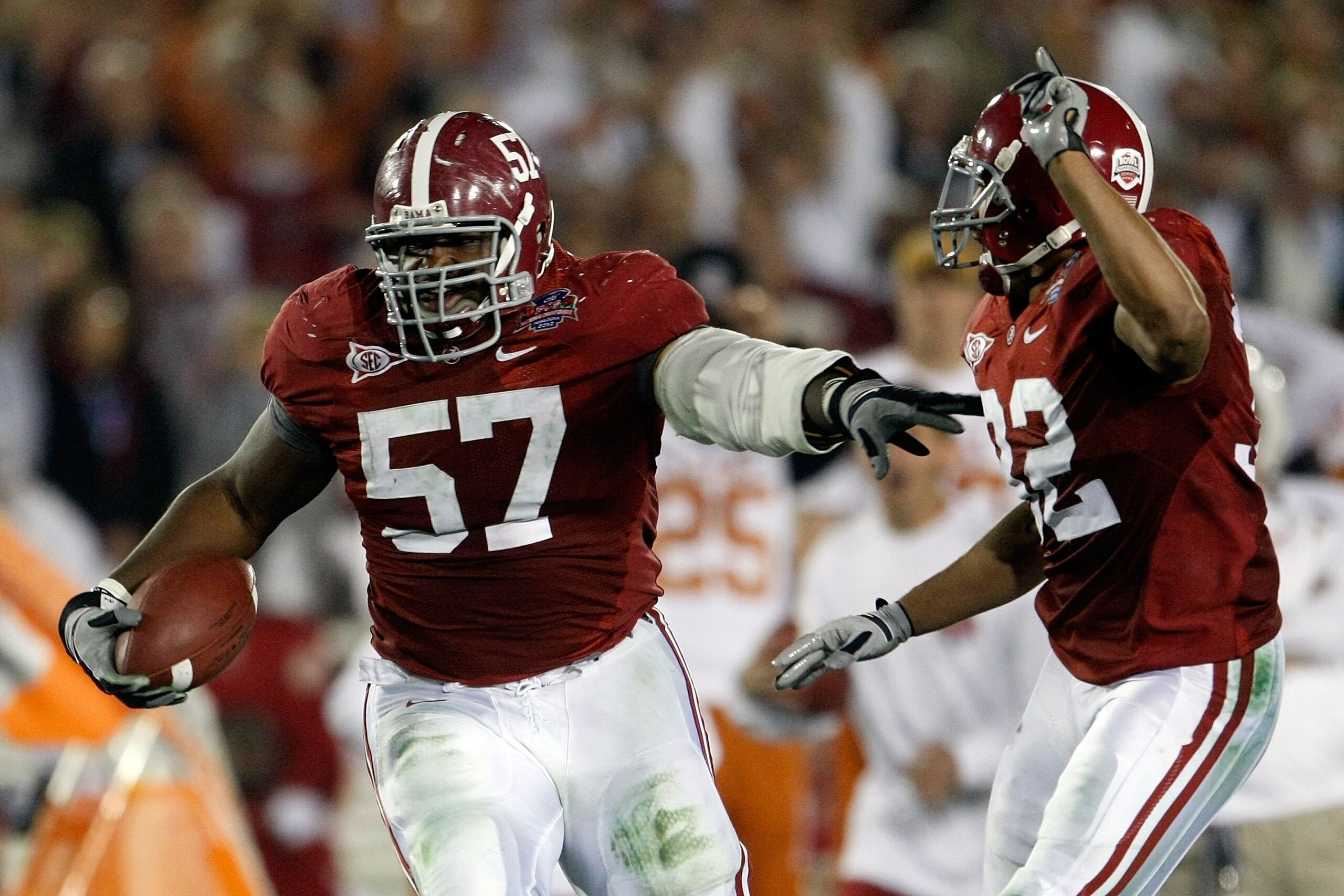
Best-Case Scenario: Haloti Ngata
Marcell Dareus is likable as a person and captivating as an athlete. He can drop into the five technique and could even develop into a true nose in a 3-4 scheme. He is physical enough to play in the three technique and his pass-rushing capabilities may lead teams to plug him there. Whatever the case may be, Dareus looks a lot like Haloti Ngata did coming out of college. He isn't as strong, but his versatility and control at the line of scrimmage bears an uncanny resemblance to that of Ngata.
Worst-Case Scenario: Amoboi Okoye
Amobi Okoye looked like a man amongst boys in college, despite being so much younger than everyone else, but blends into the crowd in the NFL. The former 10th overall pick is just a piece of the Texans front seven and has a limited role in their defense. At worst, Dareus will prove to be all hype and an unwarranted top-15 selection. There is even talk of him going with the first overall pick at this point. Bold, but risky.
2. Von Miller, OLB, Texas AM
49 of 50Best-Case Scenario: DeMarcus Ware
Von Miller has unparalleled pass-rushing ability in this draft. He looks solid in space and seals the edge with perfection. As a weakside linebacker in a 3-4, he is everything teams could ever want him to be. DeMarcus Ware is the standard for which 3-4 outside linebackers are held to. He has been producing at a high level year in and year out since he entered the league. Miller could be a contender for the sack title in his first season or two.
Worst-Case Scenario: Manny Lawson
He's long, athletic and can be made into an elite pass rusher at the next level. He's everything you would ever want in an outside linebacker. Right? The 49ers whiffed on Manny Lawson. Lawson is yanked in passing situations because of his inadequacies at getting to the passer. Being athletic and unrelenting in college is enough to render big-time results. Miller is better than Lawson was coming out of college and should avoid his fate.
1. Patrick Peterson, CB, LSU
50 of 50Best-Case Scenario: Champ Bailey
Patrick Peterson is big enough to handle the most physical receivers in the NFL and fast enough to run with some of the fastest. What he lacks in speed, he makes up for with his ability to jam receivers as they come off the ball. Peterson is an attacking corner with a lurking presence. Like Champ Bailey, quarterbacks are probably going to ignore Peterson for the majority of his career.
Worst-Case Scenario: Quentin Jammer
There is a big difference between Champ Bailey and Quentin Jammer, but most defensive coordinators would love to have Jammer on their football team. At worst, Peterson is going to be a difference-maker and solid cornerback. He will likely be a No. 1 corner from the time he enters the league until he leaves. Despite the fact that he is one of the best prospects to come out of the draft, don't be surprised to see him slip a bit in the selection process. Even the most talented corners have a tendency to fall. His return ability may carry him into the top five.
.jpg?w=2560 "Raiders Saints Football")



