Roger Federer and Rafael Nadal: Are Their Days of Dominating Tennis Over?
 It's funny how things can happen so quickly in sport. This last weekend, in the last rounds of the Indian Wells Masters 1000, was, without saying it, a perfect example—at least a matter in point.
One minute pundits had Roger Federer avenging his two defeats to Novak Djokovic in the semifinals, and then, with his loss, Rafa Nadal asserting his dominance over tennis by ending the Serb's run in the final. None of theses scenarios, of course, transpired.
This last weekend was a supreme opportunity for Federer and Nadal to demonstrate their hold over tennis—a hold which they had maintained, almost as a birthright, in the last seven years.
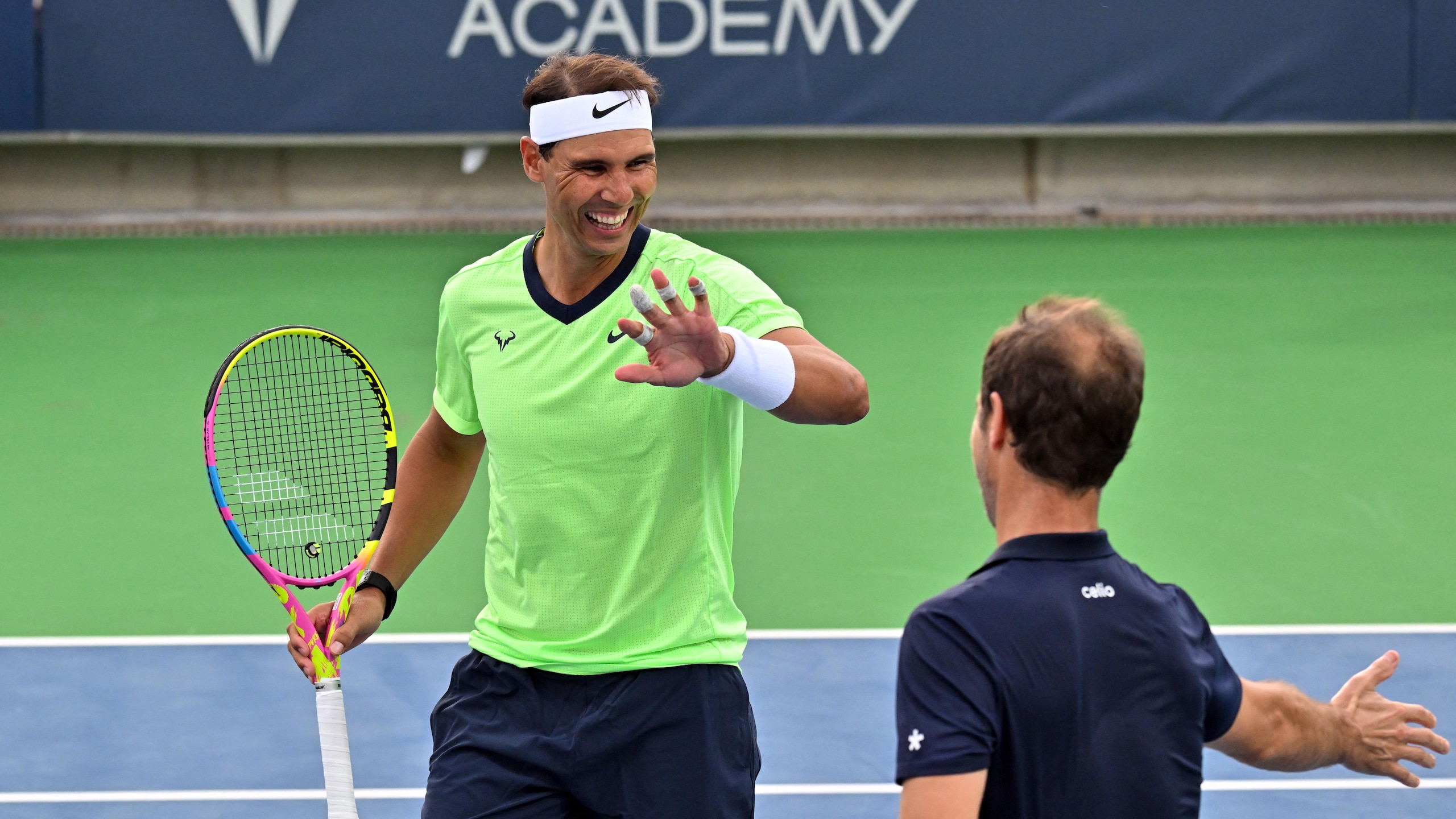


Then, of course, Djokovic came along in 2007 and beat them both in the same tournament in Montreal that year. It was a small blip, apparently, yet here it seemed a "Big Three" had emerged.
It was supposed to be the story of three. Then, disappointingly, Novak Djokovic and his fellow challenger-upstart Andy Murray, who were supposed to be tennis' great answer to Federer and Nadal, faded, or at least failed to pose truly serious threats.
2008 was the pinnacle of Federer and Nadal, 2009 of Federer and 2010 that of Nadal. There was little space for any continuous pressure by Djokovic or Murray, who in that period only managed three Slam finals, all, obviously, against either Federer or Nadal.
The winds of change, however, have come and were announced in the most dramatic fashion last Sunday, when Djokovic defeated Nadal in three sets.
It was revolutionary in several ways. Firstly, as a tournament victory which featured defeats of both Federer and Nadal. It was a victory over Nadal from down a set (which suggests something quite mental is going on), and lastly, it was a victory at this critical point in tennis history.
Djokovic's win was, and will probably be, further understood in the future as historic.
It has gone some way to confirming the suspicions that were raised when he defeated Federer in straights at Melbourne. We can hardly say that beating Federer and Nadal, in light of his victory in Melbourne, definitively heralded a "changing of the guard."
Nothing so momentous as that has quite happened yet. It is just clear now that Federer and Nadal are no longer totally unchallengeable.
Let it be said straight—nothing groundbreaking or earth-shattering has happened. Nadal still is the world No. 1 and Federer the world No. 3. It's just the matter of Djokovic, who now stands, ominously, as the deserved world No. 2.
Mind you, his season so far has been utterly terrific, a dream start of the highest order. An 18-0 win record, with three tournament victories, with the year hardly even fully three months old. These are statistics and facts which even Federer and Nadal would have been proud of.
Is Djokovic a new Federer or Nadal? Maybe, but something just hints that we won't really know until we reach the bulk of the season. The red clay and the grass will be the true testing grounds of versatility and endurance, which the hard courts, for all their beauty, just sometimes rough over and smooth out.
Those too are the real fortresses of Federer and Nadal—the fortunes of their whole careers were shaped, it seems, at Roland Garros and Wimbledon. There, the greatest highlights of the Federer and Nadal era were played out. Should Djokovic never manage to achieve some stranglehold there, his victory over Federer and Nadal will not be complete.
Which all means to say, in some oblique way, that talk of the dominance of Federer and Nadal fading, before the start of the clay and grass seasons coming up in a few weeks, is partly shortsighted.
Yes, there is some change in the air, and certainly, the victory of Djokovic at Indian Wells this weekend was a stunner in some ways—no matter how much he seems to be manhandling Federer these days, or Nadal, on the hard courts. Yet, the real battlegrounds haven't quite come.
As for Federer and Nadal themselves, it's no secret that they too, have changed.
Nadal isn't getting any younger, while Federer will be hitting the big 30 this August. Evidence, too, of this change, without calling it anything as loaded as decline, was to be found at Indian Wells.
They just seemed filled with more self-doubt and questioned themselves on points, which in the past they would never have deigned to do. It's just that aspect, I suppose, of getting older and of having a wealth of experience, good and bad.
Against Djokovic, all the bad experiences came out and at the wrong moments. Both of them knew too well the danger of playing him.
Certainly, it's not anything about Federer and Nadal having lost a step or hitting with any less grace or finesse. Technically and physically, they are still the tennis players to watch, alongside, nowadays, Novak Djokovic.
It is simply that we are witnessing the inevitable and ineluctable progress of time and age. Tennis players are human beings like us after all, and challenges to the ego and to a long standing domination over the sport, are hard to take.
Of course, it would be foolish to suggest anything significant before tennis heads to the clay in about a month. Roland Garros and Wimbledon, despite the scarcity of Federer-Nadal finals there in the last two years, still remain, in the collective tennis psyche, very much the property of the two.
Without having witnessed the passage of these next few months, any speculation on the dominance of Federer and Nadal being over, for this year at least, would be presumptuous.
At the end, tennis is all about the new day. A new day brings new hopes and perhaps, for Nadal and Federer, always the intimation of a new triumph. They have had many fine days in the past, in fact, several thousand of them, over the last few years. But these fine days are growing scarcer and scarcer.
.jpg?w=2560 "Seahawks Chiefs Football")



.jpg?w=2560 "Latest Peyton-Colts Rumors")