
NFL Draft 2011: Power Ranking the Last 25 First-Round Draft Classes
The NFL draft is like wine, because every year I whine when my team picks.
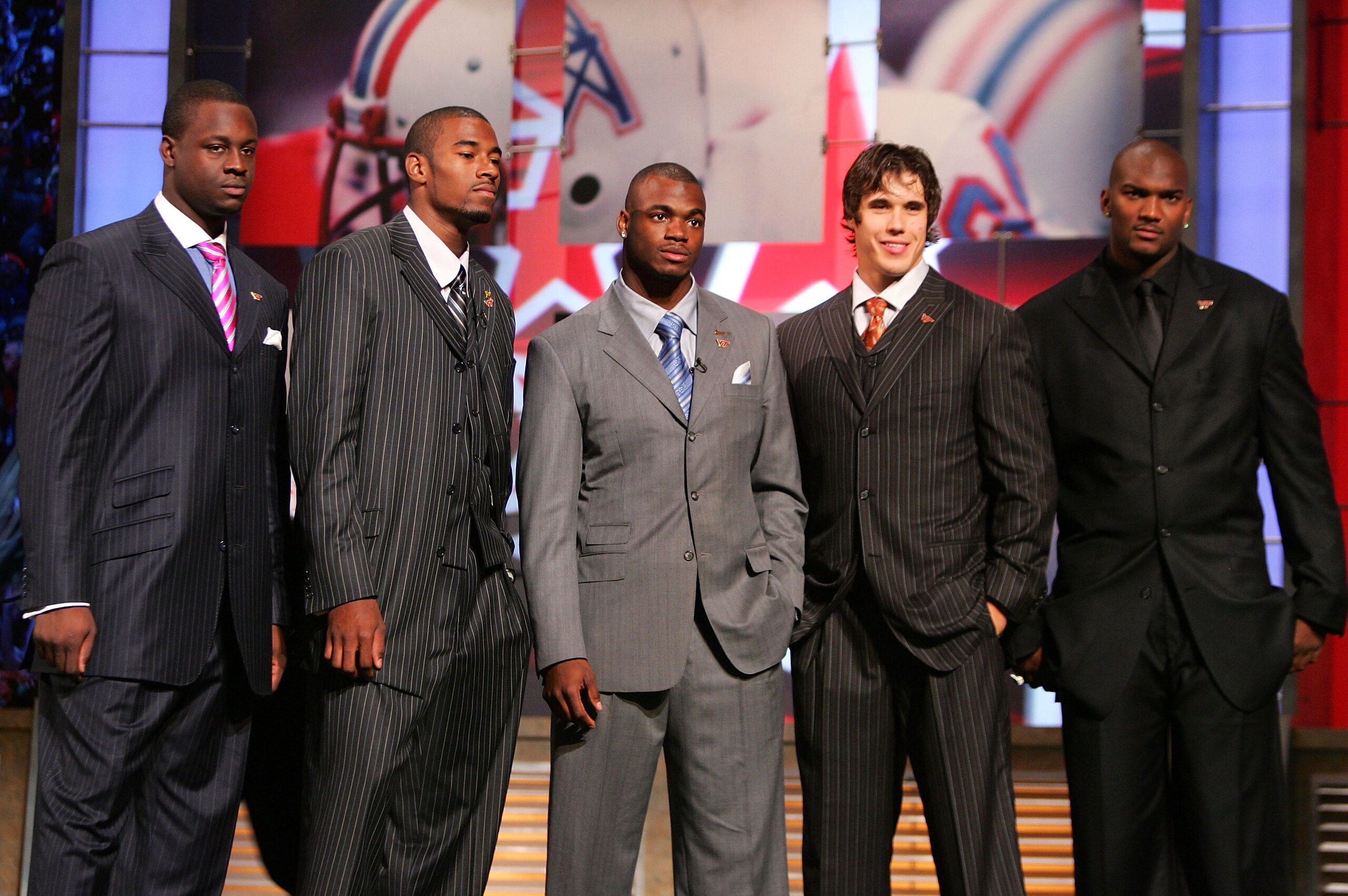
That's because my team is the one on the jersey NFL Commissioner Roger Goodell is putting on that offensive lineman in the picture that accompanies this slide.
The NFL draft lasts for about 11 days now, and there are many, many rounds after the first. Ultimately, though, it is in the first round, and especially quarterbacks, where a draft is judged.
That is largely because the first round and quarterbacks are the most fun to talk about. The bust quotient goes down as each pick passes, and it takes the opportunity for a classic fail to make things really interesting.
Here are the last 25 first rounds ranked...powerfully.
No. 25. 1992: 0 for the Price of 2
1 of 26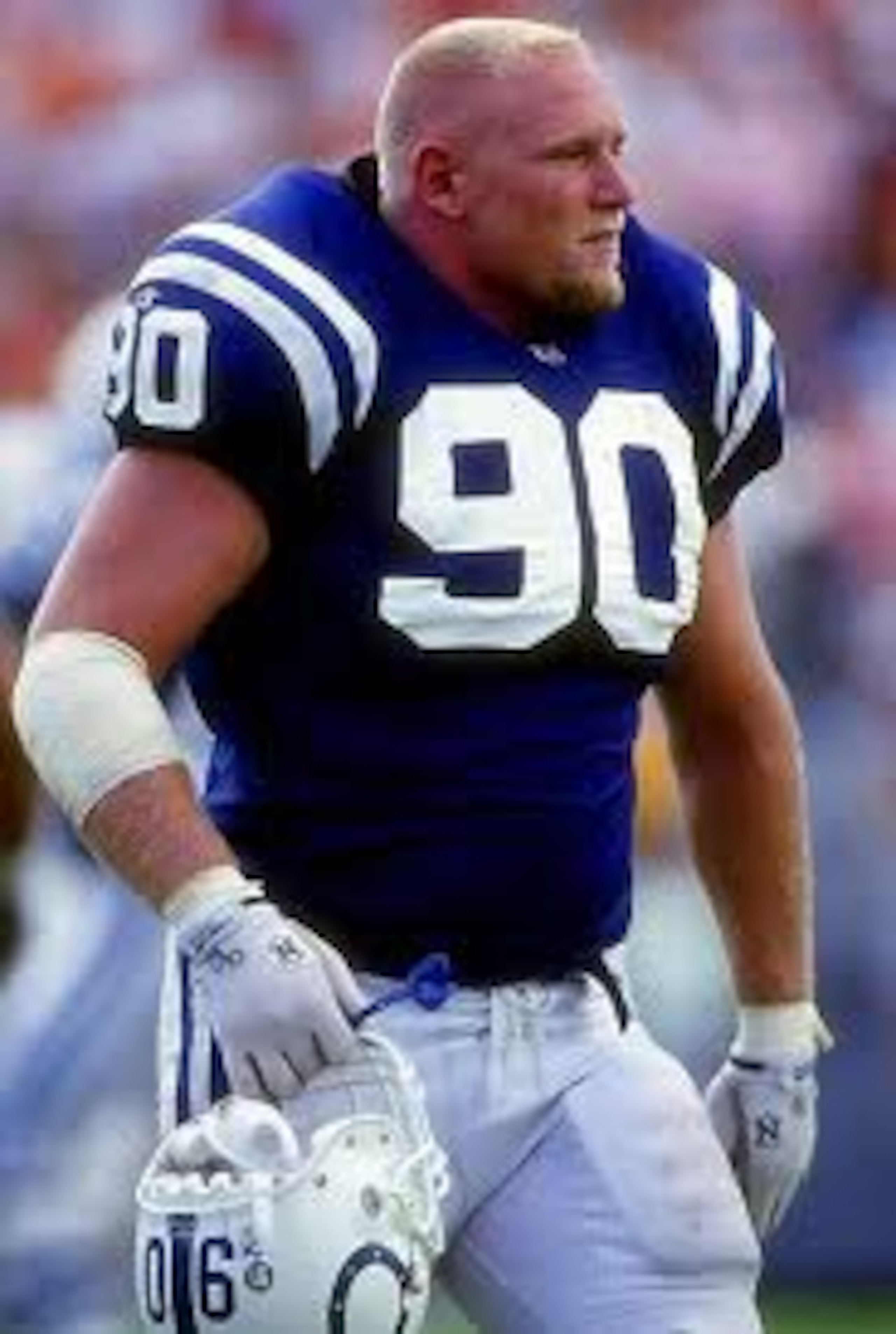
The Indianapolis Colts were so awful in 1992 that the NFL gave them the first two picks in the draft. No, that's not true. What actually happened is they were so bad at drafting the rest of the owners decided to let them pick twice at the start to help eliminate the busts for the rest of the teams.
That may not be totally true either, but it is what happened when they took Steve Emtman first and Quentin Coryatt second.
To be fair to the Colts, they did not miss out on much in the 1992 draft.
David Klingler was the first QB taken at six. The only other QB taken was the greatest player to ever step onto a XFL field, Tommy Maddox.
Even though he was a Super Bowl MVP, Desmond Howard was way overvalued with the fourth pick.
The only real value in this draft came from a trio of linemen: Bob Whitfield (8), Ray Roberts (10) and Chester McGlockton (16).
No. 24. 1986: Bo Doesn't Know the '86 Draft
2 of 26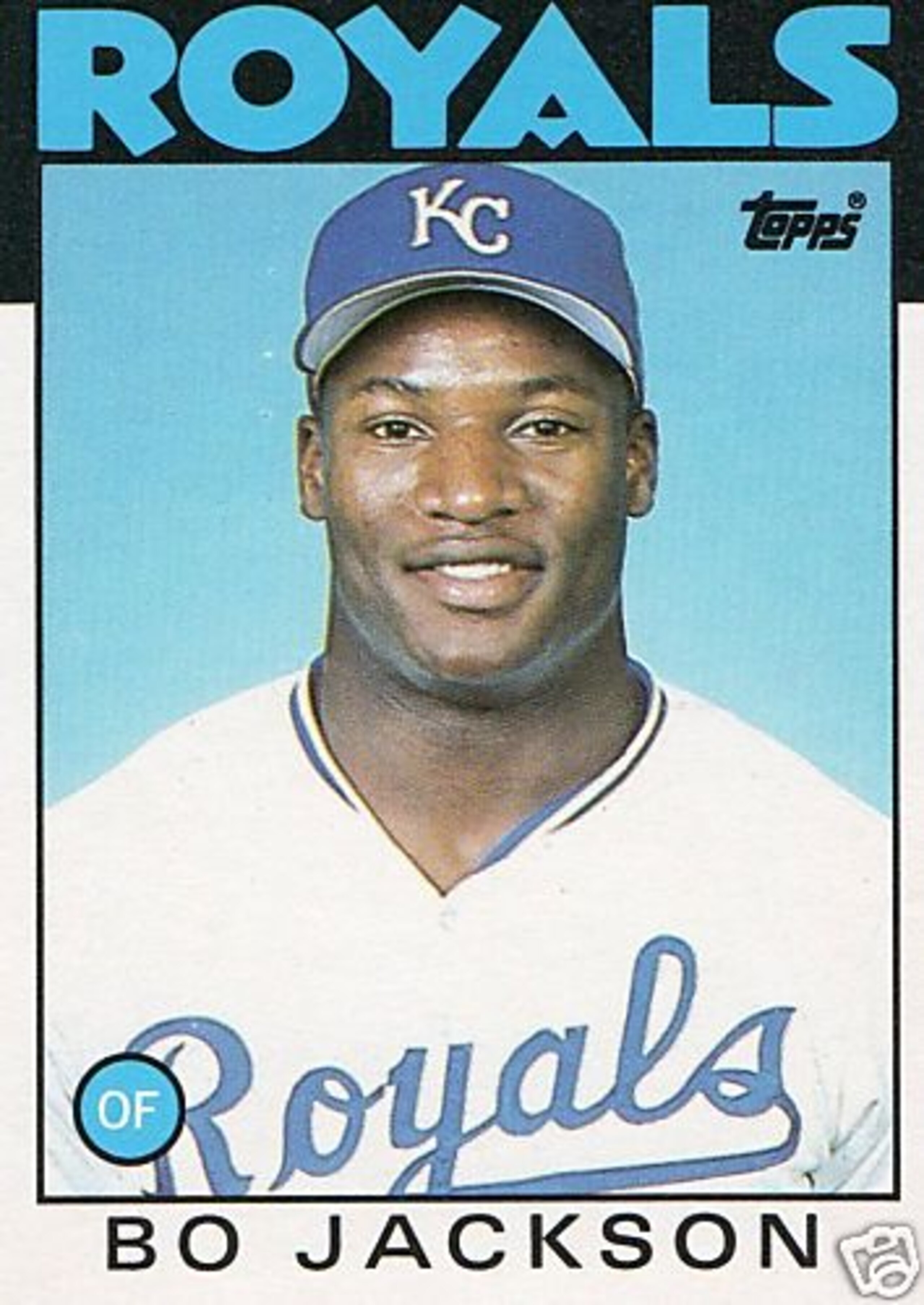
Bo Jackson politely declined his No. 1 overall selection in the 1987 draft. It's hard to have a bigger bust with a pick than that.
If it makes the Bucs feel any better, they didn't miss out on much. Rounding out the top five picks were Tony Cassilas, Chris, I mean Jim, Everett, Jon Hand and Anthony Bell.
Everett had a decent career when it wasn't being derailed by injuries, and it certainly isn't enough to pick up the slack of the others.
The sad thing is other than six-time Pro Bowler Leslie O'Neal (eighth), Jim Everett may be the most productive player to come out of this entire draft.
Unless I am missing someone who slipped in a Pro Bowl, the only other Pro Bowler from this round is Keith Byars.
No. 23. 2005: Mr. Rogers' Low-Rent Neighborhood
3 of 26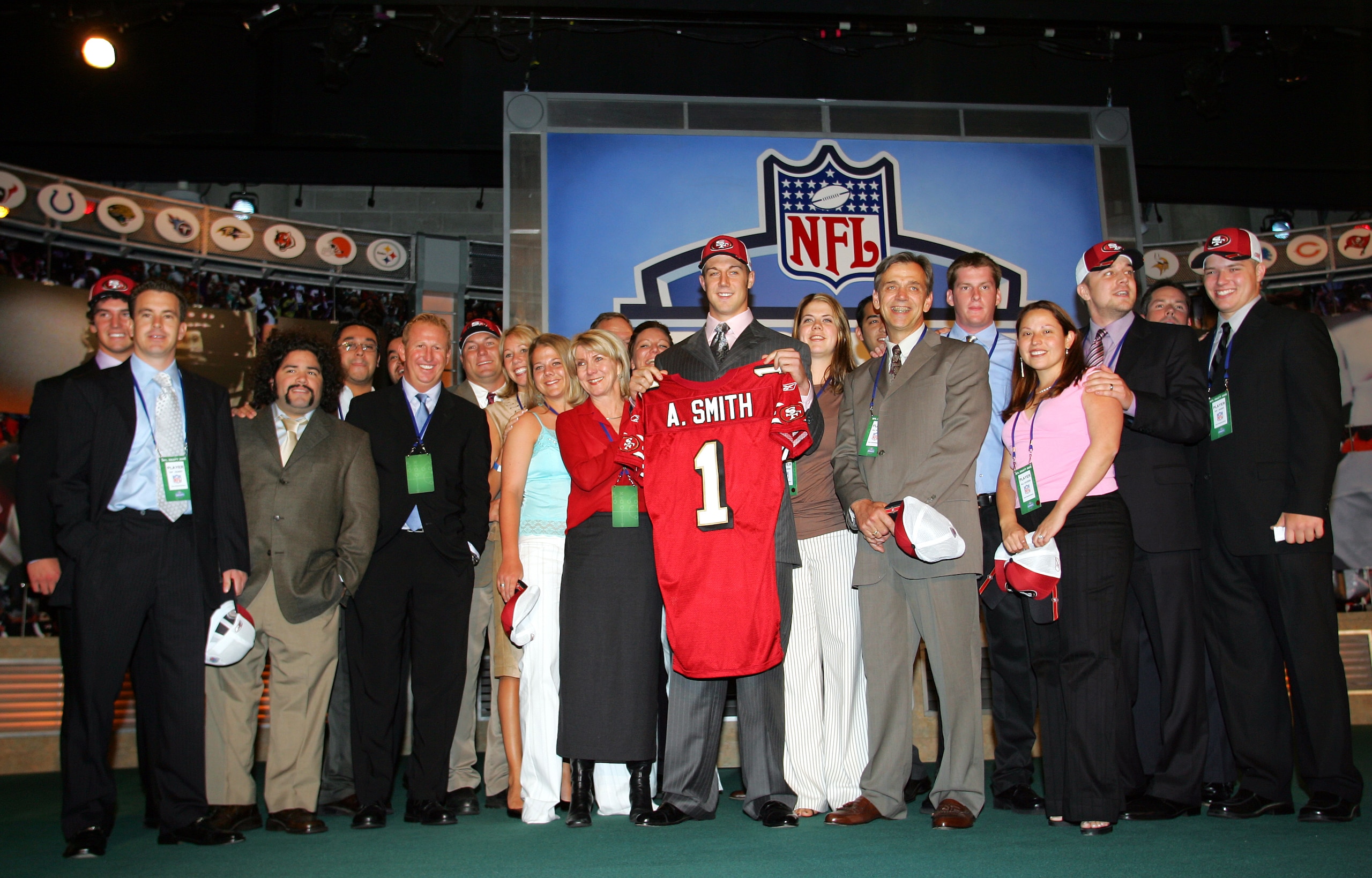
The 2005 NFL draft is destined to be remembered as the draft that saw Alex Smith go 24 selections before Aaron Rodgers, and at the time there was more head scratching about the Packers' selection of Rodgers.
Not so much that they were reaching for him, but that they already had Brett Favre. This was a screwy first round.
Three RBs were taken in the top five, and two of them were from Auburn (Ronnie Brown, Cadillac Williams). Cedric Benson was the other top-five RB.
It is hard for RBs to fulfill the value of a high draft pick. For one, as I'm sure you'll notice as this slideshow goes, there's something about the blasting that a RB takes every other play or so that really shortens their careers.
The top 10 receivers, so far, grade out worse than the RBs: Braylon Edwards (third), Troy Williamson (seventh) and Mike Williams (10th) are not top-10 worthy.
The entire top 10 is entirely forgettable.
Pacman Jones was booked, I mean selected, sixth.

.jpg?w=2560 "Seahawks Chiefs Football")

No. 22. 2006: The 3 QB Amigos
4 of 26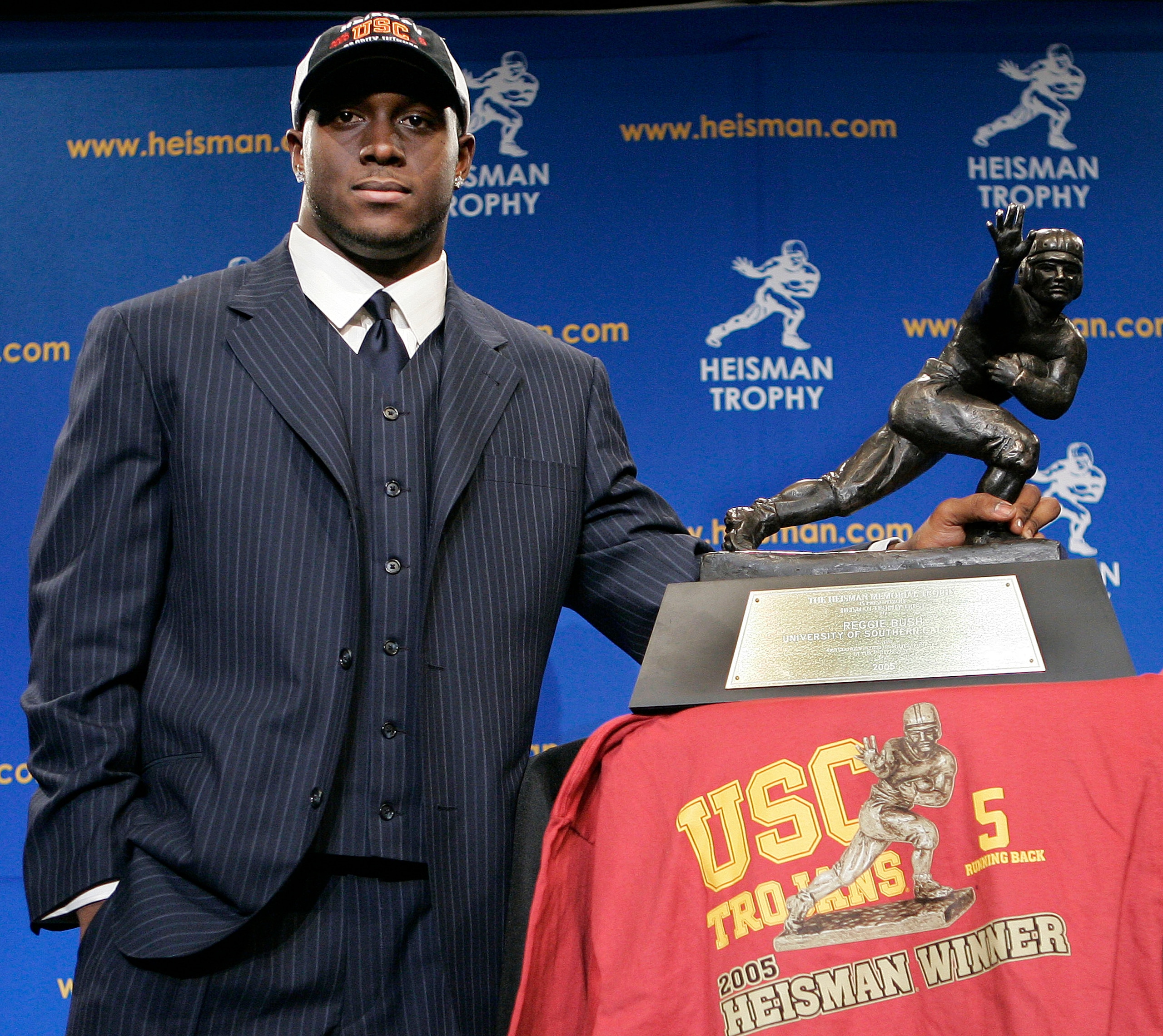
Remember when everyone was up in arms that the Texans would have the audacity to draft Mario Williams ahead of Heisman Trophy giver-backer, Reggie Bush and hometown hero Vince Young?
How did we ever think Reggie Bush was worthy of No. 1 overall consideration? Did we really think he could be an every down back?
Williams is an unspectacular No. 1 pick, but he certainly isn't a bust. This draft saves that for later as it was really only gets worse from there.
The only player you could really argue that should have gone No. 1 over Williams in this less-than-inspiring class is D'Brickashaw Ferguson.
Despite the first-pick fiasco this draft is know for the trio of young QBs that followed quickly after: Young (third), Matt Leinart (10th) and Jay Cutler (11th).
The three started off promising, but their careers have since dipped to various levels of suck.
Some will try to argue that Cutler has had success, but they're wrong.
There were some solid late first-round picks this year: Jonathan Joseph (24th), DeAngelo Willams (27th) and Mathias Kiwanuka (32nd)...and that's about it.
No. 21. 1994: Marshall, Marshall, Marshall
5 of 26
"Big Daddy" Dan Wilkinson was dominant enough in college to go first in the 1994 draft. Although it was the Bengals picking, so maybe his name just came out of the hat first.
There really wasn't much else for the Bengals to choose from here. Hall of Famer Marshall Faulk was taken second, but after that it is a first round of who?
Heath Shuler (third) or Trent Dilfer (sixth) was the big QB debate in this draft, and Heath Shuler went on to have a career that makes Trent Dilfer look like a legitimate Super Bowl-winning QB.
Willie McGinnest (fourth) and the Boston Lager, Sam Adams (eighth), are really the only other players worth mentioning as first-round picks.
No. 20. 2007: JaBustus Russell
6 of 26
Ah, the 2007 draft, or what we Raider fans call it, the "What's that, I can't hear you? You're breaking up" draft.
The talk leading up to this doozy of a draft day was if the Raiders should take Brady Quinn or JaMarcus Russell. And get this, the Raiders had the first overall pick.
Brady Quinn is way better than Russell, but that makes the list of QBs he's better than at one.
As it turns out, the pick probably should have been Calvin Johnson.
I don't know that Johnson is a highly ranked No. 2 overall selection yet, but he is getting there.
The real stars of this draft didn't come until later. The Vikings took Adrian Peterson at seven, and Darrelle Revis went with very little fanfare to the Jets at 14.
Patrick Willis is a great value at the 11th pick.
Overall this draft is more notable for its busts. After Russell there are other top-10 picks like Gaines Adams (fourth), Ted Ginn Jr. (ninth) and Amobi Okoye (10th), who all failed to live up to expectations.
No. 19. 1991: Turner and Hooch
7 of 26
The only thing the 1991 draft is notable for is not being notable. Russell Maryland is a decent, but unspectacular No. 1 selection.
Eric Turner turned in a short but productive career as the second pick. Bruce Pickens was a tremendous flop at the three pick, but there was solid and unspectacular production after that.
There were a handful of Pro-Bowl quality players like Herman Moore (10th), Harvey Williams (21st) and Ted Washington (25th).
This is the draft that Todd Marinovich (24th) used to fund his surfing and drug binges. And amazingly enough, he had a far more productive career than the only other QB to go in the first, Dan McGuire (16th).
I couldn't reach Dan for comment on this article, but when I asked his brother Mark, he told me that he "is not here to talk about the past."
No. 18. 2009: Late Bloomers?
8 of 26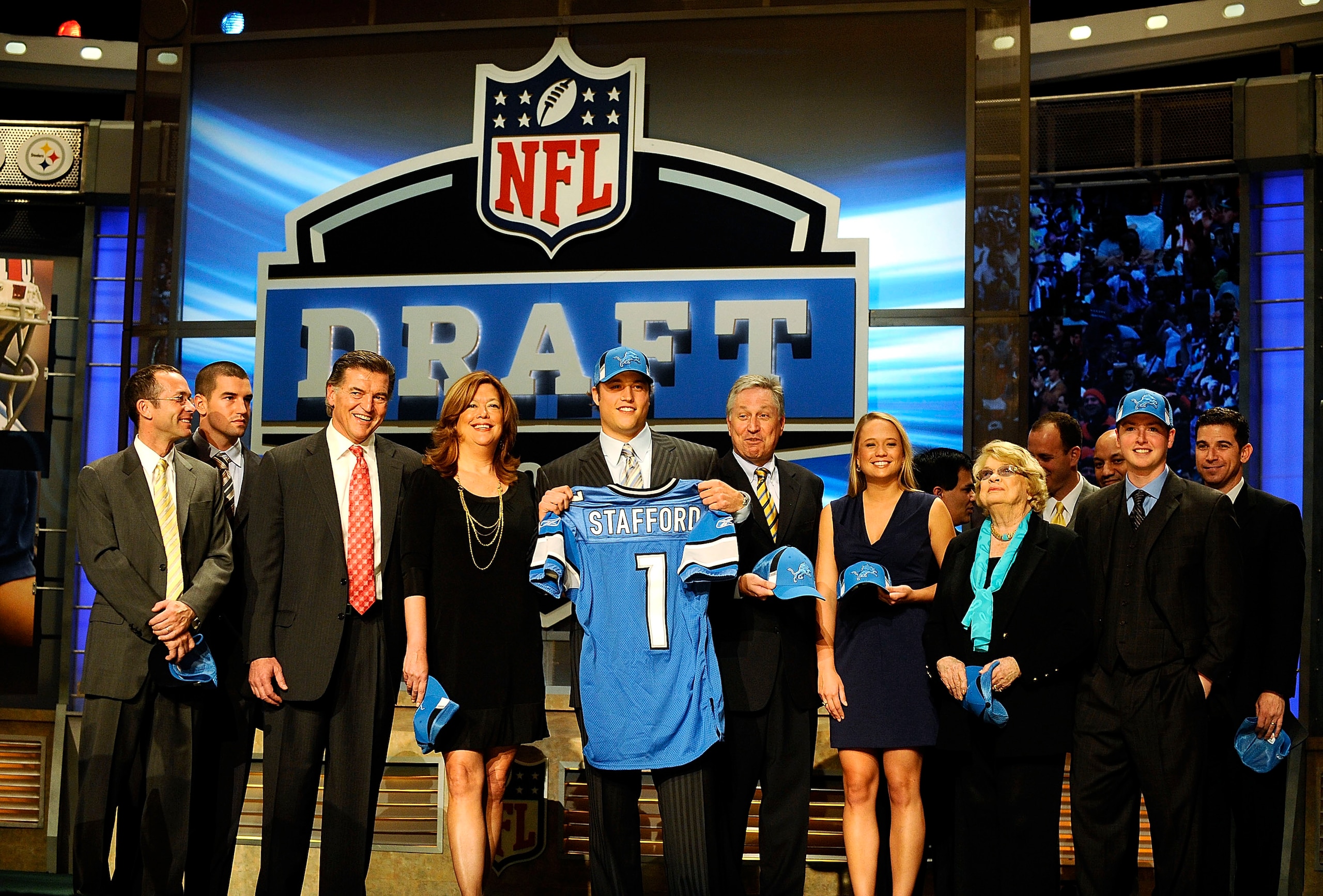
Things are really going to have to start changing for the 2009 first round if they want to move up this list.
Take a look at the first seven picks:
1. QB Matthew Stafford
2. OT Jason Smith
3. DE Tyson Jackson
4. LB Aaron Curry
5. QB Mark Sanchez
6. OT Andre Smith
7. WR Darrius Heyward-Bey
Either because of injuries or not very goodness, none of these guys are really even close to where there draft status projects them.
Maybe Sanchez—depending on which day you ask a Jets fan.
This round gets a boost from Josh Freeman (17th), Jeremy Maclin (19th) and Clay Matthews (26th), but this round dug itself too big a hole early.
No. 17. 1990: That's a Fine-Looking QB
9 of 26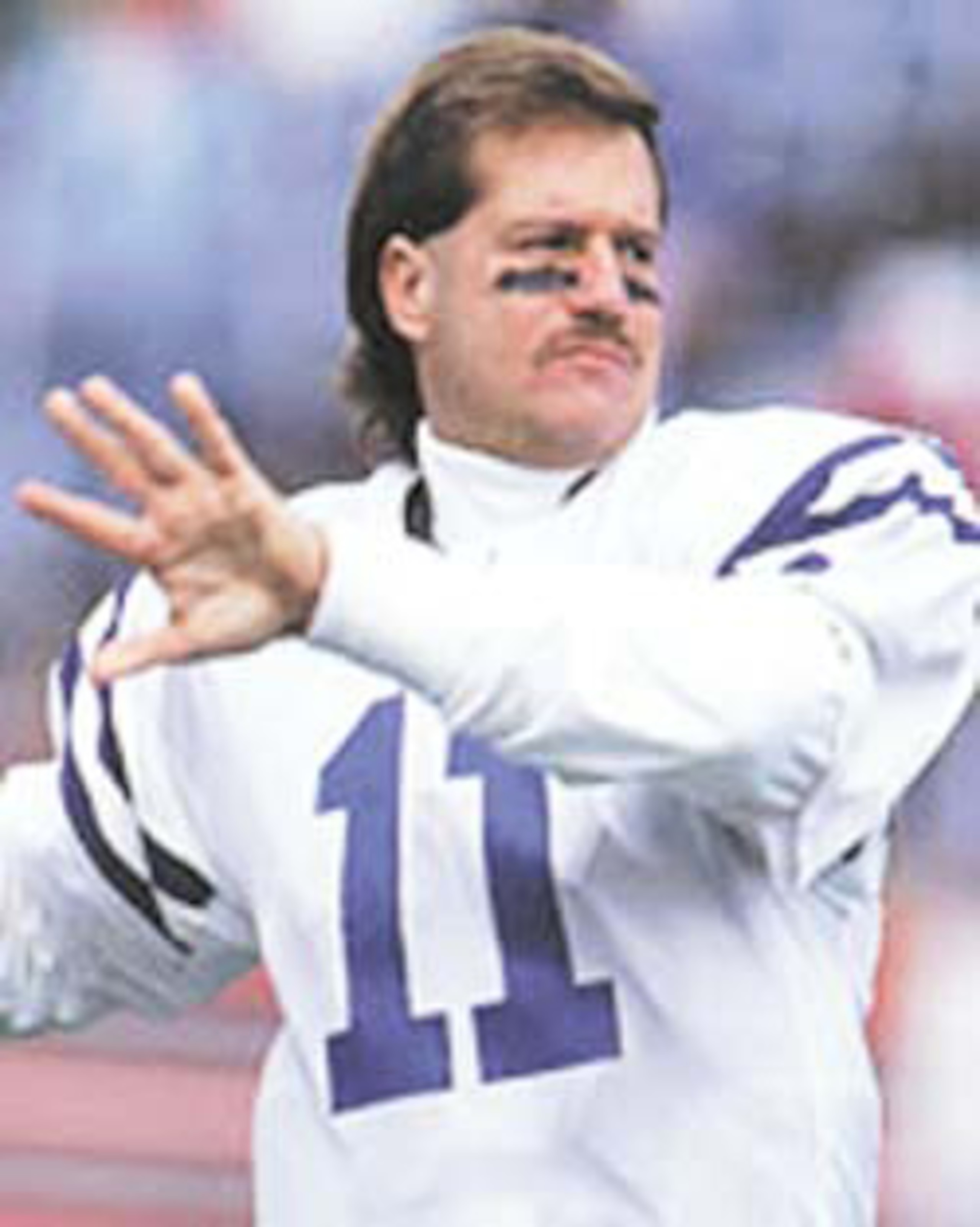
Jeff George throws the prettiest interception I have ever seen. While you can't blame Indianapolis for taking the QB with all the skills No. 1 overall in the 1990 draft, George's career never really took off.
He was, however, far more productive than the other QB taken in the first round, Andre Ware (seventh).
Blair Thomas went on to be a decent backup running back, but you'd like a little more production out of the second pick.
Thomas was one of six RBs selected in the first round. Their combined numbers are very impressive, but that's just because Emmitt Smith (17th) was one of them. The rest were garbage.
There were a couple of defensive standouts in this draft as likely Hall of Famers Cortez Kennedy (third) and Junior Seau (fifth) came from this draft, but that's about it for this snoozer of a round.
No. 16. 1987: My Cousin Vinny
10 of 26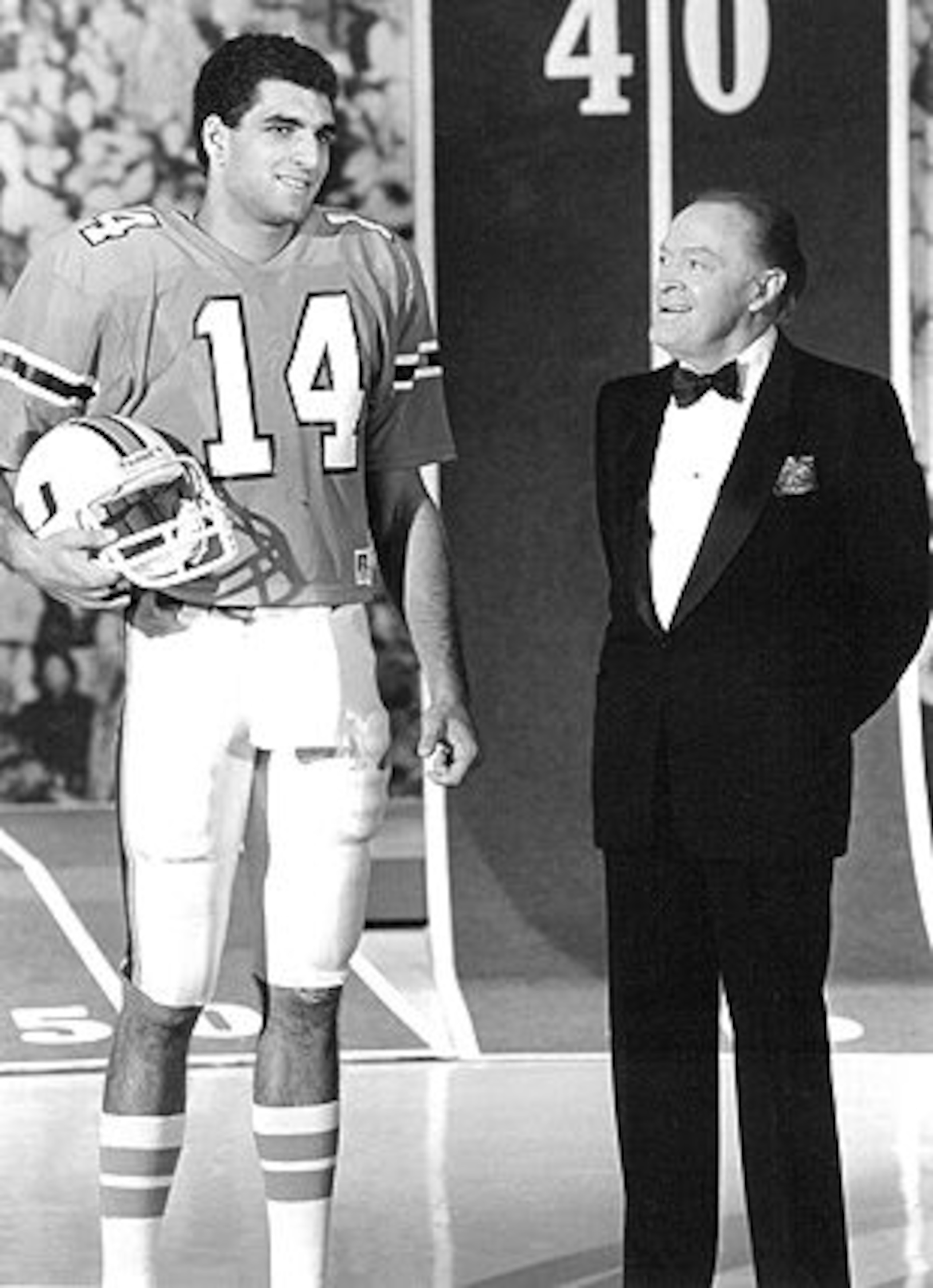
As his career spanned a near eight decades of football, Vinny Testaverde hit a lot of highs and lows. Ultimately, you would hope for more out of the No. 1 overall selection in the 1987 draft, but you can't complain with what you got.
It's also hard to argue anyone else was more deserving of the top pick from this round. Cornelius Bennett had a fine career as the No. 2 overall selection, and two-time All-Pro tackle Harris Barton was a solid value selection at 22.
The best player from this first round is Hall of Famer Rod Woodson (10th).
The top five was notable for two RBs and a linebacker flop.
Two of the three other QBs from this draft, Chris Miller (13th) and Jim Harbaugh (26th), had their moments during underwhelming careers, and the third, Kelly Stouffer (sixth) could never stay healthy.
There are a couple of other notable things from this round. Brian Bosworth was the first pick in the impossible-to-understand supplemental draft. He was a lock for the first round had he been eligible for the regular draft.
Danny Noonan was picked 12th after he parlayed his golf skills displayed in Caddyshack to draftable football talent.
Mark Ingram, 2009 Heisman Trophy winner, was selected 28th overall in the 1987 draft. I am not sure how that worked.
No. 15. 1996: Just Draft Me to Your Damn Team
11 of 26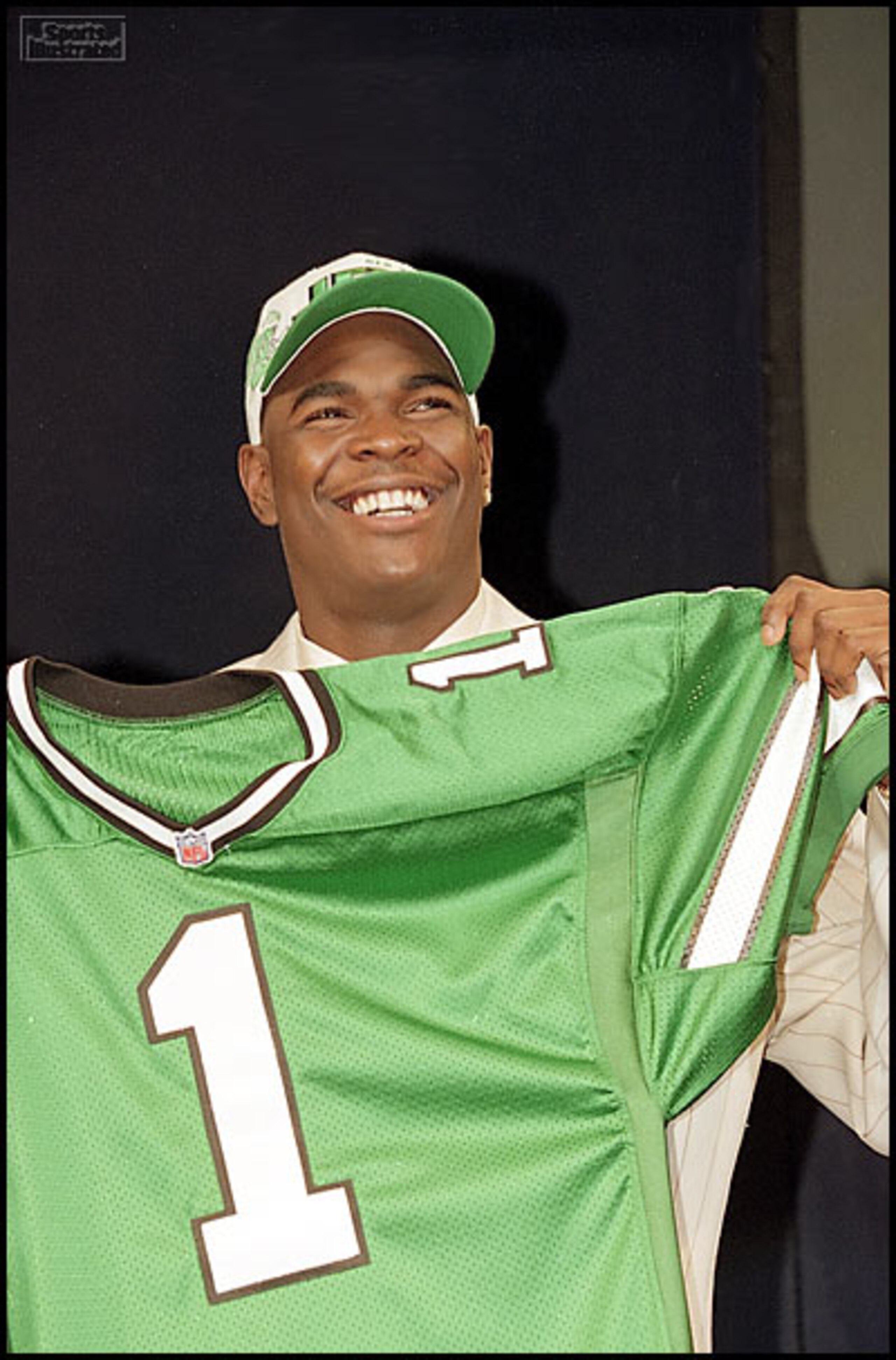
Keyshawn Johnson was an excellent receiver, but he never quite lived up to that No. 1 overall selection. The best value in this first round didn't come until later, and it went to one team.
The Ravens drafted Jonathan Ogden at six and Ray Lewis at 26.
Eddie George went 14th and other than that, this is an amazingly pedestrian draft.
The biggest storyline from the 1996 draft comes from the bust category, as Lawrence Phillips parlayed his impressive grab and drag stair time into the sixth selection.
No. 14. 1993: No Time To Wallow in the Mirer
12 of 26
Another QB debate dominated the 1993 draft.
Should the Patriots take Drew Bledsoe or the great Golden Domer, Rick Mirer?
Mirer had a fantastic rookie season, but that was as good as it got as he quickly embarked on a journey to Bustville after that.
Garrison Hearst and his sporadic career followed Mirer to round out a top three that can't even be saved by Bledsoe's prolific career.
This draft hit its stride in picks eight through 10, when Willie Roaf, Lincoln Kennedy and Jerome Bettis were selected.
To prove this was not a deep round, Robert Smith (21st), Dana Stubblefield (26th) and George Teague (29th) are the next most notable picks.
No. 13. 2002: Carr Keys?
13 of 26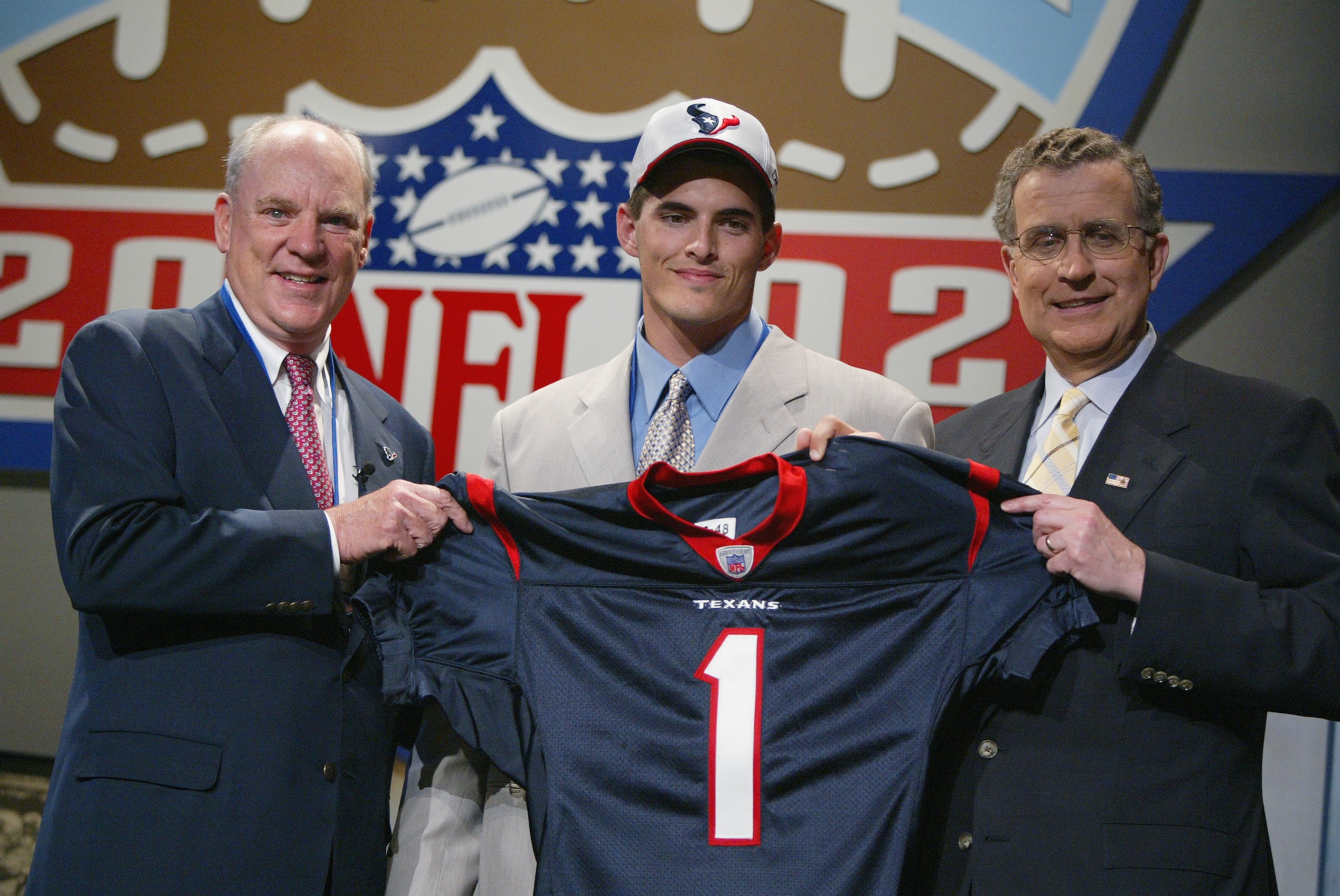
The Texans were a new team. They had one crack at the first pick in the NFL draft to build the entire history of their franchise around. They could not afford to make the wrong choice.
Was it going to be David Carr or Joey Harrington?
Luckily for the Texans, they picked the better QB. Unfortunately for the Texans, he is still really terrible.
In the end it was Carolina who got it right by picking Julius Peppers in between the QB busts.
And just like the first three selections would suggest, the 2002 first round featured a lot more defensive talent than offensive.
John Henderson (ninth), Dwight Freeney (11th), Albert Haynesworth (15th) and Ed Reed (24th) highlight a defensive first round.
The stellar group of linemen, plus Ed Reed, is not enough to vault this QB-tainted draft to average.
No. 12. 2000: A Penn State of Mind
14 of 26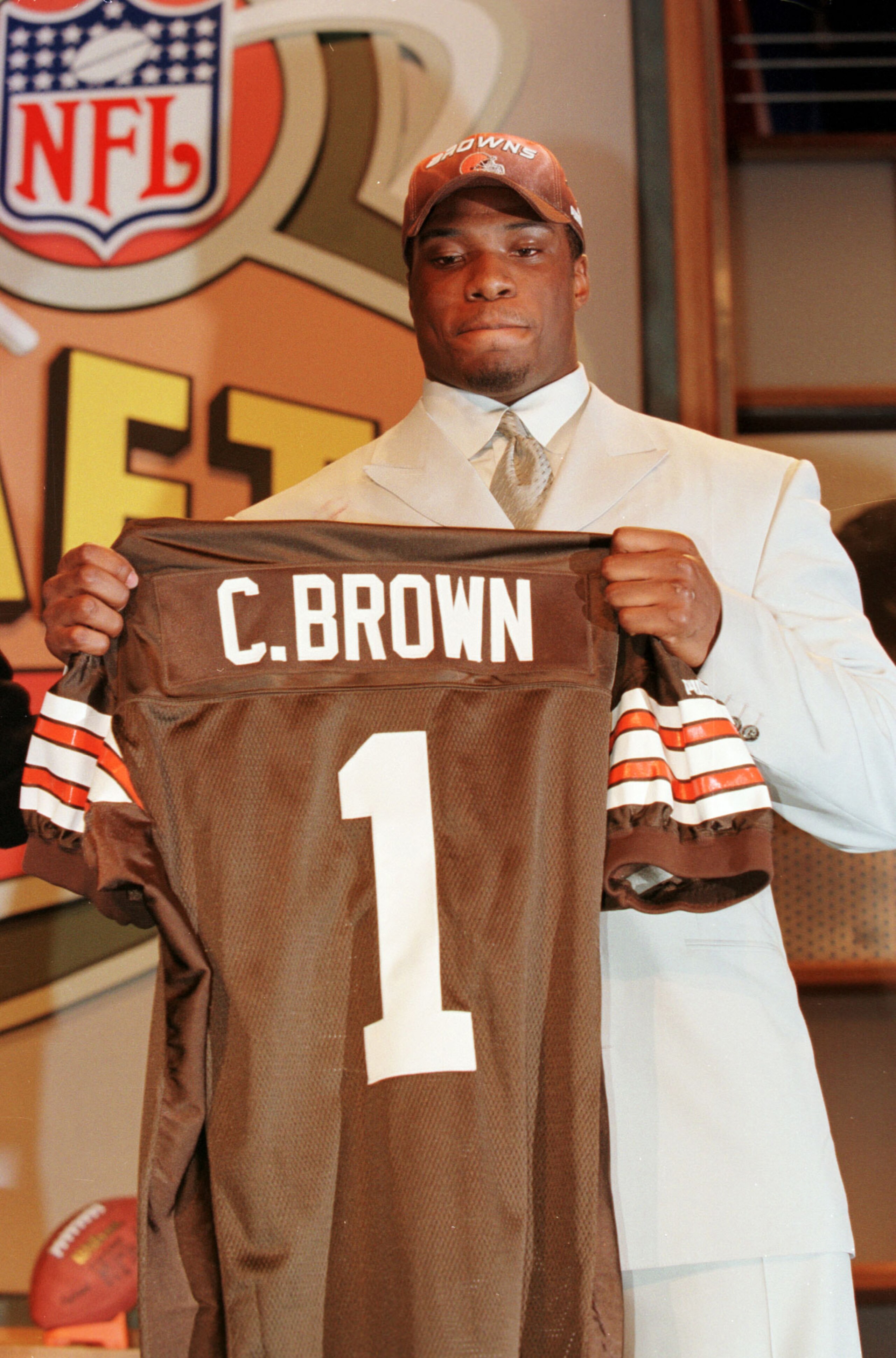
The first two picks in the draft were Penn State defensive teammates.
Shockingly, two defensive players from the same team, Courtney Brown and LaVar Arrington, actually weren't the two best players in the draft.
This was the draft of the back—record setting college and pro backs like Jamal Lewis (fifth), Ron Dayne (11th) and Shaun Alexander (19th).
Thomas Jones was the second RB selected at seven, and he is defying the odds and still playing. The others backs are already distant NFL memories.
Keith Bullock was a steal at 30. Brian Urlacher (ninth) is a possible Hall of Famer.
The second-most currently productive player this draft may be Sebastian Janikowski, who was a surprise pick at 17. I don't know that a kicker can earn the value of the 17th pick, but he is one of the few earning any value at all now.
If Plaxico Burress (eighth) can return to the NFL and produce, this draft may find itself shooting up the charts, but as it is now it remains middle of the road.
No. 11. 2010: A Boy Named "Suh"
15 of 26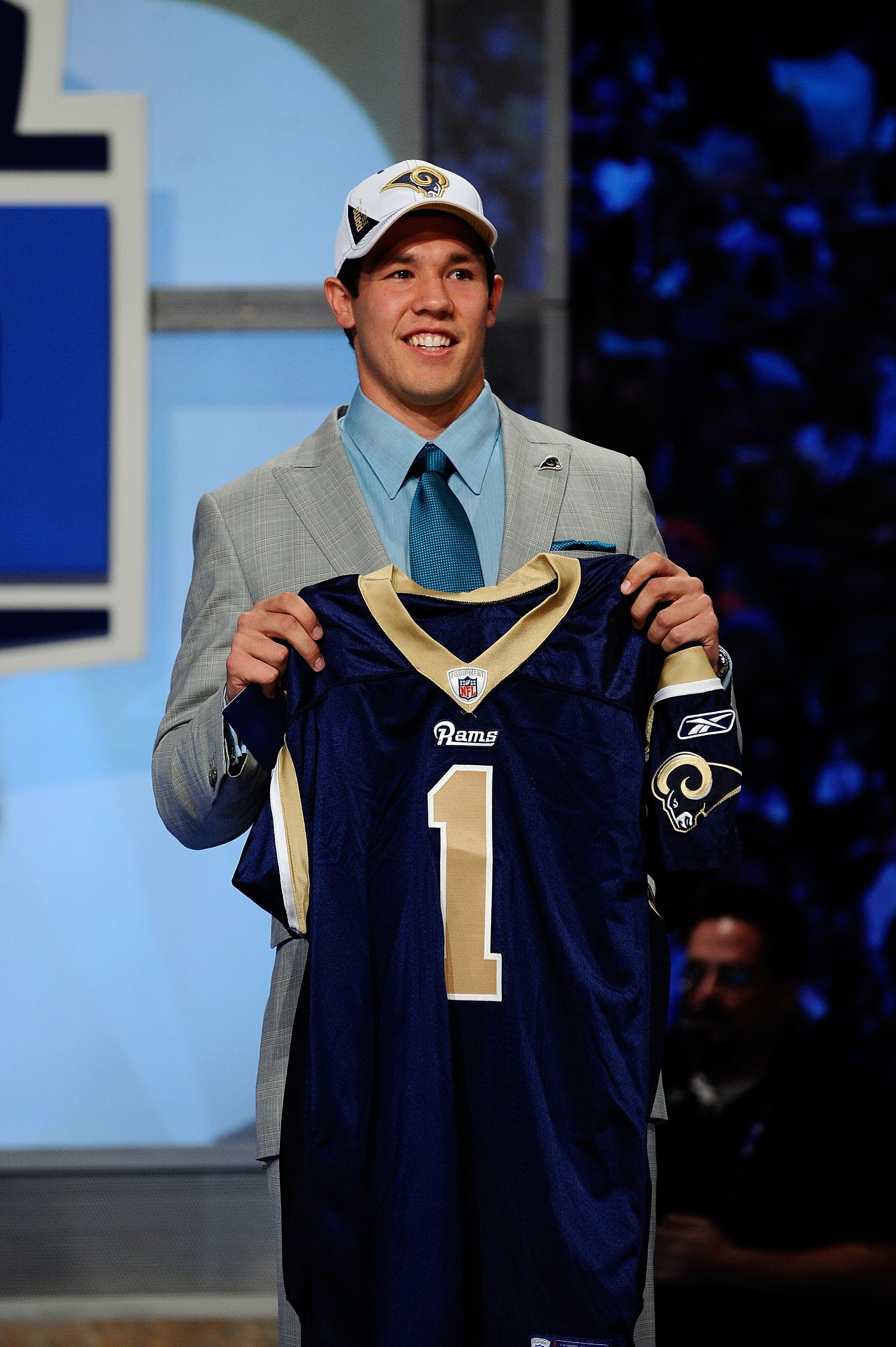
Obviously, it is still a little early to be judging the 2010 NFL draft, but do I type like I care?
We have seen glimpses of potential. The top-two picks, Sam Bradford and Ndamukong Suh, look like they may be good enough to carry this draft class.
However, what could make or break this draft with be the health of Trent Williams and Russell Okung, the first two OTs selected.
No. 10. 2003: Matt Millen Loves Him Some WRs
16 of 26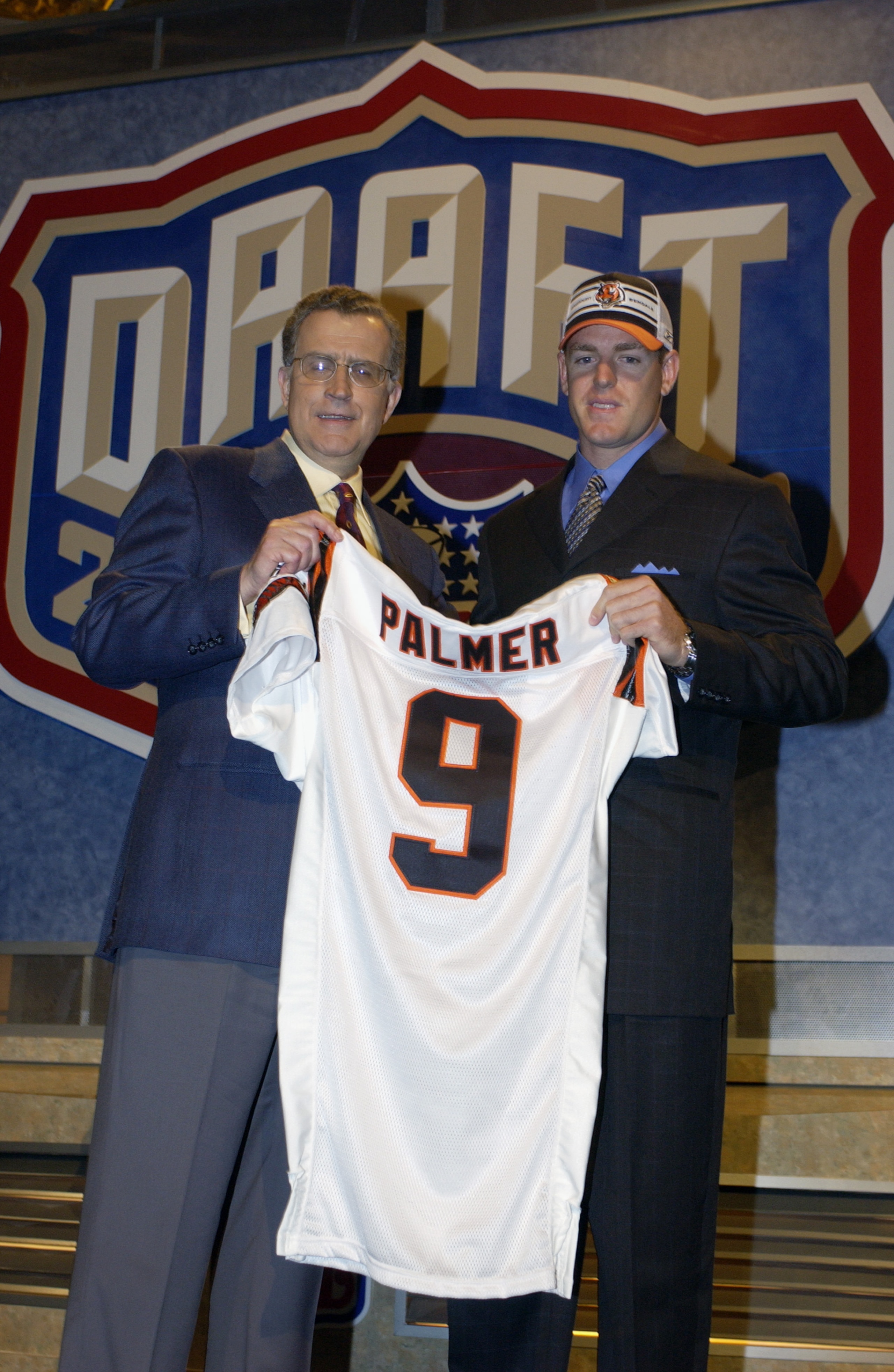
Poor Matt Millen. He was so close to getting the wide receiver he kept trying for on his first try in the 2003 draft.
But Matt Millen had a choice, which is not a good thing, between Andre Johnson and Charles Rogers. He picked Rogers. Swing and a miss.
Carson Palmer was already gone when Mr. Millen was picking.
Palmer has had his streaks, but he is not an inspiring first pick.
I will say this for the Bengals though: Palmer is by far the most productive of the first-round group of QBs. He was followed in the first round by Byron Leftwich (seventh), Kyle Boller (19th) and Rex Grossman (22nd).
The highlights of this draft were the late value picks of Troy Polamalu at 16 and Nnamdi Asomugha at 31.
No. 9. 2008: The Battle of the Non-Brothers Long
17 of 26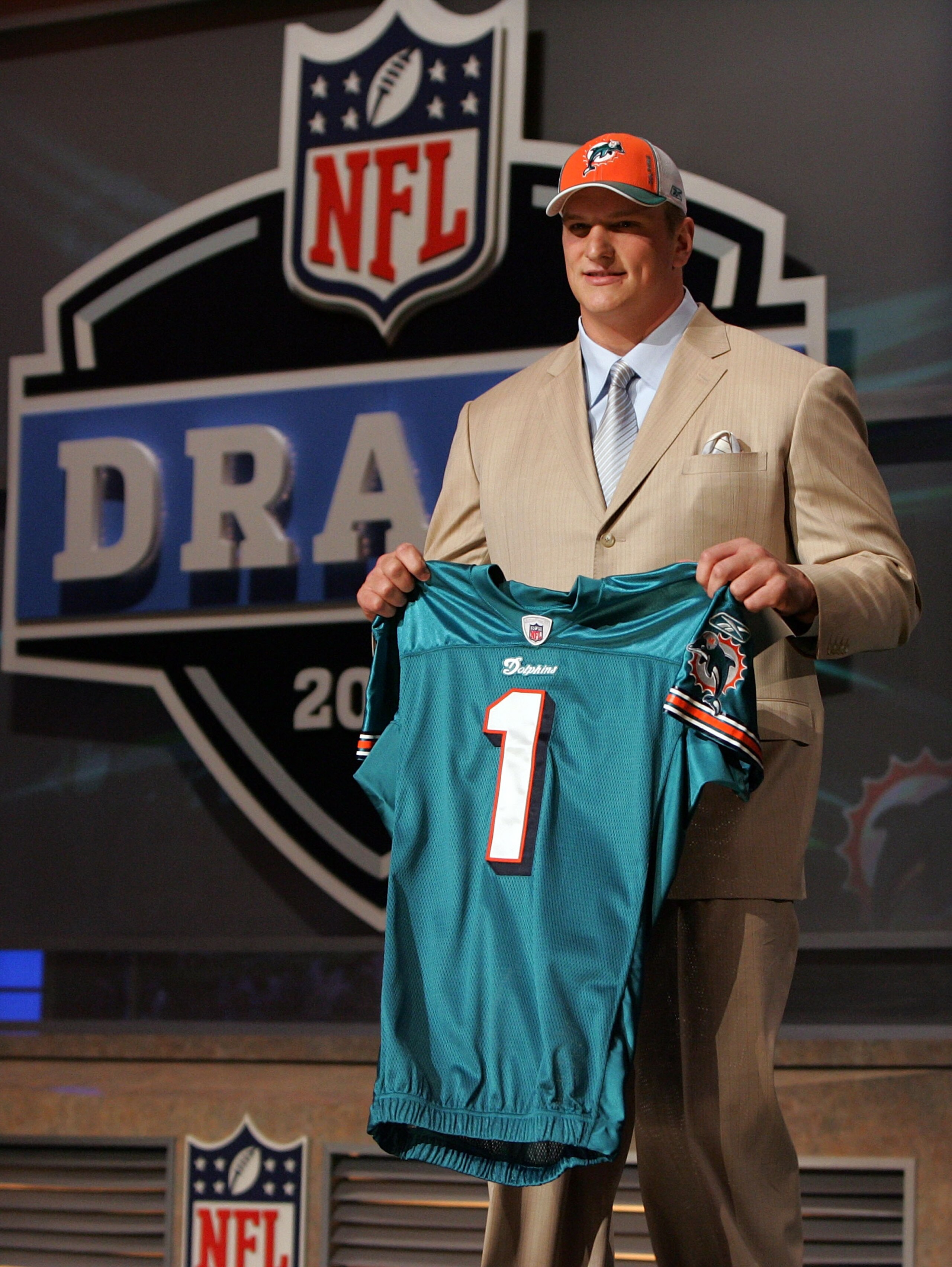
This draft was so confusing. Which one is ol' man Howie Long's boy again?
Jake or Chris Long? Are you sure the two linemen who went one-two in the 2008 draft aren't brothers?
I'm still not sure which one is his son, but I am pretty sure he loves Jake the best.
Jake Long is everything a team would want in a left tackle. If he can stay healthy and plays long enough, he is probably a Hall of Famer.
While Jake is a solid first pick in the 2008 draft, you have to believe that if Miami had it to do over again, they'd take the man who went third, QB Matt Ryan.
After the top-three, it was a running back free for all. Darren McFadden at the fourth pick now has one year of non-bust play under his belt; Jonathan Stewart (13th) is close, but not quite enough value for his draft day real estate.
The best value was later in the draft. Felix Jones (22nd) and Rashard Mendenhall (23rd) are solid picks, but Chris Johnson at 24 is the real star.
Another smart draft pick by the Ravens as they get Joe Flacco at 17.
There were only two or three OTs in this draft with first-round talent, but that didn't stop teams from selecting seven in the first round.
No. 8. 1995: Air McNair
18 of 26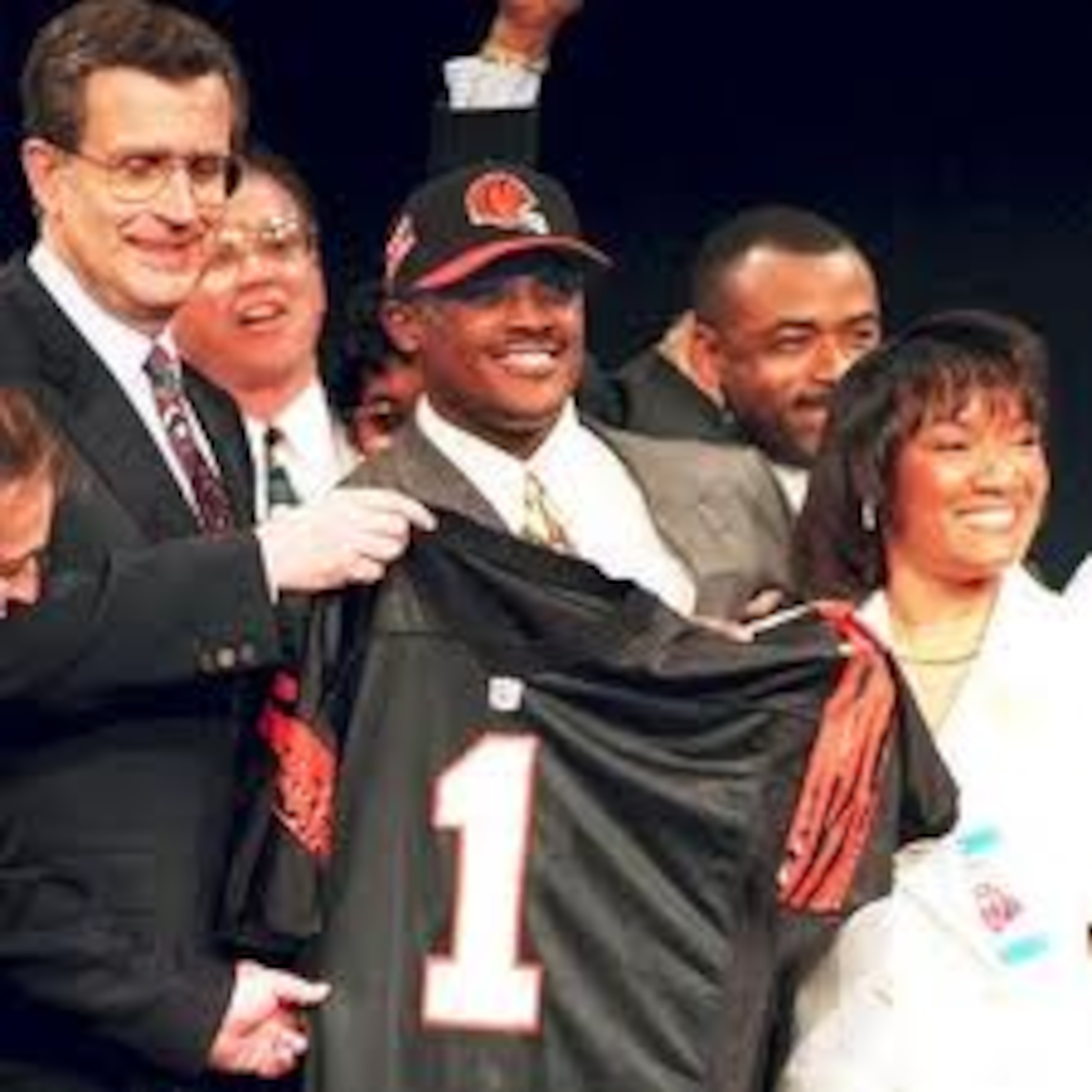
Before there was Michael Vick at Virginia Tech, there was Air McNair at Alcorn State running like a running back, throwing like a QB and putting up video-game numbers in the process.
And the Bengals took Ki-Jana Carter.
Carter's career was derailed by injuries and was unproductive.
Running back is tough position to draft with the No. 1 overall selection, and Carter never came close to earning it.
McNair didn't even go second. Tony Boselli made that spot his home. He is an above value second pick. Then McNair was picked, and he is the real face of this draft.
There was solid value all through this draft.
Kerry Collins (fifth), Kevin Carter (sixth), Joey Galloway (eighth), Warren Sapp (12th) and Ty Law (23rd) highlight the rest of the way.
There aren't a lot of busts from this draft. Even the players that didn't earn their first-round status were still productive players.
No. 7. 1999: Up in Smoke
19 of 26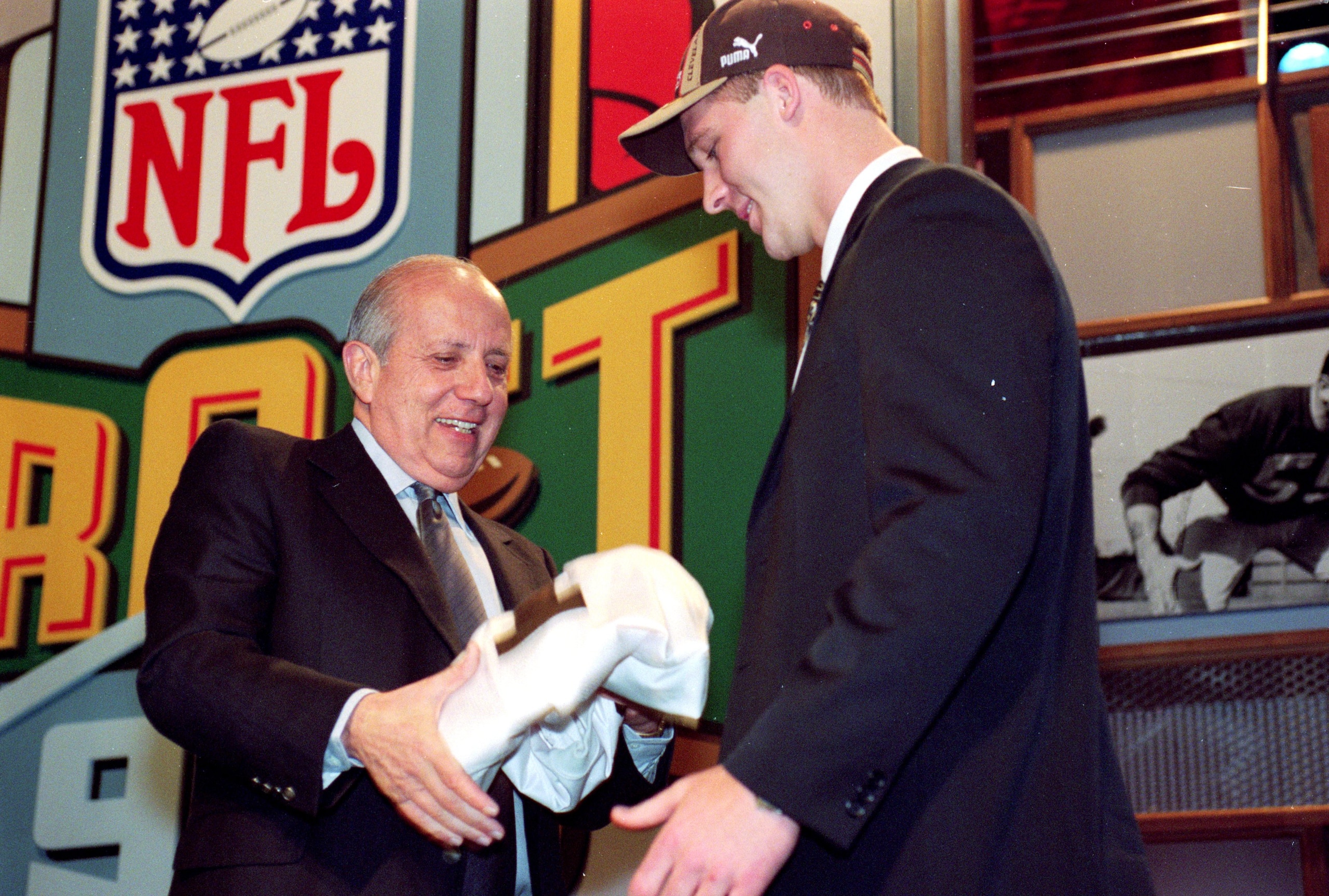
The 1999 draft was loaded with top-of-the-line QBs. There were three that were considered to have top-of-the-draft potential—although some questioned Donovan McNabb's ability to adapt to a pro style offense.
McNabb went second, one spot behind Tim Couch and one ahead of Akili Smith.
Unless you consider really horrible QB play interesting, the most interesting thing to come out of this draft was Mike Ditka trading away all of the Saints picks to draft Ricky Williams with the fifth overall selection.
While that was a horrible trade, it is easy to argue that Williams has fulfilled his draft value in an outstanding, albeit unique career.
Williams was taken one spot after Edgerrin James, who also had an outstanding career.
Torry Holt and Champ Bailey followed the two great RBs with amazing careers of their own.
While this draft had some notable busts at the top, it had enough talent throughout to make it a successful first round.
Jevon Kearse (16th), Damien Woody (17th), Patrick Kerney (30th) and Al Wilson (31st) rounded out a deep draft class.
No. 6. 2001: Bad Newz Draft
20 of 26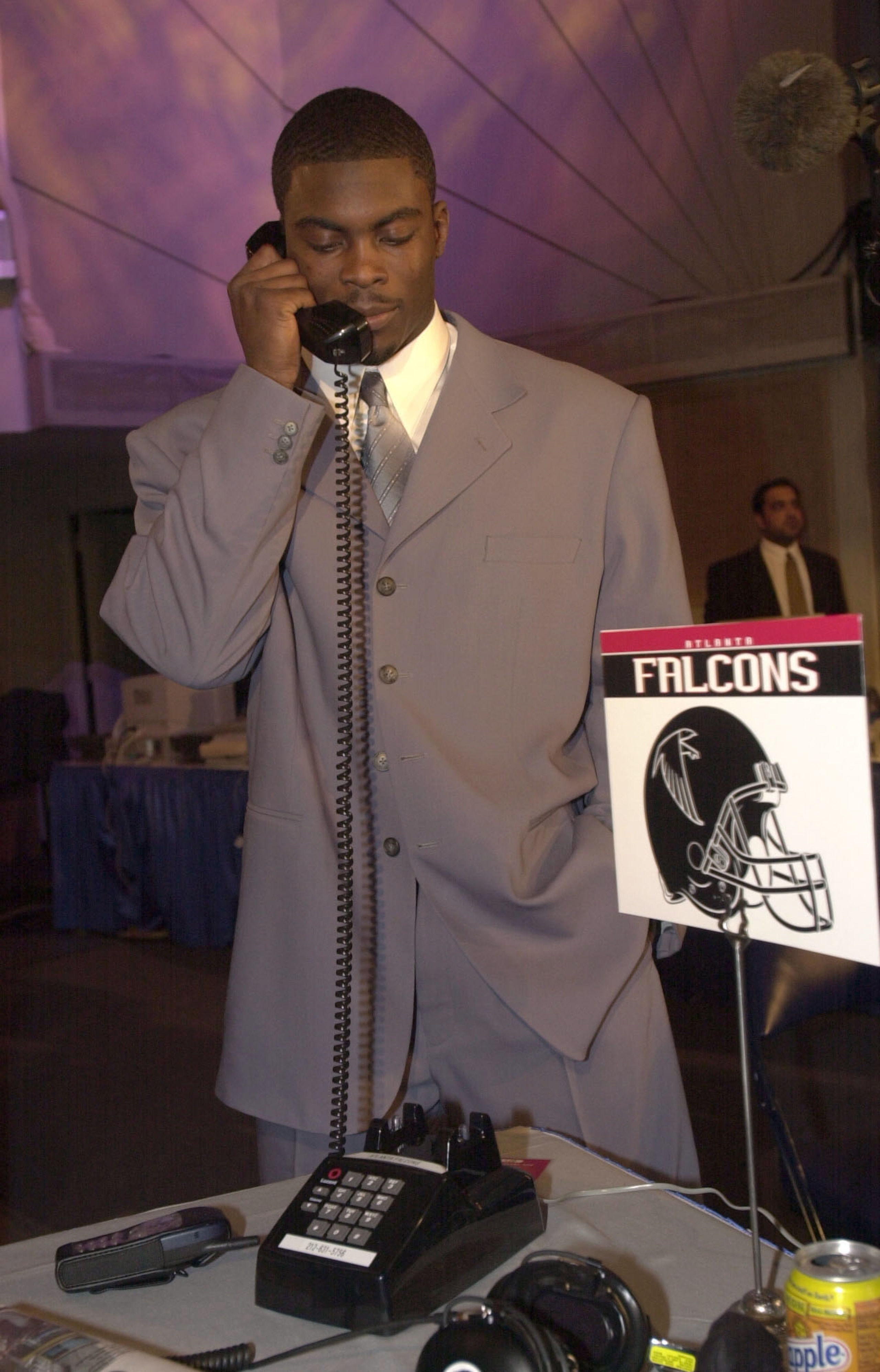
Even given all of his problems and a forced sabbatical, it is hard to argue that Michael Vick didn't deserve his No. 1 overall selection in the 2001 draft.
However, Leonard Davis, Gerrard Warren and Justin Smith did not live up to their hype as the two through four picks.
It's not like Davis and Warren were busts, but they were not first half, first-round material. The next two players were LaDainian Tomlinson and Richard Seymour.
There is some solid talent all through this first-round. Marcus Stroud (13th), Steve Hutchinson (17th), Casey Hampton (19th), Nate Clements (21st) and Reggie Wayne (30th).
Overall, it was a very solid draft that is relatively low on the bust factor.
No. 5. 1985: Keep Your Rice in the Fridge
21 of 26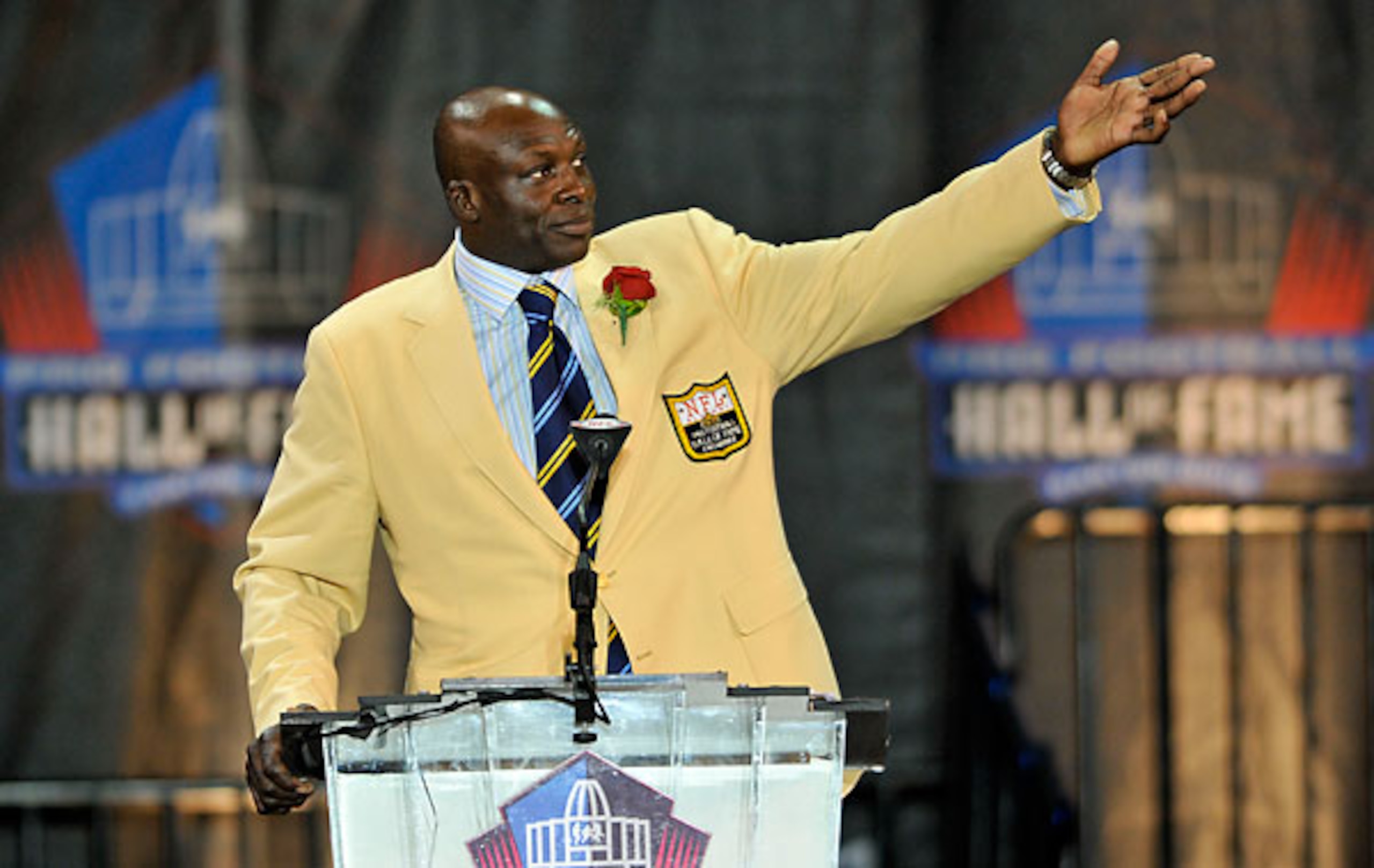
If you are going to draft a defensive end No. 1 overall, you hope they turn out as good as Bruce Smith. This Hall of Famer is clearly worthy of being selected No. 1 overall, however, he was not the best player from this round.
That distinction goes to Jerry Rice who was on the board until the 16th pick.
Beyond the Hall of Famers, it was a solid draft. Bill Fralic went second. He was drafted as a tackle, but ended up being an All-Pro guard.
Other notable players from this draft include Chris Doleman (4), Lomas Brown (6), Al Toon (10), William "The Fridge" Perry (22) and Steve Sewell (26).
There were no quarterbacks taken in the first round of this draft. Bernie Kosar was taken in the supplemental draft, and Randall Cunningham and his mind-blowing physical ability was taken ninth in the second round.
I gotta believe if Cunningham was coming out of college today, he would be a No. 1 overall selection.
No. 4. 1997: The Blind Side
22 of 26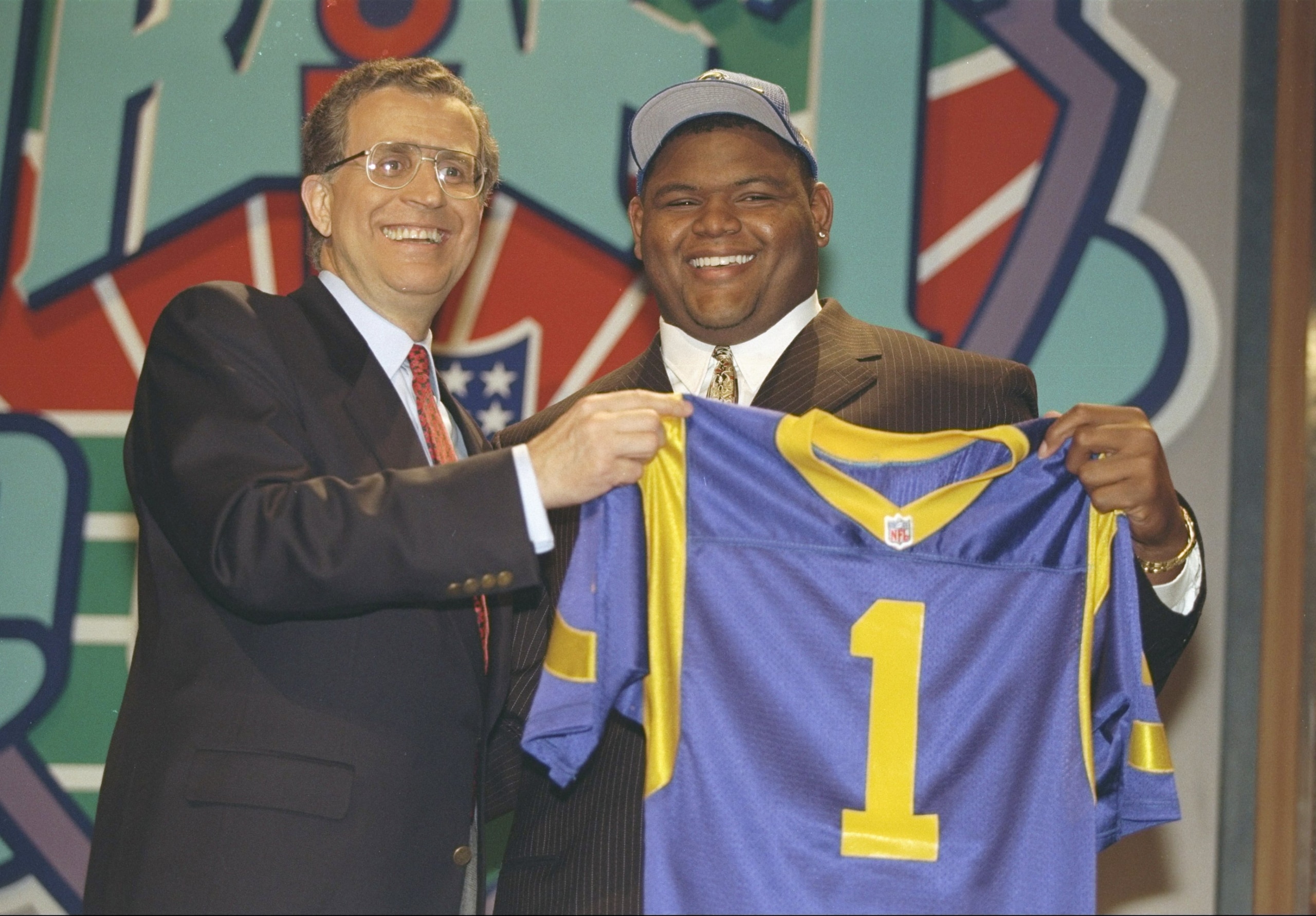
Two Hall of Fame-caliber left tackles, Orlando Pace (first) and Walter Jones (sixth) came from the 1997 draft.
And that right there is enough to hang a draft on.
They were not alone, however. It's hard to fault any team for the first eight picks. Joining Pace and Jones are Darrell Russell, Shawn Springs, Peter Boulware, Bryant Westbrook, Ike Hillard and James Farrior.
Russell was a defensive MVP before he partied his way out of the league and tragically life, and while Ike Hillard was not a dominant receiver, he was good enough to avoid the bust label.
Throw in Warrick Dunn and Tony Gonzalez at 12 and 13, and you have one amazing first round.
The first-round tails off from there, but that is just because the teams in the first half did such an amazing job.
One of the most notable qualities of this first round is the lack of QBs. Jim Druckenmiller at 26 was the only QB taken.
No. 3. 1988: The All-State Good Hands Draft
23 of 26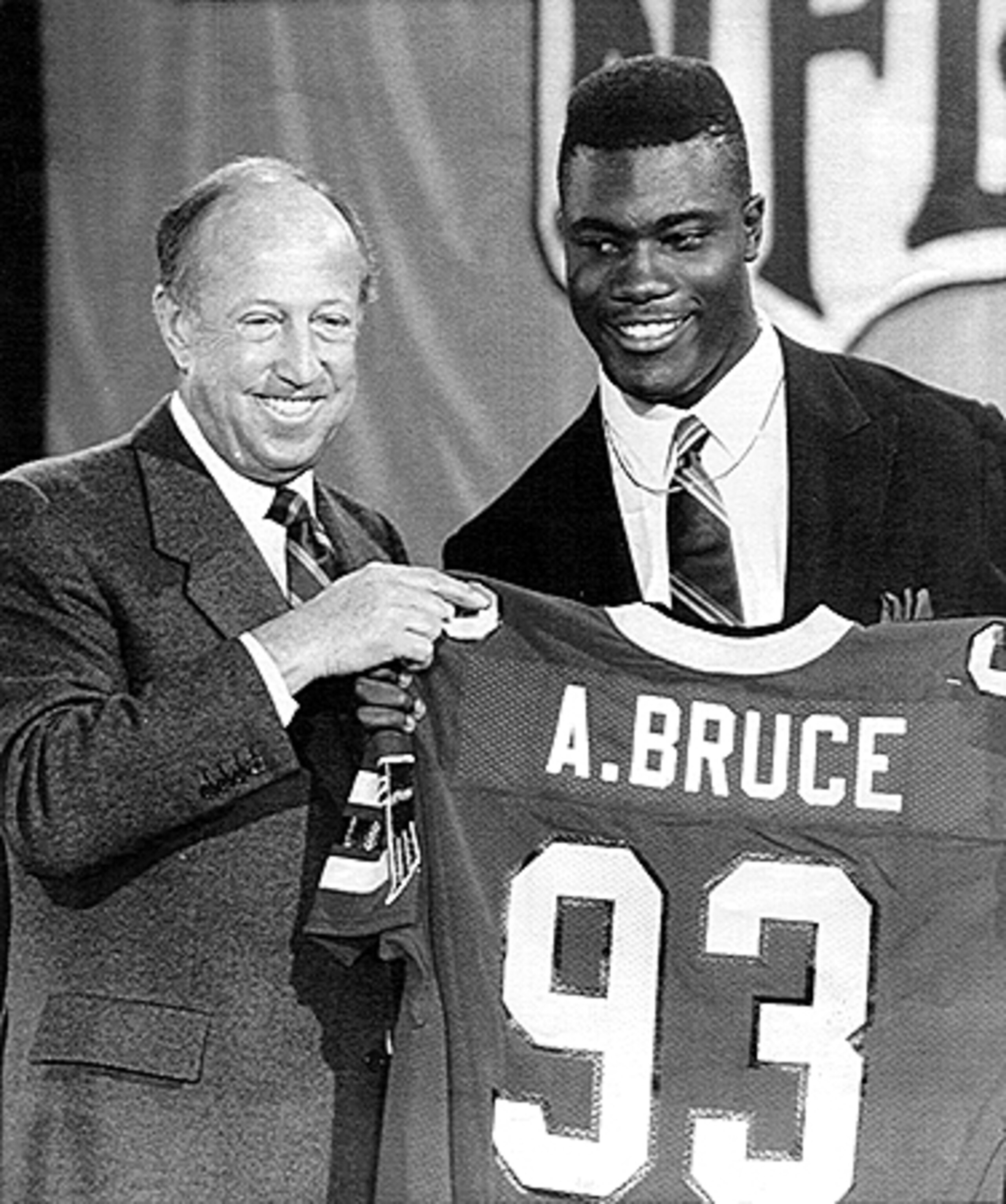
Two sackmasters competed for the top of the 1988 draft board, Aundray Bruce (first) and Neil Smith (second).
Neil Smith went on to have a wildly superior 100-plus sack career, but Bruce had enough moments to keep him from bust territory.
The stars of this draft were the receivers: Tim Brown (sixth), Sterling Sharpe (seventh) and Michael Irvin (11th) highlight this draft class.
They are joined by some Pro-Bowl caliber players like Bennie Blades (third), Keith Jackson (13th) and Hall of Famer Randall McDaniel (19th).
This draft avoided the big busts and produced some top-notch talent.
No. 2 (b). 2004: A River Runs Through It
24 of 26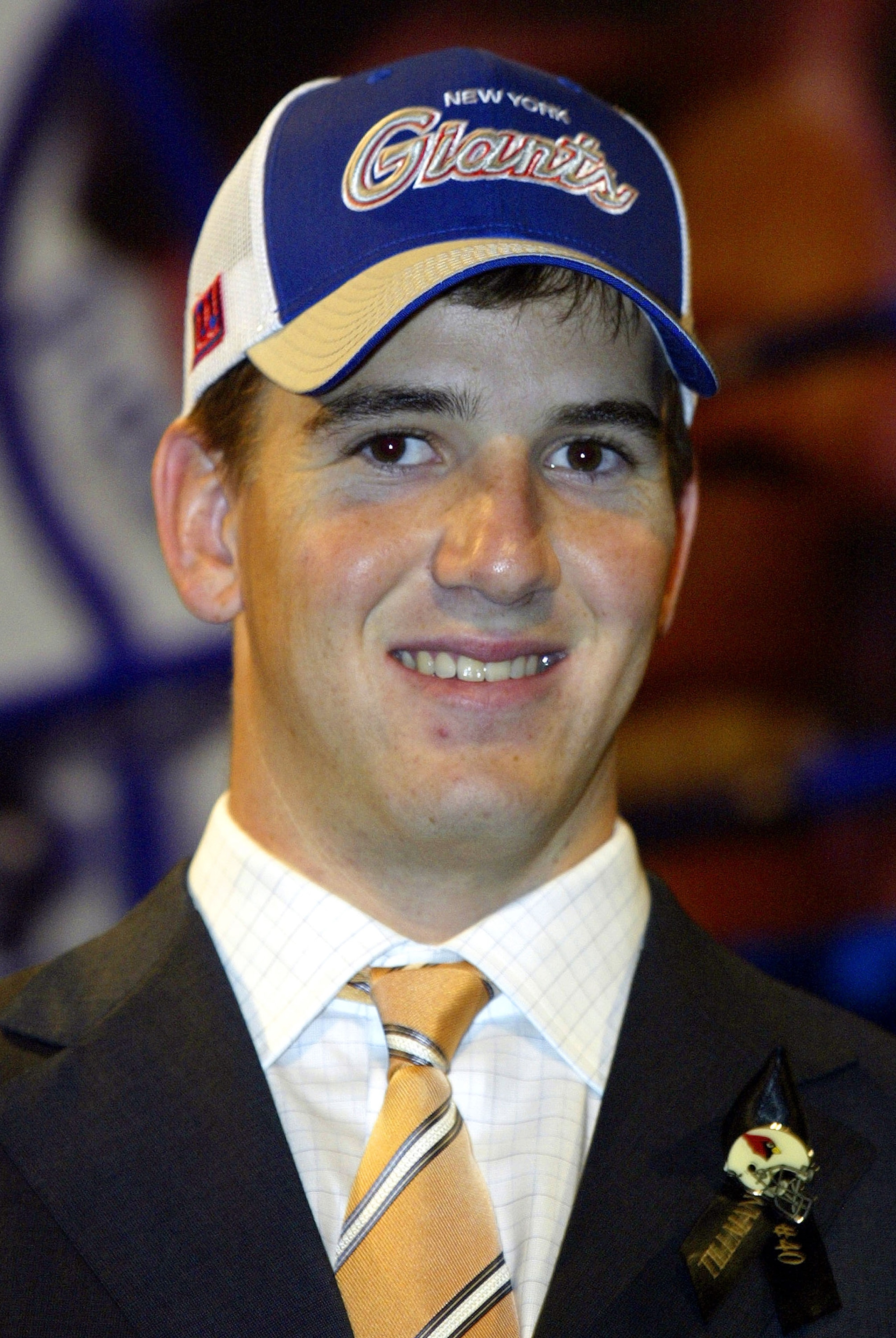
Did anyone ever figure out why Eli Manning was so adamant about not going to San Diego? It's not a bad place to be a professional athlete. Whatever his reason was that was the storyline that dominated the 2004 Draft.
Despite Manning's Super Bowl, does anyone feel he is a better QB than the man he switched places with, Philip Rivers (fourth)?
That's two pretty good QBs for one draft, and neither of them will likely leave a legacy as great as the QB taken 11th, Ben Roethlisberger.
Larry Fitzgerald was taken third, one spot behind Robert Gallery, who was a giant bust a tackle but has since turned into a fine guard.
There was a lot more value in this round than busts. The biggest steal was Steven Jackson at 24.
No. 2 (a). 1998: The Great Debate
25 of 26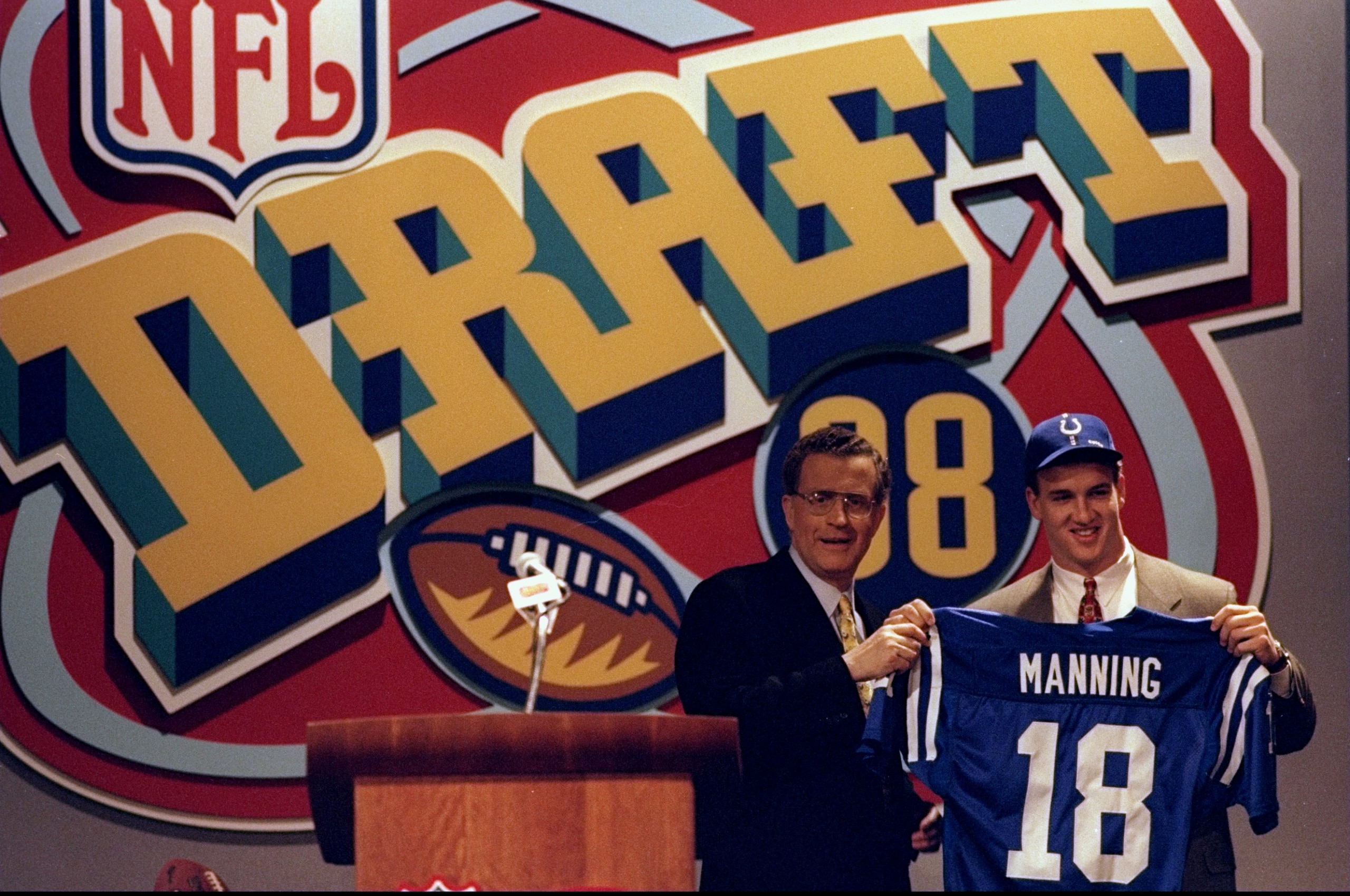
I can't lie. I thought the Colts were fools for passing up on the great Ryan Leaf in the 1998 draft.
Now I don't want to jump the gun, because Manning's career is not over, but it appears they may have been right.
I actually don't think there could be a bigger discrepancy between two players. While Ryan Leaf competes for the all-time biggest bust label, Manning competes for the all-time greatest QB throne.
Leaf was one of the few busts of this draft.
Charles Woodson (fourth), Grant Wistrom (sixth), Fred Taylor (ninth), Keith Brooking (12th) and Takeo Spikes (13th) are enough high quality players to carry a draft on their own accord.
Oh and if it wasn't for the famous Leaf-Manning battle this draft would likely be remembered as the draft that Randy Moss slid to 21st, because of character issues.
Can you believe that! Randy Moss and character issues—that just doesn't even sound right.
No. 1. 1989: Prime Time
26 of 26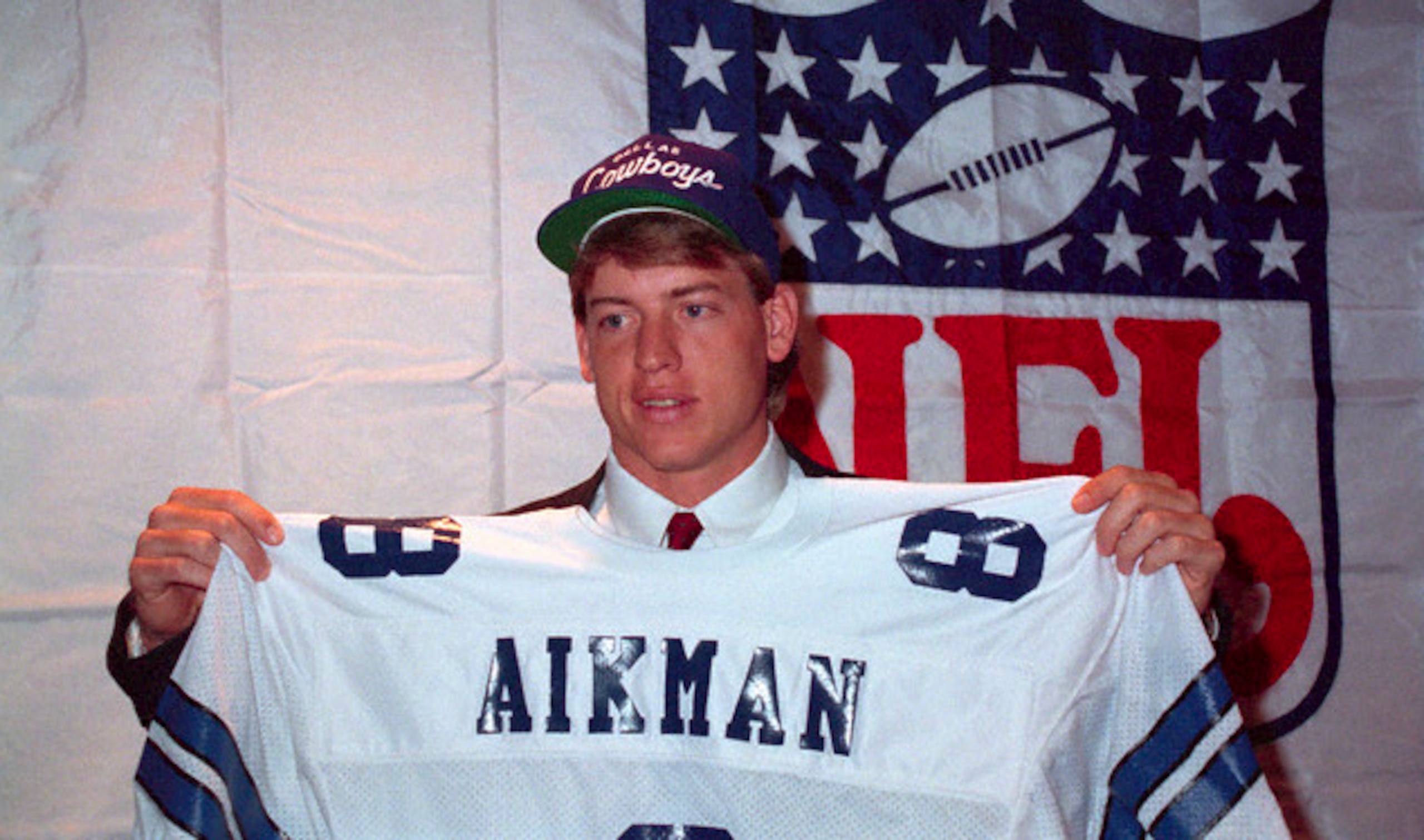
Troy Aikman is what is supposed to happen when you pick a QB No. 1 overall in the draft.
Tony Mandrich is what is supposed to happen when you draft a linemen at No. 2 overall who has enough steroids inside him to make an elephant break out with acne.
Even with the enhanced flop of the Mandarich pick, the top five in the 1989 draft is as good as you will see. Tony was followed by Barry Sanders, Derrick Thomas and Deion Sanders.
That is enough talent to carry a draft right there, but this draft also gave us Trace Armstrong (12th), Eric Metcalf (13th), Steve Atwater (20th) and Andre Rison (22nd).
A rock-solid draft back in the day when the first round was only 28 picks.