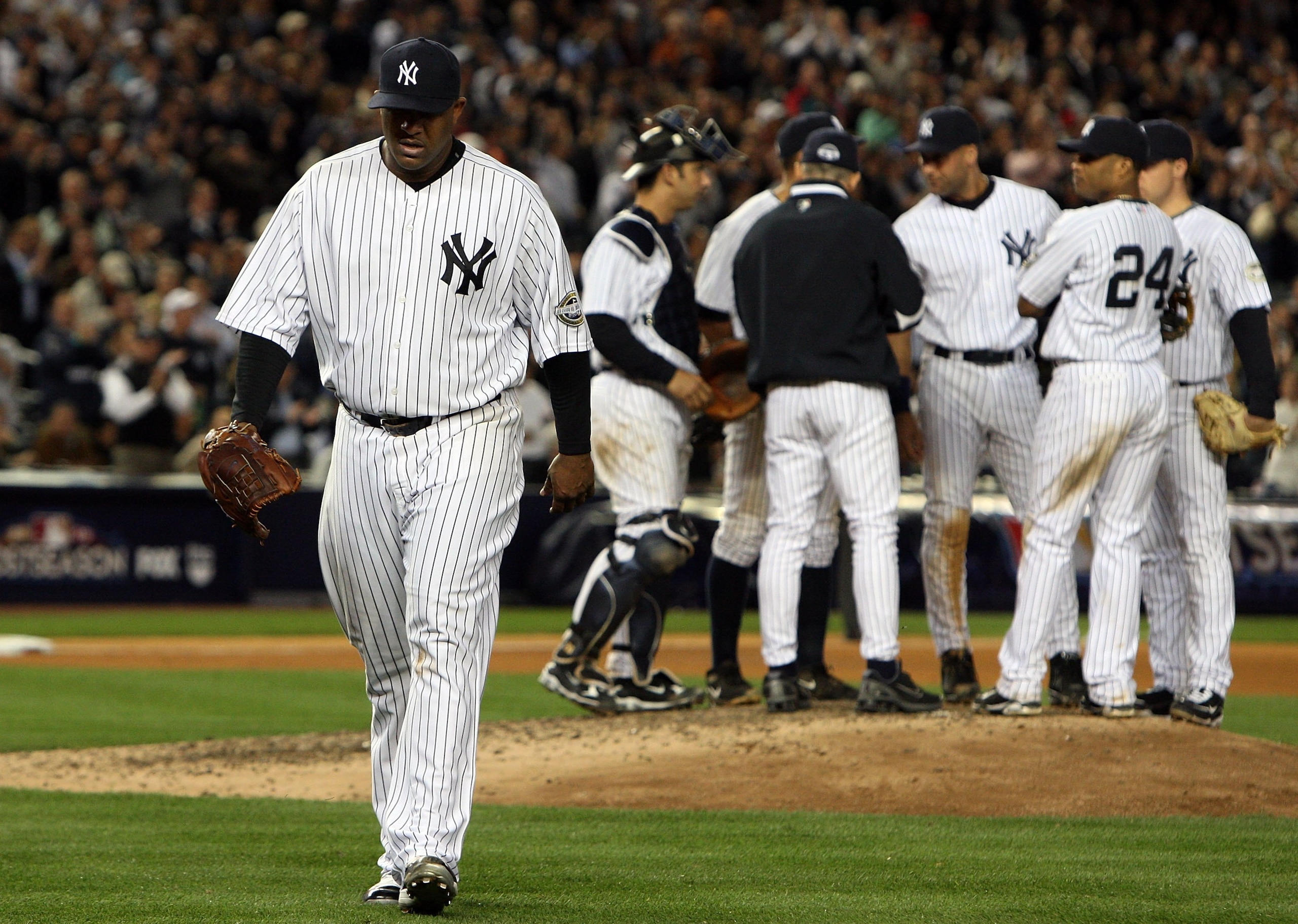

Why the New York Yankees Should Expect CC Sabathia to Opt out After 2011
Let’s be clear: CC Sabathia didn’t say he's leaving the Yankees after 2011, when his opt-out clause comes into play.
While discussing his future recently, though, New York's ace didn't exactly deny he wouldn't bolt, either. The lefty said simply, and cryptically, "Anything's possible."
Should he opt to act on the out clause, Sabathia would lose $92 million over four years. (That's guaranteed money, folks.) But he could net an even bigger score than the $120 million Cliff Lee landed from the Phillies in December.
If Sabathia, 30, stays healthy and pitches like he has in his first two years wearing pinstripes, he would have serious leverage on the open market, thanks to his age (almost two years younger than Lee), his durability (especially minus 25 pounds after kicking his Cap'n Crunch habit) and the shaky status of the Yanks' rotation (so long, Andy Pettitte).
The biggest factor, though? Next year's free-agent class of starters is only marginally better and deeper than this winter's mediocre crop. You don't need an economics degree to grasp this concept: Low supply equals high demand. And if Sabathia leaves, the Yankees' pitching supply would be embarrassingly low, making him even more in demand than Lee was.
GM Brian Cashman would be forced to do everything in his power—and make good use of the Steinbrenners' checkbook—to ensure their No. 1 starter returns to the Bronx.
Aside from Sabathia, who—again, let's be clear—would easily be the top free agent target, here's a rundown of the hurlers who will be competing for the second-biggest contract next offseason.
Roy Oswalt, Philadelphia Phillies
1 of 5
With a club option at $16 million, Oswalt might not even hit free agency. But if he does, the righty—whose career stats are eerily similar to Sabathia’s—will get paid. Oswalt, though, won’t command the money or years that his fellow 2001 rookie would because the righthander has spent his entire career in the less-challenging NL and will be 34 by the start of 2012.
Chris Carpenter, St. Louis Cardinals
2 of 5
Carpenter also has a club option ($15 million), so this, too, could be moot. But with his injury history and age, the Cardinals may buy out the righty for $1 million—that would mean an extra $14 million towards re-signing You-Know-Who—and it’s unlikely teams would offer the 35-year-old more than a two- or three-year deal, former Cy Young winner or not.
Mark Buehrle, Chicago White Sox
3 of 5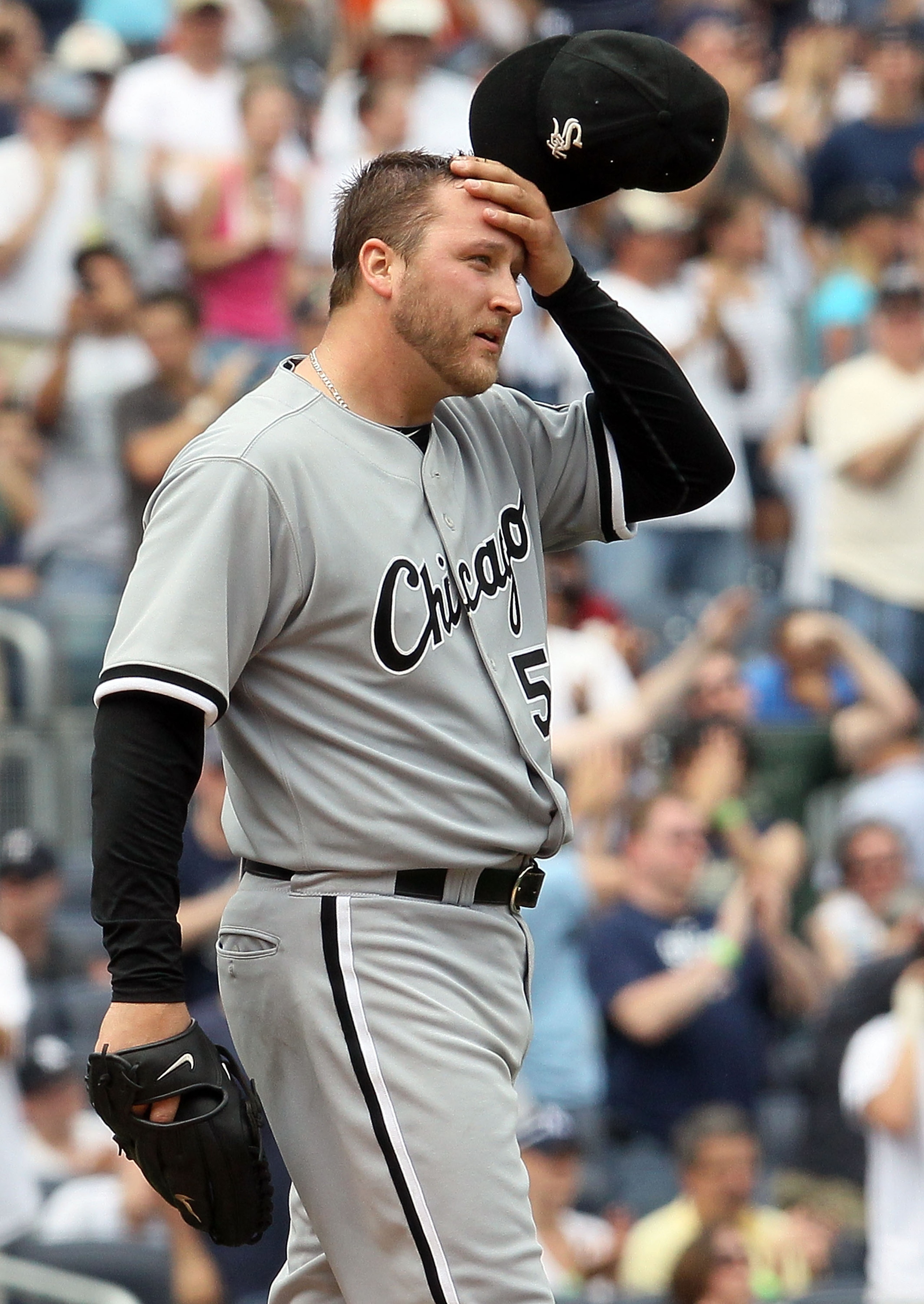
The 31-year-old Buehrle is a durable winner, with the most innings (2,220) and fourth-most wins (144) in baseball over the past 10 years, but he also sports a measly 5.1 K/9 career rate. That's two-and-a-half fewer strikeouts per nine innings than fellow lefty Sabathia's rate (7.6).



Edwin Jackson, Chicago White Sox
4 of 5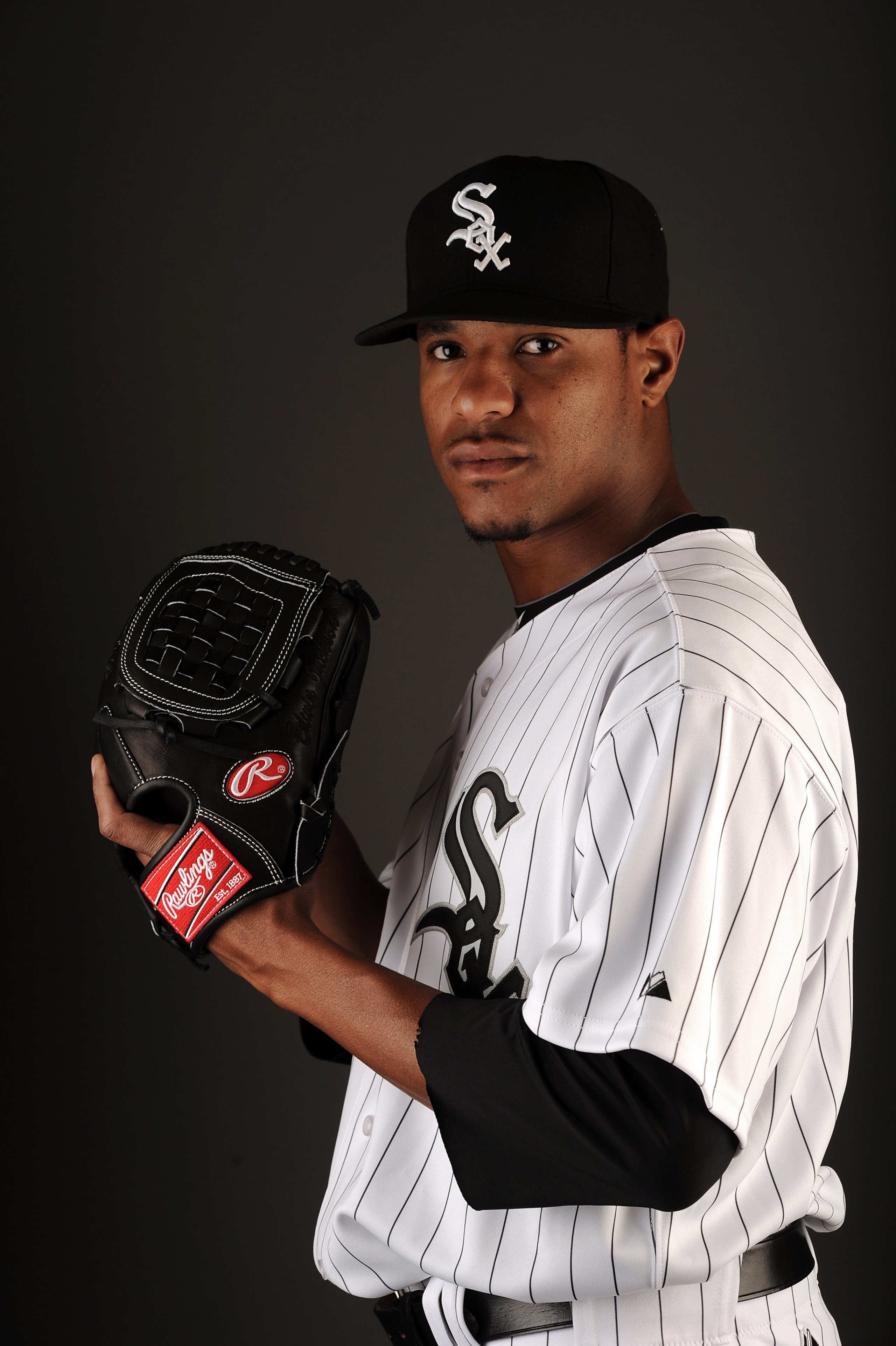
Unlike his rotation mate, Jackson is young and has a dynamite arm. But the 27-year-old’s 48-51 career record and 4.62 ERA evoke comparisons not to Sabathia but one of his teammates. A.J. Burnett's first big contract came in 2005 when he was 28 years old, and the five-year, $55 million deal—which included an out clause—raised some eyebrows based on his record (49-50) and ERA (4.15) at the time.
C.J. Wilson, Texas Rangers
5 of 5
The former reliever exceeded everyone’s expectations as he transitioned from the bullpen last year to put up 15 wins, a 3.35 ERA and 170 strikeouts. But Wilson, 30, was wild, finishing with the second-most walks (93) in baseball. Not to mention, he got at least a little lucky in limiting hits (.217 batting average against) and homers (just 10)—both were outliers from his career rates as a reliever.





.jpg?w=2560 "Latest Peyton-Colts Rumors")