
Men's Tennis: The Top Rivalry Matches in the Open Era
This is the sort of thing that one is wont to discuss at this time of the year, when the real beef of the season on the clay and grass hasn't quite started and the first grand slam is out of the way. It is a time for reflection and typically, the conversation starts off about greatness.
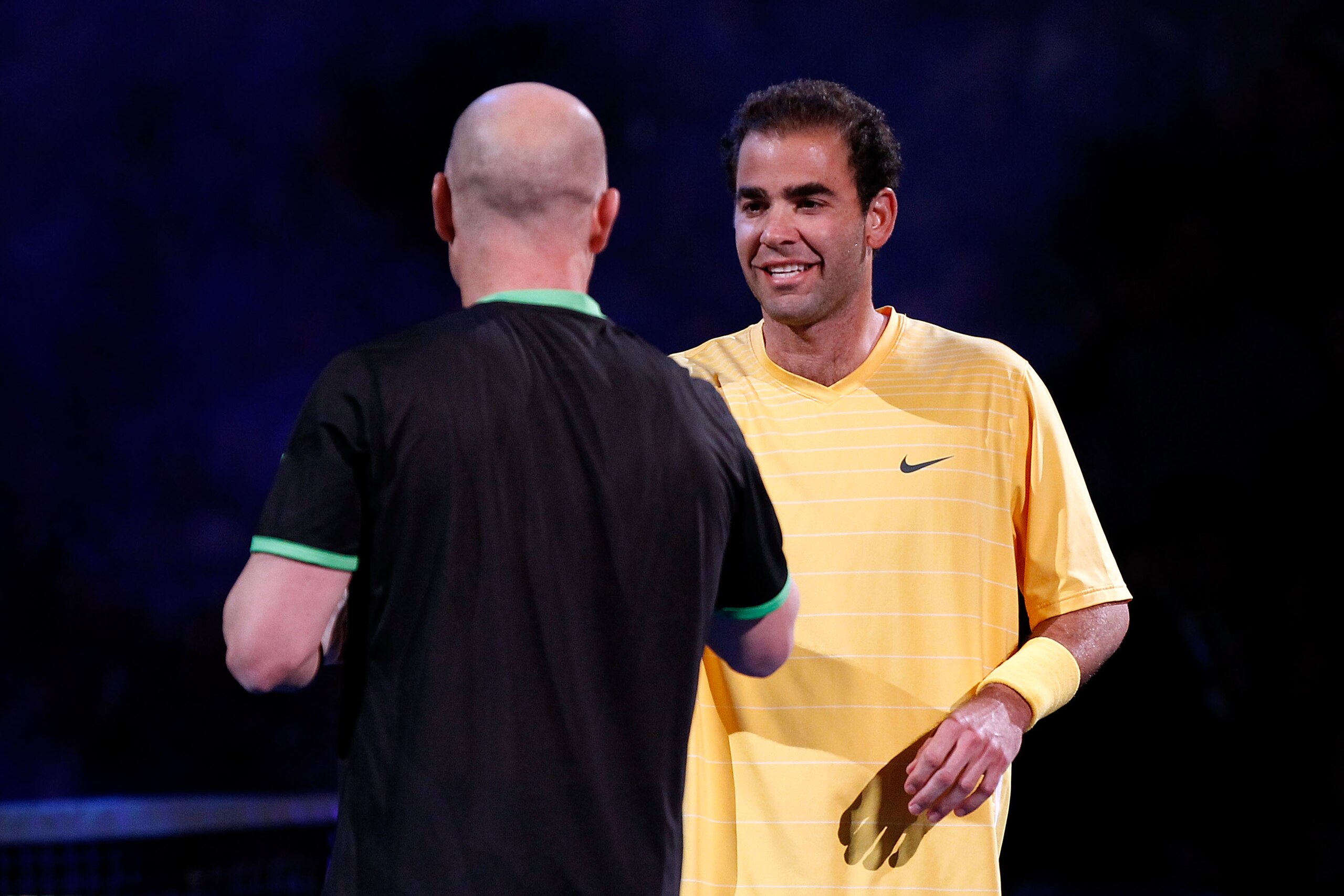
One has the debate on the GOAT, but, more infrequently, discussion on the great rivalries—especially with Pete Sampras' most recent exhibition win over long-time rival Andre Agassi—pops up. What made them special was not only the tennis that rivalries brought, of course, but also the sense of gravitas and history that accompanied the concurrent presence of two great rivals.
McEnroe, Borg, Lendl, Connors, Sampras, Agassi, Federer, Nadal; these are just some of the names of the 40-odd years of the Open Era. They have dominated and shaped it, leading it exponentially towards new heights. Often, however, there were standout matches, matches which defined their rivalries and careers and which, especially, made their rivalries "great"—that obscure and undefinable sense of transcendence.
Here are the top rivalries—and their keynote classics—of the Open Era.
Bjorn Borg Defeats John McEnroe, Wimbledon 1980
1 of 6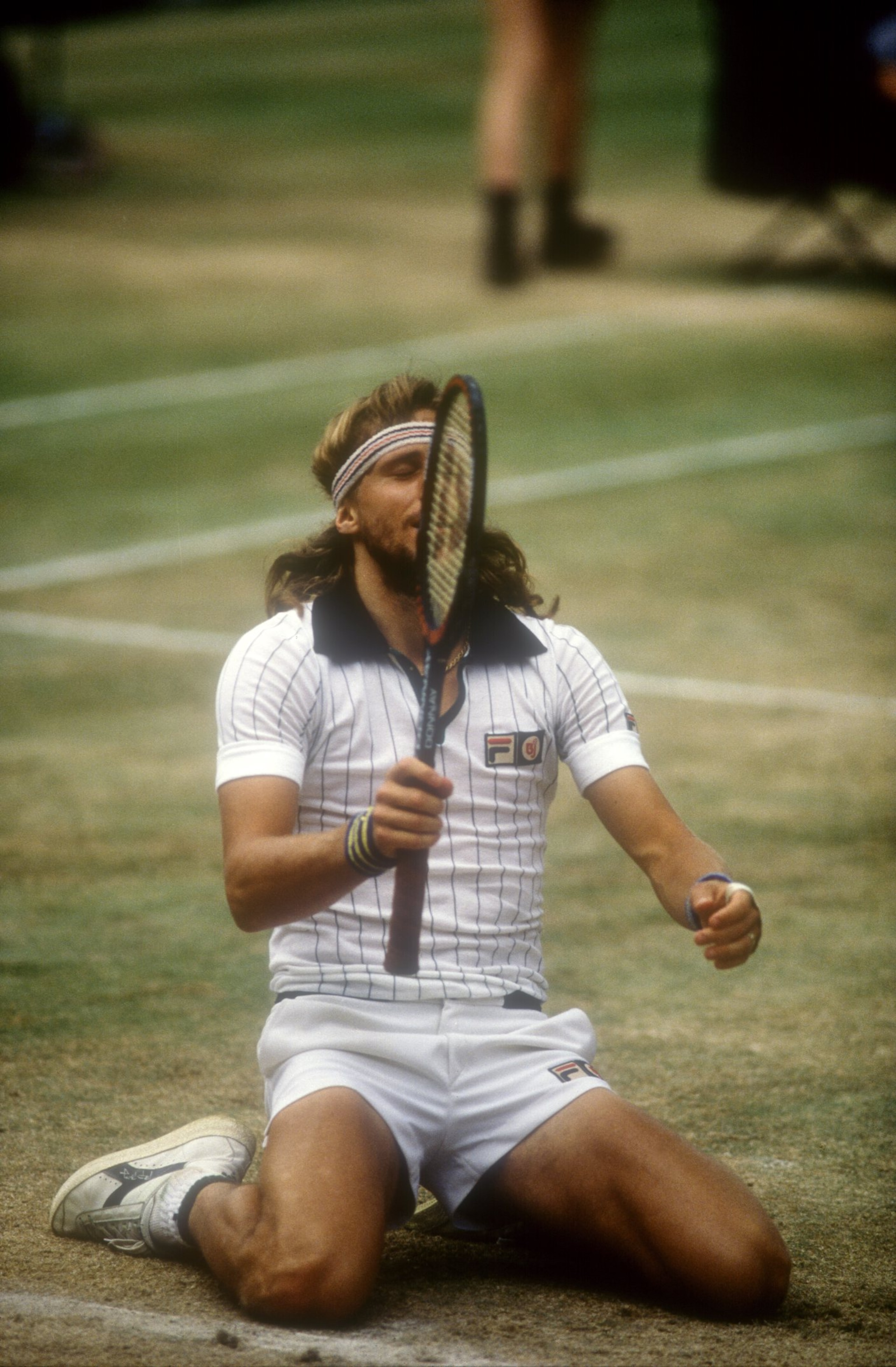
The Open Era really began with two men—Jimmy Connors, who won three of four slams in 1974, and Bjorn Borg, who redefined the meaning of dominance. Indeed, in his glorious run in the late 1970s and early 1980s, he would earn six French Opens and five Wimbledons, winning both in three consecutive years—a feat yet unmatched by the modern game.
Great players, however, called for great rivals and Borg found his sternest challenge in 1980, in the upcoming John McEnroe—then, at Wimbledon, the two played possibly the finest, most gripping match ever played.
It was a match in destiny like no other—the upstart American, proven genius of serve and volley and probably the most adept grass court player of the time, playing the four-time defending champion. It was a delicious contrast—the fiery-tempered net-rusher against the ice-faced patient baseliner.
It proved McEnroe's hour in the first set, however, as he whizzed passed Borg for the loss of one game. The second and third, however, saw Borg characteristically reclaim his control of the match, frustrating McEnroe with pressing and consistent defense. It proved more the same in the fourth, too, as he broke to serve for the match.
Just as he faced defeat and two championship points, McEnroe fired back and forced a tie break—possibly the most famous tie break of all time. It would be a riveting twenty minutes of knife-edge tension, as points alternated between the two, fantastic passes accompanied by unreal stretch volleys. Neither man would budge. At length, at 19-18, McEnroe touched a nerve of the iceman, as he forced a volley error on set point—the set was his.
The fifth proved equally riveting, although manifested less of the genius and greatness of the American than the steely, competitive vigour of Borg. While he had squandered crucial opportunities to win the match in the fourth, the fifth came by like a new day—Borg followed his heart and finally, at 7-6 15-40, forced the decisive error from McEnroe. He had won the greatest match ever witnessed, 1-6 7-5 6-3 6-7 8-6.
The tide would turn next year, however, as the power struggle palpably shifted in MnEnroe's favour, as he won their next meeting in the Wimbledon final in 1981 in four sets. It had borne little of the magic that had encompassed the last year's final. For Borg, his victory in 1980 proved his greatest, but also one of his last. He had won but, as it would turn out the next year with his surprising retirement, was left broken.
Nonetheless, the Open Era could not have been heralded any better than by a match between an American and a Swede of the most surpassing quality.
Ivan Lendl Defeats John Mcenroe, French Open 1984
2 of 6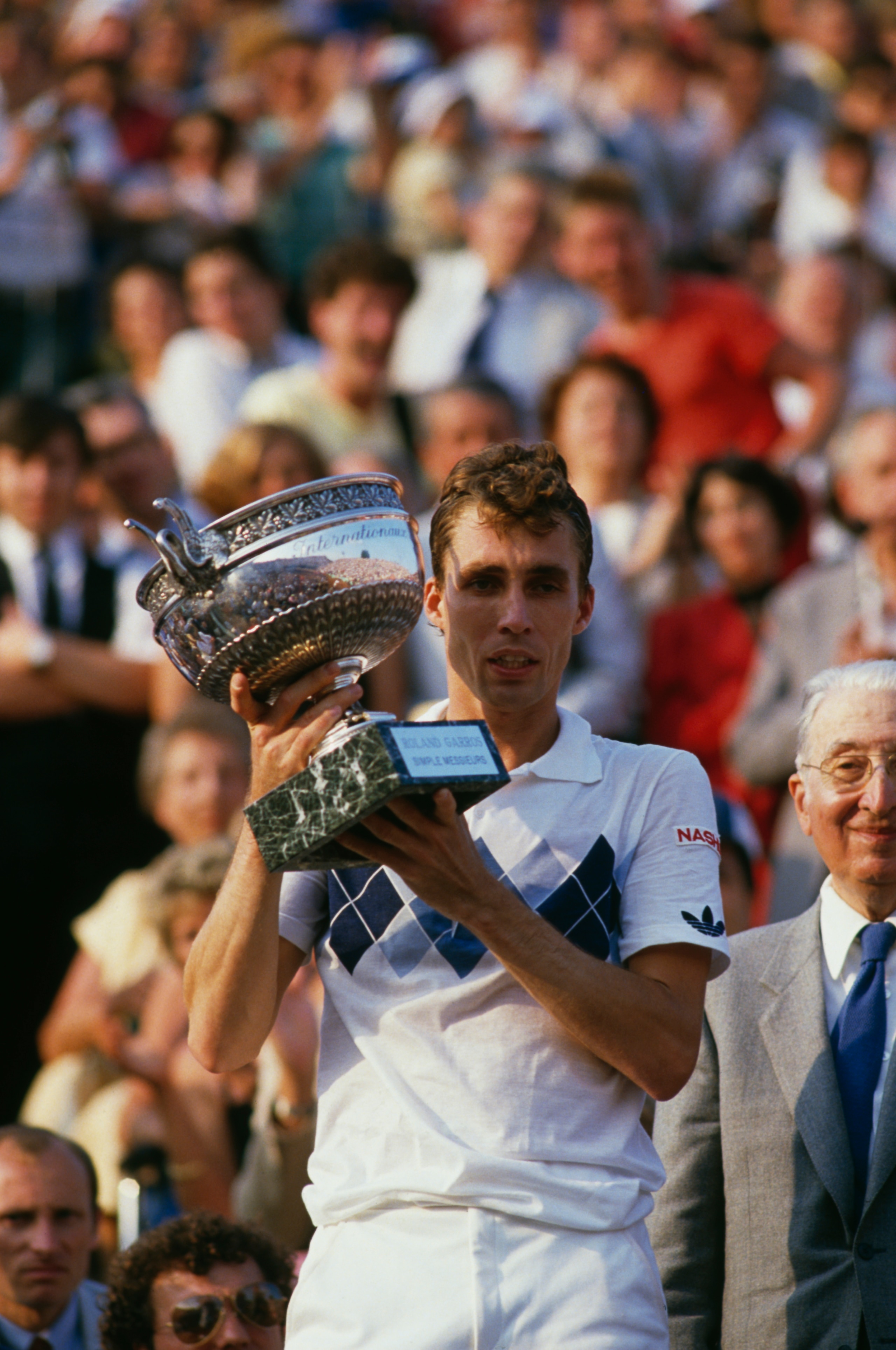
Avenging his defeat to Borg in 1981 by beating him, finally, at Wimbledon, John McEnroe unofficially announced his ascension to the top of the men's game, as he would prove over the next few years. The years 1980 to 1985 were undoubtedly his finest, with 1984 being perhaps the standout season, not only of his career but of the Open Era at large.
That year, he would compile an 82-3 match record, a winning percentage which is still unbeaten (albeit having been closely paralleled by Federer's 2005 season), although it would have been better yet had he won the French Open final. There he had faced a a familiar foe, Ivan Lendl, playing out the highlight match of their own illustrious rivalry.
It was a long and gruelling match, notable however for the incredible return of Lendl from two sets to love down, 3-6 2-6 6-4 7-5 7-5. Dominated in the first two and down 2-4 in the third, all hope seemed lost. Yet there the makings of one of tennis' remarkable comebacks occurred, as Lendl found his groove, ultimately outlasting and outmanoeuvring McEnroe from the baseline.
In the end, he prevailed, squashing McEnroe's dreams of winning the French Open—an ambition he would never again come close to fulfilling. Lendl would go on to gradually dominate their rivalry, ultimately leading 21-15 in their head to head.
Mats Wilander Defeats Pat Cash, Australian Open 1988
3 of 6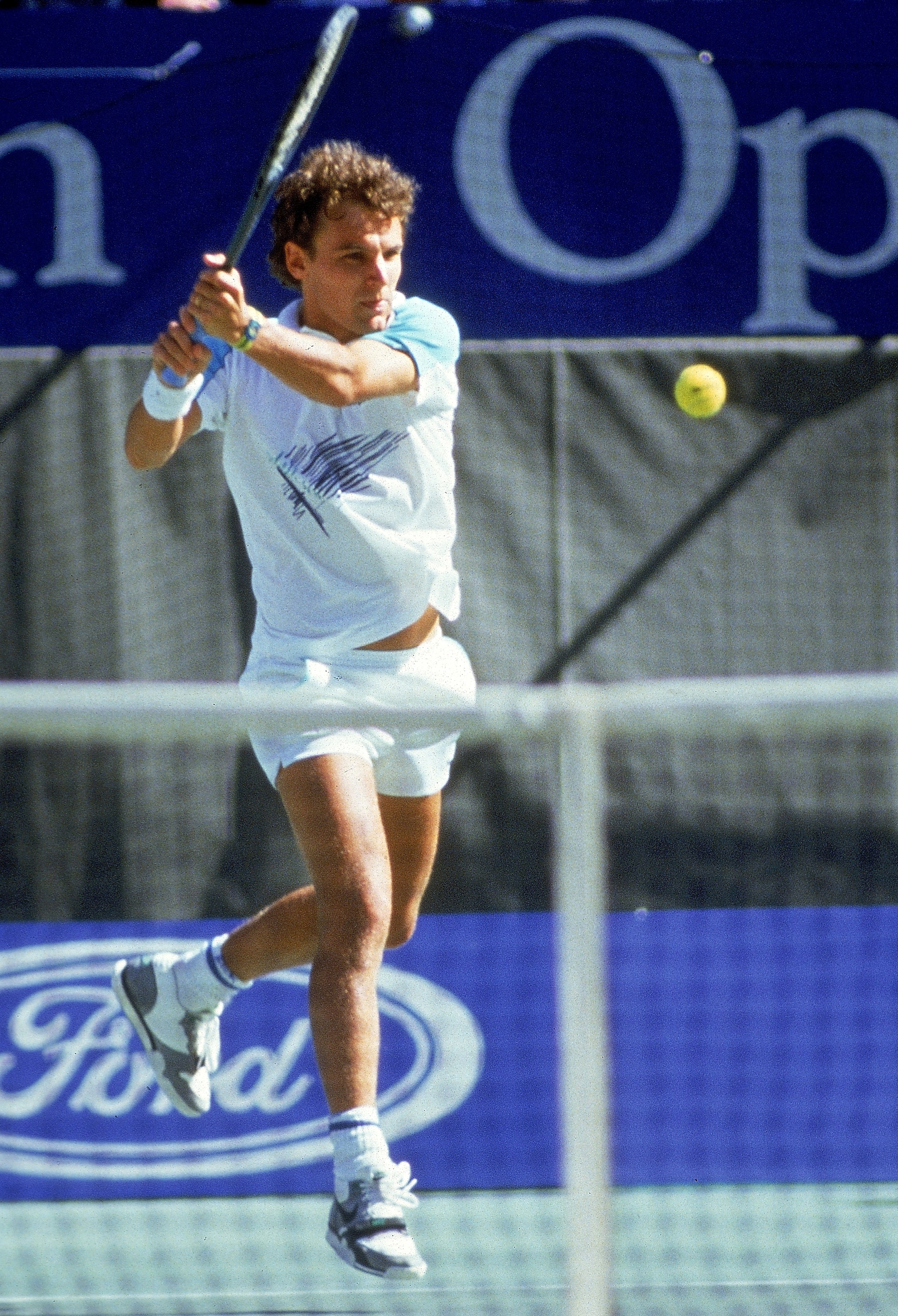
While Lendl was the dominant force for the latter part oft he 1980s, a surprising run was strung together by Mats Wilander, a Swedish baseliner whose outstanding season would be the year of 1988. That year, he went on to be the first person to win three grand slams in a single season after Jimmy Connors had done so in 1974.
His victories in Australia, at the French and the US Open, however, were nearly irretrievably marred by a tense and gripping final at Melbourne early on. There he faced another star of the late 1980s, Pat Cash, who was attempting to become the first Aussie to win the Australian Open in the Open Era.
Getting to the final had been thrilling enough, but little would compare with the five-set epic he would play with Wilander. It was the sort of topsy-turvy affair expected of two undifferentiated forces—with Wilander claiming the first, only to lose the next two, yet steady and aggressive play earned him the fourth. The fifth, however, was to be pure magic, a battle of wills—experience and conviction won it, however, in the end for Wilander. The final scoreline: 6-3 6-7 3-6 6-1 8-6.
While it was a crushing disappointment for Cash, whose exploits in Melbourne as an Aussie would not be equalled for another seventeen years. It was Wilander's golden moment—inciting a run that would see two other slam victories at Roland Garros and the US Open.
.jpg?w=2560 "Seahawks Chiefs Football")

Stefan Edberg Defeats Boris Becker, Wimbledon 1990
4 of 6
The 1980s tennis scene was abuzz with great names and great matches—Lendl held the helm steadily atop the rankings, while smaller enclaves were carved out by Wilander and, at Wimbledon, the two finest grass court players of their generation, Boris Becker and Stefan Edberg.
Theirs was a rivalry to behold—the clash of two serve and volleyers, of big one-hit tennis, ideally suited to the swiftness of the green lawn. Most anticipated, of course, were their three encounters at Wimbledon in the years 1988-90. They split the first two, Edberg and Becker wining them respectively, while the third proved a veritable grand finale.
It was not the most intense of matches, but rather one of the tenser finals of Wimbledon, as single service breaks, moments of inspiration or madness, proved costly. Edberg built quickly a two sets to love lead, only to see a dip in concentration lose his serve and the next two sets. With momentum going his way, Becker looked stronger in the fifth, contriving a break of serve. Within games of victory, however, Edberg regained his composure, breaking back and ultimately prevailing, 6-2 6-2 3-6 3-6 6-4.
It was a spectacular climax to three years of rivalry at Wimbledon, decided by tense and swift moments decided by serve. It would prove Edberg's greatest victory over his long-time rival, against whom he would accrue a 10-25 head to head. Becker was, perhaps, the more muscular and explosive, but Edberg would always have this win over him—in their last ever meeting at Wimbledon.
Pete Sampras Defeats Andre Agassi, US Open 2001
5 of 6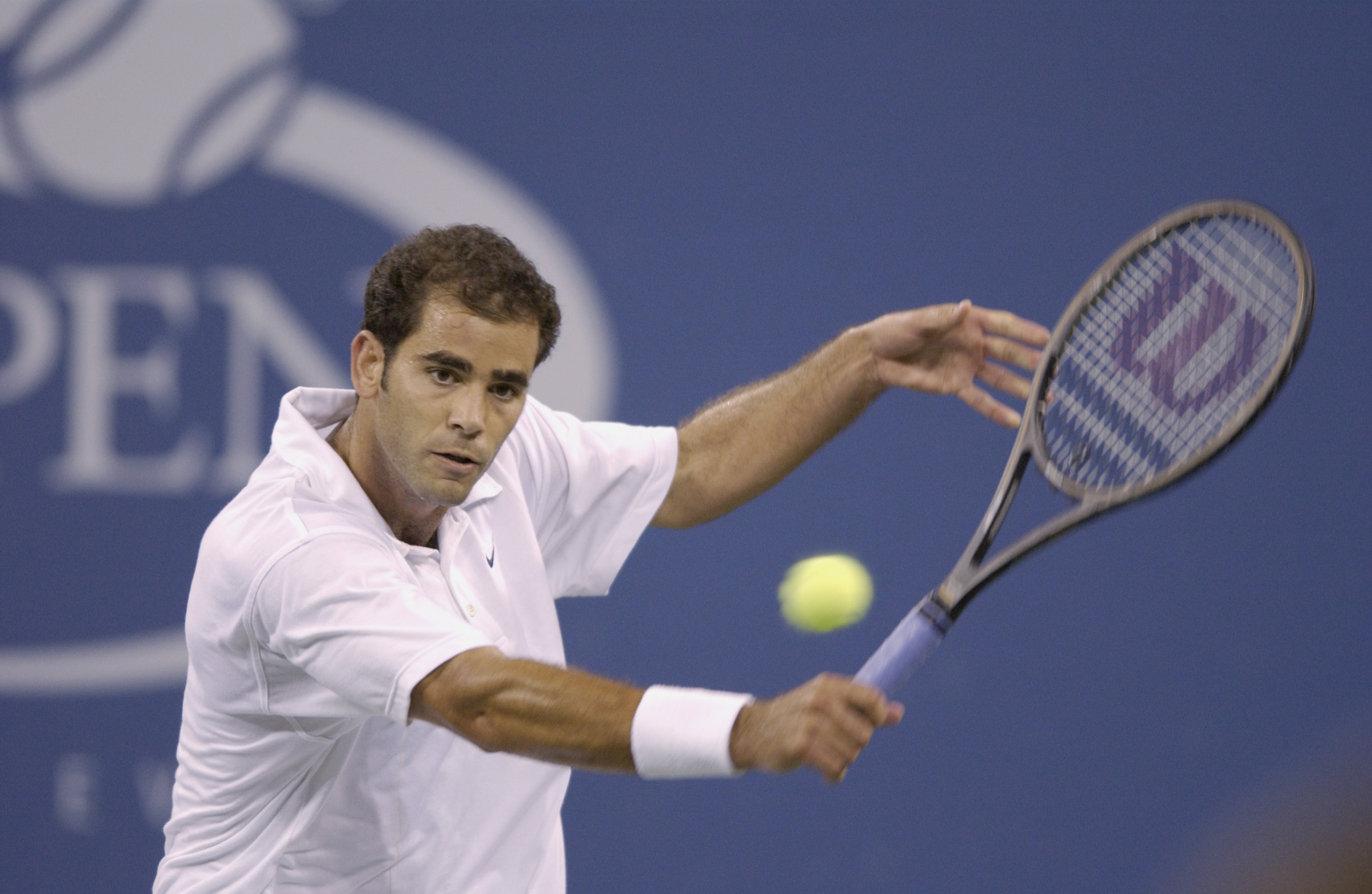
In the 1990s, Pete Sampras was the king of swing. Just as Lendl had steadied men's tennis in the late 80s, Sampras ruled atop the rankings for most of the decade, dominating the majors, especially at Wimbledon and the US Open. Yet he found no consistent threat to his dominance—of his seven Wimbledons, five were won against five different opponents. It was a kaleidoscopic age, of many talents and champions—yet Sampras was greater than them all.
He did have one long-term rival, however, in Andre Agassi, who read his serve and returned it with the most venomous precision. He was the bane to the indomitable serve of Sampras, who matched up well enough to trouble the pistol, Greek god Pete. Their rivalry, at the end led by Sampras 20-14, spanned twelve years from 1990 to 2002. Of all those matches, however, one of the most memorable in epitomising the closeness of rivalry was their quarterfinal encounter at the US Open in 2001.
It was one of their last matches ever, but one of the finest. For four sets, neither could break the serve of the other—Sampras' dominant delivery untouchable, while Agassi pinned his rival to the baseline on his. The first set tiebreak, however, was dictated by Agassi, as accurate returning elicited untypical errors. In the next three, however, Sampras just proved too good—in the big moments, the bigger serve proved the bigger boon.
In the end, Sampras edged Agassi in what would come down as a classic scoreline: 6-7 7-6 7-6 7-6.
It was not he most riveting match point for point, and probably fewer dramatic rallies than in other great matches—yet rarely was there a match between two greats when service went four sets unbroken. The serve that day was dominant and Sampras' just shows it itself more prominently, and more meaningfully, than Agassi's.
There is little doubt Sampras' serve was one of the game's greatest ever—on that day, however, its reliability was severely tested by a determined rival. The pair would go on to play Sampras' last ever match the next year in the final and there, more predictably, Pistol Pete gunned down Agassi for the last slam win of his career.
Rafael Nadal Defeats Roger Federer, Wimbledon 2008
6 of 6
The decade after Sampras and Agassi saw the emergence of a period of uncertainty in tennis, which slowly evolved into the greatest stretch of single-man dominance known in the Open Era. The Roger Federer era, which began in 2003 with his win at Wimbledon, was simply all-consuming—from 2003-2007, Federer would win the twelve slams it had taken Sampras a whole decade to amass.Yet amid the glory lurked a demon, an irrepressible challenge to his throne.
This, of course, was his nemesis, Rafael Nadal, whose rivalry with Federer was founded on almost every possible contrariety—a lefty playing a righty, a double handed backhand against Federer's single hander—defense over offense, top spin over a classic, flat delivery. He was the mechanical, new-age player of the modern era, using ever larger ad stringier rackets, while Federer was the reductionist, in his classic, abbreviated technique, using a small racket head.
It provided a most awesome spectacle for most of the decade of the 2000s—most matches between the two going the distance and inciting tantalising debates on the greatest player ever—was it Federer, for facing his greatest challenger ever, or Nadal, for beating him, who was considered the best ever? A catch-22 emerged, but one which reached a dramatic climax at Wimbledon in 2008.
Here was Nadal, who had beaten him three times in a row to this point, playing Federer, gunning for his sixth straight Wimbledon, which would forever immortalise his name in sporting history. The first two sets, however, went the Spaniard's way, as he continued his psychological dominance over the Swiss. A shift in power seemed to take place, as Nadal routinely outplayed Federer on his best surface.
In the third and fourth sets, however, Federer came alive, desperate to defend his title, playing bold tennis out of this world.
In the third set tie break, his serve was unplayable and he landed an ace on set point to equalise, for the moment, the momentum shift which had been taking place. The fourth proved utterly riveting, culminating in a tiebreak for the ages. Two passing shots defined its brilliance—a running forehand winner by Nadal and an impossible backhand pass by Federer, defying all probably physics and logic. A fifth set beckoned, almost as a necessary appendage to thus far stunning final.
Here, Nadal did what Borg had done in 1980, maintaining his composure without ruining his many squandered chances in the fourth. Game upon game went by until, in the fifteenth, Federer finally lost it, a temporary dip into imperfection landing in disaster, and Nadal sealed the match, 6-4 6-4 6-7 6-7 9-7.
It was Federer's first loss on grass in six years, and to a rival who had come to dominate their matches. It was a defining moment in men's tennis—the impregnable and unbeatable Federer had finally been felled on his own terms.
For six glorious years, he had bestrode the world as an untouchable number one, but for the first time, defeat spelled humanity, a dramatic crash to earth. Nadal had done what most had believed impossible, and halted the great Swiss' march to history. To whom should be accorded the greater glory—Federer, in losing to so irresistible a force as Nadal, or Nadal, who had beaten the greatest player ever, in the greatest match ever?