
Soccer Salaries: Egyptian Players Threaten to Walk Off the Job
 A growing number of Egyptian soccer players are publicly opposing an Egyptian Football Association (EFA) proposal to cap transfer spending and salaries.
In the latest rejection, four players—Islam Awad, Walid Soliman, Adel Mostafa and Nader Al-Ashri— threatened to leave if their club attempted to limit their salaries. These four all play for ENPPI, a team that is owned by the country’s oil ministry.
“The board is considering lowering our wages, which we fully reject. We have deals. We have a lot of tempting offers from other clubs and if the board wants to minimize the budget, they can sell us before we leave for free,” Egypt international Awad said on behalf of his teammates.
TOP NEWS

Final Men's Ballon d'Or Rankings 📊
Highlights and Viral Moments 🍿

Carrick Replacement Options 📝
Awad’s statement followed similar declarations by Ibrahim Hassan, a controversial board member of Al Zamalek SC, one of the most storied and crowned clubs in the Egyptian Premier League, and Amr Zaki, a striker for the club.
Hassan and his brother Hossam, who is also an Al Zamalek board member, face mounting demands by fans that he should resign because of their support for ousted President Hosni Mubarak. Mubarak was forced to resign after 30 years in office earlier this month as a result of mass protests that paralyzed the country.
For the second time in a week, Hassan said that his defense of Mubarak did not mean that he did not support the revolt’s goals of an end to corruption and authoritarian government.
“I know that several Zamalek and Ahli fans are asking me and Hossam to step down, but I want to clarify that we weren’t against the revolution. We didn’t like vandalizing properties and we were totally against humiliating the president because he is a symbol of the nation,” Egyptian soccer website FilGoal.com quoted Hassan as saying.
It wasn’t immediately clear how real a threat Awad was making. Egyptian Premier League clubs, half of which are owned by the government or the military, are bracing themselves for economic austerity in the wake of the protests and the continued suspension of professional league matches as a result of the turmoil.
Many Egyptians say soccer, a national passion and pastime, is not a priority at a moment that they are more concerned about ensuring that Egypt moves towards a more democratic society. They want to see political and economic reform that would also benefit the country’s soccer infrastructure.
Egyptians fear that without continued public pressure, the country's new military rulers, who temporarily have taken power after Mubarak’s departure, may not live up to their promise to lead the country to democracy within six months.
Diminished government funding and popular demand for greater transparency reinforces FIFA’s insistence that Egyptian clubs reduce government involvement, become incorporated companies or associations and move towards private ownership and possible listing on the Egyptian stock exchange.
The ENPPI players’ threat and the rejection by Hassan and Zaki is likely to also spark criticism from clubs’ fans.
The Yellow Dragons, ultras of Ismailia SC, have threatened to boycott their team’s matches if the club fails to cap players’ salaries. They are backed by the club’s management. Ismailia chairman Nasr Aboul-Hassan has suggested that all Premier League clubs should introduce a fixed budget for players’ salaries.
“Things cannot be the same in football after the revolution. There must be a limit for the millions spent on footballers by club boards. I suggest that each club should pay a maximum of EGP 20million ($3.4 million) per season on players’ wages,” Aboul-Hassan said.
Aboul-Hassan’ statement and the Yellow Dragons’ threat has thrown into doubt Ismailia’s negotiations with star midfielder Hosni Abd-Rabou who is reportedly demanding an unprecedented $850,000 in a country where half the population lives off $2 or less a day.
James M. Dorsey authors The Turbulent World of Middle East Soccer blog

.jpg?w=2560 "Raiders Could Start Mendoza")



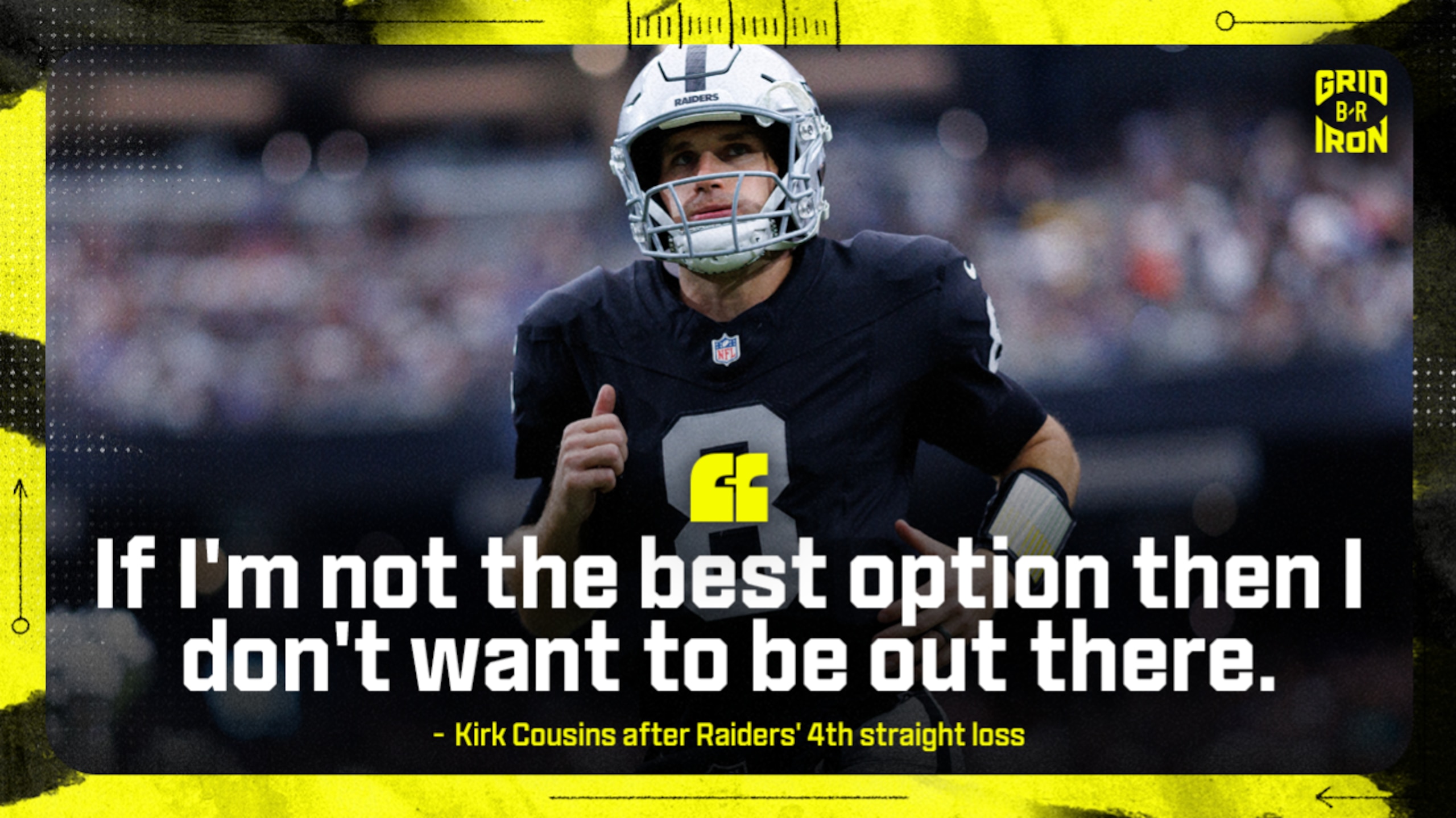
.jpg?w=2560 "Rodgers Iced Out on Plane 💎")
.jpg?w=2560 "🚨 Week 8 AP Top 25 Poll")
