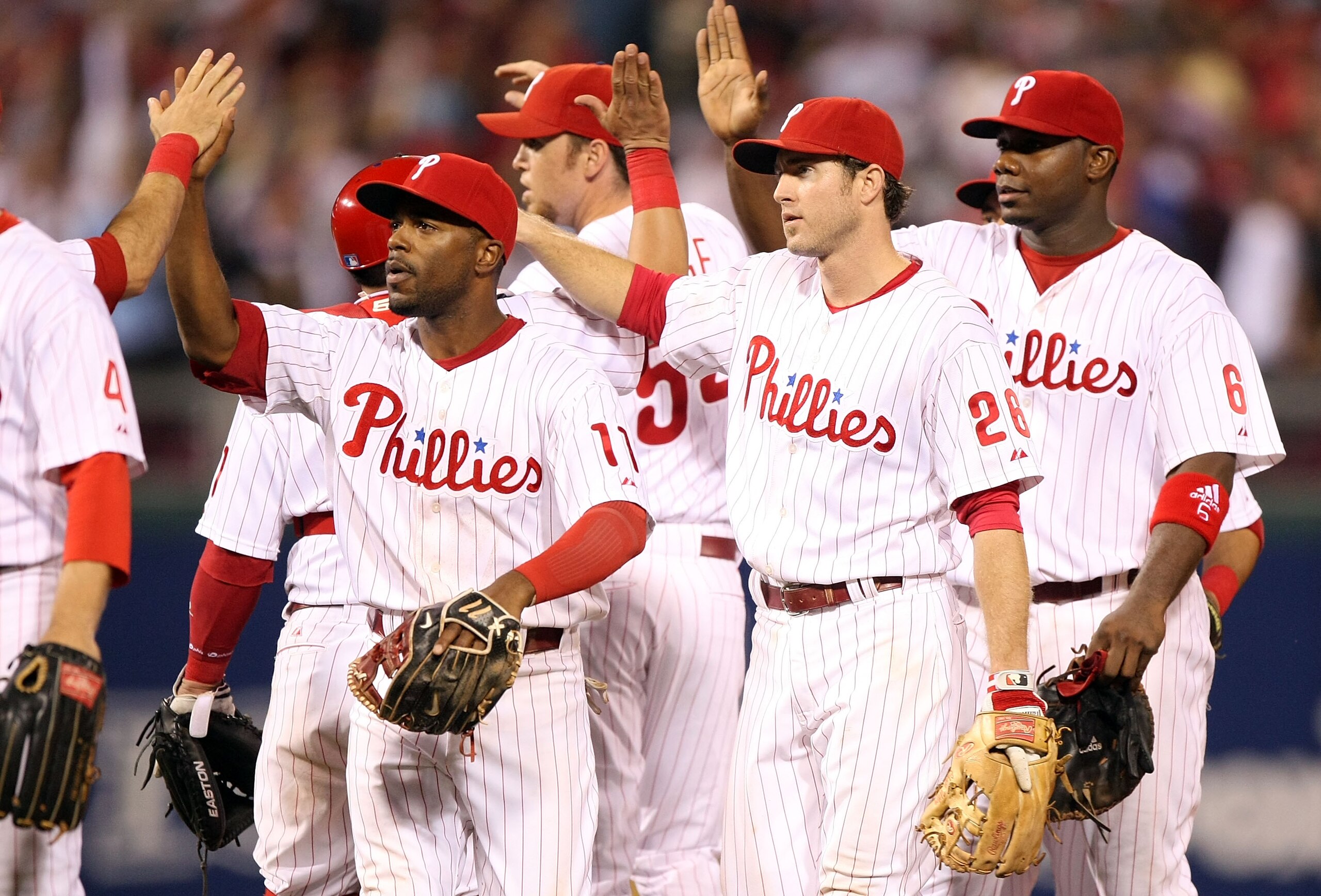

MLB 2011 Preview: Full Philadelphia Phillies Roster Breakdown, Predictions
Spring training is in full swing and one thought has been echoed all around Clearwater, Florida, from Phillies' camp—this team is hungry. After appearing in two straight World Series, and winning one, being eliminated in the National League Championship Series by the eventual world champion San Francisco Giants left an unpleasant taste in the mouths of the team and its fans alike.
In fact, this year's goal seems relatively easy to understand—vengeance. With the team assembled in years passed, anything but a World Series title could be considered a failure in Philadelphia. Now, with the addition of Cliff Lee and an atmosphere of anticipation that is unrivaled in this city, that goal is multiplied 10-fold.
Though the rotation that General Manager Ruben Amaro Jr. has assembled is widely expected to cruise through the regular season and position themselves for October revenge, this staff isn't ready to look to the future yet. If Roy Halladay, Lee, Roy Oswalt, Cole Hamels and Joe Blanton have said one thing in unison, it's that they are only looking forward to their next starts. One game at a time.
They know that anything is possible. At this time last year, the talk around baseball was the strength of the Phillies' offense, and despite finishing seventh in all of baseball in runs scored, we all know that the lineup that was assembled in Philadelphia could have done much better.
With All-Star caliber players like Jimmy Rollins, Chase Utley and Ryan Howard looking for healthy seasons in the prime of their careers, this Phillies team could do things that are unrivaled, both offensively and defensively, throughout the course of baseball history.
But just like that pitching staff, they're only willing to look forward to one game at a time.
Unfortunately, the rest of us aren't as patient as the Phillies. For baseball fans of all kinds, regardless of your loyalty, waiting for this rotation's regular season debut has become unbearable. Will they live up to the hype?
Looking at the offense, we question many of the same things. Could the Phillies be even better than anticipated on the strength of a veteran, resurgent offense?
For that, we'll take an in-depth look at everything Philadelphia Phillies, so that we may all be prepared for the upcoming baseball season that is sure to live in the minds of Phillies fans forever, regardless of the outcome.
Catcher: Carlos Ruiz
1 of 31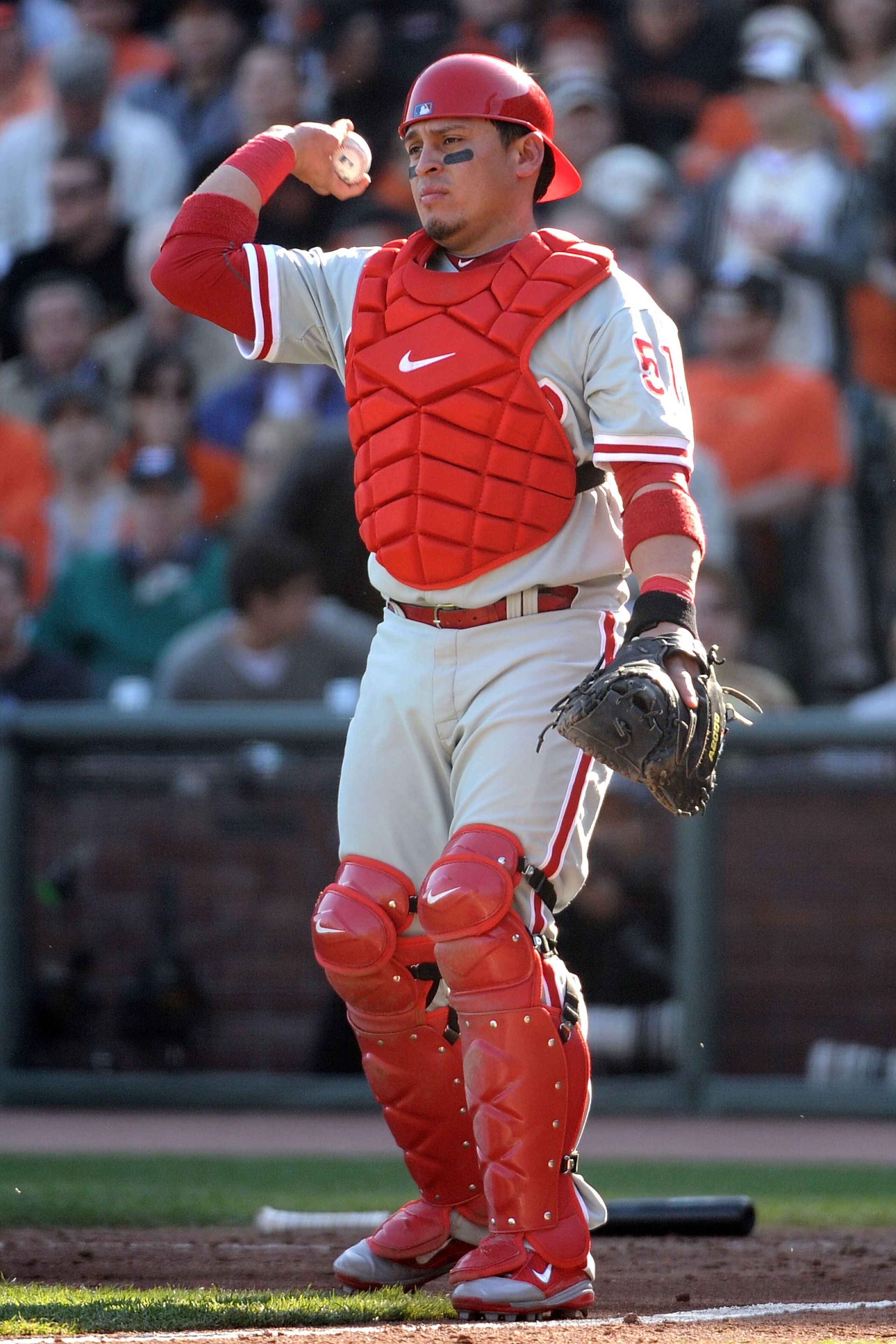
After being named to Jayson Stark's All-Underrated Team about a month ago, Carlos Ruiz has been gaining a bit of popularity, not for a prolific offensive skill set, but as one of the game's most talented defensive catchers.
Make no mistake about it—handling a pitching staff that features the likes of Roy Halladay, Cliff Lee and Brad Lidge is no simple feat.
Offensively, Ruiz made incredible strides in 2010. In a year where the offense's star sluggers spent major portions of time on the disabled list, Ruiz stayed healthy for a majority of the season and helped carry a lineup that featured the likes of Juan Castro and Wilson Valdez through a span of unfortunate events.
He posted the greatest slash line of his career to date—.302 / .400 / .447, with eight home runs and 53 RBI out of the eight hole in the Phillies' lineup. He joined Minnesota Twins catcher Joe Mauer as the only other catcher in major league baseball to post an on-base percentage of at least .400 in 2010. Now that is good company.
Defensively, Ruiz was as good as a catcher can be. He played in 121 games and caught pitchers with a wide arsenal of pitches, including those aforementioned, and at the trade deadline had to learn to catch another Cy Young contender, Roy Oswalt.
Boasting a fielding percentage of .993, Ruiz nailed 20 would-be base stealers, good enough for a caught-stealing percentage of .286. His CERA, which measures the value of a catcher by establishing the ERA of his pitchers in games that he caught, was just 3.33—third in all of baseball.
Projected 2011 Season: Looking forward, it's hard to imagine Ruiz's defensive ability not being at least the same as it was in 2010, if not better. He'll be catching some of the game's premier pitchers, including a starting rotation that features Halladay, Lee, Oswalt and Cole Hamels, and a closer in Brad Lidge that features one of the nastiest sliders in the game.
His offensive production is a bit harder to project. Looking at his 2010 season, it was clear that his plate vision and discipline were greatly improved. He knew what his job was—getting on base in front of the pitcher—and he did it well.
Hopefully, the Phillies won't be in a position where they have to rely on Ruiz for production again, and he'll be able to focus on what he does best—catch.
Predicted Slash Line: .270 / .385 / .432, with seven home runs and 56 RBI.
2011 All-Star? No.
2011 Awards? None.
First Baseman: Ryan Howard
2 of 31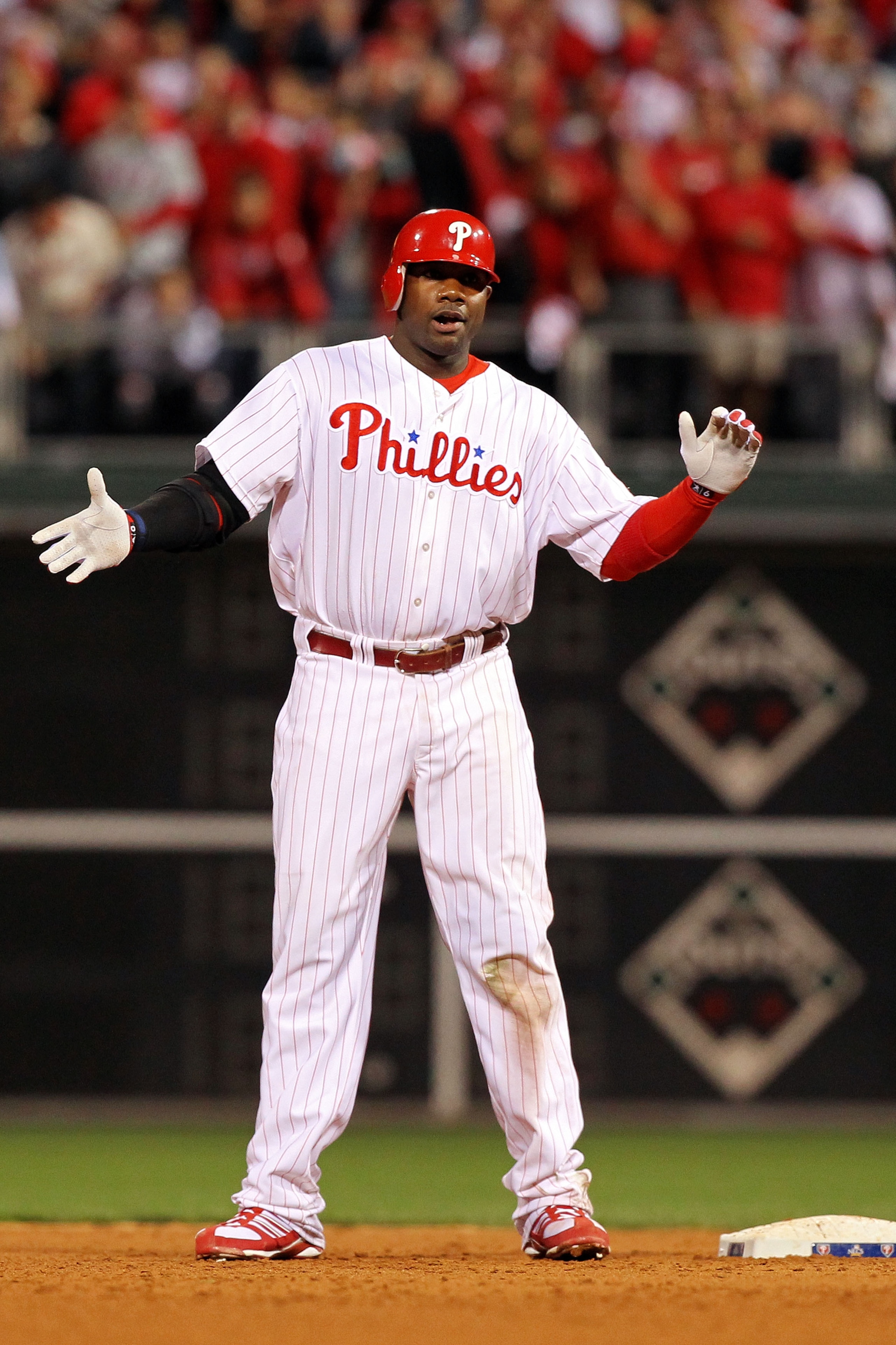
During the offseason, Ryan Howard has been the recipient of a lot of flack. Most of the questions directed his way involved the health of his ankle, which he insists is good to go, though not 100 percent.
However, there has been an air of concern surrounding Howard. Though he's stated that he won't make excuses about the 2010 season or the way it ended, the lack of "Howard power" from 2010 has some fans concerned. Is it a problem?
Last season, Howard posted a slash line of .276 / .353 / .505, with 31 home runs and 108 RBI. You can pick apart that slash line in a number of different ways. On one hand, Howard saw several areas of improvement in 2010.
Despite missing time with a severe ankle sprain, he improved his plate discipline, lowering his rate of strikeouts while maintaining a higher average and on-base percentage than his career norm. However, that ankle injury also seemed to have an effect on his power. He hit 14 fewer home runs than he did in 2009.
Howard's defense is, well, a work in progress. Though slimming down and working with new third base coach Sam Perlozzo seem to have had a positive effect on his range at first base, Ultimate Zone Rating disagrees.
He posted a career worst UZR of -11.8, though his ankle injury probably played a large role in that. Watching him on a daily basis, it's easy to see that his hands have improved. Like I said, a work in progress.
Projected 2011 Season: Like most of the offense from 2010, Howard has something to prove heading into the 2011 season. He spent most of the winter working with Perlozzo in Clearwater, Florida, improving his defense.
Recently, working with hitting coach Greg Gross and manager Charlie Manuel, Howard moved his stance much closer to home plate, akin to what Chase Utley does, so that he has better control of the outside portion of the plate. This should actually improve his power, assuming he's able to hit the high-inside pitch, where he's sure to be tested.
Predicted 2011 Slash Line: .271 / .360 / .569, with 49 home runs and 146 RBI
2011 All-Star? Yes.
2011 Awards? National League home run leader
Second Baseman: Chase Utley
3 of 31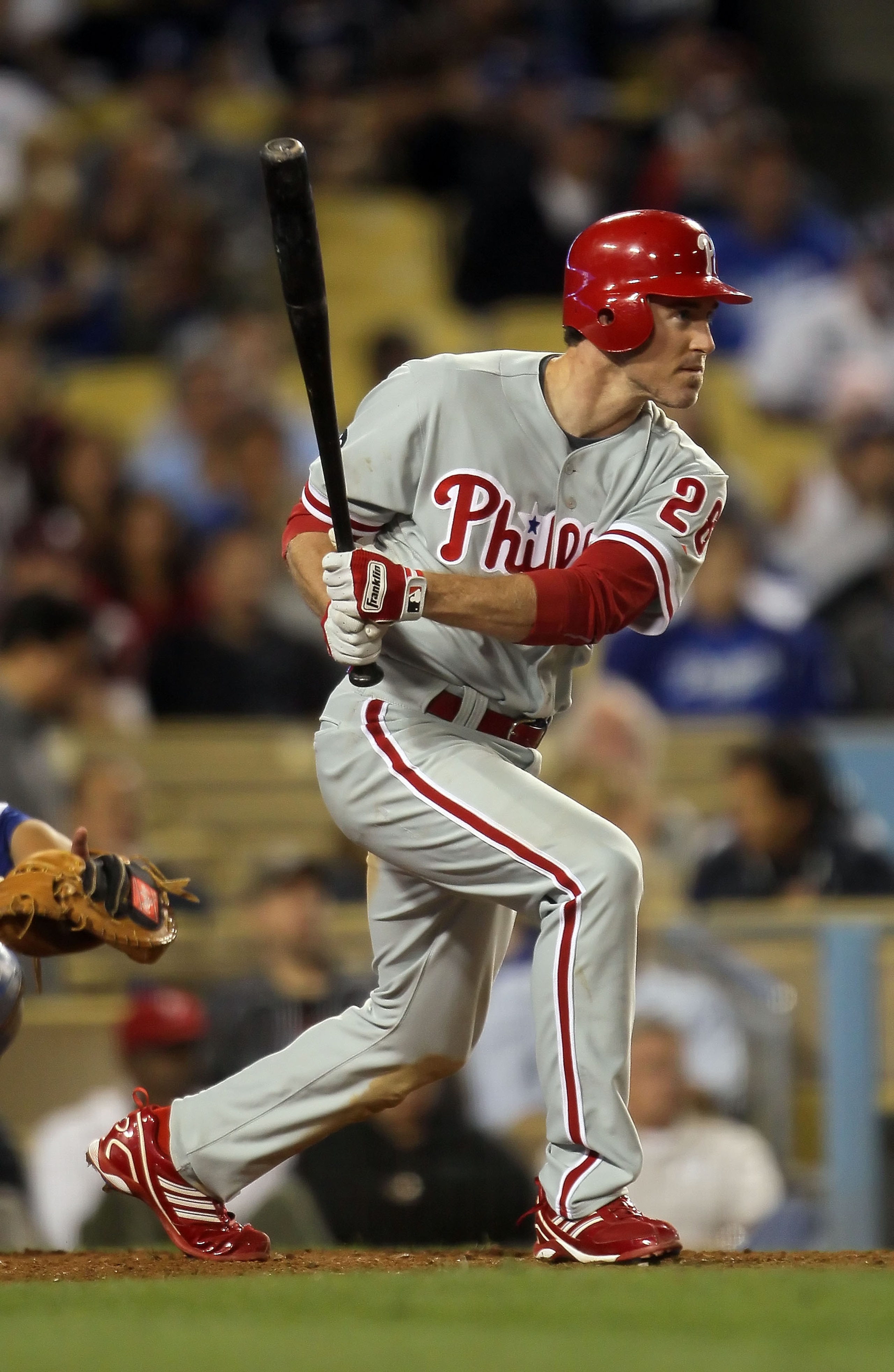
If any player from the 2010 Phillies was left with a bitter taste in his mouth, though, it was Chase Utley. Thanks to a nasty torn ligament in his thumb, he spent a large amount of time on the disabled list and spent the final month of the season reacquainting himself with the game.
By the time the NLCS rolled around in October, Utley was rounding back into form. However, it was just a little too late for the Phillies.
2010 was not a season that baseball fans would have expected out of Utley. He appeared in just 115 games and had an all-around down year. He posted a slash line of .275 / .387 / .445, with 16 home runs and 65 RBI.
All in all, a respectable year, but not what we'd expect out of the All-Star second baseman. Nonetheless, Utley was Utley, and found ways to improve regardless. He maintained a similar walk rate (about 12 percent) and lowered his strikeout rate by 5 percent.
Defensively, he continued to be one of the best defensive second baseman in baseball. UZR rated him at 10.3—placing him amongst the top defensive second basemen in baseball. According to FanGraphs, Utley's defense ended up saving the Phillies 14 runs.
Though he's never been awarded a Gold Glove for his efforts, the Fielding Bible awarded Utley their honor as the league's top defensive second baseman in 2010.
Projected 2011 Season: In all honesty, it's hard not to expect Utley to have a huge rebound season in 2011. Even though he missed 47 games last season, he still turned in a performance that was among the top second basemen in baseball.
It just goes to show you what we expect out of this man year in and year out. Like the rest of this Phillies team, he spent most of the offseason at Brighthouse Field, the Phillies' spring training complex, working out and getting into shape.
Early reports are stating that he's added muscle and is in incredible shape. If the Phillies' offense is going to rebound as a whole, they'll need Utley in tip-top shape, and he looks great.
Predicted 2011 Slash Line: .301 / .385 / .536, with 35 home runs and 108 RBI.
2011 All-Star? Yes.
2011 Awards? National League Most Valuable Player; The Fielding Bible's Top Defensive Second Baseman; WS MVP.


Shortstop: Jimmy Rollins
4 of 31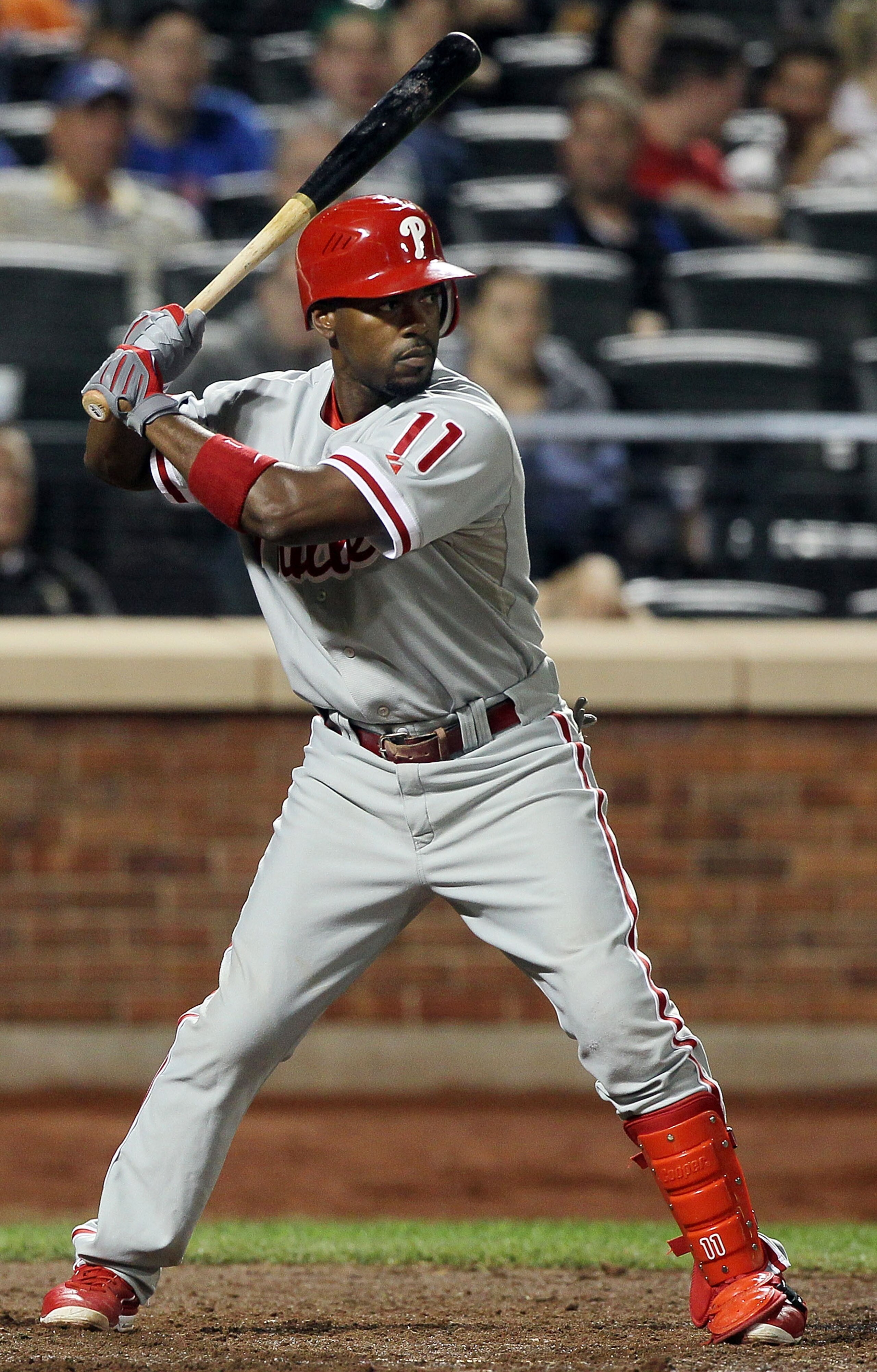
Entering a contract year and returning from several crippling leg injuries, there simply is no other Phillie with more to prove in 2011 than Jimmy Rollins.
Following his 2007 season, which ended with him being rewarded with the NL MVP award, Rollins has entered an unnerving offensive decline. While he has been just as good defensively as ever, he'll need to show that he's still an elite hitting shortstop if he wants to be paid like one at the end of the season.
Rollins missed just over half of the 2010 season, appearing in just 88 games, and nothing shows that he wasn't healthy more than his slash line. He posted a line of .243 / .320 / .374, with eight home runs, 41 RBI and 17 stolen bases. Simply put, he never got into a groove in 2010. That being said, he did post strikeout and walk rates that were better than his career norms.
Defensively, Rollins is one of the best shortstops in baseball. Despite appearing in just 88 games in 2010, he posted a UZR of 6.9 and saved seven runs for the Phillies defensively. Over the course of an entire season, he could have easily doubled those totals. As the recipient of three Gold Gloves and a Fielding Bible Award, Rollins' defense shouldn't even come into question.
Projected 2011 Season: For Rollins, staying healthy is going to be the key in 2011. In order to do so, he arrived at spring training uncharacteristically early and implemented a yoga routine into his offseason regimen to strengthen his legs.
Like the rest of this team, he is committed to winning in 2011, but for Rollins, he has to perform well to earn a contract in 2011. He may not be the top dog in the National League anymore with shortstops like Hanley Ramirez and Troy Tulowitzki putting up consistently good numbers, but he's still an above-average shortstop with a chip on his shoulder.
Predicted 2011 Slash Line: .283 / .330 / .420, with 22 home runs, 50 RBI and 38 stolen bases.
2011 All-Star? No.
2011 Awards? National League Gold Glove
Third Baseman: Placido Polanco
5 of 31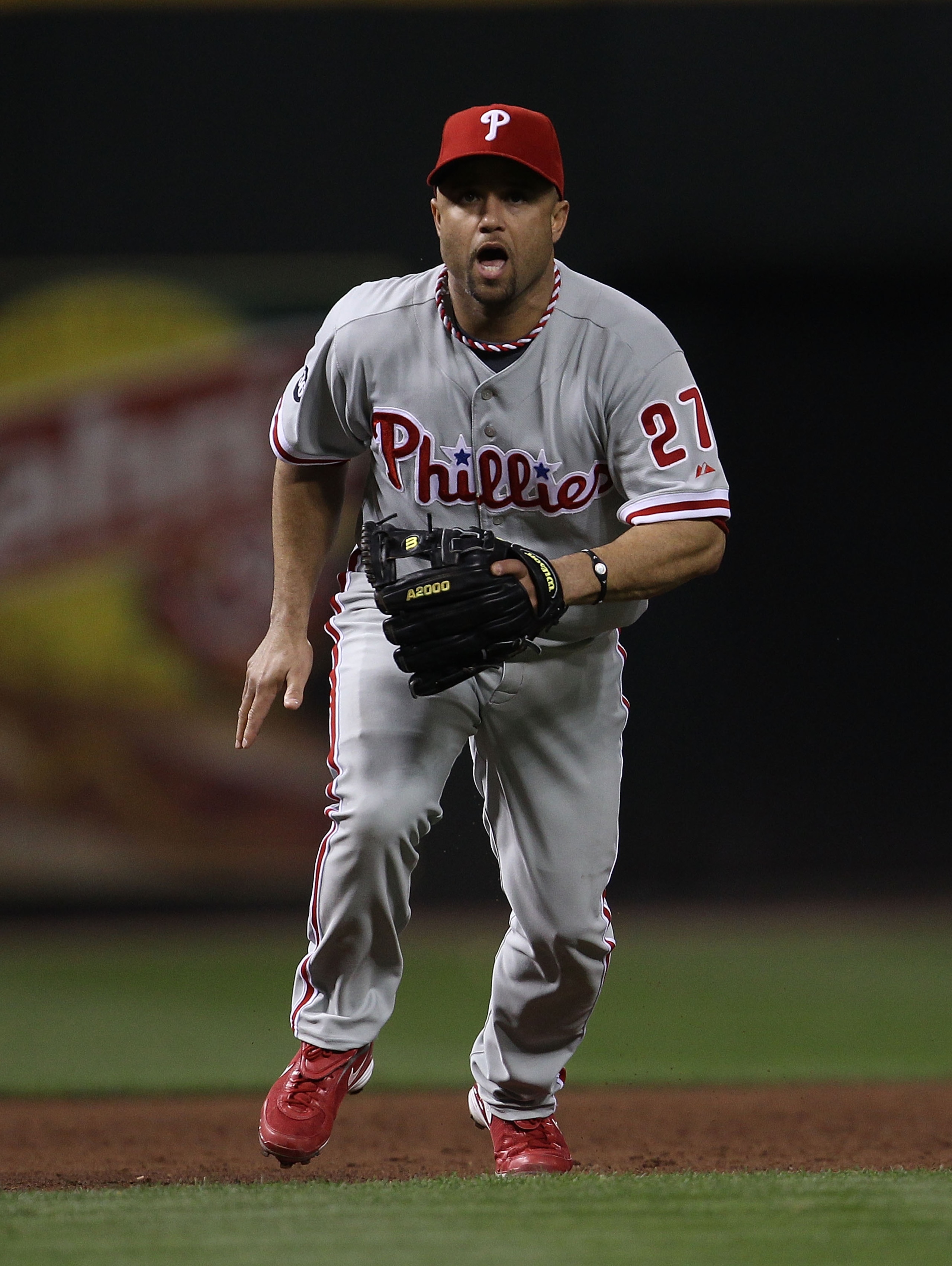
One of last season's top Phillies storylines heading into spring training was whether or not a Gold Glove-winning second baseman could transition well to third base in Philadelphia.
Heading into 2011, it's safe to say that Placido Polanco surpassed expectations, especially defensively. Though he was hit by the injury bug as well, more specifically, a Tim Hudson fastball on the elbow, he managed to appear in 132 games for the Phillies last season.
While his power didn't translate to Citizens Bank Park as expected, Polanco still had a very good year. He posted a slash line of .298 / .339 / .386, with six home runs and 52 RBI, living up to his reputation as one of the game's best contact hitters. He mirrored his walk rate with the Detroit Tigers in 2009 and though his strikeout rate rose a bit, it's nothing to worry about.
Defensively, he was much better than expected, becoming one of the best defensive third basemen in baseball. UZR rated him very favorably, scoring him at 10. He made just five errors and turned in a fielding percentage of .986.
Projected 2011 Season: There isn't much to say about Polanco heading into the 2011 season, since he was much better than advertised making just $6 million a year. In fact, FanGraphs valued his performance at more than double that—showing that he turned in a $14.8 million performance.
Following offseason elbow surgery to remove bone spurs, Polanco is entering camp fully healthy and ready to go. As long as he turns in another successful year of contact hitting and good defense, the Phillies will be satisfied.
Predicted 2011 Slash Line: .294 / .330 / .387, with seven home runs and 61 RBI.
2011 All-Star? No.
2011 Awards? None.
Left Fielder: Raul Ibanez
6 of 31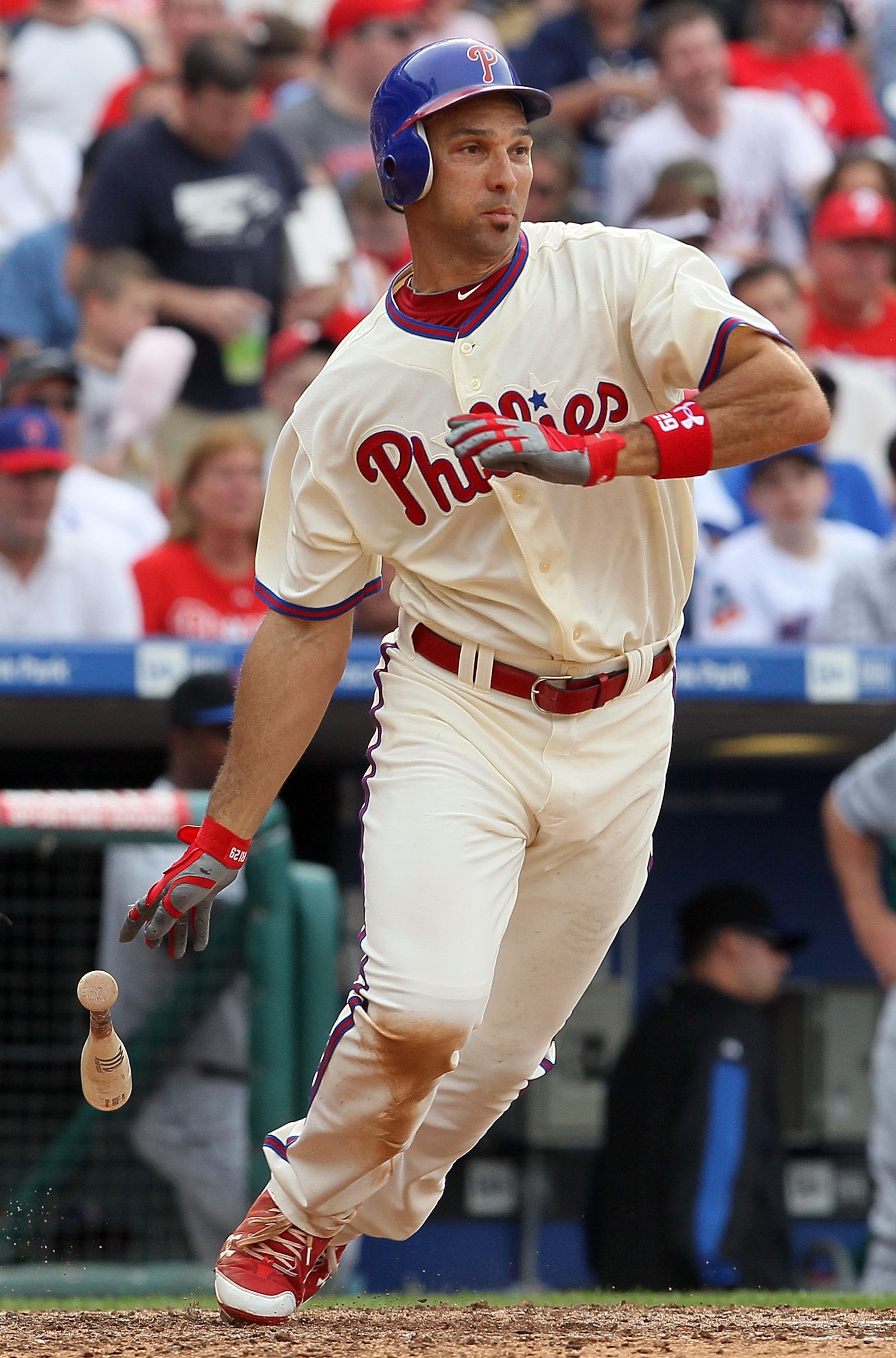
With former teammate Jayson Werth heading to Washington to cash in on his free agency with the Nationals, Raul Ibanez is going to have to step up for the Phillies in a big way in 2011 and become the team's most productive corner outfielder.
Unlike some, I think it's fair to expect big things out of Ibanez. Though there has been much ado about his age, this man trains like he's 25. Entering the 2010 season, offseason abdominal surgery limited him in spring training, and the 2010 season resulted. Now, fully healthy, in great shape and bearded, Ibanez looks to put up big numbers as he also enters into a contract year.
Ibanez was able to stay healthy in 2010, albeit with a sore wrist, and produced a respectable slash line. The lefty hit .275 / .349 / .444, with 16 home runs and 83 RBI, appearing in 155 games.
Of course, the 16 home runs represented a dramatic drop in power—he hit 34 home runs in 2009. On a positive note, however, he was able to improve both his strikeout and walk rates.
Defensively, he was largely average in 2010. UZR shows that he was a capable fielder, but in comparison with the rest of the league, slightly below average. He posted a UZR of -6.9 and made two errors. However, he's going to need to step his game up in 2011. According to FanGraphs, he cost the Phillies six runs with his play in left field.
Projected 2011 Season: Personally, I'm looking forward to seeing what Ibanez can do in 2011. With Werth a National, he's going to have to step up and re-create some of that lost offense.
He appears to be in incredible shape and as long as he remains healthy the entire season, his focus should pay off with results. He should be able to recapture some of that lost power and be a significant run producer for the Phillies.
Also, the beard he's sporting is pretty sweet. I vote to keep it.
Predicted 2011 Slash Line: .270 / .348 / .479, with 26 home runs and 89 RBI.
2011 All-Star? No.
2011 Awards? None.
Center Fielder: Shane Victorino
7 of 31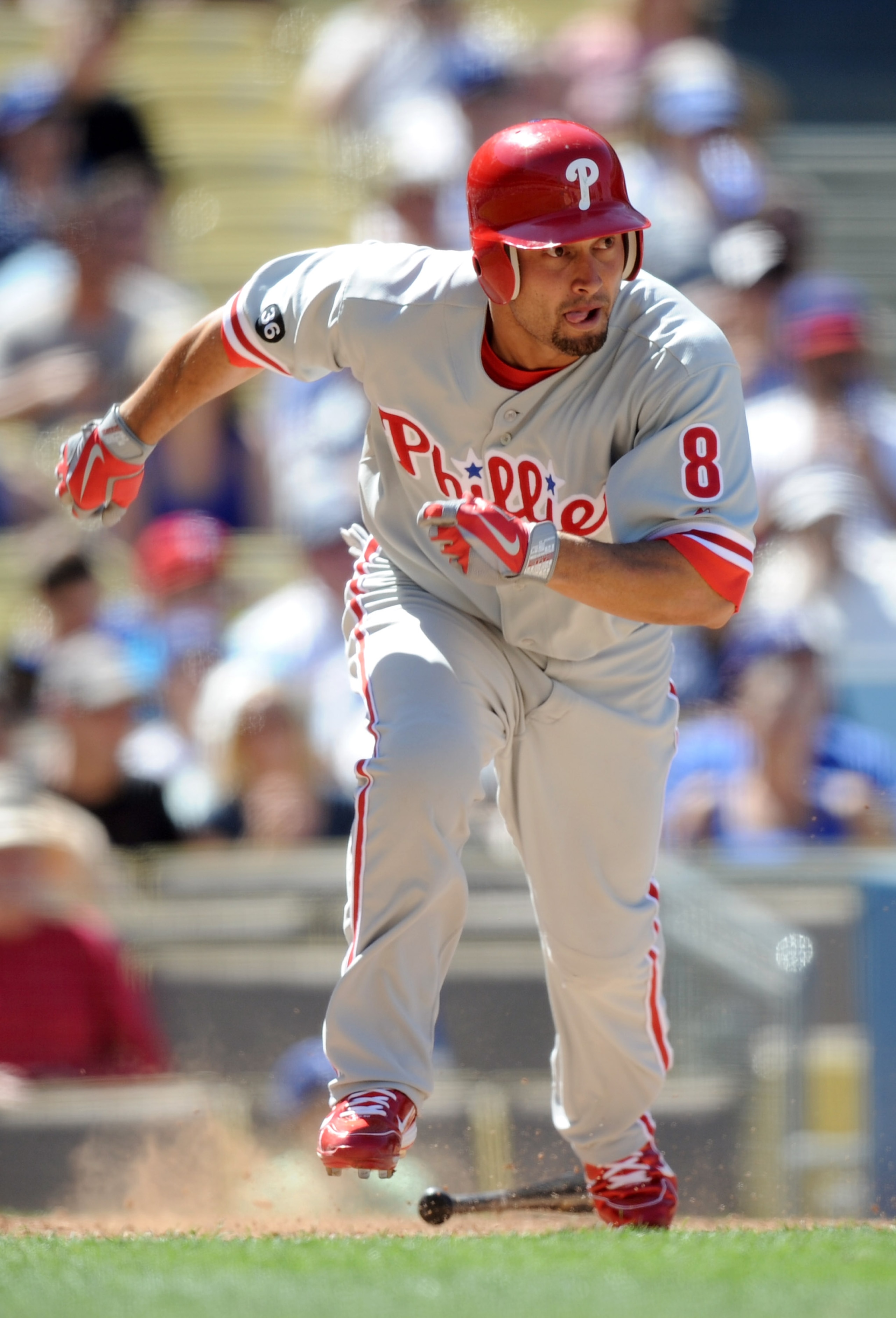
In a down year for many players offensively around baseball thanks to the so-called "year of the pitcher," Shane Victorino quietly had one of his worst seasons in a Phillies uniform.
Though he managed to stay healthy through the season, aside from an oblique strain which many believe was not worthy of a trip to the Disabled List, he had a down year in just about every statistic outside of power.
He posted a slash line of .259 / .327 / .429, with 18 home runs, 69 RBI and 34 stolen bases. Of course, the most surprising number was the amount of home runs he hit in 2010.
With his 18 long balls representing a career high, people began wondering whether he had changed his approach at the plate, and if it was having an ill effect on his greatest assets—contact and speed. Regardless, his stolen base total was in line with his career average, and his walk and strikeout rates were in the vicinity of his career norms as well.
Defensively, Victorino is emerging as one of the game's best center fielders. He showed off his strong arm in 2010, throwing out 11 base runners from center field. UZR also favored him, rating him at 2.6. Most importantly, however, he approved his range vastly and took better routes to balls. Doing so helped him to cut down on errors, as he made just two, and saved the Phillies 11 runs.
Projected 2011 Season: Over the past couple of seasons, Victorino has emerged into an All-Star level talent, so we can expect a bit of a rise in his numbers. I'm going to go out on a limb and predict a big rise, however.
He'll be hitting lower in the Phillies' order, so he'll have a consistent approach in spring training, and should he hit fifth—which would be ideal to break up the lefties, Howard and Ibanez, in the order—he should see a good amount of fastballs which he can drive or go with. He'll have a quiet year, but a very good one.
Predicted 2011 Slash Line: .301 / .348 / .419, with 17 home runs, 83 RBI and 32 stolen bases.
2011 All-Star? Yes.
2011 Awards? National League Gold Glove.
Right Fielder: Domonic Brown
8 of 31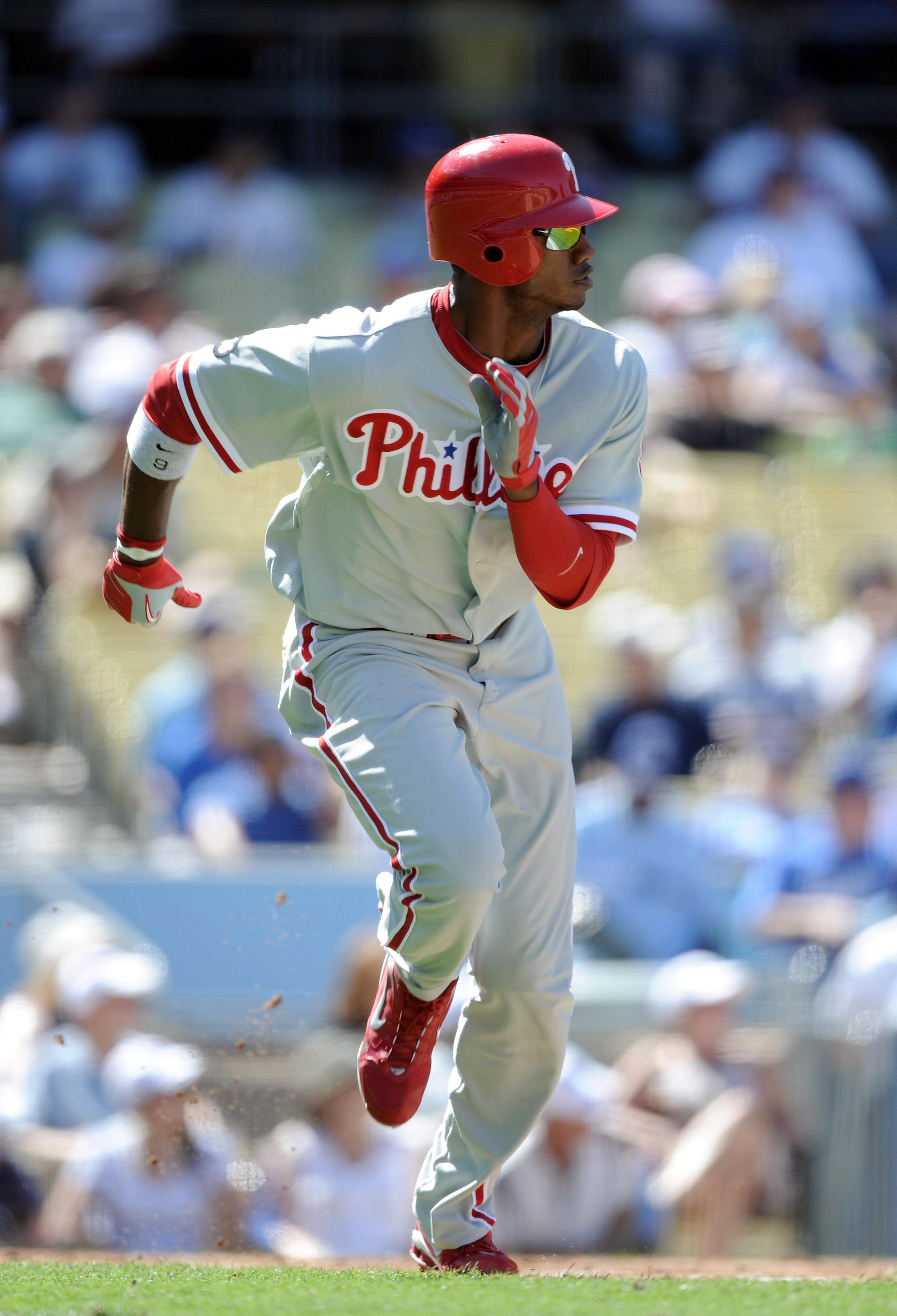
One of the biggest positional battles heading into spring training was going to be in right field, where we wonder who is going to step in and help replace Jayson Werth.
Well, Charlie Manuel may have tipped his hand the other day, telling the media that Domonic Brown is going to see a ton of spring at-bats. Of course, he also flat-out told us that it's his job to lose.
Brown's 2010 debut wasn't very impressive. He had a brief cup of coffee and took some time to get his feet wet, which could be a positive thing heading into the 2011 season, when he's expected to be an everyday player.
He posted a slash line of .210 / .257 / .355, with two home runs, 13 RBI and two stolen bases. However, his minor league numbers have us thinking big. In 2010, where he split time between Double-A and Triple-A, he posted a slash line of .332 / .391 / .582, with 20 home runs and 17 stolen bases.
Heading into the 2011 season and spring training, the real question remains the same—what can baseball's fourth-best prospect do in an everyday role?
Defensively, we have a small sample size of what Brown can do, so more of a scouting report is in order. He was heralded as a "five-tool" prospect, which means that all of the defensive tools are included.
Despite being 6'5", Brown has good speed and athleticism, which gives him good range in the outfield. He showed that he could use some work on running routes to balls, but that's a spring fix.
He'll almost certainly be making the highlight reel defensively—he has a cannon for a throwing arm. All in all, he should be a very, very good defensive right fielder.
Projected 2011 Season: Some people still think that this is an open battle, but I'm ready to hand the job to Brown regardless of what Ben Francisco does this spring.
For a while, I thought that Brown would benefit from spending some time in Triple-A while we see what Francisco could do in an everyday role, but Manuel seems to be committed to helping Brown succeed and win the job.
After an abysmal winter ball showing, Manuel and hitting coach Greg Gross readjusted Brown's swing, which has him holding his hands much lower. You may remember the dividends this paid for the last man to make a similar adjustment—he's now being paid $126 million.
Flat out, he has all the tools to be an All-Star caliber player. He just needs the time to adjust at the major league level, most of which I believe was spent in 2010. He'll be a major contributor in 2010, and Francisco will remain a fall-back option should Ibanez struggle against left-handed pitching.
Predicted 2011 Slash Line: .305 / .369 / .512, with 18 home runs and 20 stolen bases.
Primary Right-Handed Pinch Hitter / Fourth Outfielder: Ben Francisco
9 of 31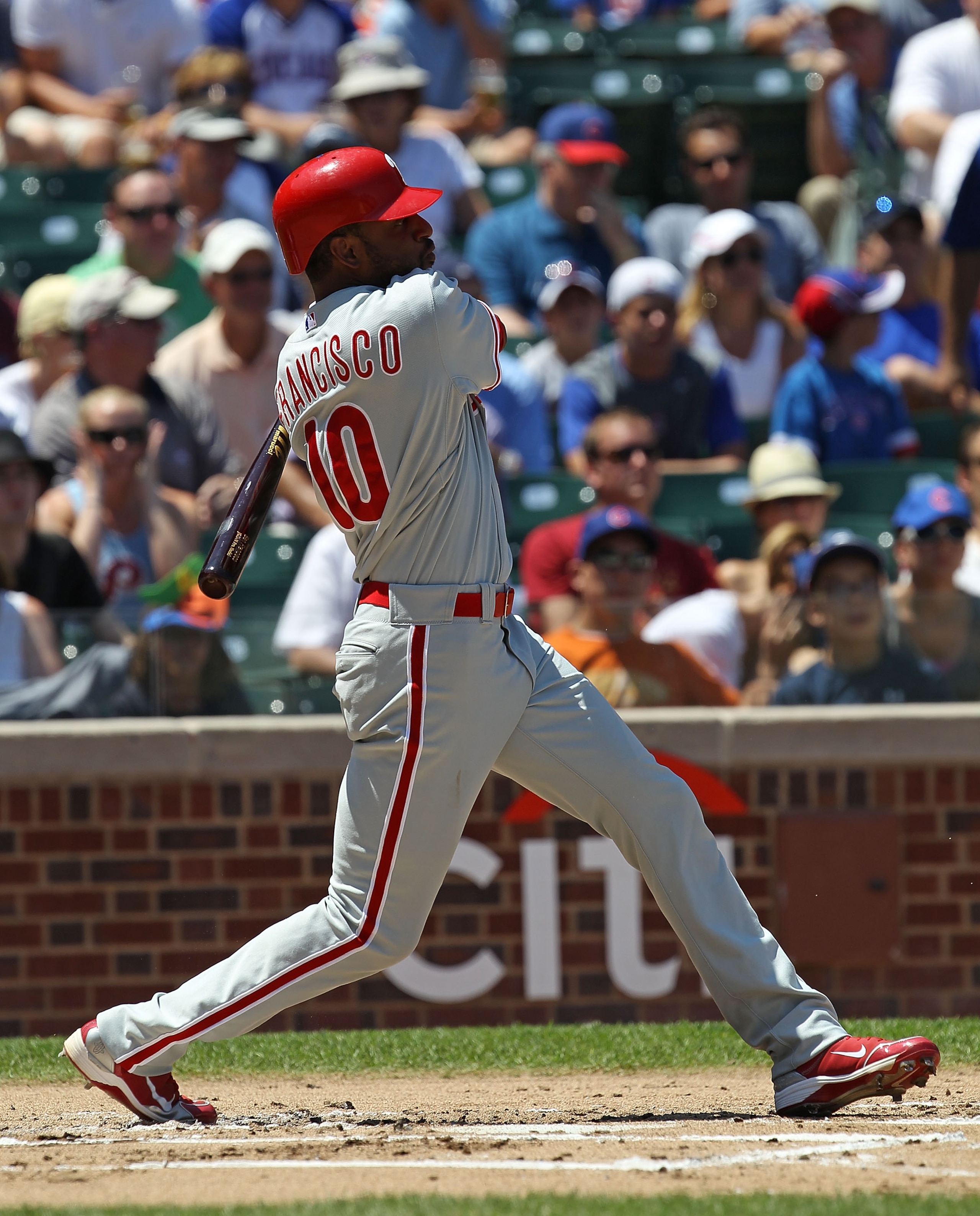
Ben Francisco has the potential to be an everyday player. In fact, before the Phillies acquired him from the Cleveland Indians, he was the everyday right fielder, and a solid one at that.
At the time in 2009, he was joining a team that already had all three of its starting outfielders appear in the All-Star Game. Simply put, there was nowhere for him to play. Ever since, he's been the team's top right-handed threat off of the bench.
Offensively, Francisco is a solid option late in games. Collectively, he posted a slash line of .268 / .327 / .441, with six home runs and 28 RBI in 197 plate appearances. For a guy who wasn't getting consistent at-bats, that's not too shabby.
Though he saw a slight decline in his walk rate, he did manage to lower the rate at which he strikes out. Since he will see a majority of left-handed pitching, however, it is worth noting that his 2010 OPS (on-base + slugging percentage) of .901 was well above average for a right-handed pinch hitter.
Defensively, Francisco is a solid fourth outfielder. He may not be the ideal late-inning defensive replacement, but manager Charlie Manuel found himself going to Francisco over Ibanez in left field several times.
He's worked hard at becoming a good defensive outfielder. In 2010, his UZR improved to -1.8—down from -8.0 in 2009. In fact, he actually has a positive UZR of 2.3 in left field.
Projected 2011 Season: Realistically, Francisco still has an outside shot of winning the starting job in right field. Hearing what Manuel has had to say recently, however, I'm not convinced that the job is all but Brown's.
That being said, Francisco is still a valuable asset to this team off of the bench. Should Ibanez falter in left field, Francisco could immediately step in and platoon with the aging left fielder against left-handed pitching.
Should Brown need more Triple-A seasoning, he could step in in right field as a stop-gap as well. Right now, though, he'll continue to be the primary right-handed bat off of the bench, and get a fair share of looks next spring when the left field job is open.
Predicted 2011 Slash Line: .265 / .335 / .449, with 11 home runs.
Primary Left-Handed Pinch Hitter / Backup First Baseman: Ross Gload
10 of 31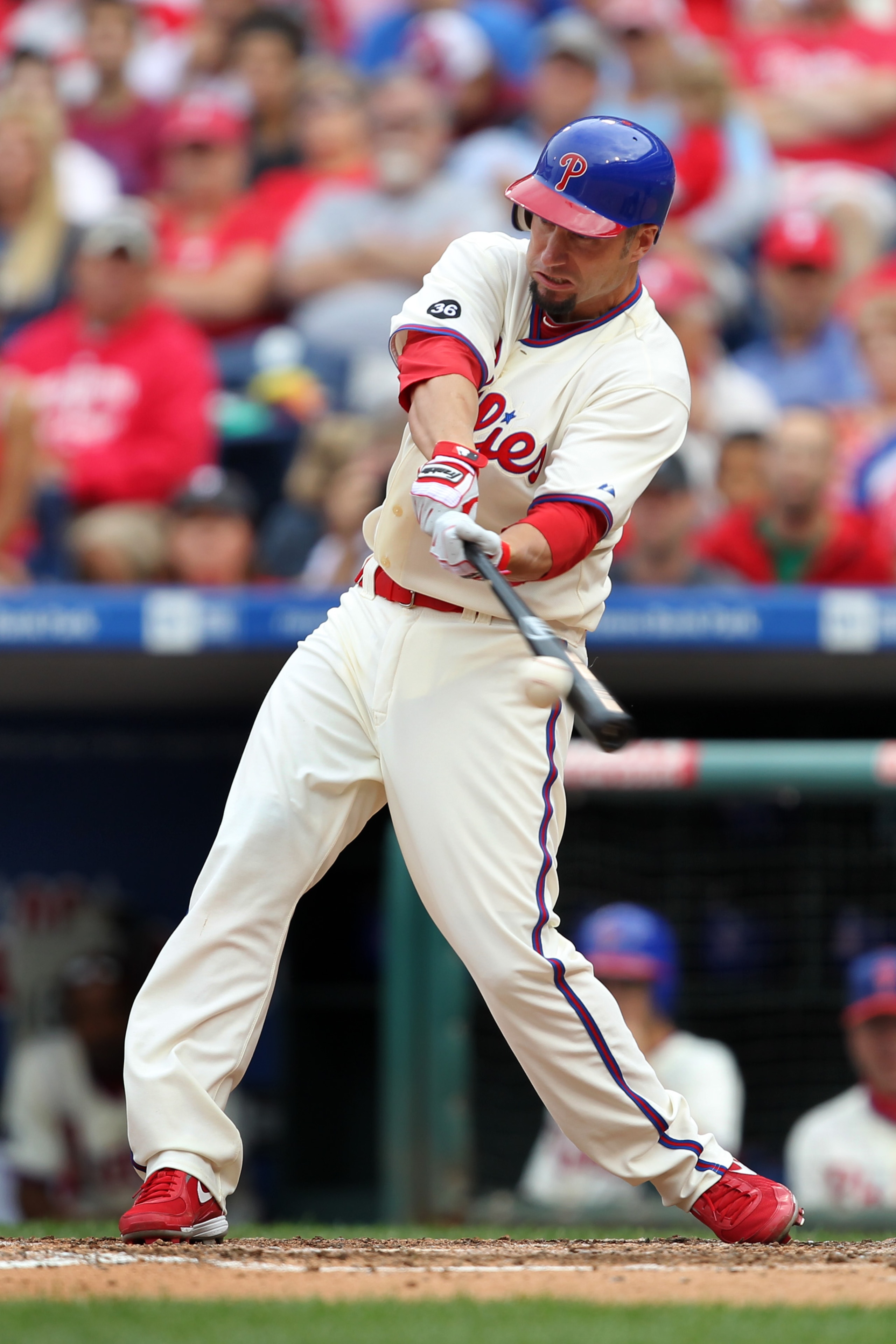
Ross Gload quietly had a very solid season in his first year with the Phillies in 2010. He signed a two-year deal before last season to be the Phillies' left-handed pinch hitter, should Greg Dobbs continue to struggle, and he excelled in that role. While his name has been tossed into platoon rumors in right field, coming off the bench late in games is where Gload belongs.
Last season, he posted a slash line of .281 / .328 / .484, with six home runs and 22 RBI. His approach at the plate seemed to be a page out of former Phillies pinch hitter Matt Stairs' book—hit a home run or go home.
His walk rate dipped to a near career low, though he managed to reduce his strikeout rate. Opposite of Francisco, he saw a majority of the right-handed pitching late in games, and had an OPS of .818 against said pitching.
Defensively, Gload showed his versatility with the Phillies in 2010, becoming more of a utility player than anything. With all of the injuries that this team had, he played all over the place, logging innings at first base, left field and right field, producing average results at every position.
Projected 2011 Season: There aren't many questions surrounding Gload in spring training. He isn't seriously being considered as a platoon player in right field, and the Phillies would be shooting themselves in the foot by using their bench's top threat early in games.
Realistically, he'll get more time at first base with Mike Sweeney unlikely to return, and could log some innings in the outfield. However, what I think is the most likely scenario for Gload is that Charlie Manuel develops him into more of a Stairs-type player. Francisco will log a majority of the defensive time in the outfield off of the bench and Gload will face tough relief pitching.
Predicted 2011 Slash Line: .270 / .330 / .440, with seven home runs.
Backup Catcher: Brian Schneider
11 of 31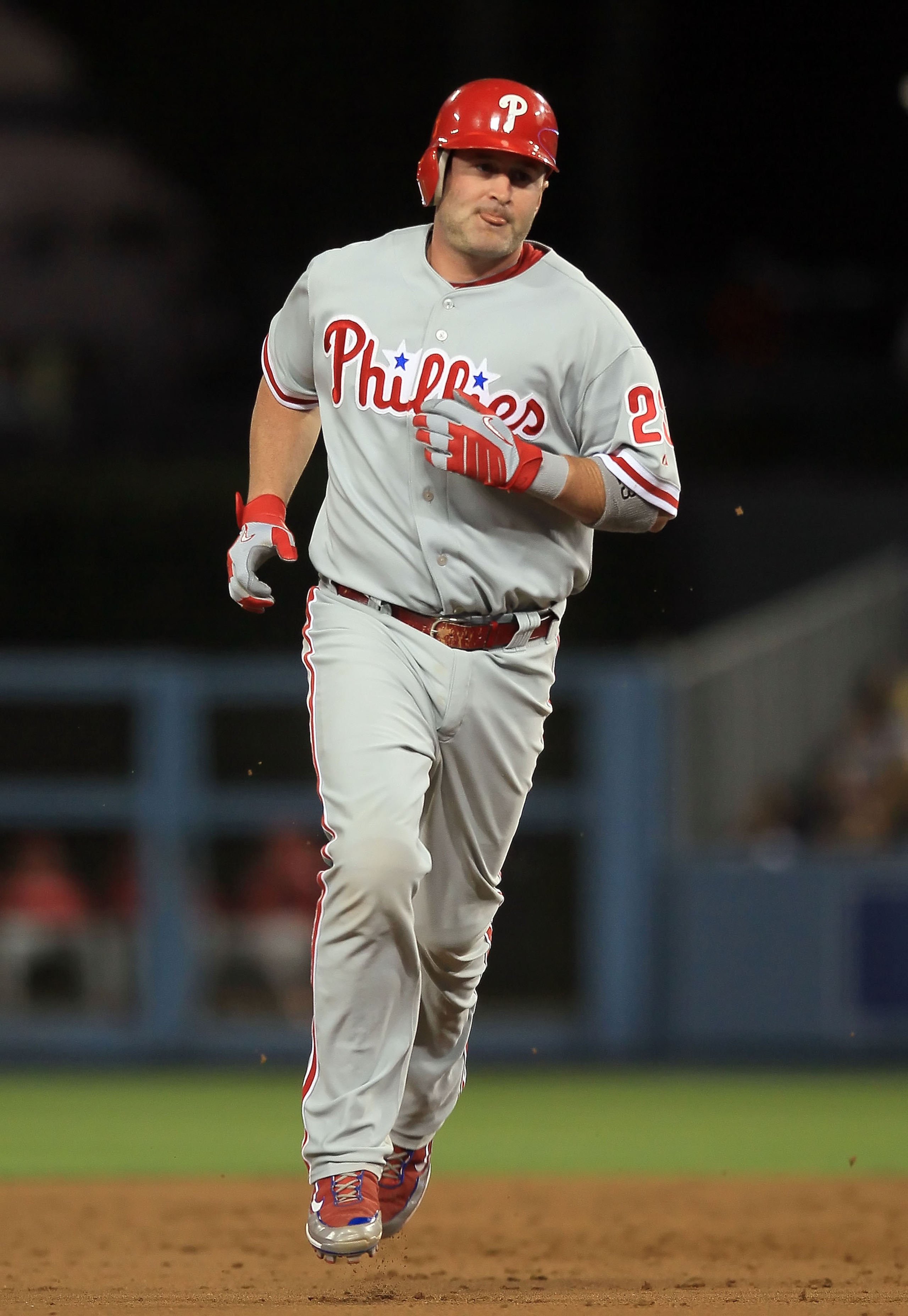
Brian Schneider provided the Phillies with exactly what they wanted when they signed him to a two-year deal before the 2010 season—a veteran backup catcher with experience in handling a good pitching staff that could give Carlos Ruiz a rest without hurting the lineup. Once regarded as a "Phillie-killer" in the city of Philadelphia, he's now become one of the best clubhouse guys on the team.
Offensively, he isn't going to break any records, but he was solid for the Phillies off of the bench. He posted a slash line of .240 / .345 / .384, with four home runs. He walked more frequently in 2010, but also struck out much more often than any other year in his career.
On the other side of the ball, behind the plate, he was solid. With Ruiz playing every day, he has no shot at ever being considered the best defensive catcher on the team, but the Phillies are satisfied as long as he calls a solid game and doesn't hurt them with his age.
Projected 2011 Season: In Schneider, the Phillies will be getting a veteran catcher that can call a good game. Personally, I expect him to catch a lot of Joe Blanton's starts, as the Phillies will rely on Ruiz to stay healthy and handle pitchers with a broad array of arsenals, like Roy Halladay, Cliff Lee, Roy Oswalt, Cole Hamels and Brad Lidge. He'll make his usual day starts to spell Ruiz as well, of course.
Projected 2011 Slash Line: .245 / .330 / .360, with two home runs.
Utility Infielder: Wilson Valdez
12 of 31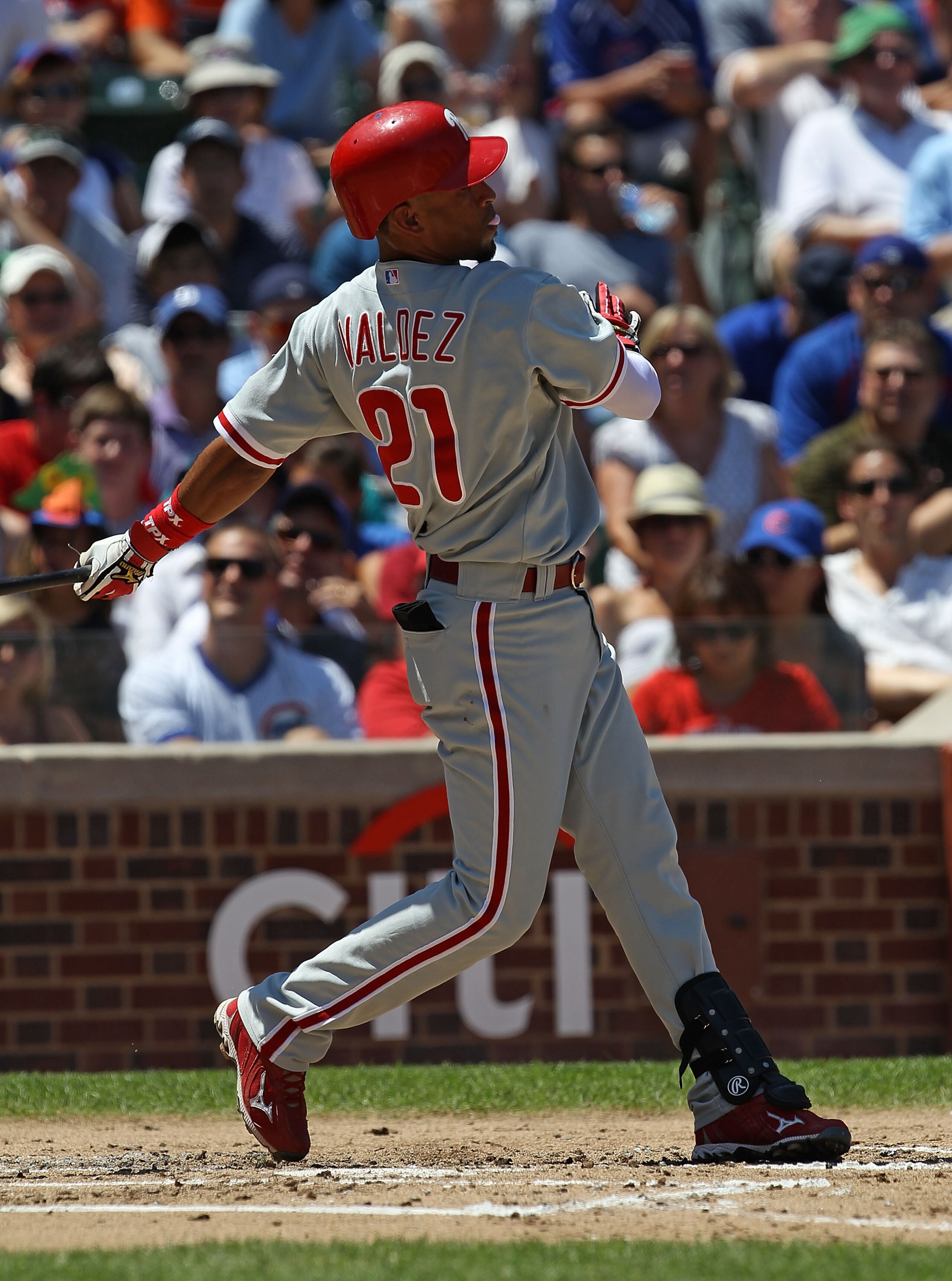
For a guy whom nobody had even heard of in Philadelphia entering the 2010 season, it's sounds kind of strange to say that the Phillies may not have been able to be as successful as they were during the regular season in 2010 if it weren't for Wilson Valdez.
After being signed to a minor league contract, the Phillies called him up to the majors when Jimmy Rollins hit the Disabled List. Soon enough, he was outplaying Juan Castro and starting at shortstop as Rollins recovered.
Valdez has never been impressive with the bat, but he did put up several career highs, if you can call them that, for the Phillies in 2010. He posted a slash line of .258 / .306 / .360, with four home runs, 34 RBI and seven stolen bases.
He appeared in 111 games—the most in his career in a single season–and may have benefited from consistent playing time. Heading into 2011, he'll need to improve on his walk and strikeout rates.
It was Valdez's defense that earned him his keep last season. He was the definition of "utility man," playing all over the place for the Phillies as their regulars dropped like flies. When Chase Utley hit the Disabled List, he played second base.
When Rollins went back on the Disabled List, he played shortstop. When Placido Polanco needed some time to spell his sore elbow, Valdez played third. He even worked out in left field should the Phillies need to give him some time there.
Most importantly, however, Valdez was very good defensively wherever he played. Playing a majority of his games at shortstop, he posted a UZR of 1.5, and continued that trends with positive UZR's at second and third base as well, while showing off an impressively strong arm.
Projected 2011 Season: For some reason, there are people within the Phillies' circle that believe that Valdez will have to earn a roster spot or be sent to Triple-A, but I'm not so keen on that idea.
His main competition is Rule 5 Draft pick Michael Martinez, and Valdez's defense was key for the Phillies in 2011. With the health of almost the entire infield uncertain, Valdez's versatility is going to play a huge role for the Phillies.
Predicted 2011 Slash Line: .250 / .319 / .332, with two home runs.
Corner Outfielder: John Mayberry Jr.
13 of 31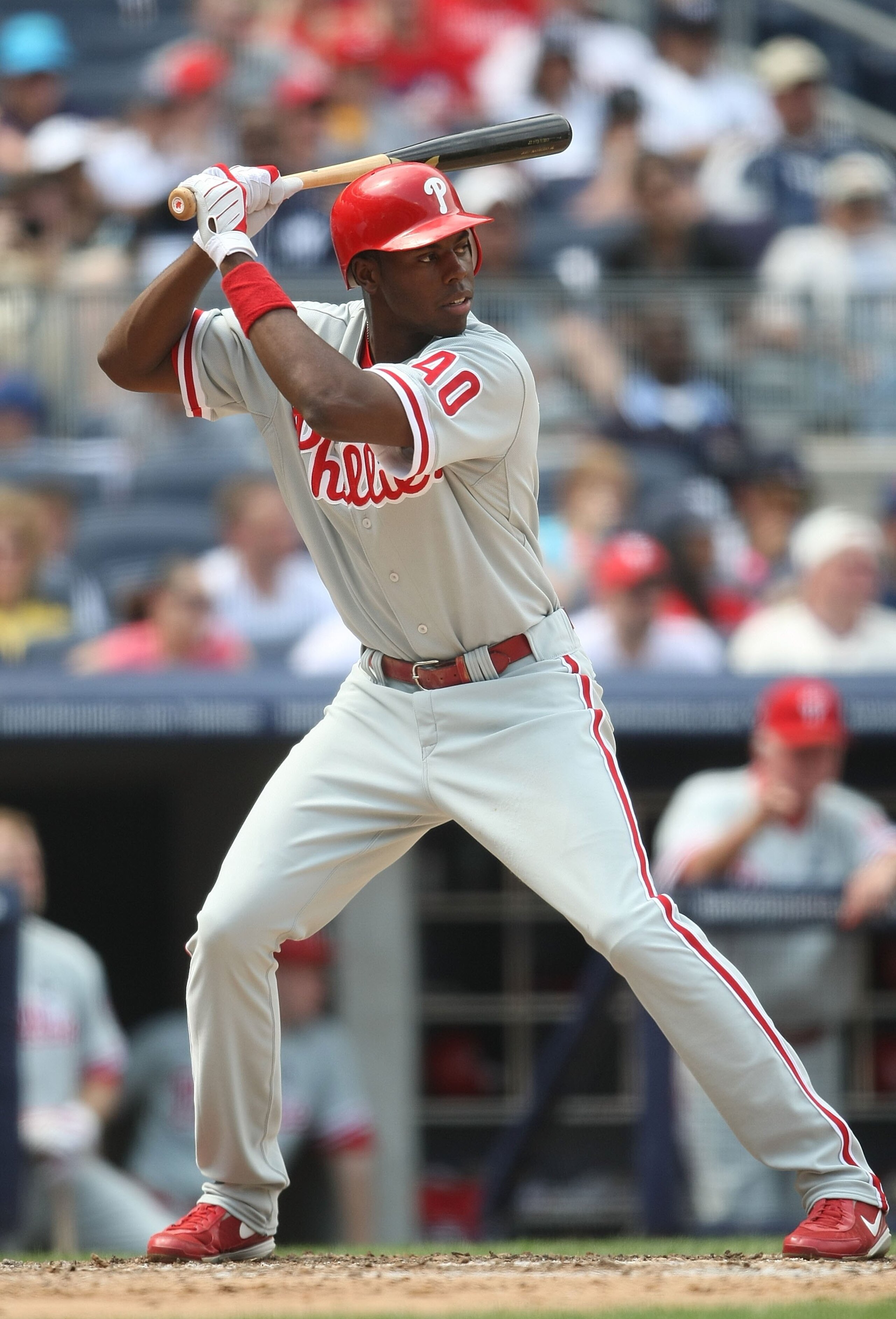
The Phillies are going to have an interesting bench this season, as roles aren't as defined as in seasons past. Looking at their depth, it's very thin. One guy that sticks out like a sore thumb, however, is John Mayberry Jr.
After spending very little time with the big league club in each of 2009 and 2010, the outfielder is heading into a make-or-break year with the Phillies. After swapping him for toolsy outfielder Greg Golson before the 2009 season, the Phillies have been impressed with his power.
However, he's been streaky, at best, and the Phillies would more than love for him to become consistent and develop into an outfielder that can insert himself in the left field race for the 2012 season.
Offensively, Mayberry has a ton of potential. In each of his brief stints with the Phillies, he's shown tremendous power, especially against left-handed pitching.
In 11 games with the big league club last season, he showed positive signs of his potential, posting a slash line of .333 / .385 / .833, with two home runs. Obviously, it's a small sample size. This spring, the Phillies will be giving him more looks as he attempts to make the club.
Defensively, we haven't seen all too much of Mayberry. With the Phillies, he has been used primarily for his offense. However, when he was traded for Golson, the reports said that the Phillies and Texas Rangers were swapping "five-tool" outfielders.
I'd take that with a grain of salt, however, as Golson never had any real power. Watching Mayberry, you see where he has the potential for five tools.
He has good range and an okay arm, and like fellow prospect Domonic Brown, is deceptively speedy for his size. Though UZR has ranked him negatively in both of his stints with the Phillies, he has the chance to develop into a good defensive player with consistent playing time.
Projected 2011 Season: Personally, I believe that Mayberry is going to break camp with the Phillies this season. Hitting guru Charlie Manuel has been infatuated with Mayberry's offensive potential, and in order to improve his stock, is working him out not only in the corner outfield positions, but at first base as well, where he played collegiate baseball.
Giving the Phillies another option besides the left-handed Gload on a scheduled off-day for Howard would be great.
Predicted 2011 Slash Line: .256 / .326 / .435, with eight home runs.
Potential Sixth Bench Player: Michael Martinez
14 of 31
The Phillies brass has a couple of interesting decisions to make about their 25-man roster this spring. As we'll preview in just a few slides, the Phillies' starting rotation has the potential to log a ton of innings.
Roy Halladay, Cliff Lee, Roy Oswalt and Cole Hamels each averaged more than seven innings per start in 2010, and fifth starter Joe Blanton averaged more than six.
That makes the last man out of the bullpen potentially unnecessary. Instead, the Phillies could opt to take a sixth bench player, and Rule 5 Draft pick Michael Martinez seems like a good fit, especially if John Mayberry Jr. is unable to impress this spring.
The Phillies took a chance on Martinez because of his excellent stint in Triple-A in 2010 in the Washington Nationals' organization and his versatility on the diamond. In his first stint at Triple-A, Martinez posted an impressive slash line of .325 / .353 / .452, with three home runs and eight stolen bases.
Scouting reports indicate that Martinez is in the mold of a Polanco-type hitter. He'll make good contact and spray the ball all over the field, and though he has some power, we probably won't see much of it against major league pitching.
Defensively, his versatility works in his favor. Though he played a majority of his games with the Nationals in the middle infield at second base and shortstop, he's also a rather talented center fielder.
With no real backup options on the aforementioned bench for starter Shane Victorino, the Phillies may want to keep Martinez around for that reason alone.
He's an adequate defender up the middle, and has the speed to be a late-inning pinch runner or defensive replacement, and provides excellent insurance in the event of an injury.
Projected 2011 Season: Having heard so much about the Phillies' starting rotation, it doesn't seem logical that the Phillies would waste a roster spot on a reliever that will rarely see the mound.
At the very least, keeping him on the major league roster keeps him away from the division rival Nationals, and practically assures us that, while it was certainly interesting, we won't have to see Oswalt play left field again.
Predicted 2011 Slash Line: .273 / .320 / .380, with one home run.
Projected Lineup, Bench and Offensive/Defensive Expectations
15 of 31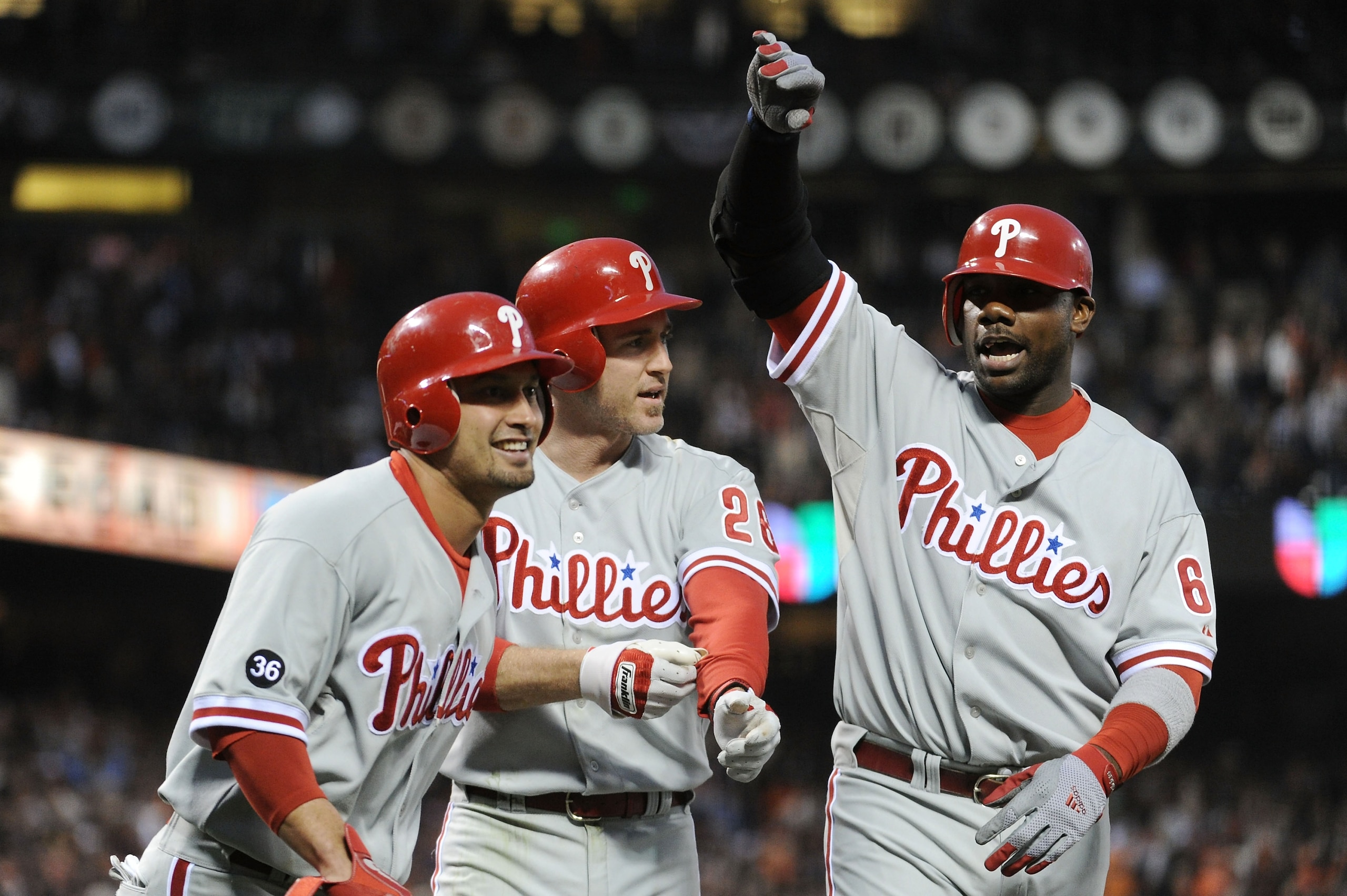
Structuring Charlie Manuel's lineup is going to be an interesting process. On one hand, we have traditional baseball stats that tell us that if arranged in a certain order, the Phillies' offense could be even more productive than it has in years past.
However, using history and the naked eye alone, Manuel has assembled his lineup in a manner that has the team feeling comfortable, and more importantly, has produced results.
So while this could spark a bit of a debate, I think it's imperative to take a realistic look at the lineup, and not order it the way we see fit, but the way that Manuel thinks it will be most productive. Take a look.
1.) Jimmy Rollins - SS - (S)
2.) Placido Polanco - 3B - (R)
3.) Chase Utley - 2B - (L)
4.) Ryan Howard - 1B - (L)
5.) Raul Ibanez - LF - (L)
6.) Shane Victorino - CF - (S)
7.) Domonic Brown - RF - (L)
8.) Carlos Ruiz - C - (R)
9.) Pitcher
The first thing you notice about the Phillies' lineup is that it is extremely left-handed, and hitting Ibanez fifth is a risky decision. However, Manuel's commitment to Rollins in the leadoff spot makes assembling his order increasingly more difficult.
While the switch-hitting Victorino would break up the lefties nicely, and Manuel could choose to do so against tough left-handed starters, Ibanez is the more typical five-hole hitter, and Victorino's speed plays better at the bottom of the order.
Of course, if Francisco wins the starting job, that would add another right-handed bat to the order and create some balance.
There is a lot of pressure riding on this offense. While most of the season's expectations are on the shoulders of this incredible pitching staff, players like Rollins, Utley and Howard know that in order to win games, you need to be able to score runs.
Is this the type of team that can hang crooked numbers every game? Yes. Is that a realistic expectation? Not really. What makes this offense so scary is that, when healthy, they have hitters that fit perfectly into their order, and they can manufacture the runs it takes to win ballgames.
Doing a quick recap, I don't think the offense is going to be a problem. I can see Utley, Howard and Victorino making the All-Star team with relative ease, while Rollins has an average season and Ruiz continues to fly under the radar, and is passed on for flashier catchers like Yadier Molina and Brian McCann.
The team is structured to win 100 games with relative ease, and the hardest part of the season should be living up to the fans' expectations. If the starting core is not healthy, they have bench players ready and willing to step in, including Brian Schneider (L), Ben Francisco (R), Ross Gload (L), Wilson Valdez (R), John Mayberry Jr. (R), and potentially, Michael Martinez (S).
On the other side of the ball, this team is as good as they come defensively. The Phillies will feature three Gold Glove winners in Victorino, Polanco and Rollins, as well as one of the game's top defensive catchers in Ruiz.
Howard and Ibanez are capable defenders, and Brown has the tools to be an above-average defender with a strong arm. Defensively, they certainly won't be a liability, and only make their pitching better.
Number One Starter: Roy Halladay
16 of 31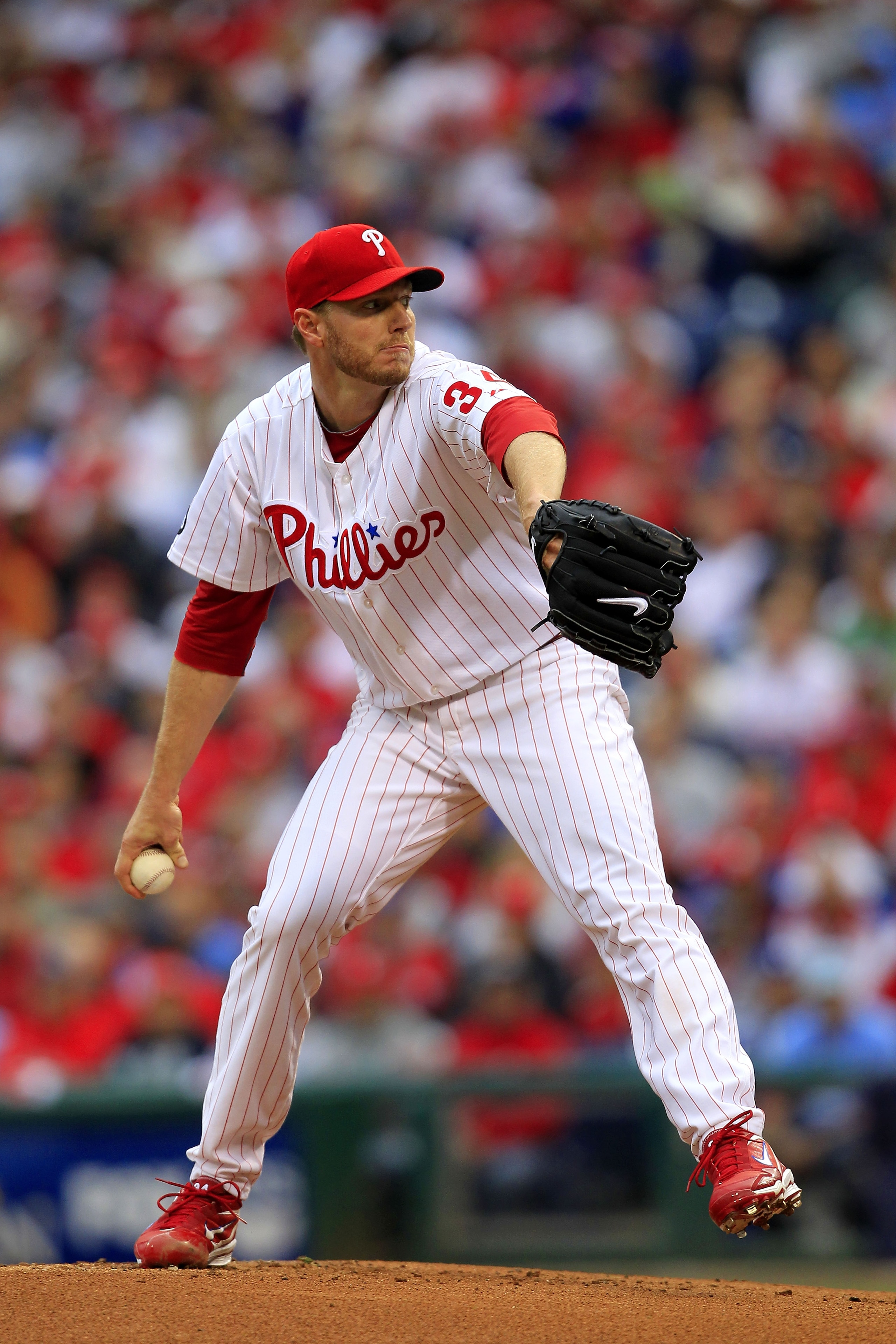
Roy Halladay is among that select group of players where the results speak for themselves. In his first season with the Phillies and with high expectations abounding, all the man did was throw a perfect game, followed by the second postseason no-hitter in the history of baseball, win 20 games, post an ERA below three, finish in the top five in every category of pitching's triple crown and win the National League Cy Young Award, unanimously.
That about sums up a single year in the life of Halladay.
After being traded to the Phillies in the offseason, there wasn't a single person around baseball who didn't expect Halladay to have a tremendous season moving into the National League.
However, I'm not sure anybody thought he'd be that good. He posted a record of 21-10 to go with an ERA of 2.44. His 21 wins were the most in the National League and tied for the most in baseball with the American League's CC Sabathia, and he finished in the top five in several key statistics, including WHIP, stirkeouts, walks and complete games.
Known as a control pitcher, Halladay's strikeout rates were along his career norms, however, his walk rate was phenomenal, as he displayed pinpoint control.
The only person in baseball that showed better control than Halladay in 2010 was new teammate Cliff Lee. It's not hard to envision why he won the NL Cy Young without missing a single first-place vote.
Projected 2011 Season: There has been a lot of chatter outside of Philadelphia about Halladay declining because of his age, but I find that to be flat-out ridiculous. At just 34 years old, Halladay is still in the prime of his career, and works harder than any pitcher in baseball.
By one small article at a time, I'm trying to abolish the notion that a player's age represents the rate in his decline. It's just too general, especially for a guy like Halladay, who doesn't need to overpower hitters, and can finesse his way around the strike zone and still be successful well into his late 30's.
Predicted 2011 Record: 23-8 with an ERA of 2.56.
2011 All-Star? Yes.
2011 Awards? 2011 National League Cy Young Award.
Number Two Starter: Cliff Lee
17 of 31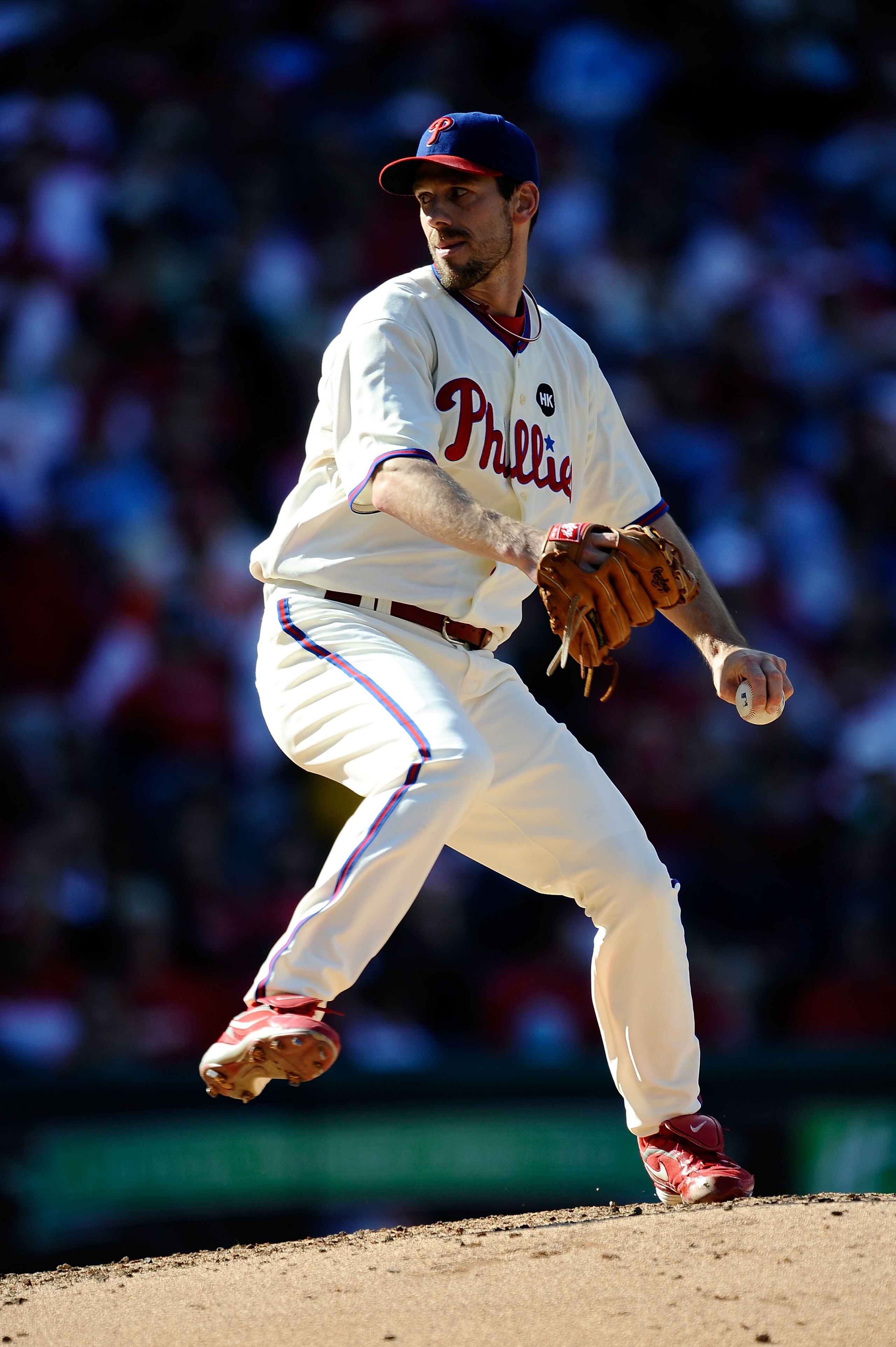
Cliff Lee has been the talk of the town this winter, and more significantly, the talk of baseball's offseason.
Since we've heard about the three-team debacle between the Phillies, New York Yankees and Texas Rangers all winter long, I'm not going to get into that. Let's just say the Phillies are getting a really, really good starter here.
For the second straight season, Lee split the year between two different clubs in 2010, as he was traded to the Rangers from the Seattle Mariners before the trade deadline.
He also led his new team to the World Series for the second straight year, again defeated on the grandest stage of them all. Now, with new contract in hand in the city he always wanted to remain in, we look forward to Lee's 2011 campaign.
In order to do so, however, we must look back at his 2010 season. Overall, he posted a record of 12-8 with an ERA of 3.18, but they don't tell the story of just how good he was.
Lee put on a display of command last season, walking just 18 batters all season long, posting a BB/9 of just 0.76. He threw more than 200 innings for the third consecutive season, and compiled 7.1 WAR—the best in baseball for a starting pitcher. Removing all other factors from the game, his Fielding Independent Pitching was a remarkable 2.58.
Projected 2011 Season: People expect big things out of Lee this season, and for good reason. The last time he was with a team he was comfortable with for a full season, he posted a record of 22-3 to go with an ERA of 2.54, with the Cleveland Indians in 2008.
Now, he'll join an already stacked rotation as the number two starter. Not to be cliche, but the sky is the limit. The 2008 AL Cy Young Award winner could challenge teammate Roy Halladay for the award in 2011.
Predicted 2011 Record: 21-8 with an ERA of 2.61.
2011 All-Star? Yes.
2011 Awards? 2011 NLCS MVP
Number Three Starter: Roy Oswalt
18 of 31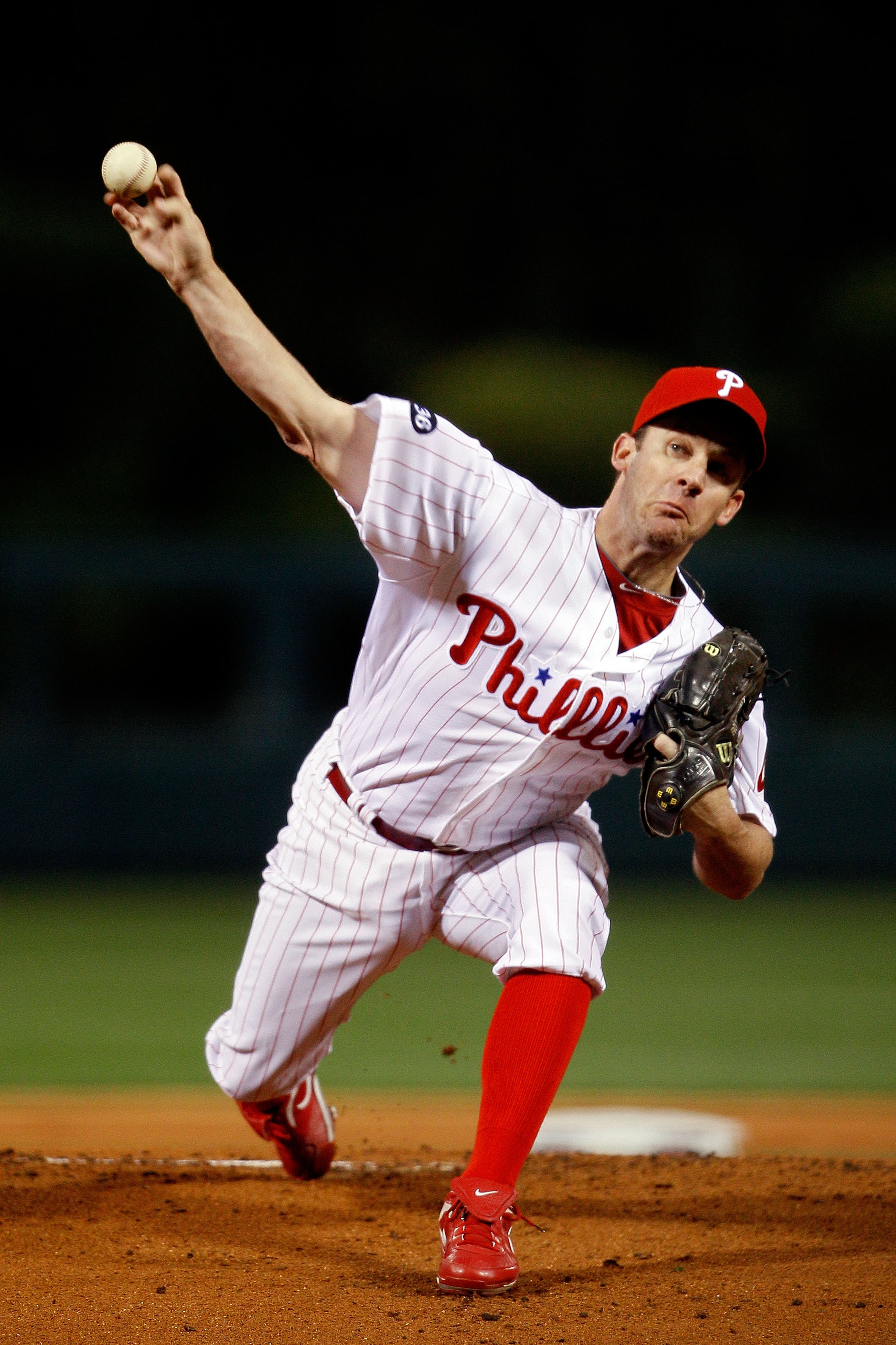
After Cliff Lee was traded and before he was re-signed through free agency, the Phillies acquired yet another ace, landing the former Houston Astro Roy Oswalt at the trade deadline.
After losing his first start on the day he arrived with his new team, Oswalt went on an absolute tear down the stretch, showing once again that age is just a number.
In just a couple months with his new team, Oswalt did everything you can imagine, and some things you can't. He started games, entered them out of the bullpen and even played some left field. What does he have in store for 2011?
Oswalt was obviously revitalized after joining a contender last season. He posted a record of 7-1 with an ERA of just 1.74 for the Phillies down the stretch, completely dominating the opposition.
Under the counseling of catcher Carlos Ruiz, Oswalt added an unorthodox change-up that he would go on to call his "Vulcan change-up," for its hammer-like break.
He would pitch so well that he would gain quite a bit of support in the Cy Young voting, finishing sixth. He also led the National League in WHIP, which is no easy feat. Just one man had a better WHIP than Oswalt in 2011, and of course, that man is Cliff Lee.
Projected 2011 Season: It's terrifying to think that Oswalt is the third-best starter on a staff. The man has been named the NLCS MVP and won 20 games twice in the past, and after showing that he hasn't lost a bit of that talent last season, looks to follow up Halladay and Lee in a rotation for the ages.
It's hard to imagine that he won't be just as good this year as he was at the end of last season. He'll be matching up with the opposition's third starter for the majority of the season, and could put up Cy Young-worthy numbers of his own.
Predicted 2011 Record: 20-6 with an ERA of 2.89.
2011 All-Star? Yes.
2011 Awards? None.
Number Four Starter: Cole Hamels
19 of 31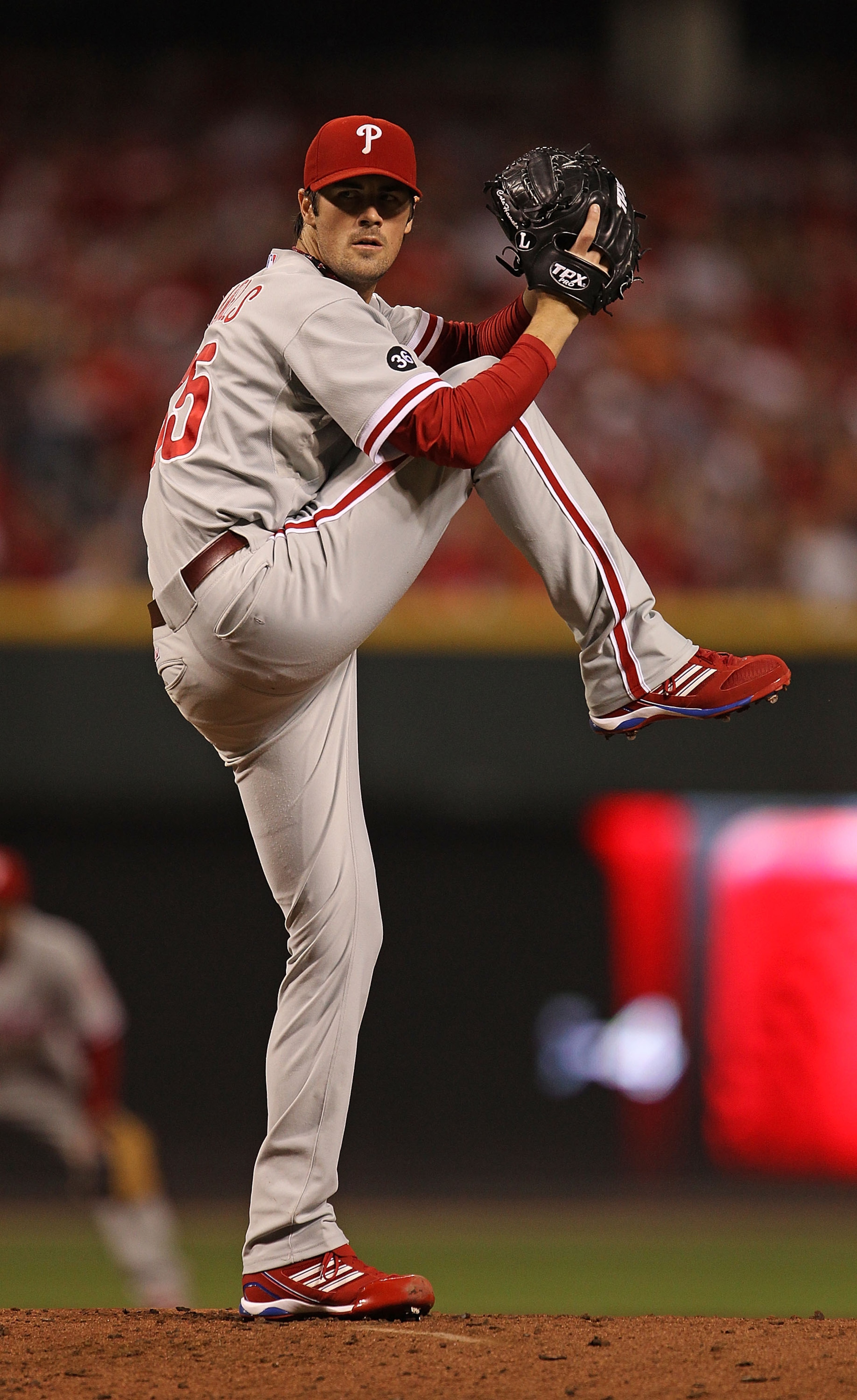
Then again, it's even scarier to think that Cole Hamels is the fourth-best starter in a team's rotation. Out of the "four aces," Hamels made the greatest strides in 2010.
In a year that started off with him shrouded in an air of uncertainty, Hamels took the first few months adjusting to being a pitcher dealing with expectations.
He added a cut-fastball early in the year and it developed into a nasty pitch during the season. Entering the year, he already had three plus pitches—a fastball, curveball and changeup—and now that he's added a fourth, he has the potential to be one of the National League's best left-handed starters.
Hamels had one of his best seasons to date, posting a record of 12-11 with an ERA of 3.06. Don't let that won-loss record fool you—the Phillies rewarded Hamels with some of the worst run support in baseball last season.
With a little offense behind him, his record would have been drastically different. With the addition of the cutter, he saw a rise in his strikeout rate, and he continued to display good control. After the All-Star break, he took his game to another level, posting a record of 5-4 with a 2.23 ERA,
Projected 2011 Season: Hamels is going to surprise people this season. Well, maybe not Ken Rosenthal, who has Hamels as his 2011 NL Cy Young winner. If the rest of the competition wasn't already shaking in their boots thanks to the first three guys in this rotation, Hamels can be equally as tough with a full season of that cutter under his belt.
For a guy whose off-speed stuff was already close to untouchable, adding this cutter is just another thing to think about.
Predicted 2011 Record: 20-9 with an ERA of 3.19.
2011 All-Star? Yes.
2011 Awards? None.
Number Five Starter: Joe Blanton
20 of 31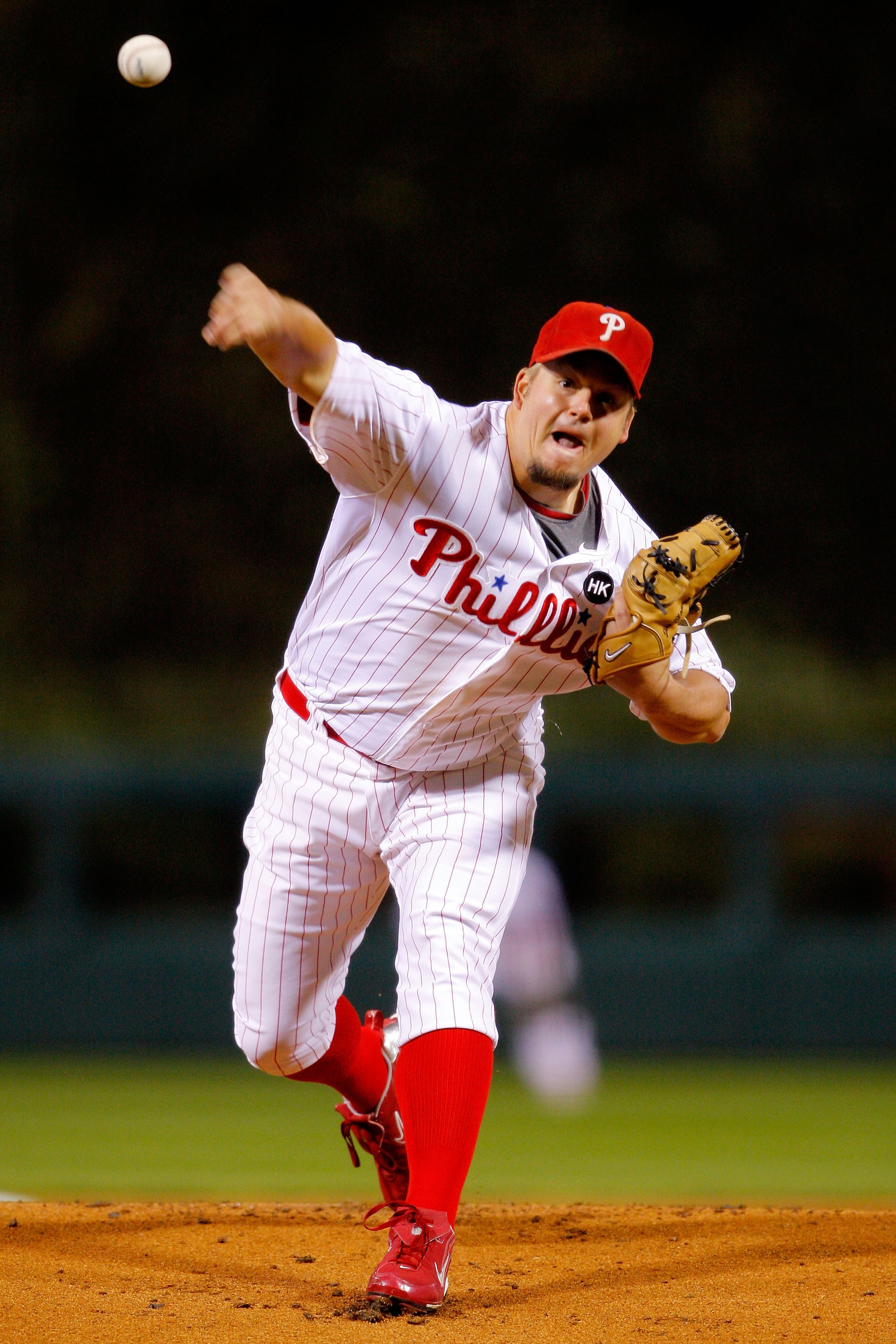
For a while this winter, it seemed as though the Phillies would have to move a starting pitcher because he wasn't as good as the others. With "four aces" in tow, was there enough money to pay Joe Blanton to be the team's fifth starter?
After months of speculation, General Manager Ruben Amaro Jr. announced that there was. The former ace of the Oakland Athletics' staff will open the season as the team's fifth starter, rounding out this star-studded rotation.
Last season, Blanton had bit of a down year. After opening the season on the Disabled List with an oblique strain, he rejoined the Phillies' rotation and got off to a slow start. At the end of the season, he had posted a record of 9-6 with an ERA of 4.82.
His strikeout rate had dipped below his carer norm, but was offset by good control and a strong ground-ball rate. He showed signs of great improvement after the All-Star break as well, when he posted a record of 6-1 and an ERA of 3.48.
Projected 2011 Season: Blanton is going to have an interesting season, regardless of what happens. If the Phillies struggle early in the season, he's going to hear his name in plenty of trade rumors as they look for an offensive upgrade somewhere.
With that in mind, he'll have to do his part in making sure that the Phillies don't struggle. Once upon a time, Blanton was one of the American League's top dogs, and now that he'll be facing significantly weaker pitching, he could benefit from all of the arms that come before him.
Predicted 2011 Record: 13-8 with an ERA of 4.25.
2011 All-Star? No.
2011 Awards? None.
Long Reliever: Kyle Kendrick
21 of 31
We'll start analyzing the bullpen by looking at a former member of the starting rotation, Kyle Kendrick. Eligible for arbitration for the first time this offseason, Kendrick was offered salary arbitration, as the Phillies feared they'd lose their fifth starter by non-tendering him.
As it turns out, Kendrick was pushed out of the starting rotation before he could come to terms with the Phillies (avoiding arbitration), as the team inked Cliff Lee to a five-year, $120 million deal. Now, he'll knock David Herndon out of his role, and become a very expensive long man out of the bullpen.
According to the Daily News, although both Kendrick and Vance Worley will be stretched out as starting pitchers during spring training, the duo will be competing for one bullpen spot.
This, of course, will be Kendrick's first full season as a reliever. Last season he made 31 starts, posting a record of 11-10 with an ERA of 4.74. He finished with the league's worst strikeout rate, despite showing good control.
Projected 2011 Season: Though Worley may outperform Kendrick this spring, I fully expect Kendrick to break camp as the team's long reliever. Unless they are able to trade him before the season starts (there is some value, as his closest comparable, Armando Galarraga, was traded this offseason), he'll simply be too expensive to send to Lehigh Valley.
On the other hand, giving Worley consistent starts in Triple-A would be beneficial should the Phillies need to call on him. If used correctly, Kendrick could be a valuable bullpen asset.
Predicted Record: 1-2 with an ERA of 4.36.
Middle Reliever: Danys Baez
22 of 31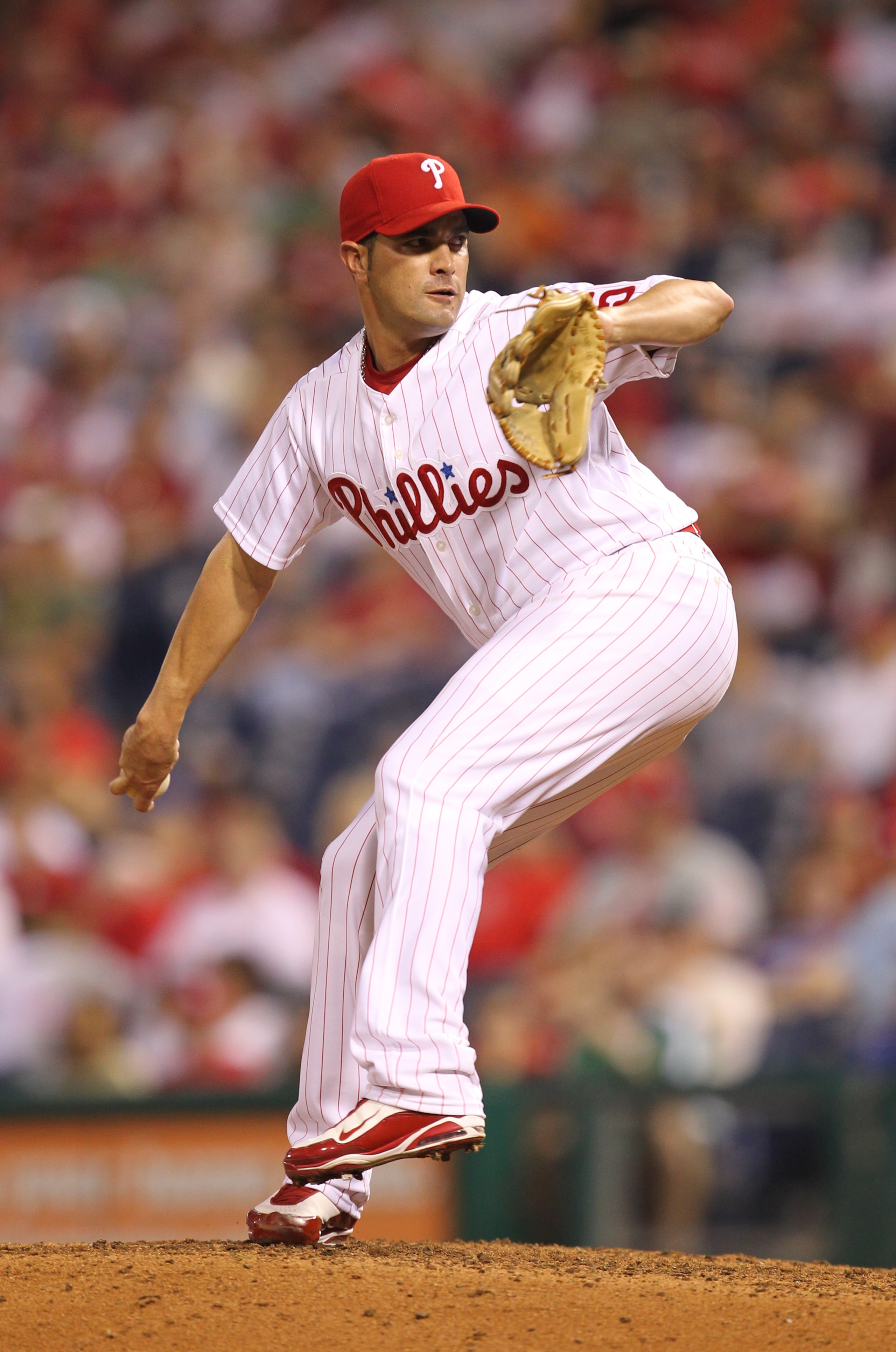
Long before he was heralded for signing Cliff Lee, Ruben Amaro Jr. was scorned for dishing out a multi-year contract to reliever Danys Baez, and he showed why in 2010.
The reliever struggled with multiple injuries, including back spasms, and as a whole simply underperformed. Too expensive to release, the Phillies will hope to catch lightning in a bottle with Baez this season by using him sparingly and only in key situations.
Last season, Baez was flat-out terrible. He posted a record of 3-4 with an ERA of 5.48, appearing in 51 games for the Phillies. His strikeout and walk rates were right around his career norms, but that isn't saying much, as those norms are well below average.
Projected 2011 Season: Who knows what the Phillies can expect out of Baez in 2011. More than likely, he'll just be a warm body blocking a roster spot as a stop-gap while top relief prospects like Justin DeFratus and Scott Mathieson log innings in Triple-A. He probably won't appear in 50 games again this season, with little need for a reliever of his type.
Predicted 2011 Record: 0-2 with an ERA of 4.89.
Middle Reliever: Antonio Bastardo
23 of 31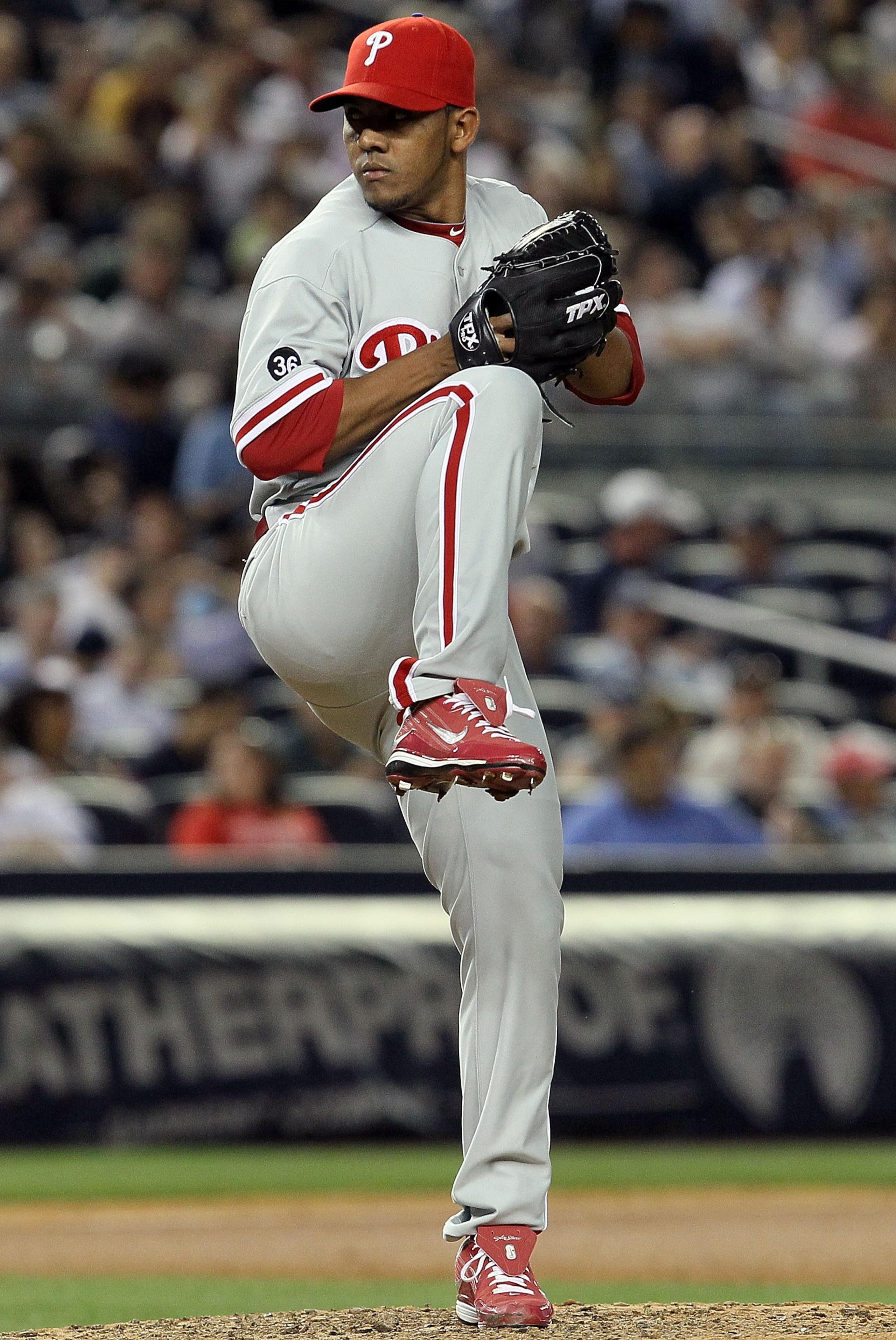
The Phillies could be sitting on a gold mine in Antonio Bastardo. Okay, that may be a bit dramatic, but Bastardo has all the tools to be a successful left-handed specialist, at the very least.
With a good fastball and slider combination, he's been developing a changeup for the last couple of seasons. If he can bring that under his control, he could be very tough to hit.
Last season, Bastardo split time between Triple-A and the major leagues. With the Phillies, he posted a record of 2-0 with an ERA of 4.34 in just over 18 innings. His FIP, on the other hand, favors him much more highly, as he turned in a performance that was more worthy of a 2.76 score.
He had an incredible strikeout rate, striking out more than 12 batters per nine innings, though his command could still use a bit of work.
Projected 2011 Season: Bastardo could be a key cog in the success of the Phillies' bullpen this season, despite the team re-signing JC Romero to be the primary left-handed specialist. Romero has struggled with both performance and injuries in years past, and being able to turn to a promising reliever in Bastardo is a nice luxury. Personally, I believe that Bastardo will be one of those under-the-radar success stories of the 2011 season.
Predicted 2011 Record: 2-0 with an ERA of 2.99.
Middle Reliever: Jose Contreras
24 of 31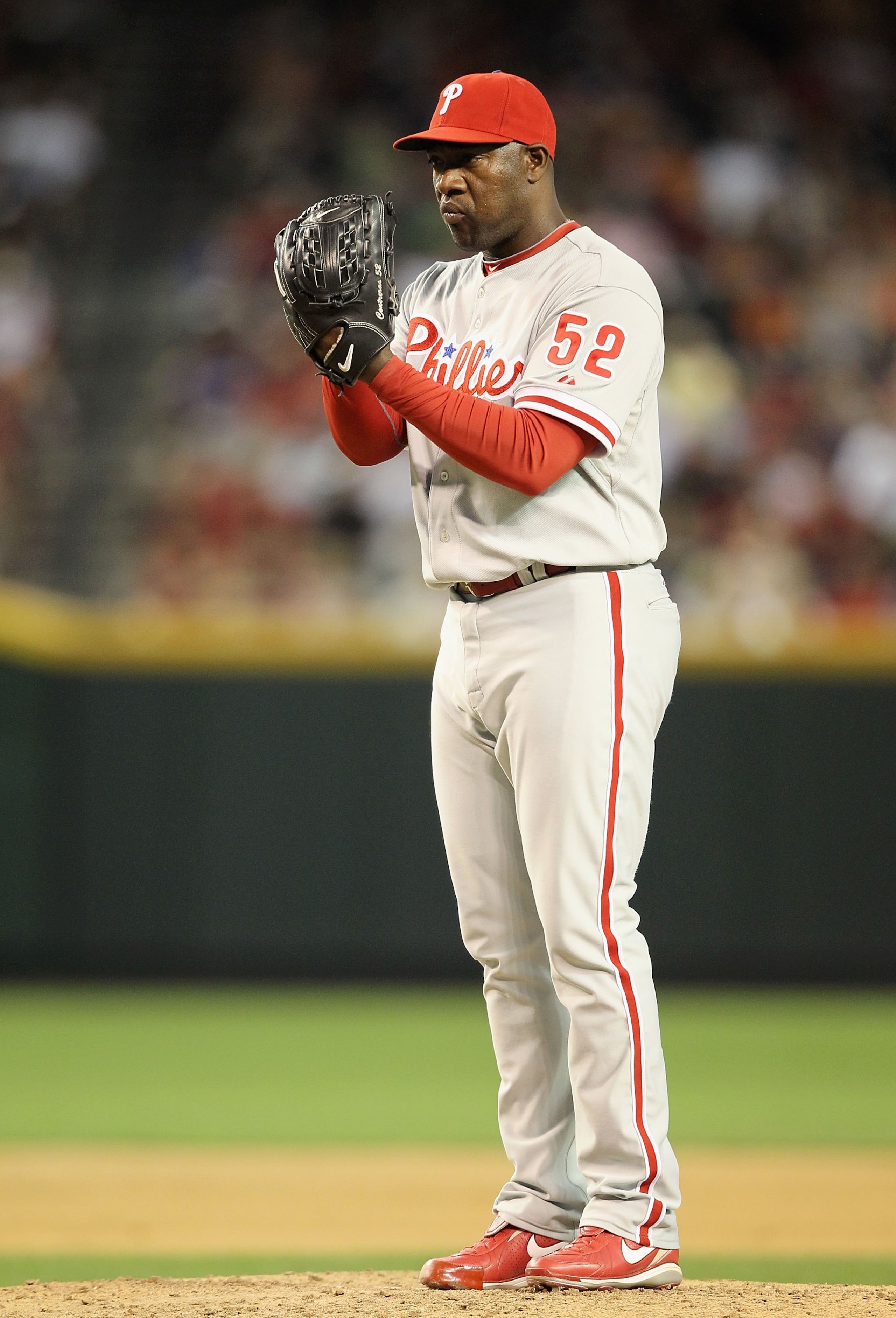
Unlike Danys Baez, the Phillies got a pleasant surprise out of fellow right-handed reliever Jose Contreras in his first season with the Phillies. He signed on with the Phillies for his first full season as a reliever after testing the waters with the Colorado Rockies in 2009, and excelled in his seventh-inning role with the Phillies.
When set-up man Ryan Madson hit the Disabled List with a broken toe, Contreras filled in admirably. In the offseason, he was rewarded with a two-year contract as one of the key cogs in the Phillies' bullpen.
Logging many of his many of his 56.2 innings in the sixth and seventh innings, Contreras posted a record of 6-4 with an ERA of 3.34.
In his new role, he struck out two more batters per nine innings than the previous year while showing much better control than as a starting pitcher. It was clear that reduced work load was paying dividends.
Projected 2011 Season: Contreras should continue to do well as a reliever. Behind this starting rotation, one could assume that the majority of the work he'll see will be on nights where Madson and Brad Lidge are unavailable.
Charlie Manuel should be able to keep his bullpen well rested throughout the season, and that, in the long run, will be beneficial for all parties involved, especially Contreras.
Predicted 2011 Record: 5-3 with an ERA of 3.41.
Left-Handed Specialist: JC Romero
25 of 31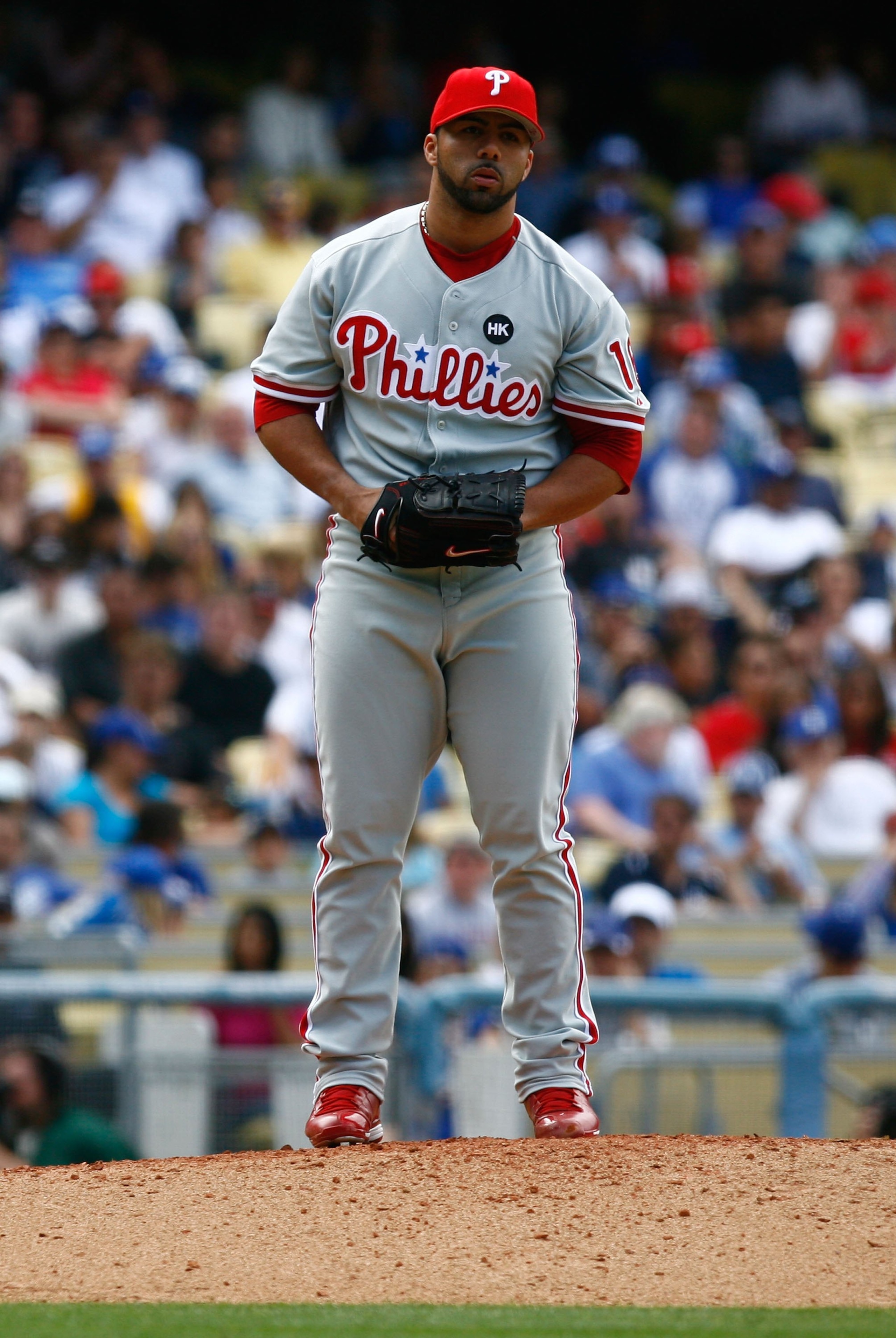
Ah, where to begin with JC Romero? After a stellar 2008 campaign in which he helped the Phillies capture the 2008 World Series title, Romero fell apart, almost literally.
He was suspended for using a banned substance, had several arm injuries and surgeries, and his performance suffered. The Phillies took a small risk by re-signing Romero after their deal with Dennys Reyes fell though, but if he's able to retire lefties at full health, Romero could be a huge factor in the Phillies' 2011 season.
In 2010, he appeared in 60 games but logged just 36 innings, numbers that are expected out of left-handed specialists.
He posted a record of 1-0 with an ERA of 3.68, but his FIP of 5.40 suggested he was much worse than that. As usual, his control was abysmal, but his strikeout rate was in line with his career norm.
Projected 2011 Season: Romero is a challenge to project. Part of me says that he'll be just as bad as last season. His control has never been good, and after several arm surgeries, you wonder just how much mileage he has left.
On the other hand, part of me believes that when he's healthy, his control is bearable and his fastball/slider combination allows him to get lefties out with great frequency. At this point, I'll take the wait-and-see approach. If he's healthy at the end of spring training, he should be okay.
Predicted 2011 Record: 1-2 with an ERA of 3.71.
Set-Up Man: Ryan Madson
26 of 31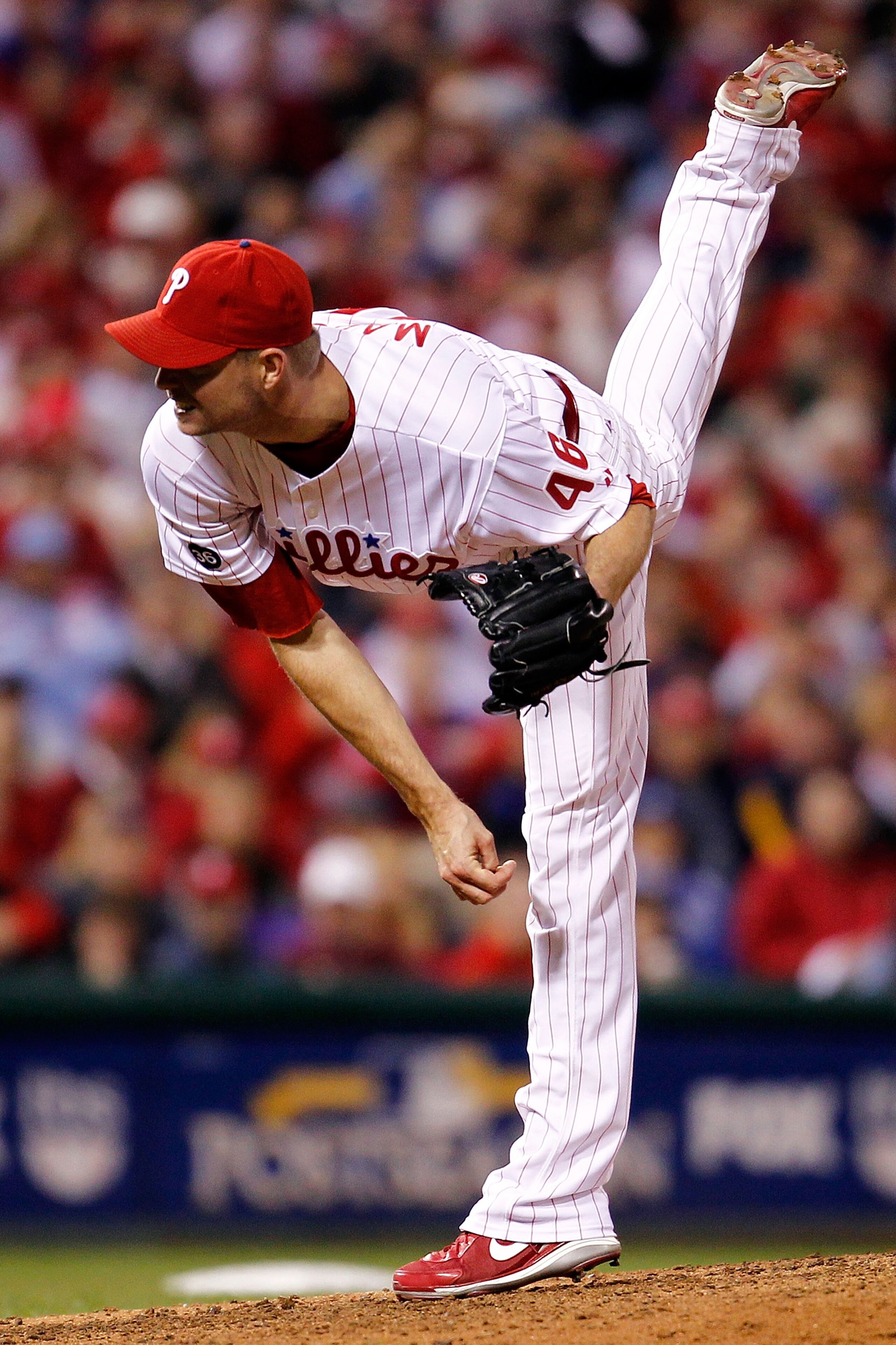
Over the last few seasons, Ryan Madson has been one of the game's top set-up men, and has seemed to fly under the radar in doing so. Though he's proven that he's no closer, Madson has been gold in his eighth inning role as the "Bridge to Lidge."
Last season, however, fans began to question his decision-making when he went all "Carlos Zambrano" on a steel chair and broke his toe. When he returned, however, he put those worries to rest, dominating both right-handed and left-handed hitters in the eighth inning, as he and a healthy Lidge gave us a sneak peak of the 2011 season.
Madson appeared in 55 games and logged 53 innings. Unlike Romero, Madson's success against both left-handed and right-handed pitching make him incredibly valuable. He posted a record of 6-2 with an ERA of 2.55. He struck out more than ten batters per nine innings while displaying excellent control.
Projected 2011 Season: I expect big things out of Madson this season. As a Scott Boras client entering a contract year, Madson knows that he can cash in on a great season, and as one of the two primary relievers out of the Phillies' bullpen, he'll have every opportunity to do that.
Boasting a good changeup that has a curveball-like break and a fastball that rests in the mid-90's, as long as he's able to remain in his eighth-inning role, Madson will be very good in 2011.
Predicted 2011 Record: 3-1 with an ERA of 2.49.
Closer: Brad Lidge
27 of 31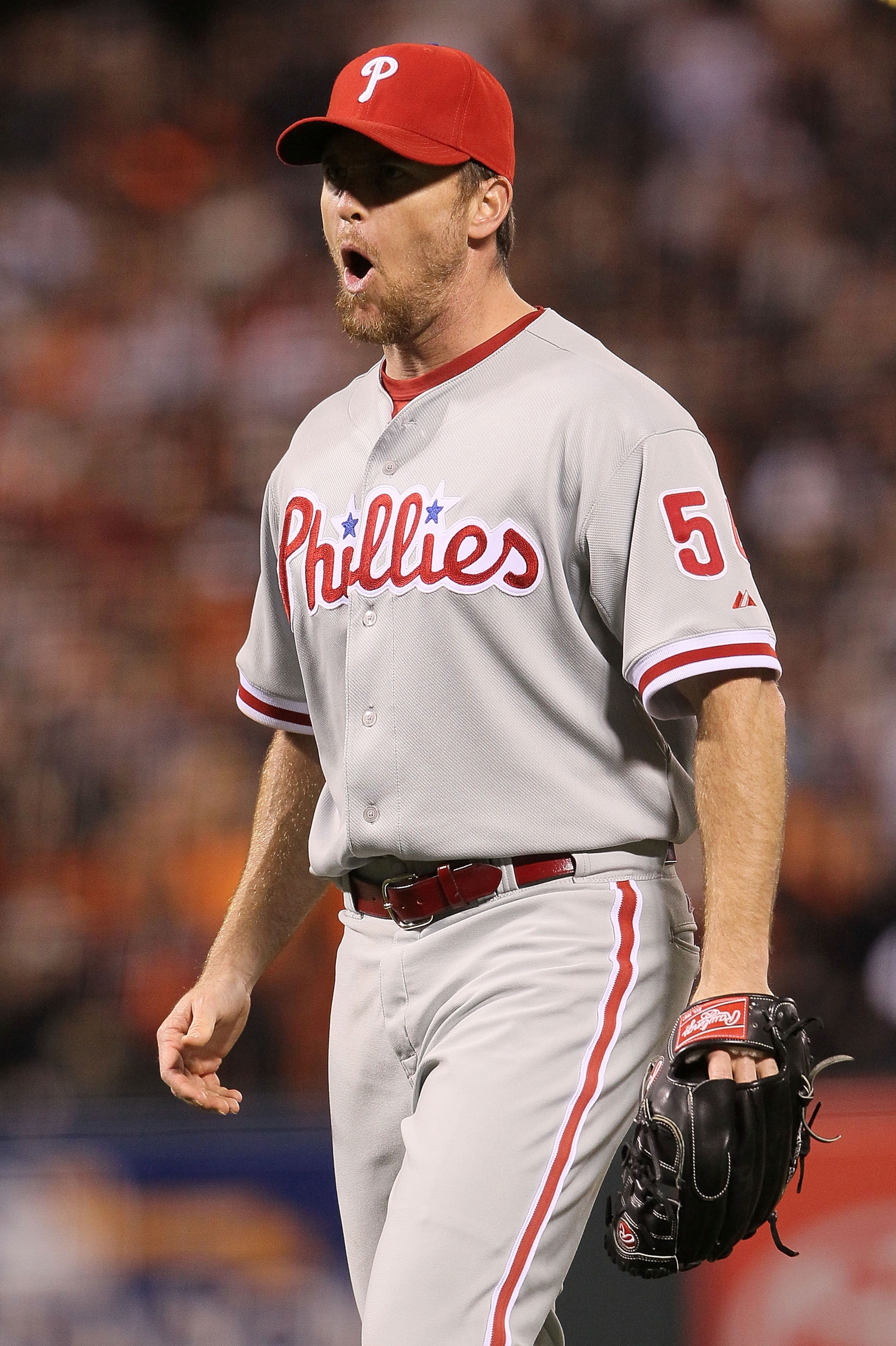
But if there's a single man in baseball that has made himself impossible to project, it's Brad Lidge. Talk about a roller coaster ride, Lidge followed up his perfect 2008 season with an abysmal, injury-riddled 2009 and a 2010 that featured a bit of both.
After yet another arm surgery before the 2010 season, Lidge took some time to adjust, but finished the season on a positive note. His ERA over the final months of the season was 0.76.
The 2010 season as a whole was not all too bad, either. Lidge posted a record of 1-1 with an ERA of 2.96. He continued his incredible strike out rate and displayed better control than he did in 2009, though, it was still shaky regardless.
Projected 2011 Season: I may be in the minority here, but I foresee a big season from Lidge, who is in a contract season of his own (the Phillies hold a club option for the 2012 season.) Over the final months of the season, he was as good as ever and has entered spring training healthy for the first time since, you guessed it, 2008.
If Lidge has a season closer to his 2008 success than any other year as a Phillie, this pitching staff may indeed go down as one of the greatest of all time. I may be going out on a limb, but I see big things for "Lights Out" Lidge.
Predicted 2011 Record: 2-1 with an ERA of 2.26 and 38 saves.
Projected Pitching Staff
28 of 31
I recently unleashed some wild predictions regarding the Phillies' starting five, but for this analysis, I'll tone things down a bit and try and sounds a bit more realistic (though I will continue to state that anything can happen). Going back over some of the previous slides, you'll notice that I'm persistent—I still believe the Phillies' "four aces" will win 20 games this season.
Putting together an ensemble of aces including two Cy Young winners, three 20-game winners, two NLCS MVP's and a WS MVP is no simple feat. In fact, it seems improbable.
But as the legendary Vin Scully once said, "In a year that has been so improbable, the impossible has happened." Indeed, assembling four of the game's elite pitchers on a single staff seems unlikely, but now that it's been done, all we can do is look forward to Opening Day.
When Cliff Lee first signed and the media hype ensued, I thought that the least likely of the four aces to win 20 games was Cole Hamels, but with a revitalized offense and a bit of persuasion by a piece Ken Rosenthal recently wrote, it isn't impossible for four starters to win 20 games. I'll save you the predictions and say that I think it's likely.
Read the slides again. It is.
As for the rest of this pitching staff, the Phillies' bullpen is going to be surprisingly good, mainly because their pitching staff is going to be not-so-surprisingly good.
They'll remain well rested throughout the majority of the season, and a healthy combination of Ryan Madson and Brad Lidge closing out games could be scary for the opposition. Combine with that three good relievers in JC Romero, Antonio Bastardo and Jose Contreras, and what was once a glaring weakness could become a major strength for the Phillies.
Manager: Charlie Manuel
29 of 31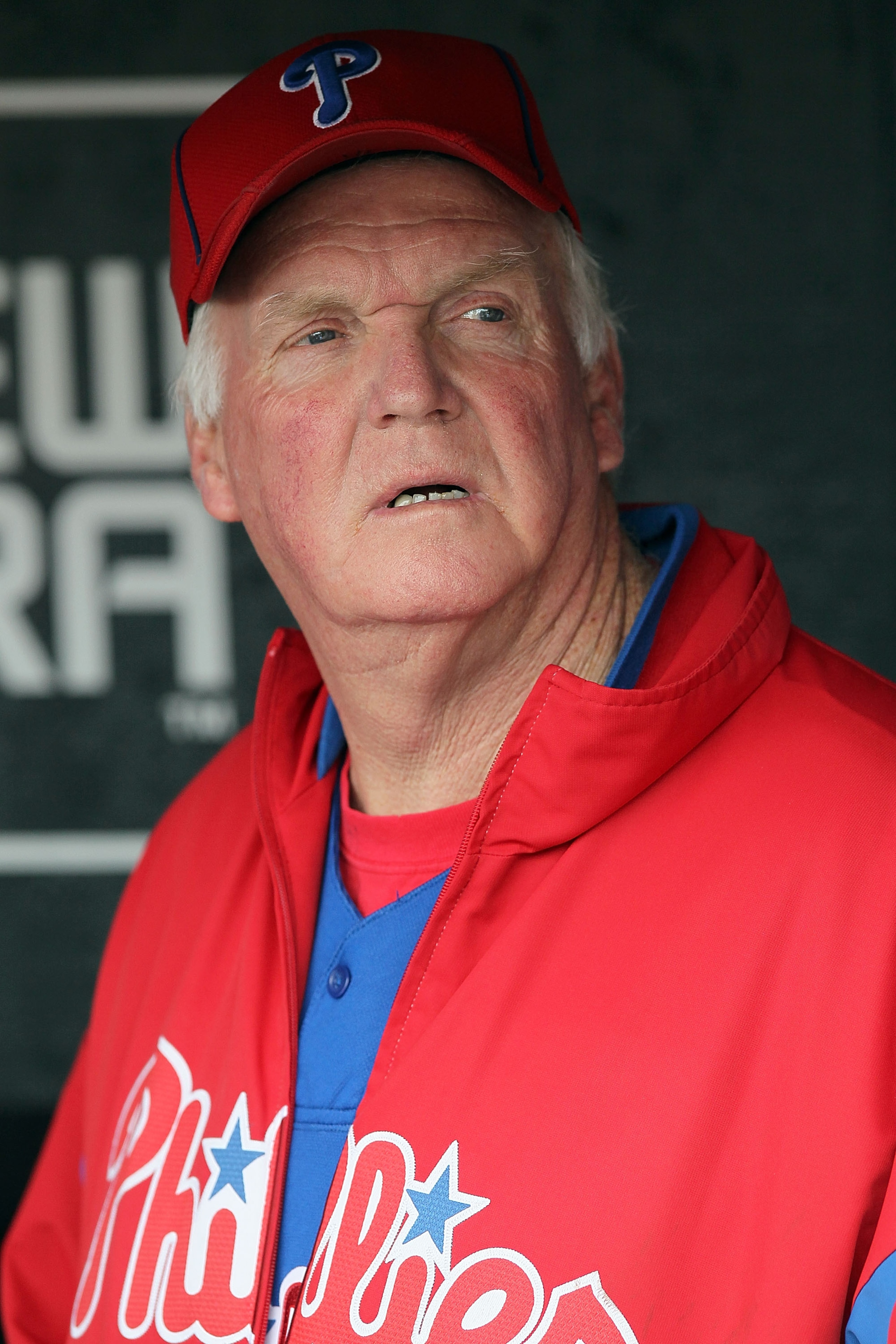
Since becoming the manager of the Phillies in 2005, Charlie Manuel has become one of the most beloved figures in Philadelphia sports, with his incredible baseball knowledge, love for hitting and Southern accent.
However, things weren't always rosy. Before the Phillies became one of the game's elite franchises, Manuel was the focus of scrutiny in Philadelphia.
That fades away with the prospect of winning, however, and win Manuel has. Since joining the Phillies in 2005, he's led the team to a record of 544-428, capturing four straight National League East titles, two National League pennants and a World Series championship.
Simply said, as the Atlanta Braves proved with their run in the '90s, every great team needs a great manager, and though his contract status is up in the air following this season, the Phillies have a great manager.
Who Stands in Their Way?
30 of 31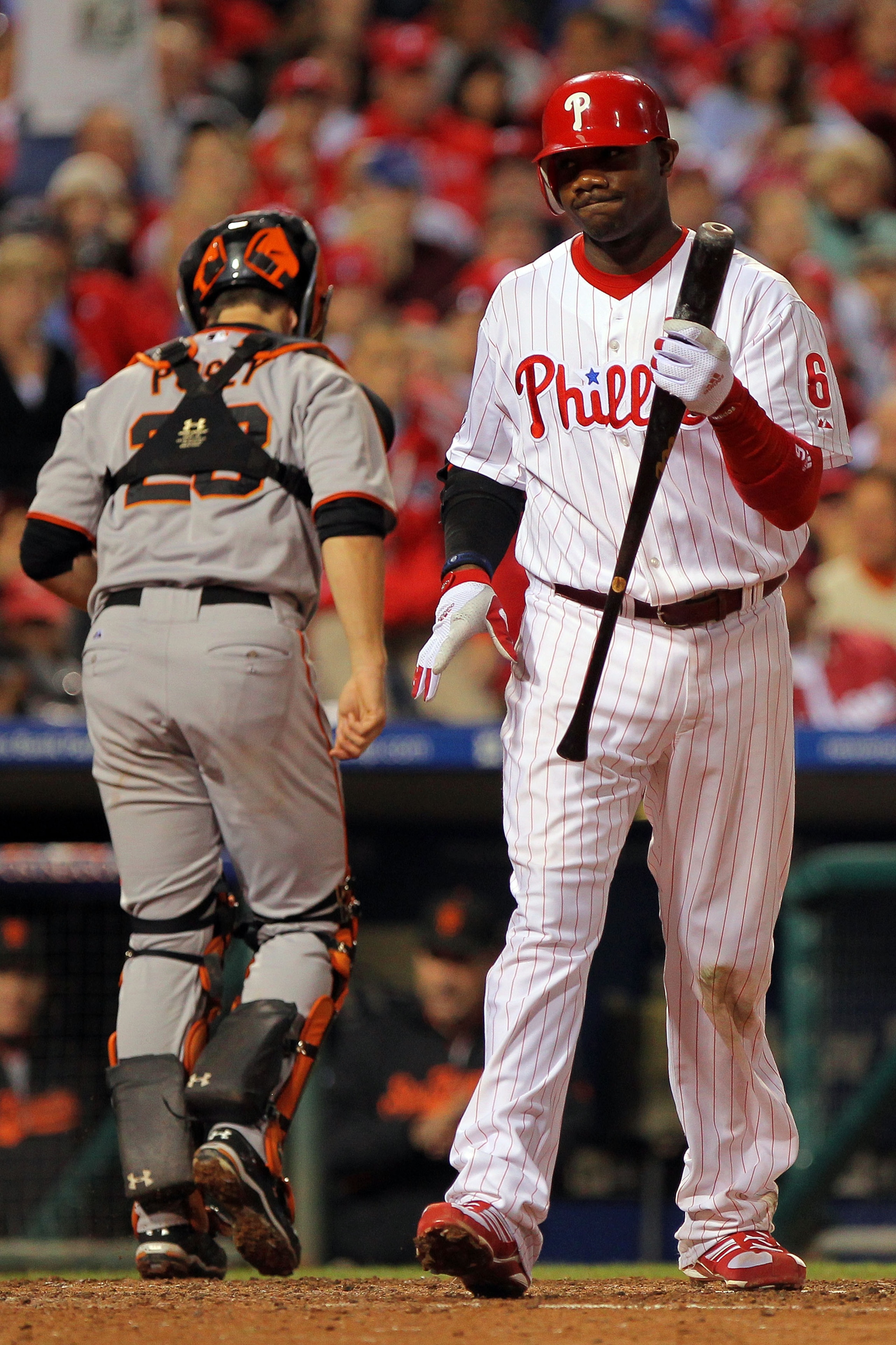
Looking around the rest of the National League, there aren't many teams that, on paper, compare to the Phillies. We'll do a quick division-by-division break down to uncover teams that could stand between the Phillies and a date with October destiny.
National League East
Looking at the NL East, there are a couple of teams that are easy to rule out. After moving into their new ballpark, the New York Mets have become a doormat in the East, and with Johan Santana shelved for the first half of the season, don't stand much of a chance.
The Washington Nationals, on the other hand, have made some major improvements this season, but they don't seem likely either. They simply don't have the pitching to contend.
In the NL East, the Phillies' major threats will come in the form of the Atlanta Braves and the dark-horse Florida Marlins. The Braves have added a solid bat to the middle of their order in former Marlin Dan Uggla, and have a deep rotation that could fly under the radar through the season.
Seeing them as the NL Wild Card once again would not be a surprise. The Marlins, on the other hand, have a young core of both offense and pitching, and with solid performances, could become contenders this season.
National League Central
In case you were wondering, I'm not going to do anything crazy here and predict that the Pittsburgh Pirates or Houston Astros will challenge for a division title. The Chicago Cubs aren't either.
The NL Central's division winner will more than likely be one of three very good teams—the Cincinnati Reds, St. Louis Cardinals or Milwaukee Brewers.
The Reds won the Central last year in rather surprising fashion, as the Cardinals were widely favored. However, the Reds' deep pitching staff and talented offense kept them in the running all season long, and they ended up running away with their division.
The Cardinals, who faced injuries all season long, should rebound as well, and with a strong top of the rotation and Albert Pujols, should contend this season as well.
The Brewers have made a couple of interesting offseason moves to place themselves into contention as well. Realizing that they already had a top-notch offense, they added a former Cy Young to the top of their rotation in Zack Greinke and a talented starter from the Toronto Blue Jays, Shaun Marcum.
With breakout pitcher Yovanni Gallardo already instilled, the Brewers could be a challenge come October.
National League West
Out West, things are a lot tighter. People will remember the magical run of the San Francisco Giants on the strength of their pitching, but can they carry that through an entire season?
One would believe so, but this year, they'll be challenged by the Los Angeles Dodgers, who have a very deep pitching staff, the San Diego Padres, who surprised baseball last season, the always-challenging Colorado Rockies, and the re-tooling Arizona Diamondbacks.
Every team in this division could be a contender.
In Closing...
31 of 31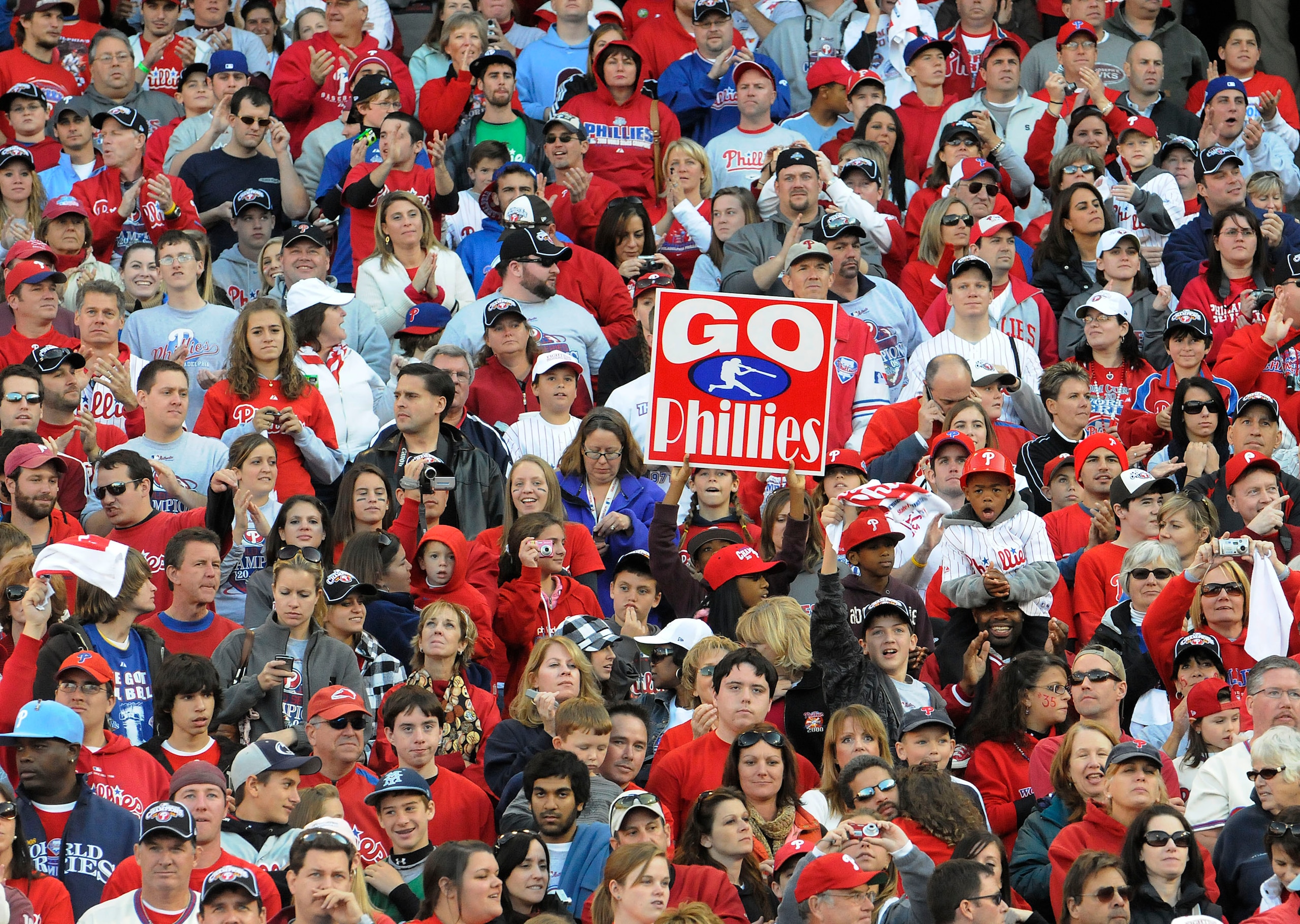
In the long run, it's hard not to pick the Phillies as early favorites, and Vegas agrees. With the rotation they've assembled, it's hard to imagine them winning less than 100 games.
However, as 2010 proved, anything could happen. They entered the season hailed as offensive juggernauts, and injuries slowed them down.
Now, however, they have an offense that is set to rebound and stay healthy. They have an incredible pitching staff, a great manager and a healthy bullpen. The Phillies will boast a fanbase that has helped them sell out every home game since the 2008 season.
With that in mind, it's hard to imagine anyone standing in their paths, so I'll leave you with one final bold prediction: In a season for the history books, the Phillies will finish in the top five in runs scored, boast four 20-game winners, and march through October to recapture the World Series championship before marching down Broad Street once again.


.jpg?w=2560 "Viral Rams Coach Vid 🖕")
.jpg?w=2560 "Injury-stricken Seahawks signing veteran RB")
.jpg?w=2560 "Grading WWE Raw 🔠")
.jpg?w=2560 "2 NFL Officials Suspended")

.jpg?w=2560 "Mahomes' Wife Trolls Kubiak 💀")

