
Baltimore Orioles: The Best and Worst of the Farm System
Despite it's relative weakness in terms of depth (Baseball America recently ranked Baltimore's system 21st), the Orioles still have one of the most intriguing farm systems in Major League Baseball.
Aside from a few standouts (Zach Britton and Manny Machado), they don't have much elite talent and very few polished prospects.
They've got a good smattering of high-upside guys (Xavier Avery and Bobby Bundy) and some very safe prospects (Matt Angle and Wynn Pelzer), but what they have the most of is guys who we still have no idea about. The kind of player who has a career-year one season, and the falls back to earth in a dramatic fashion (Caleb Joseph).
Or, the kind of guy who was drafted with huge promise, but has failed to make any sort of impact because he's been injured the whole time (Mychal Givens).
And then, there's a wide array of characters who have shown brilliant flashes, but still have a long ways to go to establish themselves as guys who have a long-term future in Baltimore (Joe Mahoney, Ronnie Welty, L.J. Hoes, Tyler Townsend, Connor Narron, etc.).
So begins an examination of Baltimore's farm system, what it looks like heading into the 2011 season, who the best (and worst) talent is, and who does what better than the rest.
Enjoy!
Best Position Prospect
1 of 28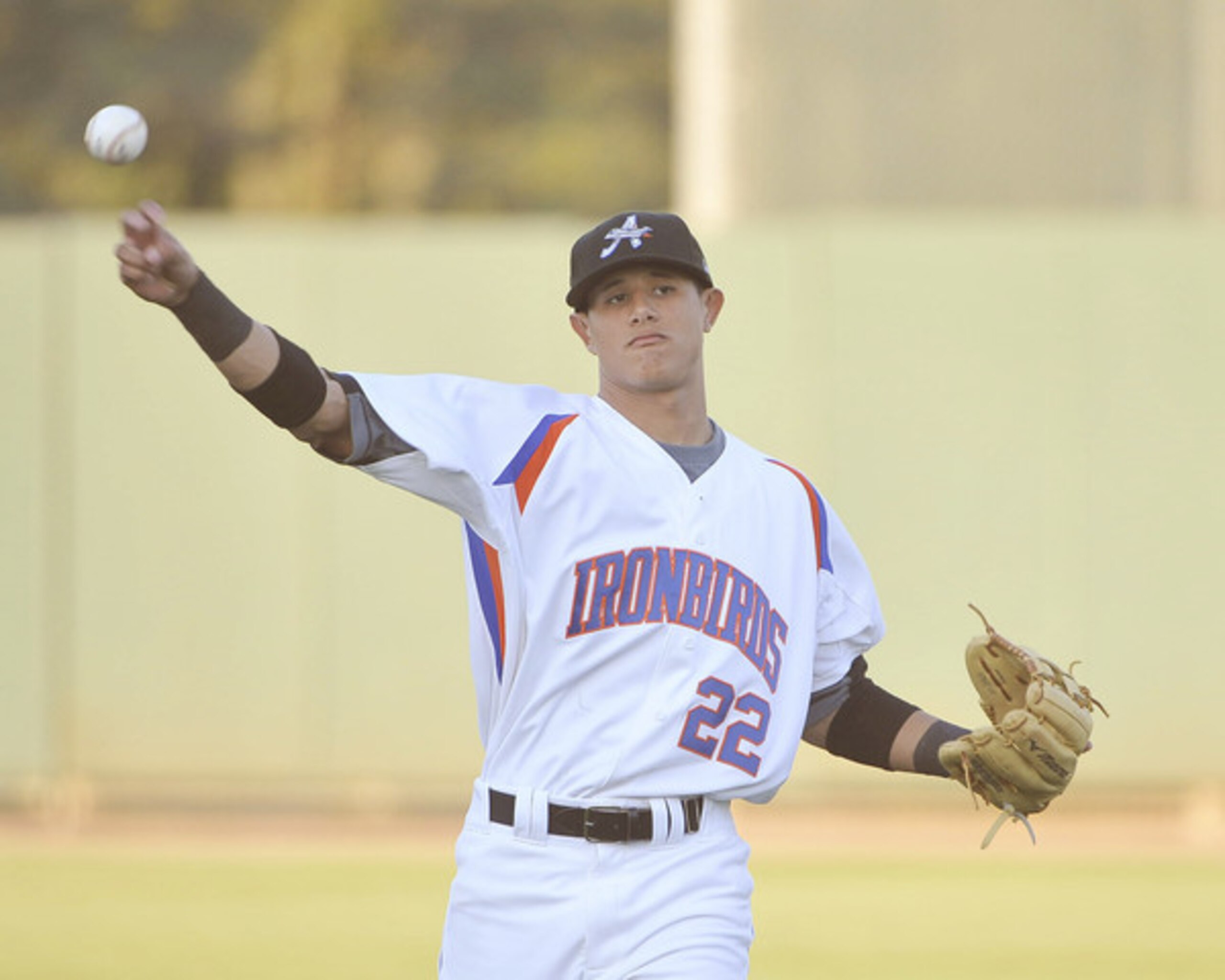
1) Manny Machado, SS
Machado's skills are far better than just about every other player in the O's system. It makes perfect sense, considering he was one of three "elite" players in last year's draft. Machado has a great bat, a chance for future power, decent speed and is above-average in the field. There is no other position prospect in the O's system that can even come close to Machado.
2) Xavier Avery, OF
By far the "toolsiest" player in the O's system, Avery does a little bit of everything. His best tool is his speed, which he used to steal massive amounts of bases, and track down just about everything in centerfield. At the plate, he's raw, but that's to be expected considering he was more of a football prospect before he was drafted. He's made some incredible improvements at the plate, but will never have the power that many expected out of him when they tabbed him as the "next Carl Crawford."
3) L.J. Hoes, 2B
A fantastic athlete and two-way player in high-school, Hoes has carried over many of those skills as a professional. He is one of the best hitters in the system, showing great bat speed and has the plate discipline to rival any other O's minor-leaguer. In the field, he's still learning the nuances of playing the infield, but he made dramatic improvements over the past two seasons. Hoes appears to be the odds-on favorite to replace Brian Roberts when the time comes.
Best Starting Pitching Prospect
2 of 28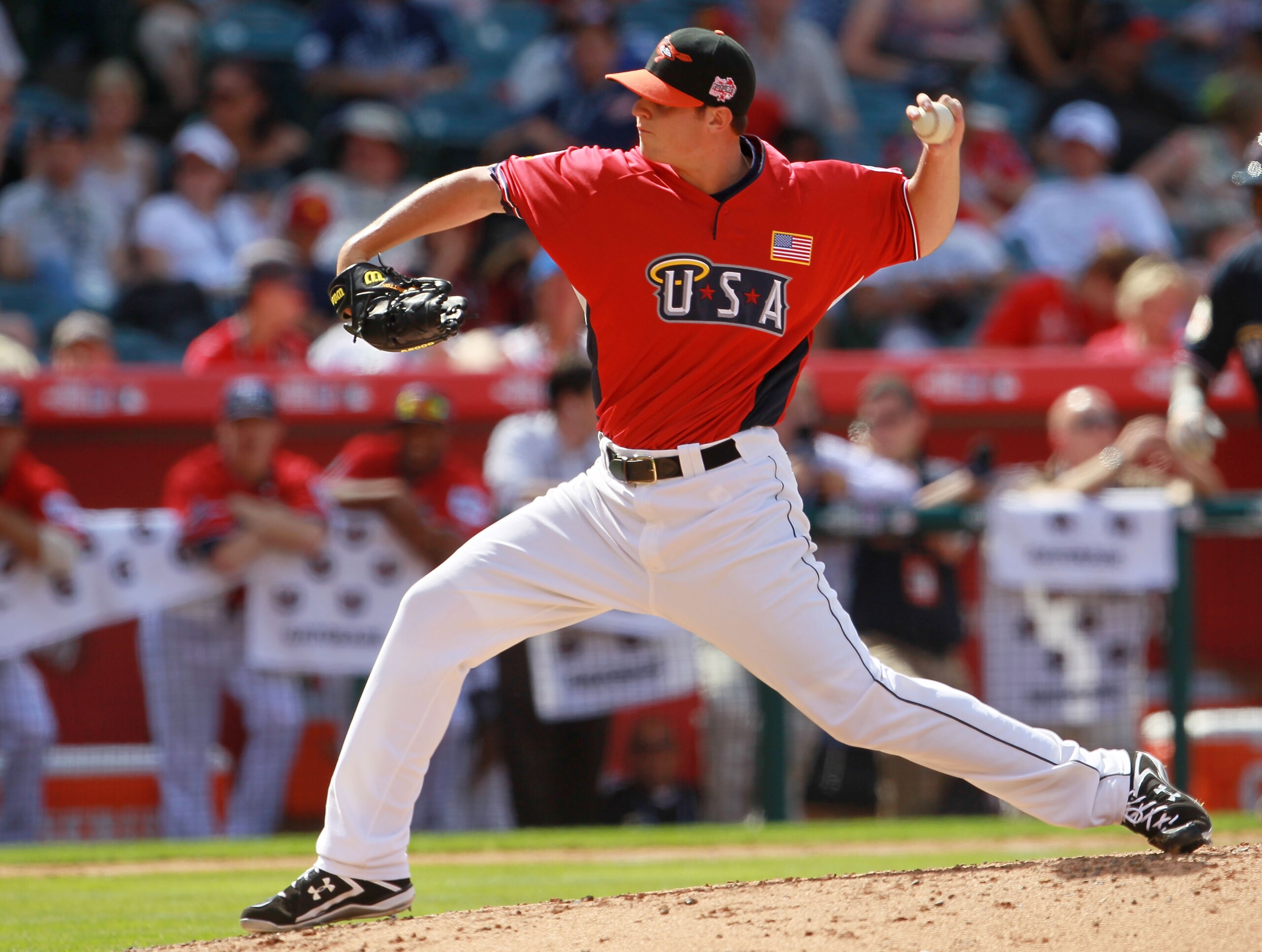
1) Zach Britton, LHP
Britton has slowly climbed the minor league ladder and has emerged in Triple-A as one of the finest pitching prospects in all of the minors. His fastball has improved and added velocity as he's climbed each level and his sinker is regarded as the best among prospects. He adds a third pitch, a changeup that he learned from current Oriole Brian Matusz, to his arsenal that is easily the best among O's farmhands. Britton should get the chance to make his big-league debut sometime in 2011.
2) Daniel Klein, RHP
It might seem odd to some that the O's second-best starting pitching prospect was a shutdown closer in college, but Klein has always had the repertoire and the stamina to be a starter. He missed all of 2009 with an injury and when he returned to UCLA, they made him a reliever to keep his innings down. He just happened to pitch out of his mind. As a pro, he'll return to starting, where he features four pitches, all at least average and a few with the potential to be above-average.
3) Ryan Berry, RHP
Once upon a time, Berry was considered a first-round talent. Some doubts about his mechanics and some minor injuries bumped him to the ninth-round, where the O's scooped him up. He has returned to the solid pitcher scouts thought he would be, with at least three average pitches, including a low 90s fastball, and a potential above-average curveball.
Best Relief Pitching Prospect
3 of 28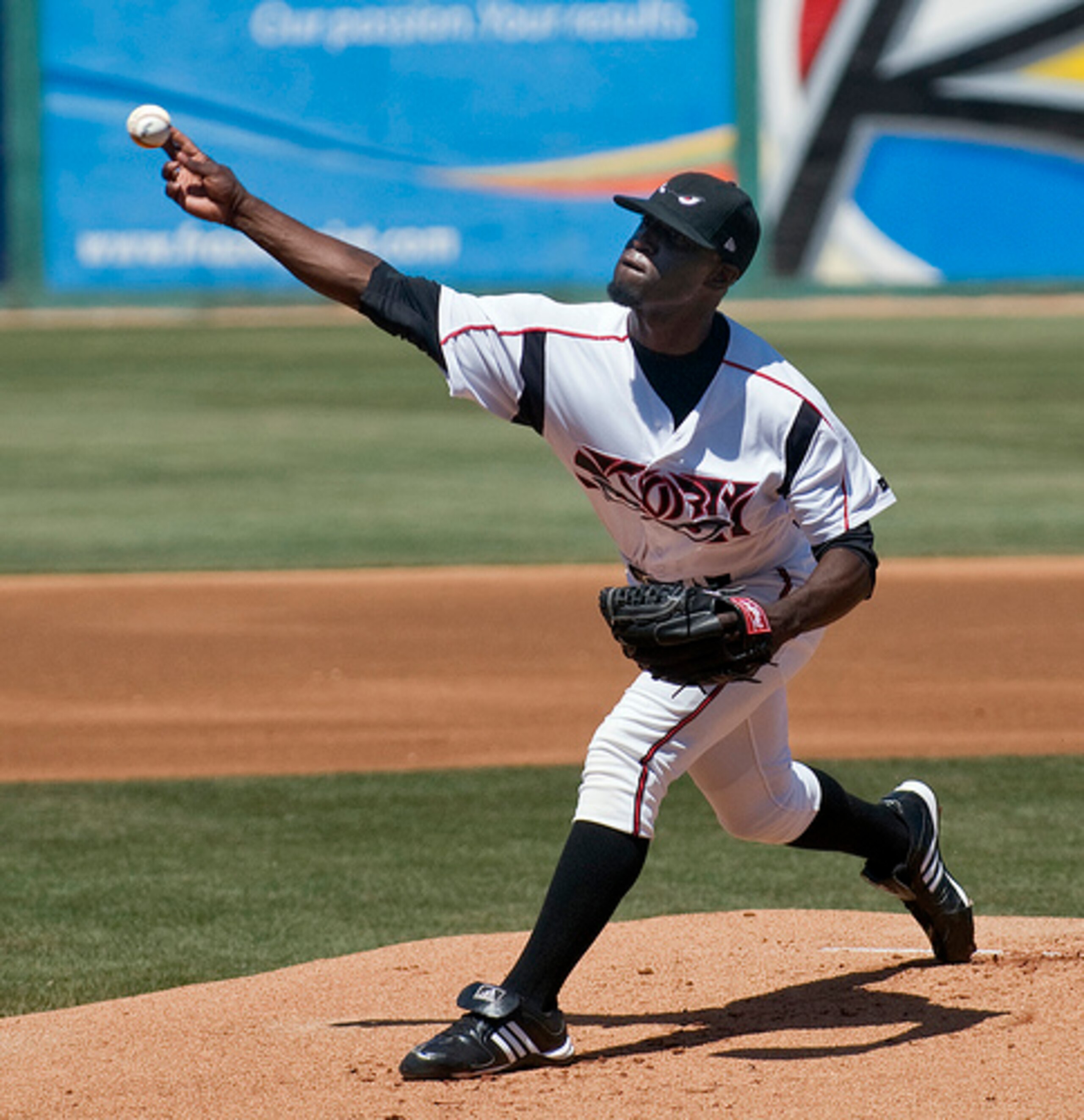
1) Wynn Pelzer, RHP
The hulking right-hander from San Diego in the Miguel Tejada trade, Pelzer quickly established himself as the O's top relief prospect, tossing bullets in the 94-97 mph range. A one-time starter, Pelzer has the stuff and the mentality that profile better as a reliever and since he pitched pretty well out of the bullpen, it looks like the O's are comfortable leaving him there.
2) Brandon Cooney, RHP
My pick for O's closer of the future, Cooney continued his ascension through the ranks in 2010, making stops at High-A Frederick and Double-A Bowie. He's now 25-years old, so it's now or never for Cooney. He should be given every chance to start the season in Triple-A and should spend a good amount of the year at Norfolk, even if he's sent back to Double-A to start the season.
3) Luis Lebron, RHP
Lebron didn't pitch at all in 2010, but still is the O's third-best relief prospect, showing how lacking they are in the relief pitching area. He features a mid-90s fastball that looked Major League ready before he was shut down and had to have Tommy John surgery. He is throwing off a mound now and is actually in Sarasota for spring training, but he isn't likely to pitch again in the minors until the All-Star break.


Best Hitter (for Average)
4 of 28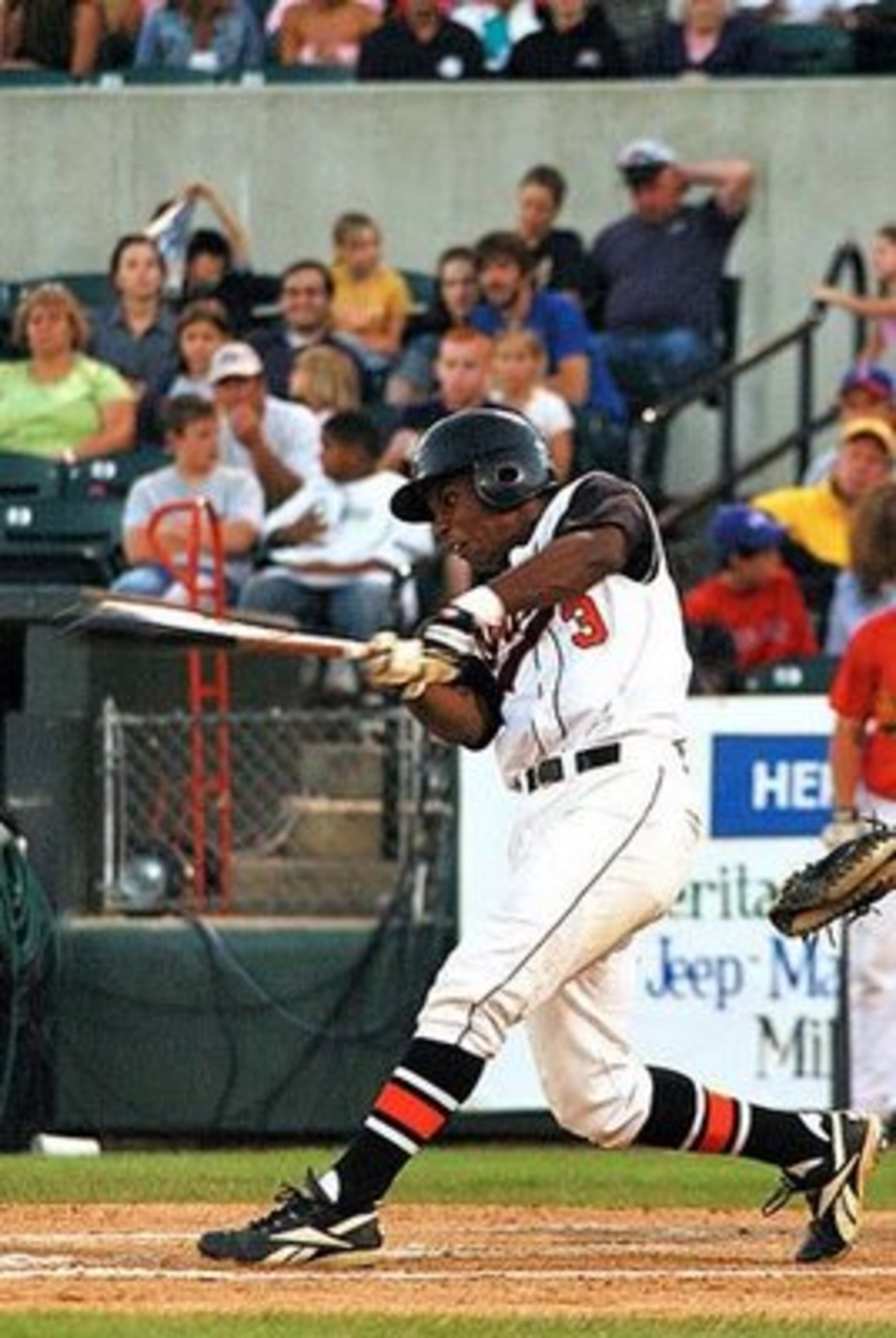
1) L.J. Hoes, 2B
Hoes is only a .280 career hitter, but he's only had 980 minor league at-bats. For some of those, he's been dealing with nagging injuries, but when he's healthy and swinging the bat well, he's as good a bet to hit .300 at the big-league level as the O's have in their system. He also boasts an excellent eye at the plate and is great at waiting for pitches he knows he can hit.
2) Manny Machado, SS
Machado was only able to squeeze in 36 at-bats after signing just prior to the signing deadline last August. Still, those were enough to prove he's capable of hitting for a very high average with wood bats. He hit .345 in 32 at-bats for Aberdeen and thanks to his advanced bat, he should start 2011 in Low-A ball.
3) Tyler Townsend, 1B
After a rough debut (.143) in 2009, Townsend had a great bounce-back season in 2010, until he was sidelined by numerous injuries, cutting his playing time to only 52 games. In those contests, he proved as good as advertised (one of the top college bats coming out of 2009 draft), hitting .325 over three levels, including a .342 average in 30 contests for Low-A Delmarva.
Worst Hitter (for Average)
5 of 28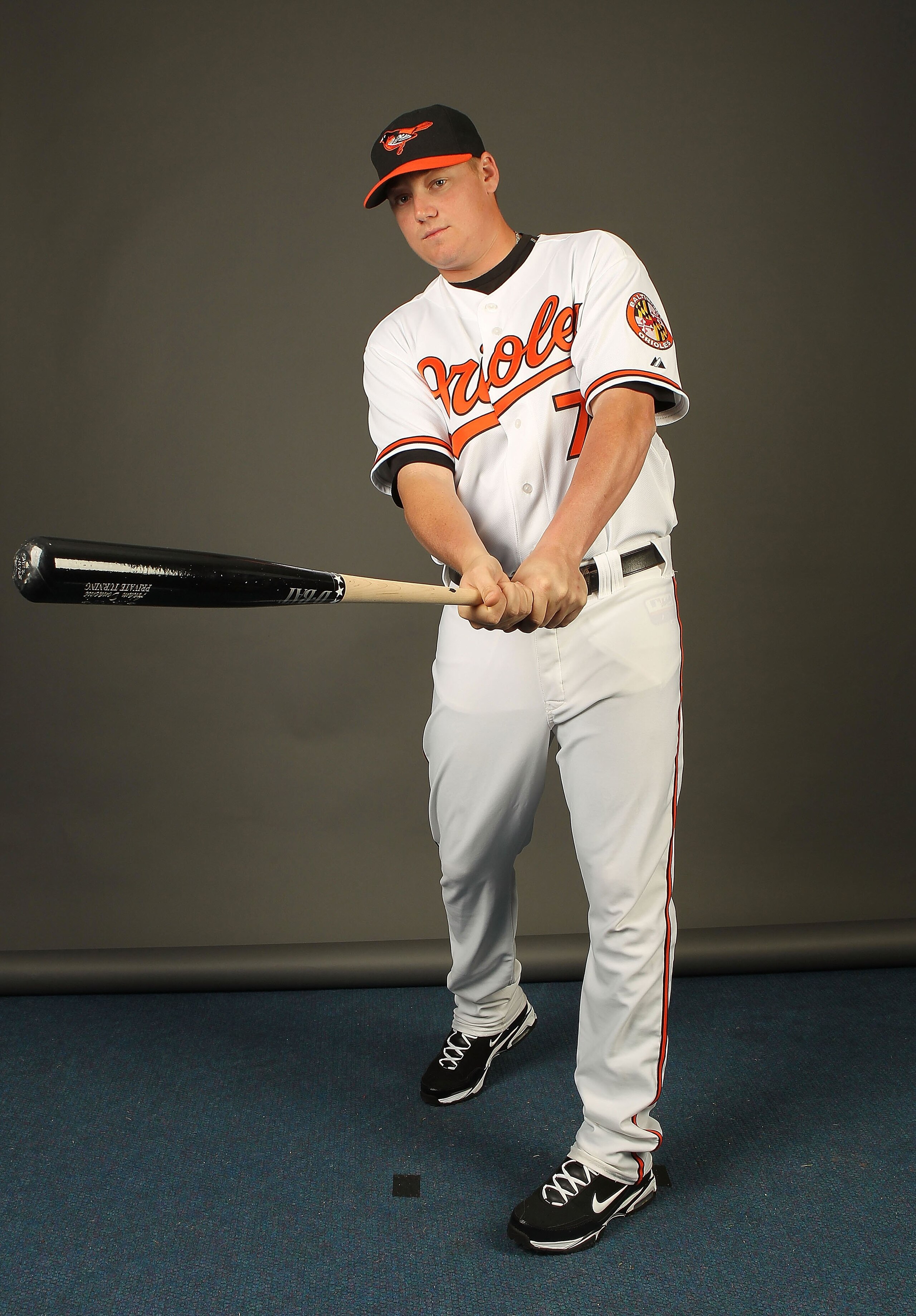
1) Adam Donachie, C
It seems like only yesterday that O's fans were elated to snatch up Donachie in the Rule V draft in 2009. A former second-round pick, Donachie has only hit .227 in nine minor league seasons. His best year came in 2005, when he hit .294 as a 21-year old in High-A ball. In his other eight seasons, he's posted averages under the Mendoza line twice (2004 and 2010) and never hit above .250.
2) Luis Bernardo, C
Bernardo is only 23-years old, but has been with the Orioles since he was 18-years old. While his career got off to a great start in 2006 in the DSL (.304), he has yet to post an average above .225. Twice, he's hit below .200 and last year he was at his worst, hitting .182 in 231 at-bats.
3) Pedro Florimon Jr., SS
Florimon is actually a .241 career hitter, but has been terrible when he's been playing against players his own age or slightly older. He struggled mightily to keep his average above .200 in 37 games at Double-A in 2010, before being demoted back to High-A as a 23-year old. His bat picked back up again (.288 in 62 games), but it's clear that Florimon's bat will only carry him as high as High-A.
Best Hitter (for Power)
6 of 28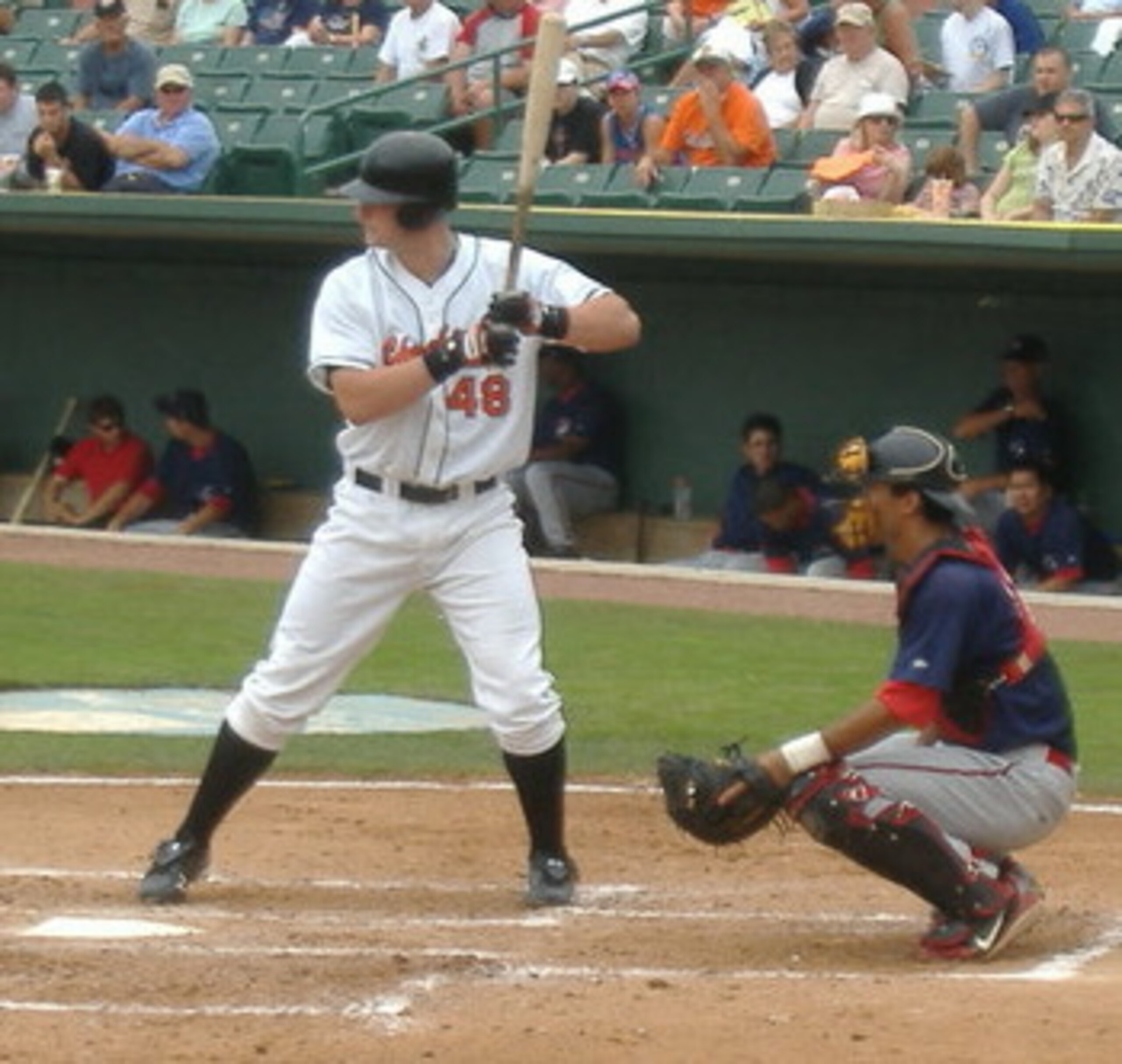
1) Joe Mahoney, 1B/OF
Mahoney was a serious power threat in college at Richmond, where he launched 17 bombs in 2007 alone. He initially had trouble carrying over the skill to the pros, hitting only 14 in his first 594 at-bats. Since then, Mahoney has made some adjustments to his swing, and recaptured some of his prodigious power. Last year, he hit nine apiece for High-A Frederick and Double-A Bowie, giving him his first double-digit homer season. Look for more in 2011.
2) Brandon Waring, 3B/1B
Waring has some of the best power anywhere, not just in the O's system, but he loses out on the top spot for being 100% hit-or-miss. He racks up strikeouts at an ungodly pace (179 in 2010!), almost negating the four consecutive 20+ homer seasons he has to his name. Thanks to his approach, Waring will most likely never make it in the big-leagues.
3) Tyler Townsend, 1B
Townsend wasn't just a high-average hitter in college. In fact, he hit 24 homers (to go with his .434 average) during his junior year at Florida International. Townsend is always given the Mark Grace comparison, but the belief is that he'll hit for more power than Grace did. FYI, Grace hit 173 big-league homers, which is more than any other current Oriole, save for Vlad Guerrero.
Worst Hitter (for Power)
7 of 28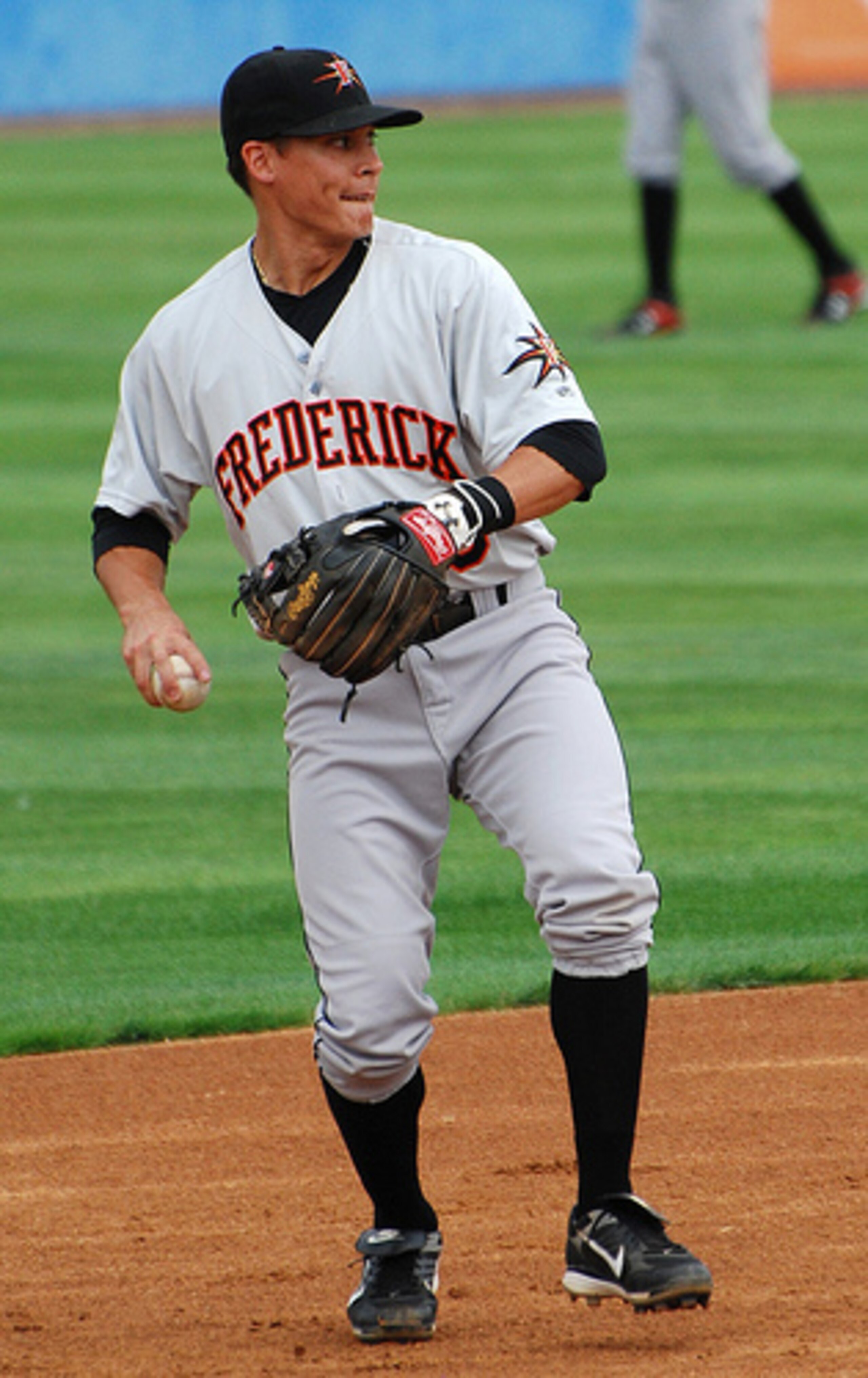
1) Greg Miclat, SS
Miclat wasn't thought of as a power guy coming out of the 2008 draft, but the fact that he has only two career homers in over 1,000 plate appearances is just sick. He didn't hit any until this past season, which means that he could finally be tapping into his 2-3 homer per season potential. Further evidence of his lack of power is manifested in his 39 career doubles in 244 games.
2) Kyle Hudson, OF
Hailing from the same draft that produced fellow powerless prospect Xavier Avery, Hudson has somehow managed to hit exactly zero home runs in 971 at-bats with the Orioles. Hudson isn't a high-power guy anyways, but he's a good enough hitter to hit at least one out in the three years he's been a part of the O's system.
3) Matt Angle, OF
Angle does just about everything else so well that his missing power doesn't really dampen his prospects, which is a good thing, because the 25-year old outfielder has only seven career bombs. His 2008 season, his second with the Birds, produced four of those. Still, the lack of power hasn't affected Angle much. He's still a career .288 hitter with a great batting eye and the best speed in the system.
Best Plate Discipline
8 of 28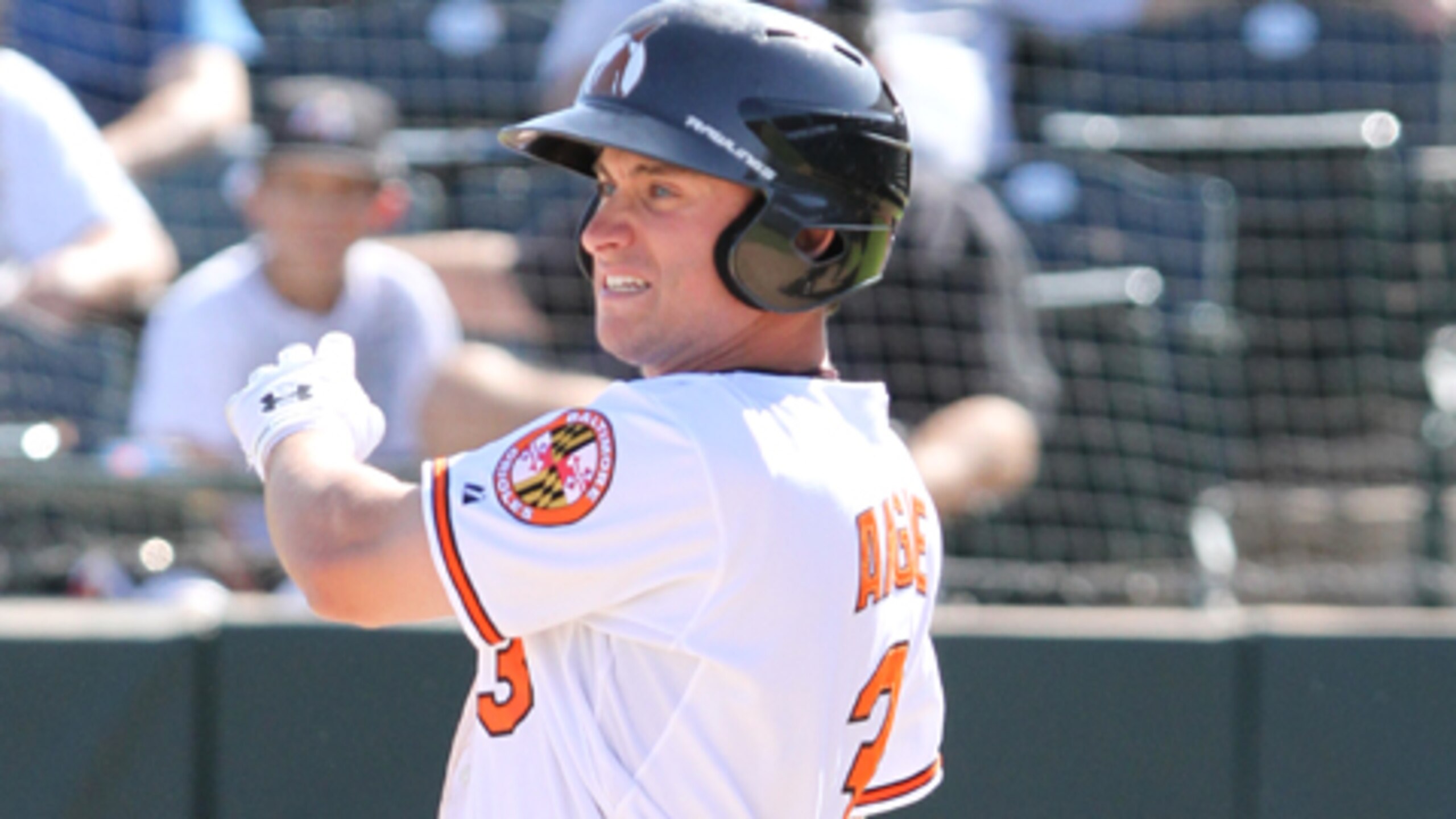
1) Matt Angle, OF
Since day one with the Orioles, Angle has consistently ranked among the system leaders in on-base percentage and walks. In his first season, the speedy centerfielder walked 47 times and struck out 40. It's been more of the same since that 2007 season. For his career, he has 228 walks and 262 strikeouts.
2) Brian Conley, OF
The past few seasons, and last year especially, Conley has been the poster boy for great plate discipline. He had 74 walks and 78 strikeouts last season, and ranked near the top of the South Atlantic League in on-base percentage all season long. The result...a career on-base percentage of nearly .400, while his career batting average hovers around .250.
3) L.J. Hoes, 2B
During his three years with the Orioles, Hoes has consistently shown a great batting eye and some of the best plate discipline in the system. Eliminate a tough 2009 season (23 walks, 80 strikeouts) and Hoes has a career BB-to-K rate of 85-to-94.
Worst Plate Discipline
9 of 28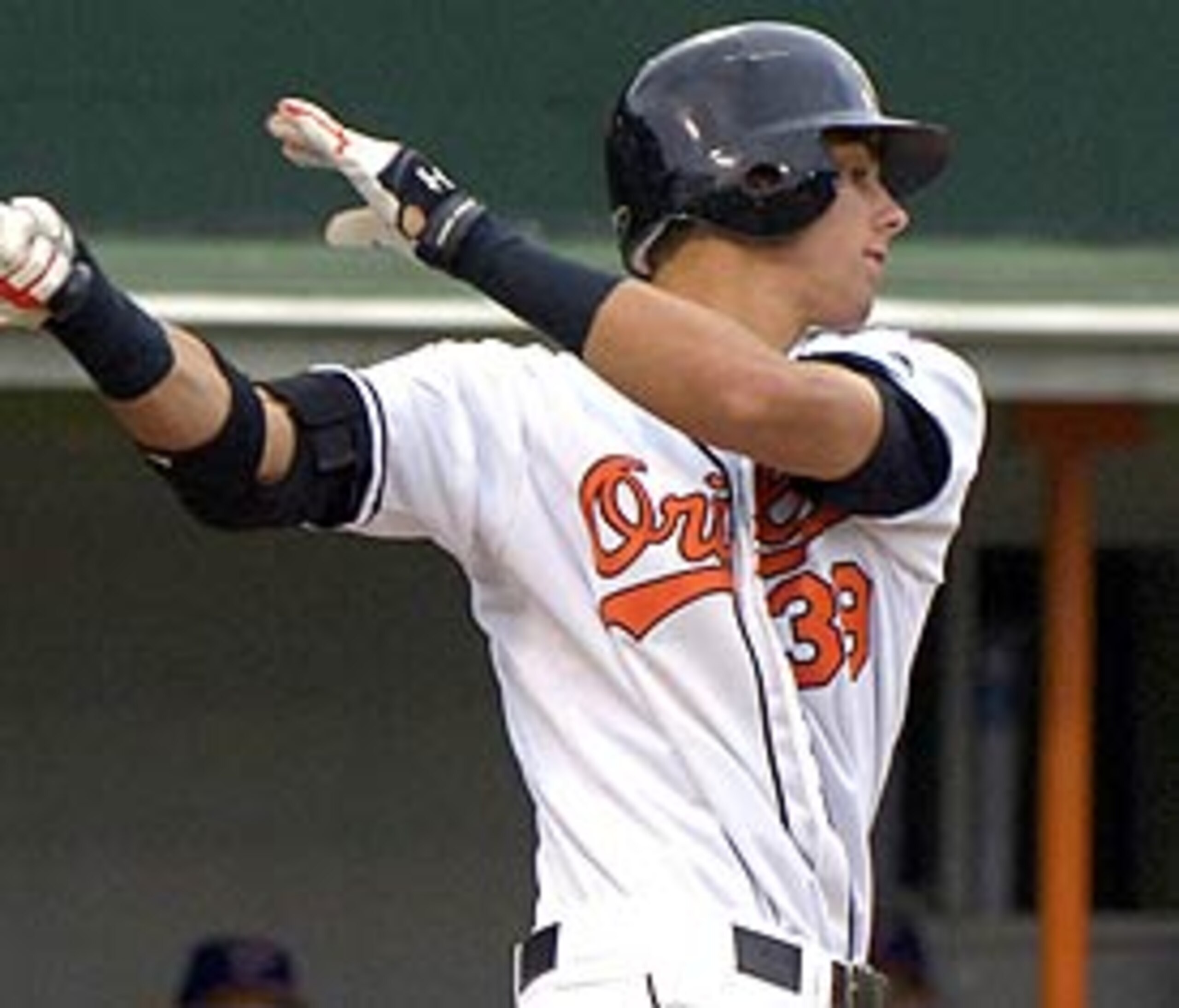
1) Billy Rowell, 3B
Only once in Rowell's five-year pro career has he failed to strike out more than 100 times, a shortened debut at short-season Aberdeen. Even then, he struck out 59 times in less than 200 at-bats, signaling what was to come. For his career, Rowell has 542 whiffs in 1,781 at-bats, meaning nearly a third of his plate appearances result in a strikeout. Last season, despite making great strides at the plate (in his third consecutive year in High-A ball), Rowell whiffed a career-high 153 times.
2) Brandon Waring, 3B/1B
Waring's troubles with strikeouts date back to his days with the Reds. In fact, in 2008, he struck out 156 times in 441 at-bats for Low-A Dayton. Since coming to Baltimore, he's been just as terrible. In 2010, he was at his worst, and maybe the worst of any O's farmhand ever, striking out 179 times in 472 at-bats. That's almost 40% of his at-bats. Luckily, Waring offers nearly amazing raw power, that has allowed him to hit at least 20 homers in each of his four pro seasons.
3) Ronnie Welty, OF
While Welty offers a hearth of other tools, including a strong arm and some surprising pop, one thing he doesn't do is command his strike zone well. He's struck out a ridiculous 328 times in 1,142 career at-bats, including 159 last season, a number that would have drawn grave criticism, if Brandon Waring hadn't struck out 20 more times. The season prior, Welty struck out 120 times.
Fastest Runner
10 of 28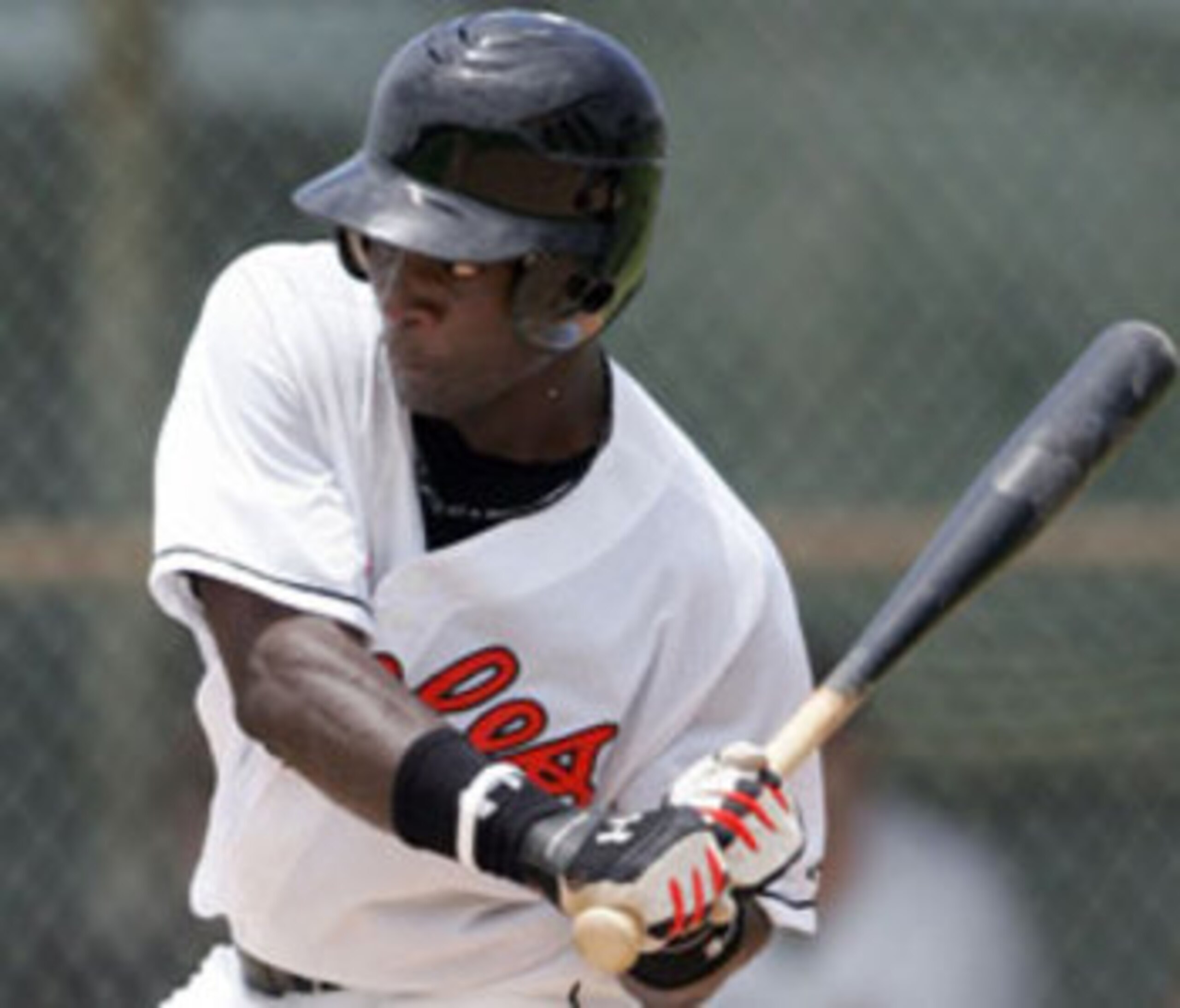
1) Xavier Avery, OF
One of the fastest runners in all the minor leagues, Avery is just finally starting to get a good handle on utilizing his speed as he enters his fourth season with the O's. Last year he set a career-high with 38 steals. He was caught stealing 14 times, also a career-high, but it looks like he's finally getting a handle on when and how to steal, as well as learning how to read pitchers better. Avery has 40+ steal potential in the Majors.
2) Glynn Davis, OF
Davis was the fastest player that the O's drafted last season, and very well could be faster on the basepaths than Avery. However, he hasn't had the pro experience that Avery has, and he's still pretty raw in terms of running ability. If he managed to make a full-season club in 2011, he could steal 30+ bases, and if he gets stuck in short-season ball, he's a threat to lead whichever league he plays in.
3) Matt Angle, OF
Angle is arguably the Orioles best base-stealer. He doesn't have the best speed or the quickest jump, but he's the most polished at his craft. Last season, Angle set a career-low with only 29 steals. To compare, playing in short-season ball, he had 34 in 2007, playing in 40 fewer games that he did last year. More impressive is that Angle doesn't get caught stealing nearly as often as Angle or any of the system's other burners.
Slowest Runner
11 of 28
1) Brandon Waring, 3B/1B
The owner of seven career stolen bases, Waring has some of the worst speed in the entire Orioles system. And you can even extend that to bat speed if you'd like, since Waring is a sure-fire bet to strike out at least 150 times each season. Waring is a big guy (6-4, 195 lbs), but nowhere near as huge as Matt Wieters or Joe Mahoney, each of whom are much better runners than they get credit for.
2) Caleb Joseph, C
Another athletic looking player, Joseph has done a little bit of everything so far in his three-year career with the O's, except for stealing bases that is. At six-foot-three, 180 pounds you might think that he would offer much more speed than the average catcher who is usually a bit more bulky than Joseph, but he's got only five career stolen bases, and he had only one last year.
3) Brandon Snyder, 1B
First-basemen aren't usually stolen base machines, and Snyder certainly fits the bill of a first-baseman. He has 19 career steals and last year actually posted the highest number (four) he's had since his debut season back in 2005. Still, at a bulky 6-foot-2 and 215 pounds, steals will never be a part of Snyder's game at any level.
Best Athlete
12 of 28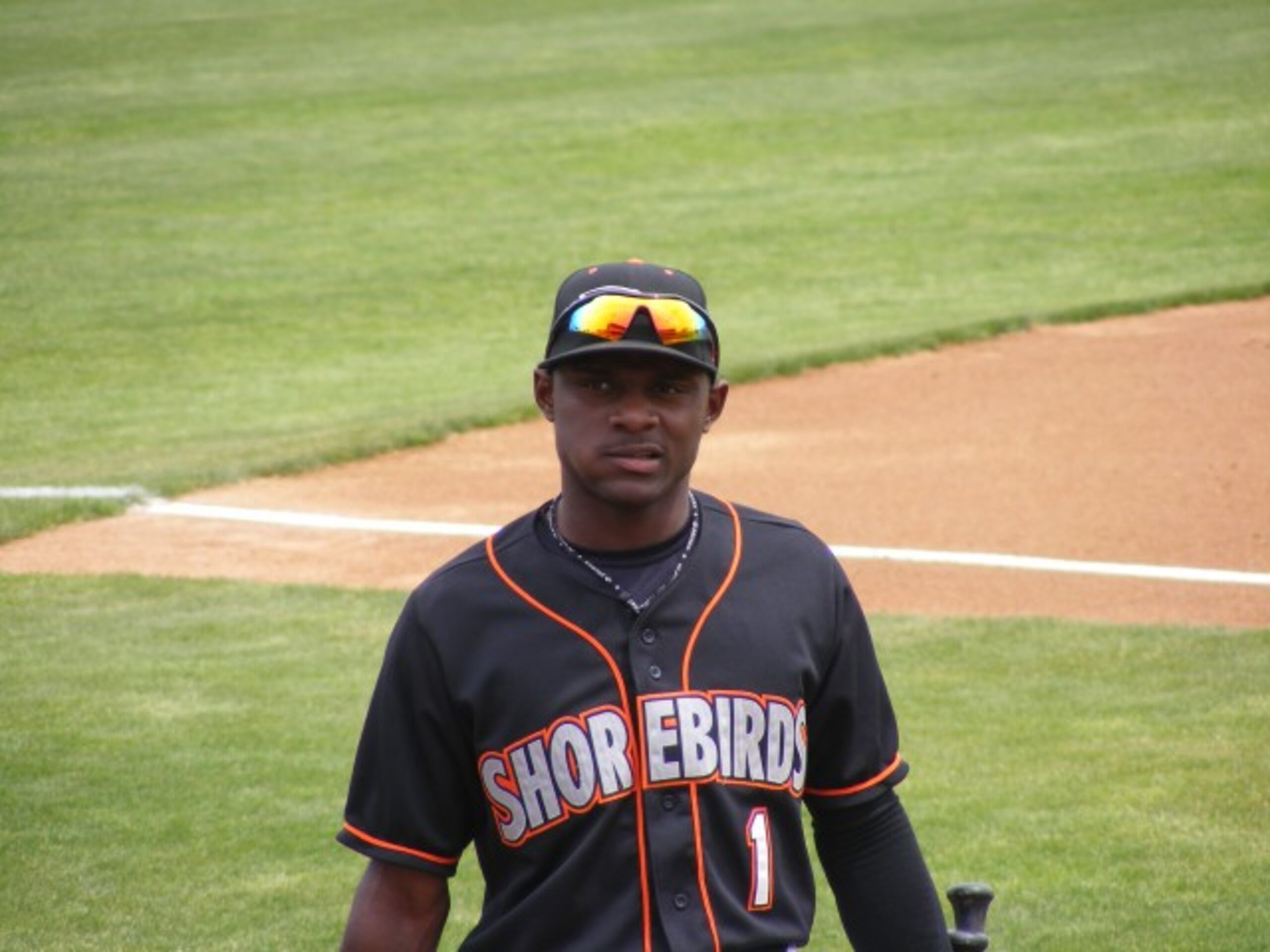
1) Xavier Avery, OF
A former two-sport star who had a scholarship to play running back at Georgia, Xavier Avery is easily the best athlete the Orioles have in their system. He has incredible quickness, whether it's at the plate or in the field, and has well above-average speed. He can play any of the three outfield positions.
2) Trent Mummey, OF
Often compared to Lenny Dykstra, Mummey is one of the newest signs by the Orioles, via the fourth-round of the 2010 draft. Mummey carried over the momentum he generated in a sensational season for Auburn, and played incredibly well. He has great speed and has an outside chance to hit for above-average power. Mummey is as athletic as they come.
3) Kyle Hudson, OF
A former standout on the gridiron at Illinois, where he played wide-receiver, Hudson has given up his football dreams for the grind of the minor leagues. Like Avery and Mummey, Hudson is athletic enough to play all three outfield positions and he too has excellent speed.
Worst Athlete
13 of 28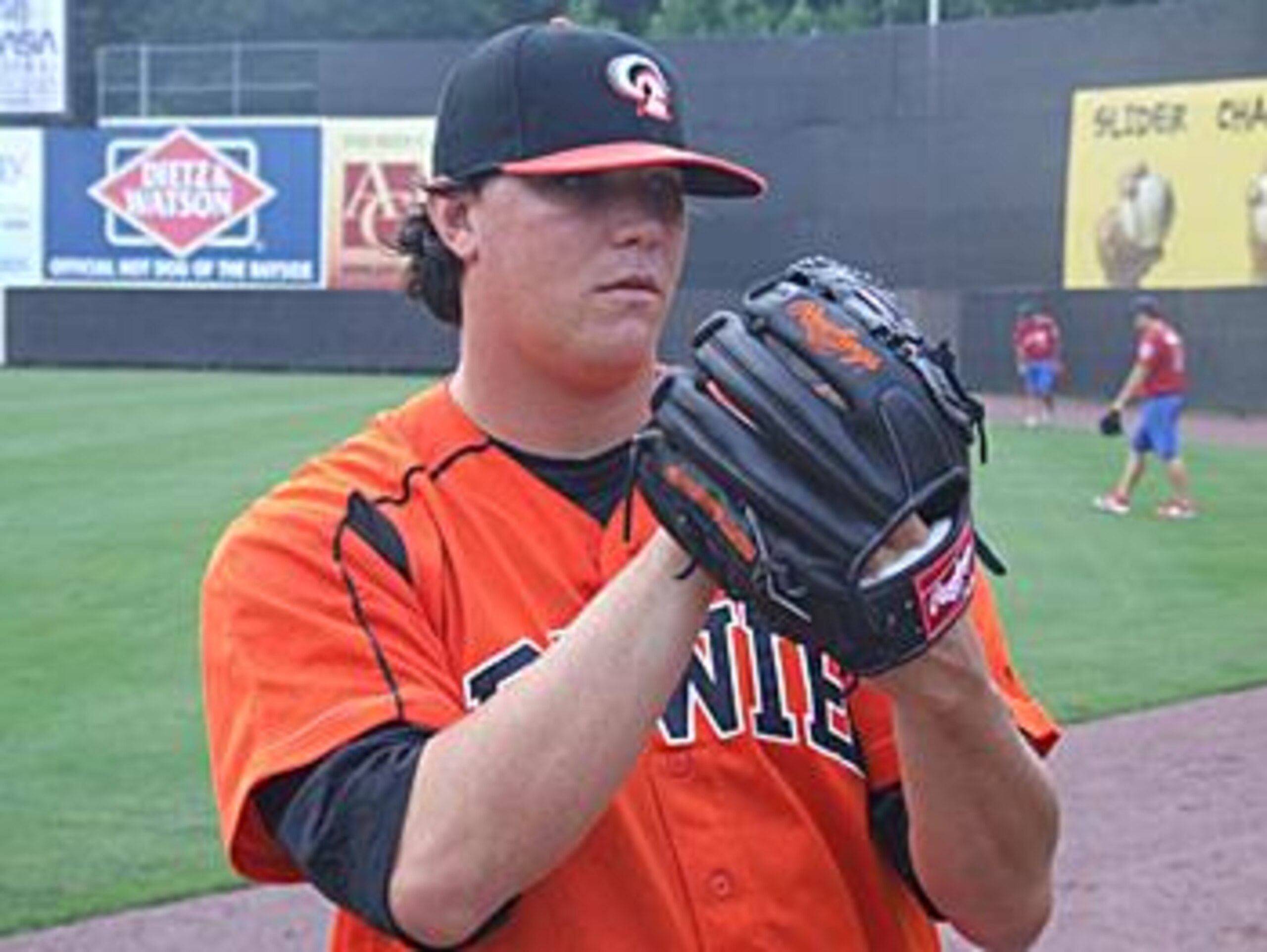
1) Brandon Cooney, RHP
All you have to do is look at the photo to know that Cooney isn't the most athletic member of the O's family. Of course, being six-foot-six and weighing 240 pounds doesn't help. Cooney has struggled with his conditioning since joining the O's back in 2007, but his lack of athleticism hasn't hurt him as a shutdown pitcher out of the bullpen, where he's racked up 40 career saves and a 3.17 ERA.
2) Matt Hobgood, RHP
It's unfortunate to have to pick on the pitchers, but these two guys are a special case. Hobgood was one of the top high-school pitchers available in the 2009 draft, and the Orioles snatched him up earlier than many thought he was worthy to be. He was portly then, but after his debut he failed to make any real progress conditioning-wise. He suffered the consequences of his poor preparation last season, but looks to be in much better shape in 2011.
3) David Anderson, 1B
Anderson had a big season in 2010, hitting 12 homers in 60 games for short-season Aberdeen. However, he was 22-years old, tearing apart much younger pitchers. Defensively, Anderson is limited to first-base due to his below average athleticism, hurt in part by his Cooney-esque 6-foot-6, 240 pound frame.
Best Defensive Player
14 of 28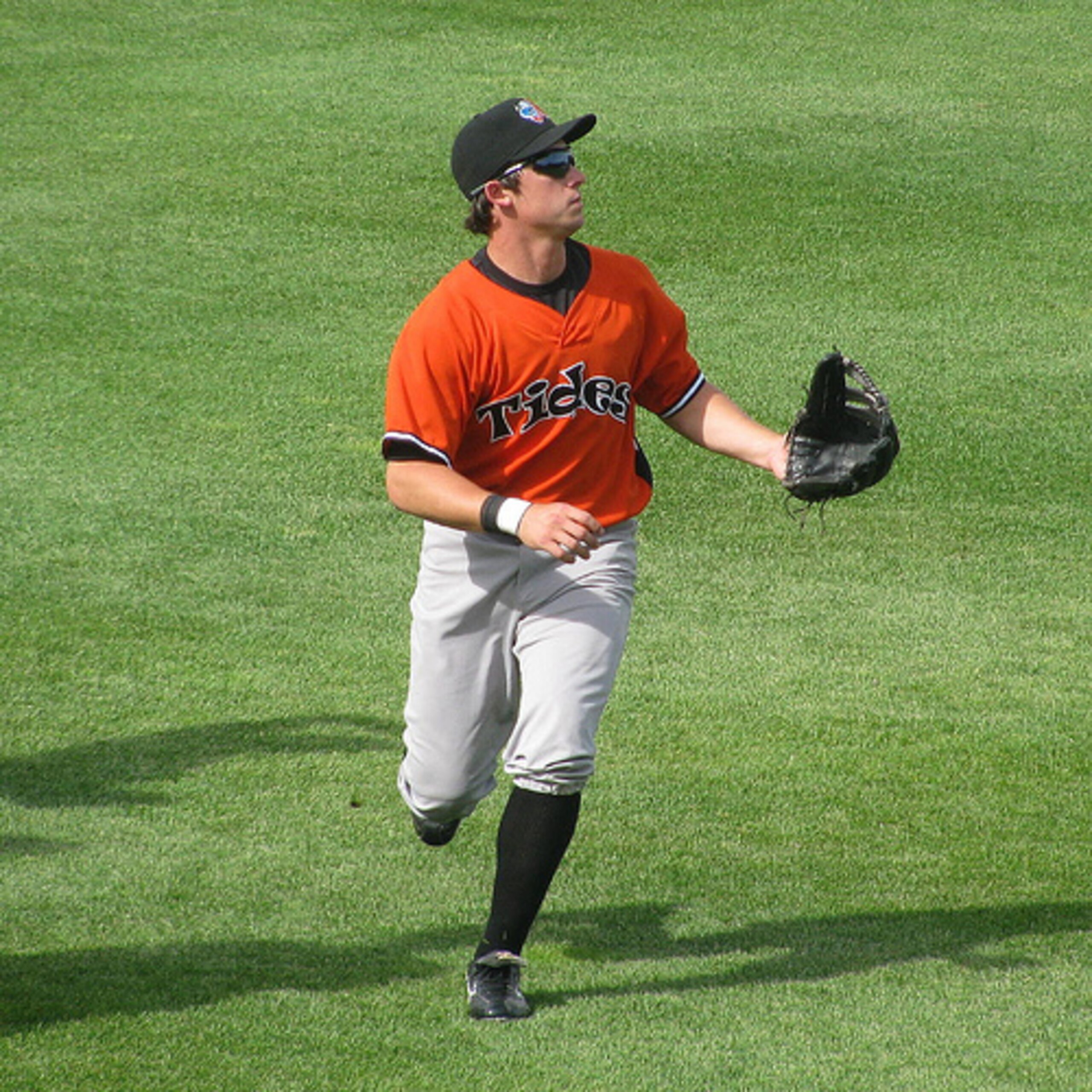
1) Matt Angle, OF
Angle is easily the best defender in the O's system, either infielder or outfielder. He's a seasoned centerfielder, who takes great routes, has the speed to catch up to deep fly-balls and has a cannon for an arm, despite his diminutive frame. Angle should have at least reach the big-leagues and stick on the basis of his defense.
2) Manny Machado, SS
One of Machado's many tools is above-average defensive ability, manifested in his above-average footwork and his rocket arm. If the O's ever needed to move him off shortstop, most likely to third-base, Machado would have more than enough arm for the position. But, for the time being, and likely in the future, Machado has all the tools to stick at short, the most demanding position defensively.
3) Caleb Joseph, C
While there are questions about Joseph's bat, and there likely always will be, the one thing you can't doubt about him is his defensive ability. He's always posted solid pop times to second, and despite a down year in 2010, has still thrown out 30% of base-stealers. He gunned down 43% during his stellar 2008 season. Moreso, pitchers love the way he calls a game, and he's been widely credited for the success of each pitching staff he's been put in charge of.
Worst Defensive Player
15 of 28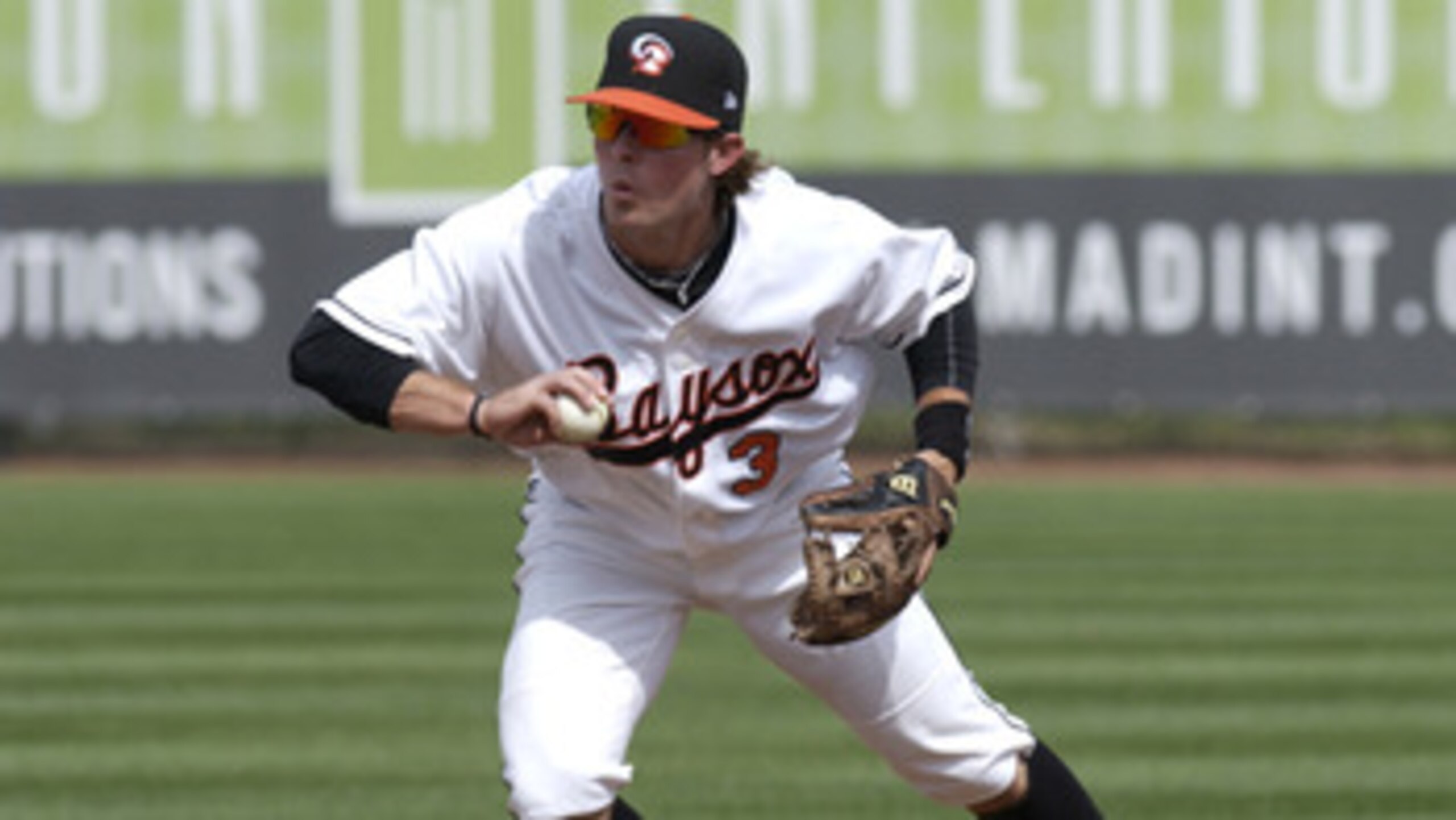
1) Ryan Adams, 2B/3B
For all the horrible defensive players in baseball, there is only one Ryan Adams. Adams is so bad he's legendary. During one terrible season in 2008, nothing went right for Adams in the field. He made an astounding 52 errors, leading all minor leaguers. He posted a .838 fielding % at shortstop, .800 at third base, and .905 at second. Adams only played in 104 games in 2008, meaning he averaged one error every other game. You have to give him credit, though, as he only made 25 errors last year in 126 contests, improving his fielding percentage to .956.
2) Billy Rowell, 3B
Despite being a pretty good athlete, Rowell has been so terribly defensively that the Orioles have tried multiple position changes with him, eventually settling him back at the hot corner where he began his career. Rowell has never made less than 18 errors in a single season at third base, his worst year coming last season, when he made 27 errors in 84 games, a fielding percentage of .878. It was the third time that Rowell had posted a % under .900. Even when the O's tried to move Rowell to the outfield, he was a huge liability, making 15 errors as an outfielder!
3) Pedro Florimon Jr., SS
Florimon has been an error machine throughout his entire career with the O's. His worst year came in 2007, when he made 36 errors in 109 games, good (or bad) for a fielding percentage of .929. His best year came during this past season, when he made 27 errors in 103 games, good for a fielding percentage of .946, besting his previous career high of .945 set in 2008.
Best Fastball
16 of 28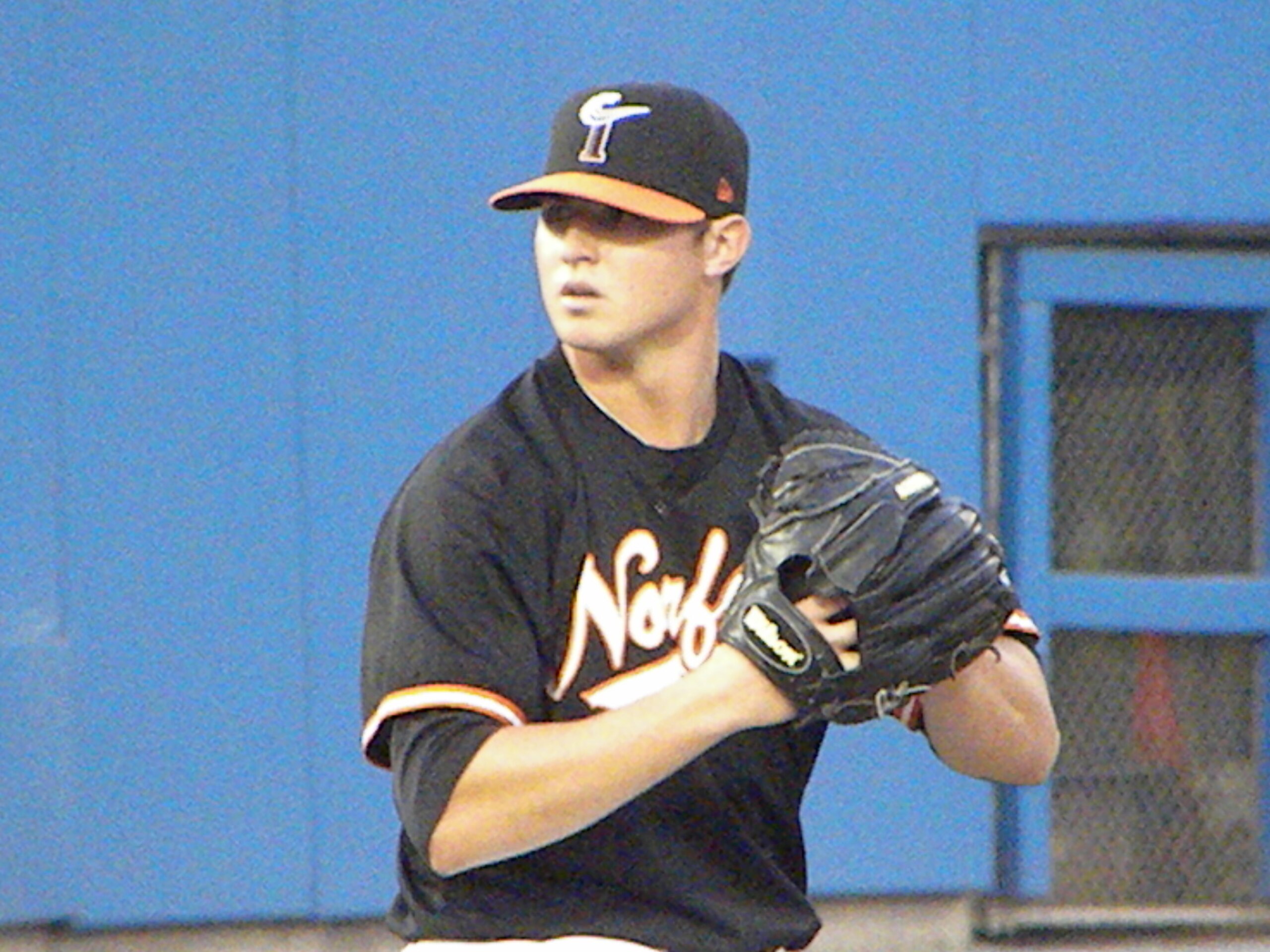
1) Zach Britton, LHP
Britton's fastball might not have the greatest velocity, but his feel for the pitch, his control of it, and the wicked sink it has makes his pitch not only the best in the O's system, but one of the best in all of the minor leagues. He can run the pitch up to the mid 90s, and he has continued to refine it every season since being drafted.
2) Wynn Pelzer, RHP
Pelzer has split time between starting and relieving since being drafted back in 2007, but it's out of the bullpen that he has the greatest promise. Pitching only one or two innings at a time allows him to generate max velocity on his fastball, which has touched 97-mph in the past. The pitch comfortably sits in the 90-95 range.
3) Luis Lebron, RHP
Before succumbing to Tommy John surgery that ended his 2010 season before it even began, Lebron was regularly clocked as high as 97-mph, sitting usually in the 93-95 range. Tommy John isn't quite as devastating an injury as it used to be and several victims actually come back throwing better than ever. The O's are hoping that Lebron is one of those.
Best Curveball
17 of 28
1) Daniel Klein, RHP
Whether it's a sign of a weakened system or just a really good pitcher, Klein's curveball is the best in the organization, despite the fact that he has only six professional innings under his belt. The pitch was devastating against college hitters during Klein's time at UCLA, and made him a formidable closer, and a rare one that has three above-average pitches.
2) Ryan Berry, RHP
Berry doesn't throw a curveball, not in the traditional sense, but actually tosses more of a knuckle-curve, a pitch that most Orioles fans should be quite familiar post-Mussina. The offering is Berry's best, even better than his low 90s fastball, and has helped him overmatch hitters at both Low-A Delmarva and High-A Frederick.
3) Matt Hobgood, RHP
There really aren't many positives to glean from Hobgood's 2010 season. A great reason for that was the lack of progression of his curveball. When the O's took him with the fifth overall pick in 2009, they did so based on the strength of his mid 90s fastball and his above-average curveball. If he can improve his conditioning and his work ethic, he should be able to get the pitch back to a quality number two offering.
Best Slider
18 of 28
1) Zach Britton, LHP
Britton worked his way slowly up the ranks thanks to his sinker and his slider. And where he was once a two-pitch lefty, his development of an impressive changeup has allowed him to blossom into one of the best pitching prospects in baseball. But, it's his above-average slider that will keep him in the big-leagues.
2) Wynn Pelzer, RHP
Pelzer's slider is quite a few rungs below Britton's, but it has the makings of a real plus-plus pitch. He throws it like he throws everything else, hard. Now that the team is insistent on using him as a full-time reliever, they'll likely have him scrap his other pitches and focus on becoming mostly a fastball-slider pitcher, which should help the pitch along.
3) Luis Lebron, RHP
Before his injury, Lebron had one of the best sliders in the system. Now, the O's are hoping he can recover the spin that made the pitch so effective and Lebron a strikeout machine.
Best Changeup
19 of 28
1) Daniel Klein, RHP
Klein's best pitch is arguably his fastball. I say "arguably," because his changeup is that good. He didn't get as much opportunity to throw it during his final season at UCLA thanks to his closer role, but when he was healthy as a starter, it looked great. It's promise is also what allowed teams like the O's to project Klein as a starter as a pro.
2) Zach Britton, LHP
Britton's changeup never showed much and it appeared he was destined for a bullpen role, until he took some guidance from Brian Matusz during the latter's sole season in the minors. Matusz changed the grip on Britton's pitch and the rest is history. Britton's offering has come so far that it now has above-average potential.
3) Bobby Bundy, RHP
The Orioles were hoping they got a Jake Arrieta-like steal when they snatched up Bundy, a first-round talent, in the eighth-round in 2008. Bundy hasn't exactly blown anyone away in his two years with the O's, but he made some great progress near the end of the 2010 season, thanks in part to the development of his changeup, which flashes above-average potential. If he can utilize it more in 2011, he could rise up the O's depth-chart.
Best Control
20 of 28
1) Ryan Berry, RHP
Berry doesn't have the best stuff. His fastball tops out at about 93 or 94-mph, and his other three pitches all rank as at least average due to his uncanny control. What makes his feel for his pitches even more special is his somewhat awkward delivery, which screams as belonging to someone with awful control.
2) Daniel Klein, RHP
One of the reasons Klein was so successful at UCLA, and one of the biggest reasons the Orioles were willing to take a chance on him as a starter is his incredible control of each of his four pitches. Klein controls his fastball and changeup as well as any other pitcher in the system.
3) Eddie Gamboa, RHP
Gamboa is a rare case, in that he has pitched so well out of the bullpen, and showed such great control that the Orioles have allowed him to make the move to the starting rotation. He ended the 2010 season in the Bowie rotation and should start 2011 in Norfolk's.
Best Catcher
21 of 28
Offensive- Caleb Joseph
Joseph is really the only catcher the O's have in the fold that offers any offensive potential to speak of. Yeah, his average was down in 2010, all the way to .235, but that represents a career-high for catchers like Luis Bernardo or Adam Donachie. And nobody in the system, outside of maybe Michael Ohlman, has the potential to hit 11 homers like Joseph did last year, or 12 like he did the year before.
Defensive- Caleb Joseph
As described a few slides back, Joseph is one of the top defensive players in the system. He calls a great game, has solid blocking skills and a good arm.
Best First Baseman
22 of 28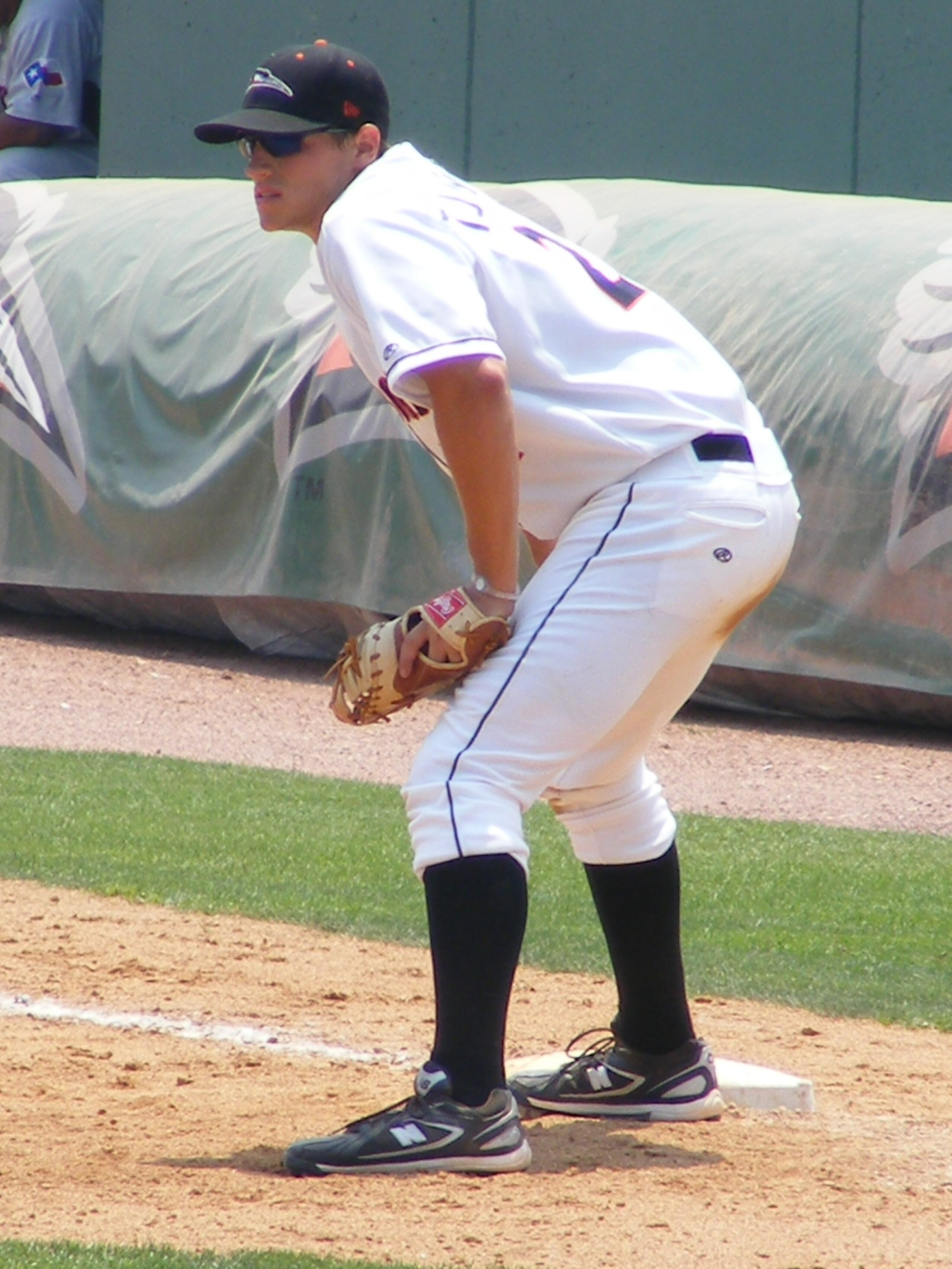
Offensive- Tyler Townsend
While Joe Mahoney offers the best power of any O's first baseman and Brandon Snyder likely offers the highest average, Townsend is the best combination of the two. He had a stellar career at FIU and has looked really good when he's been healthy for the Orioles, showing both great power and the ability to hit for a high average.
Defensive- Brandon Snyder
Many, scouts and fans alike, wondered whether Snyder would ever pan out at all. His career, which began quite promising, soon took a turn for the worse when he suffered through numerous injuries, injuries that forced him from behind the plate to third base, and then finally to first. Even with little experience, the first-base experiment has worked quite well with Snyder, and he now profiles as at least an average defender. He has a very soft glove and better footwork than anyone could have hoped for.
Best Second Baseman
23 of 28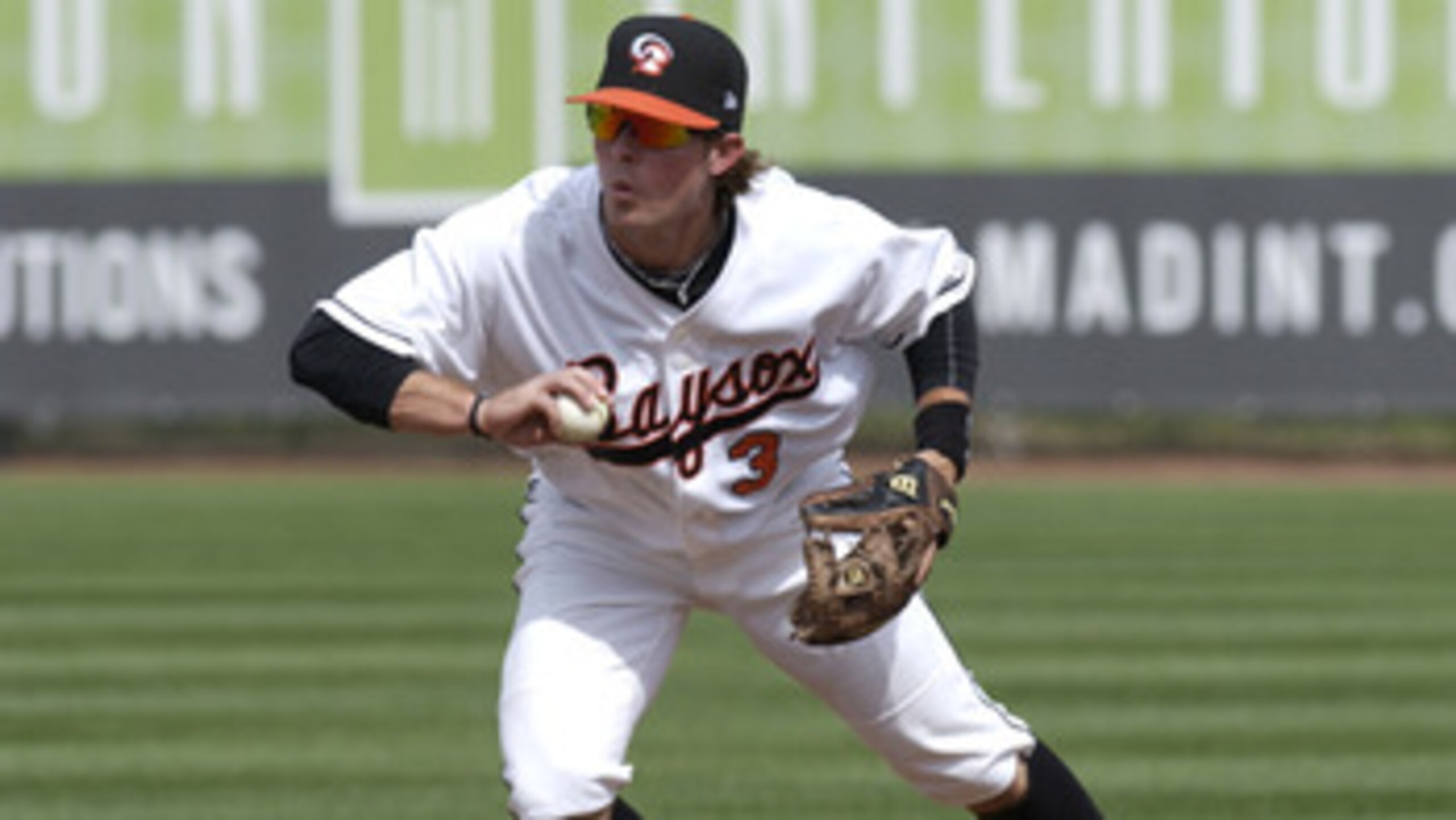
Offensive- Ryan Adams
Considering the year Adams had in 2010 (.298, 43 doubles, 15 homers, 68 RBI), there really isn't any other competition in this spot. He is easily the best hitter, for both average and power, and is arguably the most productive position player the Orioles have in their system. Eliminating a wasted 2009 season, Adams has had two outstanding offensive seasons (2008 and 2010) and could be a Brian Roberts-esque impact player in the Majors, without the speed.
Defensive- L.J. Hoes
Hoes was an oustanding defender in high-school, where he played in the outfield. The O's liked him as a second-baseman and Hoes has played there since signing back in 2008. While he's had his fair share of gaffes (57 errors in 234 games) he's sure-handed enough to hold down the position long-term. He's athletic enough though that he could probably move back to the outfield if they needed him to. Having that athleticism should help him as he moves up the ladder, making him more appealing as a 40-man roster candidate.
Best Shortstop
24 of 28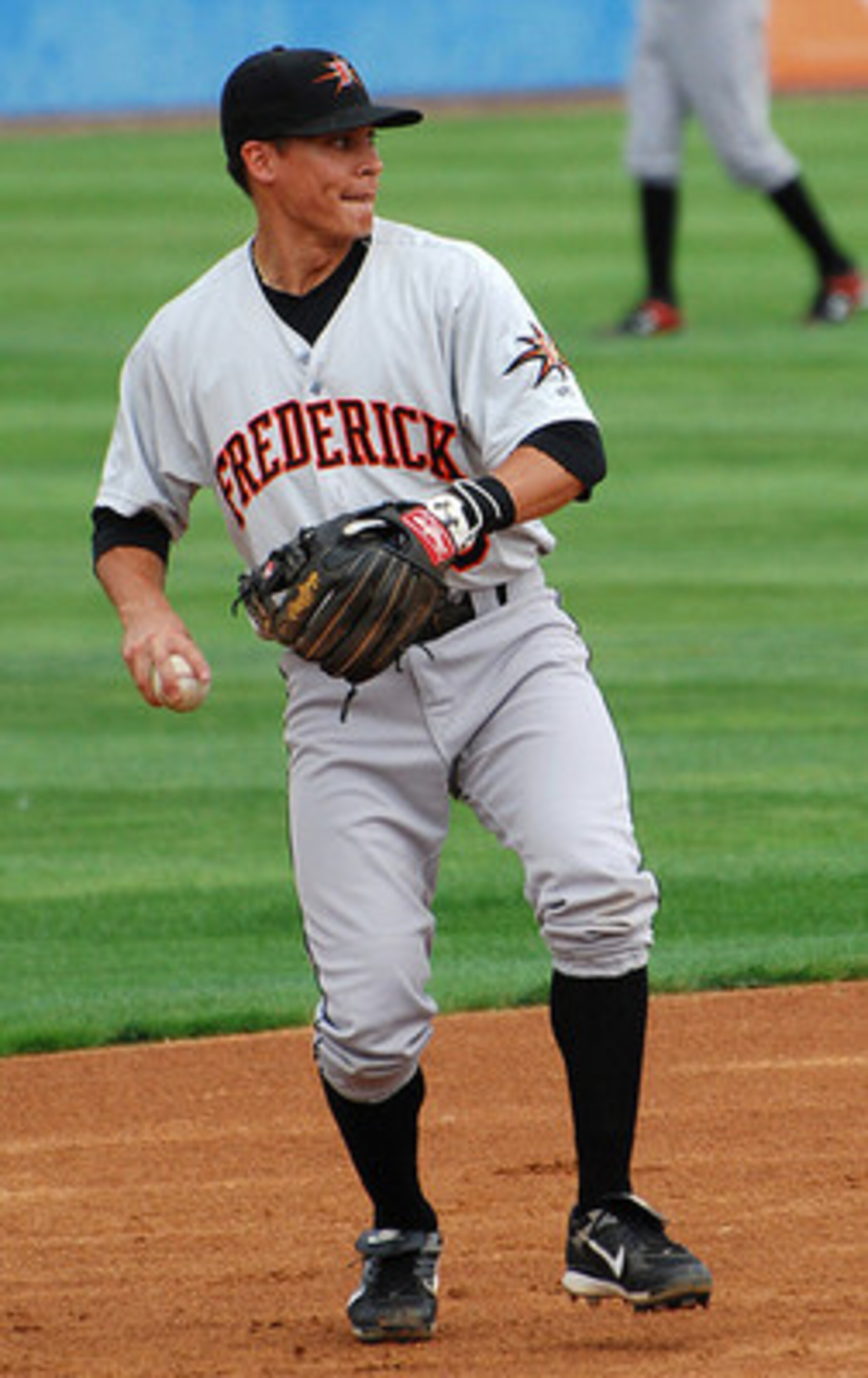
Offensive- Manny Machado
The kind of shortstop that the O's breed is a defense-first guy. They have plenty of them: Greg Miclat, Pedro Florimon, Blake Davis, Carlos Rojas, etc. Machado gives the Orioles their best offensive shortstop prospect since Cal Ripken. He can hit for average, should hit for power, and is the closest you get to a five-tool talent these days.
Defensive- Greg Miclat
When the O's drafted Miclat, they did so knowing he was a solid hitter with absolutely no power, and an excellent fielder, who was a long-term shortstop, something their system has lacked for years. Since signing, Miclat has done exactly what the O's expected.. He has a career .258 average, and has played solid defense, posting fielding percentages of over .940 three straight years. He may not have the gun that Manny Machado does, or the flashiness that Jonathan Schoop utilizes, but he's the best all-around defensive shortstop in the system, at least for now.
Best Third Baseman
25 of 28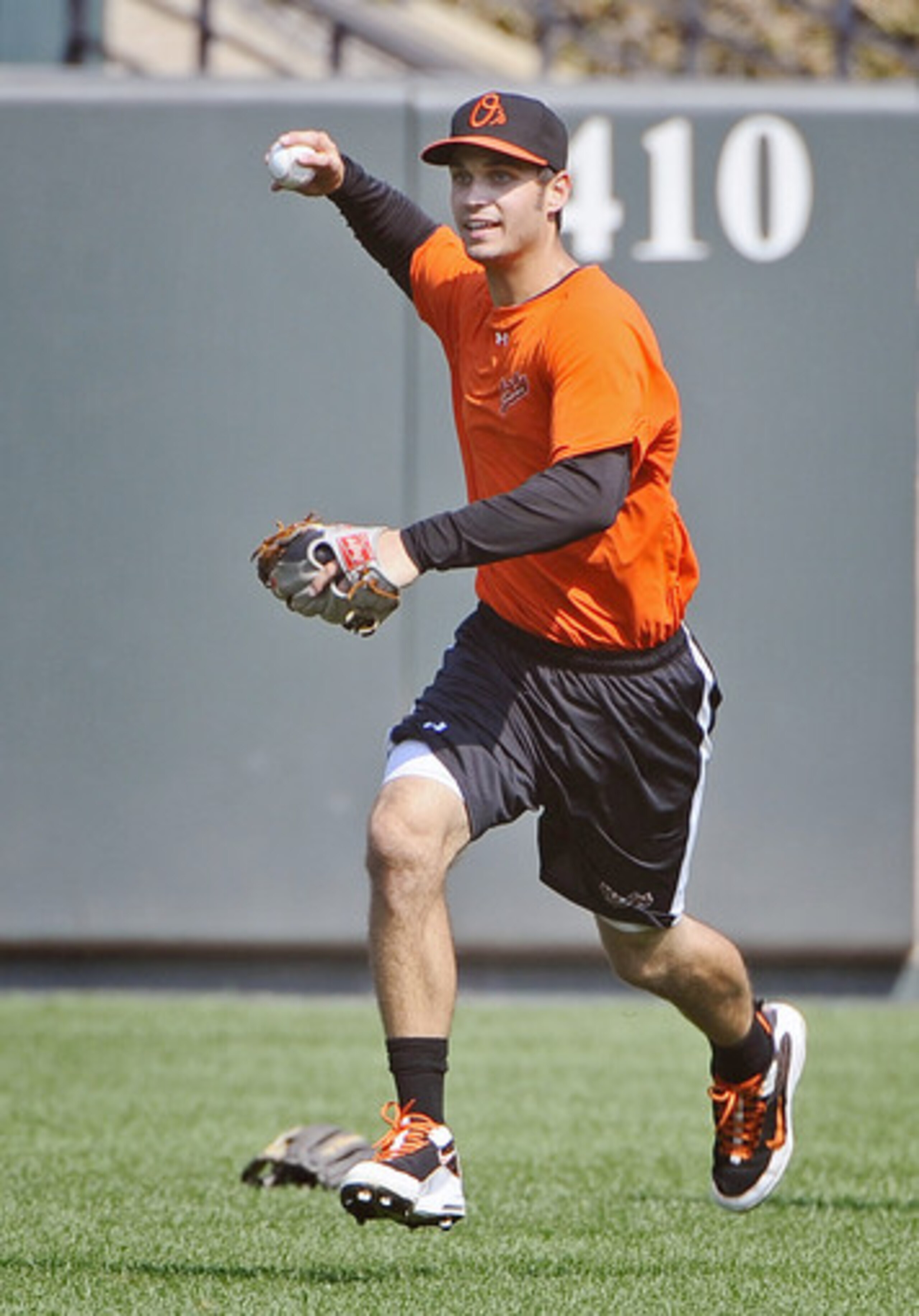
Offensive- Brandon Waring
There's no getting past the fact that, despite his defensive liabilities and the huge gaping hole in his swing, Brandon Waring is the best offensive third-baseman the Orioles have. He offers some of the best power in the system and has yet to play a season in which he didn't hit 20 or more home runs. He's great at driving in runs and is a doubles machine. If only he didn't strike out 179 times per season.
Defensive- Connor Narron
Manny Machado wasn't the only highly touted high-school shortstop the O's snatched up last year. Narron, son of former big-league coach Jerry, was one of the most polished shortstops in his class, and the O's were happy to scoop him up in the fifth-round. While he has the arm for shortstop, Narron clearly isn't going to find a long-term future there, so it looks like the O's are more than happy to shift him over to third, where his footwork, arm strength and glove would be an excellent fit. He's not as stocky as guys like Waring and one-year sensation Joel Guzman, so he's got a pretty good chance to be an above-averge defender at the hot corner.
Best Outfielder
26 of 28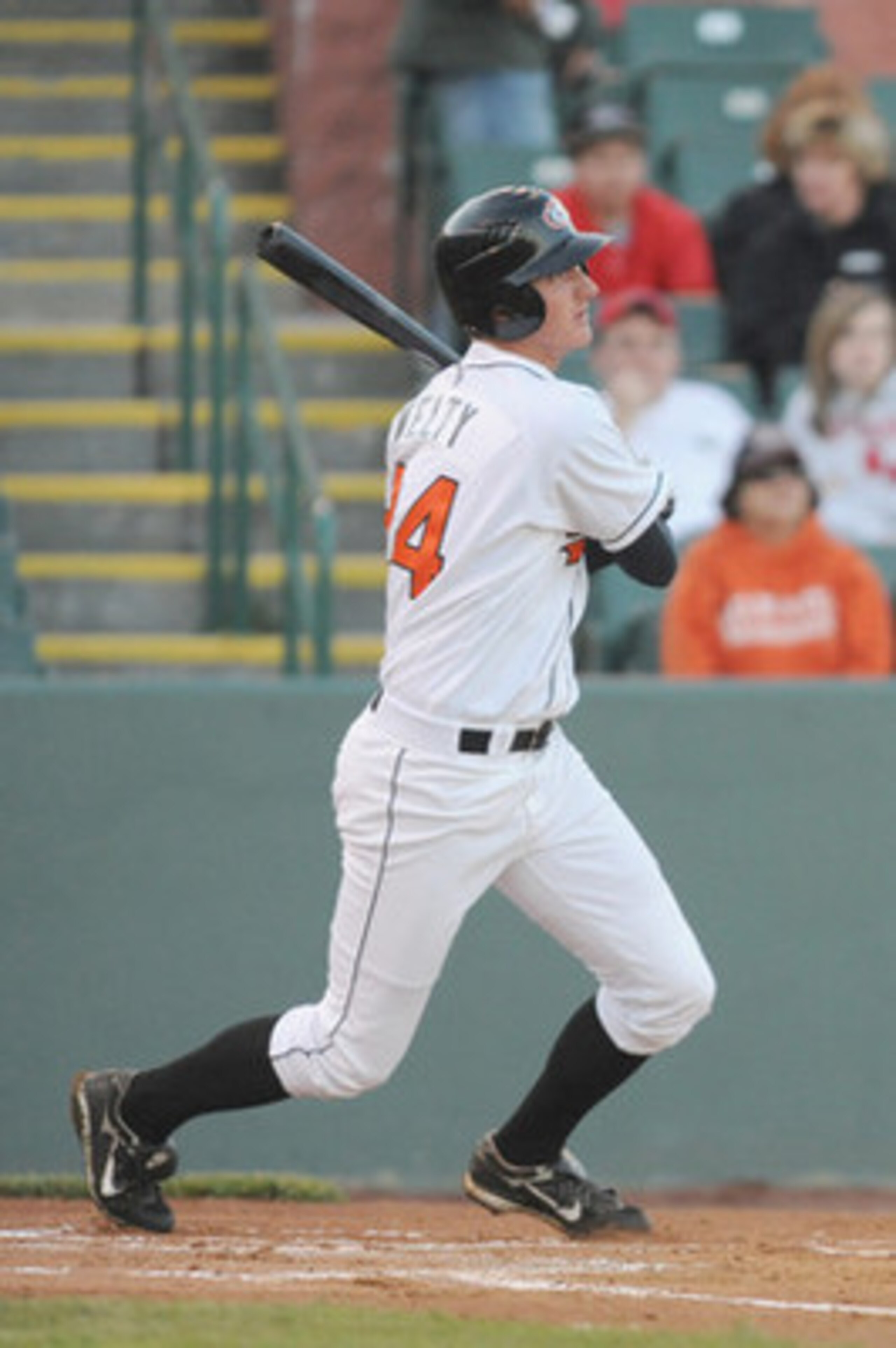
Offensive- Ronnie Welty
For all the speed that Xavier Avery has, he doesn't have too much power, leaving Ronnie Welty as the best all-around offensive threat in the system. Welty has put together back-to-back solid seasons, more than justifying his bonus as a 20th-round pick. Last year he hit a career-high 18 homers and drove in 82 runs. He stole 11 bases and posted a .282 average. The year before he hit .290 with ten homers and 62 RBI. He's had great offensive seasons in spite of his high strikeout numbers (159 in 2010, 120 in 2009).
Defensive- Matt Angle
Angle is the most polished, most athletic defender with the strongest arm. Hands down.
2011 Breakout Star
27 of 28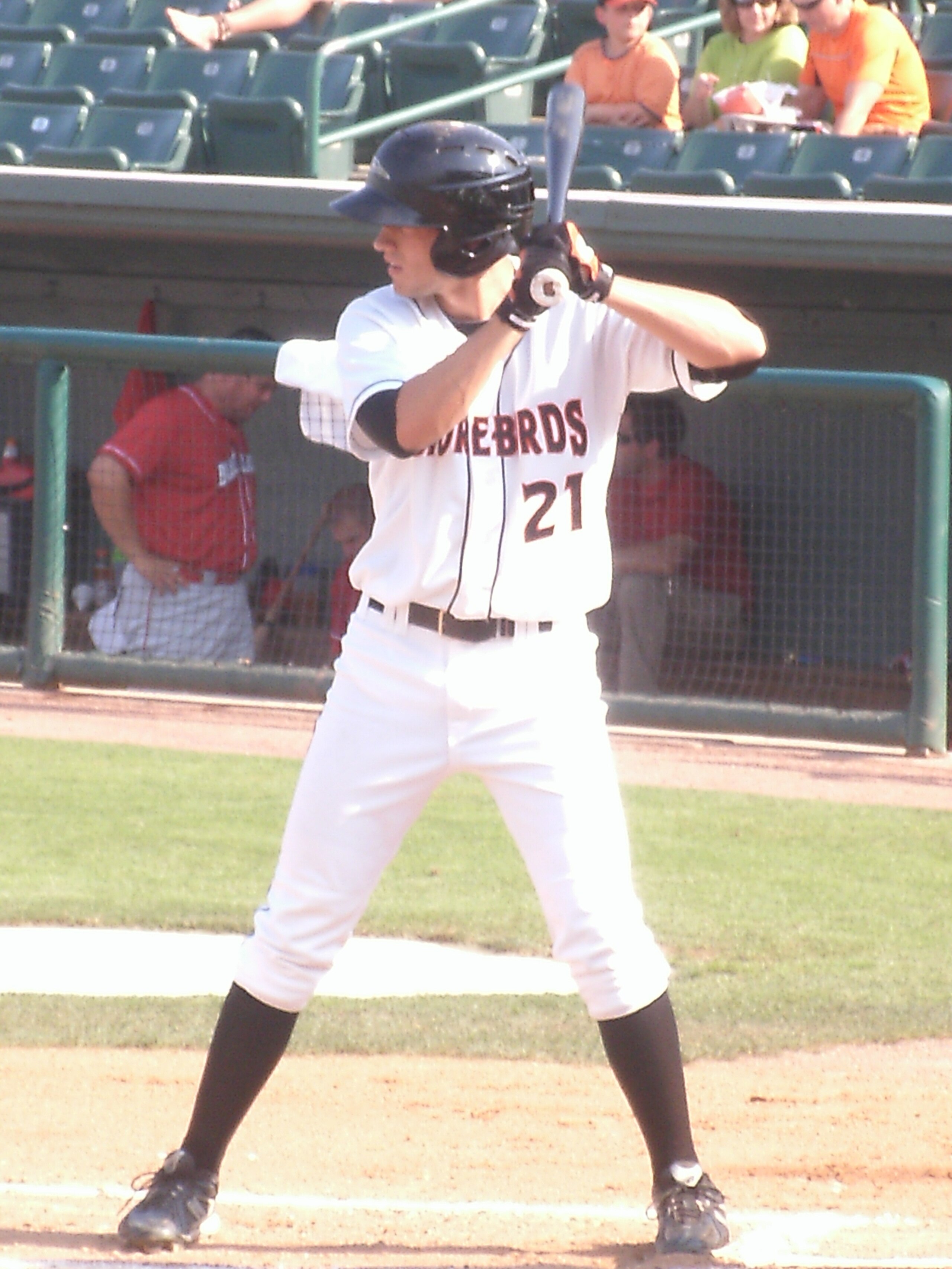
1) Tyler Townsend, 1B
Townsend has been as good a hitter as any O's farmhand...when he's healthy. Unfortunately, the team hasn't seen him at his best all that much. When he's 100%, he offers the ability to hit for average and potential above-average power. He could be a fast mover if he gets hot and can stay healthy.
2) Bobby Bundy, RHP
Bundy has been largely underwhelming during his time with the O's, posting a 6-13 record and a 4.17 ERA. He's averaged 6.9 strikeouts per nine innings, along with 3.2 walks. Very pedestrian numbers from a pitcher who was considered first-round talent before blowing out his knee the season before being drafted. Bundy pitched the entire 2010 season as a 20-year old in Low-A ball, and made some real breakthroughs towards the end of the season. He'll start 2011 in High-A ball.
3) Jonathan Schoop, SS
Schoop is arguably the Orioles best international sign ever, although it's too early to tell whether that's because he's really good, or because the O's stink in that department. The 19-year old does offer four- and possibly five-tool potential, and has looked very impressive in rookie-ball. The real test will come as he moves up to full-season ball in 2011. If he shows his skills translate well, he could move real quick.
Best Bet to Make a MLB Debut
28 of 28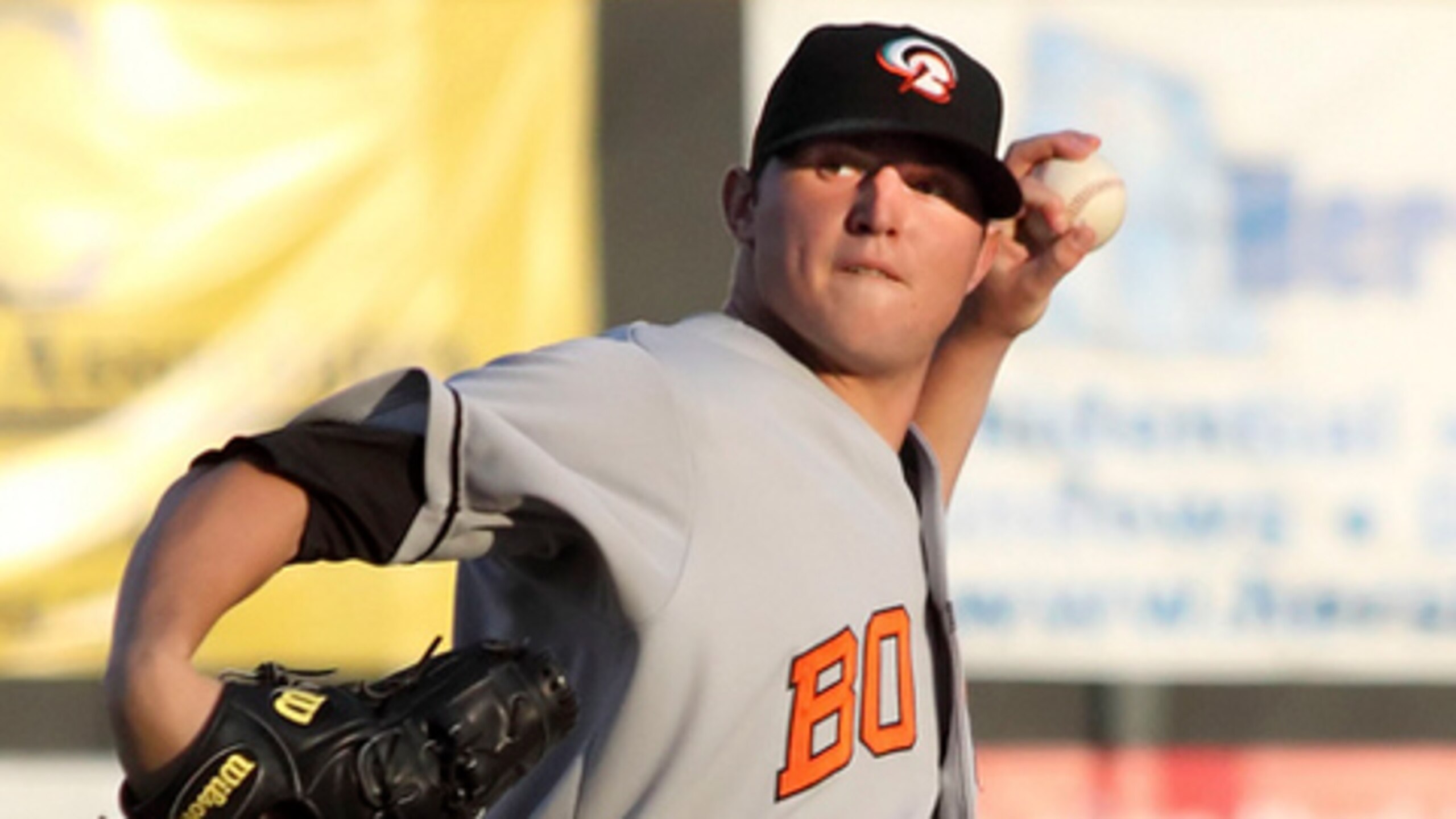
1) Zach Britton, LHP
Britton recently made his big-league debut...in spring training that is, and despite battling constant nerves, he managed to pitch two scoreless innings, getting four ground-balls, his specialty, and one big strikeout of Philly's Ryan Howard. He's a long-shot to make the rotation out of spring training, but even if he doesn't he'll be the first guy the O's call if one of their starting five is struck with an injury.
2) Matt Angle, OF
It's been just a few games, but Angle has really showed some hustle, and has impressed the coaches with his athleticism, his gamesmanship, and his defensive prowess. Angle will start the season at Norfolk, like Britton, and should be a phone call away if the O's are hurting for some speed and defense off the bench.
3) Wynn Pelzer, RHP
Pelzer will be a newbie to Triple-A, but with his stuff and the Orioles penchant for suffering meltdowns in the bullpen, he could be just the young arm the O's will need to sustain any kind of run down the stretch.
4) Brandon Waring, 3B/1B
Waring won't offer much defensive value, and will hurt the O's with his strikeouts, but they could do a lot worse than having his huge bat on the bench. He does offer some versatility, playing both third and first base, and has as much power as any O's prospect. If he doesn't get a early call-up, he'll definitely earn a look once rosters expand in September.
5) Ryan Adams, 2B/3B
Adams is another who has yet to play in Triple-A. He had one of the most impressive offensive campaigns of any O's infielder in recent memory, and if he can carry that momentum over into 2011, he could be who the O's turn to if (more likely, when) Brian Roberts is forced to miss any time due to any number of minor nicks and scrapes. He won't win any Gold Gloves, but his defense has improved greatly from where it was a few years ago, and his bat has lots of potential.



.jpg?w=2560 "Weather Channel Trolls Texans-Titans 💀")

.jpg?w=2560 "Report: Seahawks Not Signing Mixon 😯")