

Jerry Sloan and the Top 25 NBA Coaches/Players Michael Jordan Kept From a Title
Jerry Sloan isn't just a coach, he's an institution.
As the longest tenured coach in any of the major professional North American sports, Sloan guided multiple generations of Jazz players and he has become as synonymous with his franchise as any one person is with any franchise.
But alas, we won't have him to kick around anymore. He steps aside as the third-winningest coach in NBA history, a .603 career winning percentage, seven division titles and two NBA Finals appearances.
But no Finals victories. That greedy Michael Jordan, taking all the championships for himself. At least Sloan can take comfort in knowing that he wasn't the only person to be denied by MJ.
Here's a look at 25 of Michael's most prominent victims.
25) Anfernee Hardaway
1 of 25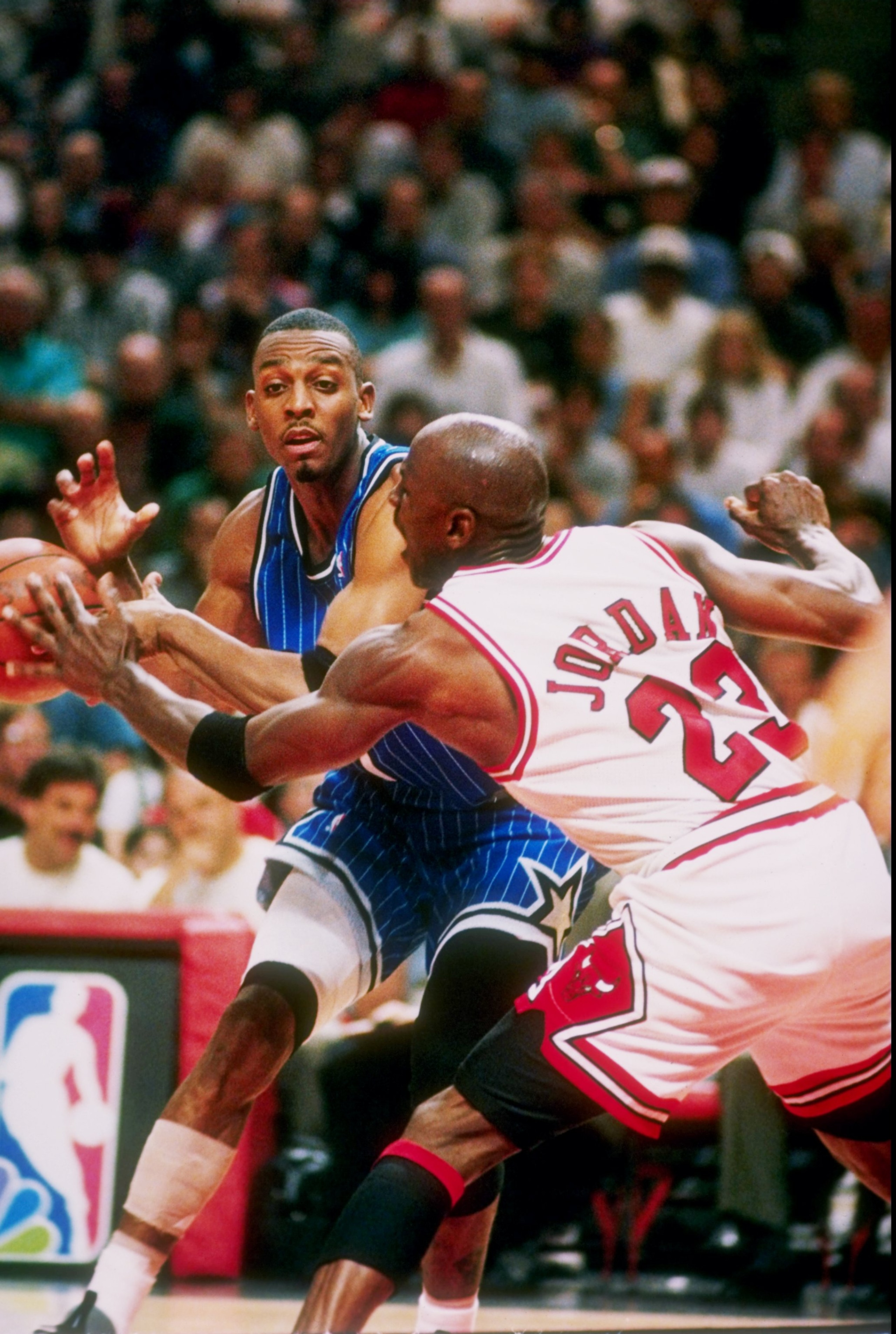
Penny only lost to the Jordan-led Bulls once in the playoffs, but that was a big once.
Orlando actually defeated the Bulls, with Jordan, in the 1995 playoffs, but that was when Jordan had just returned from his year-and-a-half baseball sabbatical and wasn't quite yet Jordan again. The Magic ended up being swept in the Finals that year by Hakeem Olajuwon and the Rockets.
In 1995-96, however, the Magic was back, and arguably even better than the year before. Shaq was in full beast mode and Penny was a capable sidecick, averaging 21.7 points and 7.1 assists. They finished 60-22, won the Atlantic Division and steamrolled their way through the first two rounds of the playoffs, dropping just one game.
Then they ran into the Bulls in the Eastern Conference Finals. This, of course, was the year the Bulls went 72-10 and weren't going to lose to anybody. Chicago promptly swept Orlando, Shaq left Disney World for Disneyland after the season, and that was that for Penny's title chances.
24) Doug Collins
2 of 25
Doug Collins is the forgotten man in Michael Jordan's rise to prominence.
He was the coach of the Chicago Bulls for three seasons during the 1980s, directly before Phil Jackson took over. Collins inherited a Bulls team that had finished above .500 just once in the previous nine seasons and pushed them to get better each season.
His first year, 1986-87, they lost in the first round of the playoffs, but in his second they won 50 games and made the second round. The next year they advanced to the Eastern Conference Finals.
Jordan was maturing and you could tell it was only a matter of time before he realized his full potential. But Collins wouldn't get the chance to be there for when it happened. He was shown the door, Phil Jackson was brought in, and in three later coaching stops, including this season in Philadelphia, Collins has yet to get to the Finals.
If only he had gotten to stay in Chicago for another couple of years.
23) Corie Blount
3 of 25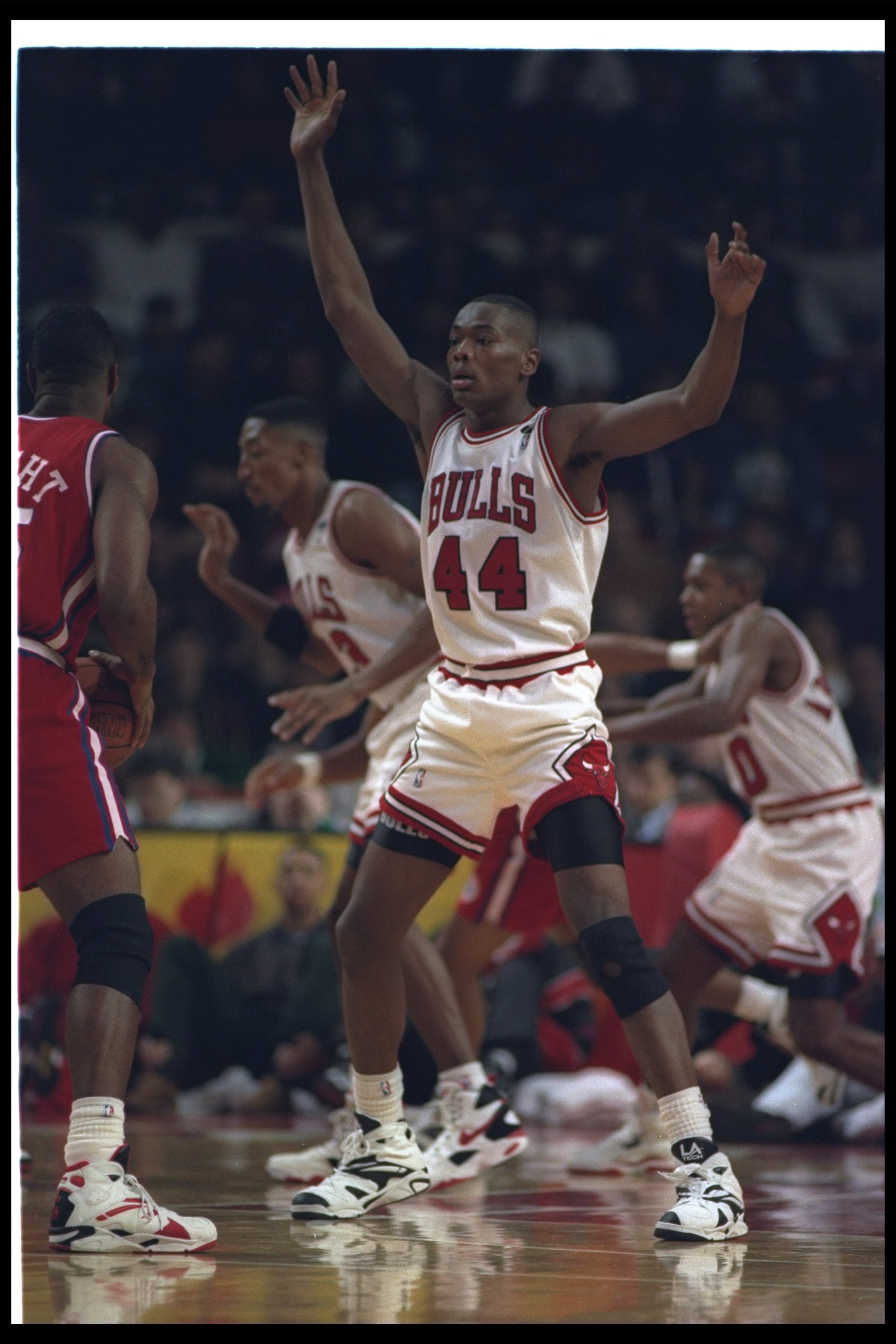
Corie Blount's NBA career was nothing special. He played 11 seasons for seven different teams and had a career scoring average of 3.6 points per game.
But he was the Chicago Bulls first round draft pick in 1993, after they had just finished off their first three-peat. There was every reason to believe that the good times would keep on rolling. Then Jordan announced he was retiring and everything changed.
The Jordan-less Bulls lost to the Knicks in the 1994 NBA Playoffs, and though MJ returned for the stretch run the next season, he wasn't quite himself yet, and they fell to the Magic in 1995.
After that season, Blount was sent to the Lakers and missed out on the second three-peat. He would never play for an NBA champion, but has the distinction of being one of only two players who played for the Bulls in both seasons in between the three-peats, but not for any of their championship teams. The other is Pete Myers.



22) Mike Dunleavy
4 of 25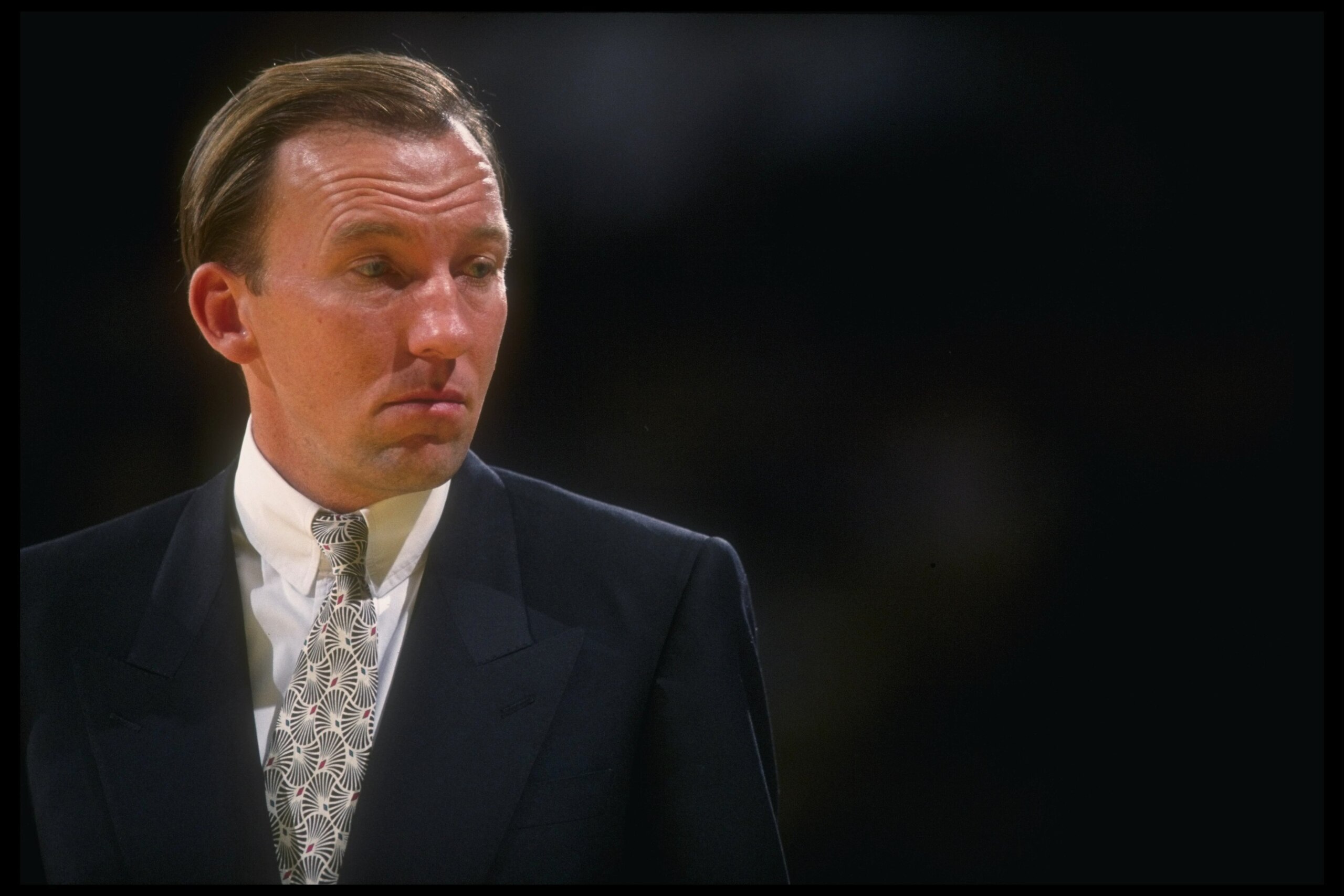
Mike Dunleavy took over for Pat Riley as the head coach of the Lakers in 1990-91.
He guided the team to a 58-24 record and an appearance in the NBA Finals, where they faced off against the Jordan-led Bulls in their very first Finals appearance.
After winning Game 1, L.A. dropped four straight, and MJ had his first championship. After the season, Magic Johnson would retire due to his positive HIV status and the Laker dynasty was over.
As for Dunleavy, he would spend 16 more seasons as a head coach, for four different franchises, but would never make it back to the Finals.
21) Craig Ehlo
5 of 25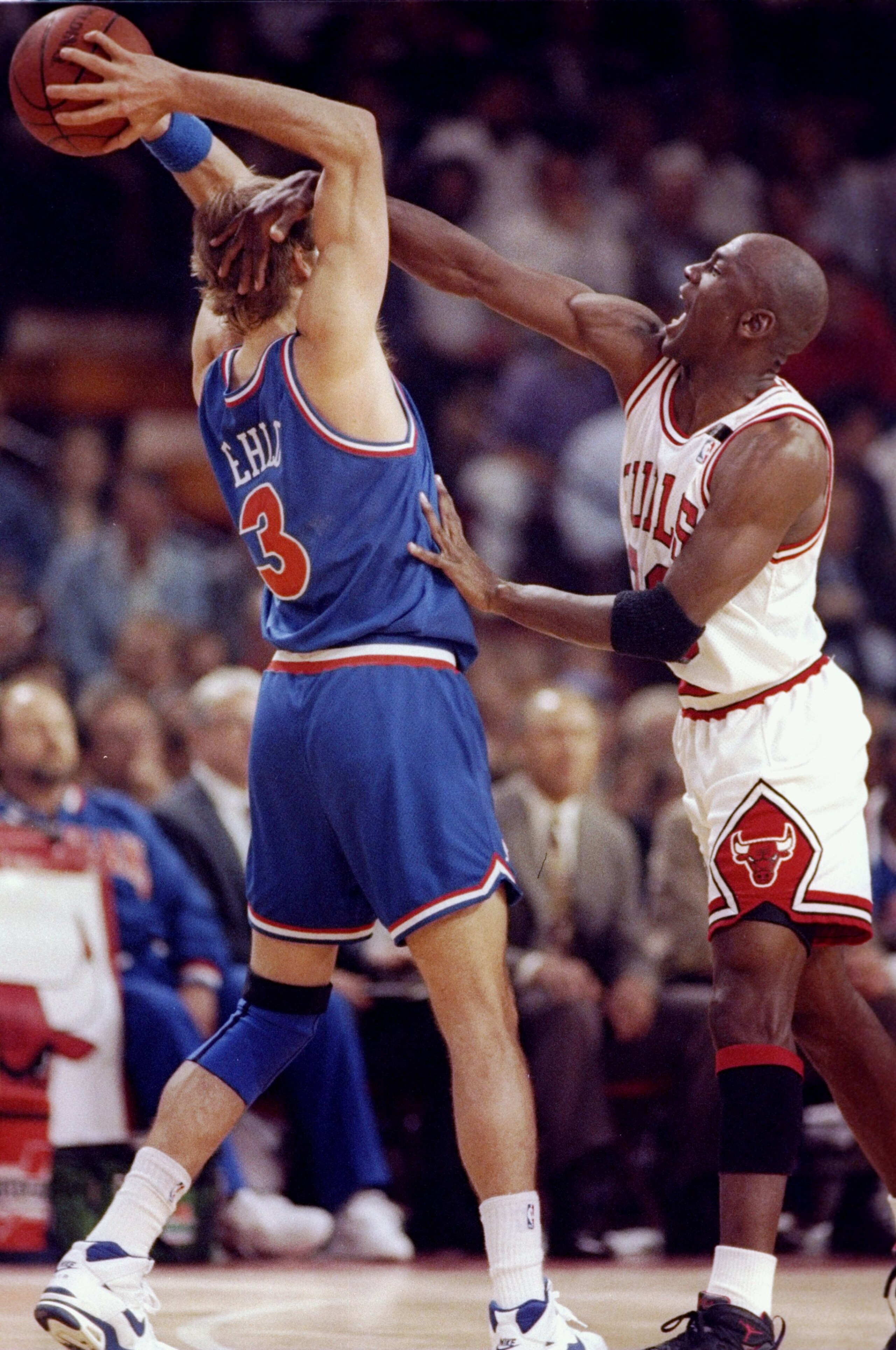
Craig Ehlo had a good, but not great, NBA career.
He played 14 seasons for four different teams, and averaged 8.6 points per game for his career. But he will be eternally remembered for one, single, lasting Jordan moment.
It was May 7, 1989, and Ehlo's Cleveland Cavaliers were tied two games apiece with the Chicago Bulls in the first round of the NBA Playoffs. With the Bulls down by one in the final seconds, Jordan hit a foul line jumper over Ehlo that won the series for Chicago.
Jim Durham's radio call of "The shot on Ehlo ... Good! The Bulls win!", as well as the replay of an ecstatic Jordan celebrating over a prone and disconsolate Ehlo, is one of the iconic moments in NBA history.
Maybe the Cavs wouldn't have won the title that year anyway, but Jordan definitely didn't help things, and Craig Ehlo would probably just as soon have had Jordan hit that shot over someone else.
20) Dominique Wilkins
6 of 25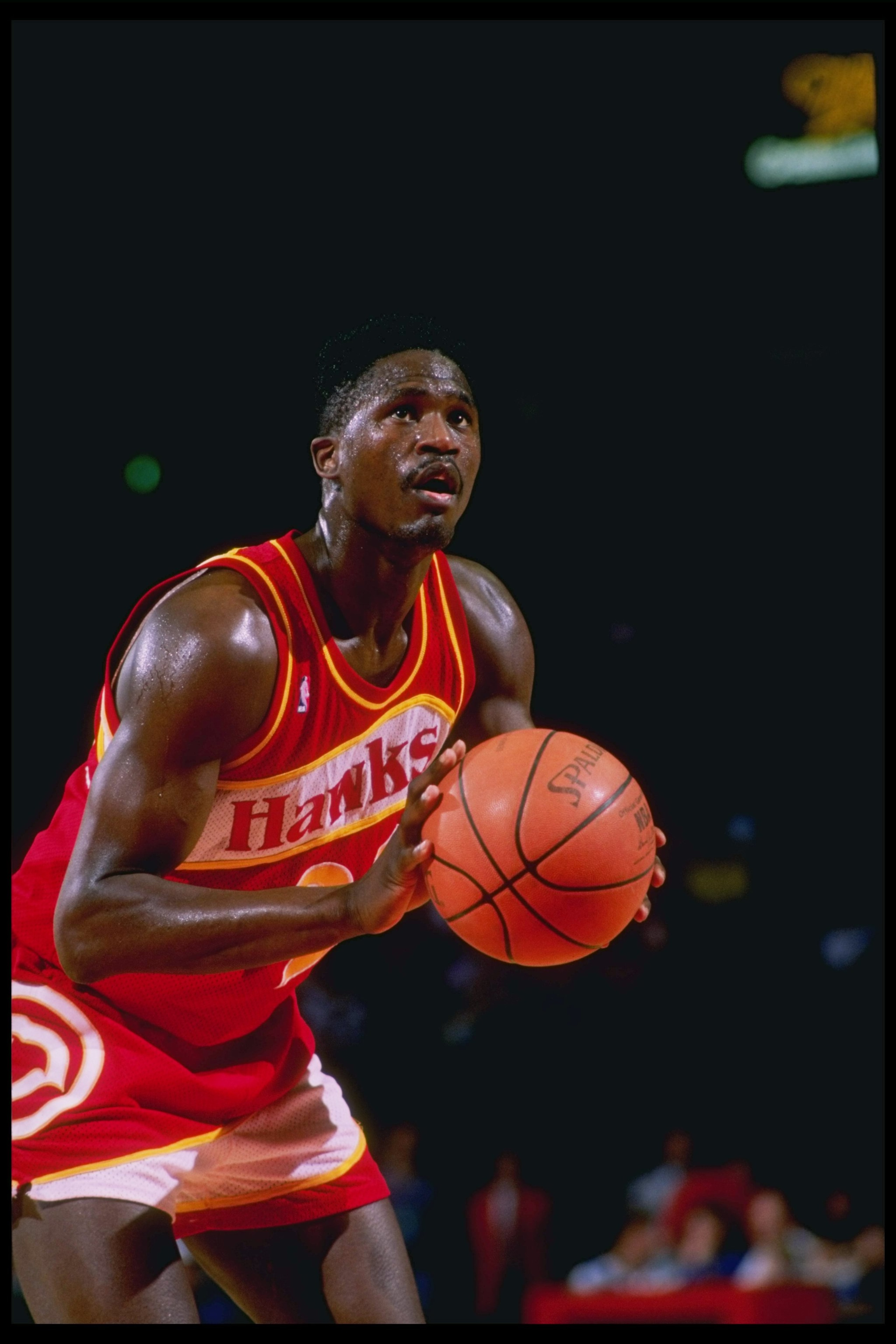
Dominique Wilkins was one of the NBA's most exciting players throughout the 1980s, but he was always overshadowed by Michael Jordan.
Whether it was at the Slam Dunk contest or throughout the regular season battles that the division rival Bulls and Hawks would play every season, Jordan was just a burr in Wilkins' saddle every year.
They didn't play very often in the playoffs, but the one year they did, in 1992-93, Jordan's Bulls swept Wilkins' Hawks in three straight games. But it was more just a feeling every year that no matter how good Dominique was, Jordan would be that much better. He never really had a chance.
19) Tim Hardaway
7 of 25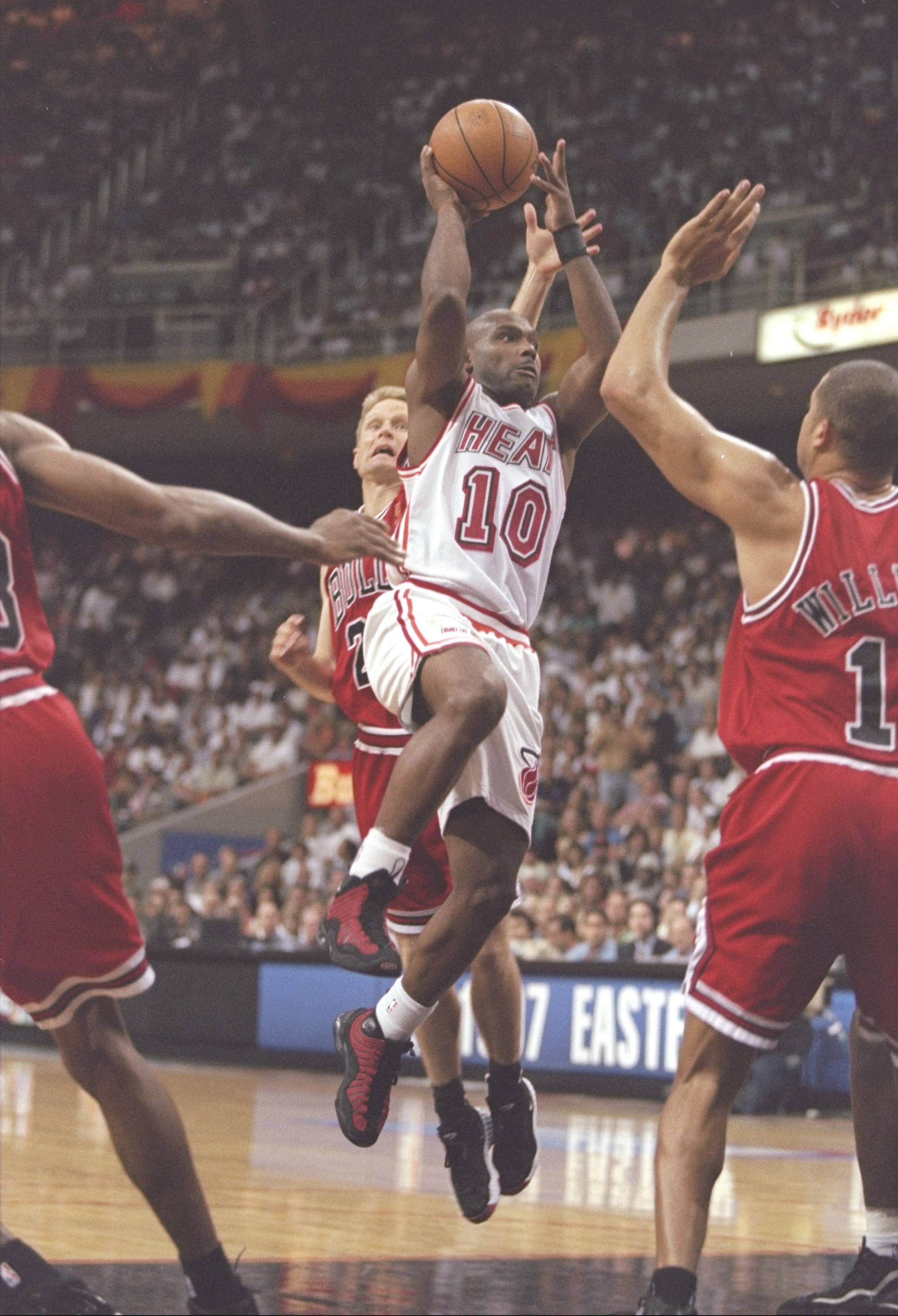
Tim Hardaway was one of the mainstays on the 90s Miami Heat, along with Alonzo Mourning. But the one season that they were able to get past their perpetual tormentors, the New York Knicks—with the help of a brawl and multiple suspensions—they ran headlong into the Chicago Bulls.
It was 1996-97 and the Heat went 61-21, winning the Atlantic Division and claiming the Eastern Conference's No. 2 seed. Led by coach Pat Riley, they came into the Eastern Conference Finals feeling good about themselves and their chances.
They shouldn't have. Jordan and the Bulls rudely disposed of them in five games and it wasn't until Shaq came to down almost a decade later that they were able to return to the latter stages of the playoffs. Alonzo Mourning got another chance, and rode the Shaq and Dwyane Wade train to his title. Hardaway wasn't so lucky.
18) Brian Hill
8 of 25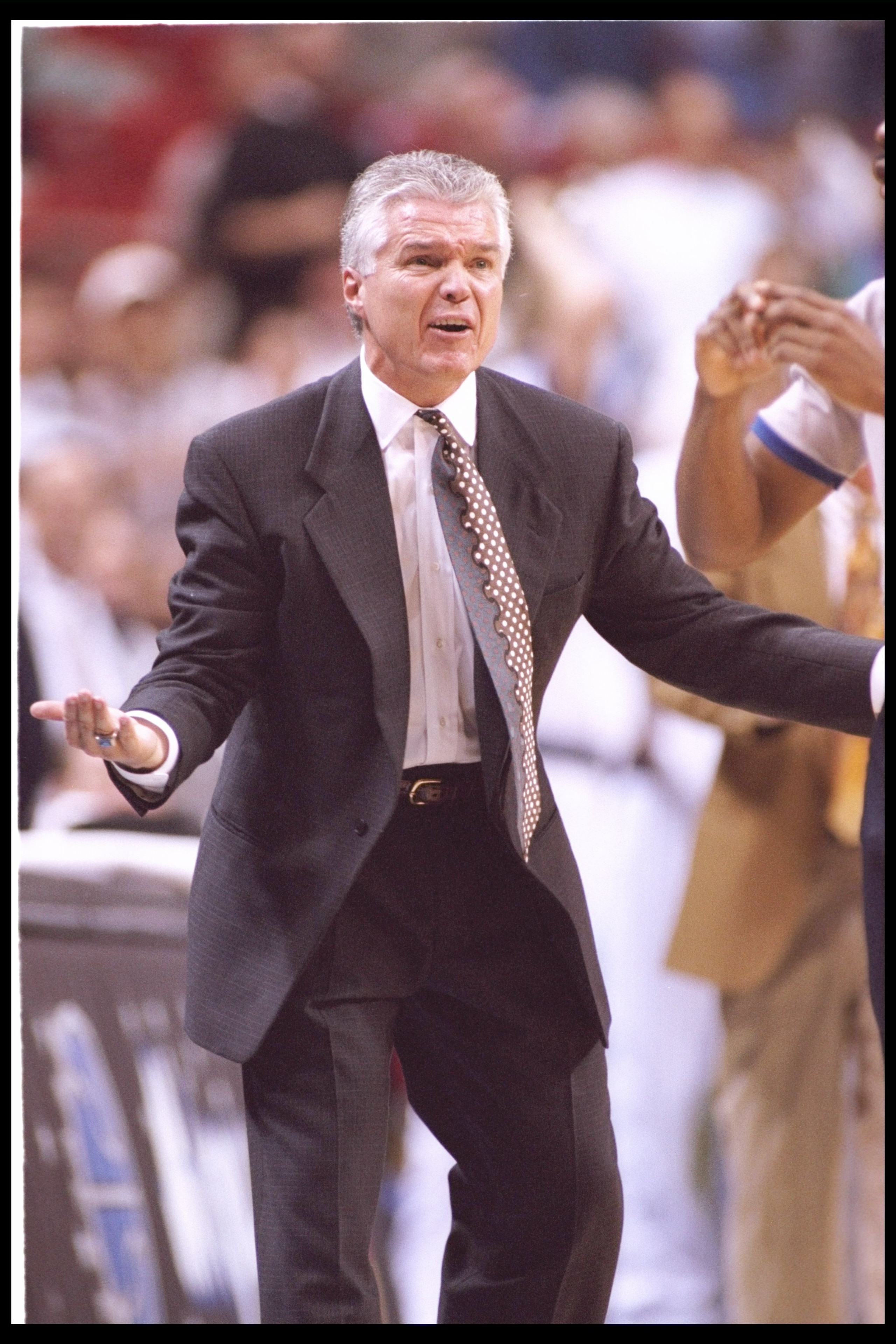
Brian Hill wasn't a great NBA head coach.
He did, however, have the great fortune of being named the head coach of the Orlando Magic in 1993-94, one year after they drafted Shaquille O'Neal with the top pick, and the same year they lucked into the top of the draft again, nabbing Anfernee Hardaway.
As I talked about in the slide on Penny, they actually got past the Bulls in 1995 before being swept by the Rockets in the Finals, but that almost doesn't count. Jordan wasn't the real Jordan again yet. I mean, he was wearing No. 45 that season. C'mon.
In 1995-96, Hill and the Magic had their best team of that era, going 60-22, and dropping just one game over the first two rounds of the playoffs. It was their best chance to win a title, except for one thing. Jordan was Jordan again.
He led the Bulls to a historic 72-win season and the Magic had no chance against them in the playoffs. The Bulls went up 3-0 on the Seattle Supersonics in the Finals and, at that point, had lost just one playoff game, an overtime game in Round 2 to the Knicks. They would end up taking six games to dispatch Seattle, but it was academic.
Brian Hill was eventually banished to the hinterlands of Vancouver and never won another playoff game as a head coach.
17) Rik Smits
9 of 25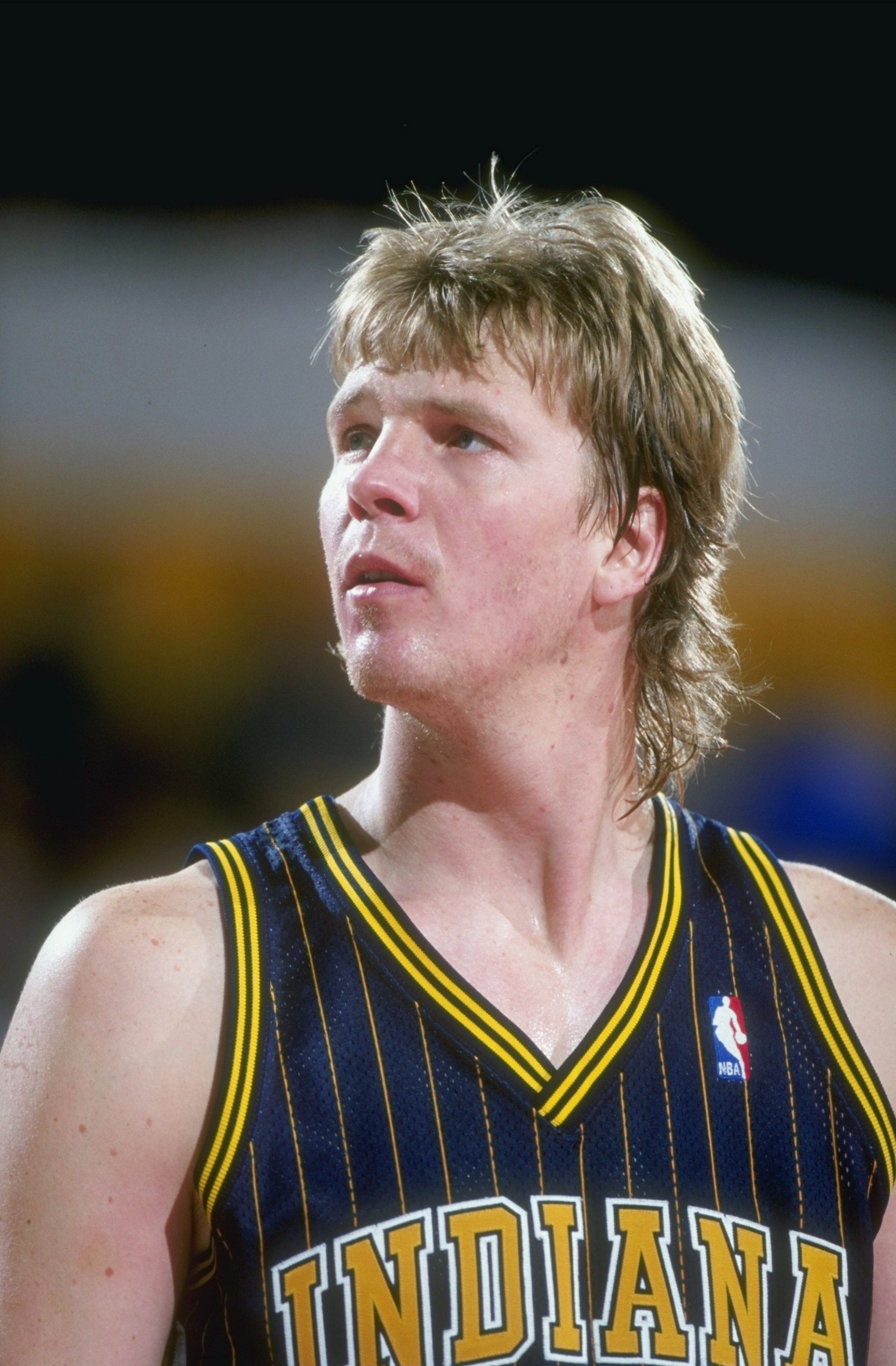
The 1997-98 Indiana Pacers were one of the best teams in franchise history.
A good, but not great, team throughout much of the 90s, they had always seemed to come up just short, losing in the Eastern Conference Finals in 1994 and 1995, to the Knicks and Magic, respectively. Featuring Reggie Miller and Rik Smits as their top two players, they were the perennial underdog.
In 1997-98, the Pacers clicked on all cylinders, going 58-24, which was, at the time, the best record in franchise history. They even defeated the arch-rival Knicks in the second round with relative ease. Only one thing stood in the way of their first trip to the NBA Finals. Yep, you guessed it: Jordan's Bulls.
It ended up being a great series. Every game but one was decided by six points or less. The teams held serve, each winning the games on their home floor. Unfortunately for Smits and Indiana, the Bulls had gone 62-20 that year, so they had the home-court advantage and ended up taking a hard-fought Game 7, 88-83, en route to finishing off their second three-peat.
16) Reggie Miller
10 of 25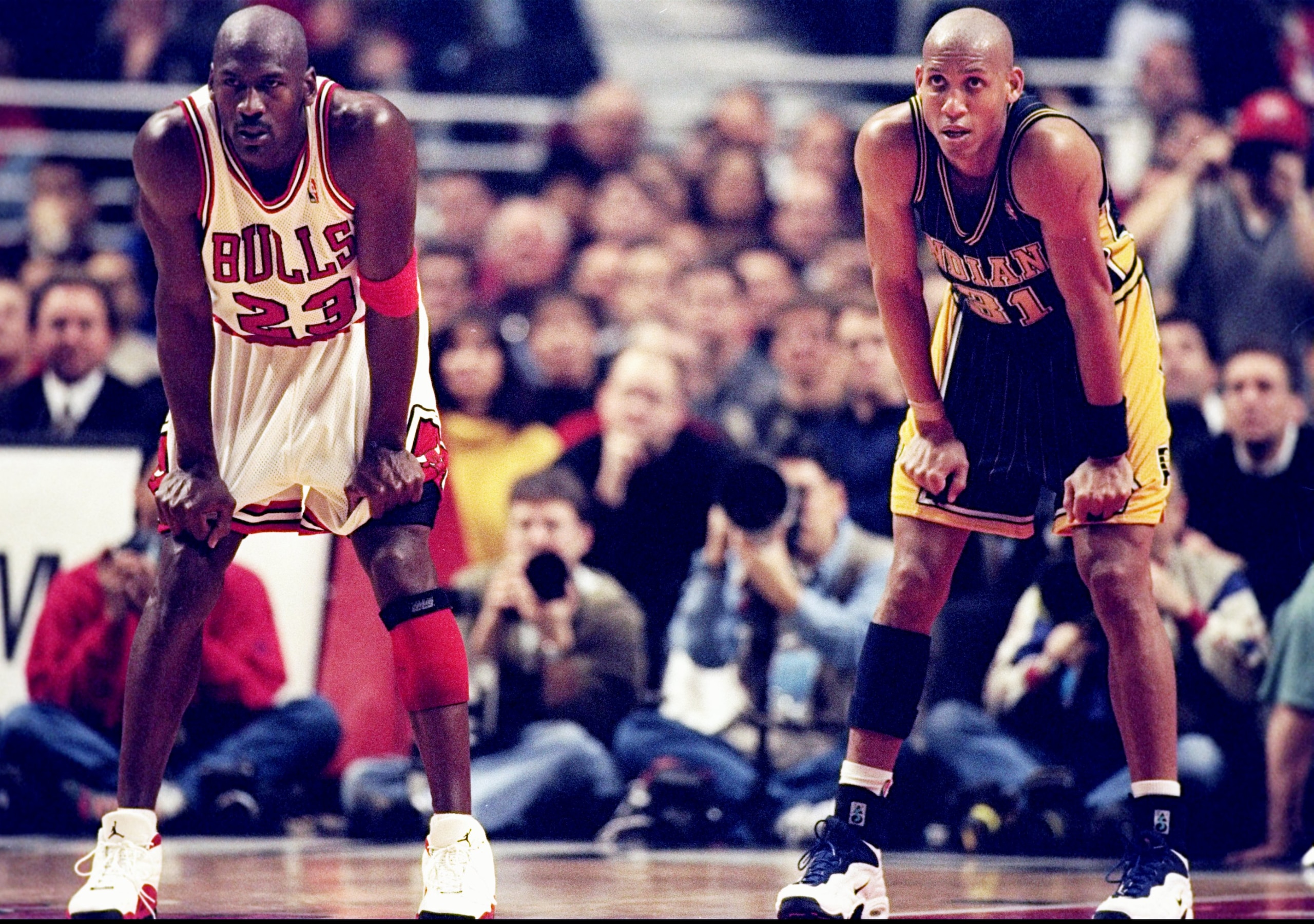
Miller was the other half of the Pacers dynamic duo throughout the 90s.
Smits was the brawn and Miller was the flash. His electric performances in the playoffs, especially on the biggest stages—such as at Madison Square Garden against his favorite target, Spike Lee's Knicks—have become the stuff of legend.
The only problem is that none of those seasons ended with a title, and the one year he had a good enough team around him to finish the job, there was MJ standing in his way. The Pacers even enlisted Larry Bird himself, who came back to his home state to lend even further star power to the Pacers efforts, but it wasn't to be.
Even a heroic, game-winning shot to capture Game 4 wasn't enough for Miller, as the Pacers fell in seven. They would have to be content with being one of just two teams to push any of the Bulls' title teams to a Game 7 (the other being the 1992 Knicks).
15) Mark Price
11 of 25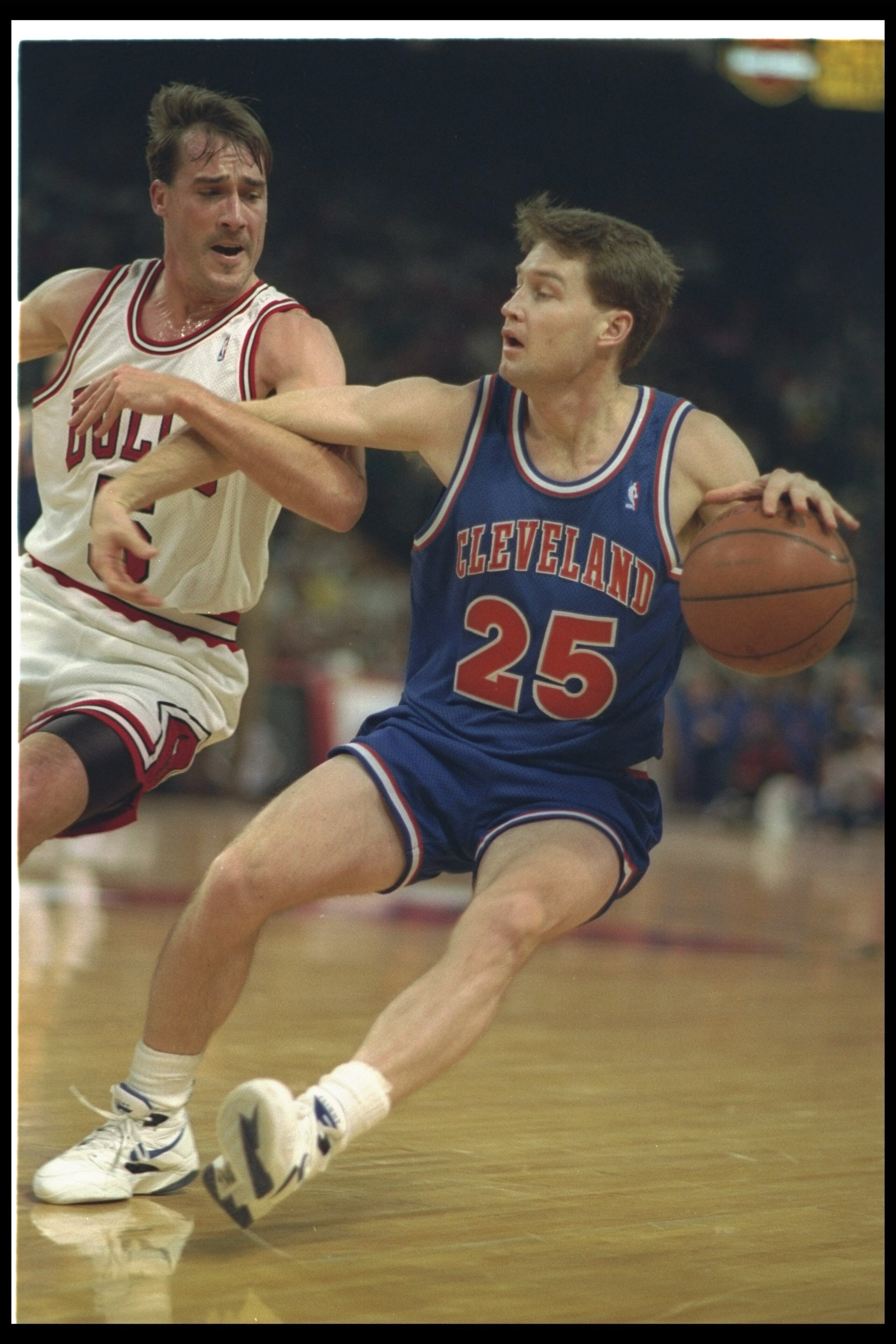
Mark Price was a second-round draft pick, but throughout his career, he proved that he was a first-round talent.
As part of the nucleus of the excellent Cleveland Cavaliers teams of the late 80s and early 90s, Price made four All-Star teams, was top 10 in the league in assists five times and is still the all-time career leader in free throw percentage.
And perhaps as much as any other team, the Cavs of that era were consistently held down by Jordan's Bulls. They lost to the Bulls in the playoffs in 1988, 1989, 1992 and 1993. They never came out on top in a playoff series against Chicago.
14) Larry Nance
12 of 25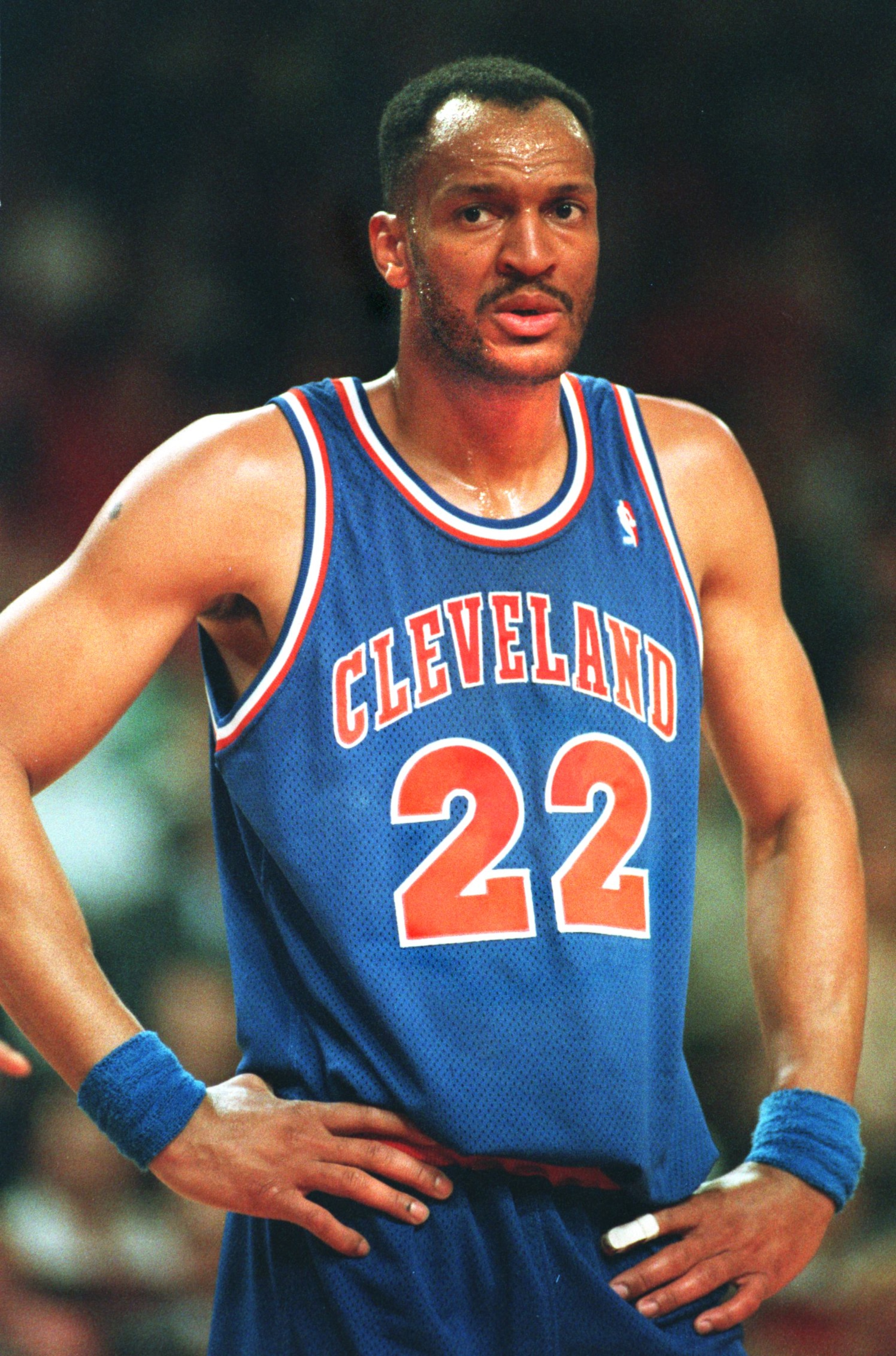
Larry Nance was another key piece of the Cavs teams that featured Mark Price and Craig Ehlo, as well as the next person in this list.
Coached by the legendary Lenny Wilkens, en route to him amassing more wins than any other head coach in NBA history, the Cavaliers of that era should be better remembered than they are. Nance, for his part, was a physical power forward and three-time All-Star, but his legacy will also forever be tied to the fact that the Cavaliers could never quite get over the hump against Chicago.
Maybe he should have stayed in Phoenix, where he wouldn't have had to deal with Jordan so much.
13) Brad Daugherty
13 of 25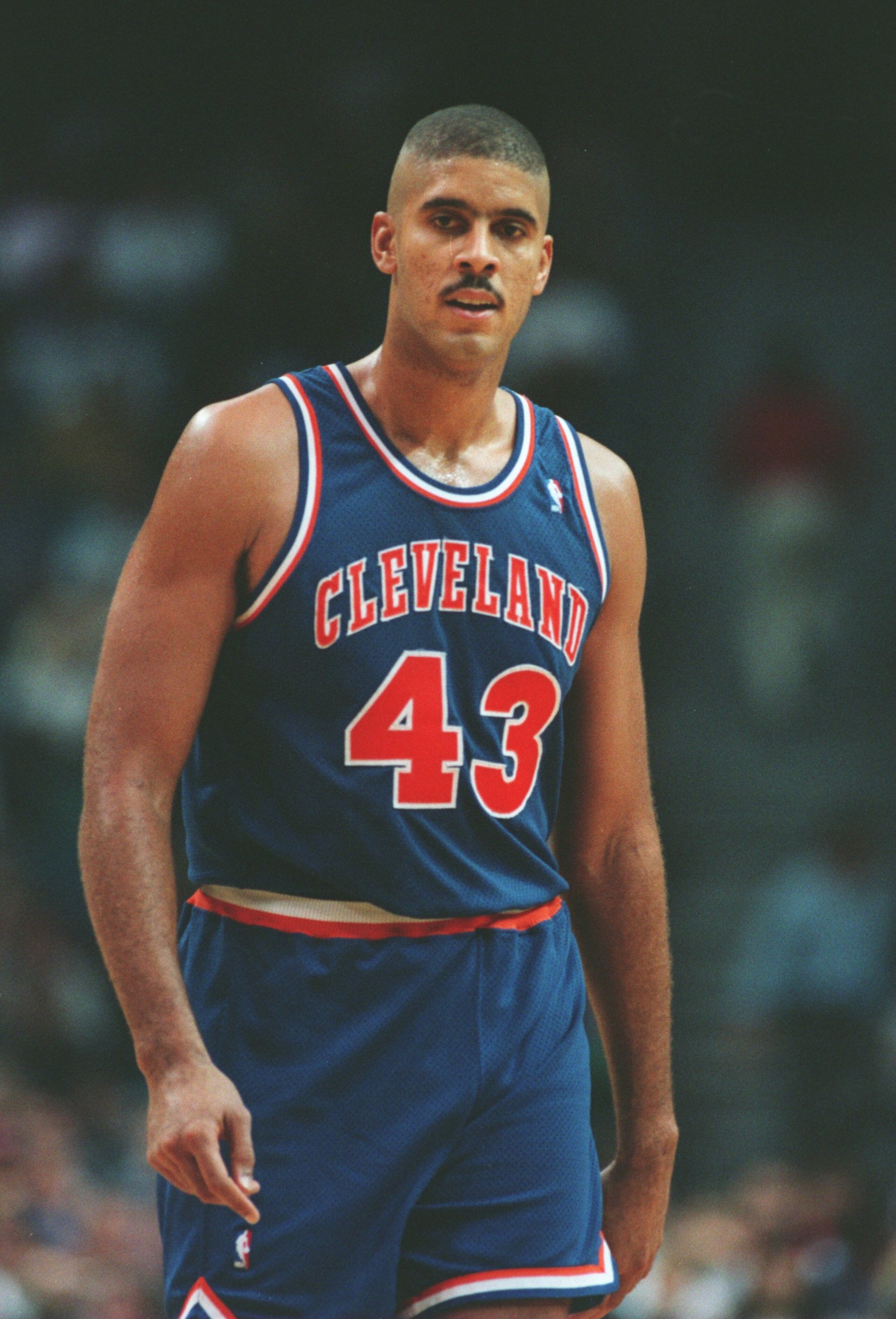
Brad Daugherty was actually a teammate of Michael Jordan's at the University of North Carolina. But Jordan didn't take it any easier on him because of that connection.
If anything, he seemed extra motivated to deflate Daugherty and Cleveland's spirit whenever they would meet. The No. 1 overall pick in the 1986 NBA Draft, Daugherty became a five-time All-Star and averaged more than 20 points and 10 rebounds three years in a row.
But despite Daugherty's, Nance's and Price's best efforts, they were stymied at every turn by MJ. He even had the nerve to torch them for 69 points, his career high, in a win at Cleveland in 1990.
Brad, and Cleveland fans in general, just know that everyone else on this list knows this pain, as well.
12) Charles Oakley
14 of 25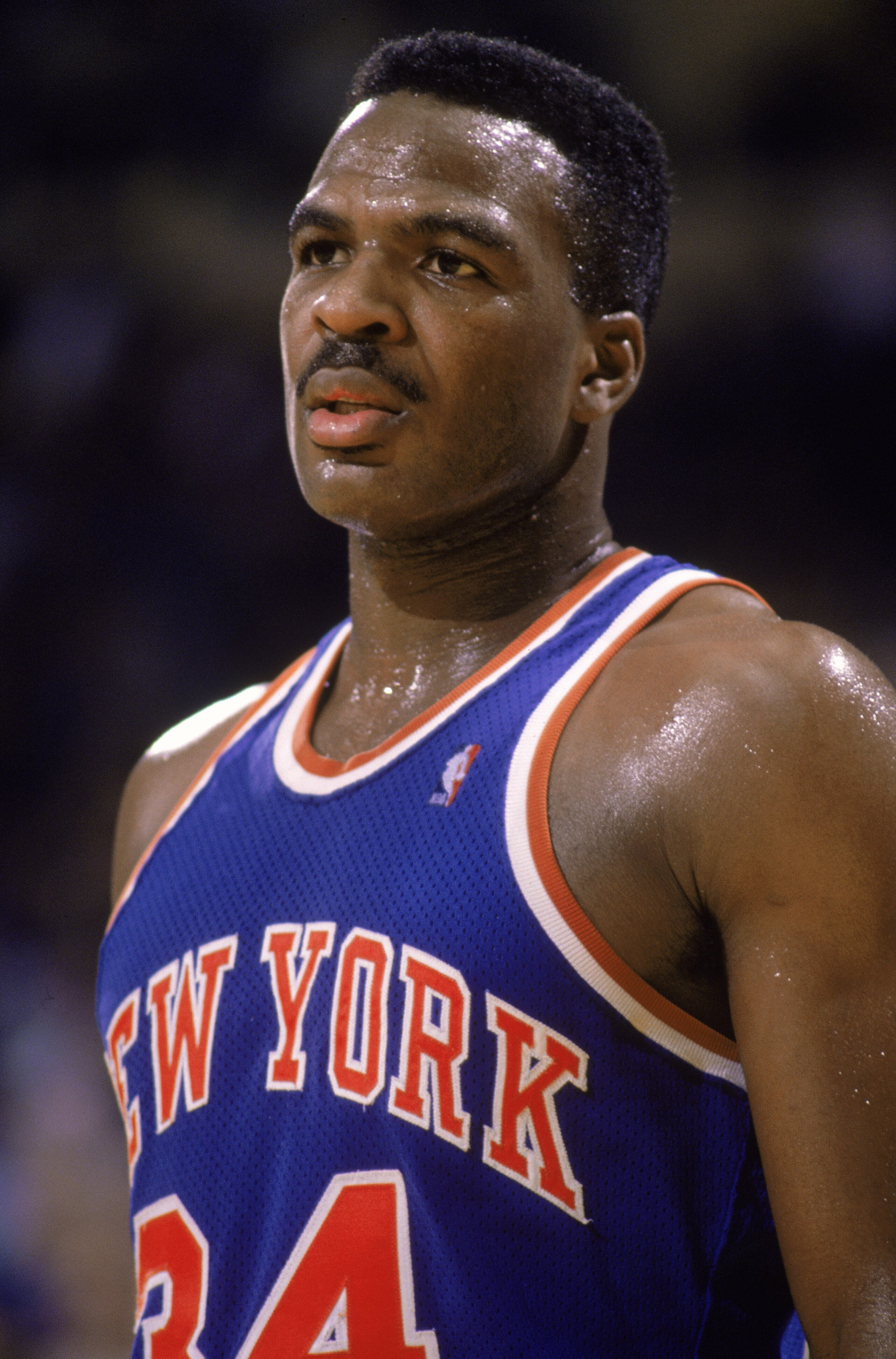
Charles Oakley was another old teammate of Jordan's, having spent his first three NBA seasons in Chicago alongside MJ.
But again, if anything, that only made their battles later in their respective careers that much more intense. Traded to the Knicks for Bill Cartwright, Oakley became a mainstay in the Knicks frontcourt, an intimidating presence who patrolled the lane with an iron fist.
But as much as he helped the Knicks become an Eastern Conference power in the 1990s, he couldn't help them overcome their No. 1 nemesis. Jordan's Bulls took out the Knicks in the first round in 1991, the second round in 1992, the Conference Finals in 1993, and again in the second round in 1996.
At least he was able to give Michael a few bruises along the way.
11) Patrick Ewing
15 of 25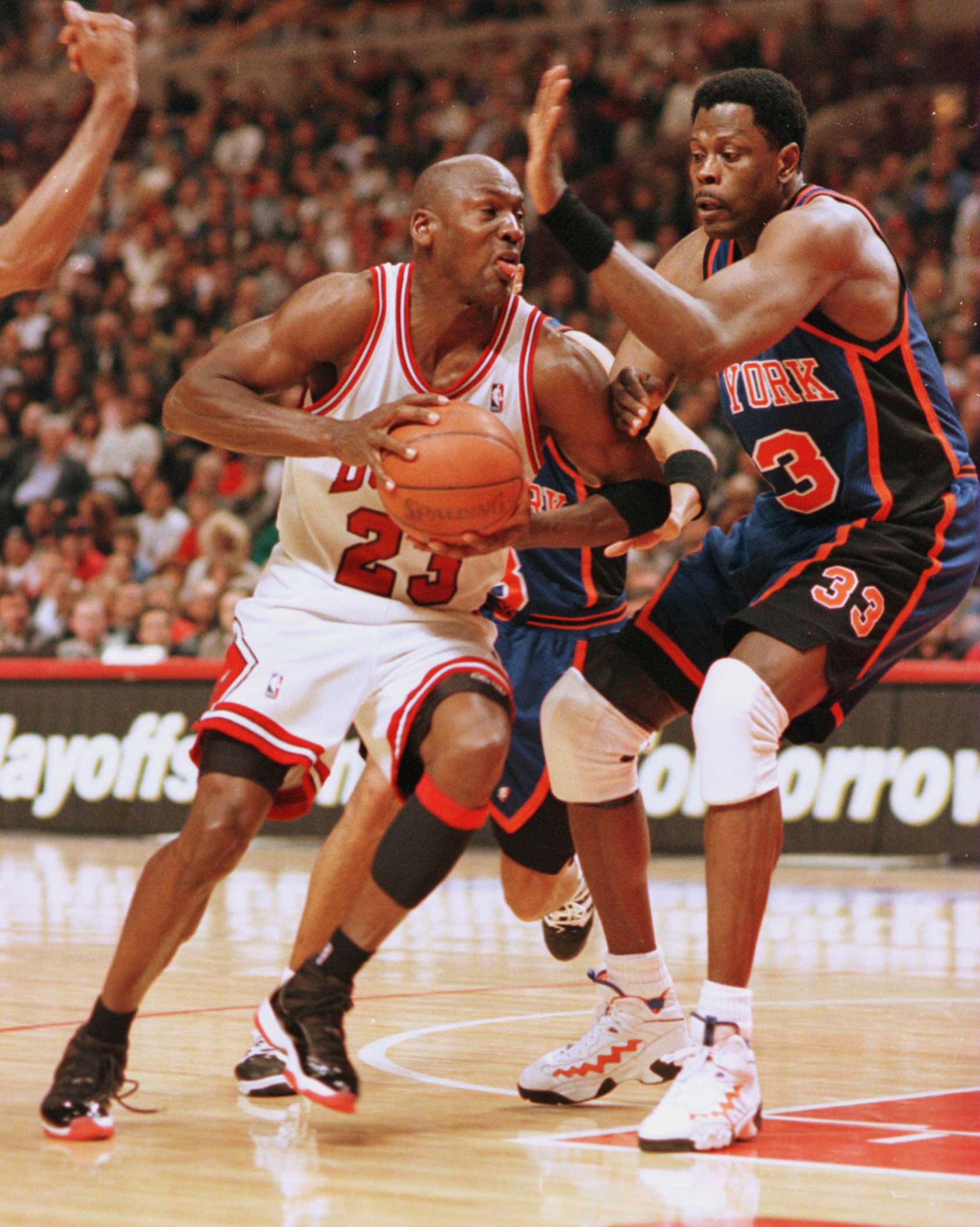
Patrick Ewing, of course, was the star of those Knicks teams of the 90s.
He enjoyed a Hall of Fame NBA career as an 11-time All-Star who is still the Knicks career leader in virtually every category. But even though they were good friends off the court (or maybe because of that?), Jordan took no pity on Ewing's Knicks.
The one time New York was able to get past Chicago in the postseason was in 1994, when Jordan was shagging fly balls in Birmingham. But they squandered their opportunity, losing to Hakeem Olajuwon and the Houston Rockets in the NBA Finals in seven games. The next year they let Reggie Miller and the Indiana Pacers be their undoing.
Then it was back to Jordan and the Bulls dominating the Eastern Conference. By the time he had left again, Ewing was a shell of his old self, and though they made the Finals again in 1999, Ewing was hurt during the series and could only watch as his team lost his last best chance at a ring in five games.
10) George Karl
16 of 25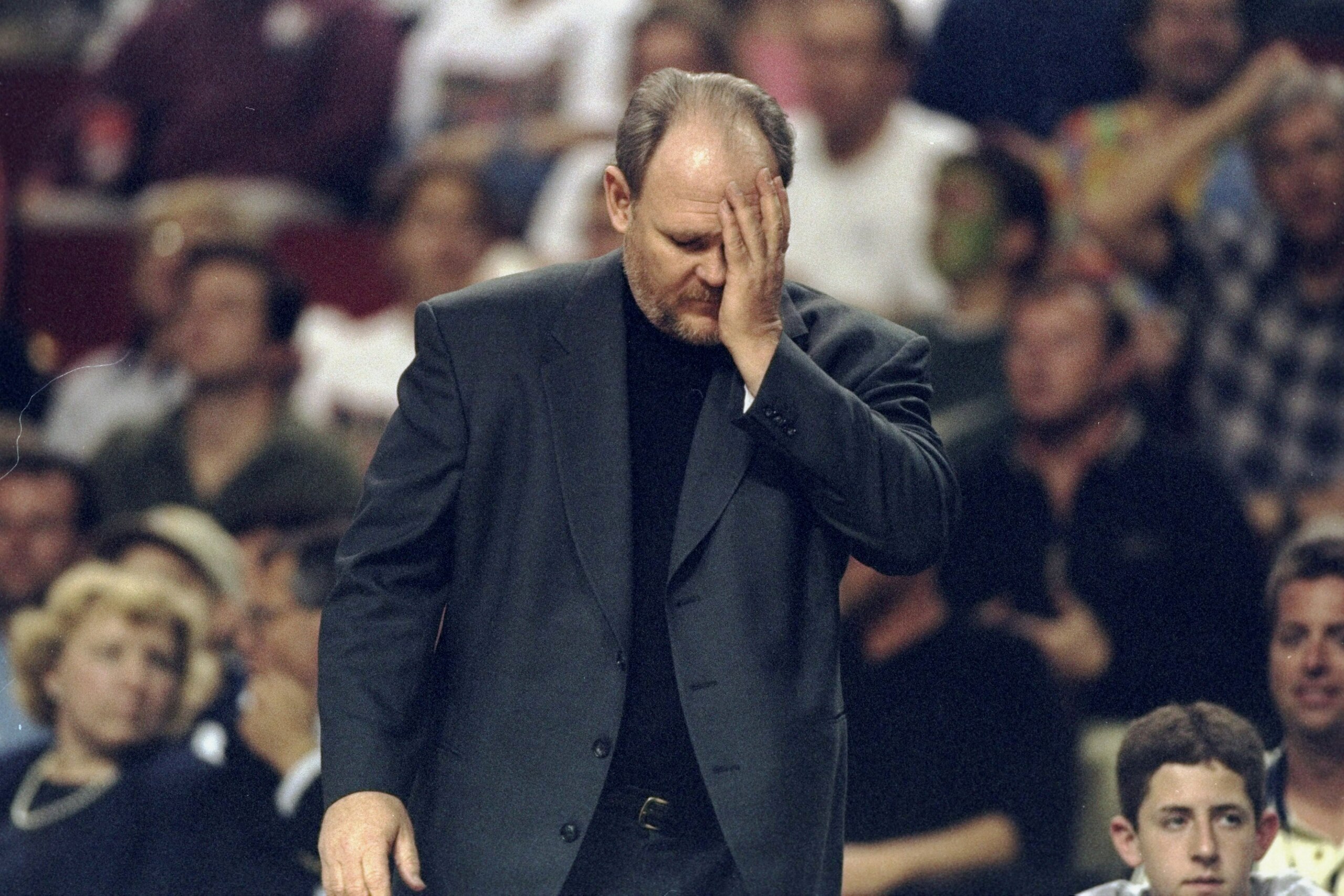
George Karl is still searching for that elusive title, but his best shot came 15 years ago.
As the head coach of the Seattle Supersonics, Karl oversaw the most consistent run of success in franchise history. Between 1992-93 and 1997-98, the Sonics won 55 or more games every season and captured four division titles.
Unfortunately, they usually wilted in the postseason, except for 1995-96. That was the year that it all came together for them. Seattle went 64-18, which still stands as the best record in franchise history. Their roster boasted Shawn Kemp and Gary Payton, dynamic talents in the prime of their careers.
As with Orlando, though, Seattle had the misfortune of having its best season the same year that the Bulls had their best season. A 64-18 record might have been impressive, but it was no match for 72-10, and the Sonics fell meekly to the Bulls in the NBA Finals.
9) Shawn Kemp
17 of 25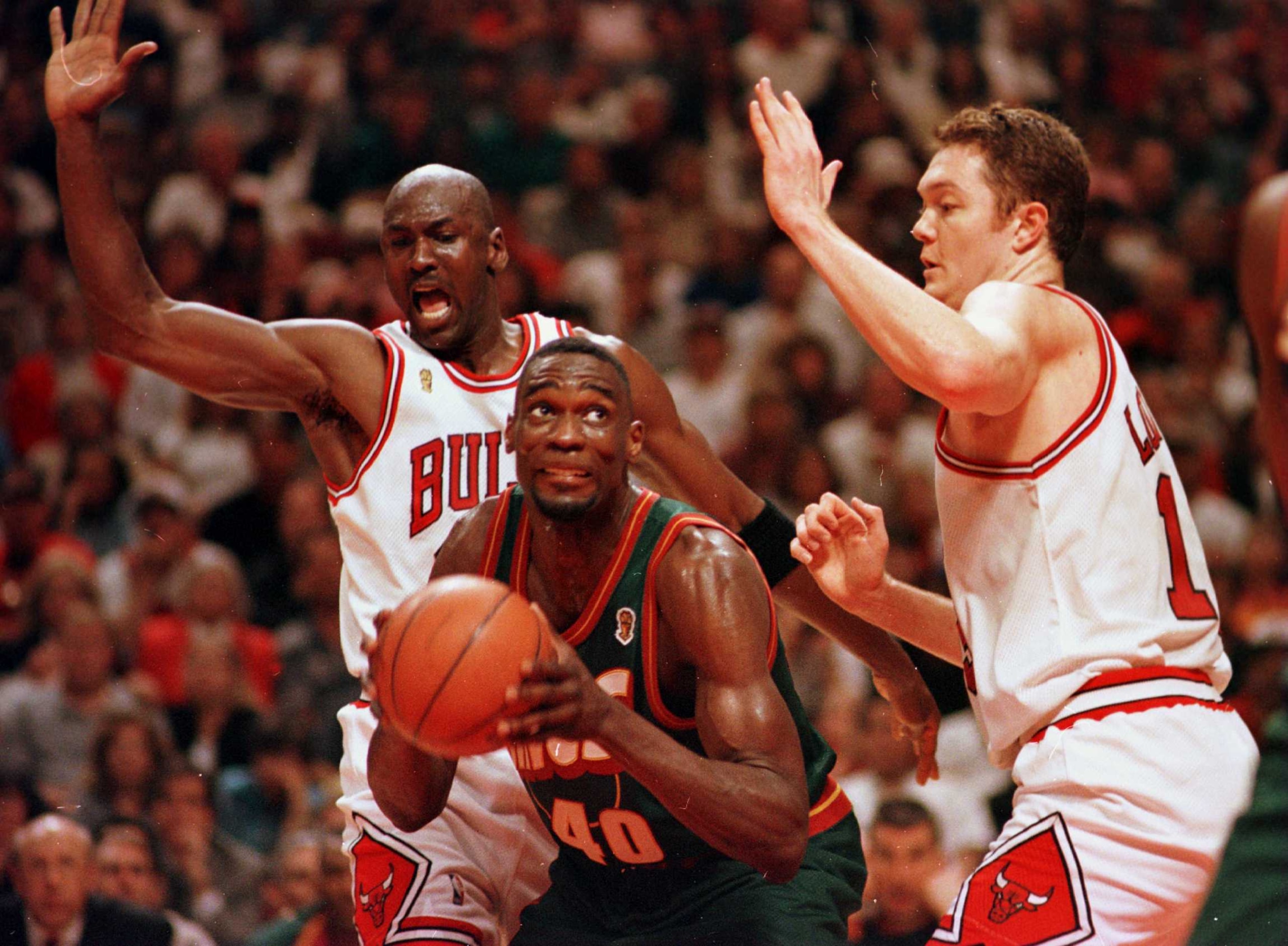
Gary Payton lucked out. Foiled in his first attempt to back into a title with the Lakers in 2004, he managed to stick around long enough to get his ring with the Miami Heat in 2006. Shawn Kemp had no such luck.
A six-time All-Star who averaged 15-plus points and 10-plus rebounds six years in a row with Seattle, Kemp's best shot came in those ill-fated 1996 NBA Finals. Seattle had lost just four playoff games en route to the Finals, but were no match for Chicago, which was a team of destiny that year if ever there was one.
Kemp tried to catch on later in his career with Cleveland, Portland, and Orlando, but his weight ballooned, he never got back to being the same impact player he had been earlier in his career, and none of those teams ever had the same success.
8) Rick Adelman
18 of 25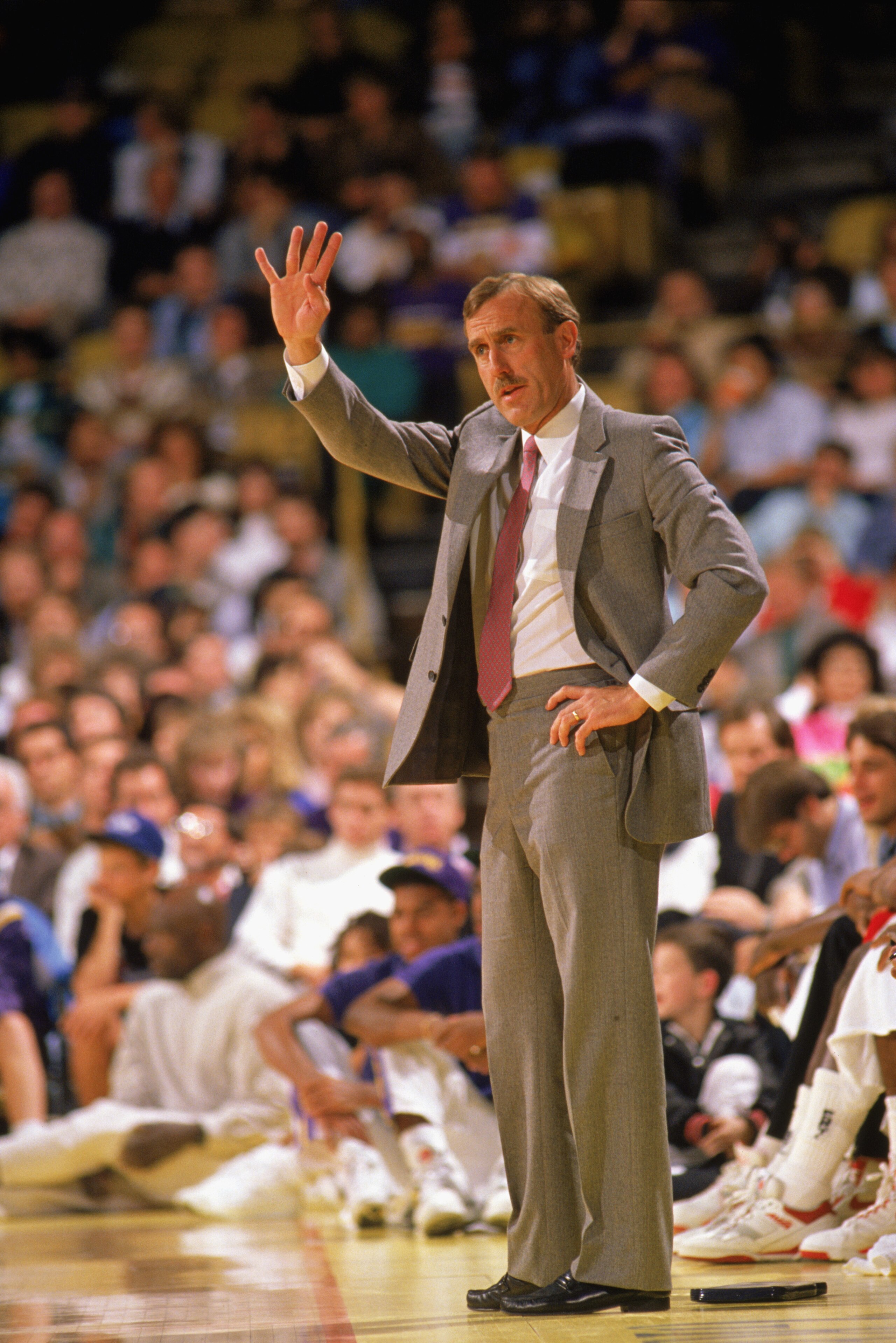
Rick Adelman makes this list by virtue of having been the head coach of the great Portland Trail Blazers teams of the early 90s.
Falling in their first Finals appearance in 1990 to the Detroit Pistons, the Blazers were back two years later and appeared better than ever. Led by Clyde Drexler, Portland went 57-25, won the Pacific Division, and lost just four games en route to winning the Western Conference and earning a berth in the 1992 NBA Finals.
There they would match up against Michael Jordan and the Chicago Bulls, seeking their second consecutive championship. It was a hard-fought series, and one in which the Blazers seemed to match up well. But two iconic Jordan performances tilted the scales in Chicago's favor.
In Game 1, he caught fire from long range in the first half, knocking down six three-pointers, scoring an NBA Finals record 35 first-half points and shrugging in disbelief to the cameras at his own greatness en route to leading the Bulls to a blowout win.
Then, with a chance to force a decisive Game 7, Portland couldn't hold onto a 15-point second half lead. The Bulls' comeback, led at first by the bench, was capped by Jordan, and Chicago won their second title.
Adelman has coached for 16 more years, but has yet to return to the NBA Finals.
7) Terry Porter
19 of 25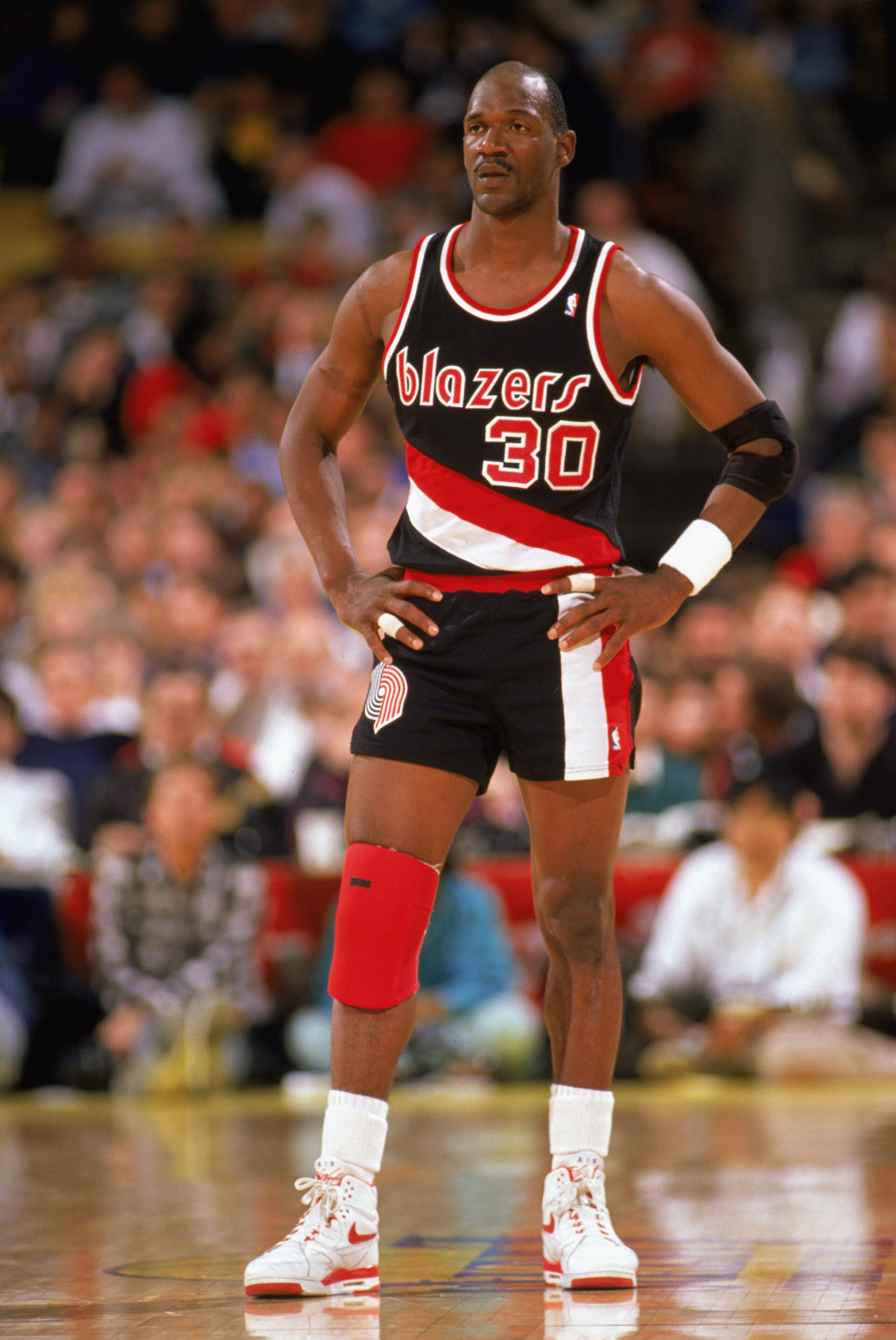
Clyde the Glide escaped the Great Northwest in time to catch on with the Houston Rockets and win a championship in Texas.
Terry Porter, unfortunately, couldn't do the same. The other leader of the early 90s Blazers teams, he was a two-time All-Star and finished in the top 10 in the league in assists five times. But the 1992 Finals ended up being his last.
Unluckily, he played for the San Antonio Spurs for three years at the end of his career, and they were the three years in between their first (1999) and second (2003) championships.
6) Paul Westphal
20 of 25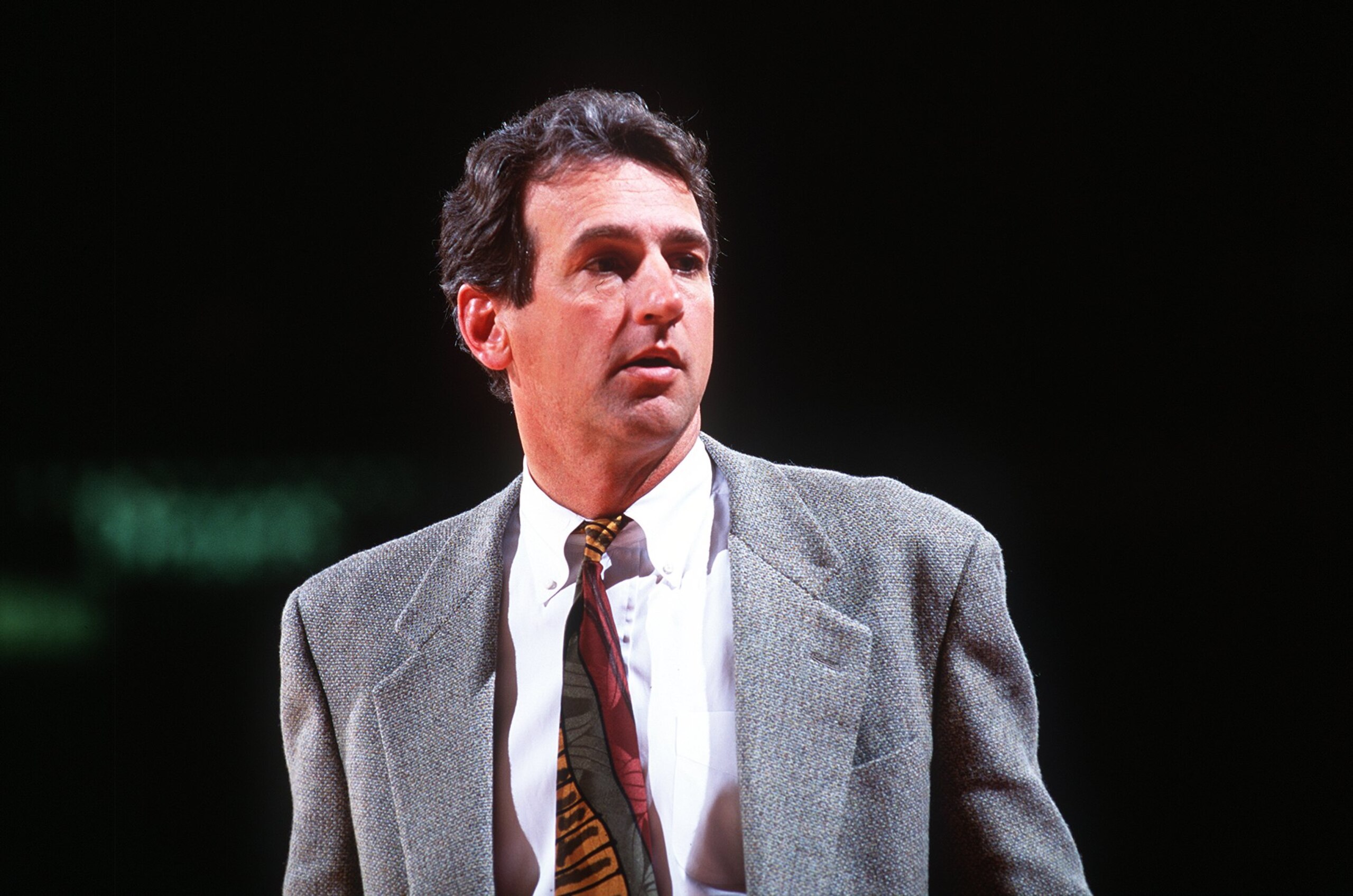
Paul Westphal couldn't have realized just how good he had it in 1992-93.
In his first year as an NBA head coach, at the young age of 42, Westphal replaced Cotton Fitzsimmons, and patrolled the sidelines for a Suns team that scored Charles Barkley in a trade with the Philadelphia 76ers and finished 62-20, the best record in franchise history.
They came into the 1993 NBA Finals with an air of destiny about them. They had come back from an 0-2 hole in the first round against the Lakers, and battled through a hard-fought seven-game series against the Sonics to claim the Western Conference crown.
Now it was down to them and the Bulls, seeking their first three-peat. After dropping the first two games at home, the Suns managed to make a series of it, winning a classic Game 3 in triple-overtime and forcing the series back to Phoenix for Game 6.
They led that game, too, in the closing seconds, but a John Paxon three-pointer won it for Chicago. Michael still had a hand in that win, though. He scored every other basket the Bulls had in the fourth quarter.
5) Kevin Johnson
21 of 25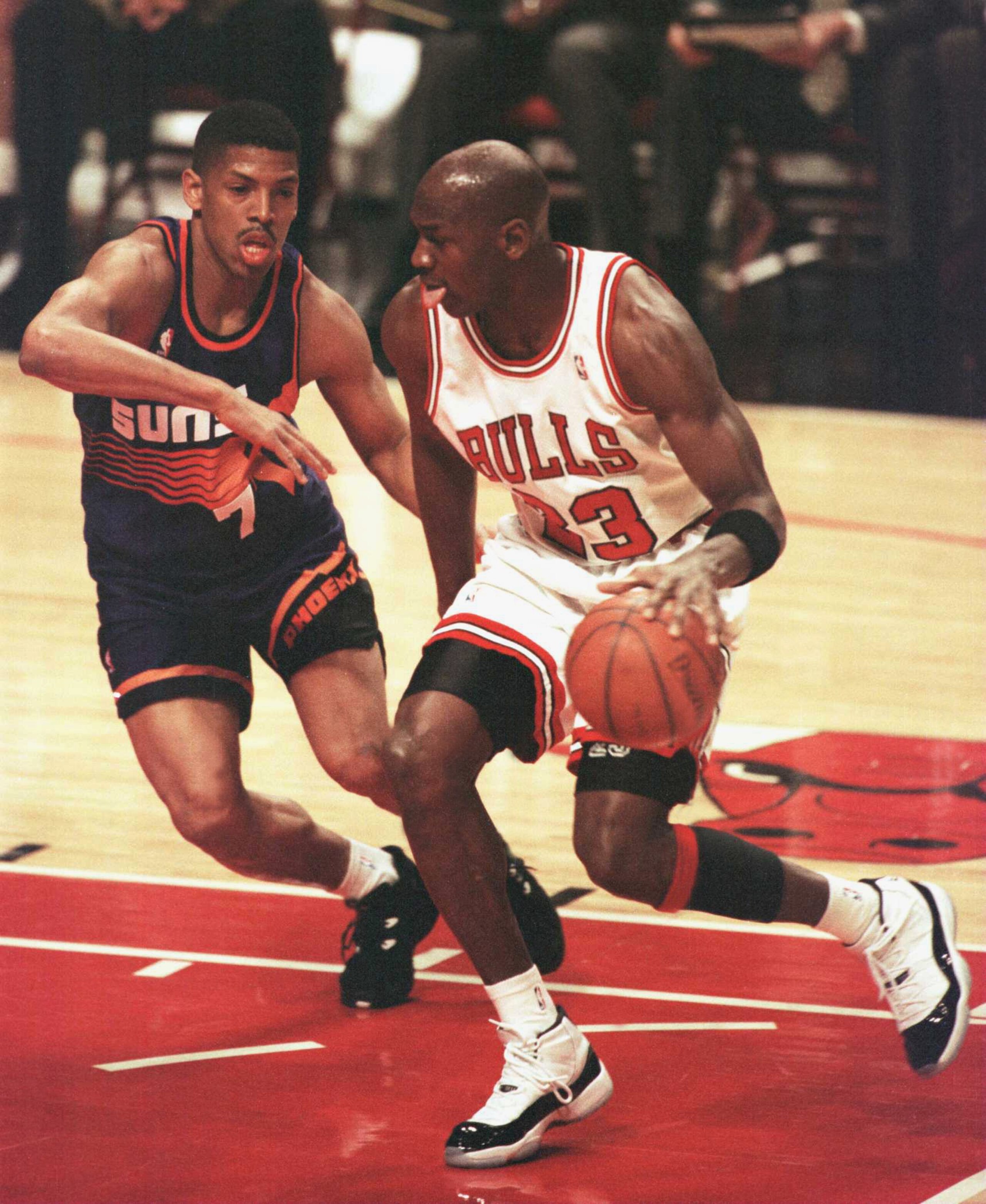
Kevin Johnson was a three-time All-Star and remains one of the best players in Phoenix Suns history.
But his best shot at an NBA title went down the drain when Paxson buried that three-pointer. He averaged 17.8 points and 7.9 assists in the playoffs that season, but Michael Jordan wasn't keen on losing.
Although KJ would go on to have other iconic playoff moments, like a posterization of Hakeem Olajuwon in the 1994 Western Conference Semifinals, he would never again return to the Finals.
But hey, now he's the mayor of Sacramento, so there's that.
4) Charles Barkley
22 of 25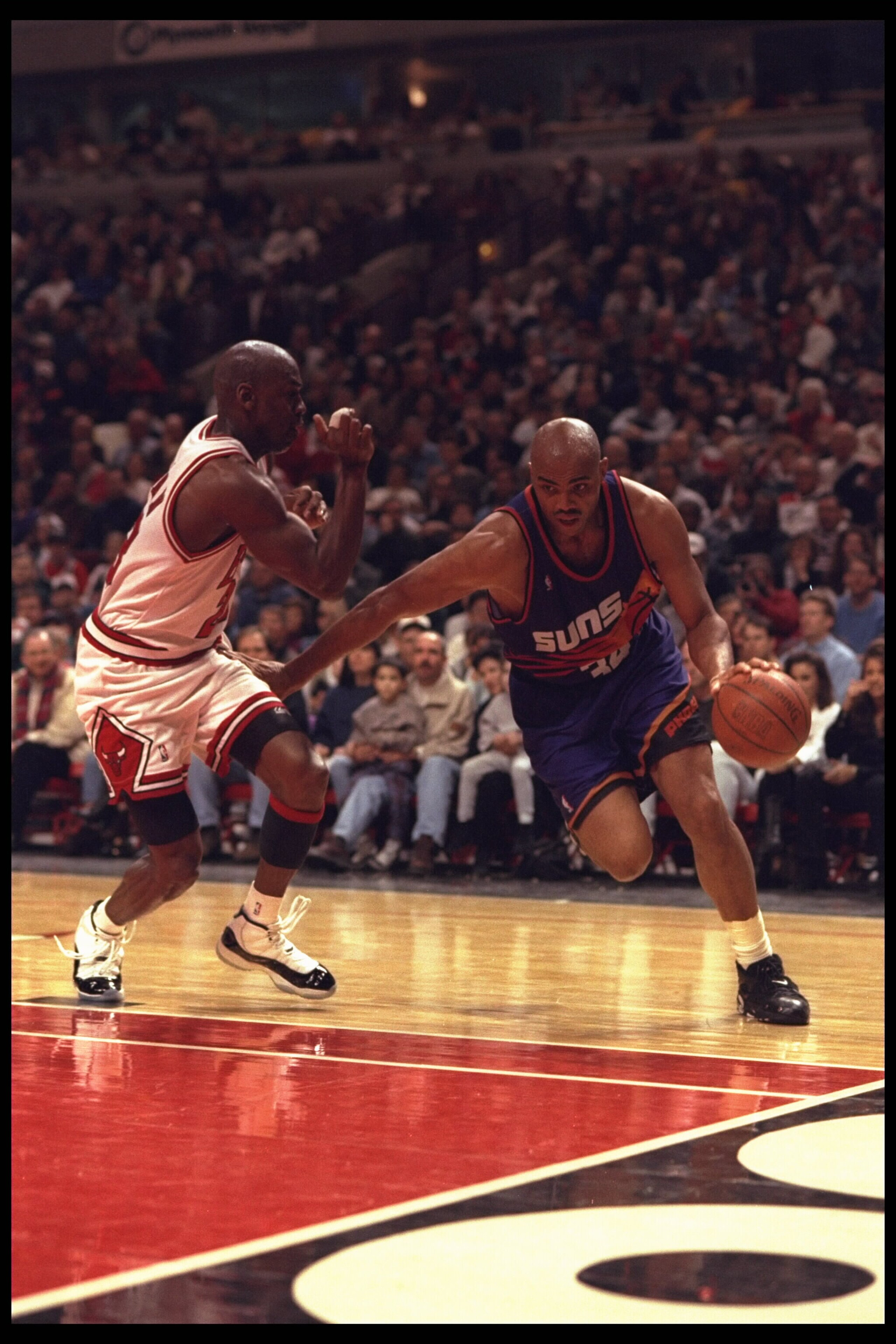
The 1992-93 season was Charles Barkley's finest.
He arrived in Phoenix and remade the franchise in his image: tough, determined, tenacious. He averaged 25.6 points, 12.2 rebounds and a career high 5.1 assists, led the Suns to that 62-20 record and won the NBA MVP award for his efforts.
But his good friend Michael Jordan would refuse to share the spotlight, preventing Barkley from taking the Suns to the promised land that season. He would make his escape to Houston two years too late, as they had already won their two championships, and the geriatric nucleus of Olajuwon, Drexler and Barkley couldn't get past the Utah Jazz.
But hey, he's been back to the Finals plenty of times since as an announcer.
3) Jerry Sloan
23 of 25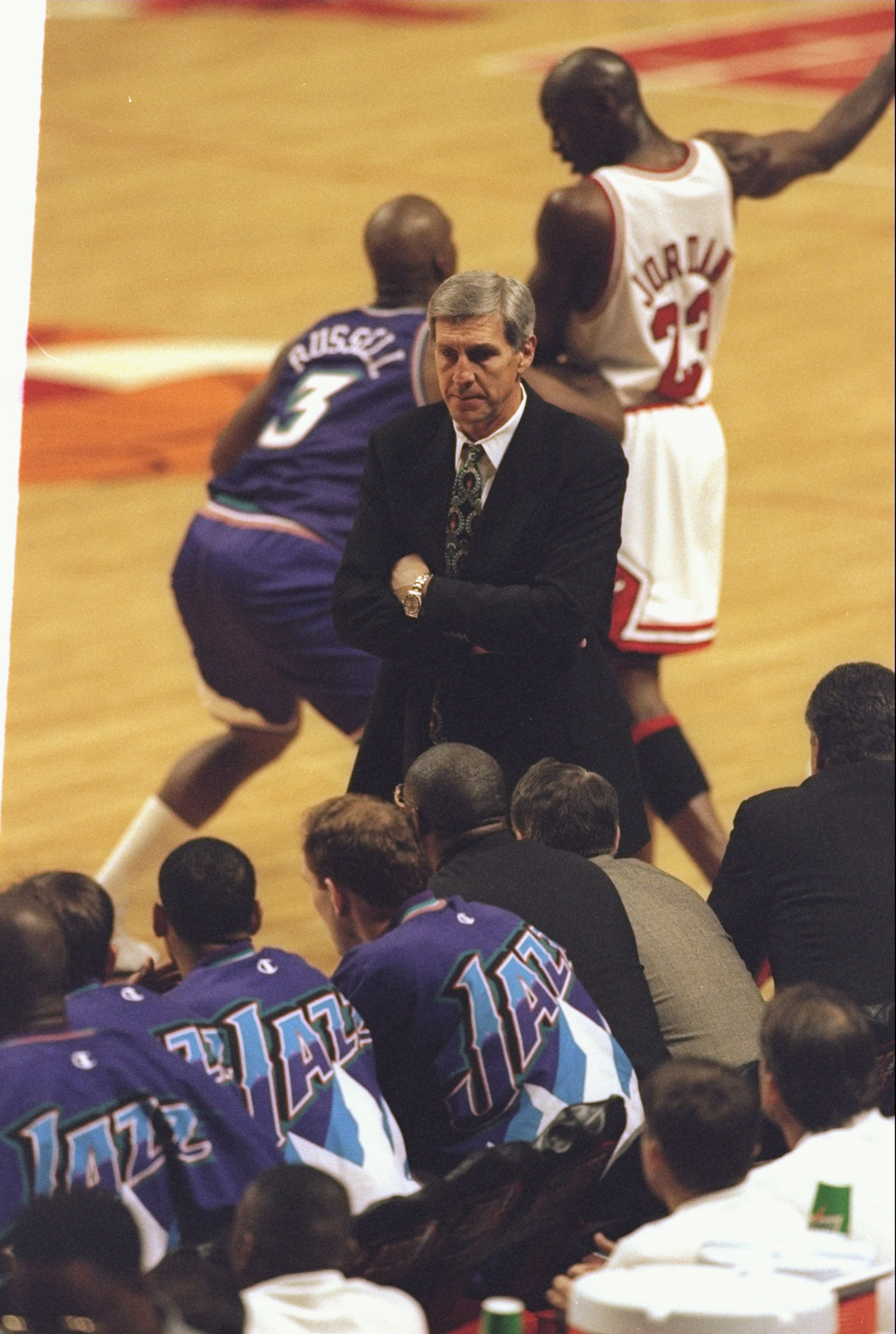
Sloan led the Jazz for longer than many people reading this article today have probably been alive.
Leading Utah to a .500 or better record in all but one of his seasons in Salt Lake City, Sloan's failed to make the playoffs just three times. That was during the interim years after Karl Malone and John Stockton had finally left the team.
While he had Malone and Stockton, the Jazz were one of the most consistently excellent teams in the NBA, winning 50 or more games eight times in the 1990s. In both 1997 and 1998, Utah made it to the NBA Finals, but were turned away both times by Jordan and the Bulls.
Those were the only Finals appearances of Sloan's coaching career.
2) John Stockton
24 of 25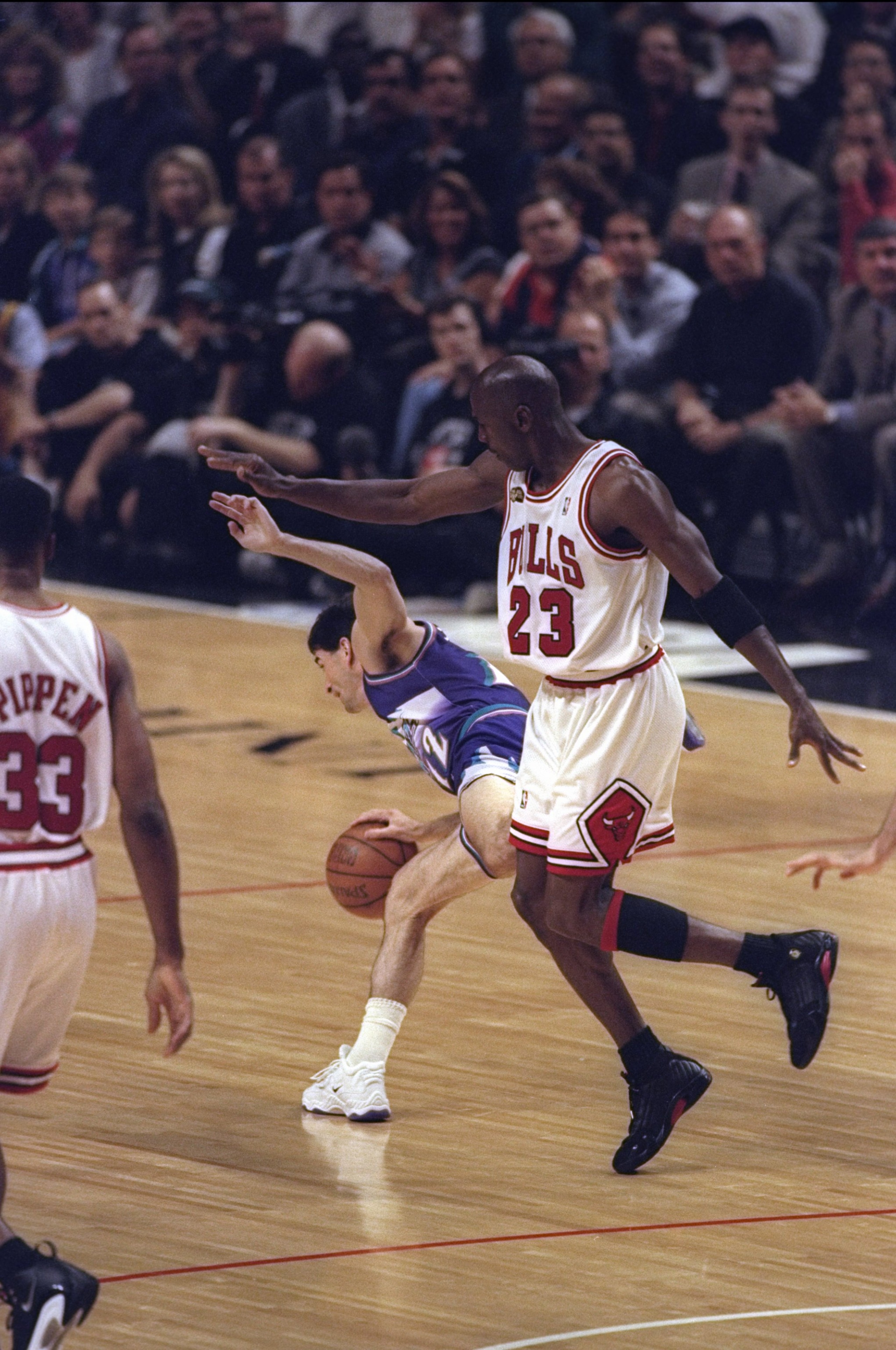
John Stockton is one of the greatest point guards in NBA history, the NBA career leader in both assists and steals.
But his choir boy looks combined with a surprisingly tough (some might say dirty) on-court demeanor weren't enough to dethrone His Airness. Stockton was never afraid to tussle with Jordan and never backed down from a challenge, but it was no use.
Whether it was through scoring 38 points with the flu in Game 5 in 1997, or knocking down the series clincher in Game 6 in 1998, MJ would not be denied the storybook ending to his Bulls career.
1) Karl Malone
25 of 25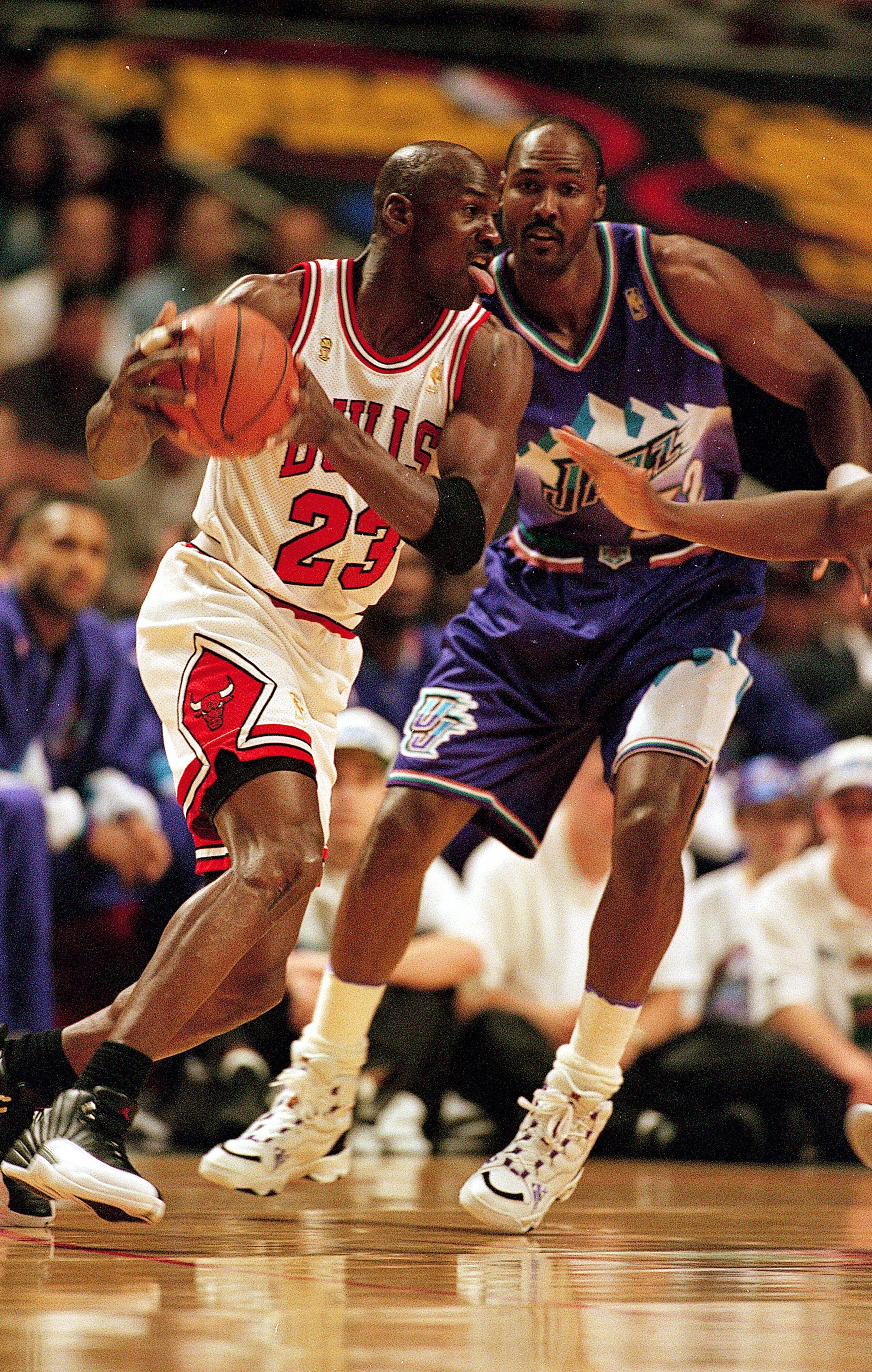
Karl Malone did just about everything in the game of basketball, except win an NBA title.
He scored more points than anyone in history except for Kareem Abdul-Jabbar. He was named to 14 NBA All-Star teams. He was a two-time league MVP. But his two trips to the Finals ended in heartbreak, thanks to one No. 23.
He almost was able to back into a championship, signing on with the Los Angeles Lakers for the 2003-04 season at the age of 40. He joined Shaquille O'Neal, Kobe Bryant, and Gary Payton on a star-studded team that many thought was destined to win it all.
Unfortunately for Malone, they crumbled in the Finals against the upstart Detroit Pistons, and he was denied his own storybook ending.

.jpg?w=2560 "Raiders Could Start Mendoza")

.jpg?w=2560 "Rodgers Iced Out on Plane 💎")
.jpg?w=2560 "🚨 Week 8 AP Top 25 Poll")
.jpg?w=2560 "Packers Safety Slams Refs 🤬")