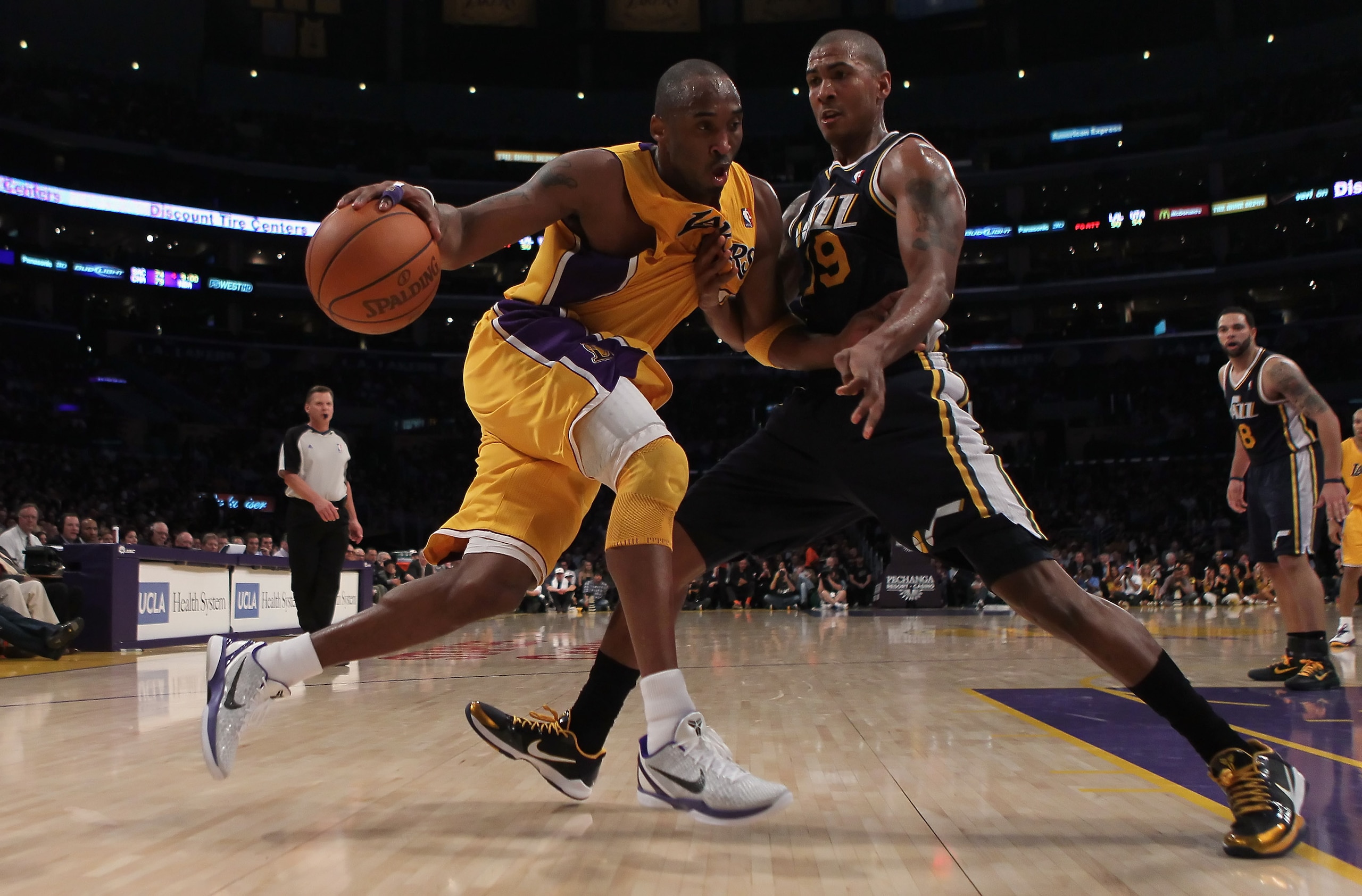

NBA Power Rankings: Ranking the Top 30 One-on-One Players in the NBA
Few things in basketball are as exciting as one on one. There's always the questions about who would be who in a "game of one on one." A lot of those questions are just weird and hard to answer because there are such different kinds of players in the league.
Some would look at a matchup like Dwight Howard versus Derrick Rose and say no way would Rose win, Howard would block every shot. Others would say that Rose would be running circles around Howard and there's no way he could keep up. What matters is though is that it doesn't matter.
In real NBA games Howard isn't guarding Rose and Rose isn't going up against Howard.They are matched up against players of similar size and ability.To figure out who is the best one on one player, we have to look at how players actually compete against their counterparts, not weird hypothetical matches that are impossible to prove.
At Synergy Sports, a site which I love, they break down every play of every game. They qualify every play into different types of plays, isolation, pick and roll (separating the different roles) screen, and so on. Three of these types of plays are essentially "one on one" plays as they boil down to one player trying to score and one player trying to keep him from scoring.
Those three plays are isolation, spot up jumper, and post up. For each of these they categorize how many plays a player has either run, or guarded against, as well as how many average points the player either scores or surrenders.
In other ways there are basically three things a player can do in a one one one situation. Go around the defender (isolation), go through the defender (post him up) or shoot over him (spot up). The rankings quantify how often a player is successful compared to how often his opponent is successful in doing those things.
I've pooled all of this data into a table, and compiled it to reflect how good every scorer over 15 ppg is in "one on one" scenarios. I've taken the average number of points they score on offense, and divided it by the average number of points given up on defense to find a ratio of Offensive Points per Play to Defensive Points per Play.
Disclaimer: No Players Were Hated In The Making Of This Slide Show
1 of 32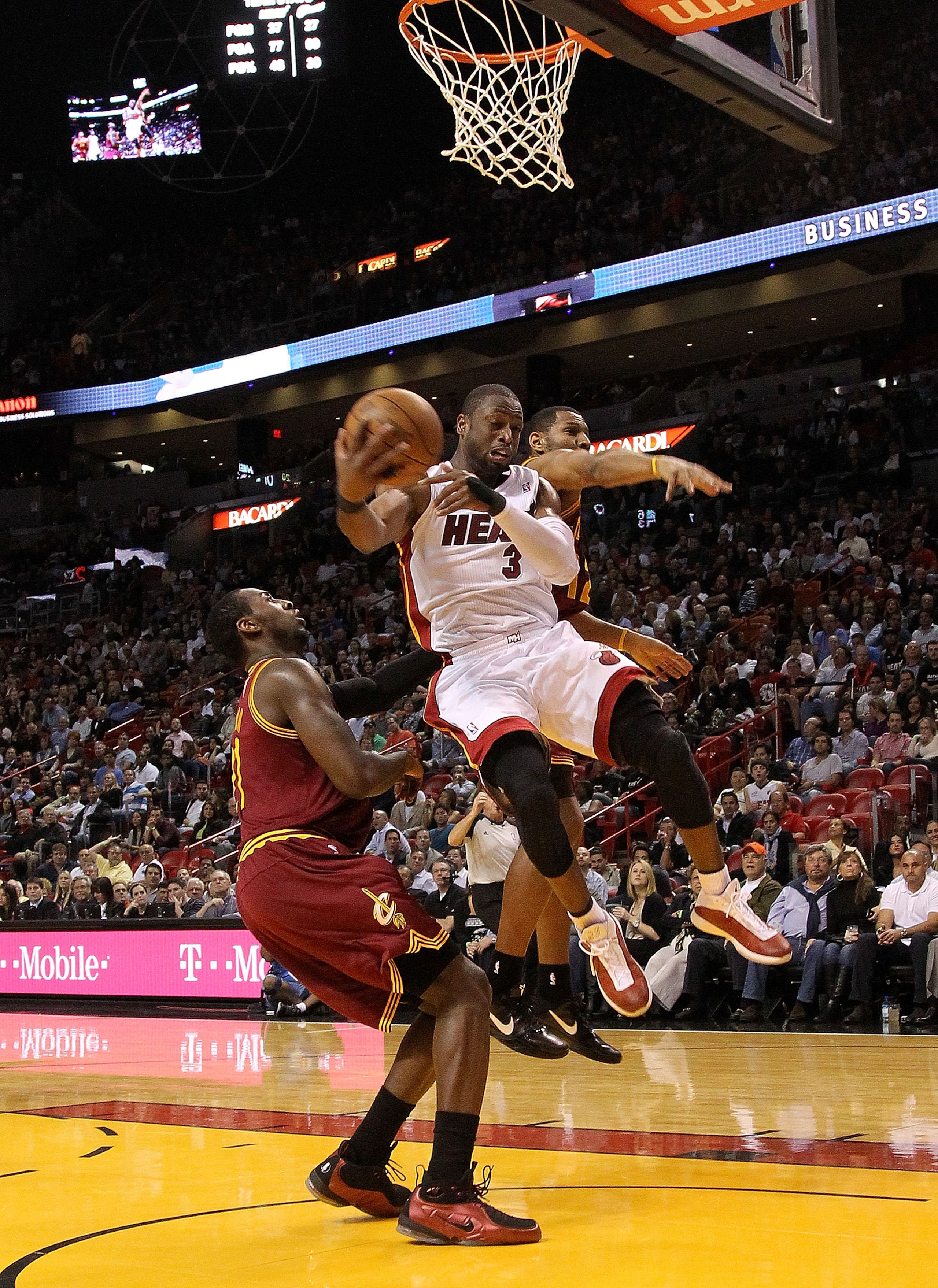
No players were hated in the course of this slideshow. I had no idea what would happen when I started compiling the data, nor did I formulate my process to manipulate any player being elevated or punished. I simply used what I felt was the most logical method, i.e. do a better job of scoring than the guy they are guarding.
Bear in mind these are objectives ratings and are done on a per play basis. Some players have a lot more plays run for them, and some have a lot more run against them, so this is per play only. There are some situations where the results contradict common perception. In those situations I commented accordingly.
It should be recognized that stat are stats, and they don't mean everything but they don't mean nothing either. Real games and boxscores are not mutually exclusive, nor can you ascertain everything from a boxscore that you can from a game.
However, what happens in games are recorded as stats. If someone grabs a rebound it was a real rebound. If he's standing all alone under the backboard when the ball comes to him, that's a rebound, but it's not the same as if he's yanking it away from Z-Bo though. I get that. When you look at the box score you don't see the difference. I get that too.
At the same time if someone is averaging 10 rebounds per game, they aren't all coming from standing alone under the backboard.
My point is this. You can learn something by looking at stats. These aren't intended to be a final say, but a conversation starter. I've included information to say why players might be higher or lower than expected and there are some opinions involved in the comments.
However, in the ranking structure itself I went straight by the ratios. If you disagree Wades' placement, comments shouldn't be addressed as "Wade should be higher" because they are ranked in numerical order. Wade's placement is according to his ratio, not my opinion.
If you feel to comment about how Wade's ratio might be more like that "rebound ripped away from Z-Bo" where the actual stat doesn't fully reflect his ability, comment on that. That's why I went through all the work to compile the data. In other words, comment on the meaning of the data, not the validity of it.
If you have some insight into where my logic is flawed feel free to comment. However, "Player X should be higher" is not really helpful. Believe it or not I didn't warp reality to my preference. No really! I didn't.
Surprisingly Not There
2 of 32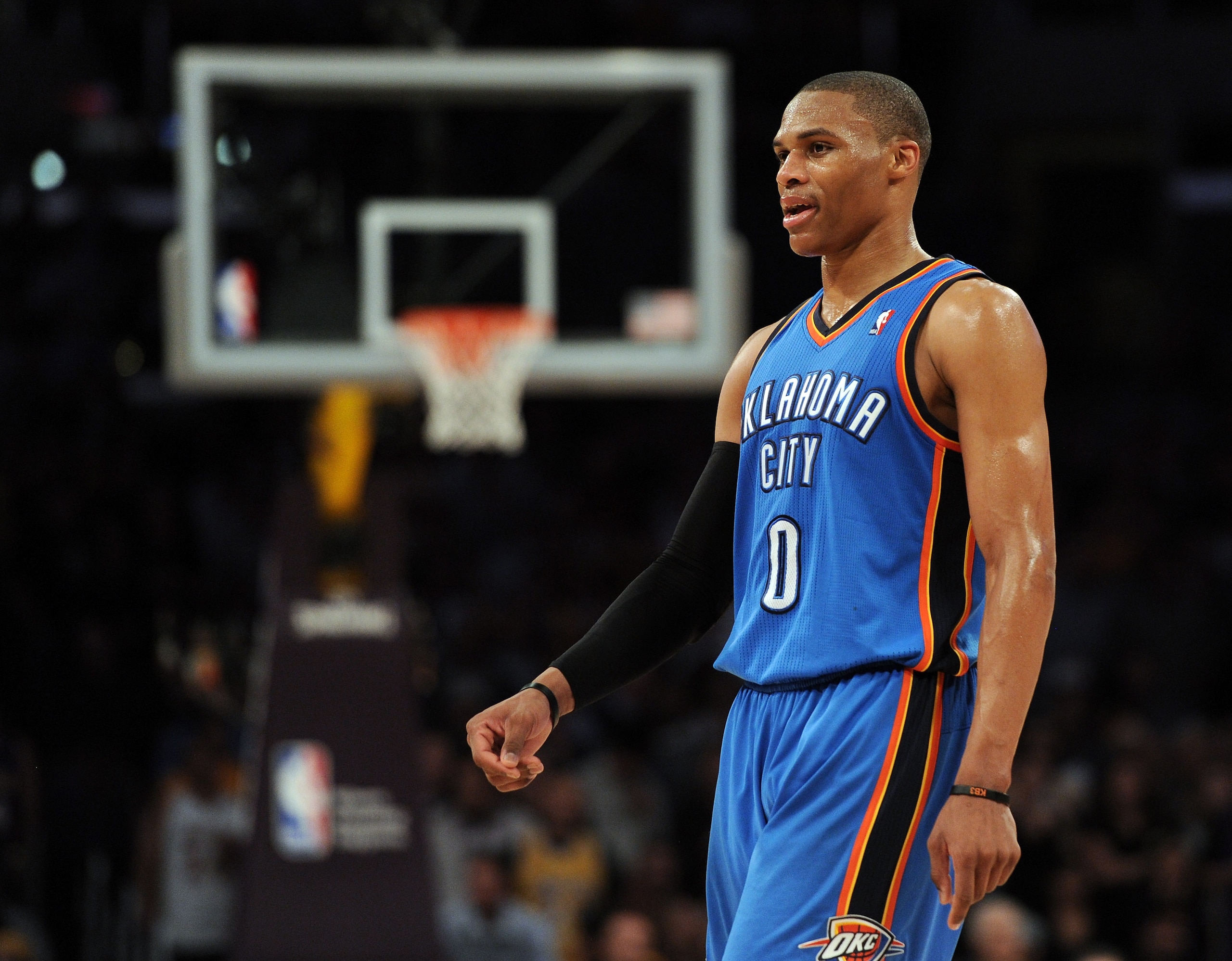
Here are some key players who didn't make the cut. I reiterate, no players were hated in producing this slideshow. They just had a ratio that was lower than at least thirty other players. It doesn't mean that other players are better, it just means that other players have a better ratio when it comes to one one.
Of course that probably means they are better one on players, but that doesn't mean they are better players. Basketball is a team game after all.
Here are some players, what their ratios were, and where they ranked. Some were brought down by lack of offense, some by lack of defense, some just didn't excel at either. Most surprising to me was Russell Westbrook. He's a great point guard, but apparently he's not a great one on one player.
I guess you could argue that stats don't mean everything. They don't. It does seem to me though that in terms of "one on one" where the goal is to score while you keep your opponent from scoring, how much you score and stop your opponent from doing the same is pretty relevant.
However there is a lot more to being a point guard than going one on one. It was striking to me to see him 50th though. I would have expected him to be higher. I point this out because it seems sometimes you do an article like this and people think you've got an agenda, and really the only agenda here was to see where things ended up.
| Rank | Player | Ratio |
| 31 | Josh Smith | 1.00 |
| 34 | Carmelo Anthony | .99 |
| 36 | Pau Gasol | .98 |
| 39 | Michael Beasley | .96 |
| 41 | Kevin Love | .96 |
| 42 | LaMarcus Aldridge | .95 |
| 43 | Wesley Matthews | .93 |
| 44 | Raymond Felton | .92 |
| 47 | Blake Griffin | .91 |
| 49 | Tony Parker | .87 |
| 50 | Russell Westbrook | .83 |
30: Amare Stoudemire; 1.01
3 of 32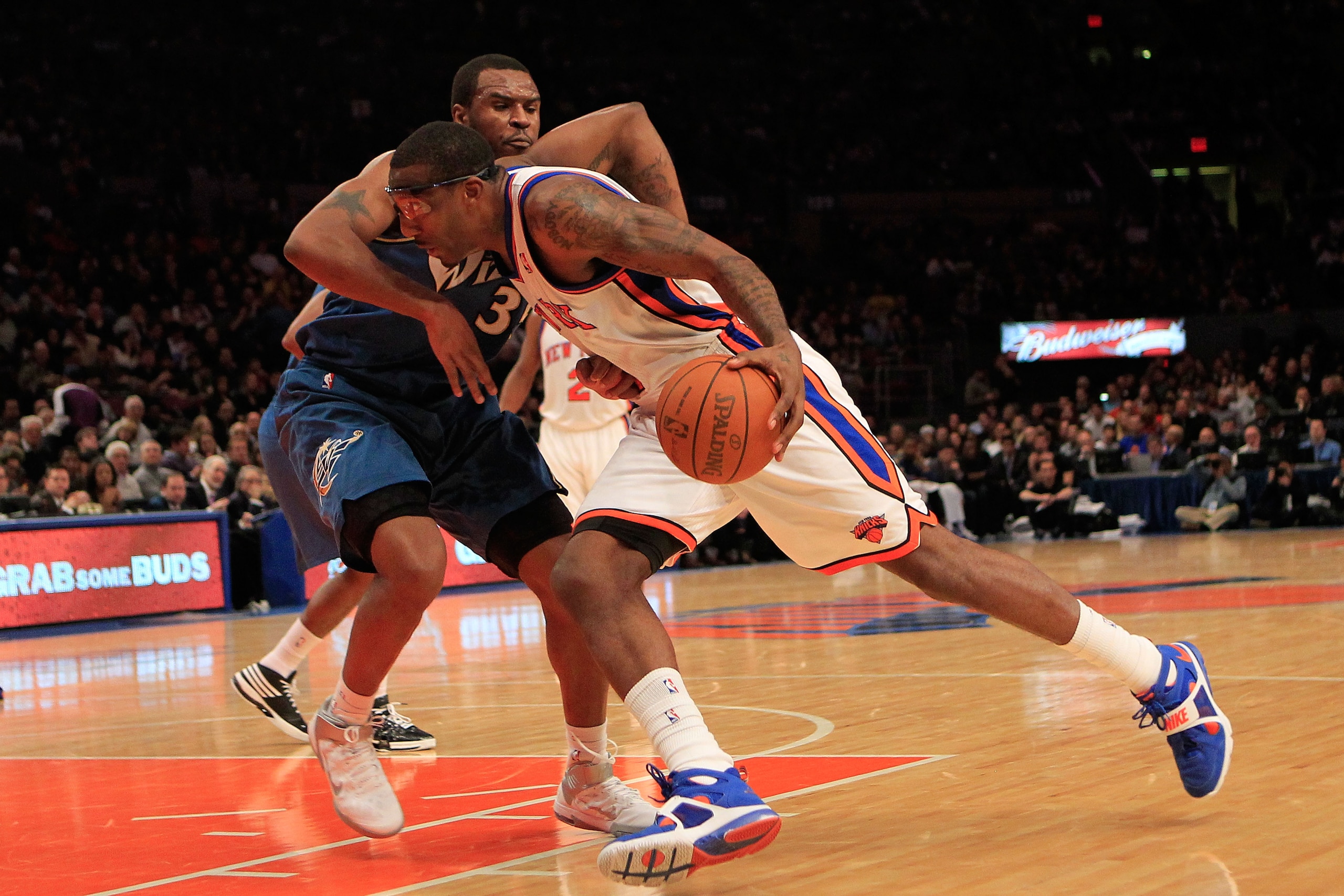
Offense: .94 (24)
Defense: .94 (34)
Why He's Not Higher: Spot up scoring is a weakness on offense. He was 41st out of the top 50. Isolation defense is his biggest weakness. At .90 PPP he's 38th among the top 50. All in all his defense is not stellar.
Why He's Not Lower: The post is his bread and butter on both offense and defense. On offense he's averaging 1.09 PPP, good for 7th best. On defense he's yielding .87, 27th best.


29: Dwight Howard; 1.01
4 of 32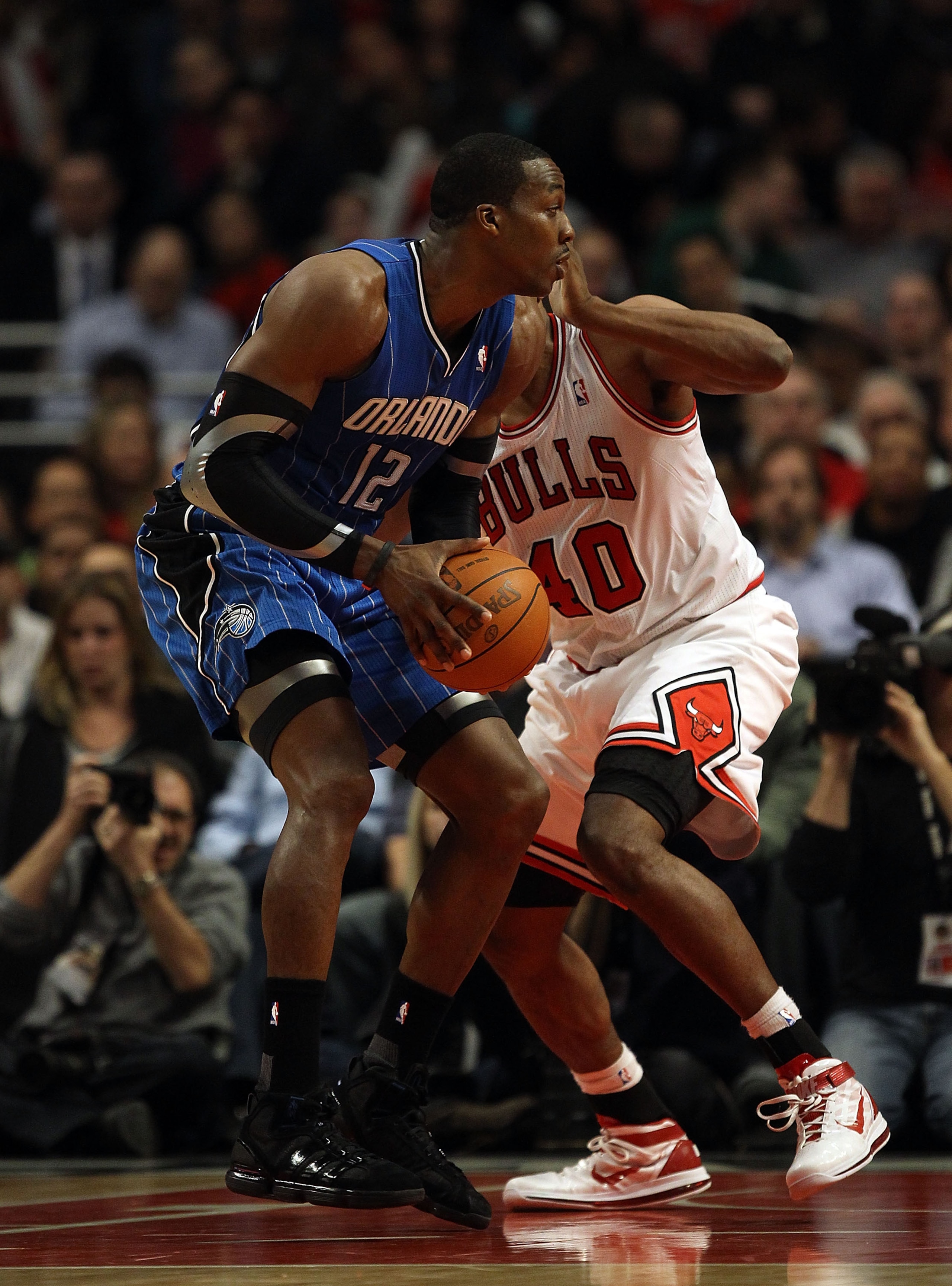
Offense: .92 (29)
Defense: .91 (26)
Why He's Not Higher: Very limited offense. He's only scored 12 points in isolation and none on spot up jumpers. His one on one scoring is all in the post. His only weakness on defense is on the spot up jumpers where he's 1.06 PPP, which puts him at 37th out of 50.
Why He's Not Lower: He's solid in the post, scoring .92 per play and yielding only .78, ranking 23rd and 14th respectively.
28: Wilson Chandler; 1.01
5 of 32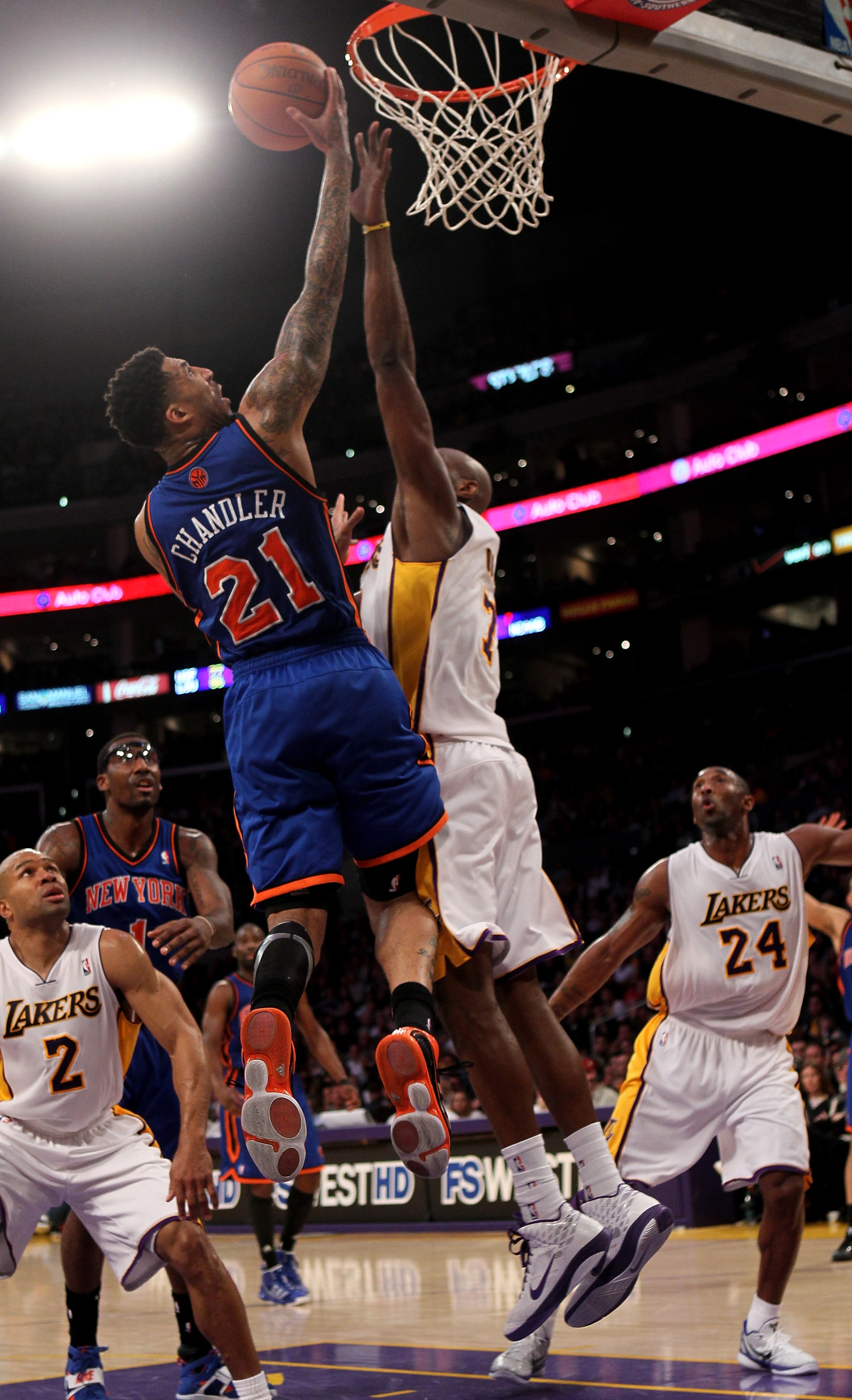
Offense: .98 (18)
Defense: .97 (40)
Why He's Not Higher: Offensively his biggest issue is in the post where he only scores .83 ppp, placing him 38th. On defense he's weakest in isolation, giving up .96 ppp, putting at 45th out of 50.
Why He's Not Lower: His spot up offense is a respectable 1.03, putting him at 25th, but it's what he does best and what he does 75 percent of the time. Defensively he ranks 40th overall and he doesn't do anything well.
27: Dwyane Wade; 1.02
6 of 32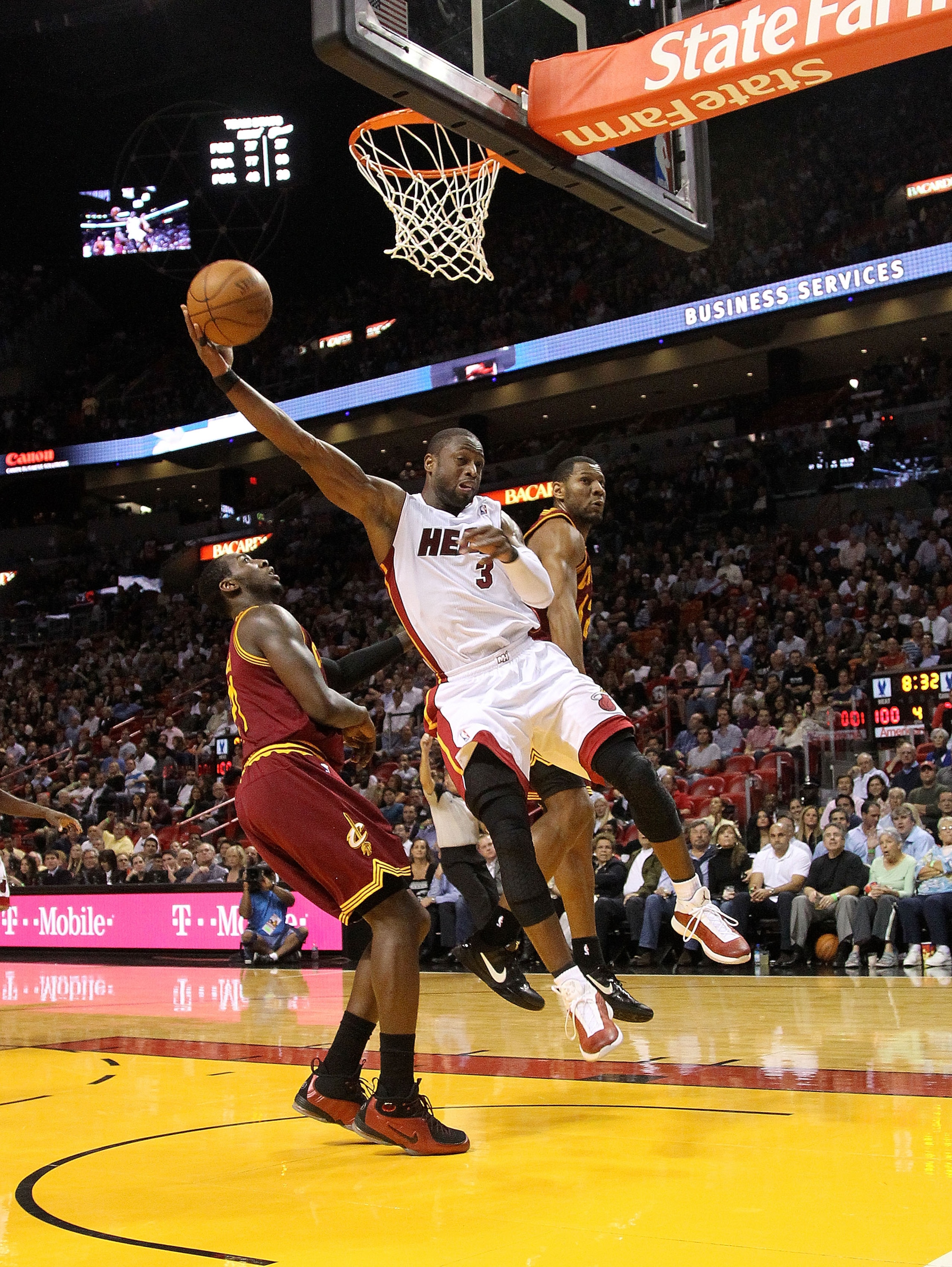
Offense: .93 (28)
Defense: .91 (25)
Why He's Not Higher: I was surprised to see him ranked this low. I would have thought he'd be much higher.Offensively he has trouble shooting over his opponents, averaging 95 ppp and ranking 35th. Opponents have found success posting up on him has also found success as he ranks 30th there at .88 ppp.
Why He's Not Lower: Offensively he's 16th in isolation with .93 ppp, good for 16th best. His strength on defense is in the post where he gives up only .77 ppp, good for 13th in the NBA.
26: Deron Williams; 1.03
7 of 32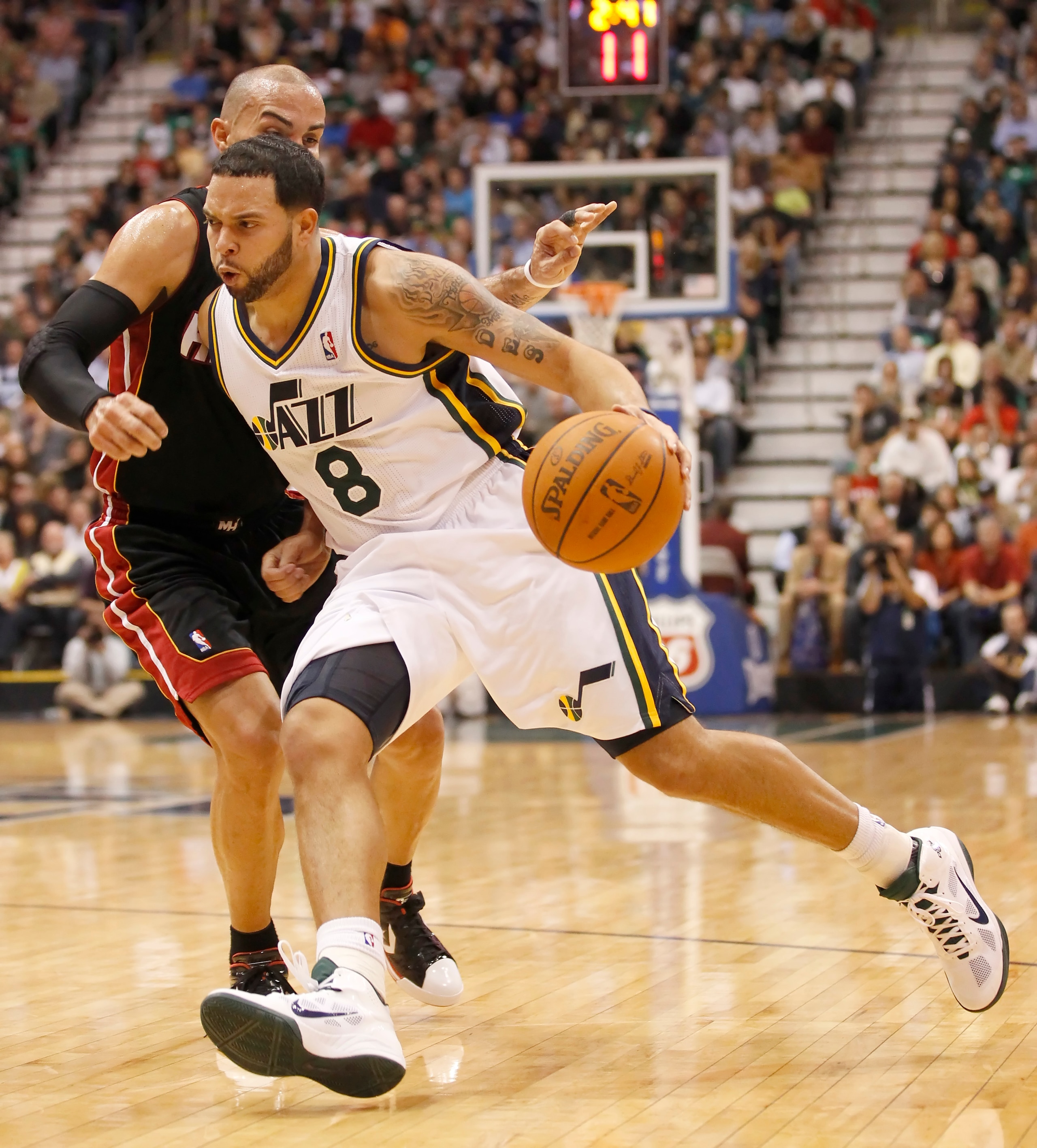
Offense: 1.06 (8)
Defense: 1.03 (49)
Why He's Not Higher: Offensively, Williams is fantastic in one one one situations. Defensively he's something a victim of his own success. His only weakness is on spot up shooting where he's ranked 48th at 1.17 ppp. The problem is that on average that's the highest ppp of any category and it accounts for almost 80 percent of the scoring against Williams, so it drags down his overall average.
He's outscored his opponents by 95 points on the season which would have him 16th.
Why He's Not Lower:
He does everything else from well to really well. Ironically what he does the best though is spot up shooting. At 1.29 ppp he ranks third among the top 50. Defensively he's best in post up defense, restricting his opponents to .76 ppp, good for 12th in the NBA.
25: Danny Granger; 1.04
8 of 32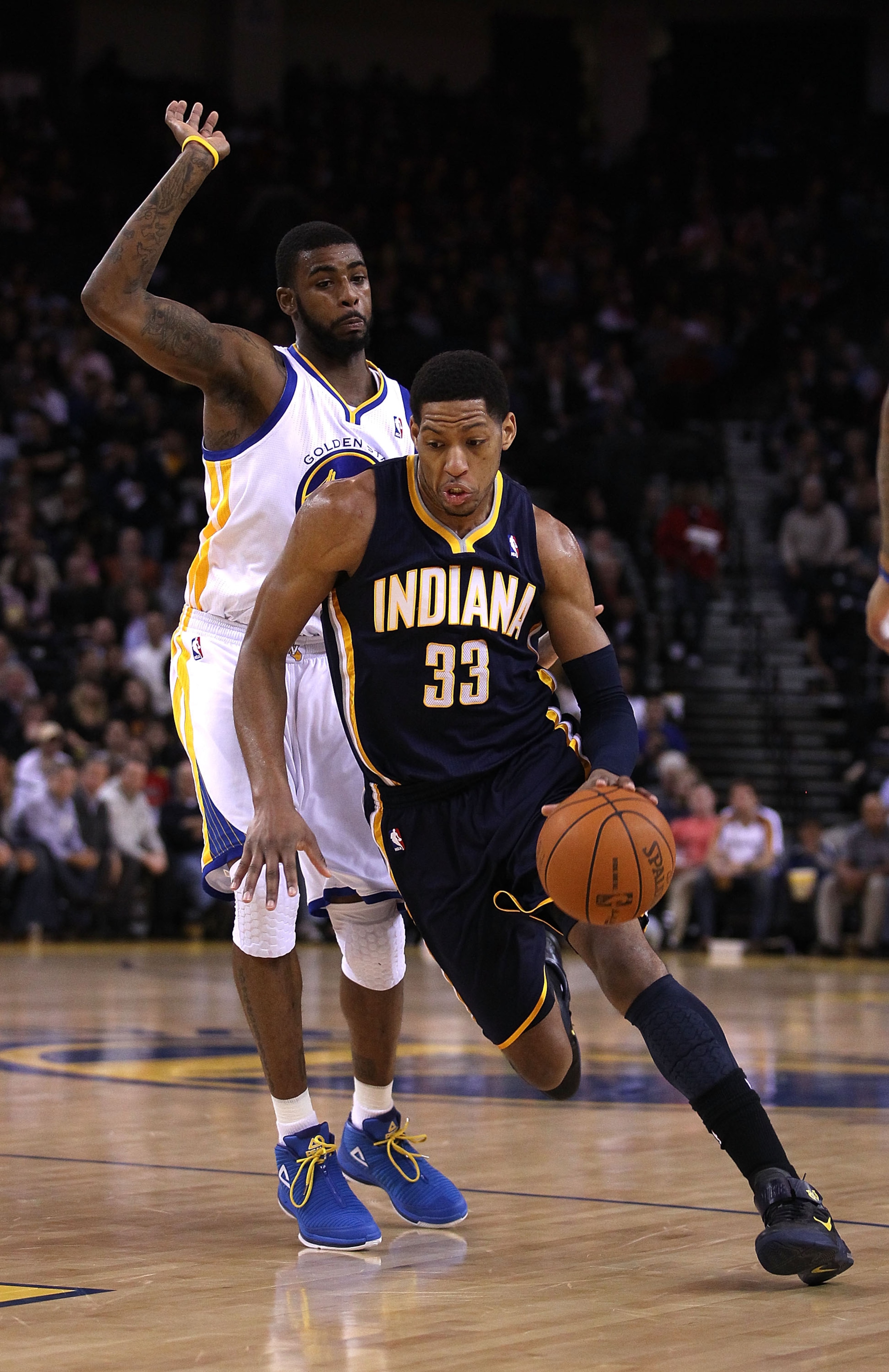
Offense: .98 (18)
Defense: .95 (36)
Why He's Not Higher: His post up defense is bad. He's 44th among the top 50 yielding 1.05 ppp. Offensively his biggest weakness is isolation, thought it's' not too bad at .88, good for 26th. Overall he's much stronger offensively than defensively.
Why He's Not Lower: In the post he's very good, scoring 1.23 ppp, which places him second. His strength defensively is isolation, where he surrenders .83 ppp, ranking 32nd.
24: Brook Lopez; 1.04
9 of 32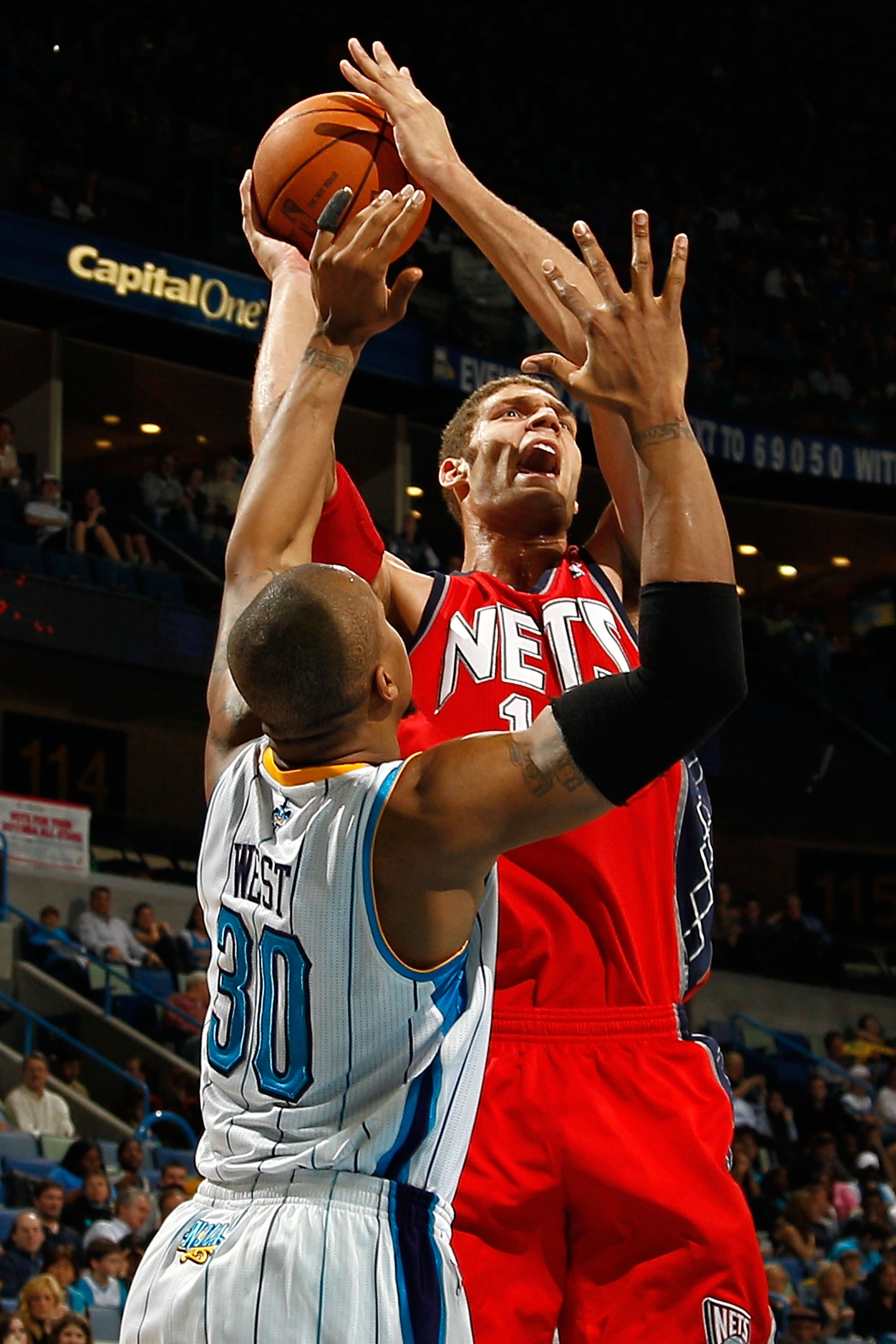
Offense: .91 (35)
Defense: .87 (15)
Why He's Not Higher: On defense, and somewhat surprisingly, his biggest weakness is in the post. Opponents score .90 ppp against him, ranking him 34th. Offensively he is weakest in spotting up, scoring only .93 ppp ranking him 38th there.
Why He's Not Lower: Offensively he's strongest in the post where his .91 ppp ranks him 24th. Defensively he's ranked 6th again with.88 ppp in spot up defense. While he is only 34th in defense in the post, that actually works for him too. The reason is that across the board that is the lowest ppp of any play, and he defends that play the most of any player. So overall, it lowers his defensive score.
23: Andrea Barganni; 1.04
10 of 32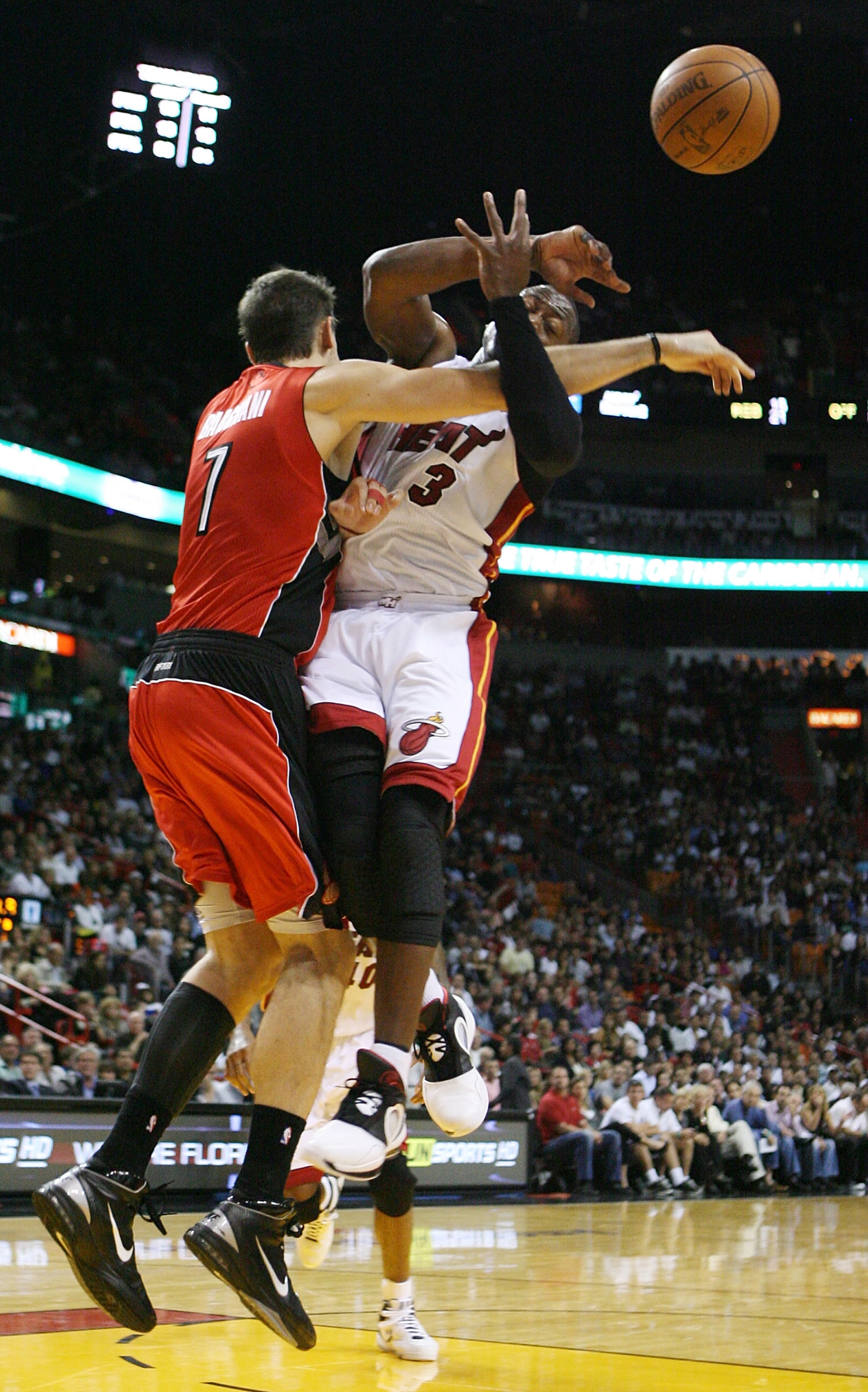
Offense: .95 (24)
Defense: .91 (24)
Why He's Not Higher: Defensively Barganni is weakest in against players spotting up, yielding 1.15 ppg which has him 46th. . Offensively his weakness is also in spotting up. His ppp on that is .93, which places him 37th. This is notable as it is the most frequent one on one play he tries.
Why He's Not Lower: He is best both offensively and defensively in isolation. His ppp of .93 ranks him 15th offensively while his .63 ppp places him 6th defensively.
22: Ray Allen; 1.06
11 of 32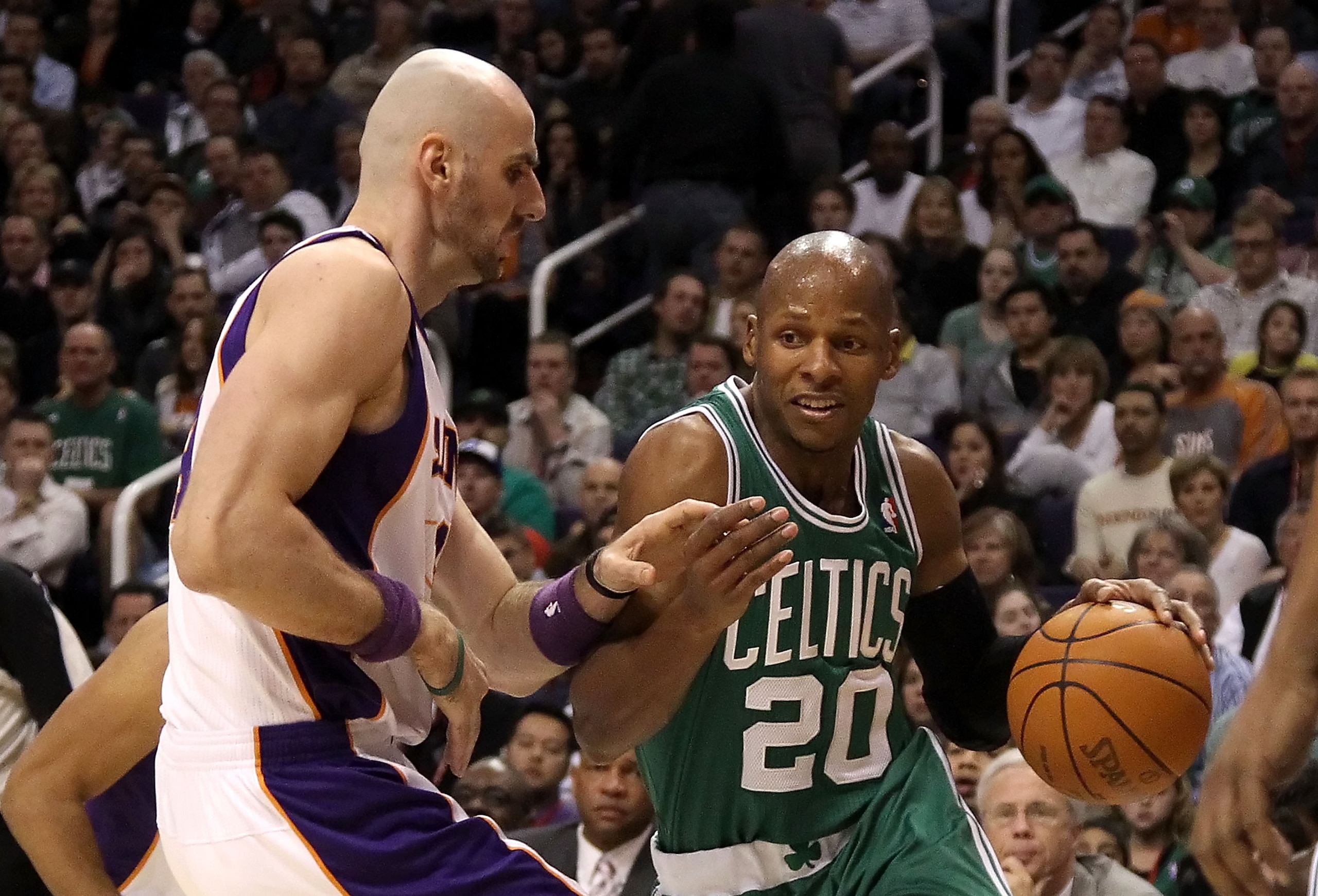
Offense: .90 (36)
Defense: .86 (12)
Why He's Not Higher: Overall it's interesting to note that Allen is second to last in terms of total point differential in one on one situations. He's given up 49 more points than he's scored. However, that's because he's had 93 more plays run at him than run for him, and is a good example of why it makes more sense to do this on a per play basis.
Isolation defense is a weakness of his, giving up .82 ppp ranking him 37th. Spotting up, shockingly is his lowest rank. His .92 ppp ranks him 42nd.
Why He's Not Lower: Defensively he does well in defending the post, giving up only .64 ppp, which places him fifth. Offensively he His best rank is eighth in the post, although he's only had 12 plays run in that direction. He's also only run 33 plays in isolation. Part of the issue here is that pretty much when it comes to one on one offense most of his plays are spotting up. This is more or less, not a surprise.
21: Carlos Boozer; 1.06
12 of 32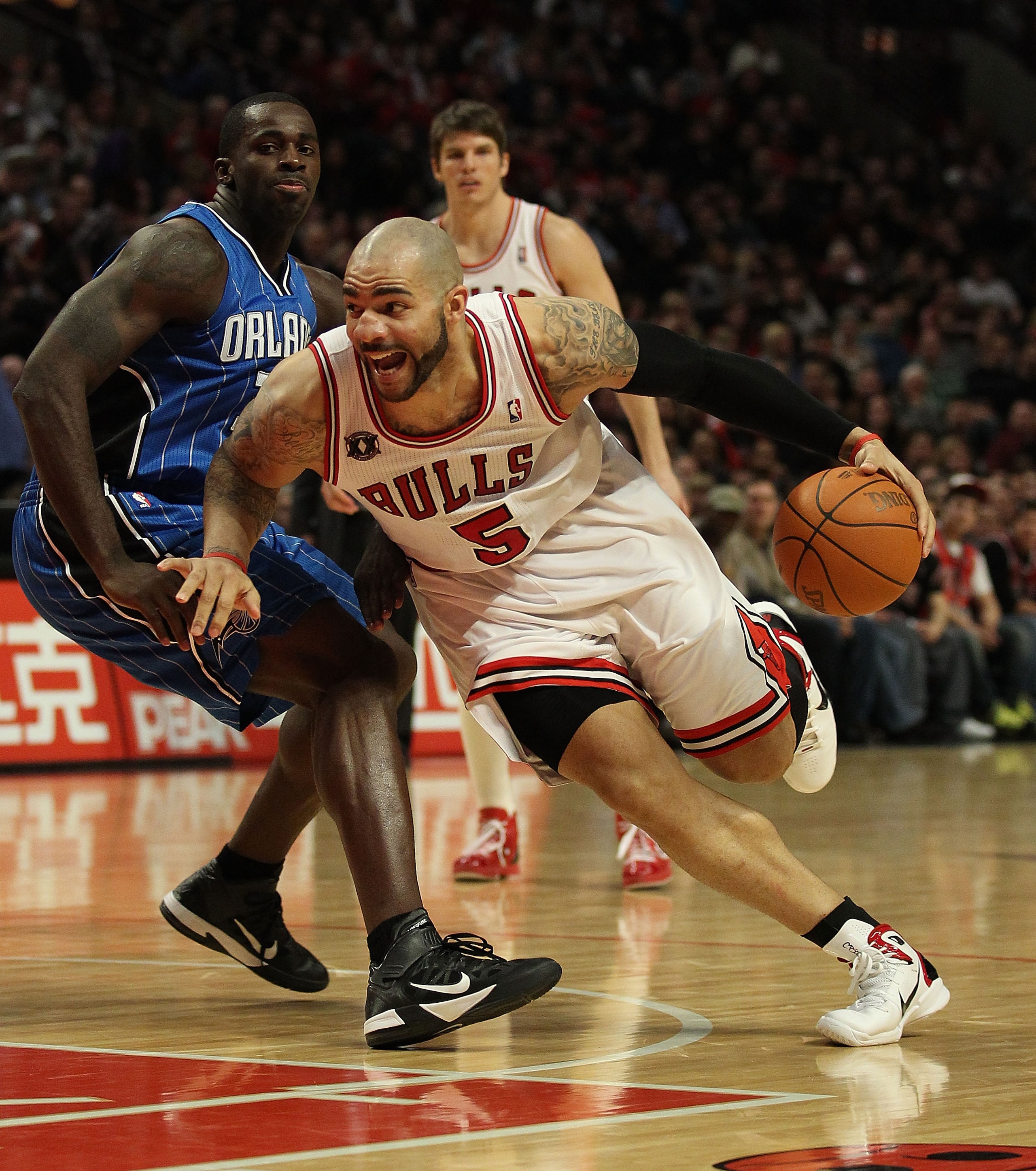
Offense: .90 (38)
Defense: .85 (10)
Why He's Not Higher: No surprise here, he's weakest in isolation, scoring only .72 ranking 45th among the top 50. It's not like we're used to seeing Boozer driving the lane. Defensively h'es 45th in guarding the spot up jumper, ranking 45th.
Why He's Not Lower: Again, no shock. Both offensively and defensively his strength is in the post. He outsocres his opponents .94 to .74 in the post, ranking 21st and 10th respectively.
20: Eric Gordon; 1.06
13 of 32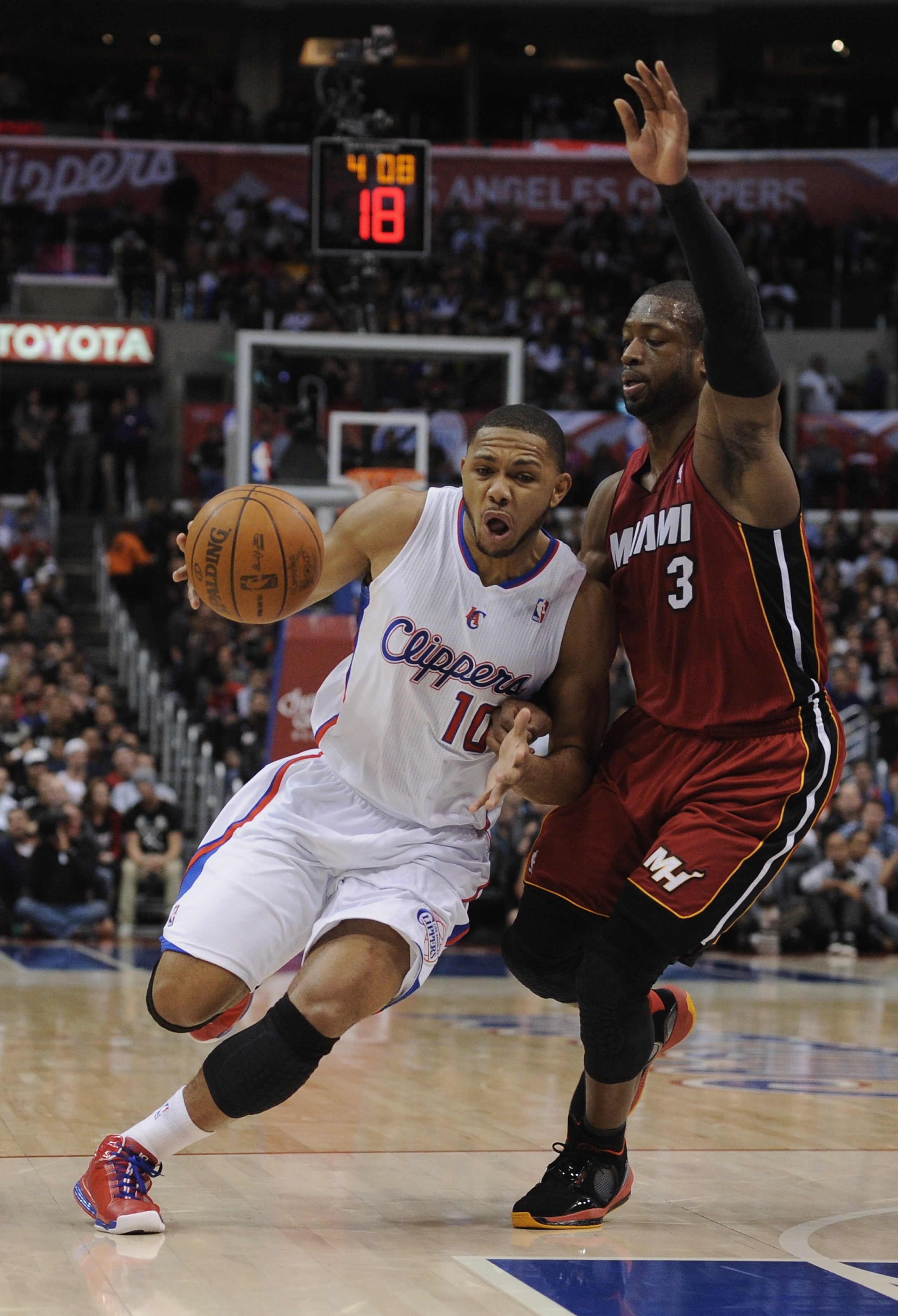
Offense: .98 (16)
Defense: .92 (31)
Why He's Not Higher: His biggest weaknesses are in the post. While he only scores .67 ppp in the post, ranking 42nd, he gives up 1.17 ppp ranking 49th. Of course the words "Eric Gordon" and "post" aren't going to happen if you're playing word association either.
Why He's Not Lower: Defensively he's bes in isolation where the .75 ppp he yields are good for 18th. Offensively he's best with his spot up jumper, scoring 1.12 ppp and ranking 11th.
19: Luol Deng; 1.08
14 of 32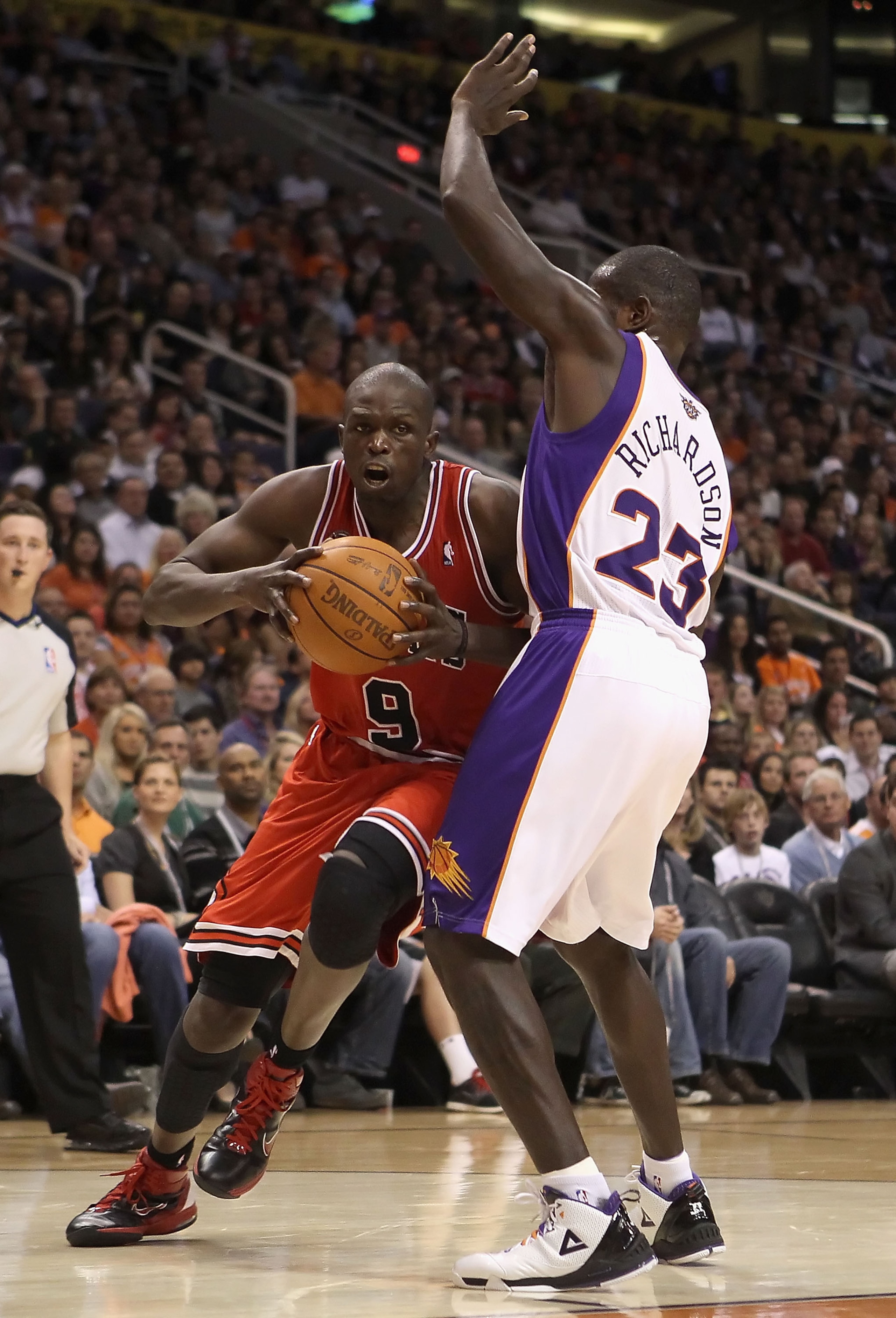
Offense: .89 (41)
Defense: .82 (7)
Why He's Not Higher: Luol is pretty "Deng" bad in trying to score in isolation. His .62 ppp ranks him 49th among the top 50. Defensively he's good across the board. His worst ranking is 25th yielding .76 ppp in isolation.
Why He's Not Lower: Deng's placement here is a product of across the board on the ball defense. He's very good. His defense is best in the post though, where he gives up only .70 ppp, ranking eighth. Spotting up is where he finds the most success in offense, scoring .99 ppp. Basically Deng is here because his opponents have an even harder time scoring than he does.
18: Kevin Durant; 1.10
15 of 32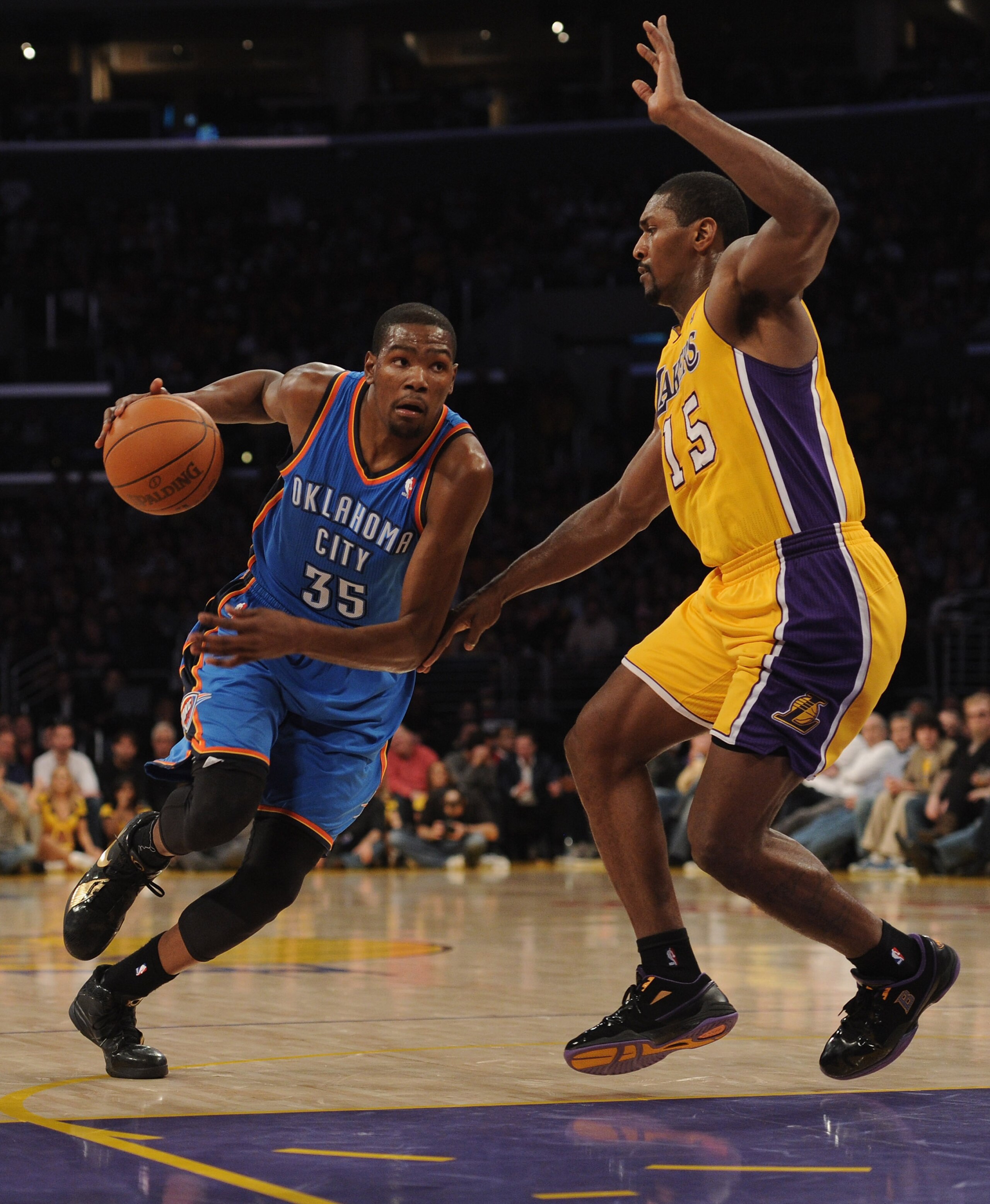
Offense: .91 (32)
Defense: .83 (8)
Why He's Not Higher: If you're like me you would have expected those offense and defense ranks to be switched around. Durant is weakest in the post, scoring only .75 ppp ranking him 42nd. He's also weakest defensively there giving up .83 ppp, placing him 23rd. You would think that his length would be an advantage, but perhaps the skinniness kicks in here. If he wants to improve his game there he needs to hit the weights.
Why He's Not Lower: Offensively he's best spotting up, which is not at all a surprise. His 1.09 ppp there is good for the 13th best. Defensively he's 11th best in isolation, yielding only .69 ppp.
17: Kobe Bryant; 1.10
16 of 32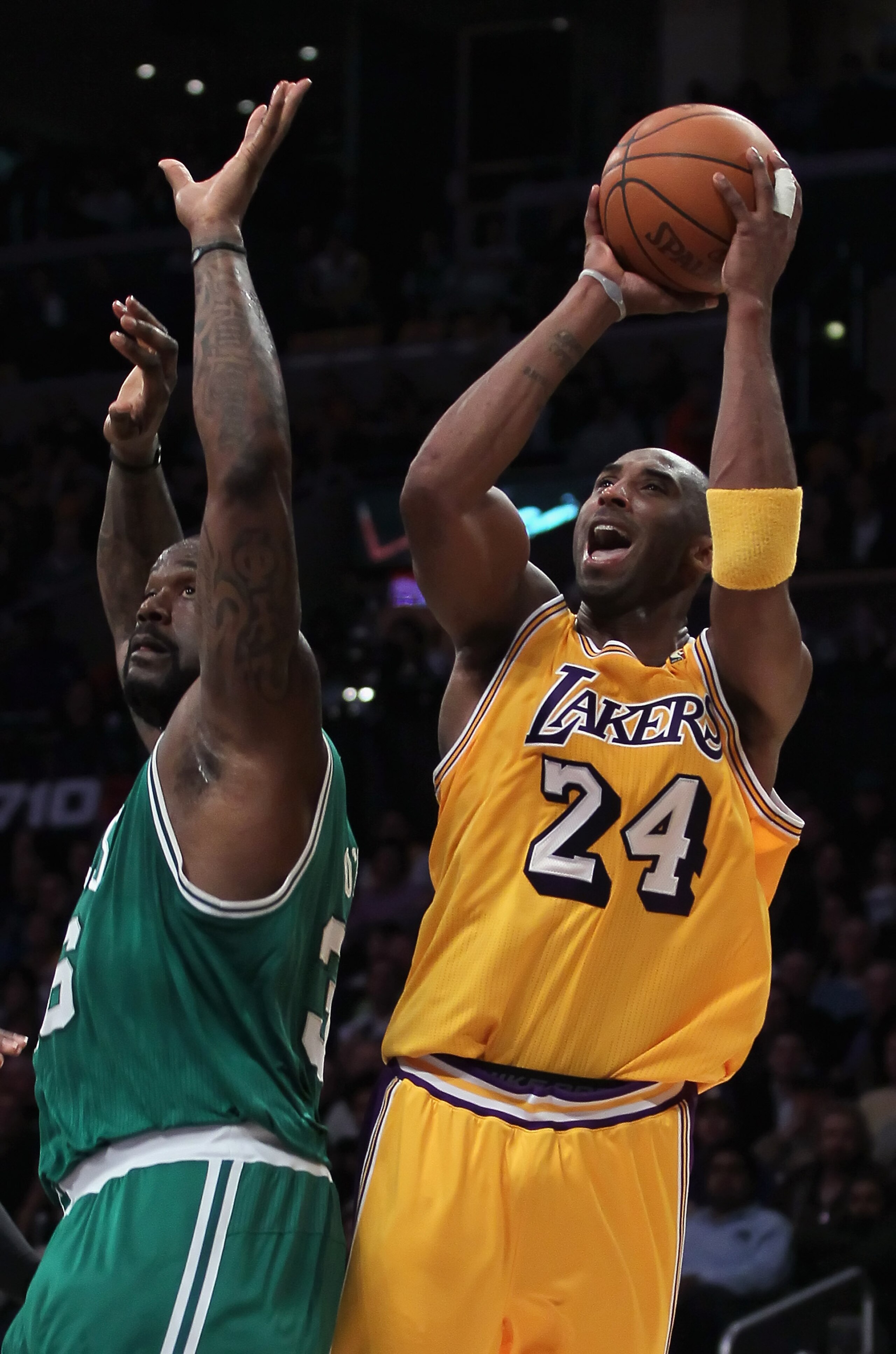
Offense: 1.00 (14)
Defense: .91 (28)
Why He's Not Higher: The step back jumper is the hardest shot in the NBA. It's also one of the shots that Kobe utilizes the most compared to other players. This lowers his spot up ppp to .92, which ranks him 40th in that situation. Defensively if you're going after him, your best bet is to post him up. His .88 ppp ranks 29th.
Why He's Not Lower: Remember this is points per play, not per game or total points. If it's any consolation, if it were total points Kobe would be in first as he's outscored his counterpart by 419 points, most in the NBA. That is in large part because with 645 one on one plays, Kobe has had the most opportunities by nearly 100 plays.
His biggest strength offensively is isolation, where he scores 1.05 ppp ranking sixth. Defensively he ranks ninth, yielding .69 ppp in the same area.
16: Kevin Martin; 1.10
17 of 32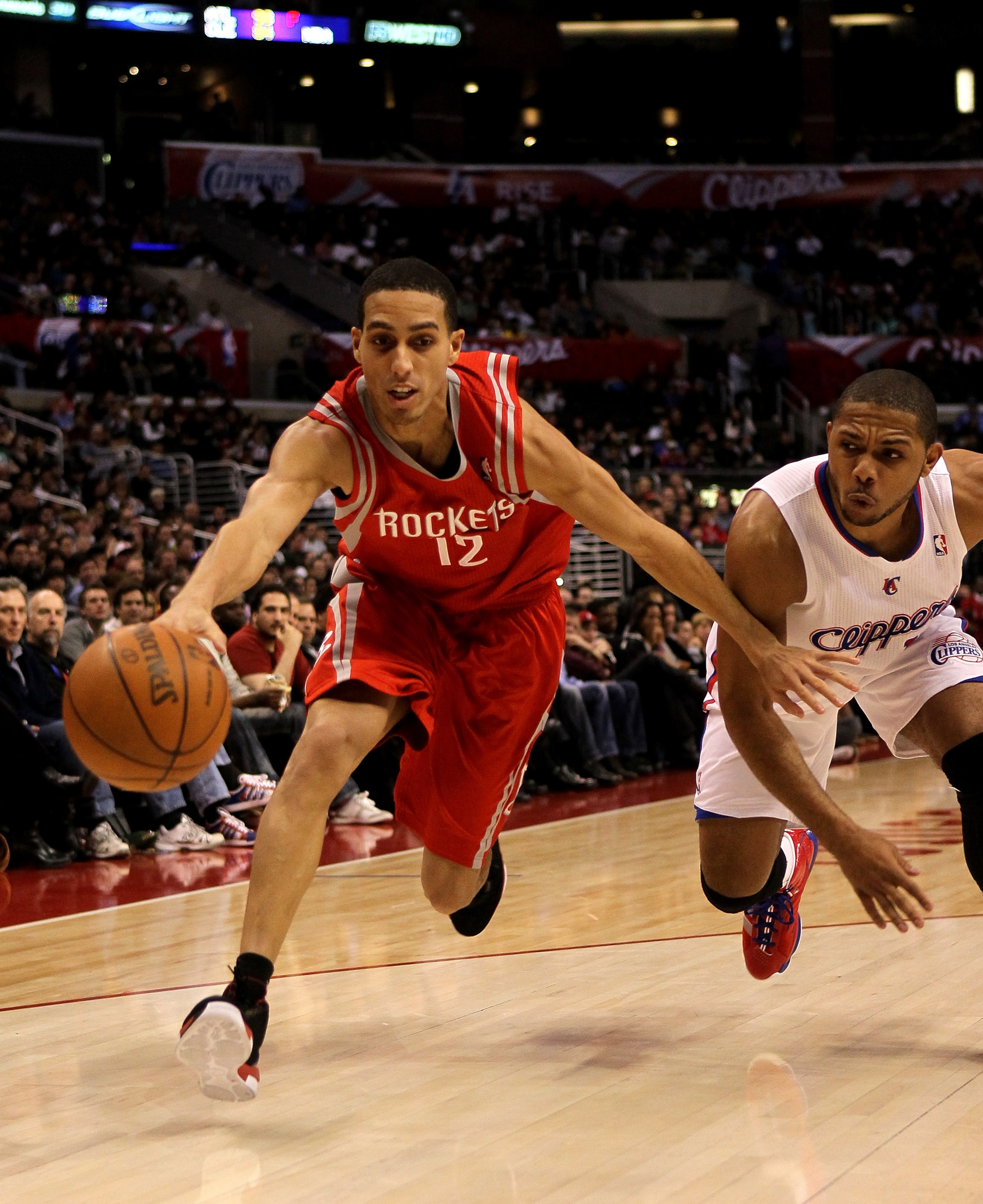
Offense: 1.14 (2)
Defense: 1.02 (48)
Why He's Not Higher: Isolation defense is the biggest reason he's not higher. Giving up 1.00 ppp he is 47th out of 50. Defensively he's 48th overall and has no strong suit. Offensively he's top in all three categories and has no real weakness.
Why He's Not Lower: Because he's top ten offensively in all three categories. Technically he ranks first in post up offense but he's only run six plays by that measure so it doesn't factor in much. Mostly he finds success in running isolation plays, scoring 1.10 ppp and ranking third.
15: Jason Richardson; 1.13
18 of 32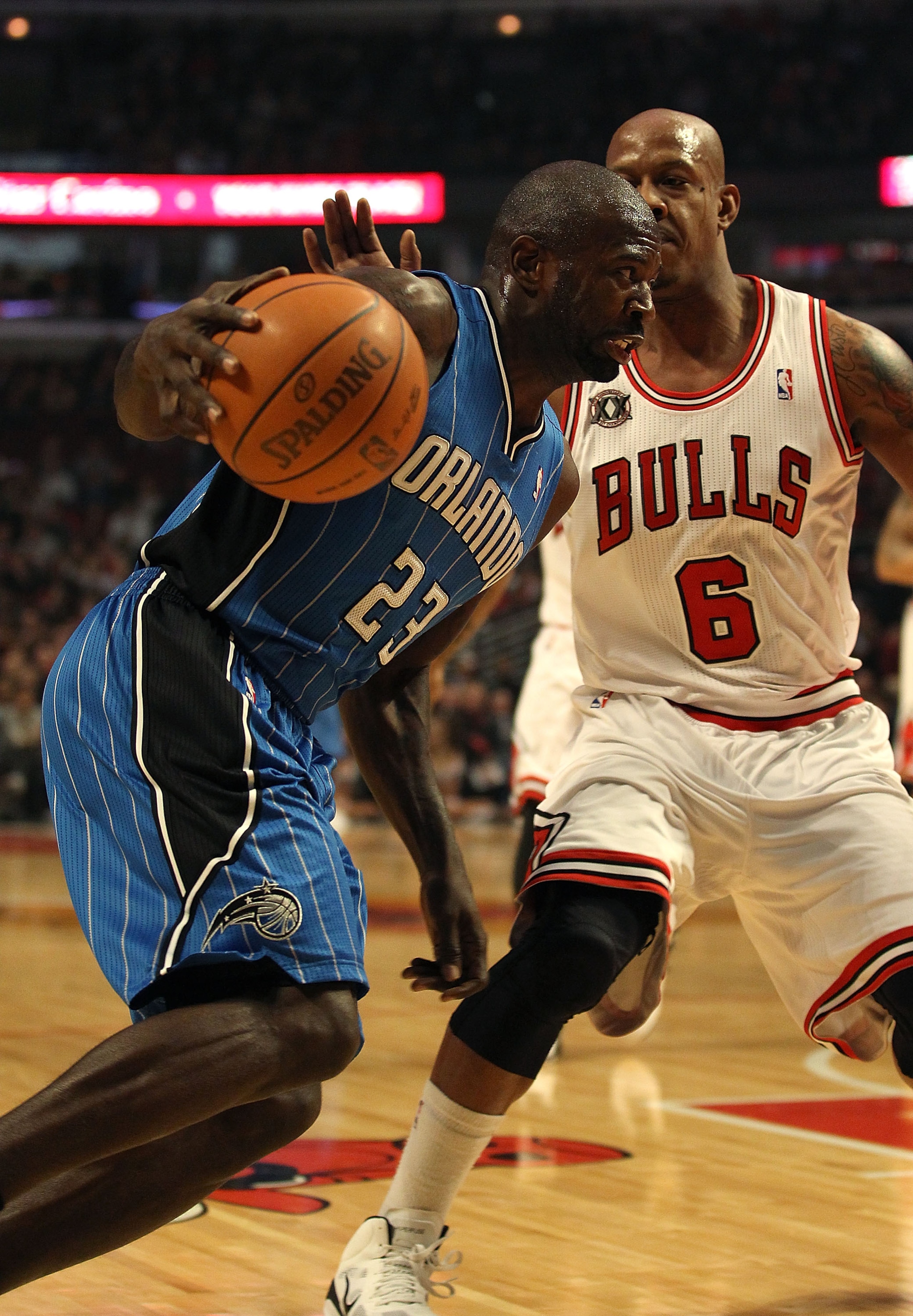
Offense: 1.09 (6)
Defense: .96 (39)
Why He's Not Higher: I combined his numbers between the two teams. His biggest weakness is in the post. He's dead last of the 50 top players with a 1.44 ppp yielded in the post. Much like Martin his offense is strong and top 10 across the board.
Why He's Not Lower: His offensive prowess is good all the way through, but its best in spot up offense where his 1.22 ppp is good for fifth best.
14: Brandon Jennings; 1.15
19 of 32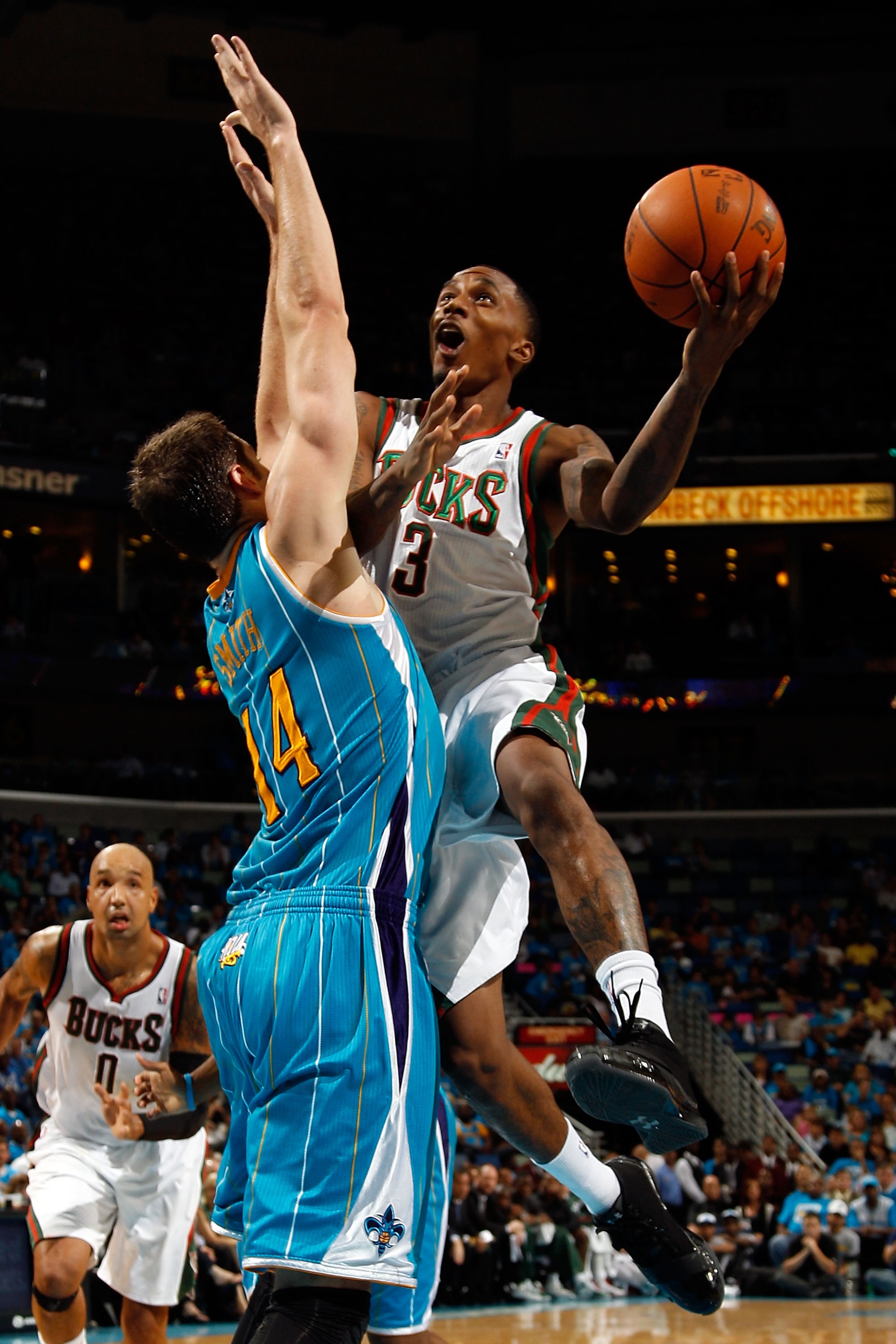
Offense: 1.01 (13)
Defense: .87 (18)
Why He's Not Higher: His biggest weakness is in defending the spot up jumper where he gives up 1.06 ppp, placing him 34th. His biggest struggle offensively is in isolation where his .90 ppp has him 21st.
Why He's Not Lower: He is best when spotting up where he ranks 1.06 ppp, ranking him 18th. Defensively he' strongest in the post were his .59 ppp given up is second best among the top 50.
13: Paul Pierce; 1.16
20 of 32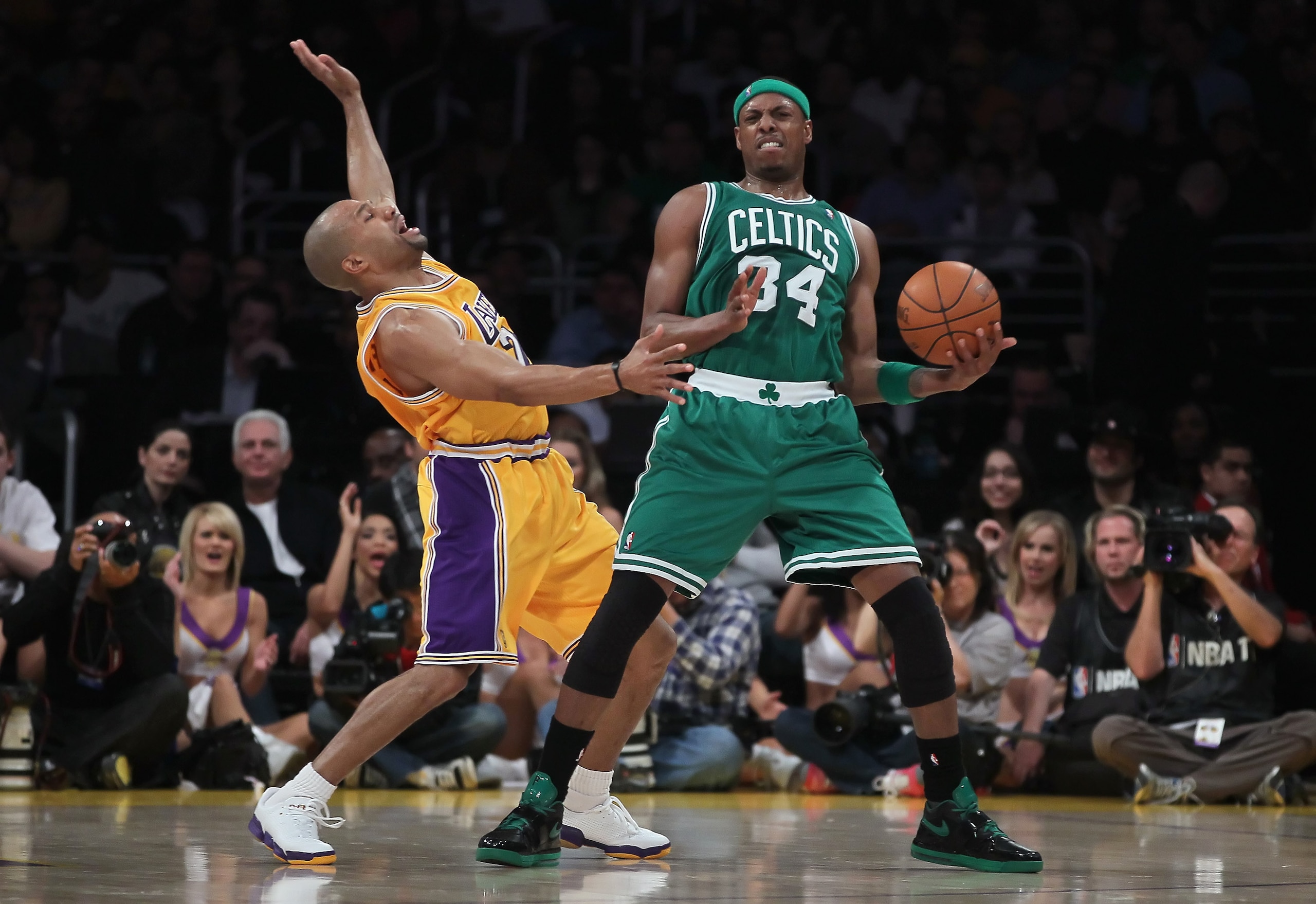
Offense: 1.02 (12)
Defense: .88 (20)
Why He's Not Higher: Defensively Pierce is ranked surprisingly low at 38th with .97 points per play. He's only 24th in isolation with .89 ppp.
Why He's Not Lower: Offensively he's also strongest in the post with 1.20 ppp ranking him third best. He's third in isolation defense with .89 ppp putting him 13th.
12: David West; 1.17
21 of 32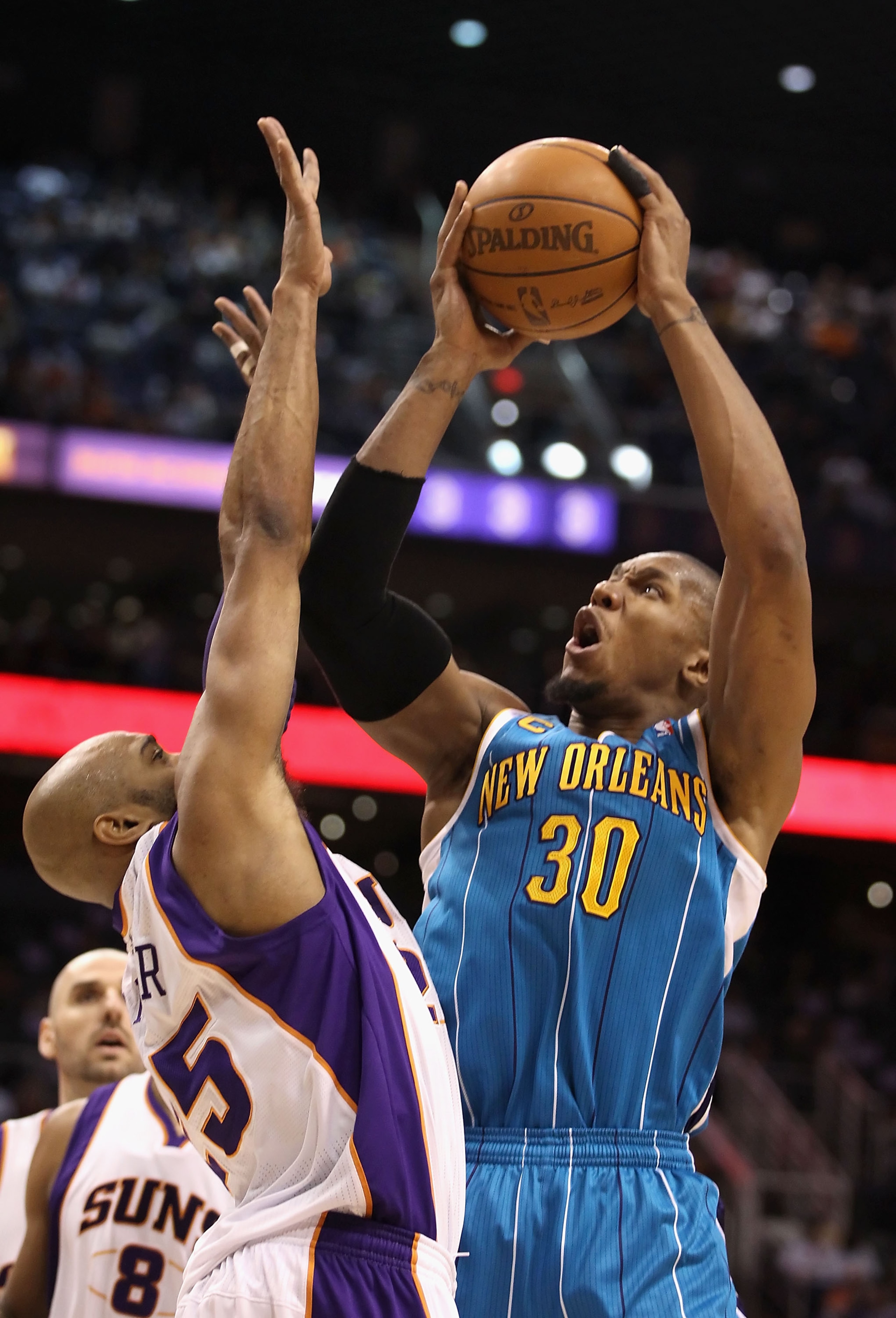
Offense: .93 (27)
Defense: .79 (4)
Why He's Not Higher: . His offense comes primarily in the post, but he only averages .90 ppp and ranks 25th. He struggles a bit in isolation defense, yielding .78 ppp and ranking 22nd.
Why He's Not Lower: Defense. Period. His defense is really good. He ranks 12th in spot up defense which is his best ranking, but it's mostly an across the board defense that has him doing so well. Offensively he's best in isolation, where he scores .97 ppp and ranks 13th.
11: Al Horford; 1.18
22 of 32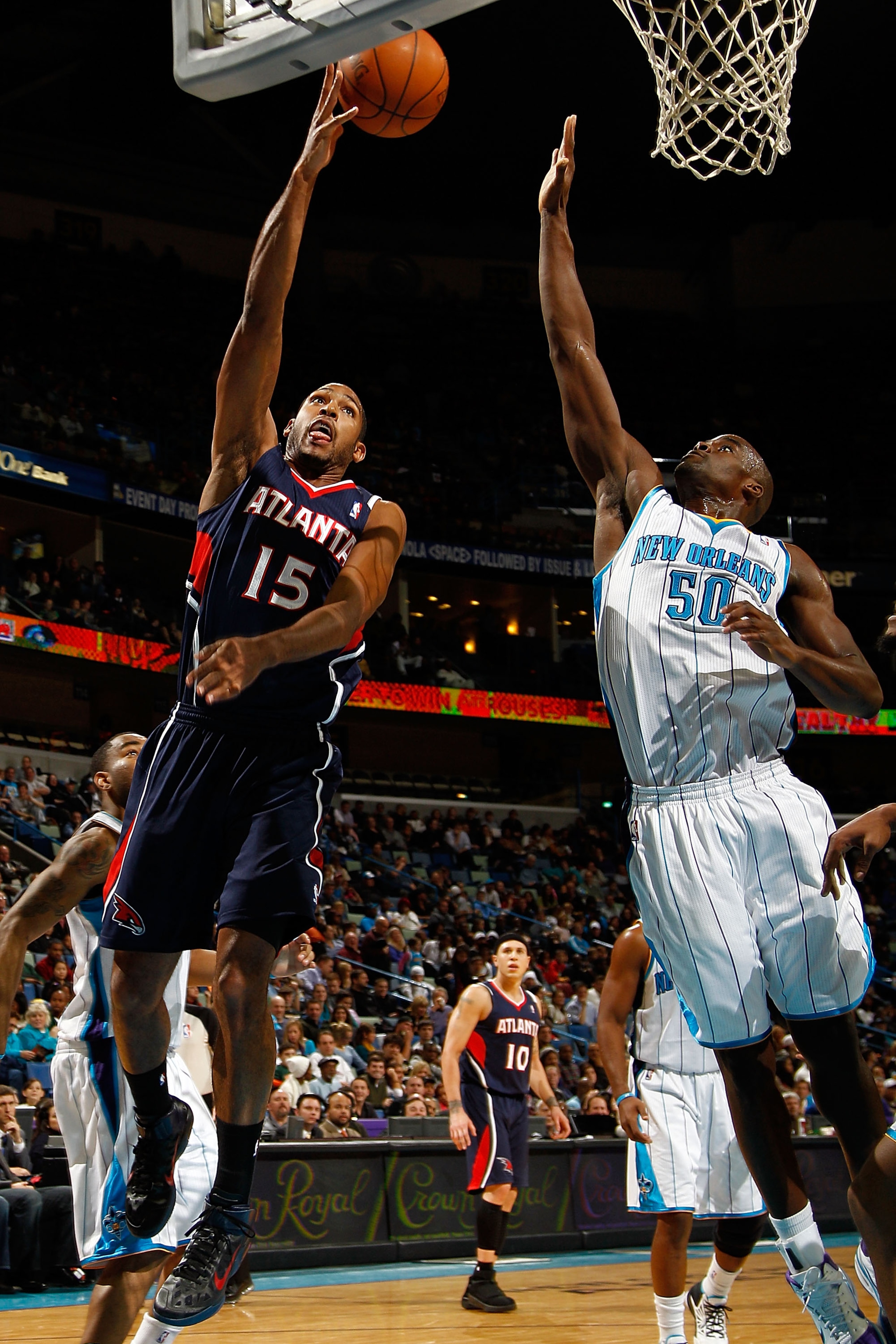
Offense: .96 (21)
Defense: .81 (5)
Why He's Not Higher: He's weakest on the spot up, where he scores .97 ppp and ranks 30th. On defense he just is good all the way across.
Why He's Not Lower: I don't think of Horford and isolation, but he actually does very well there. His 1.09 ppp ranks him fifth among the top 50. Across the board he's very strong and gives up no more than .86 in any category. He's also first defending the spot up jumper with .75 ppp. That's why he's fifth best defensively.
10: LeBron James; 1.18
23 of 32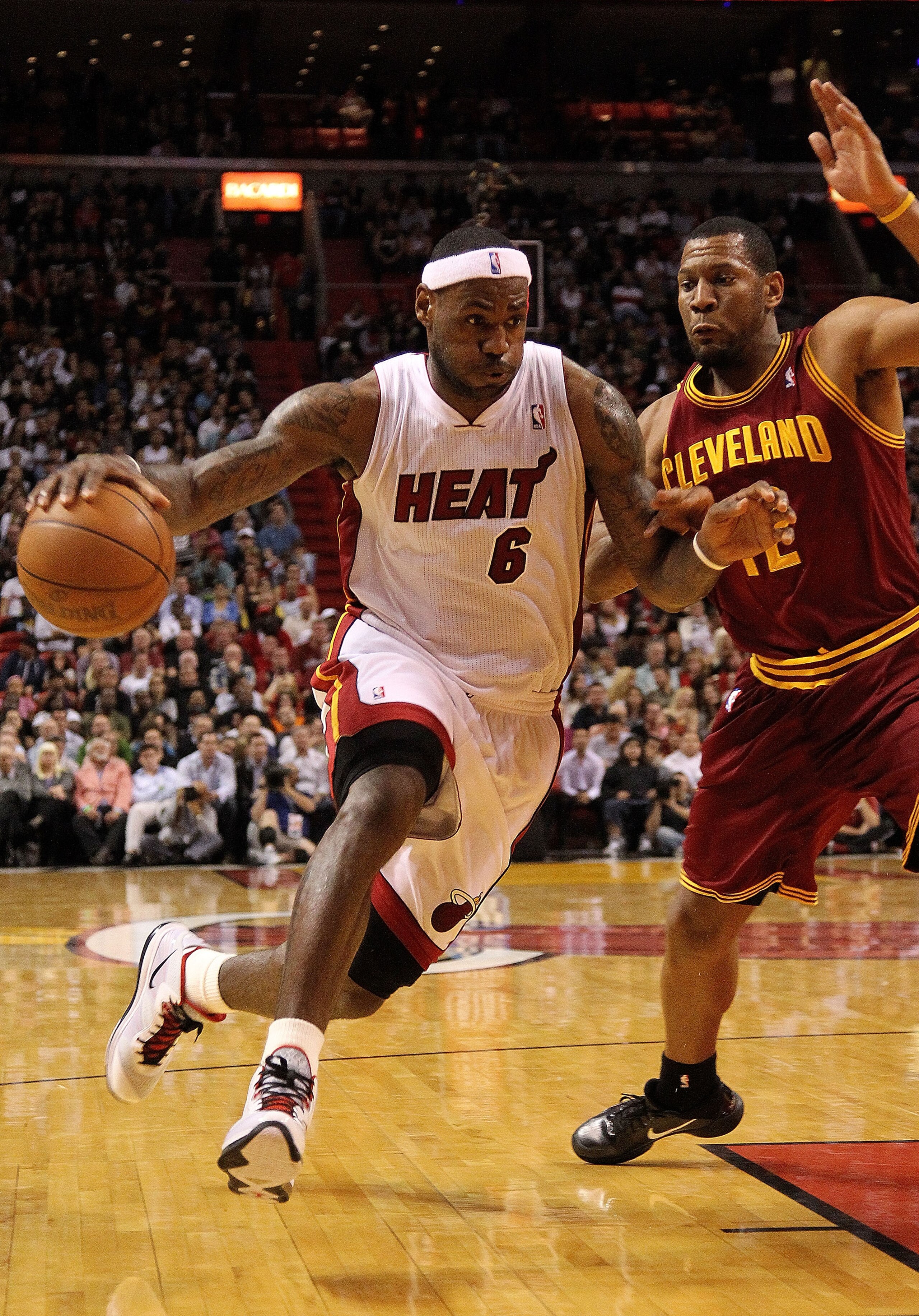
Offense: .97 (20)
Defense: .82 (6)
Why He's Not Higher: Both offensively and defensively he's weakest in the post. Of course that's pretty much known. He still outscores his opponents in the post but his .99 offensively ranks 16th and his .83 ppp on defense ranks 22nd.
Why He's Not Lower: His spot up shooting at 1.09 clip ranks 12th among the top 59. His .67 ppp on defense against isolation is eighth best.
9: Chauncey Billups; 1.18
24 of 32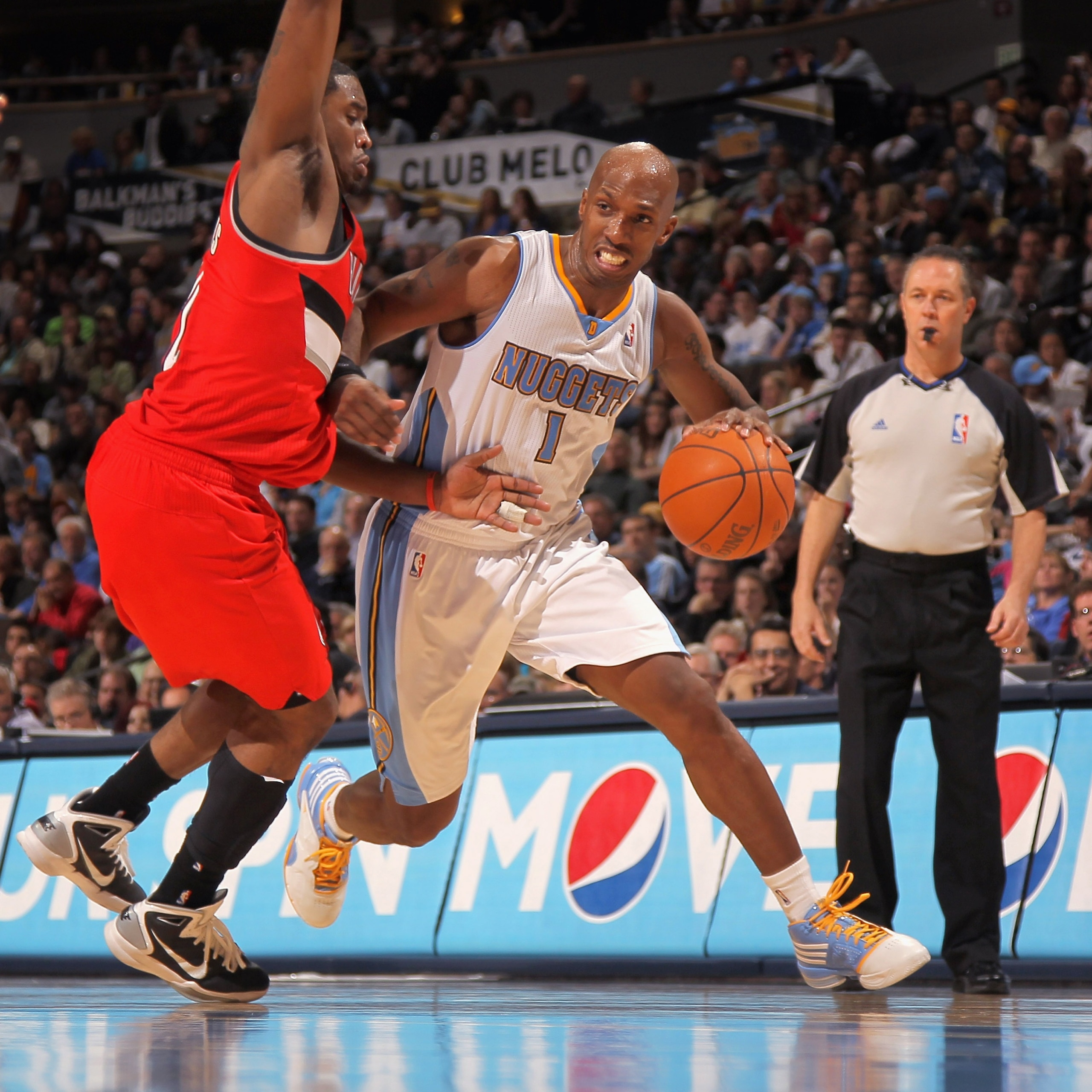
Offense: 1.09 (5)
Defense: .93 (33)
Why He's Not Higher: If you're like me you're surprised to see him this high. Also, you're probably doing a double take on the other side of the Durant reversal. You would expect to see his offense higher than his defense.
Billups is weakest in the post. No surprise there. He gets outscored 1.10 (46th) to .83 (37th) there. At least there's some normalcy in the world.
Why He's Not Lower: He's best where you would expect to, in isolation. His 1.09 ppp has him fourth, as does his .59 ppp given up there. I guess where he is might be a surprise, but why he's there isn't.
8: Manu Ginobili; 1.18
25 of 32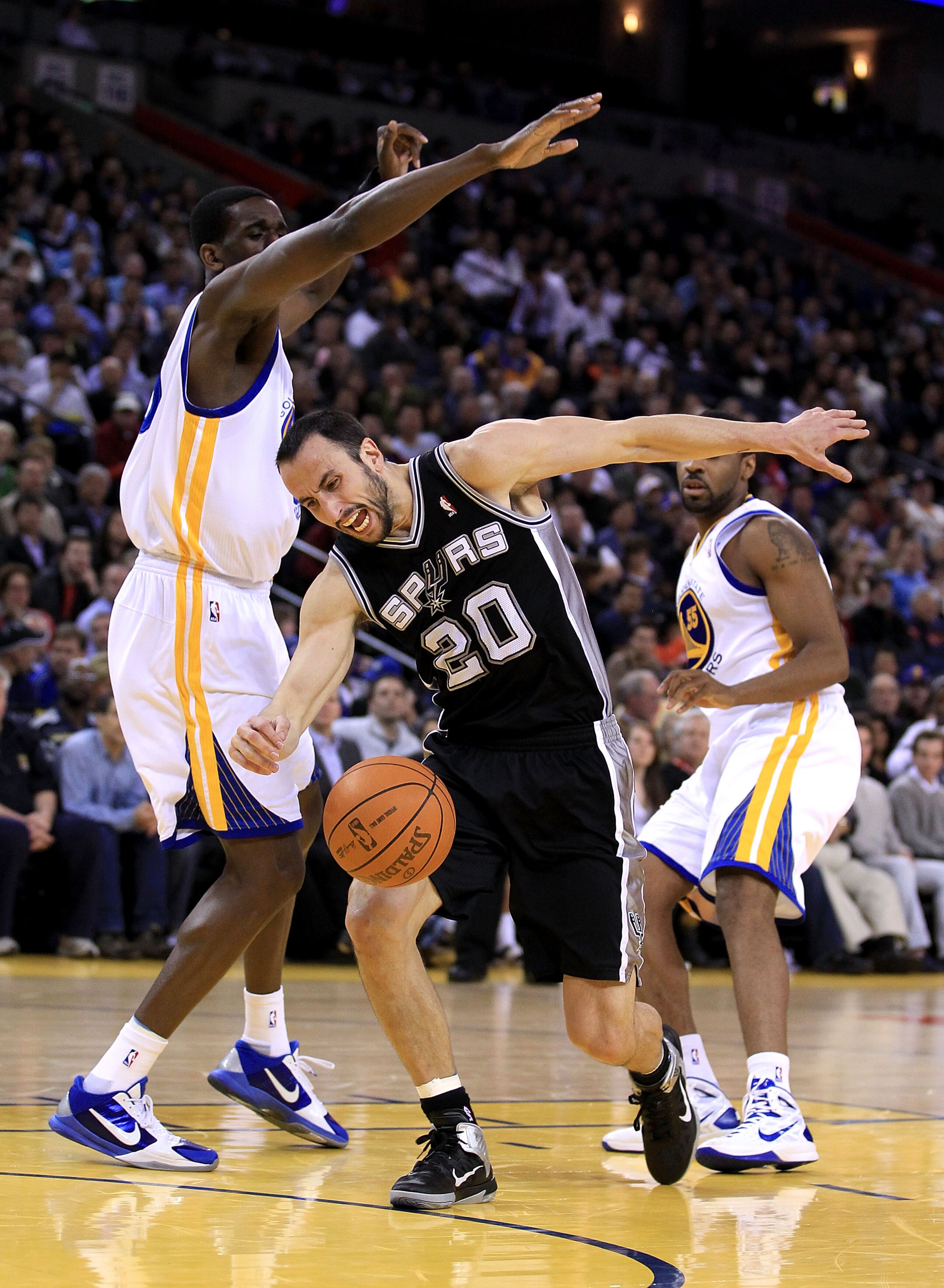
Offense: 1.03 (11)
Defense: .87 (18)
Why He's Not Higher: Ginobili was one of the players I'd figured from the outset might be near the top because he's so good both offensively and defensively in one on one scenarios. Offensively he's weakest spotting up, where he ranks 22nd with 1.04 ppp. Defensively he's also weakest against the spot up, where his 1.03 are ranked 31st.
Why He's Not Lower: Defensively he doesn't have any weakness. In a strange twist of logic, he's no lower than 11th in any one category but is 18th overall. That's not an error though, it's just because not all scoring areas give up the same ppp. He gives up only 1.03 ppp on spot up defense, which is eighth best, but since that is the play run the most at him, it raises his overall ppp against.
Offensively he's bes in isolation where his 1.02 ppp ranks 11th best.
7: Rudy Gay; 1.21
26 of 32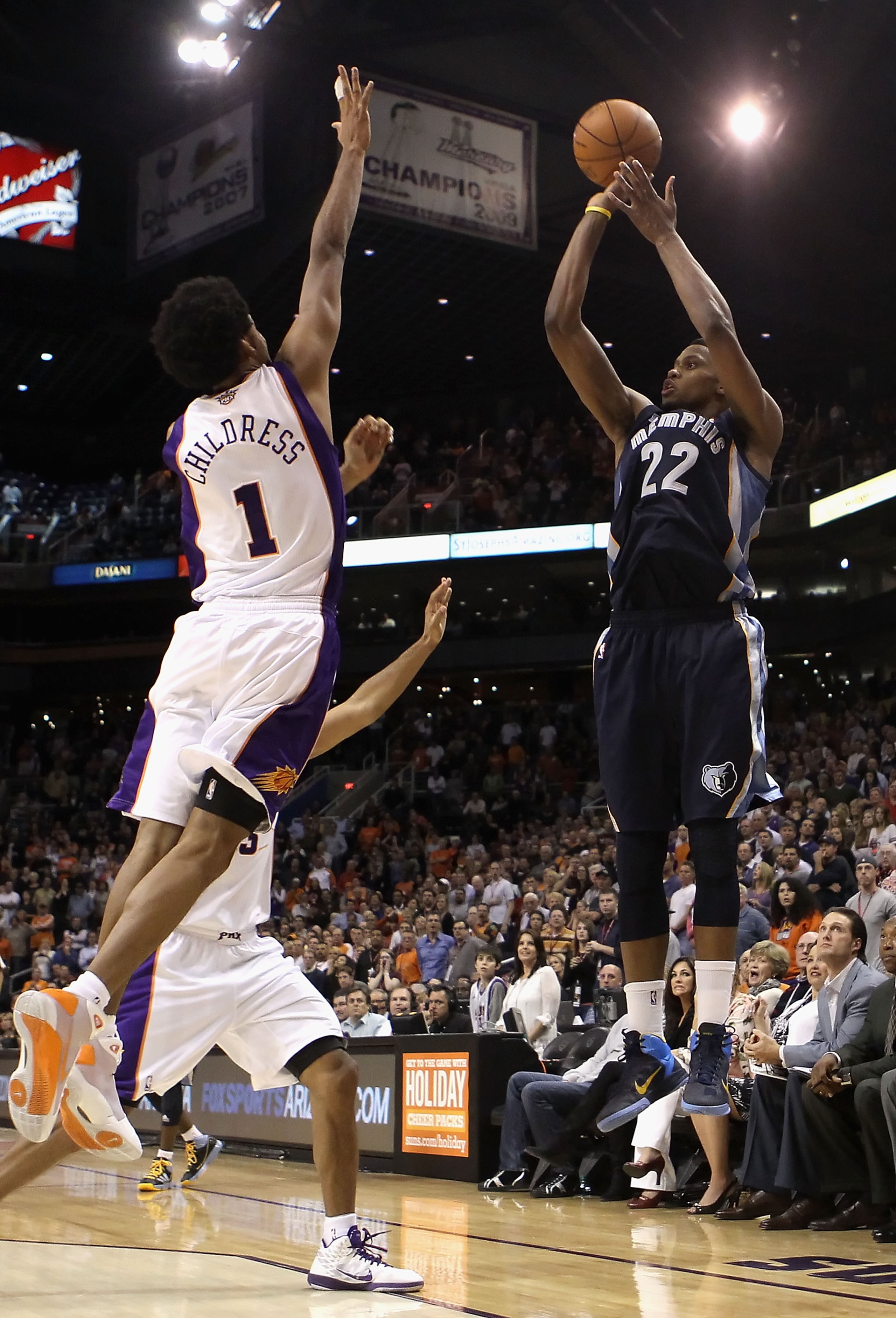
Offense: 1.04 (10)
Defense: .86 (14)
Why He's Not Higher: Gay is turning out to be worth the money, and in case you haven't noticed the Grizzlies have raised their record over .500. Gay is only 30th best with .87 ppp. Defensively he gives up 1.03 ppp against the spot up which is 28th.
Why He's Not Lower: Offensively he's second best in spotting up, and averages 1.31 ppp. Defensively he's tops of the list in isolation defense giving up a downright .43 ppp. Gay might not have superstar status, but he's on his way to attaining with superstar play.
6: Steve Nash; 1.26
27 of 32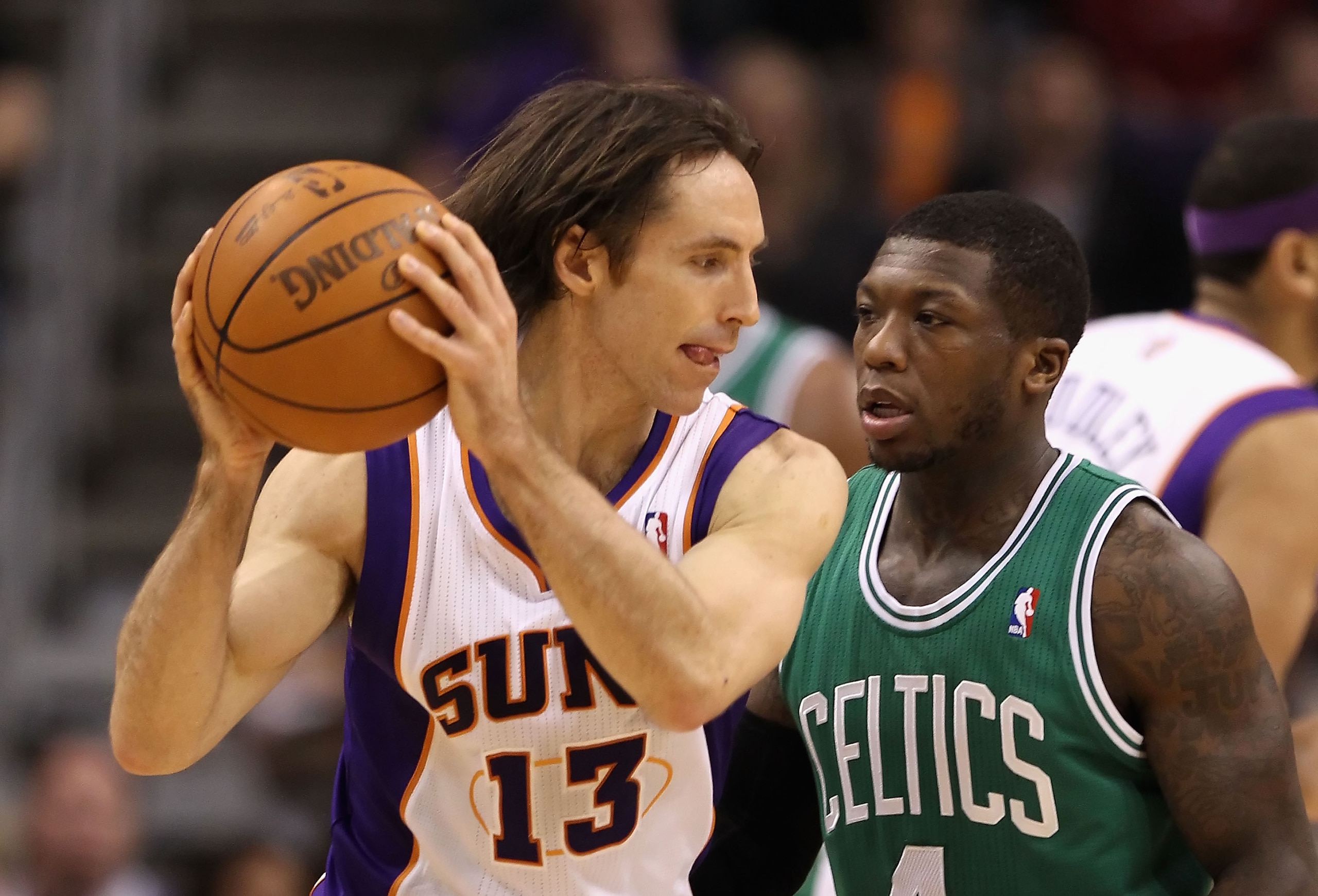
Offense: 1.05 (9)
Defense: .84 (9)
Why He's Not Higher: Surprised to see the old man this high? How about that .84 defense ranking this high. In terms of help defense Nash is about helpless, but in one on one defense his reputation is worse than reality. His biggest weakness is in isolation, where his .77 ppp is 20th. It's not great, but it's not horrible either. Offensively he's strong across the board.
Why He's Not Lower: His offense is just very good. It helps that this is per play and not per game. In terms of totals he's actually the most outscored of any player in one one one scenarios. But a big part of the reason for that is while he's run only 152 one on one plays, he's had 252 run against him.
Defensively he's best in defending the spot up jumper where he is ranked sixth with .91 ppp.. Offensively, his 1.02 ppp isolation is 10th best.
5: Chris Paul; 1.26
28 of 32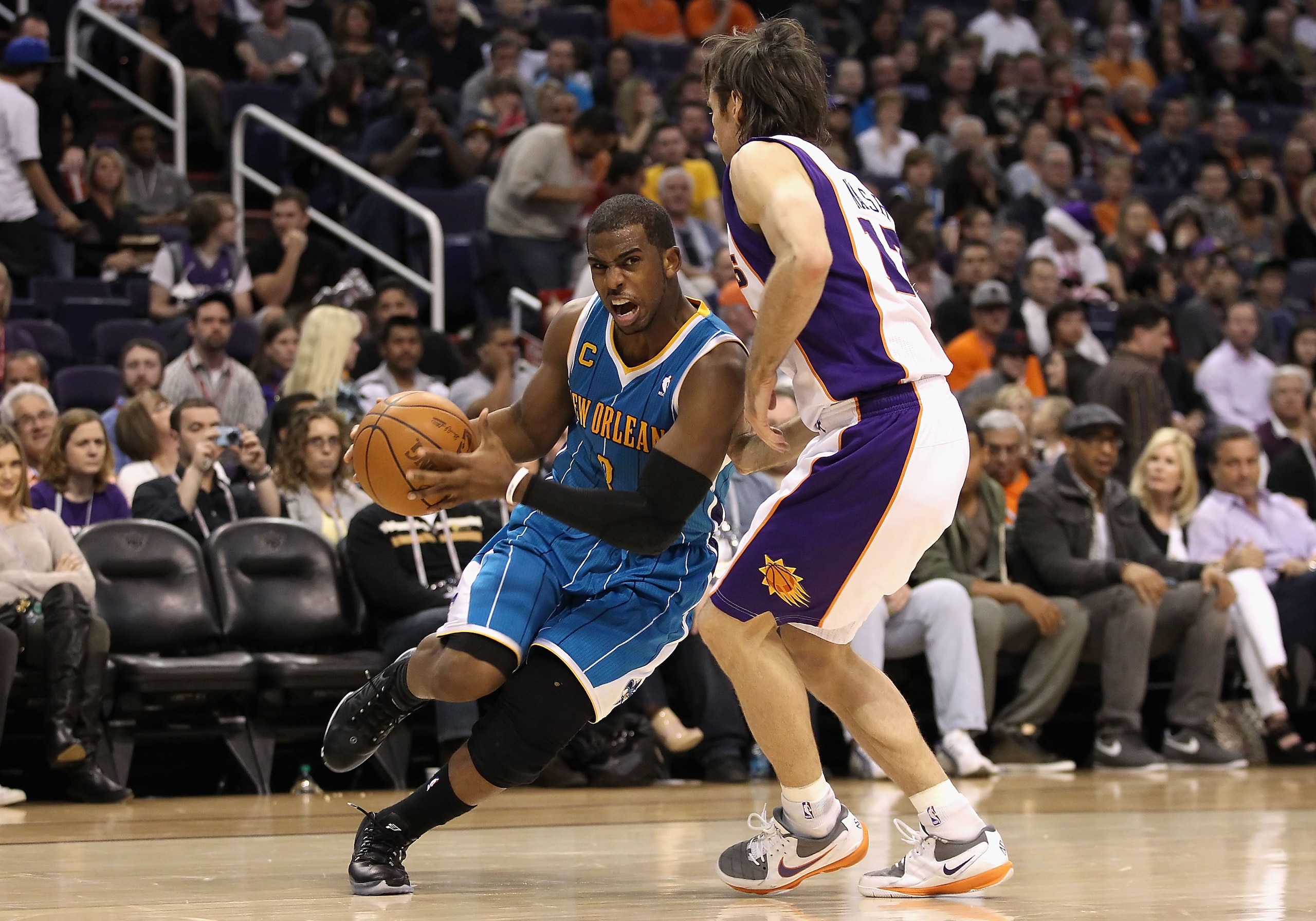
Offense: 1.11 (3)
Defense: .88 (9)
Why He's Not Higher: Isolation defense is where he's earned a reputation as the best in the NBA, but at .80 he's 26th among our top 50. He struggles offensively posting up where his .80 ppp puts him at 39th.
Why He's Not Lower: He also has some reputation as not being a good shooter. Honestly, I've always felt that he doesn't deserve that reputation and this validates it. At 1.41 ppp, he ranks first. He also defends very well against the jumper as his opponents score only .90 ppp in that situation, placing him 5th best.
4: Chris Bosh; 1.28
29 of 32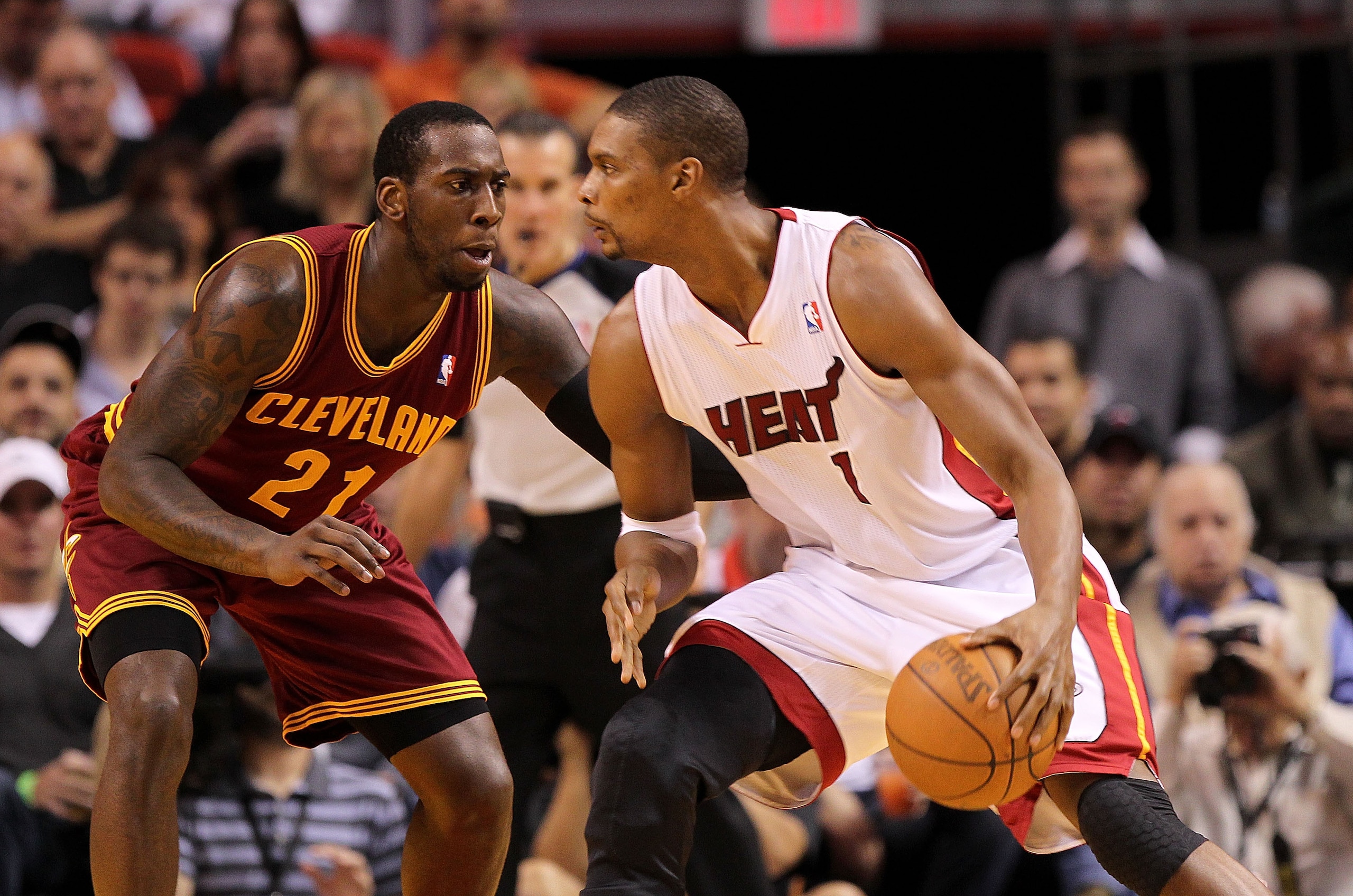
Offense: .99 (15)
Defense: .77 (3)
Why He's Not Higher: Perhaps you've heard he's "fake-tough." While there's been a lot of talk about whether he should have said it or not, you've got to agree it's funny, especially when you're talking about a guy who pouted because someone had the audacity to dive for a ball.
The fact that his 1.04 ppp yielded in the post is 43rd is consistent with the fake tough view though. So does the fact that he scores .80 in the post and ranks 39th. If you can get him to play physical, you'll own him.
Why He's Not Lower: On the other hand he's stellar in isolation. He scores 1.03 ppp, eighth best there, and gives up only .59 ppp, which is fifth best. I guess as long as you don't make him play physical he owns you.
3: Nick Young; 1.30
30 of 32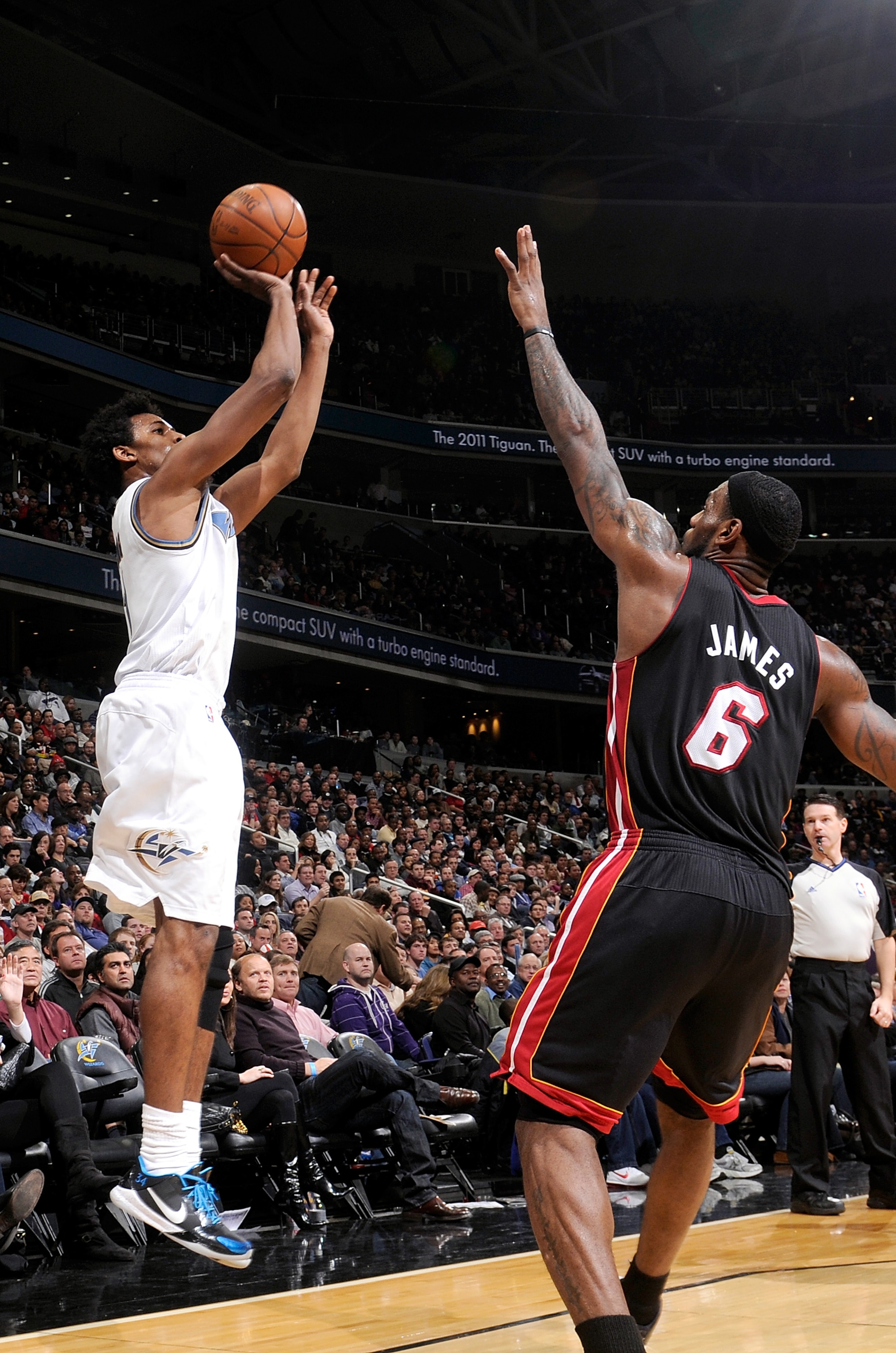
Offense: 1.16 (1)
Defense: .89 (21)
Why He's Not Higher: Isolation defense? Not so much. His .95 ppp is 42nd out of 50. It's a big weakness on defense, but he doesn't seem to have any on offense.
Why He's Not Lower: Offensively, he's good across the board. His 1.02 in isolation is ninth best; his 1.24 spotting up is fourth best, and his 1.15 posting up is fifth best. Defensively outside of isolation, he's also top ten, ranking third in the post with only .63 ppp and third against spotting up with .92 ppp.
Nick Young is fast on his way to becoming a young stud. Could he and Wall emerge in a couple of years as the best backcourt tandem?
2: Dirk Nowitzki; 1.45
31 of 32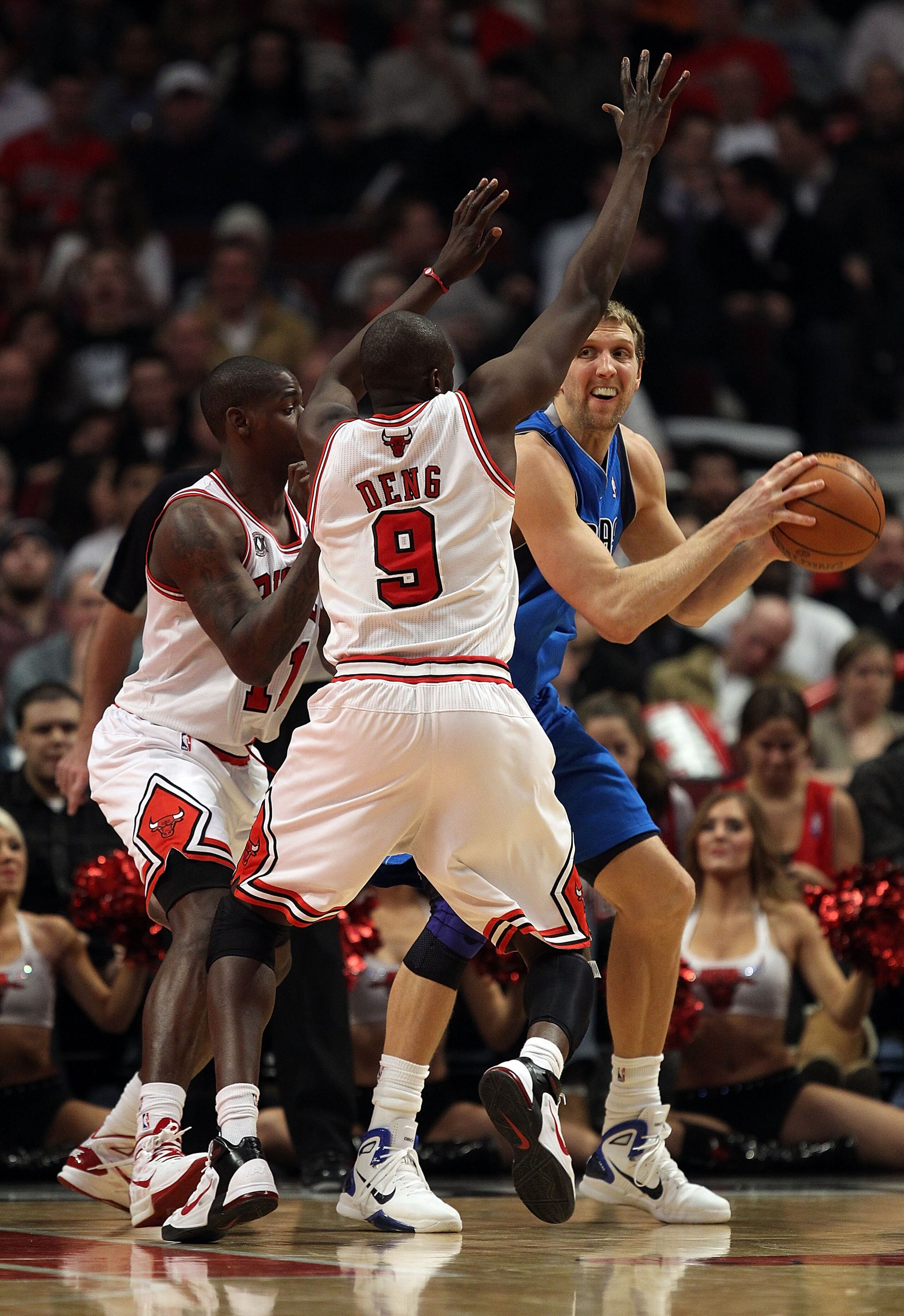
Offense: 1.10 (4)
Defense: .76 (2)
Why He's Not Higher: There's really no "weakness" per se here. He's 17th best spotting up with 1.07 ppp. He is 16th best in defensive against the isolation with .73. Even those numbers aren't too shabby. When you think how long and athletic he is this shouldn't be a surprise.
Why He's Not Lower: There are some who believe he's weak in the post. However, his .53 ppp against in the post is the lowest of any player on the list. People are entitled to their opinions I suppose, but the fact is that in the entire NBA he ranks third in defending the post. His 1.1 offensively ranks 7th in the NBA and sixth on our list. He's much tougher than credited for being.
1: Derrick Rose; 1.54
32 of 32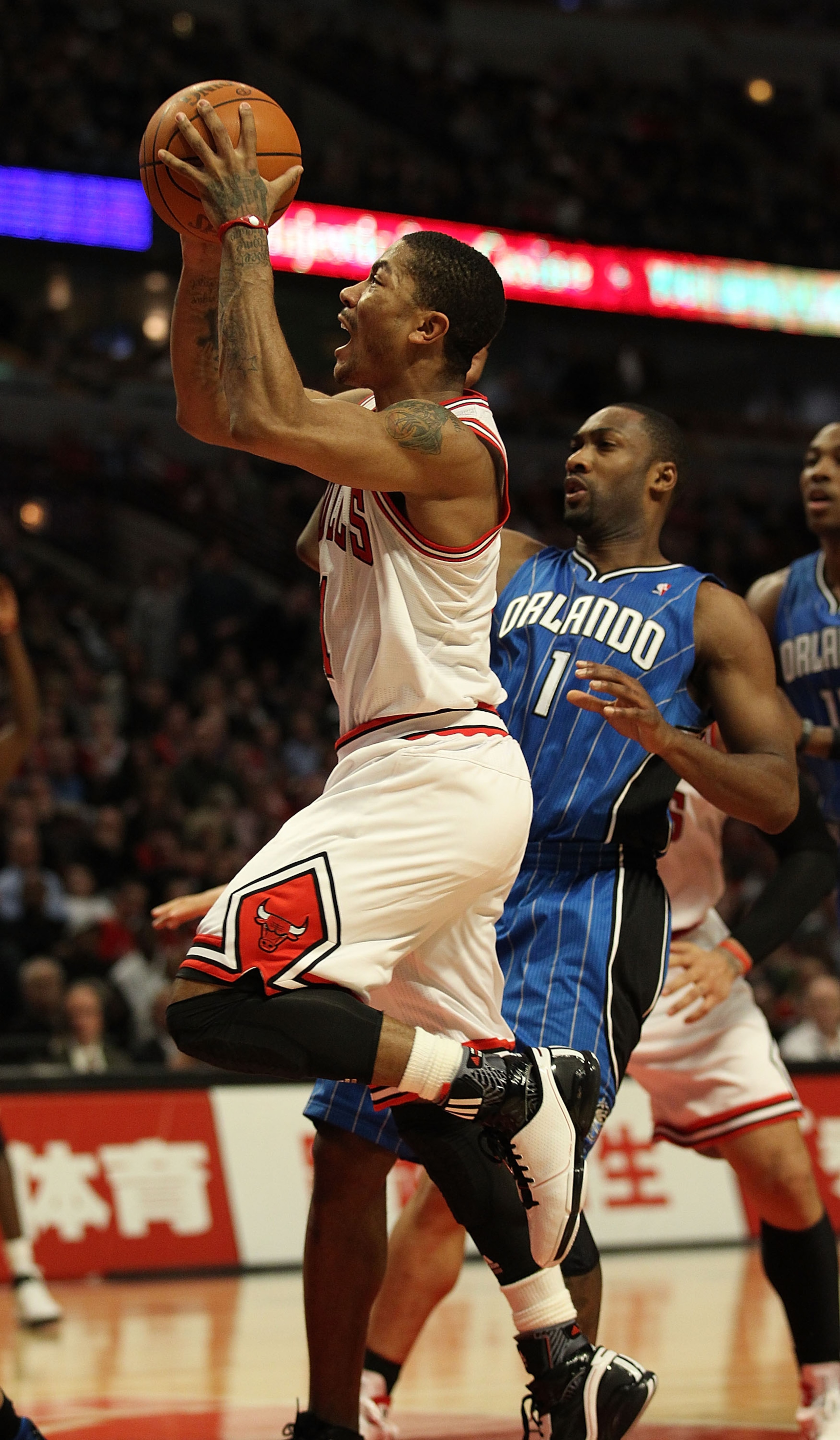
Offense: 1.10 (7)
Defense: .76 (1)
Why He's Not Higher: Because there isn't a higher to be. He's number one.
Why He's Not Lower: In every single subcategory with at least 10 plays he's top 10, the only player on the list who can make the claim. He has no weakness and everything is a strength.
Overall his defense ranking first might come as a surprise to some though as reputation always lags realtiy in that area. He is third in the area with the highest average ppp surrendered, the spot up. Because of his 6' 8" wingspan and 40" vertical he's very hard to shoot over. It's why he leads NBA point guards in blocks. He's third best in isolation with 1.04 and he's fourth best in the post yielding .63.
Offensively his strongest game is isolation, where he ranks 7th with 1.10 ppp. This is hardly surprising if you've witnessed his speed and crossover.He ranks 10th in the spot up jumper with .82 ppp. The only area where he's not top 10, posting up, it's because there are only six plays run that way.


.jpg?w=2560 "Viral Rams Coach Vid 🖕")
.jpg?w=2560 "Injury-stricken Seahawks signing veteran RB")
.jpg?w=2560 "Grading WWE Raw 🔠")
.jpg?w=2560 "2 NFL Officials Suspended")
.jpg?w=2560 "Mahomes' Wife Trolls Kubiak 💀")
