

Philadelphia Phillies: Matt Holliday, 10 Impact Players Passed For Draft Busts
Ah, what could have been.
The MLB's Rule Four Draft, better known as the First Year Player Draft, is not a simple process. Teams spend months preparing for the annual June draft, setting aside a budget, ranking a player's sign-ability and preparing alternatives in the event that their planned player is not available with their pick. If the draft were as simple as taking the best player available, imagine what baseball could look like today.
However, there are a pantheon of variables that each team "on the clock" must face. For example, do you take the safe route and draft a college senior who is more likely to sign, or do you draft a high school senior with high upside and a commitment to college? The first players is almost guaranteed to sign with you. But the second player, who could become the better major league player, could turn you down, attend college, and re-enter the draft in a few years, unless you offer him a large amount of money, of course.
Those variables, combined with this year's free agent class, really got me to thinking. A quick glance at the free agent market shows an interesting fact: the Tampa Bay Rays own 12 draft picks in the first two rounds of the draft. If they draft the best player available with all 12 of their picks, they could easily replace players like Carl Crawford, Carlos Pena and Grant Balfour, and then some. However, they must factor in those aforementioned variables.
In my mind, that raised the question—"What if the Phillies had done just that?"
A look at the current Phillies' roster usually earns them a "get out of jail free" card. With names like Chase Utley, Ryan Howard and Cole Hamels all coming up through the Phillies' system, people often forget that once upon a time, the Phillies' had done a terrible job drafting.
Having to worry about sign-ability, money and potential certainly factors into some of their decisions, what if none of those variables were on the table?
As they say, hindsight is 20-20, but looking back sure is a whole lot of fun. With that in mind, what could the Philadelphia Phillies look like today if they were able to go back in time and re-draft some of their team? In the long run, they make look a little something like this.
1998 Draft: Phillies Select Eric Valent—Pass On Matt Holliday
1 of 11
All things considered, the 1998 draft was a success for the Phillies. With the first overall selection, they picked a standout third baseman out of the University of Miami, who would transition to left field and remain a stable there in Philadelphia for the next several years. As the fans questioned whether he was man or machine, it's difficult to imagine that if they were given the option to choose again, the Phillies would select anyone other than Pat Burrell.
However, the Phillies also had a pick in the Supplemental Round of the draft, in which they completely missed the mark. With the 42nd overall selection, the Phillies drafted a young outfielder named Eric Valent out of UCLA. In an extremely brief major league career, Valent posted a slash line of just .234 / .307 / .389, with 13 home runs. Moreover, he appeared in just 29 games for the Phillies, batting well below the Mendoza Line of .200.
Had the Phillies done a little more research and took a chance, they could have had another perennial All-Star outfielder playing opposite of Burrell. With the 210th selection in the seventh round, the Colorado Rockies selected outfielder Matt Holliday.
After making his major league debut in 2004, Holliday never looked back. To this point in his career, he owns a slash line of .317 / .388 / .543, with 180 home runs. Needless to say, he would have been a better selection than Valent, and an outfield consisting of Burrell, Holliday and Shane Victorino would be one of baseball's top outfields for years to come.
1995 Draft: Phillies Select Reggie Taylor—Pass On Roy Halladay
2 of 11
If in 1998 the Phillies realized that they were going to make the same mistake they made in 1995 all over again by selecting Eric Valent, they may have been able to make that Matt Holliday selection, or at the very least, select a different player who could have had a larger impact on the club. In 1998, after Geoff Jenkins and Todd Helton went off the board, the Phillies selected a young outfielder out of Newberry, South Carolina named Reggie Taylor.
After making his major league debut in 2000, Taylor posted a slash line of just .231 / .274 / .381, with 14 home runs. He appeared in just 14 games for the Phillies over the course of two seasons, never posting a batting average above .100 and going 0-8 in 2001. Surprisingly enough, a current Phillie was available when the Phillies selected in the first round.
Just three picks later, the Toronto Blue Jays selected current Phillies' ace+ Roy Halladay. After throwing two no-hitters and winning the NL Cy Young with the Phillies in 2010, Halladay's career has been pushed into the spotlight. He has a career record of 169-86, an ERA of 3.32 ERA and two Cy Young Awards on his shelf.
It may not seem to make much of a difference now as he anchors the Phillies' staff, but imagine the numbers that Halladay could have put up if he spent his career in Philadelphia and the National League. Of course, Halladay struggled early in his career and attributes most of his success to his minor league pitching coach, but who says that he would have never figured things out in Philadelphia had the Phillies selected him?
At the very least, in a period of time where a true Phillies ace was hard to come by, he would have been a more productive player than Reggie Taylor ever was, or ever will be.
1995 Draft: Phillies Select Dave Coggin—Pass On Joe Nathan
3 of 11
To put it nicely, the Phillies had a completely abysmal draft in 1995. After passing on the likes of Roy Halladay, they selected again in the first round. With names like Carlos Beltran, Michael Barrett and Sean Casey still on the board, they had an excellent chance at selecting a serviceable major league player in this spot. However, with the 30th pick in the first round, the Phillies selected a pitcher by the name of Dave Coggin.
After bouncing back and forth between the rotation and bullpen in the minor leagues, the right handed Coggin finally made his debut for the Phillies in 2000, where he continued to bounce back and forth between the rotation and the bullpen. In three years with the Phillies, he posted a record of 10-12 to go with an ERA of 4.52, and was out of baseball after 2006.
With Paul Quantrill anchoring the Phillies' rotation in 1995, you would assume that they'd select a high upside pitcher somewhere in the draft, and they passed on a gem. With the 159th overall pick, in the fifth round, the San Francisco Giants would select future closer, Joe Nathan.
Though he would eventually be traded to the Minnesota Twins in what is considered one of the biggest fleecings of all time, his career numbers speak for themselves. He has appeared in 533 games, converting 247 saves, all but one of which came as a member of the Twins. To this date, he is the owner of a career 2.75 ERA.
The 1995 draft was a big swing and a miss for the Phillies. With that perfect hindsight once again in play, I think it's safe to say that, if they could have a mulligan on that 1995 draft, the Phillies would be much happier with Roy Halladay and Joe Nathan than Reggie Taylor and Dave Coggin.

1996 Draft: Phillies Select Adam Eaton—Pass On Roy Oswalt
4 of 11
"Fool me once, shame on you. Fool me twice, shame on me."
When it comes to Adam Eaton, you'd think that the Phillies would have learned their lesson the first time. Though the 1996 draft wasn't stacked with talent, it's safe to say that looking back, Eaton wasn't the greatest selection. The Phillies drafted the right hander with the 11th overall selection, and after trading him to the San Diego Padres before appearing in a game with the club, would sign him to a free agent contract in the future and become regarded as one of the worst free agent signings in the history of the franchise.
Over the course of his career, he posted a record of 71-68, with an ERA of 4.94. He was even worse when wearing a Phillies' uniform—his lowest ERA in Philadelphia was 5.80. In fact, when the Phillies won the World Series in 2008 and Eaton was awarded with a ring, the fans were outraged! To think that they could have selected another member of the current rotation in this draft makes the Eaton situation even worse.
Every team in baseball outside of the Houston Astros are kicking themselves for not selecting Roy Oswalt before the 684th overall pick in 1996. Now a member of the Philadelphia Phillies, Oswalt has posted a career record of 150-83 to date, with an ERA of 3.18.
If time travel was a real possibility, the Phillies could have assembled a rotation that included Oswalt and Roy Halladay before Cole Hamels was even a thought in Philadelphia. Instead, we're left with nightmares of Eaton and a wasted $24 million.
1997: Phillies Select J.D. Drew—Pass On Vernon Wells
5 of 11
With the second overall selection in a draft that produced many above average major league players, the Phillies were sitting pretty in 1997, right? After watching the Detroit Tigers select a pitcher named Matt Anderson, now a Phillies' spring training non-roster invitee, the Phillies went on the clock, and it took them little time to make their selection known. With the second pick, they took a young outfielder out of Florida State University named J.D. Drew.
The months that followed the selection were not happy ones for the Phillies, their fans or Drew's camp, led by mega-agent, Scott Boras. At the time, Boras told the Phillies that his client would not sign for anything less than $10 million—an amount of money that the Phillies simply were not willing to spend on an unproven draft pick. As things turned out, Drew did not sign with the Phillies, choosing to sign with the St. Louis Cardinals after being selected fifth in the following year's draft, becoming one of the most hated professional baseball players in the history of the Philadelphia Phillies' franchise.
All things considered, Drew is not your traditional "draft bust." To this point in his career, the 35-year-old outfielder has posted a slash line of .281 / .387 / .499, with 238 home runs, winning a World Series title with the Boston Red Sox in 2007. As far as the Phillies are concerned, however, he is one of the franchise's biggest draft busts of all time.
Taking a look at the remainder of the draft board surely doesn't ease the pain any. Following the Phillies' selection of Drew, names like Troy Glaus, Tim Hudson and Michael Young went off the board. However, if the Phillies' were set on choosing an outfielder with their second pick, they could have gone with the recently traded Vernon Wells, and been much more satisfied with their decision.
Over the course of his career, Wells has been known for signing an absolutely horrendous contract extension with the Toronto Blue Jays, and recently, waiving his no-trade clause to become a member of the Los Angeles Angels of Anaheim. However, don't let his contract situation fool you—Vernon Wells is a well above average outfielder.
If the Phillies had chosen Wells out of Bowie High School with their second overall pick, the Blue Jays would have had to reconsider in the fifth slot. Current contract aside, Wells has posted impressive career numbers, including a slash line of .280 / .329 / .475, with 223 home runs.
Though Drew has had greater success in his career to date, Wells would have been the easier sign for the Phillies. He has proven himself to be less of an injury risk and perhaps most importantly, has had offensive success in center field.
Looking at Wells today, his contract makes his offensive production less valuable. However, who is to say that the Phillies agree to an extension of that caliber with Wells? Surely, dealing with his agent, Brian Peters, would not have been as difficult as dealing with Boras and his outlandish contract demands.
2001: Phillies Select Gavin Floyd—Pass On Dan Haren
6 of 11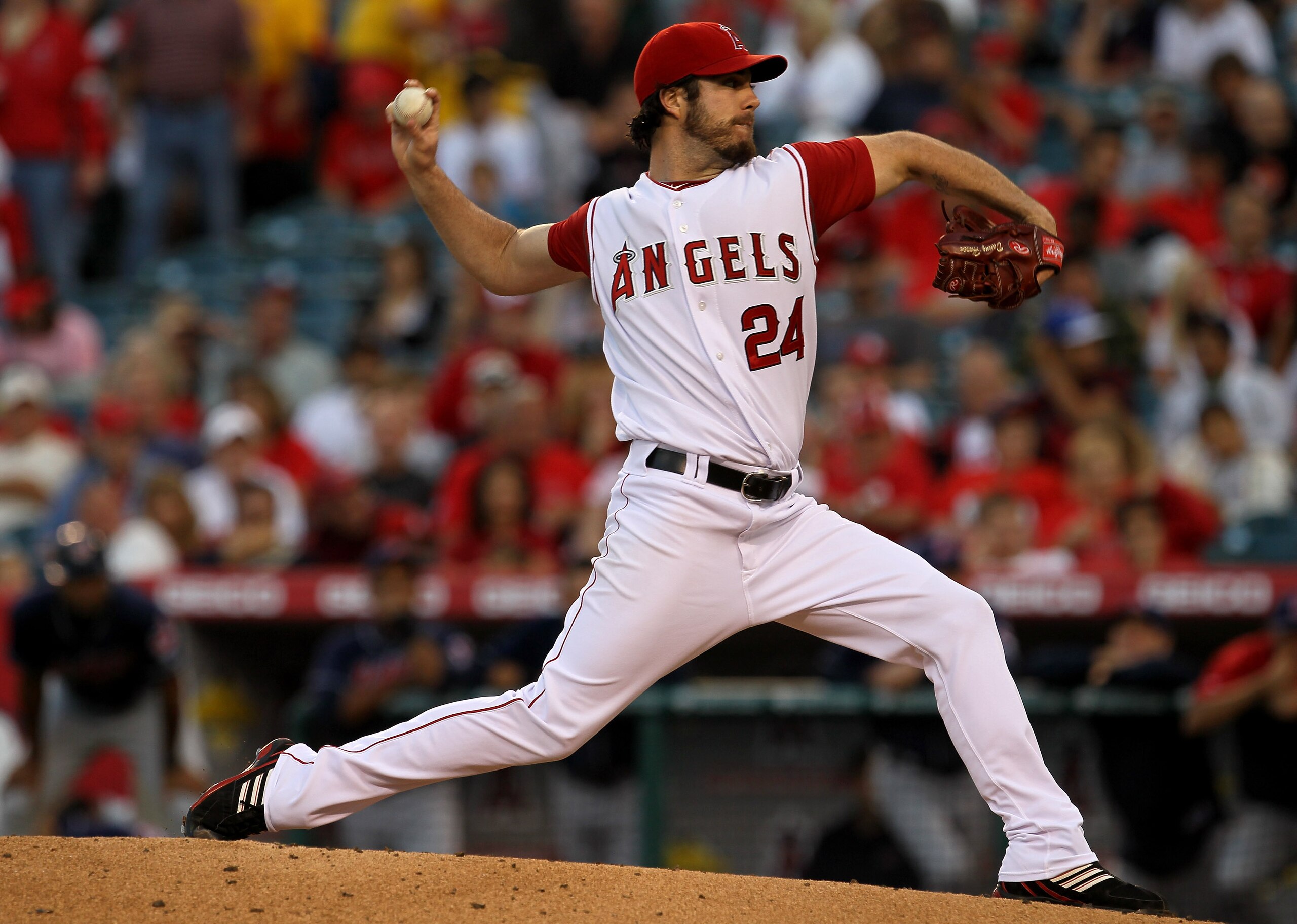
Stay with me here, as this slide is a bit more complicated. The 2001 First Year Player Draft was one the most anticipated in the history of baseball. With the Minnesota Twins and Chicago Cubs holding the first two picks in the draft, and the annual cellar dwelling Tampa Bay Devil Rays selecting third, the draft's top three talents were projected to go off the board in order. Therefore, it was no surprise that by the time the Phillies selected fourth, Joe Mauer, Mark Prior and Dewon Brazleton had gone off the board.
With their pick in the first round, the Phillies chose a young right handed starter out of Mount Saint Joseph College named Gavin Floyd. After years of hype as one of the Phillies' top prospects, Floyd made his debut for the Phillies in 2004, appearing in six games and posting a record of 2-0, with an ERA of 3.49.
It was the following two seasons, however, that saw Floyd fall out of favor with the Phillies. After appearing in 18 more games between 2005-06, he stumbled, posting a record of 5-5, with an ERA of 8.67. To the Phillies, he was considered a bust. Following the 2006 season, he would be traded, along with another top Phillies' prospect, Gio Gonzalez, to the Chicago White Sox for starting pitcher, Freddy Garcia, who would eventually be considered a flop in Philadelphia as well.
Floyd, on the other hand, improved upon his dreadful career numbers. Now 28, he has posted a career record of 46-42, with an ERA of 4.65—certainly a serviceable major league arm for the White Sox. The Phillies, however, could have done better.
Later in the draft, the St. Louis Cardinals selected a young starter out of Pepperdine University who would eventually develop into the ace of the Arizona Diamondbacks—right handed pitcher, Dan Haren.
It is surprising that a pitcher of Haren's caliber has been traded three times before the age of 30, but that is exactly the case. After a few mediocre seasons in St. Louis, he was traded to the Oakland Athletics along with two other prospects for starting pitcher, Mark Mulder.
Having developed into a top-of-the-rotation arm, the A's decided to replenish their farm system, and he would land them top Diamondbacks' prospects Carlos Gonzalez, Brett Anderson and Chris Carter, among others. Though the haul was not as great for the D'backs a few seasons later, they sent him to the Los Angeles Angels of Anaheim during the 2010 season.
What if that could have all been avoided? By selecting Floyd with the fourth pick in the draft, the Phillies missed out on Haren, David Wright and Mark Teixeira. Assuming that he would have taken a similar path to the major leagues, the Phillies certainly could have used Haren. Their starting rotation in 2003 consisted of average to below average starting pitchers Kevin Millwood, Vicente Padilla, Randy Wolf, Brett Myers and Brandon Duckworth.
If they could select a starting pitcher again, it looks like Haren is a no-brainer.
2004: Phillies Select Greg Golson—Pass On Hunter Pence
7 of 11
As the major league Phillies began to improve in the standings, they began to plummet down the draft board as well. By 2004, the Phillies were not one of the worst teams in baseball any longer, and owners of the 21st overall selection in the draft that June. With almost all of the top talents having gone off the board by their selection, the Phillies chose a speedy outfielder out of Connally High School named Greg Golson.
Golson was certainly a traditional bust for the Phillies. After three mediocre years in the Phillies' minor league system, he made his major league debut in 2008, appearing in six games and going hit-less. That off-season, he was traded to the Texas Rangers for current minor league outfielder, John Mayberry Jr. After appearing in just one major league game for the Rangers, they decided to trade him as well, sending him to the New York Yankees, where he appeared in 24 games in 2010.
Over the course of his short career to date, Golson has done nothing special. He is the owner of a .200 / .200 / .267 slash line, with zero home runs and just one stolen base. When speed is the greatest aspect of your game and you are posting a career on-base percentage of .200, you know you're having problems.
Waiting to be selected in the next round was a young outfielder who is still developing into a top talent today. With the 64th overall selection in the draft, the Houston Astros selected Hunter Pence out of the University of Texas at Arlington.
With four seasons of major league baseball under his belt, Pence is regarded as a budding star. The 27-year-old has posted a slash line of .287 / .336 / .481 to date, along with 92 home runs. He plays above average defense in the outfield and has an extremely strong arm. In just four seasons, he has generated 14.1 Wins Above Replacement for the Astros.
How much WAR has Golson generated, you ask? A sad -0.2.
2007: Phillies Select Joe Savery—Pass On Arencibia, Cecil and Hunter
8 of 11
In a year that included prospects like Jason Heyward, David Price, Mike Moustakas and Matt Wieters, the 2007 draft was absolutely loaded with talent. With the 19th selection in the draft, there was a good chance that the Phillies would be able to select an above average major league contributor. With those hopes in mind, they selected a talented starting pitcher out of Rice University by the name of Joe Savery.
It's safe to say that since joining the Phillies, Savery has been an abysmal failure. To this date in time, he has not made his major league debut, and as a starting pitcher, has not posted an ERA below four since his 2007 season with the Phillies' low-A ball club.
Ah, but is there hope? Savery was also a talented first baseman with Rice's collegiate team, and in 2010, transitioned to a full time hitter in the Phillies' system. Serving mainly as the designated hitter, Savery posted an interesting slash line of .348 / .348 / .478 along with a home run in 35 games for the Phillies' AAA club. However, a .429 Batting Average on Balls in Play shows that those numbers are a bit misleading.
So, while to some, the jury is still out on Savery, he certainly is not the dominant left handed pitcher that they were expecting, and thus, a bust in that regard. Though there weren't many "dominating" players that were selected after him, there were a few that the Phillies could have found useful since the year 2007.
Just two picks after Savery, the Toronto Blue Jays selected a talented offensive catcher out of the University of Tennessee named J.P. Arencibia. Before finally making his major league debut in 2010, Arencibia put up impressive numbers in the Jays' minor league system. In just four seasons on various levels, the catcher blasted 83 home runs and showed improvement in all other offensive statistics. Though Carlos Ruiz has proven himself to be a necessity to the success of this Phillies' ball club, Arencibia would not be a bad prospect to have in the even of an emergency.
Following the first round, there were a couple of starting pitchers that the Phillies could have found useful as well—Brett Cecil and Tommy Hunter.
Cecil, 24, was selected by the Blue Jays as well with the 38th overall pick as compensation for losing free agent reliever, Justin Speier. In an up and down career, the young left handed starter has shown flashes of brilliance at both the major and minor league levels. He is the owner of a career 22-11 record, and an ERA of 4.60, showing that he can completely shut down left handed hitters.
The Phillies also could have gone with a big right hander at their slot, and chosen Tommy Hunter. Hunter, 24, was selected by the Texas Rangers with the 54th pick overall, in the Supplemental Round, as compensation for losing infielder, Mark DeRosa, to free agency. He made his debut for the Rangers in 2008, and has since posted a record of 22-12 with an ERA of 4.45, almost mirroring Cecil's career numbers to date.
Though Savery still has a limited amount of potential, the Phillies could have chosen one of Arencibia, Cecil and Hunter, and found a player that could contribute with their major league club. On the other hand, with no designated hitter in the National League, Savery may never see that opportunity.
2008: Phillies Select Anthony Hewitt—Pass On Lonnie Chisenhall
9 of 11
Here is where things start getting tricky. I won't be going past the 2008 draft because players selected after that have not had the chance to develop into their full potential, and you can make that same argument for the 2008 draft as well. However, the Phillies first couple of selections in that draft could have been better spent, so with that in mind, we move forward.
En route to a World Series title in 2008, the Phillies were coming off a pretty decent season in 2007 as well, capturing their first of four consecutive National League East division titles. Come June, the Phillies had two selections before the second round—the 24th overall selection and the 34th selection, which would come in the Supplemental Round.
With their 24th selection, the Phillies chose a talented young third baseman/outfielder out of Salisbury School in Connecticut named Anthony Hewitt. Already three years into his minor league career, Hewitt has yet to post a single impressive season, posting a combined slash line of .207 / .251 / .340, with 19 home runs.
The need for Hewitt was apparent. With little depth at third base in the system, selecting an infielder who could play the hot corner was a wise idea. However, the selection of Hewitt missed the mark. Just a few picks later, with the 29th pick overall, the Cleveland Indians selected a third baseman out of Pitt Community College named Lonnie Chisenhall.
In his first three seasons in the Indians organization, Chisenhall has showed great potential on his way to becoming the system's number one prospect. Combined over his first three seasons, he has posted a slash line of .266 / .333 / .443, with 44 home runs.
In their most recent Top 50 Prospects ranking, MLB.com ranked Chisenhall the 36th best prospect in baseball. Hewitt? Not even close. If they could go back in time to choose a third baseman in the 2008 draft, the Phillies would like to have Chisenhall.
2008: Phillies Select Zach Collier—Pass On Mike Montgomery
10 of 11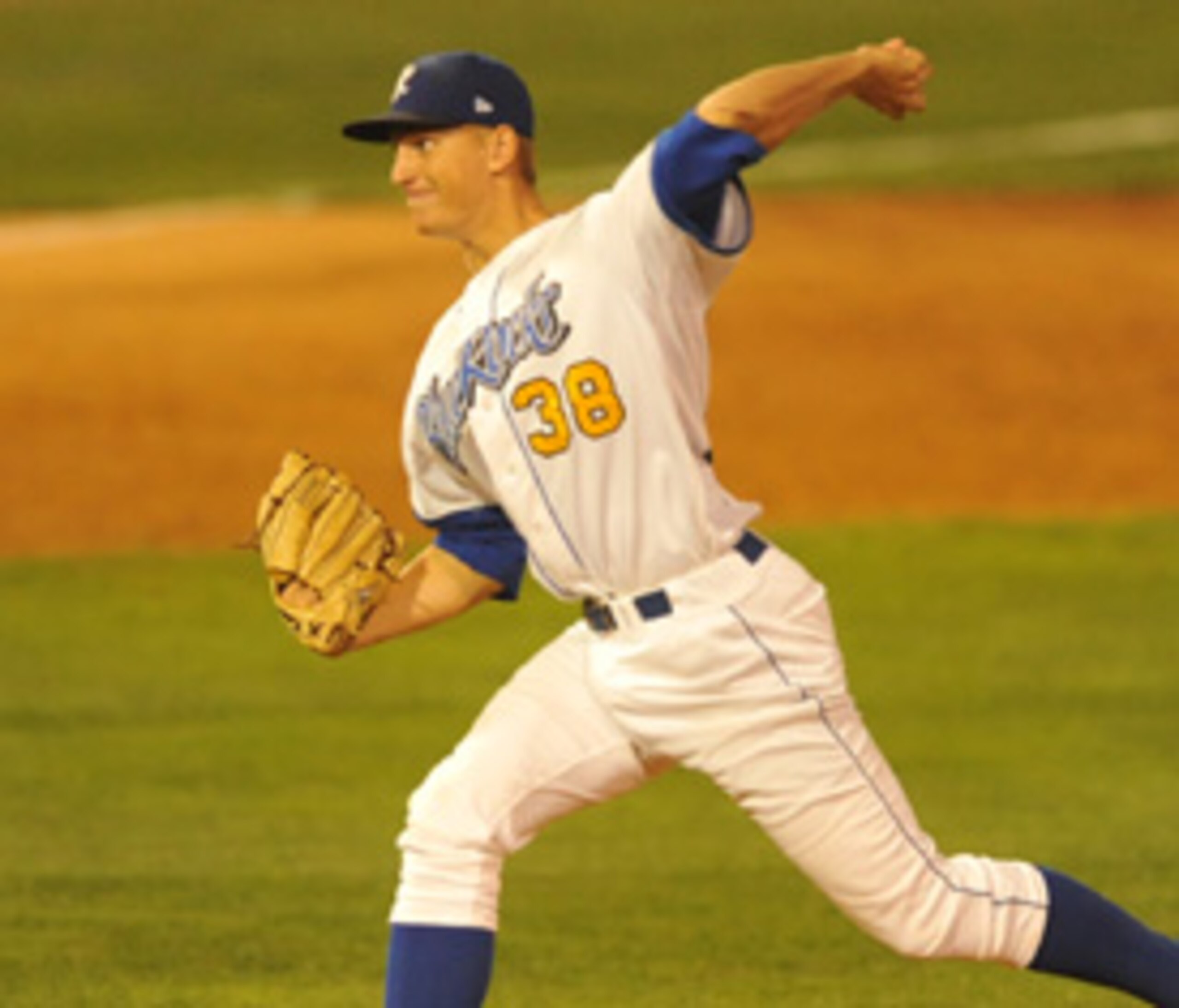
The 2008 draft was not a complete disaster for the Phillies. Though third base prospect, Anthony Hewitt, is unlikely to make anything of himself in the major leagues and Zach Collier, the player we are about to discuss, has seemingly flamed out as well, the Phillies did draft the current fourth best prospect in their system that year—starting pitcher, Jarred Cosart.
However, as mentioned, Collier is a selection that they'd like to have back. The Phillies, who received the 34th overall selection in the draft as compensation for losing outfielder Aaron Rowand to the San Francisco Giants in free agency, selected Collier, an outfielder with talent, out of Chino Hills High School in California.
With two years in the Phillies' minor league system under his belt (he missed the entire 2010 season), Collier has shown no glimpse of that potential. He has never appeared above the Phillies' A-ball level, and with the slash line he has posted to date, isn't moving up any time soon. He is the owner of a .247 / .313 / .343 minor league slash line, with just a single home run.
There are positives for Collier, however. He is just 20-years-old, and has shown the potential to improve over the course of the next few seasons, as he recovers from a hand / wrist injury. However, with a talented outfield, the Phillies could have used their Supplemental Round pick on a talented young pitcher that has climbed through the Kansas City Royals' system.
Just two picks later, with the 36th overall pick in the draft, the Royals selected a talented young left handed starter out of Hart High School by the name of Mike Montgomery.
With three seasons under his belt, Montgomery has shown that he has the potential to be a dominating left handed starter in the major leagues. Splitting time between the Royals' rookie, high-A ball and AA clubs, the pitcher has posted a combined record of 17-11, with an ERA of 2.54, showing good control and the ability to strike hitters out.
Heading into the 2011 season, the Royals have, unanimously, the best farm system in baseball. For that reason alone, being ranked fifth in the Royals' system, according to Baseball America, is no simple feat. In most systems, Montgomery would be first, or at the very least, near the top. MLB.com also thought highly of the left hander, when they ranked him as the 14th best prospect in baseball.
Since we can all dream for a moment, imagine this. Montgomery, 21, is projected to reach the major leagues by 2012 with the Royals. If he had been drafted by the Phillies, he would join a rotation that already included left handed starters Cliff Lee and Cole Hamels. Imagine those three lefties in the same rotation. Scary.
Oh yeah, and those right handed guys named Roy Halladay and Roy Oswalt aren't too shabby either.
In Conclusion...
11 of 11
...the Phillies have done an excellent job in the draft. Looking around their current roster, integral parts of the 2011 club including Cole Hamels, Ryan Madson, Kyle Kendrick, Ryan Howard, Chase Utley, Jimmy Rollins and Domonic Brown were all drafted and farmed through the Phillies' system.
Even heading into the 2011 season, the Phillies' farm system is in good shape. Though it lacks any real depth at the upper levels of the minor league system, according to one scout, "no team has more talent in A-ball than the Phillies," and it's true—nine of the Phillies' top ten prospects could start the season below AA. However, that isn't the same as saying that the talent isn't there.
According to ESPN.com's Keith Law (ESPN Insider required), the Phillies are still one of the top organizations in baseball, thanks to savvy drafting and the ability to spend money. However, it's fun to imagine, "What if?" What if the Phillies could slot Matt Holliday into their lineup every day behind Ryan Howard and Chase Utley? What if Roy Halladay had pitched his entire career in Philadelphia? Would he be the same pitcher he is today? What if Joe Nathan spent his entire career in the National League East? How many saves would he have today?
The "what if" game entertains the mind during the long off-season, and luckily for Phillies' fans, we still have the ability to look forward to talented prospects. The "what if" game isn't all that delusional when there are actually talented prospects in your system.
As the core of Phillies that have become folk legends in Philadelphia ages, a young core will prepare to step into their shoes. When Raul Ibanez and Shane Victorino are finished patrolling the outfield, young prospects like Jiwan James and Domingo Santana will be prepared to join Brown in the outfield. When Roy Halladay begins his quest for Hall of Fame status, Jarred Cosart and Brody Colvin, among others, will crack the rotation.
Sure, names like Lonnie Chisenhall and Mike Montgomery would look good under a heading that reads "Top Phillies Prospects," replacing names on a list that reads, "Top Draft Busts," but we must live with the mistakes made in the past, and learn not to make those mistakes moving forward, though, it's impossible to know just how good a prospect will be on draft day.
Still, it's fun to imagine what kind of franchise the Phillies would be if they could go back and erase their draft "busts" with major league success stories. At the very least, it's food for thought as we patiently await Spring Training in a foot of snow.



_0.png?w=2560 "Unranked Teams Cause Chaos in Rankings 📊")
.png?w=2560 "Week 8 Winners & Losers 📊")




.jpg?w=2560 "Jonathan Taylor Landing Spots 📍")
