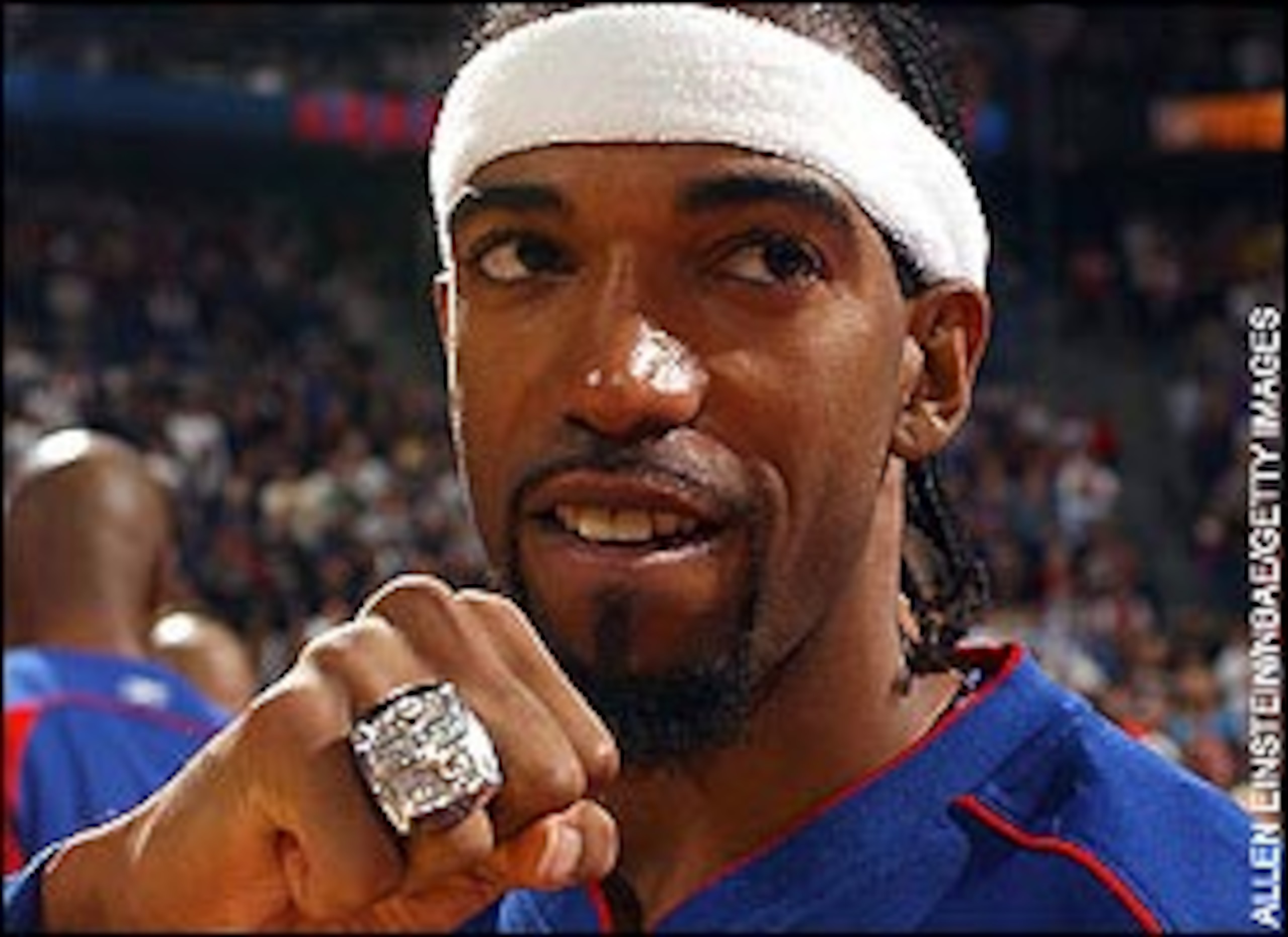

Rip Hamilton's Ten Greatest Playoff Performances As a Detroit Piston
Now that it appears Richard "Rip" Hamilton's time has come to an end with the Detroit Pistons, at least his playing days, that is. I figure it is time for us Pistons fans to look back on how much he has accomplished with the team, especially what he has done in the playoffs.
Since being acquired in a six-player trade from the Washington Wizards on September 11, 2002, Hamilton, the No. seven overall pick in the 1999 NBA Draft, has been a mainstay through the team's six consecutive Eastern Conference Finals appearances (2003-08).
During his nine seasons with the team, he has averaged under 17 PPG just once. For his career, he has shot 45.0% from the floor, 85.2% from the free-throw line and has helped Detroit to two NBA Finals appearances, including a championship in 2004.
The ranking of these performances is, of course, based upon Hamilton's play, but also on the importance of the games.
For example, scoring 25 points in a victory in the Eastern Conference Finals or the NBA Finals is viewed as being more important than a 35-point performance in a loss.
No. 10 -- Game 6 at Miami In The 2006 Eastern Conference Finals
1 of 11
Stat line: 33 points, three rebounds; FGs—12 for 28 (.429); three Ps—two—for—seven (.286); FTs—7 for eight (.875)
In a year that saw the Pistons win 64 games and cruise through the regular season, their hopes for a second championship in three years were dashed by the Miami Heat.
The Heat controlled the game throughout and Hamilton was the lone bright spot for Detroit, who lost 95-78.
He kept the Pistons in the game for a while, but it was too much as Shaquille O'Neal, Dwayne Wade and the Heat would not be denied a trip to the NBA Finals.
He scored 33 points, while the next-highest scorers on the team were Rasheed Wallace and Tayshawn Prince, who had ten points apiece.
No. 9 -- Game 4 at Milwaukee In The 2004 Eastern Conference Playoffs 1st Round
2 of 11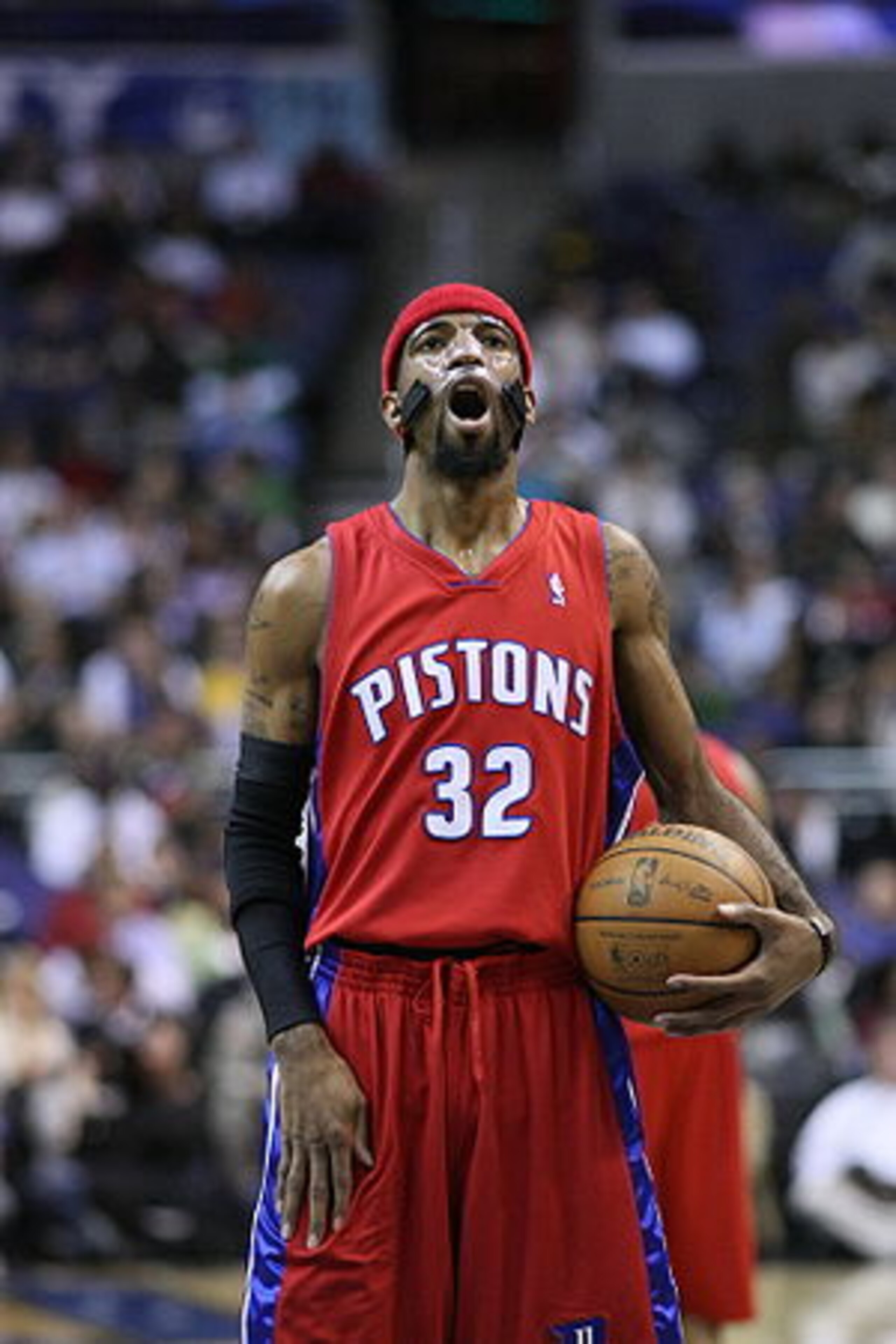
Stat line: 27 points, six assists; FGs—10 for 17 (.588); 3Ps— three for four (.750); FTs—four for four (1.000)
In a game that enabled the Pistons to take a three to one lead on the Milwaukee Bucks, Hamilton scored 27 points on 10-for-17 shooting to lead Detroit to the 109-92 win.
Leading by six points heading into the fourth quarter, Detroit outscored Milwaukee 35-24 in the final period to put the game away.
It was classic Hamilton, running off screens, hitting mid-range jumpers and coming through when his team needed him.
Detroit would win Game five, 91-77, three days later, eliminating the Bucks and moving on to the Eastern Conference Semifinals.
No. 8 -- Game 5 Versus MIL In The 2006 Eastern Conference Playoffs 1st Round
3 of 11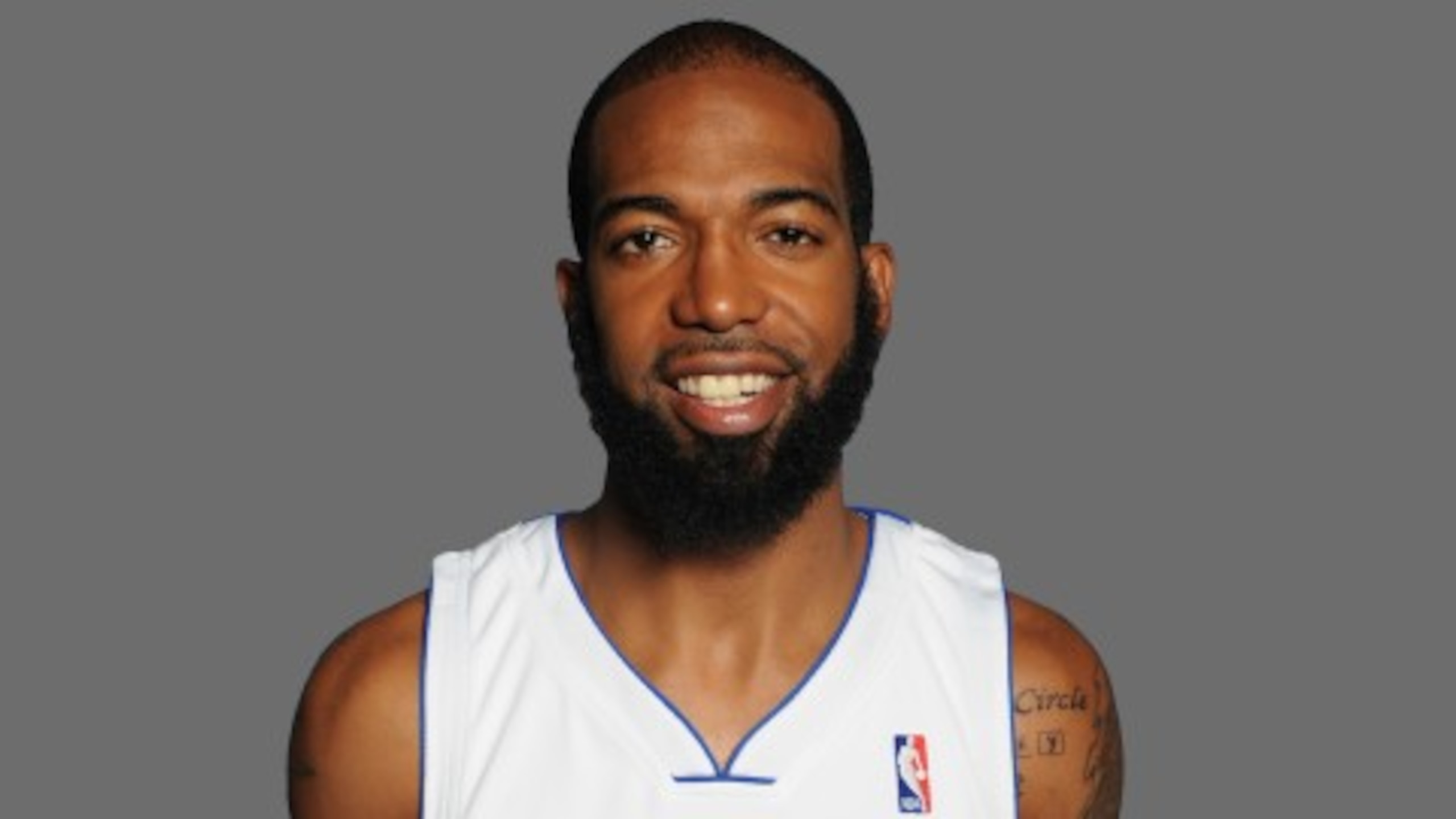
Stat line: 40 points, three rebounds, three assists; FGs—15 for 23 (.652); 3Ps— 2 for 2 (1.000); FTs— eight for nine (.889)
Hamilton led the Pistons with a playoff career-high 40 points, finishing off the Milwaukee Bucks, 93-84, at home and advancing to the second round of the playoffs.
"We really wanted to take care of business at home," Hamilton said. "It was important for us to get some rest, and watch the other teams beat each other up."
Hamilton scored the 40 points in only three quarters, leaving the game for good with 10:48 remaining.
He did so while nursing an injured ankle and a bruised thigh, scoring 18 more points than any of his teammates. Rasheed Wallace was the team's second-highest scorer with 22 points.



No. 7 -- Game 2 Versus Orlando in The 2003 Eastern Conference Playoffs 1st Round
4 of 11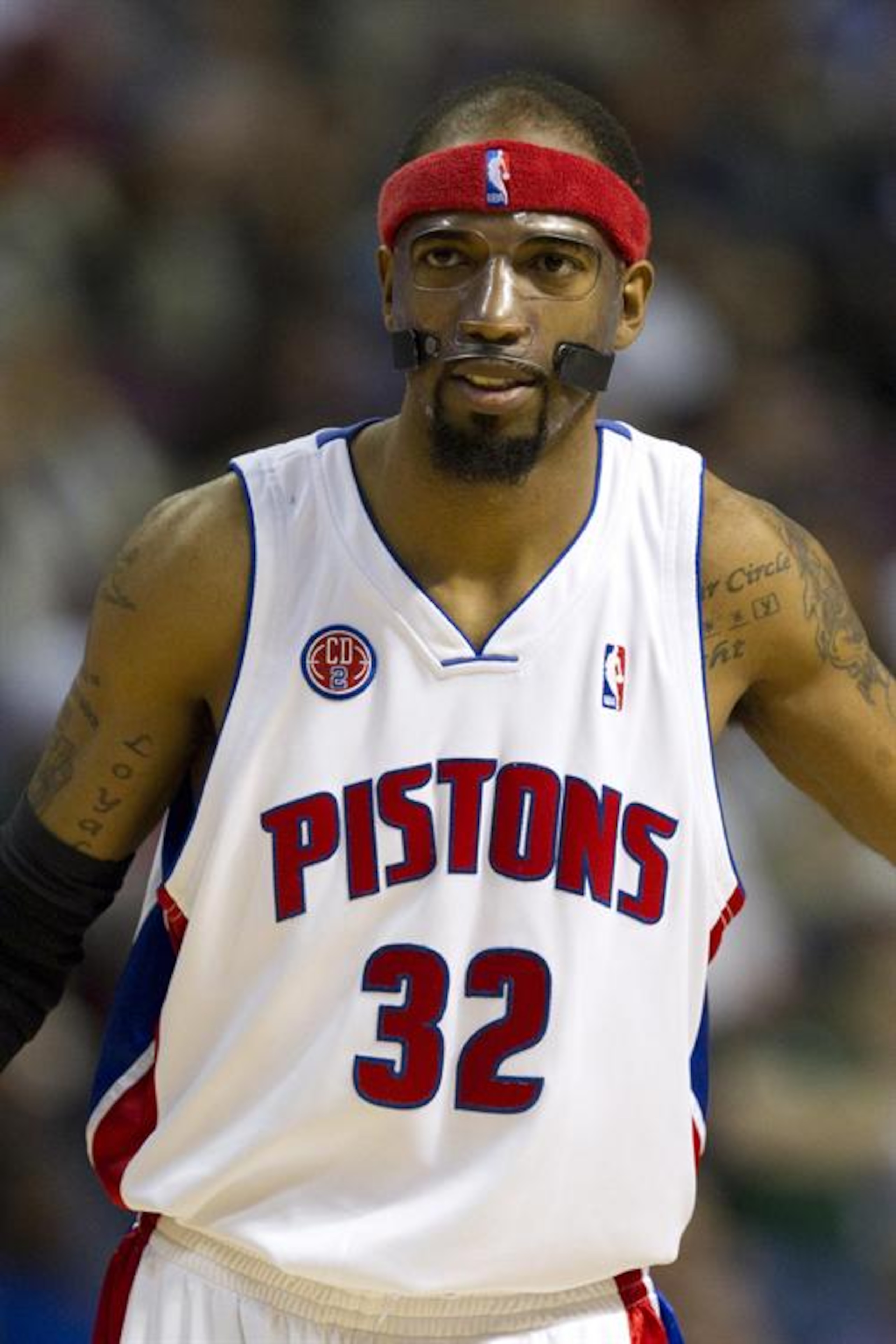
Stat line: 30 points, seven rebounds, five assists; FGs—10 for 16 (.625); FTs—10 for 13 (.769)
Despite being the No. one seed in the Eastern Conference, the Pistons lost Game one at home to Orlando, 99-94, after being torched by Tracy McGrady for 43 points.
In Game 2, McGrady scored 46 points, but the Pistons were able to prevent anyone else from doing damage. In fact, McGrady was the only Magic player to score in double figures.
Hamilton led the way for the Pistons, scoring 30 points on 10 for 16 shooting, including 13 points in the first quarter when Detroit outscored Orlando 31-14, immediately taking control of the game.
Despite losing Games three and four in Orlando, the Pistons would rally to win the final three games of the series, outscoring Orlando by a combined 61 points in Games five, six and seven.
No. 6 -- Game 6 at Indiana In The 2005 Eastern Conference Semifinals
5 of 11
Stat line: 28 points, six rebounds; FGs—10 for 16 (.625); FTs— eight for nine (.889)
In what would be Reggie Miller's final game, Mr. Pacer scored 27 points on 11 for 16 shooting, including four for eight from three-point range, while Hamilton scored 28, leading the Pistons to the 88-79 series-clinching victory.
Hamilton scored ten points in the fourth quarter, including a layup with 8:36 remaining that put the Pistons ahead for good.
It was a fitting way for Miller to pass the torch to Hamilton, who had modeled his game after Miller's.
With 16 seconds remaining, the 18-year veteran came out of the game and was given a standing ovation from both teams as well as the home crowd which chanted, "Reg-gie, Reg-gie."
"It was definitely very emotional," Hamilton said. "I don't think I've ever been in a game where a team that's about to move on and a guy comes out of the game and the other team is cheering."
For the Pistons, it was their third straight victory after falling behind two to one in the series.
No. 5 -- Game 4 at Orlando In The 2008 Eastern Conference Semifinals
6 of 11Stat line: 32 points, six rebounds, three assists; FGs—12 for 24 (.500); FTs— eight for nine (.889)
Rip Hamilton helped lead the Pistons back from a 15-point second-half deficit, scoring ten points in the fourth quarter to bring the Pistons within striking distance.
Time and time again, when the Pistons, who were playing without point guard Chauncey Billups, needed a big bucket, Hamilton came through for them.
Tayshaun Prince scored on a running one-hander with 8.9 seconds to play, giving the Pistons a 90-89 win over Orlando and three to one lead in the series.
Detroit would win Game five, 91-86, closing out the series.
Hamilton averaged 23.6 PPG in the series, scoring 24. 32 and 31 points, respectively in the final three games.
No. 4 -- Game 6 at San Antonio in The 2005 NBA Finals
7 of 11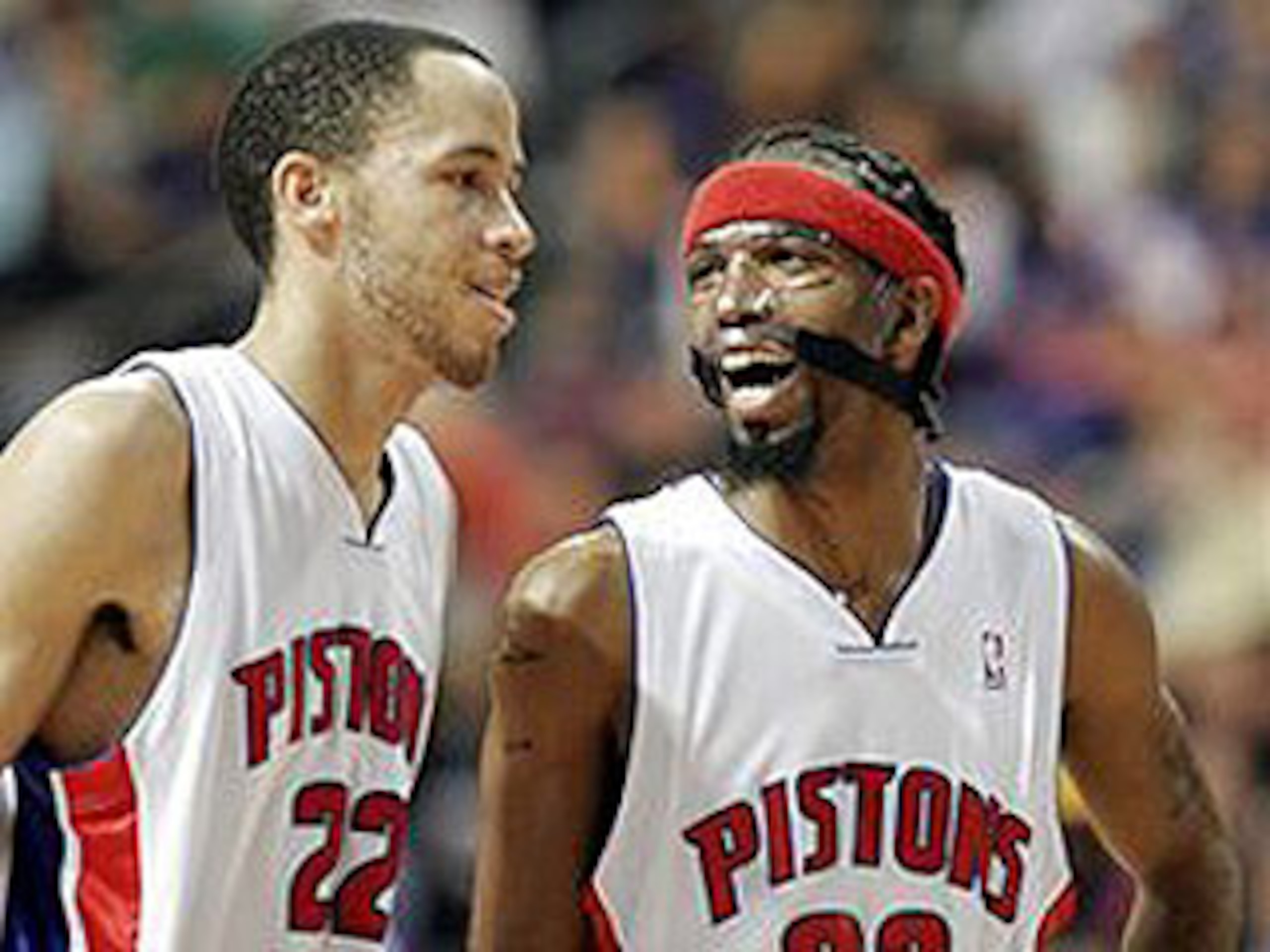
Stat line: 23 points, five rebounds, three assists; FGs— nine for 19 (.474); 3Ps— three for four (.750); FTs— four for four (1.000)
Hamilton scored 23 points to lead all scorers in a must-win game for the Pistons.
Down three to two in the NBA Finals, the Pistons needed to win to stave off elimination, defeating San Antonio, 95-86, to force a Game seven.
The back-and-forth game saw seven ties and 23 lead changes before the Pistons took the lead for good late in the third quarter when Hamilton scored 11 points.
The Spurs would win Game seven, preventing the Pistons from winning back-to-back NBA titles.
No. 3 -- Game 6 Versus Indiana In The 2004 Eastern Conference Semifinals
8 of 11
Stat line: 21 points, five rebounds, five assists; FGs— seven for 15 (.467); FTs— seven for eight (.875)
Hamilton was the lone offensive force for the Pistons, scoring 21 points in a dramatic 69-65 win that earned the Pistons a spot in the NBA Finals.
A defensive struggle throughout, Hamilton played 47 of 48 minutes, shot seven for 15 from the floor and, after being flagrantly fouled by Ron Artest with 3:57 to play, hit two free-throws to put the Pistons ahead 61-59, a lead they would not relinquish.
Billups, who shot just 2-for-13 in the game, hit two critical three-pointers in the fourth quarter, one at the 8:56 mark and the other at the 6:45 mark, each of them tying the game.
Hamilton scored nine points in the fourth quarter, including a key baseline jumper with 1:13 to play that put the Pistons ahead, 65-61.
No. 2 -- Game 3 Versus The L.A. Lakers In The 2004 NBA Finals
9 of 11
Stat line: 31 points, six rebounds, three assists; FGs—11 for 22 (.500); 3Ps— two for for (.500); FTs—seven for seven (1.000)
Hamilton scored 31 points, 12 more than the next-highest scorer and more than Shaquille O'Neal and Kobe Bryant combined.
He had eight points in the first quarter as the Pistons outscored L.A. 24-16 in the opening period, and scored seven points in the fourth quarter when the Pistons put the Lakers away, winning 88-68.
Hamilton averaged 21.4 PPG in the series, the most on the team, but it was Billups who was the Finals MVP, averaging 21.0 PPG on 50.9 percent shooting from the floor. 47.1 percent from the three-point line and 92.9 percent from the free-throw line.
No. 1 -- Game 5 at Indiana In The 2004 Eastern Conference Finals
10 of 11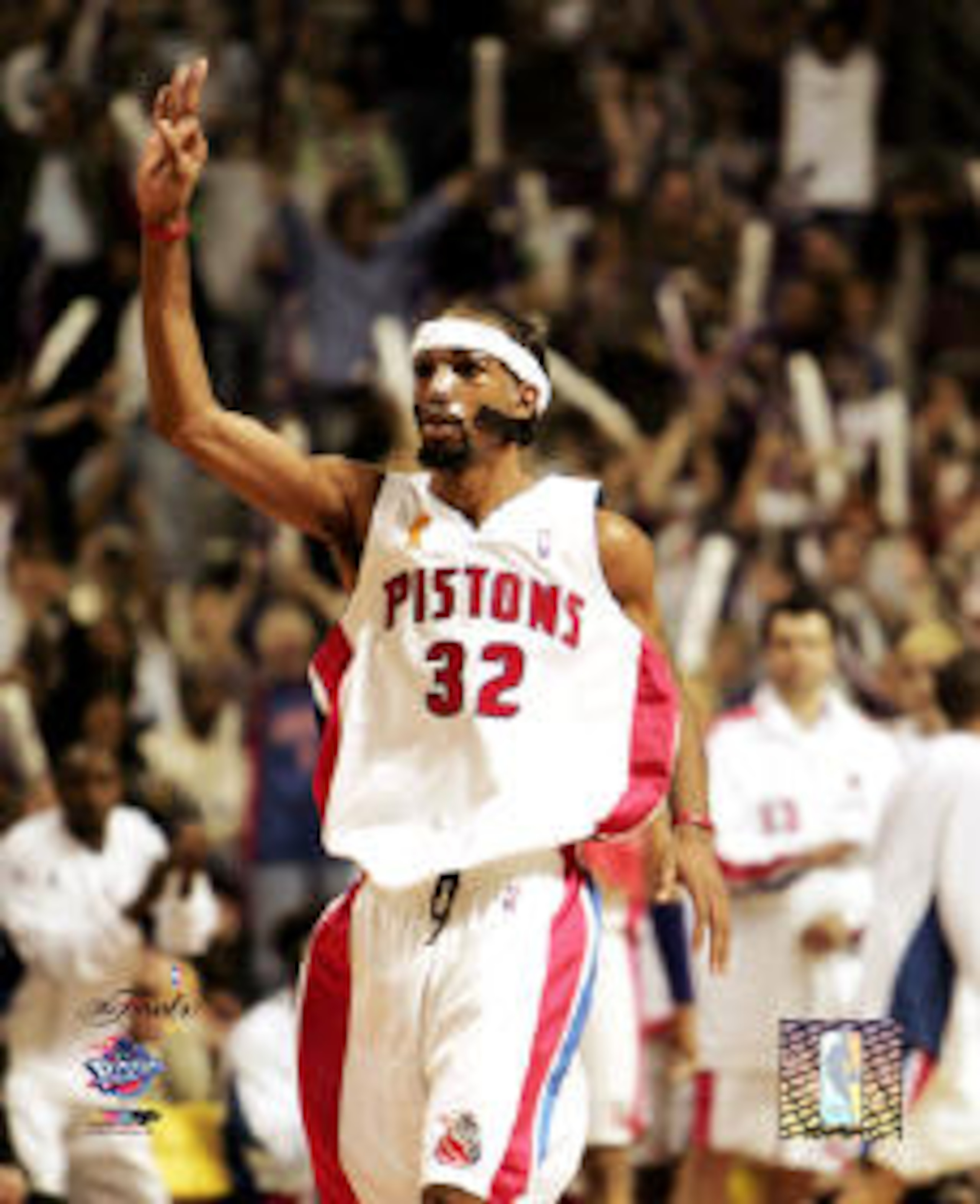
Stat line: 33 points, three rebounds, three assists; FGs— 12 for 22 (.545); 3Ps— one for two (.500); FTs— eight for eight (1.000)
It was signature game of Hamilton's career.
His 33-point performance in the 83-65 victory enabled the Pistons to regain home-court advantage in the series and gave them a three to two lead.
Hamilton helped spark the Pistons, scoring 12 points in succession midway through the game when Detroit took the lead for good.
It was in this game that Hamilton proved he was the best player in the series.
For the series, Hamilton averaged 23.7 PPG.
This Wasn't How It Was Supposed To End
11 of 11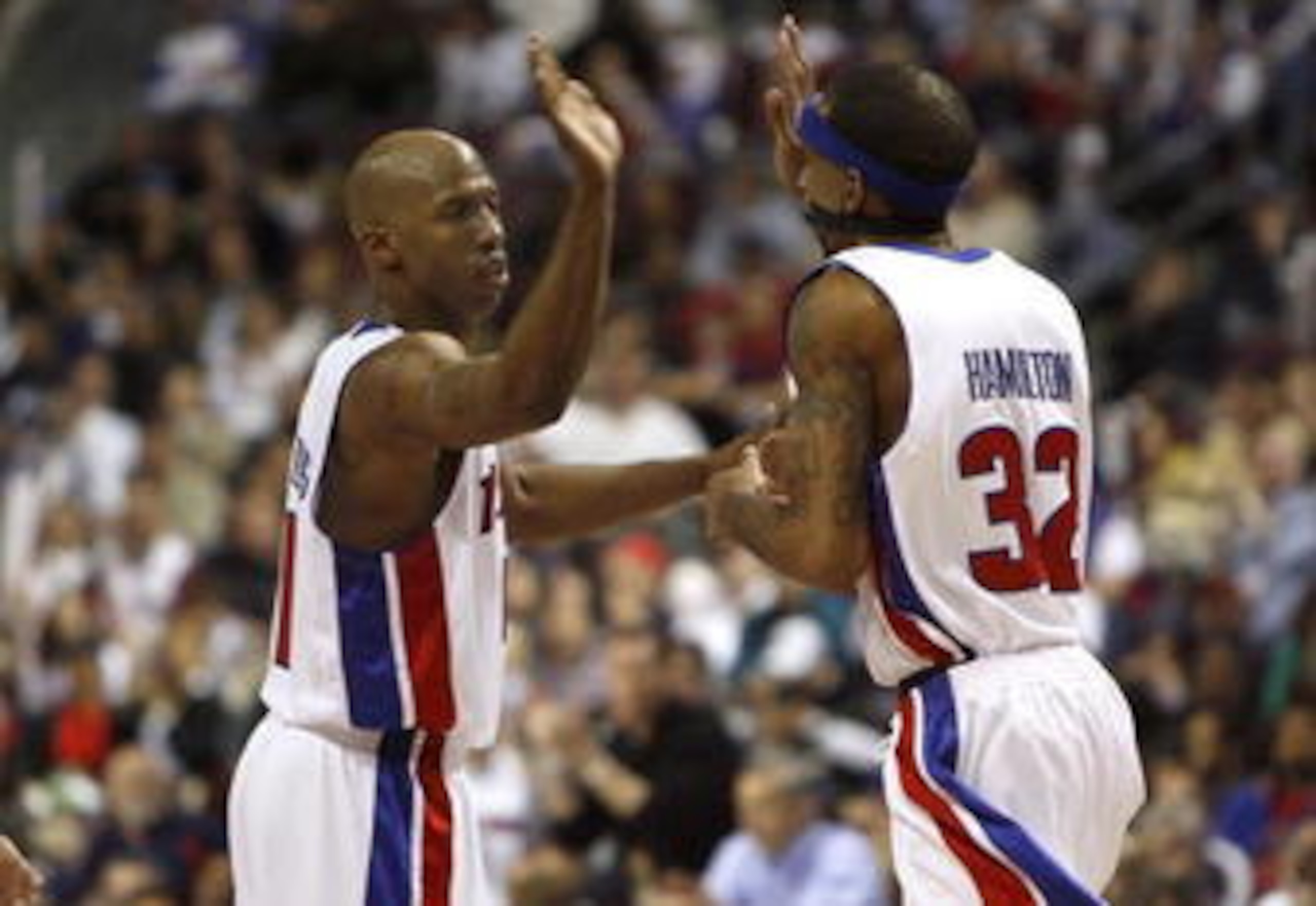
Ever since Billups and Antonio McDyess were traded to the Denver Nuggets for Allen Iverson on November 3, 2008, Hamilton has never been the same.
Since the trade, the Pistons have gone a meager 81-117 (.409), going from contenders to one of the NBA's laughingstocks.
While playing with his good friend Billups, Hamilton was the engine that churned the Pistons offense, averaging 19.0 points and shooting 46.3% from the floor. Since the trade, however, Hamilton has averaged 17.0 points and is shooting just 40.7% from the floor.
It's a shame how Hamilton has been treated by the Pistons since things have gone south. One of the best players in franchise history, there is a chance his No. 32 will hang from the rafters at The Palace of Auburn Hills someday.
But that's not to say that Hamilton has been on his best behavior, either. I would say, however, that he has handled the entire situation fairly well.
But the fact remains, he was offered a three-year, $34 million extension just before the Billups trade and signed it, thus binding him with the Pistons, from that point on, for several more years.
The following offseason, general manager Joe Dumars signed shooting guard Ben Gordon to a five-year, $55 million contract, creating a logjam at the two-guard spot and making it difficult for either player to find his niche.
Hopefully, for the sake of both parties, a trade can be worked out that benefits the Pistons and moves Hamilton to a contender in the hopes that it will rejuvenate his career.
_0.png?w=2560 "Unranked Teams Cause Chaos in Rankings 📊")
.png?w=2560 "Week 8 Winners & Losers 📊")
.jpg?w=2560 "Jonathan Taylor Landing Spots 📍")



