

MLB Power Rankings: The 25 Best Starting Pitchers in the National League
Entering 2011, the balance of pitching power so heavily favors the National League that it’s scary. The uncanny predominance of talented pitchers in the NL is reminiscent of the dominance of the NBA’s Western Conference in the early to mid-2000s, or the American League’s recent supremacy in the All-Star Game.
In fact, the NL has top MLB arms like AIG has bailout money, they had a lot before getting a lot more.
Six of the previous nine AL Cy Young award winners now reside in the NL. The last three AL Cy Young winners pitched on teams that failed to crack .500, and two of them will pitch for NL clubs in 2011.
Last year’s Cy Young winner, Felix Hernandez, managed only 13 wins despite a sensational season.
Need more proof? This off-season has seen Cliff Lee, Zack Greinke, Matt Garza and Shaun Marcum all defect to the NL. Meanwhile, the top AL off-season acquisitions have all been position players (i.e. Adrian Gonzalez, Carl Crawford, Adam Dunn, and Victor Martinez). The last elite pitcher to move to the AL may have been Dan Haren prior to last year’s trade deadline.
In other words, NL clubs know they have to construct their rosters around the elite pitching necessary to compete against the other top rotations. AL clubs know they have to build great lineups to compete with the Yankees and Red Sox.
How do you then rank the top 25 pitchers in the NL?
The criteria one expert values might be different from that of another. In other words, do you prefer Ribeye or Filet Mignon? Picasso or Gaugin? Should the crafty, vertigo-inducing command of Ted Lilly place him ahead of Jonathan Sanchez and his mid-90s heat?
Though it’s clear that calling Adam Wainwright the fourth best pitcher in the National League is like calling Van Gogh, the fourth best Impressionist.
I will bravely forge ahead, offering the 25 best starting pitchers in the National League…
No. 25: Wandy Rodriguez
1 of 25
Rodriguez is Mr. Situational Stats. Although he’s just 25-24 in his career, Rodriguez’s ERA was a paltry 2.11 after the All-Star break last year (compared to 4.97 before). His ERA is a run and a half lower at home in the last two years than it is on the road.
Rodriguez has ace potential and one of the nastiest lefty curves in the majors, but run support has been hard to come by and the Astros have played in few meaningful games over the last few years.
Here’s a situational stat that matters to Rodriguez.
He’s a free agent at the end of 2011 and the Astros have, reportedly, yet to approach him about an extension. Rodriguez’s previous best year was 2009, in which he compiled a 14-12 record, with a 3.02 ERA. It was his first year of arbitration eligibility, and could foretell, along with his massive improvement down the stretch last year, a dominant 2011.
No. 24: Cole Hamels
2 of 25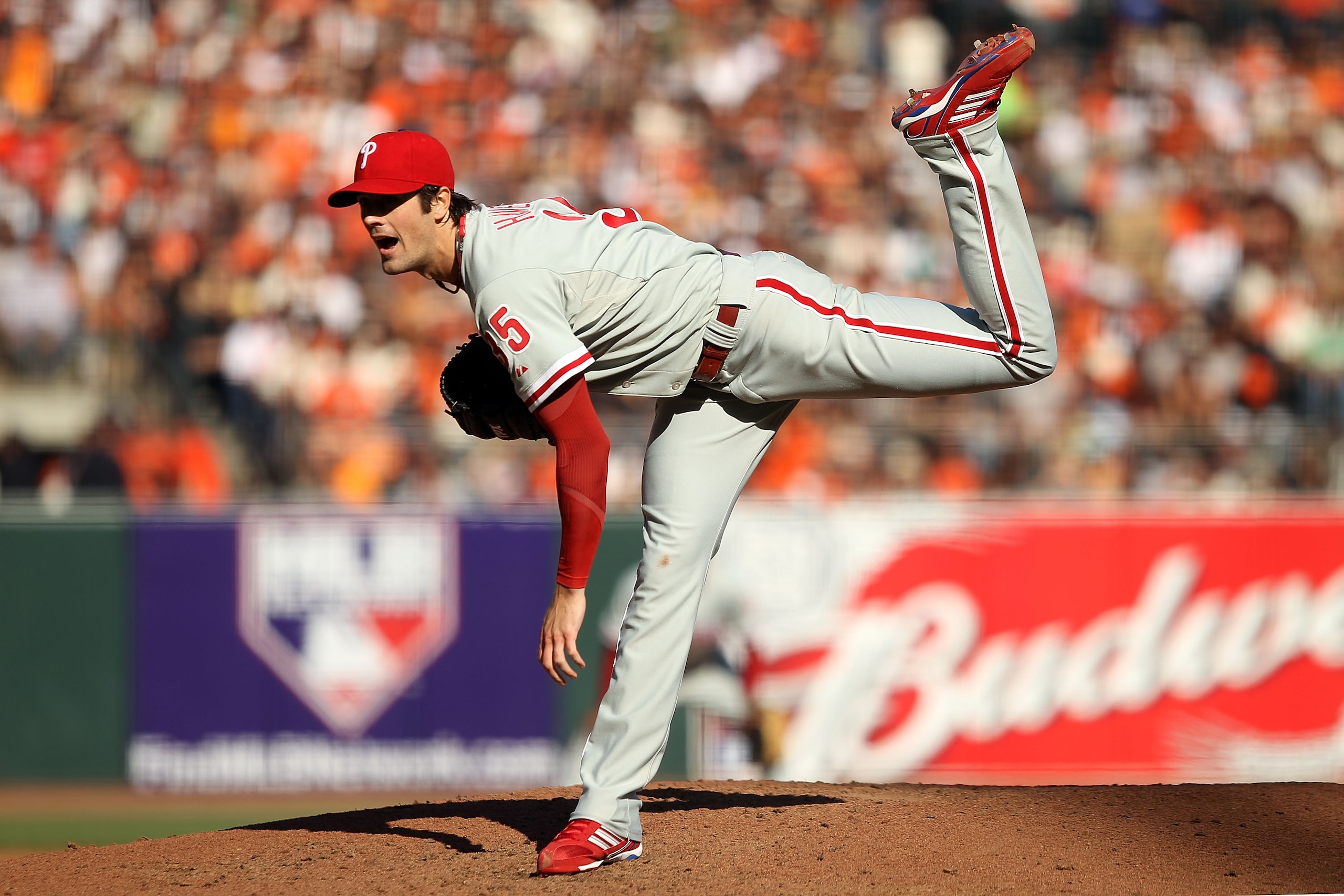
Hamels in 2011 could easily wind up as the best fourth starter since Pat Dobson in 1971. While Hamels may not win 20 games, as Dobson did for the pennant-winning Orioles, he could have dominant stretches this year and still wind up more overlooked than cranberry sauce at the Thanksgiving table. He features an awesome change-up and great confidence. At age 27, likely has his best years ahead of him.
The downside has been striking for Hamels. He will have a hard time living down once telling a reporter during the ’09 World Series that he was ready for the season to be over. Hamels also gives up way too many home runs and has had a history of injury trouble since his days in the minors.
Among all pitchers on this list, Hamels is also most likely not to be with his current team after 2012. A free agent at the end of next year, it's hard to imagine the Phillies will have the disposable cash to sign another star to a long-term deal.
No. 23: Johnny Cueto
3 of 25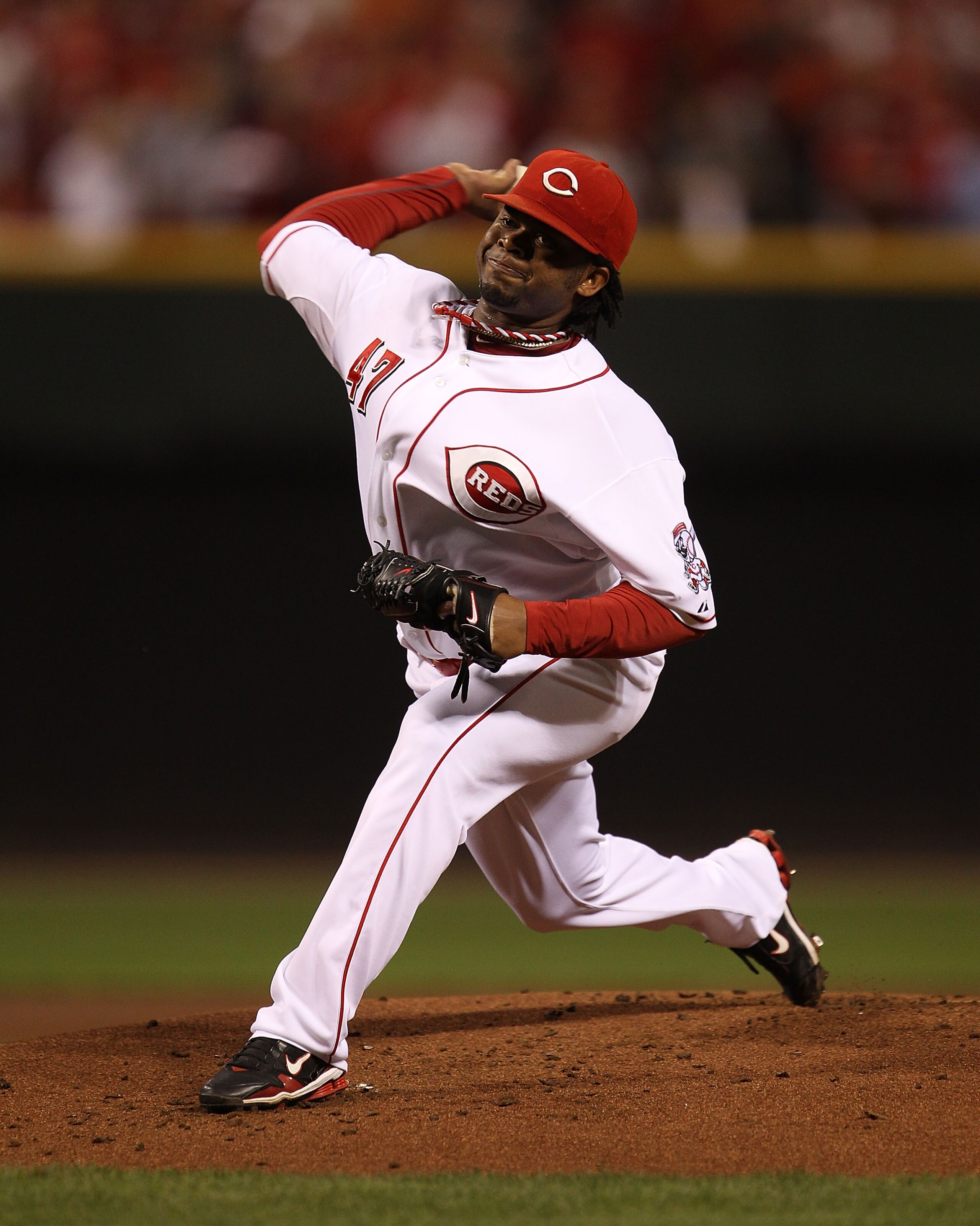
Cueto combines the poise of a veteran with the mammoth upside of a third-year star. At age 24 and with postseason experience behind him, Cueto has the potential to be the Reds ace for the next ten years. He demonstrates a knack for working hitters and, at times, has dominant command.
The downside? His manager is Dusty Baker, who is to star young pitchers, what Courtney Love is to star young 90’s grunge lead singers (too soon?). Ask Mark Prior or Kerry Wood or Livan Hernandez or Russ Ortiz.
Cueto has a Lincecum-esque frame from which he generates massive torque. Many scouts fear this could lead to arm troubles down the road. For what it’s worth, he also kicked Jason LaRue in the face with his back to the home place netting, effectively ending LaRue’s career.
Cueto could be a future Cy Young winner, and Dusty Baker his future Hall-of-Fame manager. I just wouldn’t build my team around that combination.


No. 22: Jaime Garcia
4 of 25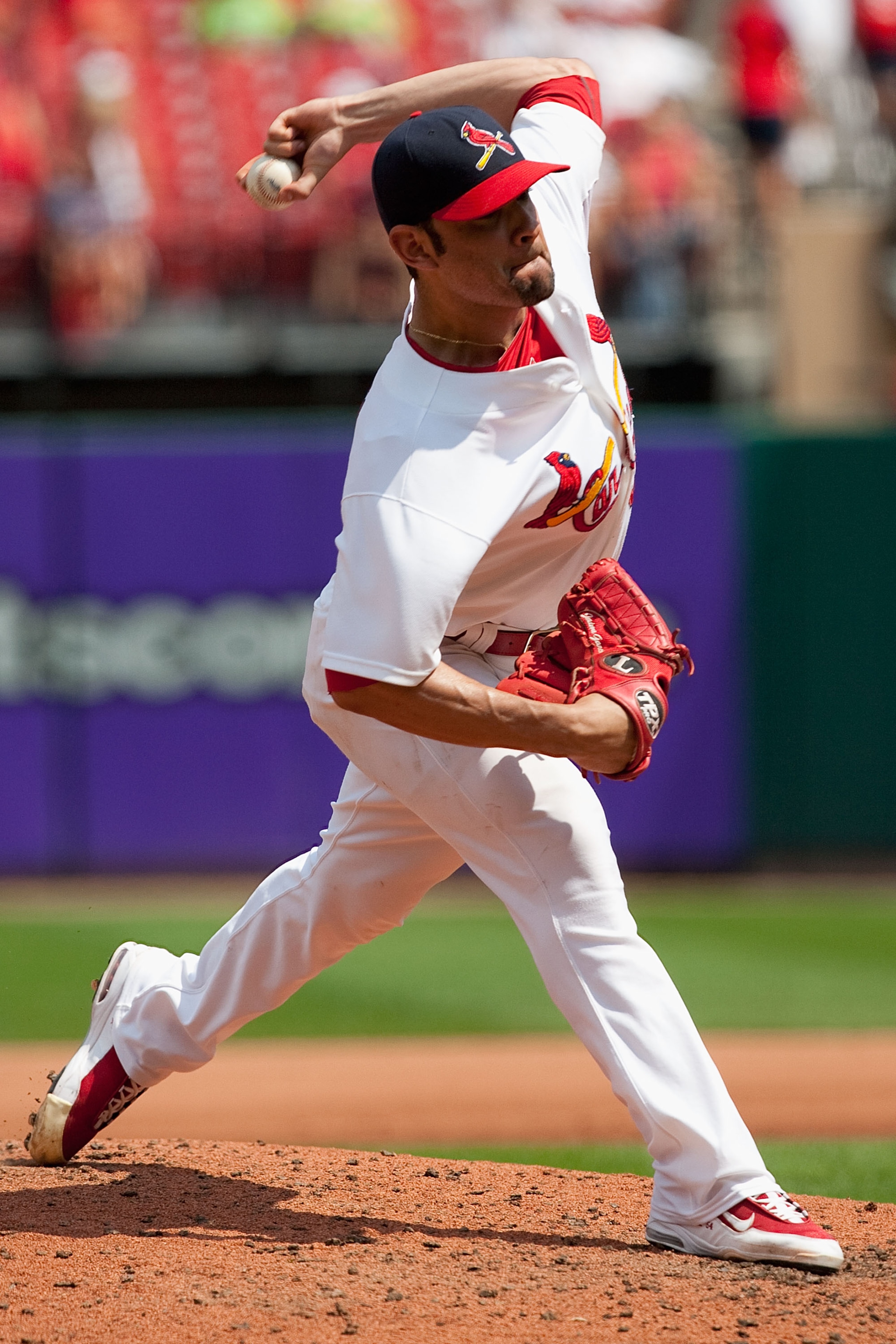
Is there a chance the Cardinals’ Big Four is as good as the Phillies?
No, but what about the Brewers or Giants. With Garcia and Jake Westbrook following Chris Carpenter and Adam Wainwright, the Cardinals should stay in the pennant race all season, and Garcia could be the biggest reason.
At 24, Garcia is Ted Lilly, minus ten years and a nasty curve. Garcia showed uncommon poise, pitching in a pennant race during his first full season. He gave up only 9 home runs and compiled a clean 2.70 ERA, this after an elbow injury cost him all of 2009. Unlike most of the young pitchers on this list, he never loses his composure and works the paint like a veteran.
In these ways, Garcia will never have a dominant year, but if he stays healthy, he’ll stay around the numbers he posted in 2010.
No. 21: Mat Latos
5 of 25
Latos’s greatest strength might be Petco Park. In fact, if this list recounted the Top 30 pitchers in the National League, it probably would include Wade LeBlanc and Cory Luebke. Latos was likely among the top five pitchers in the NL for the middle three months of the season.
During one dominant stretch last year, his first full year in the majors, he held opponents to 2 or fewer runs in 20 out of his 26 starts. Unfortunately for Latos, the year didn’t end in August. He compiled a 1-5 record and 5.66 ERA when the Padres needed him the most.
At 23, Latos might have the brightest future in the National League, at least among all pitchers west of Arizona and south of Los Angeles. He throws hard, breaks bats, and possesses uncanny composure for his age.
No. 20: Jonathan Sanchez
6 of 25
It was considered an unlikely no-hitter when Sanchez twirled his against the Padres in 2009. But history might paint a different picture. The world found out last year that Sanchez mixes a dominant, mid-90s fastball with an effective change to keep hitters completely off balance when he’s around the plate.
It also turns out that the ’09 Padres had one of the worst lineups baseball has seen in the last ten years—Cabrera, Gwynn Jr., and Kouzmanoff batted 1-2-3 (the box score is worth a look for a good laugh).
Would it surprise anyone if Sanchez won 19 games next year?
What if he won 8 games?
Sanchez walks way too many batters and gives up too many home runs at AT&T Park. He benefits from the comfort of pitching in one of the pitcher-friendliest ballparks, in a stacked rotation, and with little pressure to lead the team.
No. 19: Ted Lilly
7 of 25
Before you scoff, consider that Lilly’s WHIP has hovered around 1.1 for two years now. In each of the three years prior, he won at least 15 games. It’s easy to forget that Lilly wins games and strikes out hitters at surprisingly efficient rates.
2010 was only his second losing season in the last nine, and his K/9 IP has always approached 7.5, thanks to a nasty curve, set up by a decent slider and effective fastball.
Ted Lilly is your father’s lefty starter—crafty, unspectacular, and durable. He is the anti-Sanchez. He has no upside beyond his current performance level and is far from striking an imposing figure on the mound. He is ten years and a knuckle ball away from being Tim Wakefield.
He is also the sort of hurler the Dodgers want mentoring young arms like Clayton Kershaw, and taking the mound every fifth day.
No. 18: Chad Billingsley
8 of 25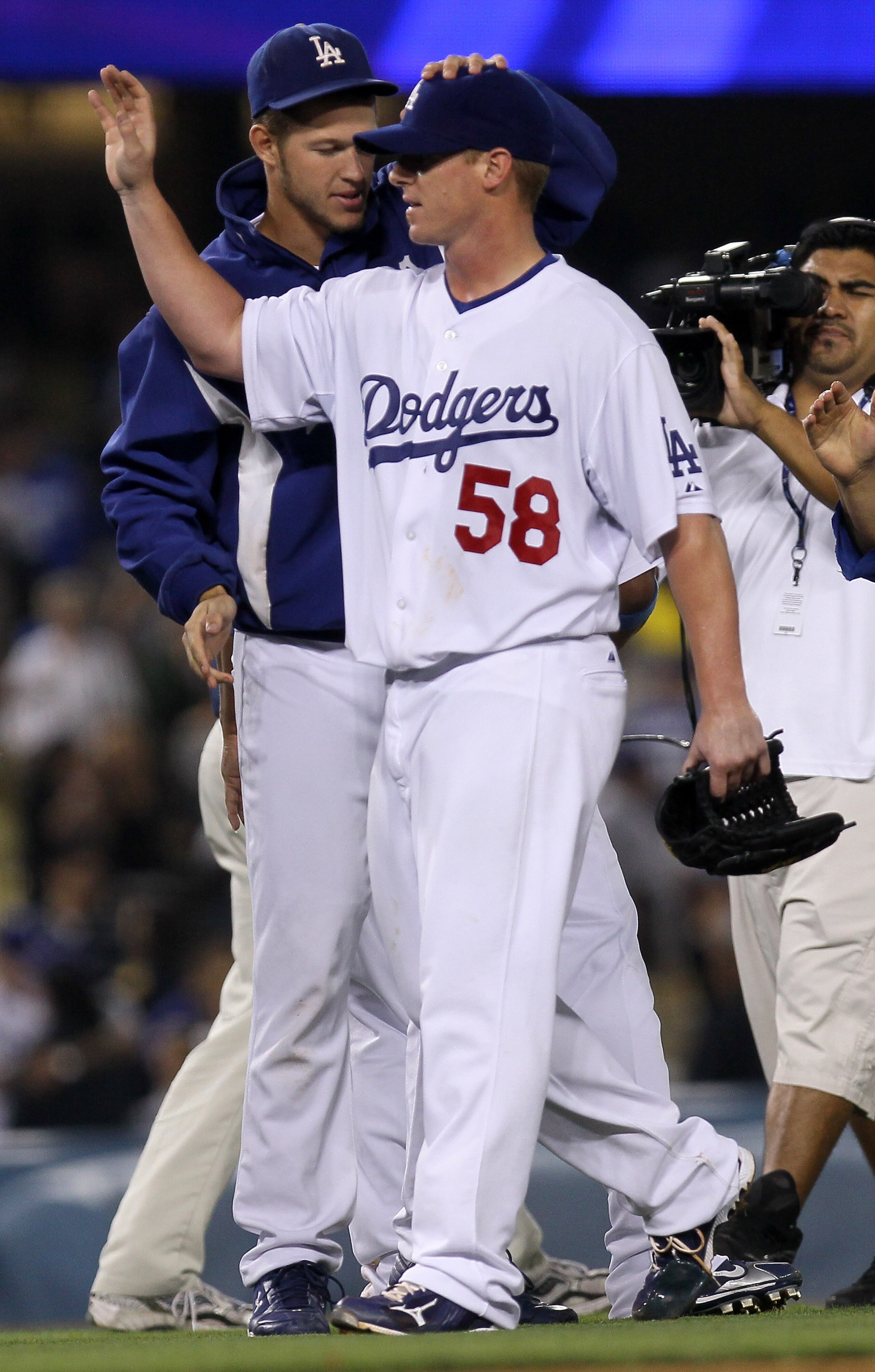
Billingsley seems to have regressed since his career best 16 wins in 2008. He’s no longer a strikeout pitcher (completely diminishing his fantasy value) and has yet to improve on the inconsistency that has kept him a number two starter throughout his career. At the same time, his walks/9 IP rate has dropped and he’s become a groundball pitcher.
If you’re a believer in the theory that MLB players come into their prime at 27, then Billingsley is your guy.
He still throws in the mid 90s and still battles every time he takes the hill. What he has become is more economical and smarter. In other words, he has worked the last two years to become a pitcher. If he can more consistently throw first-pitch strikes at a higher rate than Kershaw, he might be the Dodgers’ ace in 2011.
No. 17: Bronson Arroyo
9 of 25
Arroyo finished 2010 with a career-high 17 wins and a career-low 1.19 WHIP. At 34, entering the 2011 season, it’s hard to picture him as the veteran leader of the Reds pitching staff unless you’ve watched him develop over the last two years.
In fact, it might be as easy to imagine Johnny Cueto and Edinson Volquez dispensing advice to the shaggy free spirit as it is the other way around.
Arroyo is an economical pitcher who is always around the plate and logs hours like a Goldman Sachs auditor. He features a deceptive delivery and battles through tough stretches. He might be the fifth best Opening Day starter in the National League Central (thank you, Paul Maholm) and he gives up nearly 30 home runs every year.
But he’s the ace of the defending NL Central champs, and he’ll get plenty of run support in 2011.
No. 16: Brett Myers
10 of 25
Last year, Myers set career bests for IP, walks/9 IP, and HR/9 IP, without sacrificing his strikeout rate. He finished 14-8 with a 3.14 ERA and proved to be the Astros’ ace after the departure of Roy Oswalt. However, it was just the year before that he was left off of the Phillies NLCS roster, battled a hip injury and quarreled with Cole Hamels, among others, in the Phillies clubhouse.
So will the real Brett Myers please stand up?
My guess is that Myers has finally arrived. He possesses a nasty curve and a mid-90s fastball. He is also very confident on the mound and will benefit from the structure of knowing he’ll take the mound every fifth day for the Astros.
At 30 years old, now is the time for Myers to establish himself as an elite starter.
No. 15: Matt Garza
11 of 25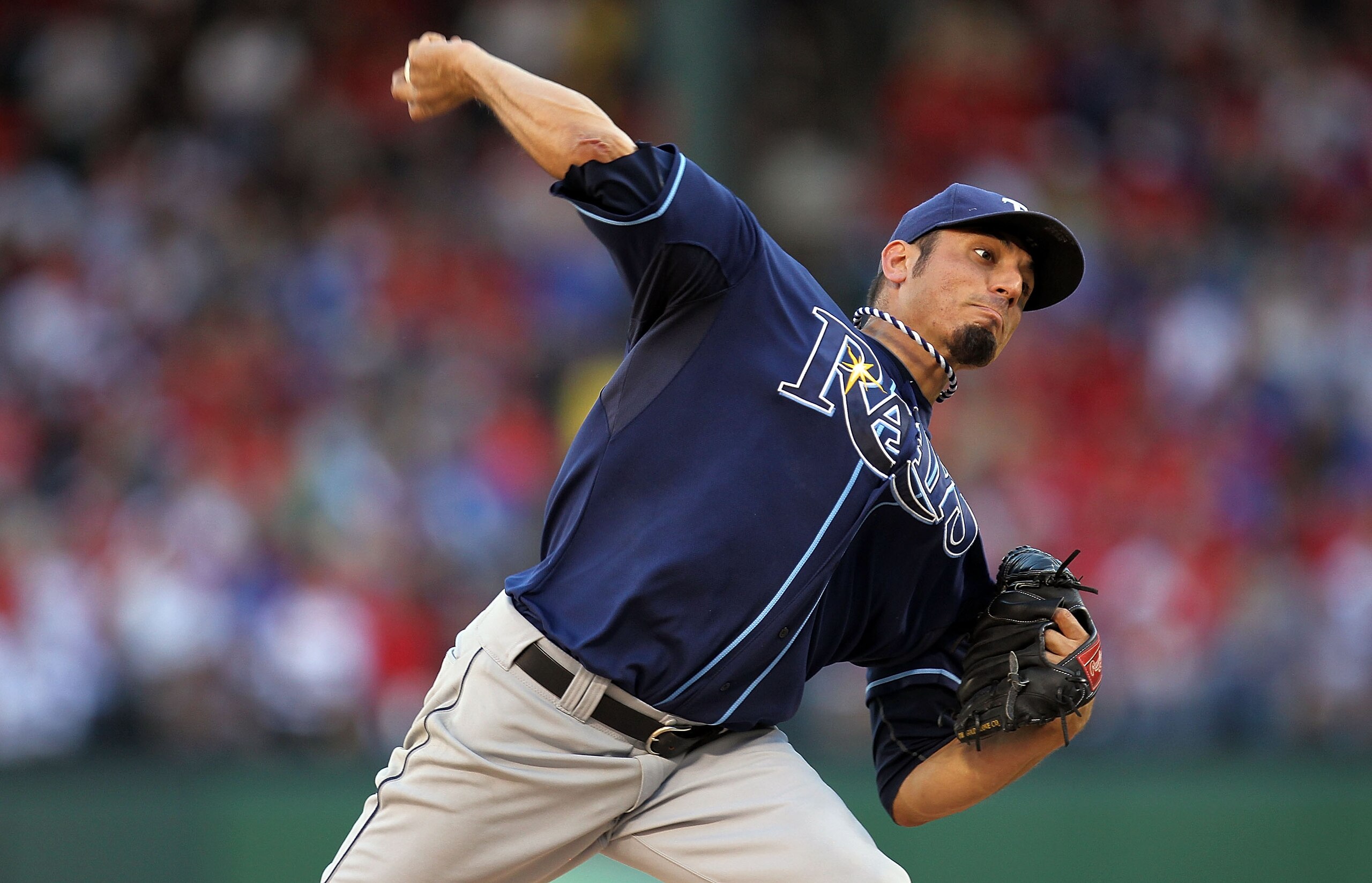
Anyone who watched Garza dispatch the Tigers in last June’s no-hitter with a dominating fastball and a wide array of breaking pitches knows the heights Garza is capable of achieving in Chicago. He’s only 26, has extensive postseason experience, and is a bulldog on the mound.
Coming to the National League must feel like finishing a Calculus exam for Garza, who has spent the last three years facing, about to face, or just having faced the Red Sox or Yankees.
Why, then, would the Rays trade Garza?
For that matter, why did the Twins trade Garza four years ago? Both teams had a surplus in young pitching, at the time and chose Garza as the expendable one. He demonstrates lapses in focus that lead to big innings and big games. In fact, Garza is explosive like a Ford Pinto circa 1977. He also struggles against lefties and has yet to compile a WHIP under 1.25 for a full season.
He might turn it around in Chicago, who is starving for an ace. But it’s just as easy to see him finishing at .500, for the .500-playing Cubs.
No. 14: Johan Santana
12 of 25
Santana still throws one of the best change-ups in the game and offsets it with a quality, low-90s fastball and sharp curve. He is a pitcher’s pitcher—working quickly, getting ahead in counts, and always working the corners. It’s also likely that no National League pitcher can defend his position and swing the bat like Santana.
Unfortunately, Santana is also the most overpaid pitcher in baseball, at over $20 million per year. He is the proud signatory to a contract only a Mets official or a Department of Defense contractor could love. At 31, he is the ultimate beneficiary of payment-for-past-performance athlete, the poster boy for non-guaranteed contracts.
His curve is inconsistent, he rarely completes games, and, worse yet for Mets fans, he’s become injury-prone.
However, Santana makes the list because his 2010 numbers (11-9/2.98/1.18) were in line with each of his last nine years, making him one of the most consistent pitchers over the long term that baseball has seen in the last 30 years.
No.13: Matt Cain
13 of 25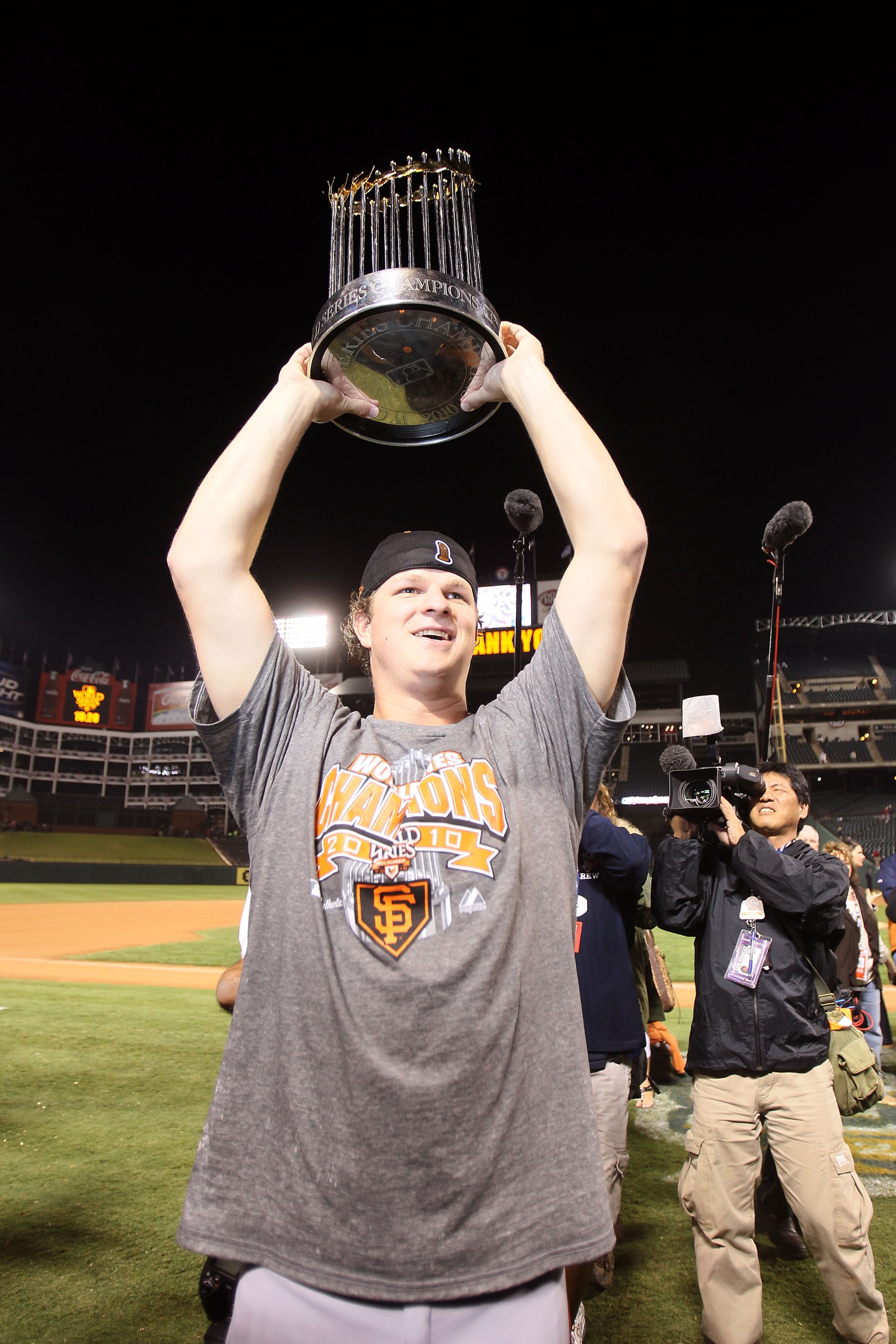
Cain finally won over the skeptics last year, allowing no earned runs in 21.1 postseason innings and leading the Giants to their first championship since 1954. He also beat the Dodgers for the first time, after eight consecutive losses.
Matt Cain is the Bentley to Tim Lincecum’s Rolls Royce. Cain isn’t flashy or dominant. It’s easy to wonder how he could be included among the top pitchers in the National League just by watching him. Cain’s BABIP number has been a paltry .270 over the last two years, meaning he either pitches to contact or is extremely lucky.
He yields hits and walks and is prone to the big inning. But he keeps the Giants in games and strands runners at a high rate.
No. 12: Tim Hudson
14 of 25
If Hudson has one major flaw, it is that major league pitchers shouldn’t be completely bald. It is alright for them to be John Smoltz bald. It is not alright to be Charles Barkley bald.
That being said, Hudson had one of his best years in 2010, going 17-9/2.83/1.15 for the playoff-losing Braves. He demonstrates excellent control and a quality variety of pitches. Although injuries have robbed him of some velocity, he keeps hitters off balance and is capable of throwing a gem every night.
There is no doubt that the Braves need a huge year from Hudson to stay with the Phillies in 2011.
No. 11: Chris Carpenter
15 of 25
No NL ace is more of a question mark that Carpenter, whose career has diminished the last few years due to health issues. However, Carpenter hurled 190+ innings in back-to-back years in 2009-10. A healthy Carpenter could mean a return to the playoffs for the Cardinals, who haven’t won a postseason game since 2006.
He is the quintessential ground ball pitcher, backed by tremendous infield defense. He has a dominant curve and ace stuff. His 2009 numbers (17-4/2.24/1.01) were sick and a return to form is not out of reach for the Cardinals’ ace.
No. 10: Yovani Gallardo
16 of 25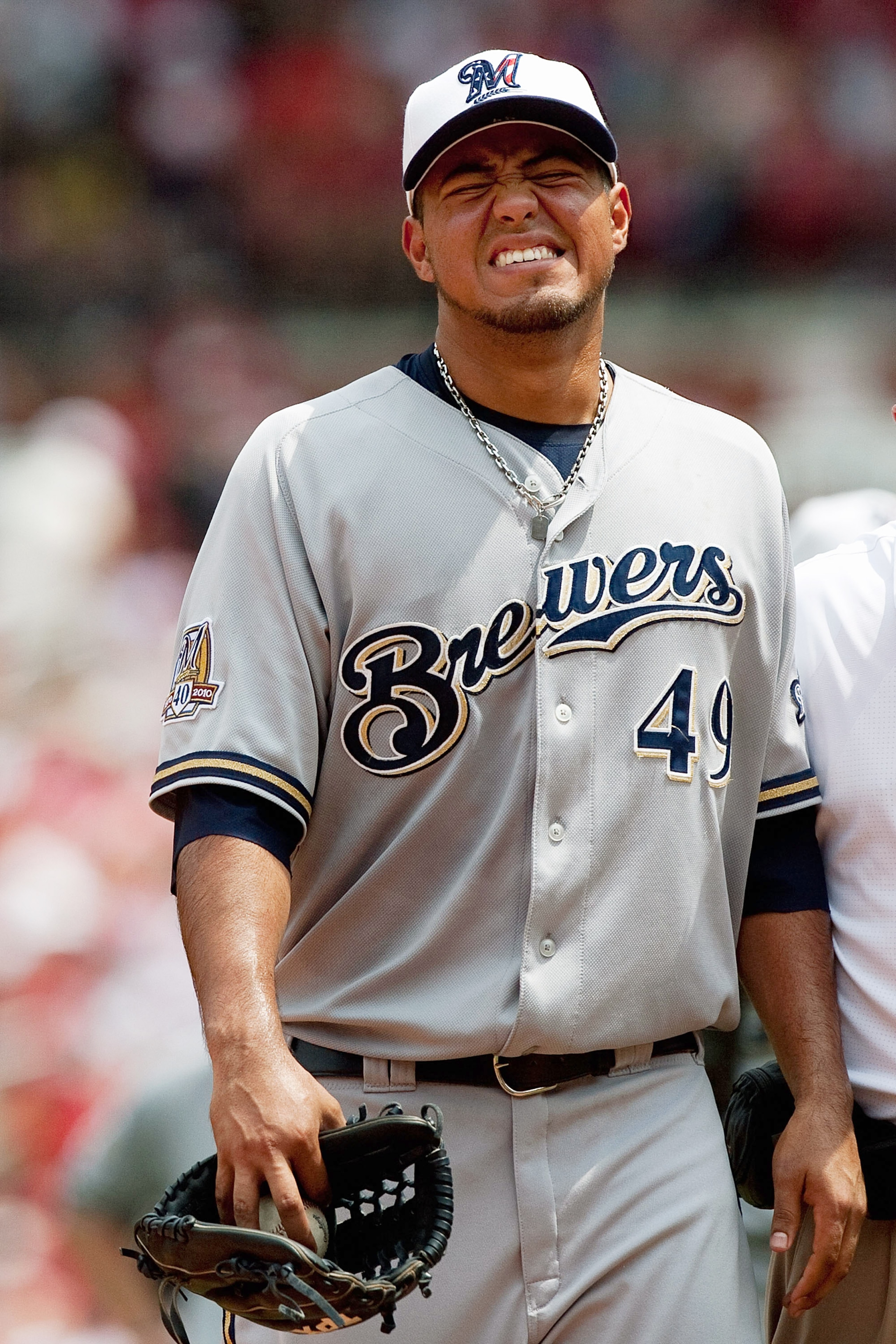
Gallardo is the NL pitcher most likely to have a breakout season. In 2011, Gallardo is unlikely to have freak knee injuries, limited pitch counts, and the pressure of being the staff ace. Since arriving in Milwaukee, Gallardo has been a strikeout beast with a mid-90s fastball and a preposterous overhand curve.
The only missing piece for this year is avoiding ball four.
Brewers fans know that Gallardo grew up in 2010, during which he reduced his BB/9IP rate by more than 1 without sacrificing Ks. When the Brewers are contending down the stretch, Gallardo will be racking up wins and inserting his name in the Cy Young discussion.
No. 9: Zack Greinke
17 of 25
Sending Greinke to the National League is like taking a shot of Jager at 1:30 am. It’s overkill. We get it, NL GMs: there’s an over-abundance of pitching talent in the National League. Never was the tired “arms race” analogy less hackneyed than during the 2010-11 off-season, with the Cardinals, Brewers and Phillies all adding pitching that would have seemed preposterous in a different year.
Will Greinke re-establish himself as an elite starter?
On one hand, meaningless Royals games and paltry run support must have contributed to his 2010 struggles. Nobody in baseball commands a plus-plus fastball better than Greinke at his best. He’s a thinking man’s pitcher, with high intensity, and excellent control. He struggled through anxiety issues that cost him almost all of 2006.
Greinke seems to have settled into a routine and make-up that may give him elite potential every year.
On the other hand, Greinke has finished only one year with a WHIP under 1.25. His sub-.500 career record and 3.82 lifetime ERA are not the marks of an elite pitcher.
At only age 27, the defining years of Greinke’s career are ahead of him, and Milwaukee hopes they’ll all be in a Brewers uniform.
No. 8: Clayton Kershaw
18 of 25
Kershaw’s improvement in 2010 was largely due to his improved command and ability to pitch into the 8th inning. Kershaw went seven-plus innings in 15 out of his 32 starts. Many are predicting a breakout year for Kershaw, who features a nasty curve from the left side and low-90s heat.
At only age 23 entering 2011, there is no NL starter with a brighter future, and no pitcher facing higher expectations.
Kershaw’s age has to be the only downside to his 2011 performance.
Improved consistency and control are the only facets of his game keeping him from the Cy Young many predict for his future. Unfortunately for Dodgers fans, it can be hard for a 23-year-old to focus for eight months out of a year (the priorities of most 23-year-olds being beer, women, Madden, and beer again).
Kershaw is not your average 23-year-old, however, this could be a monster year for the young lefty.
No. 7: Ubaldo Jimenez
19 of 25
Rockies fans have to wonder what happened to Jimenez over the All-Star break. At 15-1, Jimenez compiled one of the all-time great first three months, using his devastating combination of mid-90s fastball with a nasty 90 MPH sinker to baffle opposing batters. When Stephen Strasburg made his big-league debut last June, he was most frequently and rightly compared to Jimenez.
However, Jimenez went 4-7 the rest of the way, finishing 2-6 over his last ten starts. He struggled with mechanics, command, and maybe fatigue, after logging a career-high 221 IP. He fell behind in counts far too often for an ace and became prone to the big inning.
Despite pitching in a World Series and winning 34 games over the last two years, Jimenez is only 26 and could be entering the prime of his career going into 2011.
No. 6: Tim Lincecum
20 of 25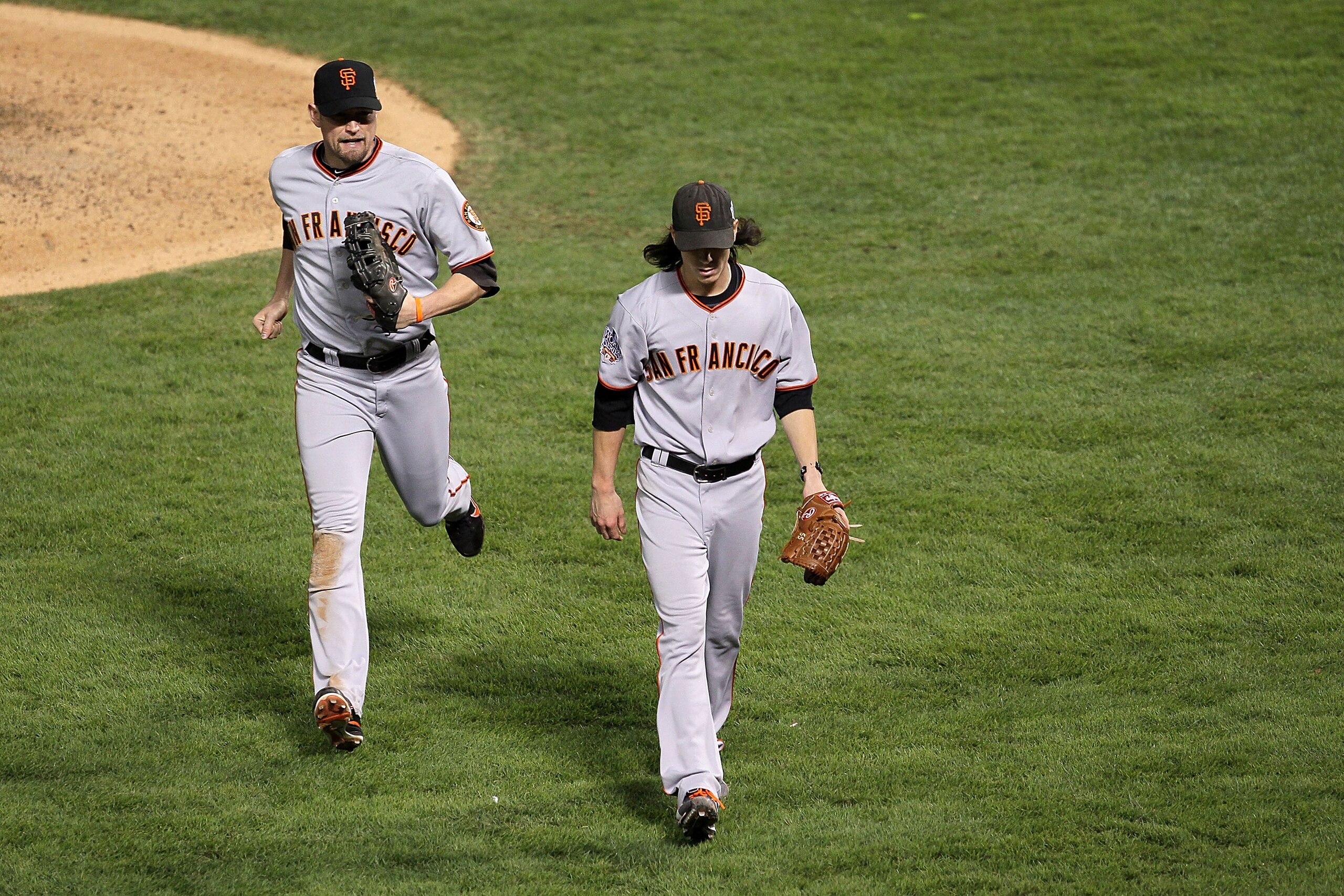
Do Giants fans love Tim Lincecum?
Lincecum has won two Cy Young awards and a World Series title in his three full years in San Francisco. The last Giants’ Cy Young winner was Mike McCormick in 1967, and their last championship was 1954. At this point, Lincecum could easily run for mayor of San Francisco and governor of California, simultaneously, allowing him to legalize marijuana if he so chose.
In the wake of the Giants’ championship run, it is easy to forget that Lincecum lost 5 MPH on his fastball last year. Only a 5-1 September, with a sparkling 1.94 ERA, prevented him from a huge drop-off season.
Nobody’s asking what will happen with the Giants in 2011, their pitching and veteran leadership will firmly place them as favorites to repeat in the NL West.
But what will happen with Lincecum?
His diminutive frame and power wind-up have always yielded questions about durability and, when combined with his dropping K/IP rate, velocity, and career-low innings total, have to make his 2011 performance a huge question for the defending champs.
No. 5: Roy Oswalt
21 of 25
Oswalt’s 2010 season was under the radar like an FB-111. Unfortunately, both might lead to cost over runs. He pitched in the obscurity of Houston for half a season, where he was six games under .500 despite a WHIP of 1.11. Then he pitched in the shadow of Roy Halladay, where he was transformed back to vintage 2004-5, during which he posted back-to-back 20-win seasons.
Oswalt’s WHIP was a paltry .90 during 82 innings in Philly, while his pin point command and strong leadership helped the Phils swamp the Braves down the stretch
Oswalt’s emergence made getting out of Houston seem like getting out of a bad, co-dependent relationship. It was good while it lasted, but it probably should have ended a little sooner. Oswalt is 33 and he lacks the ace assortment of quality pitches he used to possess.
But he is a leader in the same mold as Halladay and Cliff Lee, and it’s likely that the three of them will swap turns as the ace of the staff throughout 2011.
No. 4: Adam Wainwright
22 of 25
Wainwright’s 2009-10 campaigns have put him in the discussion for the best pitcher in baseball. He won 39 games over the last two years, throwing over 230 innings in each year, with a mid-2 ERA and striking out over 8 batters per 9 IP. His mid-90s heat and dominant overhand curve might be the best one-two punch in baseball.
Last year, he developed a capacity to battle when struggling to locate, and that, along with his durability, are what separate him from most of the aces around baseball.
As long as he pitches after Carpenter and has Pujols and Holliday driving in runs, he’ll be one of the top pitchers in baseball.
No. 3: Roy Halladay
23 of 25
If Halladay played in the NBA, he would be Kobe Bryant, minus all the sexual assault charges. He is the first-to-the-clubhouse, last-to-leave sort of workhorse that leads teams to pennants. He demonstrated his desire to have the ball in big games when he threw his dominant Game One no-hitter against the Cincinnati Reds, effectively ending their dream season in one game.
But when will all the mileage catch up?
2005 was the last year Halladay threw fewer than 220 innings. Last year, Halladay pitched 250 innings, plus another 22 in the postseason.
Will 2011 be the year Halladay finally breaks down?
That’s certainly the question that dogs Kobe Bryant year after year.
Nobody game plans better than Halladay. Nobody outworks him, has a wider variety of arm angles, or keeps hitters off balance better more effectively. Placing Halladay third on this list is like calling Abraham Lincoln my third favorite Mt. Rushmore president.
He's almost interchangeable with the other top three.
No. 2: Josh Johnson
24 of 25
Over the last two years, nobody has been more dominant when healthy than Josh Johnson. A strong case could have been made that Johnson was the NL’s best pitcher during the first half of 2010. He stood at 9-3 on the struggling Marlins with a league-leading 1.70 ERA at the All-Star break, featuring a ridiculous stretch of eight consecutive starts without allowing more than one earned run, and a 13-start stretch without giving up more than two earned runs.
The question has revolved around health for Johnson since 2007, when he underwent Tommy John surgery. Last year, Johnson struggled in the second half with a mild-back strain (much like Cliff Lee) and shoulder inflammation, which eventually ended his campaign.
While the injuries cast doubt on his ability to dominate for long stretches, there can be no doubt that Johnson is as imposing as any pitcher on the mound, with his 6-foot-7 frame, mid-90’s fastball, and nasty slider.
Douse yourself in sweat from 90 percent humidity, stand in front of empty orange seats for two and a half hours, and try to stand in against sick cheese four times a game if you further question why Johnson is one of the NL’s top pitchers.
No. 1: Cliff Lee
25 of 25
Why name Lee the top pitcher in the National League when he’s only pitched a half a season there?
Imagine if Lee had spent the last seven years facing a heavy dose of the Nationals, Marlins, and Mets, instead of toiling in the American League, mostly for sub.500 teams. In 2009 and coming off of his amazing Cy Young winning year, Lee struggled to a 7-9 start with the Indians before being traded to the Phillies. His fate was tethered to a scuffling offense, a sinking record, and he was prone to giving up big innings that started with a duck snort and an error.
It’s no wonder that the book on Lee was that he was prone to lapses in focus.
Now it’s 2011 and stories of a lapse in focus from Lee seem like wives’ tales. No top pitcher has the four pitch arsenal that Lee brings, led by a nasty slider and low-90s heat. He’s always around the plate, works quickly, and is the consummate clubhouse leader.
His combination of dominant talent, rapid maturity, and postseason excellence are what make Lee the best pitcher in the National League. Throw in a full season in the NL, and he could be in line for a historic season in 2011.
.jpg?w=2560 "Grading WWE Raw 🔠")
.jpg?w=2560 "Landon Dickerson Placed on IR")
.jpg?w=2560 "Follow WWE Raw 🇲🇽")
.jpg?w=2560 "Nabers' Recent IG Post 👀")
.jpg?w=2560 "O'Connell Doesn't Fault Packers for Hit")
