
Bert Blyleven Enters Baseball Hall of Fame After 14-Year Wait
 Roberto Alomar and Bert Blyleven were voted in as the only two players in the 2011 National Baseball Hall of Fame class. Alomar made it in just his second year on the ballot, garnering 90 percent of the vote.
Blyleven, on the other hand, had to wait until his 14th year of eligibility, picking up 79.7 percent of the vote.
I believe that both deserved the honor. If not for Alomar’s infamous spitting incident in 1996, he likely would have been a first-ballot Hall-of-Famer.
TOP NEWS

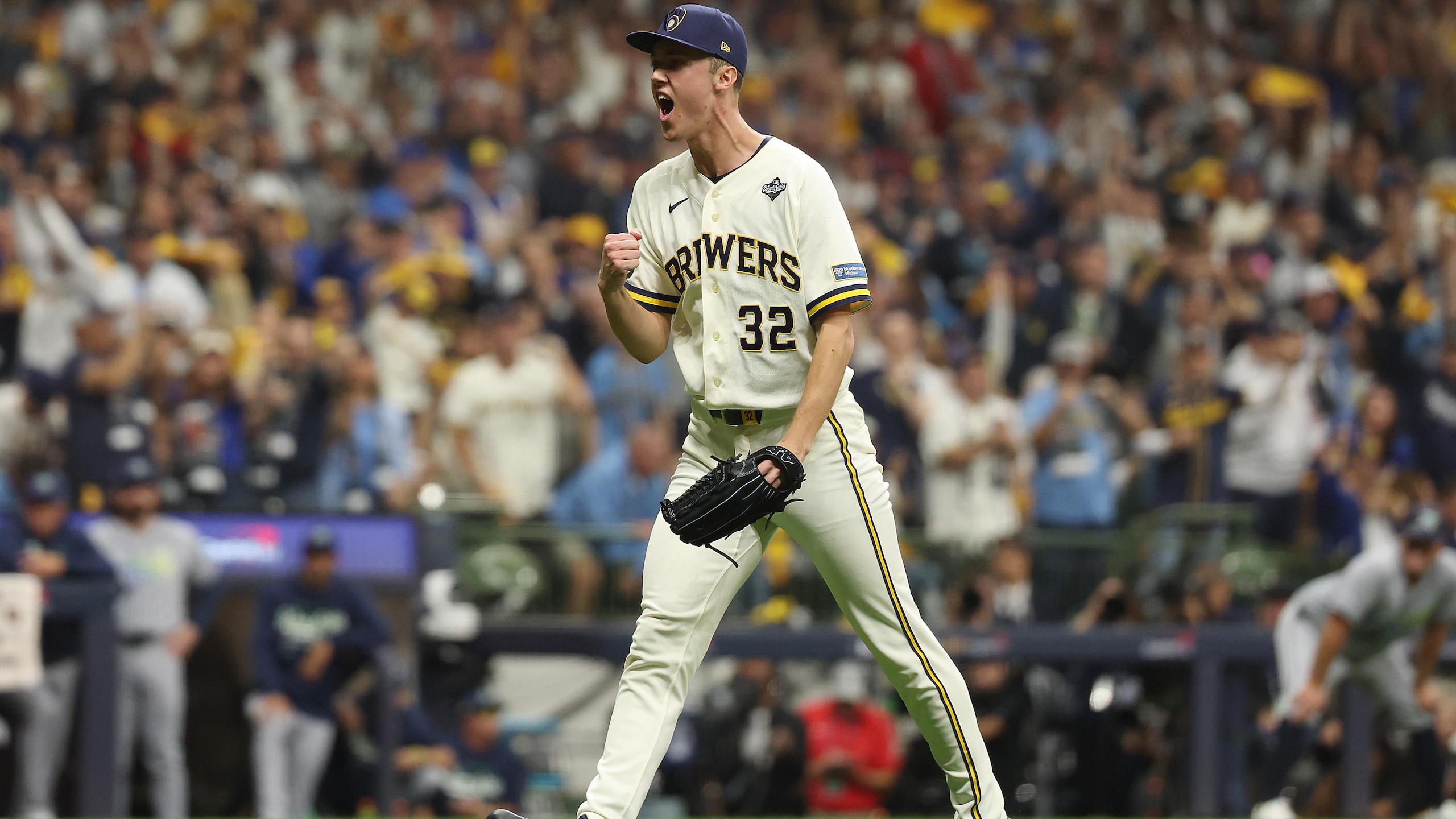
Brewers Complete Comeback In Game 2

World Series Game 2 Highlights 🎬

Next MLB Players to Sign $200M Contracts 💰
Blyleven, who threw his final major league pitch in 1992, joins the exclusive club with just one year to spare before his name would have been wiped off the ballot.
So while there was very little debate as to Alomar’s Hall-of-Fame worthiness, Blyleven had to play the waiting game for 14 years without actually doing anything on a Major League diamond to sway the last few writers to put a check mark next to his name. In his first year of eligibility, back in 1998, he only received 17.5 percent of the vote. Somehow, 13 years later, that percentage more than quadrupled.
This isn’t the first time a former player has waited for over a decade for his vote totals to take baby steps toward the needed 75 percent, and it won’t be the last. And I just don’t get it.
The question isn’t whether you think Blyleven deserved to get in or not, but it’s about the unnecessarily long 15-year time frame a player remains on the ballot. Other than some of the new-age sabermetric statistics that can be applied to Blyleven’s career, his body of work can be looked at today in the same way it was looked at after his final game in 1992.
Did it honestly take 14 years for some of the baseball writers to think, “Hey, maybe these really are Hall of Fame numbers after all.”?
In reality, it probably didn’t go that way. Without being one of those writers or knowing any of them, I can only speculate, but it’s likely that two things pushed Blyleven into the Hall:
1) Other than Alomar, the 2011 ballot was littered with a bunch of known or suspected steroid users, so Blyleven seemed more appealing in comparison and
2) writers talk to each other, and perhaps peer pressure and politicking by pro-Blyleven writers eventually pushed some of the anti-Blyleven camp to the other side.
I would argue that a lot of writers are ignoring one of the vital aspects of voting. Taken right from the Hall of Fame’s website:
"Voting shall be based upon the player’s record, playing ability, integrity, sportsmanship, character, and contributions to the team(s) on which the player played.
"
If the voters didn’t think Blyleven had Hall-of-Fame credentials in these areas when they voted in ’98, why do they think he had them during the 2011 vote?
If it sounds like I’m in favor of only allowing one year of eligibility, I’m not. In fact, now more than ever, voters need more time. There are simply too many questions about many steroid-era players (Jeff Bagwell was hurt by this in this year’s vote), and the last thing a voter needs to do is make a split-second decision to vote for a player only to find that the player was on the juice for most of his career.
The problem is that you often hear from baseball writers and baseball people in general that the Hall of Fame is reserved for the true greats of the game, yet for someone like Bert Blyleven, it apparently takes 14 years for some voters to realize his greatness. If it takes that long to decide, how great could the guy have been anyway?
Again, I’m glad Blyleven’s in. Although I didn’t watch him pitch during his prime, seeing his statistics and knowing the era he played in, I have always thought of him as a Hall-of-Famer. If someone can give me one good reason it took nearly a decade and a half for this to become a reality, I would love to hear it.
Bert Blyleven wasn’t Tom Seaver. I understand that. I admit that a vote for Blyleven isn’t a no-brainer. But it’s as if the voters are creating a tier system. First-year induction has typically been reserved for the best of the best. Perhaps I’m being too simplistic, but I say that a Hall of Famer is a Hall of Famer.
I’m pretty sure Rickey Henderson will be served the same dinner as Ryne Sandberg the night before the induction ceremony, even though Sandberg had to wait longer to get in. Despite the writers’ insistence on trying to divide the group into “legendary,” “great,” and “good enough,” every Hall of Famer has the same sized plaque and the same time allotted for his speech (as far as I know).
I heard baseball writers/Hall of Fame voters Jon Heyman and Tom Verducci on MLB Network yesterday talking about how Barry Larkin getting 62 percent of this year’s vote means he’s gaining momentum and he should get in within a year or two.
Gaining momentum? Is this is a political campaign? Is Larkin doing more marketing for his Hall candidacy on Facebook these days? Baseball writers, you are allowed to vote in 10 players each year; if you think Larkin should be in, vote for him! Don’t worry about too many players making it in one year. Don’t categorize him as a player not good enough to get in on the first or second ballot. If you think he’s a Hall of Famer, give him a vote! If you truly don’t believe his career warrants his induction, don’t vote for him. But either way, stick to your guns!
If it weren’t for the steroid era, I’d be in favor of five years of eligibility. With the steroid era, I still don’t see why 10 years wouldn’t be long enough. That might help eliminate some of these issues I’ve mentioned.
I am well aware that some people will read this and think I’m being too harsh on the Hall-of-Fame voters. If that is the case for you, I ask that you please bookmark this article and read it once every year. Maybe by the 14th year, you’ll come around.
Get my thoughts on sports and life in general at my blog, What's Wrong with What's Right

_0.png?w=2560 "Unranked Teams Cause Chaos in Rankings 📊")

.png?w=2560 "Week 8 Winners & Losers 📊")
.jpg?w=2560 "Jonathan Taylor Landing Spots 📍")




