"Gentleman" Ned Jarrett, a Legend's Legend
Welcome back.
Barney Hall welcomes Ned Jarrett and Ray Fox to the table.
Ray Fox was a legendary car builder, crew chief, and owner. He was crew chief for Junior Johnson's 1960 Daytona 500 win and, along with Junior, is credited with discovering the "draft."
TOP NEWS
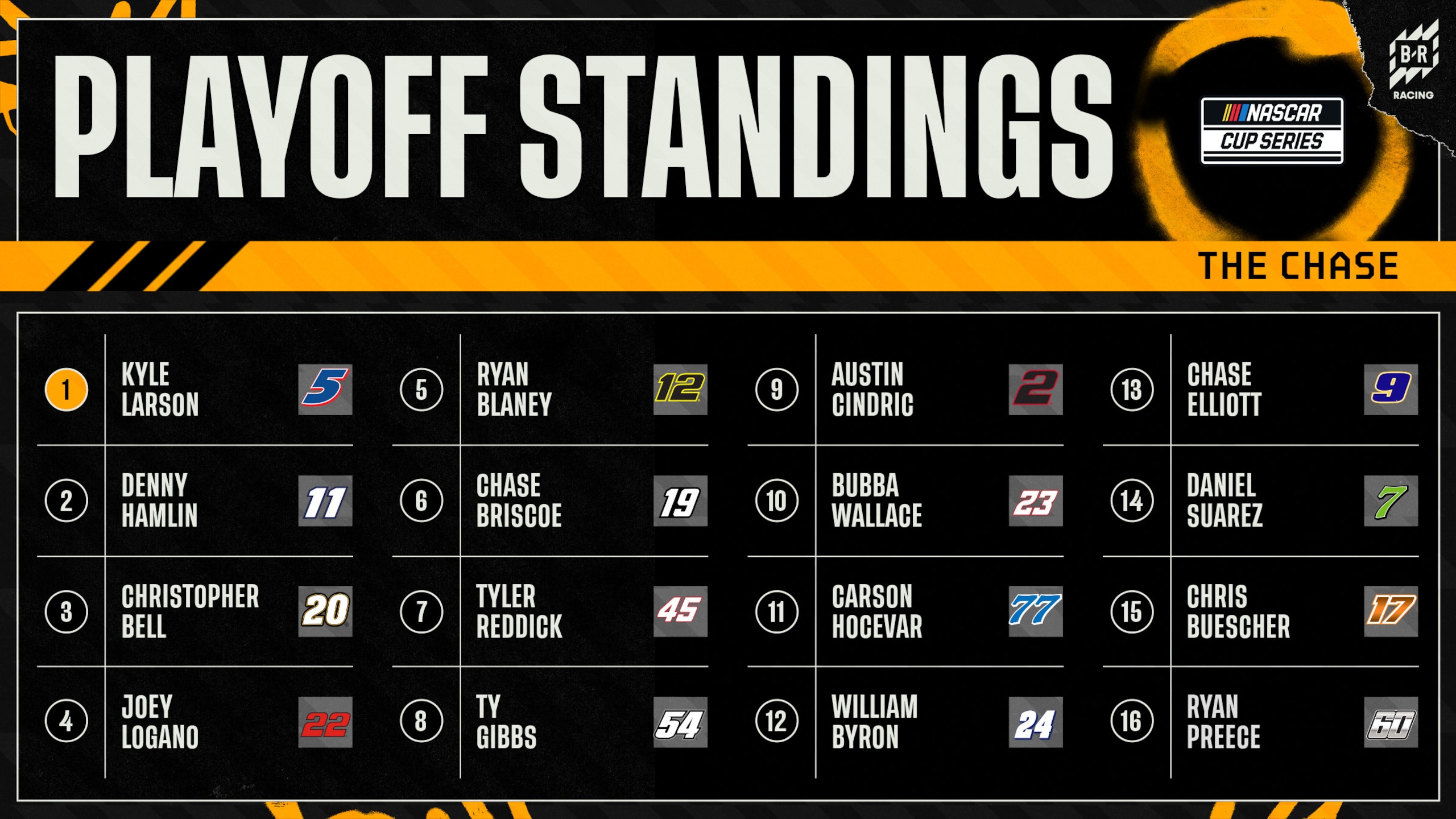
NASCAR Cup Playoffs Standings
.jpg?w=2560 "Cardinals Giants Football")
NFL investigating 2 referees for separate viral exchanges

Deion Playbook Found at Hotel
Ray is 92 years old and is the only known living person to have competed in the inaugural NASCAR event.
Barney Hall:
"Ned, you have one Southern 500 win in 1965. Tell us about that."
"Well, I did win by 14 laps," says Jarrett.
A record margin of victory for a NASCAR event that still stands today.
"I was driving a Ford, and it seemed everyone had problems," says Jarrett.
"Back then, the tires had tread. Some had as much as five-eighths of an inch of rubber on them."
"Darlington, as you know, has always been a very abrasive racetrack. Well, a lot of cars were overheating and blowing up because rubber from the tires would clog up the radiators."
"Basically, everybody blew up or had engine trouble, except me."
Well, he and Cale Yarborough.
"Cale got into a bumping match with another driver, and next thing I see is Cale flying over the fence into the parking lot."
Cale survived that crash, but another driver in the race did not. Buren Skeen died after being hit in the side by two cars at once. It is the only life the Lady in Black has claimed.
"You and Junior Johnson were involved in another crash a year earlier, a crash that would bring about change in NASCAR," said Hall.
"Yes, in 1964 we were at Charlotte," says Jarrett.
"Junior and I were involved in a crash with Fireball Roberts."
"Roberts' car was an inferno."
"I got to him first and tried pulling him out if his car, he was covered with gas and on fire. I remember he was wearing suede shoes and they fell off of him as we were pulling him out."
"Our driver suits back then were pretty much whatever we could find."
"Every opening in his suit was an opening for gas to get into, and of course, for fire to follow."
Fireball Roberts died a few weeks later from pneumonia—a by-product of being severely burned.
After seeing the carnage this accident had caused, NASCAR went to work immediately to vastly improve not only the safety of the driver, but the car also.
A short time later NASCAR introduced fuel cells and Dupont designed fireproof driver suits.
Ned Jarrett won championships in 1961 and 1965. He retired in 1966.
"You have done quite well as a broadcaster. Do you have a favorite moment?" asks Hall.
"Well, my favorite moment is not my most proud moment," says Jarrett.
"My favorite moment was when Dale won the 1993 Daytona 500."
"I was in the TV booth at the time, and I called the final laps between Dale and another famous Dale: Earnhardt."
"In the final lap, I realized I was actually pulling for my son to win, even coaching him how to stay in front of Earnhardt."
"While he did win the race, I wasn't proud of how I handled myself. Broadcasters are not supposed to be biased."
"At a later time, I apologized to Earnhardt."
"He told me he was a father also, and he understood."
We have now been joined by some audience members. Barney Hall takes a question.
"This question is for Ned," the person says.
"What do you think of today's drivers, the younger ones?"
Ned thinks for a moment and offers this synopsis:
"I don't care for a few of them. They are very disrespectful."
"If I could speak to them, I would probably not be kind."
"Cale, Richard Petty, Lee Petty, Junior, Darrell, myself, and a host of others, we paved the roads so they could make millions."
"We may not deserve much, but we deserve some respect."
The audience concurs with a standing ovation.
Reporting as an honored guest, I am David Yeazell.
Photo credit: David Yeazell

.jpg?w=2560 "Hill Injury Update Football")
.jpg?w=2560 "OBJ Calls Out Giants After Release")
.jpg?w=2560 "Tyreek makes another cryptic post amid Chiefs rumors")
.jpg?w=2560 "Greenlaw Talks Payton Exchange")


