
Chicago Cubs Sign Carlos Pena: 10 More Steps To a Pennant at Wrigley Field
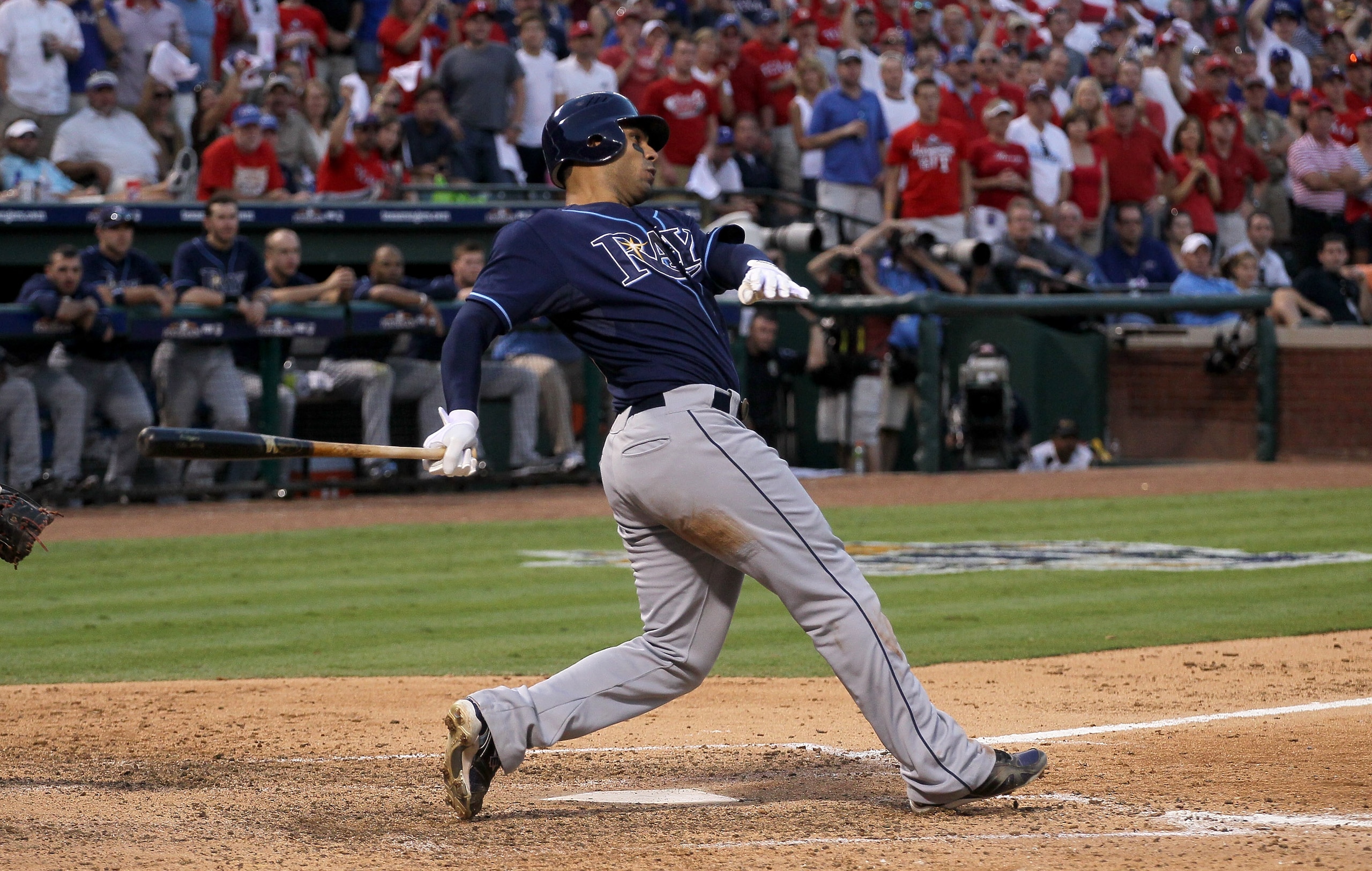
The Chicago Cubs have agreed to terms with free-agent first baseman Carlos Pena on a one-year deal worth $10 million, according to MLB.com's Carrie Muskat. Pena, 32, has 230 career home runs, 144 of which have come since the start of the 2007 season.
Pena also plays stellar defense at first base, making this acquisition a smart one for Cubs' general manager Jim Hendry. Despite a rough (.196 batting average, strikeouts in roughly one-third of his at-bats) 2010 season, Pena is a solid left-handed power threat who can bat third for Chicago and only improves the lineup.
Because the contract runs just one year, the agreement will not interfere with the Cubs' long-term ambitions, which could include pursuing free agents-to-be Albert Pujols or Prince Fielder if either hits the market after 2011. In the meantime, it gives new manager Mike Quade some stability in a crucial lineup slot and defensive position at which he had no such security during his stint as interim manager in 2010.
Still, this solves relatively little for the Cubs. They are still a long way from serious contention outside the weak NL Central, and the gap cannot be made up with just an adjustment or two: The team will need to fundamentally transform itself over the next two seasons in order to return to the glory of 2008, when they were the NL's best team and should have won the pennant. Read on for 10 key steps on the road to redemption on Chicago's North Side.
1. Add a Reliever, Do It Now
1 of 10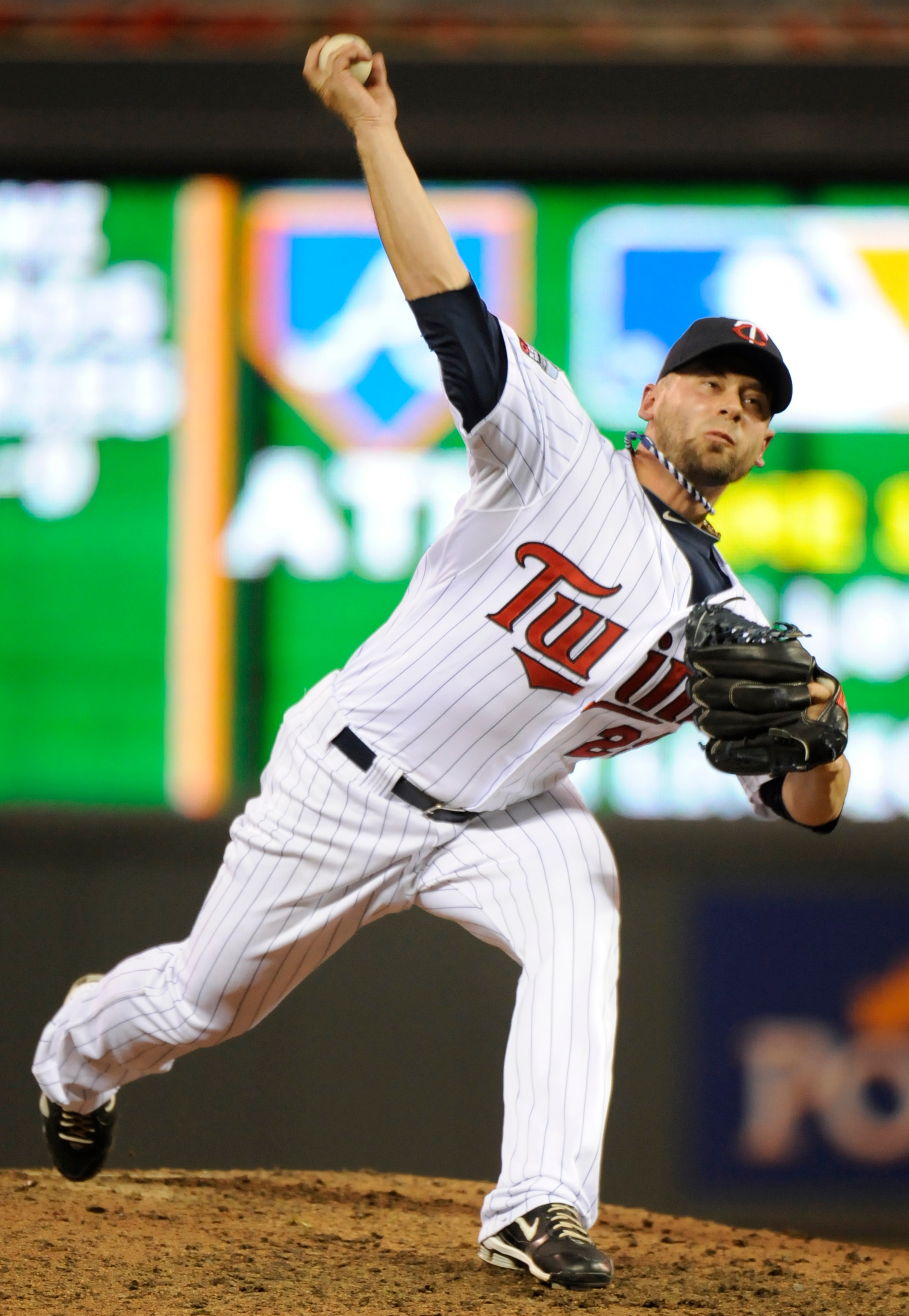
Among the 2010 Cubs' many flaws, one of the more dire was the lack of bullpen depth. Carlos Marmol and Sean Marshall were two of the best relievers on the senior circuit, but they combined to pitch only 152.1 innings, after which the burden fell to a highly unsteady second division led by Andrew Cashner (4.80 ERA) and James Russell (4.96).
Both Cashner and Russell were rookies, and each pitched better than their numbers suggest. Still, the relief corps in Chicago clearly needs to be addressed, and it is best not to wait until the team is ready to contend to cast desperately about for those pieces: The Cubs succeeded in 2007 in large part because of two key acquisitions prior to the dreadful 2006 season, Scott Eyre and Bob Howry.
The team has reportedly shown interest in free-agent right-hander Jesse Crain, who had a strong season with the Twins in 2010. Crain throws hard and has a great slider, essentially a poor man's Marmol with better command.
He will command a multi-year deal somewhere, but the money is likely to be reasonable. A three-year deal worth $12-14 million seems most likely, and the Cubs can probably afford to do it. Again, this is a long-term investment, not a quick fix. The quickest fix may rather be the steady improvement of the very inexperienced bullpen already in place.
2. Beef Up the Rotation
2 of 10
The Cubs have always been a low-contact pitching staff: They strike batters out, and they walk batters. In 2010, though, the strikeouts went by the boards while the walks rose to alarming levels.
With pitching coach Larry Rothschild moving on to spend a decade ruining someone else's pitching staff (specifically the Yankees), there is the potential for a turnaround. Minor-league pitching instructor Mark Riggins got the promotion, and could oversee a change in the approach this pitching staff takes to getting batters out.
With that in mind, it is perhaps not so surprising that the Cubs are shopping starting lefty Tom Gorzelanny (who misses bats but also, too often, the strike zone) and looking seriously at free-agent Brandon Webb. A sinker-ball pitcher, Webb has a superb 64.2 percent ground-ball rate for his career. In fact, his numbers overall are pretty superb: a 3.27 career ERA, 7.26 strikeouts and 2.97 walks per nine innings and three top-two Cy Young award finishes. He won it in 2006.
Of course, there is ample reason that Webb remains on the open market despite those credentials. He has pitched just once in the past two years, on Opening Day 2009. Shoulder issues have shredded his once-promising career. Still, the risk is worth the potential reward: The Cubs should sign Webb if at all possible.
3. Trade Kosuke Fukudome, But Not Right Now
3 of 10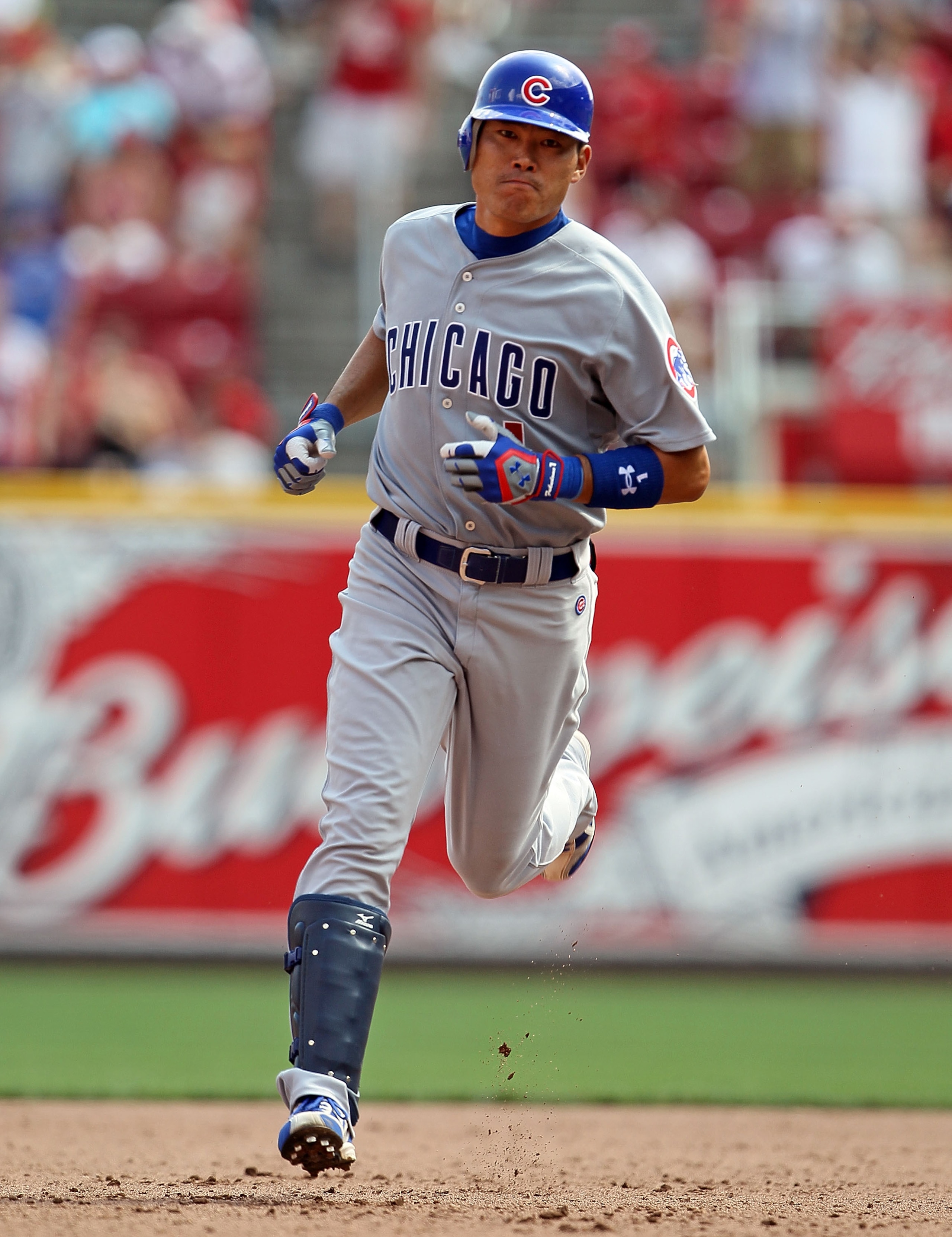
Kosuke Fukudome is a good player, really. He draws walks, he fields well and he hits for a modicum of power. He is wildly inconsistent, which has rubbed many in the organization and the media the wrong way, but he is as good as the Cubs could possibly do in right field and the leadoff spot going into the season.
That said, the Ricketts family has some strict budgetary goals for this season, and Hendry will have to trade Fukudome at some point to make room on the payroll for Pena and any other additions he might make (Crain and/or Webb, for example). He need not, and indeed ought not, do this right away: The Cubs have no ready fix for the top of the order against right-handed pitching if Fukudome goes, unless they are sold on Marlon Byrd (.267/.328/.389 against right-handed hurlers in 2010, with a .346 overall OBP) in that role.
By June, though, if Fukudome is having his usual strong start, Hendry can spin him off to a contender in need of a left-handed hitter who acquits himself well in the outfield. Those kinds of players get much more valuable as the season wears on, so Hendry should have no trouble finding a taker. He simply needs to know better than to expect a substantial return.
June is the opportune time to trade Fukudome, because by then, Brett Jackson may be ready for action. Jackson, 22, is arguably the best prospect in the Cubs' system. He hit .297/.395/.493 while reaching Double-A in his first full pro season.
He stole 30 bases and played solid defense in both right and center field, though he projects better as a corner outfielder in the big leagues. By virtue of his patience and his sweet left-handed swing, he fits atop the Cubs' order just as Fukudome does. Even if Jackson needs a bit more seasoning, the Cubs have Sam Fuld (.368 career OBP in limited opportunity) as a stopgap for late-season outfield and leadoff duty.


4. Trade Aramis Ramirez, Too
4 of 10
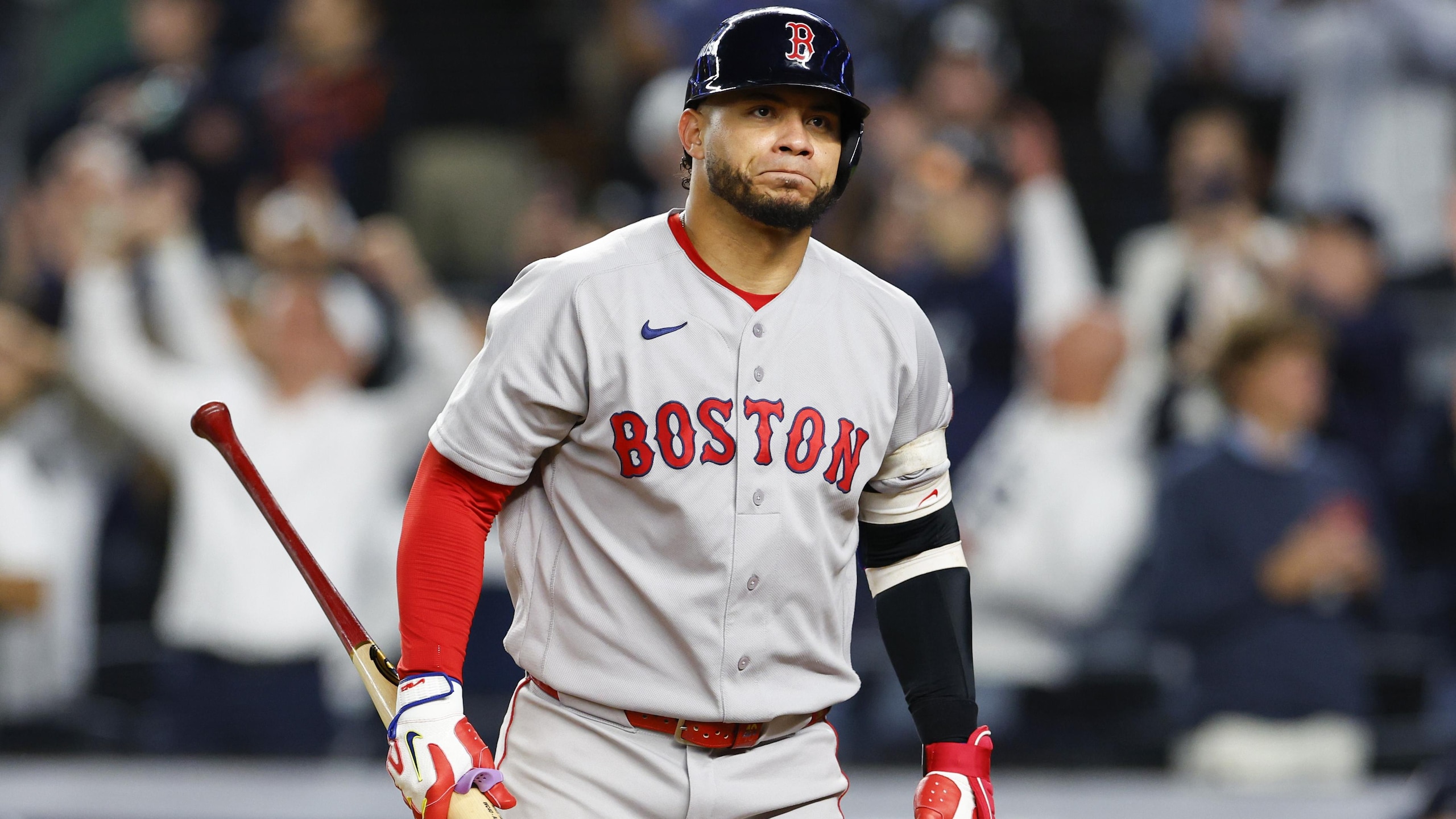
This is the companion to the Fukudome deal, the one that allows Hendry to shed even more money at mid-season and accommodate some Hot Stove additions before Opening Day. Ramirez struggled to a .241/.294/.452 batting line in 2010, the first time his OPS had dipped below .898 in seven full seasons with the Cubs.
Understanding the way that hurt his value on the open market, Ramirez exercised his $14.6-million player option for 2011 after the season. Still, he has not lost it altogether: He clubbed his way to a .276/.321/.526 line and 51 RBI after the All-Star break. If Ramirez can stay healthy, he will have serious trade value near the deadline for teams who need a corner infielder or a DH.
5. Platoon Tyler Colvin and Alfonso Soriano
5 of 10
The flawed premise that has many Cubs fans and media types hoping for the team to trade Fukudome this winter is that Tyler Colvin, after a strong rookie season, ought to be the full-time right fielder. That is not so.
Colvin is good. He is certainly better than anyone expected him to be. He has more power than any team but the Cubs (who drafted him far above his projected spot in 2006) ever thought he would develop. He runs the bases well, he defends well in the corner outfield spots and his only real weakness is that he does not draw walks. Does that profile sound familiar?
It should. The Cubs have the right-handed-hitting version of the left-handed Colvin playing left field already, in Alfonso Soriano. The two men had eerily similar numbers last season: .254/.316/.500 in 394 plate appearances for Colvin, .258/.322/.496 in 548 plate appearances for Soriano. Against right-handed hurlers, Colvin had an .813 OPS to Soriano's .764. Against left-handers, Soriano had a .944 OPS, better than Colvin's .820.
Each man is good enough to merit a full-time job, but why should the Cubs do that? They could just as easily use Fukudome to shore up right field until Jackson is ready (or nearly so, as Colvin could fill in during the second half if needed after Fukudome departs) and get monstrous production from a very natural platoon in left.
Incidentally, regardless of whether they do this in 2011, it is imperative they do it in 2012, when Jackson will be full-time as the leadoff man and the plate appearances in right field must be reserved for him.
6. Get Rid Of Koyie Hill
6 of 10
This might seem a minor consideration. It is not. The backup catcher spot for the Cubs is a key role: Starter Geovany Soto is one of the lineup's three best hitters, so that player has to replace at least some of that production. Soto is also a bit injury-prone, which has led to 515 plate appearances for Hill over the past two seasons. During that span, he has hit .226/.286/.312. His OPS is .598.
Let us put those figures into perspective: In 660 career plate appearances, Carlos Zambrano has a .236/.244/.387 batting line. In other words, he has been six percent better than Koyie Hill. Of course, Zambrano is famous for his hitting prowess as a pitcher, so let's be more fair. What about Adam Everett, an all-glove, no-hit shortstop who may be one of the best all-time fielders at baseball's most demanding athletic position? Everett is a career .243/.294/.348 hitter.
Hill is not merely bad, not merely a poor choice on the part of management: He is an unconscionable waste of the Cubs' perfectly good money, not to mention the fact that he blocks Welington Castillo's road to the big leagues. Castillo hit .255/.317/.498 at Triple-A this season, then slugged five extra-base hits in 21 plate appearances for the parent club in September.
One might have thought that would be enough to sway Hendry away from his beloved Hill, but that is not so: The Cubs indefensibly tendered Hill a contract for 2011. If he remains on the roster by season's end, Hendry should be fired.
7. Shedding Deadweight: Money Off the Books After 2011
7 of 10
The fiscal flexibility to operate freely has eluded Hendry for the past few seasons, mostly because of his own mistakes. He has made some really awful investments and traded some perfectly good ones to accommodate them, but happily, most of his sins (or at least the most egregious ones) will be washed clean after the season. What follows is a list of the men to whom the Cubs will owe no more money after this season, along with their 2011 salaries:
- Carlos Silva- $12.75 million ($5.5 already offset by cash considerations from Mariners)
- John Grabow- $4.8 million
- Jeff Samardzija- $3.5 million
- Kosuke Fukudome- $14.5 million
- Aramis Ramirez- $14.6 million
- Carlos Pena- $10 million
That list accounts for almost $55 million that will come off the books next winter. Of course, the Cubs will need the following things at that time:
- A first baseman
- A third baseman
- At least one impact pitcher
- Possibly a second baseman (see slide 8)
But this second list is shorter, a product of the team's new-found ability to develop its own talent. Jackson will take over right field; Chris Archer, Trey McNutt, Jay Jackson and Tyrelle Harris will offset the pitching losses; and Josh Vitters should be ready to show what he can do at one corner infield spot. Therefore, the Cubs should be able to hotly pursue an elite free agent like Fielder or make a key trade to add pitching depth, maybe for Ricky Nolasco.
8. Figure Out Second Base
8 of 10
You have to like Blake DeWitt, a left-handed hitter with a sweet (if often ineffective) swing and good range at second base. The Cubs also re-signed Jeff Baker for 2011 to hit left-handed pitching hard, which he does well, and they have Darwin Barney penciled in as the sixth infielder and roving defensive sub/pinch-runner for 2011. Barney, a rookie, looked good in his limited time at second in 2010, and the team has a fistful of promising middle infield prospects working their way up the ladder.
Still, the position seems a bit unsettled. A big year from Barney and/or farmhands Logan Watkins and Hak-Ju Lee could make things much clearer, but that spot needs to be addressed before the team can really set its priorities for 2012 and beyond. There isn't much on the horizon in terms of free agents who play solid defense and hit at second base: Those guys tend to get locked up really quickly.
Slightly flawed models like Rickie Weeks and Dan Uggla, who slug magnificently but struggle with the leather, might be available in trade or as free agents since neither seems eager to sign extensions with their current clubs. The obstacles? Weeks is in Milwaukee, where the Brewers will not eagerly send the Cubs any help, and Uggla is a newly-aqcuired Brave. Atlanta wants to get a longer-term deal done and will probably succeed.
9. Lock Up the Pen Men
9 of 10
Reportedly, the Cubs want to extend Marmol through the rest of his arbitration years, and perhaps further. Marshall would likely take interest in a similar extension, albeit for less money. Both deals would give the team a more secure base from which to build their new pitching staff.
Marmol would probably want about $17 million over three years, while Marshall could command about $10 million. If each has even one more good year, those deals will have saved the Cubs money, given the salary expectations of each within that framework and the costs of alternative options.
10. Reel in the Big Fish
10 of 10
Albert Pujols seems unlikely to leave St. Louis, so the most accomplished and appealing free agent of the 2012 class will probably be Prince Fielder. He does not seem especially inclined to sign a long-term deal anywhere, as he says he wants to test the market and see what he can find. The Cubs would do great things with Fielder at the heart of their order, especially if he brings teammate and friend Weeks with him.
Still, it need not be Fielder. the Cubs could even re-sign Ramirez and move him to first, or simply retain Pena. One way or another, though, they need to show they still have teeth when it comes to obtaining and satisfying top-tier talents, and make sure their lineup has the muscle to lead the team to victory.



.jpg?w=2560 "Love's Body Already 'Tired'")
.jpg?w=2560 "2 NFL Officials Suspended")
.jpg?w=2560 "Mahomes' Wife Trolls Kubiak 💀")