
'Tis The Season: 5 Crafty Ways For Phillies to Score at Annual Winter Meetings
In past years, the Phillies have been huge players at the Winter Meetings. In 2009, they shocked the baseball world by acquiring Toronto's ace, Roy Halladay, and sending another former Cy Young, Cliff Lee, to Seattle. In 2008, the team signed free agents Jamie Moyer and Raul Ibanez to multi-year deals, and in 2007, the team signed outfielder Geoff Jenkins to a two-year contract. So what do the Phillies have in store for 2010?
According to Phillies beat writer Todd Zolecki, it could be a quiet winter for the Phillies.
Despite losing free-agent outfielder Jayson Werth to the division-rival Washington Nationals, the team will look to replace him on the cheap. The Phillies and their fans have known for quite a while that Werth would head to the highest bidder and, in the long run, the Phillies simply didn't feel that Werth was worth (no pun intended) the $126-million dollars the cellar-dwelling Nationals gave him, so maybe it didn't sting as bad.
With $146 million already committed to the payroll in 2011, the Phillies aren't expected to be big players at this year's annual Winter Meetings. That hasn't stopped them in the past, however.
Last year, just a day after General Manager Ruben Amaro Jr. told the media that his team wasn't interested in acquiring Toronto Blue Jays' ace Roy Halladay, the Phillies became one of four teams that struck the offseason's biggest blockbuster, with the Phillies acquiring Roy Halladay and prospects Phillipe Aumont, Tyson Gillies, and JC Ramirez, and trading Cliff Lee to the Seattle Mariners. The fact of the matter remains that the Phillies like to do things under the radar.
So while the team postures as though it isn't willing to make any big moves this year, I'll speculate otherwise. After all, the Phillies have an odd knack for catching people off guard and pulling the trigger when least expected.
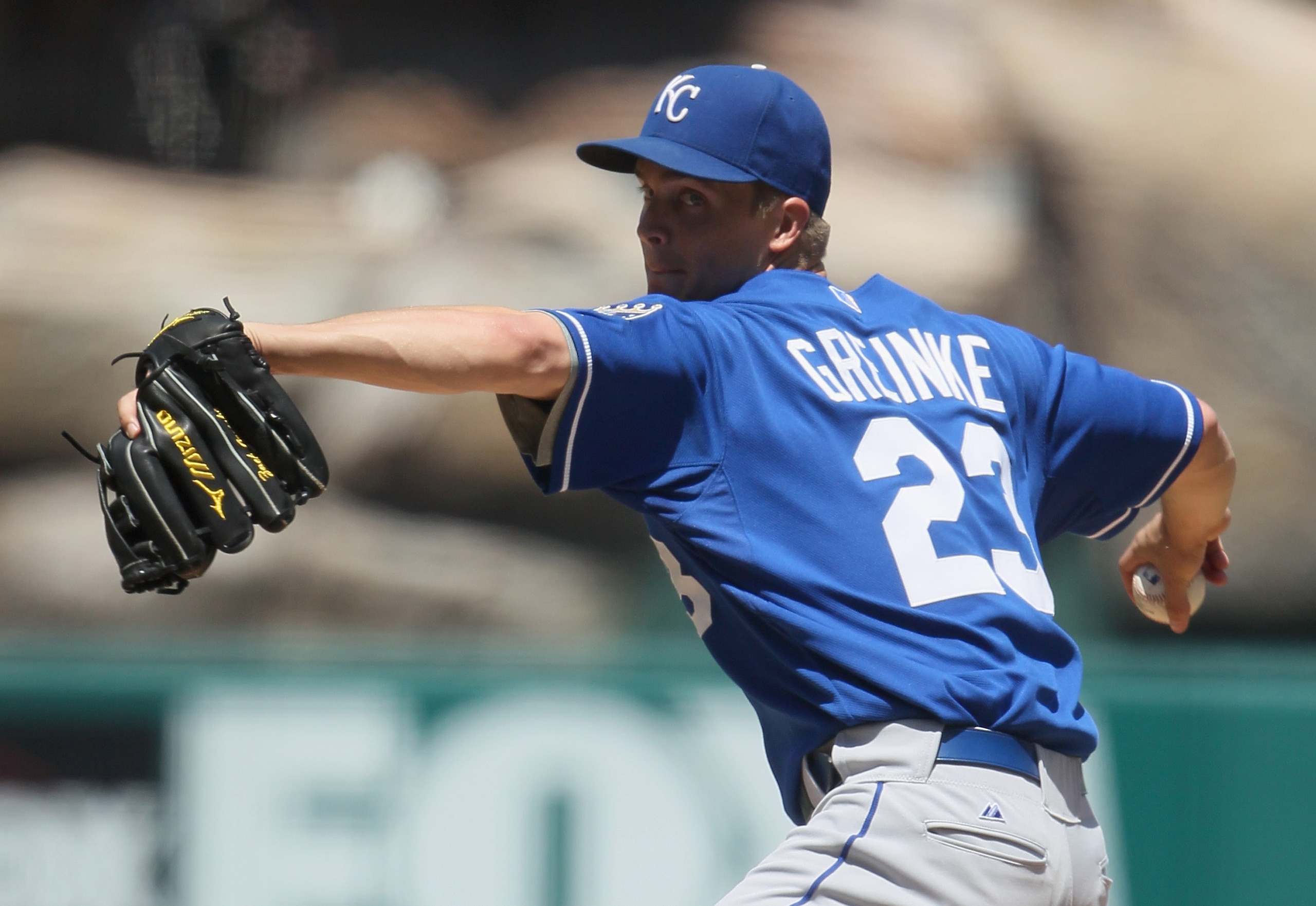
5.) Phillies Acquire RHP Zack Greinke From The Kansas City Royals
1 of 5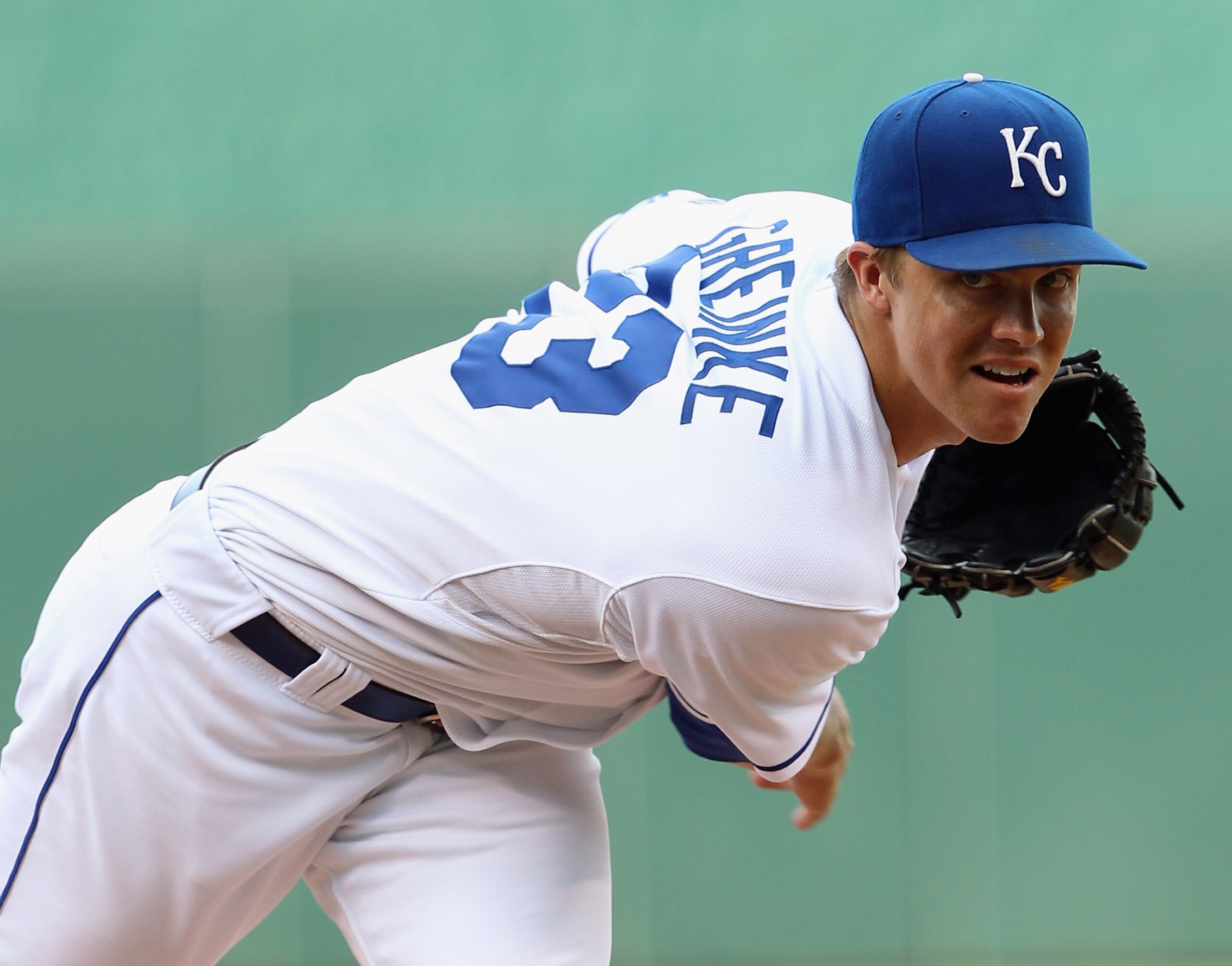
As of now, the Royals will only accept a king's ransom for their ace, in line with the deal that the Texas Rangers received for Mark Teixeira from the Braves - Neftali Feliz, Elvis Andrus, Matt Harrison, Jarrod Saltalamacchia, and Beau Jones. In other words, the Royals are looking to strike a deal that could completely change the face of their franchise - but that's not likely.
Greinke, despite being a great pitcher, has a few flaws that are going to impact the way the Royals enter trade talks with other teams. Firstly, Greinke holds a partial no-trade clause that allows him to block trades to 15 different clubs. Though players are known to waive this clause for the right situation, it often comes at the price of some sort of contractual incentive. Greinke's public displeasure with the team also has lowered his value. Most rival executives now believe that the Royals are all but forced to deal him. Even still, the biggest obstacle among teams seems to be Greinke's past bouts with anxiety. After the 2005 season, where Greinke went 5 - 17 with an ERA over 5, he missed a significant amount of time in 2006 with personal issues. This appears to be irrelevant, however, as Greinke returned to begin his dominance of the AL Central in 2007. Many large market teams, such as the Phillies, New York Yankees, and Boston Red Sox believe that the media of their cities may have an impact on Greinke. However, and in spite of having that partial no-trade clause, it now appears that Greinke will go anywhere for a chance to contend.
So, even in the off chance that the Phillies were to orchestrate a deal for Greinke, and he was to accept a trade to come to Philadelphia, what are the chances that the teams could actually strike a deal? Probably very little.
The Royals are said to expect a centerpiece to any deal to be a pitching prospect with a "Greinke-like" ceiling. Well, those prospects are few and far between. However, the Phillies have something that many teams won't be able to offer - outfielder Domonic Brown. Having completely torn up the Phillies' minor league system, Brown will get his share of looks in Spring Training, but make no mistake, he will have to earn a platoon position over another left hander, Ross Gload. The Phillies fully expect their offense to rebound, even without Jayson Werth, and if the team feels that Gload can do a good job in right field, they may not hesitate to add to an already top-notch rotation.
The Royals won't be taking any light package for their ace, but a name like Domonic Brown is sure enticing. The Phillies may not have many prospects in their upper minor league system, but a combination of Brown, dominant right hander Justin De Fratus, and any combination of the Phillies talented pitching staff at A ball is sure to perk a few ears, and a rotation consisting of Roy Halladay, Cole Hamels, Roy Oswalt, and Zack Greinke would be talked about throughout the future of baseball.
On that note, however, maybe the Phillies can assemble a legendary rotation without making a trade at all...
4.) Phillies Sign LHP Cliff Lee
2 of 5
A lot of people around baseball believe that Ruben Amaro Jr. made the biggest mistake of the 2010 off-season by trading Cliff Lee to the Seattle Mariners, and they may be right. However, with Lee now on the open market, Amaro has a chance to resurrect his name and assemble one of the greatest pitching rotations ever seen in baseball's lengthy history.
The Winter Meetings have been underway for less than a day now, but already, there has been much ado about the off-season's prized free agent pitcher. Though some may say they are crazy, SI's Jon Heyman is reporting that the Phillies have internally discussed bringing the left hander back to Philadelphia. Though they aren't expected to outbid the annual dollar powerhouse, the New York Yankees, the Phillies do have an interesting proposition to make to Lee.
Though he's shown that he can pitch anywhere, the Phillies may suggest that Cliff Lee would absolutely dominate the National League, and it's true. In 12 starts for the Phillies in 2009, Lee was 7-4 with an ERA of 3.39. However, his FIP suggests that if all other factors were cast aside, his ERA would be right around 2.89. The Phillies could also posture on the lore that would build around the rotation should he be willing to sign. Headed by two Cy Young Award winners, the Phillies would follow Roy Halladay and Lee with Cy Young contenders in their own right - Cole Hamels and Roy Oswalt. Think about this for a moment: In any said three game series, a team would have to face a minimum of two of those pitchers, and in some series, three. Not fun, as an opposing lineup. They may not be able to offer the six year deal that Lee is rumored to be seeking, but that shouldn't keep the Phillies from being a legitimate landing spot for Lee, who grew to know the city, and along with his family, enjoy his time here, before being traded.
How can the Phillies afford this, you wonder?
3.) Phillies Trade RHP Joe Blanton Or OF Raul Ibanez
3 of 5
At first glance, you may wonder what appeal Joe Blanton or Raul Ibanez could have to other teams, but ultimately, there is value to be had for these players. Assuming that the Phillies would be willing to "eat" (or pay) a portion of their salaries, it is not far fetched to believe that they could find a landing spot for both men.
Blanton, 29, would be the easier of the two to move. In an off-season where starting pitching is hard to come by, it isn't impossible to imagine teams with interest in the big right hander. Any team looking to add a middle of the rotation arm would be willing to acquire him. The toughest selling point for Blanton is his contract. On January 21, 2010, Blanton signed a 3 year, $24 million extension with the Phillies. Though the contract appears to pay him $8 million a year, it is structured a bit differently. He received $1 million in 2010, and a $6 million signing bonus, meaning that he'll be owed $8.5 million over each of the next two seasons.
A contract that currently exists as 2 years and $17 million is not unbearable, but the Phillies won't find any legitimate offers unless they pay some of his salary. If the Phillies were to eat about $7 million dollars, and were willing to accept fringe prospects in return, 2 years and $10 million is close to a bargain for Blanton. Teams would be willing to deal for Blanton because there are no surprises. You know what you'll be getting. Blanton will throw right around 200 innings and have a FIP right around 4.30. He may not be the top of the rotation arm that he once was projected as, but any team craving starting pitching, like the Chicago Cubs, Milwaukee Brewers, or Minnesota Twins, for instance, could be a fit for Blanton, and the Phillies (assuming a previous scenario could play out), would be happy to save $10 million.
Ibanez, on the other hand, wouldn't be an easy sell.
Ibanez is no spring chicken. He'll be 38 when the season begins. However, those close to Ibanez says that age isn't a factor with him - but in reality, we all know it is. He isn't going to turn any heads with his defense, but he is an average defender out in left field. Unlike Blanton, however, it seems like the planets will need to align for the Phillies to be able to strike a deal.
Firstly, Ibanez was given a full no-trade clause when he signed his 3 year, $31.5 million deal with the Phillies in 2008. The only thing that will interest another team about that deal is that it's almost over. Ibanez will be paid $11.5 million in 2011, and the Phillies will need to eat at least half of that to get another team to bite. The Phillies should be able to sell a team on Ibanez's splits against right handers. Though his average is about the same against both right handed and left handed pitching, most of his power is generated against the former. In 2010, he hit .277 with 12 home runs against right handed pitching.
The most likely landing spot for Ibanez would appear to be in the American League, where a team that acquires him can put him in the outfield some days, and let him DH others. At first glance, the Oakland Athletics seem like a good fit. Recently losing out on the Lance Berkman sweepstakes and withdrawing their offer to free agent third baseman Adrian Beltre, Ibanez is hardly even a consolation prize, but teams could be interested in adding offense at whatever cost. Other likely destinations include Ibanez's former team, the Seattle Mariners, the Baltimore Orioles, and Los Angeles Dodgers.
The Phillies appear to be stuck with Ibanez, however, as it is unlikely that he'd be willing to waive his no-trade clause to go to any of those places. The guarantee of a contract extension with said team may help, but that's even more unlikely than the planet's aligning.
The Phillies very likely will open up the 2011 campaign with both Joe Blanton and Raul Ibanez, but if they can save that money and distribute it elsewhere, they will. Sometimes, the Winter Meetings include addition by subtraction.

2.) Phillies Acquire OF Aaron Rowand From the San Francisco Giants
4 of 5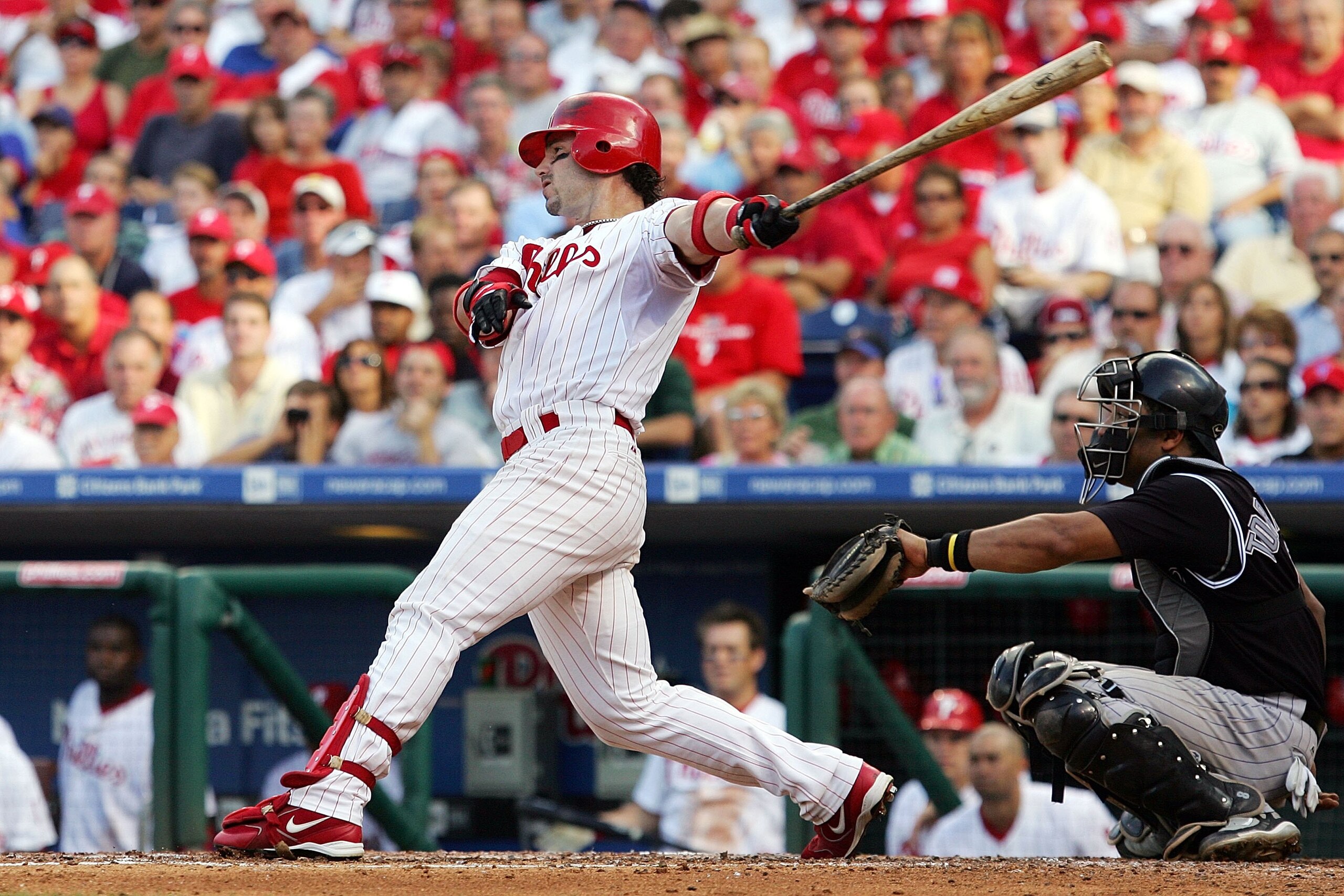
I know. Sounds crazy, right?
The Phillies have been scouring the free agent market looking for a quality right handed bat to platoon with one of Ross Gload and Domonic Brown in right field. Names that have been mentioned have been fairly unimpressive: Jeff Francouer, Jermaine Dye, Carlos Quentin, Scott Hairston, and Matt Diaz. In reality, Rowand had the worst year (minus Dye, who sat out in 2010) out of that group. So why could he be an interesting option for the Phillies? History.
Rowand last played with the Phillies in 2007, where he had an All-Star season and hit .309 with an on-base percentage of .374, slugged 27 home runs and played one of the most memorable centerfields in Philadelphia Phillies history, before cashing in and signing a 5 year, $60 million contract with the San Francisco Giants. Many experts at the time believed the Giants overpaid for the outfielder, and they were spot on. In his first three years in San Francisco, Rowand has hit a collective .254, with 39 home runs. His splits against left handed hitters are abysmal, and the Giants have crowded their outfield to leave him out of their plans. Still don't get why the Phillies are interested?
If anything at all, Rowand is right handed. The Phillies would require that the Giants pay most of the $24 million left on the two years of his deal, and any package that the Phillies sent to San Francisco would consist of fringe prospects. Historically, Rowand has hit well in Citizen's Bank Park, as well. In two seasons at Citizen's Bank Park, Rowand hit a combined .292 with 23 home runs.
Though he has limited no-trade protection, Rowand would almost certainly waive his clause to return to Philadelphia. Teams and players alike often talk about the effect a change of scenery can have, and the difference of Philadelphia and San Francisco meant a lot to Rowand, statistically.
He may not be the ideal fit, but who knows?
1.) Phillies Sign RHP Pedro Martinez
5 of 5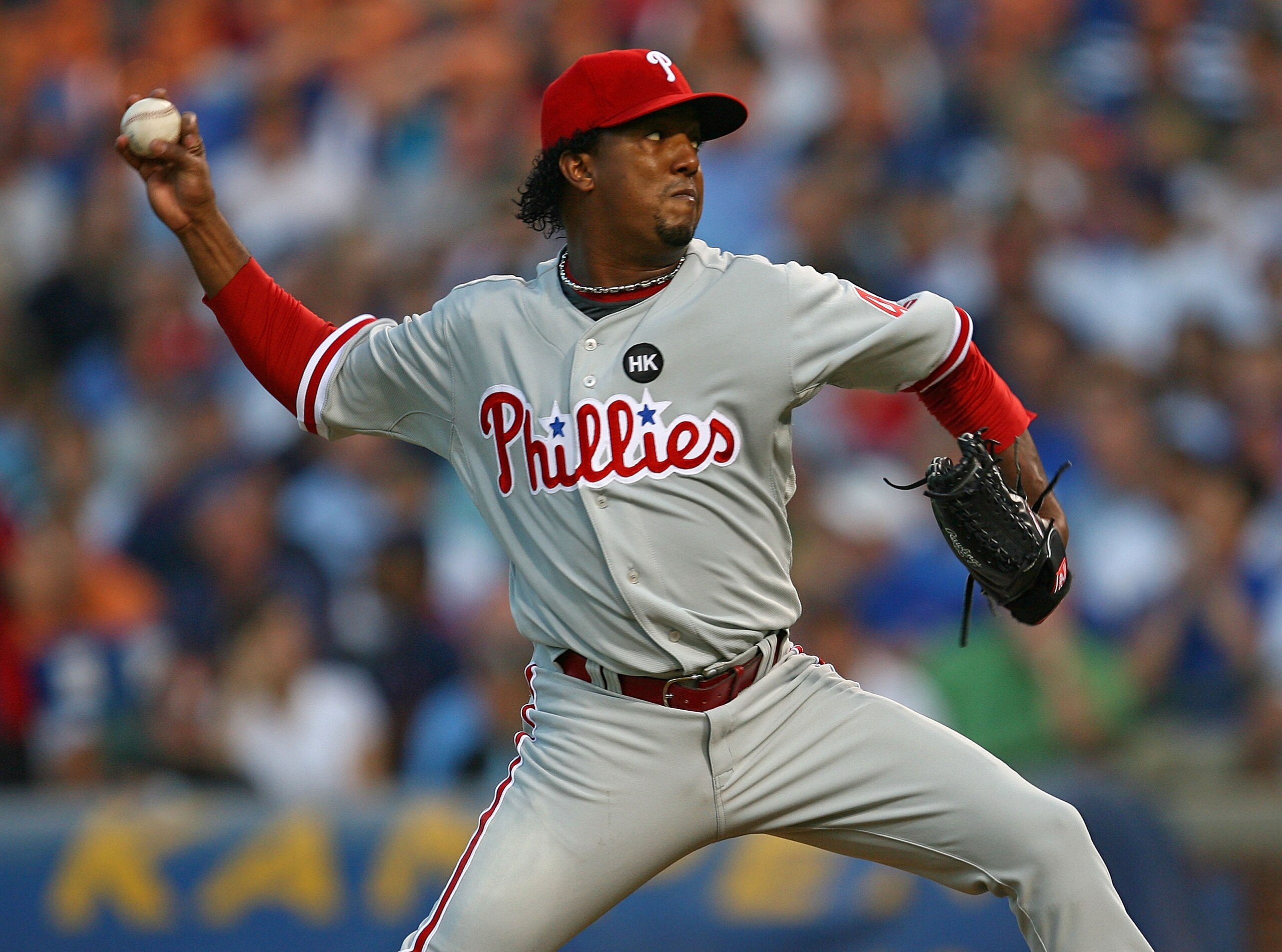
Didn't see that one coming? If Pedro Martinez proved anything in his half-season with the Phillies in 2009, it's that he can still be a difference maker for any team that gives him a chance, and after taking a Major League season off in 2010, Martinez could be ready for a full season in 2011.
Martinez pitched nine games for the Phillies in 2009 after signing a contract with a base salary of $2 million. In those nine games, Martinez was 5-1 with an ERA of 3.63. Martinez was able to do what few teams thought he'd be able to - show impeccable control and strike guys out, despite losing velocity on his fastball. Despite having pitched in the World Series again, he was unable to come to terms with a Major League team that off-season, and sat out for the 2010 season.
Martinez, who has always had a way with words, implied that he wanted to play baseball for a contending team, and hasn't ruled out playing in 2011. The man is not retired. So, in all reality, what can Martinez actually contribute to a playoff caliber team like the Phillies in 2011?
He isn't Zack Greinke or Cliff Lee, but Martinez is still a very good pitcher. He may not be a top tier starter at this point in his career, but he is certainly one of the better "bottom of the rotation" pitchers in baseball. He won't blow his fastball by hitters anymore - the average velocity on his fastball was 89 MPH in 2009 - but he has "learned to pitch." In his brief stint with the Phillies, Martinez showed that he can locate his fastball to any part of the strikezone and drop that good changeup of his on a hitter in any count.
Most importantly, for a team like the Phillies, Martinez isn't going to break the bank in 2011. Over the course of a full season, he could command a base salary of around $3 million, with incentives for certain aspects of his game, like awards, accomplishments, and innings pitched. A pitcher with Martinez's knowledge, and ability, is a valuable asset to any rotation, and certainly helps to solidify the bottom half of the Phillies'.
.jpg?w=2560 "🚨 Week 8 AP Top 25 Poll")
.jpg?w=2560 "Mahomes Told Teammate to Leave Meeting")
.jpg?w=2560 "Baker Gets Glove From Rays 🧤")

.jpg?w=2560 "NFL investigating Eagles")

.jpg?w=2560 "Updates from EVERY NFL Game 🏈")
.jpg?w=2560 "Steelers Roll Saints in Paris")
.jpg?w=2560 "CFP Bracket After Week 8 🏆")