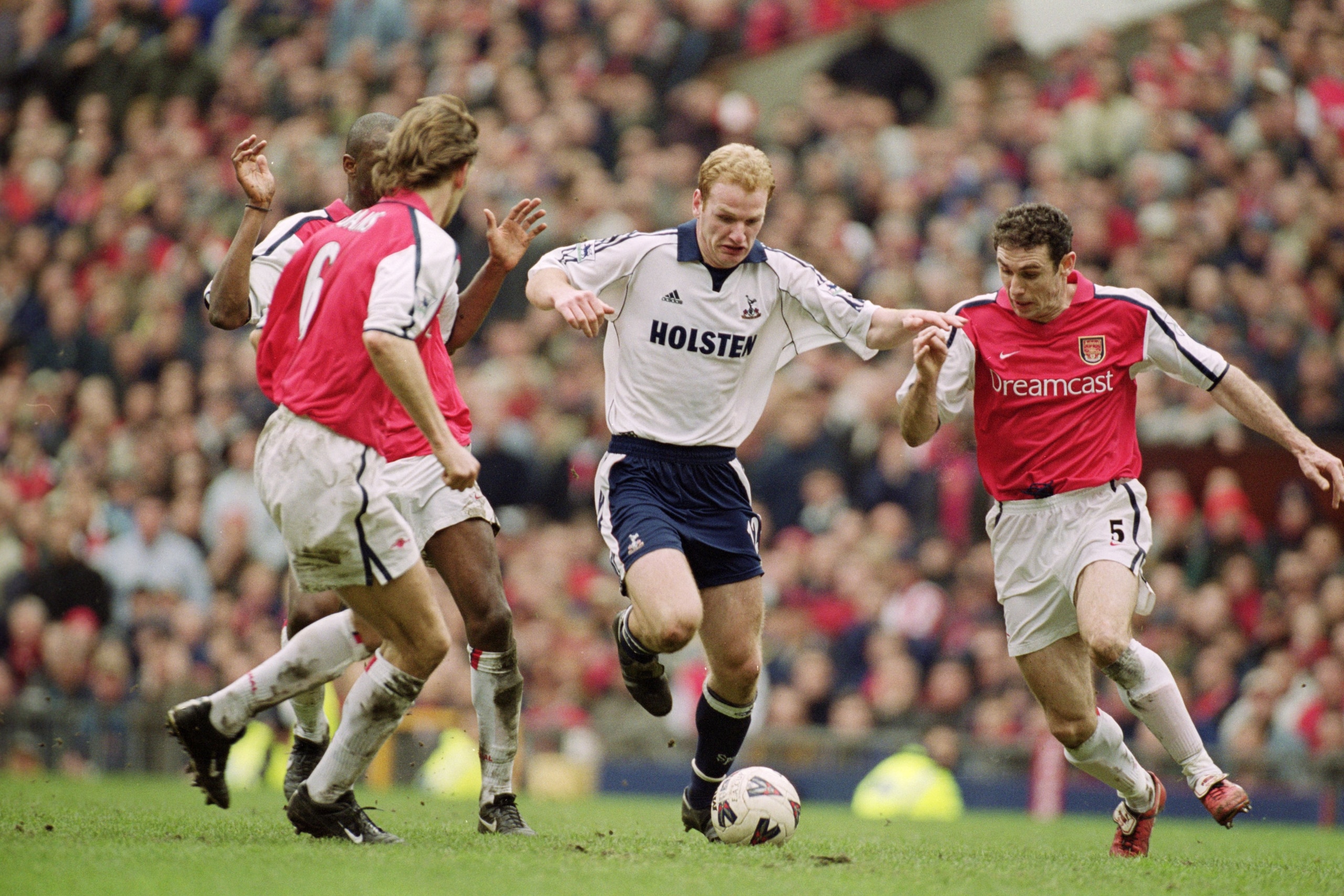

Arsenal's Top Gunners: Ranking the Best Defenders in Club History
Football is a team game—a team comprised of individuals. Communication is vital for this mechanism to work; but so are its parts. The philosophy of the game may be brought down to the simple: defend when needed, and attack to win it.
There is a considerable amount of tactics that blend attack and defense in a way most suitable to the footballers present in the team, but surely, without defense a team is bound to suffer defeat, even if they have the best attackers at their disposal. This only emphasizes the importance of the defensive unit in the modern game.
An efficient mechanism is comprised of good, quality parts, or to paraphrase: a quality defense is comprised of quality defenders who keep open channels of communication at all times during play.
Arsenal has been blessed to be on the lucky side of witnessing some of the greatest defenders in the world perform under their flag.
But who are they? And most importantly, who are the best of them?
Here are the best Arsenal defenders of all time:
9. Peter Storey
1 of 10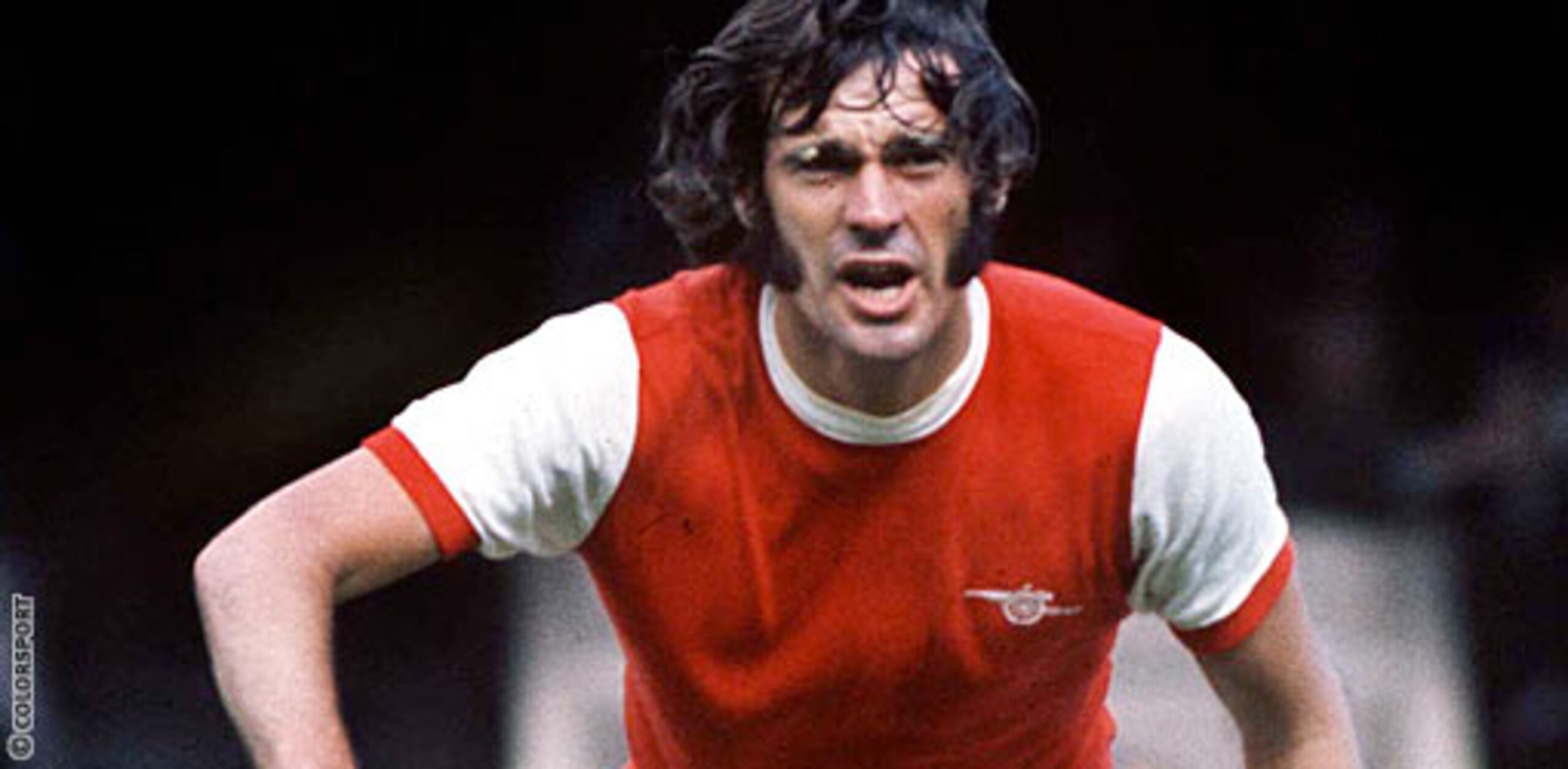
The astounding 501 appearances in 16 years at Arsenal make Peter Storey impossible to erase from the memory of fans—this, and the fact that he was such an influential player in the back and middle of the field.
He debuted against Leicester in 1965. His initial position was right-back, but upon recognizing Storey’s passing ability and steady control of the ball, Bertie Mee decided to use him as a midfielder.
And it was in his tenure in midfield when he gathered the fruits of past labor.
In 1970, he helped Arsenal win the Inter-Cities Fair Cup. The next year was historic for Arsenal as they won the double—and Storey was a key man.
His star shined most brightly in the FA Cup semifinal against Stoke City.
Arsenal were trailing by two goals when Storey brought fighting hope for his team by scoring a goal, 1-2. Then, in injury time, Arsenal were awarded a penalty.
Storey stood behind the ball facing the England legendary goalkeeper Gordon Banks and won the staring contest, coolly sending the ball in the other direction of the keeper’s dive with calculated shot.
If it weren’t for him, Arsenal wouldn’t have won the double that year.
8. Frank McLintock
2 of 10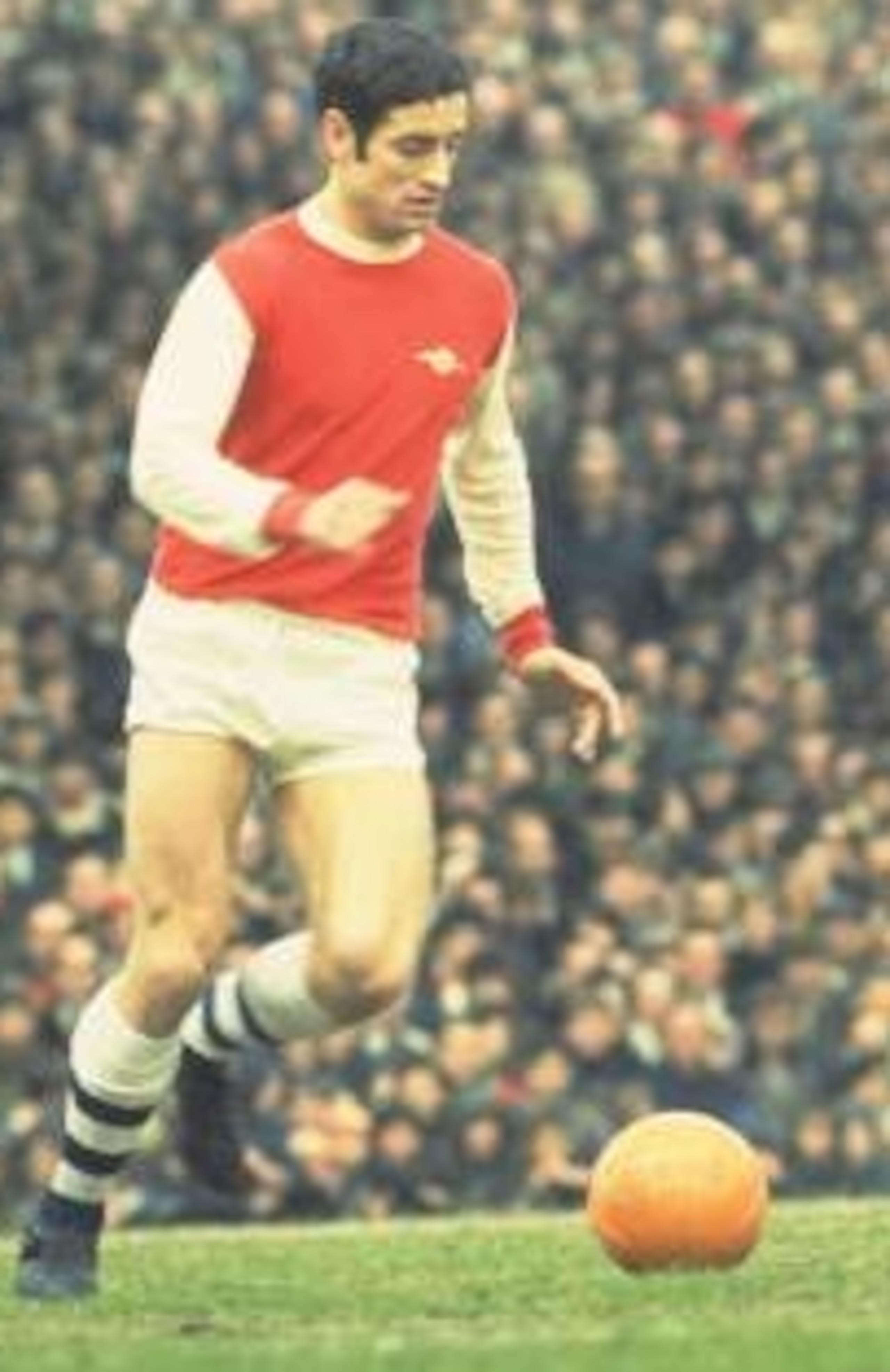
Born in Scotland, Frank McLintock’s nine-year service for Arsenal could be depicted likewise: a pair of shoes worn on the hands but upon the realization of the uselessness of such an action, put on the part of the body where it’s supposed to go: the feet.
The advent of McLintock at Arsenal happened in 1964 when he was bought by manager Billy Wright for 100,000 pounds. Wright saw the deal a bargain, and he was right, in a way.
It took five years for the natural talent of Frank McLintock to show.
His involvement in the wing-half position during the first, let’s say, average years was marked by his unsettledness.
Frank dug deep into his endless well of resources, only to scatter the scooped energy everywhere on the field—actions which often burdened his team-mates.
The Scot’s resoluteness, enthusiasm, and tireless work rate were evident, but he ended up contributing less than what he had to offer.
Then, as if to maximize Frank’s potential, fate stepped in the 1969/70 season to make things good. Injuries forced manager Wright to use McLintock in the centre of defense—what later proved to be a masterstroke.
The shoes fit perfectly on the Arsenal defense’s feet.
On his new position, the hard man flourished. His leadership, especially, became most apparent. As if being the key of unlocking the safe that kept all the other skills that would transform him into a complete player, the centre-back position unlocked Frank McLintock.
He took his team to Inter-Cities Fair Cup that same year after they overcame a first-leg deficit of 3-1 against Anderlecht in the final. Then, in the next year, he helped his side win the League.
But his biggest influence was to be felt in the FA Cup final against Liverpool.
The final was pushed into extra time when Liverpool opened the score. Facing yet another disappointing final, Frank McLitnock rallied his down-hearted team-mates and eventually Arsenal won the match.
With an enormous tally of 403 matches and 32 goals for the North London club, Frank will be always remembered by the Arsenal faithful as a man who gave his best for the club.
7. Steve Bould
3 of 10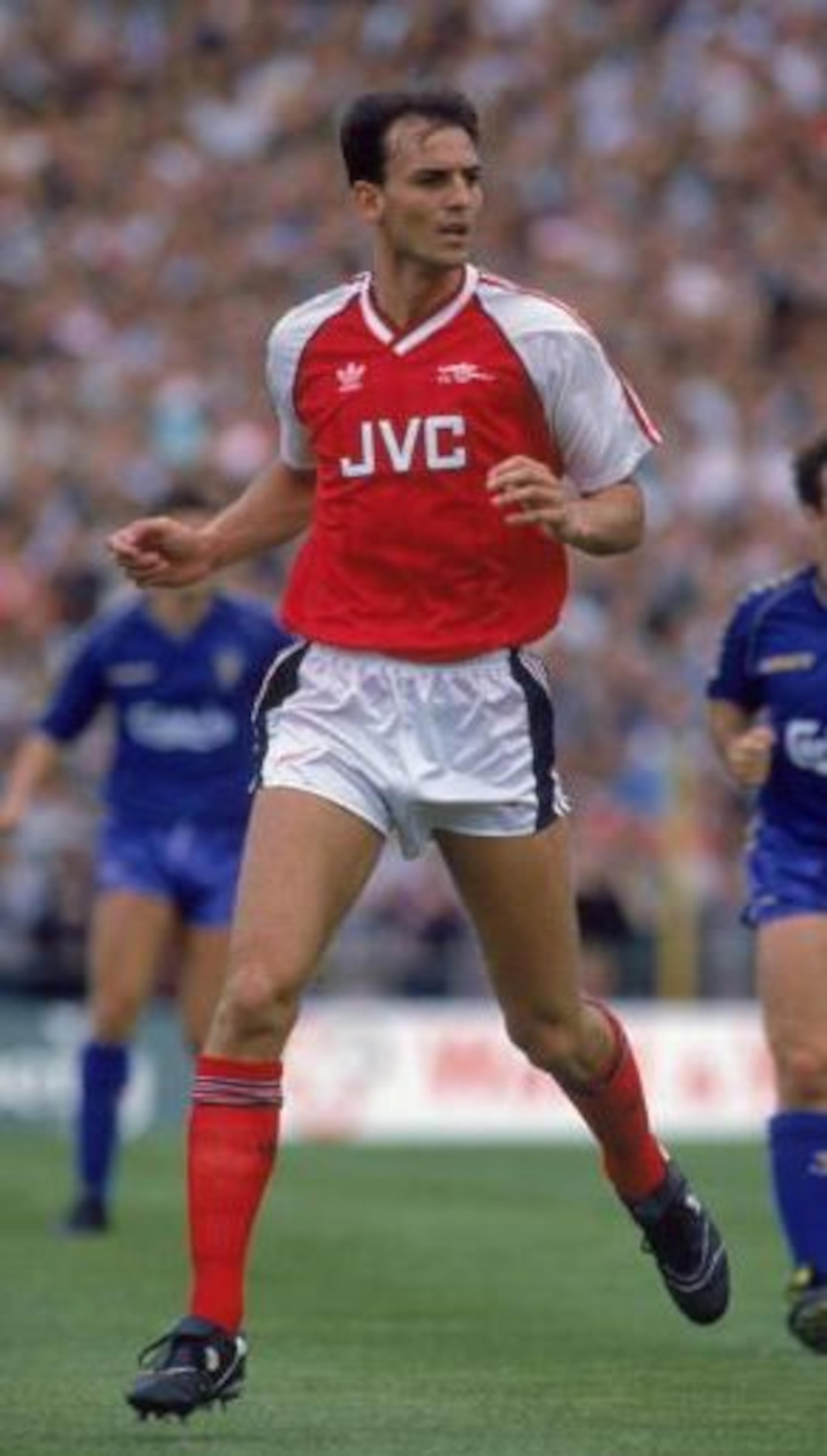
Steve Bould was part of the “famous four” backline also constituted by Tony Adams, Nigel Winterburn, and Lee Dixon.
He joined Arsenal in 1988 and soon become an important ingredient in the recipe for success. He was part of the team that won the title on Anfield in 1989. One year later, he climbed on the same summit to get his second championship medal.
Bould unfortunately missed the FA Cup and League Cup finals in 1992/93 as he sustained an injury. Nevertheless, after his recovery he came back to retake his place at the back four where he was back to his usual reliable self.
In 1994, another success followed; this time on the European Stage—the Cup Winner’s Cup.
After Wenger took the reins, Bould was speculated to lose his place to Martin Keown, and he did for a while, but he soon found strength to recapture his position. He, then, played a part in the double-winning side of 1998, completing his honors with Arsenal.
In the next year, Bould was beginning to feel the weight of age on his shoulders. Arsenal were beaten to the title by Manchester United who later completed the “triple.” Steve then moved to Sunderland, but his stability at the back for Arsenal could never be forgotten.


6. Nigel Winterburn
4 of 10
Arsenal have always been blessed with quality left-backs. Nigel Winterburn was among the best of them, if not the best. He possessed qualities that allowed him to cement his place on the left side of defense and to become a member of the “famous four.”
His intellect and speed left little room for oppositional attackers to maneuver. On top of that, he had the needed ball control and crossing accuracy to torment the opposition on the left. In 584 matches for Arsenal, he boasts 12 goals, but what ridicules his goal tally was the number of assists he provided.
Not once or twice had Winterburn crossed with pin-point accuracy to assist a goal. This was also used to full advantage with set-piece taking. Such was the case in the title-winning match against Liverpool in 1989 when he assisted for the first goal.
To add up to all the rest of his wonderful qualities, his air-splitting drives from long range dazzled the fans with their beauty and the manager with their efficiency. Indeed, Nigel Winterburn was near to being a complete player.
His competency, professionalism, talent, and personality furnished his career with many medals–among which include three league titles, two FA Cups, a League Cup, and a European Cup Winners Cup.
One thing is absolutely sure, if this were a list of best left-backs for Arsenal, he would have been the first.
5. Lee Dixon
5 of 10
Occupying the right-back position, Lee Dixon was the perfect man for the job. He not only possessed an accurate reading of the game which allowed him to place himself on the right spot every time, but also a great first touch with either foot.
He joined the club in the same year as Steve Bould, 1988, and stayed with the club for hugely impressive 15 years until 2002.
During the Graham years, Dixon capitalized on his exquisite first-touch which allowed him to easily take control of a rebounded cross to keep the threat alive. Another feature of his game also proved valuable not only to Graham, but also for Wenger later was his ability to shoot accurately from long range.
Dixon’s career was especially refreshed when Wenger was appointed manager of Arsenal in 1996. Le Professor’s attacking philosophy was the right stimulus to release the attacking potential of an already established defender like Dixon. The turn of the page added another dimension to his game.
He went on to play an instrumental part in Arsenal’s success in 1998. Nearing his career’s end, Dixon’s resoluteness defied his body’s screams to fold. He fought off the challenges of Oleg Luzhny and Lauren, but then an injury threatened to put an end to his long career.
Still, Dixon recovered and waited for his chance. It came when injuries enveloped the squad in 2002. Lee Dixon seized the opportunity and helped his club to another double in his last year—a fitting end to an illustrious career.
4. Martin Keown
6 of 10
Fierce, indomitable, and indefatigable: this is Martin Keown.
His first affair with Arsenal was short-lived, for one year from 1985 to 1986. Then, he moved to Aston Villa and later Everton. In 1993 though, his services were once more sought by the Gunners and he returned to the club, becoming the first man to rejoin the team since the Second World War.
The experience Keown had gained elsewhere proved invaluable to George Graham. He had become more versatile, able to play on more than one position.
Still, his pace and footballing intelligence couple with his body build and bravery titled the weight toward a centre-back position, where he formed a fluid partnership with team captain Tony Adams.
When Arsene Wenger inherited George Graham’s empire of toughies, Keown was still mid-road on his quest for improvement, despite his advancing age. He became an important first-team player, providing much backbone to the slowly-undergoing-transformation Arsenal.
He played a pivotal role in 1998 when Arsenal conquered on two fronts: the League and the FA Cup. Then, unburdened by his age, he saw off the challenge Mathew Upson to contribute to another double in 2002.
Aged 36, footballers sense the nearing end of their career: Their bodies betray them.
But this was not the case with Keown as his mind was stronger. He battled on and overcame another challenge in Frenchman Pascal Cygan to win another two trophies: the FA Cup in 2003 and yet another League Championship triumph in 2004.
The battle-scarred English international had to share his responsibilities for the 2004 Invincible season with Kolo Toure though.
Still, his long and faithful service to Arsenal was handsomely rewarded with his last trophy. He played 449 games for the Gunners and is considered one of the best defenders—and certainly one of the scariest for the opposition; just ask Ruud van Nistelrooy.
3. Pat Rice
7 of 10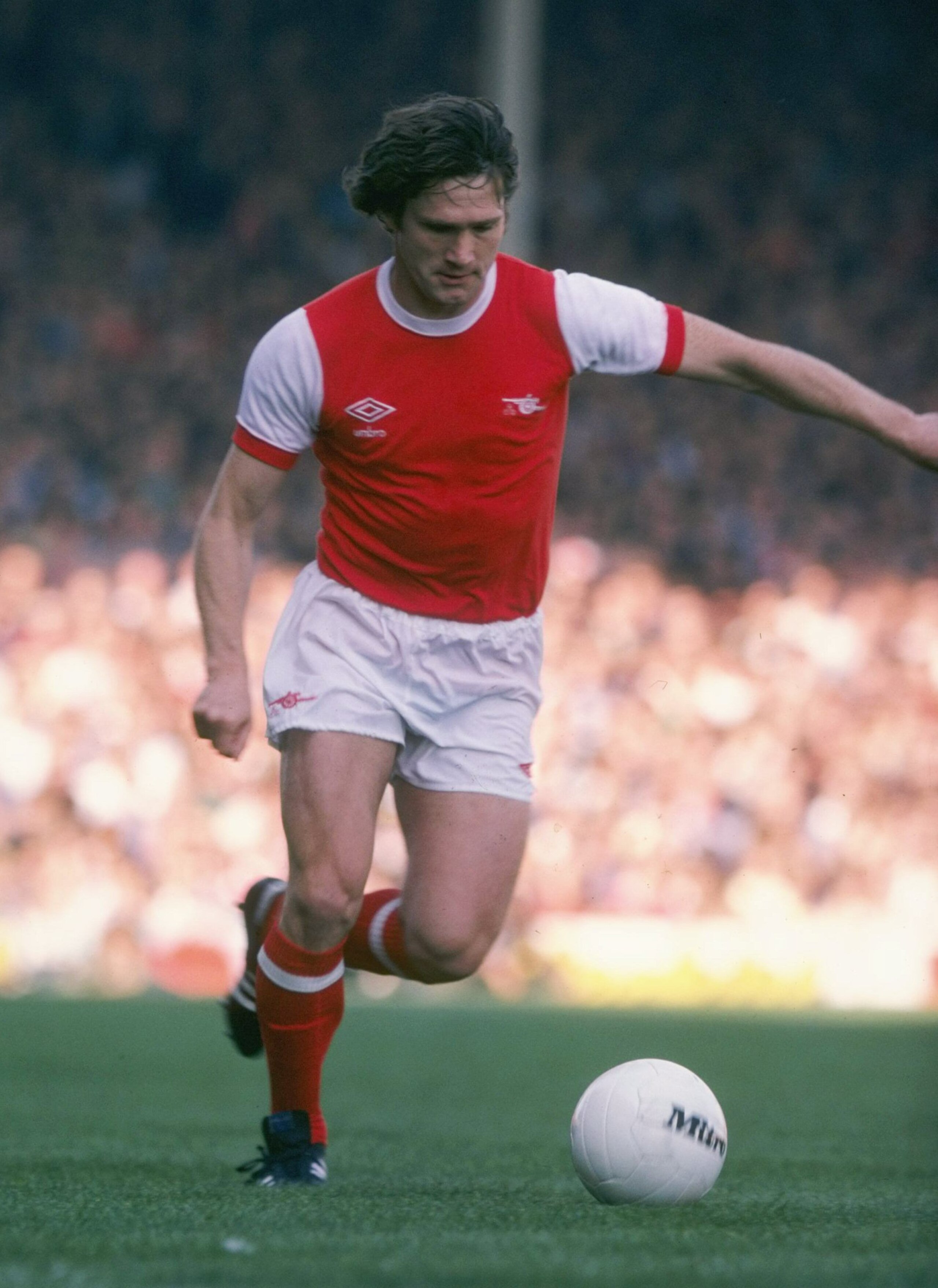
Along with Frank McLintock and Peter Storey, Pat Rice was also a significant factor in the Arsenal double-winning mechanics of 1970.
His natural position being right-back, he had to wait for his chance awhile because Peter Storey waved his irrefutably-beneficial wand of magic on the right side of the field.
But following Storey’s transition to midfield, Rice conquered the territory and made it his for the years to come.
Since his first step on the Gunners’ grounds, the Northern Irishman has done nothing else but worked as hard as he could–his efforts founding the basis of his success.
His tenacity even earned him the captain armband soon after the previous captain of the team, Alan Ball, left the club. Having played alongside another influential leader, Frank McLintock, Rice learned his trade fast, successfully leading with authority and distinction.
He helped Arsenal to three successive FA Cup finals and one European Cup Winners’ Cup final.
Pat Rice shares the record of five reached FA Cup finals with David Seaman and Ray Parlour. Unfortunately for him, all but two ended in lifting the trophy. One of them was the famous 3-2 victory over Manchester United in 1979.
One year later after the FA Cup success, in 1980, Rice moved to Watford, but his love for the club beckoned him to return. And he did–in 1984–to assume a coaching role at the club.
He remained on his coaching position until 1996 when he had to serve as a caretaker manager to Bruce Rioch who left, but the experience was short-lived as, soon after, another era of the Arsenal history was to begin–the Arsene Wenger era.
After the arrival of the then unknown Frenchman, Pat Rice assumed the assistant manager’s position. He still holds it to this day—over 14 years—serving as the right-hand man for the revolutionary Arsene Wenger.
His tireless work rate and leadership in 521 games, and his dedicated services as a coach to the club extend to a mind-boggling 44 years.
He has practically dedicated his life to Arsenal. No wonder he has put his stamp in Arsenal history.
2. David O’Leary
8 of 10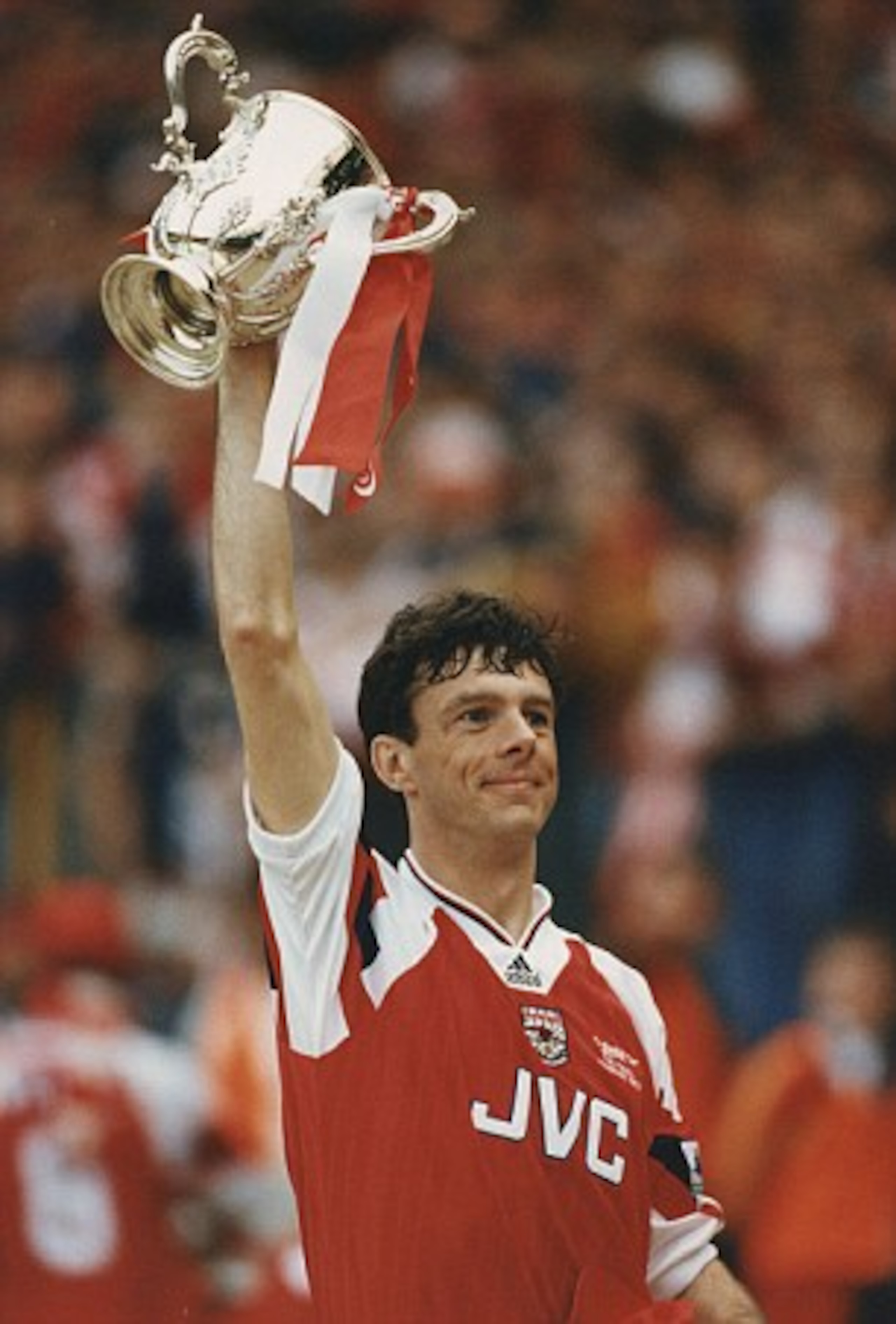
Born in London, David O’Leary, later nicknamed “The Spider,” is the current record holder for appearances at Arsenal with the astounding 722. Long-serving and loyal was David O’Leary, but to talk about that alone would be insufficient to complete his profile.
As a player, O’Leary was slender yet deceptively powerful, gentle yet commanding, composed in his graceful movements all over the field, and surprisingly quick for his six-foot-high frame.
In 1973, David joined the club as a hot prospect. It took him two more years to make a debut and his involvement was a welcome one: it invigorated the already aging Arsenal side.
At the time, Arsenal were experiencing a somewhat drop in their performance. After the double, theywere even threatened by relegation, but David was a key figure for that not to happen.
Slowly but surely, the Spider became an integral part of the squad and in the 1980s his bond with the team strengthened even more when he chose to remain at the club which had fallen into a mediocre status.
In 1986, George Graham joined the North London club, and it was a breath of fresh air for O’Leary. The defensive emphasis that Graham brought with him fitted well to the Spider’s style but aged 29, time was certainly not working in his favour.
One year later, he sustained an ankle injury which disrupted his regular involvement in the first-team–that, along with the introduction of Tony Adams in 1983 and Steve Bould in 1988.
Nevertheless, David still fought his way back into the first team on numerous occasions. He contributed, although not by much, to the capture of the league’s title in 1989 and 1991.
As his career’s twilight was approaching, he was honorably awarded with yet another two medals: the 1993 League Cup and 1993 FA Cup.
He served Arsenal for 18 long years, boasting six important triumphs on English ground, but what he will remembered by is his reliability with which he injected calmness into the squad, his graceful movements on the field, and his never-dying loyalty to the Arsenal cause.
David O’Leary was ranked 14th in the All-time Greatest Gunners on arsenal.com—honor no one will deny he deserves.
1. Tony Adams
9 of 10
“Mr. Arsenal” Tony Adams was undoubtedly the best defender to ever play for Arsenal. He started and finished his career playing in Highbury, captained Arsenal for 16 years, and scored multiple vital goals.
There was a time when the Gunners boasted an impenetrable wall at the back—a wall that consisted of four men who seemed to instinctively understand each other: Nigel Winterburn, Lee Dixon, Tony Adams and Steve Bould.
They had all the qualities needed to counter the English type of football; well, they can be even considered founders of it. None of the four shrunk from intimidation of physicality. Rarely someone got caught out of position. The understanding was working on a deeper level.
Four individuals with great qualities as footballers bonded in a way that formed an organism at peace with itself—and England legend David Seaman was behind it.
The “famous four” was headed by Tony Adams. The leadership came naturally to him and no one seemed to oppose it as they knew it will lead them to success.
On numerous occasions, Adams succeeded to inspire his team-mates to victory. In fact, his leadership was so unwavering in its consistency that he has come to be considered the best Arsenal captain ever.
But to talk about his leadership only will be like to try to paint an image of a country and talk only about its weather.
Adams had much more going in him than that.
His reading of the game was second to none. Backed with his intelligent timely tackling, oppositional players met a formidable challenge, in fact, so formidable only a few have managed to tell the tale of overcoming it.
When asked which players he found most difficult to deal with in an interview for arsenal.com, Adams responded with a smile: “Those who wouldn’t fight me.” He meant the fast ones, those who would choose to go as far from him as possible and had the speed to do it.
He was a formidable leader and defender indeed, but he also had his demons: he was an alcoholic.
His battle with alcohol was long and hard. It started in the mid 80s. First, in 1990, he crashed his Ford Sierra into a wall, and upon breath analysis was found four times over the drink-drive limit.
Later that year, he was sentenced to four months in prison, from which he served half of it. After being released, he went on with the drinking tradition and his involvement in incidents and fights in nightclubs didn’t cease.
In September 1996, Adams finally admitted his alcohol-related problems. The battle became public.
But as seen on the field before, his resilience kicked in again and would not allow him to succumb. He started to change his lifestyle drastically. He returned to education, started learning the piano.
His recovery was also significantly benefited by the timely arrival of Arsene Wenger at the club. The Frenchman was quick to introduce new dietary practices and changes in the lifestyle of the players—something that enormously helped the recovery of Tony Adams.
Slowly but surely, he matured into a better person and player. As if to confirm Adams’ victory over alcoholism, success soon followed. He won the double twice more with Arsenal–in 1998 and in 2002.
Victory was his. Tony Adams did what great men do: overcome their demons, climb over mountains of trouble, and come out triumphant.
His resilience on and off the field reflected on his team-mates, pushing them to overcome any challenge they faced. “Mr. Arsenal” came to be recognized as one of the most important factors for Arsenal winning 10 major trophies during his tenure.
A life of darkness and light intertwining, lessons, and guts, Tony Adams’ story is undoubtedly an inspirational one. And how couldn’t it be? It’s Tony Adams; he just did what he could do best: inspire.
Eight years after his retirement, he is still considered the best defender, best captain, and one of the best footballers to ever play football in red and white colors.
10. Honourable Mentions
10 of 10
Percy Sands, 1902-19: Played over 350 matches in his 17-year stay at Arsenal. He was nicknamed "Mr. Reliable."
Joe Shaw, 1907-22: Consistent left-back who played 326 matches for the club.
Eddie Hapgood, 1927-44: Captained Arsenal and England. Powerful defender who led a hugely successful Arsenal in the 1930s.
George Male, 1929-48: Undisputed first-choice right-back for seven successive seasons. Captained Arsenal and played 285 matches for them (the number doesn't include the 200 unofficial games he played during the Second World War).
Tom Parker, 1926-33: Nearly ever-present in the first team for his tenure on the right back position. Played 294 matches for Arsenal and scored 19 goals (most from penalties).
Sol Campbell, 2001-06, 2010: Powerful defender surrounded by much controversy. Part of the "Invincible" team of 2003/04.
Kolo Toure, 2002-09: Stable at the back. Served seven years and also part of the "Invincible" team when he formed a great partnership with Sol Campbell.
Kenny Sansom, 1980-88: Irreplaceable left-back for Arsenal and England. Won Player of the Year award in 1981. Played 314 games for Arsenal and scored six goals. As a full-back, shares first place with Ashley Cole for number of caps for the international team—86.
.jpg?w=2560)


.jpg?w=2560 "Nabers' Recent IG Post 👀")
.jpg?w=2560 "Landon Dickerson Placed on IR")