
Golden Bulls: The Top 25 Greatest Chicago Bulls of All Time
The Chicago Bulls are a unique NBA franchise. In terms of championships, the organization looks fantastic with six rings, third only to the Boston Celtics (17) and Los Angeles Lakers (16).
However, those six titles all came in the span of eight years, and all came because the Bulls had the greatest basketball player of all-time: Michael Jordan.
Other than the 1990s, the Bulls have been a rather average franchise, and sometimes far worse than average. Besides Jordan and Scottie Pippen, few current Bulls fans can remember any high-quality players (no, Ben Wallace does not count).
In the United Center, banners hang to commemorate the retired numbers of Bob Love and Jerry Sloan, along with Jordan and Pippen. But that's it.
The fact is, the Bulls had many great players who made the 90s so successful for Chicago. However, if Pippen was always in Jordan's shadow, then players like B.J. Armstrong, Toni Kukoc and Ron Harper were virtually non-existent.
Here's a list of the best 25 players in Chicago Bulls history. You can probably guess No. 2 and No. 1, but a few players in the list may surprise you.
What qualifies a player as one of the greatest? A variety of criteria, including but not limited to: statistical leader within the Bulls organization, NBA accolades (All-Star Games, All-NBA Teams, etc.), leadership role on the team, making clutch plays and postseason success.
25. Luol Deng
1 of 25
Luol Deng has always seemed to be on the trading block over the past few seasons with the Bulls. Yet the fact remains that as far as this franchise goes, he does crack the top 25 players to wear a Chicago uniform.
First of all, Deng has spent all six of his NBA seasons with the Bulls, which is more than players like Dennis Rodman and Ron Harper. He has been through the ups and downs of this revamped Bulls squad, from Scott Skiles to Tom Thibodeau.
Of course, he has also averaged more than 14 points in each of his six seasons except for his rookie campaign.
Deng has competed in the playoffs during three of his six seasons, and the team itself made the postseason four times. Deng did not compete in the epic first-round series between the Bulls and Celtics in 2009.
Experts predicted a breakout year for Deng following his stellar playoffs in 2007, when the Bulls made it to the second round behind his averages of 22 points, nine rebounds and a 52.4 percent field goal percentage.
Yet he has yet to make an All-Star Game appearance. Still, Deng is only 25 years old and has several years left on his contract. Depending on the role he plays on the new-look Bulls, he has room to move up the chart.
24. Elton Brand/Ron Artest
2 of 25
At least one player on this list has to represent the lowest point in the history of the Chicago Bulls organization.
That's right, the several years post-Jordan.
Unfortunately, the team was in such disarray that no decent players stayed long enough to make a lasting impact on the organization.
Elton Brand and Ron Artest were poised to form a young core for the young Bulls, but of course they were shipped away and became All-Stars elsewhere.
Still, in his two seasons with the Bulls, Brand was the definition of a 20-10 player, literally averaging those numbers exactly in his stint with Chicago. That combination still remains elusive for the Bulls, though the organization hopes it found another great power forward in Carlos Boozer.
Brand was named Rookie of the Year in 2000 and of course made the All-Rookie First Team. With 10 rebounds a contest, he also ranked among the league leaders in total rebounds and offensive rebounds immediately upon entering the Association.
Of course, Brand was dealt to the Clippers for Tyson Chandler, who would team with Eddy Curry to form the Baby Bulls. Whoops.
As for Artest, he consistently averaged in double figures while playing for the Bulls, while also averaging more than four rebounds and about three assists.
He also started making a name for himself on the defensive end. In 2001-2002, he averaged a staggering 2.6 steals per game, which was second in the league. In 2000-2001 he stole the ball twice per game and ranked seventh in the NBA.
While Brand made the All-Rookie First Team, Artest was on the Second Team.
These two players could have been the cornerstone of the franchise, but the team elected to part ways with the All-Stars. It took several more years before the Bulls even earned a playoff berth.
23. Bob Boozer
3 of 25
No, not Carlos Boozer. At least not yet.
The Chicago Bulls do have history with the last name Boozer, in the 6'8" forward Bob Boozer. He played in Chicago during his prime from 1966-1969, after the Bulls selected him in the expansion draft.
During his stint in the Windy City, he played in all but 10 games, averaging more than 20 points per game while pulling down almost nine rebounds per contest. He led the Bulls in scoring in each of his three seasons.
He made his lone All-Star Game appearance in his second season with the Bulls, where he notched four points and five rebounds as a starter. The Bulls made the playoffs in Boozer's first two seasons.
When it comes to Bulls history, starting an All-Star Game is no small feat. It took more than a decade since Jordan left the Bulls for another Chicago player to earn a spot on the All-Star squad.
Boozer played two more seasons after being traded from Chicago to Seattle, and finished with career averages of 14.8 points, 8.1 rebounds and 1.4 assists.
22. Orlando Woolridge
4 of 25
With the sixth overall pick in the 1981 NBA Draft, the Bulls selected Orlando Woolridge. And though he never became a superstar-level player, he still played a major role for Chicago in the early 1980s before a guy named Jordan came around.
Woolridge was a dynamic scorer and tremendous leaper, though he never quite dominated the glass in Chicago. His best overall season came in 1984-85, when he averaged 22.9 points and 5.6 rebounds. In Jordan's first season with the Bulls, the duo averaged more than 51 points per game between them.
Woolridge was "the man" in Chicago only in 1983-1984, which was the year before Jordan arrived and when Reggie Theus played in only a few games.
In the postseason with the Bulls, Woolridge always averaged more than 20 points per game, and also shot better than 80 percent from the free throw line.
Ultimately, his relatively one-dimensional play clashed with Jordan, and the Bulls cleared him out to make room for the Greatest of All-Time.
21. Charles Oakley
5 of 25
Charles Oakley is best known for his role on the Knicks, along with the likes of Patrick Ewing and John Starks.
In other words, he was the Bulls' biggest enemy. Yet, he had some great seasons with Chicago to start his career.
Take his second and third seasons in the NBA for instance. In 1986-1987 he put up 14.5 points and 13.1 rebounds, and in 1987-1988 he racked up 12.4 points and 13 rebounds per contest.
He was like Dennis Rodman, except he could score.
So why did the Bulls trade him? In hindsight, it might not have been a great move, even if Chicago ultimately won several championships. The Bulls sent Oakley and Rod Strickland (who became a solid player in his own right) for Bill Cartwright and Will Perdue.
More than anything, it was likely a money-saving move since Chicago already had an up-and-coming Horace Grant and needed a center to fill out the roster.
It all worked out in the end, but you bet the Bulls could have used Oakley's toughness against the Detroit Pistons in the late 1980s.
20. Bill Cartwright
6 of 25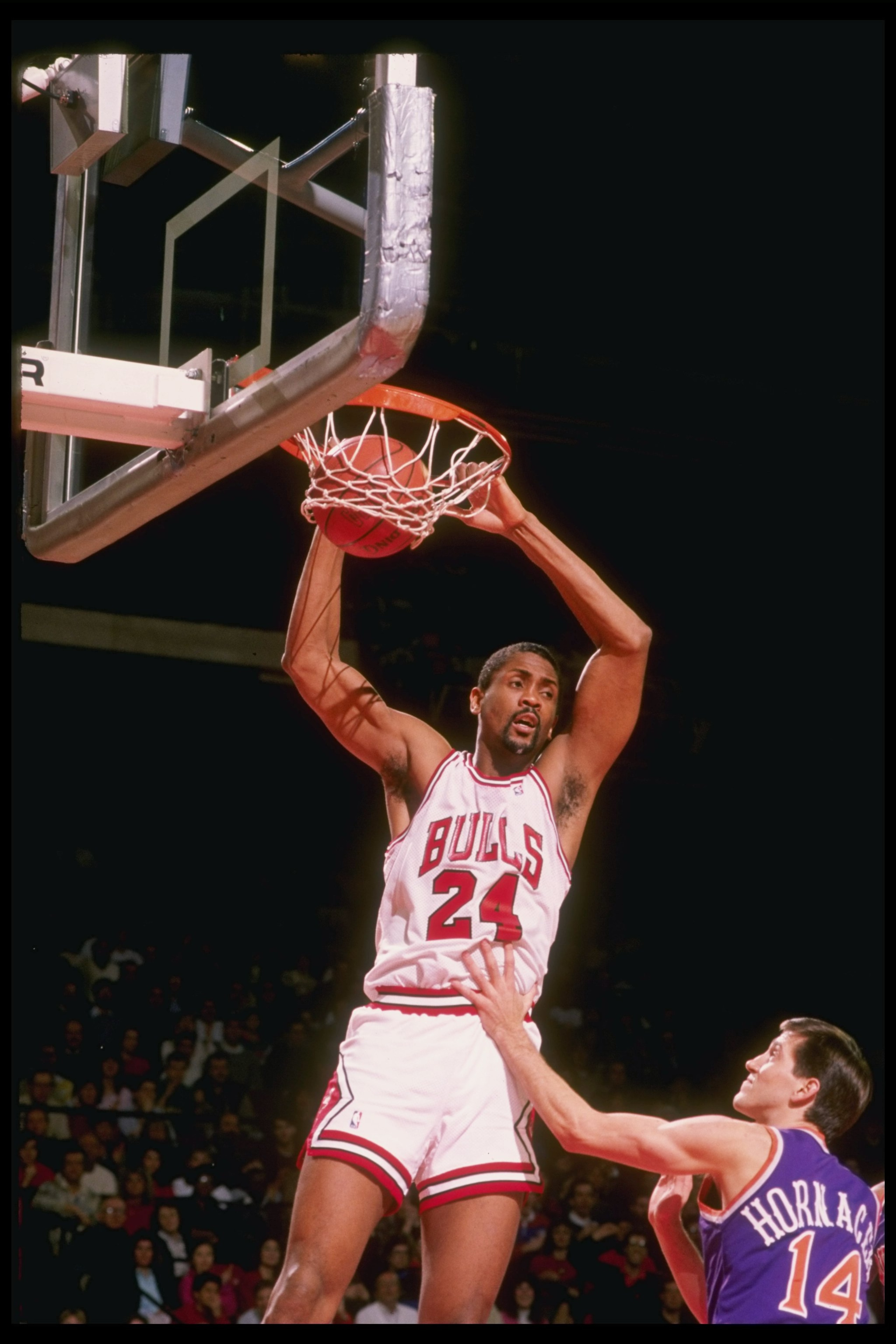
Of course, Cartwright is who the Bulls got for giving up Oakley. And many people believe the 7'1" center was the final piece the Bulls needed to finally get over the hump and win the NBA Finals.
His career numbers of 13.2 points and 6.3 rebounds per game are slightly misleading, as he was very much on the tail end of his career in Chicago, and never reached those averages.
Still, he scored in double figures for his first few seasons with the Bulls, and naturally when playing with Jordan and Pippen, scoring is not going to be a priority.
Cartwright fit perfectly into the triangle offense as a center, just as Luc Longley did a few years later. Cartwright was the starter, but ultimately became a part of center-by-committee with Perdue and Scott Williams.
Bonus points to Cartwright for at least attempting to coach the Bulls during their miserable post-Jordan era.
19. Steve Kerr
7 of 25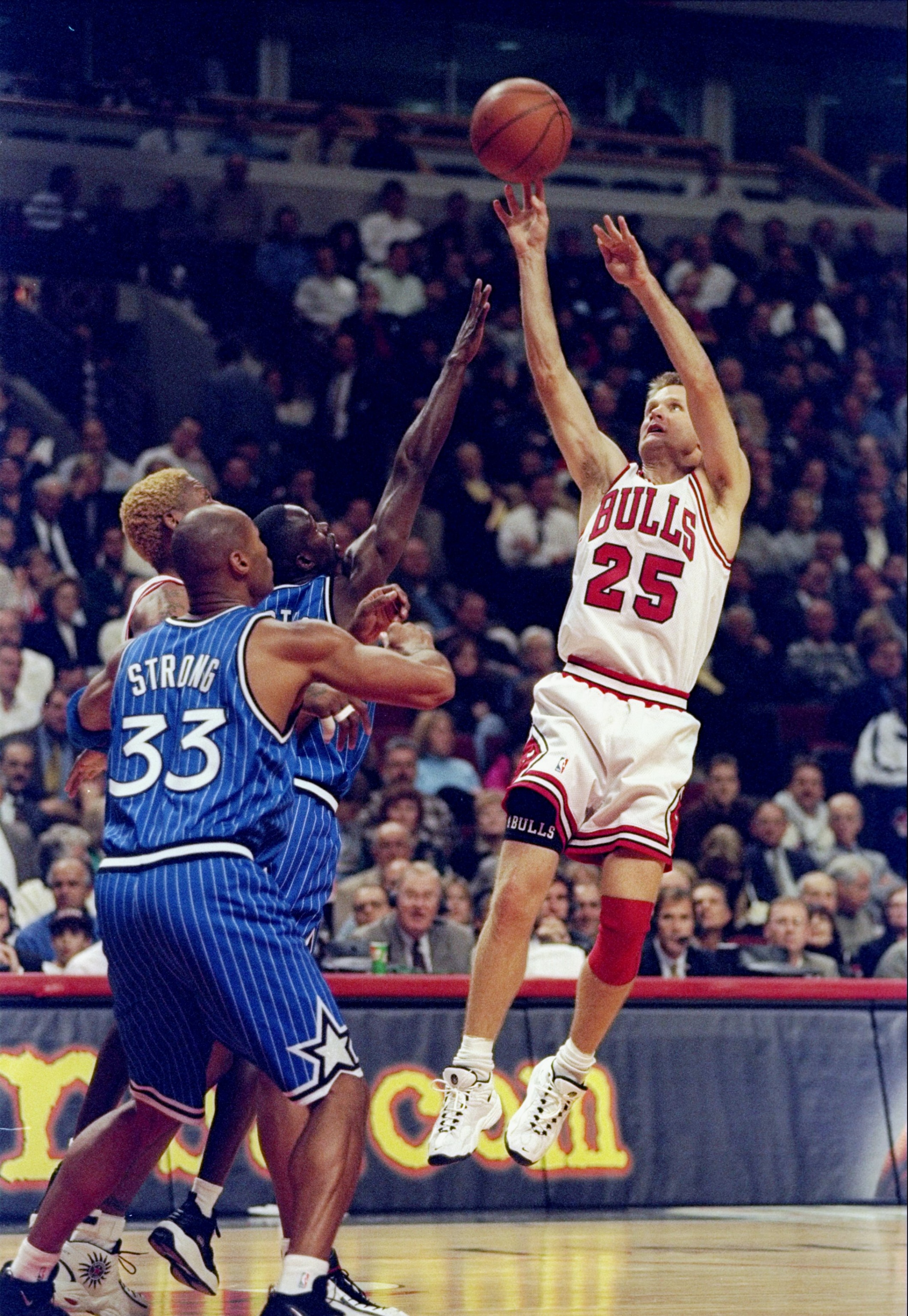
Thoughout the Chicago Bulls dynasty, Jordan and Pippen were always surrounded by talented shooters.
Steve Kerr was the best shooter of them all.
For his career, he is the most accurate three-point shooter in the history of the NBA, with a 45.4 percent three-point percentage. While a member of the Bulls, he shot better than 50 percent from deep twice, in 1994-1995 and 1995-1996.
In the 1995-1996 and 1996-1997 seasons, Kerr averaged about 1.5 treys per game during the regular season while attempting fewer than three shots from distance. Though he did not start, his sharpshooting off the bench came in handy when opponents would clog the lane in an effort to stop Jordan and Pippen from slashing to the rim.
According to Basketball Reference, Kerr has the best "Offensive Rating" in the history of the NBA, which is an estimate of points produced per 100 possessions.
Not bad for a role player who never averaged 10 points per game over a season.
18. Derrick Rose
8 of 25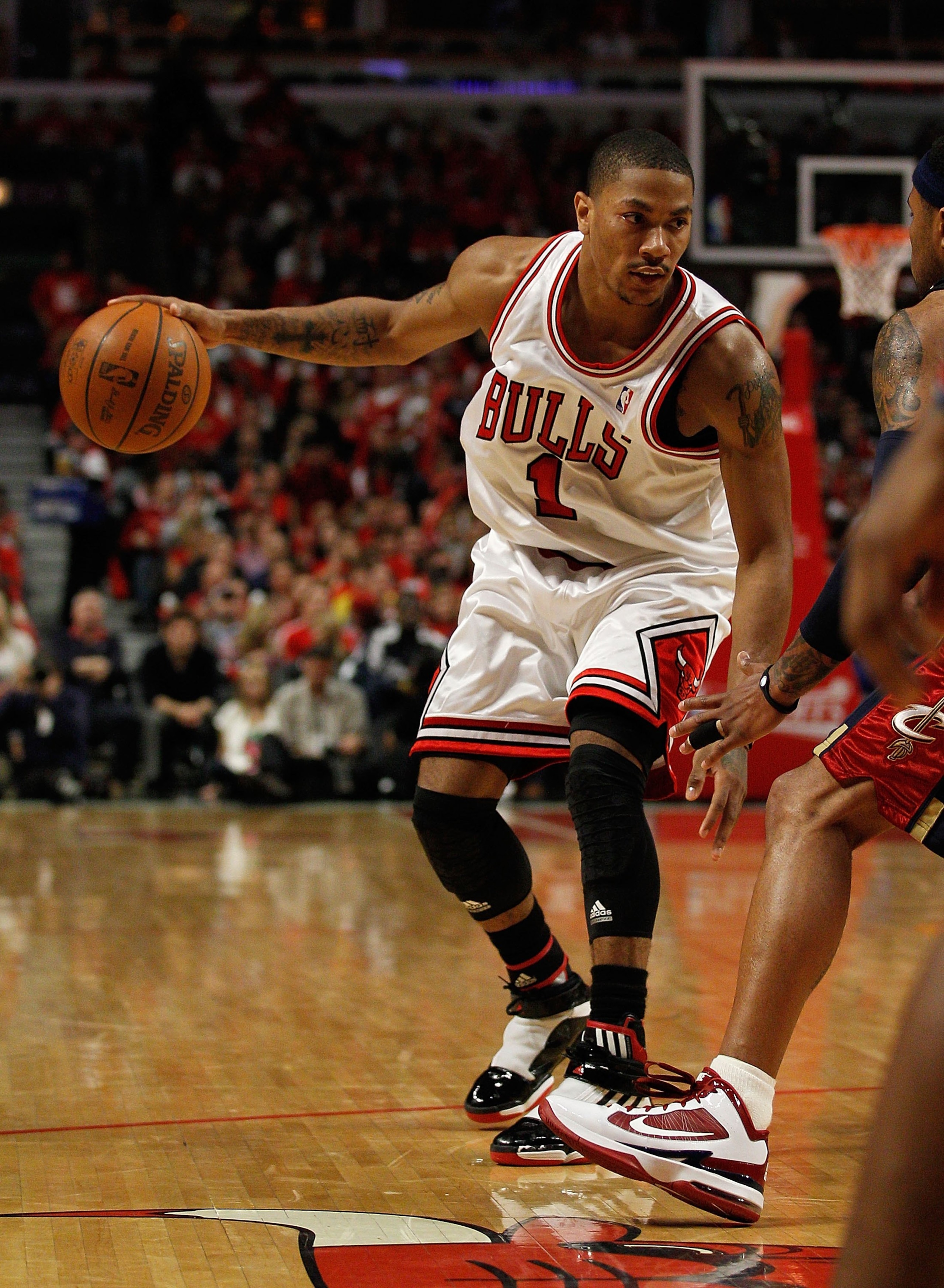
Too soon for Derrick Rose to grace this list? Too much to put him above Cartwright and Kerr, who have won multiple championships?
I don't think so.
Ever since coming out of Memphis as the No. 1 draft pick in 2008, Rose has been nothing short of spectacular, all while having to be the best player on the court for Chicago. He willed the Bulls to several wins, most notably in the 2009 playoffs against the Boston Celtics.
In terms of accomplishments, he won Rookie of the Year, and also made the Eastern Conference All-Star Team in just his second season in the pros. This summer, he helped Team USA win gold at the FIBA Championships for the first time since 1994.
Not too shabby of a resume for a player entering his third year in the NBA.
Now that he has some quality players to take the pressure off him, who knows how fast Rose will move up this list? If he is as committed to Chicago as he says he is, and the Bulls are as committed to keeping him as they say they are, he could be No. 3 or better when all is said and done.
In his first two seasons, Rose is averaging 18.7 points, 3.8 rebounds and 6.2 assists.
17. Kirk Hinrich
9 of 25
Captain Kirk never made an All-Star Team. He never led the Bulls past the second round of the playoffs. He even fell back into a sixth man role once Chicago drafted hometown hero Derrick Rose.
Yet Kirk Hinrich embodied what it meant to be a Bulls player in the past few years.
Hinrich quickly became a fan favorite for his tough defense and his ability to lead the Bulls from the guard position. He made the All-Rookie First Team in 2003-2004 and beat LeBron James to a triple-double in the pros.
Hinrich's stout defense was only recognized once from an All-NBA perspective, when he earned a spot on the All-NBA Defensive Second Team in 2006-2007.
With Ben Gordon and Chris Duhon as his partners in the backcourt, he took the responsibility of guarding players like Kobe Bryant, Dwyane Wade and other bigger guards who held a major size advantage. But Captain Kirk never backed down.
Throughout his tenure in Chicago, Hinrich averaged 13.4 points, 5.8 assists 3.4 rebounds and 1.3 steals per game.
But his true impact can't be seen in the box score. How do you measure standing up to Rajon Rondo in one of the most heated playoff series in NBA history? How do you measure being an emotional leader?
You can't. But anyone who watched the Bulls in the past decade know Hinrich belongs on a list of the greatest Bulls ever.
16. Reggie Theus
10 of 25
Reggie Theus, like so many of the players on this list, started his career in Chicago and played in the Windy City for six seasons before moving on to the Kansas City Kings (yes, way back when that was a team).
As a rookie, the long 6'7" guard proved he belonged by putting up 16.3 points, 2.8 rebounds and 5.2 assists per contest.
And that was just about his worst season as a Bulls player.
Theus, along with Woolridge, comprised the core of the Bulls in the early 80s. Theus averaged 23.8 points, 3.7 rebounds and 5.9 assists in 1982-1983, but never had a better season in Chicago.
Of course, he ultimately became expendable when another tall, athletic shooting guard from North Carolina was drafted in 1984.
15. B.J. Armstrong
11 of 25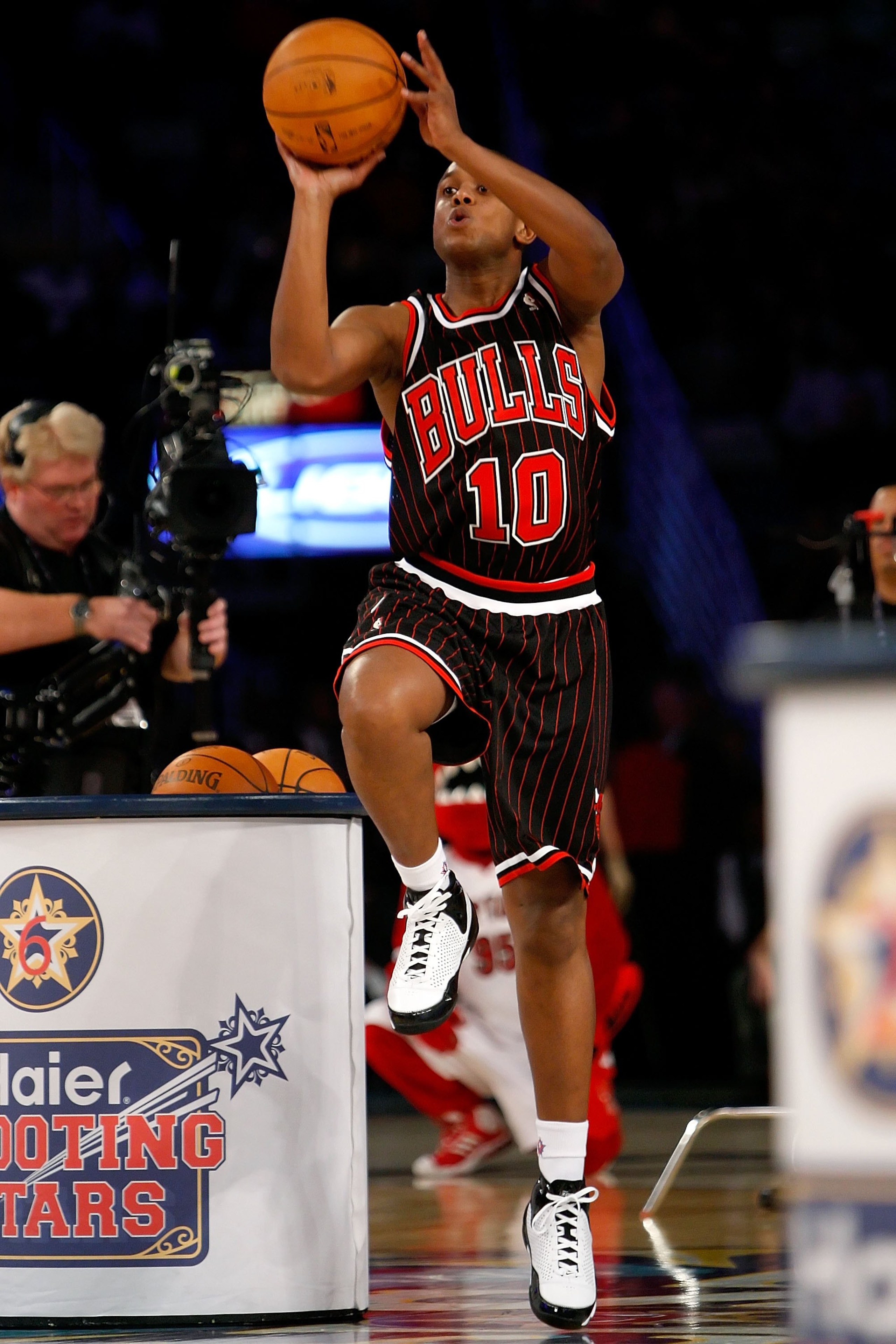
B.J. Armstrong: Another Bulls sharpshooter who racked up three championships by excelling from beyond the arc.
Yet Armstrong was more than that. As mentioned in a previous slide, making an All-Star Game is somewhat rare in Bulls history.
Somehow, Armstrong made the All-Star squad in 1994, behind 14.8 points, 2.1 rebounds and 3.9 assists. It's one of the cases where the Bulls were such a good team, they needed another representative in the game (e.g. Mo Williams).
Armstrong actually earned his starting role on the Bulls over John Paxson during the 1992-1993 season, whereas prior to that he was a valuable reserve. In that season, Armstrong averaged more than 12 points per game while dishing out four assists.
Armstrong left the Bulls when the newly formed Toronto Raptors selected him in the expansion draft. He was then immediately traded to the Golden State Warriors. He resigned with the Bulls at the end of his career so he could retire a Bull.
14. John Paxson
12 of 25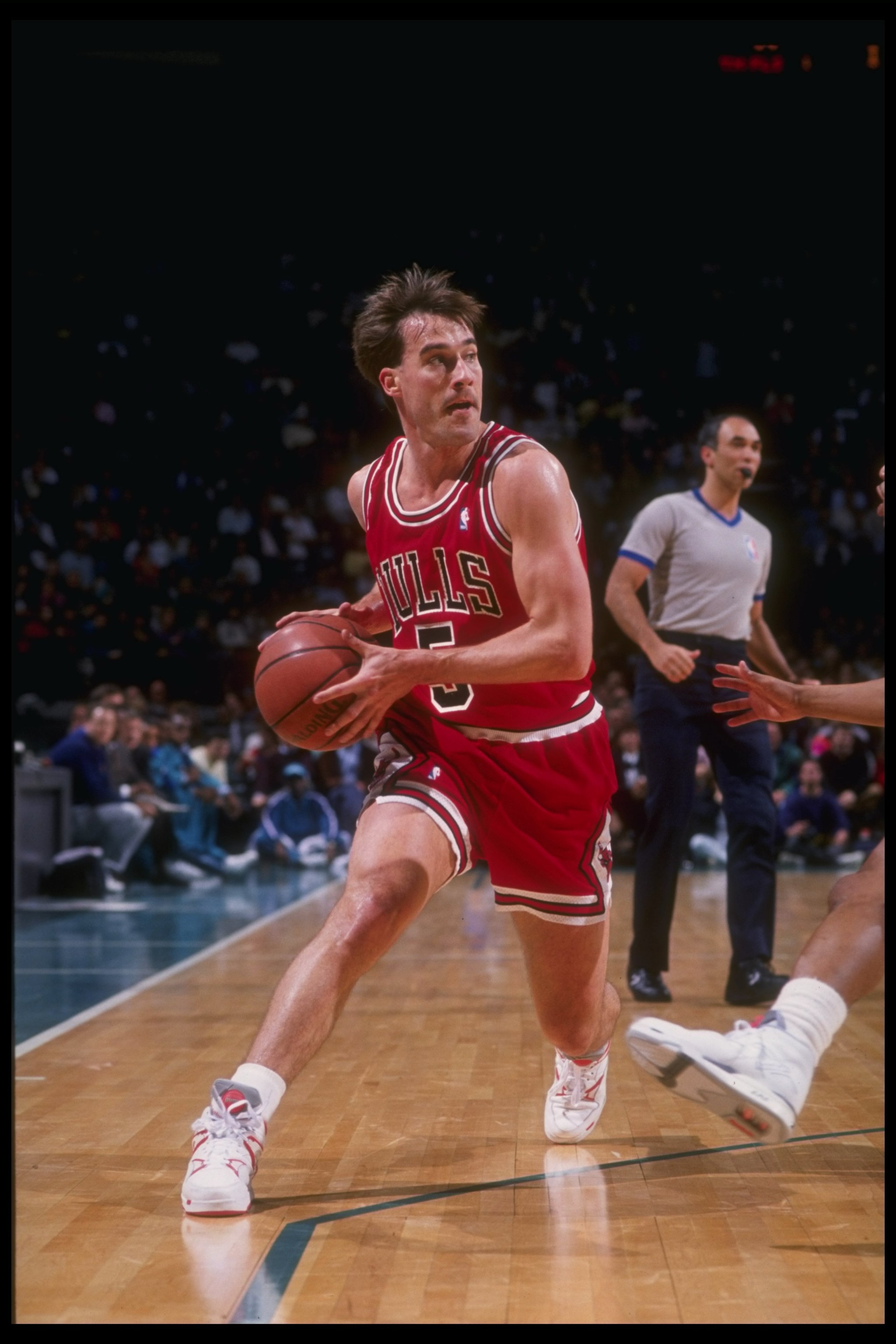
Good old John MacBeth Paxson. He's so prominent with the Bulls now as a front-office executive, but he was also a great player in his own right.
Like several players on this list, Paxson's statistics are not going to wow anyone. He averaged 7.2 points and 3.6 assists over his career.
However, the longtime Chicago Bulls guard provided the team with leadership and poise, especially in the clutch.
When you hit a shot as monumental as the shot he made in Game Six of the 1993 NBA Finals, you're going to be remembered forever as a great player. Cover Jordan, cover Pippen and Paxson will burn you.
Though he ultimately conceded his minutes to Armstrong, Paxson's longevity with the team earns him the nod over B.J. He played on the Bulls for all but two years of his career, from 1985-1994.
13. Ron Harper
13 of 25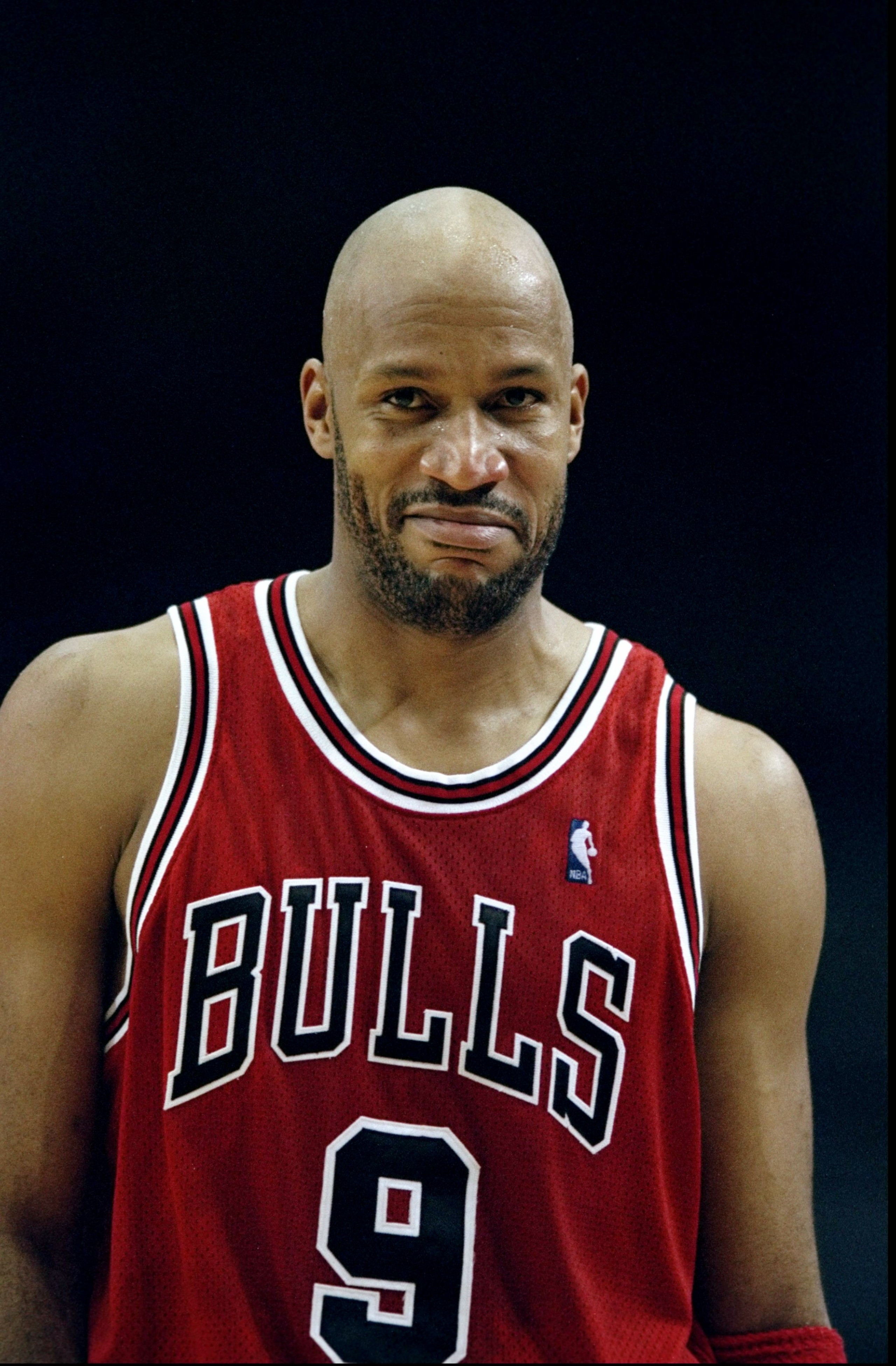
Here's the question so many teams struggled answering when facing the second three-peat Bulls team: How in the world do you stop an offense run by two big 6'6" guards?
Which begged another question: How do you get a shot off against such a huge and athletic backcourt?
Indeed, Ron Harper at point guard, Jordan at shooting guard and Pippen at small forward made life difficult for opposing coaches. And though Bulls fans remember Harper as a semi-afterthought in Phil Jackson's triangle offense, he was actually a tremendous player in his own right.
At the peak of his career with the Cavaliers and Clippers, Harper was averaging 23 points per game. Indeed, he was among the top shooting guards in the league.
Then as his career was winding down, upon turning 30 he joined the Bulls and started on all three championship teams from 1996-1998.
During the championship years, he never averaged double figures in points, nor did he ever average more than 24 minutes per game. In other words, Kerr often came in and played the other guard spot, or Jordan or Pippen took the ball up the court.
Overall though, those three championships put him above the likes of Rose.
For now.
12. Ben Gordon
14 of 25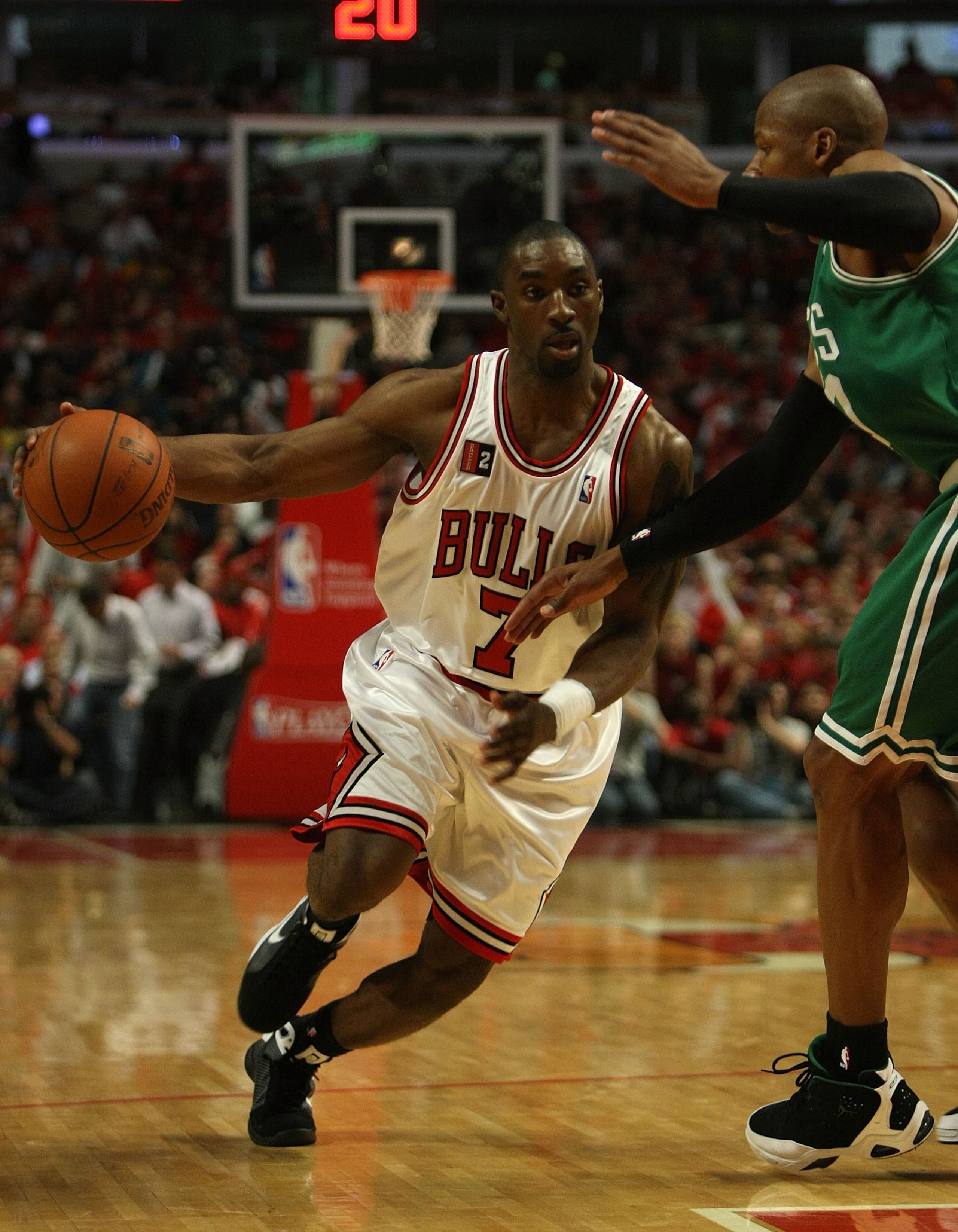
This one pains me. It really does.
I have never been a Ben Gordon supporter. I cheered the day he was signed by the Detroit Pistons.
However, there's no question that Gordon was the Bulls' best player and go-to scorer down the stretch for most of his career.
In his rookie campaign, Gordon not only notched a spot on the All-Rookie First Team, but also won Sixth Man of the Year honors. Rookies just don't do that.
He has always been a strange player; an extremely undersized shooting guard who is a streaky shooter. Yet when the game is on the line, he somehow could never miss.
That's an exaggeration of course. But not by much. Time after time, Chicago called Gordon's number in the fourth quarter, even though the opposition knew it was going to him.
And time after time, Gordon miraculously delivered.
I won't get into his defense (which was atrocious), but the truth is, without Gordon, the Bulls offense was stagnate. Even though he was a ball hog and at times turnover-prone, the Bulls needed him.
In his five seasons with the Bulls, he only missed 12 regular season games, and in the playoffs, all his numbers improved.
I'm not missing Ben Gordon at all, but I will acknowledge his place in Bulls history.
11. Tom Boerwinkle
15 of 25
Yes, a Bulls player was actually named Tom Boerwinkle.
And he was Rodman's predecessor as a prolific rebounder.
He averaged at least 11 rebounds in his first four seasons with the Bulls, incuding 13.8 per game in his third year with the organization. Boerwinkle was a member of the Bulls for all 10 of his NBA seasons.
Boerwinkle had five triple doubles in his career, as he was considered a great passer for a center.
But rebounding was his thing. So much so that he pulled down 37 boards in one game against the Phoenix Suns in 1970.
Not bad for a man who has the least-likely basketball name on the planet. He may have been underappreciated while playing, but Bulls fans will look back and remember him as one of Chicago's top big men.
10. Dennis Rodman
16 of 25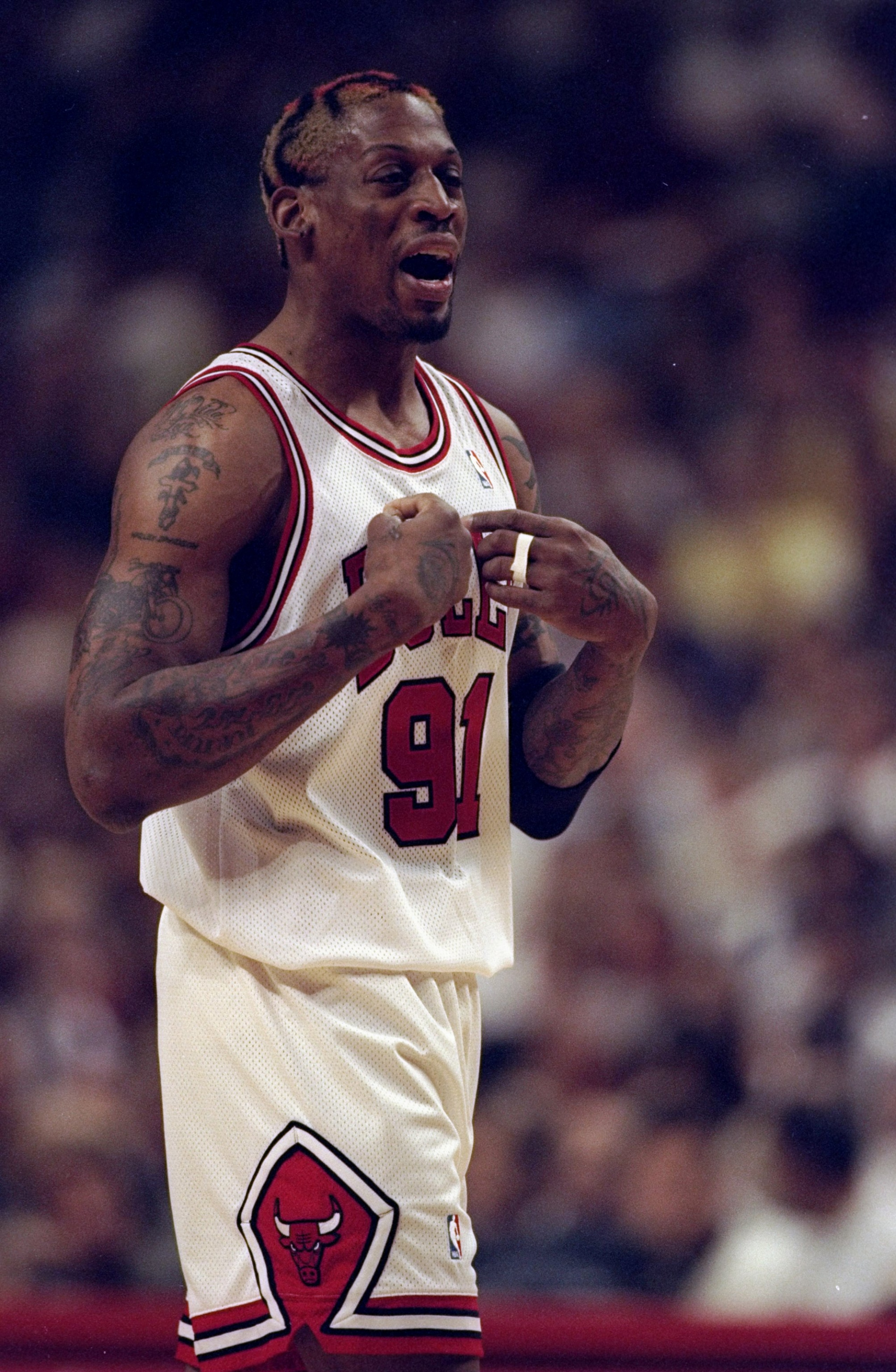
Before you start saying Dennis Rodman is not rated high enough, remember that he played for the Bulls for just three seasons.
Granted they won three championships during that time span, but they also had a rejuvenated Jordan leading the squad.
Was he an integral component to those titles? Definitely. He averaged better than five points and a whopping 15 rebounds per game from 1995-1998.
Still, Rodman can't be considered a star. People like to think of Jordan, Pippen and Rodman, but as far as talent and importance to the team, Rodman was far behind.
Just as it was Kerr's job to make three-pointers, it was Rodman's job to rebound. That was his role. He was a role player.
Of course, he was a very volatile role player, and that's why he got so much attention. Fortunately, the combination of Zen master Jackson, Jordan and Pippen could control him.
He also loses credit for being a part of the Pistons' "Bad Boys" who prevented Jordan and the Bulls from winning more championships in the late 1980s.
9. Toni Kukoc
17 of 25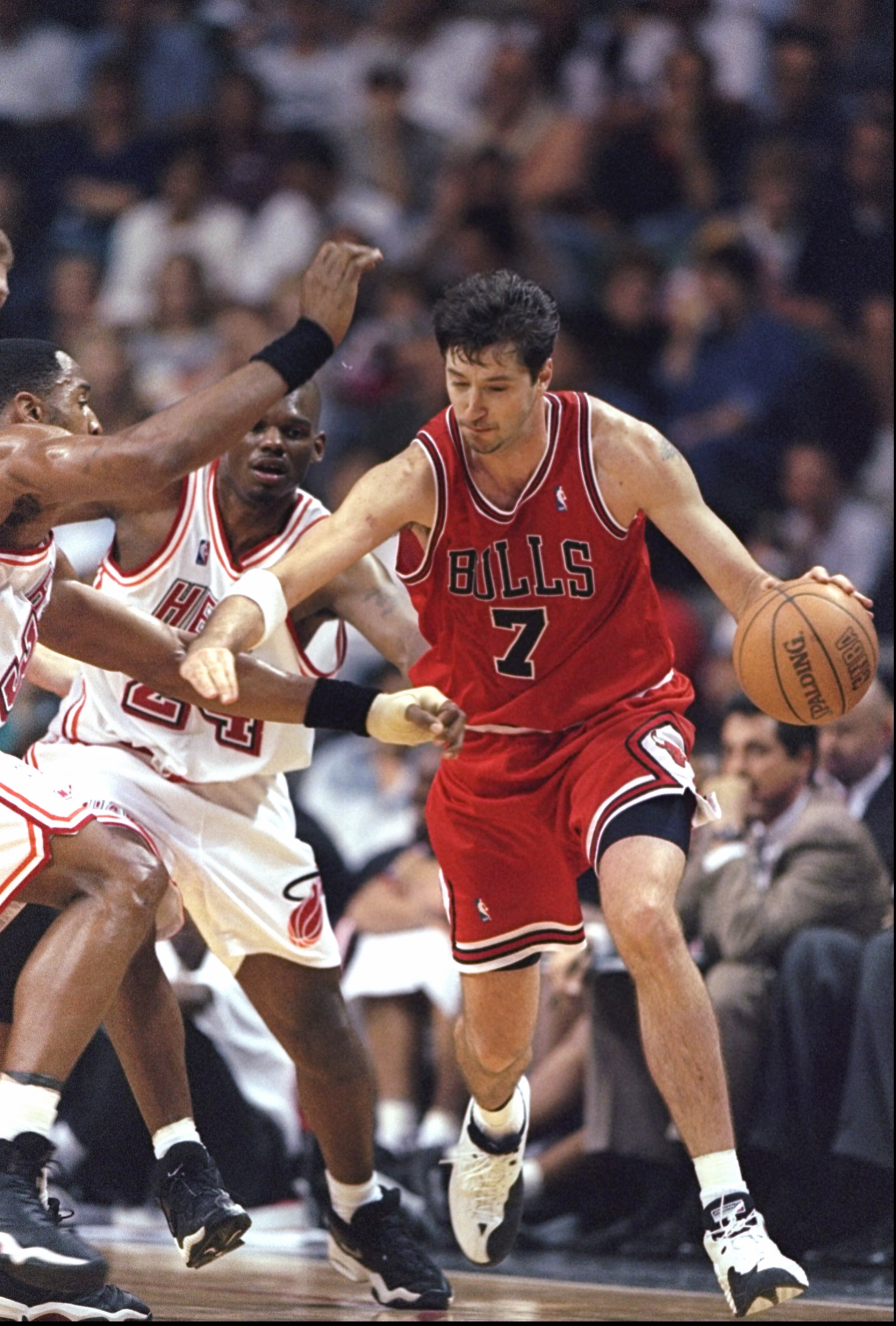
Believe it or not, the Bulls were actually on the forefront of the European player movement that caught on like crazy in the early 2000s (Darko over Carmelo, anyone?).
Indeed, Toni Kukoc turned out to be quite the sleeper for the Bulls. Drafted in 1990 and joining the team in 1993, he was arguably the third or fourth best player on the teams without Jordan. Even when Jordan returned, he was a valuable asset, nabbing Sixth Man of the Year honors during the Bulls' 72-10 season.
Kukoc always averaged more than 10 points during his seven years with the Bulls, despite coming off the bench for a significant portion of his tenure.
As a 6'10" forward who could shoot, he gave opposing coaches nightmares. There was no Dirk Nowitzki to compare him to.
He emerged as the best player on the Bulls after the team got dismantled following the 1998 season. It's a small consolation considering how abysmal that team was.
Another reason to like Kukoc: He taught myself and other youngsters about a place called Split, Croatia.
8. Horace Grant
18 of 25
Gotta show some love for the goggles.
Horace Grant was the Rodman equivalent in the first three-peat, or so people think.
But he provided more to the Bulls than The Worm. In addition to rebounding in bunches, he was also a legitimate third option on offense.
On defense, his big body cancelled out players like Charles Oakley and Charles Barkley. He was a traditional, hard-nosed power forward, and was certainly crucial to the Bulls' first three championship seasons.
Like B.J. Armstrong, Jordan's early retirement opened the way for Grant to make his first and only All-Star Game appearance in 1994. He scored four points, grabbed eight rebounds and blocked two shots.
In terms of NBA history, he is actually ranked moderately high in several statistical categories. He is 45th all-time in total rebounds, 90th in total steals, 57th in blocks and 72nd in field goal percentage. Of course, it also helped that he ranks 36th in total games played and 31st in minutes played.
7. Artis Gilmore
19 of 25
Artis Gilmore just looks like he belongs in the ABA. And for several seasons he did, until that league dispersed and he joined the Chicago Bulls.
Though he spent only six seasons in the Windy City and never won a championship, he did earn himself several individual accolades from 1976-1982. He made the All-Star Team four times during his tenure with the Bulls and also nabbed All-NBA Defensive Team honors.
Gilmore was a 20-10 threat every night under the basket, and during his top two statistical seasons he averaged even better than that mark. During the 1977-1978 season he averaged 22.9 points and 13.1 rebounds, and in 1978-1979 he upped his scoring to 23.7 points while pulling down 12.7 boards per contest.
If you combine his time in the NBA and ABA, Gilmore is eighth all-time in minutes played, 19th in field goals, 16th in free throws and 20th in points scored.
He still holds the NBA record for career field goal percentage at 59.9 percent, as well as NBA/ABA record of 58.2 percent.
Combining the NBA and ABA again, the 7'2" center ranks first all-time in defensive rebounds, second all-time in offensive rebounds, and fifth all-time in total rebounds.
So yes, Gilmore was quite the talented player.
.
6. Chet Walker
20 of 25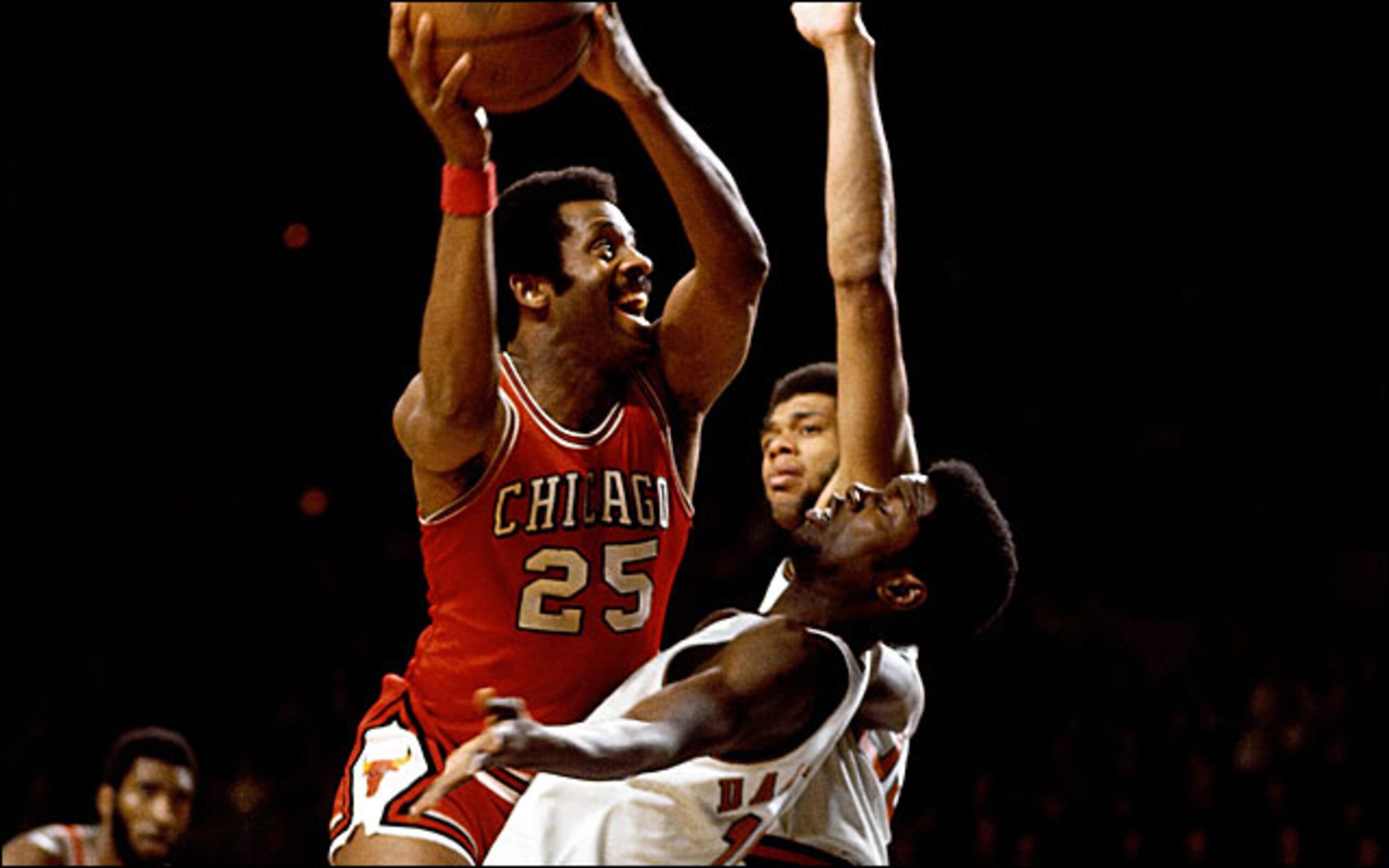
Chet Walker just preceded Gilmore, and had equally as compelling basketball talent during his six years with the Bulls.
Playing in Chicago from 1969-1975 (when he stopped playing in the NBA), the 6'6" guard/forward always averaged more than 19 points per game while also effectively rebounding and passing on the wing.
He earned four All-Star selections while playing for the Bulls, which added to his three earned before donning the red and white. He even earned some MVP votes during his final season with the Bulls.
Unlike some of today's players, Walker scored effectively, boasting field goal percentages in the upper 40s and free throw percentages in the upper 80s. Combined with players like the aforementioned Boerwinkle and stars like Norm Van Lier, Jerry Sloan and Bob Love (hint: they are the next three players on this list), the Bulls of the 1970s was by far the best team aside from the dynasty in the 1990s.
Needless to say, those Bulls teams never won a championship, but it was certainly not because of a lack of effort from Chet the Jet.
5. Norm Van Lier
21 of 25
Recent Bulls fans will remember Norm Van Lier as a studio analyst for Comcast SportsNet who recently passed away. After watching him play with passion on the Bulls in the 1970s, however, it would be difficult to imagine Stormin' Norman in anything but a basketball uniform.
His scoring was somewhat impressive. He averaged in double figures every season except his last one with Chicago.
His rebounding was a nice bonus for a 6'1" guard. He typically averaged around four to six rebounds per contest.
His passing was what was expected. At his best he dished out 7.8 assists per game, but usually the number was more toward an even seven.
Where Van Lier really excelled and made his name was defense.
Each of his seven seasons with Chicago ended with All-Defensive Team honors. Four times he was named to the second team, and three times he made the first team.
From 1973-1976, he constantly ranked in the NBA's top 10 for steals per game. All three of his All-Star appearances came as a member of Chicago, and a large part of those selections was his defensive prowess.
His grit earned him the respect and admiration of fans, teammates and opponents alike. He will be sorely missed among the Chicago Bulls community.
4. Jerry Sloan
22 of 25
Now we're getting into the retired numbers. Starting with Jerry Sloan and his number four.
Sloan earns a bonus for playing on the Bulls for 10 years, or every season but his rookie campaign. It also helps that offensively, he always averaged double-figure points per game while oftentimes nearly doing the same in rebounds. He averaged as many as 9.1 rebounds per game as a guard, and averaged 6.9 boards or better in nine of 10 seasons.
And then, of course, there was his defense.
Sloan is about as decorated as Van Lier in defensive accolades, having made the NBA All-Defensive First Team four times and the NBA All-Defensive Second Team twice. He also earned spots in the 1967 and 1969 All-Star Games.
From 1973-1975, he ranked in the NBA's top 10 for steals and steals per game. Obviously since Van Lier did the same during that time period, they were a nightmare for opposing backcourts.
Despite all the success in a Bulls uniform, Sloan is going to be remembered more for his long-time role as head coach of the Utah Jazz. Still, his number has been retired by the Bulls organization for a reason. He will always be one of the greatest defenders Chicago has ever seen,
3. Bob Love
23 of 25
With Bob Love coming in at No. 3 on this list, I'm sure you can guess who the top two are.
Love rounds out the string of four players from the Bulls in the 1970s. He's highest on this list because he was a great scorer, a solid contributor on the boards, and an all-around great player on both sides of the ball.
In his nine seasons on the Bulls from 1968-1977, Love played in three All-Star Games (1971-1973), made the NBA All-Defensive Second Team three times, and made the All-NBA Second Team twice.
At his best, Love averaged 25.2 points, 8.5 rebounds and 2.3 assists per game. He spent the prime of his career in Chicago and never had anywhere near as much of an impact elsewhere.
Thus he will always be remembered as a great Chicago Bulls forward, and for good reason.
2. Scottie Pippen
24 of 25
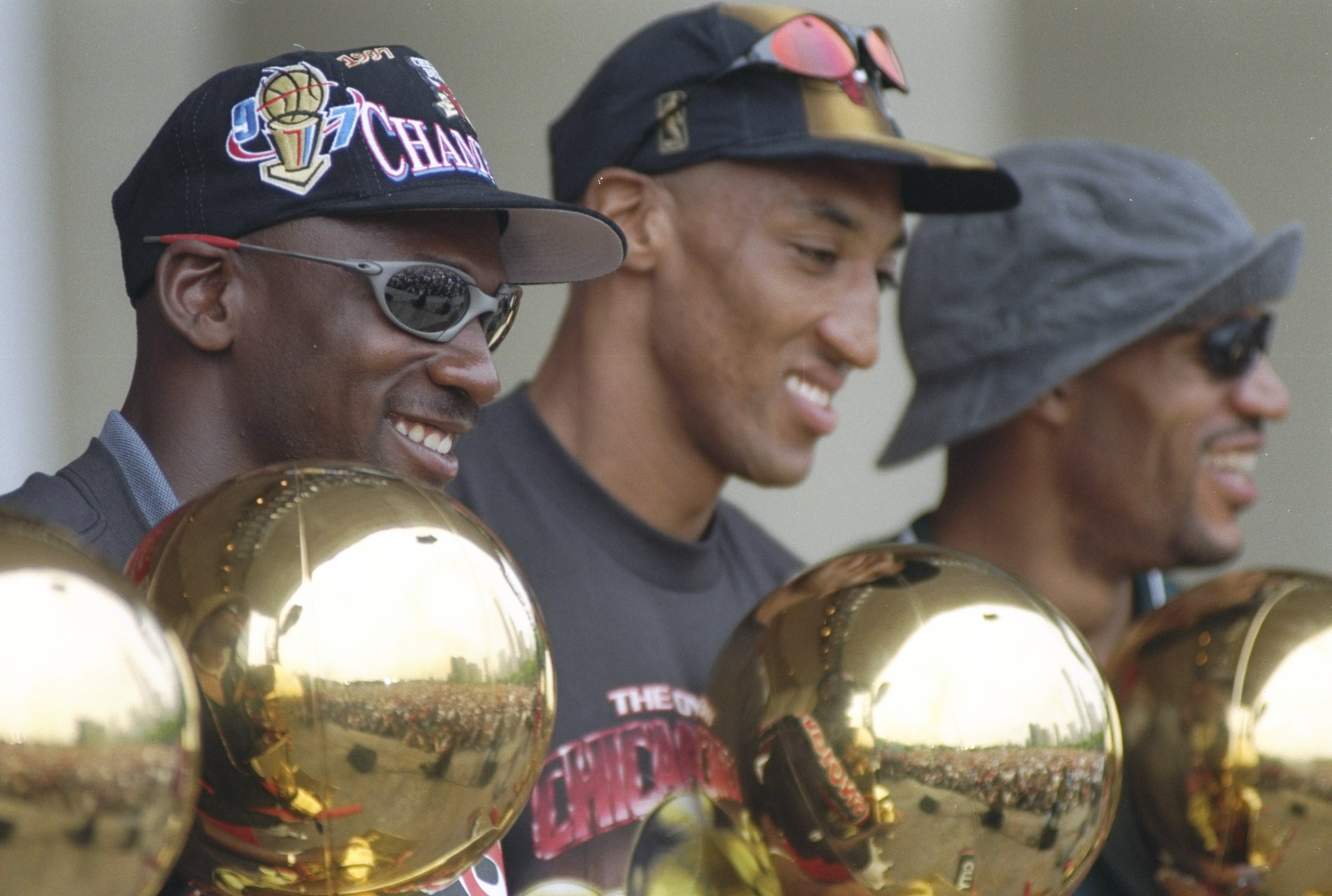
The image tells the entire story of Scottie Pippen. Jordan got all the glory, but he could never have been as great without Pippen by his side.
Since he just got inducted into the Hall of Fame this past summer, an in-depth look back at Pippen's career is unnecessary.
He averaged close to 20 points per game during the Bulls' championship years to complement Jordan's 30 or more points per contest. He also rebounded with the best of them and was a fantastic passer. His career statistics of 16.1 points, 6.4 rebounds, 5.2 assists and 2.0 steals per game only tell part of the story, as those numbers are deflated from his time away from Chicago.
He played 11 seasons in Chicago, and for two of those seasons he was the clear superstar on the team since Jordan had retired for the first time.
While playing for Chicago, Pippen made seven All-Star Teams and won the All-Star Game MVP award in 1993-1994.
Now here's where the accolades start piling up.
Pippen made the All-NBA First Team three times. He made the All-NBA Second Team twice. He made the All-NBA Third Team twice.
While on the Bulls he made seven NBA All-Defensive First Teams and one NBA All-Defensive Second Team. Defense is where he made a name for himself, and when he finally left the NBA, he ranked sixth all-time in steals and 86th in blocks.
Because he was so good for so long, he ranks among the NBA's best in numerous statistical categories.
But one thing about Pippen says it all: six championships. And he did it all while remaining humble and accepting of his role.
Which, of course, was playing second fiddle to the top guy on this list.
1. Michael Jordan
25 of 25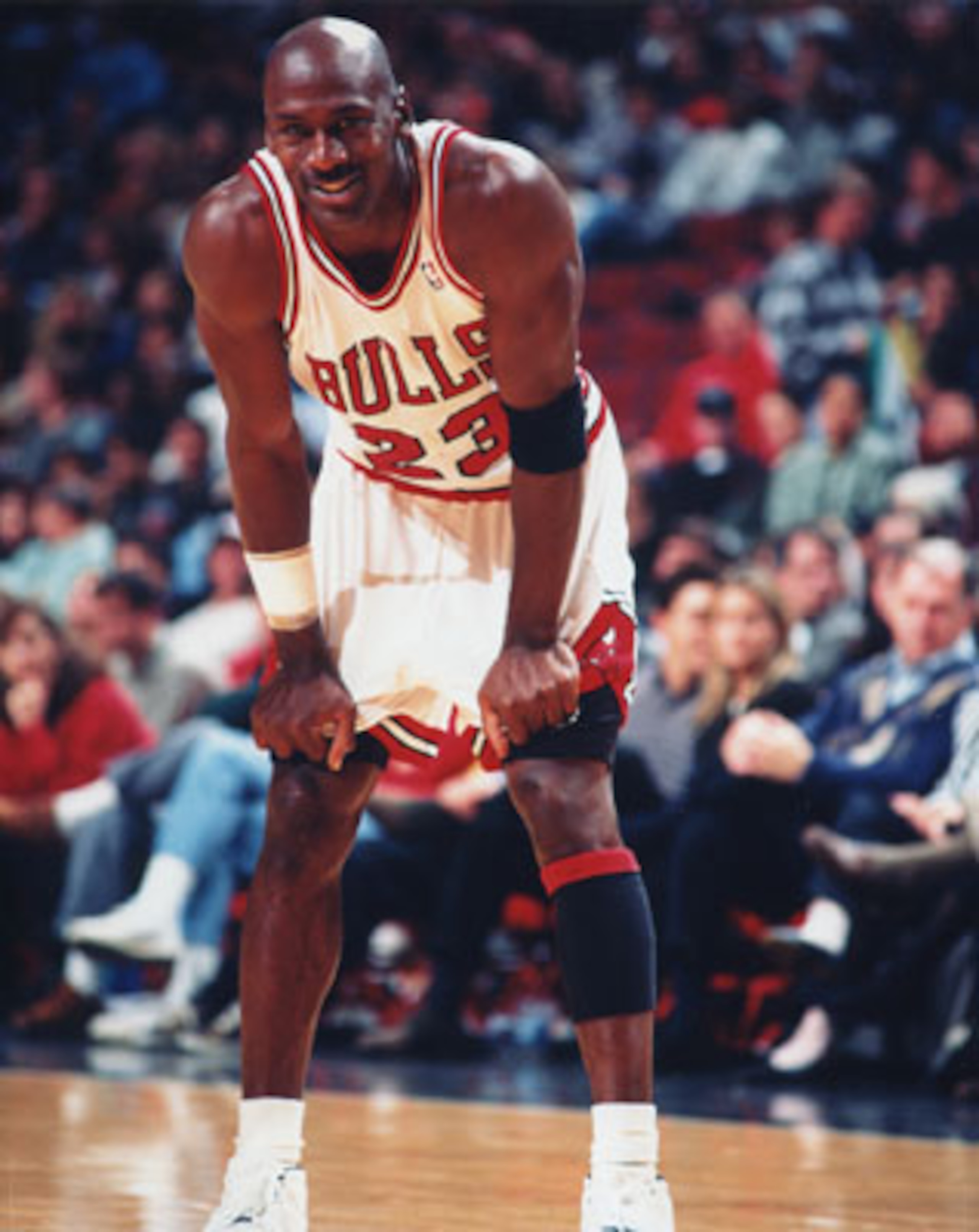
Michael Jordan is the best player in Bulls history. He is the best player in NBA history. There will never be another player like him, because his will to win can simply never be matched.
Jordan made the Hall of Fame in 2009 and showed a bit of his drive, his insatiable need to be the best and prove doubters wrong, and got criticized for it.
Well, if it hadn't been for that mentality, he would never have been standing at that podium as arguably the most decorated player in NBA history.
To give you some idea of the sheer magnitude of his accomplishments, here is the list:
- 6× NBA Champion (1991, 1992, 1993, 1996, 1997, 1998)
- 5× NBA Most Valuable Player (1988, 1991-1992, 1996,1998)
- 14× NBA All-Star (1985–1993, 1996–1998, 2002–2003)
- 6× NBA Finals MVP (1991–1993, 1996–1998)
- NBA Defensive Player of the Year (1988)
- 10× All-NBA First Team (1987–1993, 1996–1998)
- All-NBA Second Team (1985)
- 9× NBA All-Defensive First Team (1988–1993,1996–1998)
- NBA Rookie of the Year (1985)
- NBA All-Rookie First Team (1985)
- 3× NBA All-Star Game MVP (1988, 1996, 1998)
- 2× NBA Slam Dunk Contest winner (1987–1988)
- 2× Gold Medal Winner in the Olympics (1984, 1992)
- NBA's 50th Anniversary All-Time Team
Defensively, he ranked among the best in the NBA, leading the league in steals for three years. Offensively, he scored with the best of them, racking up 10 scoring titles in his career with the Bulls.
Here are some of his career rankings in various statistical categories:
- Third all-time in points (32,292)
- First all-time in points per game (30.1)
- 22nd all-time in minutes played
- Fourth all-time in field goals
- Third all-time in field goal attempts
- Fourth all-time in free throws
- Second all-time in steals
- Third all-time in steals per game
It's really mind-boggling just how great MJ really was. While Bulls fans probably wish he would have started and ended his career as a Chicago Bull instead of playing with the Washington Wizards, he will always be remembered in a Chicago uniform.

.jpg?w=2560 "B/R's Expert Week 7 NFL Picks 🔮")
.jpg?w=2560 "Puka Dealing with Calf Injury")