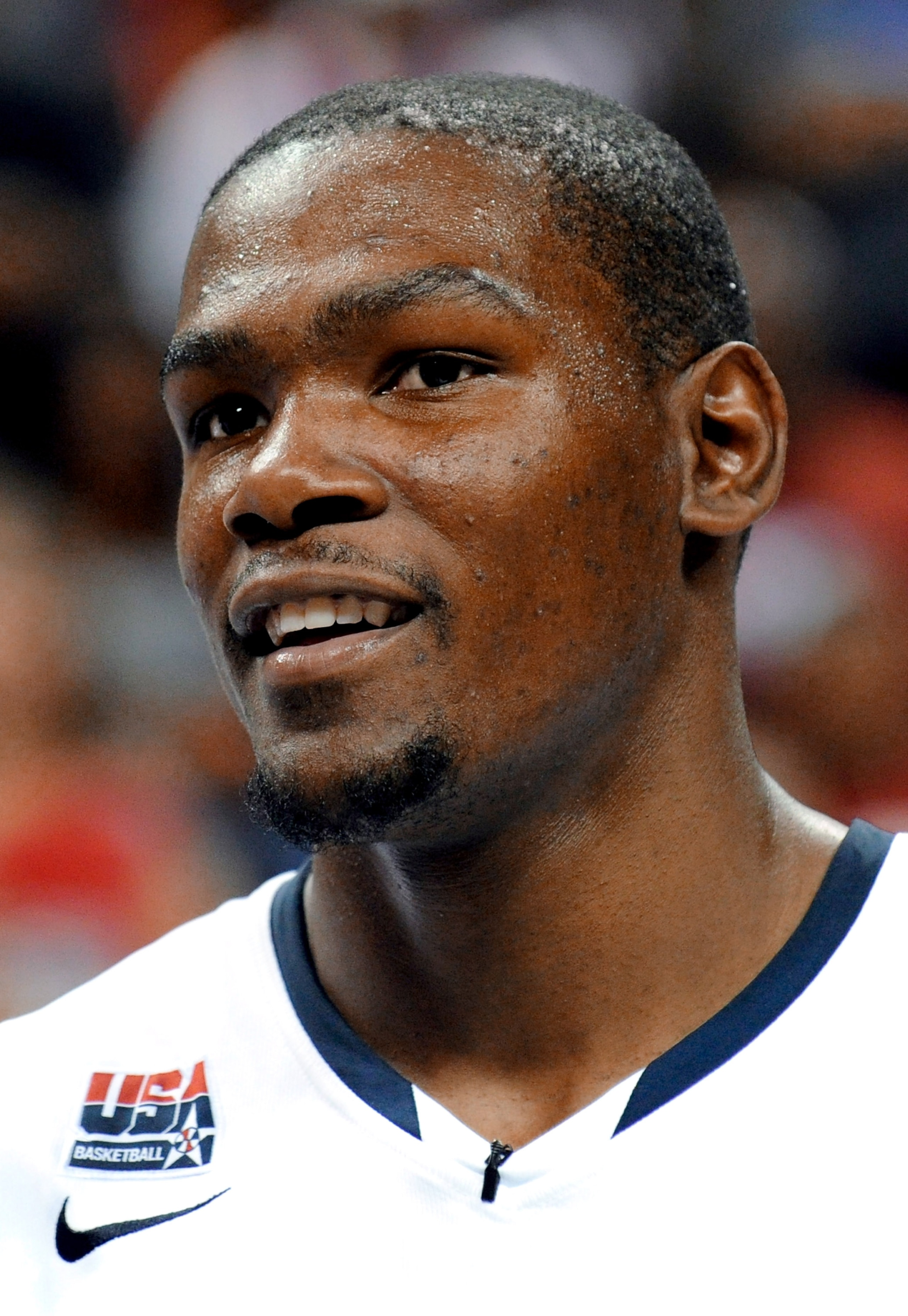

Why Kevin Durant and Team USA Have Been Successful in the 2010 FIBA Championship
There were a lot of doubts concerning Team USA going into the FIBA 2010 Tournaments. We've heard them hashed and rehashed so many times that we know them by heart:
Could the team be relevant and competitive in the absence of marquee names?
Would the unexpected injuries to David Lee, Kendrick Perkins, Amare Stoudemire, and Brook Lopez render Team USA undersized and ineffective?
Would they suffer a 40 minute mental lapse in a one-and-done game that would keep them out of the competition?
And most recently, would the apparent lack of focus on offense and defense impede their ability to beat more experienced and disciplined teams?
As we know, the superficially motley crew has met and exceeded all expectations to this point, the most recent of which being a hard-fought but decisive battle against the juggernaut Team Russia, which was large, athletic, and physical at every position.
Now, as they prepare for their elimination game against Lithuania on Saturday, September 10th, I think it is time to stop focusing on the negatives concerning this team: their caliber, size, experience, or focus; and open our eyes to how they have been able to remain undefeated.
Athleticism, Ball Pressure, and Guard Play
1 of 5
These were the primary strengths that Team USA wanted to take advantage of in the weeks of preparation prior to the tournament.
Premier ballhawks Rajon Rondo and Russell Westbrook were selected for their defensive tenacity, and they were joined by sharpshooters Chauncey Billups, Stephen Curry, and Eric Gordon. First-time All-star Derrick Rose rounded out the selection. When Rondo withdrew for personal reasons, it left five point guards/combo guards on the Team USA roster.
These players have largely come through in regards to what was expected of them.
Chauncey Billups has played passable defense and seen a lot of time at the point. Derrick Rose, although unable to find his shot so far, has been instrumental in a lot of the fastbreak opportunities that Team USA has been able to convert on. Stephen Curry has seen very limited minutes, and has had very little effect on the games he has played in. He has also found it the most difficult to adapt to his role on this team.
The real surprise, though, has been the second unit duo of Gordon and Westbrook. Gordon leads the team in 3-point percentage and 3-pointers made, knocking down nearly every open look he's afforded. He also shows no fear getting to the rim, and has been as instrumental in disrupting the opponents' offense as anyone. Anyone, that is, except for Russell Westbrook. The 21 year old guard from Oklahoma City has been making the coach look like a genius every chance he gets, playing passing lanes, teaming with Kevin Love for the the best pick-and-roll tandem that Team USA has, and attacking the rim fearlessly whenever he gets a chance.
Frontcourt and Interior Defense
2 of 5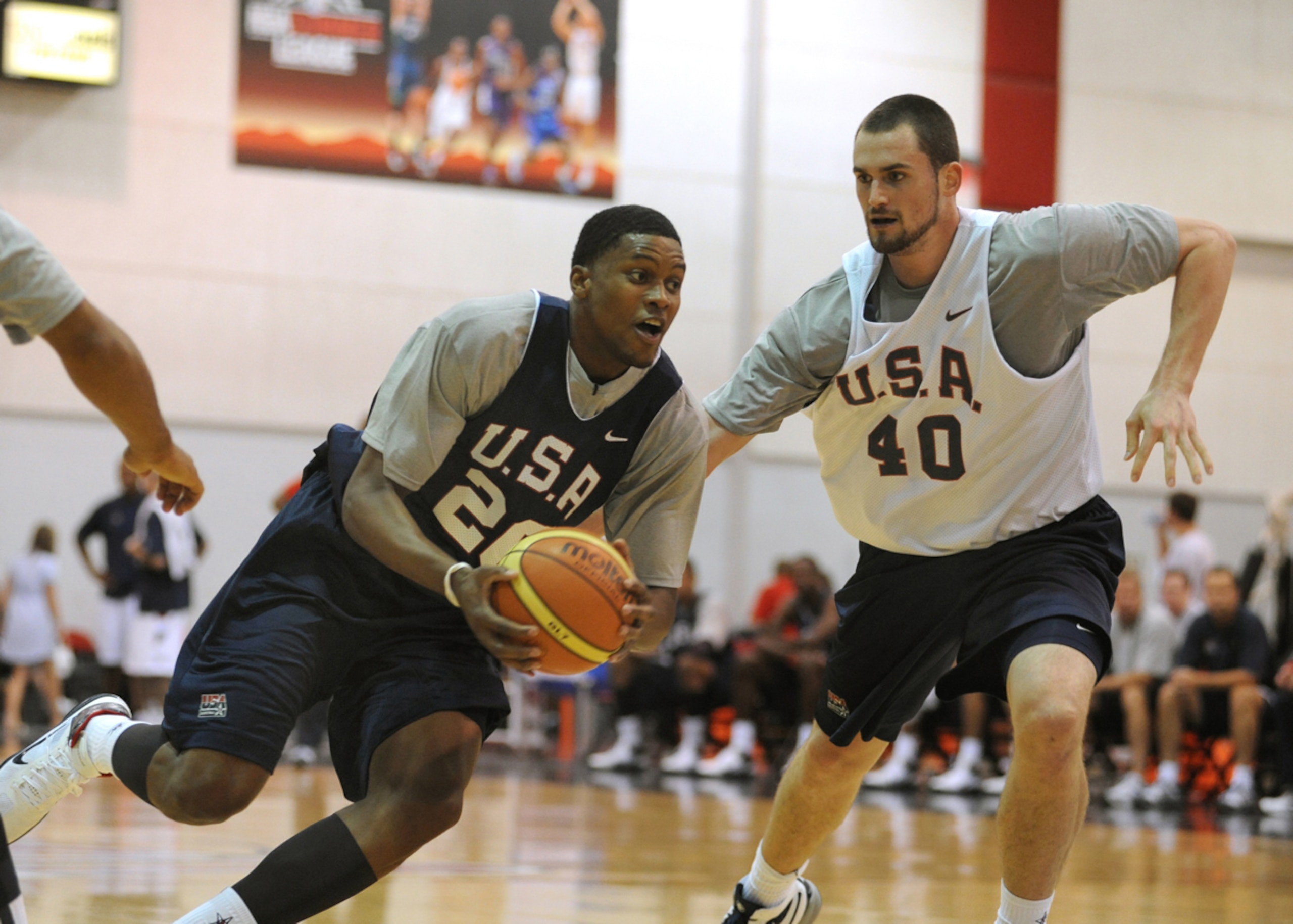
With the withdrawal of Dwight Howard and injuries to every other 7-foot Team USA prospect, Coach Krzyzewski was forced to enlist Tyson Chandler as the team's lone traditional center. As problematic as this seemed to be, his decision to give Lamar Odom, Rudy Gay, and Kevin Love minutes at the 5 has been mostly effective against the international competition.
In competitions against Spain, Brasil, and Iran, the international big men were able to exploit the mismatches throughout the game, as the smaller USA centers were unable to contain them. However, even in those games, and to a much greater extent the other games Team USA has played, interior defense has not been a problem. Most notably, late in the games against Spain, Brasil, and Lithuania, the other teams were unable to go to the low-post when they needed a basket.
Kevin Love, Tyson Chandler, and Lamar Odom are all sound low post defenders with big bodies and solid footwork. In most cases, the hard-nosed play of these three guys down low has worked to wind down the other team's shotclock, forcing ill-advised longrange attempts that result in USA fastbreaks.
Offensively, Rudy Gay has been outstanding. With his tremendous strength coupled with the mobility and range of a typical FIBA guard, Gay has been virtually unguardable in the tournament so far. He hits the offensive glass hard and has been effective shooting jumpshots as well.
Unselfishness
3 of 5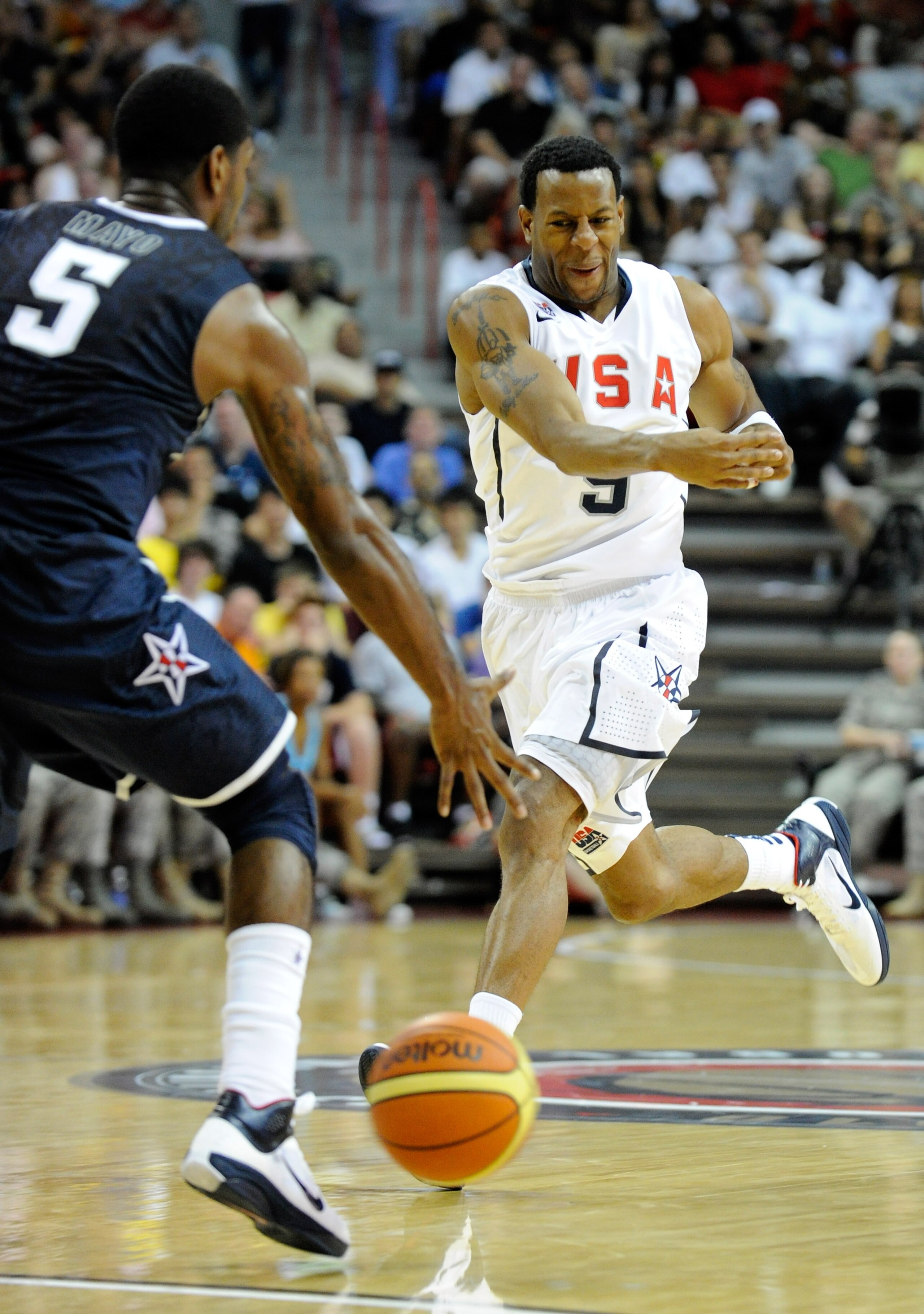
As is always the case when a group of talented players are thrown together with little preparation, the ability to find each other and share unselfishly was a major concern for some as Team USA entered the 2010 FIBA Championship.
Although much has been made of their offensive stagnation, I would point out that they have accumulated 133 assists on 244 made field goals. Keep in mind that FIBA statisticians are much less generous doling out assists than in the NBA. In addition, Team USA has been to the line 142 times in seven games, which is always a sign of effective offense.
Chauncey Billups and Stephen Curry lead the team in assists, but the commitment to sacrifice goes much deeper than that.
Consider the selflessness of Danny Granger, who has drawn two DNP-CD's and trails all players on the team in minutes played. This is a guy who, during the regular season, is largely considered as a franchise player and one of the more versatile performers in the NBA. His willingness to defer to players younger than him for the good of the team speaks volumes to his character.
Andre Iguodala is another Team USA player who has accepted a diminished role on this team. Taking less than four attempts a game, Iguodala leads the team in steals (along with Kevin Durant) at twelve and has thirteen offensive rebounds.
Every USA player has worked to accept their roles and play to each other's strengths.



Kevin Durant
4 of 5Much has already been made of Durant's play in this tournament-- perhaps too much, but to some extent, there's no denying the numbers.
He's made 20 points a game on 54% shooting, converting on 25 of 27 at the foul line. He also leads the team in defensive rebounding with 6 a game.
Although he has committed 14 turnovers in seven games, that is largely negated by his 14 assists and 12 steals.
Everyone knows he can stuff a statsheet, though. It's been the other parts of his game-- quietly stepping up when his team needs a basket, cheering exuberantly when he is on the bench, and guarding any one of five positions throughout the game that have been impressive.
The 2010 USA Men's Basketball Team
5 of 5
All in all, these guys have been very impressive, representing their country on the largest stage of basketball and coming up victorious time and time again.
Their dominance on both ends of the court brings to mind the star-studded 1994 Dream Team and 2008 Redeem Team more than the other patchwork rosters of the past.
With the sky as their limit and a Gold medal only 80 minutes of playing time away, this young group of men that was allegedly too small, too inexperienced, and too indisciplined to succeed are on the verge of ending their country's 16 year Gold medal drought.



.jpg?w=2560 "5 Teams Eyeing Jonathan Taylor")
.jpg?w=2560 "Mahomes Told Teammate to Leave Meeting")



.jpg?w=2560 "NFL investigating Eagles")
.jpg?w=2560 "Jonathan Taylor Landing Spots 📍")