Tiger Woods, Serena Williams: How Fans React to Bad Behavior and Cheap Shots
Charles Darwin must have been imagining the Super Bowl when he devised his theory on survival of the fittest. Only the strong make it to the finish line, and only the most fearless claw their way to the top, reigning over inferiors.
The most colorful, the most aggressive, and the most boastful are the ones we wish to follow as fans. They are special, attracting attention for their bravura.
That, in part, explains why we are irresistibly attracted to bad behavior from the bad boys and girls on the playing fields, the ice, the tennis courts, and the golf courses. They are the ones who are not afraid to try the impossible and test the limits...often going beyond boundaries set for them.
.jpg?w=2560 "Titans Giants Football")

We love them because they go all out in their drive to win.
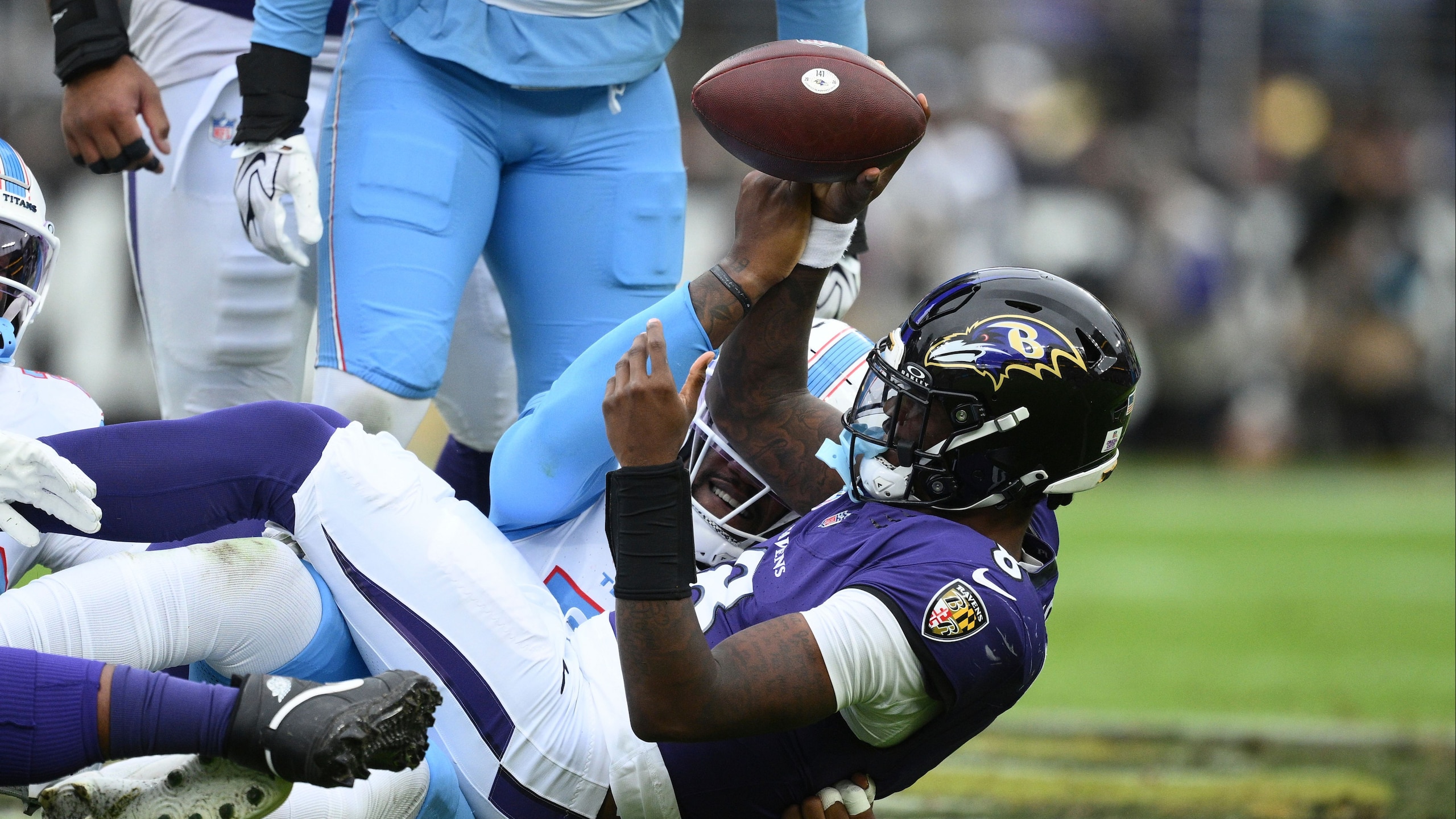
We cringe but applaud those vicious hits that rip off helmets or result in some poor receiver landing on his head, because the guy tackling isn’t afraid to lay his body on the line.
But when the aggressor steps over some shifting line in the sand, we all step back, tsking and berating the player caught front and center in the media spotlight...when moments before we admired his or her tactics.
Where exactly is that line of demarcation? When does it cease being aggression in the spirit of the game and verge on the boundaries of physical assault? More importantly, when do we stop applauding the actions of our sports stars and those aggressive maneuvers on or off the field of play?
At some point our aroused sense of fair play kicks into overdrive and we rush to judgment.
A case in point: The University of New Mexico’s Elizabeth Lambert, who earned a suspension for her retaliation against a Brigham Young University opponent during a soccer match, was vilified on YouTube.
She became the poster child for bad behavior by all national news outlets across the country last November.
There was a Facebook group created called “Ban Elizabeth Lambert of New Mexico From College Soccer.” She was suspended indefinitely after the outcry but received only a single yellow card for her behavior during the game.
According to sportsdefinitions.com:
Definition: Also known as a caution, a yellow card is shown by the referee to any player who commits a foul or infringement that is not within the rules of the game, and that is considered to be of a fairly serious nature. Any player receiving two yellow cards in one game is sent off the field of play.
The opposing coach, in remarking about the incident, confessed that rough play was a given during soccer matches at the Division I level.
Lambert was given a single yellow card for tripping an opponent at the end of the game, but during the match she also threw punches and pulled hair—all captured and replayed on YouTube and national sports outlets across the country.
So finally some national attention for women’s soccer!
These incidents would have gone unreported and unnoticed because the officials overseeing the conduct on the field saw nothing out of the ordinary. But, once the media witnessed what they judged as unacceptable behavior, they roasted this young woman.
The behavior was atrocious—no doubt about it. But it was not extraordinary within the scope of competition, or the officials would have called it.
Moreover, did it equal, in intensity, the cheap shots in other sports like hockey, football, and basketball—when a linesman gets in an extra jab in the pile, or the forward gets an unnecessary push under the basket, or a hockey player receives an unobserved blow to the face?
Take, for example:
- [Eagles kicker Rocca gets hit by a cheap shot]
- [Islanders vs. Rangers—Chris Simon cheap shot]
- [Blake Griffin of Oklahoma—cheap shot by Leonard Washington of USC]
Some hits are far worse than others! But, if it isn't for the motivation to help the team or the individual win then why do it?
Simply put, these actions are coached and integral to the game. Not accepting that fact is naive. Athletes are drilled in being aggressive.
Lambert got caught on camera—her bad luck. Unfortunately, the whole sport took a beating once shoved into the media spotlight.
The penalty in the mind of the athlete and coaching staff is not in being overly aggressive, but in being caught in the act. Retaliatory, overt actions are captured and reported every time. Swept up in the fervor to win, the athlete crosses the line.
The drive to win means championships, contracts, endorsements, and, more often than not, coaching survival. The "winning is everything" attitude fosters unsportsmanlike conduct, pushing acceptable behavior to the limit. "Win at any cost" has taken over at every level of sporting competition.
It is easier to remain hidden from view as a team member, but the actions of players in individual sports are much more visible. Even in non-contact competition like tennis, though, the drive to get to the top can produce aberrant, uncalled-for behavior.
Last summer, for example, during the semifinals of the U.S. Open, Serena Williams lost her temper when she got called for a foot-fault during a critical point in the match.
Williams was set points down to Kim Clijsters when a diminutive lines-person called a foot-fault on Serena’s second serve. The subsequent outburst cost Williams the match.
Later, she was fined $95,000. This was atypical behavior for Williams, who considered her fine excessive when compared to others who lost their temper and berated officials like John McEnroe and Jimmy Connors.
Was Williams’ behavior that much worse than McEnroe’s or Connors'? In light of the fact that the younger Williams sister appeared to be physically threatening the little lady calling the foot-fault, yes, it was, in this instance.
But Williams’ anger and her disrespect were no greater than that often displayed by McEnroe, who chronically abused officials verbally, as did Connors.
But these two bad boys continue to be favorites of fans who comment that they miss the good old days when Connors and McEnroe played, giving everyone hell. In comparison, they find today’s stars boring.
So why is the behavior of McEnroe forgiven—even considered humorous now—while current commentators continue to vilify the outburst from Williams?
Time? Distance? Perhaps those elements factor into our judgments. However, it seems probable that most fans are more forgiving of males because they expect women to be better behaved.
Moreover, fans not only follow the player on the field of play, their diligence carries over to off-court behavior, where acceptable conduct is often judged more harshly, depending on the circumstances.
Predictably, we abhor bullies, and the Michael Vicks who engage in what we deem cruel behavior to dogs and other defenseless creatures.
Yet we seem to overlook the actions of players accused of beating up their wives—like Warren Moon, the NFL’s Man of the Year in 1989, and baseball Hall of Famer Kirby Puckett of the Minnesota Twins, who apparently strangled his wife and held a gun to her head.
Recently, Tom Morgan commented in his "Thinking About Sports" column about the announcement that golfer John Daly was going to hang up his clubs and join Tiger Woods on the "missing in action" list. According to Morgan’s report, fans of the "sport" of golf lamented the loss of Daly because of his outrageous personality.
Daly, out of shape, hard-living, and hard-drinking, remains a crowd pleaser because he also "is not boring." But he also "is not winning."
Now, since that report, Daly has recanted and decided to try to compete, but the point is that people like Daly because he is not a “cookie-cutter” model of the modern golfer.
Fans like the "bad boy" image.
He is just like them—the average man, the man next door.
But the real question is: Would you pay to watch your neighbor play golf?
They like it that Daly drinks, smokes, and drives the golfing establishment crazy. Keeping that in mind, why the huge outcry against Woods? Why is his "bad boy" behavior so much worse?
What is the difference? They both play golf. Both engaged in off-course behaviors that are considered risky at worst, but not illegal. Why would fans applaud Daly and denounce Woods?
The easy answer is that Daly never pretended to be anything he was not. He is one of those "take me as I am" kind of guys. Woods' carefully constructed image could not bear the insidious weight of infidelity and sexual addiction.
Woods’ true behavior, when revealed, astounded and disappointed his millions of fans who looked to him not just because of his abilities on the golf course, but because of his squeaky-clean image.
Fans would expect similar behavior from Daly and forgive it to boot. But they felt deceived by Tiger Woods. It has nothing to do with sports and competition. It has to do with image and expectation.
Woods will return to golf and rebuild his life. More than anything else, the public loves a story of redemption—even if it never truly forgives the athlete for failing in the first place. But it will accept him again, with that razor’s edge of reserve.
Daly will return to golf and keep his fans, who will slowly turn away if the man falls short again in producing a worthy game. In time, fans will forgive Williams, and in 30 years they may laugh with her about her grievous behavior.
In the end, what we all tolerate in sporting arenas is what is legal—what the rules allow. What we do not tolerate is play that is deliberately aimed at maiming the other player.
Pulling hair, while painful, does not mean permanent injury. Spearing and chop blocking result in career-ending injuries and are not acceptable, whether whistled or not.
We want colorful, but not deadly.
We adore outrageous, but not egregious.
As fans, we root for players who engage our appetite to excel, to thrill, and to win at all costs. The bad boys and girls will always find their way to the top of our polls.
[Article originally published at Sports Then and Now]




.jpg?w=2560 "Saquon Out for Game")