
What Changes Can Figure Skating Make After Beijing Olympics Mess?
If you say "figure skating scandal," what immediately comes to mind for many is Tonya Harding's ex-husband hiring a hitman to kneecap Nancy Kerrigan. For all its impact on popular culture and the top television ratings, however, the Harding vs. Kerrigan showdown at the 1994 Winter Olympics in Lillehammer, Norway, had few repercussions on the sport itself. And while other scandals over the years have forced changes in judging, the Beijing Games may force the sport to rethink radically who its athletes are, and whether they have agency over their own careers.
By 1998, none of the key players who so captivated audiences four years earlier with their drama were still competing. A 15-year-old Tara Lipinski won surprise Olympic figure skating gold that year, though, and her youth and skillful incorporation of difficult jumping into her winning routine was a foreshadowing of what the sport would become down the road.



But first, 2002. The figure skating competitions at the Salt Lake City Games were marred by a judging scandal. Two French skating officials fixed the pairs skating event, voting for a Russian duo to win (over an obviously superior Canadian team) in exchange for a Russian vote for a French win in ice dancing. Lipinski and her husband just produced a four-part documentary, Meddling, about the scandal for Peacock.
That scandal led to an overhaul of the judging system used in skating. In 2004, the International Judging System (IJS) was introduced, and it was fully implemented by the 2006 Olympics. The ISJ replaced a 6.0 scale by which skaters were ranked by judges with a complex points system. Skaters receive a base score for each technical element—jumps, spins and step sequences—and a separate score evaluating the routine's presentation. The two numbers combined produce the skater's final score.

The IJS did introduce one wrinkle in the form of anonymous judging. Intended to prevent collusion as in the 2002 incident, anonymous judging was reportedly to blame for a 2014 scandal at the Sochi Games, when Russian skater Adelina Sotnikova won the women's individual event by a suspiciously wide margin over defending world champion Kim Yuna of South Korea, who had led the competition after the short program. There was some confusion over whether Russian and Ukrainian judges had inflated Sotnikova's performance marks or simply hewed more closely to technical elements in judging and less to the performance aspects, but it was impossible to know for sure because the scores were anonymous. Additionally, one Russian judge was the wife of the head of the Russian Skating Federation.
Anonymous judging in figure skating ended in 2016.
And skating, while by no means a meritocracy, has mostly adjusted to the IJS. But it has done so by demanding technical risk at the cost of young skaters' health. Lipinski had to have hip surgery to repair torn cartilage in the joint before the age of 20. American Gracie Gold, who won a bronze in the team event in Sochi, took time off three years after the Games to seek treatment for depression and disordered eating. Gold returned to skating in 2018 and placed 10th at the U.S. Figure Skating Championships in January.
A 2018 New York Times article detailed career-derailing injuries to three young Russian Olympic medalists: Sotnikova, then 21, the center of the controversy in Sochi; Evgenia Medvedeva, then 18, who won silvers in women's singles and in the team event at the 2018 Games; and Yulia Lipnitskaya, then 19, who won gold in the team event in 2014 and who retired from the sport in 2017 because she had anorexia.
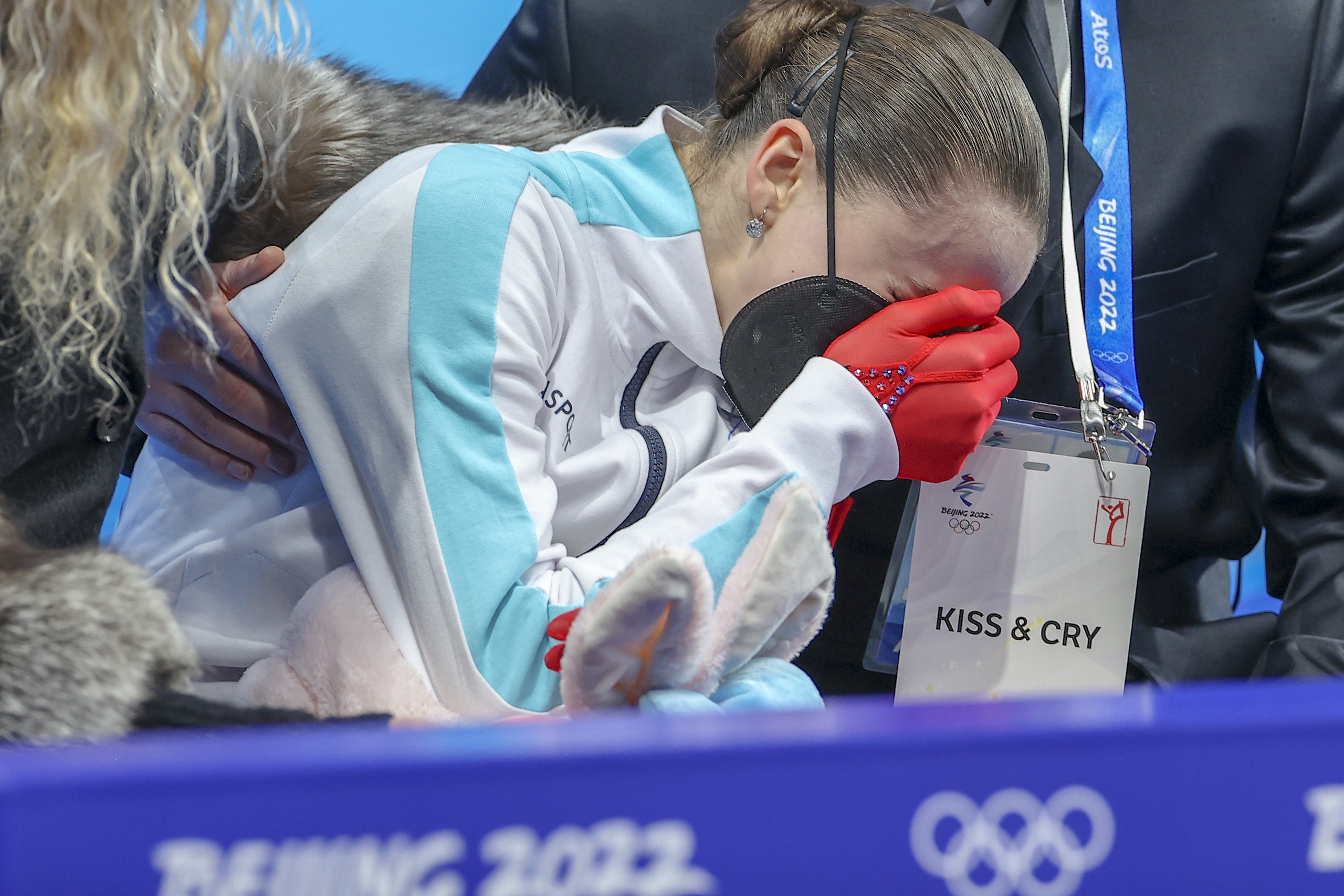
Everything came to a head in Beijing when Kamila Valieva, 15, of Russia was found to have tested positive in December for a banned heart medication. The positive test result was revealed last week, after Valieva led the Russian Olympic Committee squad to a win in the team event, but before she was to perform in the individual event. She should not have been allowed to skate again but was cleared by the Court of Arbitration for Sport to do so. They cited possible "irreparable harm" to Valieva if she could not compete. The World Anti-Doping Agency (WADA) calls her a "protected person" because of her age.
On Thursday, Valieva performed in the free skate, fell several times and ended her Olympics off the podium in fourth place. Her teammates, Anna Shcherbakova and Alexandra Trusova, won gold and silver, respectively; Kaori Sakamoto of Japan took bronze. The entire event was a colossal mess. It was an embarrassment for the Olympics, which needs to take steps to ensure that history does not repeat itself.
Really banning Russia—not allowing Russian wolves in Olympic-flag sheep's clothing—until the country's doping practices are controlled would be one step in the right direction toward ensuring Beijing's events do not repeat in the future. Russia needs to be held accountable for its doping practices, which it carried out for many years on a grand scale. It took covering up the statewide effort across dozens of sports to a whole new level. Punishments have been cosmetic at best. Russians continue to dominate the sport of figure skating seemingly without missing a beat, even after being implicated in scandals in 2002, again in 2014, and once again this past week. When and if Russia is forced to really reckon with the impact of their actions, figure skating, and the young athletes who pursue it, will be safer.
Valieva and the other Russian skaters competing in Beijing toil under the same coach, Eteri Tutberidze, who has been widely criticized for running a so-called "skating factory" at the Sambo 70 club in Moscow.
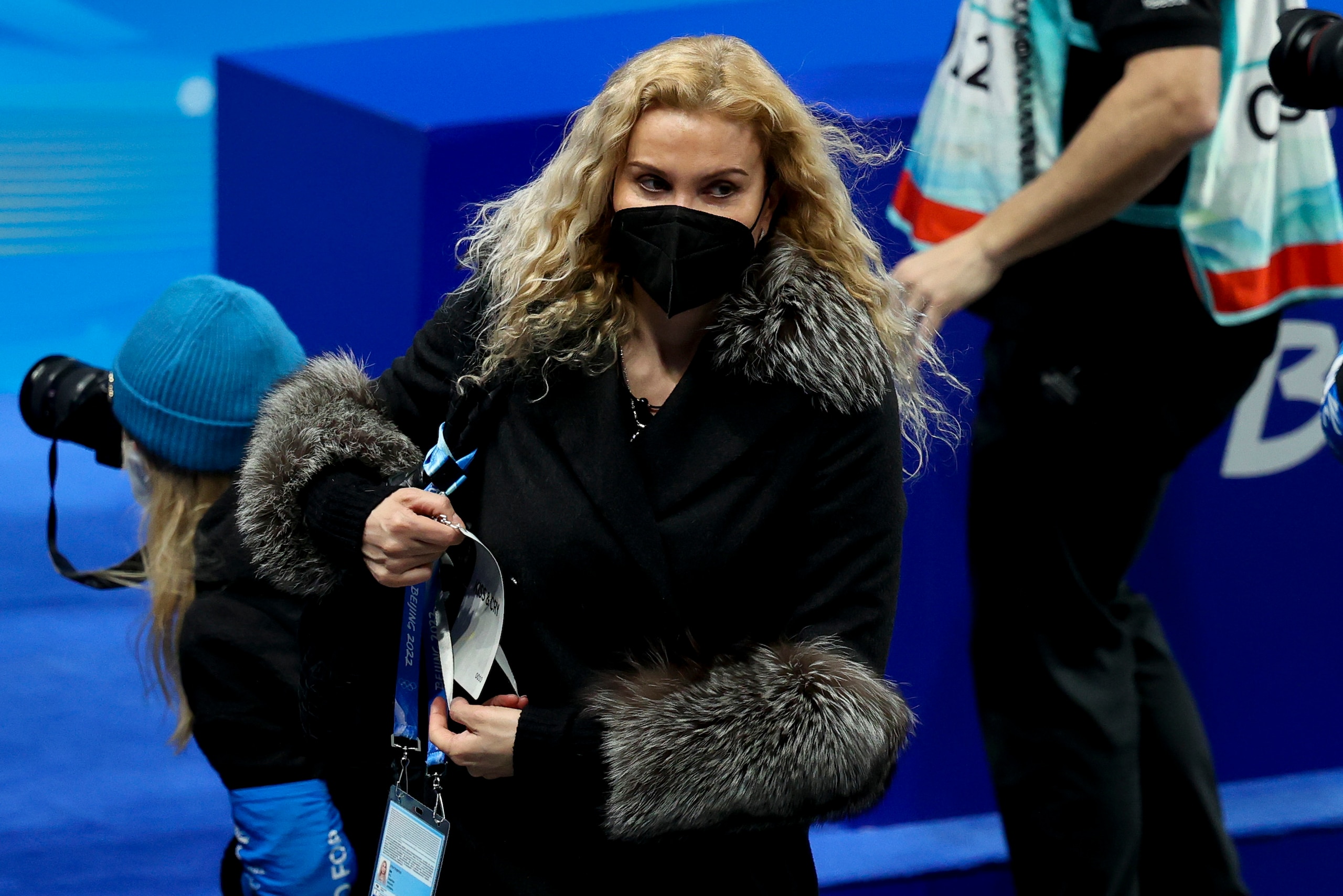
Tutberidze berated Valieva when she stepped off the ice Thursday after her free skate. "Why did you stop fighting?" she said, in Russian, to Valieva, the New York Times reported. Rumors of harsh treatment, of weighing athletes and promoting eating disorders, and even of doping (although the skater who made those allegations eventually walked them back), have dogged her methods and her pupils for years. But because almost no one stays with Tutberidze until the age of 18, her methods have remained hidden by the "protected persons" she oversees.
Tutberidze also trained Medvedeva and Lipnitskaya, both of whom left the sport while still relatively young and after a brief period of elite competition.
But the coaching problems in figure skating do not stop with Tutberidze or the Russian program, and coaches in countries from China to the United States have been accused of abusive practices.
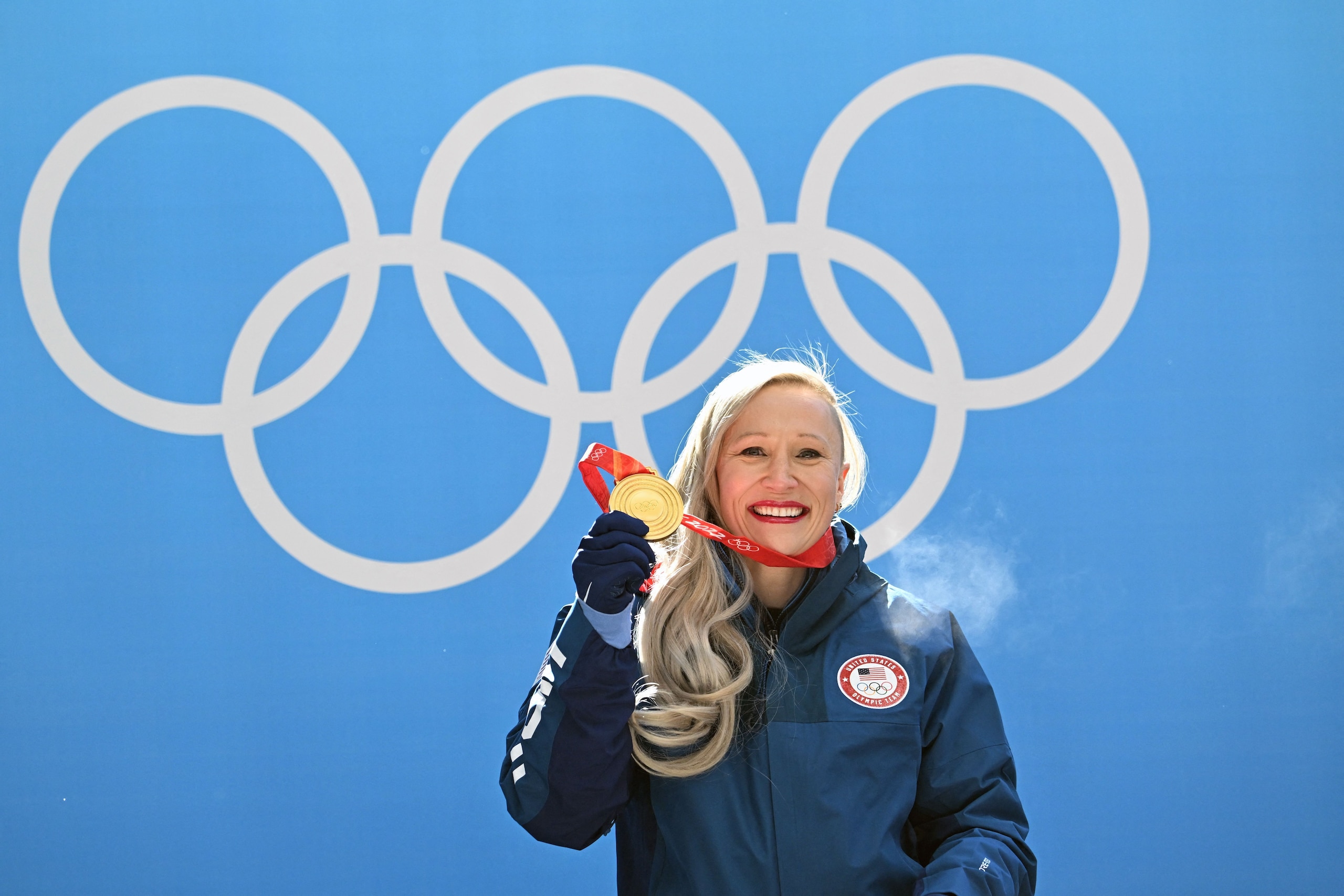
And these problems do not even stop with skating. Brutal coaching practices exist in every sport. The Larry Nassar scandal in gymnastics revealed a litany of coaching problems in that sport, including those of Bela and Marta Karolyi, who ran the U.S. Olympic program for years, and of Maggie Haney, who coached Olympian Laurie Hernandez in 2016 and was later suspended for eight years (now reduced to five) for emotionally abusing her athletes. Alberto Salazar, a famed running coach to Olympians and world champions, was banned from coaching after allegedly sexually abusing an athlete, per the New York Times. Kaillie Humphries, who won gold for the U.S. in the monobob in Beijing this week, stopped competing for her home country of Canada when she alleged that her coach was abusive.
While all of these incidents are deeply concerning, the abuse of young athletes that's been pervasive in figure skating and gymnastics is particularly horrifying. One solution to some of the sport's problems may be to disallow minors from Olympic competition. The calls for the age limit to be raised from 15 to 18, citing concerns for athlete welfare, have already started. The U.S. delegation to the International Skating Congress voted yes in 2018 on a proposal by the Dutch delegation to raise the age limit to 17, but 39 other countries, including Russia, voted no, and the item never reached the agenda for serious consideration.
In a sport where teenagers churn in and out of the Olympic mix every four years, retiring from elite competition, perhaps it is time to allow skaters to mature and reach the age at which they can consent to their training regimens, their treatment by coaches and other officials, and to the medications and supplements they ingest.
In the U.S., where training is extremely pricey but less rigorous at a young age, and where domestic competitions prize cleanliness in execution over dangerous tricks thrown by tiny bodies, skaters are able to remain in the sport longer. Two of the three U.S. skaters in the women's individual event were full-fledged adults: Mariah Bell, 25, and Karen Chen, 22. The third, 16-year-old Alysa Liu, told Sports Illustrated she would have waited two more years to compete if that became the rule in skating. "I've trained so long," she said. "Might as well do it a little bit longer." Still, the U.S. is no longer as competitive in skating as it once was, back in the Harding-Kerrigan and Lipinski days.
But perhaps it is worth a diminishing of risk if the sport produces healthy adult athletes whose lives and livelihoods are not held hostage by the adults around them. It would be a legacy Beijing could be proud of.
.jpg?w=2560 "Cardinals Giants Football")


.jpg?w=2560 "Tyreek Deal May Come Soon")


.jpg?w=2560 "Ward Nearly Walks Out of Presser ▶️")