

Projecting Team USA's Roster for a Potential 2024 World Cup of Hockey
The NHL and NHLPA pulled out of the 2022 Winter Olympics in Beijing because of the coronavirus pandemic, but that doesn't mean players and fans will be left wanting a best-on-best tournament.
Pierre LeBrun of The Athletic recently reported that the league and players' association met to begin planning a World Cup of Hockey for 2024. The tourney will likely take place in February, which is great news for two reasons.
For one, players won't be expected to cut their offseasons short in an attempt to gear up for high-level hockey against some of the best players on Earth. Second, everyone involved will hit the ice in mid-campaign form.
It should make for a much more entertaining and competitive product. We're two years out from the event, but we here at B/R wanted to take a shot at what the Team USA roster might look like. What's striking about Team USA is just how much more difficult it was to construct this mock roster than it was to do so for the Olympics.
It's easier to leave emerging stars off an Olympics roster. After all, veterans are generally favored by selection committees. That won't be the case for the World Cup, as youth seems to have a bit more sway.
If the tournament were closer, more focus would be put on producing a roster with capable penalty-killers. With two seasons between now and the event, though, players could adopt those skills. So the goal here is to get an early look at who could make the roster and who could be on the outside looking in.
As always, let us know what we got right and what we got wrong down in the comments.
Editor's note: A previous version of this article included Jakob Chychrun and Drake Batherson in the team. Both players were born in the United States but have represented in Canada in prior international tournaments. We apologize for the error.
Goaltenders: Connor Hellebuyck, Thatcher Demko, John Gibson
1 of 8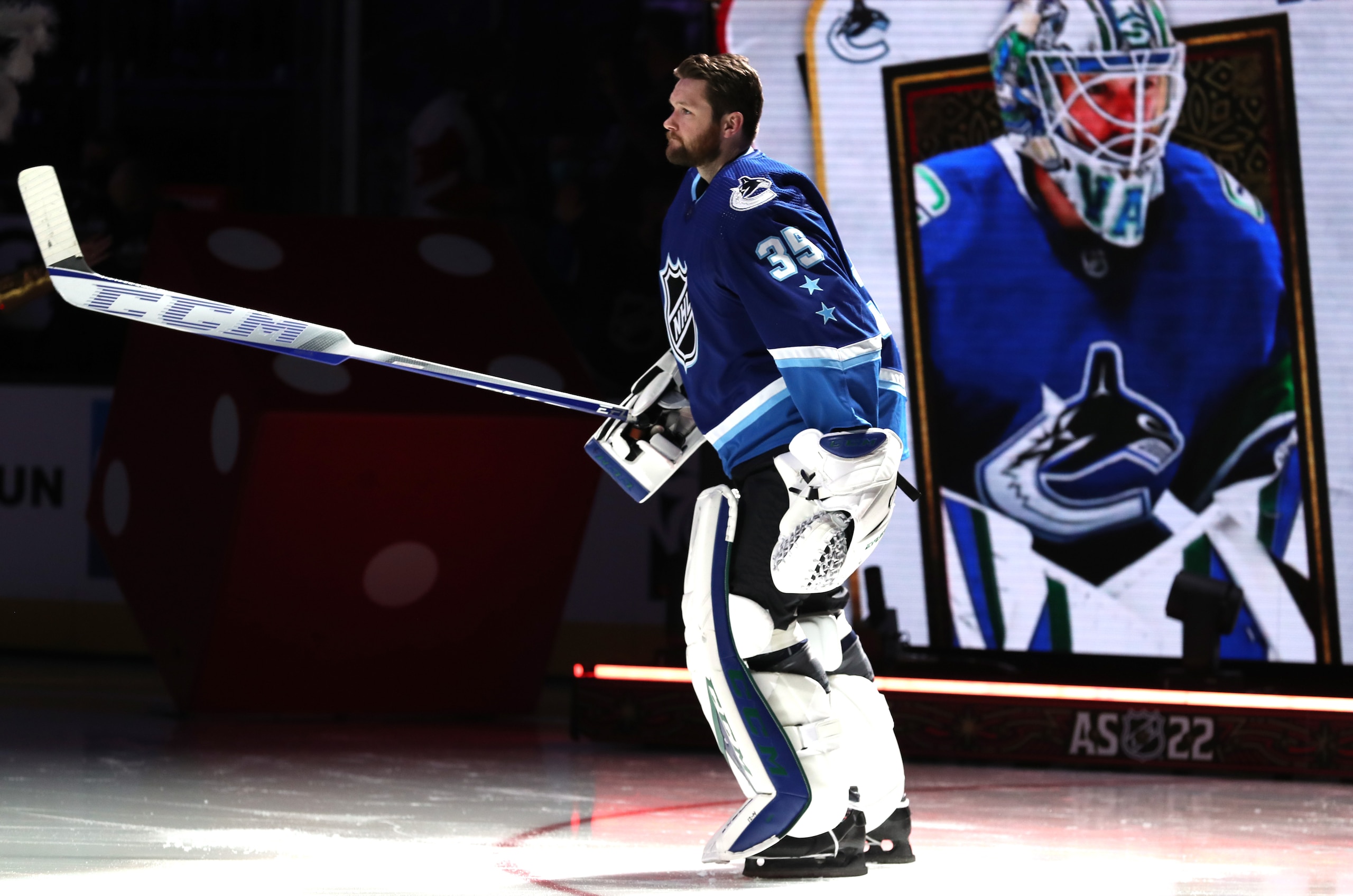
It's probably too early to name a potential starter at goaltender given the volatility of the position. Despite that, there's no reason to assume the three goalies who were projected to go to Beijing won't suit up for the World Cup of Hockey.
Only 12 American netminders have appeared in 10 or more games this season, including Connor Hellebuyck, Thatcher Demko and John Gibson, so the competition isn't overly stiff.
Hellebuyck is having a down season, but his goals saved above average mark (1.1) is still positive, and his quality start percentage (.600) is fine. The Winnipeg Jets have leaned on him a ton this year—he's on pace to start a ridiculous 68 games—and fatigue might be playing a factor in his so-so numbers.
Right now, Hellebuyck is the best goalie the United States has to offer. He's been consistent throughout his career and has simply run into a bit of a rough patch.
Demko (7.7 GSAA) is an All-Star now, though, and within the next year or so, that mantle could be his. Things change so quickly when it comes to goalies, and it wouldn't be shocking for this to be more of a conversation.
Then there is Gibson, who has been excellent in 2021-22. His 13.8 GSAA is sixth among goalies who have played 25 or more games, and he's a big reason the Anaheim Ducks have been one of the NHL's most surprising teams.
Three spots on the World Cup roster would be a slam dunk for this group if the team were announced today.
But keep your eyes on Alex Nedeljkovic, Spencer Knight, Cal Petersen, Jake Oettinger and Jeremy Swayman. All five are at the front end of their NHL careers, and any of them could push for playing time at the World Cup by 2024.
Defense Pairing 1: Jaccob Slavin and Adam Fox
2 of 8
There are bigger names across this roster than Jaccob Slavin, and there was some blowback when we named him as a potential Olympian before the NHL and NHLPA decided to pull out of the event. That doesn't change the fact that he's the top defenseman on one of the league's top teams in the Carolina Hurricanes.
He eats more than 23 minutes of ice time per night for head coach Rod Brind'Amour and fits the idea that drove all these roster choices. This version of Team USA wants to play at a breakneck pace, gathering pucks in the defensive zone and moving the play up the ice to skilled forwards as quickly as possible.
Slavin is used to being utilized in this role, as he plays with Carolina's top line generally and skates on both the 10th-ranked power play and first-ranked penalty kill. This is the kind of player you want to anchor your blue line, and he'd be a perfect partner for Adam Fox.
In Carolina, Slavin skates with Tony DeAngelo, who is a similarly offensive-minded defender. For the United States, this pairing would be able to skate in all situations and be trusted to take on the opposition's top players.
Both blueliners are capable of breaking the puck out of the zone in a hurry, and that'll be important when you see the forward lines. The top six, in particular, will require defenders who can quickly recover the puck and then turn it up the ice.
Fox is one of the best in the business at that and will likely be a Norris Trophy finalist. Slavin brings size to this pairing, standing at 6'3" and weighing 207 pounds, so he would ensure no opponent attempts to steamroll the USA's top pairing.
Defense Pairing 2: Quinn Hughes and Charlie McAvoy
3 of 8
Again, we're looking for defenders who can maintain a breakneck pace while rolling out four offensive lines that can attack and pressure the opposition into mistakes. Over the past few seasons, a handful of high-end offensive defensemen have emerged, and the goal is to take advantage of that unmatched strength.
Quinn Hughes and Charlie McAvoy are two more skilled puck-movers, just like the first unit. Some may even feel McAvoy should play on the top unit, but that's splitting hairs.
The Canucks haven't had a good season, but Hughes continues to evolve into the high-end defender that the organization has always seemed to lack. Just how good has he been? Daniel Wagner of VancouverIsAwesome.com recently opined that the 22-year-old could turn out to be the franchise's greatest defenseman of all time.
That could be premature, but Hughes is on pace to score 60 points. That's nothing to scoff at, and the idea he would be on any team's second pair seems silly. Ditto for McAvoy, which is what makes this quartet so dynamic.
All four can create magic with the puck, finding seams where there don't seem to be any. This will allow our top-nine forward group to skate freely in the neutral zone, knowing that the puck will find their sticks more often than not.
And good luck stopping any power-play formation featuring Fox on the first unit and McAvoy on the second. Both the Boston Bruins and New York Rangers have top-five power plays, and they run things through the defensemen on this team.
Hughes is also on pace for 30 power-play assists, which would be a staggering number. This is a skill-above-all defense, and the Americans would win or lose based on their ability to snap up pucks and move them into neutral or offensive territory.

Defense Pairing 3: Zach Werenski and Seth Jones
4 of 8
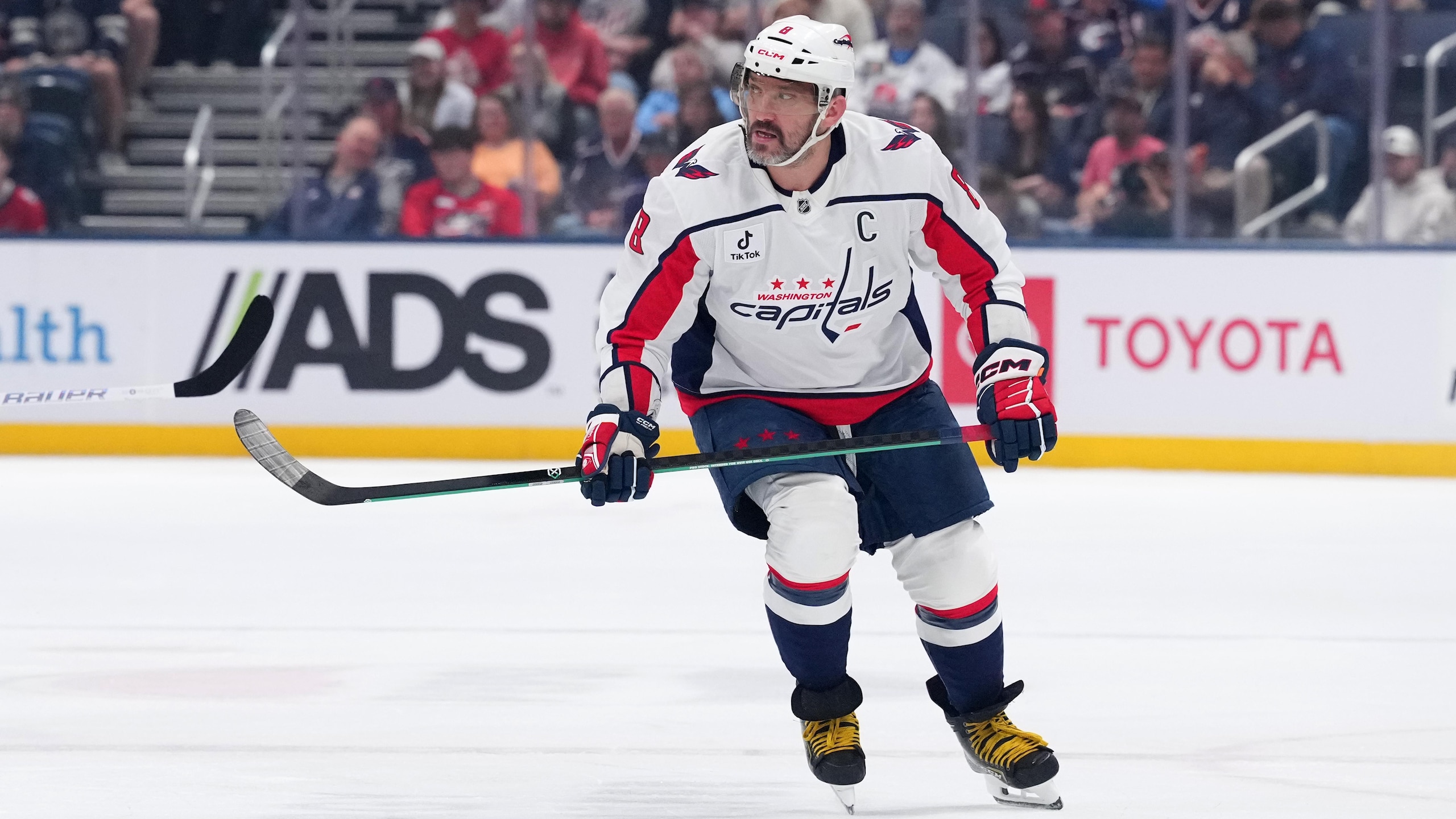
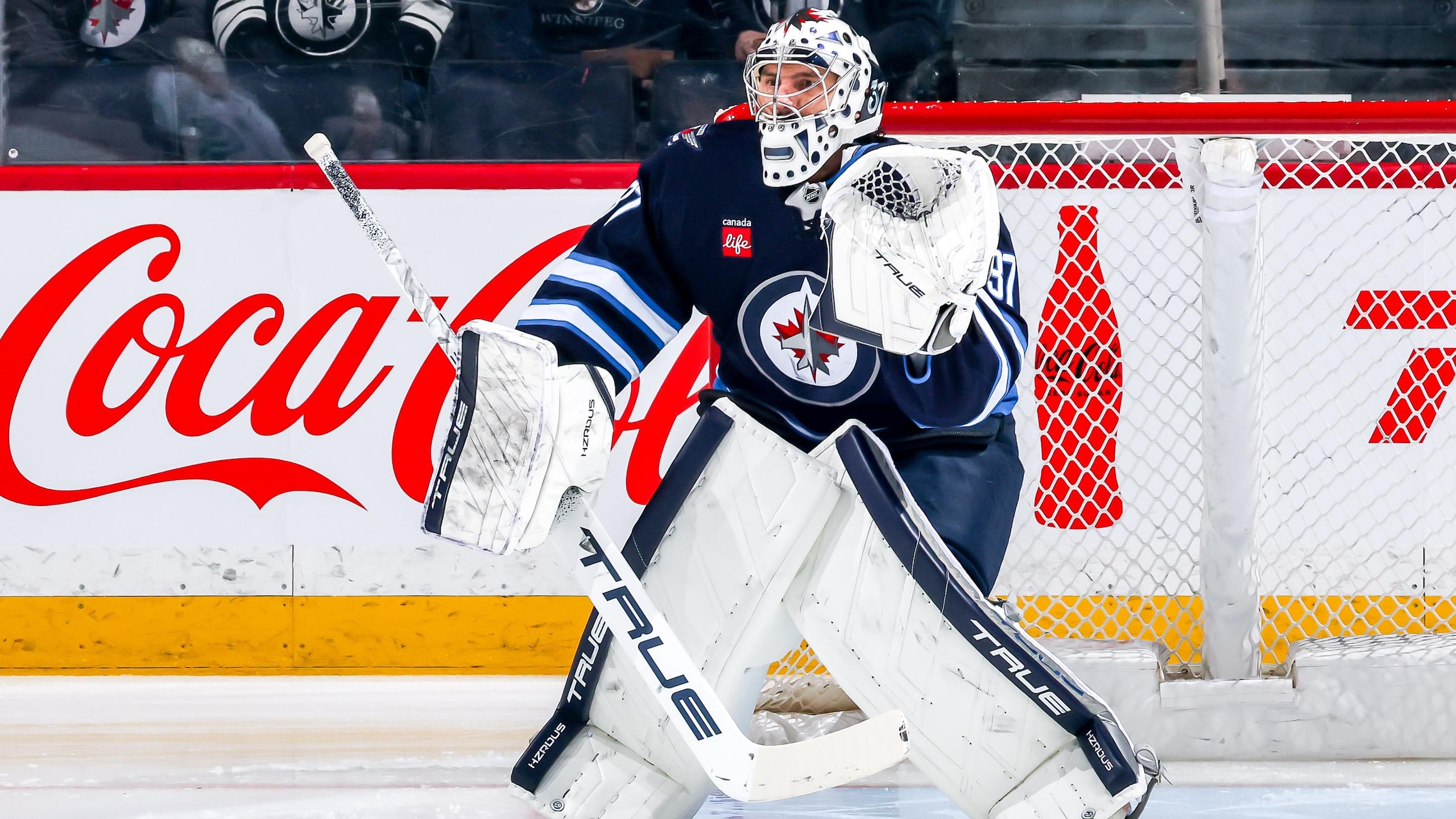
After a rough start to his career as a member of the Chicago Blackhawks, Seth Jones has rediscovered his form under Derek King. He had 10 assists in the team's first 12 games—a more-sour-than-a-fermented-pickle 1-9-2 start that cost Jeremy Colliton his job—but the blueliner didn't look comfortable.
That has changed, and Jones looks like a difference-maker in all three zones instead of just a threat on the power play. He's on pace to tally close to his career high of 57 points, giving the U.S. another top-notch puck distributor who can also manage a five-on-four unit.
Jones' versatility and 6'4", 213-pound size would make him our staple penalty-killer, and he would be an all-situations workhorse despite being on the third pair.
He would team up with old running mate Zach Werenski, and that familiarity would help given the shorter nature of tournaments. The All-Star would give Team USA its fifth high-scoring defender and another high-end passer.
Werenski has taken on a huge role since Jones was traded to Chicago, and he's done his best with the rebuilding Columbus Blue Jackets. He sees the opponent's top lines every night, which would prepare him for his role on the shutdown pairing.
Make no mistake, though. Jones and Werenski would be asked to do the same job as the top-four group: Get the puck, and get it out with intent. That's the goal for most teams, but few would be able to control the flow of the game from the defensive end like this group.
If the United States wants a veteran presence, maybe John Carlson will still be piling on the points in 2024. And as far as a young player to watch, Cal Foote has the size (6'4", 227 pounds) and strength to make him a fit by the time the World Cup rolls around.
Forward Line 1: Johnny Gaudreau, Auston Matthews, Patrick Kane
5 of 8
Just imagine trying to contain Johnny Gaudreau, Auston Matthews, Patrick Kane, Adam Fox and Jaccob Slavin for 18 or 19 minutes per night in a tournament setting when there isn't that much time to game-plan.
The amount of creativity, slipperiness and get up and go on this line is off the charts. It's important to assume that Kane wouldn't have lost a step by 2024, because the United States is remarkably thin at right wing. It has enough talent at center and on the left side to maybe move someone over, but we'll keep everyone in their spots for now.
We're also assuming Gaudreau's game won't crater after he signs a Gau-zillion dollar extension.
Matthews will undoubtedly still be doing Matthews things, redefining shooting in the NHL the way Stephen Curry has in the NBA. This could conceivably be the second-strongest line in the World Cup.
Canada's Nathan MacKinnon, Connor McDavid and someone such as Jonathan Huberdeau would be tough to keep up with, but the United States wouldn't lag far behind. The American forwards, paired with the exceptional talent on the blue line, give Team USA a fighting chance against any opponent in tournament play.
With this line, the Stars and Stripes would have three players who can make something out of nothing every time they have the puck in the offensive zone. Kane even has a something-out-of-nothing Stanley Cup-winning shot on his resume.
Even if this line is kept off the scoreboard, the energy the opposition would expend containing them might be enough to crack open the game for the rest of the speedy, creative forwards we have on the roster.
Forward Line 2: Kyle Connor, Jack Eichel and Troy Terry
6 of 8
Troy Terry is the first beneficiary of this being a World Cup roster instead of an Olympic roster. Team USA brass probably would have selected a tried-and-true player such as Joe Pavelski for the Beijing Games but not for this tournament and not for this team.
Terry's balanced offensive attack would fit way too well with this version of the United States, which would attack in waves, take risks and make the other team feel like it's facing the same threatening line on every shift.
The 148th selection in 2015 isn't even the flashiest player on his own team, but he would be a wonderful addition alongside Jack Eichel and Kyle Connor—two of the most lethal shooters this side of 2015.
This would be another group that can do just about anything it wants in the offensive zone; the key is getting there. With Charlie McAvoy and Quinn Hughes feeding them pucks, this trio of forwards would have the speed to create space for any one of these three to pop free.
Eichel will have had plenty of time to settle back into the groove of an NHL season, and a healthy Eichel provides the center depth Team USA would have lacked in Beijing. Without Eichel and Jack Hughes, the United States would struggle to keep up with teams such as Canada, which seems to produce an All-World center every 18 months.
Connor is a one-note player at this stage of his career, but the note is that of a goal horn, so there's not much to be concerned about. Again, we're looking for a breakneck pace and goal-scoring, so the Jets forward checks those boxes.
Forward Line 3: Jason Robertson, Trevor Zegras and Tage Thompson
7 of 8
Here's Team USA's first bit of sandpaper: 6'7", 218-pound wing Tage Thompson. He's a forward who knows how to use his body to protect the puck, and while he's not the quickest skater, his hockey IQ would allow him to hang alongside similarly smart players in Jason Robertson and Trevor Zegras.
He's in the midst of a breakout season with the Buffalo Sabres, and while the United States would have never taken a line like this to Beijing because of their collective inexperience, by 2024 they will all be even more established than they already are.
If Zegras can pull creative interactions out of Sonny Milano, just imagine what he could do with Robertson working on the perimeter or Thompson towering in front of the net.
Robertson has also emerged as a star with the Dallas Stars. He tallied 45 points in 51 games last year and has scored 17 goals this season, already matching his total from 2020-21.
Having him with a similarly shifty forward such as Zegras and a big body in Thompson would make a great third line for Team USA. We're looking for opportunities to punch through the defense and find the scoreboard, and all three of these forwards can reach the back of the net or make space with their smarts.
Maybe someone such as Dylan Larkin could find his way onto the wing in the bottom six—to reiterate, the U.S. is really thin at right wing—but this seems like a unit a coach could use in a somewhat protected role and end up with stellar results.
All three are strong in transition as well and would jell with the blue line that we put in place. It all flows from quick, snappy defensemen to creative, speedy and smart forwards.
Forward Line 4: Brady Tkachuk, Jack Hughes, Matthew Tkachuk
8 of 8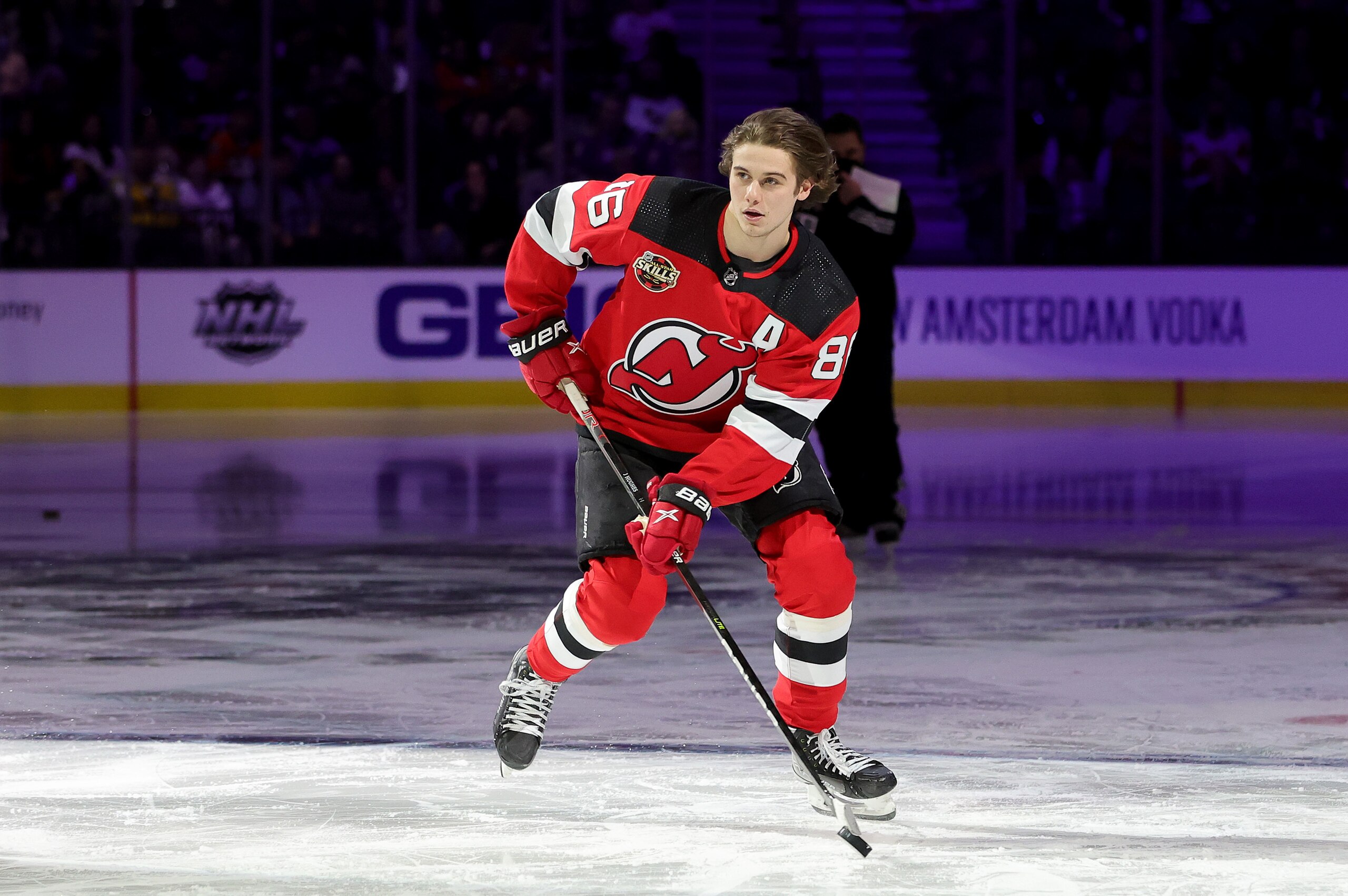
Team USA probably isn't going to leave Jake Guentzel in the press box as an extra during the World Cup, but this configuration was just too fun to not investigate. With all the electricity crackling through the first three lines, our fourth unit would be a more traditional energy group.
Both Brady and Matthew Tkachuk bring boatloads of the intangibles that coaches love. Leadership. Grit. Physicality. All that hockey stuff. They are zero fun to play against but bring skill to the table as well. They would flank Hughes, who over the summer probably wouldn't have been considered a lock to make the Olympic team but has since emerged as an All-Star center.
The New Jersey Devils are a different team when Hughes is on the ice, and this line would also give us two sets of brothers on Team USA. It's not the reason that any of them were picked, but it'd still be a lot of fun.
Hockey players tend to play looser and more effectively when they're having fun. What would be more fun than lacing up your skates and wearing your nation's colors with your sibling?
This wouldn't strictly be an energy line, though, as all three play on their NHL teams' top lines. They can bring more of a physical element to the game, which would be needed with the makeup of the first three units.
With Guentzel and Dylan Larkin as extras, there wouldn't be any situation this team couldn't handle. Except for that terrifying Connor McDavid-Sidney Crosby line. But no one would be able to handle that.



.jpg?w=2560 "Love's Body Already 'Tired'")

.jpg?w=2560 "Tyreek Deal May Come Soon")


.jpg?w=2560 "Ward Nearly Walks Out of Presser ▶️")