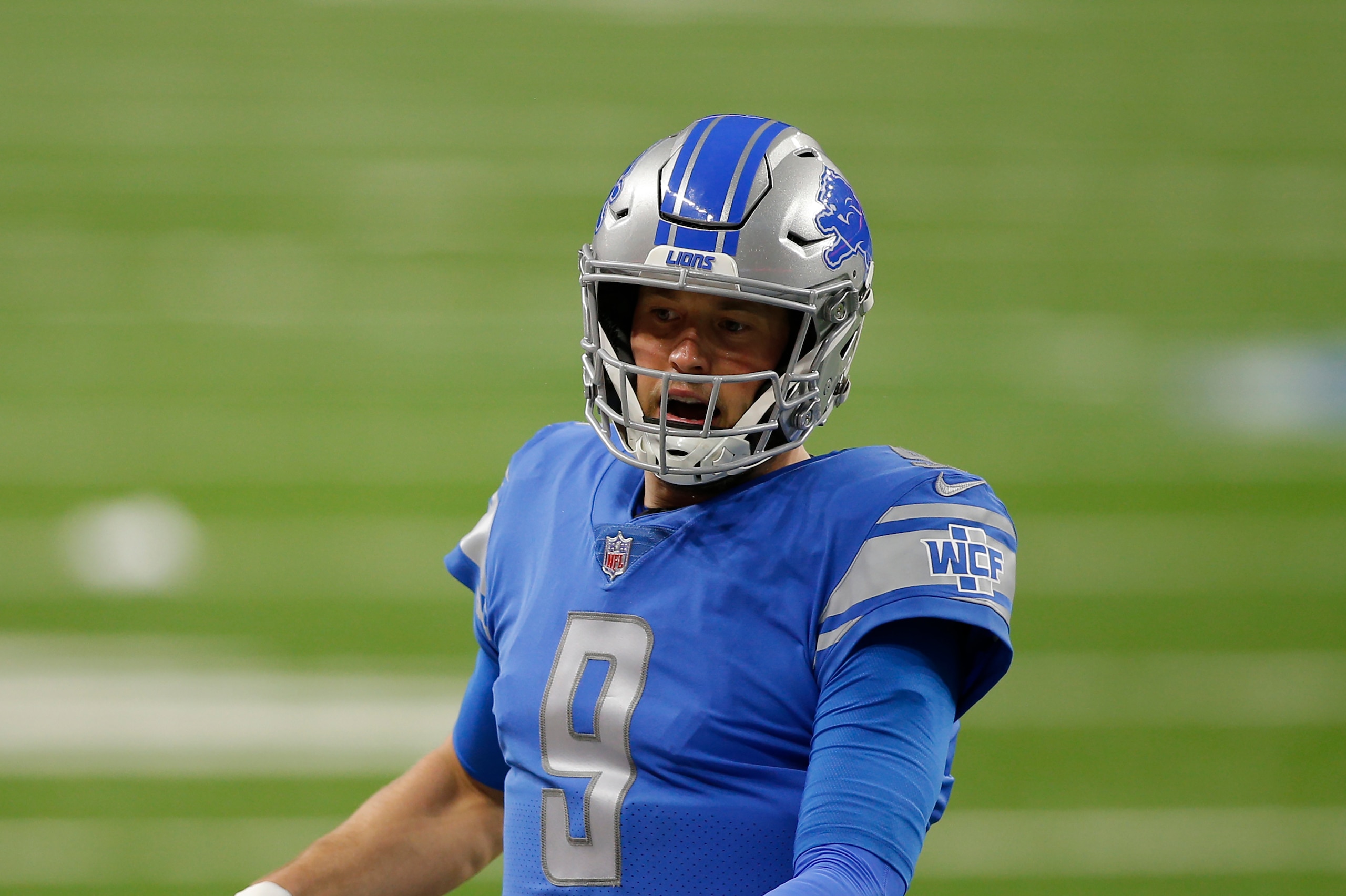

Biggest Trades in NFL History After Matthew Stafford-Jared Goff Blockbuster
Everyone expected Matthew Stafford to be traded this offseason.
No one expected it to be this trade.
The Detroit Lions and Los Angeles Rams agreed to a blockbuster deal late Saturday night, sending Stafford to Los Angeles in exchange for Jared Goff, two first-round picks (2022 and 2023) and a 2021 third-round selection, per ESPN's Adam Schefter. It is the first time two former No. 1 overall picks have been dealt for one another.
While the deal came as a shock and sent NFL Twitter into shambles, it's two deals in one. The Rams were paying both to acquire Stafford and to rid themselves of the need to pay a guaranteed $43 million to Goff.
In terms of a player-for-player assessment, this doesn't rank that high on the all-time NFL blockbusters list. Stafford is decidedly an above-average starting quarterback but not a superstar; he has one Pro Bowl selection to his name, coming all the way back in 2014. Goff, a Pro Bowler in 2017 and 2018, has more recent success and more Pro Bowl selections than Stafford.
The Rams are now set to go through a seven-year stretch without a first-round pick—and their most recent first-round pick was Goff.
So while there are confounding details of this deal that make it interesting, it pales in comparison to some of the more notable deals involving superstar names or the sheer number of selections moved. Here's a look at a handful of some of the biggest moves in NFL history.
Ditka, Ricky Williams Get Hitched
1 of 5
The Trade
Saints Receive: Ricky Williams
Washington Receives: two first-round picks (1999, 2000), two third-round picks (1999, 2000), 1999 fourth-round pick, 1999 fifth-round pick, 1999 sixth-round pick, 1999 seventh-round pick
The New Orleans Saints literally traded their entire 1999 draft for a running back. In today's NFL, where it's obvious that running backs have finite values and are regularly discarded after their rookie contracts, that seems fundamentally outrageous. Mike Ditka got laughed out of the room in 1999; he probably would get fired on the spot for trying this in 2021.
But lost in the befuddlement over how much the Saints gave up is the fact that Ricky Williams was looked at as a generational superstar coming out of Texas. Williams rushed for 6,279 yards and 72 touchdowns over a dominant four-year stint with the Longhorns, winning the 1998 Heisman and making two All-American teams. He even flashed an ability to make plays as a pass-catcher, which didn't have the same emphasis among running backs in the late 90s as it does today.
Ditka said he "wet [his] pants" in celebration after the Indianapolis Colts selected Edgerrin James over Williams.
Of course, the Colts' selection wound up being prudent. Williams had a largely frustrating three-year career in New Orleans, with Dikta only getting to coach his prized running back for one season before being fired in 1999.
The Saints traded Williams to the Miami Dolphins, recouping two first-round picks in the process, before the 2002 season. Williams found stardom in Miami before retiring and beginning one of the most interesting odysseys in NFL history.
Vikings Sell the Farm for Herschel Walker
2 of 5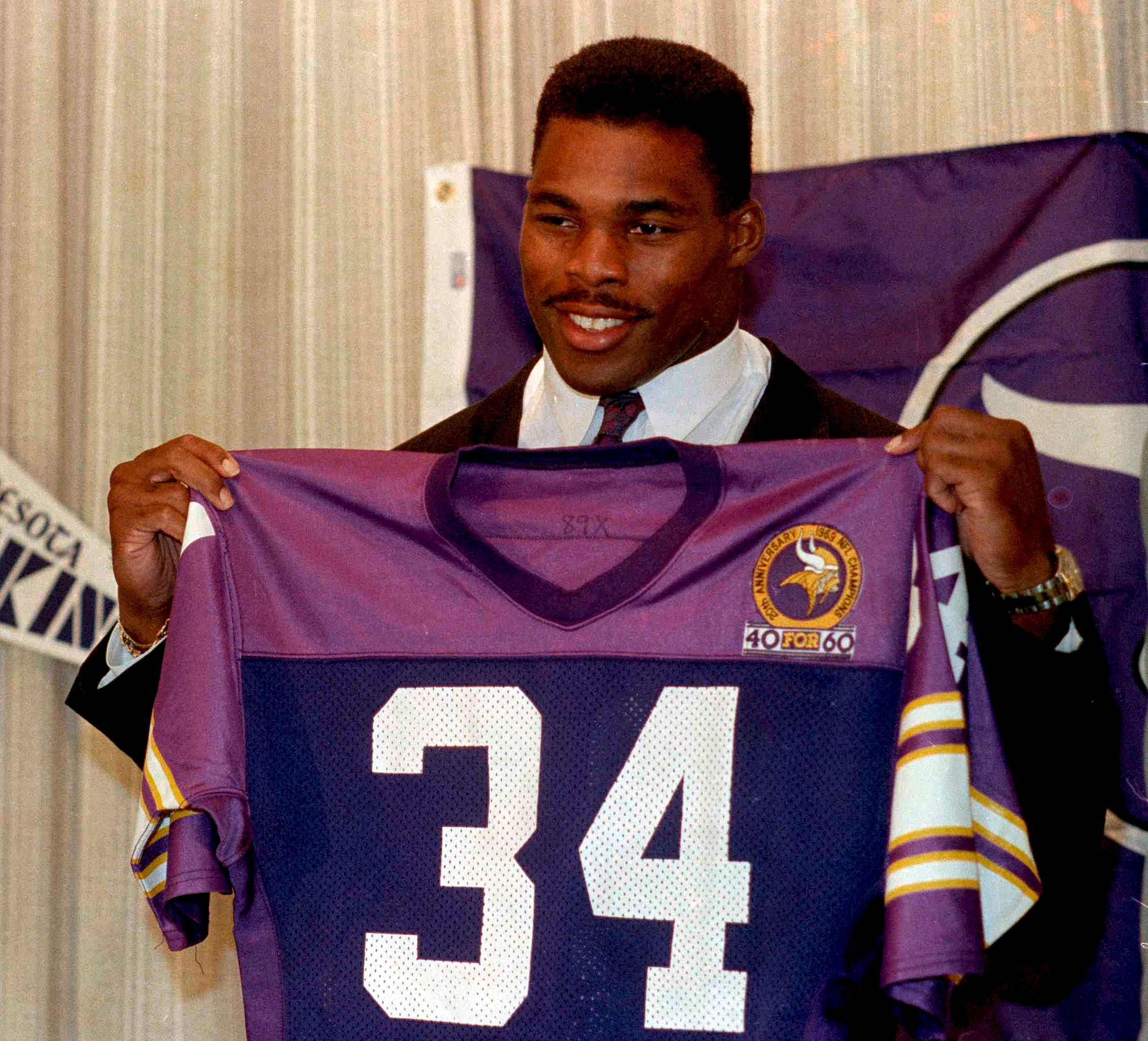
The Trade
Vikings Receive: Herschel Walker, 1990 third-round pick, 1990 fifth-round pick, 1990 10th-round pick, 1991 third-round pick
Cowboys Receive: three first-round picks (1990, 1991, 1992), three second-round picks (1990, 1991, 1992), 1990 sixth-round pick, 1992 third-round pick
Chargers Receive: Darrin Nelson
The trade against which all others are graded—and for good reason. We've long been told we will never see another haul similar to this again, but that was before the Houston Texans bungled Deshaun Watson's career. If the Lions can get a pair of first-round picks and a capable starter in Goff for Stafford, the Texans might want to consider opening themselves up to a Watson trade. It might turn out to be the modern-day Walker deal.
There may not be a worse trade in the history of sports. Walker wasn't even a particularly great pro at the time this deal was made. He had one 1,000-yard rushing season under his belt and was averaging 3.0 yards per carry during the 1989 season.
That didn't stop the Minnesota Vikings from mortgaging their future and watching the process blow up in their face. Walker didn't top 1,000 rushing yards again until he was a member of the Philadelphia Eagles in 1992.
Meanwhile, the Dallas Cowboys built a foundation that would win three Super Bowls in the 1990s off the back of Minnesota's desperate decision-making. The Cowboys used their first Minnesota selection (after trading up) to grab Emmitt Smith and systematically went to work building their roster via the draft in subsequent seasons, all while Minnesota failed time and again to get over the hump in the playoffs.
It was a terrible trade at the time and was made worse with each passing year—unless you're a Cowboys fan and got to live the past two decades off the exceptionalism of those teams.
Vick and LaDainian Tomlinson Swap Future Destinations
3 of 5
The Trade
Falcons receive: 2001 No. 1 overall pick (Michael Vick)
Chargers receive: 2001 No. 5 overall pick (LaDainian Tomlinson), 2001 third-round pick, 2002 second-round pick, WR Tim Dwight
It's the rare NFL trade that resulted in two franchise icons finding their rightful homes. The Atlanta Falcons-San Diego Chargers swap doesn't stand out over others in terms of the haul given up, but the implications for both franchises were major.
Michael Vick became one of the most electrifying players in NFL history with the Falcons, redefining the quarterback position before his involvement in a dogfighting ring led to him spending 21 months in prison.
Tomlinson became the greatest running back in Chargers franchise history and arguably the first fantasy superstar as fantasy sports saw a massive rise in popularity in the 2000s. Trading down also allowed the Chargers to select Drew Brees as the top of Round 2. While Brees' time in San Diego was rocky, it's fair to wonder whether he would have had the same career if he had been taken by a franchise that was less patient.
This is one of those trades that could have altered the lives of three future Hall of Famers if it weren't for Vick's off-field transgressions.
.jpg?w=2560 "Chiefs Giants Football")
.jpg?w=2560 "Steelers Buccaneers Football")
.jpg?w=2560 "Steelers Saints Football")
Joe Montana Becomes a Chief; Brett Favre Becomes a Jet
4 of 5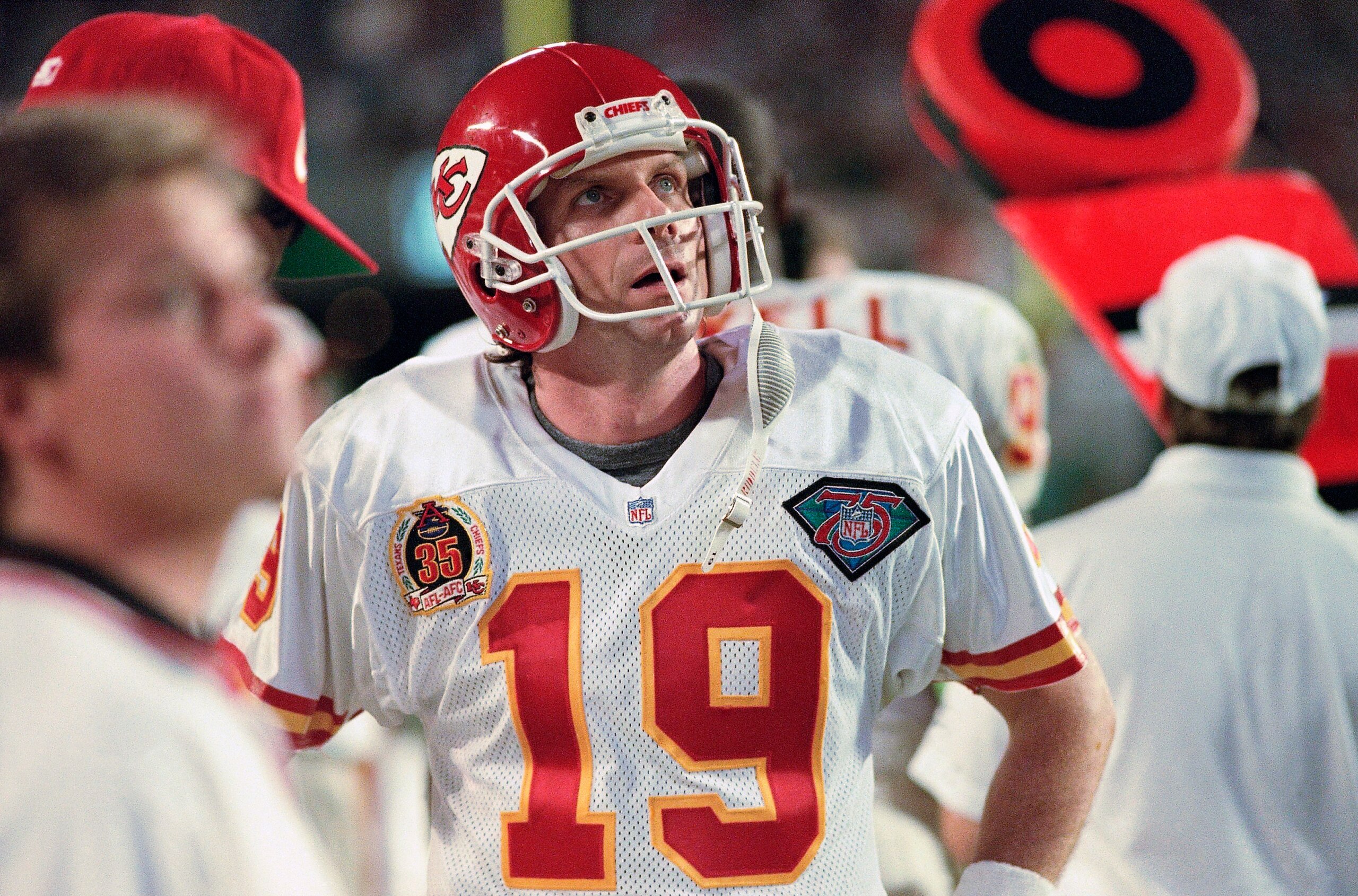
The Favre Trade
Jets Receive: Brett Favre
Packers Receive: 2009 fourth-round pick
The Montana Trade
Chiefs Receive: Joe Montana, David Whitmore, 1993 third-round pick
49ers Receive: 1993 first-round pick
We're lumping these two together because they are, ostensibly, the same type of trade. Brett Favre and Joe Montana are two of the greatest quarterbacks in NFL history, franchise icons who just so happened to want to continue their careers when their teams already had future franchise icons waiting in the wings.
The San Francisco 49ers' trade was the far easier decision. Steve Young had proved himself to be a franchise quarterback, winning the 1992 NFL MVP and leading the 49ers to an NFC Championship Game while Montana was out with an injury. With Montana being five years older and coming off an injury that cost him nearly two full seasons, Young had emerged as the obvious choice.
The Packers trading Brett Favre and handing over the keys to Aaron Rodgers was far less of a sure thing. Rodgers threw 59 NFL passes over his first three seasons as Favre, the NFL's ironman at the quarterback position, took every significant snap.
Both the 49ers and Packers wound up making prudent decisions. Young quickly carved out a Hall of Fame career, making seven Pro Bowls and leading the 49ers to a Super Bowl XXIX championship. Rodgers remains the Packers' starter and has arguably eclipsed Favre as the greatest quarterback in franchise history.
Montana and Favre were mixed bags after their departures. Montana was solid, albeit unspectacular, in a two-year stint in Kansas City, while Favre lasted one miserable year in New York before returning to Pro Bowl form with the Minnesota Vikings.
Elway, Eli Force Draft Trades
5 of 5
The Elway Trade
Colts Receive: Chris Hinton, Mark Herrmann, 1984 first-round pick
Broncos Receive: John Elway
The Eli Trade
Giants Receive: Eli Manning
Chargers Receive: Philip Rivers, 2004 third-round pick, 2005 first-round pick, 2005 fifth-round pick
The story here, like with Montana and Favre, is essentially the same. John Elway informed the Baltimore Colts in no uncertain terms that he would never play a down for them; Manning did the same to the Chargers. Both the Colts and Chargers were regularly among the worst teams in the NFL at the time of both trades, and Elway (via a baseball contract) and Manning (via...being a Manning) both had the sway to force themselves out of the situations.
In retrospect, woof, Colts. What a paltry sum for Elway, who was recognized as one of the greatest quarterback prospects in history. Given the way draft picks flew around during that era, it's hard to fathom how the Colts wound up getting so little in exchange—even if the league knew Elway was forcing his way out of Baltimore.
The Chargers, meanwhile, wound up getting the better quarterback in Rivers, along with a bevy of draft picks they would use to build around their new franchise star.
The New York Giants got one of the more inexplicably clutch players in NFL history, a career mediocre starter who shone when the team needed him most. Odds are every Giants fan is perfectly happy with the two rings sitting on their mantle from Manning's time as their starter.
The only real loser out of the four teams here was the Colts, who moved to Indianapolis in the aftermath of the Elway trade.
.jpg?w=2560 "Eagles Jaguars Football")
.jpg?w=2560 "Titans Colts Football")
.jpg?w=2560 "🚨 Week 8 AP Top 25 Poll")

.jpg?w=2560 "Updates from EVERY Game")