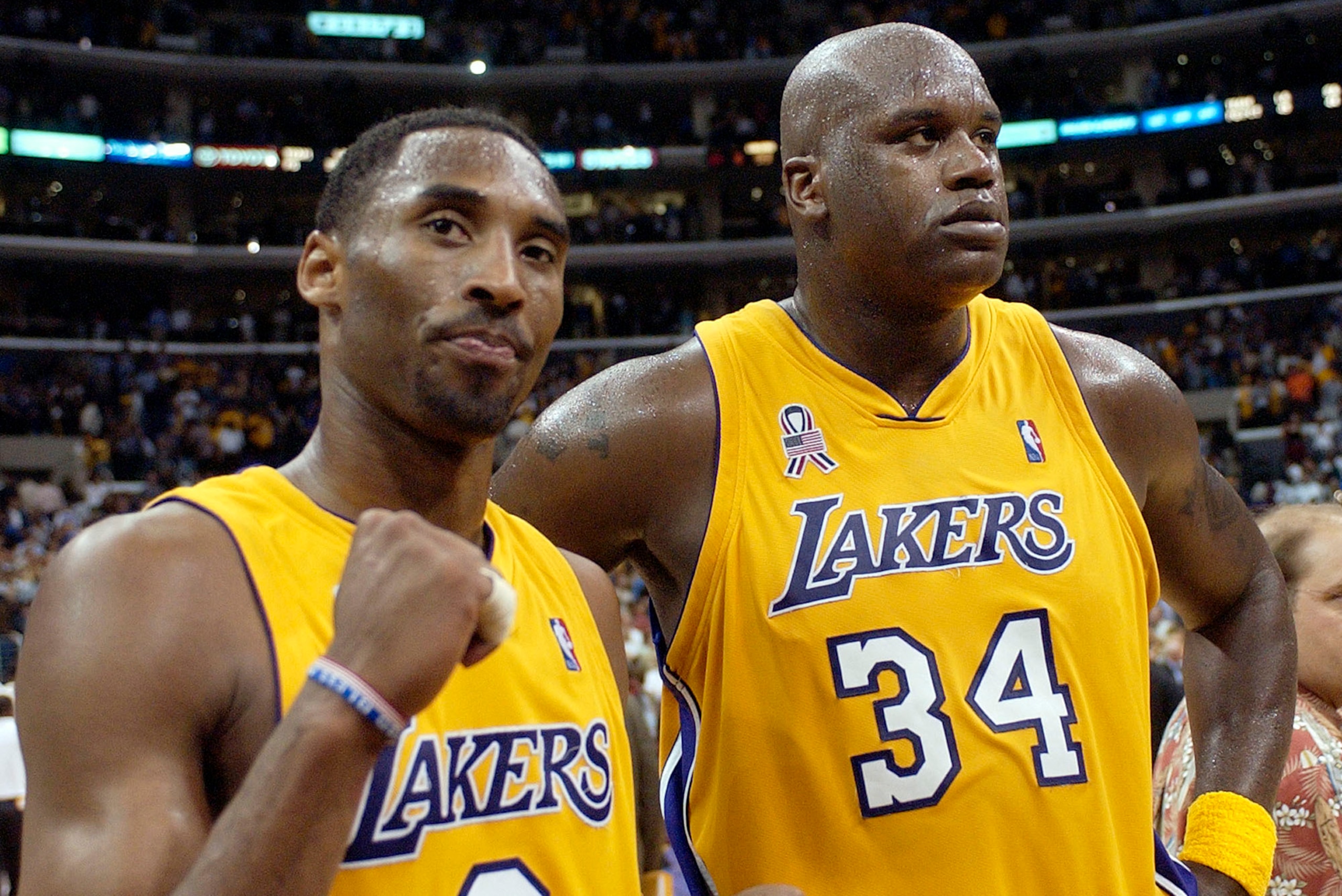

Every NBA Team's Best Playoff Memory of the 2000s
Though only five franchises won NBA titles during the 2000s, all 30 teams made the playoffs at least once. Many of them advanced beyond the first round, writing new chapters in their franchise history books and creating lasting memories for their respective fanbases.
With that final point in mind, we're taking a look at each team's best playoff memory from the 2000s today.
We examined the 2010s through this lens earlier this week, and though the 2000s weren't as strong in the NBA as their immediate successor, there are still plenty of moments worth recalling and discussing.
The guidelines here are the same as they were last time. If your personal favorite memory wasn't chosen, that doesn't mean it isn't worthy. The subjectivity of this exercise is unavoidable.
Have some fun going down memory lane once more.
Atlanta Hawks: 2009 Eastern Conference Quarterfinals
1 of 30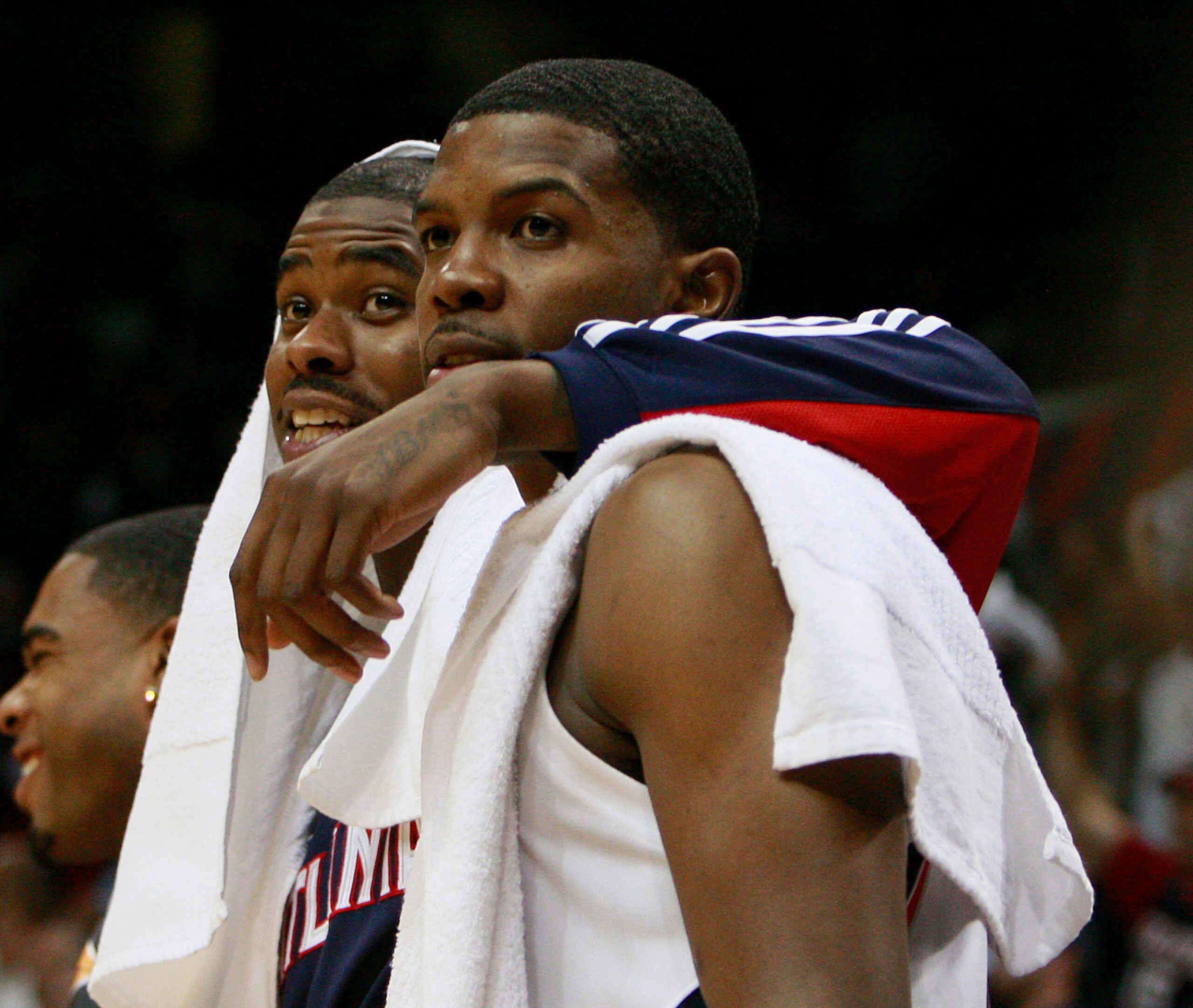
Heading into the 2008-09 season, the Atlanta Hawks hadn't won a playoff series in nine years. After they drew the Miami Heat in the first round of the 2009 playoffs, it looked like that drought would reach a full decade.
But from the jump, Atlanta wanted to prove that this time was different.
After a 90-64 annihilation of the Heat in Game 1, the Hawks lost the next two matchups by similarly large margins. However, they responded with 10- and 15-point victories in Games 4 and 5, respectively, to take a 3-2 series lead.
Dwyane Wade poured in 41 points in Game 6 to temporarily keep Miami alive, but his supporting cast was too inconsistent to handle an elimination game. In Game 7, the Hawks held the non-Wade Heat players to 47 total points on 16-of-38 shooting, and they rode a stellar shooting performance from Joe Johnson (27 points, 6-of-8 from three) to victory.
The 2000s weren't a great decade for the Hawks. But defeating Wade at his athletic peak is worth celebrating, no matter how suspect the rest of Miami's roster was.
Boston Celtics: 2008 NBA Finals
2 of 30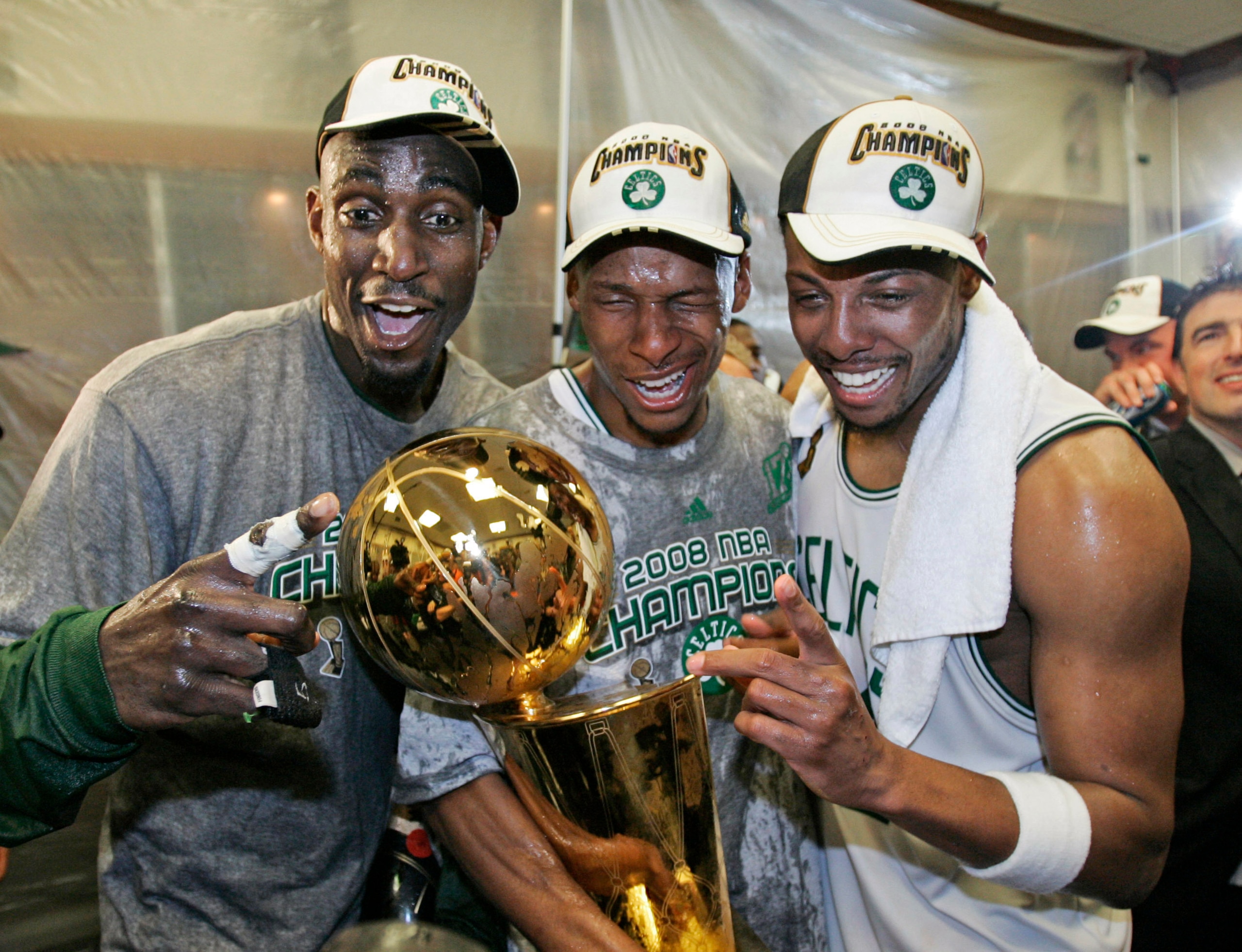
Heading into the 2007 offseason, the Boston Celtics had gone more than two decades without a title. But that drought would soon end, as they acquired Ray Allen and Kevin Garnett to flank incumbent Celtic Paul Pierce.
All of Boston fans' wildest dreams quickly came true. Allen and Garnett fit in seamlessly, and the team entered the playoffs with a 66-16 record, which was the largest single-season turnaround in NBA history.
Getting through the Eastern Conference was difficult. The Celtics played two Game 7s in the first two rounds and nearly played a third in the conference finals. But the end result made all the struggle worth it.
As fate would have it, Boston faced its old nemesis—the Los Angeles Lakers—in the Finals. While the Purple and Gold were not pushovers, the Celtics had established unbreakable chemistry and controlled much of the series, winning the title with a 131-92 blowout in Game 6 in front of a raucous home crowd.
Though other players and teams would form Big Threes in the ensuing seasons, none won a title in their first year—not even the LeBron James-led Heatles. The fact that Boston's trio was able to do so is a testament to just how special it was.
Brooklyn/New Jersey Nets: 2003 NBA Finals
3 of 30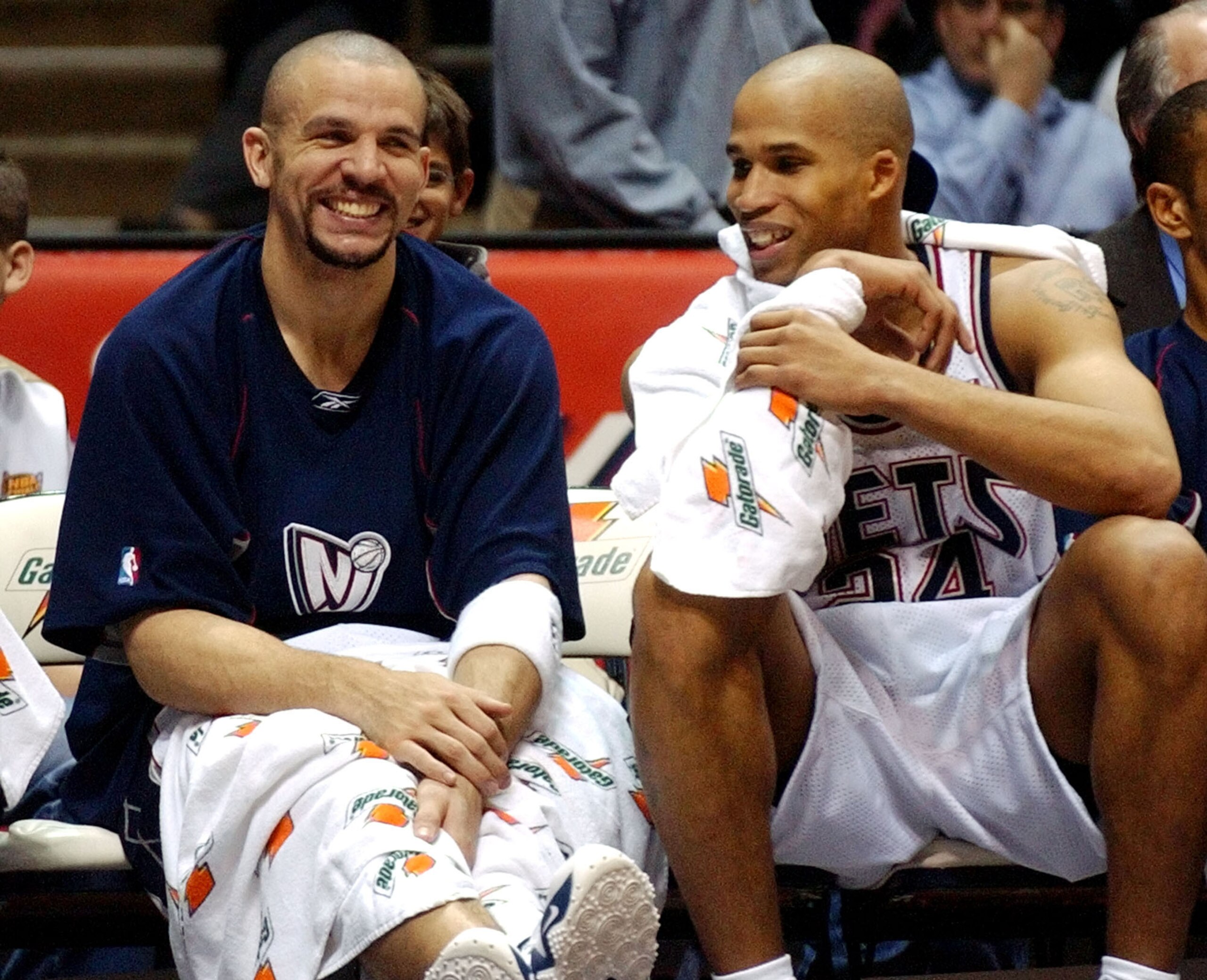
After getting swept in the 2002 NBA Finals, the then-New Jersey Nets wanted to return and be more competitive the following season.
Almost everything went according to plan.
Bolstered by a career year from Jason Kidd and stellar seasons from Richard Jefferson, Kenyon Martin and Lucious Harris, New Jersey earned the East's second seed and stormed through the conference in the playoffs. After dropping two first-round games to the Milwaukee Bucks, the Nets went on a 10-game winning streak, sweeping the Boston Celtics and Detroit Pistons consecutively to earn their second straight Finals berth.
The Nets gave their all against the San Antonio Spurs, winning Games 2 and 4 by a combined three points and nearly forcing a Game 7. But Tim Duncan was just too much in Game 6, almost recording a quadruple-double and leading the Spurs on a late 19-0 run to clinch the title.
Reflecting on this matchup may be painful or Nets fans, but the fact that they were so competitive against a dynastic team should provide enough solace.



Charlotte Hornets: 2001 Eastern Conference Quarterfinals
4 of 30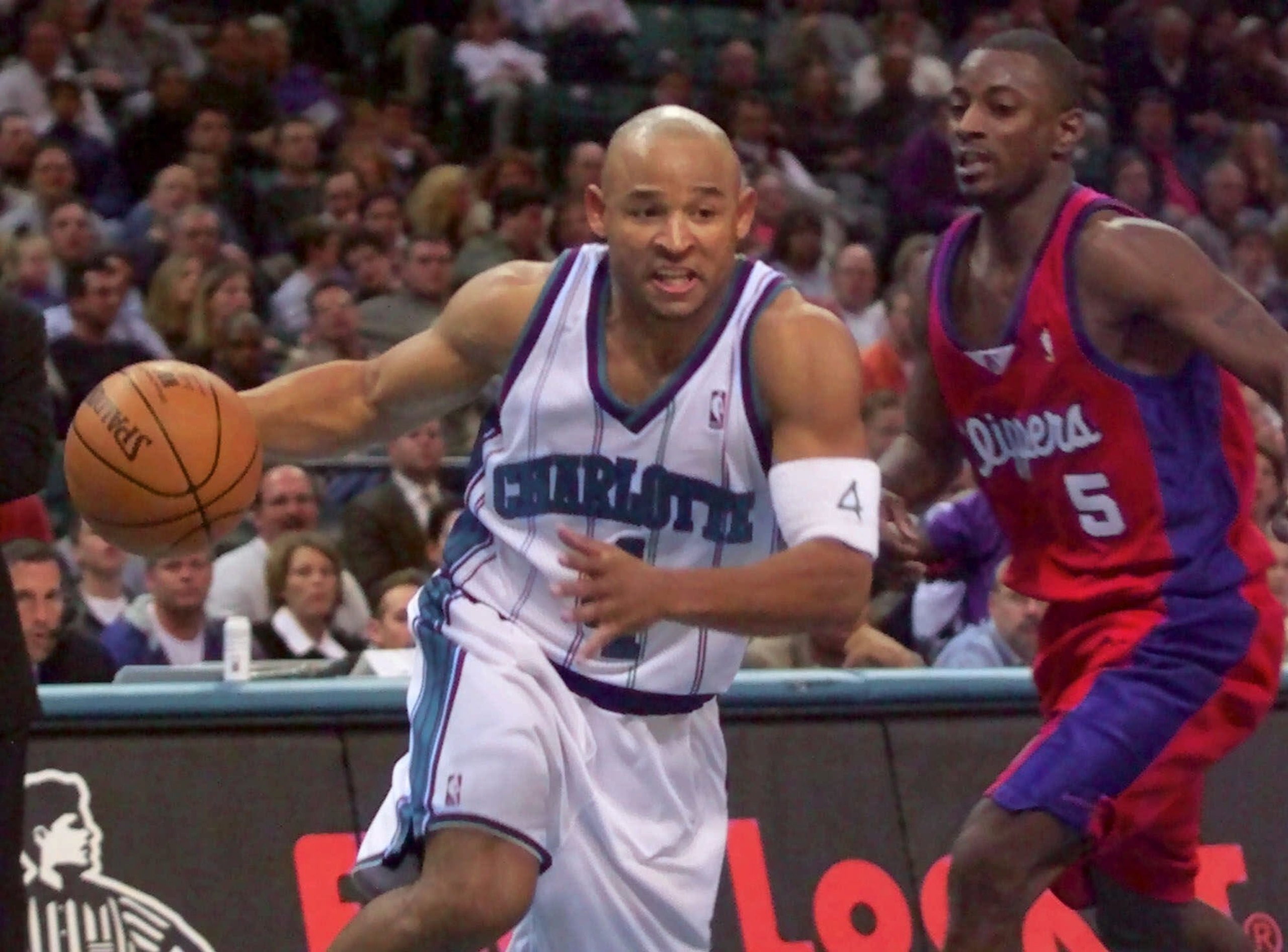
Though the Hornets were on the verge of moving to New Orleans at this time, that didn't stop them from playing quality basketball. During the 2000-01 season, they made their fourth postseason appearance in five years.
But while Charlotte faced off-court dysfunction, its first-round opponent—the Miami Heat—was a mess on the floor. Tim Hardaway was declining for the third straight season, yet the team still hadn't adequately replaced his shot creation and playmaking.
The result wasn't pretty.
Despite splitting the four regular-season matchups and being the lower seed, the Hornets were the better team throughout this series. They won all three games by at least 15 points and were constantly disruptive on defense, recording 37 total steals. Four of Miami's rotation players were at least 30 years old, and Charlotte made each of them look the part in this series, especially former Hornet Alonzo Mourning.
The Hornets were nearly able to carry the momentum generated from this series into the Eastern Conference Finals, taking the Milwaukee Bucks to a Game 7 in the ensuing round. To this day, it remains the franchise's deepest postseason run and one fans should remember fondly.
Chicago Bulls: 2009 Eastern Conference Quarterfinals
5 of 30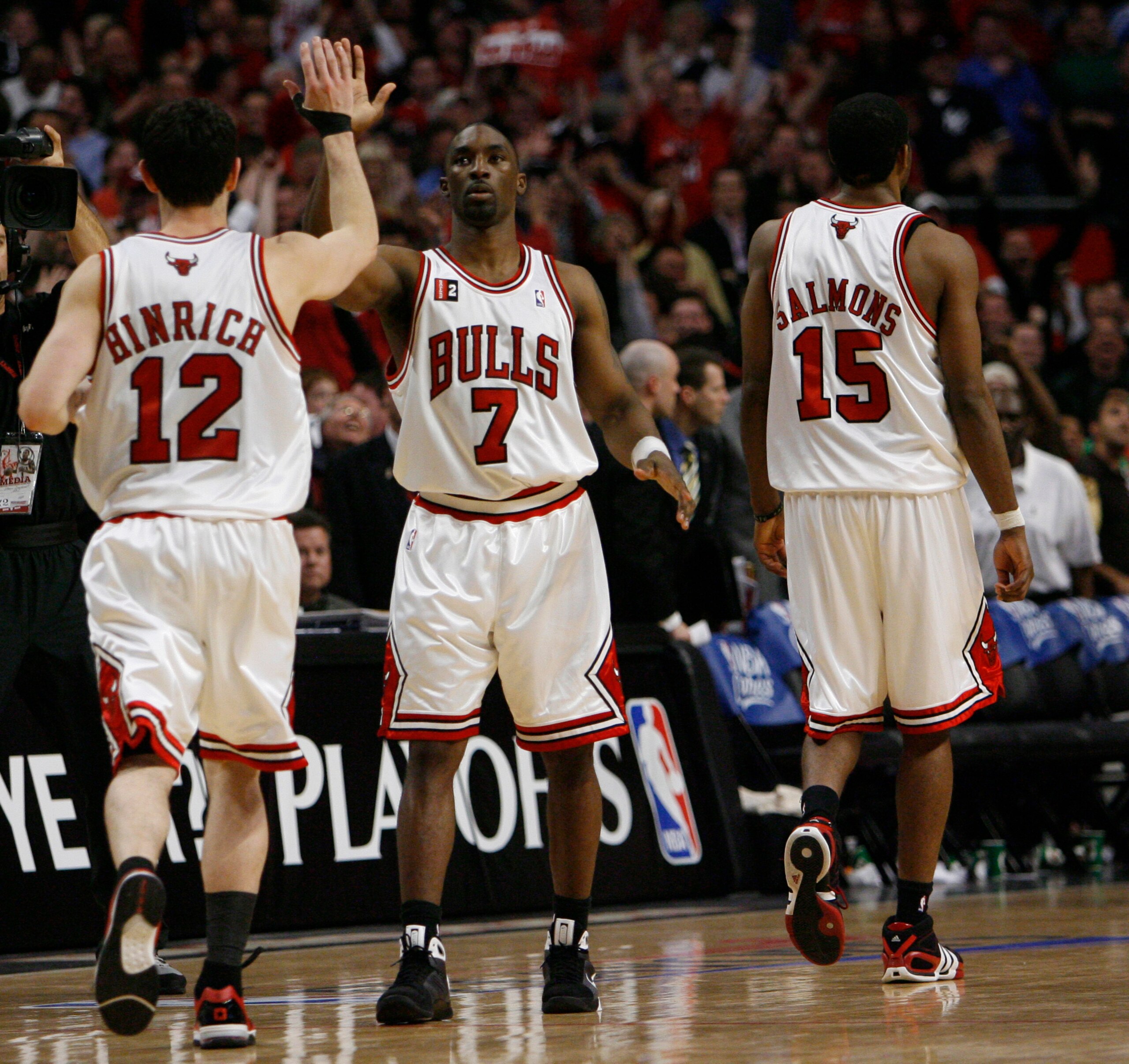
Matched up against the Big Three Celtics in their heyday, the Chicago Bulls were not expected to emerge victorious here. But the lack of expectations combined with 20-year-old Derrick Rose leading a quietly threatening roster turned this matchup into one of the great first-round series of the 21st century.
Just when you thought this series couldn't get any more wild, it did. Five of the seven games were decided by one possession and four of them went to overtime, including an epic three-OT Game 6 in which Ray Allen scored 51 and the Bulls escaped with a 128-127 victory.
Chicago's dynamic backcourt of Rose and Ben Gordon led the way, averaging a combined 44.0 points per game, but the team got massive contributions from each member of its seven-man rotation. Even future bust Tyrus Thomas held his own, averaging 2.9 blocks per game against Kevin Garnett, Paul Pierce, and Boston's devastating collection of slashers.
The Celtics won Game 7 by 10 points, a margin that felt gargantuan in this consistently heart-pounding matchup. But Rose and the Bulls left a major mark on the league with their performance in this series and weren't plucky underdogs for much longer.
Cleveland Cavaliers: Game 5, 2007 Eastern Conference Finals
6 of 30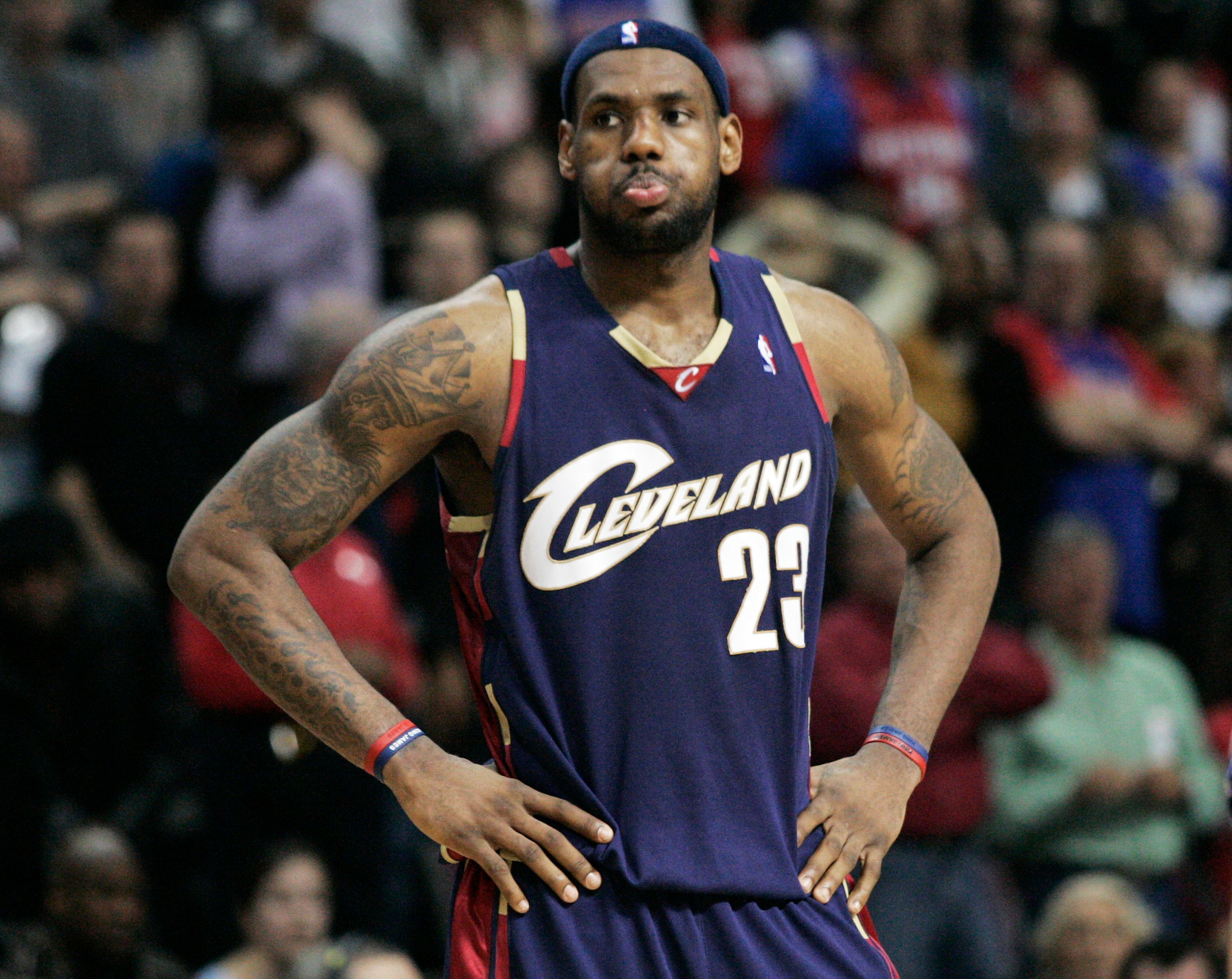
Everybody already knew LeBron James was special at this point. But in Game 5 of the 2007 Eastern Conference Finals, he started on a trajectory for rarefied air.
At the age of 22, James was already good enough to carry the Cleveland Cavaliers to the conference finals, where they split the first four games of the series with the Detroit Pistons. After trading leads for most of Game 5, the Pistons' postseason experience kicked in, as they went up by seven with 3:15 left in regulation.
Then a legend was born.
Unable to accept defeat, the King promptly went on a scoring binge for the ages, pouring in Cleveland's final 25 points and 29 of its last 30 through the remainder of the fourth quarter and two overtime sessions. The Cavaliers would go on to win Game 6 and make the Finals for the first time in franchise history.
Dallas Mavericks: 2003 Western Conference Semifinals
7 of 30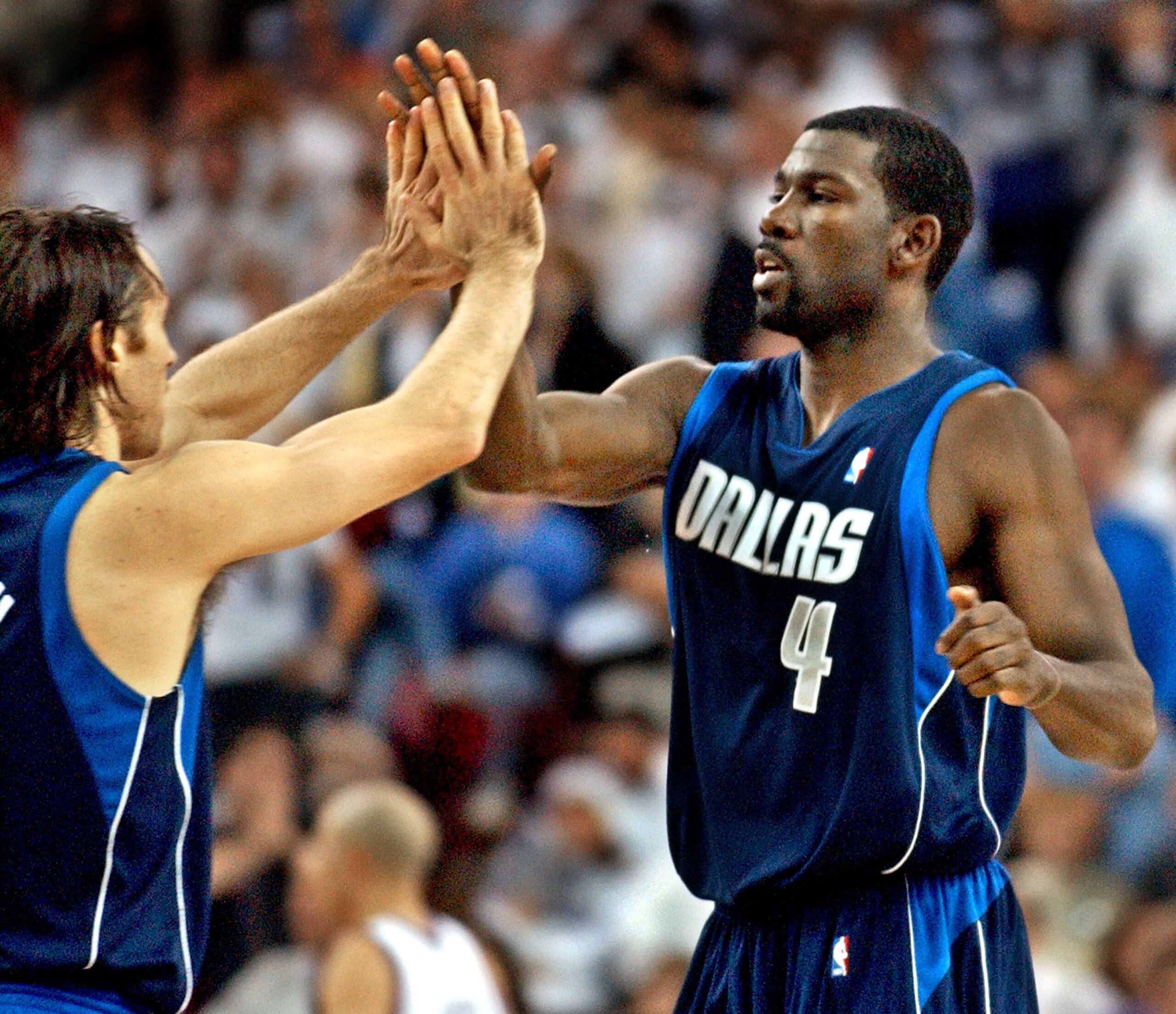
Though the Dallas Mavericks made an NBA Finals appearance in the 2000s, it's hard to call that the franchise's best memory given the controversy that surrounds the series.
Instead, let's reflect on something less complicated.
With Dirk Nowitzki, Steve Nash, and Michael Finley all in their primes in the early 2000s, Dallas was primed to be a major Western Conference player, and that trio blossomed in 2002-03. Thanks to head coach Don Nelson's uptempo style, the Mavericks led the NBA in offensive rating and won 60 games.
After a surprisingly difficult first-round series against Portland, Dallas returned to form in a raucous conference semifinals against the Sacramento Kings. Though it also went seven games, this series fit the Mavericks' personnel better. They scored more than 130 points twice, got three 35-point performances from sixth man Nick Van Exel, and played just enough defense to spook the Kings.
The Mavericks' performance here made teams around the NBA believe in their future potential. If Nash and Finley didn't leave in consecutive offseasons, they could have battled Tim Duncan and the Spurs for Texas and Western Conference supremacy for the rest of the decade.
Denver Nuggets: Game 4, 2009 Western Conference Finals
8 of 30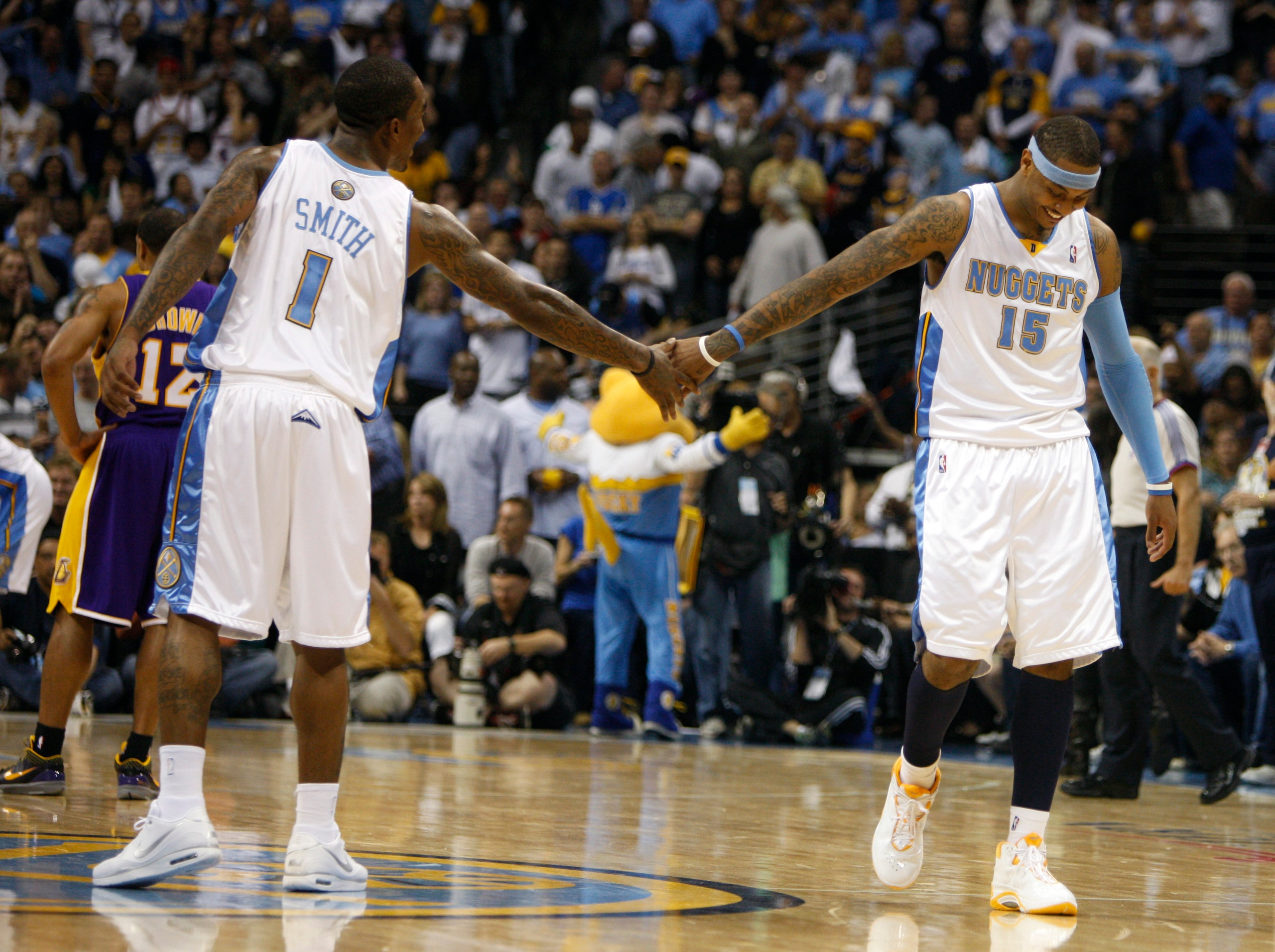
After losing five straight first-round matchups, the Denver Nuggets went all-in, trading Allen Iverson for Chauncey Billups in early November 2008. Iverson's status as a future first-ballot Hall of Famer made the move seem like a mild risk, but it immediately paid dividends for Denver.
Placing the veteran Billups alongside Carmelo Anthony stabilized and elevated the Nuggets. They beat Chris Paul and the Hornets by 58 points in a first-round game, eventually winning the series in five, and were similarly efficient while discarding the Dallas Mavericks to get to the conference finals against the Los Angeles Lakers.
With Billups at the helm, Denver stayed strong. The Nuggets lost Game 1 by two, but they quickly tied the series with 61 combined points from Anthony and Billups in Game 2. The most exciting moment for Nuggets fans would have to be Game 4, as seven players scored in double figures and the team won by 19 points.
A look at the final scores from this series reveal how close it really was. Had Denver made a few extra shots in Games 1, 3 or 5, it could have made the NBA Finals for the first time in franchise history.
Detroit Pistons: 2004 NBA Finals
9 of 30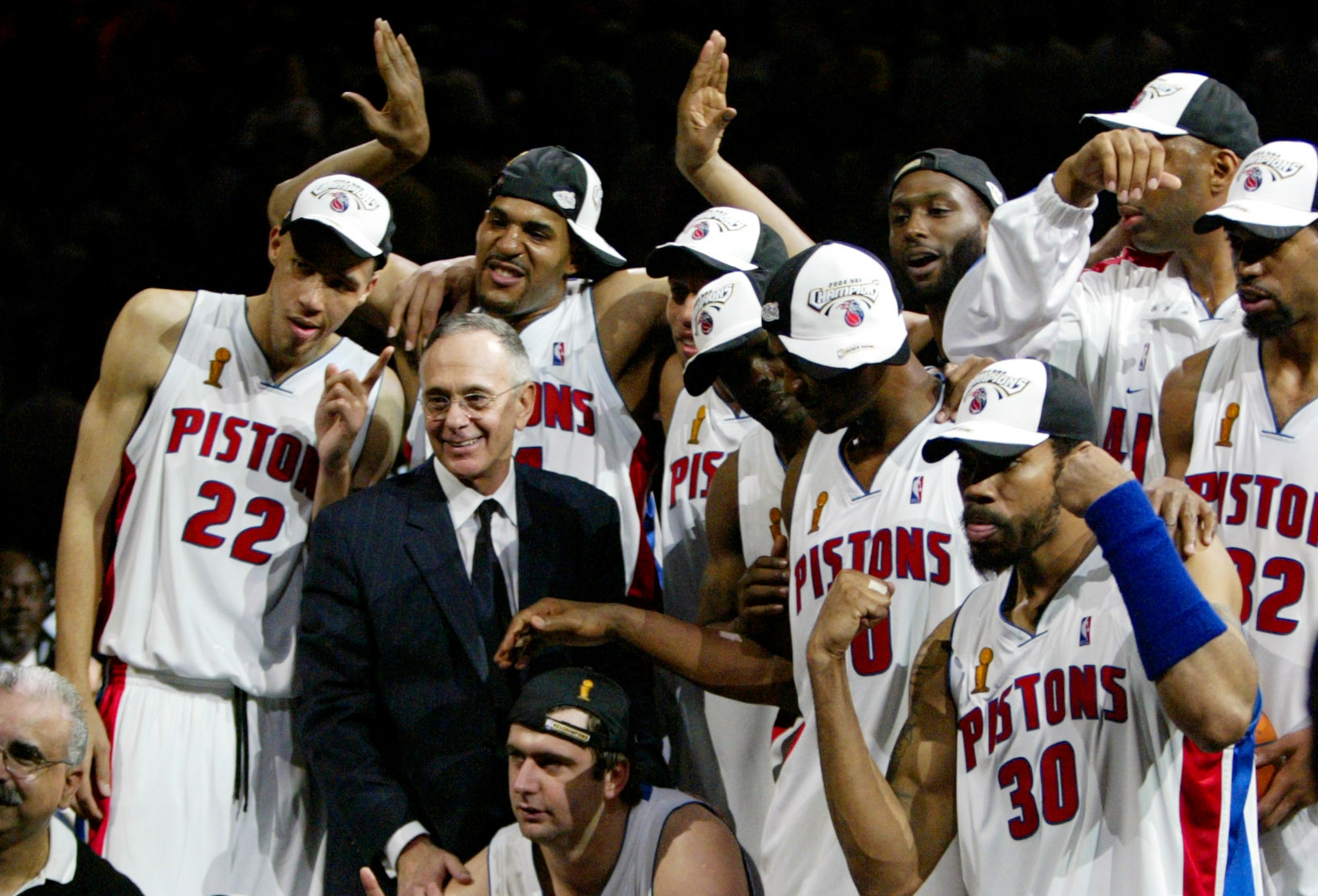
The 2003-04 Detroit Pistons are still widely revered for winning a title without a superstar. But that line of thinking almost discredits their accomplishments.
Although none of the the 2003-04 Pistons rank among the all-time top 50, four of their starters made All-Star teams, the fifth was an elite role player, and they complemented each other perfectly.
The recipe paid off in the 2004 playoffs. Though Detroit had to fight its way through the East, beating the Nets in seven games and the Pacers in six, the Finals were smooth sailing against an aging Lakers club.
Larry Brown's squad dominated a team with four future Hall of Famers, limiting every rotation player save for Shaquille O'Neal to under 40 percent shooting. The series was so devastating for Los Angeles that the franchise almost self-combusted. O'Neal and Gary Payton were soon traded, Karl Malone retired, and Phil Jackson briefly stepped away from coaching.
These Pistons represent an era of the NBA that many remember negatively, as the league was searching for its post-Michael Jordan identity. But don't lump them in with that narrative. They made defense fun, had personality for days and could get buckets when necessary.
What more can you ask for from an NBA champion?
Golden State Warriors: 2007 Western Conference Quarterfinals
10 of 30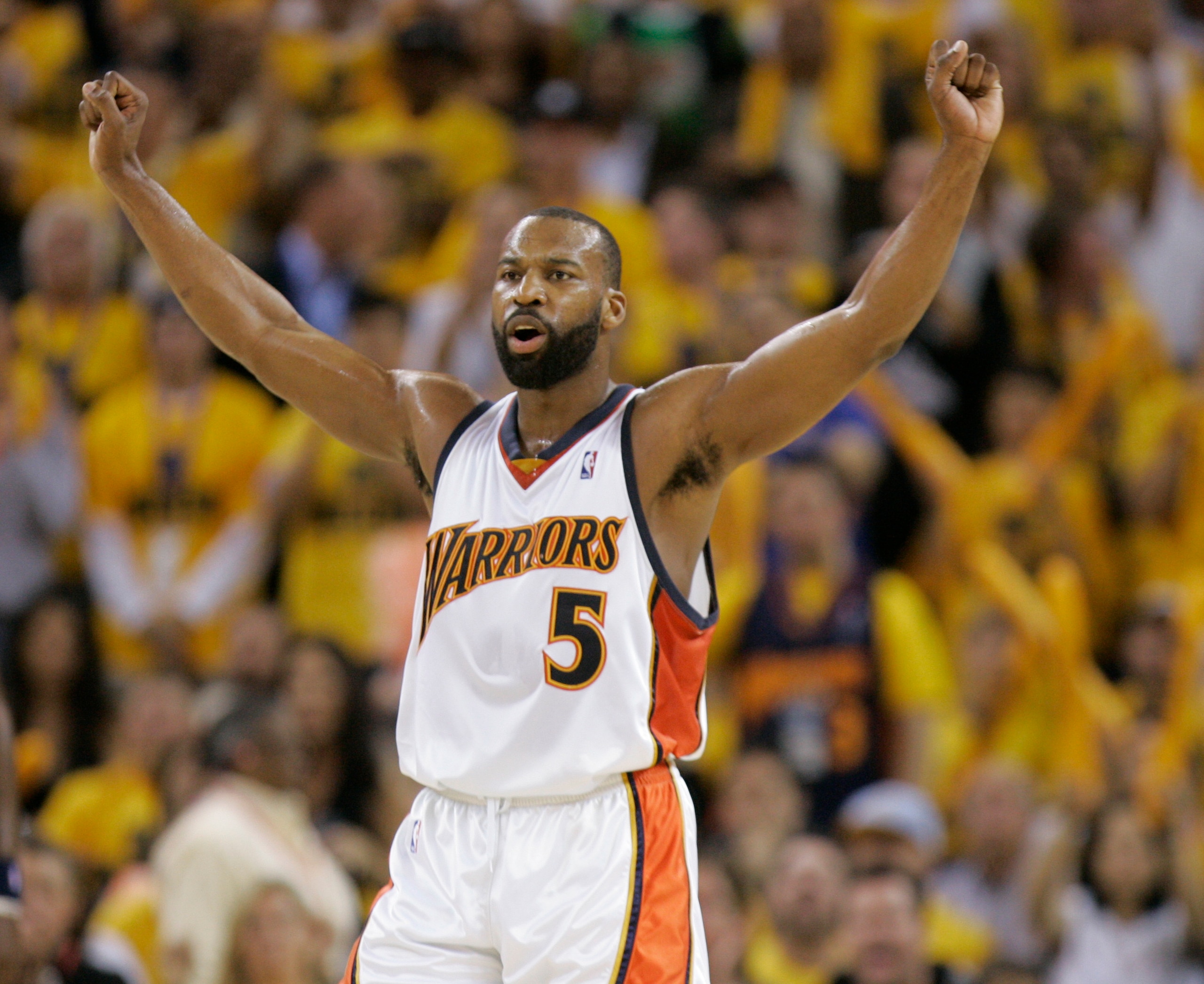
After taking a year off from coaching, Don Nelson accepted a job with the Golden State Warriors in 2006, and he made an immediate impact.
The team improved its record by eight wins and earned the West's final playoff spot. In what had to bring a smile to Nellie's face, the Warriors' first-round opponent was none other than the Dallas Mavericks, the team he had coached for much of the previous decade.
Having gone 67-15 in the regular season, Dallas was the 2007 title favorite. But in Nelson, the Warriors possessed the Mavericks' kryptonite. Having coached many of Dallas' main players just two years prior, he knew how to exploit them, and the result was shocking.
After being a below-average defensive team in the regular season, the Warriors neutralized Nowitzki. The MVP and revolutionary jump shooter made only 21.1 percent of his threes in the series, and the Mavericks' offense went limp without its catalyst. Meanwhile, Golden State continued to score with ease and won the series in six games.
Everybody involved with the Warriors knew that this series had more to do with luck than a permanent uptick in quality. But that definitely doesn't sully the experience, even in retrospect.
Houston Rockets: 2009 Western Conference Quarterfinals
11 of 30
This series may not be the best memory for Tracy McGrady, as he was recovering from microfracture surgery at the time. But his absence arguably makes this run more enjoyable for Rockets fans.
The Rockets' second-best player without McGrady was either Luis Scola or Metta World Peace, so when he underwent season-ending surgery in late February, they were widely expected to miss the playoffs. However, in just his second year on the job, general manager Daryl Morey had constructed a roster much greater than the sum of its parts.
After T-Mac's surgery, Houston won 22 of its last 30 games to clinch the fifth seed in the West.
Everything from that point on was gravy, freeing the Rockets from any postseason pressure. That attitude ended up extending their season, as they upset a Brandon Roy and LaMarcus Aldridge-led Blazers team in the first round, grinding out two one-possession victories and clinching the series with a 16-point win in Game 6.
Houston's 2007-08 team may be remembered more fondly since it won 22 straight games (nearly half of which came without Yao Ming). But the 2008-09 Rockets actually won a playoff series and should be given the same credit.
Indiana Pacers: Game 5, 2000 NBA Finals
12 of 30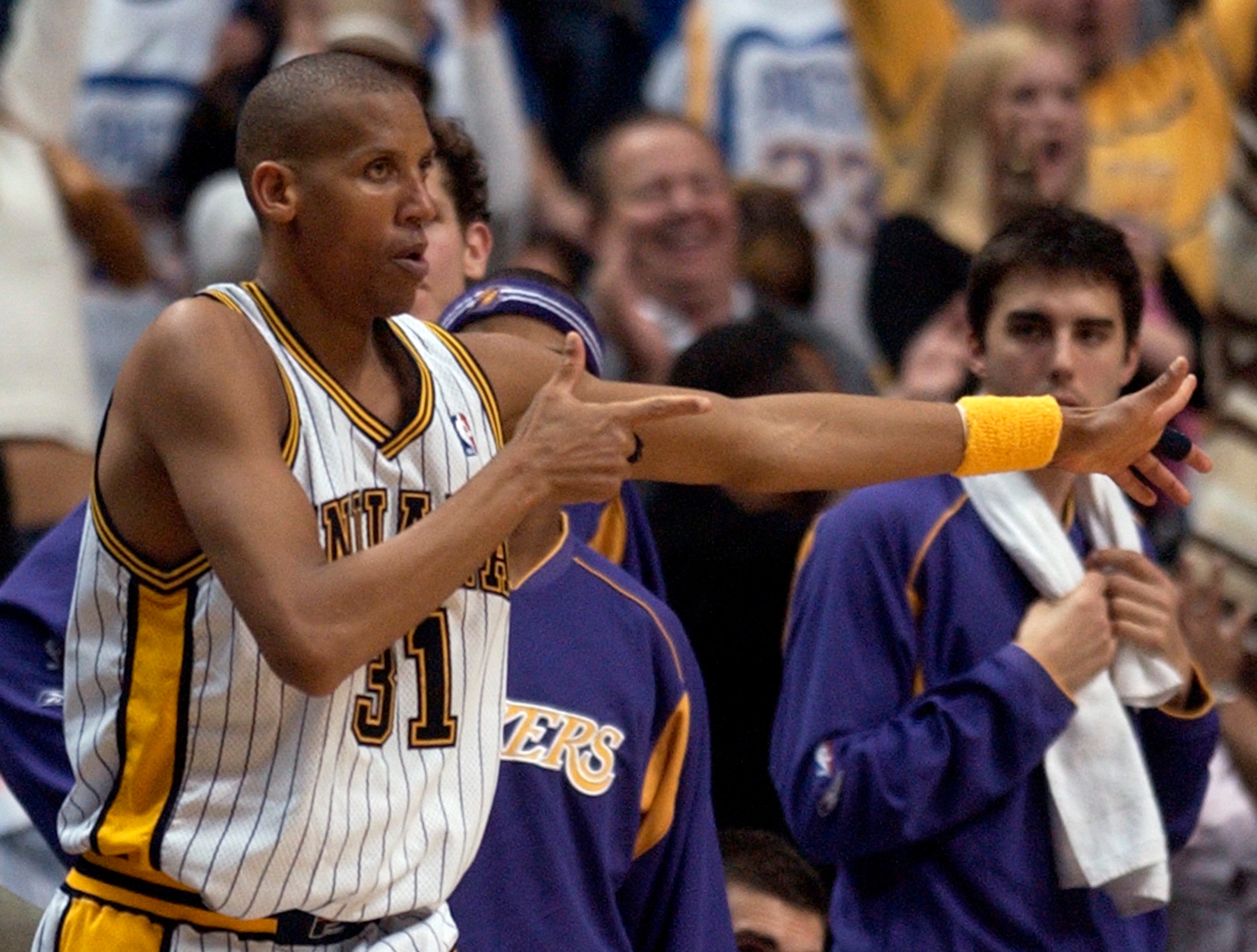
Despite being the East's top seed in 2000, the Indiana Pacers didn't exactly waltz to the NBA Finals. They dropped two games in each of their first three series, including a best-of-five first round in which they nearly lost to the eighth-seeded Milwaukee Bucks.
Nevertheless, Indiana finally arrived against the Lakers.
Los Angeles controlled most of the games in this series, largely thanks to Shaquille O'Neal's physical supremacy (he averaged a Wilt Chamberlain-esque 38.0 points, 16.7 rebounds, and 2.7 blocks per game in the series). But Shaq's supporting cast couldn't get going in Game 5, so the Pacers took control early and never let off the gas.
Indiana led by 19 points at the half and almost couldn't miss, shooting 57.4 percent from the floor on the night. But the team's performance wasn't just due to hot shooting. The Pacers outrebounded the Lakers—a major feat against any team with Shaq—and effectively drew contact, getting both Kobe Bryant and Robert Horry in foul trouble.
The Lakers clearly had an off night, but Indiana seized on it and got to be king for a day on the sport's biggest stage.
Los Angeles Clippers: 2006 Playoffs
13 of 30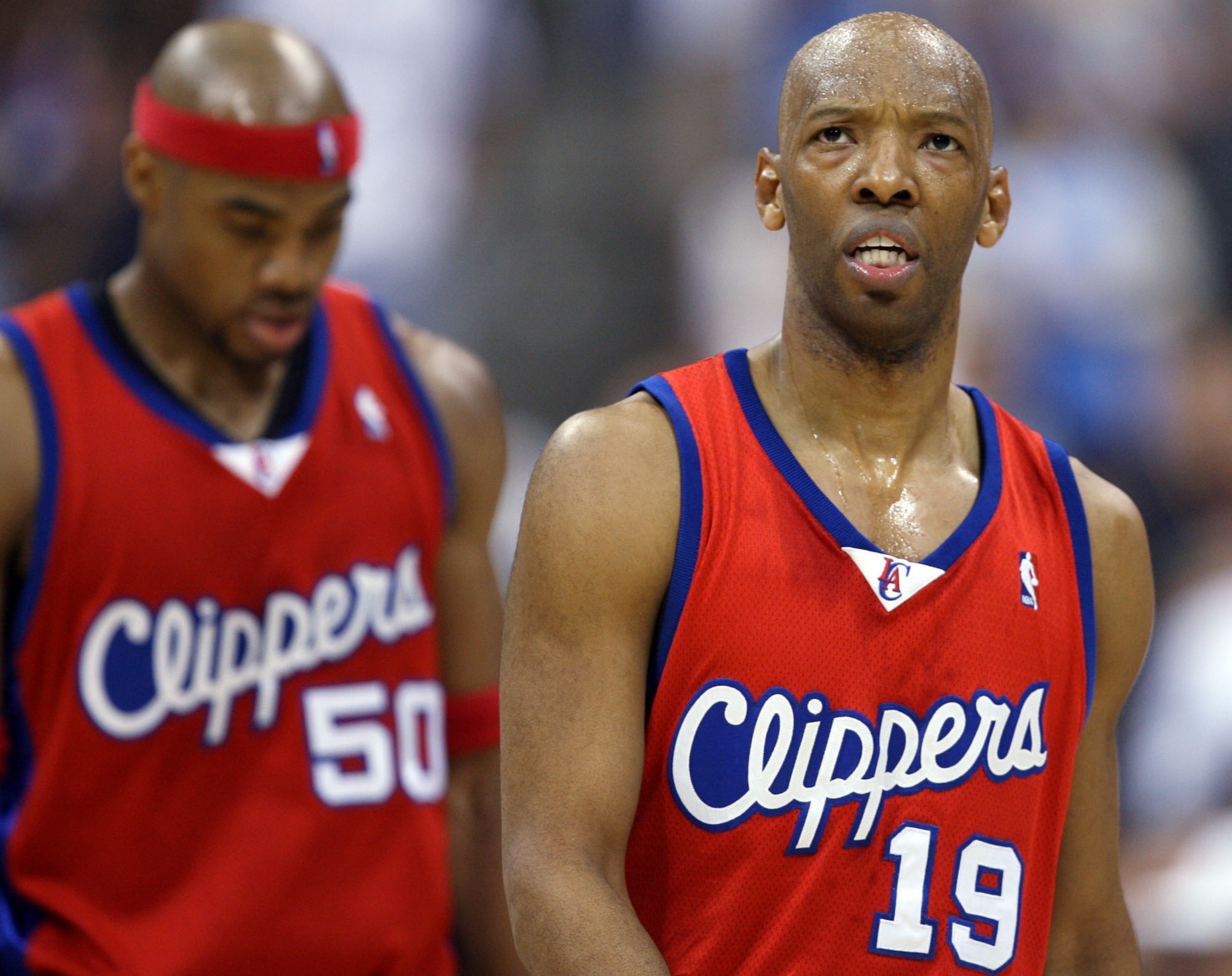
Before the 2005-06 season, the Los Angeles Clippers hadn't been over .500 in nearly 15 years, so it was understandably surprising when Mike Dunleavy's team won 47 games and earned the West's sixth seed.
But these Clippers weren't satisfied with making the postseason. They wanted to play spoiler too.
They did just that, upsetting the Denver Nuggets in five games. Outstanding defense from Cuttino Mobley, Shaun Livingston and Corey Maggette limited Carmelo Anthony to 33.3 percent overall shooting, and Denver's offense could barely function without its superstar playmaker in All-Star form.
However, Los Angeles still wasn't done.
Despite having a below-average offense in the regular season, the team somehow managed to run with the Phoenix Suns for seven games, scoring at least 110 points five times and besting them in shooting efficiency. Phoenix would advance to the conference finals after a 20-point victory in Game 7, but it wasn't easy.
We don't talk much about one-hit-wonder sports teams, but if there's a dictionary definition of one, it's the 2005-06 Clippers. They broke an eight-year playoff drought, nearly made the Western Conference Finals, then missed the postseason again for five consecutive seasons.
Los Angeles Lakers: 2001 Playoffs
14 of 30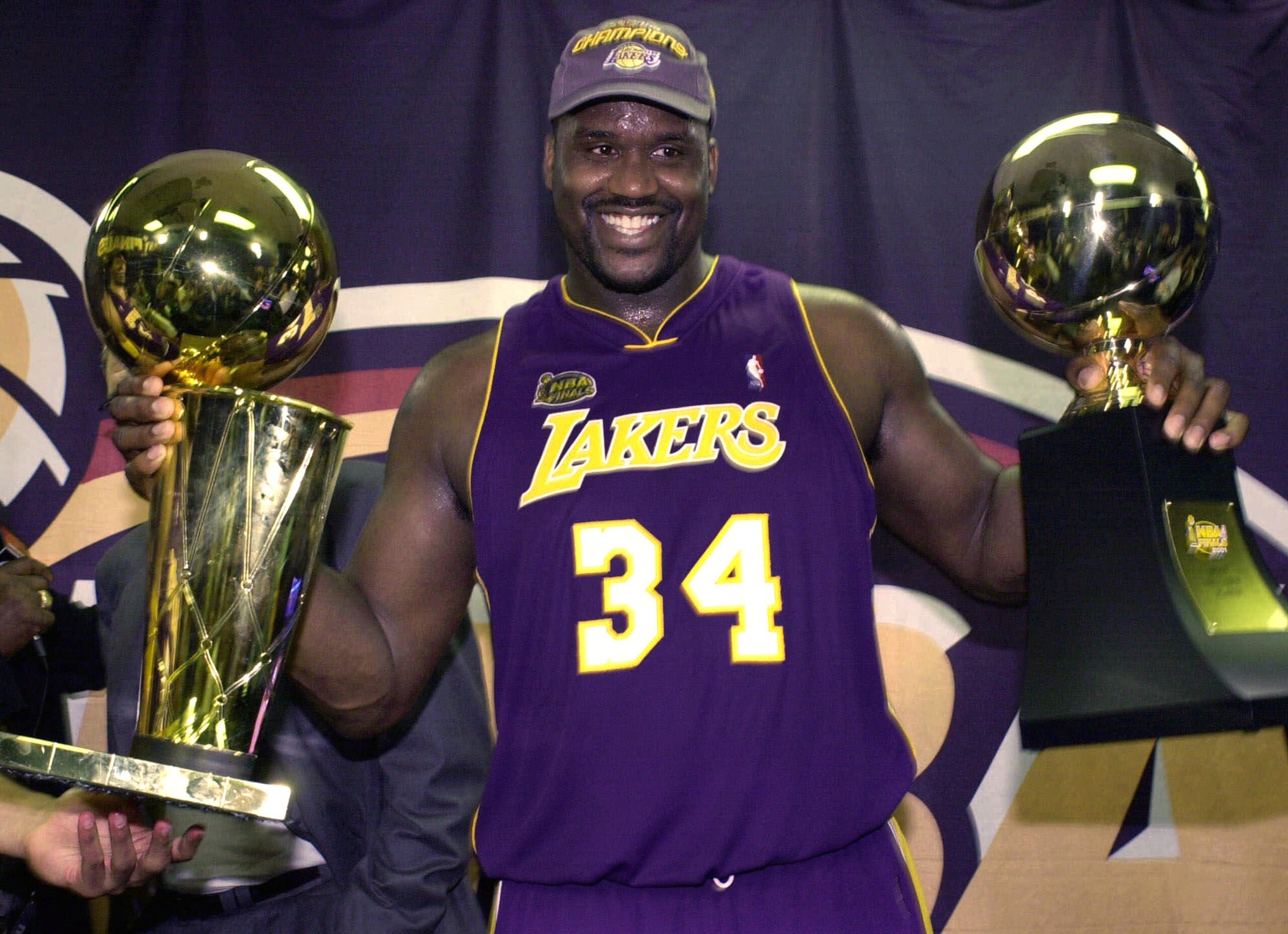
One truth defines sports dynasties: The first title is the hardest one to win.
Once you know what it takes to reach the mountaintop, doing it again doesn't seem as challenging.
No basketball team has embodied this axiom more completely than the turn-of-the-century Los Angeles Lakers. Their 2000-01 regular season was alarmingly pedestrian, but when the postseason started, they flipped a switch and every other NBA team cowered in fear.
A highly anticipated first-round matchup with the Portland Trail Blazers, who memorably took Los Angeles to seven games in the previous year's Western Conference Finals, was a 3-0 Lakers sweep. Same goes for the second round against the Kings—a series during which Shaquille O'Neal recorded two 40-point, 20-rebound games—and the Western Conference Finals against the Spurs.
By the time the dust settled, the Lakers had won 11 straight games against three 50-win teams, with seven of the wins coming by double figures.
Allen Iverson briefly slowed the Purple and Gold down in the Finals, ending their winning streak at 11 games. But Shaq, Kobe and company still won the series in five, capping their legendary postseason run with a 15-1 record and firmly establishing themselves as one of the greatest teams in basketball history.
Memphis Grizzlies: Game 3, 2004 Western Conference Quarterfinals
15 of 30
The Grizzlies made the playoffs each year from 2004 through 2006 but were swept in the first round every time by higher-seeded teams. So, with every other tiebreaker rendered moot, we'll examine their first postseason appearance for sentimentality's sake.
In Hubie Brown's second season as Memphis' head coach, he spurred one of the best win improvements in NBA history as the team went from 28-54 in 2002-03 to 50-32 the following year. Matched up against the defending-champion San Antonio Spurs in the first round, merely being competitive would be sufficient, and the Grizzlies got their wish in Game 3 of the series.
Memphis led by as many as 10, though San Antonio made the second half a barnburner. With 2:30 left, Bonzi Wells made a free throw to put the Grizzlies up one, but the Spurs soon pulled ahead for good off a Tim Duncan layup and three foul shots.
This game was the closest the franchise got to achieving playoff success with Pau Gasol, its first great player. He'd eventually raise the Larry O'Brien Trophy twice with the Los Angeles Lakers, but it would have been extra special for him to lead Memphis on a deep postseason run.
Miami Heat: 2006 NBA Finals
16 of 30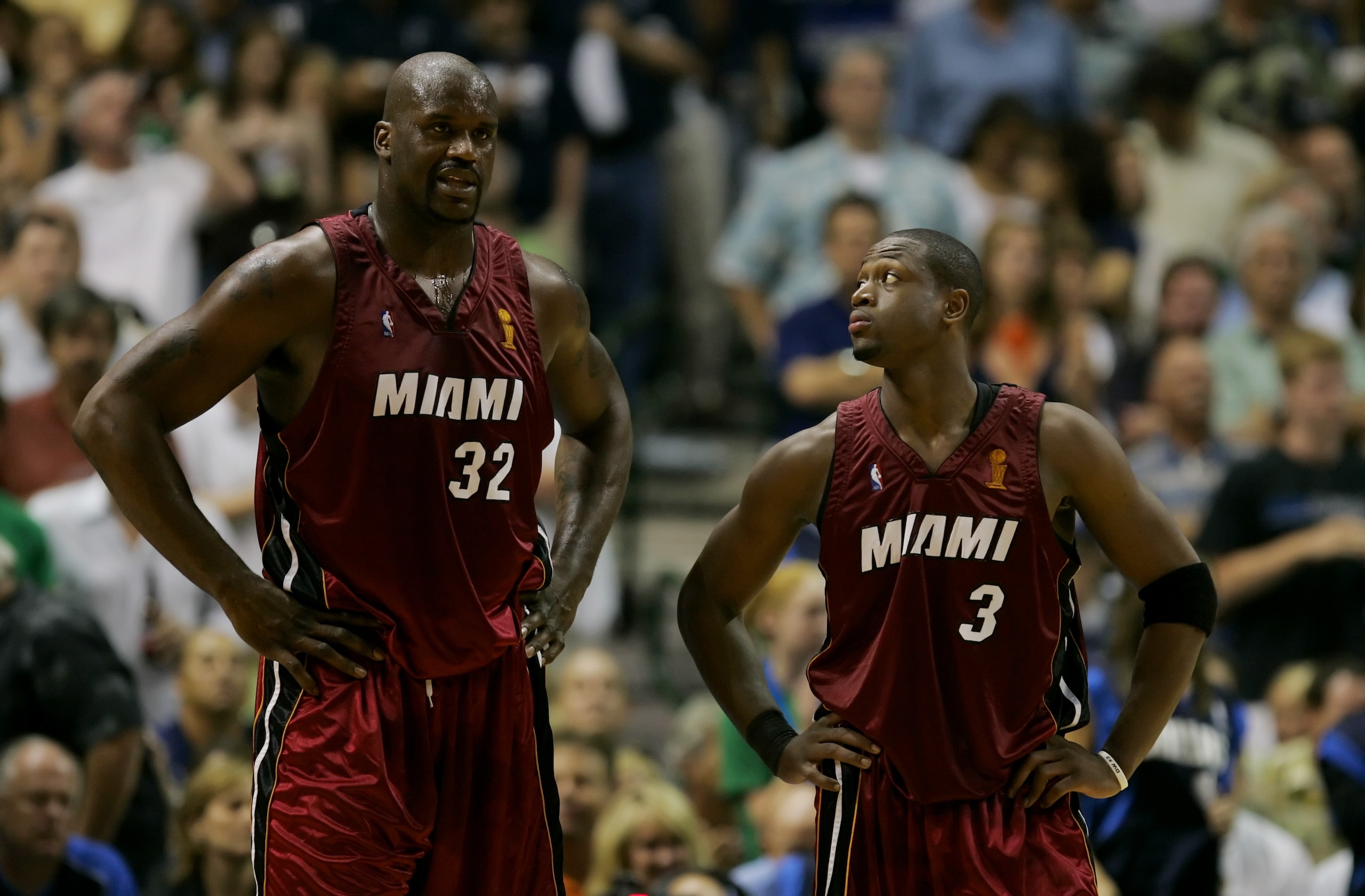
After coming within a game of the NBA Finals in Shaquille O'Neal's first season with the team, the Miami Heat were anxious to continue improving. They brought in Gary Payton, Antoine Walker and James Posey before the season, and Pat Riley fired Stan Van Gundy after an 11-10 start and began coaching the team himself.
You can question the individual moves, but there's no denying the end result.
Though he was just 24, the Heat were Dwyane Wade's team, and he relished the responsibility. Miami marched through the Eastern Conference, defeated the Detroit Pistons in a rematch of the 2005 Eastern Conference Finals and faced the more established Dallas Mavericks for the Larry O'Brien Trophy.
As we discussed earlier, this series' outcome is still hotly debated (and potentially for good reason). But Wade's iconic performances in the final four games remain untarnished. Even without the whistles, this highlight package is beautiful to watch.
There's a reason the county once renamed itself after Wade. He's the best and most meaningful player in Heat history, and though his legend grew even larger once LeBron James and Chris Bosh arrived, it began with the 2006 Finals.
Milwaukee Bucks: 2001 Eastern Conference Semifinals
17 of 30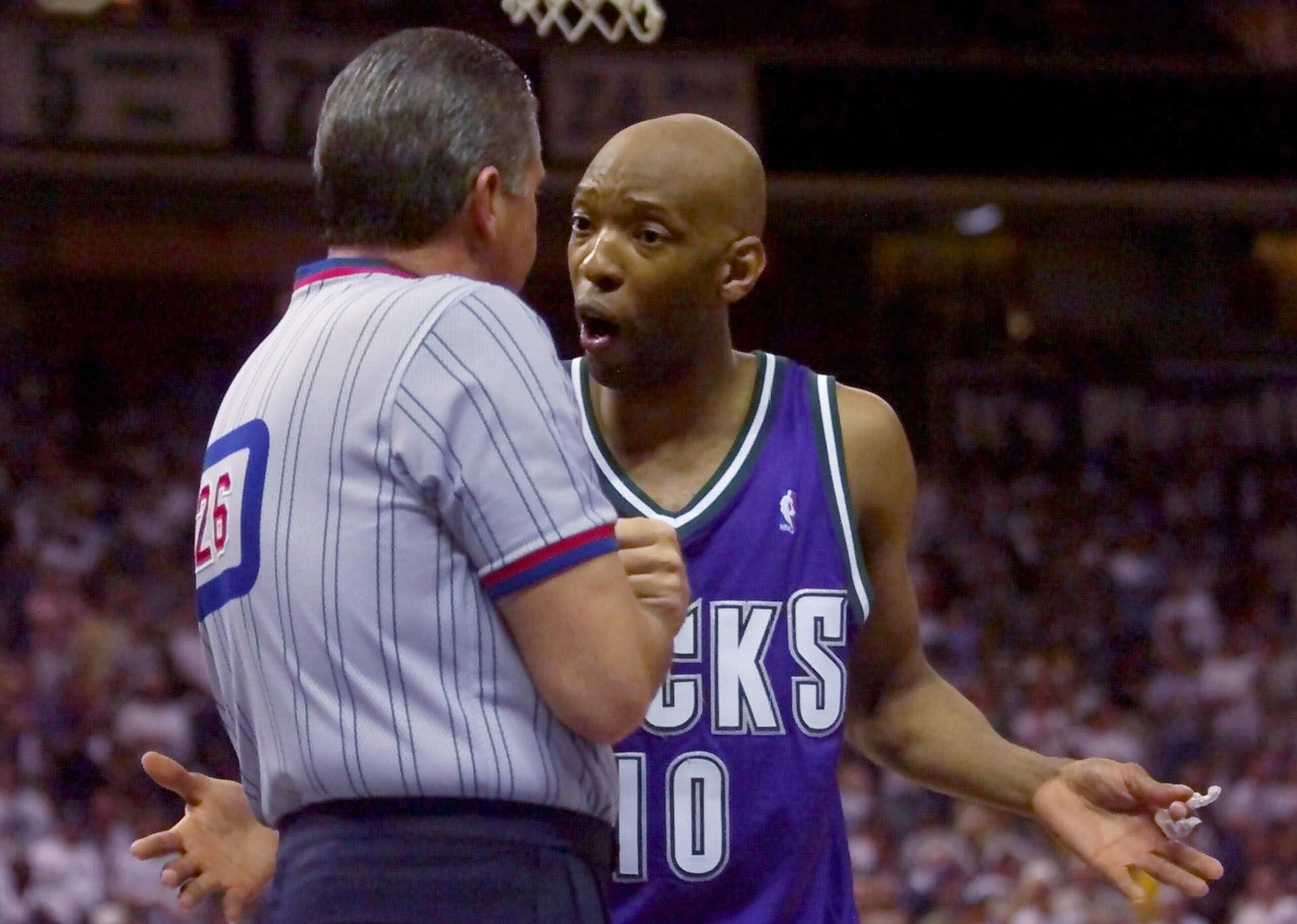
After losing in two consecutive first rounds, everything was lined up for the Bucks to break through in 2001.
They won 52 games, they boasted a Big Three of Ray Allen, Glenn Robinson and Sam Cassell, and they played in a weak Eastern Conference. And while this group didn't make the Finals, it did make the franchise's deepest postseason run in over a decade.
Defeating the sixth-seeded Charlotte Hornets may not sound very exciting. But this series was actually quite competitive, as Charlotte lost by one in Game 2 and won Games 3-5 by at least seven points apiece.
At that point, the Hornets should have won the series. They had all the momentum and were playing Game 6 in Charlotte. But with their backs against the wall, the Bucks rose to the occasion.
Milwaukee trailed by 10 at the half but pulled out a series-tying victory behind 41 second-half points from Robinson and Cassell. It then won the decider at home thanks to excellent shooting from beyond the arc (7-of-17, 41.2 percent) and at the charity stripe (33-of-35, 94.3 percent).
The Bucks failed to win another postseason series in the 2000s but left it all out on the floor here.
Minnesota Timberwolves: Game 7, 2004 Western Conference Semifinals
18 of 30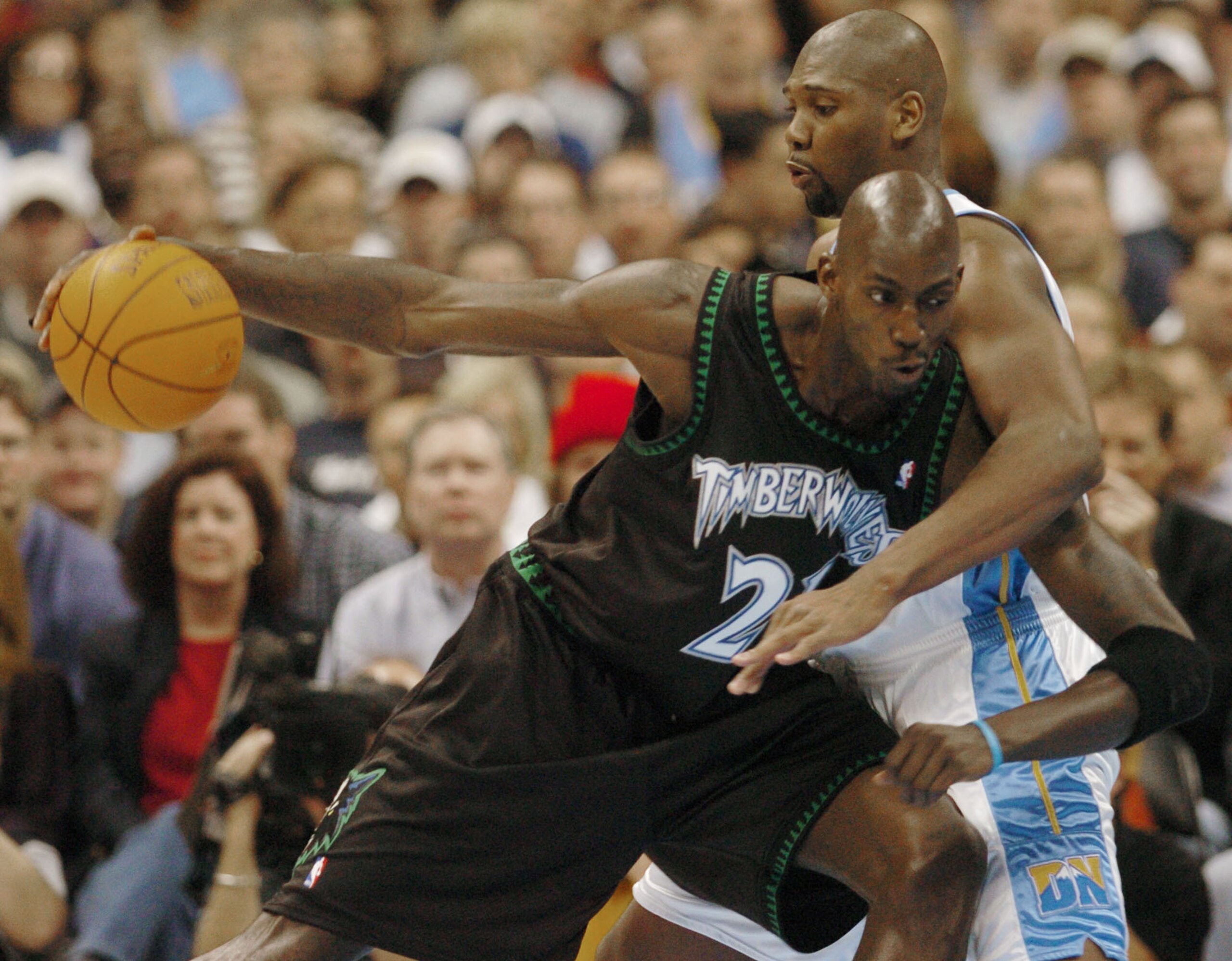
The 2003-04 season must have felt like a mirage for Timberwolves fans, as their team was tops in the West and hosted an MVP-winning campaign from Kevin Garnett. That's a far cry from the days of Tom Gugliotta and Christian Laettner.
But it got even better.
Minnesota nearly made the NBA Finals, though the main highlight of this run was Game 7 of the second round against the Sacramento Kings.
The conference semifinals' rubber match was tense. The Timberwolves kept the Kings at arm's length through much of the game, and when Sacramento tried to go on a late run, Minnesota was ready.
Garnett stole a pass from Brad Miller with 32.9 seconds left and then blocked his desperate layup attempt with four seconds to go. After the frantic final sequence, the MVP jumped on the scorer's table and howled at an adoring Target Center crowd.
After seven consecutive first-round defeats, the Timberwolves were going to the Western Conference Finals.
Inexplicably, Minnesota never returned to the playoffs with Garnett. But he still loves the franchise, apparently enough to buy it. Hopefully, a new governor with his competitive streak can bring the glory days back to Timberwolves basketball.
New Orleans Hornets/Pelicans: 2008 Western Conference Semifinals
19 of 30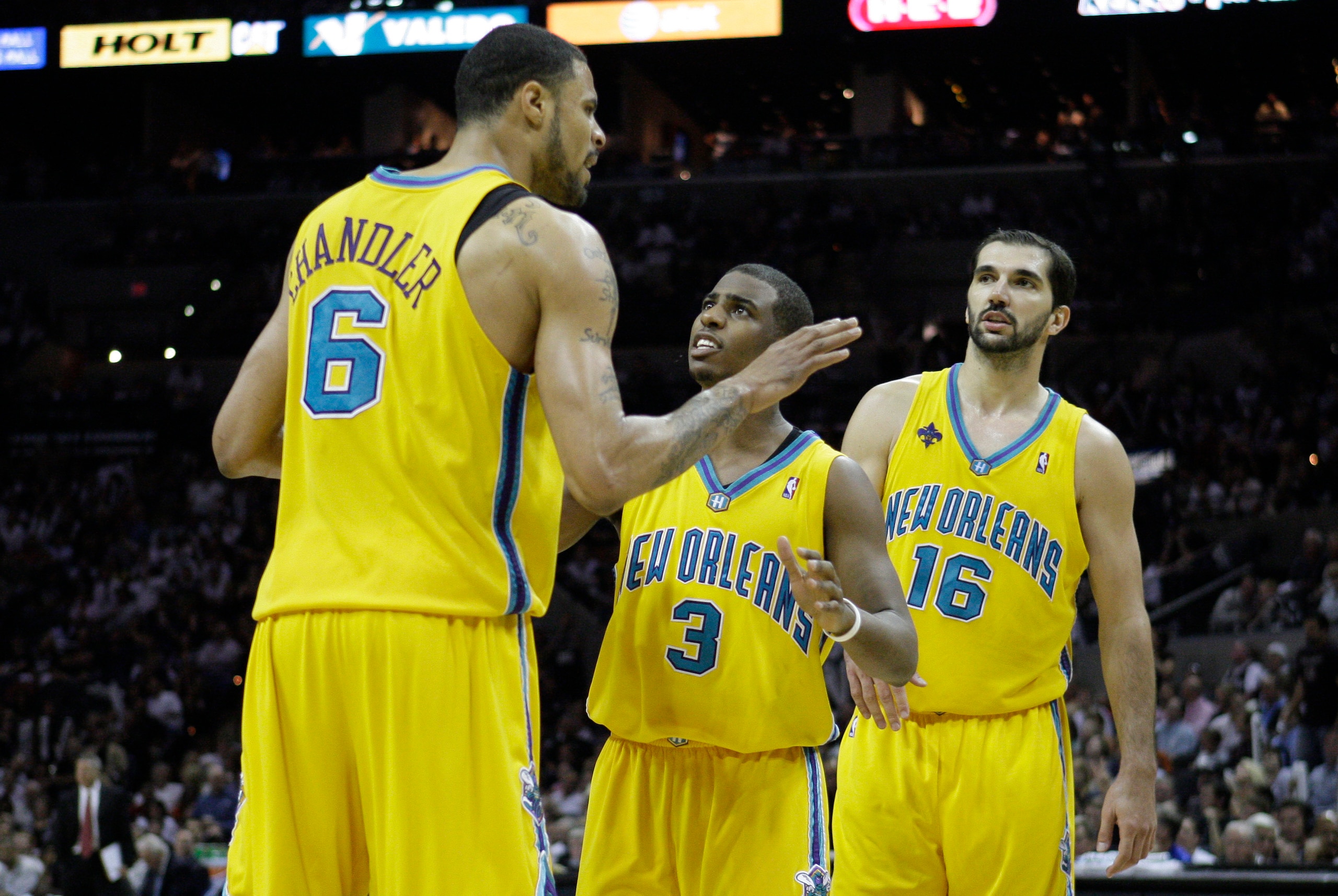
In his third year, Chris Paul blossomed into a superstar, breaking the-then New Orleans Hornets' four-year playoff drought. Buoyed by a strong supporting cast, they were ready to emerge under the bright lights of the postseason and did so efficiently.
After dismissing the Dallas Mavericks in five games, New Orleans battled the San Antonio Spurs. As the two squads both won 56 games and San Antonio had much more playoff experience, this didn't seem fair. But the 6'1" Paul thrived when underestimated, so such doubts were almost comforting for New Orleans, which jumped out to a 2-0 series lead with 19- and 18-point home victories.
The Spurs held serve by winning their home games but soon got pushed to the brink of elimination in a glorious Game 5 for the Hornets. David West battled back pain to record 38 points and 14 rebounds, Paul added a double-double of his own, and the team cruised to a 101-79 win.
That was enough for San Antonio, which locked New Orleans down in the remaining two games and earned yet another Western Conference Finals berth. But Paul and the Hornets gained leaguewide respect for seriously challenging the NBA's preeminent modern dynasty.
New York Knicks: Game 7, 2000 Eastern Conference Semifinals
20 of 30
The Miami Heat and Knicks were the rivalry of the late 1990s, and not just because they met in four consecutive postseasons. These teams were emblematic of the era in that they were defense-first, were unafraid to mix it up and displayed genuine hatred for one another.
None of that drama seeped into this iteration of the rivalry, though. And in possibly related news, this was the best of the four matchups.
Five of the first six games were decided by two or fewer possessions, so it's no surprise that Game 7 was similar, featuring 13 lead changes and seven ties. With 1:20 left, however, New York took the lead for good off a Patrick Ewing dunk. Jamal Mashburn, Tim Hardaway and Clarence Weatherspoon all had chances to win the series after Ewing's bucket, but each attempt went awry.
For the third straight year, the Knicks emerged victorious over the Heat.
New York couldn't make a repeat Finals appearance, as the archrival Indiana Pacers returned to torture them once more in the following round. But this was Ewing's last season with the Knicks, so the fact that he scored the game-winner is a wonderful capper to the greatest career in franchise history.
Oklahoma City Thunder/Seattle SuperSonics: 2005 Western Conference Quarterfinals
21 of 30
Despite boasting Ray Allen and Rashard Lewis, the Seattle SuperSonics only managed one playoff berth in their post-Gary Payton, pre-Kevin Durant period. Luckily, they made it count.
After two consecutive losing seasons, Seattle made a leap, increasing its win total from 37 to 52. However, though the team's offense was ranked second by net rating, its reliance on three-pointers provoked questions.
But anti-shooting takes usually prove foolish, and they did here as well.
Though most Sonics experienced a drop-off in shooting efficiency against the Sacramento Kings (except for Allen, who shot 45.2 percent from long range), they still outgunned the Sacramento Kings, limiting them to 82 and 93 points in Games 1 and 2 and winning their first-round series in five contests.
Seattle's shooting got even worse against the venerable San Antonio Spurs in the conference semifinals, yet it still nearly forced a Game 7 before giving up a series-winning bank shot to Tim Duncan.
The Phoenix Suns get most of the credit for modernizing NBA offenses because they consistently made the postseason. But Nate MacMillan's Seattle teams were experimenting right alongside them, and though they had less success, they still deserve to be remembered well.
Orlando Magic: 2009 Playoffs
22 of 30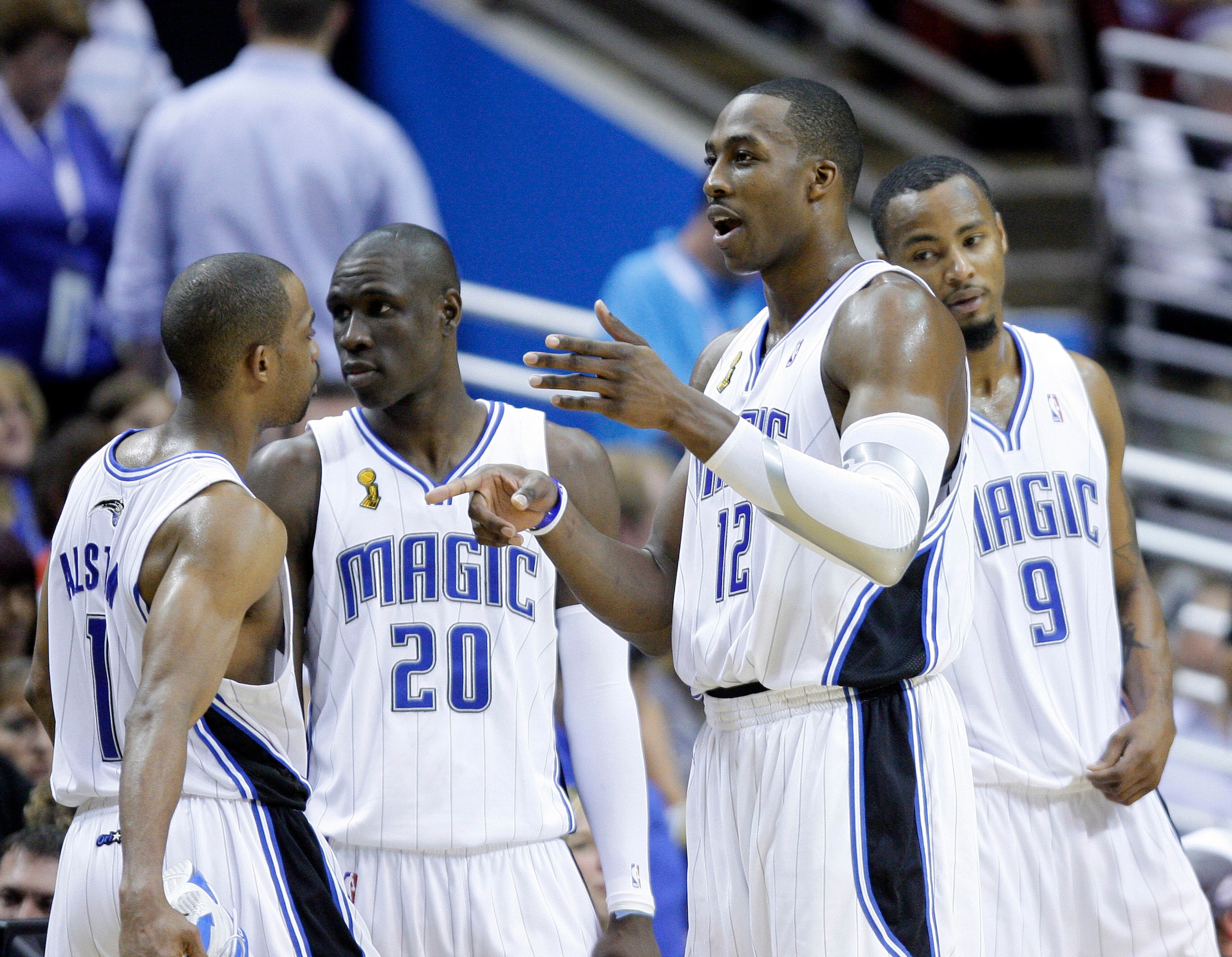
After losing in the first round in 2007 and losing in the second round in 2008, logic dictated that the Orlando Magic would make a deep playoff run in 2009. Lo and behold, they did exactly that.
The team's regular season wasn't anything special, as it won just 59 games and earned the third seed in the Eastern Conference. But this roster was built for the postseason.
Considered innovative for their time, head coach Stan Van Gundy's lineups are almost quaint nowadays. He surrounded Dwight Howard with knockdown shooters, knowing they'd accentuate the big man's considerable gifts in the paint. Those shooters often led to subpar perimeter defense, but given that Howard also happened to be the best rim protector in basketball, that wasn't much of a worry.
During an era in which teams still regularly played two non-shooting big men simultaneously, the Magic were unbeatable on good shooting days. And in the 2009 postseason, they hit just enough shots, dethroning the Boston Celtics in a back-and-forth second-round matchup and outlasting LeBron James' Cleveland Cavaliers to make the Finals.
Howard was just 23 at the time, and it looked like Orlando would dominate the league for years after this playoff run.
Philadelphia 76ers: Game 1, 2001 NBA Finals
23 of 30
This was a magical season for the 76ers, and this game was the capper.
In his fifth season, Allen Iverson had blossomed into a full-blown superstar, and nothing would stop him from achieving team success, not even a mostly anonymous supporting cast (and 34-year-old Dikembe Mutombo, still finger-wagging like nobody's business).
Despite being the smallest player on most courts and a terribly inefficient scorer, Iverson dragged this thin roster to 56 wins while leading the league in scoring and winning his only MVP award.
The 2001 postseason saw Iverson take hero ball to its absolute limits. Through the first three rounds, he averaged a Russell Westbrook-esque 29.4 shots per game and essentially got the 76ers to the Finals through sheer force of will. This approach peaked in Game 1 when the Answer produced a 48-point masterpiece against the Los Angeles Lakers and clinched it with a jumper and stepover that should live in the Louvre.
Iverson and the 76ers might as well have been practice chairs for Los Angeles through the remaining four games. But you can't say he didn't make the most of his moment in the sun.
Phoenix Suns: 2006 Western Conference Quarterfinals and Semifinals
24 of 30
After Steve Nash put together a second consecutive MVP-winning regular season, postseason expectations were high for the 2005-06 Suns, so it was understandably nerve-racking when Kobe Bryant and a weak Los Angeles Lakers roster jumped out to a 3-1 series lead in the first round.
Being on the brink of elimination awoke something within the Suns, though, as they won Game 5 by 17 points, survived a 50-spot from Kobe in Game 6 and cruised to a 121-90 victory in the rubber match. However, the team could not maintain that consistency for more than a game at a time in the conference semifinals.
It played vintage Suns basketball in Game 1, erupting for 130 points against the Los Angeles Clippers, yet scored less than 100 in Games 2 and 3. The two clubs alternated wins through the remainder of the round, and it was Phoenix's turn to be victorious in Game 7. The team shot 60 percent from the field and scored 127 points in an easy series-clincher.
The way we've described the Suns' 2006 postseason may sound too stressful to be a fond memory. But with knowledge of the outcomes and distance from the emotions, this team's roller-coaster journey is riveting to revisit.
Portland Trail Blazers: Game 6, 2000 Western Conference Finals
25 of 30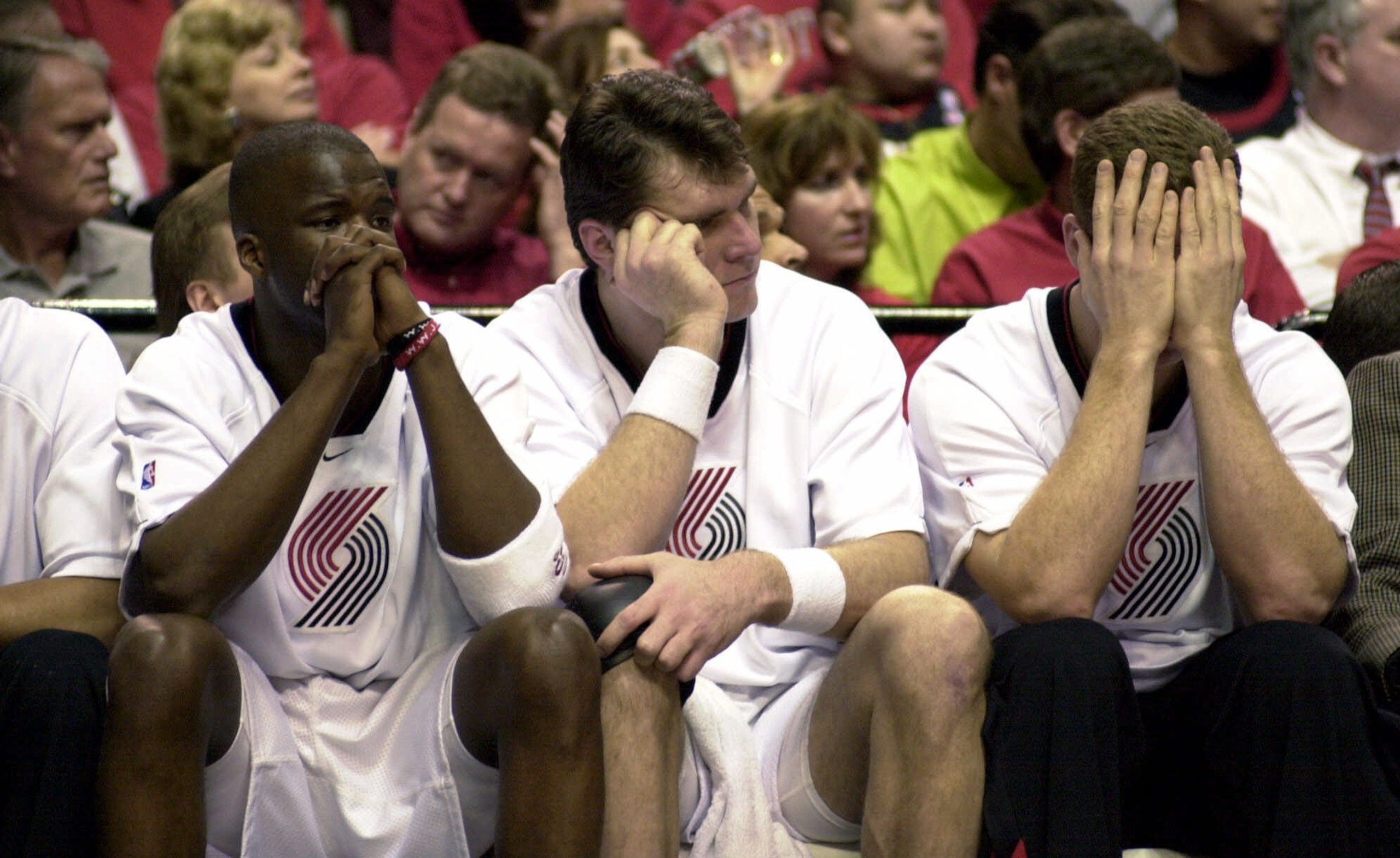
In hindsight, the outcome of this series was obvious.
The Los Angeles Lakers had the two best players, and Kobe Bryant in particular was not going to let them lose. But their three-peat almost ended before it started thanks to the Blazers' exploits in this series.
Los Angeles took a 3-1 lead, and given the aforementioned talent disparity, it would have been understandable for Portland to roll over.
But Mike Dunleavy's club wasn't about to do that.
They outlasted the Lakers in Game 5 behind an elite two-way performance from Scottie Pippen (22 points, six rebounds, six steals, four blocks, three assists) and soon tied the series behind 26 points from Steve Smith and a double-double from 35-year-old Arvydas Sabonis.
After they'd been swept in the 1999 Western Conference Finals, it looked like the Blazers were about to right their wrongs and reach the Finals for the first time in eight years.
Game 7 was a barnburner, punctuated by a legendary lob that symbolized the beginning of the Lakers' dynasty. But in a slightly different reality, we're talking about how the Blazers made the Finals with post-prime Pippen, lead-footed Sabonis, 5'10" Damon Stoudamire and a volatile Rasheed Wallace as their best players.
Sacramento Kings: 2002 Western Conference Finals
26 of 30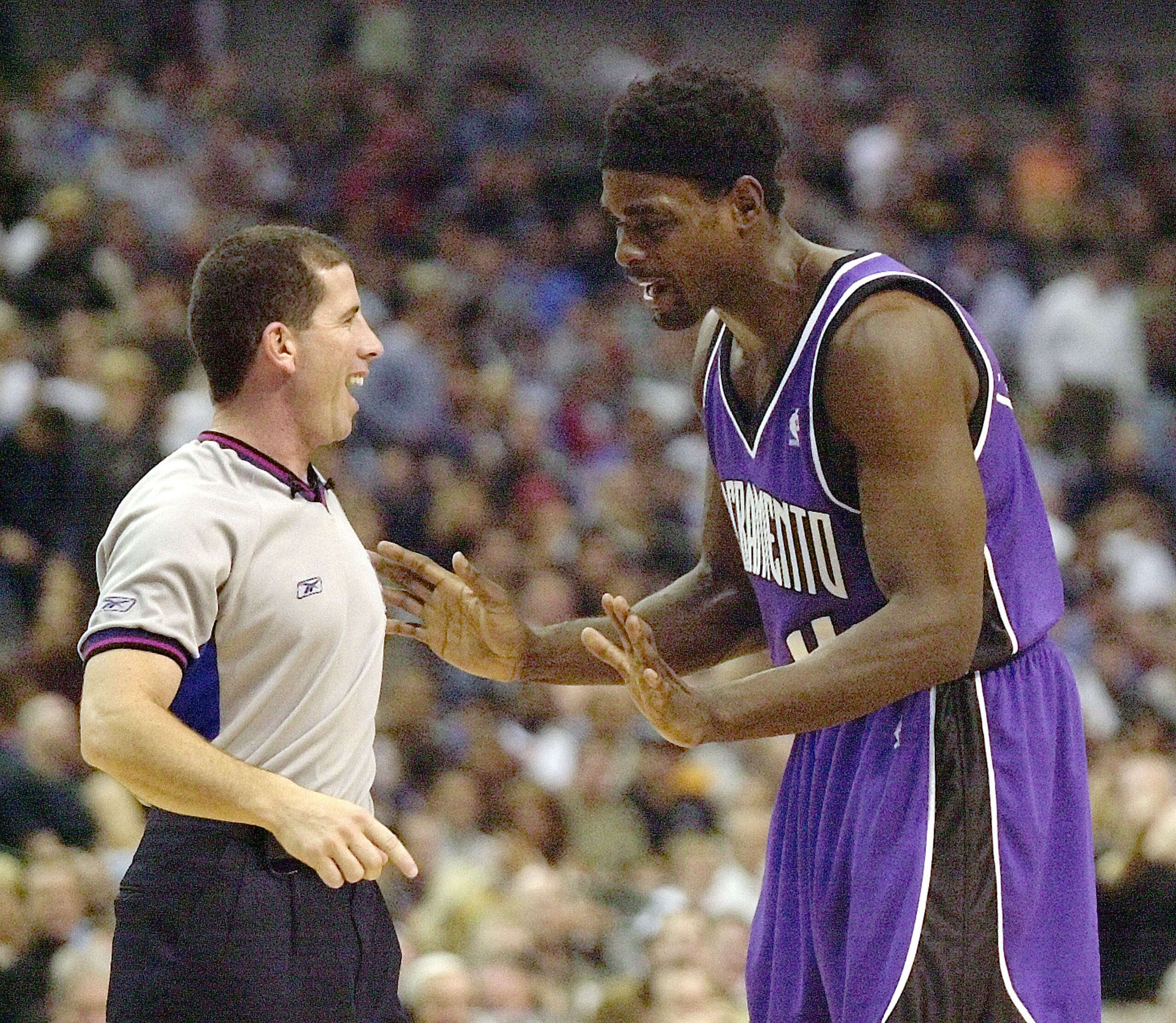
There's a compelling argument that this series is actually the Kings' worst playoff memory of the 2000s. At least one of the games may have literally been rigged for the Los Angeles Lakers. But Sacramento hadn't gotten this far in 20 years, so it's the pick through gritted teeth.
Controversies aside, the 2002 Western Conference Finals were highly entertaining. Five of the seven games were decided by two possessions or fewer, and the teams' mutual disdain was palpable. And though Shaquille O'Neal may claim the contrary, the Lakers took the Kings seriously, as well they should have.
If Sacramento had actually made the Finals, it would have been a tough out. Chris Webber played O'Neal to a near-stalemate in the conference finals, Mike Bibby and Bobby Jackson ran a pass-happy offense, and the Kings defense limited Los Angeles to just 42.0 percent shooting, more than four percentage points worse than its regular-season efficiency.
Though not at their 15-1 heights from the previous year, the Lakers were still the league's team to beat in 2002, so the fact that the Kings nearly defeated them even with potential outside interference is worthy of effusive praise.
San Antonio Spurs: 2003 NBA Finals
27 of 30
The Spurs had already won one title with Tim Duncan by 2003, but he was still on relatively equal footing with David Robinson at the time. Four years later, though, 37-year-old Robinson was fully in decline, while Duncan was just concluding an MVP-winning regular season and setting his sights on a second title.
Duncan's excellent postseason record was already well-known, but he became an all-time great with this performance. The Spurs were much better than the New Jersey Nets and could have still won this series with Duncan at a B-plus level, but the Big Fundamental couldn't turn off his quietly relentless motor.
The result was pure carnage.
Through these six games, Duncan averaged 24.2 points, 17.0 rebounds, 5.3 assists and a double-take-worthy 5.3 blocks per game. He was so dominant that Jason Kidd nearly pulled a Kevin Durant to join the Spurs in free agency.
The rest of San Antonio's roster also played well in the Finals. Robinson was productive in a more limited role, while Tony Parker, Manu Ginobili, Stephen Jackson and Bruce Bowen each played to their respective strengths. But this series will rightly be about Duncan forevermore.
Toronto Raptors: Game 3, 2001 Eastern Conference Semifinals
28 of 30
By early 2001, Vince Carter was already considered one of the best dunkers in basketball history, but he let the world know he was much more than just a high-flier in this series.
After leading the Raptors to their first postseason series win in franchise history, Carter then took on Allen Iverson and the fearsome Philadelphia 76ers. Going up against the league MVP was certainly a challenge, and 54 points from the Answer in Game 2 proved as much. But Carter must have been inspired by his All-Star counterpart, as he responded ferociously two days later.
Back home in Toronto, Vinsanity enveloped the Sixers, going for 50 points himself while tying a then-NBA playoff record with nine made threes in a 102-78 Raptors rout. This 76ers team boasted All-NBA-caliber defenders like Dikembe Mutombo and Eric Snow and took pride in shutting down elite scorers, yet there was nothing it could do to stop Carter.
Toronto couldn’t keep its 2-1 lead, losing a heartbreaking Game 7 that came down to the very last shot. But through this hard-fought series, the franchise transcended its expansion-team status for the first time and established itself as a respectable organization.
Utah Jazz: 2007 Playoffs
29 of 30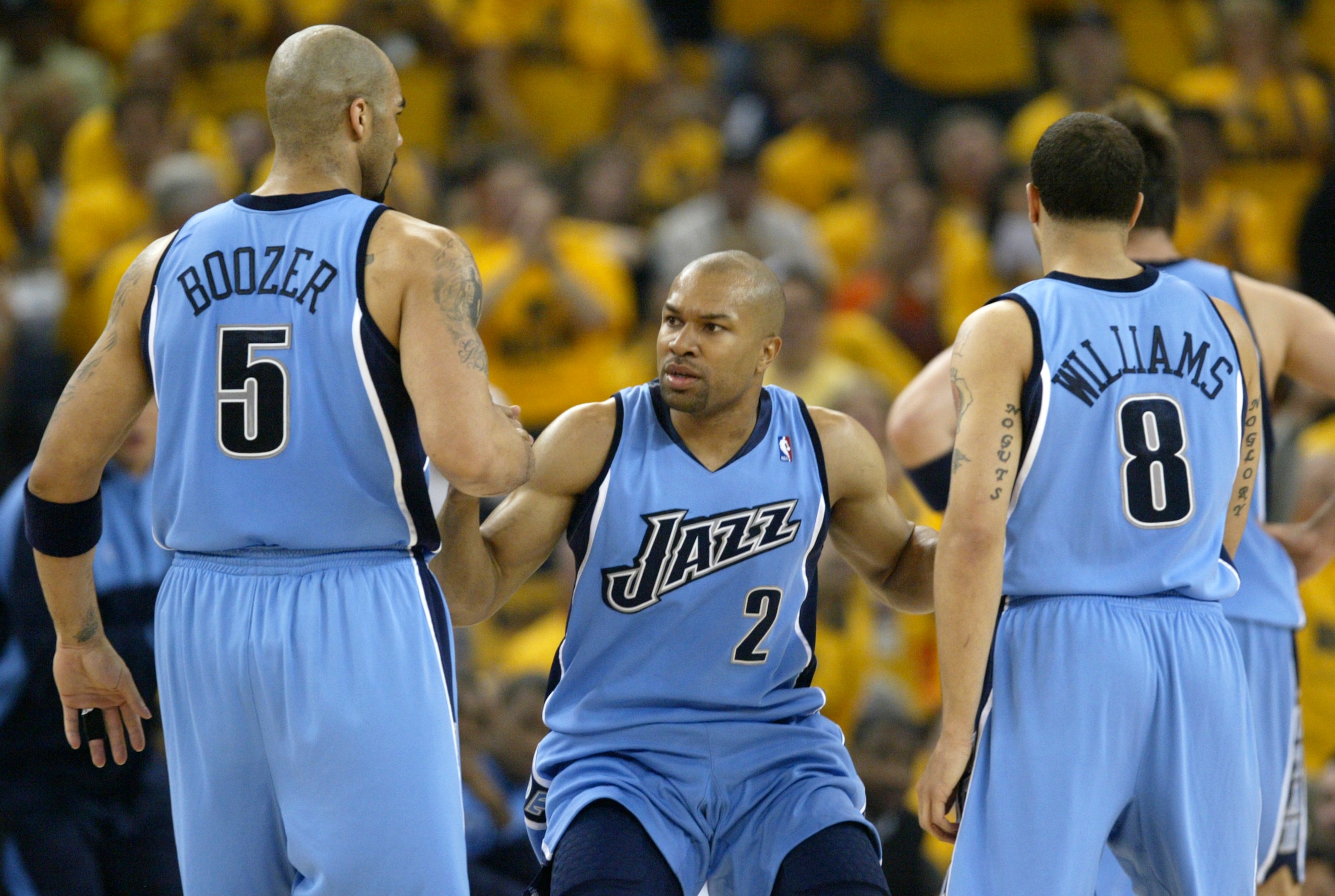
Seen one way, the Jazz made the 2007 Western Conference Finals by sheer luck of the draw. From another viewpoint, Utah outlasted one team with two All-Stars and a second team that was previously red-hot.
We prefer the second reading.
The Jazz entered these playoffs as the fourth seed, which meant their first-round series was theoretically a toss-up. However, considering most of the team's core hadn't played postseason basketball before and its opponent was the Yao Ming- and Tracy McGrady-led Houston Rockets, this series seemed to tilt in the other team's favor.
Thanks to brilliant team defense and clutch Game 7 performances from Deron Williams, Carlos Boozer and Mehmet Okur, Utah surprised many and advanced to the second round.
Luck did enter into the equation in the conference semifinals as the Jazz were then matched up against the "We Believe" Warriors. And while Golden State was riding a wave of good feelings, it was overmatched against Utah, which muted the team's explosive offense and advanced after five quick games.
The Jazz were never the most talented team during this era, but they always got the most of their rosters. When the opportunity for a deep postseason run arose, they seized it.
Washington Wizards: 2005 Eastern Conference Quarterfinals
30 of 30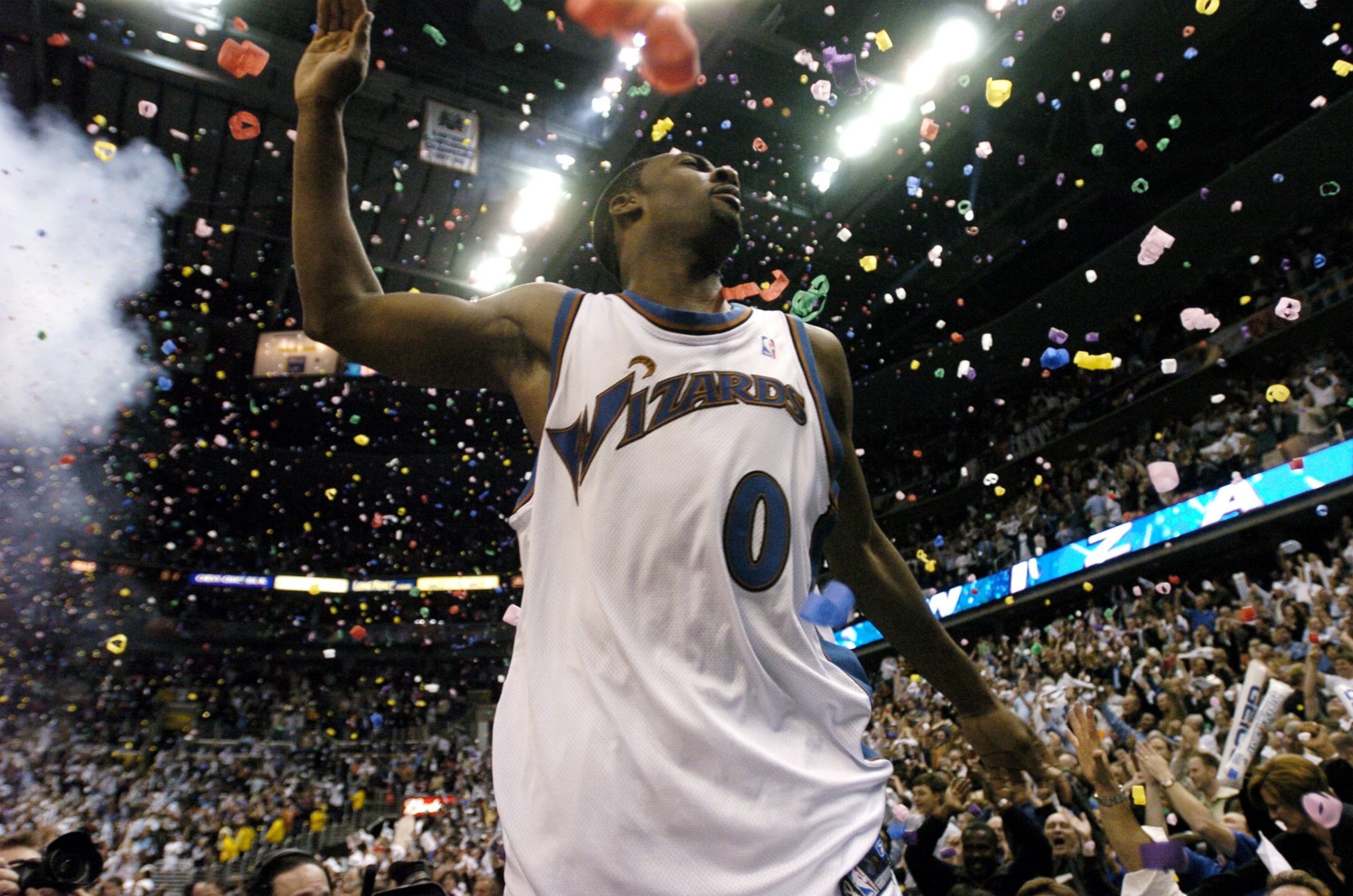
It was extremely tempting to just pick DeShawn Stevenson's taunting of LeBron James here. However, Stevenson was a role player with no on-court case against LeBron, and Washington did actually achieve some playoff success in this decade.
On paper, the Chicago Bulls should have won this series. They jumped out to a 2-0 lead, moved the ball effectively and pestered Gilbert Arenas. But once Washington got back home, it settled into a rhythm.
Arenas' jumper disappearing should have spelled doom for the Wizards, but he found other ways to contribute, upping his rebound, assist and steal stats from the regular season, and the team worked around his struggles.
Larry Hughes played stellar perimeter defense, Brendan Haywood and Etan Thomas provided stout rim protection, and Antawn Jamison stroked threes. When the dust settled, Washington had won four straight and was on its way to a second-round date with the top-seeded Miami Heat.
It's sad that the Wizards' best postseason moment of the 2000s came during the midst of an epic Arenas slump. But the fact they won without him at his best showed just how good they could be when he was firing on all cylinders.



.jpg?w=2560 "Jonathan Taylor Landing Spots 📍")



