
College Football Teams That Could Benefit from Eligibility Freeze
As we dive into the start of the 2020 college football season, one fun variable to consider is the possibility of every single player on the field returning in 2021.
Stars like Clemson's Trevor Lawrence, Florida State's Marvin Wilson and a whole host of players from Alabama will still certainly be declaring for the next NFL draft. But with the NCAA ruling a few weeks ago that this season will not count against eligibility clocks, a lot of teams will be getting an extra year out of a bunch of key players.
While it will inevitably have ripple effects in recruiting and transfers, the long-term impact of this ruling is still somewhat of an unknown.
My half-baked theory is that it narrows the gap between the haves and the have-nots in 2021 and 2022, but the divide will be even wider than it currently is once the 2021 and 2022 recruiting classes start making an impact, since the teams losing the most players to the 2021 NFL draft will be the ones that can sell top recruits on the opportunities to play immediately. But we shall see.
The potential ramifications on the 2021 season are what we'll be considering now.
If teams like Miami, North Carolina and Tennessee are able to retain most of their seniors while the Alabamas, Clemsons and Georgias of the sport lose a dozen or more starters to the NFL, those Power Five conference races are going to be some kind of awesome next season. And both Cincinnati and UCF may well open the 2021 season ranked in the AP Top 10 if their respective plethora of seniors opt for one more year of college football.
There will be many surprises—both in the "unexpectedly decided to stay" and "unexpectedly declared for the draft" camps—but these are the teams (in no particular order) we're currently expecting to take a significant step forward in 2021.
Miami Hurricanes
1 of 7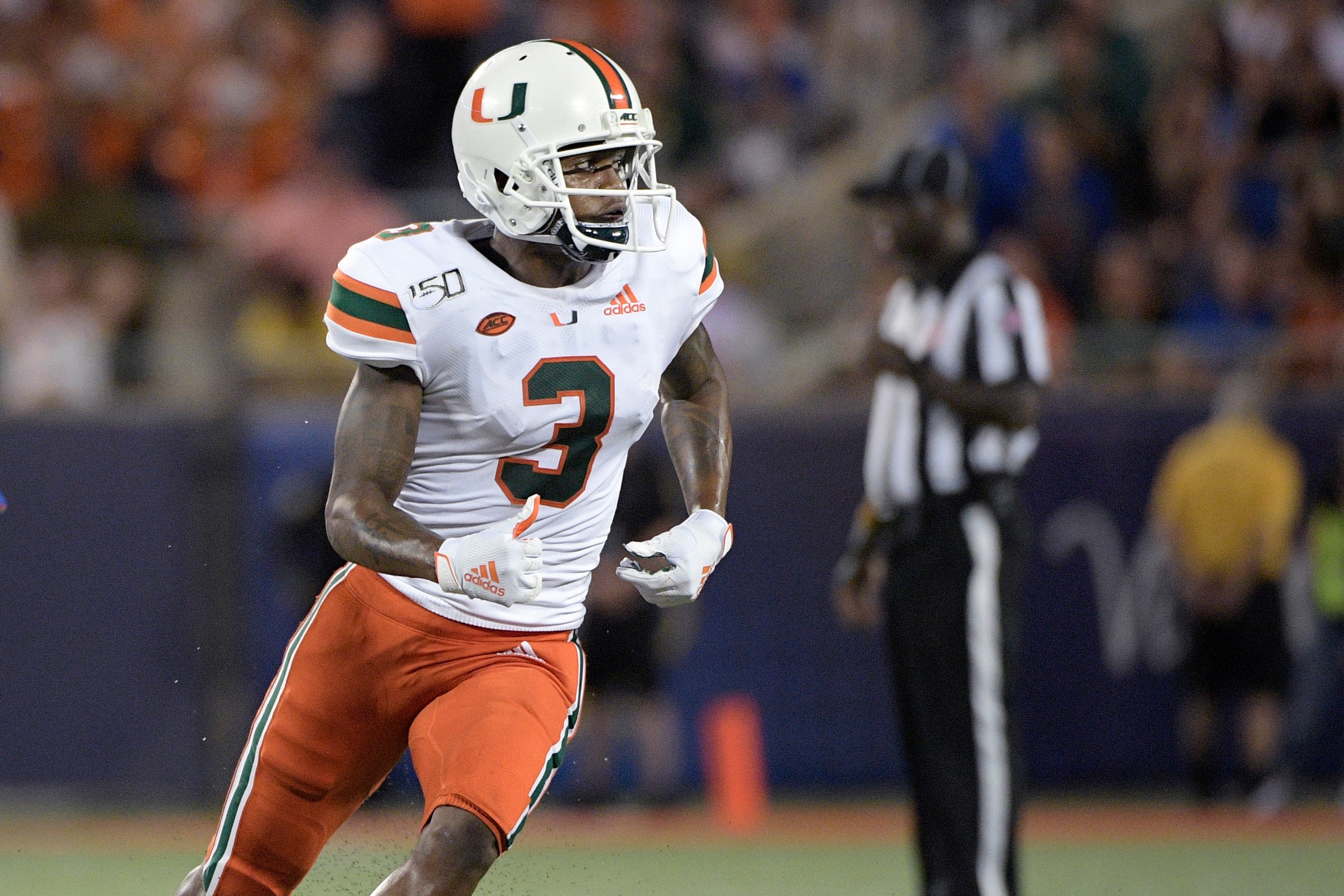
As far as graduate transfers are concerned, Miami was clearly one of the biggest benefactors from the 2020 transfer portal cycle. Getting one year each of quarterback D'Eriq King, offensive tackle Jarrid Williams and edge rusher Quincy Roche was a huge win.
The possibility of now getting two years from each of those guys is even more incredible.
When he was healthy and firing on all cylinders, King was sensational at Houston. In 2018, he accounted for 50 total touchdowns (36 passing; 14 rushing) in 11 games played. But between his height—he's listed at 5'11", but he's probably not even that tall—and the fact that he was playing in a Group of Five league not exactly renowned for its defensive effort, King hasn't gotten much love in the mock draft community.
If he thrives with the Hurricanes like he did in 2018 with the Cougars, he might get some "Kyler Murray 2.0" love and declare for the draft. However, it's definitely within the realm of possibility that he spends two years in Miami.
Both King and Williams only played the first four games of last season with Houston before taking a redshirt and eventually transferring to Miami. The latter was the former's starting right tackle for each of the last two seasons, though, so there's some familiarity between those former Cougars.
Roche is considerably less likely to come back next year. After racking up 26.0 sacks over the past three seasons at Temple, he's a borderline first-round prospect heading into this season. You never know, though.
Wide receiver Mike Harley, defensive lineman Jonathan Ford and defensive back Amari Carter are also key seniors who may well return for a fifth year in 2021.
But perhaps the biggest win for Miami is an extra year to tap into the potential of redshirt juniors and former transfers Tate Martell and Jaelan Phillips. Neither one has amounted to much thus far in college, but they were both highly touted recruits in 2017 class. Might not see much of either one this season, but maybe they can finally become stars by 2022.
North Carolina Tar Heels
2 of 7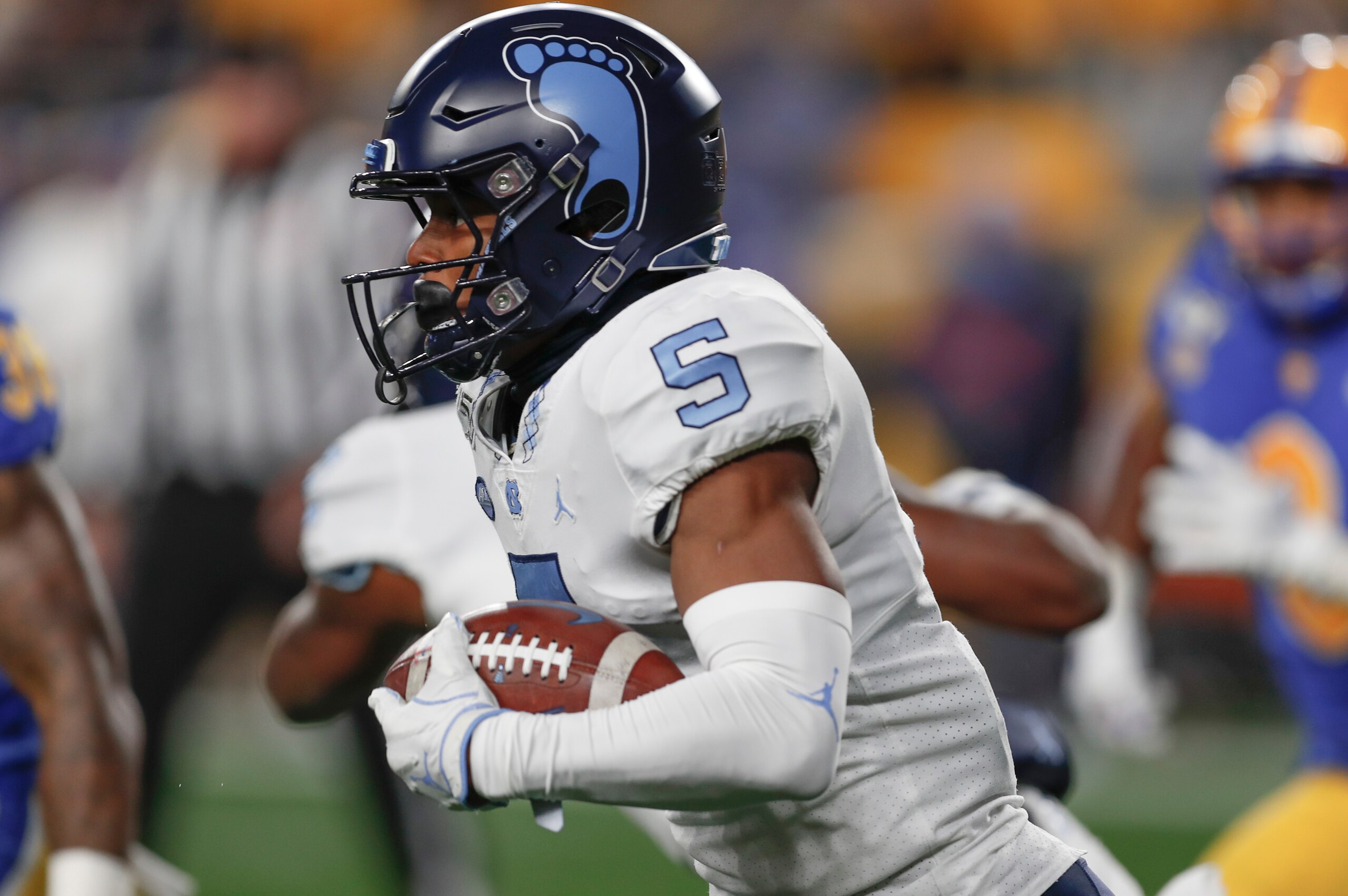
We know that starting quarterback Sam Howell will be back in 2021, as he's merely a true sophomore this fall. However, this was supposed to be the final year of eligibility for a significant contingent of his supporting cast.
Michael Carter led the Tar Heels in rushing last season with 1,003 yards. Dazz Newsome was Howell's favorite target, finishing the year with 72 receptions for 1,018 yards and 10 touchdowns. Beau Corrales also got quite a few looks, making 40 catches for 575 yards and six touchdowns. All three are seniors, but now all three have the option of returning next season.
The defense is also loaded with key redshirt seniors. Linebackers Chazz Surratt and Tomon Fox were two of the most indispensable players for the Tar Heels last year, and Tyrone Hopper figures to be a major factor in the linebacker rotation this year. Myles Wolfolk could be the starting strong safety for the next two years. And defensive back D.J. Ford is opting out of this season, but he may return as a starter in 2021.
The Tar Heels are already a borderline Top 10 team this season, and that should remain the case into the following season. And that should pay long-term dividends for a team that is already drastically better in the recruiting department (and on the field) under Mack Brown than it was toward the end of Larry Fedora's tenure as head coach.
The ACC has been Clemson's personal playground for the past few years, but North Carolina should start closing the gap in earnest over the next two seasons.
Tennessee Volunteers
3 of 7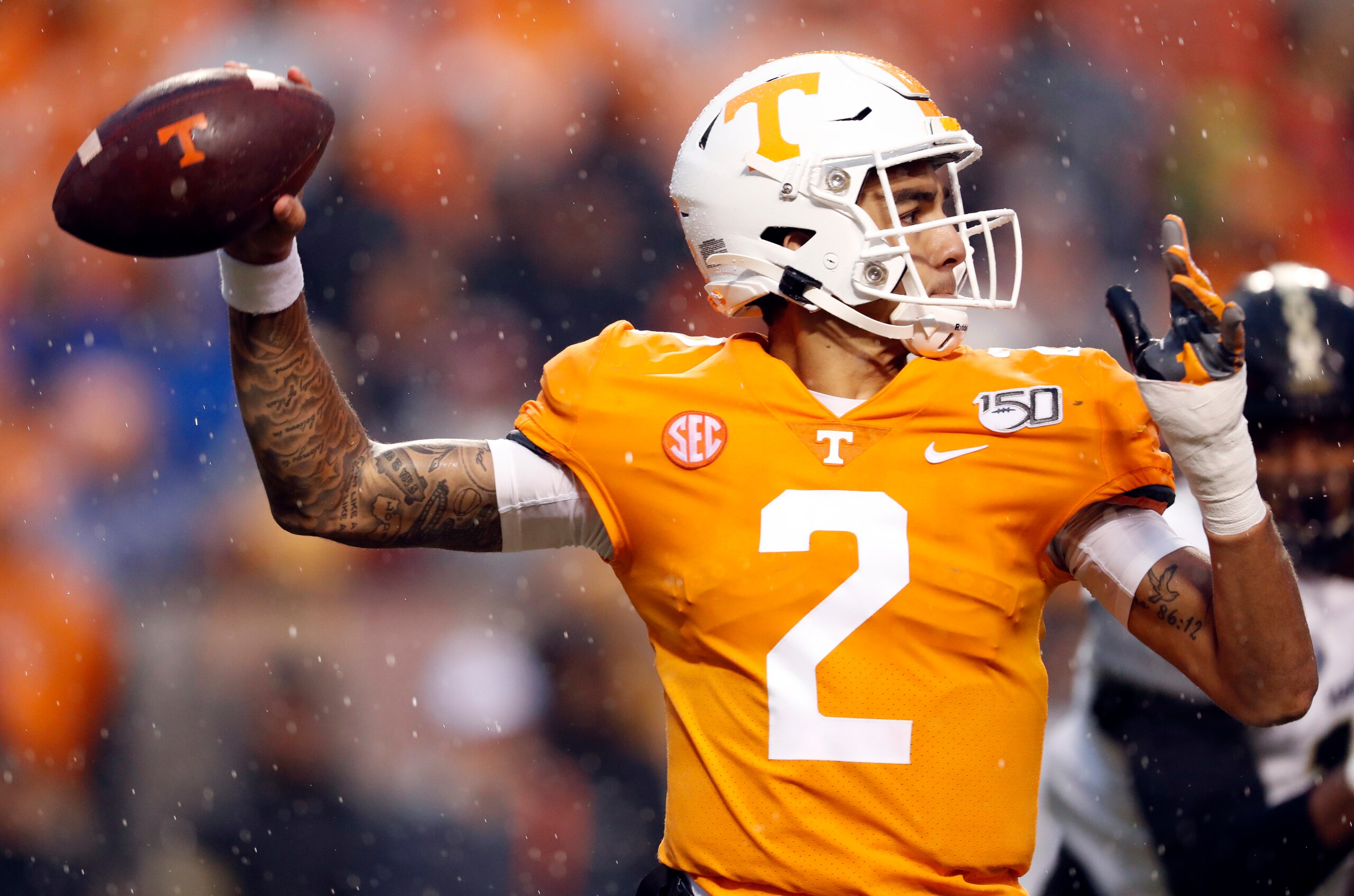
Tennessee has 26 seniors on its 2020 roster, nearly half of whom are projected starters.
Offensive lineman Trey Smith will almost certainly declare for the draft in spite of this additional year of eligibility. It was a surprise he even decided to come back for the 2020 season. But no one else on this team is a sure thing for the NFL.
That could mean another year of starting quarterback Jarrett Guarantano, starting running back Ty Chandler, wide receivers Josh Palmer, Brandon Johnson and Velus Jones Jr. and key defensive players like Shawn Shamburger, Theo Jackson, Aubrey Solomon, Deandre Johnson and Darel Middleton.
While Florida and Georgia figure to lose a bunch of guys to the 2021 NFL draft, Tennessee should be in great position to close that gap in the SEC East.
One interesting wrinkle to track here is that Tennessee fans probably don't want Guarantano to come back for a sixth year, because it would significantly increase the likelihood of losing incoming freshman Harrison Bailey as a transfer—provided he doesn't already win that job this season.
Moreover, if most of the guys eligible to return do come back, Tennessee would have quite a logjam on its hands. Jeremy Pruitt and his staff have already put together one of the best and largest 2021 recruiting classes. The Vols have one 5-star recruit and 11 4-star recruits already committed in a class of 25 players. Barring some early draft declarations or some recruits flipping, getting back down to 85 scholarship players by 2022 might be a major challenge.
But those are "cross that bridge when we get there" minor dilemmas for a program just trying to reach the SEC championship game for the first time since 2007.

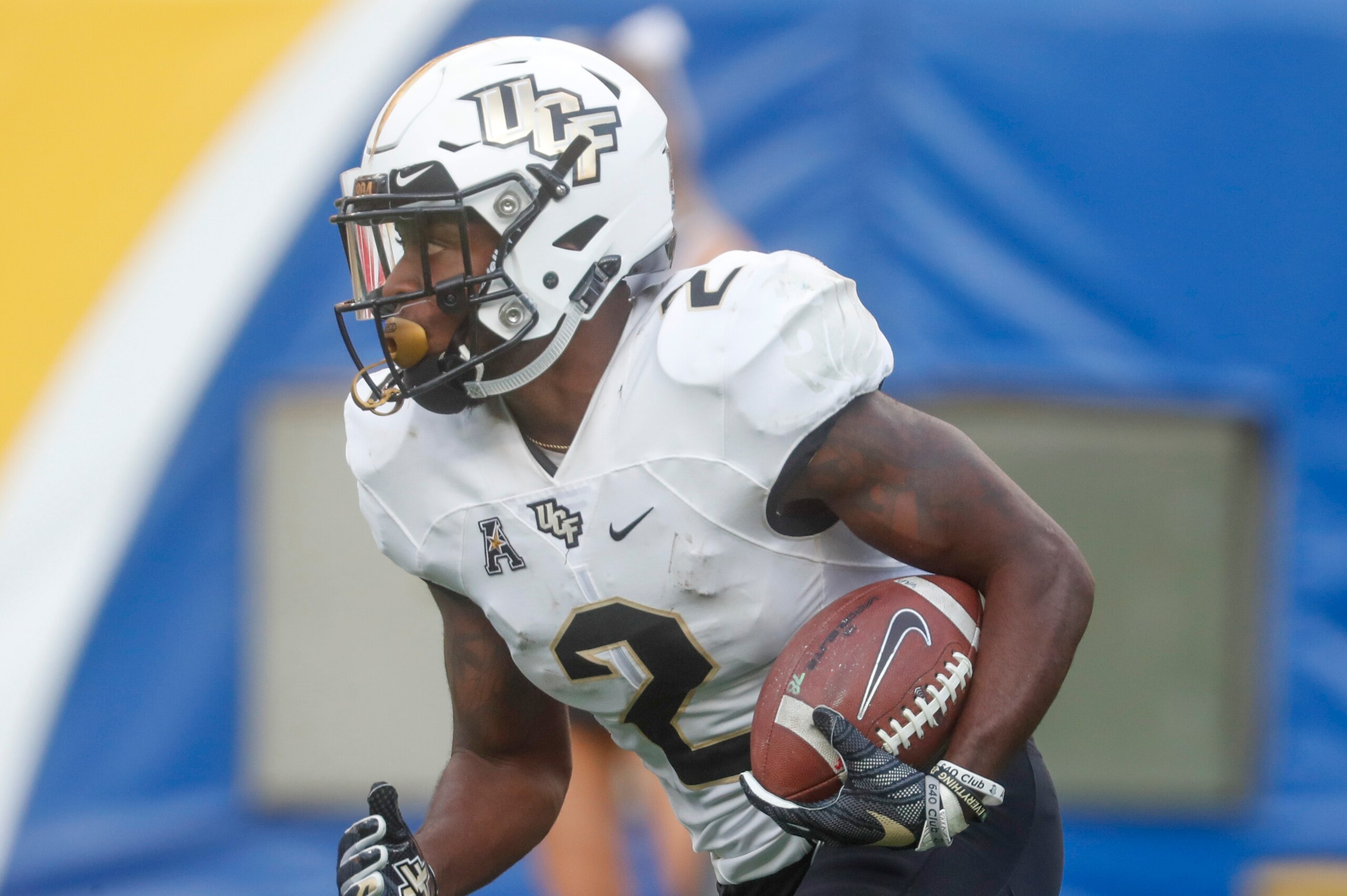
UCF Knights
4 of 7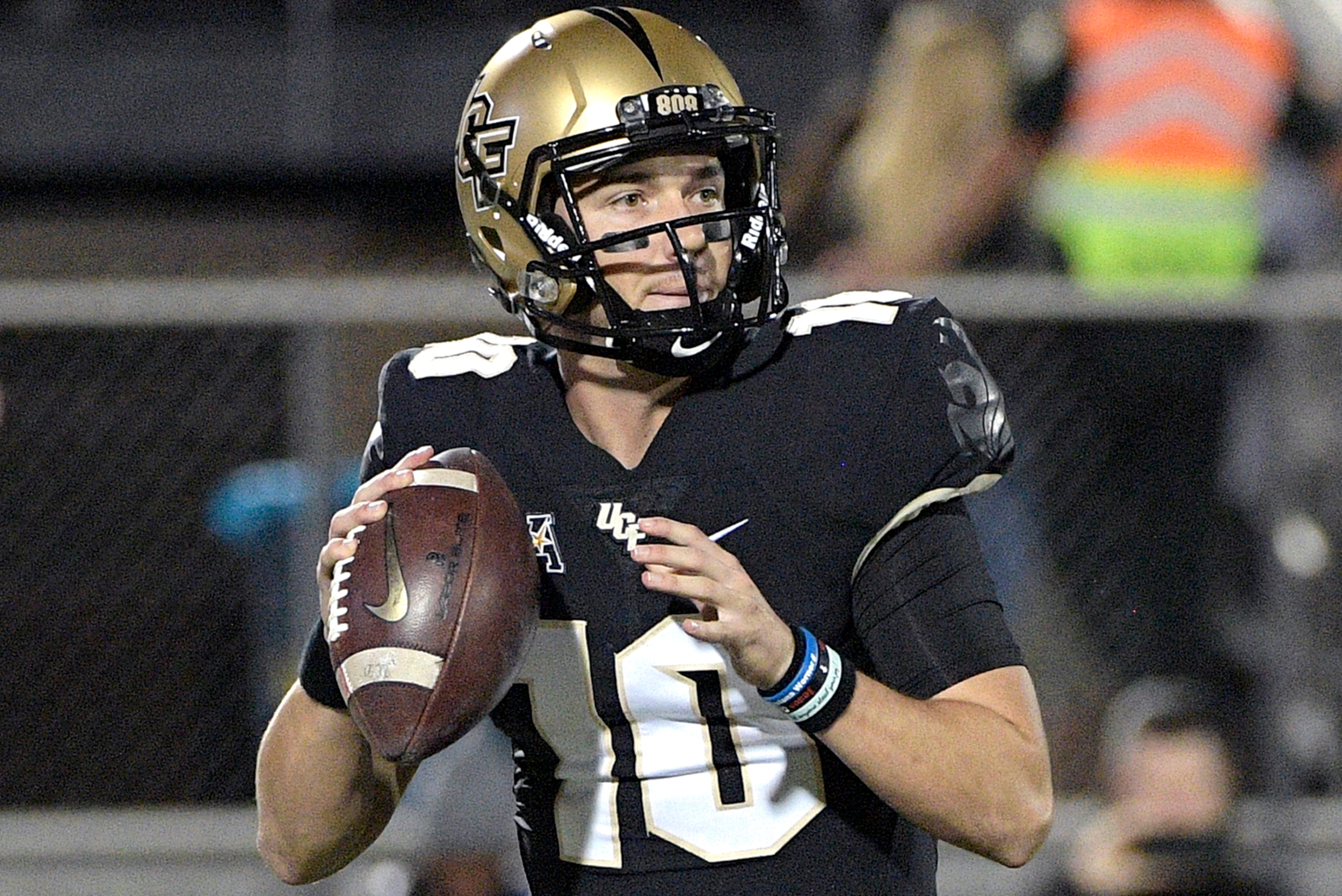
UCF is already uncommonly old. The Knights have 15 redshirt seniors and four true seniors, most of whom are going to be critical contributors in 2020.
As far as the skill positions are concerned, it's almost entirely guys who were supposed to be using up their final year of eligibility this fall. Both halves of the Otis Anderson/Greg McCrae backfield tandem are seniors. So are projected starting wide receivers Tre Nixon, Marlon Williams and Jacob Harris. Starting tight end Jake Hescock is also on that list, as is right tackle Marcus Tatum.
Seniors are just as abundant on UCF's defense.
Four members of the projected starting secondary—Richie Grant, Antwan Collier, Brandon Moore and Aaron Robinson—are seniors. So are linemen Kenny Turnier and Noah Hancock and linebacker Eric Mitchell.
All told, that's 13 starters the Knights were going to need to replace after this season, but it's possible they all come back now.
And we haven't even addressed the biggest one of all: McKenzie Milton.
Milton was one of the most prolific quarterbacks in the country in 2017 and 2018 before suffering a broken leg from which he is still recovering. He redshirted in 2019 and was expected to at least try to make a return to the field this season, but now there's no rush. He can continue to rehab and return in 2021 with a sixth year of eligibility. And if Dillon Gabriel is as good this season as he was last year, get ready for an offseason full of speculation about one of those two transferring.
Kansas Jayhawks
5 of 7
Giving everyone in the country an extra year of eligibility might be what finally elevates Kansas from the past decade spent in the Big 12's basement.
Recruiting has been a major struggle for the Jayhawks. Either they get guys out of high school who aren't highly touted and need a few years to develop, or they sign JUCO/FCS transfers who are only going to be around for a year or two. In 2013, Charlie Weis signed, no joke, 20 transfers. Two years later, all those guys were gone and Kansas had one of the worst seasons in FBS history.
That's no way to build a foundation.
But now they have a chance to build something.
Pooka Williams probably won't stick around for much longer after beginning his career with two consecutive 1,000-yard rushing seasons, but he has three years of eligibility left now. So does projected starting quarterback Miles Kendrick. And instead of losing all four of Kendrick's projected starters at wide receiver (Andrew Parchment, Stephon Robinson Jr. and Kwamie Lassiter II) and tight end (Jack Luavasa), he'll have two years to work with those seniors. It's also big news for the offensive line, where the Jayhawks have four redshirt seniors.
It won't instantly make them a top candidate to win the Big 12, but that type of roster cohesion—with a coach like Les Miles, no less—should provide a significant jolt in 2021.
Moreover, the trickle-down effect from other overflowing rosters could pay dividends for Kansas. Guys in the transfer portal who normally wouldn't even consider a school like Kansas may emerge as plug-and-play options for Miles, since there will be no room at the proverbial inn in so many other places.
If Kendrick doesn't get the job done at quarterback this year, just wait. The portal should have more supply than demand of both respectable fifth-year seniors forced out of jobs and talented 2019 and 2020 recruits who are sick of waiting for an opportunity to start. That type of addition might be what pushes Kansas to bowl eligibility in 2021.
Cincinnati Bearcats
6 of 7
UCF is also in exceptional shape, but if any Group of Five team is going to make a serious push for a spot in the 2021 College Football Playoff, it's probably Cincinnati.
Anchored by great defense and a strong rushing attack, the Bearcats have won 11 games in each of the last two seasons. And that defense should remain one of the best in the nation thanks to nine returning starters. Even most of the top reserves are still in tow, as 14 of last year's top 17 tacklers are still on the roster.
The only particularly noteworthy players they need to replace on defense are linebackers Bryan Wright and Perry Young. Considering Luke Fickell was the linebackers coach at Ohio State for more than a decade before taking the Cincinnati head coach job four years ago, the Bearcats should be well suited to develop players at that position. And even sans Wright and Young, they still have three senior linebackers who each had more than 30 tackles last season in the form of Joel Dublanko, Jarell White and Darrian Beavers.
We'll see if everyone returns in 2021. Veteran safeties James Wiggins and Darrick Forest could have draft potential, as could defensive lineman Elijah Ponder. But Cincinnati should get most of these guys back next season.
Whether the run game will remain strong is more of a question mark after the departure of Michael Warren II, but the Bearcats still have options. Gerrid Doaks is back after rushing for 526 yards in 2019. Charles McClelland missed all of last season with a knee injury, but he averaged 7.7 yards per carry as a freshman in 2018. And quarterback Desmond Ridder is a dual-threat guy who averages 11.3 carries per game. That trio should be solid in 2020 and even better in 2021.
Some TBD Team(s) Whose Quarterback Makes a Surprise Return
7 of 7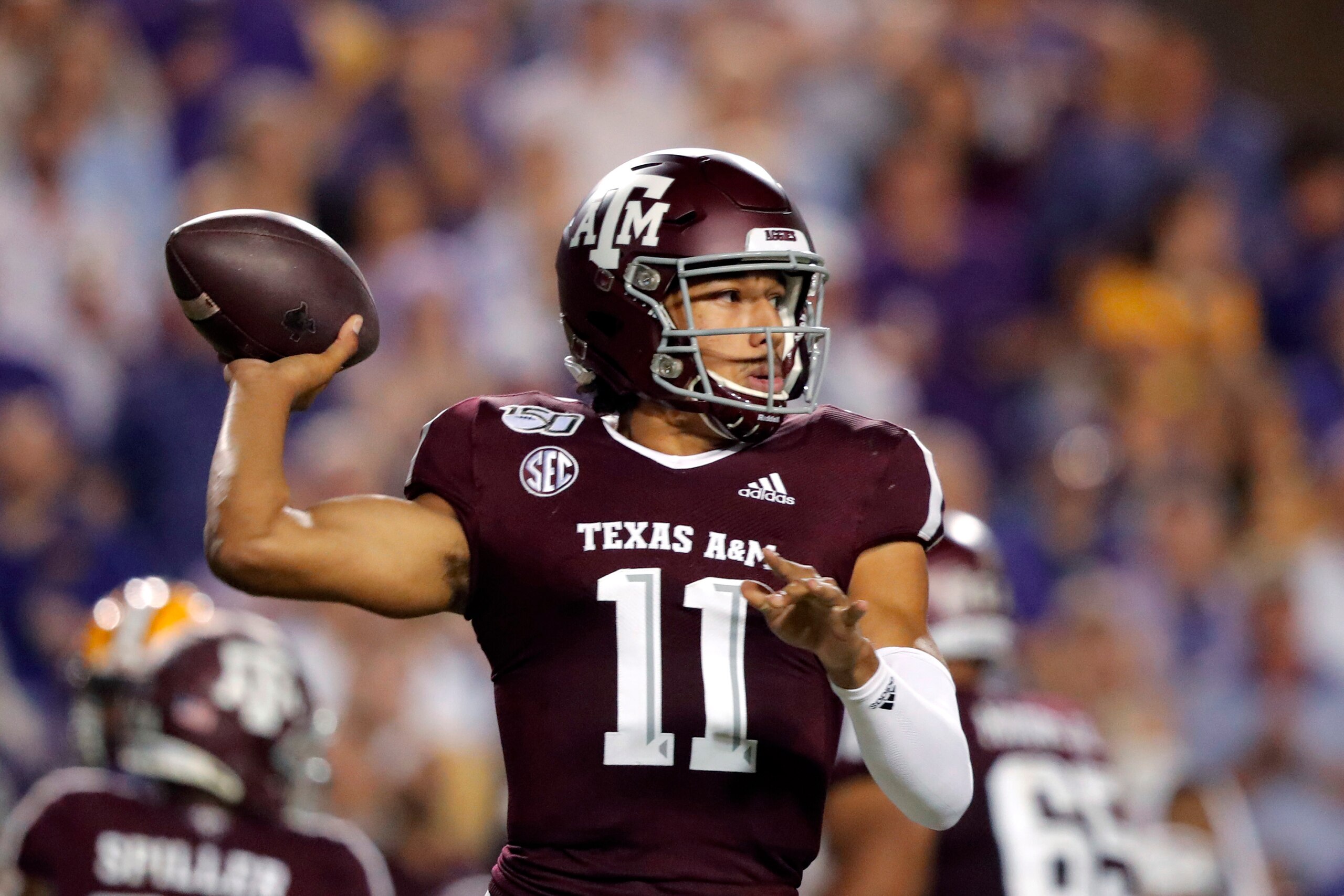
The crux of this entire exercise was trying to find seniors who are good enough to make a major impact in 2020 but who aren't necessarily a lock to declare for the 2021 NFL draft. And there are a lot of quarterbacks who will probably go pro, but you just never know.
Three of those QBs reside in Texas.
Both Kellen Mond (Texas A&M) and Sam Ehlinger (Texas) have already thrown for more than 7,000 yards, rushed for more than 1,000 yards and accounted for at least 70 touchdowns as starters for the majority of the past three seasons. If either guy decided to come back for a fifth year, it would be a huge deal.
And with Trevor Lawrence, Justin Fields and Trey Lance seemingly already locked in as the top three quarterbacks going in next year's draft, perhaps Mond and Ehlinger will feel it's best to spend fall 2021 playing college ball.
The third Texas-based QB in that club is SMU's Shane Buechele.
This is already his fifth season in college, and he threw for nearly 4,000 yards last year. Would a sixth season do anything to help his draft stock? He's arguably in the Nos. 8-12 range among quarterbacks eligible for the 2021 draft. It would be huge for the Mustangs and the AAC as a whole if he decides to return.
Elsewhere, perhaps the biggest variable of all is new Mississippi State QB K.J. Costello.
Mike Leach's offense has turned no-name guys into 5,000-yard passers. If Costello—who already threw quite well at Stanford—sticks around for two years in that offense, the results could be explosive. (Also, if Kylin Hill were to return for a fifth season as a running back in Starkville, goodness gracious.)
Florida's Kyle Trask and Notre Dame's Ian Book will also need to make decisions that would have a substantial impact on 2021 preseason projections.
.jpg?w=2560 "49ers LB Suspended for Headbutt")

.jpg?w=2560 "Buzz: MHJ Hired Agents for Trade")
.jpg?w=2560 "Commanders OL HEATED After Tie ▶️")
.jpg?w=2560 "AD Trolls Bears WR on IG 😂")