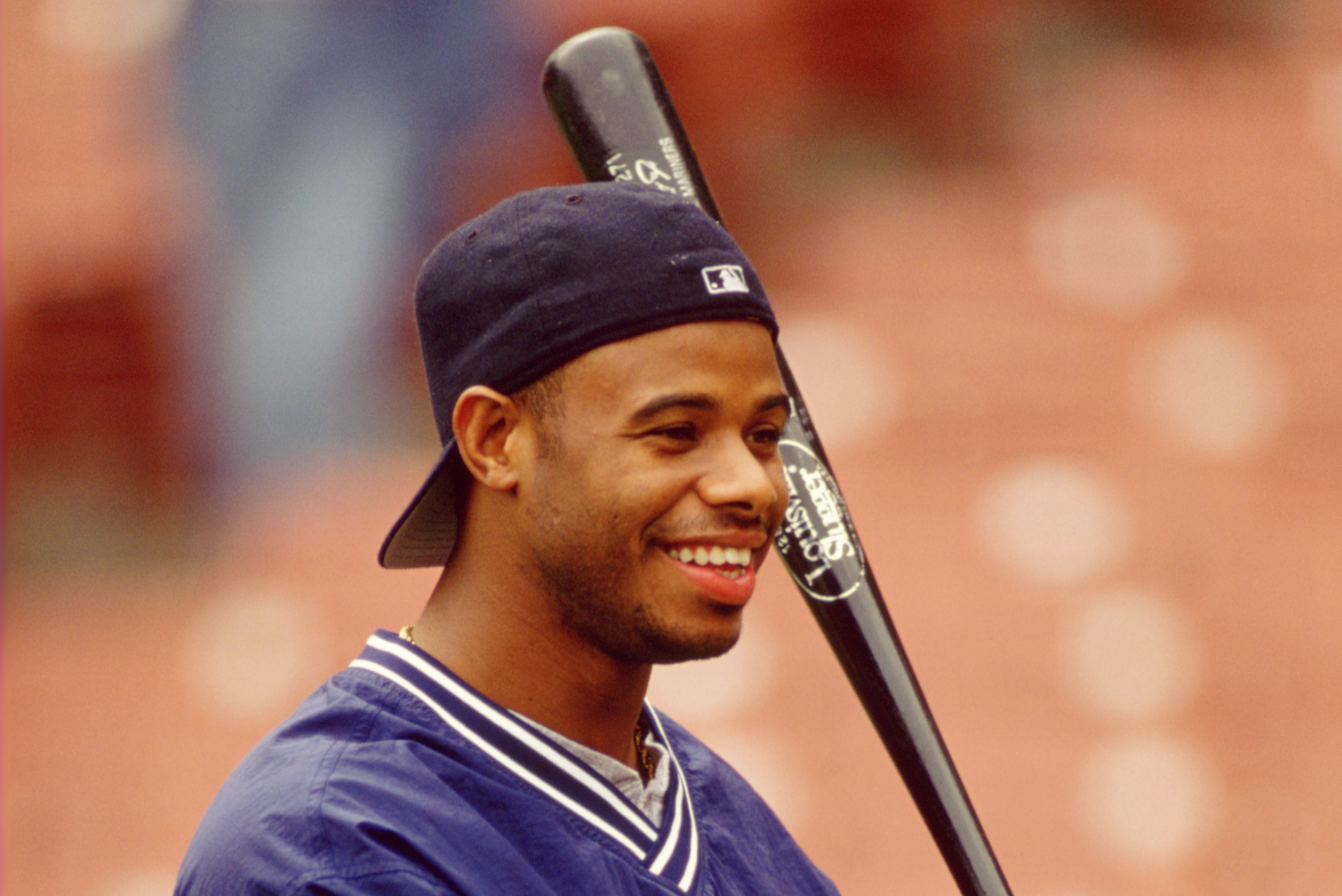

How '90s Icon Ken Griffey Jr. Transcended MLB to Become Pop Culture Legend
Ken Griffey Jr. was sometimes overshadowed by his slugging counterparts of the steroid era—guys who bulked up to unbelievable sizes and swatted home runs at record-setting rates.
But no one defined '90s baseball, embodied effortless cool and transcended the sport as much as The Kid.
With his photogenic grin, backwards cap and all-world talent, he was MLB's closest approximation to Michael Jordan (His Airness will make an appearance here as an autograph-seeking Griffey fan).
As we celebrate the anniversary of Griffey's 500th career home run on Father's Day (June 20, 2004), let's examine the traits and off-field moments that made him an all-time MLB legend, first-ballot Hall of Famer and enduring pop culture icon.
Coveted 1989 Rookie Card
1 of 6
In 1989, fledgling company Upper Deck released its first set of MLB trading cards. The highlight was the Griffey rookie card. Darren Rovell, writing for Slate, explained the phenomenon:
"The Griffey card was the perfect piece of memorabilia at the perfect time. The number the card was given only furthered the prospect of his cardboard IPO. Junior was chosen to be card No. 1 by an Upper Deck employee named Tom Geideman, a college student known for his keen eye for talent.
Geideman earned his rep by consistently clueing in the founders of The Upper Deck, the card shop where the business was hatched, on which players would be future stars. Geideman took the task of naming the player for the first card very seriously.
Using an issue of Baseball America as his guide, Geideman knew that card No. 1 would belong to Gregg Jefferies, Sandy Alomar Jr., Gary Sheffield, or a long-shot candidate, the phenom they called 'The Kid.'"
That decision would prove to be prudent, as the card became coveted among collectors and upped Griffey's national profile just as his star was about to explode.
Michael Jordan Asks for His Autograph
2 of 6During the 1993 All-Star Game, a minor league ballplayer named Michael Jordan pushed through a throng of reporters and asked a 23-year-old Griffey to autograph his bat.
It was the ultimate sign of respect from the NBA great turned MLB hopeful, and he returned the favor by autographing his Chicago White Sox jersey for The Kid.
Griffey signed the bat without comment, though the sly smile on his face did all the talking.
"I'm gonna leave my number," Jordan said as he walked away. "Call me, man."
Game recognizes game.
Griffey in '96 Campaign
3 of 6By 1996, Griffey had already made six All-Star appearances and won six Gold Gloves for his play in center field with the Seattle Mariners. Then, he tossed his hat in the ring for President of the United States.
At age 25, he was 10 years too young to assume the office, according to the U.S. Constitution. But, backed by a ubiquitous Nike advertising campaign, Griffey and his Mariner Moose running mate vaulted into the spotlight.
It spawned "campaign" commercials, pins, bumper stickers and at least one actual write-in vote.
At the time, Joel Achenbach of the Washington Post wrote that Griffey had "the complete package of virtues: talent, grace, charm, a winning smile, the indescribable qualities that advertisers need to sell their products. He's the perfect pitchman."
He didn't win the presidency. But in 1997, after Bill Clinton was sworn in for a second term, Griffey hit 56 home runs with a 1.028 OPS and won American League MVP honors, a pretty decent consolation prize.


Video Games, Shoes and More
4 of 6
As Griffey was mounting his White House bid in 1996, Nike debuted the Air Griffey Max 1. The shoes quickly became baseball's answer to the Air Jordan and remain the most recognizable footwear ever endorsed by an MLB player.
He also lent his name and likeness to a series of video games beginning in 1994 with Ken Griffey Jr. Presents Major League Baseball. The game didn't have the official approval of MLB and so, in addition to Griffey, featured players with names like P. Flamingo and M. Monroe.
He followed that up with Ken Griffey Jr.'s Winning Run in 1996, Major League Baseball Featuring Ken Griffey Jr. in 1998 and Ken Griffey Jr.'s Slugfest in 1999.
He even got his own candy bar, despite being allergic to chocolate.
Griffey didn't win any titles during his incredible run with the Mariners (or at any point in his career), but he was the undisputed champion of '90s baseball marketing tie-ins.
Movie and TV Cameos
5 of 6Griffey never added any Oscars or Emmys to his trophy case, but he had some memorable movie and TV appearances during the height of his fame.
In 1994, he made a brief cameo on The Fresh Prince of Bel-Air in an episode that featured an unforgettable who's-cooler faceoff with Will Smith.
That same year, he played himself in Little Big League, stealing scenes with a pivotal go-ahead home run and epic wink before falling victim to a hidden-ball pickoff play.
He also appeared as—who else?—Ken Griffey Jr. on episodes of The Simpsons and in the HBO series Arli$$. Throughout the decade, it was the role he was born to play.
An Untarnished Legacy
6 of 6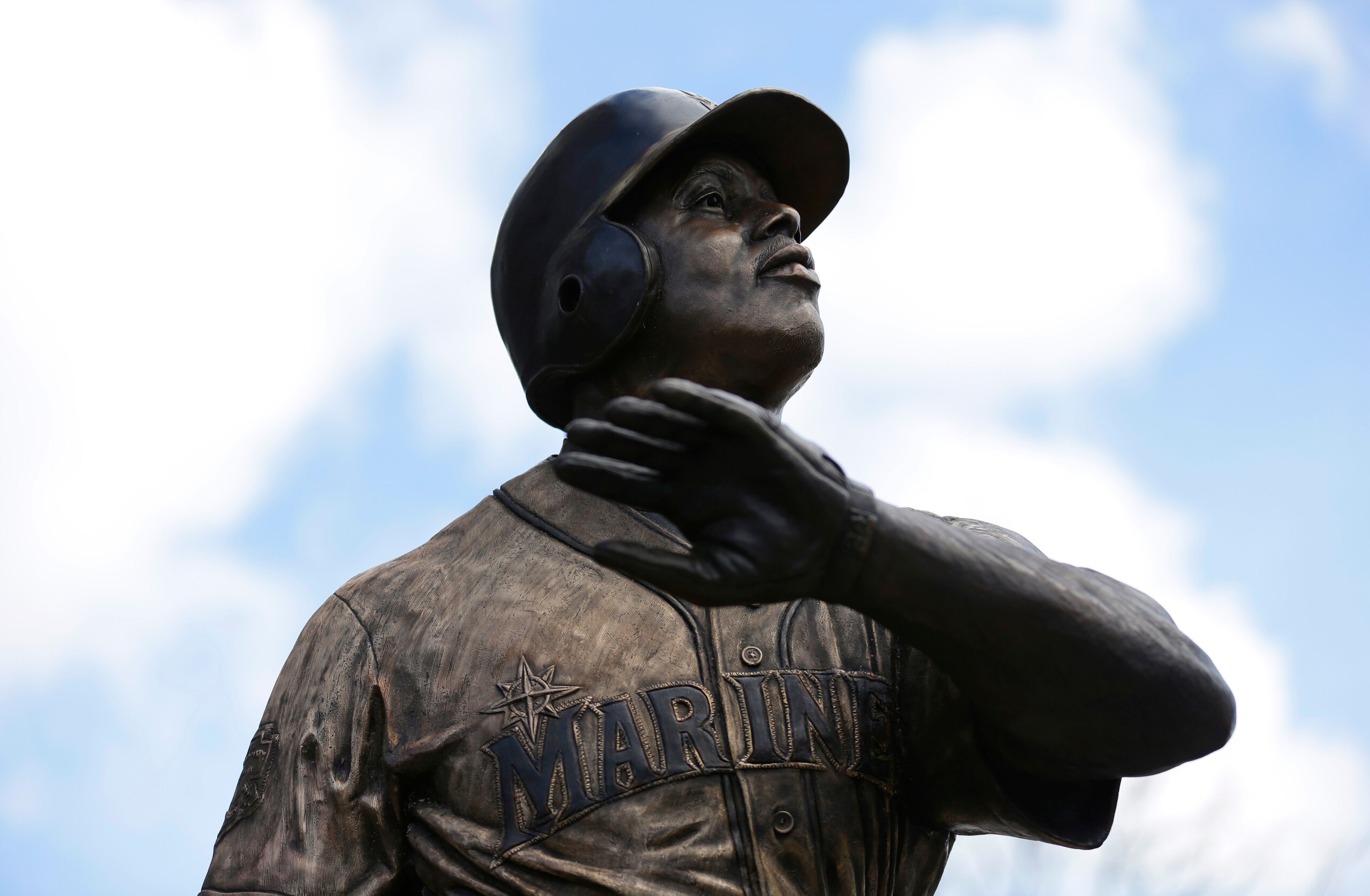
The endorsements, the swingman logo, the big- and small-screen fame, the unyielding respect of his pro sports peers—Griffey had it all.
More than anything, though, by the time he hung up his cleats following the 2010 season, he had an untarnished legacy.
His 630 career home runs place him seventh on the all-time list. The 56 homers he launched in '97 and again in '98 are tied for 17th all-time. That's impressive by itself.
But it becomes even more special when you consider Griffey was never credibly tied to performance-enhancing drugs. Even as PED-linked players such as Mark McGwire, Sammy Sosa and Barry Bonds etched their names in the record books, Griffey almost certainly compiled his resume the natural way.
He was even known for eschewing pregame stretching, once saying, "Does a cheetah stretch before it catches its prey?"
His refusal to juice may have cost him some headlines and temporary glory. But it makes him an even more unforgettable character in hindsight and cements his legacy as the defining player of his era.
All statistics courtesy of Baseball Reference.




.jpg?w=2560 "Jonathan Taylor Landing Spots 📍")




