
Remembering the Worst NBA Trade Deadline Heists of the Past 10 Years
It's knee-jerk-reaction time in the hoops world, or at least it will be once Thursday's NBA trade deadline passes the 3 p.m. ET cutoff.
During a time in which takes can't be hot enough, there's little use for patience in post-deadline reactions. The evaluation portion of the process might as well be sponsored by J.G. Wentworth: They're my post-deadline grades, and I need them now!
Real-time reactions have their place, but only the passage of time truly reveals the winners and losers of these exchanges.
If the last 10 trade deadlines taught us anything, it's that history tends to favor the future-focused side. Instant gratification might be...well...instantly gratifying, but that adage you've heard about good things coming to those who wait? Yeah, #TradeSZN is one of its biggest proponents.
So, beware of that pick sacrificed for a useful—but rarely spectacular—role player. Don't let today's needs force you into opening tomorrow's wounds.
As the following heists can attest, buyers aren't always the ones bringing home the bacon.
Potential Heists
1 of 6
Too little time has passed for these recent swaps to be declared outright thefts, but they might already warrant opening an investigation for larceny.
Sixers Give Up pn Markelle Fultz
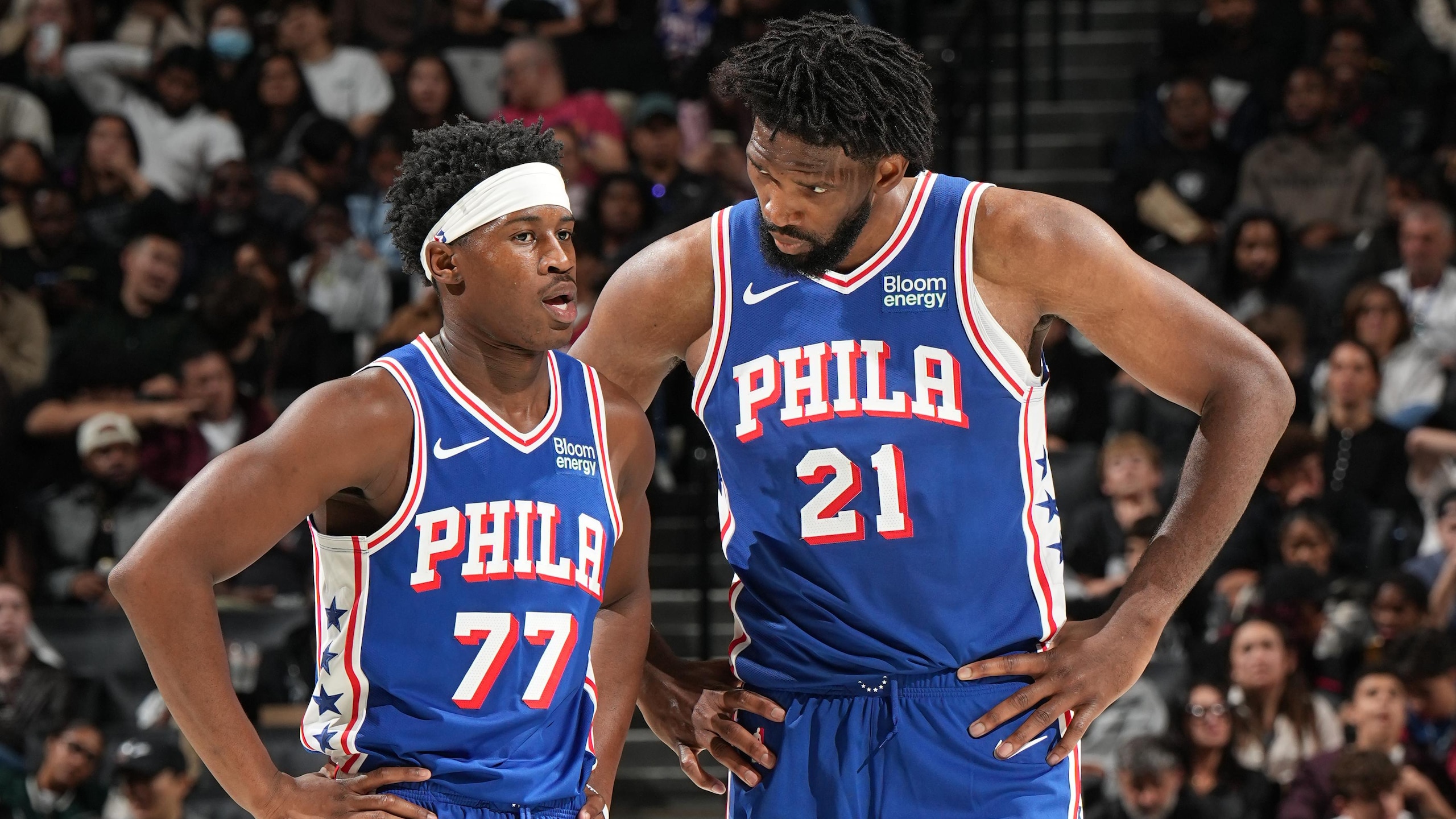
No one needed a change of scenery at last season's deadline more than Markelle Fultz, and his wish was granted when the Philadelphia 76ers sent 2017's top pick to the Orlando Magic for Jonathon Simmons, a 2019 second-round pick and a 2020 first-rounder (from the Oklahoma City Thunder, top-20 protected).
Fultz's career is by no means fixed. He no longer fears the three-point arc, but he isn't hitting outside with any regularity (25.3 percent). Save for his prospect pedigree, little suggests he's a star in the making.
But he's showing enough signs of life (11.7 points and 4.6 assists in 27.7 minutes per game) to suggest he can be at least a solid starting NBA point guard. And there are occasional flashes of brilliance (four 20-plus-point outings, one of which was a triple-double) to make you wonder if he's nowhere near his ceiling.
At the very least, he's an exciting 21-year-old with obvious growth potential, and those players are rarely discarded for a throwaway wing (Simmons couldn't crack Philly's playoff rotation and no longer has an NBA gig), a second-rounder and a heavily protected first.
Wizards Move Otto Porter Jr. for Flotsam
The Washington Wizards' Otto Porter Jr. problem started when they matched his four-year, $106 million offer sheet from the Brooklyn Nets in 2017. Suddenly, the Swiss Army knife swingman was a glue guy collecting a superstar salary.
That setup could not sustain, and Washington finally admitted as much when it moved him to the Chicago Bulls last February for Jabari Parker, Bobby Portis and a 2023 second-round pick.
Porter was clearly overpaid, but...this was the best the Wiz could do? Less than a month prior, ESPN's Zach Lowe had reported the Wizards "have shown little appetite for dealing Otto Porter anywhere for a return heavy on future assets and cap flexibility."
So, they instead opted for cap flexibility and nothing? Parker and Portis both ditched the District in free agency, and while Porter has missed most of this season with a broken foot, he sprinted through his first run with the Bulls. During his 15 games with Chicago to end the 2018-19 campaign, he averaged 17.5 points, 5.5 rebounds and 2.7 assists while compiling a brilliant 48.3/48.8/90.6 shooting slash.
If the real Porter is anything close to the player who dazzled down the stretch, history might upgrade this to grand larceny.
76ers Go All-In for...Tobias Harris?
We're not here to dump on Tobias Harris, who (incredibly) makes two appearances on our actual heists list (on the winning side of both exchanges, too). But he's in his ninth NBA season, and we still aren't sure exactly who he is.
He's a good scorer, sure, but not a great one. He has a long-range shot, but it's not a lethal stroke (career 36.3 percent). He competes defensively, but defensive box plus/minus usually puts him in the red. He's becoming a more willing passer, but 2.9 assists per night are nothing to celebrate.
Is he worth the price Philly paid? That's yet to be determined. In the actual swap, the Sixers added Harris, Boban Marjanovic and Mike Scott for Wilson Chandler, Mike Muscala, Landry Shamet, a 2020 first-round pick, an unprotected 2021 first-round pick (from the Miami Heat) and two future seconds. Philly then doubled down on the investment by inking Harris to a five-year, $180 million deal this summer.
Harris is a good player, but the Los Angeles Clippers clearly had other ideas for their own cap space, which they used to ink Kawhi Leonard. They also utilized the 2021 first to help broker their Paul George blockbuster. Philly knew the cost going in and deemed Harris worthy of it, but this is a haul for a non-All-Star on an expiring contract.
Clippers Dump Baron Davis, Miss Out on Generational Point Guard
2 of 6
The Trade: Los Angeles Clippers trade Baron Davis and unprotected 2011 first-round pick to Cleveland Cavaliers for Jamario Moon and Mo Williams in 2011.
The Thought Process: Despite looking at a fifth consecutive lottery trip, the Clippers sensed their fortunes were changing as youngsters like Blake Griffin, DeAndre Jordan, Eric Gordon and Eric Bledsoe breathed new life into this franchise, So, as then-general manager Neil Olshey explained to ESPN's Ramona Shelburne and Chad Ford, they sought a more proven commodity than that upcoming draft pick:
"Our analysis at this point in February is that it was more valuable to get a 28-year-old All-Star point guard that we have for the next few years, cap flexibility to make sure we take care of business and re-sign DeAndre Jordan and have flexibility to take care of Eric Gordon as well, as opposed to speculating on another kid that's 19 years old with one year of college experience.
"And I'm not that high on the draft to begin with this year."
The Problem: L.A. left the pick unprotected, which proved catastrophic when the selection defied long lottery odds and jumped up to No. 1 despite having just a 2.8 percent chance to do so.
Shortly thereafter, Cleveland spent the pick on Kyrie Irving, who followed his Rookie of the Year debut with the first of several All-Star appearances. While the point guard eventually tired of his Northeast Ohio digs, he spent six seasons there, making four All-Star trips and securing the Cavs' first title with the biggest shot in franchise history.
Dumping Baron Davis proved prescient as Cleveland amnestied him that December. Mo Williams was a fine placeholder, but the Clippers (smartly) pried away his starting gig once they got their hands on Chris Paul. L.A. mostly recovered, in other words.
But losing the No. 1 pick (which became an annual All-Star) and not adding anything of long-term significance was an outright fleecing.
Nets Add Gerald Wallace at the Expense of Damian Lillard
3 of 6
The Trade: New Jersey Nets trade Mehmet Okur, Shawne Williams and top-three-protected 2012 first-round pick to Portland Trail Blazers for Gerald Wallace in 2012.
The Thought Process: After acquiring Deron Williams in 2011, the Nets perpetually acted on win-now impulses, a thought process that led them to huge gambles on the likes of Joe Johnson, Kevin Garnett and Paul Pierce. None of those players had arrived yet, though, so they deemed it necessary to seek out a veteran contributor before Williams headed into the uncertainty of unrestricted free agency.
Wallace was pretty clearly a non-star by this point, which makes the lack of more protection on this pick unfathomable. We'll let former Nets general manager Billy King explain, via ESPN's Mike Mazzeo:
"In meeting with our scouts, we felt the player that we may draft beyond the protection would be somebody that would probably take a couple years [to develop], and at this point, we're trying to speed the process up a bit and start winning [more].
"I can understand the fanbase [wanting us to keep the pick], but I'd rather try to balance the roster, add a piece and still have cap flexibility."
A team source clued in ESPN's Chad Ford to more rationale, explaining the Nets saw the 2012 talent grab as a three-player draft: Anthony Davis, Michael Kidd-Gilchrist and Thomas Robinson. Yikes.
The Problem: Wallace was who we thought knew he was: an active defender who functioned as a complementary scorer but couldn't stretch the floor. Had the draft pick busted—had it been used on someone like Kidd-Gilchrist or Robinson, for example—history might've forgotten the price paid for Wallace.
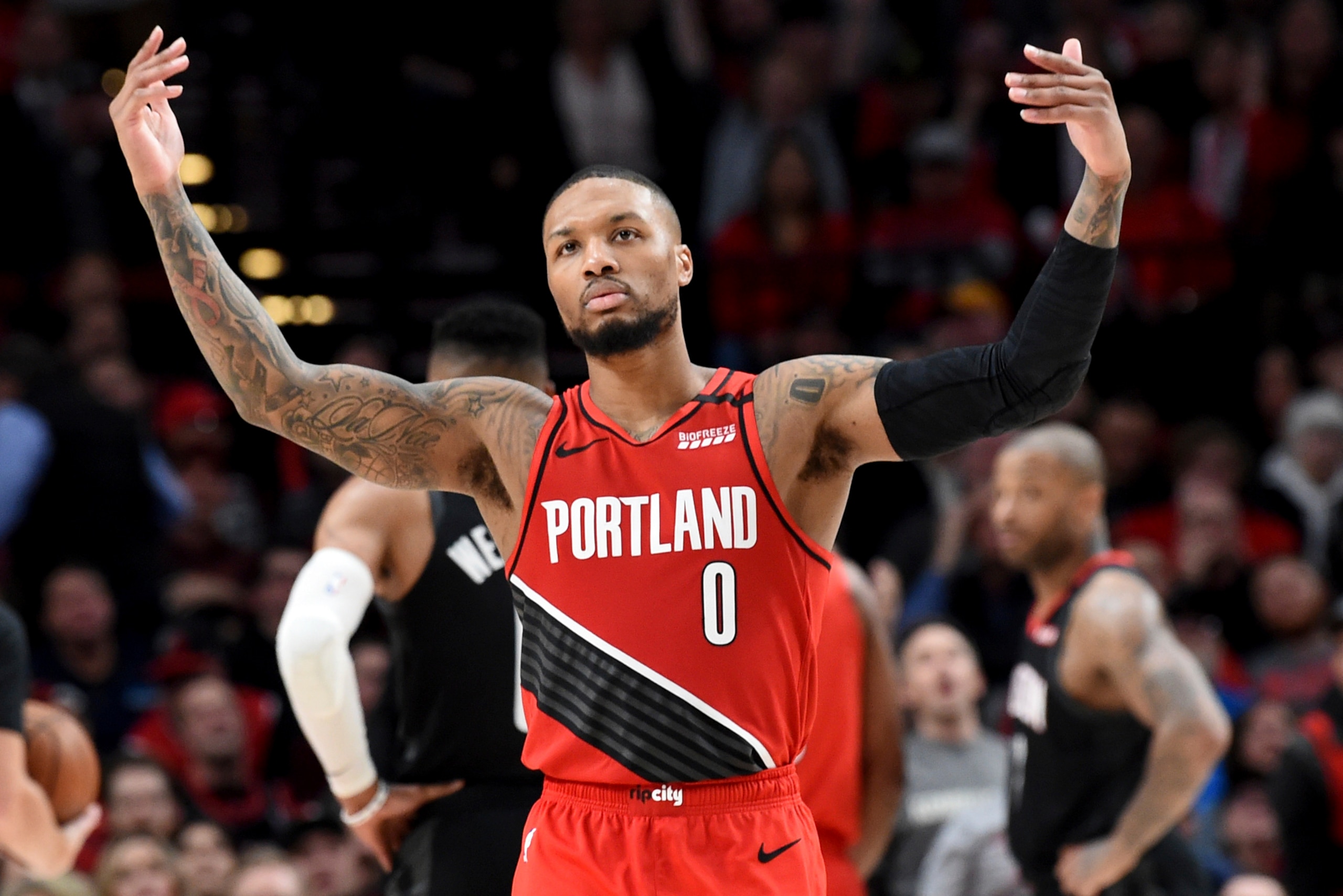
But the draft pick became Damian Lillard, who was shot out of a cannon and averaged 19.0 points and 6.5 assists en route to winning Rookie of the Year. He's only climbed higher since and was recently rewarded with his fifth All-Star selection in eight NBA seasons.
Lillard already has the third-most win shares in Blazers history at 79.2. Wallace, who spent a season-plus with the Nets before leaving in the Pierce/Garnett deal, provided them with 4.5.
Suns' Point-Guard Glut Gifs Celtics MVP Candidate
4 of 6
The Trade: Phoenix Suns trade Isaiah Thomas to Boston Celtics for Marcus Thornton and 2016 first-round pick (via Cleveland Cavaliers) in 2015.
The Thought Process: Even though Goran Dragic and Eric Bledsoe were both on the roster (the latter a restricted free agent who re-signed that September), the Suns quadrupled down on the point guard position. After spending the 18th pick of the 2014 draft on Tyler Ennis, they worked out a sign-and-trade to lure Isaiah Thomas away from the Sacramento Kings.
The situation quickly proved untenable, and Thomas, Dragic and Ennis were all shipped out in separate deadline deals. The Suns deemed Bledsoe their keeper, which effectively pushed Thomas out the door.
"It was a case where Isaiah was going to be a starter, wants to be a starter, and we had Eric Bledsoe," then-Suns coach Jeff Hornacek said, per Paul Coro of the Arizona Republic. "It's probably pretty difficult to start a 5'7" and a 6'0" guy in the backcourt."
The Problem: Well, that 5'7" floor general became a larger-than-life franchise face in Boston. After he averaged 19.0 points and 5.4 assists in reserve duty over the final 21 games of the 2014-15 season, the Celtics moved him into the starting lineup four games into the following campaign and never looked back.
Thomas made his All-Star debut that season and averaged a then-career-high 22.2 points. Then he skyrocketed his production again the next year. In 2016-17, he used top-10 rankings in points (28.9, third), player efficiency rating (26.5, seventh) and win shares (12.5, ninth) to score a fifth-place finish in the MVP voting, where he landed between LeBron James and Stephen Curry.
So, what did Phoenix get for a player of that caliber? Marcus Thornton played nine games for the Suns before leaving for the Houston Rockets in free agency. The pick, which became Skal Labissiere, was packaged with Bogdan Bogdanovic, Georgios Papagiannis and a 2020 second-rounder for Marquese Chriss on draft night 2016.
"I think in retrospect, trading Isaiah Thomas when we did was a mistake," then-general manager Ryan McDonough said on Arizona Sports 98.7 FM in February 2016. "... We should have carried him into the summer. If there's one [decision] that stands out, if I could get a mulligan, that'd be it."
Pistons Turn Scraps into Tobias Harris
5 of 6
The Trade: Orlando Magic trade Tobias Harris to Detroit Pistons for Ersan Ilyasova and Brandon Jennings in 2016.
The Thought Process: In July 2015, the Magic deemed Harris worthy of a four-year, $64 million contract. His scoring and three-point shooting dipped early in the subsequent season, and Orlando lost patience with its gradual rebuild. It also likely questioned whether enough shooting existed to keep Harris, Victor Oladipo and Elfrid Payton in the same perimeter group.
Orlando cleared cap space in the exchange and made it easier to find minutes for Aaron Gordon, Evan Fournier and Mario Hezonja. It also grabbed two usable veterans, though both were reserves on a team that didn't sniff the postseason.
The Problem: The Magic miscalculated something with Harris. Maybe they felt he wasn't worth the money? Except that looks like pennies compared to the nearly $200 million deal he signed this summer. Perhaps they thought he was a poor fit with this core? He can be a bit of a ball-stopper, but hasn't Orlando been seeking a self-sufficient scorer ever since?
It didn't make sense when it happened, and the value only worsened as Harris kept improving in the Motor City.
"The Magic didn't receive equal or better value when they exchanged Harris for Ilyasova and Jennings," Josh Robbins wrote for the Orlando Sentinel. "And worse, the deal signaled the start of a new, less patient phase of the Magic's rebuild."
Mere months after this exchange, the Magic moved Oladipo and Domantas Sabonis for Serge Ibaka. They operated with a win-now mindset, then they went from losing 47 games in 2015-16 to suffering 53 defeats the following season.
Neither Jennings nor Ilaysova was around for that, by the way. Ilyasova left in the Ibaka exchange. Jennings inked a free-agent deal with the New York Knicks and was out of the NBA by 2018. The cap flexibility created in the Harris trade was promptly used on Evan Fournier (fine) and Bismack Biyombo (oof).
Even if Orlando wasn't fond of Harris' fit or contract, he was 23 years old when this went down. The market must've had something more appealing. And if it didn't, the Magic had nothing at risk by keeping him around.
The Blake Griffin Gamble Gone Awry
6 of 6
The Trade: Detroit Pistons trade Tobias Harris, Avery Bradley, Boban Marjanovic, 2018 first-round pick, 2019 second-round pick to Los Angeles Clippers for Blake Griffin, Brice Johnson and Willie Reed in 2018.
The Thought Process: Struggling to build a winner around Andre Drummond and Reggie Jackson and having made one playoff appearance the previous eight seasons, the Motor City bet the farm on Griffin changing their fortune.
"We are serious about winning, and this is a major move to improve our team," Pistons owner Tom Gores explained in a statement. "Blake Griffin is one of the NBA's elite players, and when you get an opportunity to add that kind of talent, you take it."
The Problem: Gores admitted in the statement that "the move is not without risk." While he was talking about the trade cost, the much greater risk involved making such a massive investment in both Griffin and a team with unimpressive upside, as ESPN's Zach Lowe explained at the time:
"[Griffin] is in the first year of an absolutely ginormous five-year contract that will pay him about $35 million per season -- and almost $39 million in 2020-21. He has a scary injury history. The Detroit Pistons could end up paying Griffin and Andre Drummond almost $70 million combined that season. Considering they have literally zero bankable long-term talent around them, and fewer avenues to find any after this trade, that scenario doesn't seem great."
Griffin hit the ground running with the Pistons and returned to the All-Star Game after a three-year hiatus this past season. But he hobbled into this campaign with ominous knee soreness, looked dreadful when he played (career lows of 15.5 points and 35.2 percent shooting) and required knee surgery in January.
He's on the books for $36.8 million next season and holds a $39 million player option for 2021-22. Detroit appears in desperate need of a reset, but that's virtually impossible with Griffin's contract breaking the budget. And unless the Pistons want to subtract from an already light asset collection, they aren't shedding this money.
While the Clippers have nothing left from this exchange, they used several components to reshape themselves into a contender.
They packaged the first-rounder with two future seconds to land Shai Gilgeous-Alexander. They turned Harris into a treasure chest of assets. They used Gilgeous-Alexander and a pick from the Harris deal to land Paul George, which was effectively a two-star addition since Kawhi Leonard wasn't coming without him.
What was supposed to be a win-now move for Detroit and a semi-reset for L.A. has instead helped the Clippers join the championship race and left the Pistons trapped once again.
All stats, unless otherwise noted, courtesy of NBA.com and Basketball Reference and accurate through games played Feb. 1. Salary information via Basketball Insiders.
Zach Buckley covers the NBA for Bleacher Report. Follow him on Twitter, @ZachBuckleyNBA.

.jpg?w=2560 "Cam Ward Says He's Not A Loser")
.jpg?w=2560 "Texans Trade for MHJ")
.jpg?w=2560 "Chargers Fall to 0-5 🤢")

.jpg?w=2560 "Grading MHJ Trade 📝")