
Ranking Every MLB MVP Season of the 2010s
The 2019 American League and National League MVP awards were handed out Thursday night, capping off a week full of debates.
Los Angeles Dodgers first baseman/outfielder Cody Bellinger and Los Angeles Angels center fielder Mike Trout deservedly took home the hardware. But how do they stack up against the rest of the MVP winners from this decade?
Ahead, we've ranked every MVP performance of the past decade based on the cumulative average of their WAR totals from both Baseball Reference and FanGraphs.
Which MVP season claims the No. 1 spot?
Let's get started.
Celebrate Pedro Martinez's Iconic Career with B/R World Tour Merch.
Nos. 20-16
1 of 8
In his age-26 season, Votto led the NL in on-base percentage (.424) and OPS (1.024) while adding 37 home runs and 113 RBI for a 91-win Cincinnati Reds team. That said, Albert Pujols led the NL in home runs (42), RBI (118) and runs (115), and he bested Votto in OPS+ (173 to 171), so a case can be made he should have been the winner.
While 2012 featured a historic Triple Crown win for Cabrera when he hit .330 with 44 home runs and 139 RBI, it was actually a step back from his other peak seasons. For example, relative to his 2013 MVP win, he had a significantly lower on-base percentage (.393 to .442) and OPS+ (164 to 190), and his defense at third base left a lot to be desired.
A standout performer over the first four seasons of his career, Braun took his game to another level in 2011 when he led the NL in slugging (.594) and OPS (.994) while posting his first 30-30 season with 33 home runs and 33 steals. His performance was clouded by steroid controversy, and the award probably should have gone to Matt Kemp and his 39-homer, 40-steal season that was worth 8.0 bWAR and 8.3 fWAR.
The first pitcher since Dennis Eckersley in 1992 to win MVP honors, Verlander led the AL in wins (24), ERA (2.40), ERA+ (172), WHIP (0.92), strikeouts (250) and innings (251) while limiting opposing hitters to a .191 batting average for a Detroit Tigers team that won the AL Central title. The debate rages on about whether a pitcher should win MVP honors.
In his first season with the Milwaukee Brewers, Yelich hit .367/.449/.770 after the All-Star break and .370/.508/.804 with 10 home runs and 34 RBI in 27 games over the final month of the season to edge out Chicago Cubs shortstop Javier Baez for NL MVP honors and lead the Brew Crew to an NL Central title.
Nos. 15-11
2 of 8
Stanton finally stayed healthy for a full season in 2017 and led the NL in home runs (59), RBI (132) and OPS+ (169) in the process. The voting was extremely scattered, and he wound up edging out Cincinnati Reds first baseman Joey Votto by the narrowest of vote-point margins (302-300). Aside from his offensive numbers, Stanton also tallied 10 DRS in right field.
After winning NL Rookie of the Year honors in 2015, Bryant took his game to the next level in his sophomore season by slashing his strikeout rate (decreasing it by 8.6 percent) and hitting .292/.385/.554 for a 146 OPS+ with 35 doubles, 39 home runs, 102 RBI and an NL-leading 121 runs. He also added value with his defensive versatility, playing multiple games at third base (107 games), left field (60 games), right field (14 games) and first base (nine games). His contributions helped the Cubs snap their World Series drought.
Three years after Justin Verlander won AL MVP, Kershaw became the 10th pitcher in MLB history to claim the award. His 1.77 ERA was the 11th-lowest mark since the mound was lowered in 1969, and he also led the NL in wins (21), ERA+ (197), WHIP (0.86) and strikeouts per nine innings (10.8). The lack of a clear position-player alternative helped his candidacy.
Altuve won his third batting title in four years with a career-high .346 average in 2017, also pacing the AL in hits (204) for the fourth straight year while adding 39 doubles, 24 home runs, 32 steals and 112 runs. His development from top-of-the-order spark plug to legitimate power threat helped propel the Houston Astros to a World Series title.
After back-to-back runner-up finishes to Miguel Cabrera, Trout finally took home MVP honors in 2014. His 338 total bases are still a career high, but by most accounts, it was actually one of the worst seasons of his career. His batting average (.287) and OBP (.377) are both career lows, and his injury-shortened 2017 season is the only time he had lower bWAR and fWAR. More than anything, that speaks to just how amazing he's been.
Nos. 10-6
3 of 8
While he did not win the Triple Crown in 2013, Cabrera had arguably the best season of his career. His batting average (.348), slugging (.636), OPS (1.078) and OPS+ (190) all represent career highs, and he slugged 44 home runs with 137 RBI. There's no question this was his better MVP year.
McCutchen didn't lead the NL in any notable categories during the 2013 season. However, he did it all for the playoff-bound Pittsburgh Pirates, hitting .317/.404/.508 with 21 home runs and 27 steals while also tallying 5 DRS in center field to capture 28 of 30 first-place votes in the balloting.
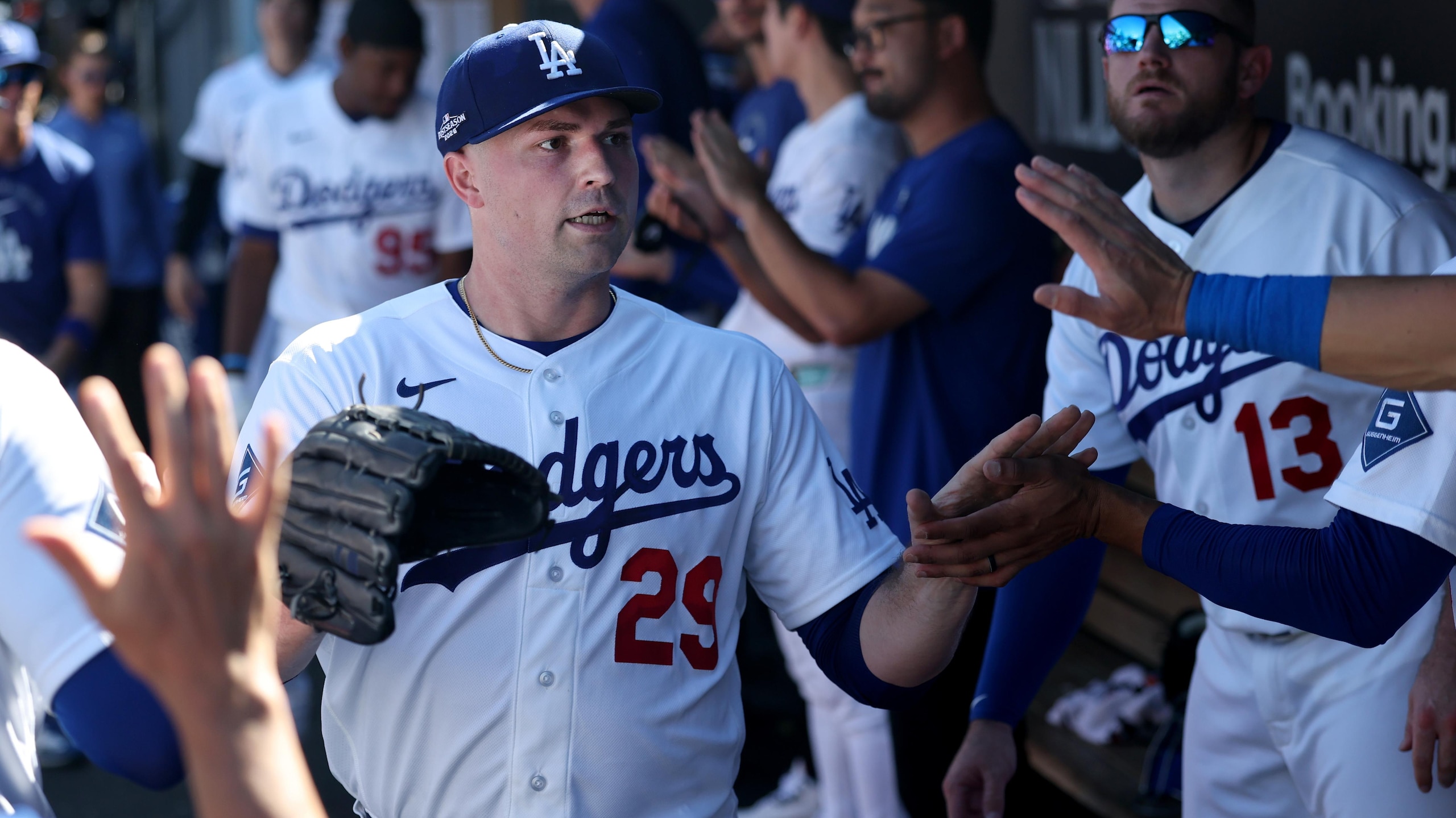
Bellinger saw his OPS+ dip from 143 during his historic rookie season to 120 last year, raising some questions about what kind of player he would be going forward. Those questions were answered in resounding fashion when he hit .305/.406/.629 for a 169 OPS+ with 47 home runs and 115 RBI. Originally a first baseman, he also won Gold Glove honors in right field (19 DRS) and played an above-average center field (three DRS) when called upon.
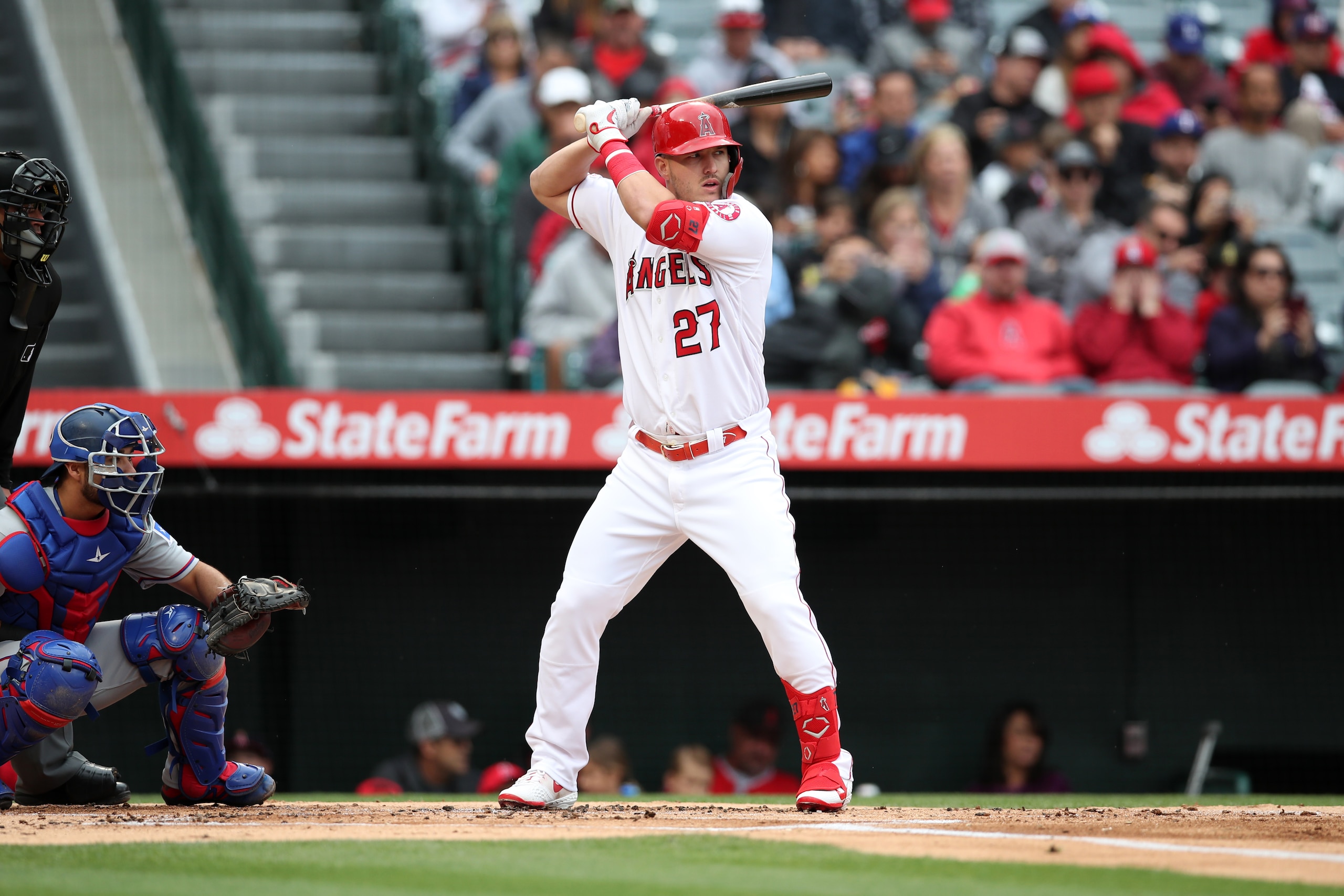
Despite playing his final game on Sept. 7 before undergoing season-ending surgery on his right foot, Trout still slugged a career-high 45 home runs in 2019. He also led the AL in on-base percentage (.438), slugging (.645), OPS (1.083) and OPS+ (185). It wasn't the best season of his career, but it was awfully good.
Aside from slugging 40 doubles and 32 home runs as one of the most productive power hitters in baseball, Hamilton also won the AL batting title by a staggering 31 points over Miguel Cabrera in 2010, finishing with a .359/.411/.633 line and a 170 OPS+.


No. 5: Josh Donaldson, Toronto Blue Jays (2015 AL MVP)
4 of 8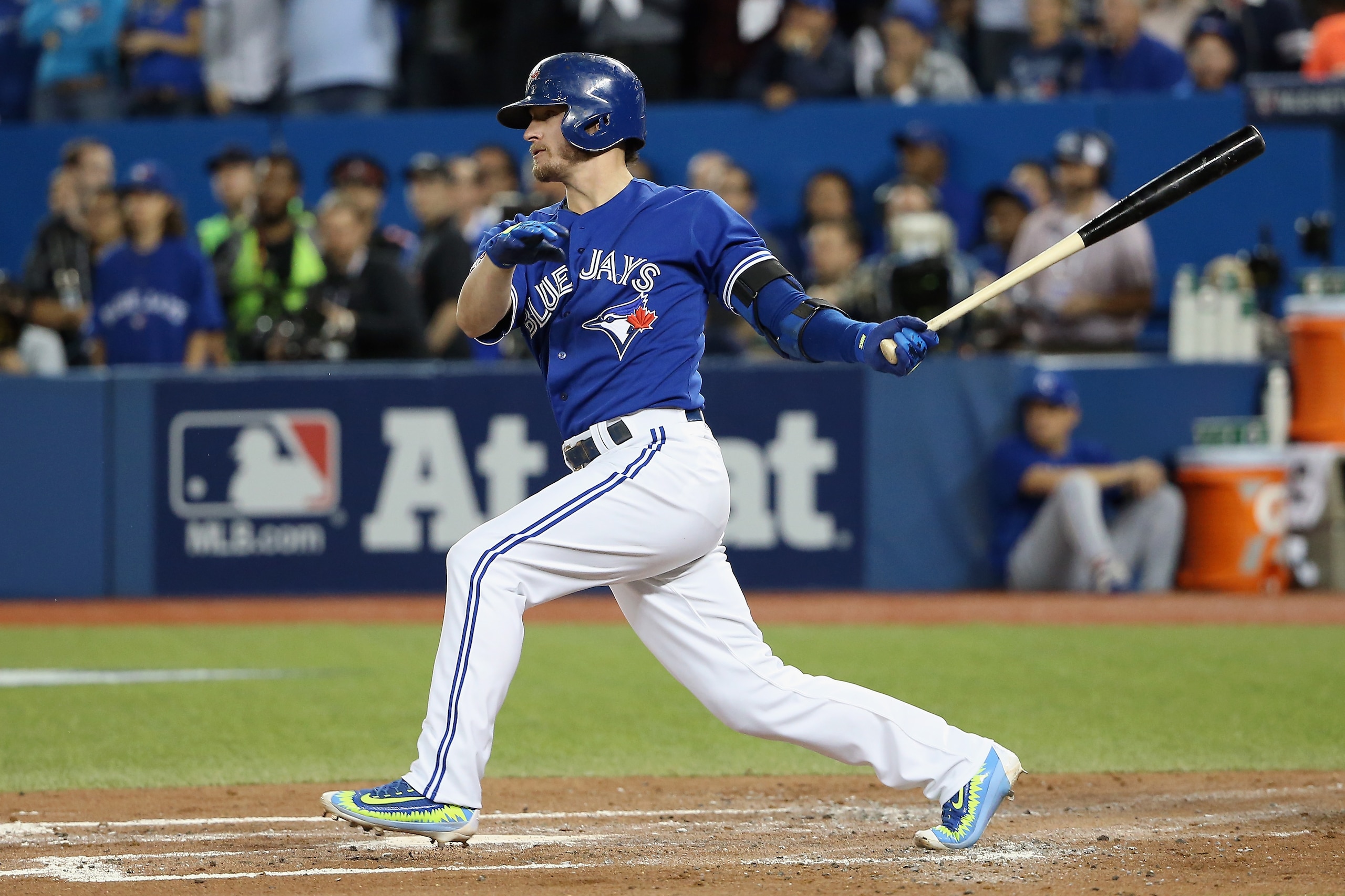
The Toronto Blue Jays acquired Josh Donaldson from the Oakland Athletics prior to the 2015 season in exchange for Brett Lawrie and prospects Kendall Graveman, Sean Nolin and Franklin Barreto.
That may very well go down as one of the most lopsided trades in MLB history.
After back-to-back excellent seasons in Oakland, Donaldson took his game to another level north of the border, hitting .297/.371/.568 for a 151 OPS+ while leading the AL in RBI (123), runs (122) and total bases (352) and smacking 41 doubles and 41 home runs.
Throw in his 11 DRS and 9.2 UZR/150 at third base, and he was one of the most dynamic all-around players in baseball.
No. 4: Buster Posey, San Francisco Giants (2012 NL MVP)
5 of 8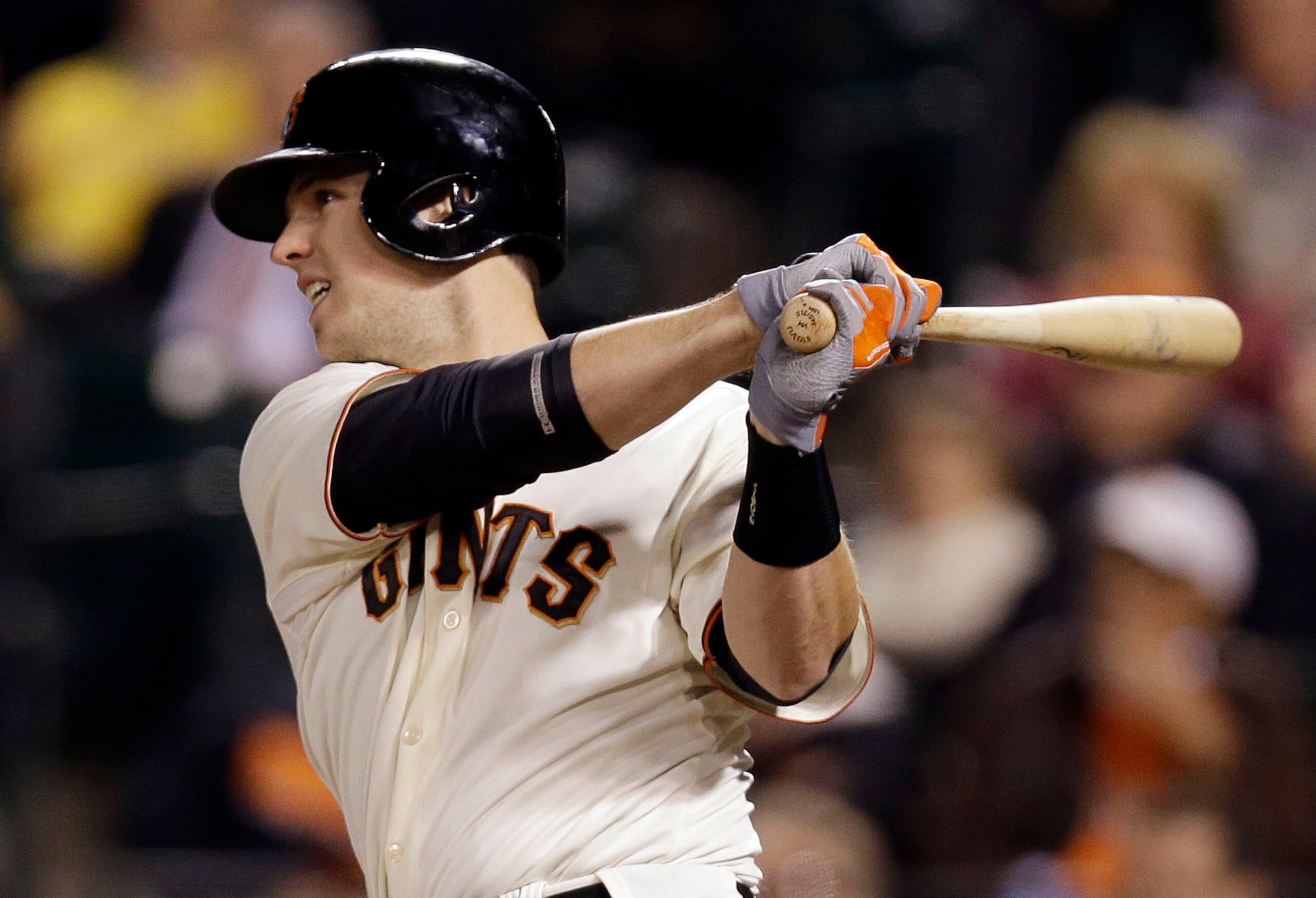
This is as big of a discrepancy as you'll see between the WAR totals at Baseball Reference and FanGraphs, and it stems from the addition of pitch-framing into the FanGraphs model.
Two years after winning NL Rookie of the Year, Posey became just the fourth catcher in MLB history to win a batting title with a .336/.408/.549 line that included 39 doubles, 24 home runs and 103 RBI in 148 games.
He also threw out 30 percent of base stealers and tallied 16 DRS behind the plate while grading out as the third-best pitch-framer among all catchers.
The San Francisco Giants went on to win their second World Series in three years, and Posey started building his legacy as one of the best catchers of his era.
No. 3: Bryce Harper, Washington Nationals (2015 NL MVP)
6 of 8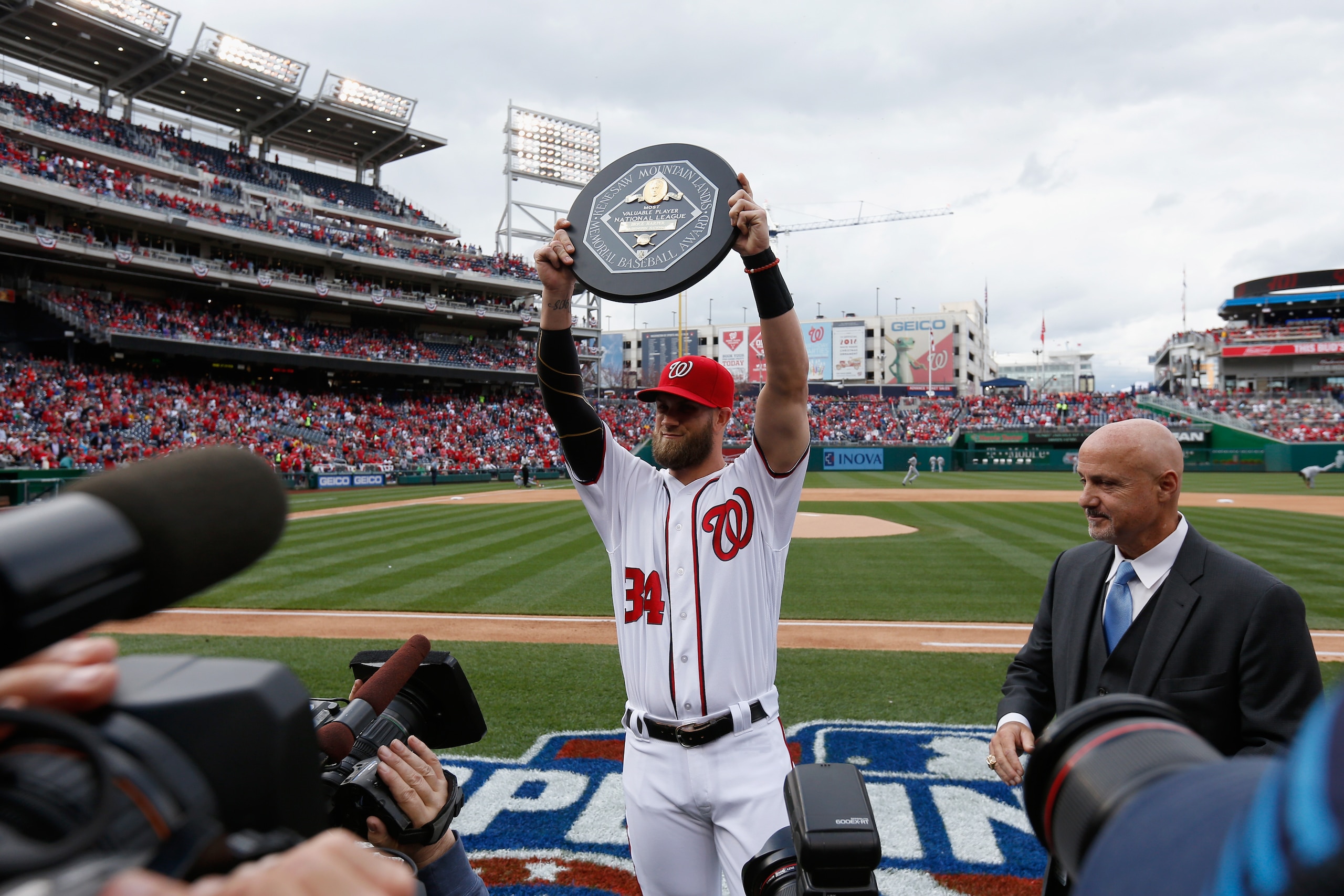
At the age of 22, Bryce Harper was already in his fourth MLB season when he took home NL MVP honors thanks to a dominant offensive showing.
He hit .330/.460/.649 with 38 doubles and 42 home runs while leading the NL with 118 runs and tallying nearly as many walks (124) as strikeouts (131).
That stat line was good for a 198 OPS+ that not only led all of baseball, but is tied for the No. 63 spot on the all-time list. When you take into account the fact that 23 of the seasons ahead of him belong to Barry Bonds, Babe Ruth or Ted Williams, that becomes even more impressive.
The only other unanimous MVP selection during the 2010s was Mike Trout in 2014.
No. 2: Mike Trout, Los Angeles Angels (2016 AL MVP)
7 of 8
The 2016 season marked a shift in approach by Mike Trout.
He raised his walk rate by 3.5 percent and trimmed his strikeout rate by 3.1 percent en route to a .315/.441/.550 line while leading the AL in walks (116) and runs (123).
The 24-year-old also started running again, swiping 30 bases after stealing just 27 total over the previous two seasons.
His home run total dipped from 41 to 29, and 2016 is the only time over the past five seasons that he did not lead the AL in OPS as a result, but he came out the other side a more well-rounded offensive player.
He also played a strong defensive center field, tallying 6 DRS and 3.6 UZR/150 that was icing on the cake.
No. 1: Mookie Betts, Boston Red Sox (2018 AL MVP)
8 of 8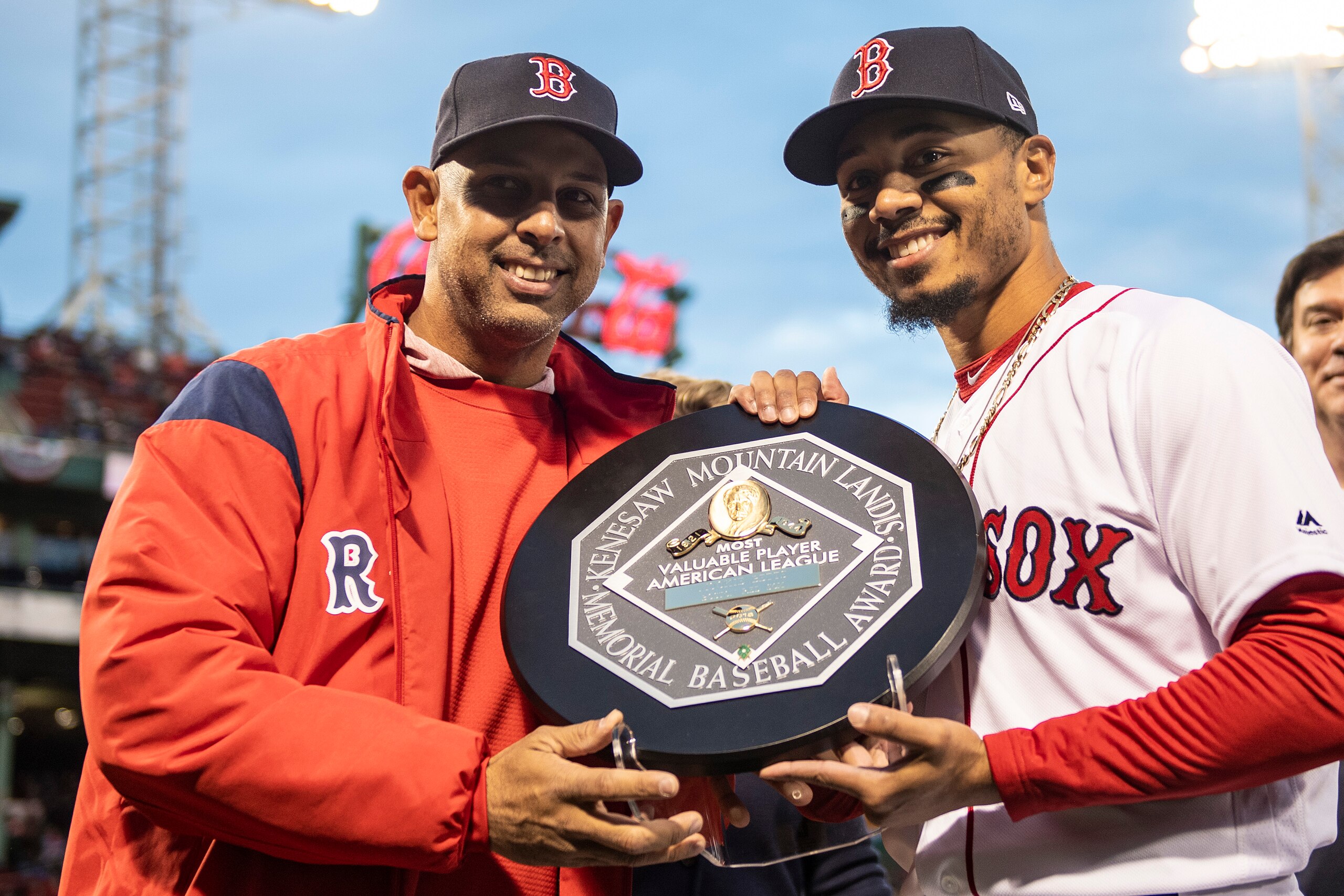
Surprised?
Based on offensive contributions alone, the 2018 season that Mookie Betts put together would be a strong contender for the No. 1 spot.
Penciled into the leadoff spot in the Boston Red Sox's high-powered lineup for most of the season, he won the AL batting title with a .346 average and paced the league in runs (129) while also adding 30 steals.
Far from a traditional leadoff hitter, Betts also had 47 doubles and 32 home runs while leading the AL in slugging percentage (.640) and posting a 186 OPS+.
It was his defensive contributions that provided the final push into the No. 1 spot.
Already a two-time Gold Glove winner, Betts piled up 20 DRS and 21.1 UZR/150 in right field to take home the award for a third straight season, cementing his season as the best MVP performance of the 2010s.
All stats courtesy of Baseball Reference and FanGraphs, unless otherwise noted.
Celebrate Pedro Martinez's Iconic Career with B/R World Tour Merch.



.jpg?w=2560 "Viral Rams Coach Vid 🖕")
.jpg?w=2560 "Injury-stricken Seahawks signing veteran RB")
.jpg?w=2560 "2 NFL Officials Suspended")

.jpg?w=2560 "Grading WWE Raw 🔠")
.jpg?w=2560 "Mahomes' Wife Trolls Kubiak 💀")

