


When you're among the NBA's rising stars, comparisons to one or more of the greats who came before are nearly unavoidable.
So it is with Donovan Mitchell, who has led the Utah Jazz in scoring in each of his first two campaigns. And in both years, his team made the postseason in the perennially brutal Western Conference.
He's one of six players in the NBA's three-point era to make the playoffs and average at least 20 points in each of his first two seasons. Larry Bird, Michael Jordan, David Robinson, Tim Duncan and Carmelo Anthony are the other five.



And, as if it doesn't feel like this intro has pumped him up enough, Mitchell is often mentioned in the same breath as one of the greatest shooting guards of all time.
"I would compare Donovan Mitchell to Dwyane Wade..." ESPN's Chiney Ogwumike said. "Because he is athletic at the point guard position. He can also play the 2-guard position. Now, D-Wade is obviously probably a better defender. But Donovan Mitchell could be a better three-point shooter. So, I see a D-Wade comparison."
And she's not the only one.
"I had sent some under-the-radar feelers for like, 'Hey, who knocked everybody's socks off this week?' And Mitchell was the guy," The Ringer's Bill Simmons said of Mitchell's time with Team USA. "... I don't know what he did this summer, but they just were like, 'He's so strong, so explosive.' It's starting to feel like there's some 2006 Dwyane Wade potential with his next season was what I gathered."
It's a lofty comparison but probably not an unfair one. When the numbers from Mitchell's first two seasons were presented in the form of a blind Twitter poll next to Dwyane Wade's, the latter won, but it certainly wasn't a landslide:
And when the age-22 seasons of each (Wade's rookie year vs. Mitchell's second) were compared, the results more than flipped:
These results show there's some validity to this exercise, but they're not enough to definitively say Mitchell's career is off to as hot a start as the eventual Hall of Famer's.
To declare either the winner in this week's comparison, we'll break it down into the following categories: scoring, shooting, playmaking, defense and overall impact.
Let's party...
Scoring
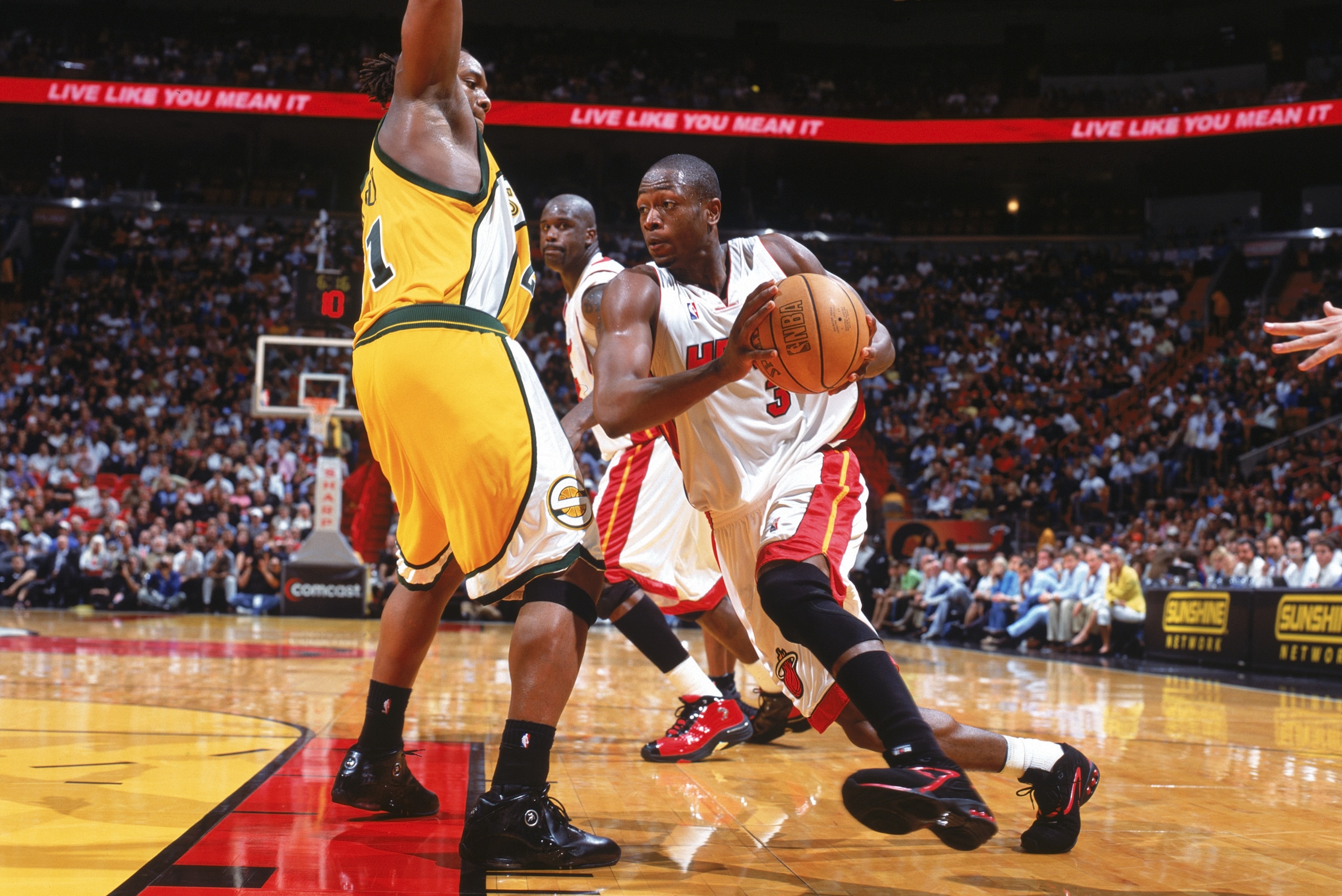
During his 2003-04 rookie season, Wade was the third-leading scorer for the Miami Heat. His 16.2 points per game trailed Eddie Jones (17.3) and Lamar Odom (17.1).
That balanced attack gave way to much more Wade in Year 2, when he averaged 24.1 and led the team. But he had plenty of scoring help in that campaign, too. In 2004-05, Shaquille O'Neal powered in 22.9 points per game in his first post-Lakers season.
Mitchell, meanwhile, hasn't had nearly as much scoring help.
As a 2017-18 rookie, his 20.5 points were almost four more than Rodney Hood's 16.8. And Hood was only with the team for 39 games. Mitchell's average was seven points ahead of the 13.5 posted by the team's season-long second-leading scorer, Rudy Gobert.
In 2018-19, Mitchell's 23.8 points were nearly eight more than Gobert's 15.9.
But obviously, bigger responsibility doesn't necessarily mean better scorer.
If we see how efficient each was in a variety of play types, we may get a better idea:
| Donovan Mitchell | 0.94 (80th percentile) | 0.80 (65th) | 1.21 (67th) | 1.02 (72nd) | 1.22 (51st) | 0.97 (68th) |
| Dwyane Wade | 0.95 (79th percentile) | 0.85 (52nd) | 0.89 (13th) | 1.23 (93rd) | 1.33 (61st) | 0.65 (10th) |
It appears that Wade had the more balanced attack, but if you figure the points per possession for all the play types combined, he's a whopping 0.005 ahead of Mitchell (0.950 to 0.945).
Where Wade has a massive advantage is in drawing fouls. In his first two seasons, Mitchell's free-throw rate is .240, 184th among the 386 players with at least 1,000 minutes in that span. Wade's .508 free-throw rate ranked 27th overall and second among guards in his first two seasons.
And you can point to that ability to get to the line if you want to explain the discrepancy in true shooting percentage (displayed as rTS% or relative true shooting percentage in the polls above).
And while there's something to be said for Mitchell's volume, he's not far ahead of Wade, relative to league average.
Over the course of the last two seasons, Mitchell's 22.1 points rank 21st in the NBA. Wade was also 21st over the course of his first two seasons.
Even though he had a little more help in bearing the scoring load, Wade's free-throw-boosted efficiency gives him the edge in this category.
Mitchell 0, Wade 1
Shooting
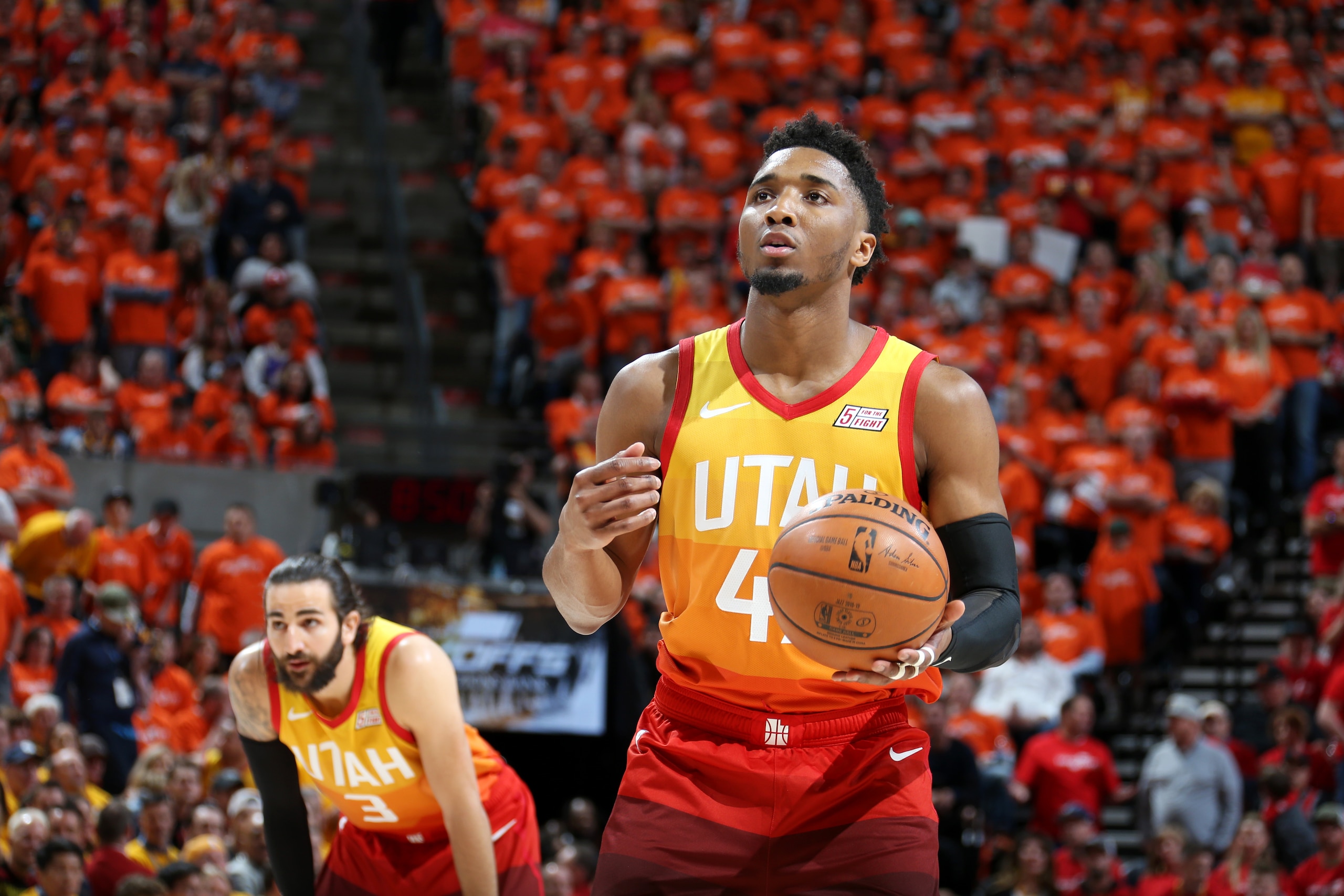
Determining who the better shooter is won't be nearly as difficult.
Donovan Mitchell hit 375 threes in his first two seasons. Damian Lillard (403) is the only player in league history who opened his career with more triples in two years. Wade hit a total of 29 threes in his first two campaigns.
Of course, a lot of that is era-specific. During Wade's first two seasons, just 19.2 percent of all shot attempts were taken from beyond the three-point line. During Mitchell's career, the three-point attempt rate is 34.8 percent.
Still, Mitchell is way ahead of Wade, even relative to league averages:
| Donovan Mitchell | -0.7 | -3.2 | +3.8 | +1.3 |
| Dwyane Wade | -5.6 | +1.7 | +0.4 | -0.4 |
Mitchell is undoubtedly among the league's best shooters right now, and his combination of volume and near-average efficiency from deep is encouraging. His raw shooting numbers are better than those of Wade's first two years.
Mitchell 1, Wade 1
Playmaking
We may have a little bit of a chicken-and-egg situation here.
Are Mitchell's assist numbers a little lower than Wade's because he had fewer scorers to pass to? Or, did Mitchell's teammates score a little less because Mitchell passed less?
It's tough to make that call definitively, so we'll work with what we have.
| Donovan Mitchell | 3.9 | 20.3 | 2.8 | 11.9 |
| Dwyane Wade | 5.8 | 28.5 | 3.7 | 16.6 |
Over the course of their first two seasons, Wade did more to create for others than Mitchell did.
Mitchell 1, Wade 2
Defense
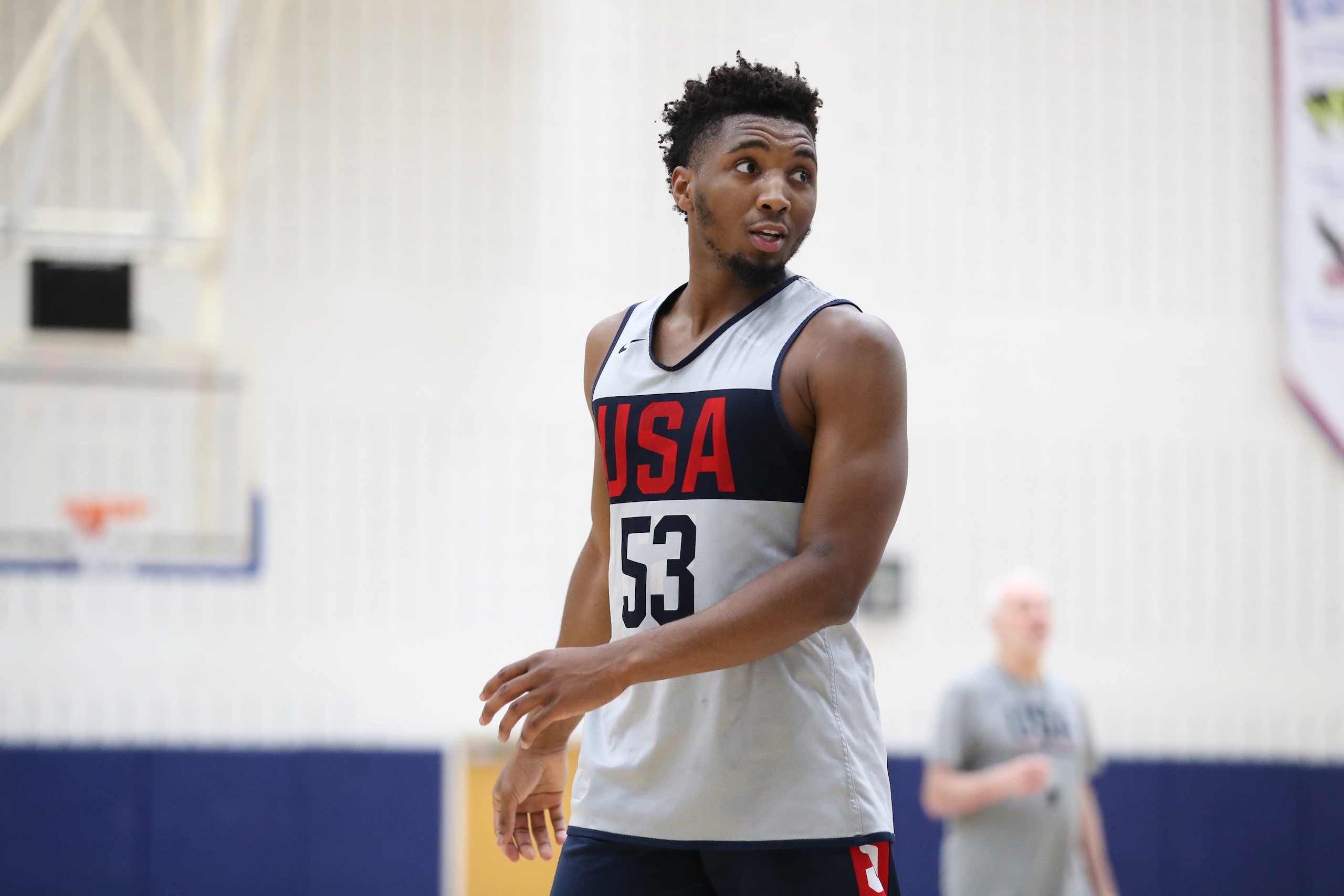
"For me, the biggest thing is just to get back to my roots. The biggest thing is to elevate my defense, to get back to what got me drafted," Mitchell told the Salt Lake Tribune's Andy Larsen of his goals for Year 3. "I think that's one thing I've prided myself on, and I think [USA head coach Gregg Popovich] has really put that in my head as well."
It's not that Mitchell was bad defensively, but if he can become the kind of on-and-off-ball menace he was forecast to be, he could leap to the league's top tier of players.
Through his first two seasons, Mitchell's defensive box plus/minus is minus-0.2. Wade's was 1.0, third among players his height or shorter, through his first two seasons.
Wade also gave us a glimpse of what was to come in that second season, when he averaged 1.1 blocks. He went on to finish his career with a total of six seasons with an average of at least one block. Only three other players Wade's height or shorter had such a season. Those three combined for five.
Wade eventually became the all-time leader in blocks by a guard.
Now, having said all that, there is one way to look at this category that favors Mitchell.
Over the course of his career, the Jazz have allowed 1.97 fewer points per 100 possessions with Mitchell on the floor, according to PBPStats.com. Miami gave up 2.80 more points per 100 possessions when Wade was on the floor during his first two years.
Of course, that can be explained away by the fact that Mitchell has spent a significant chunk of his minutes alongside Gobert, who won Defensive Player of the Year in 2017-18 and 2018-19.
When Mitchell and Gobert were both on the floor, Utah surrendered 102.30 points per 100 possessions. When Mitchell was on the floor without the big man, that number skyrocketed to 109.89.
To Mitchell's credit, Gobert's defensive rating saw a similar jump when he played without the rising star, but these numbers feel more system-dependent than Wade's.
In terms of individual defense, Flash has the edge. He was named second-team All-Defensive in 2005. And he even received a point in Defensive Player of the Year voting that season.
Mitchell 1, Wade 3
Overall Impact
Wade may have a comfortable lead on the unofficial scorecard, but that doesn't really do Mitchell justice. Each category is pretty close. And that probably undersells Mitchell's argument in the scoring debate.
To try to find a little more separation, we'll look to some catch-all and on-off numbers for each:
| Donovan Mitchell | 0.8 | .094 | 20.0 | +5.0 |
| Dwyane Wade | 3.1 | .146 | 19.8 | +0.3 |
Net rating swing is the difference in a team's net points per 100 possessions when a given player is on or off the floor. Mitchell's edge there helps to show how important he is to the Jazz, but it's not enough to overcome the rest of the evidence.
Mitchell 1, Wade 4
Who You Got?
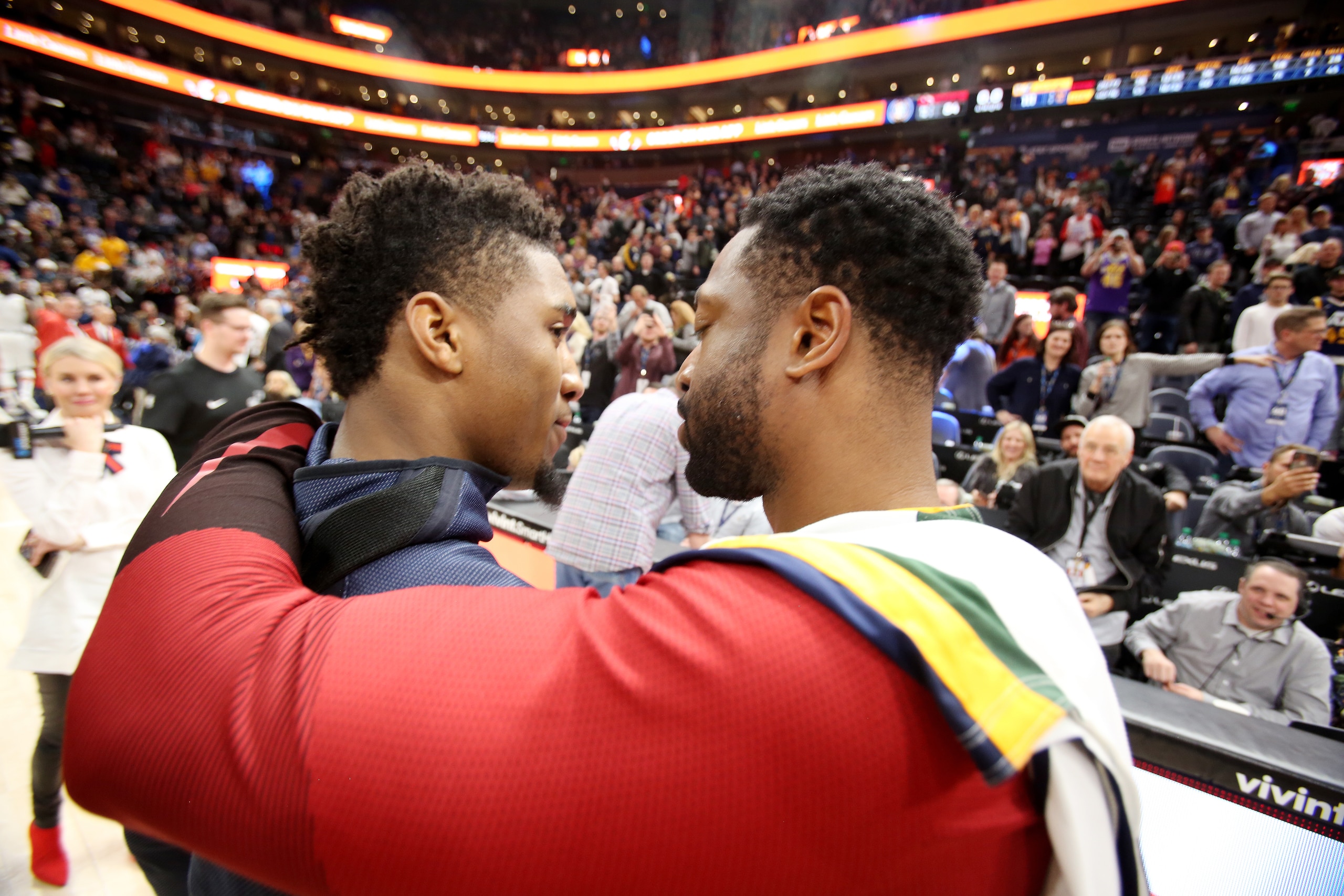
Again, the comparison is fair, but Mitchell isn't quite on track with where Wade was after two seasons. However, Wade's second campaign was his age-23 season. That's what's right in front of Mitchell.
And if his time with Team USA this summer is any indication, the Jazz guard may be poised for a huge third season.
"He was one of the few guys we thought could make a big jump here," Team USA managing director Jerry Colangelo told ESPN's Brian Windhorst. "And he has."
If he continues to take those steps forward, Mitchell can join Wade as one of the game's greatest guards.

.jpg?w=2560 "Raiders Could Start Mendoza")

.jpg?w=2560 "Rodgers Iced Out on Plane 💎")
.jpg?w=2560 "Packers Safety Slams Refs 🤬")
.jpg?w=2560 "🚨 Week 8 AP Top 25 Poll")
