
NBA Metrics 101: Building the Best Possible Roster Under the Current Cap
The rules are simple.
Every NBA player is available, even the ones still operating on their rookie-scale contracts and functioning as financial bargains who can't legally make more money under the restrictions imposed by the league's collective bargaining agreement. From there, while staying under the salary cap ($101.869 million for 2018-19), we're trying to build the most competitive 12-man roster that follows the construction used for All-Star selections:
- Two backcourt starters
- Three frontcourt starters
- Two backcourt reserves
- Three frontcourt reserves
- Two wild-card selections at any position
Maybe you want to go with a stars-and-scrubs strategy. Perhaps you're looking for more balance, collecting second-tier players on value contracts to build unimpeachable depth. Maybe you're even willing to leave a significant amount of money on the table because you don't need to hit a ninth digit while constructing your superteam.
We're using Basketball Reference's list of salaries for the 2018-19 season and ESPN.com's real plus/minus wins as a baseline while compiling our ultimate under-the-cap roster, but no single solution exists for this mathematical puzzle. If you can follow the rules and build a cohesive collection of NBA standouts capable of toppling this one, please don't hesitate to let us know.
Just know this roster will be awfully difficult to beat.
Backcourt Reserves
1 of 7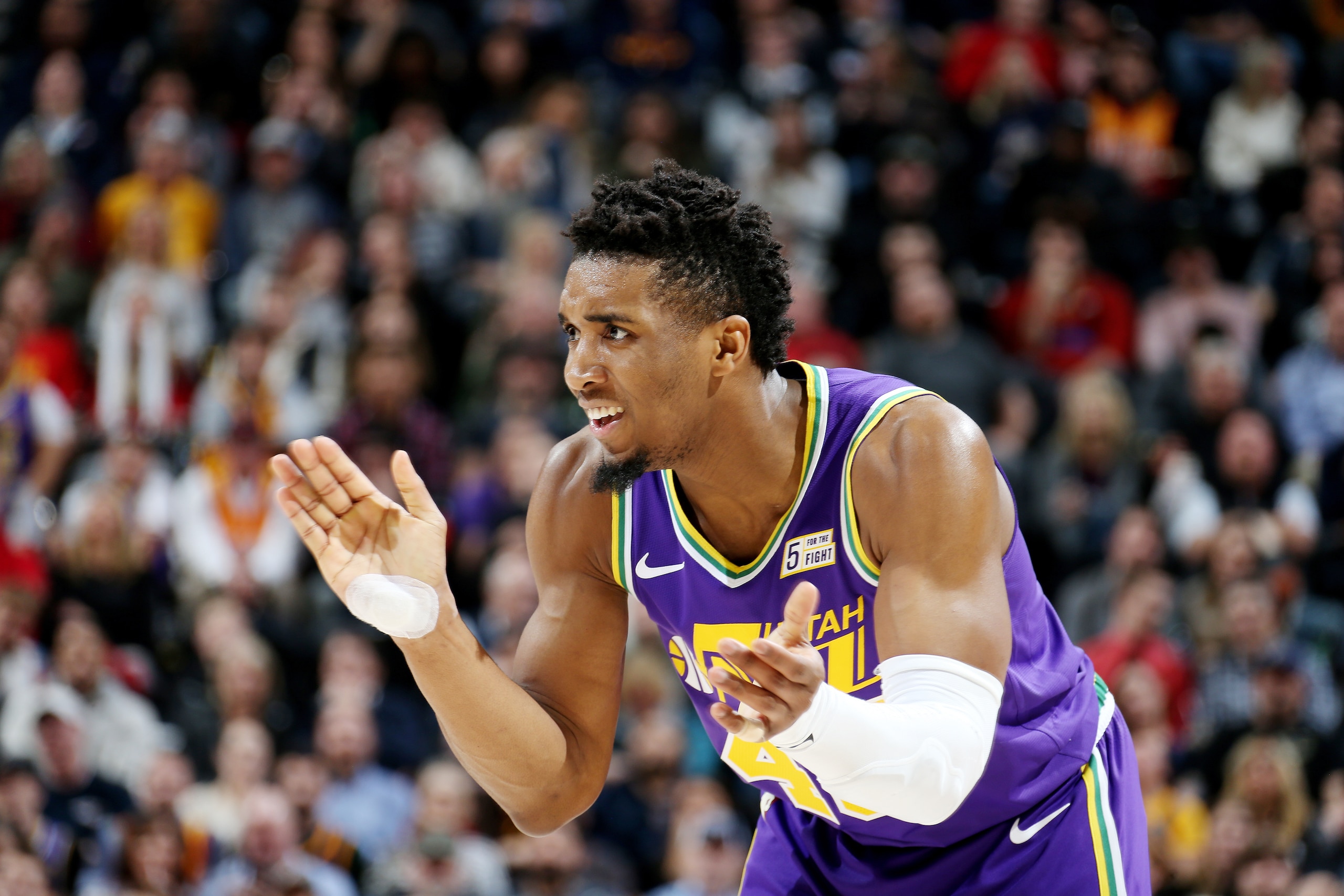
Malcolm Brogdon, SG, Milwaukee Bucks ($1,544,951)
2018-19 Per-Game Stats: 15.7 points, 4.6 rebounds, 3.4 assists, 0.6 steals, 0.2 blocks
Dollars Per RPM Win: $591,935.25 (No. 8 in the NBA)
If our budget team needs a free throw in a clutch situation—whether earned during the flow of the action or following a technical foul from the overmatched opposition—Malcolm Brogdon will be prepared to knock down the freebie. He's missed only one of his 78 attempts in 2018-19, which puts him on pace to surpass the record (98.1 percent) earned by Jose Calderon in 2008-09.
But Brogdon, though he fails to earn headlines alongside Giannis Antetokounmpo, Khris Middleton, Brook Lopez and Eric Bledsoe, is more than just a foul-shooting ace. He's also a steady offensive presence capable of spotting up, cutting or serving as a primary facilitator, and his three-point prowess (42.9 percent on 3.8 attempts per game) and care for the ball (11.9 turnover percentage) will both boost this bench.
Donovan Mitchell, SG, Utah Jazz ($3,111,480)
2018-19 Per-Game Stats: 20.7 points, 3.6 rebounds, 3.5 assists, 1.6 steals, 0.3 blocks
Dollars Per RPM Win: $928,800.00 (No. 19)
On one hand, the No. 13 pick of the 2017 NBA draft has functioned as a massive disappointment during his sophomore campaign, failing to build upon his sterling rookie results with a floundering jumper and an unshakeable desire to take over offensive possessions. Though his 20.7 points per game look rather nice, they're coming while he shoots 41.4 percent from the field, 31.6 percent from downtown and 79.6 percent from the stripe.
And yet, we're still picking him for this roster.
On the Utah Jazz, Mitchell is subject to constant defensive attention and often has no choice but to embark upon takeover possessions. On this supersquad, his turnover-averse play would remain valuable as he picks his spots more wisely and expends more of his energy on the defensive end. Either way, he's a massive bargain while operating on his rookie-scale deal.
Derrick Rose, PG, Minnesota Timberwolves ($2,176,260)
2018-19 Per-Game Stats: 18.9 points, 2.8 rebounds, 4.8 assists, 0.7 steals, 0.3 blocks
Dollars Per RPM Win: $1,326,987.80 (No. 28)
Last year, Derrick Rose failed to stick with the Cleveland Cavaliers and Utah Jazz before earning minutes with the Minnesota Timberwolves through coach-player nepotism (coachatism?). His role gradually increased despite his woeful defense, errant shooting (5.8 points per game with a 46.3 true shooting percentage) and performances that paled in comparison to the underrated work of an inspired Tyus Jones.
But the narrative has shifted dramatically in 2018-19, to the point that a revamped jumper—he now releases on the way up rather than holding onto the rock too long—has made him a legitimate candidate to join the Western Conference All-Star squad. Rose is now averaging 18.9 points and 4.8 assists while shooting 48.6 percent from the field, 46.2 percent from deep (on 3.3 attempts per game) and 83.8 percent from the stripe. Everything is clicking.
Fortunately for us, he's still operating on the $2.2 million prove-yourself deal he signed to try again with the 'Wolves—a number that will inevitably pale in comparison to the pact he inks this summer.
Kemba Walker, PG, Charlotte Hornets ($12,000,000)
2018-19 Per-Game Stats: 25.1 points, 4.3 rebounds, 5.8 assists, 1.2 steals, 0.5 blocks
Dollars Per RPM Win: $2,352,941.18 (No. 74)
When Kemba Walker signed a four-year, $48 million extension with the Charlotte Hornets on Oct. 30, 2014, he was coming off a season in which he averaged just 17.7 points, 4.2 rebounds and 6.1 assists while slashing 39.3/33.3/83.7. His offensive upside made him worth retaining, but he was little more than an inefficient gunner devoid of three-point range.
That's...changed.
Walker's continued growth as an off-the-bounce marksman has unleashed him as a devastating pick-and-roll force, and he's become a veritable All-Star lock as the unquestioned leader in the Queen City. He's running the show with extreme volume and has still upped his slash line to 43.7/35.6/81.7 during a season that's featured shooting dips after unabashed excellence in the previous two campaigns.
This floor general won't be a bargain after hitting the open market this offseason, but he's still operating on the final year of a deal that makes him one of the league's leading veteran values.
Frontcourt Reserves
2 of 7
Robert Covington, SF, Minnesota Timberwolves ($10,464,092)
2018-19 Per-Game Stats: 13.3 points, 5.5 rebounds, 1.3 assists, 2.1 steals, 1.3 blocks
Dollars Per RPM Win: $2,335,734.82 (No. 72)
This team needs wing defense and shooting, which already serves as enough justification for rostering Robert Covington in spite of his eight-figure price tag. He's not the greatest value at $10.5 million, but he's still easily worth the money—especially on a team that could use his exact skill set.
Covington's 2.66 defensive real plus/minus, which stems from his constant off-ball activity and willingness to assume a wide variety of assignments, leaves him in elite company. Only 16 players throughout the Association have superior scores, and just Marc Gasol, Paul George and Anthony Davis have bested him while playing at least 34 minutes per game.
But Covington has also maintained his defensive prowess while shooting 37.8 percent on 6.4 deep attempts per game. Who doesn't want a three-and-D wing of that caliber, even for a slightly elevated price tag?
Domantas Sabonis, C, Indiana Pacers ($2,659,800)
2018-19 Per-Game Stats: 15.0 points, 9.6 rebounds, 3.0 assists, 0.7 steals, 0.5 blocks
Dollars Per RPM Win: $860,776.70 (No. 18)
Domantas Sabonis has flashed a wide variety of tools during his breakout season with the Indiana Pacers, ranging from excellence on the boards to passing ability that would make his father proud. Averaging 21.3 points, 13.6 rebounds, 4.3 assists, 0.9 steals and 0.7 blocks per 36 minutes while shooting 62.1 percent from the field, he's putting up per-minute numbers only three qualified players have ever matched:
- 1975-76 Kareem Abdul-Jabbar
- 2018-19 Giannis Antetokounmpo
- 2018-19 Nikola Vucevic
But this isn't just about the numbers, even if they overwhelmingly support him as a tremendous bargain. As Paolo Uggetti penned for The Ringer, he also has the exact type of mentality we want from a frontcourt reserve:
"When the ball does find Sabonis' hands away from the basket, his first instinct isn't to hoist it up—his head often remains parallel to the basket instead of facing toward it, and so he looks toward the wings or the baseline to see where the next pass or handoff is coming. A shot is the last recourse. Ball movement is a priority.
"If he decides to attack the basket, though, Sabonis has the uncanny ability to deceive a defender. A drive that may, for other players, finish in a tough layup attempt turns into a hard jump-stop, a half-spin and a hook shot for Sabonis. By the time the opposing big comes around to contest, it's too late. Sabonis has the perfect mix of patience, precise footwork, strength and shot fakes to get what he wants—and most of the time, he gets what he wants."
Pascal Siakam, PF, Toronto Raptors ($1,544,951)
2018-19 Per-Game Stats: 15.0 points, 6.6 rebounds, 2.8 assists, 1.0 steals, 0.7 blocks
Dollars Per RPM Win: $292,604.36 (No. 1)
Good luck stopping Pascal Siakam's whirling-dervish routine, as this Most Improved Player candidate has mastered the art of spinning past a defender en route to the basket. It's not a trick he pulls out on every possession, but its efficacy only swells because he exercises restraint and showcases a constant willingness to avoid forcing the issue in favor of making the correct, team-oriented decision.
Siakam isn't just a good value while operating on a rookie-scale deal as the No. 27 pick of the 2016 NBA draft. He's the value, requiring fewer dollars per RPM win than every other NBA player and becoming a veritable lock for inclusion. If your roster doesn't include this Raptor, you're wasting a tremendous opportunity.
Between his defensive versatility, willingness to function as a glue guy, surprisingly adept shooting (don't be fooled by his 34.4 percent shooting from downtown, as he's hitting 40 percent of his corner attempts) and mistake-free showings, he's perfect in this role.
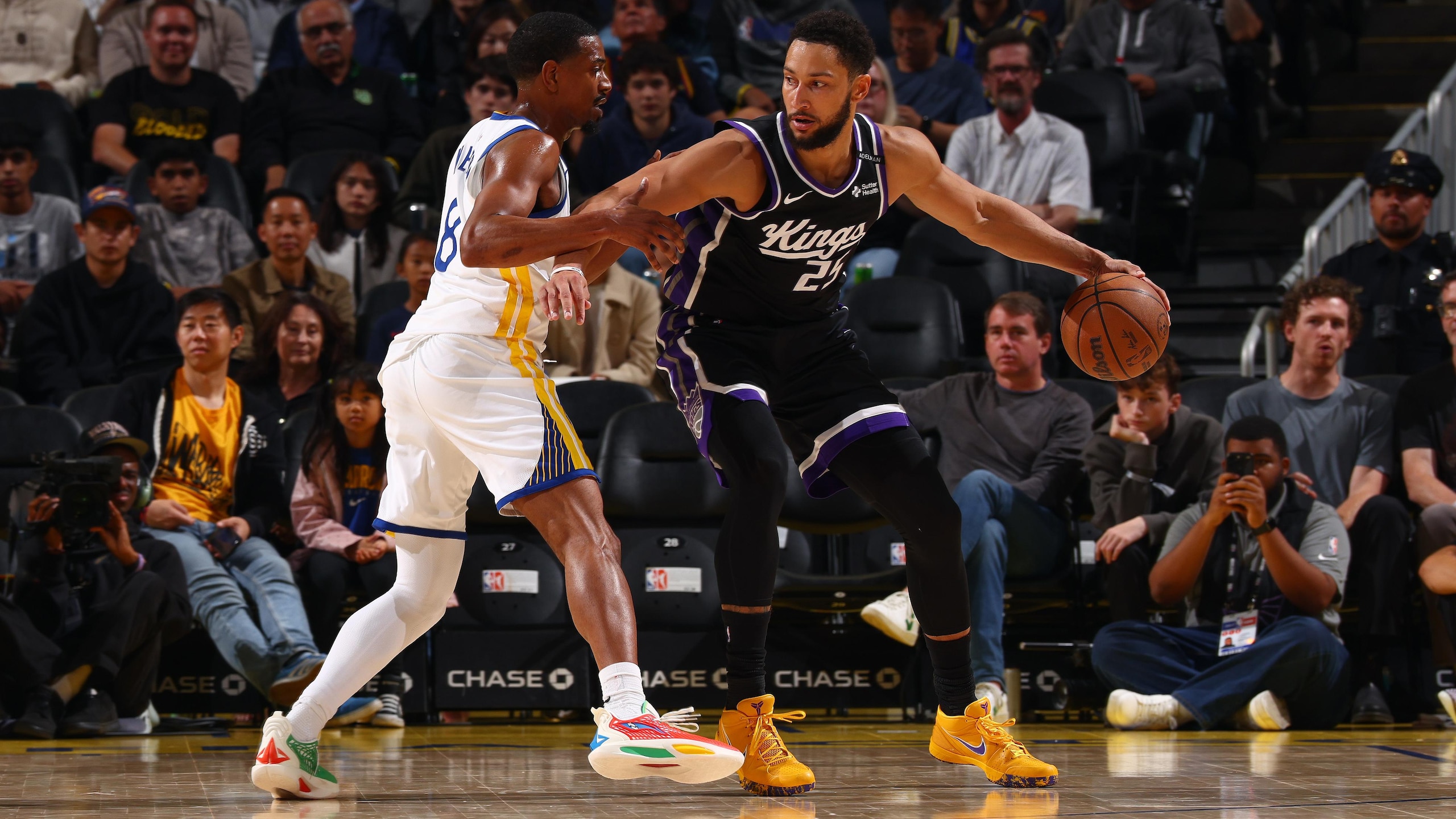
Backcourt Starter: Ben Simmons, PG, Philadelphia 76ers ($6,434,520)
3 of 7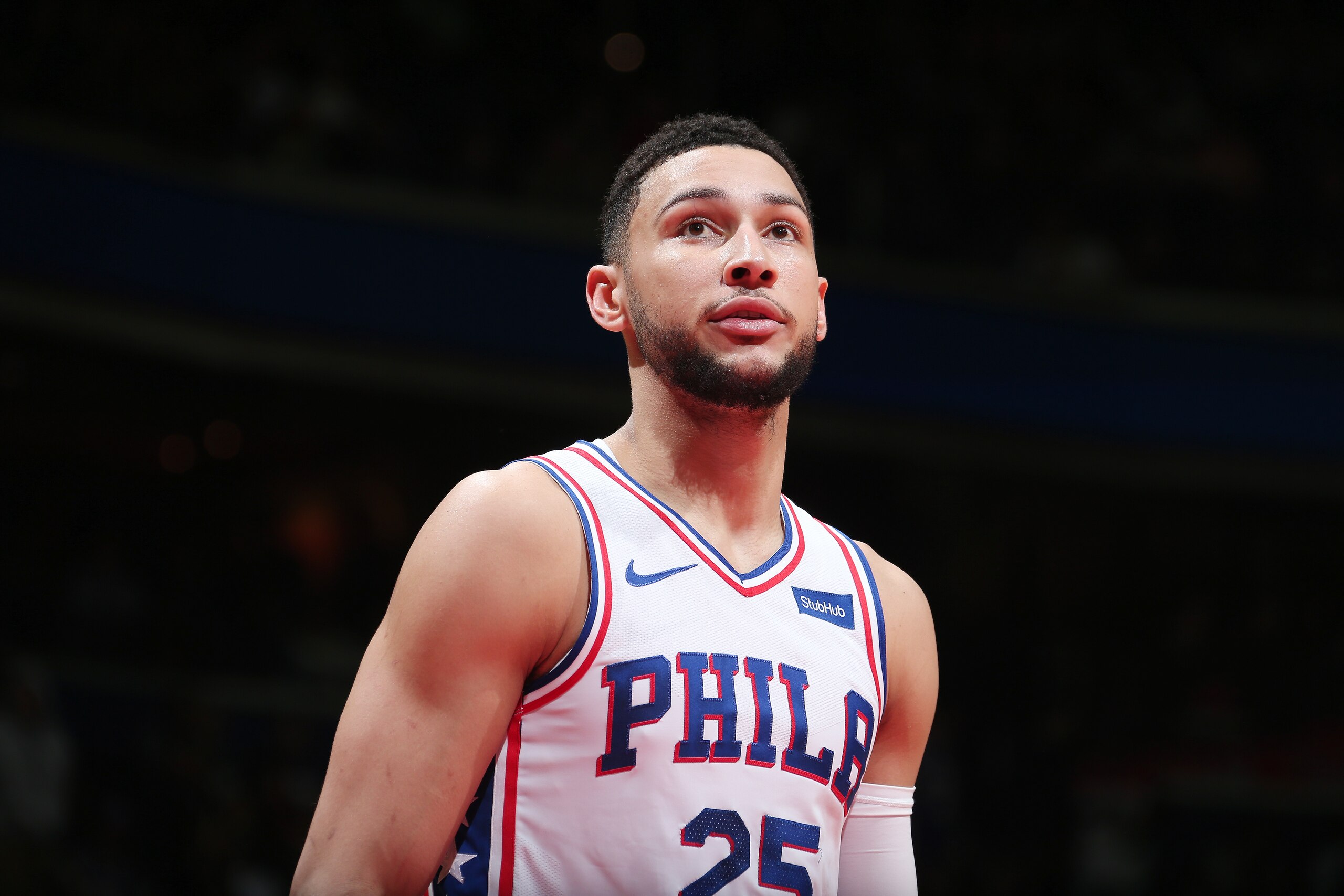
2018-19 Per-Game Stats: 16.4 points, 9.1 rebounds, 8.0 assists, 1.3 steals, 0.7 blocks
Dollars Per RPM Win: $1,386,750.00 (No. 32)
Including Ben Simmons is admittedly a risk.
We could easily roll with De'Aaron Fox ($5,470,920) during his breakout season for the Sacramento Kings. Luka Doncic ($6,560,640) is a reasonable selection while in the midst of a tremendous rookie campaign with the Dallas Mavericks. Pulling Kemba Walker into the starting five and using the opened reserve slot on a frontcourt bargain like Brook Lopez ($3,382,000), Kyle Kuzma ($1,689,840) or Noah Vonleh ($1,621,415) is a justifiable stance.
But we're willing to overcome Simmons' shooting limitations with sharp-shooting potency off the bench and flame-throwing frontcourt options because he's just that talented. Even without attempting a single shot from beyond the arc, he's helped the Philadelphia 76ers outscore opponents by 2.8 points per 100 possessions when he's on the floor, earning the league's 27th-most RPM wins as a delayed sophomore.
Replicating Simmons' basket-crashing acumen and passing flair is difficult, particularly when it comes in a 6'10" frame that allows him to rotate from point guard to power forward on the defensive end in a split-second. Even if metrics might favor other choices in this spot, that flexibility sets a strong foundation for the starting lineup while also providing extra malleability when bringing in bodies off the supremely talented bench.
Plus, Simmons has quietly grown even more efficient as a second-year standout. Despite not receiving any three-point boosts, his increased ability to earn free-throw jaunts and knack for knocking down more than 70 percent of his shots within three feet has allowed him to post a true shooting percentage (58.5) well above the league average (55.8).

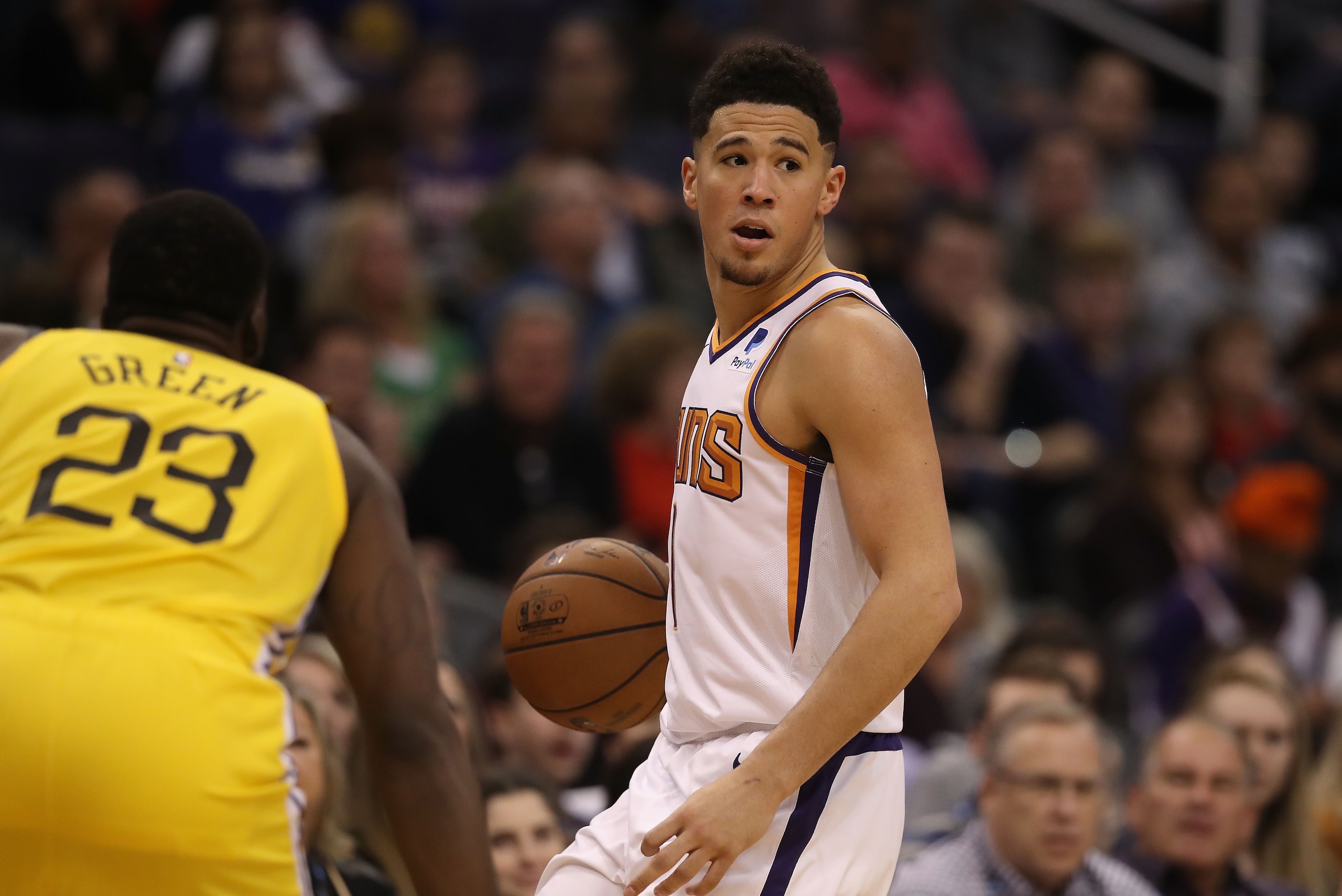
Backcourt Starter: Devin Booker, SG, Phoenix Suns ($3,314,365)
4 of 7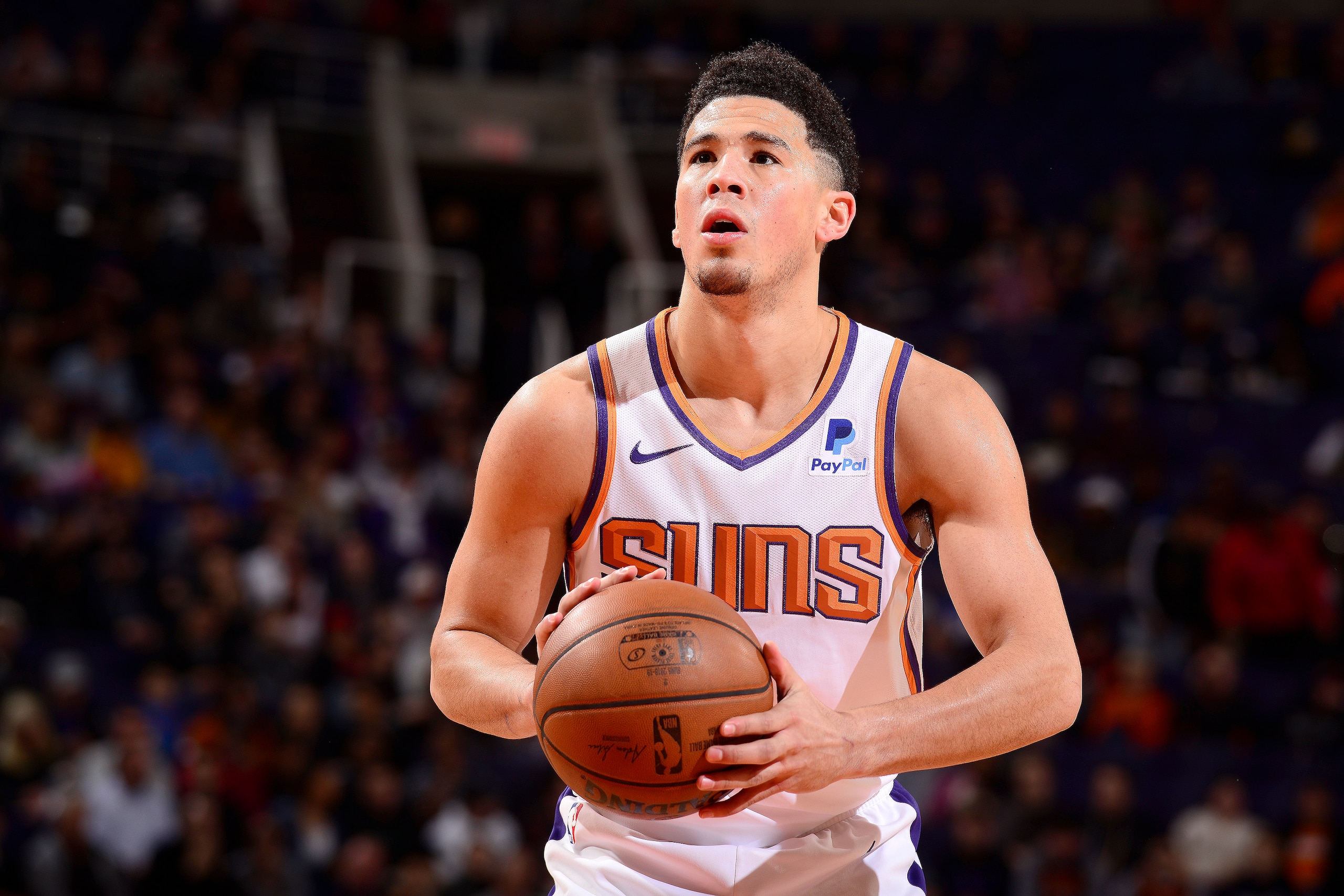
2018-19 Per-Game Stats: 24.8 points, 3.7 rebounds, 6.9 assists, 1.1 steals, 0.2 blocks
Dollars Per RPM Win: $1,183,701.79 (No. 23)
Imagine what Devin Booker might do if he were playing for a competitive organization and no longer attempting to carry a Herculean burden for the Phoenix Suns. This 22-year-old offensive force already boosts the desert-dwellers' net rating by a whopping 10.8 points per 100 possessions, but they're still in the red when he's on the floor (minus-4.9).
Though Booker's production may not be leading to many wins, it's hard to pin too much of the blame on his shoulders. Though he's shooting just 32.6 percent from downtown (an aberration after steadily improving to 38.3 percent last year), he gets to the stripe with enough frequency and connects on his two-point attempts with enough surety to post a 56.3 true shooting percentage while averaging 24.8 points and 6.9 assists—a trio of numbers matched by only nine qualified players in the NBA archives:
- LeBron James (nine times)
- James Harden (five times)
- Oscar Robertson (five times)
- Tiny Archibald
- Larry Bird
- Allen Iverson
- Michael Jordan
- Dwyane Wade
- Jerry West
Yes, those are arbitrary qualifiers. Yes, the efficiency cut-off is unfair to older standouts, considering the overall trend of the league's shooting ability in recent years and decades. Yes, Booker still has to maintain his pace for an entire season to truly join the club.
But still, just look at the names with whom he's adjoined while making only $3.3 million in his fourth professional go-round.
Frontcourt Starter: Giannis Antetokounmpo, SF, Milwaukee Bucks ($24,157,304)
5 of 7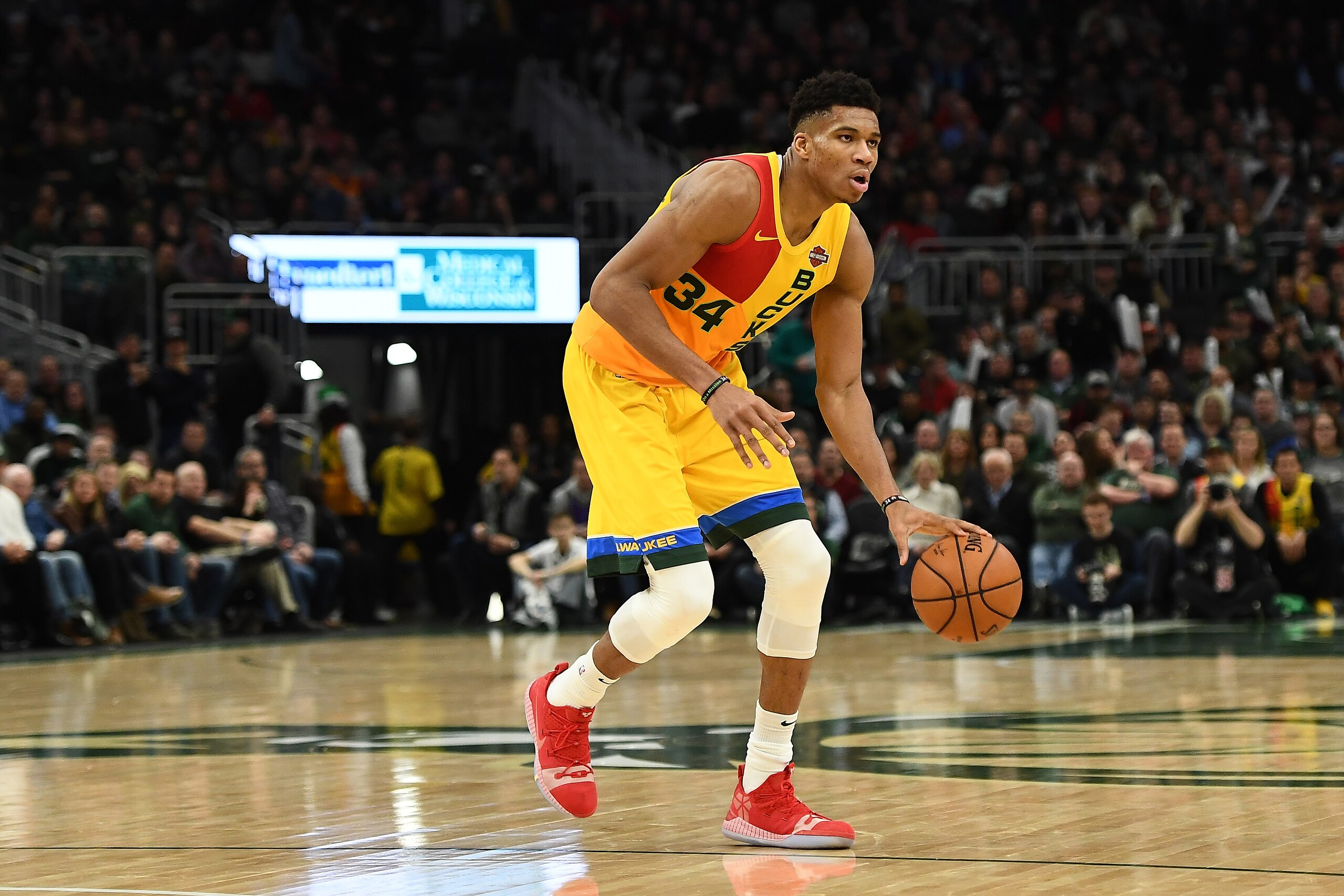
2018-19 Per-Game Stats: 26.6 points, 12.8 rebounds, 6.0 assists, 1.3 steals, 1.5 blocks
Dollars Per RPM Win: $3,780,485.76 (No. 130)
From a bang-for-your-Buck standpoint, Giannis Antetokounmpo doesn't initially seem like a logical inclusion. He's sitting down at No. 130 in dollars per RPM win, sandwiched directly between Tobias Harris, Thaddeus Young, Jrue Holiday and J.J. Barea.
But we're not solely constructing this roster from cheap commodities. Stars cost money, and you ultimately need some celestial ability to win games against top-flight competition. That reality opens the door for splurging on a bona fide MVP candidate, and the aptly nicknamed Greek Freak is a better choice than James Harden ($30,431,854), Paul George ($30,560,700) and LeBron James ($35,654,150), among others.
Not only does he make significantly less cash than the cadre of max-contract superstars, but he's easier to build around than the other front-runner in the ongoing quest for the Maurice Podoloff Trophy. (Note: This applies to Kawhi Leonard and his $23,114,067 contract, as well. But we can only afford one of the two forwards, and Antetokounmpo remains the superior player.)
Harden is his own system for the Houston Rockets, whereas Antetokounmpo's ability to thrive in multiple roles (while not playing at a position with plenty of cheap, but effective, options) fosters our squad's positional malleability and all-around talent. Everyone works next to the Milwaukee standout; not everyone can thrive alongside Harden's ball-dominant habits.
Would it be nice if Antetokounmpo could consistently knock down long-range attempts? Sure. Would we love for him to make less than $24.2 million during the 2018-19 season? Of course, though only for these purposes because he's more than entitled to his real-world earning potential.
He's still one of the few men who can look like the best basketballer in the world on any given night, and he'll be joined in the frontcourt by another standout who qualifies for that same superlative.
Frontcourt Starter: Anthony Davis, PF/C, New Orleans Pelicans ($25,434,263)
6 of 7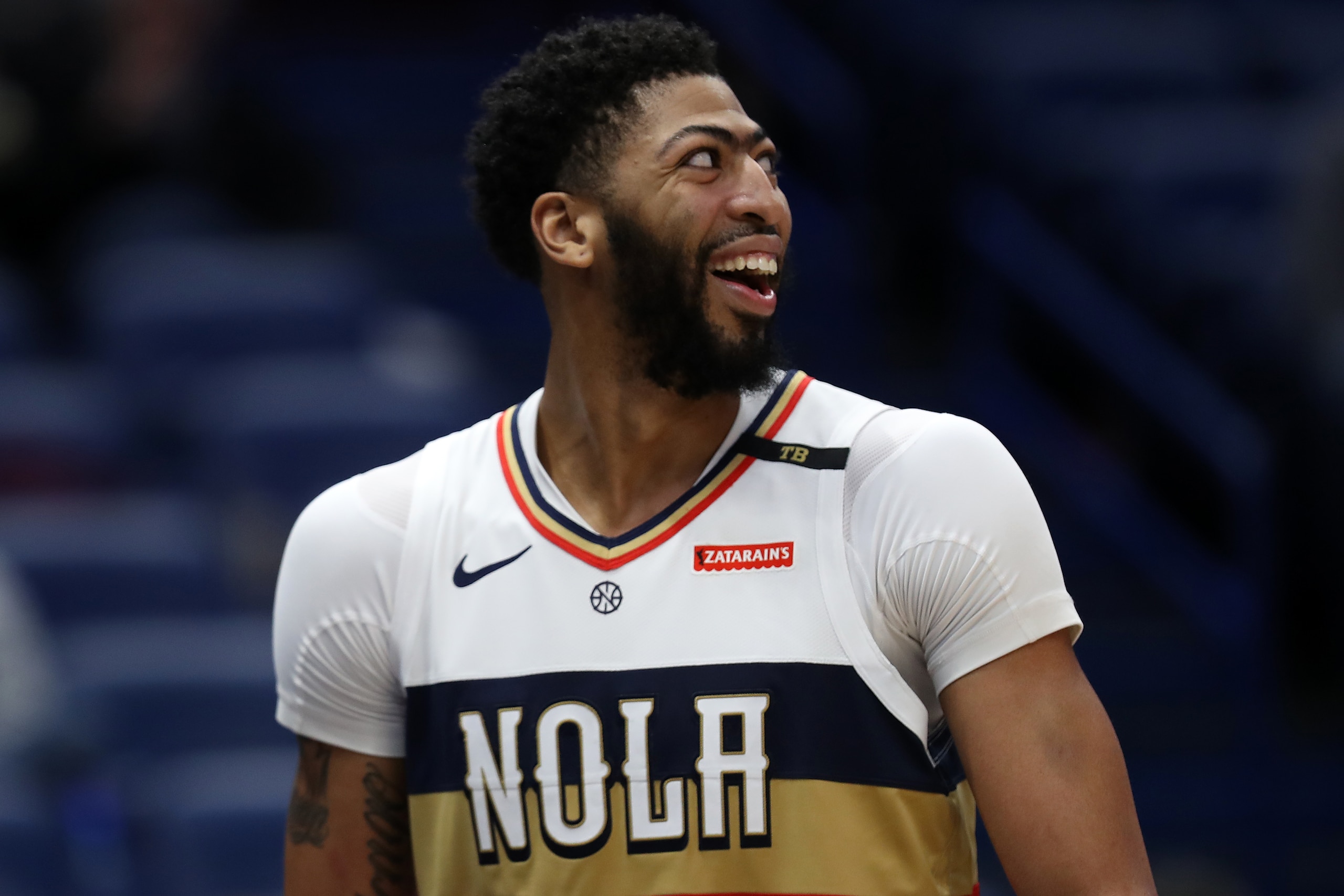
2018-19 Per-Game Stats: 28.9 points, 13.2 rebounds, 4.4 assists, 1.8 steals, 2.7 blocks
Dollars Per RPM Win: $2,752,625.87 (No. 94)
When Reddit users are suggesting that you get the Wayne Gretzky treatment because you're no longer a fair commodity in fantasy basketball, you might be having a pretty decent season. And while Anthony Davis' prowess in rotisserie leagues doesn't technically matter here, it actually does when his well-rounded play translates to real life.
Though the New Orleans Pelicans are struggling to build around his jaw-dropping play, it's hard to fault Davis for the team's lack of success. He trails only James Harden in RPM this season, and he's opened up a lead in RPM wins that easily justifies the $25.4 million we're spending to acquire his services.
Even if he's not receiving the same MVP hype enjoyed by Harden and Antetokounmpo, he's been so ridiculously dominant as an individual that he still checks in at No. 2 on Basketball Reference's NBA MVP Award Tracker, which gives him a 12.7 percent chance at the sport's preeminent accolade.
Davis can do everything.
He's a stifling interior defender with the lateral quickness necessary to switch onto smaller, perimeter-occupying adversaries. He's a deft passer, tapping into the instincts developed during his prep-school days as a lightly recruited guard. He can score in myriad situations and seems to showcase new tricks on a nightly basis, most recently pulling out the infamous Shammgod to clear a lane to the rack.
Davis has become an unstoppable two-way force who, much like our other highly paid superstar, is easy to build around when dealing with a restriction-free player pool and not saddled with albatross contracts. If only it were that easy for the Pelicans...
Frontcourt Starter: Karl-Anthony Towns, C, Minnesota Timberwolves ($7,839,435)
7 of 7
2018-19 Per-Game Stats: 22.1 points, 12.3 rebounds, 3.0 assists, 0.9 steals, 1.9 blocks
Dollars Per RPM Win: $3,086,391.73 (No. 36)
Karl-Anthony Towns won't come cheaply for long.
Next year, his extension kicks in for the Minnesota Timberwolves, elevating his salary to $27,250,000 in 2019-20. By the time 2023-24 rolls around, he'll be on the books for a mind-numbing $35,670,000. But for now, he's still falling shy of eight figures while playing out the final season of his rookie-scale pact.
And that makes him quite the value.
Towns' defense has gradually improved throughout his career, to the point that he's now sitting just within the top 100 in ESPN.com's DRPM with a score of 1.09 that's vastly superior to last year's 0.44 (No. 200). But we're still putting him next to the rangy defense of Ben Simmons, Giannis Antetokounmpo and Anthony Davis because of his all-around offensive acumen and all-important spacing habits from the 5.
This Kentucky product, after all, remains a generational talent on the scoring end with a blend of physicality and inside-outside finesse that would make many professional scorers swoon.
Even though he's struggled to build upon last year's exploits while navigating a tumultuous series of events in Minnesota, Towns is one of 10 qualified players this season to average at least 22 points per game with a true shooting percentage north of 59 percent. His presence on our depth chart also leaves this team a Joel Embiid away from rostering all four contributors on that list standing 6'10" or taller (Towns, Davis and Antetokounmpo).
Stopping Andrew Wiggins, Derrick Rose, Robert Covington and the rest of the 'Wolves offense is difficult enough when Towns draws opposing bigs out to the perimeter or torments them with his deep arsenal of scoring moves. Minnesota scores an additional 9.4 points per 100 possessions when he plays, and that's by no means fluky.
Now, just think about what his impact might be like when surrounded by fellow stars. We've got plenty of those at our disposal.
Adam Fromal covers the NBA for Bleacher Report. Follow him on Twitter, @fromal09.
Unless otherwise indicated, all stats accurate heading into games Jan. 11 and courtesy of Basketball Reference, NBA.com, PBPStats.com, NBA Math or ESPN.com.

.jpg?w=2560 "Grading WWE Raw 🔠")
.png?w=2560 "Allen's BRUTAL 1H Stats 🫤")
.jpg?w=2560 "Aaron Donald Fights Bills OL😳")