

Tactical Trends and Talking Points to Look for at the 2018 World Cup Finals
The FIFA World Cup 2018's opening ceremony and fixture—Russia vs. Saudi Arabia—is fewer than 24 hours away. If you're pacing impatiently as you wait for it all to begin, we don't blame you; the final stretch before the action begins is always the most difficult!
To many viewers, a World Cup represents the opportunity to discover and to be surprised. There's no way one fan can keep track of 32 international teams, so the next month offers an opportunity to remove some of the mystique surrounding far-flung nations and get to know their teams, their players and their styles better.


But while that process is part of the fun, it's always worth banking some prior knowledge ahead of the big kick-off. We've picked out four trends and tactical talking points for you to peruse, ensuring you're better equipped come Thursday at 6 p.m. local time (3 p.m. UTC / 11 a.m. ET).
New-Look Uruguay
Through the 2010 and 2014 editions of the FIFA World Cup, Uruguay presented themselves as stubborn, defensive and resilient.
They had quality up top, no doubt—Luis Suarez and Edinson Cavani have been and still are among the finest in the game—but the approach was quite reductive: defend, tackle, punt to the strikers.
This iteration of La Celeste is different. They're much better in possession, focus much more on keeping the ball and circulating it and have welcomed more creative players like Giorgian De Arrascaeta and Nahitan Nandez into the XI.
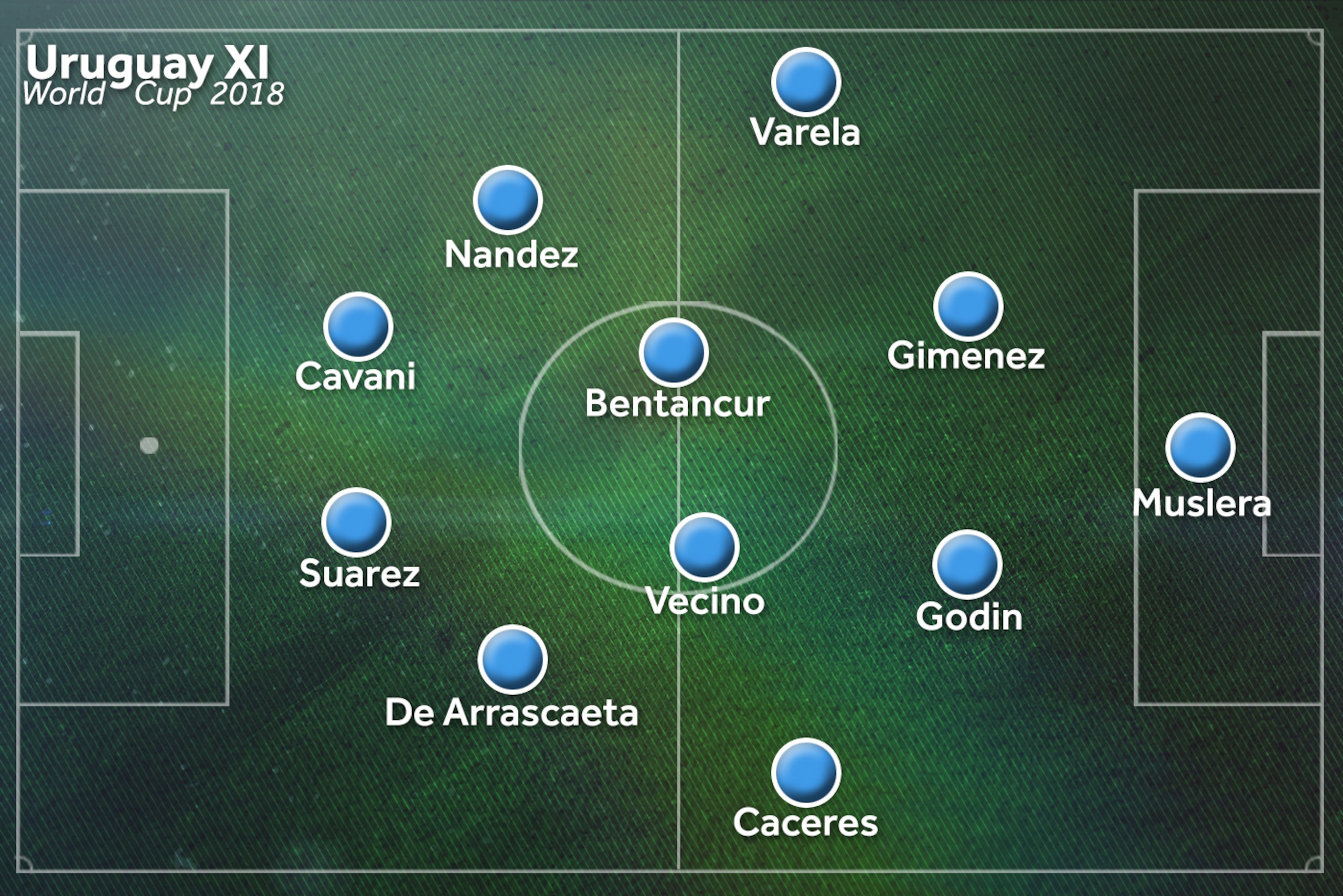
They might still retreat into a defensive shell if required; if they come up against a top possession team or overwhelming favourite, they can drop into a 4-4-2 and keep things tight between the lines.
But in their three group games, look for De Arrascaeta and Nandez to roam from outside to in, utilising the "halfspaces" (vertical channels splitting players), and for Rodrigo Bentancur to shuttle forward with the ball from deep. They circulate it quite safely still, but they've evolved as a side and are far better equipped to take on defensive teams.
Flying Counters
Examples: Saudi Arabia, Senegal
There are certain sides rocking up to Russia with the sole intent of defending deep and counter-attacking at speed.
There's absolutely no shame in that; it's easier to coach defensive shape than attacking variance in short windows, so some national teams are wise to do it, and it suits some squads ideally anyway.
You'll pick out the teams who plan to do so quite quickly, but two notable ones are Saudi Arabia, who will participate in the opening game, and Senegal, who take to the pitch on Tuesday.
Speed is a genuine commodity to have, and Saudi Arabia—though lacking in many ways—boast this in abundance. Watching them fly forward with pace against Germany in a pre-tournament warm-up will have alarmed fellow Group A sides. The trouble is they don't have an end-product to match.

Senegal do. They defend even better, dominating aerially against crosses, and attack better, with Sadio Mane a borderline elite-level player surging forward with two speedsters alongside him. They lost their friendly against Croatia last week, but in it, they flashed the potential to pile up goals if allowed to streak forward.
There will be several others who adopt a similar approach; Morocco use central midfielder Romain Saiss at centre-back so he can launch counters quickly, while Egypt, Iran and Iceland will offer varying degrees of the same strategy.
Dysfunctional Argentina
Even the most casual of eyes will be drawn to Argentina's games, as the presence of Lionel Messi guarantees a big audience. What this glut of spectators will be treated to, though, is a genuine mystery; they might be brilliant, but they might be terrible.
La Albiceleste have been struggling to function for some time. They're on their third manager since Alejandro Sabella led them to the 2014 World Cup final, and they've failed to "reload" and take advantage of prodigious talents like Paolo Dybala (likely on the bench) and Mauro Icardi (not in the squad).
Current manager Jorge Sampaoli was parachuted in last summer to save an ailing qualifying campaign, but despite producing an exotic blend of attacking, high-octane football with Sevilla and Chile before that, it has so far failed to translate to Argentina.

How they line up for the opener is far from clear—an issue not helped by bad injuries to presumed starters Sergio Romero (goalkeeper) and Manuel Lanzini (midfield). It's possible that four of the players that line up against Iceland will have five caps or fewer.
If you're expecting a free-flowing, smooth Argentina side with Messi representing the icing on the cake, you might be disappointed. If you're expecting a train wreck, that may not materialise either.
Argentina will be figuring it out on the fly. It should be entertaining to watch.
Top Teams Cut Back
Examples: France, Germany
You can pull off a counter-attacking plan if you're a less-fancied nation, but if you're one of the favourites, you'll have no choice but to play on the front foot and control matters.
That can, at times, be more difficult than simply sitting in and then flying forward into space. Pushing a team back into its own territory removes space to play in and can allow the opponent to focus on clearing crosses and block shots from distance.
If that happens, you have to find space. Quick passages of play and one-twos into the box can do that, but they have to be precise and can be easy to get wrong.
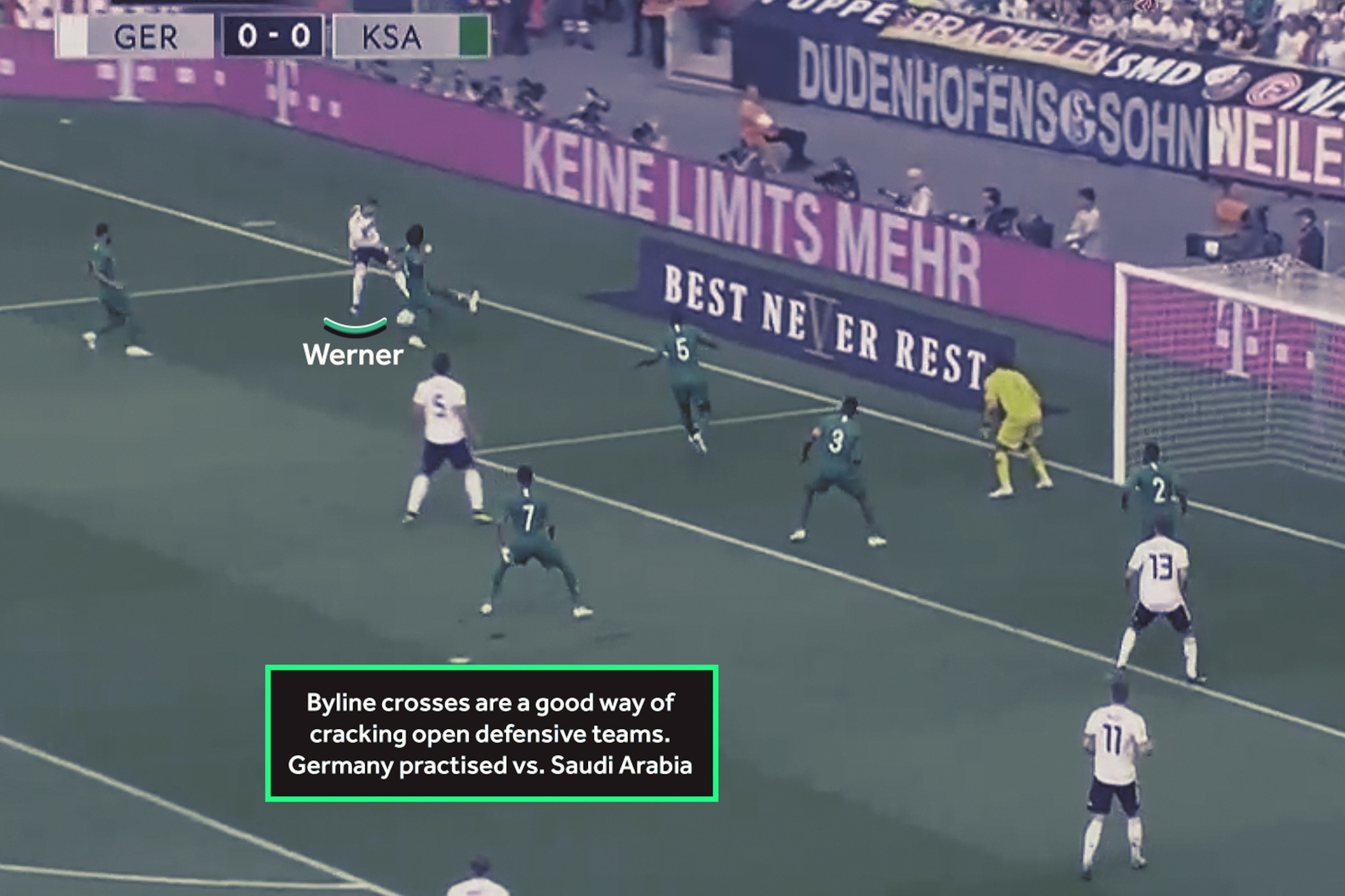
An easier way of making a breakthrough is to utilise genuine width, get a player to the byline and cut it back into the box. It's generally more accurate than a lofted cross, and even if you don't find a man accurately, all sorts of bobbles and bounces can work in your favour.
France and Germany both utilised these liberally in their final friendly matches. The former's Benjamin Mendy is one of the best in the game at this delivery, while compatriot Benjamin Pavard and Germany's Julian Draxler can cause problems too. Spain will likely ask Jordi Alba to supply them, as will England with Danny Rose.

.jpg?w=2560 "NBA Gambling Charges")

.png?w=2560 "Week 8 Winners & Losers 📊")

.jpg?w=2560 "Aikman Blasts Cowboys WR 🫣")
.jpg?w=2560 "Jonathan Taylor Landing Spots")