Early Predictions for All the Top 2018 Rookies' MLB Futures
We're only starting to get to know the top rookies in Major League Baseball. It'll be a while before we know what kind of players they really are.
In the meantime, we can use our imaginations.
Ahead is a gaze into the futures of 10 of the top rookies of the 2018 MLB season. This isn't necessarily a list of the "best" rookies. It more so covers guys who either came with pre-existing name value and/or are doing interesting things worthy of attention.
At any rate, this is about using available data and scouting reports to highlight what these players can do and how their skills will play in the long run. Let's take it away.
Note: Stats are accurate through play on May 1.
Jordan Hicks, St. Louis Cardinals
1 of 10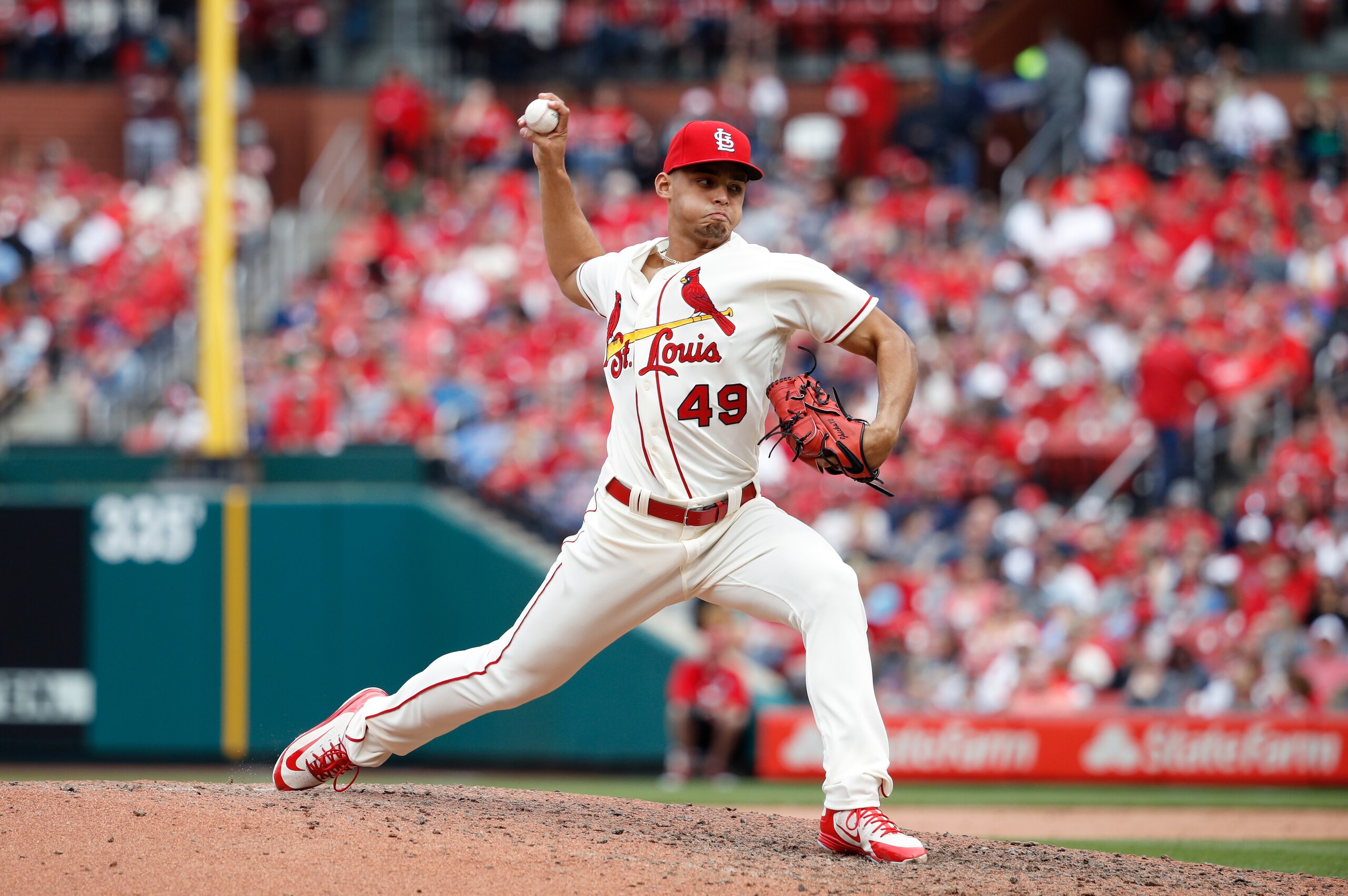
Jordan Hicks is only 21 years old and he'd never pitched above High-A before breaking camp with the St. Louis Cardinals.
So, it's remarkable that he's already becoming a household name. That has everything to do with a fastball that's already produced MLB-best marks in average velocity (99 mph) and peak velocity (102 mph) and which may yet have untapped potential.
"There is a max for anybody. I don't know what my max is because I surprise myself every year," Hicks said in April. "Hopefully I can keep surprising myself."
And yet, there are red flags.
None is more glaring than how he's walked more batters (13) than he's struck out (7) in 15.1 innings. Even hard throwers need a swing-and-miss secondary pitch, and Hicks' slider isn't even a swing pitch. Batters have swung at it just 28.8 percent of the time.
But since Hicks' slider at least passes the eye test, it's easy to believe that it will improve as an out pitch as his control improves. Plus, the natural sinker-like movement of his fastball should keep ground balls coming.
Right now, Hicks is too volatile to be a true relief ace. But over time, that's what he should become.
Jesse Winker, Cincinnati Reds
2 of 10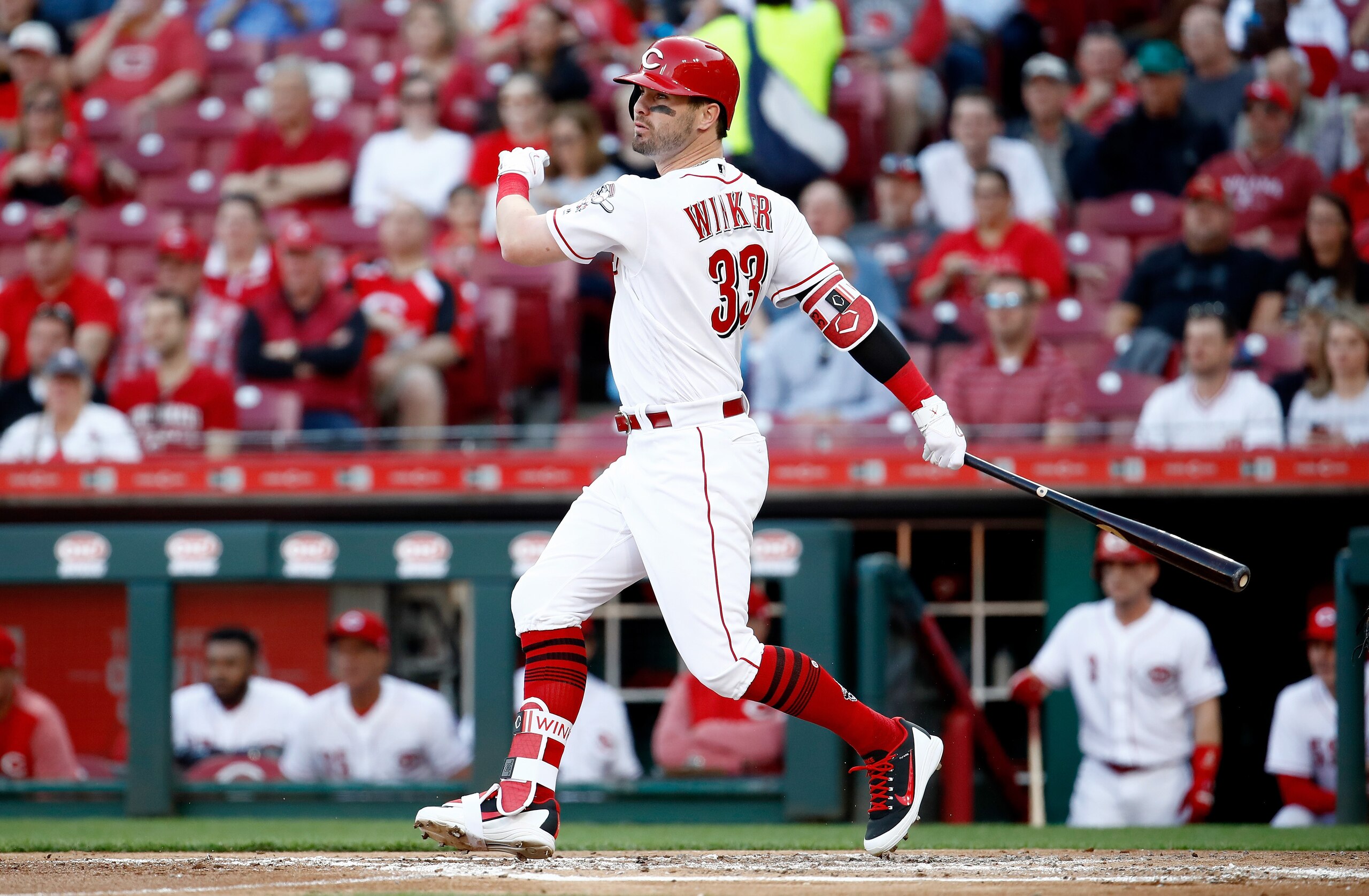
Surprisingly, Joey Votto isn't leading the Cincinnati Reds in on-base percentage. His .408 OBP is shy of Jesse Winker's .420 OBP, which is also the sixth-best mark in the National League.
But then, this isn't too surprising. Scouting reports on Winker have long sold him as an outstanding pure hitter, and he walked the walk with a .394 OBP in the minors. It helped that he walked (13.5 BB%) almost as often as he struck out (15.8 K%).
So it goes for Winker in his rookie season, as he's balancing a 15.0 BB% against an 18.0 K%. He's establishing himself as one of the most patient (39.4 Swing%) and most selective (20.7 O-Swing%) hitters in the majors. And as any pure hitter should, he hits the ball to all fields.
Winker, 24, is also more powerful than his .398 slugging percentage indicates. He's hit the ball at a solid average of 91.3 mph and with a 16.0-degree launch angle. He should be slugging more like .507.
There is one catch with Winker, however. He's a lefty hitter who's faced a lefty only 41 times in 237 major league plate appearances. And his numbers don't present a case that he shouldn't be platooned.
Still, it's better to be a lefty platoon star than a righty platoon star. Winker will be playing more often than not in years to come, and his bat should get him in a few All-Star Games.
Christian Villanueva, San Diego Padres
3 of 10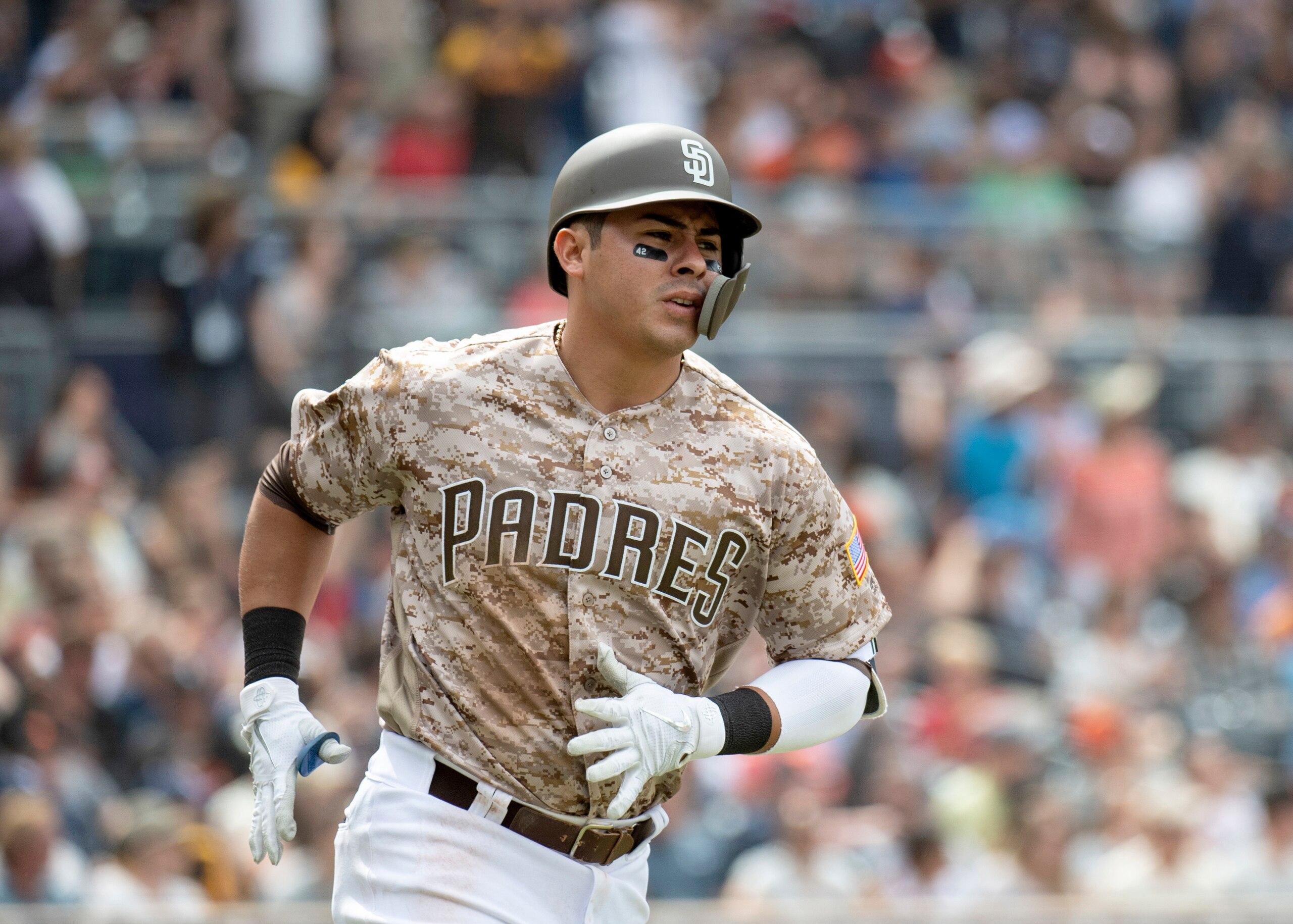
Christian Villanueva will turn 27 in June, so he is on the older side for a rookie.
And yet, it's hard to ignore even older rookies when they boast a 1.108 OPS and 13 home runs over 126 career MLB plate appearances.
Villanueva's good-not-great average exit velocity of 88.5 mph as a major leaguer would seem to undercut his power awakening, but he's more about efficiency than extreme raw power. The best way to hit home runs is to pull the ball in the air. This year especially, the righty swinger is specializing in keeping the ball off the ground (31.6 GB%) and pulled balls (NL-high 57.9 Pull%). Thus, all but one of his dingers have been hit to the left of center field.
But if a hitter is going to have an approach like this, it behooves him to be particular about the pitches he swings at. Villanueva is extremely unparticular with his swings, as he's one of the most aggressive (55.0 Swing%) and least disciplined (41.0 O-Swing%) hitters out there in 2018.
It's no wonder pitchers have begun avoiding the strike zone when pitching to Villanueva. And as they've done so, he's become less disciplined.
Villanueva isn't necessarily doomed to continue on this path, but it does raise questions about the sustainability of his model for success. He may be more of a one-note slugger than a legit All-Star hitter.


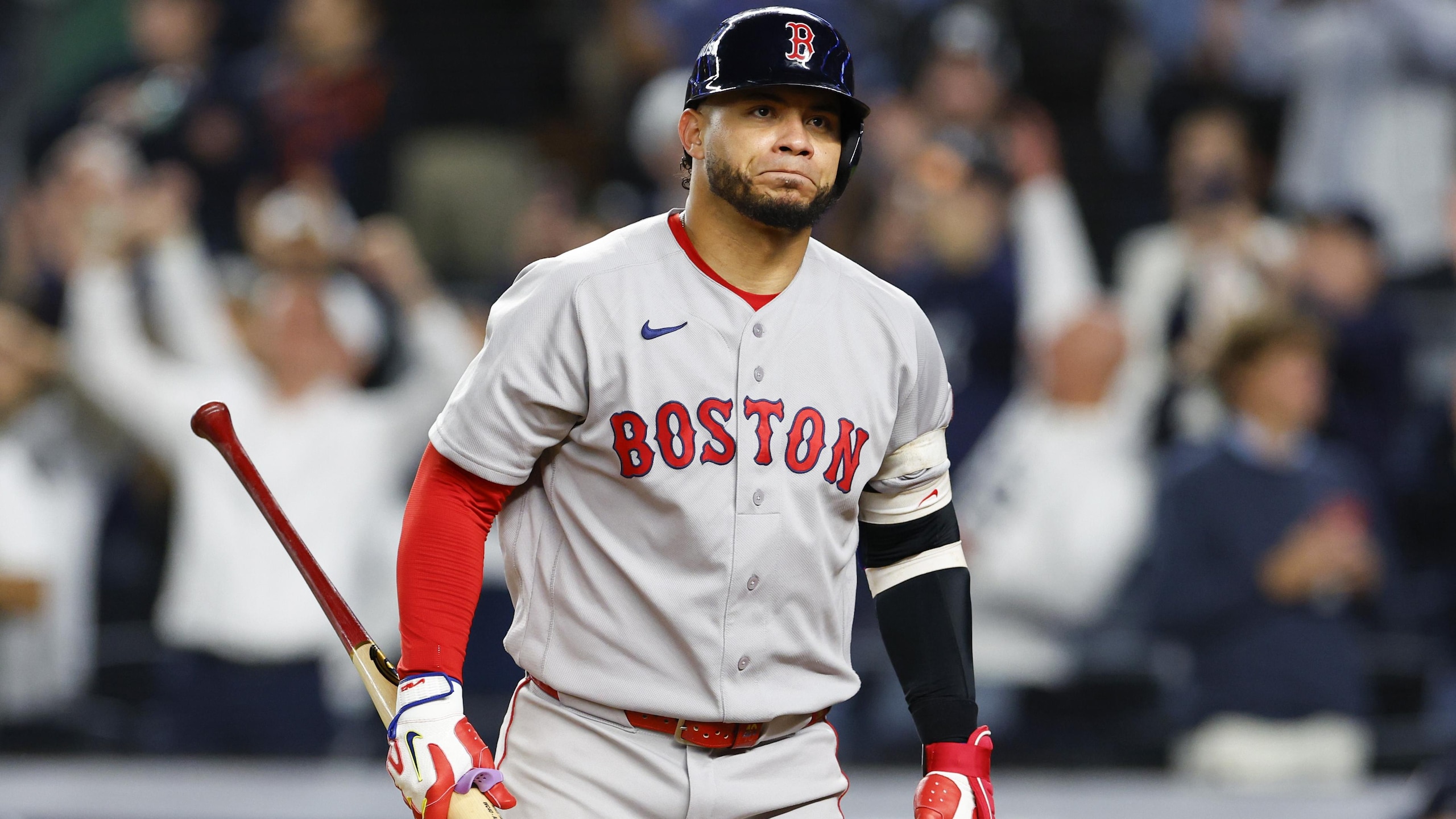
Franchy Cordero, San Diego Padres
4 of 10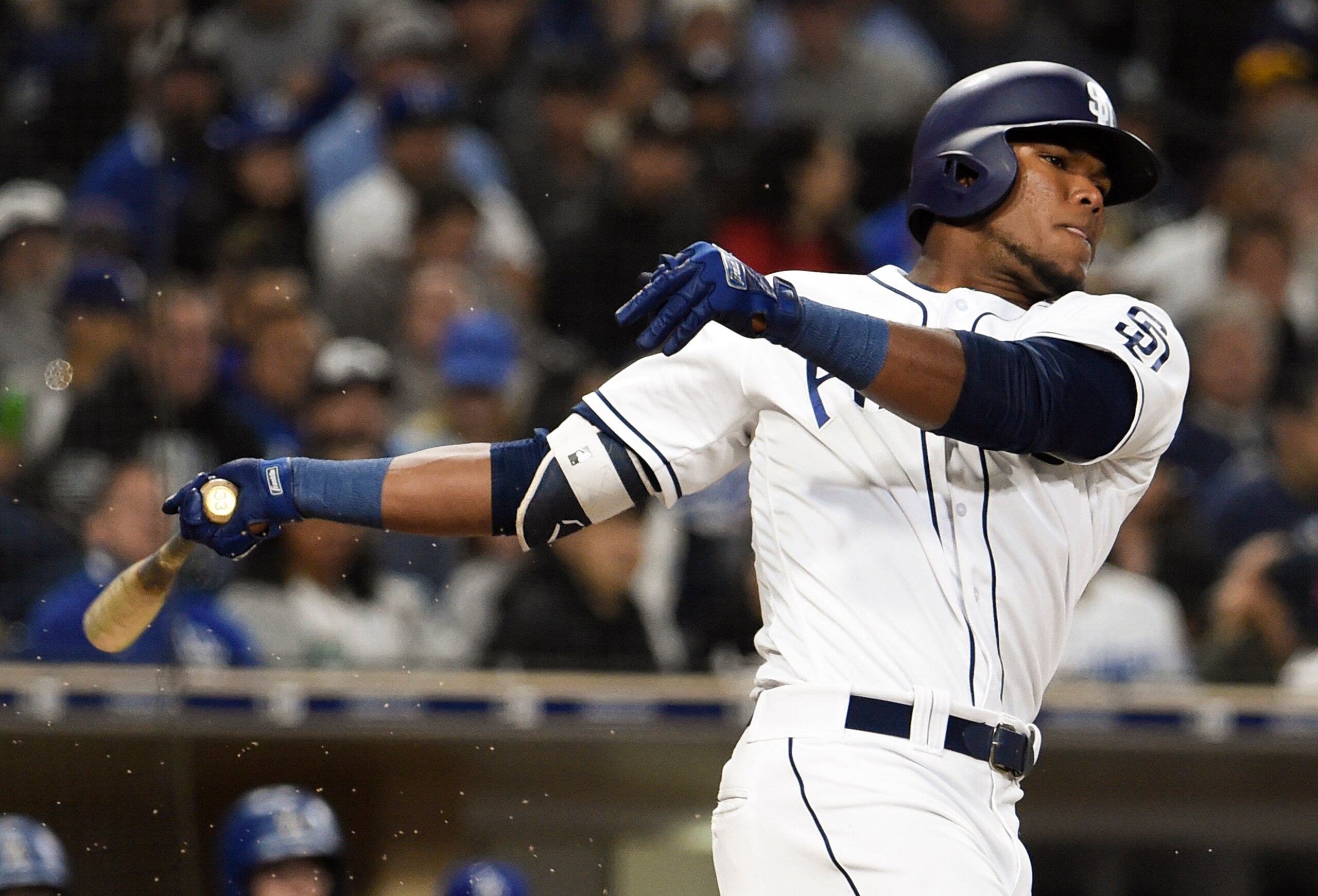
Elsewhere among San Diego Padres rookies, there's Franchy Cordero.
The 23-year-old is like if Statcast got control of a create-a-player mode in a baseball video game. His batted balls are traveling at an elite average of 94.2 mph, and he's also one of the fastest players in the majors with an average sprint of 29.2 feet per second.
Through 18 games, these talents have produced an .850 OPS, six homers and three stolen bases.
But while Cordero is a scintillating talent, he's also an imperfect player.
It's possible to see that when he's on defense and also in between his amazing athletic feats on offense. He's struck out in 40 percent of his MLB plate appearances, in part because he has a hole-filled swing that can be exploited even within the strike zone (71.4 career Z-Contact%).
To Cordero's credit, however, he's been more patient and disciplined in 2018 than he was in his first exposure to MLB in 2017. He's also shown a knack for being a bad-ball hitter by hitting pitches outside the zone at an average of 90.4 mph. And whereas Villanueva is reliant on his pull side for power, Cordero's power is explosive enough to play wherever.
The general picture is that of a guy who's going to have frustrating moments but should have enough "wow" moments to save par. Maybe not an All-Star, but a good and useful player.
Joey Lucchesi, San Diego Padres
5 of 10
Also in the realm of interesting Padres rookies is Joey Lucchesi, who's put up a 2.78 ERA in six starts.
If you're wondering why the 24-year-old lefty wasn't a brand-name prospect, the fact that his fastball barely scrapes past 90 mph is one explanation. And as pitchers go, Lucchesi is...well, he's kind of weird.
For one thing, he's a big dude (6'5", 204 pounds) with an odd delivery. He also throws neither a changeup nor a curveball but rather a funky hybrid called a "churve."
"It has so many guys confused," teammate Eric Hosmer said. "The scoreboard says curveball. The guys are coming back saying, 'I don't think that's a curveball, it's a change.' Then you go slow it down on video, and you can see it's a change, but the action is like a curveball."
Weirdness aside, there's no denying that Lucchesi's pitching has been effective. His 10.1 career K/9 in the minors and 9.7 K/9 in the majors both speak to the deceptiveness of his style, and he has an equally strong track record as a strike-thrower.
As his 89.0 mph average exit velocity will attest, however, Lucchesi can be hit hard. And hard contact will only become more common if scouting reports start to chip away at his deception. On that front, the extreme variance in his fastball and churve release points could get him in trouble.
Rather than an ace, Lucchesi is likely more of a mid- or back-end starter.
Scott Kingery, Philadelphia Phillies
6 of 10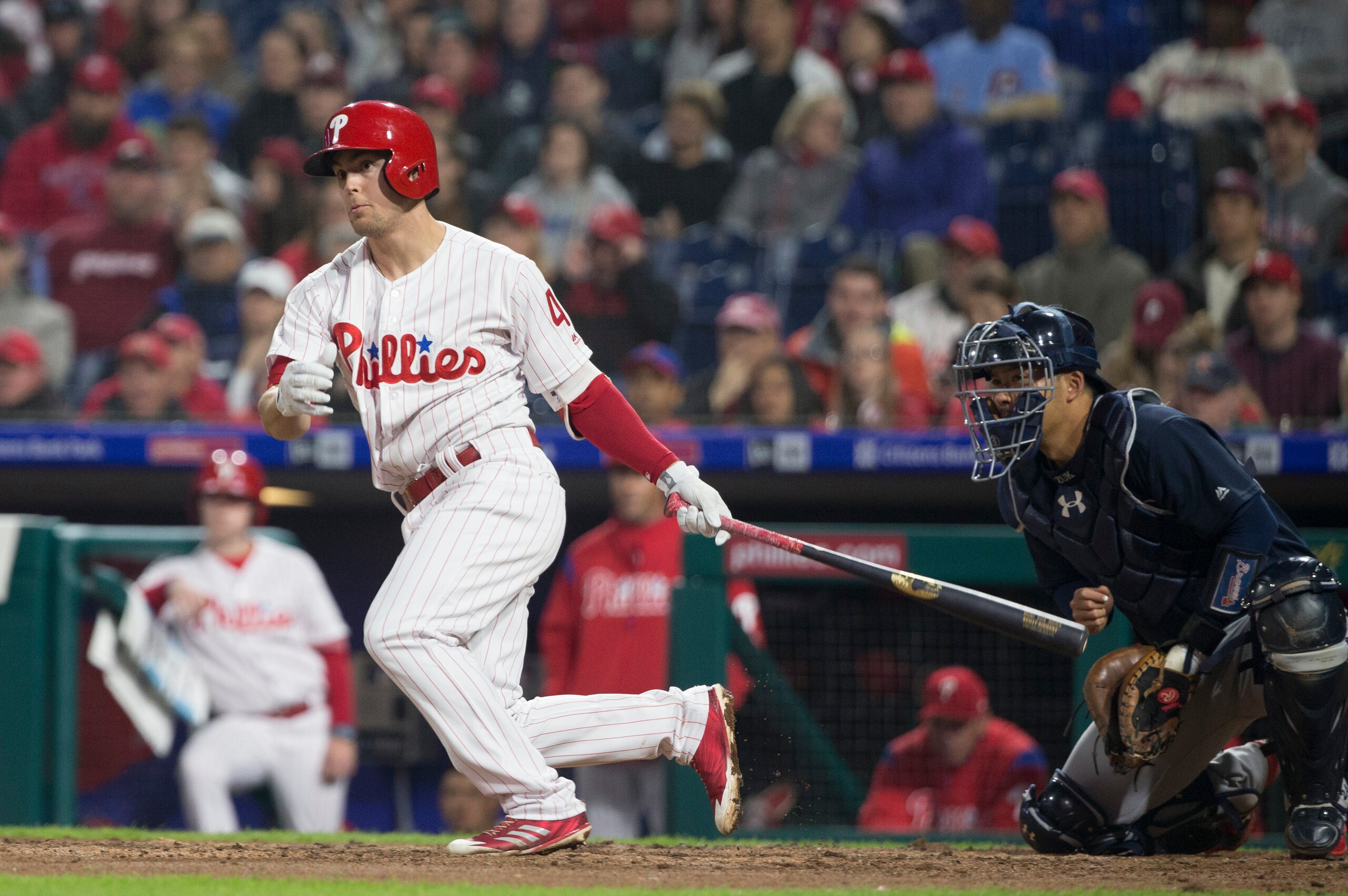
Scott Kingery signed a six-year, $24 million contract with the Philadelphia Phillies before even suiting up for a regular-season game with them.
Based on the early returns, it's tempting to wonder how much longer the Phillies can avoid a sense of buyer's remorse. The 24-year-old has played in 27 games and produced just a .647 OPS and two homers.
This is nothing like Kingery's star-making turn at Double-A and Triple-A last season, which ended in an .889 OPS and 26 homers. It appears that pitchers already have him figured out. He's seeing a lot of pitches (52.3 percent) on the outer third of the strike zone and beyond. He's slugging just .217 against those.
Not all is lost, though.
In a 21.3-degree average launch angle and 90.6 mph average exit velocity, Kingery's swing has produced plenty of power in theory. It hasn't translated to power in reality in part because he's wasted too much of his best contact up the middle of the field, where the fences are deepest.
It's clear from looking at Kingery's pull-happy spray chart from 2017 that this isn't the real him. Unlocking his real self in the majors should be just a simple adjustment (i.e., fewer swings at pitchers' pitches) away. He should get back on an All-Star path once he makes it.
Miguel Andujar, New York Yankees
7 of 10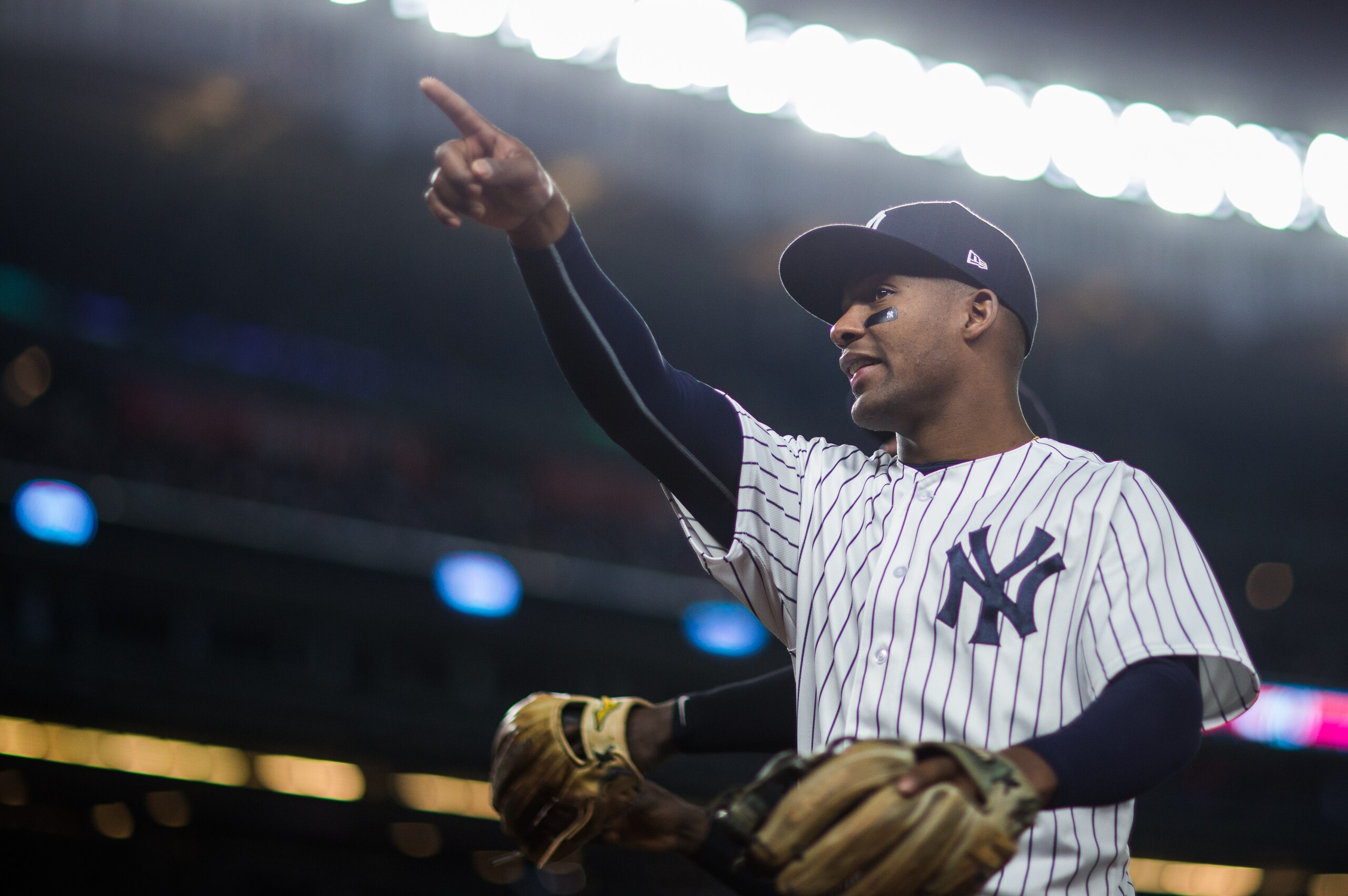
Miguel Andujar was scorching between April 13 and 23, when he amassed 12 extra-base hits in just seven games. On either side of that stretch, however, is a fair deal of coldness.
Sounds about right.
It's fun to watch Andujar swing the bat, as his swing itself is long and explosive and plenty capable of producing hard contact. Even despite his slumps, he's averaging 92.4 mph on his batted balls.
There isn't a ton of lift in Andujar's swing, though. That shows in his average launch angle (10.9 degrees) but more so in his ground-ball percentage (44.9 GB%). Between that and how often (52.5 Swing%) he likes to swing, he's more dependent on luck than similarly powerful hitters.
Andujar's defense at third base is another issue. Although he's only been charged with only two errors in 20 games, Anthony Rieber of Newsday is right in saying, "that doesn’t tell the whole story because you can’t make an error on a ball you don’t go after." The 23-year-old has the physical tools, but his feel for the position is lacking.
Yet, this may not matter too much because Andujar's destiny may lie across the diamond at first base. And as long as his swing remains potent, he could be a capable hitter there even if he never corrects his flaws.
Gleyber Torres, New York Yankees
8 of 10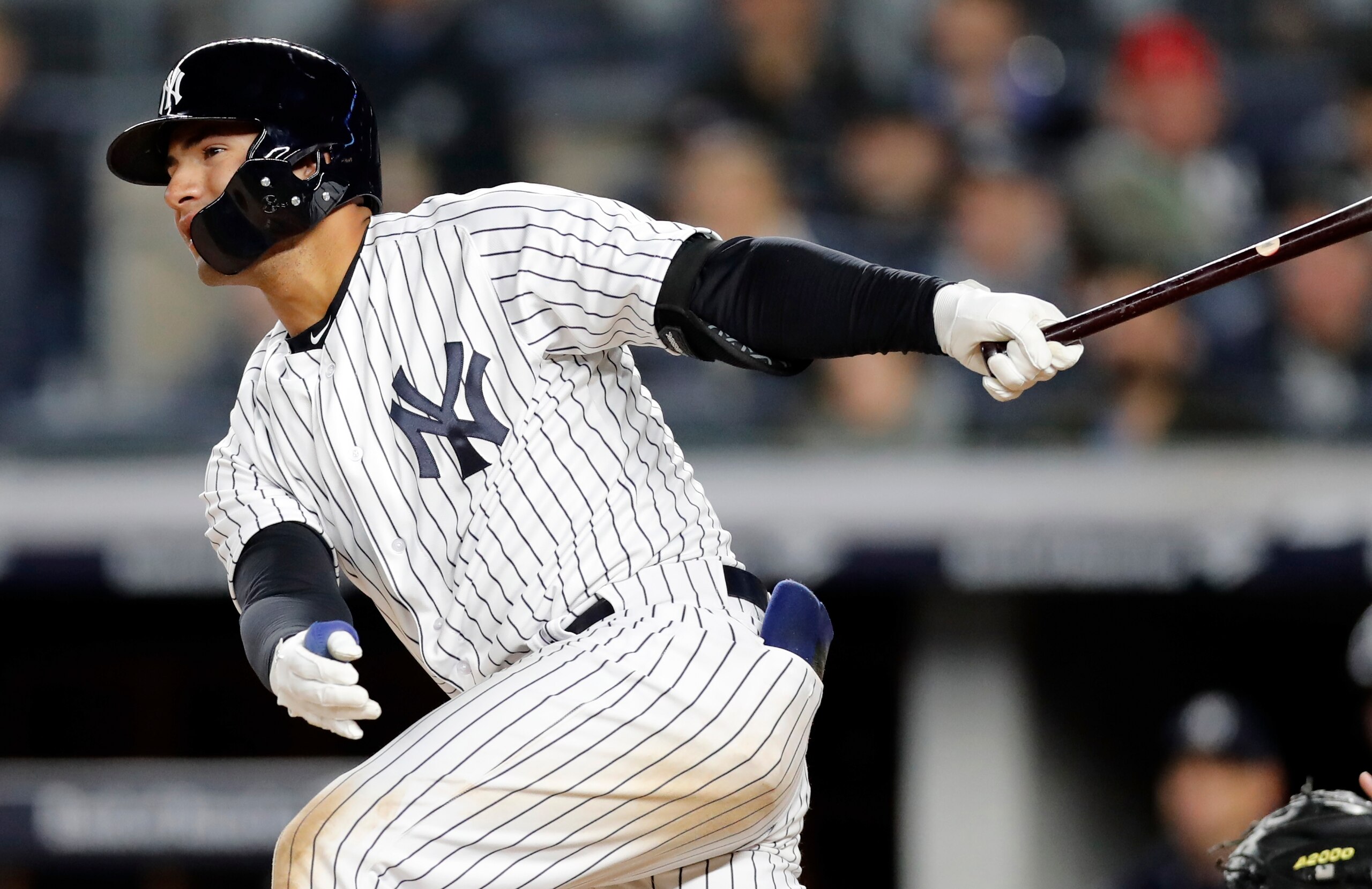
Contrary to Andujar, Gleyber Torres has had little trouble impressing the New York Yankees with his defense early in his major league career.
"Just watching with my eyes the way he goes after a ball, it almost reminds me of Javy Baez a little bit, the way he plays out there. There's just a real comfort," manager Aaron Boone said.
This is high praise for a guy who's still relatively inexperienced at first base, but it's not entirely unearned. Torres got high marks for his defense at shortstop as a prospect. And between his smart reads and smooth actions, he has looked the part of a shortstop masquerading as a second baseman in his time with New York.
On the other side of the ball, the 21-year-old is hitting a solid .294. An underlying cause is a line-drive stroke (29.6 LD%) that he's always had and which should always ensure a steady supply of hits.
How high Torres' offensive potential goes will ultimately depend on his discipline and power, neither of which have made an impression yet. But even by the standards of this list, it's too early to read too much into that. Instead, it's just as easy to read into Torres' minor league history, which featured a 10.4 BB% and extra-base hits from line to line.
Ultimately, there's no reason to jump off the bandwagon that views Torres as the Yankees' best young player. He should have a few All-Star Games in his future.
Ronald Acuna Jr., Atlanta Braves
9 of 10
He has only six games with the Atlanta Braves under his belt, but it's not too soon to fall head over heels for Ronald Acuna Jr.
The fact that he's even in the majors at the age of 20 is a feat in its own right. It's also a good window into the similarly amazing feats that Acuna has pulled over the last year or so. He dominated at every level in 2017 and then kept it up in spring training.
Now he has a 1.231 OPS and, per Baseball Reference, 0.5 WAR in just a half-dozen major league games.
Acuna's physical talents are obvious. He's one of MLB's fastest runners (29.8 feet per second) and hardest hitters (91.2 mph exit velocity). He's put these tools to work collecting six extra-base hits (including a long homer), a stolen base and at least one defensive highlight.
Just as important is how Acuna's plate approach is advanced beyond his years. He's barely above the MLB average with his 46.3 Swing% and safely below it with his 25.0 O-Swing%. That's a mark of controlled aggression that isn't too dissimilar from teammate Freddie Freeman.
As is, Acuna is an All-Star-caliber talent. Since he's still a pup, he should become an MVP-caliber player with more experience.
Shohei Ohtani, Los Angeles Angels
10 of 10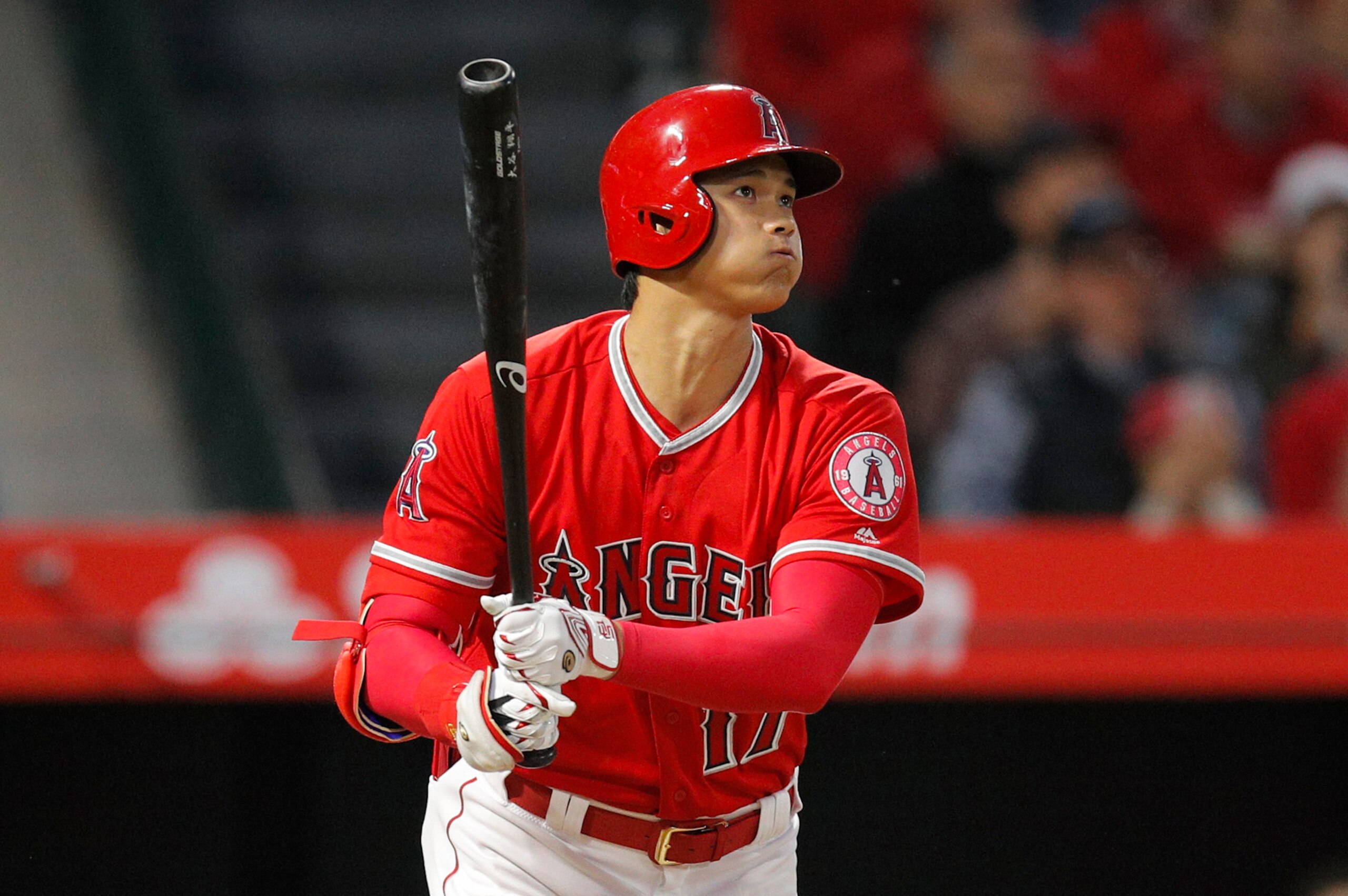
It's no secret that Shohei Ohtani has been both a good pitcher and a good hitter at the outset with the Los Angeles Angels. The question is which talent will ultimately shine brighter.
Ohtani's pitching was the favorite coming into 2018, and it still looks the part in some respects. He only has a 4.43 ERA through four starts, but he boasts a 97.4 mph average fastball and the best swing-and-miss splitter ever recorded in MLB's pitch-tracking era (since 2008). Thus his sparkling 11.5 K/9.
One thing looks like a red flag, however.
It's not the control trouble Ohtani has run into his last two times out, as that could be related to his blister scare. It's his slider, which is just an OK pitch that he hasn't been able to command consistently. His ace upside will be limited as long as that remains the case.
In the meantime, the 23-year-old is erasing questions about his hitting.
He owns a 1.039 OPS and four homers in 13 games mainly by way of being one the hardest hitters (93.6 mph exit velocity) in the sport. He also proved early on that he's capable of adjusting. And as FanGraphs' Jeff Sullivan highlighted, Ohtani recently negated a supposed weakness against inside heat with a rocket homer off Luis Severino.
Ohtani's hitting is ahead of his pitching at this point, and it may stay that way. But since he boasts genuinely elite skills on both sides of the ball, it should surprise nobody when he's seen pitching or hitting in future All-Star Games.
Stats courtesy of Baseball Reference, FanGraphs, Baseball Savant and MLBFarm.com.

.jpg?w=2560 "2 NFL Officials Suspended")


.jpg?w=2560 "Mahomes' Wife Trolls Kubiak 💀")

.jpg?w=2560 "Injury-stricken Seahawks signing veteran RB")
.jpg?w=2560 "Love's Body Already 'Tired'")