

Rethinking MLB Offseason Decisions We Judged Too Quickly
We may be less than a month into the 2018 MLB season, but it's already time to start rethinking a few offseason decisions that we may have been a bit too quick to judge.
Whether it was a questionable signing, failure to address a perceived need or the prevailing thought on what direction a team was heading, there are all sorts of areas where fans may pass judgment too swiftly.
Ahead is a quick look at five notable offseason decisions that seem considerably smarter now that the regular season is in full swing.
The Matt Kemp Trade Was Strictly a Financial Move
1 of 5
The Logic
The advantages of the Matt Kemp trade were clear-cut for both sides.
The Atlanta Braves took on more money in 2018 by acquiring the expiring contracts of Adrian Gonzalez, Scott Kazmir and Brandon McCarthy to get out from under the 2019 portion of Matt Kemp's contract.
The Los Angeles Dodgers took on the extra year owed to Kemp to trim significant money off of this year's payroll, which was over the luxury tax threshold.
In theory, all four players could have been released as soon as the trade was finalized, and it still would have made perfect sense for both sides.
The Reality
Gonzalez was in fact released as soon as the deal was finalized, and Kazmir was shown the door before the regular season started.
However, the other two players have made a surprising early impact with their new clubs.
McCarthy won a spot in the Atlanta rotation with a strong spring, and he's gone 2-0 with a 3.31 ERA and 1.29 WHIP over his first three starts. If nothing else, he's capable of eating innings and potentially turning himself into a viable trade chip if he can stay healthy.
As for Kemp, he won a bench spot with a strong spring of his own, and he's quickly pushed his way into the starting lineup with a .333/.380/.600 line over 50 plate appearances.
With Joc Pederson struggling, he should continue to see regular playing time.
Andrew Cashner Is Not the Answer to the Baltimore Orioles' Pitching Woes
2 of 5
The Logic
The Baltimore Orioles had the worst rotation in baseball last season with an unsightly 5.70 ERA from the starting staff.
After kicking the tires on a number of mid-level options, the front office settled on signing Andrew Cashner to a two-year, $16 million deal that includes a $10 million team option for 2020 as the first major move to address that issue.
While his 3.40 ERA in 2017 looked strong on the surface, it came with a 4.61 FIP and a 4.6 K/9 rate that ranked 57th among 58 qualified starters.
The regression candidate was simply not the answer for a team that needed a massive rotation overhaul.
The Reality
The Orioles starting rotation is still far from a strength, and late-offseason signing Alex Cobb was shelled in his first start of the season.
Cashner is off to a great start, though.
After giving up four earned runs in five innings in his Orioles debut, he's turned in three straight quality starts.
- @ NYY: W, 6.0 IP, 2 H, 1 ER, 3 BB, 5 K
- vs. TOR: ND, 7.0 IP, 4 H, 0 ER, 3 BB, 6 K
- @ DET: L, 6.0 IP, 7 H, 3 ER, 3 BB, 5 K
The Cashner signing looked like a Band-Aid on a bullet hole at the time, but so far, he's been one of the better offseason additions leaguewide on the starting pitching side of things.
The Houston Astros Need to Upgrade at the Catcher Position
3 of 5
The Logic
The Houston Astros reportedly showed interest in Miami Marlins catcher J.T. Realmuto during the offseason, with Craig Mish of SiriusXM reporting that the team had engaged in trade talks centered around top prospect Kyle Tucker.
No deal came to fruition, but it's easy to see the logic.
Brian McCann posted a 109 OPS+ with 18 home runs and 62 RBI during the 2017 season, but he's 34 years old and in the final guaranteed year of his contract.
Meanwhile, slugger Evan Gattis is better served as a regular DH, and backup Max Stassi had shown little in 44 games of MLB action over the past five seasons.
The Reality
Catcher is still a long-term need for the Astros.
It doesn't look like an issue at all here in 2018, though. The tandem of McCann and Stassi has performed well splitting starting duties:
- McCann: 41 PA, .333/.463/.424
- Stassi: 30 PA, .269/.367/.462
Further, flipping Tucker could have been a mistake the team would wind up seriously regretting. The 21-year-old looks like a star in the making and one who could make a major impact soon.
Swinging a deal for Realmuto seemed like a good move on the surface when that rumor first broke, but a few months later, it looks like the front office made the right decision going with the status quo behind the dish.



The New York Mets Are Taking a Huge Risk Relying on Their In-House SP Options
4 of 5
The Logic
Jacob deGrom was one of the best pitchers in the NL last season, going 15-10 with a 3.53 ERA, 1.19 WHIP and 239 strikeouts in 201.1 innings to finish eighth in Cy Young voting.
The rest of the New York Mets starting staff was a complete disaster, though.
Noah Syndergaard (7 GS), Steven Matz (13 GS), Zack Wheeler (17 GS), Seth Lugo (18 GS) and Matt Harvey (18 GS) all missed significant time to injury, and the team used 12 different starters on the year.
The combined result of the 11 starters not named deGrom: 34-59, 5.37 ERA, 1.59 WHIP.
Despite that uncertainty, the only notable addition the team made was to sign 35-year-old Jason Vargas to a two-year, $16 million deal. The soft-tossing left-hander made the All-Star team but fell off dramatically with a 6.38 ERA after the break.
That raised plenty of questions about whether the front office did enough to address what was a glaring hole.
The Reality
The Mets are off to a brilliant 12-4 start, thanks in large part to a 3.45 ERA from the starting rotation, and Vargas has yet to make his Mets debut.
Here's a look at how the club's incumbent starters have fared:
- Noah Syndergaard (4 GS, 2-0, 2.95 ERA, 1.03 WHIP)
- Jacob deGrom (4 GS, 2-0, 3.24 ERA, 1.08 WHIP)
- Steven Matz (3 GS, 1-1, 3.77 ERA, 1.19 WHIP)
- Matt Harvey (3 GS, 0-1, 4.80 ERA, 1.40 WHIP)
- Zack Wheeler (2 GS, 1-1, 2.77 ERA, 1.00 WHIP)
Beyond those five guys, Seth Lugo and Robert Gsellman are pitching well in multi-inning roles out of the bullpen and are capable of stepping into the rotation if the need arises.
The Pittsburgh Pirates Are Waving the White Flag
5 of 5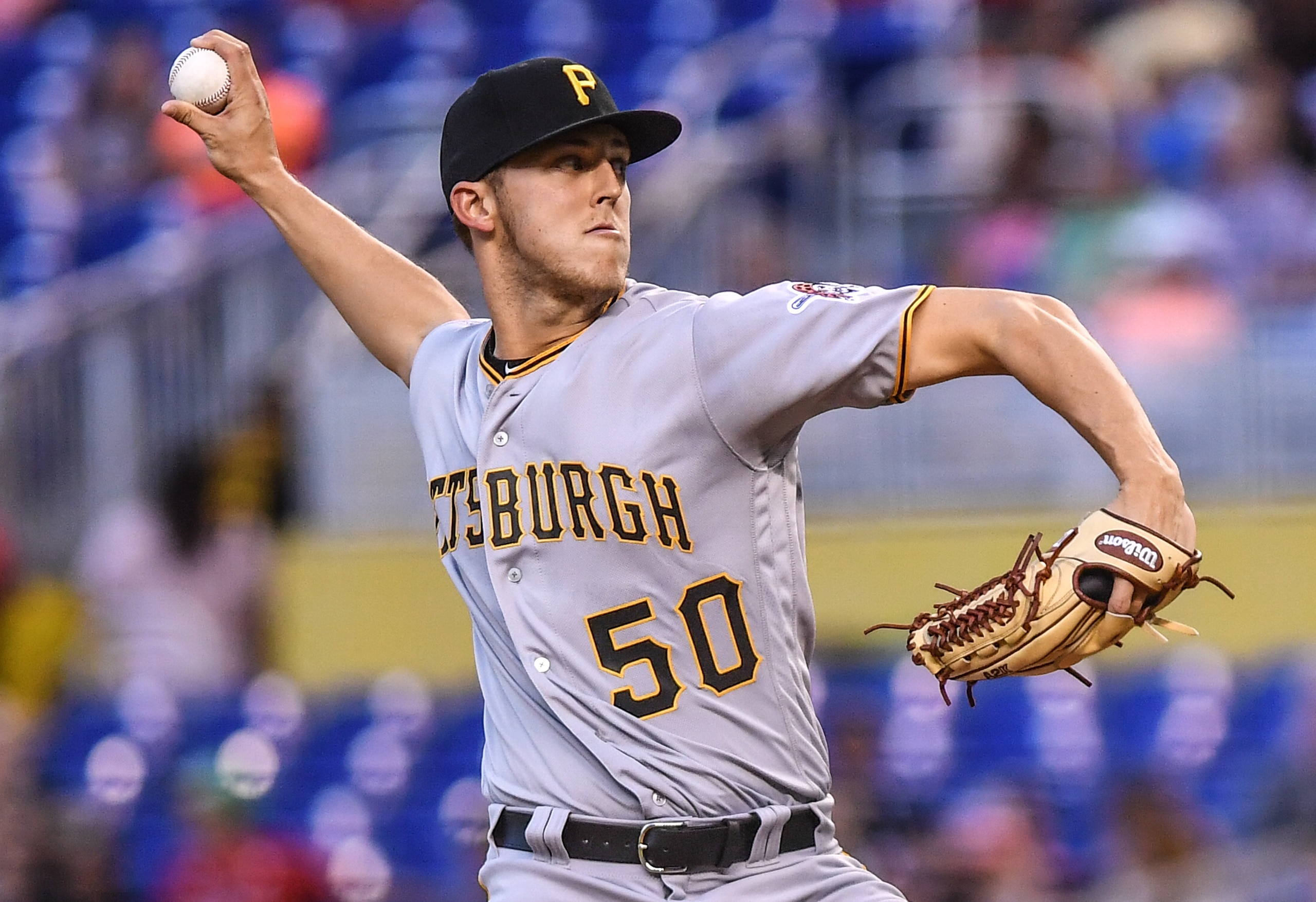
The Logic
It wasn't far-fetched to think the Pittsburgh Pirates were closing the door on contention when franchise cornerstones Andrew McCutchen and Gerrit Cole were traded during the offseason.
After making the postseason three straight years, the team had posted back-to-back losing seasons and seemingly slipped to a distant fourth in the NL Central behind the Chicago Cubs, St. Louis Cardinals and Milwaukee Brewers in the process.
With a largely inexperienced starting staff behind veteran Ivan Nova and an offense that averaged a dismal 4.1 runs per game (28th in the majors) last year—and that was prior to losing its most productive hitter in McCutchen—a step backward seemed inevitable.
The Reality
The Pirates have stormed out of the gate with an 11-6 record that puts them atop the NL Central standings and a plus-13 run differential.
The starting staff that looked like a question mark has instead been a strength, posting a 3.62 ERA that ranks 13th in the majors, with Jameson Taillon (3 GS, 2-0, 0.89 ERA, 0.69 WHIP) and Trevor Williams (4 GS, 3-1, 1.93 ERA, 1.20 WHIP) leading the way.
Meanwhile, the offense paces the NL with 89 runs scored and ranks second with 5.2 runs per game.
Newcomers Corey Dickerson (.328 BA, .878 OPS) and Colin Moran (.298 BA, .763 OPS) have made an immediate impact, and Josh Bell appears ready to take a step forward in his second season.
The NL Central is going to be a battle all season, and there's no reason to think of the Cubs, Cardinals and Brewers as anything but contenders at this point.
However, it's looking more and more like the Pirates will be part of that conversation as well.
All stats courtesy of Baseball Reference and FanGraphs, unless otherwise noted, and accurate through Monday's games.

.jpg?w=2560 "Grading WWE Raw 🔠")

.jpg?w=2560 "Bijan's INSANE 1st Half 🤩")
.jpg?w=2560 "Viral Rams Coach Vid 🖕")
.jpg?w=2560 "Injury-stricken Seahawks signing veteran RB")


.jpg?w=2560 "2 NFL Officials Suspended")
