

NFL Draft 400: Top TEs for 2018 NFL Draft
Scouts and general managers have called the 2018 NFL draft class average, but we still have questions. Who is the best overall player? How about the best at each position?
The goal of the NFL Draft 400 series is to figure that out.
The top 400 players were tracked, scouted, graded and ranked, with help from scouting assistants Marshal Miller, Dan Bazal and Jerod Brown. Together, we viewed tape of a minimum of three games per player—the same standard NFL teams use.
Oftentimes, we saw every play from a prospect over the last two years. That led to the grades, rankings and scouting reports you see here.
Players were graded on strengths and weaknesses, with a pro-player comparison added to match the prospect's style or fit in the pros. The top 400 players will be broken down position by position for easy viewing before the release of a top-400 big board prior to the draft.
In the case of a tie, players were ranked based on their overall grade in our top 400.
19. David Wells, San Diego State
1 of 19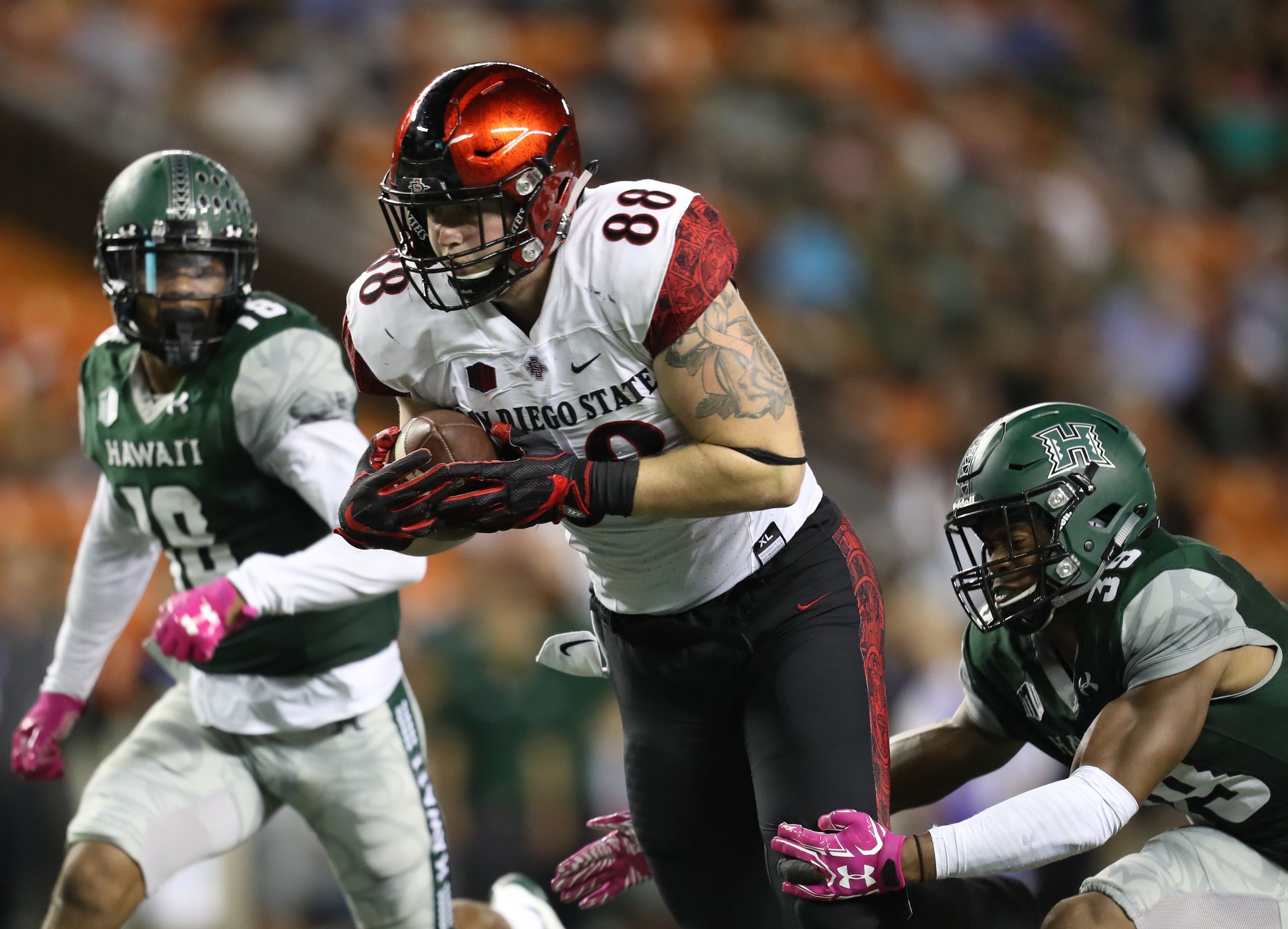
POSITIVES
—Experience with blocking assignments all over the field for San Diego State.
—Routinely hits strike point at the line of scrimmage to be an effective gap-scheme blocker.
—Above-average mental processing skills in combo blocks to identify threats.
—Demonstrates solid spatial awareness on the end of the line of scrimmage to create lanes on stretch plays as the point-of-attack blocker.
NEGATIVES
—Limited experience and production as a receiving tight end.
—Limited athleticism won't challenge NFL-caliber talent in the open field.
—Wins with timing and angles, but lacks the true power to dig quality defenders out of gaps.
—Fails to sustain blocks downfield and will watch after the play has gone by him.
—Runs routes with a slow pace that looks like he lacks feel for movement in the open field.
OVERALL
Wells primarily projects as an in-line tight end, as his athleticism is too limited to routinely compete against NFL starters. Unfortunately, his technique as a blocker relies on savvy versus strength, a trait that better defenders can expose. Wells' best bet is to get into camp, hit the weight room and continue building a powerful lower body that can justify a roster spot.
GRADE: 4.99 (Camp Body)
PRO PLAYER COMPARISON: Tyler Kroft, Cincinnati Bengals
18. Marcus Baugh, Ohio State
2 of 19
POSITIVES
—Often played in-line at Ohio State, with good mental processing skills to work combo blocks.
—Understands angles and leverage working to second-level defenders as in-line run-blocker.
—Thick frame to handle physicality when sitting down in zones against linebackers.
—Long arms for his size that help to stack and extend blocks.
—Can mirror some edge players as a sixth man in the pass-protection scheme.
NEGATIVES
—Struggles to separate over the middle of the field against adequate competition.
—Clunky route-runner that takes heavy, lumbering steps in and out of breaks.
—Lunging blocker that will dip head into contact and lose strike point.
—Hands are average at best, and they aren't good enough to make difficult catches in space.
—Slow to get head turned around and will telegraph timing of routes at all levels of the field.
OVERALL
Baugh's experience as an in-line blocker at Ohio State will earn him a role in a training camp, but it's hard to see how he fits in today's NFL. He lacks the technique refinement to be a blocking specialist at tight end, and his athleticism throughout his routes leaves much to be desired. Baugh will have to hope he lands on a practice squad that finds a way to continue coaching up a potential foundation as a blocking tight end.
GRADE: 4.99 (Camp Body)
PRO PLAYER COMPARISON: Logan Paulsen, Atlanta Falcons
17. Ethan Wolf, Tennessee
3 of 19
POSITIVES
—Good size and above-average athlete (6'6", 258 pounds).
—Four-year starter for Tennessee.
—Can high-point the football and scoop shoelace balls.
—Tracks the ball and makes body adjustments for a big tight end.
—Good strike and arm extension in blocking.
NEGATIVES
—Inconsistent play blocking and route running.
—Needs to use his size more to his advantage, as he plays smaller than he is.
—Defenders separate ball from him over the middle.
—Lacks burst out of breaks.
—Limited route tree at Tennessee. Worked the flats or hit the seam.
OVERALL
Wolf is a good prospect who hasn't established himself in the draft process. He was a four-year starter at Tennessee, but he never broke out or wowed scouts with what he could do on the field. While he has late-round potential, he'll need to play to his strengths in camp.
GRADE: 5.00 (Priority Free Agent)
PRO PLAYER COMPARISON: Troy Niklas, New England Patriots
.jpg?w=2560 "Rams Raiders Football")

16. Jordan Thomas, Mississippi State
4 of 19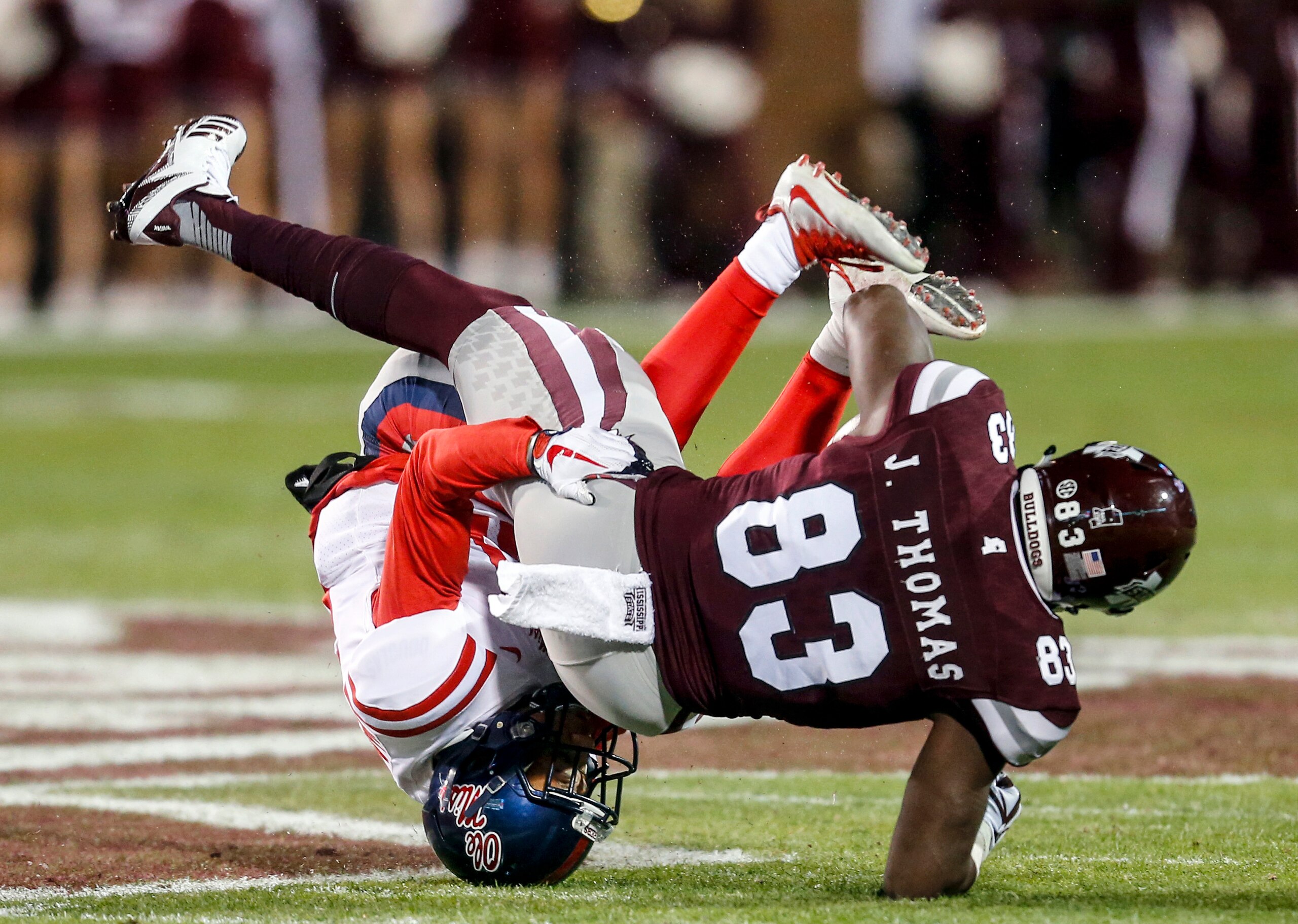
POSITIVES
—Height/weight/speed superstar (6'5", 265 pounds, 4.74-second 40-yard dash).
—JUCO basketball player that moves well for his massive size.
—Comes back to the ball and makes plays for his quarterback.
—Matchup nightmare for small safeties and slow linebackers.
—Played some offensive tackle and can hold his own as a run- and pass-blocker.
NEGATIVES
—Limited receiving production at Mississippi State.
—Position changes led to him being behind in terms of fundamentals at tight end.
—Height/weight/speed are his best attributes, but they also might be his only attributes.
—For being a massive tight end, he doesn't play or test strong (16 reps on the bench press).
—Can't track the ball or do much up the middle of the field.
OVERALL
Thomas is a big, athletic tight end prospect who hasn't solidified himself into a role. His size makes him an ideal fit as an in-line blocker, but he doesn't play with great strength. His 4.74-second time in the 40 makes he seem like a great athlete, but he wasn't all that productive as a pass-catcher. He isn't likely to hear his name called during the draft, and he may struggle to make a team as a camp signing.
GRADE: 5.00 (Priority Free Agent)
PRO PLAYER COMPARISON: Austin Seferian-Jenkins, Jacksonville Jaguars
15. Cam Serigne, Wake Forest
5 of 19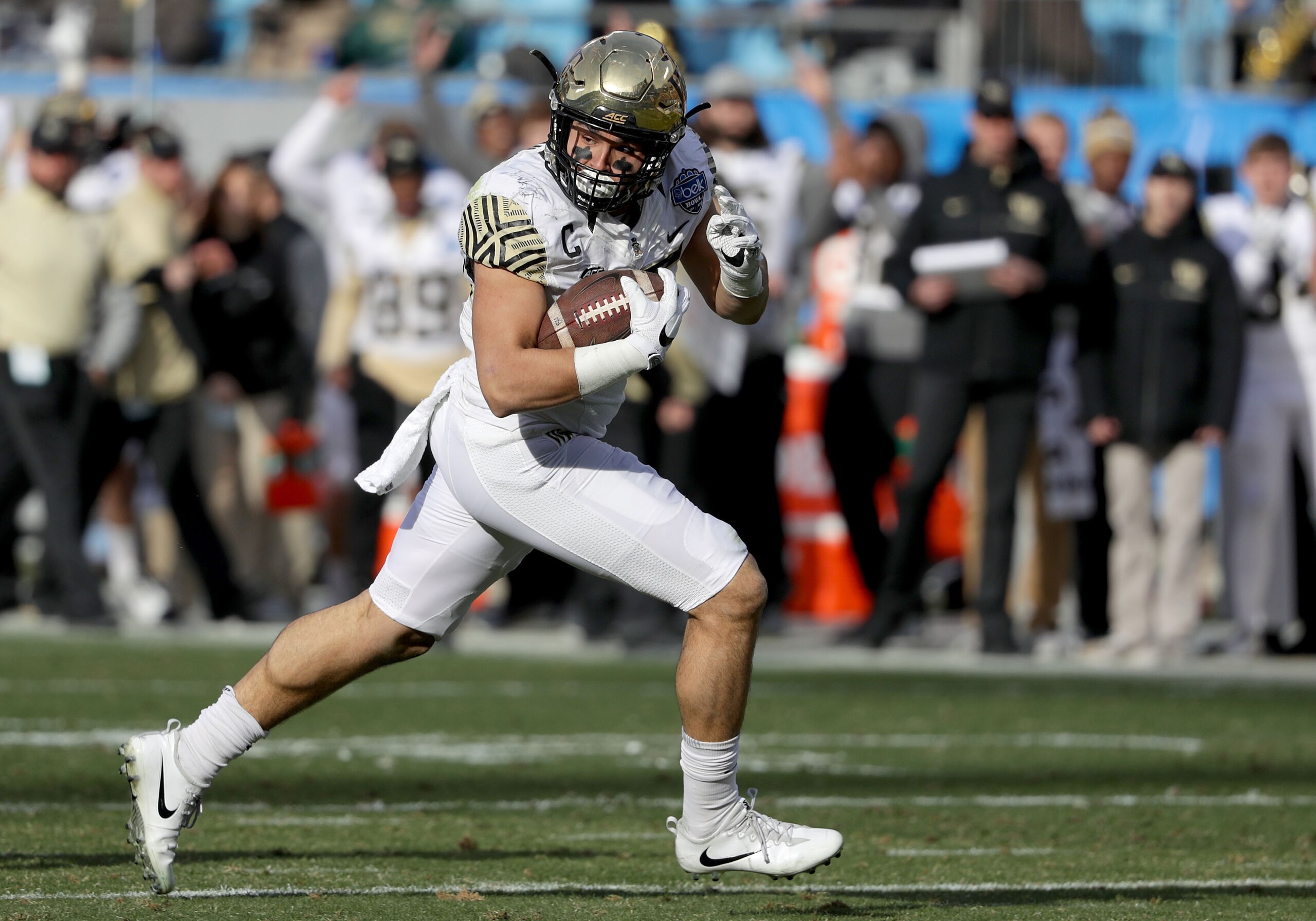
POSITIVES
—Can get up to make acrobatic catches over the middle.
—Consistently beats zone coverage and sits in windows.
—Threat to get up the seam and make tough catches.
—Snags the ball out of the air with his hands.
NEGATIVES
—Limited to wingback or H-back role.
—Struggles to block defensive lineman and play in-line
—Doesn't have the desired height or length for the position (6'3", 250 pounds).
—When playing in-line, he struggles to get off the ball.
—Not overly athletic.
OVERALL
Serigne will have to prove himself as a special teams player and improve his hand placement and punch as a blocker. He offers enough talent in the passing game to catch on with a team, but he might need to consider a full-time move to fullback.
GRADE: 5.00 (Priority Free Agent)
PRO PLAYER COMPARISON: James O'Shaughnessy, Jacksonville Jaguars
14. Troy Fumagalli, Wisconsin
6 of 19
POSITIVES
—Great at tracking the ball and making body adjustments to catch the ball in a crowd.
—Has a big catch radius and uses his hands to snag balls.
—Can go over the middle and make tough grabs without worrying about defenders.
—Experience playing in-line tight end or split out in the slot.
—Moves well, reaches second level of defense on blocks and routes.
—Can play out of the backfield in a H-back role.
NEGATIVES
—Average athlete who wasn't able to silence doubters at the combine or pro days because of injuries.
—Struggled as a run-blocker even though he played in a run-heavy offense.
—Stiff hips. Struggles to get separation from athletic defenders. Slow in and out of breaks.
—Strength was an issue on tape, and he didn't do anything to help himself while bench-pressing at the combine (14 reps).
—Initial punch and hand placement as a blocker are below-average. Lets defenders get back into the play.
OVERALL
Many scouts will attack Fumagalli for missing his left index finger. However, he does have strong hands, and drops have not been an issue for him. Fumagalli's blocking has been underwhelming even though he comes from a run-heavy Big Ten offense. He can provide good depth at tight end and be a positive, hard-working teammate in the locker room.
GRADE: 5.55 (Round 6)
PRO PLAYER COMPARISON: Jack Doyle, Indianapolis Colts
13. Jordan Akins, Central Florida
7 of 19
POSITIVES
—Exceptional athlete. Former third-round pick of the Texas Rangers who played four years as an outfielder in their farm system.
—Has the speed to get up the seam and be a downfield target.
—Hands catcher that can go up and get it.
—Creates matchup problems with size and strength for safeties, speed and agility for linebackers.
—Four years of professional sports experience. Knows how to work and handle himself.
NEGATIVES
—Will be a 26-year-old rookie who still needs a lot of work.
—Won most of his catches by being the more athletic player, which won't happen in the NFL.
—Cannot match up with defensive linemen when blocking.
—Struggles to play in-line, get off contact in routes or hold edge on blocks.
—Undersized for the position.
OVERALL
Akins will create problems for defenses with his speed up the seam and ability to win 50-50 balls. However, he will struggle to play in-line and contribute as a blocker. He looks and plays more like a receiver, which is why teams may use him in the slot.
GRADE: 5.60 (Round 6)
PRO PLAYER COMPARISON: Virgil Green, Los Angeles Chargers
12. Tyler Conklin, Central Michigan
8 of 19
POSITIVES
—Is a willing blocker who uses tenacity at the line of scrimmage to be effective.
—Above-average body control mimics better move tight ends in the league.
—Spatial awareness paired with physical profile to make contested catches at all levels of the field.
—Consistent hands that won't make flashy plays, but he'll churn out receptions when locked in.
—Has the frame and requisite athleticism to be a move tight end that a quality offensive coordinator uses to exploit matchups.
NEGATIVES
—Jones fracture in left foot kept him out of five games to begin the 2017 season.
—Mediocre speed won't be enough to challenge average NFL linebackers in space.
—Has to bulk up to play as an in-line tight end.
—Not a strong route-runner, often losing separation opportunities at break point due to an inability to accelerate out of breaks.
—Won't make the spectacular receptions needed to justify a starting move tight end role.
OVERALL
At first glance, Conklin has the ideal frame for an NFL move tight end. However, the Jones fracture that sidelined him to start the 2017 season caused a dip in production that only further highlighted his average athleticism. Conklin will have to develop as a versatile player who can make a team with a willingness to line up everywhere and win with tenacity. He won't separate consistently from man coverage, but he has the body control and awareness to rack up receptions as a late read against zone coverage.
GRADE: 5.65 (Round 6)
PRO PLAYER COMPARISON: Garrett Celek, San Francisco 49ers
11. Will Dissly, Washington
9 of 19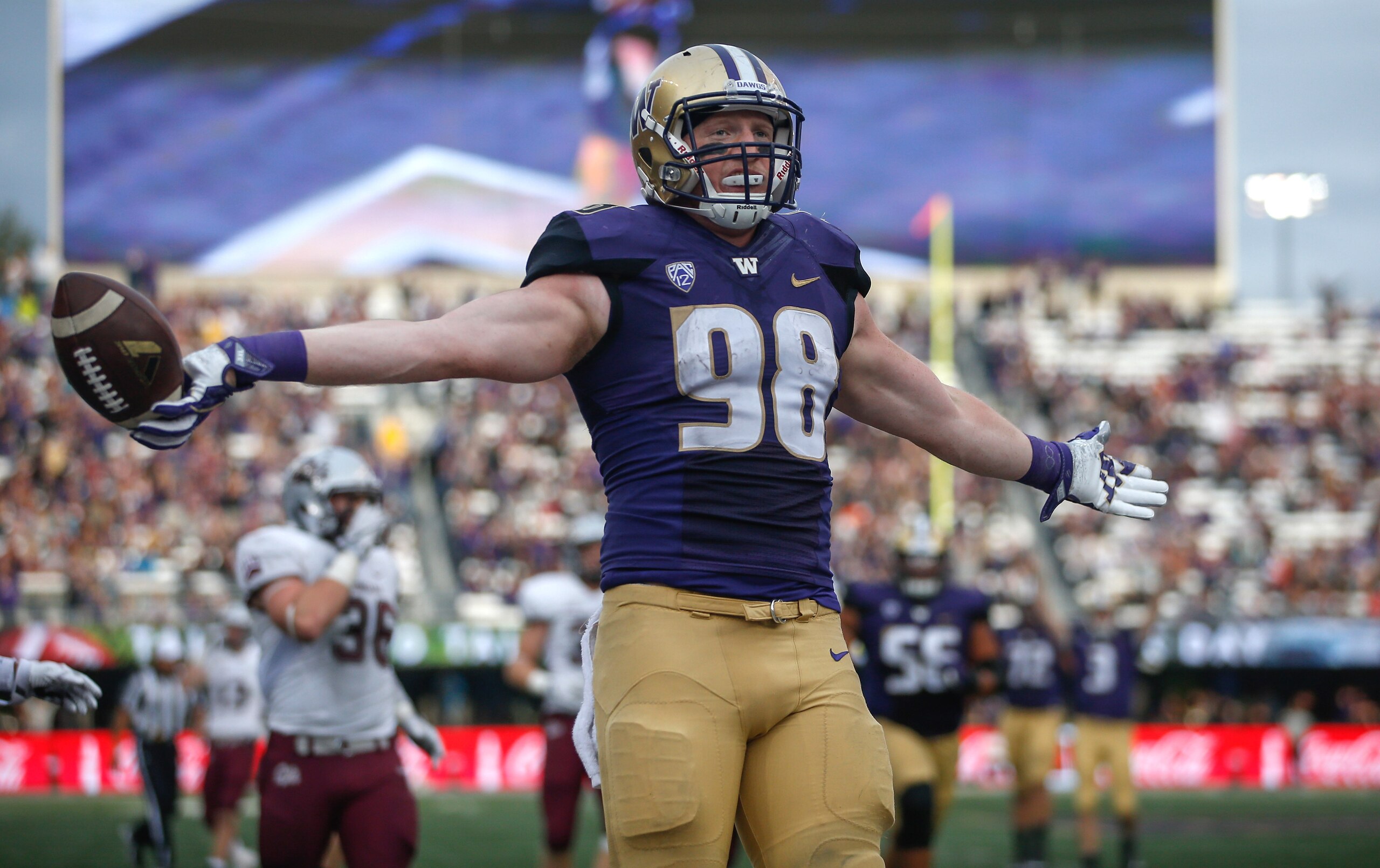
POSITIVES
—Converted defensive end who understands leverage at the line of scrimmage.
—Toughness as a blocker is evident immediately.
—Blocks like a bench press, with heavy hands to latch on and stack defenders easily.
—Big, thick build to handle contact down the field while churning out more yards after the catch.
—Solid hands and developing route-runner that shows the foundation to be a standard three-down in-line tight end.
NEGATIVES
—Lacks the technical refinement and nuance needed to be an effective route-runner against NFL talent.
—Not a legitimate receiver beyond intermediate level of the field due to lack of speed to separate.
—Looks disconnected getting in and out of breaks, without the fluidity to manipulate defenders in space.
—Doesn't locate the football well and will struggle to make catches in motion with consistency.
OVERALL
Dissly is a converted defensive end who shows enough foundational traits to encourage an NFL team to keep working with him. His experience in the trenches is obvious, as Dissly plays with ferocity as a run-blocker in tight spaces. An overall lack of speed and route-running proficiency will limit Dissly early in his career, but an NFL team may see a versatile and willing athlete who can be developed into a role player on offense.
GRADE: 5.65 (Round 6)
PRO PLAYER COMPARISON: Will Tye, New England Patriots
10. Jaylen Samuels, NC State
10 of 19
POSITIVES
—Steady production over his four-year career at NC State.
—Do-it-all player who can be a runner, receiver and downfield blocker.
—Will win in space versus linebackers at short-to-intermediate levels of the field.
—Can be core special teamer and offer roster construction flexibility.
—Touts the mental processing skills and intelligence to handle a multitude of roles at NC State.
NEGATIVES
—Tweener body type that doesn't fit traditional NFL roles.
—Underwhelming route-runner who telegraphs plan before movements.
—Play speed is slow due to combination of average athleticism and inconsistent effort.
—Lacks any top-tier trait to separate from other players at the position.
—Not an agile player in tight spaces and will struggle to create yards beyond design.
OVERALL
Samuels will offer an NFL team tremendous flexibility in building a roster because of his value as a receiver, runner, blocker and core special teamer. However, he lacks the size of traditional tight ends, the speed and elusiveness of running backs and the agility of a slot receiver. Whichever team takes Samuels will have to be creative in designing ways for him to contribute, but his mental processing skills and versatility make him worth a look.
GRADE: 5.70 (Round 5)
PRO PLAYER COMPARISON: Trey Burton, Chicago Bears
9. Ryan Izzo, Florida State
11 of 19
POSITIVES
— Plays angry, and it shows when he gets the ball in his hands.
— Enough wiggle in his game to be used as a move blocker. Enough strength to seal the edge.
— Can handle his own against defensive linemen with short, choppy drive as a run-blocker.
— Trusted lead blocker coming out of a spread offense.
— Uses his hands as a receiver and doesn't let the ball get to his body.
NEGATIVES
— Struggles to get off contact from the snap.
— Strong bull rush and initial punch can knock him off balance.
— Not afraid to get into his defender, but struggles with wide hand placement. A lot of holding penalties, too.
— Limited film as a pass-catcher and route-runner.
— Small catch radius. Ball has to be in his bread basket.
OVERALL
Izzo is a classic in-line blocker with little upside as a receiver. While his hands look good, his difficulty separating from athletic defenders makes him a limited prospect. He's a solid blocker with enough upside as a receiver to hear his name called on Day 3.
GRADE: 5.75 (Round 5)
PRO PLAYER COMPARISON: John Carlson, retired
8. Durham Smythe, Notre Dame
12 of 19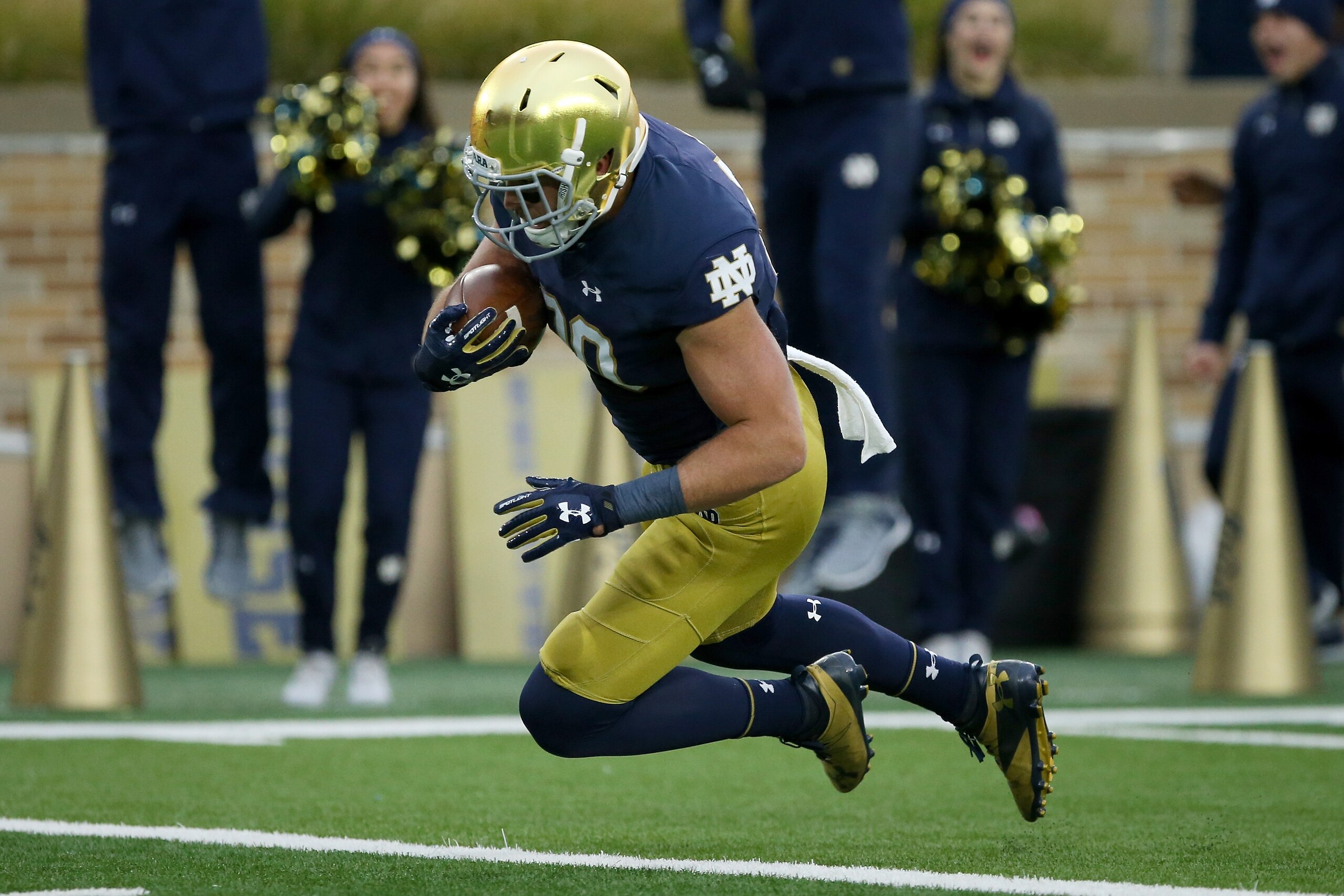
POSITIVES
—Ideal size for an in-line blocker (6'5", 257 pounds). Short arms may be a concern for teams looking to add the run-blocking specialist, however.
—Quick enough to be used as a move blocker, and he gets off the ball when asked to block at the second level.
—Strength was a plus on film even if he didn't do well in the bench press. Can handle bigger bodies just as well if not better than small targets.
—Sinks hips and anchors well when asked to pass-protect.
—Shows more promise than production as a receiver (15 catches in 2017).
NEGATIVES
—One-trick pony? Wasn't utilized much in the pass game, which may be due to quarterback play.
—Lacks speed to be a threat up the seam.
—Limited route-running ability due to experience and slow feet in routes.
—Runs one speed through routes, so he struggles to separate.
—Doesn't create matchup problems for opposing defenses, so most linebackers will be able to stay with him.
OVERALL
Smythe is an exceptional blocker. His technique, strength and agility all look great. The knock on him is his lack of production and film in the passing game. A run-heavy, two-tight-end-set team will love to find Smythe still on the board on Day 3. He will fill a role and provide depth at tight end while becoming one of the best in-line blockers in the NFL.
GRADE: 5.75 (Round 5)
PRO PLAYER COMPARISON: Virgil Green, Denver Broncos
7. Christopher Herndon, Miami
13 of 19
POSITIVES
—One of the most well-rounded and balanced tight ends in this year's class.
—Has the athleticism and blocking ability to make an impact early in his career.
—Can line up anywhere on the field, which allows him to get easy releases off the line and into his route.
—Is agile enough to seal defensive ends in the running game, as well as turn a short swing pass into a big play.
—A load to bring down after the catch at 6'4" and 245 pounds.
NEGATIVES
—Coming off an MCL injury that caused him to miss the end of the season and the Senior Bowl.
—Made most of his grabs on basic swing routes, curl routes or slant routes.
—Will need to prove he can be a downfield threat and can consistently create separation.
—Average play strength despite being a willing blocker.
—Inconsistent pass-catcher who struggles to bring in the ball cleanly.
OVERALL
Herndon is a natural athlete who showed versatility at Miami, but teams must be comfortable with him in the wake of his MCL injury. Playing behind David Njoku left Herndon limited in terms of reps and production, which means he may take longer to develop in the NFL. He has the look of a future starter.
GRADE: 5.99 (Round 4)
PRO PLAYER COMPARISON: Gavin Escobar, Cleveland Browns
6. Dalton Schultz, Stanford
14 of 19
POSITIVES
—A true dual-threat tight end who balanced the job of being a lead blocker and a receiver.
—Plays with a mean streak and looks for work as a blocker. Won't shy away from defenders no matter his assignment.
—Has a lean, athletic frame and can shake defenders with the ball in his hands.
—Uses his hands well as a blocker and will lock on and drive defenders off the edge. Was almost an extra lineman at Stanford.
—Explosive short-area athlete who can create space for himself as a route-runner.
NEGATIVES
—Oddly built at 6'5 ⅜” and 244 pounds, but with 31 ¼” arms and a wingspan of only 75 ⅜”.
—Not used much as a receiver (55 career catches).
—Only managed 15 reps on the bench at the combine.
—Looks like he could add weight to his frame and improve poor strength.
—Not a vertical threat at tight end; won't run away from coverage
OVERALL
Schultz is the best blocking tight end in the 2018 class. Coming out of Stanford, he understands pro-style offenses, blocking schemes and route trees. While he was limited in his pass-catching production, he has the traits to post better numbers in the pros than he did in college.
GRADE: 6.00 (Round 3)
PRO PLAYER COMPARISON: Zach Ertz, Philadelphia Eagles
5. Ian Thomas, Indiana
15 of 19
POSITIVES
—Smooth, natural athlete who glides through his routes.
—Excelled at the combine with high marks in the vertical jump (36"), broad jump (10'3") and 20-yard shuttle (4.2 seconds).
—One of the better blockers in the 2018 class. Can work in-line or on the move.
—Touts the strength to move defenders as a blocker or box them out as a route-runner.
—Has the hands to make one-handed grabs and to make plays in traffic.
—Doesn't get scared when asked to challenge safeties and linebackers for the ball.
NEGATIVES
—A one-year wonder who started just one game in 2016 and was at Nassau Community College prior to that.
—Short for a tight end (6'3 ⅝") with short arms (32 ½").
—Doesn't offer much after the catch due to average speed.
—Limited route tree and will need time to develop as a professional.
—Can disappear for stretches as a blocker and receiver.
OVERALL
Thomas had a tragic childhood after both of his parents died within a year of each other. He's one of the few true blockers in this group, which will make him more enticing to NFL teams. Thomas projects as a possible rookie starter if he improves his route tree.
GRADE: 6.00 (Round 3)
PRO PLAYER COMPARISON: Delanie Walker, Tennessee Titans
4. Mark Andrews, Oklahoma
16 of 19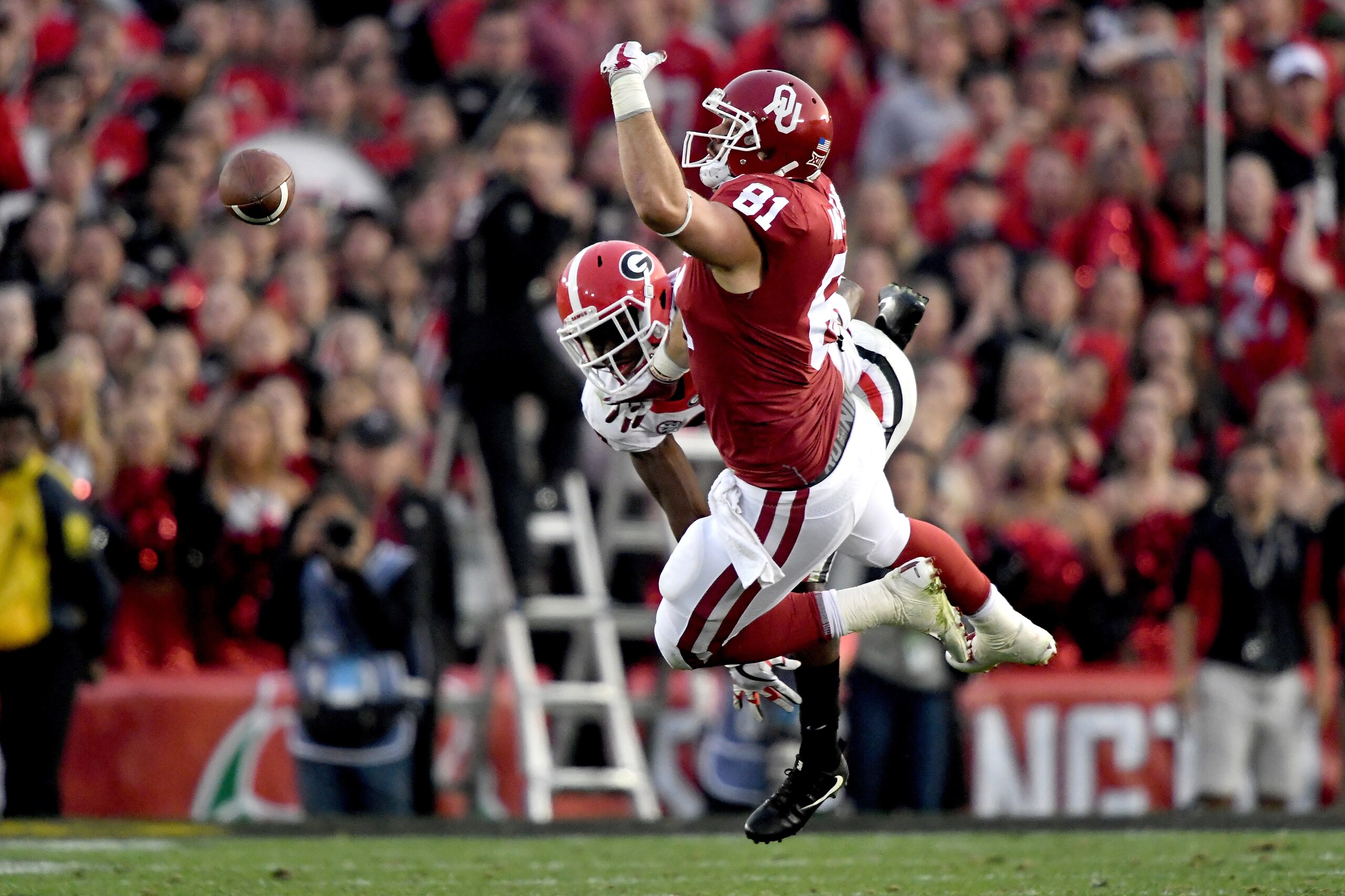
POSITIVES
—Natural pass-catching tight end who dominates in the red zone.
—Was utilized often as a downfield threat, and excels at getting loose behind coverage.
—Quick but not straight-line fast and uses his body to create separation.
—Understands leverage and spacing and knows how to change up his speed to get open.
—Boxes out smaller defensive backs but will post up against bigger players.
NEGATIVES
—Doesn't stand up athletically against the top tight ends in the class.
—Doesn't show up on film as a blocker and appears uninterested in the run game.
—Can lose battles against physical defenders and looks to stay out of traffic.
—Can be timid going after the football on passes that would lead him into hits.
OVERALL
Andrews won't wow NFL teams with his athleticism, but he routinely got open against more athletic safeties. With Andrews' size, route-running and hands, he has the tools to step in as a rookie starter.
GRADE: 6.00 (Round 3)
PRO PLAYER COMPARISON: Todd Heap, retired
Editor's note: There was a former version of this slide that listed Type 1 diabetes as a negative without further explanation. We regret the initial framing and should have provided more context if raising this as a potential draft consideration.
3. Hayden Hurst, South Carolina
17 of 19
POSITIVES
—All-around athlete who spent two years in the Pittsburgh Pirates' minor league system as a pitcher.
—Easy mover who looks the part working through transitions and separating from defenders.
—Aggressive before and after the catch; looks to find running lanes and score with the ball in his hands.
—Natural pass-catcher who doesn't fight the ball and secures catches before making his move.
—Is still learning the position and has room to develop into a more complete player.
—Effort player with top-notch athleticism, which makes him scary for defenses.
NEGATIVES
—Will be 25 years old as a rookie.
—Projects more as a move tight end and is not a blocker.
—Route tree is athletic but limited. Needs time in the film room and reps on the practice field developing his game.
—Physically maxed out.
OVERALL
Hurst has the tools to be the most productive tight end in the 2018 class right out of the gate, but concerns about age and a need to keep developing his game could scare off some teams. He is the most dynamic pass-catching threat at the position, but he doesn't show the blocking talent or effort to be TE1.
GRADE: 6.90 (Round 2)
PRO PLAYER COMPARISON: Travis Kelce, Kansas City Chiefs
2. Dallas Goedert, South Dakota State
18 of 19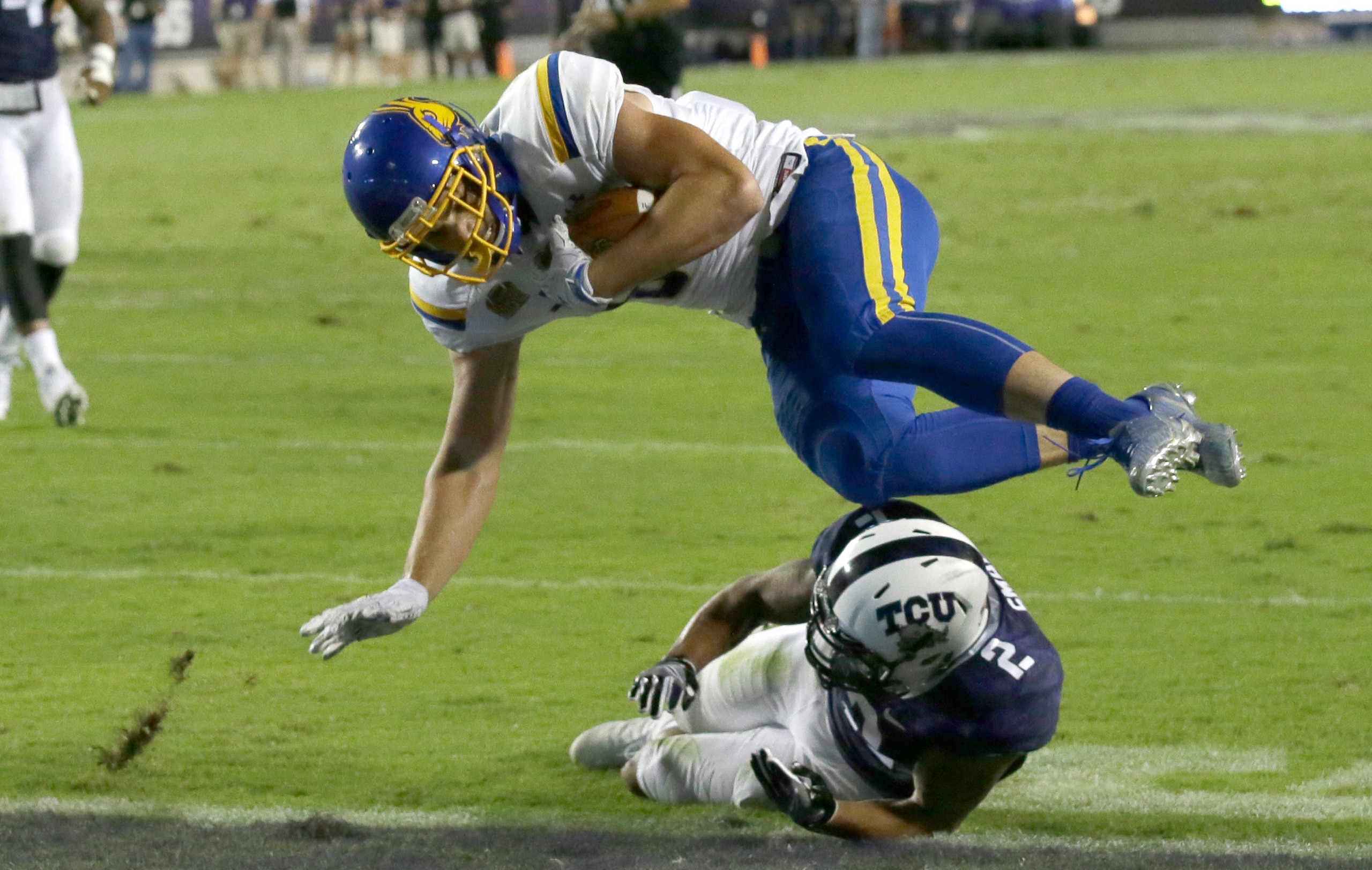
POSITIVES
—Tall (6'5") and physical with excellent athleticism for the position.
—Developed route tree that allows him to fit into any scheme.
—All-around athlete who was a top-tier high school basketball player.
—Makes catching look easy with a big radius and the hand strength to make circus grabs.
—Fast and strong enough to line up flexed in the slot, as an H-back or even as an in-line tight end.
—Has the mentality to go bang with linebackers and safeties in the middle of the field; isn't intimidated off of a route.
—Three-down tight end who has experience opening lanes in the run game.
—Former walk-on has built himself into a complete tight end.
NEGATIVES
—Dominated FCS level; injured for Senior Bowl, so questions about level of competition are there.
—Can run tall through his routes.
—Doesn't have great twitch and burst at his route stem.
—Will have to better use his body to shield NFL safeties.
OVERALL
Goedert lit up the FCS level and hits every box for athleticism, character and football IQ that NFL teams look for in tight ends. His biggest question mark is the level of competition he faced. He might start a bit slower than his tight end peers in this class, but no one has more potential.
GRADE: 6.95 (Round 2)
PRO PLAYER COMPARISON: Hunter Henry, San Diego Chargers
1. Mike Gesicki, Penn State
19 of 19
POSITIVES
—Elite athlete with ideal NFL size (6'5", 247 pounds), speed (4.54-second 40-yard dash) and strength (22 reps).
—Uses his 34" arms well to extend his catch radius.
—Comes from a basketball and volleyball background; 41.5" vertical jump shows up on film when he attacks 50-50 balls.
—Three-year starter with a high football IQ.
—Can separate from defenders with speed up the seam or with leaping skills.
—Excellent red-zone target who can outjump safeties and linebackers to the ball.
NEGATIVES
—Rarely used as a blocker, and doesn't pop the pads of defenders.
—Limited route tree due to the Penn State offensive scheme.
—Can be stiff in his movements despite elite athletic testing numbers.
—Could use more strength to get free from press coverage.
OVERALL
Gesicki is a game-changing athlete with the size, speed and instincts to step right into an NFL offense and make plays. He is versatile enough to line up in the slot and creates mismatches against nickel covermen. He might not be a great blocker, but tight ends don't get Pro Bowl votes for opening holes in the run game.
GRADE: 6.99 (Round 2)
PRO PLAYER COMPARISON: Jimmy Graham, Green Bay Packers
.jpg?w=2560 "Steelers Saints Football")



.jpg?w=2560 "🚨 Week 8 AP Top 25 Poll")
