

10 MLB Superstars Who Won't Live Up to the Hype in 2018
Having high hopes usually leads to disappointment.
Manny Machado's .782 OPS represented a major letdown last season, but Baltimore Orioles teammate Tim Beckham enjoyed a breakout campaign by registering an identical rate. Results are constantly weighed alongside expectations, so too much hype can give good outcomes a mediocre stench.
Before firing off angry tweets, remember that this is not a list of 2018 duds. Expectations have simply grown a tad out of hand.
Youth, instant success, a big market and/or a sizable payday made these guys susceptible to a hype overdose. Things especially get out of hand when a young star shines immediately on a big-market team. Four second-year position players meet all three categories.
It's possible these contributors all succeed but still fall short of unfairly high hopes. A highly anticipated newcomer has already discovered the difficulty of making a favorable first impression when compared to an icon before ever donning a big league uniform. Another faces assumptions he will automatically ascend to stardom without suffering any growing pains.
Hopefully readers will reframe their assumptions to a more reasonable level.
Ronald Acuna Jr., OF, Atlanta Braves
1 of 10
At this rate, the off-the-charts hype will make anything short of a runaway NL Rookie of the Year triumph an underwhelming debut for Ronald Acuna Jr.
Yes, the same 20-year-old outfielder who will open 2018 in the farm system of an Atlanta Braves organization unlikely to contend in 2018. He made short-term patience impossible by batting .432/.519/.727 with four home runs and steals apiece in spring training.
The elite prospect dominated Double-A level competition before officially getting sent to the minors. Yet he has little to prove outside the big leagues after hitting .344/.393/.548 in 54 Triple-A games last year. Spectators are thus salivating for a mid-April promotion once the Braves can bring him up while saving a year of service time.
From there, expectations will balloon out of control. Baseball America's Josh Norris called Acuna "the best position player prospect I've ever seen." Former Braves outfielder Ralph Garr compared the neophyte to former teammate Hank Aaron before juxtaposing him next to the past decade's highest-touted prospects.
"I put him in the same class as the [Mike] Trouts and the [Bryce] Harpers," Garr told MLB.com's Mark Bowman. "They're special people. Some people are just gifted. ... But you never know what's going to happen, and you can't say until he has the chance to do it. He has 20 years or so to see how well he does."
This is not to label Acuna a bust. He may one day reach his lofty MVP ceiling, but that day won't occur in 2018. Also entering the majors with a similarly high bar, Byron Buxton batted .209/.250/.326 in his 2015 debut. Even Trout began his remarkable career with a .281 on-base percentage in his first season.
Don't be surprised if the Braves delay Acuna's debut beyond a couple of weeks, and don't expect him to immediately bat .300 with 20 homers and 20 steals.
Jake Arrieta, SP, Philadelphia Phillies
2 of 10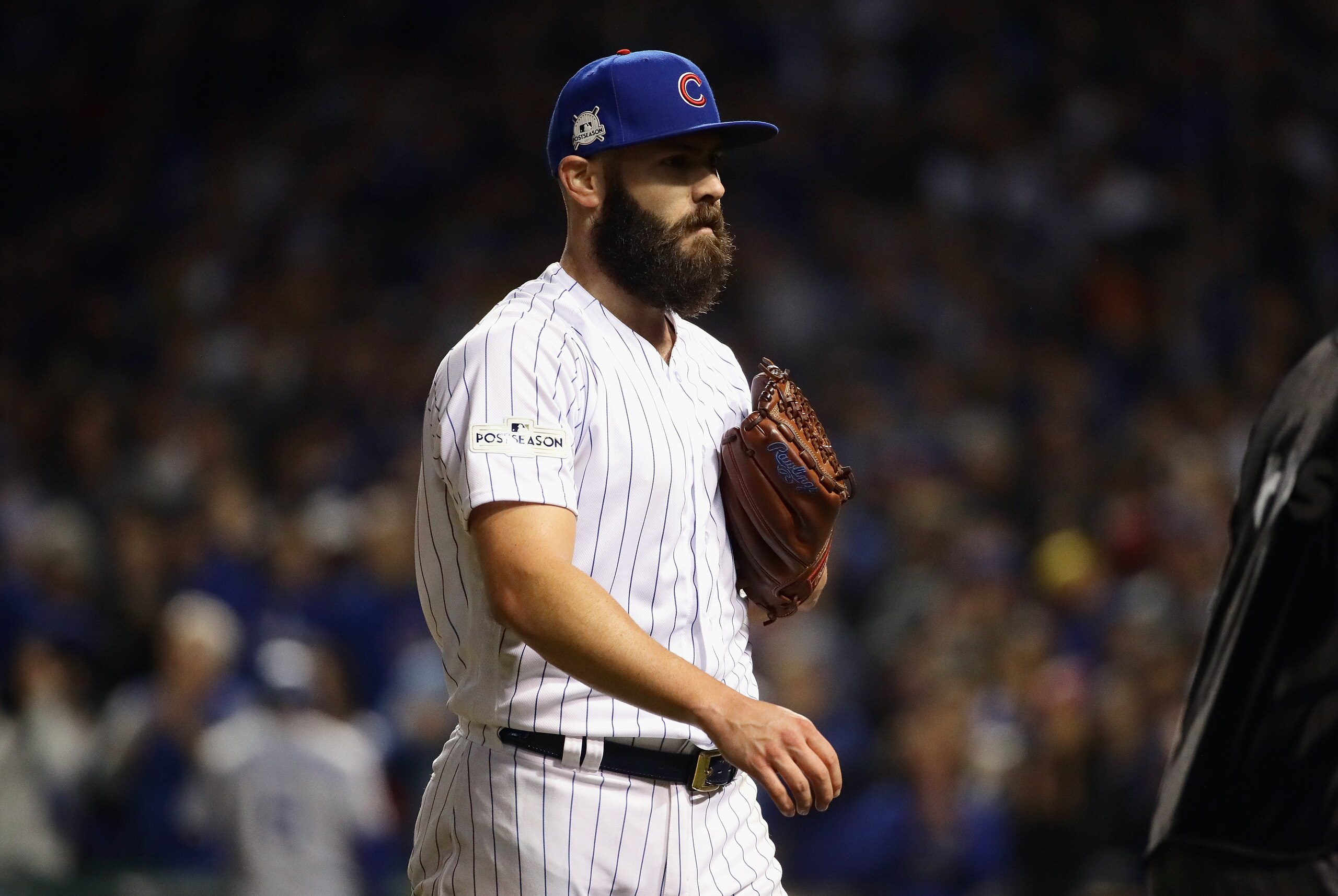
At least the Philadelphia Phillies did not pay Jake Arrieta like a top-tier ace. While three years for $75 million is certainly plenty of money, it pales in comparison to previous free-agent contracts signed by Zack Greinke (six years, $206.5 million) and David Price (seven years, $217 million).
They still may regret the signing by 2020.
Basic surface stats depict the right-handed hurler's precipitous decline. Without offending anyone who thinks sabermetrics are for losers, here's a look at his last three seasons:
- 2015: 229 IP, 22-6, 1.77 ERA, 0.86 WHIP, 236 K
- 2016: 197.1 IP, 18-8, 3.10 ERA, 1.08 WHIP, 190 K
- 2017: 168.1 IP, 14-10, 3.53 ERA, 1.22 WHIP, 163 K
The Phillies won't lose much sleep if they simply get 2017's Arrieta, who would still represent a significant upgrade over all of their starters beyond burgeoning ace Aaron Nola. Yet they must worry about more regression.
Those aren't his only depreciated numbers. His ground-ball rate dropped to 45.1 percent, and he instead allowed his highest fly-ball rate (34.4 percent) since 2013. His velocity keeps trending downward, which caused his worst swinging-strike (8.7) and opposing contact (80.1) percentages in four years.
Arrieta's arm does not have as much mileage as a typical 32-year-old starter, but he's a prime candidate to enjoy a rapid swoon a la Cole Hamels, Felix Hernandez and former Chicago Cubs teammate Jon Lester.
Cody Bellinger, 1B, Los Angeles Dodgers
3 of 10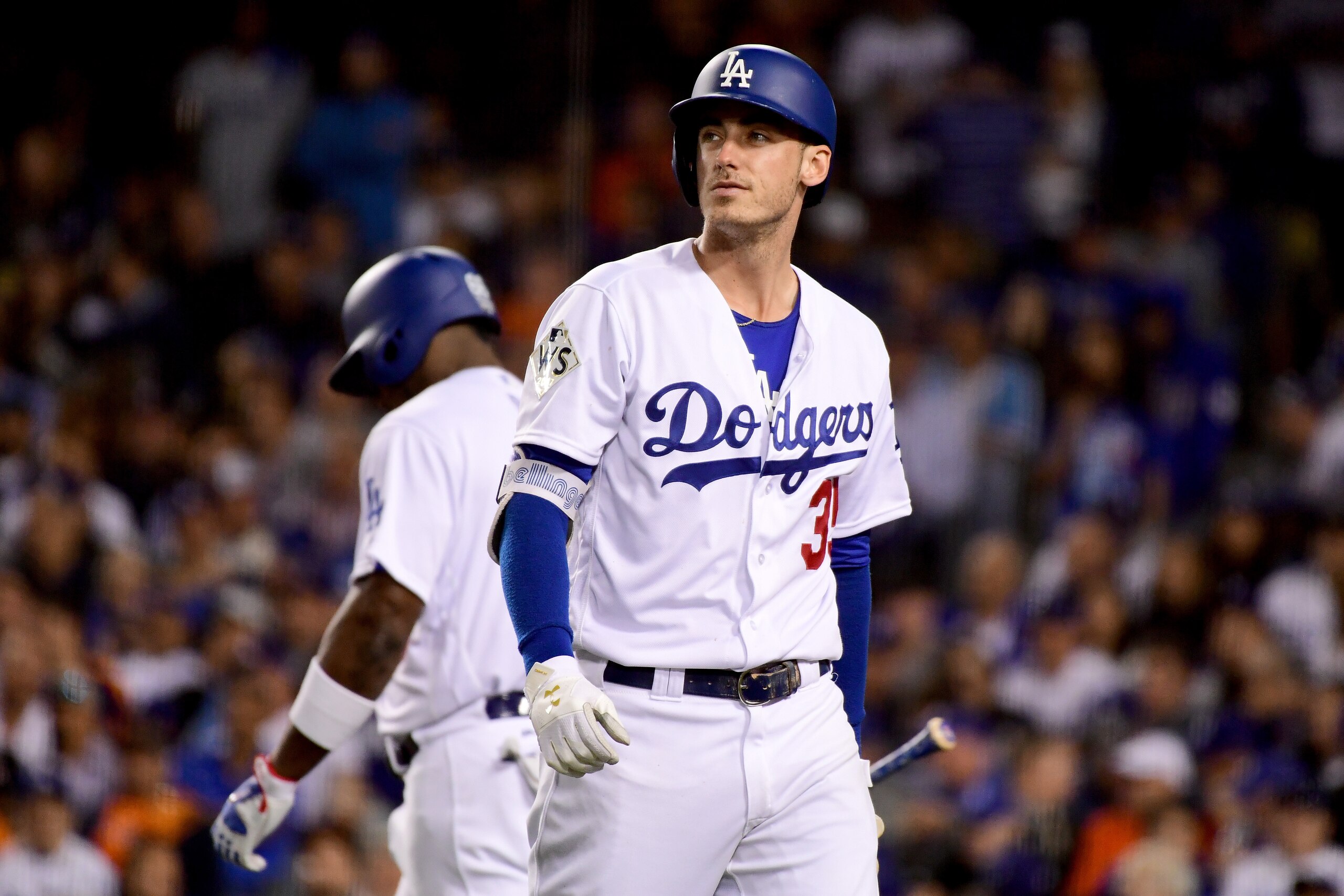
Despite not arriving until late April, Cody Bellinger belted 39 home runs with 97 RBI and 10 steals. Throw in his Triple-A numbers, and he went deep 44 times, drove in 112 runs and swiped 17 bags last year.
Don't expect such gaudy numbers during his sophomore season.
The odds are against the 22-year-old having another torrid stretch like his power barrage from May 28 to June 25, a period in which he clobbered 15 long balls with four two-homer games. Settling for his .538 second-half slugging percentage would still represent an impressive follow-up campaign.
At the risk of overreacting to a small postseason sample size, striking out 26 times in 60 at-bats did not end his tremendous debut on a high note. How will he respond to adjustments made by elite competition?
Bellinger never struggled so mightily during the regular season, but a 69.6 contact percentage and 13.2 percent swinging-strike rate opens the door for more prolonged slumps. His .267 batting average could drop a few points without padding his homer tally over 40 in more games.


Rafael Devers, 3B, Boston Red Sox
4 of 10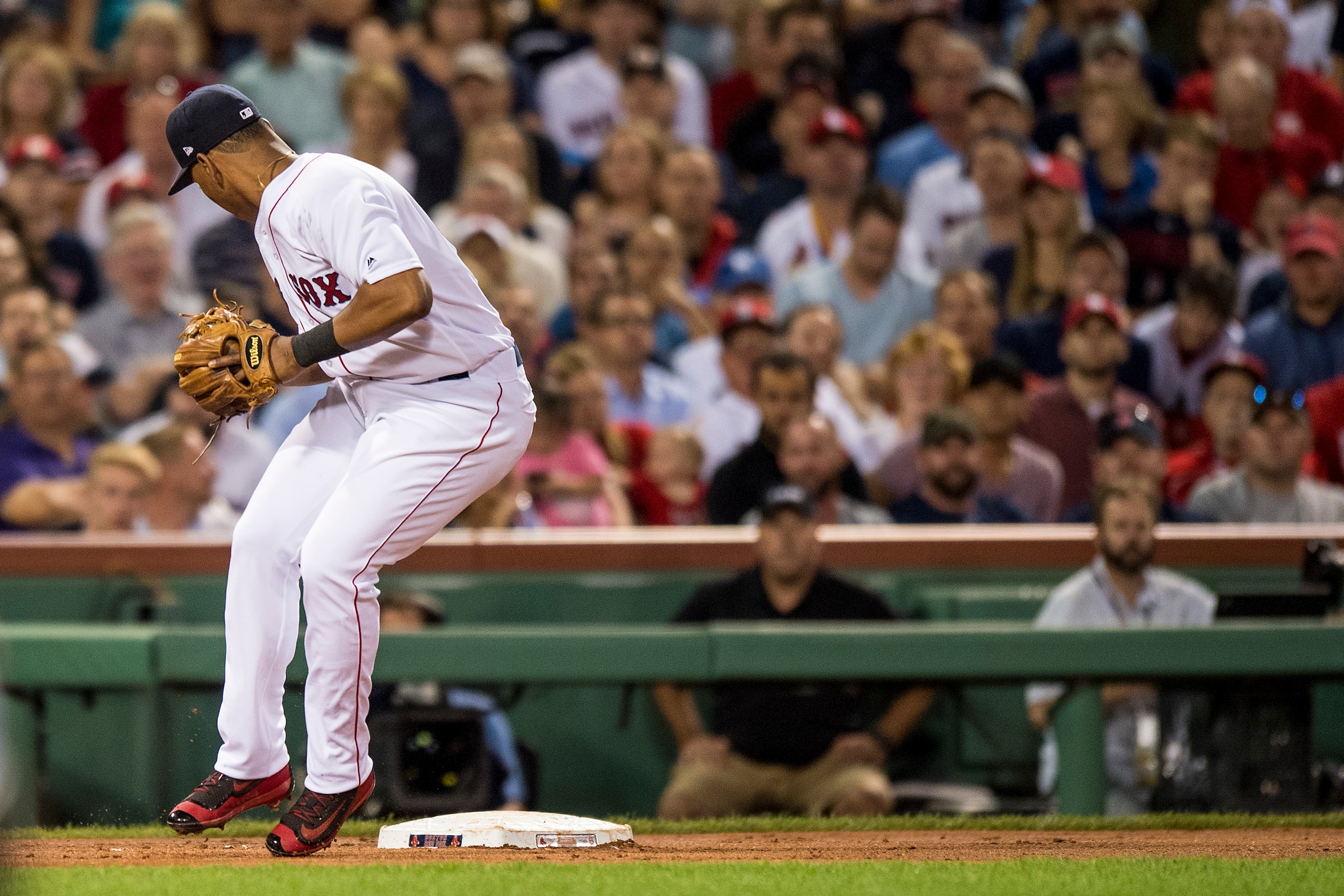
Before his 21st birthday, Rafael Devers hit .284/.338/.482 with 10 home runs in 58 regular-season games with the Boston Red Sox. In an arrival highlighted by a game-tying, opposite-field blast off a 102.8 mph fastball from fellow lefty Aroldis Chapman, the third baseman continued to embrace the spotlight with a pair of postseason homers.
The future star upgrades a sore spot in Boston's lineup, but a stellar arrival will inflate expectations beyond reason.
Despite positive results, there are hints of a probable regression. Underneath a solid batting average lurks a 49.1 ground-ball percentage and a 13.8 infield-fly percentage. If he repeats those batted-ball tendencies, expect an average closer to .270.
He'll need to sustain above-average contributions at the plate to help the Red Sox after committing 30 errors—14 in the majors—last season. While J.D. Martinez undoubtedly improves a power-sapped lineup, his presence also eliminates designated hitter as a fallback plan for Devers.
Those projecting a solid regular rather than an 2018 All-Star won't be disappointed. There's also, however, the possibility that defensive woes cost the youngster playing time when Dustin Pedroia returns to a crowded roster.
Paul Goldschmidt, 1B, Arizona Diamondbacks
5 of 10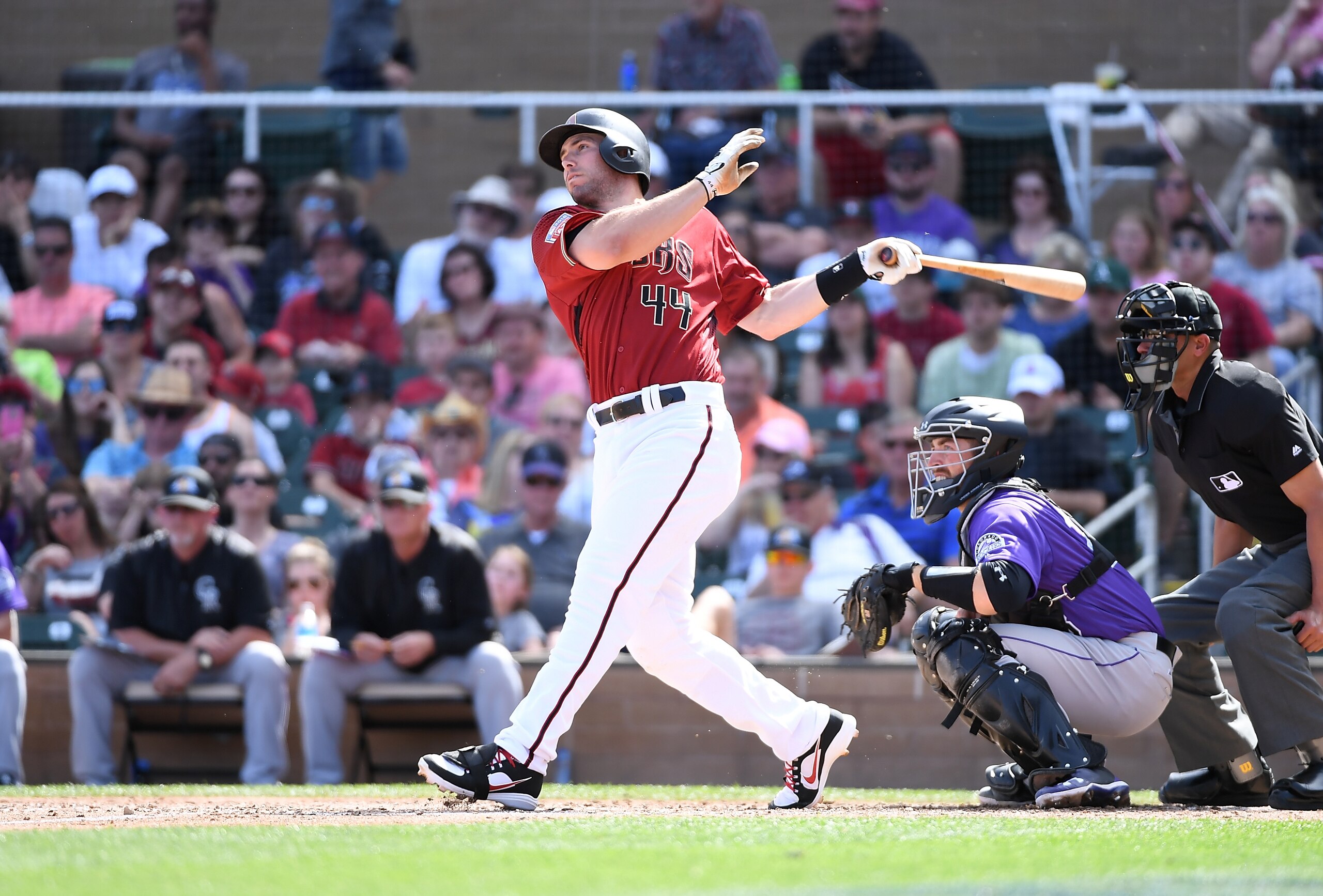
Paul Goldschmidt is too well-rounded to have a bad season. Take each of his worst triple-slash numbers since 2013, and he'd still manage a .297/.396/.489 line.
Again, this is all relative to expectations. According to OddsShark, the Arizona Diamondbacks first baseman is the fourth favorite to win NL MVP honors at 9-1 odds. If that's the bar, he will fall short.
It's nothing against him, but a humidor will repress offense at Chase Field this season. Last year, Dr. Alan Nathan concluded in a Hardball Times essay that storing the baseballs at 70 degrees will reduce home runs by 25 to 50 percent with a two-mph dip in exit velocity.
What will Goldschmidt's production look like if his home park transitions from a hitter's paradise into a neutral or pitching-friendly locale? Over the last two seasons, Arizona's star has batted .285/.391/.471 with 25 home runs in 155 road games.
Instead of swatting another 36 long balls, he's likely to settle between 26 and 30. His teammates may suffer steeper declines beyond the power department, meaning he won't please some MVP voters by stockpiling less than last year's 120 RBI. He's still a stud but one who will fall behind Joey Votto and Freddie Freeman in the position's pecking order.
Rhys Hoskins, 1B/OF, Philadelphia Phillies
6 of 10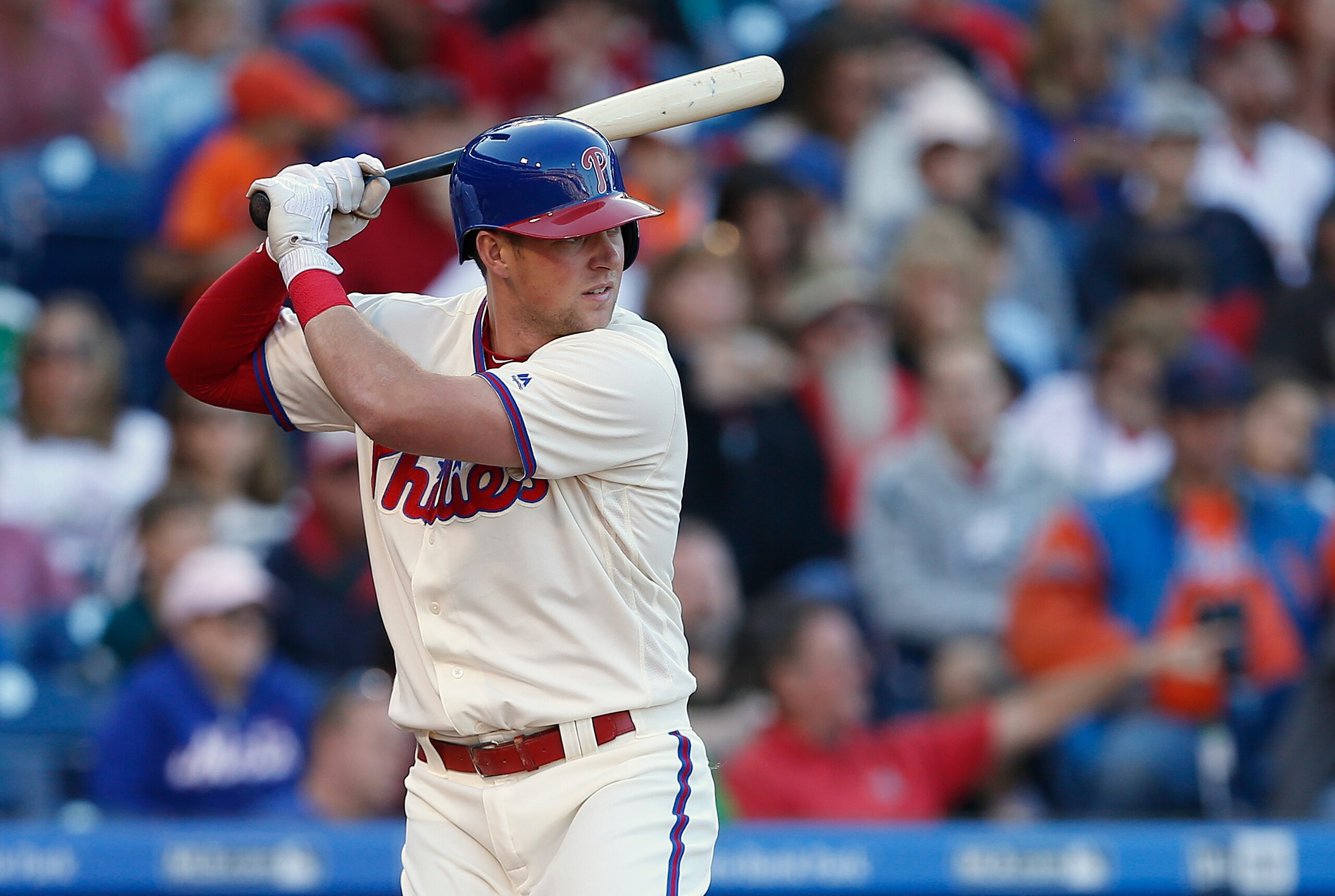
Prorate Rhys Hoskins' 50-game debut over 150 games, and he'll slug 54 home runs with 144 RBI. Math is dangerous. Don't try it at home, kids.
Unlike last year's other rookie power wonders, the new outfielder kept his strikeouts in check (21.7 percent) while making consistent contact (81.4). Despite batting .259, he has the skills to raise that average if he also maintains a 46.0 hard-hit percentage.
Yet a 17.5 walk percentage is suspiciously high for someone who submitted an 11.1 percentage through 455 minor league games. While Hoskins has raked at most levels, a .532 slugging percentage jumped to .618 with the Phillies.
Depositing 18 homers just 34 games into a big league career is not normal. Following that historic debut, he finally lost steam with no long balls in the last 16 contests. A couple of red-hot months doesn't make him Barry Bonds.
No Phillies fans should moan if the 25-year-old hits .265 with 35 to 40 home runs during his first full season. He's a key part of their promising future—just not one who will eclipse 50 dingers in 2018.
Eric Hosmer, 1B, San Diego Padres
7 of 10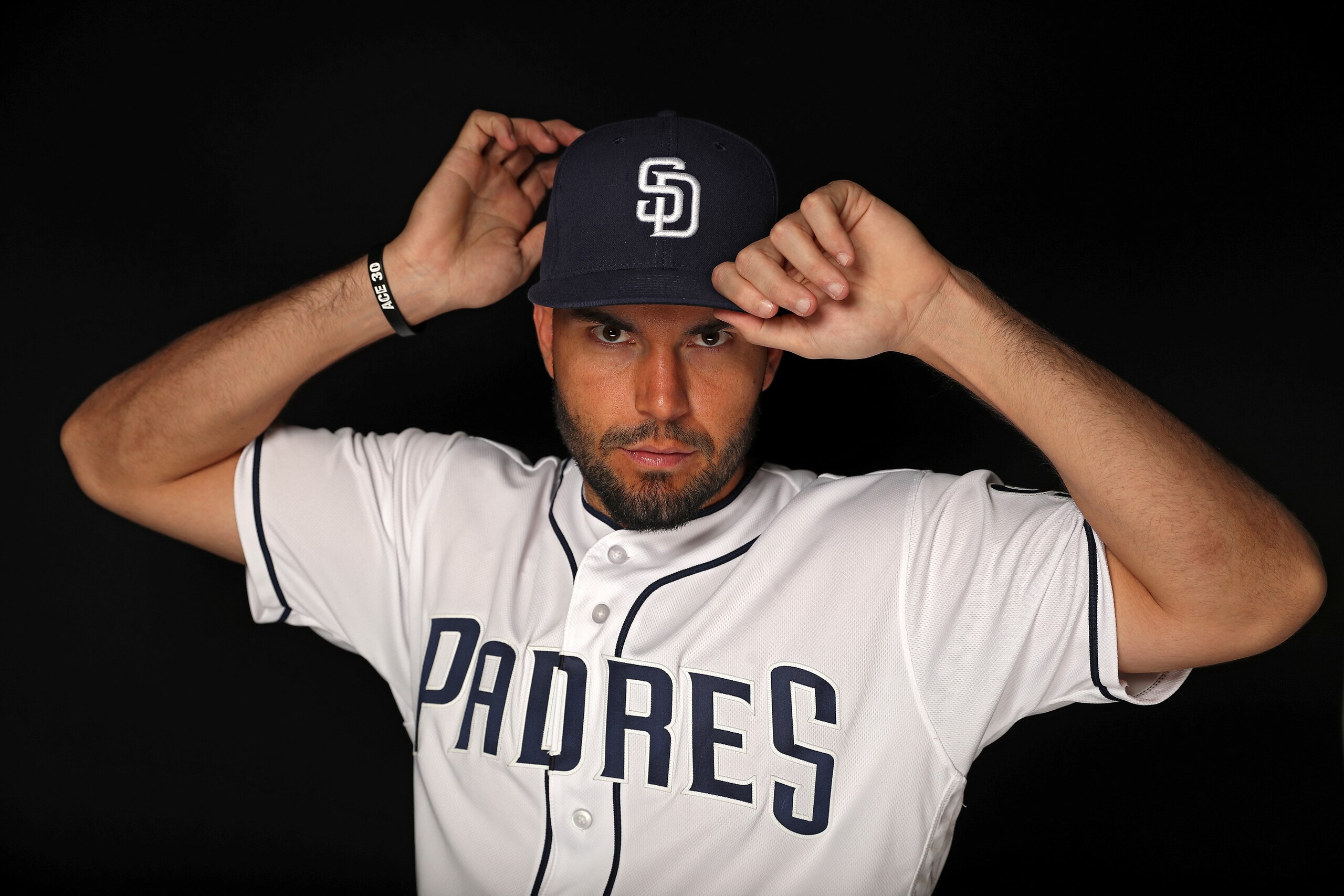
Some may disagree, but the San Diego Padres must view Eric Hosmer as a superstar. Although they're realistically at least another year or two away from contending, they broke the bank and gave the first baseman an eight-year, $144 million contract.
The Kansas City Royals replaced him with Lucas Duda—who wields a higher career OPS—for $3.5 million.
San Diego will relish its forward-thinking splash if Hosmer carries over last season's breakout. Along with tallying 25 homers for the second straight year, he posted a .376 weighted on-base average 21 points higher than his previous season high. Every part of his .318/.385/.498 slash line also set a new personal best.
A .318 batting average is hard for anyone to sustain, especially if that person possesses average speed and a 55.6 percent ground-ball rate. Hosmer has offered no yearly consistency, instead increasing or decreasing his average by at least 25 points every year.
Put it all together, and Hosmer is a career .284/.342/.439 hitter with a 0.0 or worse WAR in 2012, 2014 and 2016. He won't again sink to below-replacement value just because this is an even year, but he's also unlikely to become a dependable franchise cornerstone.
Aaron Judge, OF, New York Yankees
8 of 10
After hitting 52 home runs as a rookie, Aaron Judge may have nowhere to go but down.
How can the New York Yankees slugger top an MLB-best 8.2 WAR and a .430 wOBA that finished second behind Trout? The most probable outcome is that he doesn't.
A .284 batting average will be the toughest element of his meteoric breakout to sustain. Among all qualified hitters (minimum 502 plate appearances), only Joey Gallo, Javier Baez and Chris Davis recorded a lower contact percentage than Judge's 67.6.
He was also one of four qualified position players with a strikeout percentage above 30. Trevor Story, who regressed from 2016's power-fueled rookie breakout that masked his contact woes, led the trio with a .239 average.
None of the other 13 players with a strikeout percentage above 27 hit higher than .278.
Yet when Judge made contact, he made it count with an MLB-high average exit velocity of 94.9 mph, per Baseball Savant. He should avoid a steep collapse because of that thunderous contact, but he should still hit closer to the .250-.260 range with neutral batted-ball luck.
Even a superhuman slugger will struggle to keep clearing the fences on 35.6 percent of his fly balls. None of this means the August version of Judge will falter throughout an extended sophomore slump, but he will likely resemble a rich man's Khris Davis more than a legitimate MVP candidate.
Shohei Ohtani, SP/DH, Los Angeles Angels
9 of 10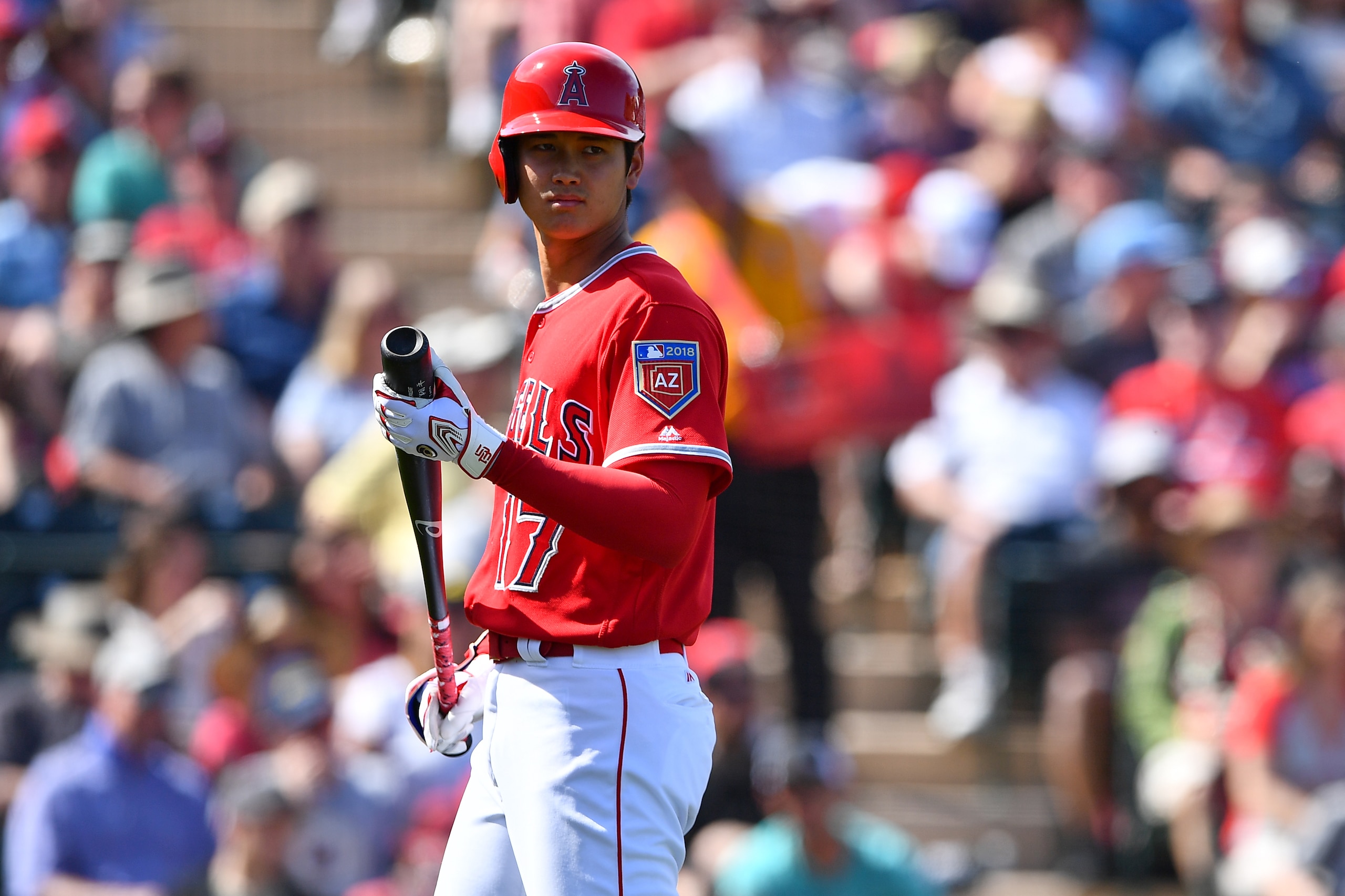
A rough spring training was the best thing that could have happened to Shohei Ohtani.
Thought Trout mentions set the bar too high for Acuna? Try getting compared to Babe Ruth. Because of his two-way prowess as a power hitter and pitcher, the Japanese star drew parallels to the Bambino before arriving in the United States.
Those giddy onlookers have since pumped the brakes. Instead of watching a player begin to forever change the sport, they have witnessed a 23-year-old struggle at both concentrations. At the plate, he batted 4-for-32 with a .347 OPS and 10 strikeouts. On the mound, he has surrendered nine runs (three homers) in 2.2 innings.
A slow start in games that don't count has shifted the discussion from "Will Ohtani lead the Los Angeles Angels to the playoffs?" to "Should Ohtani make the Opening Day roster?" According to Los Angeles Times' Jeff Miller, he will make his pitching debut on Sunday.
Per Jeff Fletcher of the Orange County Register, the MLB rookie was not overly concerned about that question.
"I feel like I've done everything I can to get ready for Opening Day," Ohtani said. "I felt like I've done everything 100 percent. Every year in Japan, I was never 100 percent on Opening Day. It's going to be gradual in the season. It will be the same this year."
Although a disappointing spring has forced onlookers to temper expectations, one strong April outing can restart the hype machine. In order to avoid a letdown, Angels fans should still adjust their hopes to Ohtani offering 140-160 solid innings with a high strikeout rate but making minimal offensive impact.
Alex Wood, SP, Los Angeles Dodgers
10 of 10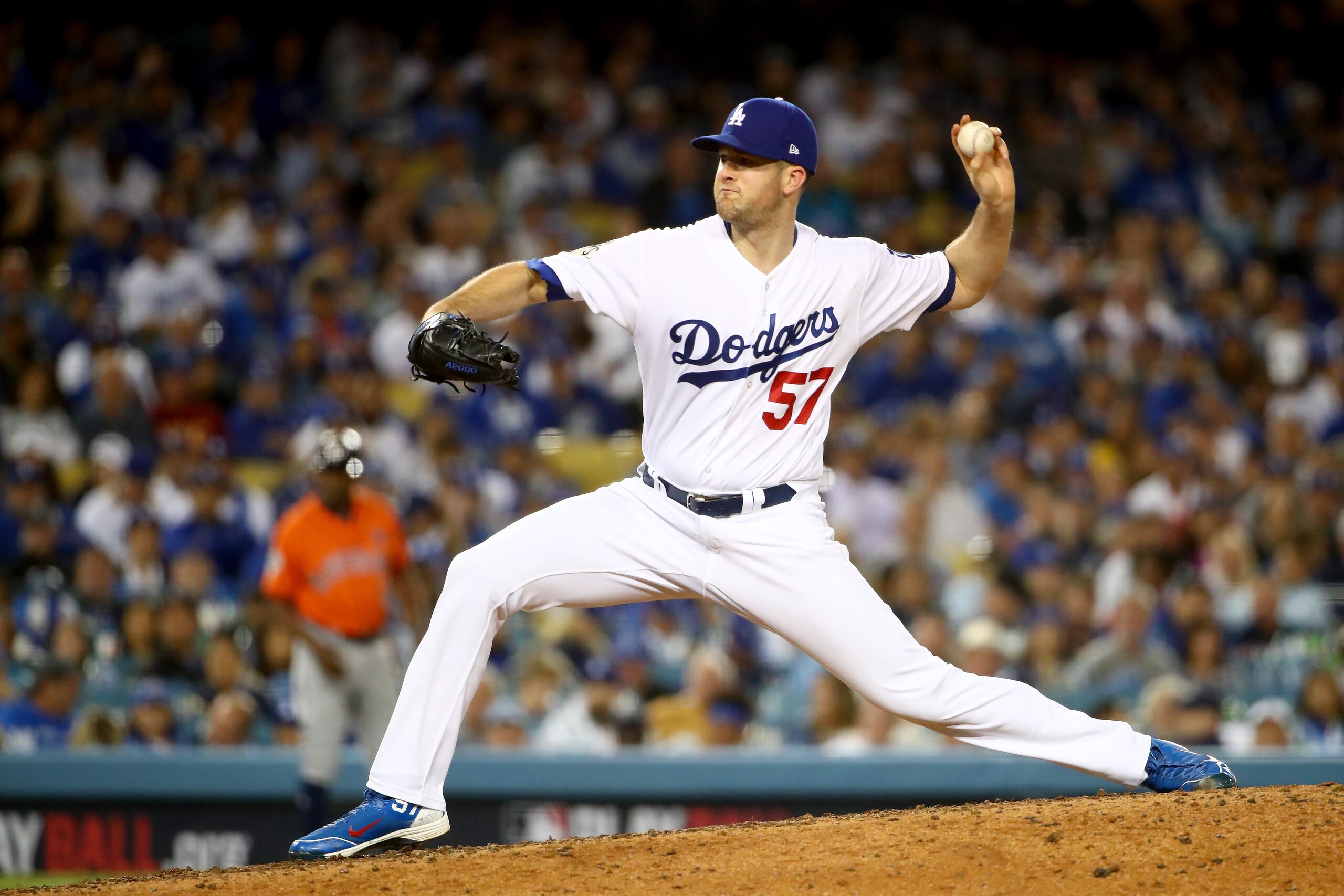
For half the season, Alex Wood was arguably MLB's best pitcher.
In 13 starts before the All-Star break, the southpaw posted a 1.67 ERA and 0.89 WHIP. Opponents hit .174 against Wood, whose 24.4 strikeouts-minus-walks percentage ranked fifth behind Max Scherzer, Chris Sale, Corey Kluber and Clayton Kershaw.
The latter portion of 2017 offers little encouragement for an encore.
His second-half ERA bloated to 3.89 ERA, but that's the least alarming part of Wood's summer. His fielding independent pitching skyrocketed from 2.04 to 4.76 because of his strikeout percentage plummeting from 30.9 to 18.0.
As illustrated by Brooks Baseball, his average velocity consistently declined throughout the season. Diminished speed led to his inducing fewer whiffs on his changeup and curveball down the stretch.
These trends are especially concerning from an often-injured pitcher who has an average of 143 innings over the last four seasons. He also yielded four home runs in two postseason starts, so the Dodgers will have to closely monitor his workload.
Given the Dodgers' depth and tendency to frequently use the 10-day disabled list, Wood may once again top out between 150 and 160 innings while rarely working beyond the sixth frame. These practices could preserve his health and efficiency but prevent him from morphing into a legitimate No. 2 starter behind Kershaw.
All advanced stats courtesy of FanGraphs unless otherwise noted.


.jpg?w=2560 "Rodgers Iced Out on Plane 💎")
.jpg?w=2560 "Raiders Could Start Mendoza")

.jpg?w=2560 "🚨 Week 8 AP Top 25 Poll")
.jpg?w=2560 "Packers Safety Slams Refs 🤬")

.jpg?w=2560 "Lamar Being Out Shocked Ravens")

.jpg?w=2560 "Mahomes Told Teammate to Leave Meeting")