

As front offices bring in new acquisitions, they simultaneously must evaluate their overall rosters, trim exorbitant contracts and work out trade deals for starters who may not fit into their long-term plans.
The first wave of free agency typically prompts secondary roster transactions. In some cases, it's best to recoup cap savings on a contract, especially when there's no dead money owed on the remainder of said deal. An abundance of talent at a position also allows teams to shop certain players on the trade market.
General managers will continue to fill voids during the 2018 NFL draft in April, which makes ineffective players expendable.
In several cases below, cash-strapped teams may consider cutting a player to give themselves more financial freedom to pursue available free-agent talent. In other scenarios, the club may shop a player with value to acquire help in other spots.
Which players could cross the transaction wire in the coming weeks? Who may be on the trade block? Let's dive in.
Traded: C.J. Anderson, RB, Denver Broncos
1 of 8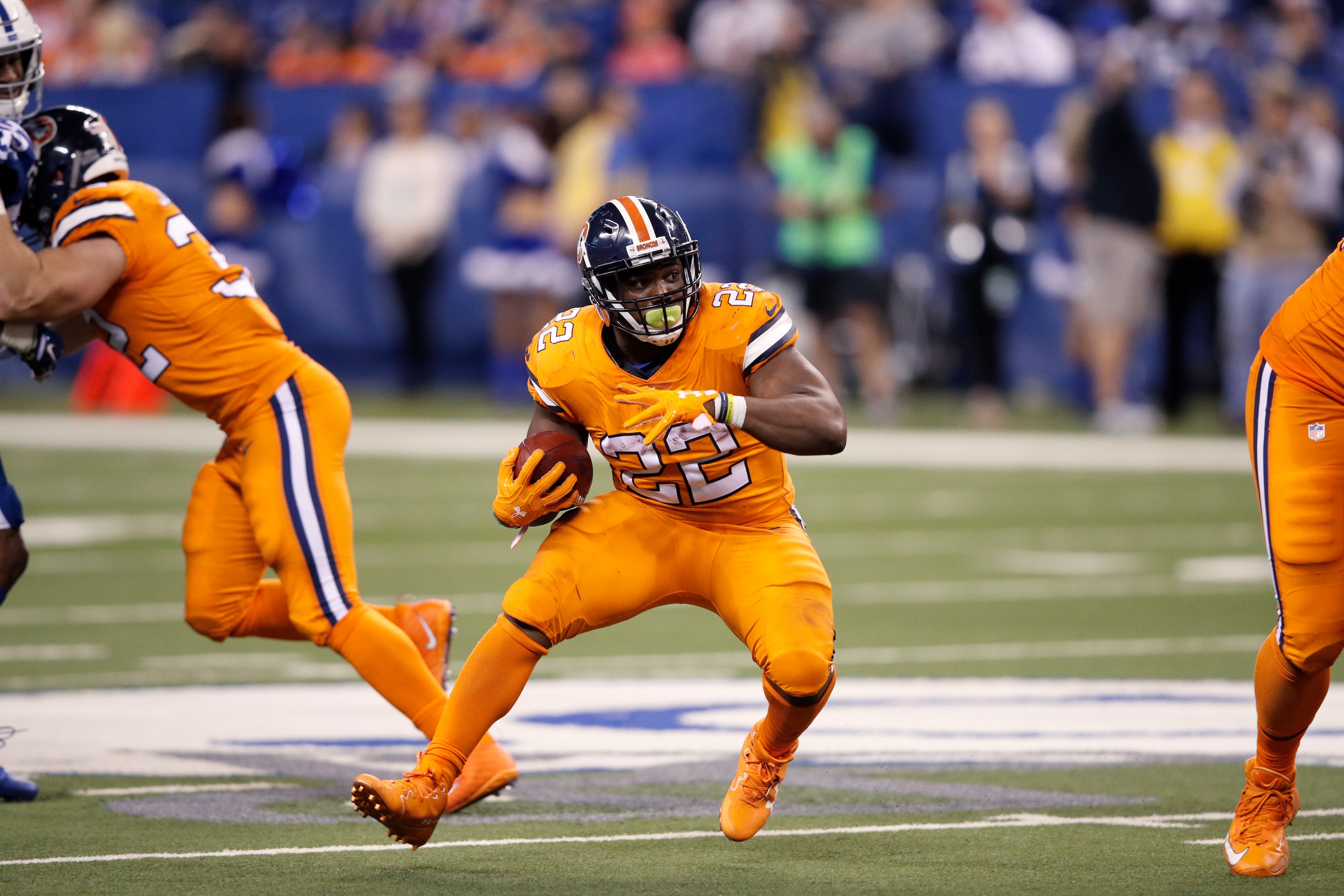
The Denver Broncos should acquire offensive assets as opposed to sending them away, but 9News reporter Mike Klis reported the team is willing to listen to trade offers for running back C.J. Anderson, who ran for 1,007 yards in 2017.
Denver may be able to land a decent offensive lineman in exchange for Anderson, who's coming off his best season, plus a draft pick. The incoming rookie class features quality ball-carriers who might remain on the board through the fourth round. A rookie prospect would pair with Devontae Booker to lead the backfield.
Barring a trade package that includes a potential starter on the offensive line, the Broncos should retain their leading rusher. At this point, front office executive John Elway must focus on building around new starting quarterback Case Keenum.
The Minnesota Vikings went 13-3 with Keenum, a strong defense, two quality receivers and an effective ground attack. Even without cornerback Aqib Talib, the Broncos check those boxes. While Anderson may be on the trade block, Denver's brass should recognize his value to the offense.
Cut: Brandon Marshall, WR, New York Giants
2 of 8
The New York Giants currently have roughly $7.7 million in available cap space. It's fair to expect general manager Dave Gettleman to initiate more contract restructures, cuts or trades.
Gettleman should start with 34-year-old wideout Brandon Marshall, who underwent season-ending ankle surgery after appearing in five contests last season. When on the field, he didn't provide much relief in the passing game while fellow wide receiver Odell Beckham Jr. battled through an ankle injury.
The Giants would save more than $5.1 million by releasing Marshall. Due to tight end Evan Engram's emergence in the offense, cutting Marshall wouldn't limit quarterback Eli Manning's options in the pocket.
Big Blue needs to recoup some cash. Though $5.1 million isn't a fortune, the extra financial capital would allow the front office to pursue low-cost free agents at other positions of need.
Cut: Randall Cobb, WR, Green Bay Packers
3 of 8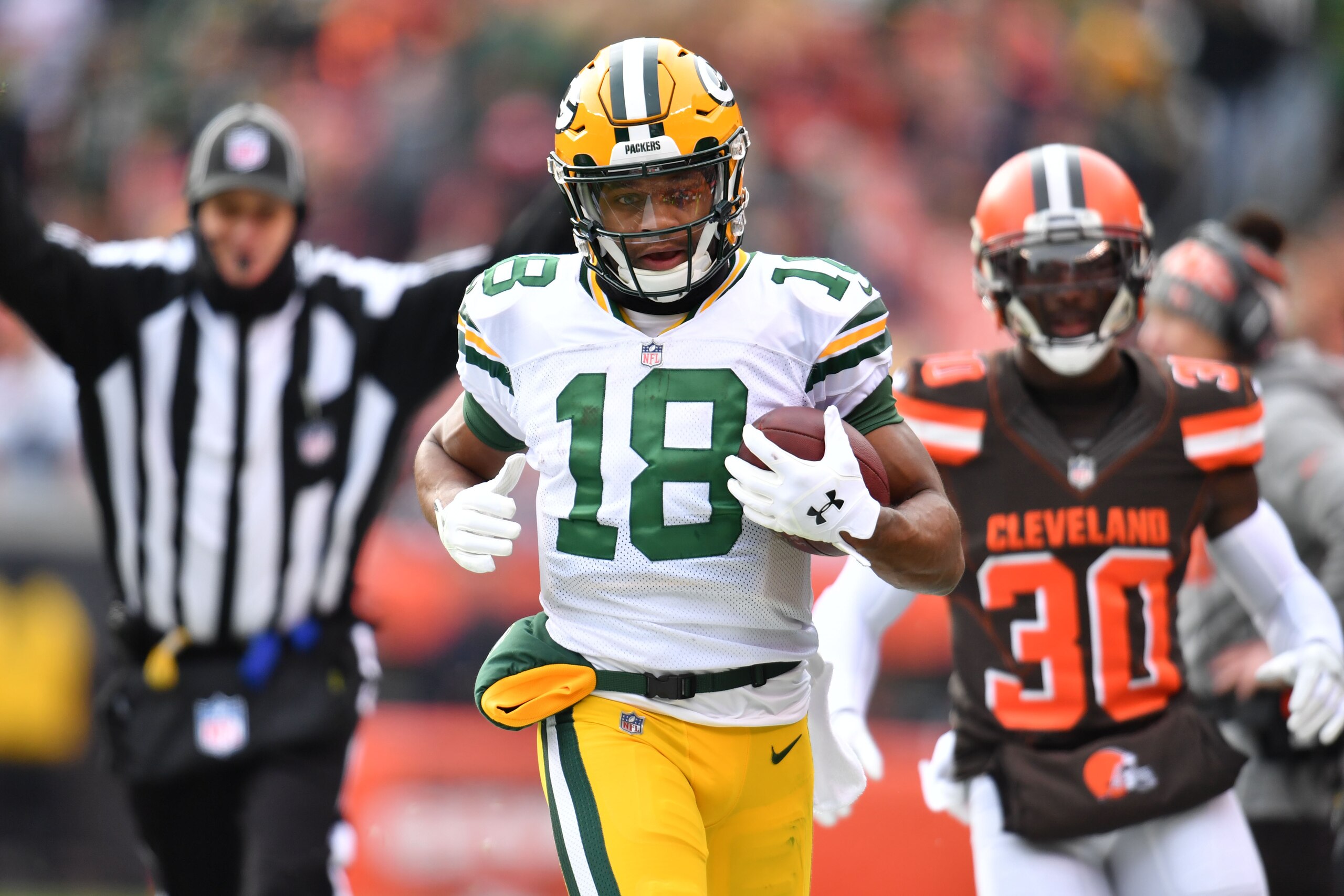
Quarterback Aaron Rodgers wouldn't like the idea of losing two longtime wide receivers, but it's all business.
Randall Cobb carries a $12.7 million cap hit. His 2018 salary ranks ninth among all wide receivers. Though he's banking No. 1 wideout money, he recorded fewer than 700 yards and four touchdowns in back-to-back seasons.
In Cobb's defense, his numbers took a hit with quarterback Brett Hundley under center for more than half of the 2017 season, but he trails Davante Adams in overall targets over the past two seasons, 238-176.
There's no good reason for Green Bay to pay a primary slot receiver like a No. 1 option, especially when his yards-per-catch average has dropped by more than four yards since 2014.
The Packers and Cobb can avoid a split if the 27-year-old agrees to a pay cut. Barring that, Green Bay could expunge his bloated salary—saving nearly $9.5 million in the process—and draft another receiver to fill the void.
.jpg?w=2560 "Rams Raiders Football")

.jpg?w=2560 "Steelers Saints Football")
Cut: Jared Cook, TE, Oakland Raiders
4 of 8
After a quiet start to the offseason, Oakland Raiders head coach Jon Gruden's preference for older players during free agency is raising some eyebrows.
Age-wise, 30-year-old tight end Jared Cook fits Gruden's strategy of acquiring or retaining experienced assets. He led the team with 688 receiving yards this past season, his highest total since he racked up 759 receiving yards with the Tennessee Titans in 2011.
With that in mind, why would the Raiders cut him?
For one, Gruden seems intent on remodeling the offense. The Raiders replaced wideout Michael Crabtree with Jordy Nelson. They sent fullback Jamize Olawale to the Dallas Cowboys and signed fullback Keith Smith in his place. They also hosted a visit with wideout Eric Decker, per The Athletic's Vic Tafur.
The Raiders signed eight free agents last offseason, but Cook is the only from that group who's still on the active roster. Cutting him would free up nearly $5.7 million in cap space, which could enable Oakland to spend money elsewhere and draft a rookie tight end to compete for the starting gig.
Traded: Coby Fleener, TE, New Orleans Saints
5 of 8
The New Orleans Saints wanted to reunite quarterback Drew Brees and Jimmy Graham, according to NFL Network's Ian Rapoport, but the Packers swooped in and signed the 31-year-old tight end before that could happen.
The Saints also expressed interest in tight end Austin Seferian-Jenkins, per NFL Network's Mike Garafolo, before he signed with the Jacksonville Jaguars.
Graham and Brees already have familiarity with one another, having played together for the first five years of the former's career. This past season in Seattle, Graham caught 10 touchdown passes, leading all tight ends. He would've elevated an already explosive Saints offense.
New Orleans' desire to acquire Seferian-Jenkins is what should put Coby Fleener on notice.
Fleener landed on injured reserve with a concussion after 11 games this past season, and he was inconsistent while active. In five of his 11 outings, he finished with one catch or left the field empty-handed.
For the season, Fleener finished with 295 receiving yards and two touchdowns, a disappointment for a tight end with an $8 million cap hit in 2018. Brees' ball distribution lessens his impact as a receiving threat, especially given the emergence of breakout rookie running back Alvin Kamara.
Expect the Saints to actively try to move Fleener's contract in the next few weeks.
Cut: Cliff Avril, DE, Seattle Seahawks
6 of 8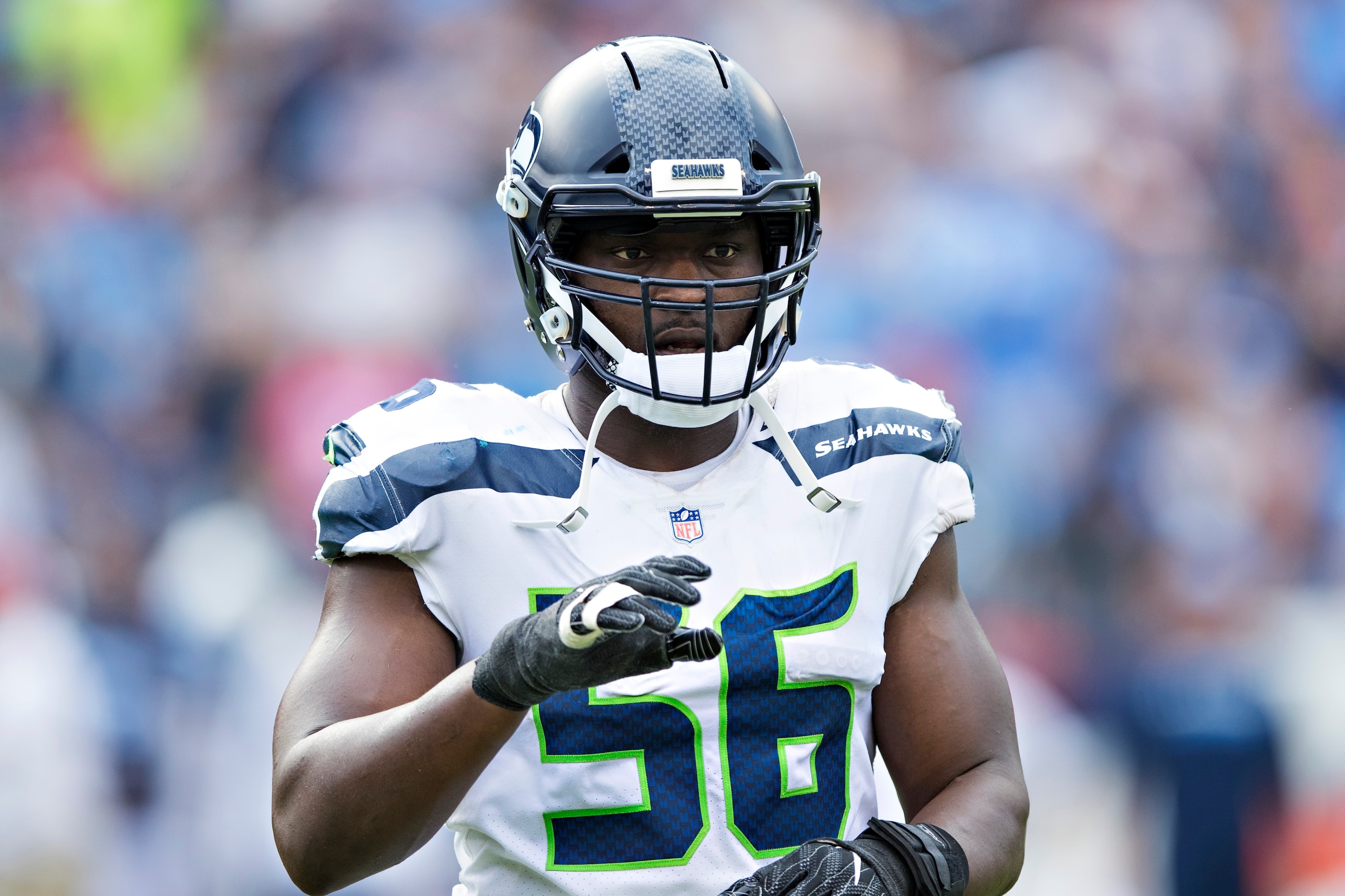
A career-threatening neck injury sidelined Seattle Seahawks defensive end Cliff Avril for 12 games this past season. He underwent surgery and still hopes to play again, but that's far from definite.
When healthy, Avril wreaked havoc as a primary pass-rusher. He led the team with 11.5 sacks during the 2016 campaign, and he's recorded 74 over a decade with the Detroit Lions and Seahawks.
Regardless, Avril's neck injury is likely to close his chapter in Seattle.
He'll turn 32 years old in April and is headed into a contract year. Without a clear pathway to the field, the Seahawks could cut the All-Pro defensive end and save $7.1 million in cap space. According to CBS Sports salary-cap expert Joel Corry, the Seahawks would have a "$1.15 million cap charge for injury protection" if the ailment ends Avril's career.
Either way, Seattle can save a significant amount of cap space by releasing Avril. General manager John Schneider could use the savings to revamp a defense that's lost several key players over the past few weeks.
Traded: Mychal Kendricks, LB, Philadelphia Eagles
7 of 8
This isn't news to Philadelphia Eagles fans, but the team will once again shop linebacker Mychal Kendricks after re-signing Nigel Bradham, per Rapoport.
The Eagles' signing of linebacker Corey Nelson raised questions about Kendricks' prospective role as a starter, per 97.5 The Fanatic host Geoff Mosher.
This past offseason, Kendricks wanted to part ways with the team via trade or release, per Philadelphia Inquirer reporter Jeff McLane. That didn't happen, and he performed at an optimal level in a Super Bowl run.
The Eagles would recoup more cap space in a post-June 1 trade as opposed to a pre-June 1 move, but a good offer before the draft could push the front office to approve a deal within the coming weeks.
Philadelphia's strong defensive front should mask a key loss at the linebacker position if the Eagles do trade Kendricks. Whether it's Nelson or a draft pick who winds up replacing him, the front seven would remain one of the best in the league.
Traded: Eli Apple, CB, New York Giants
8 of 8
Giants head coach Pat Shurmur and Gettleman wiped the slate clean for cornerback Eli Apple, who went through a tumultuous 2017 season on the field and rubbed teammates the wrong way in the locker room.
Back in December, safety Landon Collins called Apple out on The Michael Kay Show on 98.7 FM.
"There's one corner that...he needs to grow up, and we all know who that is," Collins said, clearly referring to Apple. "That would be the only person I would change out of our secondary group. The other two guys, [Dominique Rodgers-Cromartie] and [Janoris Jenkins], I love those two guys."
Collins apologized for his comments, and the Giants already cut Rodgers-Cromartie after he refused to take a pay cut. Despite Apple's blank slate, when a two-time Pro Bowler and leader in the secondary speaks, teammates and personnel executives listen.
Gettleman and Shurmur won't condemn Apple for his past mistakes, but that doesn't mean he isn't available via trade.
Big Blue holds the No. 2 overall pick in the draft. Teams willing to move up may also have interest in Apple, along with the pick, in exchange for a mammoth package deal. A suitor could throw in a linebacker or offensive lineman to sweeten the offer.
Team and player salary-cap information via Spotrac and Over the Cap.
.jpg?w=2560 "Cowboys Packers Football")
.jpg?w=2560 "Dolphins Jets Football")



.jpg?w=2560 "🚨 Week 8 AP Top 25 Poll")
