
NFL Combine 2018: Players Who Could Explode This Weekend
After touching on the NFL Scouting Combine's hidden gems and prospects with the most to prove, we turn to those who'll do the most for their draft stocks this weekend at Lucas Oil Stadium in Indianapolis. We'll focus on fringe Day 1 to Day 2 prospects who are fluid on draft boards but have a strong potential to rise.
These players have an athletic background, which should either show up in explosion drills, such as the jumps and 40-yard dash, or agility drills, like the shuttle and three-cone.
Get used to these combine risers, as news and hot takes about them could blow up your Twitter feed all weekend.
Lamar Jackson, QB, Louisville
1 of 8
Every year it's the same story with the quarterback position. Anonymous scouts start with cold feet regarding the dual-threat passer in the class. Be it Cam Newton in 2011 or Deshaun Watson in 2017, the athletic spread quarterback is always underrated and rises after the tide turns in Indianapolis.
This year's version is Louisville's Lamar Jackson, who is typically projected as the draft's No. 5 or 6 quarterback behind USC's Sam Darnold, UCLA's Josh Rosen, Oklahoma's Baker Mayfield, Wyoming's Josh Allen and Oklahoma State's Mason Rudolph. The media is still questioning whether Jackson can play the position, which Kansas City Chiefs head coach Andy Reid even scoffed at in the first leg of combine interviews this week.
Mike Glennon essentially signed a one-year, $18.5 million contract last year to be a Chicago Bear. To put that into perspective, that's a bigger number than all but 14 cap hits last season, per Spotrac. If Glennon is worth that, it's clear Jackson will have a market as a first-round pick.
The two-time Heisman Trophy finalist with 119 college touchdowns may have to run a 4.5 40-yard dash to open eyes, but that is exactly what he'll do throughout the draft process.
Christian Kirk, WR, Texas A&M
2 of 8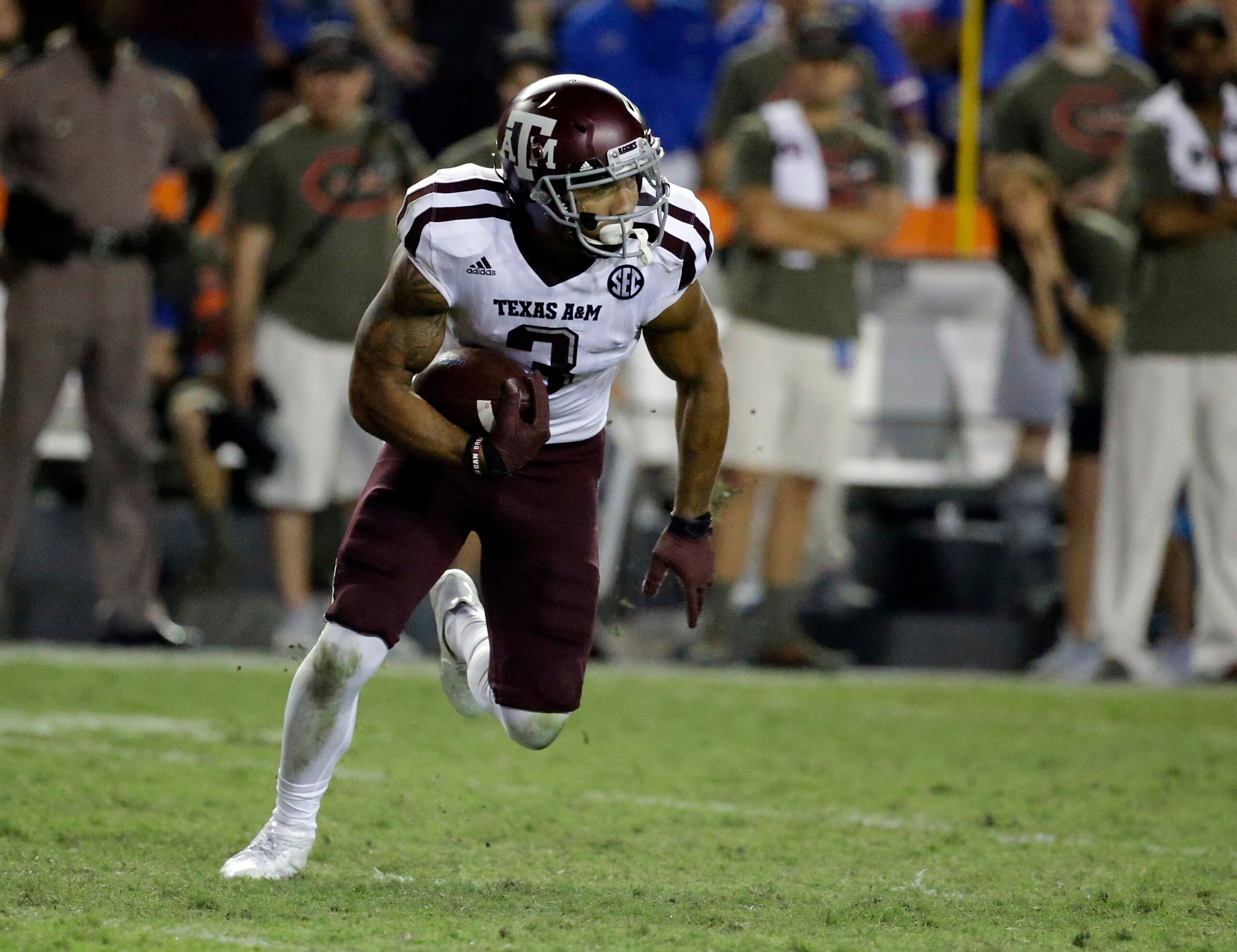
A two-time All-SEC wide receiver, Texas A&M's Christian Kirk is far from a diamond in the rough. Still, Kirk's declining production (1,009 yards as a freshman, 928 yards as a sophomore and 919 yards as a junior in 2017) is concerning.
But there's plenty of time to make up ground in a receiver class that lacks a consensus order after Alabama's Calvin Ridley. If not for the bump Washington receiver John Ross got for running a record-breaking 4.22-second 40-yard dash in Indianapolis last year, the Cincinnati Bengals wouldn't have selected him in the top 10. At this point in 2017, Ross wasn't considered a consensus top-20 selection.
Kirk has made a living as an underneath route-runner, notably as a slot receiver (12.2 yards per reception for his career). Texas A&M rarely used his deep speed, but NFL Draft Scout lists the former Aggie with the fastest projected 40-yard dash time in the class at 4.39 seconds. If he can convince the scouting world he was underused or misused in college, Kirk could have a rise similar to Ross'.
Dante Pettis, WR, Washington
3 of 8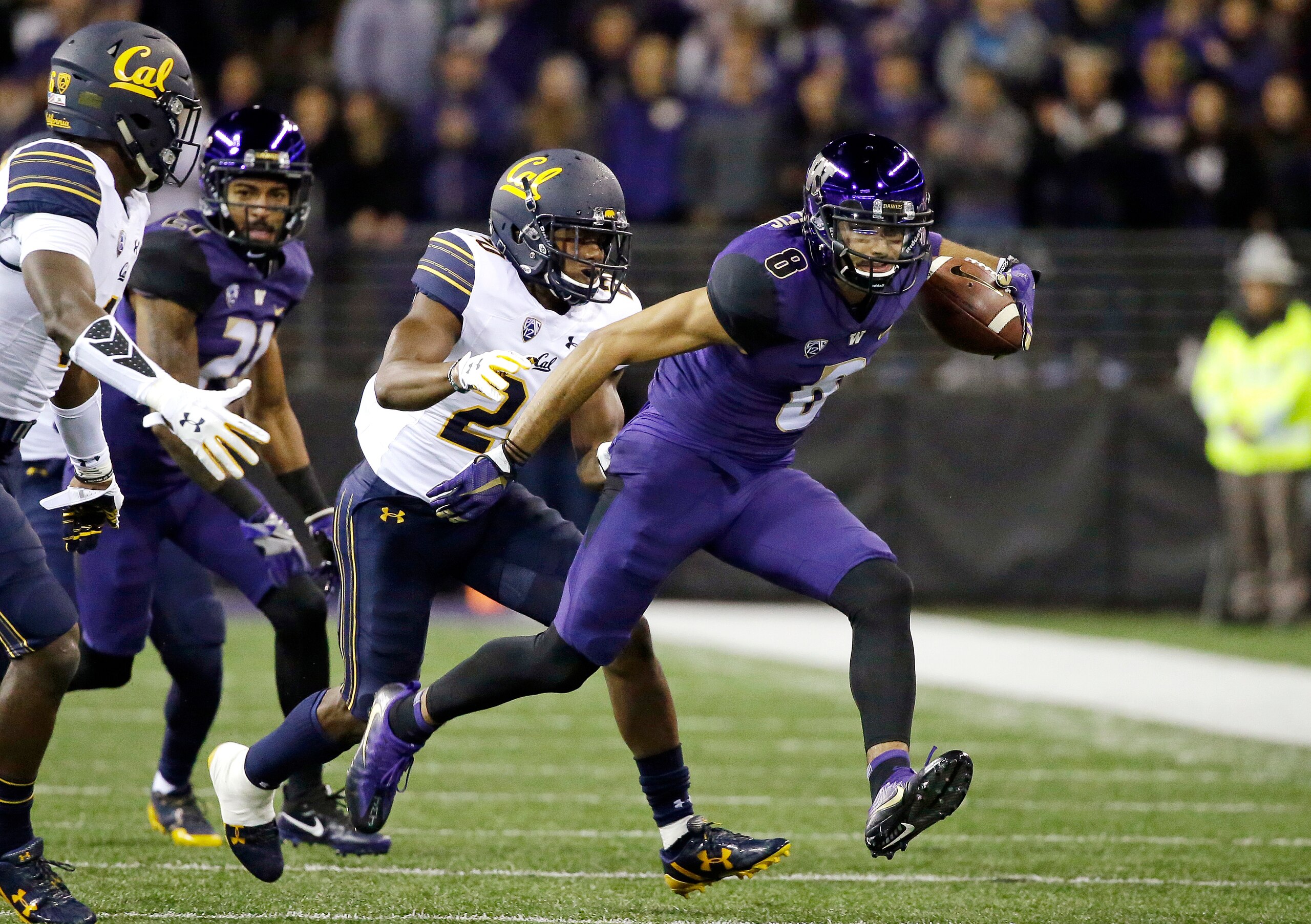
Washington's Dante Pettis left college football with the most punt return yardage recorded in the FBS since 2010 (No. 23 all-time) and an FBS record nine punt return touchdowns. While long-speed skill players thrive on kick returns, the make-you-miss nature of punt returns is more about quickness than speed.
It's not a coincidence that a high-end NFL slot receiver like Wes Welker is first all-time in college punt return yardage and is second behind Pettis in punt return touchdowns. It also shouldn't surprise you that Danny Amendola, another receiver who wins with quickness, is one of the few in college football history to record more punt return yards than Pettis.
Between Pettis' punt success and his 22 touchdown receptions over the last two years, it's clear he'll win with quickness. You want him returning punts. You want him in short-yardage situations. You want him in compressed spaces, such as the red zone. Like Welker and Amendola, expect that to show up for Pettis in the three-cone drill and short shuttle.
.jpg?w=2560 "Rams Raiders Football")

.jpg?w=2560 "Steelers Saints Football")
Tim Settle, DL, Virginia Tech
4 of 8
Humans who weigh 330 pounds should only move so quickly. If there's anyone in this class who's close to a Dontari Poe- or Haloti Ngata-level athlete, it's Virginia Tech's Tim Settle.
The nose tackle moves like an under tackle, meaning he can play both NFL defensive tackle roles. Only a redshirt sophomore, he's raw, but his upside is going to be too much of an enticement for him to make it out of the top 60 picks.
Every time someone runs at the combine, his time is filtered through the context of size. We don't judge linebacker prospects by the same standard we judge receivers. Settle (6'3", 335 pounds) is more than 30 pounds heavier than some of the defensive tackles in Indianapolis and will still outjump and outrun them.
Particularly for defensive linemen, who are in three-point stances and are exploding forward on almost every down, athletic measurables can be crucial. If Solomon Thomas didn't jump out of the gym last year with a 35-inch vertical, he wouldn't have been the draft's third overall pick. Settle has the potential to be the combine riser in this class.
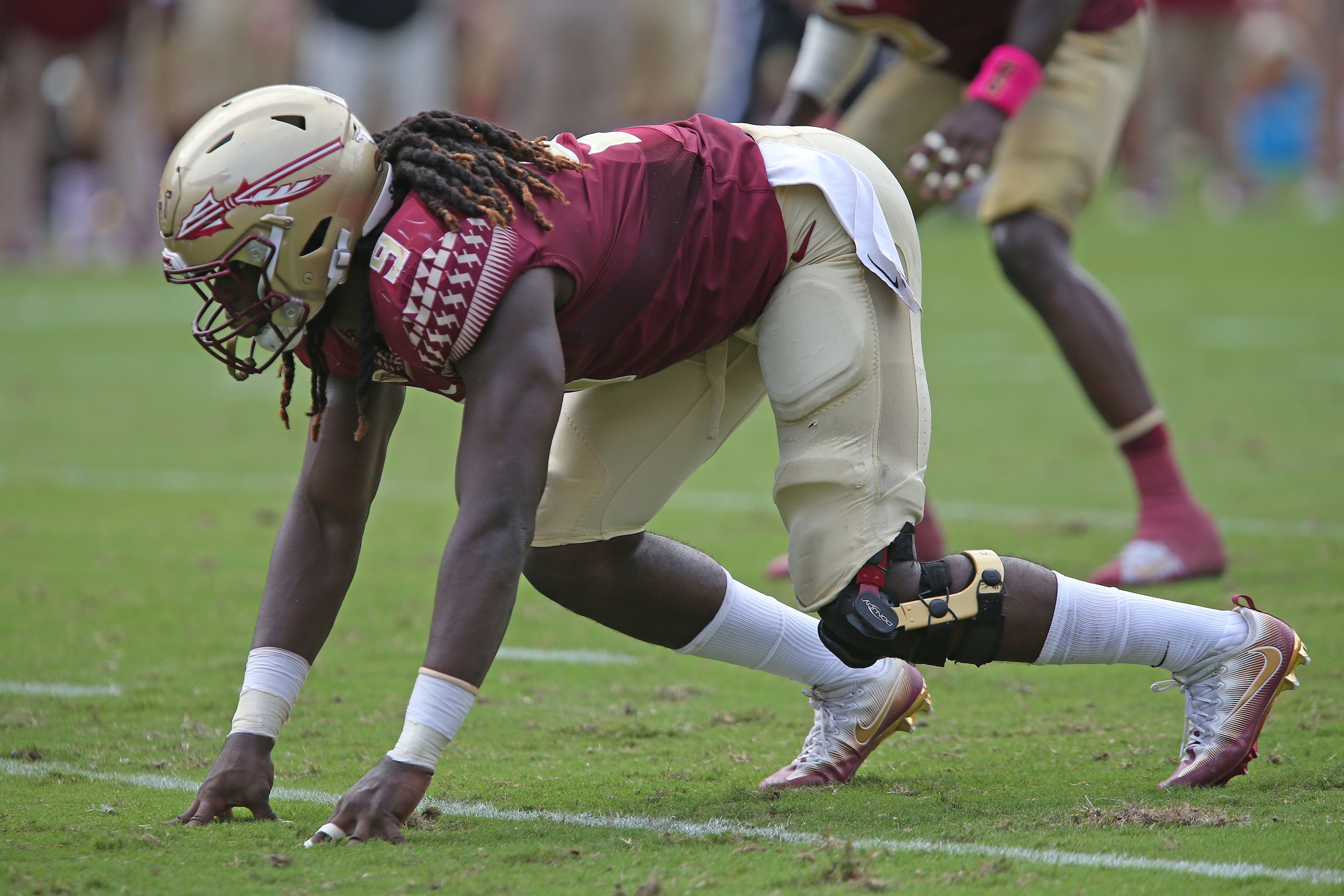
Josh Sweat, Edge-Rusher, Florida State
5 of 8
Josh Sweat went to Florida State in 2015 as one of the nation's biggest recruits. And after suffering knee issues early in his Tallahassee stint, he finished his college career with 14.5 sacks and 29 tackles for loss.
Sweat can get off the ball quickly, has heavy hands for his size (6'4", 250 lbs) and knows how to cross an offensive tackle's face. Those are advanced traits for a college pass-rusher. In some ways, his style is similar to Jadeveon Clowney's when he came out of South Carolina in 2014.
Sweat could have a similar combine to Clowney's, where drills that measure explosive power (40-yard dash, 10-yard split, vertical jump and broad jump) fall under Sweat's strengths, while he's average at the three-cone drill, which measures flexibility.
According to ESPN.com, Sweat ran a 4.46-second 40-yard dash in high school, recorded a 38-inch vertical jump and posted the best SPARQ rating in his class (148.17). If he does that in Indianapolis, heads will turn.
Denzel Ward, CB, Ohio State
6 of 8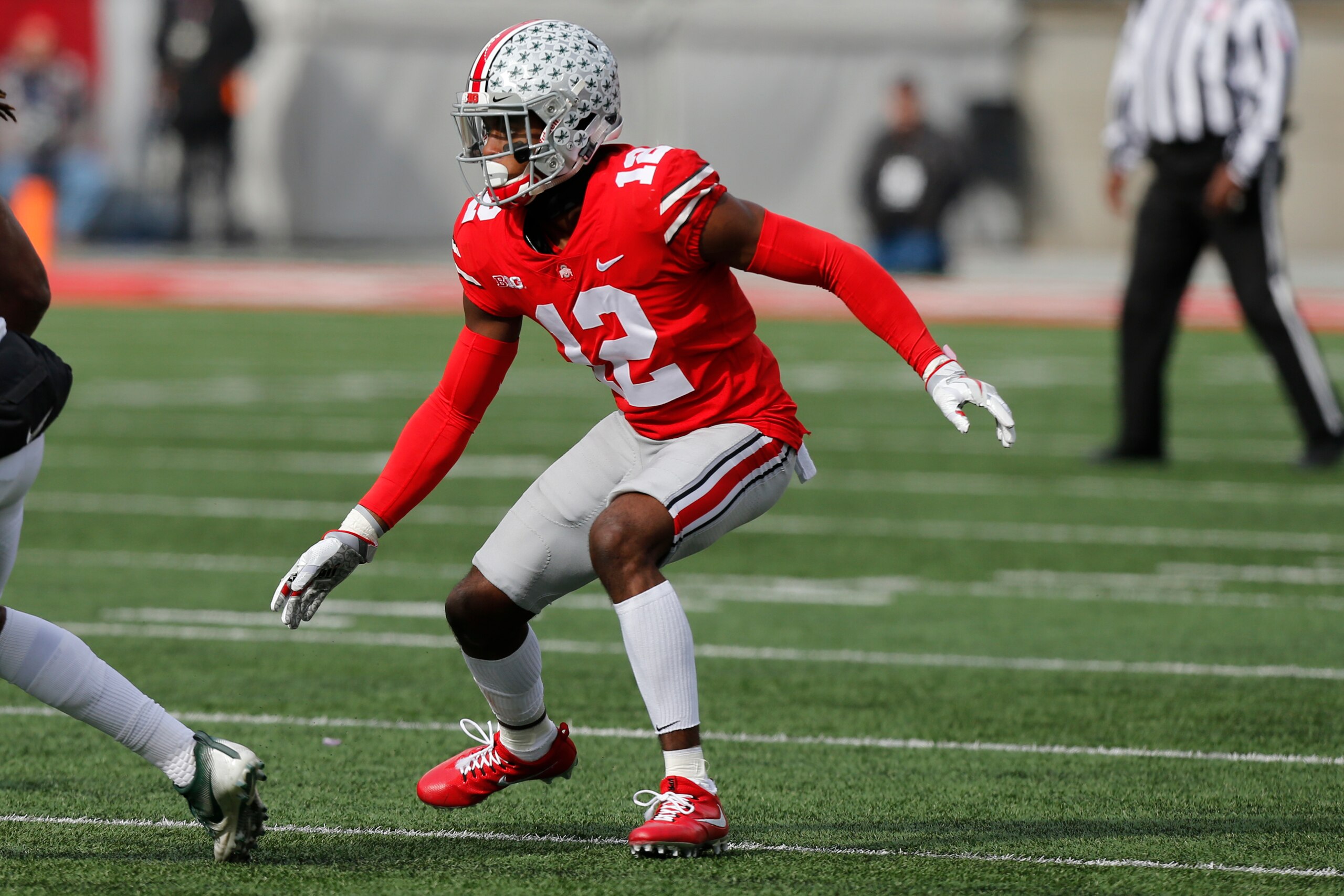
Denzel Ward will be one of the draft's more interesting test cases. Smaller cornerbacks who've been drafted high haven't fared well in the last decade or so. Even Jason Verrett (5'10", 188 lbs), a 2014 first-round cornerback from TCU, has looked good when on the field for the Los Angeles Chargers but struggles to stay on it.
Ward is the closest thing we've seen to Verrett since.
NFL Draft Scout lists him at 5'9"-plus with a projected 4.37-second 40-yard dash, which is the best mark of any cornerback in the class. Depending on what Minkah Fitzpatrick, a safety from Alabama who many expect to convert to cornerback, and Josh Jackson, a ball-skills cornerback from Iowa who may not have elite wheels, run, Ward could emerge from Indianapolis as the draft's top cornerback prospect.
According to MockDraftable, only three corners in last year's class ran a 4.36-second 40-yard dash or better: Jalen Myrick, Fabian Moreau and Ward's former Ohio State teammate Marshon Lattimore, who earned Pro Bowl and Defensive Rookie of the Year honors in 2017. It would be impossible not to talk about Ward's rise if he posts a 40-yard dash in that range.
Darius Phillips, CB, Western Michigan
7 of 8
As a freshman at Western Michigan, Darius Phillips posted 479 receiving yards for the Broncos. After transitioning to cornerback, he recorded 12 interceptions (five returned for a touchdown) and 35 pass deflections. As a returner, he's fifth in FBS history in kick return yards and tied for ninth in kick return touchdowns.
The only defensive backs to record more kick return touchdowns than him were Duke's Devon Edwards, who never ran at his combine or pro day because of an ACL tear, and Oklahoma State's Justin Gilbert, who ran a 4.37-second 40-yard dash. Kick returns, which value long speed over quickness, could be tipping off Phillips' combine rise.
The All-MAC player did a little of everything in his college career, but he consistently stands out as a playmaker with the ball in his hands. Listed at 5'10" but likely a bit shorter, the combine is a perfect time for Phillips to convince teams that his speed could translate not only as a kick returner but as a playmaking slot defender or free safety.
Derwin James, DB, Florida State
8 of 8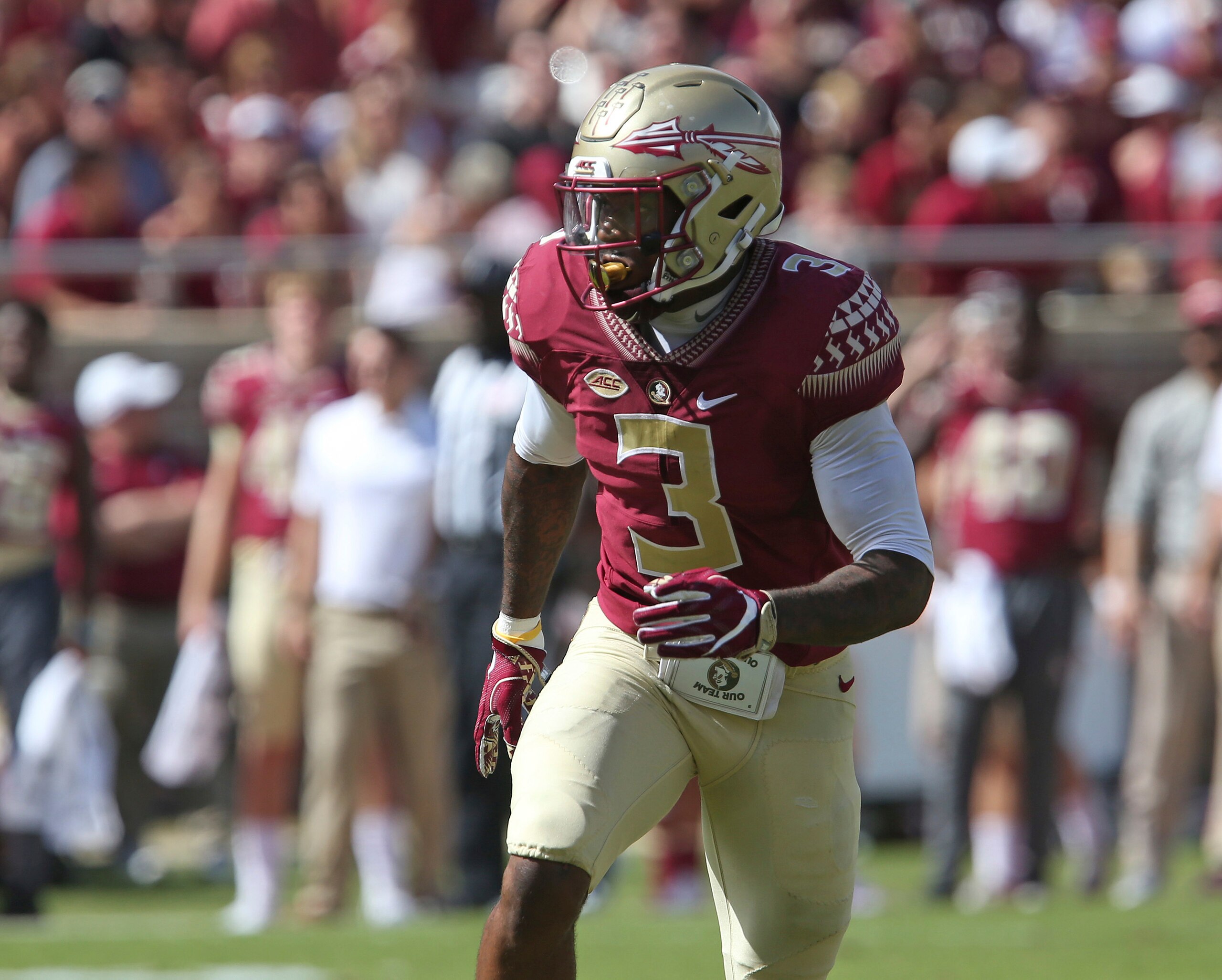
All-American safety Derwin James declared for the NFL draft as a redshirt sophomore. Leaving Florida State with 186 tackles, 5.5 sacks, 15 tackles for a loss, three interceptions and 15 pass deflections, he has an all-around game built for the matchup-based NFL.
The big question is where he'll play. On film, he's shown he can line up anywhere between the hashes. A great combine performance could cause general managers to think more creatively, though. For example, Arizona State alum Damarious Randall was a college safety, but a 4.46-second 40-yard dash in 2015 led to his conversion to cornerback for the Green Bay Packers.
The post-combine cornerback shuffle is always one of the bigger shifts because of the position's emphasis on athleticism. Alabama safety Minkah Fitzpatrick, 5'10" Ohio State cornerback Denzel Ward and Iowa zone cornerback Josh Jackson form the top tier on media draft boards. If James runs a 40 in the 4.4 range, teams might think about including him in an inexperienced cornerback class.
.jpg?w=2560 "Cowboys Packers Football")



.jpg?w=2560 "🚨 Week 8 AP Top 25 Poll")