


With the Philadelphia Eagles' 41-33 victory over the New England Patriots in Super Bowl LII in Minneapolis, we have officially closed the book on the 2017 NFL season.
But the league is in perpetual motion. As soon as teams close the book on one year, they open it on another.
One of the first orders of business in 2018 (outside of the NFL Scouting Combine) is free agency, which is a double-edged sword.
Teams have the possibility of adding impact players to put themselves over the top. But, if they sign the wrong players—or even the right player to the wrong deal—free agency can be a multimillion dollar anchor around their necks.
We're going to focus on the latter group. Is every player listed here certain to backfire on the NFL team that spends big to obtain his services?
Of course not. There are no guarantees in the NFL.
There's enough risk involved with each of them, however, to believe there will be as many misses as hits once checks start getting cut.
Kirk Cousins, QB, Washington Redskins
1 of 10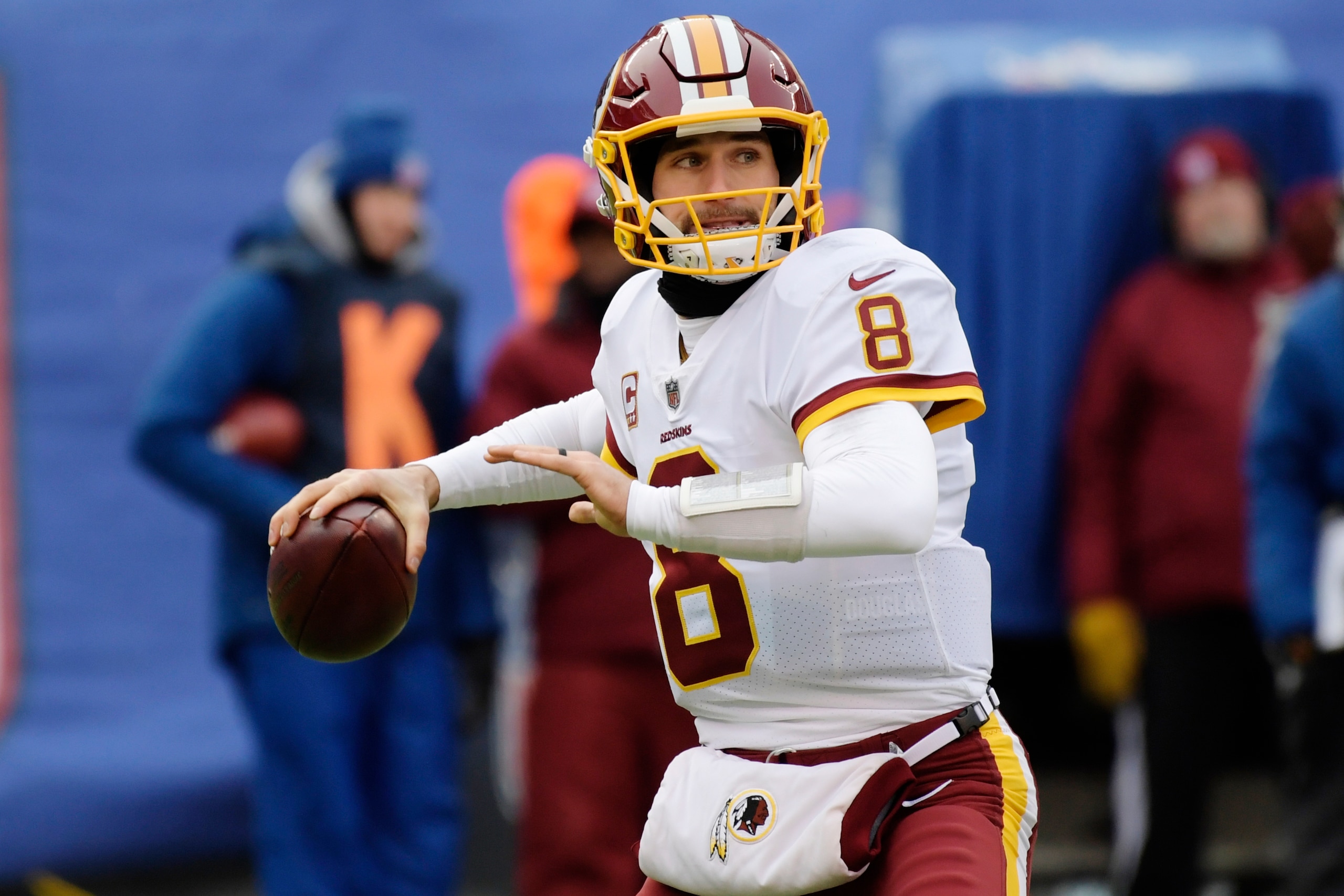
There isn't going to be a more sought-after free agent this spring than Kirk Cousins.
Yes, according to ESPN's Adam Schefter, the Washington Redskins are considering a tag-and-trade with Cousins, but that would be a $34 million gambit.
In other words, it's not going to happen.
If the 29-year-old Cousins hits the open market, it's possible he will land a contract that makes him the highest-paid player in the history of the National Football League (well over $100 million total with roughly $30 million per season).
It would be the ultimate display of desperation by a QB-needy team. It could also be a franchise-crippling disaster.
Cousins is admittedly coming off a decent season. He threw for 4,093 yards and 27 touchdowns in 2017 while completing 64.3 percent of his passes with a passer rating of 93.9.
That's not bad—especially when you consider that Washington's wide receivers were a bit of a mess last season.
There are some red flags with Cousins, though.
The quarterback has topped 4,000 passing yards in each of the last three seasons, with 81 touchdowns and 36 interceptions, but his completion percentage and passer rating have both declined every year over that span. His QBR of 52.3 ranked 15th among quarterbacks in 2017.
That's not awful, but it isn't great either.
Also, over that three-year span, Cousins is just 24-23-1 as Washington's starter with one playoff appearance—a loss.
Once again, not awful. But not great either.
That is Cousins in a nutshell. He's a good NFL quarterback. But he's not a great one. He isn't going to single-handedly carry a team to a deep playoff run.
This is a case in which "bust" is a relative concept.
Cousins probably won't face-plant in his new home, but $30 million a season is a heck of a lot to pay for pretty good. Teams who kid themselves into believing Cousins can be more than that are setting themselves up to be disappointed.
Sam Bradford, QB, Minnesota Vikings
2 of 10
Sam Bradford is the poster child for how much teams can talk themselves into when they're hard up for a quarterback.
Between the St. Louis Rams, Philadelphia Eagles and Minnesota Vikings, Bradford acquired over $100 million in career earnings. He's been traded twice in deals that included a first-round pick, a second-round pick, two fourth-round picks and Nick Foles.
Rest assured, some team is going to convince itself yet again that Bradford is worth a sizable financial investment. It wouldn't be shocking to see him make $12 million in 2018. He might make considerably more.
To his credit, Bradford looked good in his Week 1 start against the New Orleans Saints, throwing for 346 yards and three touchdowns. It was also the only game he finished all season. He sat out the next three weeks because of a knee injury before returning in Week 5, but he left that game early after reaggravating his knee and didn't play again in 2017.
It marks the fourth time in eight seasons that he missed at least six games. He's missed over half the season three times.
Even when Bradford has been on the field, he hasn't been superstar. In his career-best 2016 campaign in Minnesota—a year in which he set an NFL record for completion percentage at 71.6—he managed just seven yards per passing attempt with 20 touchdowns and a sub-.500 record.
Bradford's career passer rating is a so-so 85.1. His record as a starter with three teams is 34-45-1.
Only one team can win the Kirk Cousins lottery, however, and there are a handful of teams (at least) looking to add a veteran quarterback.
One of those is going to convince itself that Bradford can maintain the level of production he had in Minnesota (where he appears to be the odd-man out in a three-way free-agent free-for-all at quarterback) and stay healthy.
That's despite all the evidence to the contrary.
Le'Veon Bell, RB, Pittsburgh Steelers
3 of 10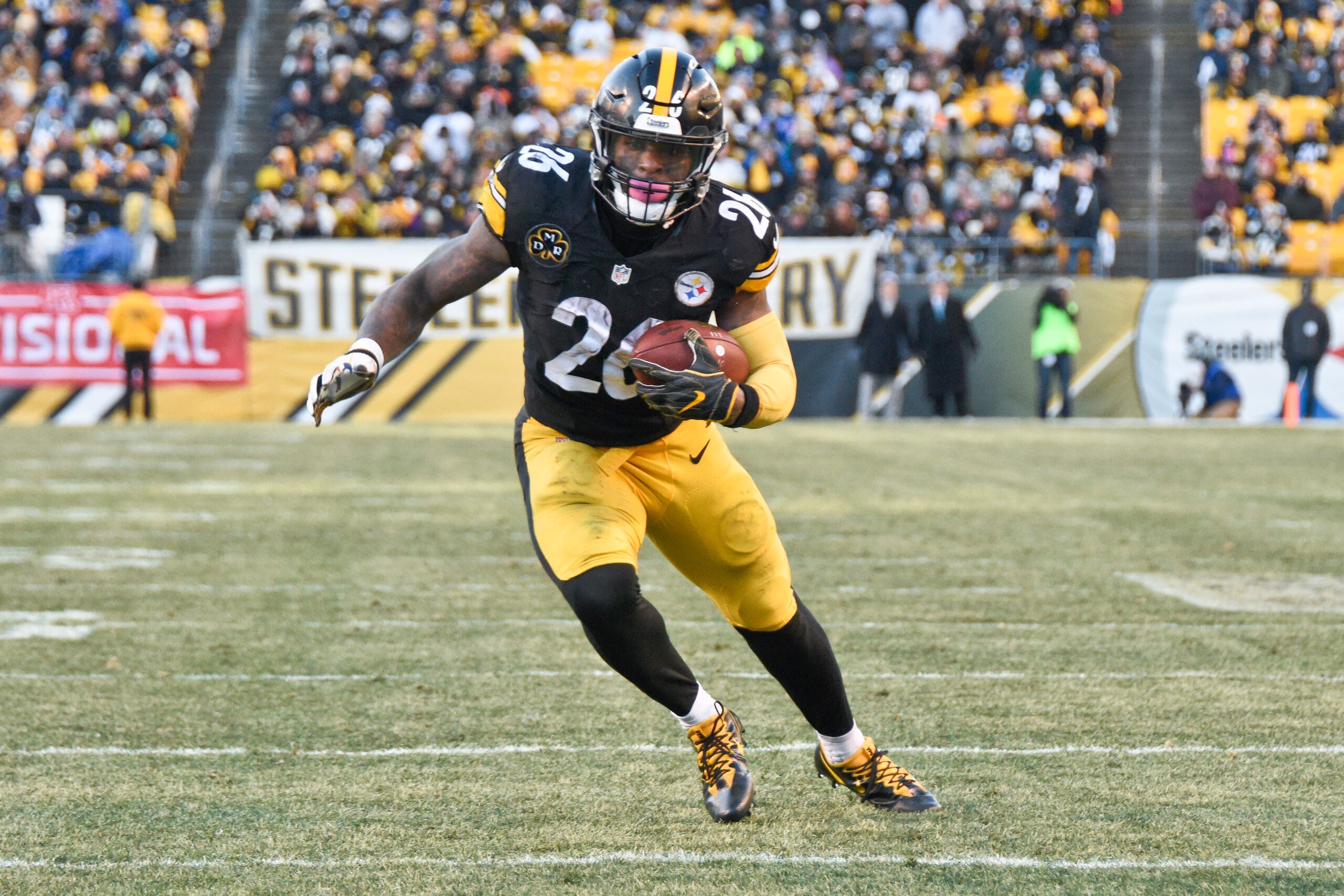
Le'Veon Bell is one of the most dangerous and versatile running backs in the NFL. In three of the last four seasons, he has topped 1,800 total yards and scored at least nine touchdowns. In 2017, Bell rushed for 1,291 yards, added another 655 yards on a career-high 85 receptions and found the end zone 11 times overall.
At 25 years of age, Bell is also entering the prime of his career. According to NFL Network's Ian Rapoport, the Steelers are expected to place the franchise tag on Bell, but until that becomes official, we can at least entertain the possibility of such a tantalizing talent hitting the open market.
Don't worry. Drew Brees isn't next on here. There are theoretical exercises, and then there's just madness.
The franchise tag (even at $14.5 million) isn't a bad idea for Bell. There's more than a little risk involved with paying him big bucks, though, as there's one major warning sign with him in 2018.
Actually, there are 406 warning signs—the number of total touches Bell piled up in 2017.
That heavy workload puts him squarely in the crosshairs of the Curse of 370. That term has generally been reserved for running backs who carry the ball more than 370 times in a season. But as John Georgopoulos pointed out in 2016 at Fantasy Sharks, the historical data for running backs who amass over 370 touches in a season isn't much better.
In fact, there's a better-than-average chance that said back will see a substantial decline in production the following season. It happens to over 80 percent of backs who hit that benchmark, and many of them miss time the following year a la David Johnson in 2017.
Bell has played in all 16 games in a season just once in five years.
His talent isn't in question. When healthy, he can take over a game.
The team that signs Bell to a big contract (even for one year) is straddling a fine line between hoping for what he might do in the future and overpaying based on what he's done in the past.

.jpg?w=2560 "Steelers Saints Football")
.jpg?w=2560 "Rams Raiders Football")
Demarcus Lawrence, DE, Dallas Cowboys
4 of 10
Demarcus Lawrence just had a career year and then some for the Dallas Cowboys. After piling up 14.5 sacks in 2017, he's projected to fetch a deal that pays an average of $14 million a season, per Spotrac.
It's good work, if you can get it.
However, unless that money comes in the form of a Cowboys franchise tag (which was just under $17 million in 2017), it's also an expensive gamble.
Don't get me wrong. The 25-year-old had an outstanding season. In addition to finishing second in the NFL in sacks, Lawrence also played the run well—to the tune of 58 total tackles. He forced four fumbles and was named a Pro Bowler and second-team All-Pro.
The problem is that it was just one season.
Over the first three years of his career, Lawrence had nine sacks—and eight of those came in 2015. He had far more missed games (16) than sacks over that span, including a four-game suspension and significant back and foot injuries.
Mind you, this isn't to say it's a certainty Lawrence will regress. He may well be the NFL's next great pass-rusher, and he showed previous flashes of his 2017 dominance.
But we've seen this movie innumerable times. A player goes berserk in a contract year, gets rewarded for said explosion and then reverts to the player he was before that blowup.
Talks between the Cowboys and Lawrence are supposed to heat up at the NFL Scouting Combine in early March, with his agent telling ESPN.com's Jenna Laine that, "It's really up to them to want to do a deal that's in line with what the market is for a young, ascending, elite franchise-caliber defensive end."
Executive vice president Stephen Jones added that, "Certainly, we're going to roll up our sleeves and see if we can do something with Demarcus without having a franchise tag."
If that's the case, Lawrence may well wind up the biggest bust signing of 2017 if he can't back up last year's heroics—without ever hitting free agency at all.
Ezekiel Ansah, DE, Detroit Lions
5 of 10
This isn't piling on the pass-rushers about to hit free agency. Honest.
At first glance, retaining Ezekiel Ansah might appear an easy call for the Detroit Lions. In five NFL seasons, Ansah has recorded 44 sacks—including 12 a year ago. The run Ansah went on to end last season was reminiscent of his dominant 2015, when he finished third in the NFL with 14.5 sacks.
The problem is how long it had been since Ansah had reminded anyone of that 2015 campaign. In 2016, he struggled all year with a knee injury and managed two sacks. Ansah missed most of training camp and didn't practice in full until late in the season. Outside of a three-sack outburst in Week 2, Ansah had just one sack over the first 11 weeks of last year. Six of his 12 sacks in 2017 came in the season's last two weeks.
In other words, when Ansah's healthy and on his game, he can be a dominant edge-rusher. But there's an excellent chance that for at least part of the season he won't be.
And with the Lions possibly looking at major schematic changes on that side of the ball under new head coach Matt Patricia, it's not yet known if Detroit's willing to shell out the $17 million and change that it will take to franchise tag Ansah in 2018.
However, if the Lions let him hit the open market, suitors will be ready to hand over big money. Ansah's still just 28, he was the fifth overall pick in the 2013 draft and has had a pair of double-digit-sack seasons. Edge-rushers with his ceiling tend to attract attention.
But with that ceiling comes an equally low floor. And it's that nadir that makes offering Ansah $50 million in guarantees scary.
It's the sort of deal that would make a general manager look like aces if Ansah can stay healthy and play at a consistently high level. That said, it could also cost a GM his job if he doesn't.
Malcolm Butler, CB, New England Patriots
6 of 10
Malcolm Butler's career just hit the speed bump to end all speed bumps.
Just one week ago, it appeared everything was coming together for him. He was going to start in the Super Bowl for the third time in four seasons and was going to hit free agency as arguably the most sought-after commodity at one of the NFL's premier positions—assuming the Pats didn't franchise-tag or re-up him themselves.
And then Super Bowl Sunday happened.
We still don't know for sure why Butler played a grand total of zero defensive snaps in New England's Super Bowl LII loss to the Philadelphia Eagles after being on the field for almost 98 percent of the team's snaps in the regular season, per Pro Football Reference.
What we do know is that red flags galore have gone up regarding Butler. Whatever happened, it was big—so big that despite the fact the Patriots spent the entire game being shredded, the hero of Super Bowl XLIX never got on the field.
It's been an up-and-down season for Butler. The Patriots tried to shop him last offseason after signing Stephon Gilmore, and they benched Butler early in the season. He admitted to Ian Rapoport of NFL.com before the Super Bowl he hadn't had a great contract year.
"Anything that happened to me is my fault," Butler said. "It has nothing to do with anything. It's possible to just have a s--tty season. It is what it is.
"... Compared to the rest of them, I do [think I had a s--tty season]. I have high standards. I didn't meet my goals. I just feel that way. There were ups and downs, a lack of consistency."
There were tangible signs of that down year before Sunday's bombshell. As Sean Wagner-McGough and Dave Richard of CBS Sports reported, per PFF, Butler's passer rating against was almost 20 points higher in 2017 than the year before. He allowed a catch rate of over 68 percent over his last five games.
Even after those struggles, though, the 27-year-old was probably headed toward a deal that would pay well in excess of $10 million a season. He's a cover corner in his prime.
But now, the Super Bowl mystery surrounding him highlights just how risky that investment might be.
Allen Robinson, WR, Jacksonville Jaguars
7 of 10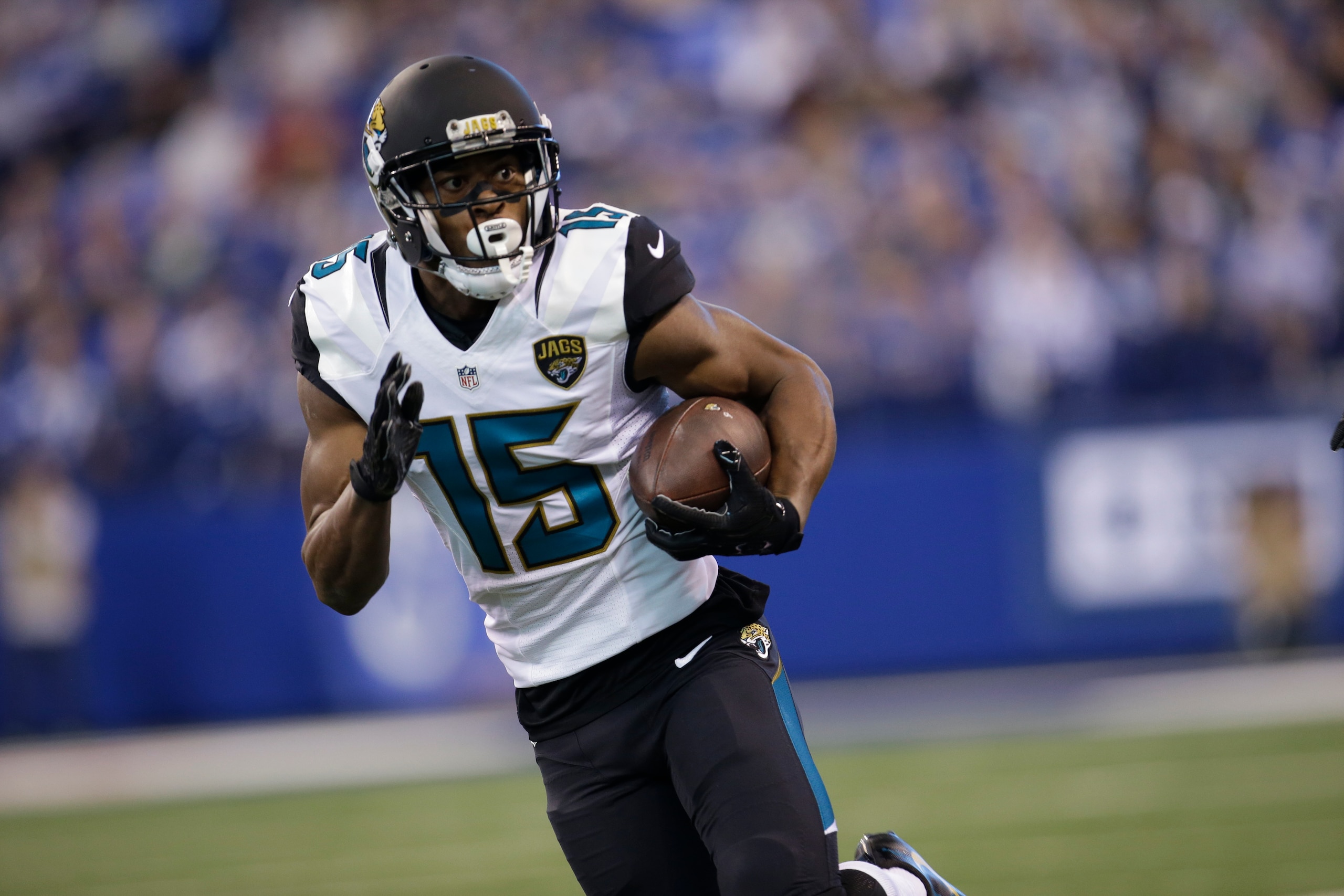
The Jacksonville Jaguars are coming off one of the most successful seasons in franchise history.
Exactly none of that success can be attributed to wide receiver Allen Robinson. While the rest of the Jaguars were winning the AFC South and advancing to the AFC Championship Game, Robinson was on the shelf with a torn ACL.
This, after a 2016 season in which his numbers were way down relative to his breakout 2015 effort. It's a situation that leaves the Jaguars with quite the quandary—especially with fellow Jaguars receivers Marqise Lee and Allen Hurns also set to hit free agency.
After all, we're talking about a 24-year-old who hauled in 80 catches for 1,400 yards and an eye-popping 14 touchdowns in 2015. That's elite production from a wideout who hasn't even hit his prime yet.
But in the two years since, Robinson has 74 catches for 900 yards and six touchdowns—production that is most assuredly not elite.
If the Jaguars sign Robinson to a massive extension or apply a franchise tag that will run upward of $16 million or more in 2018, the team will have little choice but to bid adieu to Lee and Hurns. But if it lets Robinson sniff the open market, it's just about guaranteed some team will offer a megadeal. There are too many clubs with openings at pass-catcher and cap space burning a hole in their pockets.
If Robinson's able to reclaim past glories and finish ascending to the top of his position, that deal won't look so bad. Sometimes to win big, one has to bet big.
But if Robinson struggles to regain his form or can't stay healthy, that same deal would be quite the albatross.
Jarvis Landry, WR, Miami Dolphins
8 of 10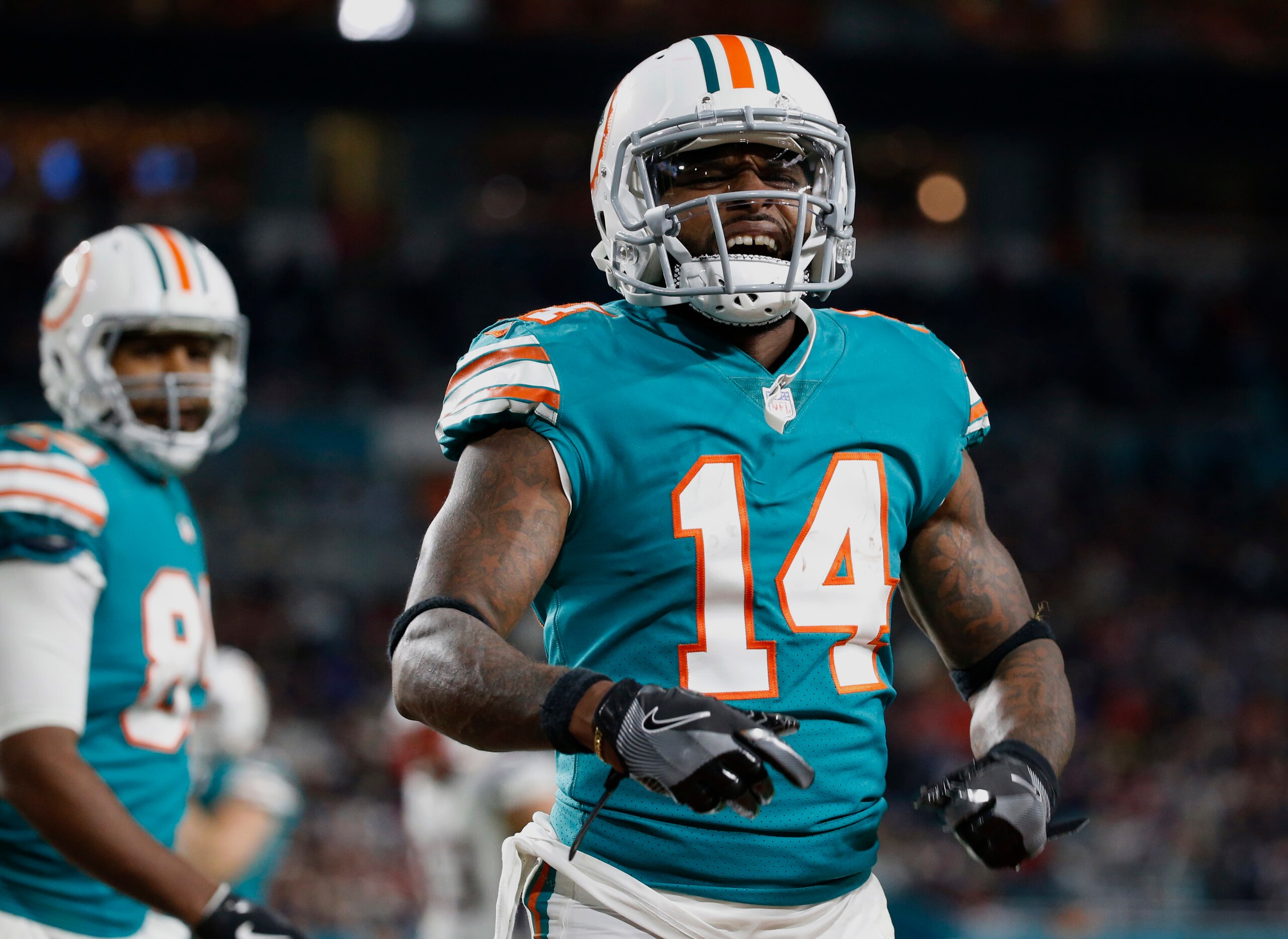
Teams considering spending big bucks on Miami Dolphins wide receiver Jarvis Landry face a similar dilemma as with Allen Robinson.
It's not a matter of durability. In four NFL seasons, Landry has yet to miss a game. It's also not a matter of productivity. Landry led the NFL with 112 receptions last year. He's eclipsed the 1,000-yard mark twice in four seasons and averaged over 1,000 yards a year for his career.
Still, as Landry recently told the Miami Herald's Barry Jackson (h/t ESPN.com's Jenna Laine), extension talks with the Dolphins have been slow-moving.
"From the offer process until this point was disrespectful," Landry said. "I tried to handle it the right way and figured if a team values you and wants you to be a part of the team, why haven't they answered in the past month?"
The Dolphins are no doubt trying to figure out the same thing the rest of the NFL will be if Landry gets to the open market: How much do you pay a slot receiver (albeit maybe the NFL's best) who's looking to be compensated like an elite target?
That's the rub. Landry's been productive, to be sure. But the overwhelming majority of that damage has come on short passes over the middle. Landry managed 987 yards on those 112 receptions in 2017—an average of 8.8 yards a catch (a career low).
This isn't to say Landry can't stretch the field. He averaged over 12 yards a grab in 2016. But his career average per catch is a tad over 10 yards—low for a receiver who could make over $13 million a season on a new contract, per Spotrac.
Landry wins with route running and yards after the catch, not dominant physical talents.
That sort of cheddar for a slot receiver puts pressure on a salary cap from an unexpected position. Pressure that will filter right down to Landry.
Anything less than 100-plus catches and 1,000-plus yards, and it's bust-city.
Morgan Burnett, S, Green Bay Packers
9 of 10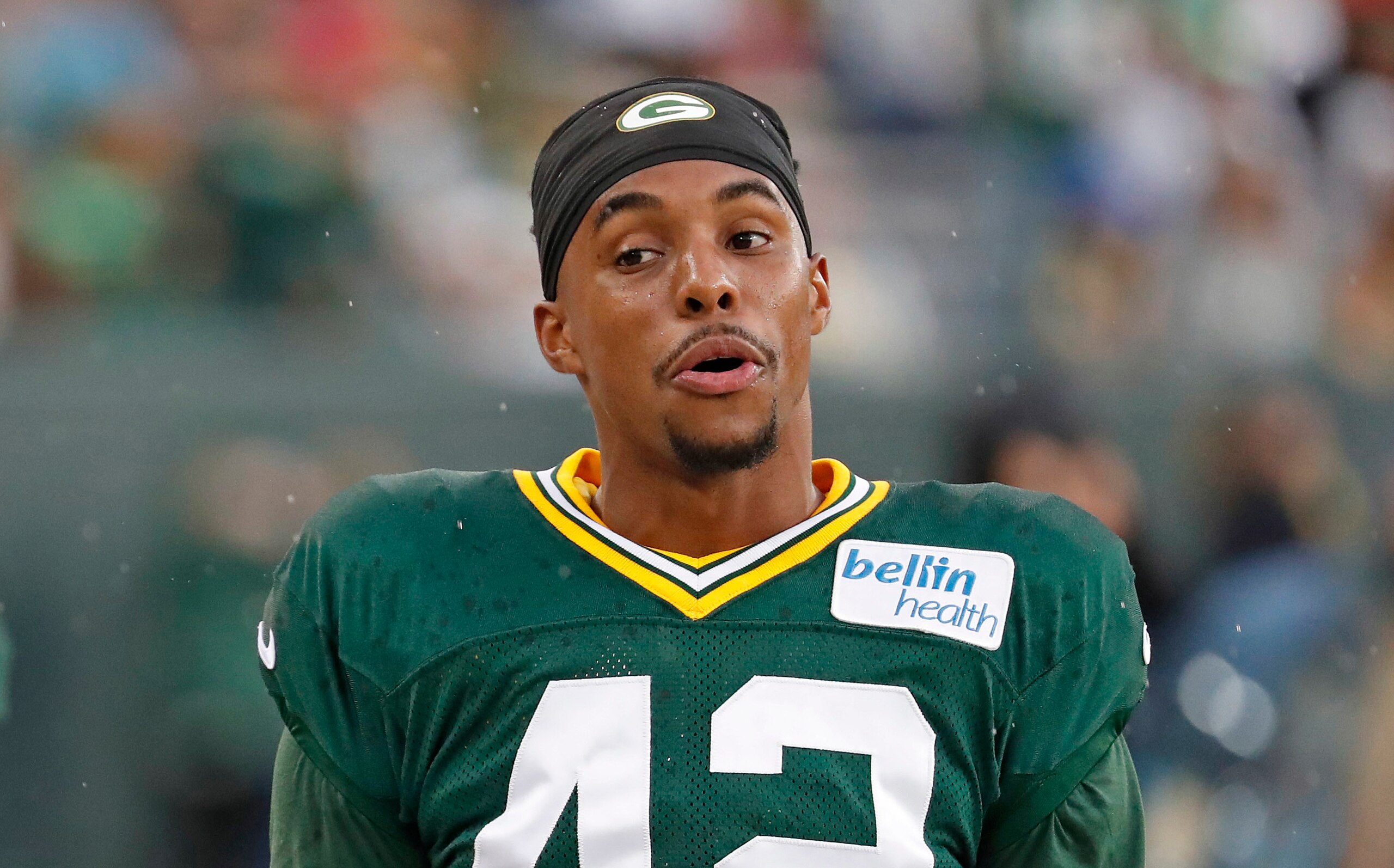
The Green Bay Packers' Morgan Burnett is a valuable NFL safety. In eight seasons with the team, Burnett has topped 100 total tackles three times. The 29-year-old has nine career interceptions, eight forced fumbles, 7.5 sacks and a Super Bowl win on his professional resume.
However, the writing's on the wall that Burnett will hit the open market in March. That became clear the moment the Packers selected second-rounder Josh Jones in the 2017 NFL draft.
Burnett wouldn't be the first veteran squeezed out by a younger, cheaper alternative in Titletown.
Don't feel too bad for Burnett, though. His willingness and ability to play both safety spots and even some slot corner will appeal to plenty of teams. His experience will as well. Spotrac estimates he could receive a contract that averages $9.8 million a season—a deal that would slot him well inside the top 10 at his position in terms of average annual salary.
Assuming it's a contract similar to the four-year, $39.3 million deal Spotrac proposes, it will also more likely than not be viewed as a mistake a couple of years from now.
It's not a matter of talent so much as another ability. One that some consider the most important of all.
Availability.
Burnett's only made it through all 16 games in two of his eight seasons. He's missed time in each of the last five years, including a quarter of the 2017 campaign.
The cold, hard truth is that players who are prone to getting nicked up don't become less so as they age. Burnett has averaged just under three missed games per year over the last four seasons. It's not unreasonable to expect him to miss at least that many moving forward.
And $10 million a year is a lot to pay a player who misses that much time.
Luke Joeckel, OL, Seattle Seahawks
10 of 10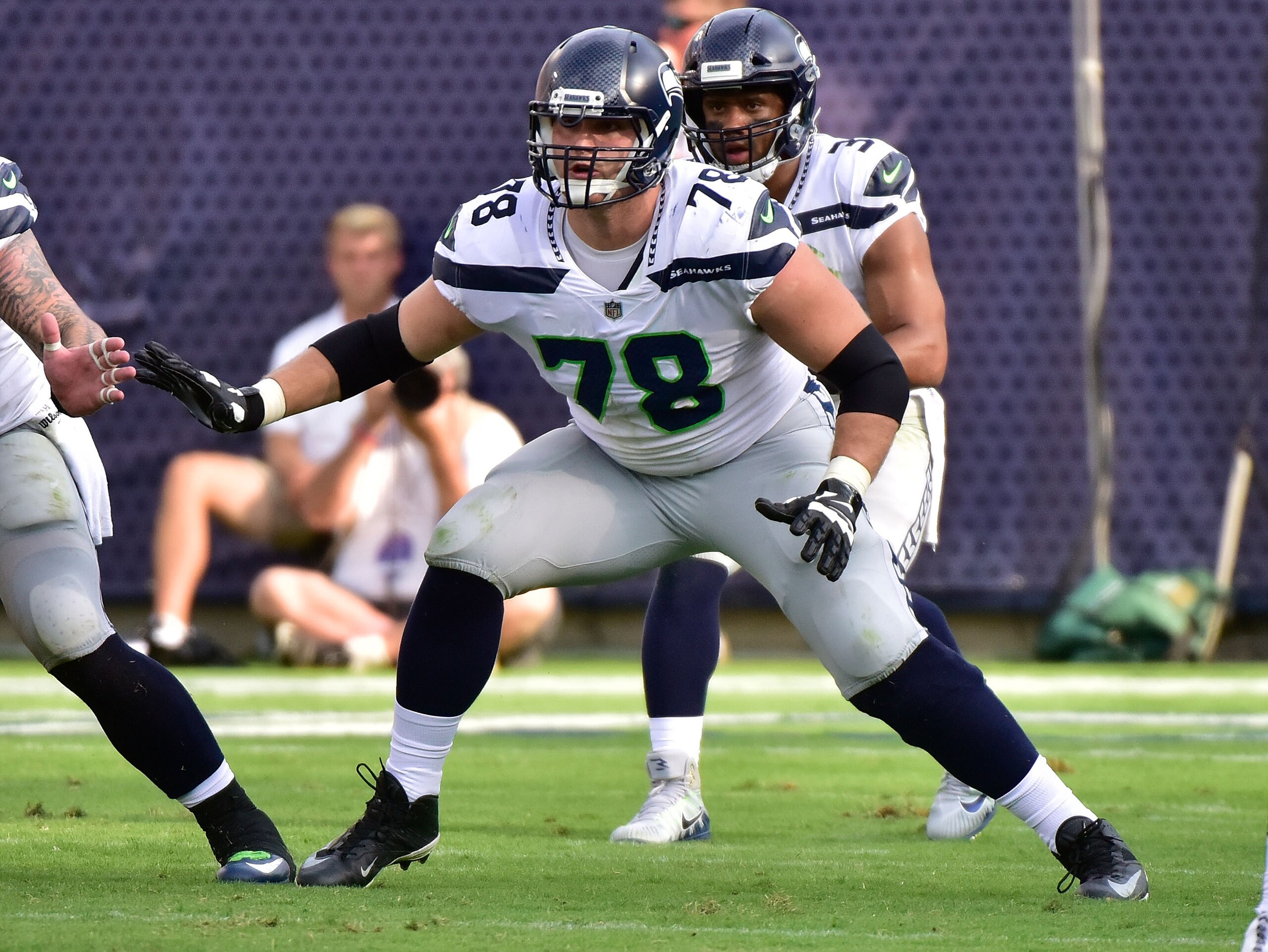
There are a couple of constants when it comes to free-agent offensive linemen.
The first is top-notch linemen usually don't hit the open market—which is why I expect the New England Patriots to re-sign tackle Nate Solder.
The second is the same desperation that makes teams obsess over quarterbacks applies to the people who protect them. Even average tackles can make elite free-agent money, as some of the boffo contracts awarded at the position demonstrate.
Like, say, giving Luke Joeckel $7 million guaranteed.
That's what the Seattle Seahawks did last year, bringing in the former No. 2 overall pick with the belief that a move inside would jump-start Joeckel's lagging career.
Instead, Joeckel went from being a bad left tackle to being a mediocre guard. As ESPN.com's Dan Graziano pointed out in calling him one of 2017's worst signings, Joeckel ranked 53rd among guards at Pro Football Focus last year. He also missed five games—the fourth time in five seasons he's missed time.
And yet, you just watch—some NFL team will offer Joeckel at least the same kind of deal he failed to live up to in the Pacific Northwest.
After all, Joeckel is just 26 years old. He's started 50 games as a pro. He was in the conversation to be the top pick in 2013 before the Kansas City Chiefs settled on Eric Fisher.
Add that all up, and there's at least the illusion of potential. Never mind the five years of injuries and struggles in Jacksonville and Seattle.
So, some team will tell itself that a short-term deal is worth the chance that the lightbulb will come on for Joeckel. It may even buy into the idea that tackle's his more natural fit.
Then history will repeat itself all over again.
.jpg?w=2560 "Cowboys Packers Football")
.jpg?w=2560 "Titans Ravens Football")

.jpg?w=2560 "🚨 Week 8 AP Top 25 Poll")
.jpg?w=2560 "Mahomes Told Teammate to Leave Meeting")

