Today's NFL is built around the ability to identify an opponent's weakness and exploit it. Even the best teams aren't perfect.
A hole in the roster or poor performance in a certain area turns into glaring problems that must be addressed each week. Otherwise, opponents will continually attack these weak spots.
Injuries aren't an excuse since every team experiences injuries. Nor will they be held against teams.
Instead, problem areas found on each roster are most often due to inadequacies based on roster limitations. The league is set up to create parity. It doesn't always exist, but neither does a perfect team.
Superman may be the most powerful superhero ever created, but he can be felled by a shiny green rock. No matter where an NFL team resides falls on the spectrum, each has its version of kryptonite.
Arizona Cardinals: Offensive Line Struggles
1 of 32
For a brief moment, the Arizona Cardinals offensive line looked like it would finally come together and become a driving force for any second-half success the team experienced. After Arizona traded for Adrian Peterson in mid-October, he ran for 314 years in his first three games with the organization.
"It feels good," offensive coordinator Harold Goodwin told reporters at the time. "Those guys have been playing together for a while now and, knock on wood, hopefully we can stay with that same group throughout the rest of the year."
During the following three contests, however, Peterson managed only 134 yards on 55 carries, an average of just 2.4 yards per tote.
As a team, the Cardinals are averaging a league-worst 3.0 yards per carry. The lack of a running game makes it more difficult to pass-protect, too. Arizona's 29 sacks allowed rank 11th-worst overall.
Atlanta Falcons: Second-Half Defense
2 of 32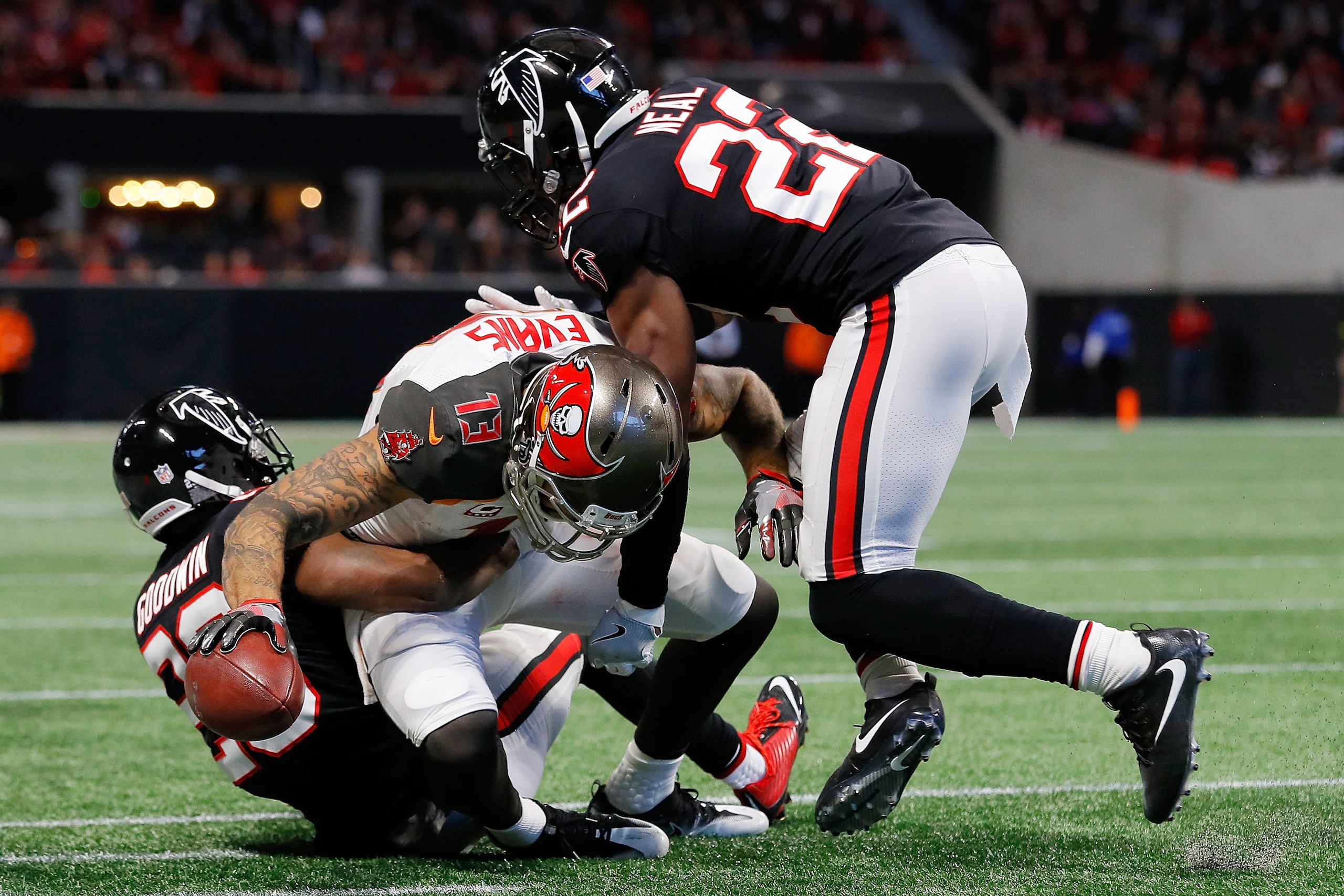
All 28-3 jokes aside, here's the reality: The Atlanta Falcons' second-half defense is subpar. The unit surrendered 48 second-half points in Atlanta's four losses, and the Falcons held halftime leads during two of those contests.
Even in Sunday's victory, the Falcons allowed the Tampa Bay Buccaneers to score 14 second-half points and narrow the lead to one touchdown.
Afterward, when asked what the defense must focus on moving forward, rookie defensive end Takk McKinley replied, "Finish," per ESPN.com's Vaughn McClure. "When we were up 27-6, we should have kept them to single digits. So for us, we've got to really take that 'finish' word heavily because ain't no way they should have climbed back in that game and made it a game."
Easier said than done. The Falcons don't have a shutdown secondary, nor do they generate consistent pressure. Atlanta's defense would be tied for 19th overall in sacks without Adrian Clayborn's six-sack anomaly against the Tyron Smith-less Dallas Cowboys.
Baltimore Ravens: Grounded Passing Game
3 of 32
The NFL is a pass-first league, and the Baltimore Ravens are the worst at throwing the football.
This isn't hyperbole; it's the truth.
Baltimore ranks 32nd overall in passing offense at 164.3 yards per game. To place that futility into perspective, the Chicago Bears and Cleveland Browns, both of whom are starting rookie quarterbacks, each rank higher. The Buffalo Bills, who benched Tyrod Taylor in favor of rookie Nathan Peterman for one game, are better through the air. Even a Jacksonville Jaguars offense led by Blake Bortles is doing more with its aerial attack than Joe Flacco and Co.
Pushing the ball downfield used to be considered Flacco's greatest strength. Instead, the Ravens have thrown the fewest passes of 20 or more yards (15). The team's leading receiver, Mike Wallace, has 371 receiving yards, which ranks 81st leaguewide.
.jpg?w=2560 "Chiefs Giants Football")
.jpg?w=2560 "Titans Colts Football")
.jpg?w=2560 "Colts Football")
Buffalo Bills: Lack of Pressure
4 of 32
First-year Buffalo Bills head coach Sean McDermott built his reputation as a defensive coordinator with Philadelphia Eagles and Carolina Panthers before coming to upstate New York. He apprenticed under Jim Johnson, who was one of the best ever at creating pressure packages.
Despite McDermott's background, the Bills are one of the league's least-efficient teams in terms of getting to the quarterback. Buffalo has managed only 17 sacks through 11 games, which ranks 31st overall in that category.
Lorenzo Alexander, who finished third leaguewide last year with 12.5 sacks, has only three sacks in 11 games under the new scheme. Jerry Hughes, who also has three sacks, is also less effective than he was in 2016, while last year's first-round pick, Shaq Lawson, likewise hasn't been a force off the edge.
The Bills are strong in the secondary, but the system requires the front four to be more disruptive. Buffalo won't supplant the New England Patriots in the AFC East if it can't apply pressure on Tom Brady.
Carolina Panthers: Christian McCaffrey's Usage
5 of 32
The Carolina Panthers are suffering through an identity crisis. In an attempt to make life easier on quarterback Cam Newton, offensive coordinator Mike Shula forgot what made his unit successful in the first place.
"Now, Carolina's top two backs (Jonathan Stewart and Christian McCaffrey) have run power/counter just 27 percent of the time, a difference of 14 percent between the two years," Pro Football Focus' Austin Gayle noted last week. "McCaffrey was a perfect match for the 2016 Panthers offense, but the 2017 iteration has shifted away from that scheme."
The above stat shows the Panthers leaning less on their power running approach while trying to expand the scheme to highlight the play of its new weapons. McCaffrey struggled earlier in the year running between the tackles, but he excelled in this area at the collegiate level.
Carolina drafted McCaffrey to take pressure off Newton as both a runner and receiver. His ability to create was supposed to be a boon to the offense, particularly as a checkdown option. His role should be complementary to the previous approach; instead, he leads the team with 59 receptions.
Chicago Bears: No Weapons at Wide Receiver
6 of 32
Few teams around the league can argue they tout the NFL's worst wide receiver corps. The Chicago Bears basically have that distinction all to themselves.
Tight end Zach Miller, who suffered a season-ending dislocated left knee a month ago, still ranks third on the team with 236 receiving yards. Kendall Wright's 345 receiving yards are the fewest of any team-leading receiver. Furthermore, the Bears rank second-to-last with 18 receptions of 20 or more yards.
Offensive coordinator Dowell Loggains is playing to Chicago's strengths by featuring Jordan Howard and Tarik Cohen in the backfield. The run-first approach also helps protect rookie quarterback Mitchell Trubisky. When forced to throw the ball downfield, though, the Bears can't do so. The first-year signal-caller averaged a woeful 5.17 yards per attempt during Chicago's last two contests.
Cincinnati Bengals: Offensive Tackles
7 of 32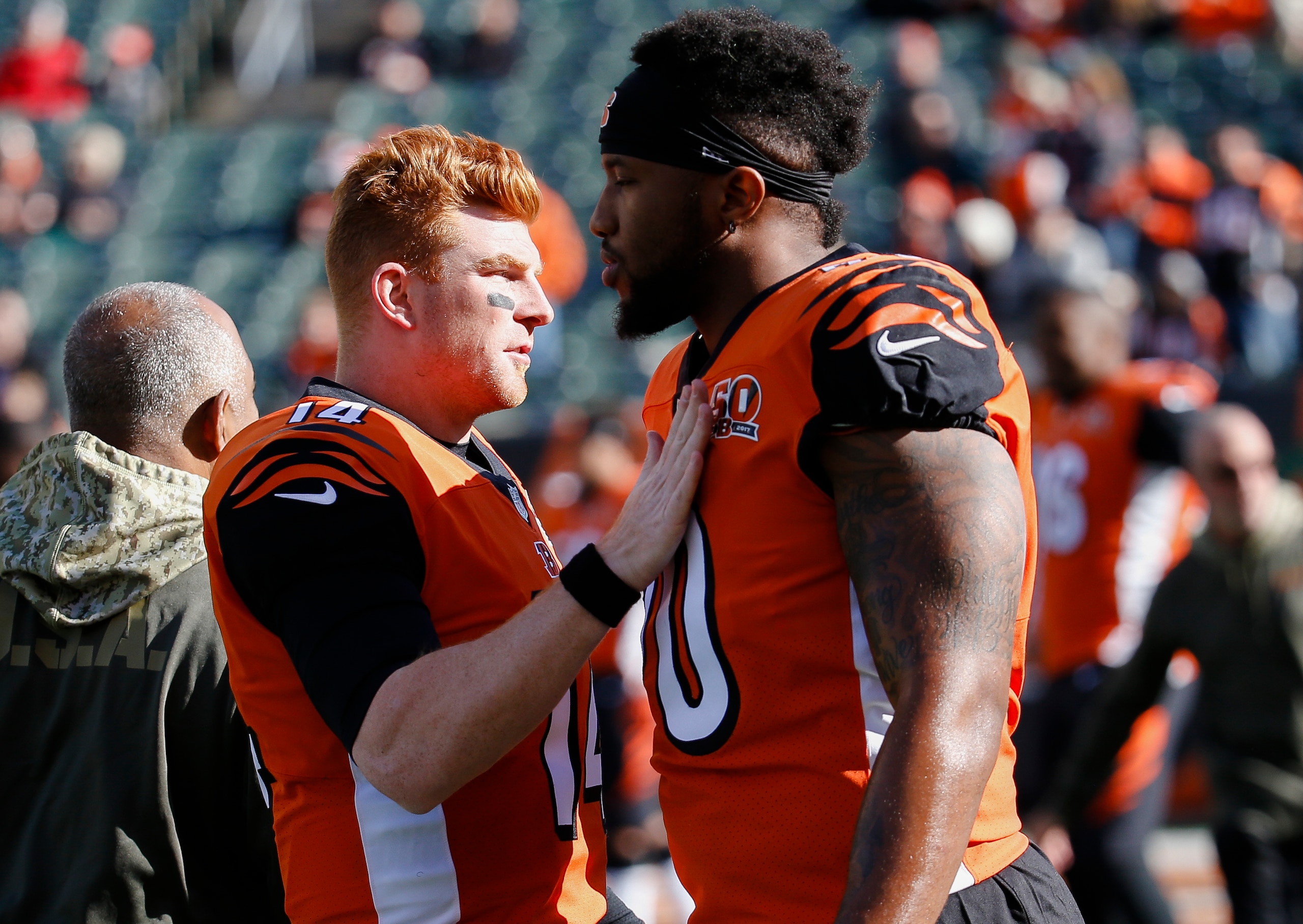
The Cincinnati Bengals are still somehow in the playoff hunt despite featuring one of the league's worst offensive lines.
After watching Andrew Whitworth and Kevin Zeitler head elsewhere in free agency, Cincinnati has spent the entire season tinkering with offensive linemen. The Bengals even resorted to rotating their offensive tackles before Jake Fisher went on the reserve/non-football illness list in early November.
"No, I can't say that [it helps]," left tackl Cedric Ogbuehi said in October in reference to the tackle rotation, per the Cincinnati Enquirer's Jim Owczarski. "I think true helping is when you're playing. Every snap you learn. But you've got to do what you're told."
Cincinnati ranks in the bottom half of the league with 28 sacks surrendered, and it is 31st overall at 3.2 yards per carry.
Cleveland Browns: Red-Zone Woes
8 of 32
The red zone is where Cleveland Browns offensive drives go to die.
Cleveland doesn't tout the NFL's worst red-zone offense—that dubious distinction belongs to the Indianapolis Colts—but the myriad of mistakes Cleveland makes near the goal line is nothing short of maddening. The Browns have scored a touchdown on only 43.33 percent of their red-zone trips.
Rookie quarterback DeShone Kizer has been a disaster near the end zone. He has a dismal 32.5 completion percentage and has thrown five red-zone interceptions.
But Cleveland doesn't have a better option at quarterback, nor is the offense consistently effective running the ball in short-yardage situations. This combination often leads to disaster in the most crucial area of the field, and the 0-11 Browns can't notch their first victory without scoring points.
Dallas Cowboys: Dez Bryant's Disappearing Act
9 of 32
What's wrong with Dallas Cowboys quarterback Dak Prescott?
He's the same player who won NFL Rookie of the Year last season, but his statistical regression shows what happens when an offensive line is in tatters, the running game isn't as effective and top target Dez Bryant gets taken away by defenses.
The final point is particularly poignant since Bryant is on pace for career lows in receiving yardage and yards per reception when playing a full 16-game slate. Overall, the Cowboys own the NFL's 27th-ranked passing attack at 198.7 yards per game.
As long as opponents continue to slow Bryant—who has four or fewer receptions in five games this season—the rest of the Cowboys offense is far less potent.
Denver Broncos: Quarterback Limitations
10 of 32
The Denver Broncos don't have a quarterback. Sure, a quick glance will show Trevor Siemian, Brock Osweiler and Paxton Lynch's names on the roster. None of them are starting-caliber, though.
"When you're playing with three quarterbacks not because of injury, it's not a good thing," head coach Vance Joseph said, per ESPN.com's Jeff Legwold. "We have to find the right guy for our football team, and that's where it starts in this league."
Without an established starter, the Broncos enter every contest at a disadvantage. As a group, the trio has completed 58.6 percent of its passes for 2,560 yards, 14 touchdowns and 15 interceptions this season.
At this juncture, Joseph needs to pick one to finish the season, lean on the running game and hope the defense can make up the difference.
Detroit Lions: No Running Game
11 of 32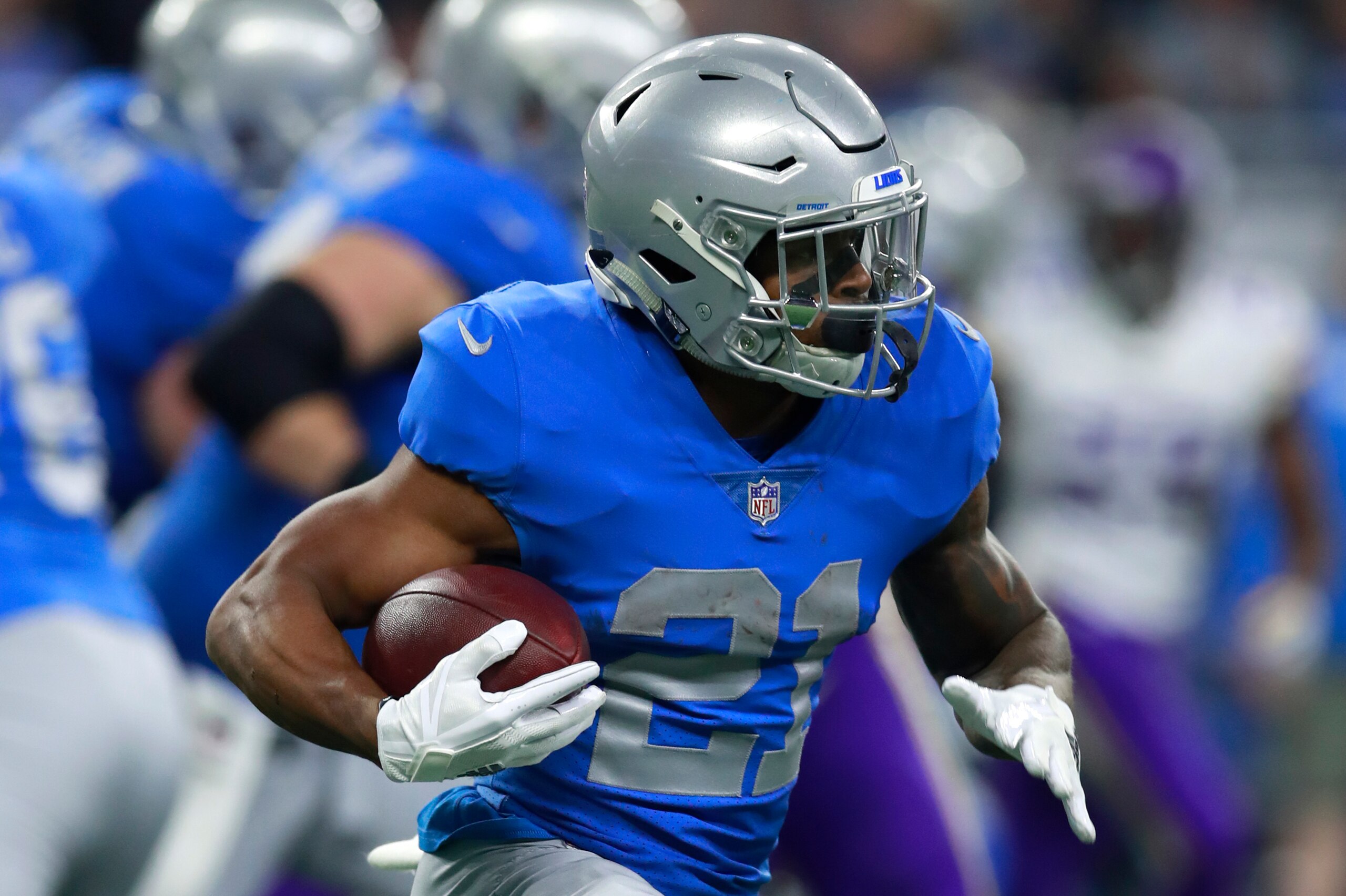
A Detroit Lions running back hasn't posted a 100-yard game since the 2013 campaign. Reggie Bush was the last to break the barrier on Thanksgiving Day against the Green Bay Packers.
If the team featured a strong running back stable, this wouldn't be a huge deal. But the Lions don't. Ameer Abdullah leads the offense with 505 rushing yards on 150 carries. Theo Riddick is second with 161 yards. Detroit ranks 30th overall with an average of 78.3 rushing yards per game.
Some blame can be placed on offensive line play or Jim Bob Cooter's game plans. Yet Detroit's lack of a consistent ground game dates back beyond this season.
The Lions haven't finished among the top half of the league in rushing offense or averaged at least 4.0 yards per carry since the 2013 campaign. As a result, far more pressure is placed on quarterback Matthew Stafford and the passing game to perform.
Green Bay Packers: Secondary Concerns
12 of 32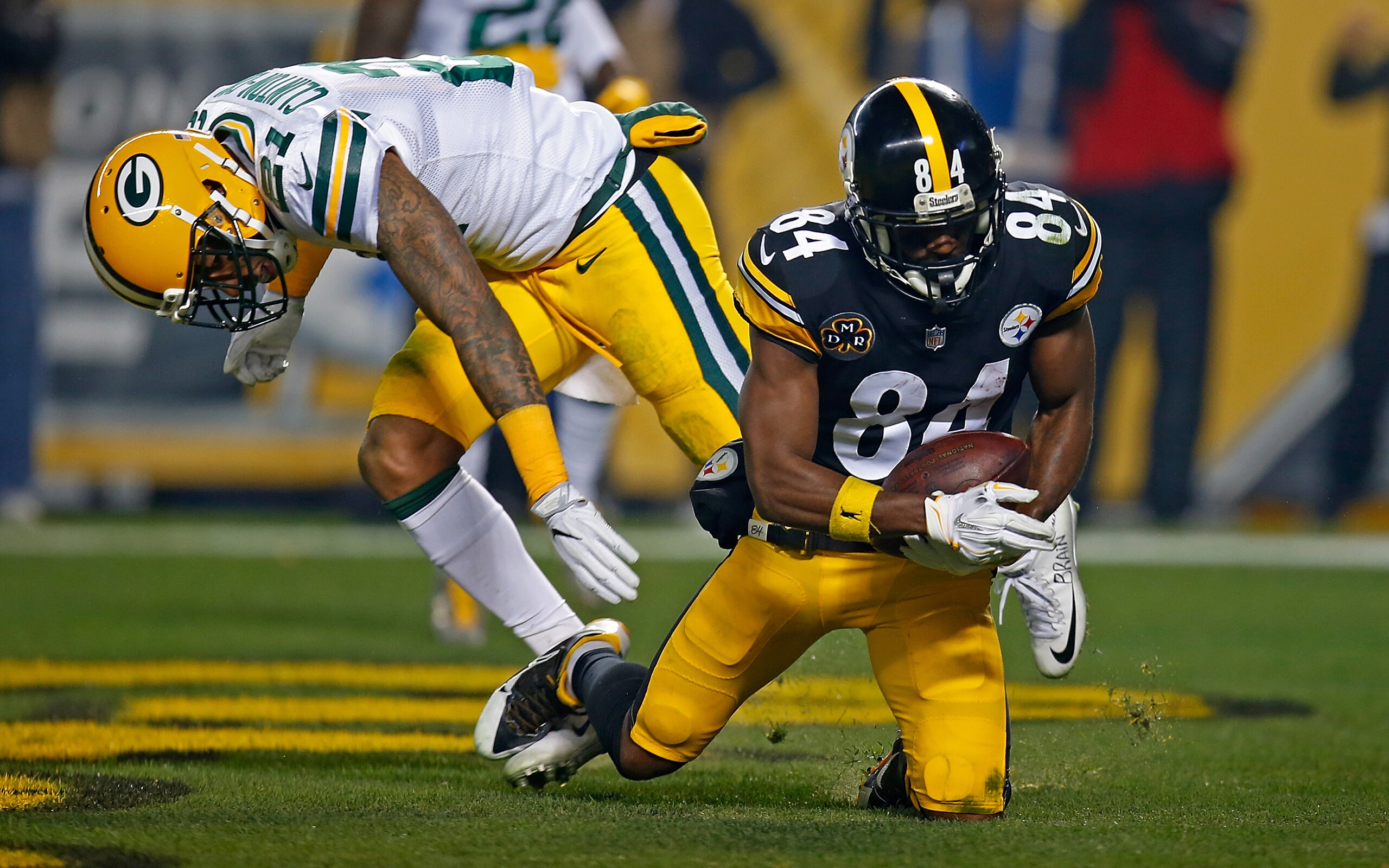
The Green Bay Packers made it an offseason priority to address a secondary that finished 31st against the pass last season. They failed.
Green Bay's defensive back performance has been better this fall, but it still isn't not good. The Packers allow 244.1 yards per game through the air, the eighth-worst mark in the league.
Two particular statistics speak to the secondary's woes. Green Bay has already surrendered 38 passing plays of 20 or more yards, which is tied for the sixth-worst mark leaguewide, and the defense allows opponents to score a touchdown nearly 70 percent of the time they reach the red zone.
Aaron Rodgers' absence magnifies the Packers' issues. But his collarbone injury should have served as a chance for the defense to keep the Packers in more games. Instead, the unit allowed 23 or more points in five of the team's six games without Rodgers, all five of which the Packers lost.
Houston Texans: Quarterback Carousel
13 of 32
Deshaun Watson's injury put a damper on the Houston Texans' season. The rookie provided sensational play, but he's no longer an option, and the Texans must adjust.
Tom Savage entered the season as Houston's starter, but that decision by head coach Bill O'Brien looked silly after Watson played. The Texans' season now hinges on their veterans' performances. Savage threw a pair of interceptions during Monday's 23-16 defeat to the Baltimore Ravens.
"We're going to sit down and watch the tape, and we'll see if we can get it corrected," O'Brien said, per ESPN.com's Sarah Barshop. "It has to get corrected because if not, we're going to have to go in a different direction."
The Texans' quarterback carousel started with Savage. He's getting another turn. But T.J. Yates is waiting, and he can take over if any more setbacks occur.
Indianapolis Colts: Protection Problems
14 of 32
Forget the Indianapolis Colts' quarterback situation for a moment, because how the organization proceeds with Andrew Luck and Jacoby Brissett won't be determined until the offseason.
The offensive line is in a far more precarious position.
Luck's absence ruined this season. However, his injuries dating to 2015—when he played just seven games—can be directly tied to the offensive front's performance. It hasn't gotten any better.
Indianapolis has already surrendered a league-high 46 sacks. According to CBS 4's Mike Chappell, the Colts are on pace to set a franchise record. They need a complete rebuild, and it may be too late for Chuck Pagano and his coaching staff to make any meaningful changes to try to rectify the situation.
Jacksonville Jaguars: Blake Bortles
15 of 32
Jacksonville Jaguars quarterback Blake Bortles is what he is. He's not a franchise quarterback despite being the third overall pick in the 2014 draft. He's not a complete waste, either.
But he is the weak link in a burgeoning Super Bowl contender. The Jaguars will have to take the Trent Dilfer approach with Bortles: play great defense, use the running game as the focal point and limit the quarterback's chances to make mistakes.
"We've just got to execute," Bortles said after Sunday's 27-24 loss to the Arizona Cardinals in which he threw for 160 yards, per ESPN.com's Michael DiRocco.
There will be a crucial moment when Bortles must make a play. He's yet to prove he's up to the task.
Kansas City Chiefs: Disappearing Run Game
16 of 32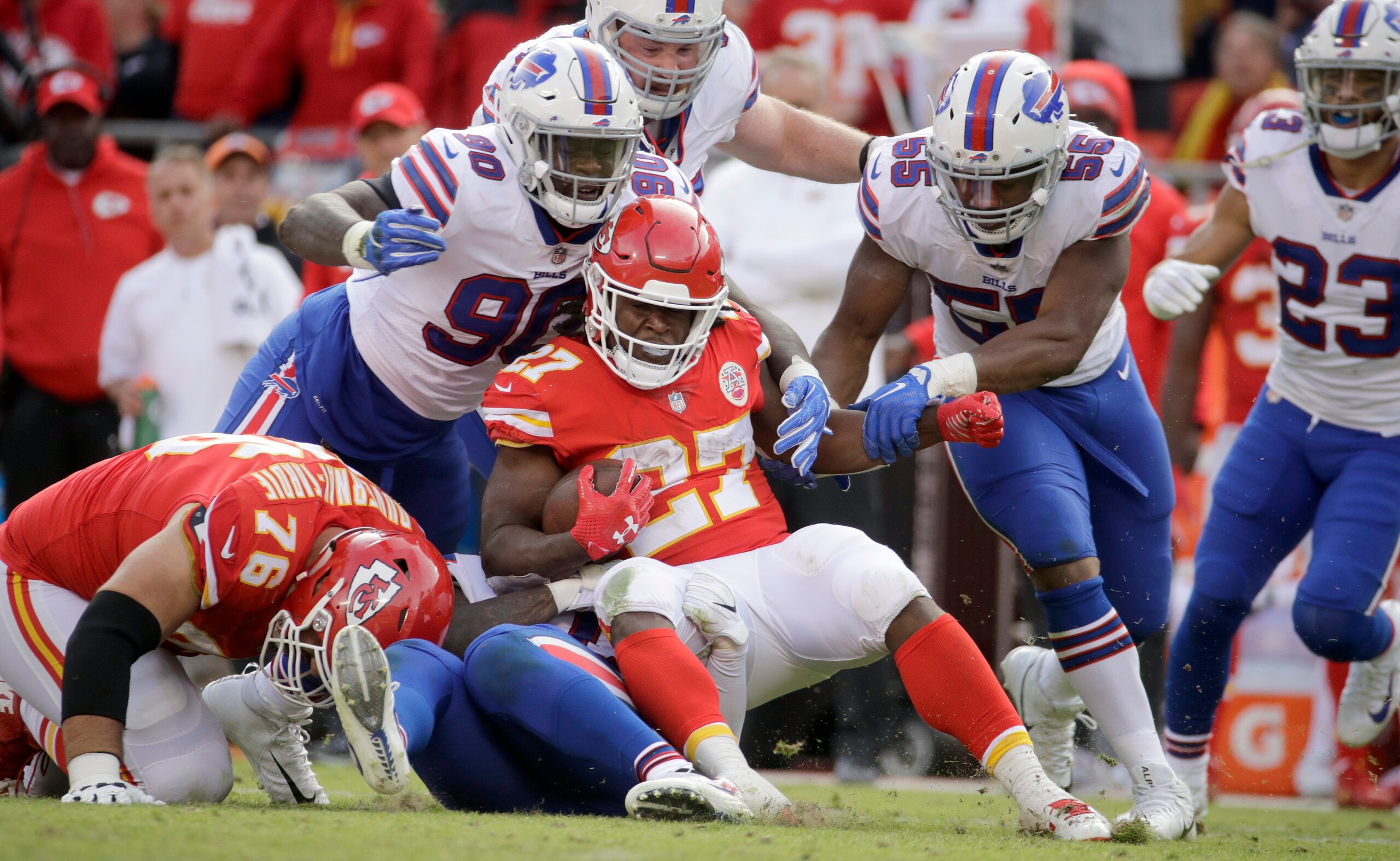
The Kansas City Chiefs went from a 5-0 start to five losses in their next six contests. The problems start up front, with an inability to establish a running game that once made Kareem Hunt look like a surefire Rookie of the Year choice.
After setting records during his blistering start, Hunt hasn't eclipsed 100 rushing yards since Kansas City's Oct. 8 meeting with the Houston Texans.
Breakdowns continue to occur in front of the first-year runner, and they tend to blow up plays. Plus, defenses are geared to stop the Chiefs ground attack.
"There's definitely more people in the box," Hunt said, per the Kansas City Star's Sam McDowell. "But we just gotta do a better job all around—myself, up front, everybody."
Slow Hunt, and it's easy to stop the reeling Chiefs offense.
Los Angeles Chargers: Run Fits
17 of 32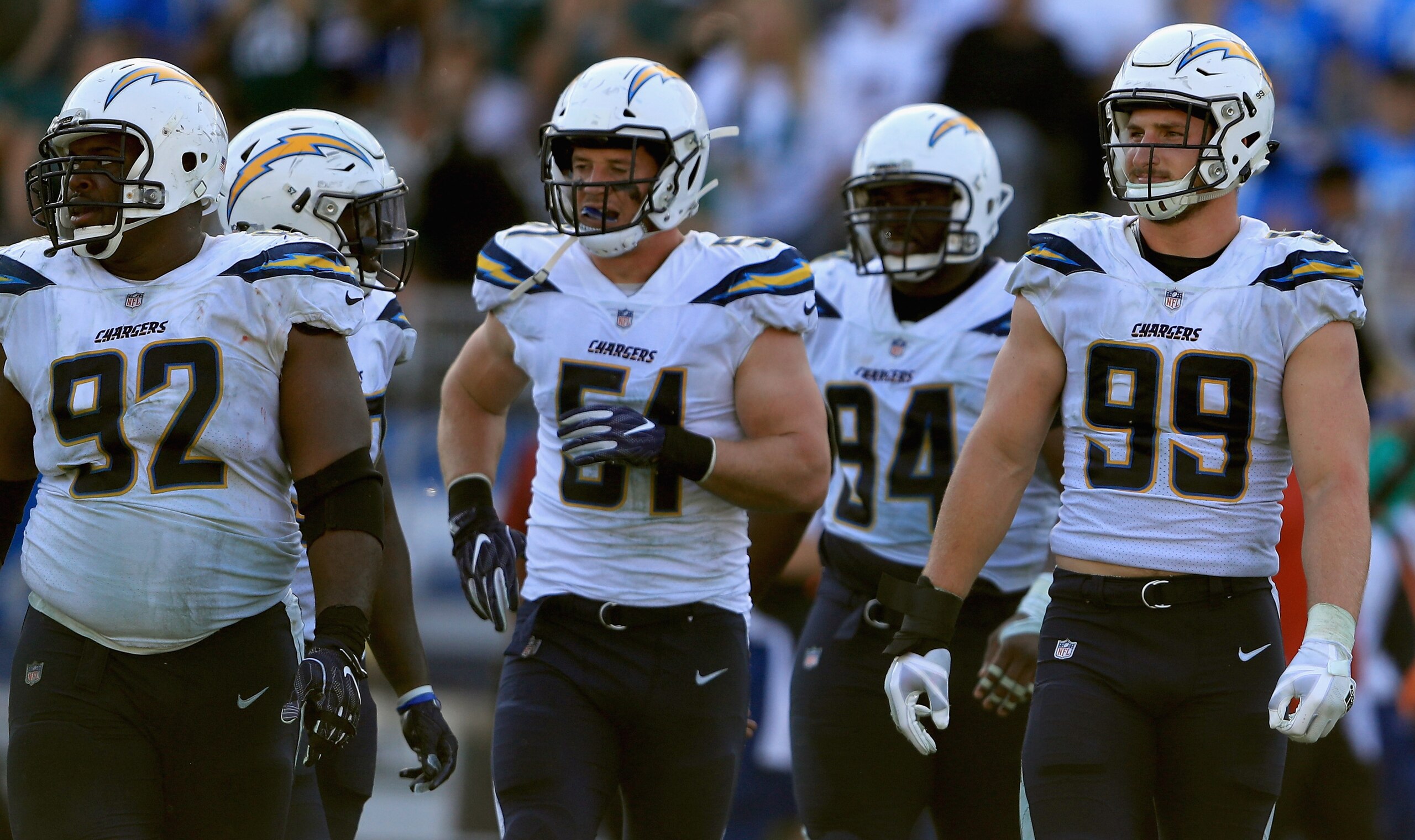
The Los Angeles Chargers feature the game's best edge duo in Joey Bosa and Melvin Ingram. Both are fantastic pass-rushers, but the Chargers defensive front isn't stout against the run.
Anthony Lynn's defense ranks 32nd overall in that department, surrendering 133.5 yards per game and 4.9 yards per carry.
Even against the undermanned Dallas Cowboys on Thanksgiving, the Chargers allowed 77 rushing yards and 4.3 yard per carry to Rod Smith and Alfred Morris.
"We've been taking a lot of time on just our fits and guys understanding it," defensive coordinator Gus Bradley said two weeks ago, per the Los Angeles Times' Dan Woike. "Sometimes when you're learning a new defense, guys are trying to figure out things on the run a little bit."
Los Angeles Rams: Mobile Quarterbacks
18 of 32
One of the offseason's best moves was the Los Angeles Rams' hiring of Wade Phillips. The Rams offense receives plenty of praise, and deservedly so. However, the defense ranks seventh overall, allowing 18.7 points per game—which is a 5.9 points-per-game improvement from last season.
But the unit still has one bugaboo: It struggles to defend mobile quarterbacks. That was evident in the team's last two losses, against the Seattle Seahawks in Week 5 and Minnesota Vikings in Week 11.
The Rams' problems are not so much about opposing quarterbacks running for yards as they are pocket mobility. Russell Wilson is one of the best at evading pressure. Case Keenum showed the ability to extend plays and find passing windows, too. Even Kirk Cousins, who is far from a mobile quarterback, was adept with subtle movement within the pocket in the Washington Redskins' Week 2 victory against the Rams.
Phillips needs to plan accordingly. Three of Los Angeles' final five contests are against Carson Wentz, Wilson and Marcus Mariota.
Miami Dolphins: Commitment to Running Game
19 of 32
Jay Ajayi's departure highlighted a big issue within the Miami Dolphins offense: There hasn't been a commitment to the running game.
Last season, Ajayi carried the ball 260 times for 1,272 yards and eight touchdowns. The Dolphins haven't come close to replicating that production. Miami's 241 carries rank dead last this season, and the team has run for 871 yards and just one touchdown.
The situation isn't going to improve with Damien Williams expected to miss two to three weeks with a shoulder injury, per NFL Network's Ian Rapoport.
Miami features a one-dimensional offense, and defensive linemen can pin their ears back to get after quarterbacks Jay Cutler and Matt Moore.
Minnesota Vikings: Quarterback Controversy
20 of 32
Controversy can derail a season, especially at quarterback. Minnesota Vikings head coach Mike Zimmer must stop dancing around the subject when asked if Case Keenum or Teddy Bridgewater will start.
Keenum earned the spot and there's no reason to rock the boat.
"Case just makes it happen. He finds a way," wide receiver Stefon Diggs said after the Vikings' 24-7 victory over the Los Angeles Rams, per ESPN.com's Courtney Cronin. "Especially back there when he gets to running around a little bit. He just creates some things."
Everything is clicking for a 9-2 Vikings squad that's won seven straight contests. Keenum doesn't need to be looking over his shoulder. Instead, Zimmer needs to name the 29-year-old signal-caller his starter and be done with it. Otherwise, unrest could develop if Keenum struggles at any point.
New England Patriots: Toughness at Point of Attack
21 of 32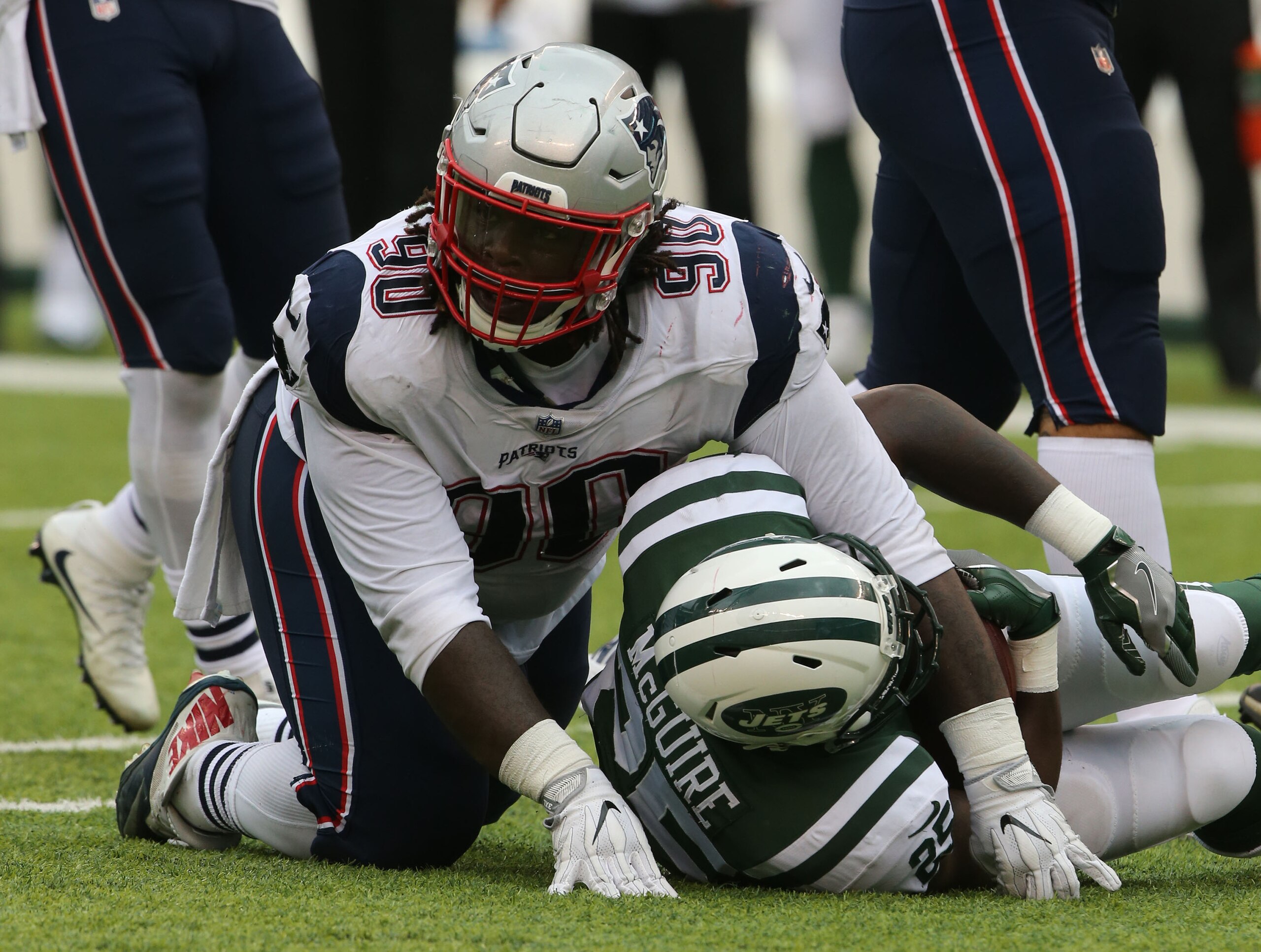
The New England Patriots pass defense took the brunt of the blame when the team started the season with a 2-2 record. The secondary's play has progressively improved since then, but the run defense remains poor.
The Patriots are tied with the San Diego Chargers as the league's worst at the point of attack, surrendering 4.9 yards per carry. Injuries have derailed New England's defensive front to a degree, and Malcom Brown's return to the lineup helped against the Miami Dolphins in Week 12.
"I think Malcom's improved pretty much every week," head coach Bill Belichick said last month, per NBC Sports Boston's Phil Perry. "I know he's definitely helping us making some significant plays for us out there and, again, eating up a lot of plays in front of him so that other guys, like Elandon [Roberts], Kyle [Van Noy], Dont'a [Hightower] and those guys, can fit in and make the tackles."
Brown can't be the only one to stuff the run. Alan Branch, Lawrence Guy, Adam Butler and Ricky Jean Francois must improve as well.
New Orleans Saints: Nonexistent Tight Ends
22 of 32
The New Orleans Saints own the NFL's second-best offense. However, a team that once relied upon its tight ends heavily now has a big hole in that department. Coby Fleener isn't Jimmy Graham, and the sixth-year tight end has been a disappointment since signing with the Saints prior to the 2016 campaign.
"Absolutely you want to go out there and prove to your teammates—and to yourself, really—that OK, I'm still good enough," Fleener said in September, per ESPN.com's Mike Triplett. "And that's on a game-to-game basis. And maybe that's not the right mindset to have, and I could probably do better in that regard. But I think building that confidence through accomplishments is something that's really helpful."
The tight end ranks fourth on the team with 22 receptions for 295 yards. The presence Drew Brees used to rely on down the middle of the field and in the red zone is gone. This run-based offense is talented yet incomplete. It's a good thing the defense finally developed into one of the league's better units.
New York Giants: Eli Manning's Benching
23 of 32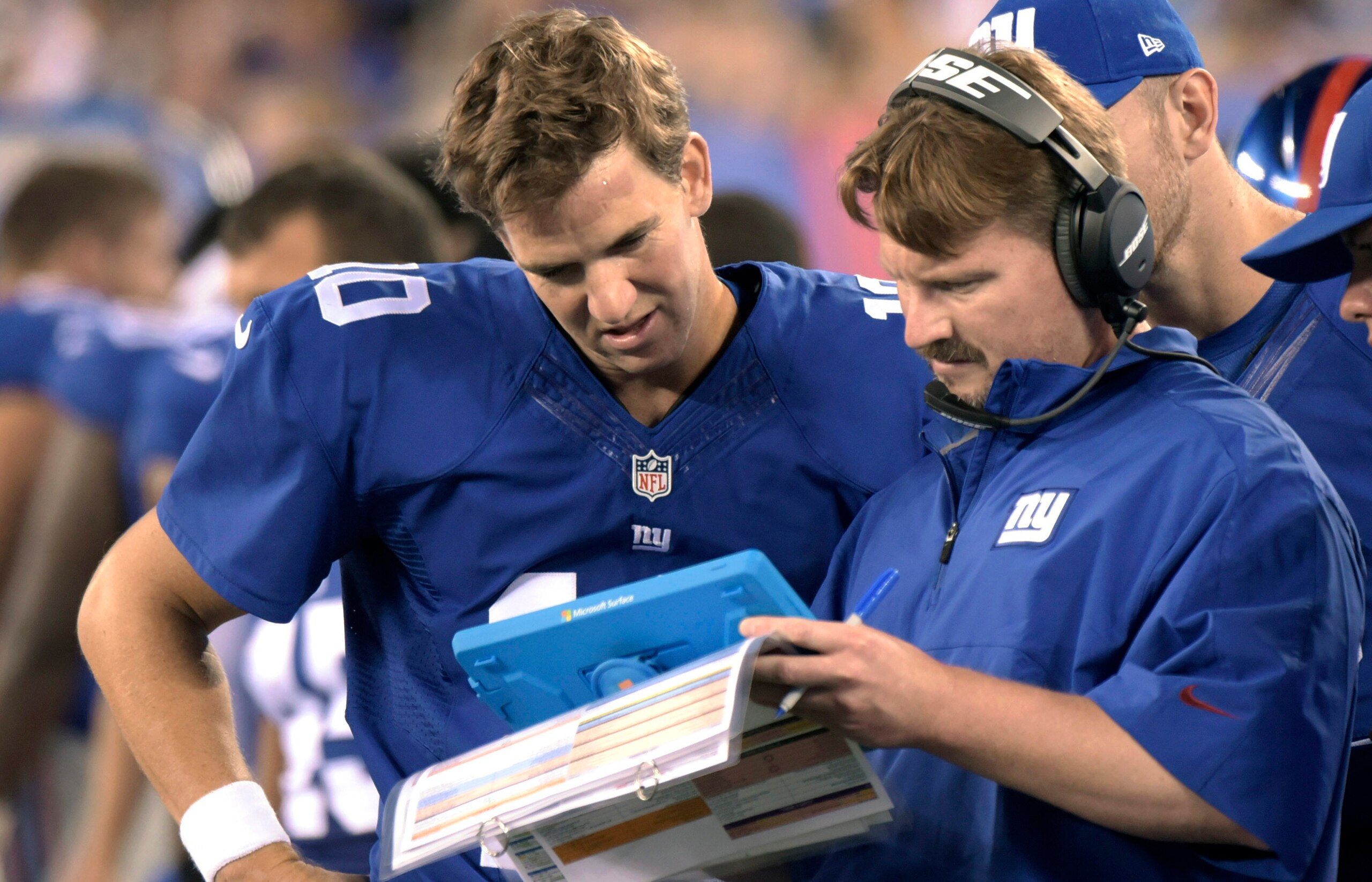
New York Giants head coach Ben McAdoo has no clue what he's doing. No further evidence is needed than his decision to play Geno Smith and Davis Webb over Eli Manning, thus breaking the 36-year-old's streak of 210 consecutive regular-season starts.
"This is not the way it should be, but unfortunately, it's where we are," McAdoo said Tuesday, per Michael Eisen of the Giants' official site. "Our No. 1 priority every week is to go win a game, but we owe it to the organization to get an evaluation of everybody on the roster, and that includes at the quarterback position."
The quarterback decision is a byproduct of poor offensive line play, a litany of wide receiver injuries, a subpar running game and terrible game plans. Manning essentially serves as the fall guy for everyone else. Has the veteran signal-caller been stellar this year? No, but he's far from the culprit.
All of a sudden, quarterback is a major problem for the Giants.
New York Jets: Fourth-Quarter Failures
24 of 32
The 4-7 New York Jets may have already surpassed every expectation, but they should have an even better record.
The Jets struggle to close out games, and their fourth-quarter failures have driven them out of the playoff conversation, even in a weak AFC. Of New York's last four losses, two came courtesy of blown fourth-quarter leads.
"The fourth quarter has been a problem all year," head coach Todd Bowles said, per ESPN.com's Rich Cimini. "Obviously, we lose our patience. Everybody is trying to make a play individually and we don't play team football in the fourth quarter. We gave away the football [game]."
Opponents have the Jets right where they want them as long as they're within striking distance entering the final quarter.
Oakland Raiders: No Defensive Playmakers Beyond Khalil Mack
25 of 32
Khalil Mack is good. No, rephrase: Khalil Mack is awesome. There's no question the Oakland Raiders feature one of the league's top defenders. Too bad he basically serves as the entire Raiders defense—which ranks 24th overall and already saw its coordinator get canned.
"Listen, I know one thing," head coach Jack Del Rio said, per ESPN.com's Paul Gutierrez. "Nobody should feel comfortable because what I’ve been watching is not good enough. Nobody should feel comfortable."
Mack can be a dominant force week in and week out, but it doesn't matter because the Raiders lack defensive playmakers. As long as offenses account for the reigning NFL Defensive Player of the Year, they're free to make plays all over the field, as the Raiders are basically helpless to stop them.
Philadelphia Eagles: Blindside Apprehension
26 of 32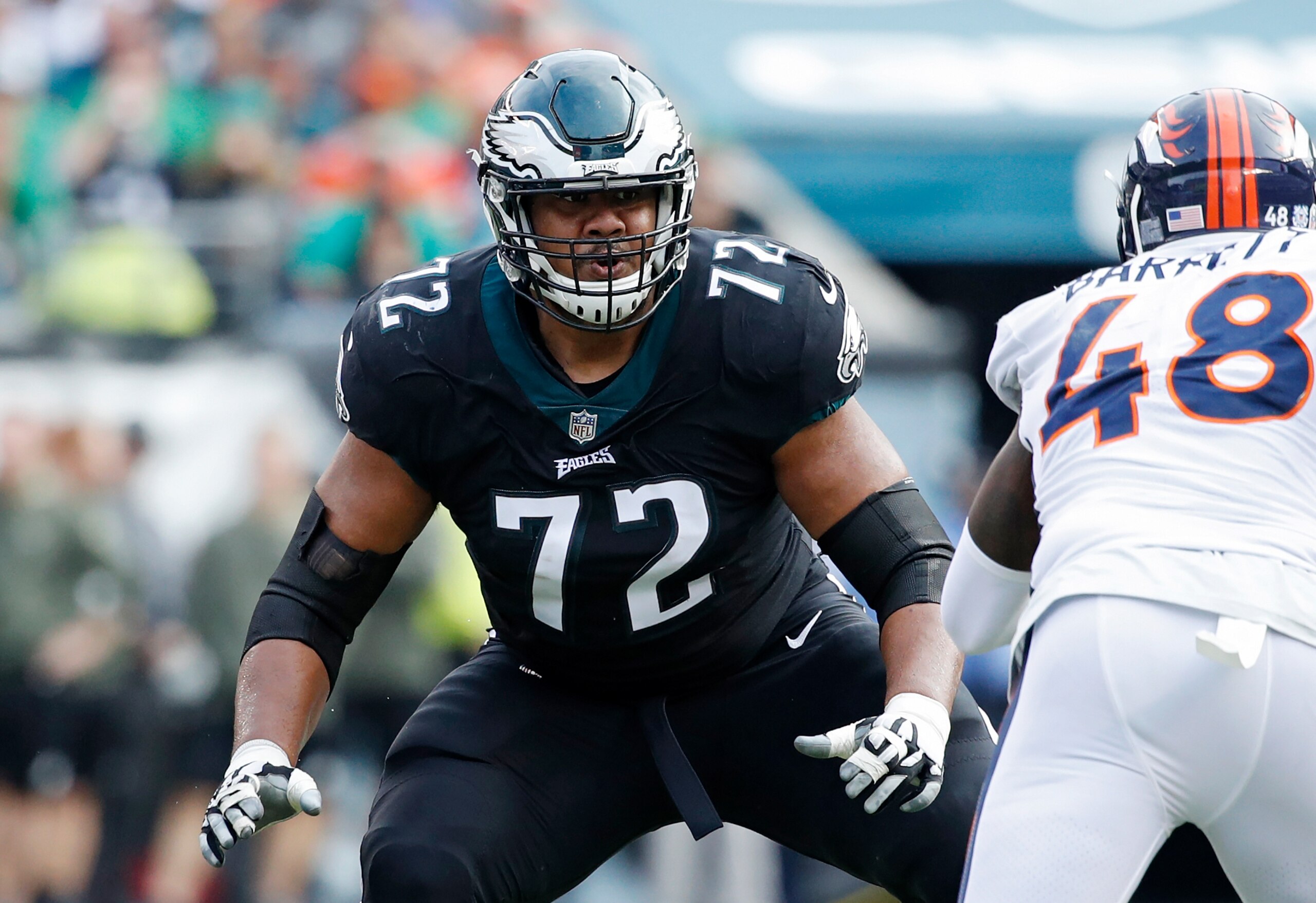
Few holes can be poked into the Philadelphia Eagles roster after the team's impressive 10-1 start. A lingering concern exists at left tackle, though.
Jason Peters suffered a season-ending knee injury on Oct. 23 against the Washington Redskins. Prior to the injury, Peters was playing outstanding football. His absence loomed large. Halapoulivaati Vaitai stepped into the lineup and has fared better than expected.
"He's another one who is incrementally getting better and better and better," head coach Doug Pederson said, per Eagles Wire's Ed Kracz. "I'm calling less protection help to his side. He's just really coming into his own. He's trusting his instinct, trusting his skill, trusting his coaching."
No one expects Vaitai to be Peters, who may be inducted into the Pro Football Hall of Fame one day. The second-year lineman can be overwhelmed and defenses will attack his side for the rest of the regular season and into the postseason. How he holds up will be a major reason behind the Eagles' possible success or demise.
Pittsburgh Steelers: Red-Zone Inefficiency
27 of 32
The Pittsburgh Steelers are loaded with offensive weapons yet struggle to score in the red zone.
Antonio Brown and Le'Veon Bell lead the NFL in receiving and rushing yardage, respectively. Martavis Bryant and JuJu Smith-Schuster are tremendous second and third options in the passing attack. And Ben Roethlisberger is a two-time Super Bowl-winning quarterback.
Even so, this exceptional group isn't counted among the league's best scoring offenses. In fact, it ranks tied for 12th overall at 23.5 points per game.
The Steelers rank 28th overall with a 46.5 red-zone touchdown percentage, per Team Rankings, while Roethlisberger completes only 52.3 percent of his passes inside the 20-yard line.
Execution often outweighs talent when the field shortens and precise play is needed to score. Pittsburgh hasn't been the most efficient offense this season despite being a top-10 offense overall.
San Francisco 49ers: System Fits
28 of 32
Any time a new regime takes over an organization, growing pains follow as it implements new philosophies. Smooth transitions are difficult to achieve. More often than not, insufficient talent is available to fit these new schemes, and a coaching staff must try to fit proverbial square pegs into round holes.
The San Francisco 49ers are still searching for all the right pieces to complete Kyle Shanahan's preferred offensive and defensive systems.
Throughout the season, the coaching staff has made changes to the lineup such as moving Eric Reid to linebacker and trading for quarterback Jimmy Garoppolo, who is starting Sunday. But there are still those like running back Carlos Hyde and defensive lineman Arik Armstead who don't appear to fit what the 49ers are trying to build.
This awkward and unsuccessful transition will continue as the 49ers discover who they are under Shanahan's supervision.
Seattle Seahawks: Offensive Line Inconsistency
29 of 32
Even though the Seattle Seahawks offensive line improved upon Duane Brown's arrival and the unit is coming off its best performance of the season against the San Francisco 49ers, concerns still linger.
According to Field Gulls' Ben Baldwin, the Seahawks' much-maligned unit has posted three positive performances. Two of those have come after the team acquired Brown. But the group has been far from perfect.
Quarterback Russell Wilson often bails out the big boys if they miss a block. His spatial awareness and mobility are special. This has allowed Seattle to rank among the league's top eight offenses. Baldwin illustrated how often Wilson was under pressure through the first half of the season, and to put it simply, the numbers were alarming.
Brown's presence helps. Right guard appears solidified with Ethan Pocic's addition to the lineup. Somehow this unit must become cohesive or eventually the offense will suffer for it.
Tampa Bay Buccaneers: League's Worst Defense
30 of 32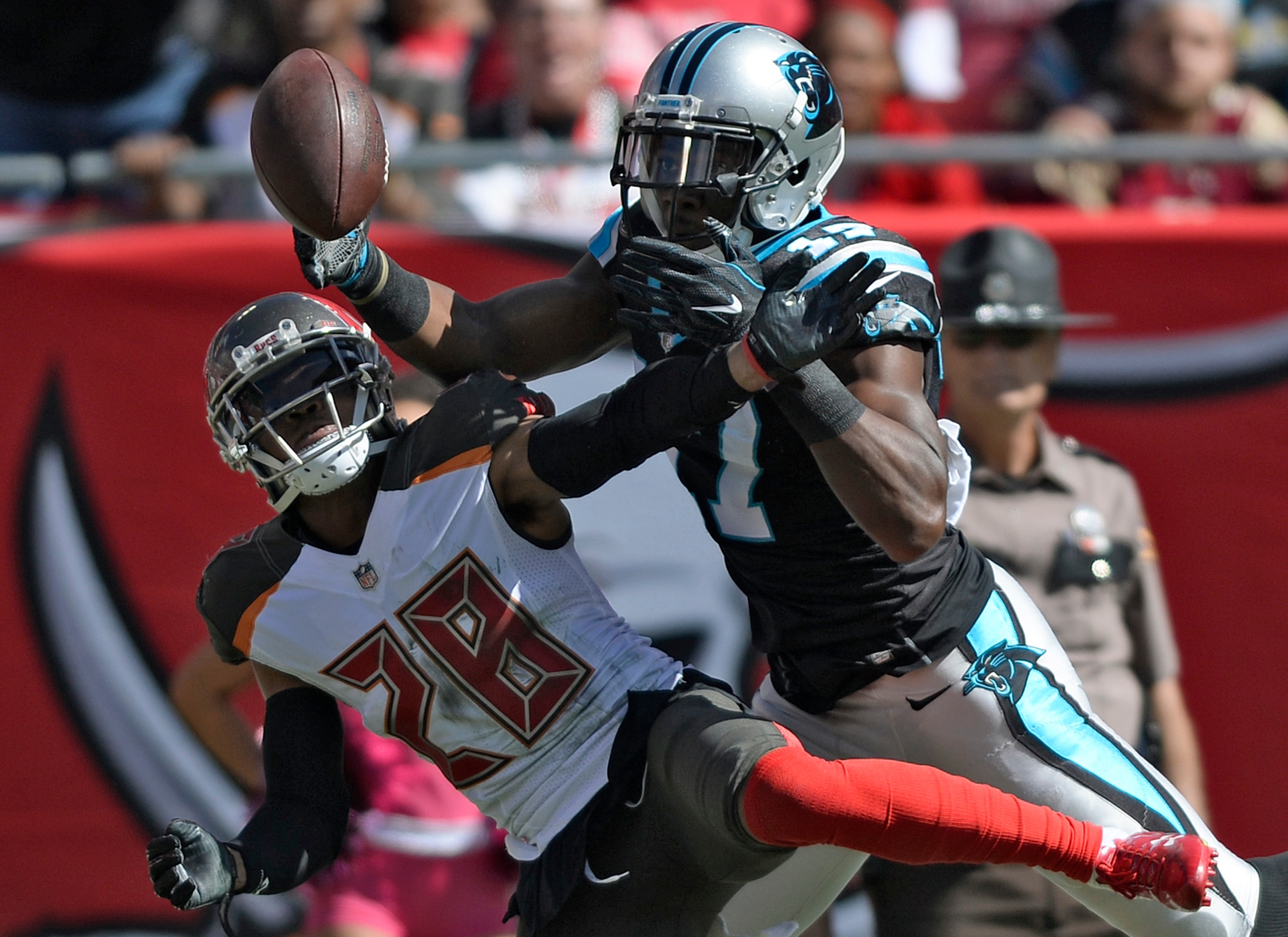
The Tampa Bay Buccaneers defense is awful in pretty much every category. Mike Smith's side of the ball ranks dead last in sacks, pass defense and third-down percentage.
All of this works hand-in-hand. The defensive front isn't doing its job by creating pressure, receivers have more time to get open, and quarterbacks have all day to find available targets.
Tampa Bay's defensive front struggles to make opposing signal-callers uncomfortable, which is where everything begins. For too long, the Bucs defense relied on Gerald McCoy to be a disruptive force. He's still fantastic, but he can't shoulder the entire load.
McCoy and fellow defensive tackle Clinton McDonald have combined for eight sacks. The rest of Tampa Bay's defensive linemen have managed five sacks. The Bucs have no legitimate edge presence, and it's easy for offenses to identify and slow their pressure packages.
Tennessee Titans: Explosive Wide Receiver Plays
31 of 32
Corey Davis' injury-plagued rookie campaign stunted the Tennessee Titans' offensive evolution. When the Titans drafted Davis with the fifth overall pick, they knew his injury history, though. What's more problematic is the fact the team didn't draft or acquire another receiver who is a legitimate outside presence.
Rishard Matthews and Eric Decker are both more effective working out of the slot, even though they've spent plenty of time outside the numbers. Matthews leads the team with 626 receiving yards, which ranks 27th overall. The offense ranks 25th overall with 27 passes of 20 or more yards.
Last year, the Titans built an identity around a smashmouth running game and Marcus Mariota's efficient quarterback play. The progress has been halted without an explosive outside threat. In fact, the Titans passing game has regressed this season and averages 13.8 fewer yards per contest.
Mariota is pressing and has already thrown a career-high 12 interceptions with five games to play because he doesn't have a reliable target beyond tight end Delanie Walker.
Washington Redskins: Talented Outside Wide Receiver Targets
32 of 32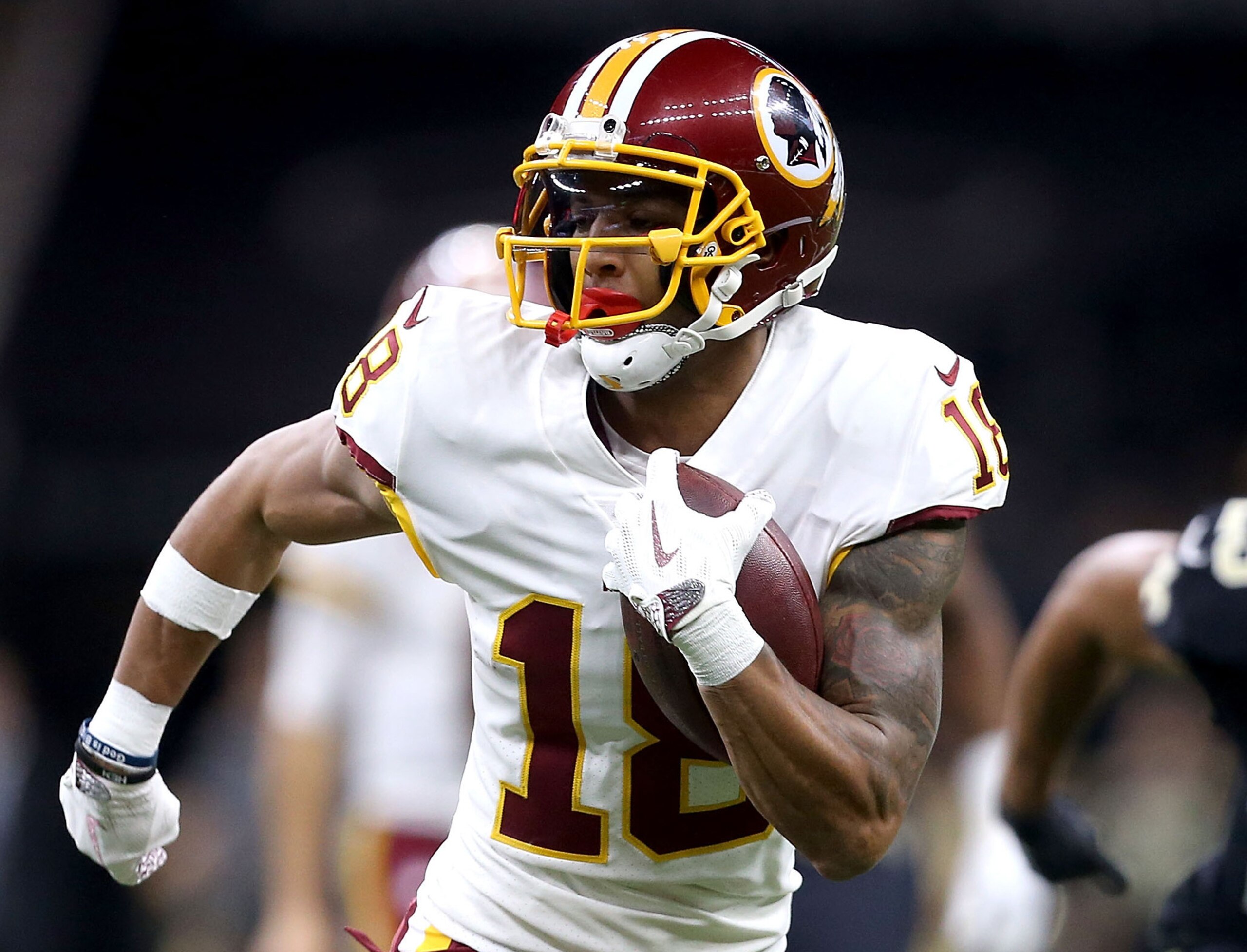
Much like the Tennessee Titans, the Washington Redskins don't consistently win outside the numbers. This is because of the construction of their offense and Kirk Cousins' passing attributes.
Head coach Jay Gruden takes an inside-out approach with his passing attack. Washington's tight ends and slot receiver Jamison Crowder are the offense's best options.
Washington's outside receivers suffered a blow when the team placed Terrelle Pryor Sr. on injured reserve on Nov. 20, but he struggled through large portions of the season anyway. His lack of production created an opportunity for 2016 first-round pick Josh Doctson to be featured. He's yet to provide a breakout performance, though.
Cousins isn't a strong-armed downfield passer. He's at his best when he can pick apart defenses at the short and intermediate levels. But Washington would benefit from an outside presence who consistently threatens a defense and opens up the rest of the field. Unless Doctson explodes late in the season, the team doesn't have one.
All stats via Pro Football Reference or NFL.com unless otherwise noted. Contract numbers courtesy of Spotrac.
.jpg?w=2560 "Steelers Buccaneers Football")
.jpg?w=2560 "Eagles Jaguars Football")