
Tactical Flexibility Gives Spurs Advantage over Arsenal in North London Derby
Despite the clear shift in momentum and power over the last two or three seasons, it still feels a little odd that Tottenham Hotspur should come into the north London derby as the stronger, higher-placed, better-fancied side.
For so long, Arsenal have ruled this particular roost, boasting the superior players and, to be frank, the superior mentality. The likes of Thierry Henry, Dennis Bergkamp, Cesc Fabregas, Robin van Persie and more have dominated this fixture in the past, paving the way for red-and-white superiority.
In 2017, though, the Gunners enter the contest as underdogs; they are far removed from the aforementioned illustrious Arsenal performers, and it's the Spurs equivalents—Harry Kane, Dele Alli and Christian Eriksen—who capture the headlines and stand to be the pivotal role-players in the eyes of many.
TOP NEWS
Live Highlights and Viral Moments 🍿

Final Men's Ballon d'Or Rankings 📊

Carrick Replacement Options 📝
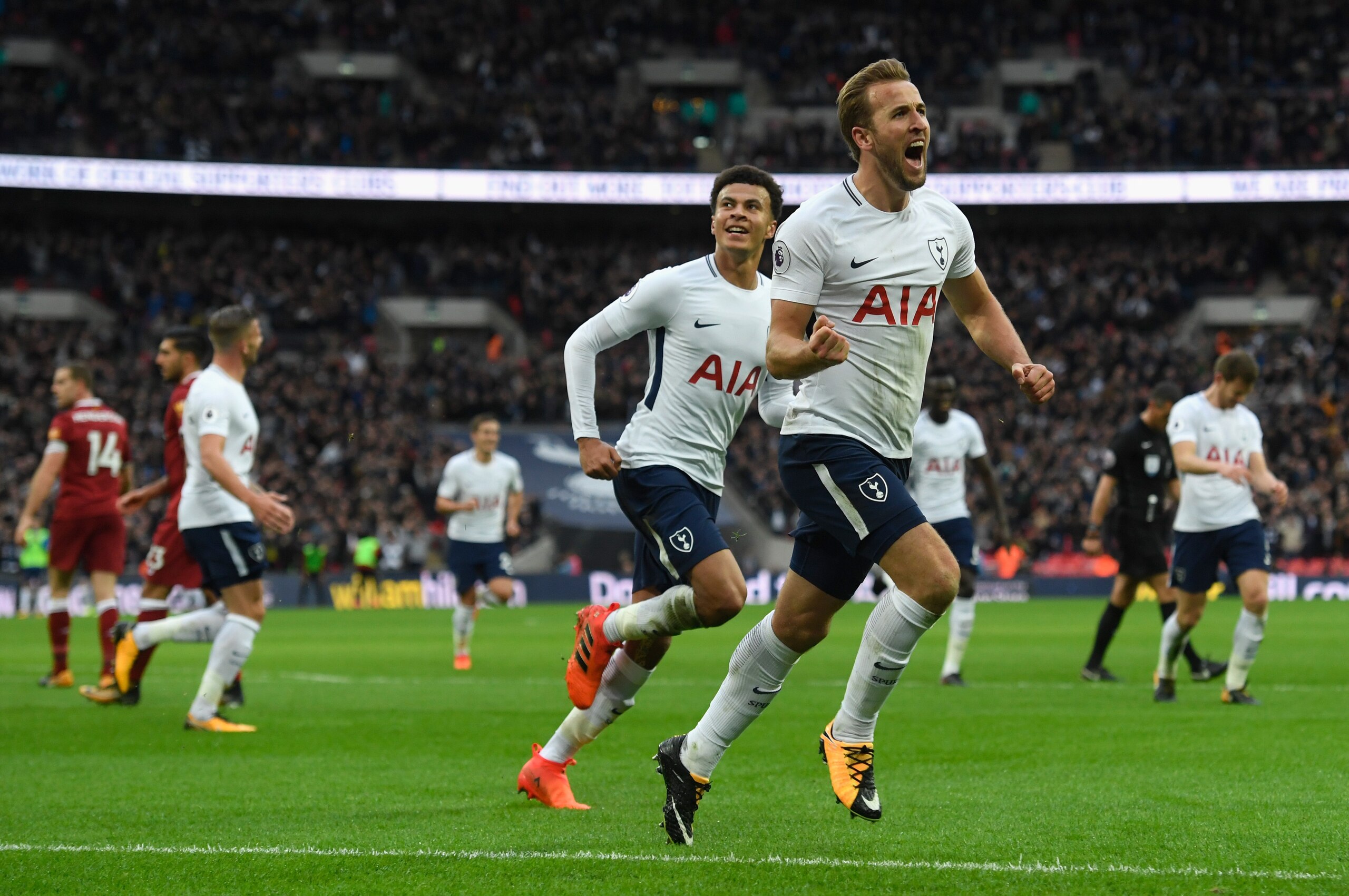
The quality of the playing staff has rebalanced, favouring Spurs ahead of Arsenal in the on-paper battle, but that's not the sole factor at play in determining the former as the stronger side. The chief difference between the two teams is, in fact, the men standing at the helm of each club.
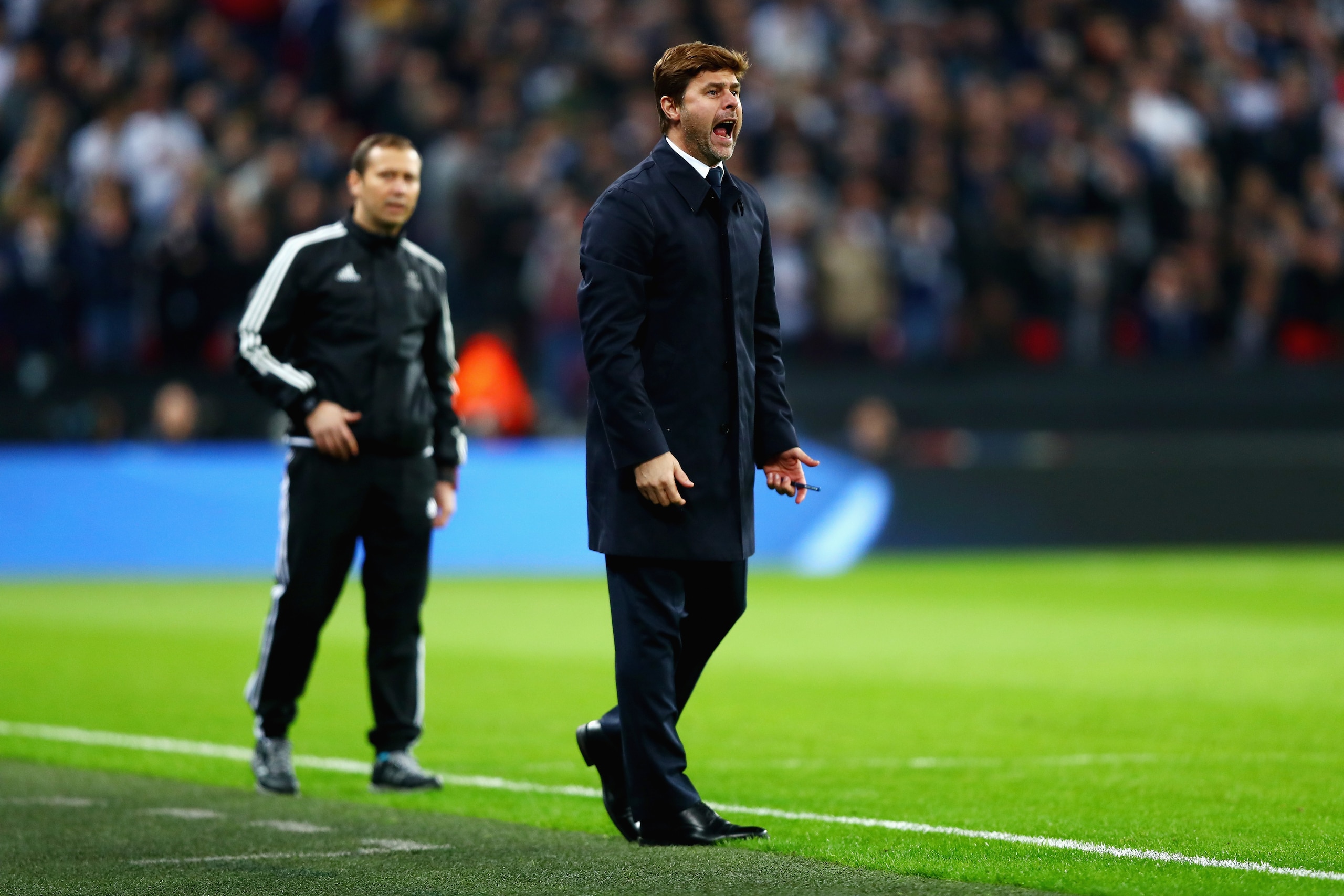
When assessing the impending tactical head-to-head between Mauricio Pochettino and Arsene Wenger, one thing becomes clear: The two could hardly be more different in their approach and outlook to the game.
The opening salvo of 2017-18 matches has underlined that, with Pochettino frequently tweaking his formation and personnel according to his opponent, while Wenger remains wedded to a single shape regardless of who is available, or who he's facing.
Tottenham should feel secure in the knowledge that, they will line up against a 3-4-3 formation on Saturday.
Wenger could have been forgiven for reverting to a back four in the week before the international break, with Rob Holding, Per Mertesacker and Shkodran Mustafi injured, but he utilised Mathieu Debuchy at centre-back against Red Star Belgrade before playing Francis Coquelin there against Manchester City (he made a few excellent tackles, to be fair).
Even Arsenal's social media staff presumed their lineup against City must surely be a reversion to a 4-3-3, with Coquelin at deepest in midfield, and created that when releasing the XI in the form of an infographic.
One minute into the game, though, and it became clear Coquelin was at the centre of a back three, and it wasn't long before he was charging out to pursue withdrawn runs from forwards (something Wenger was forced to remedy later on).
If that doesn't signify tactical rigidity, what does?
It's unlikely Wenger will have to resort to something so drastic this time, as Mertesacker and Holding have recovered from their respective injuries, giving Arsenal a third natural centre-back option alongside Nacho Monreal and Laurent Koscielny.
Given the magnitude of the game, it will probably be Mertesacker who gets the nod; he has the experience many crave in these scenarios and is Arsenal's best bet at matching Kane in the air.
Instead, it will be the middle third—and how that battle develops—that should cause Wenger consternation in the buildup to the game.
Granit Xhaka and Aaron Ramsey have started nine of a possible 11 Premier League matches together in a central two so far and will take to the pitch together on Saturday, but what will they face, and can they overcome it?
Spurs have shuffled their midfield personnel and shape a fair bit this season—partially because of injury but also to prevent them from becoming too predictable. It means Xhaka and Ramsey won't know what they are up against until the teamsheet is out; it could be a midfield three, it could be a two-man partnership with a No. 10 ahead, or it could be something else.
Further clouding the issue are Spurs' injury problems.
Dele Alli and Harry Winks are doubts; Son Heung-Min has travelled a long way during the international break; and with Toby Alderweireld injured, Eric Dier likely has to drop into the defensive line.
It could be an Alli-Mousa Dembele-Christian Eriksen trio; it could be Winks-Dembele-Eriksen; it could even be Dier-Dembele in a two.
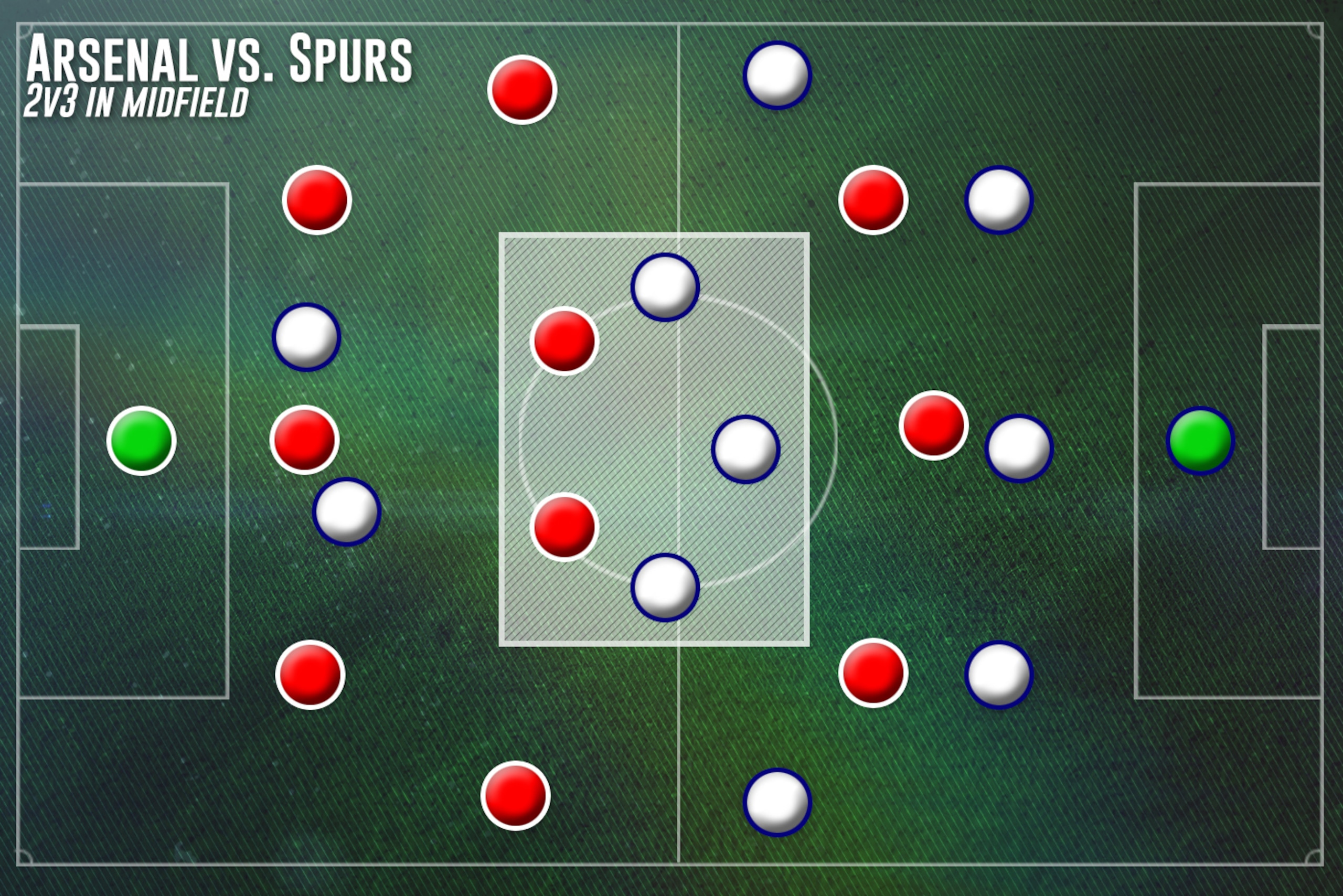
If Pochettino opts for a three, they will boast the man advantage over Arsenal's two and attempt to spring Eriksen and/or Alli forward into space from deep. Xhaka and Ramsey have immense trouble tracking runners and fulfilling defensive duties one-on-one; if they are forced to fight three versus two, it will be even harder.
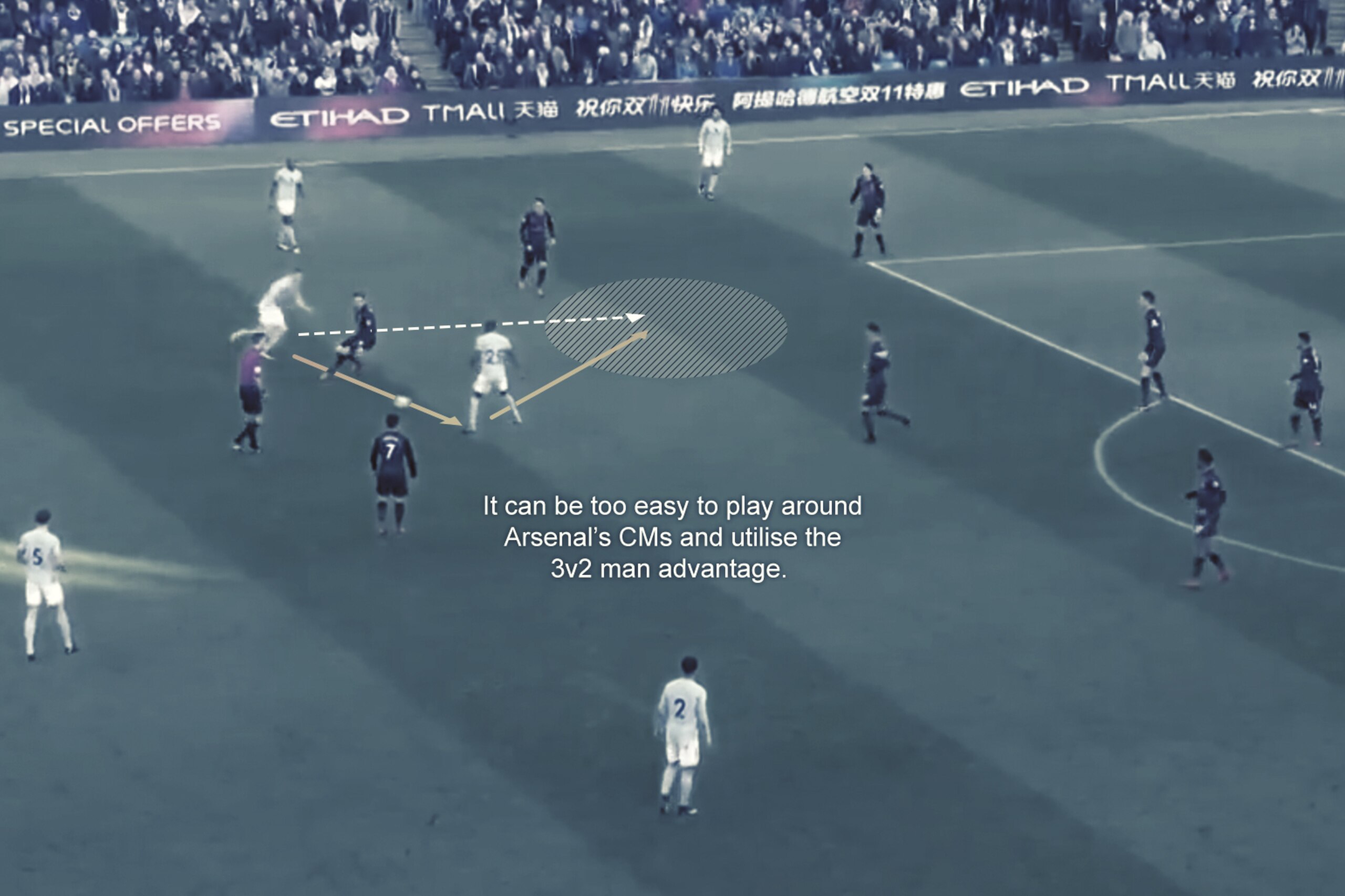
If Spurs go for a two-man central midfield, sliding into more of a 3-4-3 shape and utilising Son and Eriksen wide of Kane, they will match up two-versus-two, but they have shown in the past they are well capable of winning an even battle. They are so physical, tactically smart and smooth in possession, and they’ve overcome sterner challenges (against Chelsea's N'Golo Kante and Nemanja Matic last season, for instance) than this.
That Tottenham can shift between shapes and personnel but retain a core playing style is symbolic of their intense cohesion and flexibility. It makes them impossible to forecast accurately—particularly given Pochettino drops the occasional eyebrow-raiser, such as when Kane started alongside Fernando Llorente at the Santiago Bernabeu in October.
Wenger's Arsenal stand the complete opposite; they are easy to prepare for. It gives Tottenham the upper hand in this fixture ahead of kick-off despite the match being at the Emirates Stadium. And in an age of real tactical progression, it highlights the growing gap between the two sides—instigated by their respective managers.
All statistics via WhoScored.com
.jpg?w=2560 "Chiefs Giants Football")
.jpg?w=2560 "🚨 Week 8 AP Top 25 Poll")
.jpg?w=2560 "Baker Gets Glove From Rays 🧤")
.jpg?w=2560 "Steelers Roll Saints in Paris")
.jpg?w=2560 "NFL investigating Eagles")
.jpg?w=2560 "5 Teams Eyeing Jonathan Taylor")
.jpg?w=2560 "Updates from EVERY Game")