

Remembering the Night Zlatan Destroyed England 5 Years on
As Sweden's Friends Arena celebrates its fifth birthday, it has already crammed plenty of drama into its relatively short life as an international venue.
It was in a billowing atmosphere in Solna, just to the north of central Stockholm, that Cristiano Ronaldo single-handedly dragged Portugal to the World Cup in November 2013. As recently as June, it was where an exhausted Ola Toivonen heaved in a famous stoppage-time winner against France from the centre circle after Hugo Lloris' fluffed clearance.
For as long as it stands and hosts thrilling moments, it feels reasonable to suppose there won't be many feats that catch the imagination quite as much as the four goals scored for the home side on the night of its inauguration by—inevitably—Zlatan Ibrahimovic.
TOP NEWS

Final Men's Ballon d'Or Rankings 📊
Highlights and Viral Moments 🍿

J-Dub Suffers Gruesome Injury
Arguably, the night of November 14, 2012—when Sweden's iconic captain and talisman trimmed England to bits—set the tone for the Friends Arena's short but pulsating history so far.
It was also the night Ibrahimovic made it his own personal kingdom.
"That stadium became synonymous with Zlatan's reign in Sweden and that game a reference point as it, in a way, crowned him as the king of Swedish football," Sport Expressen journalist Noa Bachner told Bleacher Report. "The national team revolved around him from that day—perhaps some time before that as well, but without question from that day."
"Has there been a better performance from an opposition striker in an England fixture?" asked the Guardian's Daniel Taylor in his match report.
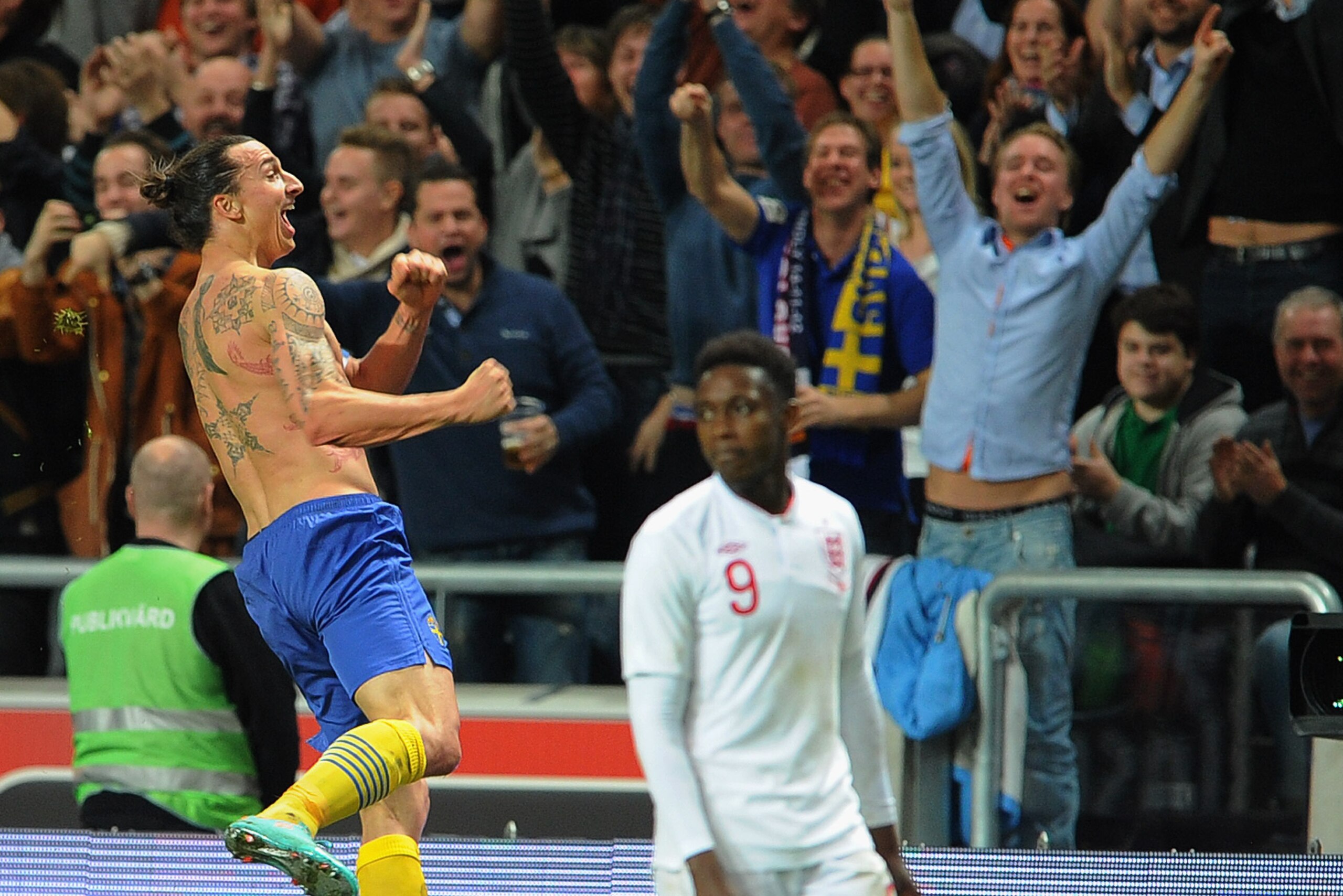
Maybe so, maybe not, but there have been few more eye-catching or memorable. It is all distilled in the coup de grace, the fourth goal, which didn't change the direction of the result but did mark the occasion all on its own.
Not that there was anything lacking in the hat-trick that preceded it. The opener was deftly dispatched with the outside of the right boot past Joe Hart, and the second—bringing Sweden level—finished a neat chest control with a firm volley. Number three, a free-kick hit as cleanly as you could demand, combined power with unerring accuracy.
That made him the first player to score a treble against England since Marco van Basten in Euro 1988. Historic enough, you would think.
Yet Ibrahimovic's fourth, in stoppage time, really defined the occasion and the achievement.
"(The night) was special but not so much because of him defining that stadium as his own but rather the fourth goal," Bachner added. "It illustrates his defying of physics and logic, and the brand he loves to live and communicate; that he's basically expanding our minds, bordering on being fiction."
In the intervening years, Hart's role in it has been criticised but that is overly harsh. The England goalkeeper's decision to rush from his area to meet the long ball through the centre was a sound one. His attempt at a headed clearance was less definitive, but Ibrahimovic, with his back to goal, still had plenty to do.
Many smaller, slighter, more nimble players would have struggled to execute the finish subsequently applied by the No. 10. That's if they'd had the vision to see the opportunity or the daring to attempt it.
Scoring an overhead kick is always an achievement. Managing it from outside the penalty area, sending the ball in without bouncing, over a lunging Ryan Shawcross stationed on the line, was something else.
When England led 2-1, Taylor noted in his report the travelling fans "loudly mocking Ibrahimovic at this point as a substandard version of Andy Carroll." Until 12 minutes from the end of standard time, it looked as if they would be able to get away with it. It feels like at that point, the striker simply decided to grab the game by the throat.
That it was against England, a footballing nation slower than any to succumb to Ibrahimovic's charms, really mattered to the man himself, according to Bachner.
"The two goals he scored for Barcelona at Arsenal (in 2010) started to contradict the description of him as a big-mouthed show-pony, but that game put serious doubts in the collective mind of English football," he said. "I know it mattered to him, because his reputation was brilliant in all areas of Europe where football opinion is important, apart from Britain."
It's not the first time the English footballing public have done this, of course. It is quite remarkable to think, in retrospect, that some genuinely believed Lionel Messi's brilliance was somehow incomplete before he finished the anomaly of never having scored against English opposition until his goal against Manchester United in the 2009 Champions League final.
There is no evidence this ever made a jot of difference to Messi. As for Ibrahimovic, it is perhaps another story.
"I think the British doubts played a role in him going to Manchester United," Bachner said. "I remember standing in the mixed zone after he'd scored two goals to win United the League Cup last season, milking the press and their admiration for his ability. He loved it. He loves being proved right, and he loves constructing enemies only to beat them.
"His fight against real and imaginary opponents has been a constant theme throughout his career. Defeating England is one of the crown jewels."

That night, and that goal, meant something on a business level for Ibrahimovic too, with Bachner pointing out "the businessman with whom he started A-Z (Petter Varner) watched from the stands and decided to put forward his offer of a joint venture, being completely taken aback by the fourth goal's acrobatics."
The strike also won Ibrahimovic the 2013 Puskas Award, though this is little more than a footnote in a memorable night in Swedish football's (and his own) history.
The curious thing about that night in Solna is how it overshadows an even greater collective achievement a month before, when Sweden recovered from 4-0 down in a World Cup qualifier in Berlin's Olympiastadion to take a point, with Ibrahimovic scoring the first.
While he is now Sweden's glorious past and their impressive progress as a group since his retirement—highlighted by their gallant efforts in toppling Italy in their World Cup qualifying playoff—points to a bright future, his presence remains.
That quadruple, and that goal in particular, lit the blue touchpaper for Sweden's new home, instantly allowing it to step out of the imposing shadow of the Rasunda Stadium, which had hosted the nation's World Cup final against Pele's Brazil some 56 years before.
As he himself might put it with a grin, that's the power of Zlatan.
.jpg?w=2560 "Rams Raiders Football")

.jpg?w=2560 "Rodgers Iced Out on Plane 💎")

.jpg?w=2560 "Packers Safety Slams Refs 🤬")

.jpg?w=2560 "🚨 Week 8 AP Top 25 Poll")
