

The late, great sportswriter Ralph Wiley once wrote, “A man’s got to know his own limitations. If he doesn’t, his coach should.”
True, but coaches also need to know their own limitations and preferences, and when to transcend them. Every year in the NFL, there are teams that start their seasons in underachieving fashion, either all across the board or at a position or two—and it’s up to the coaching staff to present and provide solutions.
Of course, when we’re talking about mid-season adjustments, as we now are, there’s only so much you can do. If more than half of your offensive line can’t seem to block its way out of a proverbial paper bag (Hello, Seattle) or your entire secondary is a birthday party for opposing quarterbacks every week (Hello, Oakland), not much you can change about that until the offseason comes around. Personnel is personnel, to a degree.
But midseason adjustments can make an enormous difference, and there are teams with the personnel needed to put up better records than they currently have. In situations like that, it’s possible to point to one possible change in scheme or personnel that could turn a season around.
So, here are eight teams in various states of stasis, and how they might crawl out of their issues.
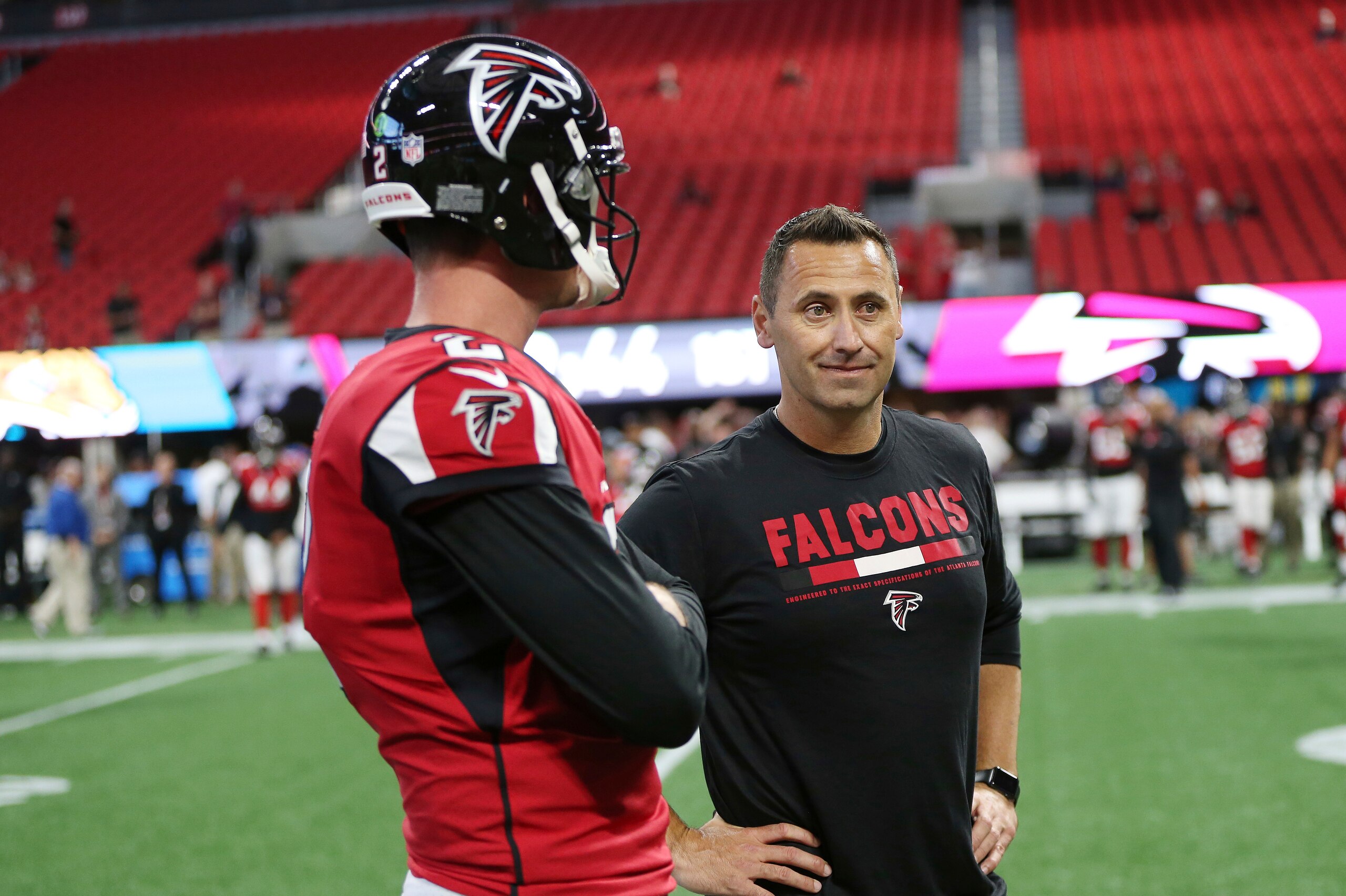
Atlanta Falcons: Bring Pre-Snap Motion Back to the Passing Game
1 of 8
No matter how you spin it, and no matter what stats you use, and no matter what game you watch, one thing is abundantly clear: The Atlanta Falcons offense, the same one that led them to Super Bowl LI, is broken. Quarterback Matt Ryan has regressed mightily, the running game isn’t what it used to be, and a team that lost five games in the 2016 regular season has already lost four games this season. Atlanta is third in the NFC South, and the playoffs look like a distant possibility at best.
This is more than the Super Bowl Loser’s Curse. The real root of the problem lies in San Francisco, where former offensive coordinator Kyle Shanahan is the new head coach. When Shanahan left for the Bay Area, the Falcons decided to replace him with Steve Sarkisian, the former Washington and USC head coach who has limited experience at the NFL level—his last pro job was as the Oakland Raiders quarterbacks coach in 2004.
Sarkisian’s effect on Atlanta’s offense has been profound in a bad way, and the reason is what he’s not doing that Shanahan did—the implementation of pre-snap motion. Shanahan had a great gift for aligning and shifting his offensive personnel in ways that would not only give Ryan the right kind of read as to what defense he was facing, but also give Ryan matchup advantages. Under Shanahan, Ryan would frequently see huge receivers covered by smaller slot cornerbacks and quick running backs blowing past linebackers—all predicated on pre-snap motion and forcing the defense to spread horizontally in ways it didn’t want to do.
Now, with a far more static picture to present to defenses, Ryan has to make tougher throws against tighter coverages, and he’s not really equipped to do that at a Tom Brady or Aaron Rodgers level. Ryan needs scheme help to win, and that’s not an indictment of his talent. Most quarterbacks do. And if Sarkisian doesn’t start pulling a few pages from his predecessor’s playbook, the Falcons will continue to struggle.
New England Patriots: Attack No. 1 Receivers with More Man Coverage
2 of 8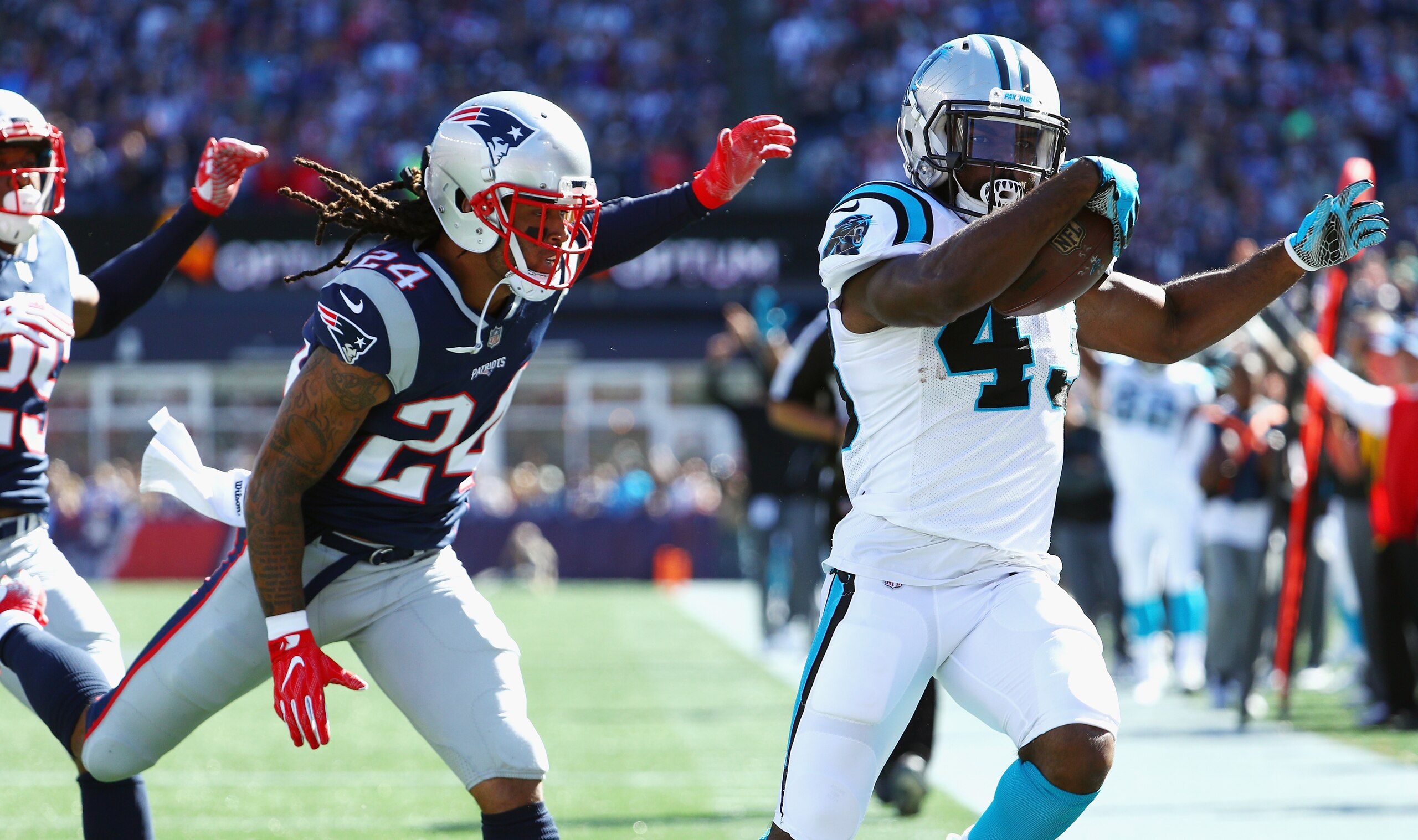
When the New England Patriots signed former Buffalo Bills cornerback Stephon Gilmore to a five-year, $65 million contract with $31 million guaranteed in March, they certainly expected more than they’ve seen from the veteran. Gilmore has missed the last three games with a concussion, and he’s scheduled to return to play against the Denver Broncos this Sunday. When he was playing in New England’s man/zone situational switches, Gilmore was often out of place, and he hardly looked like a player worth such a contract.
It’s one of the main reasons the Patriots currently have the league’s worst pass defense, allowing 2,364 passing yards in just eight games, and 16 touchdowns to just six interceptions.
The issue is clear: Gilmore is not a good zone cornerback. He never has been. He wasn’t last season when the Bills asked him to play more passively and reactively, and he wasn’t good in New England’s schemes that asked him to move with other defensive backs in switch and bracket concepts. If he has the freedom to move with his receiver through the route, Gilmore has the physical ability to stick and stay with just about anyone, and some athletes are far more comfortable with schemes that have them thinking less and doing more.
Bill Belichick is obviously one of the better defensive minds and most adaptive coaches in NFL history, so you would expect that he and defensive coordinator Matt Patricia already realize this. In Gilmore, the Pats now have a cornerback who can match up in true man coverage and win, and they haven’t really had that on a play-to-play basis since Darrelle Revis. Belichick and his staff can still play zone games with their other defensive backs if they so choose—safeties Devin McCourty and Duron Harmon are especially good at that. But now that Gilmore will return to the field, the quickest way to start turning around this atypically awful pass defense is to let their new star do what he does best.
Carolina Panthers: Make Christian McCaffrey the Move Player He Should Be
3 of 8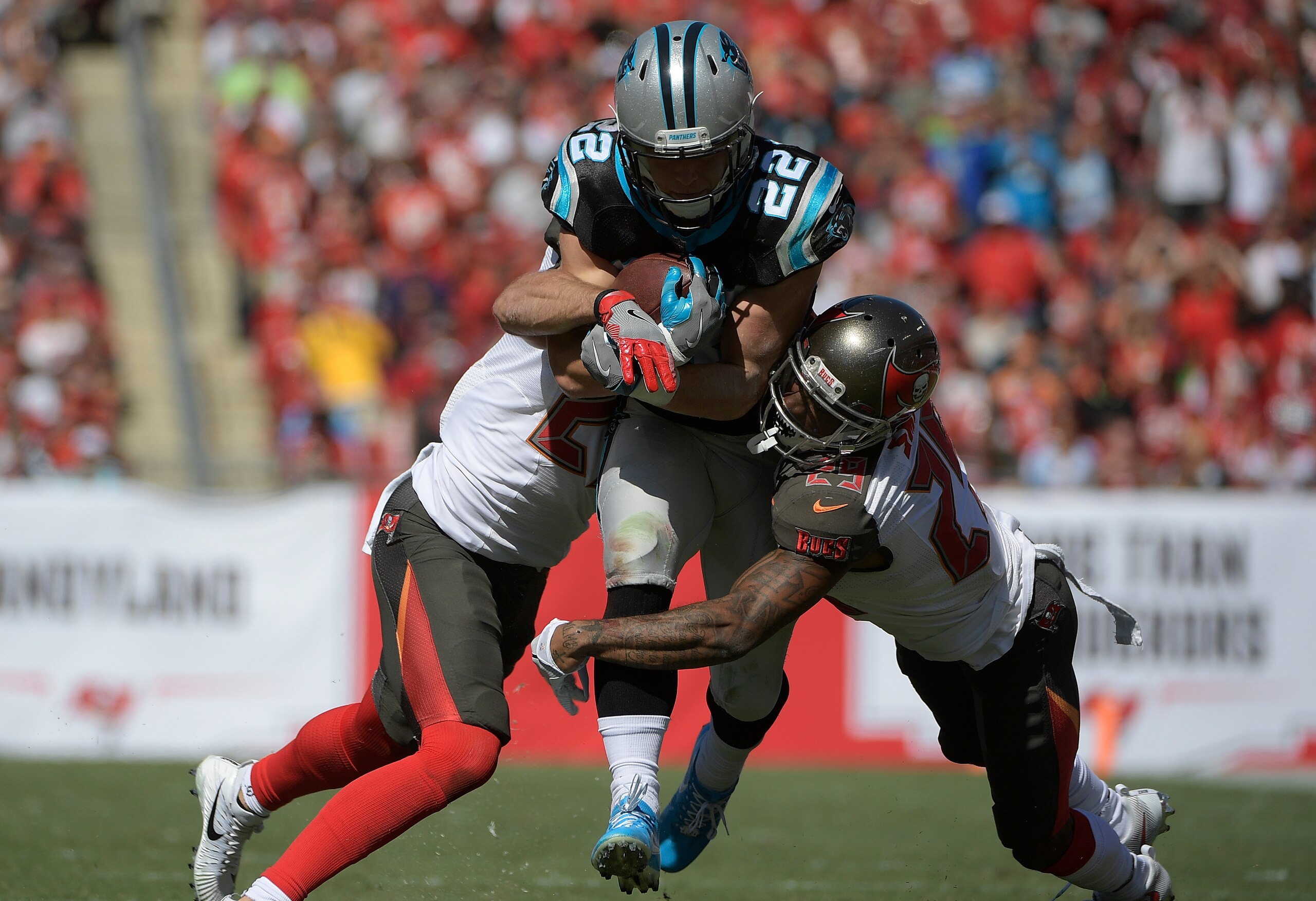
The Carolina Panthers didn’t select Stanford running back Christian McCaffrey with the eighth overall pick in the 2017 draft to be a between-the-guards runner and basic screen receiver. At least, we think they didn’t. Maybe they did, which would be a goofy set of assignments for a 200-pound running back who showed his tremendous versatility in college by racking up 2,664 yards from scrimmage in 2015, and 1,913 yards from scrimmage in 2016.
McCaffrey was able to do that for Stanford because he’s a dynamic outside runner with a feel for when to bend the edge and get upfield, and he’s a great receiver on everything from simple wheel routes to plays in which he motions from the backfield to the slot and hurries up the seam. McCaffrey came into the NFL with a full palette of routes, so it’s weird to watch the Panthers avoid using him as he was used so well in college. Right now, he’s rushed 64 times for 183 yards and a touchdown while averaging 2.9 yards per carry, and caught 54 passes for 406 yards and two touchdowns.
The problem is not in frequency of opportunity for McCaffrey; it’s in philosophy of deployment. The Panthers took McCaffrey in the first round because Cam Newton was getting hit far too often last season during receiver routes that took too long to develop, and the obvious thought was that with McCaffrey, Newton would have an escape hatch to help him get the ball out quickly. This would also mitigate some of the issues with Carolina’s offensive line, which have not gone away.
So, perhaps move McCaffrey around the formation pre-snap. Let slower linebackers try to keep up with him on intermediate angular routes. Put him in multi-receiver formations where he can get an edge in coverage, or take shorter coverage away from other receivers. The Panthers selected this running back so early because of everything he can do; it now behooves them to let him do all of those things.
.jpg?w=2560 "Chiefs Giants Football")
.jpg?w=2560 "Titans Colts Football")
.jpg?w=2560 "Steelers Buccaneers Football")
Green Bay Packers: Use Brett Hundley’s Mobility to Create Easy Receiver Reads
4 of 8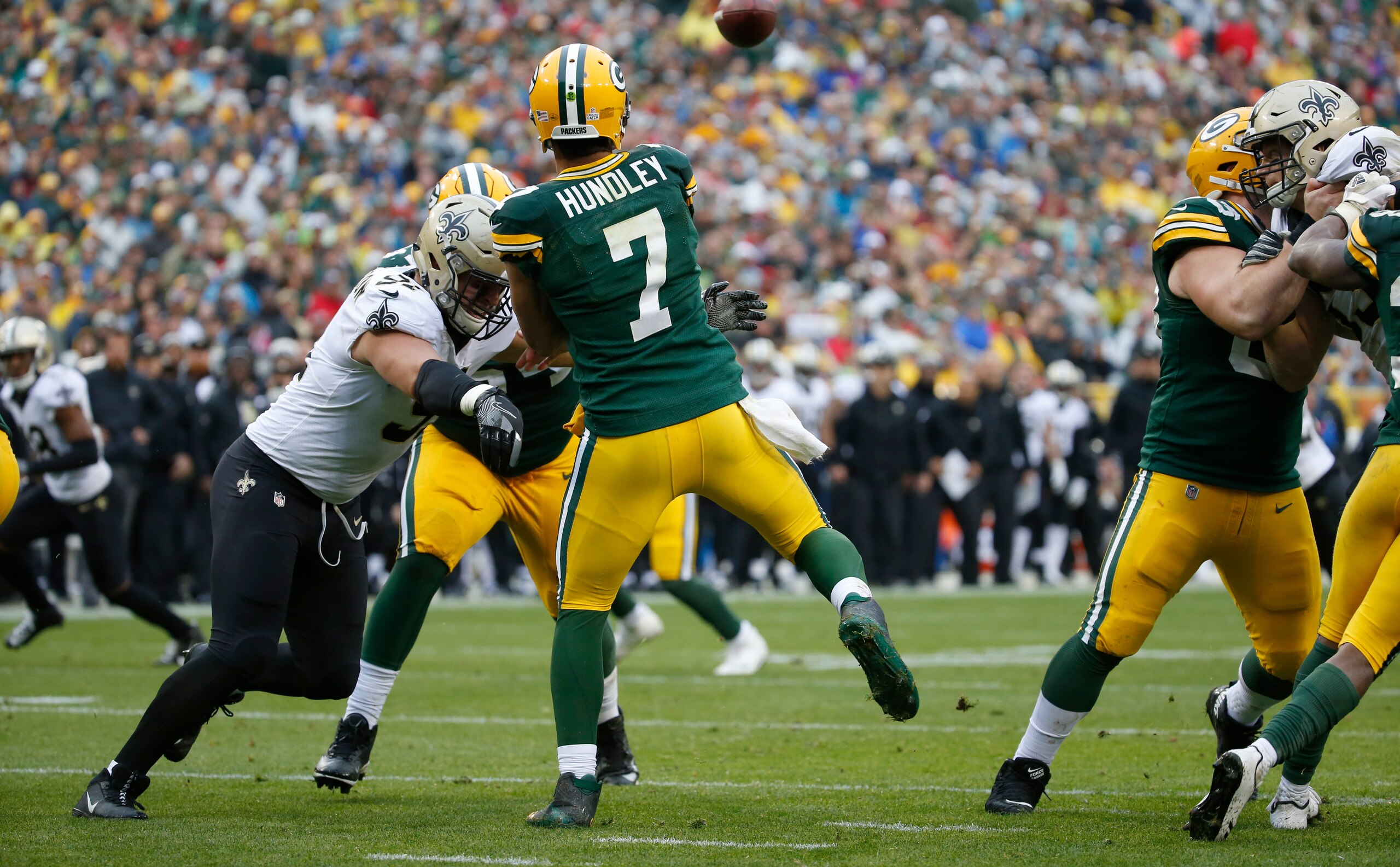
When Aaron Rodgers was lost for at least several weeks with a broken collarbone in Week 6, and Packers head coach Mike McCarthy put his faith in backup Brett Hundley to carry the Packers through Rodgers’ recovery, one assumed that McCarthy might change the game plan to play to Hundley’s strengths and keep him out of danger by not exposing his weaknesses.
Of course, adaptability isn’t generally McCarthy’s game. He’s a coach who prefers to call route combinations that don’t have designed openings, instead calling on his receivers to beat coverage with their physical abilities, and on Rodgers to make pinpoint throws under pressure that few other quarterbacks could make.
It’s a system that works when Rodgers is on the field doing his thing. But now, it’s on McCarthy to change the system for Hundley’s sake. Based on what we’ve seen through three games and two starts, McCarthy isn’t doing that. When Hundley was at UCLA, the general game plan was for him to throw on the run or in the pocket to avoid a major issue he had and still seems to have—Hundley hasn’t yet learned to keep his eyes downfield when running, so he doesn’t always get a clear picture unless the idea is for him to run in a designed fashion, like boot action.
For the NFL version of Hundley, a consistent boot-action game would provide several benefits. Boot runs reduce the field by default; when a quarterback runs to one side or the other of the field, he also only has to read that side of the field. The picture compresses, and the openings are in front of him. Hundley would be challenged at this point in his career to read a full field even with an expansive series of route concepts, never mind McCarthy’s old-school stuff.
The Packers do have a few designed runs for Hundley, but they are not using the same kind of run-pass options they used with Rodgers—or, those RPOs don’t show up because Hundley doesn’t yet understand how to make them go. The better bet for the short term might be to get Hundley on the run, get the receivers moving with him and make it easier for all involved to make consistent completions happen.
Buffalo Bills: Set Tyrod Taylor Free with Option Plays
5 of 8
Rick Dennison replaced two offensive coordinators in 2017 for the Buffalo Bills—the fired Greg Roman, and Roman’s replacement, Anthony Lynn, now the head coach of the Los Angeles Chargers. Dennison has worked with the Broncos, Texans and Ravens in his long career as an offensive coach and coordinator; he’s worked a lot with Gary Kubiak, and fundamentally, he’s a disciple of the Alex Gibbs school of zone blocking and one-cut running.
Now that Dennison has Tyrod Taylor as his quarterback and an offensive line more used to running gap and power concepts than the synchronized zone blocking Dennison prefers (though they did switch to more zone concepts under Lynn last season), Taylor is still experiencing the same problem he had last season—he’s getting sacked a lot. Taylor led the league with 42 sacks in 2016, and he’s already got 26 this season. Last Thursday’s seven-sack debacle against the New York Jets in a 34-21 loss had several root causes. There were occasions when Taylor was asked to run counter play-action, a play that takes an extra half-second to implement, and then read the field with reduced time. At times, Taylor failed to read his bailout receivers, and at other times, the routes took too long to develop.
What you didn’t see against the Jets, and what you haven’t seen enough from the Bills this season, are the kinds of option plays Taylor can use to read one defender, decide where that defender’s going and act appropriately. The Bills aren’t using a lot of the run-pass options that would give Taylor a quick read against pressure—according to Matthew Fairburn of NewYorkUpstate.com, Dennison called read-option runs just eight times through the first five games of the season.
Taylor has the ability to stay in the pocket and read the field at a slightly above-average level under pressure, and he’s much better when he has time. Since time seems to be in short supply for the Bills quarterback right now, perhaps his offensive coordinator could help him out with plays that would force the defense to adapt.
Seattle Seahawks: Use Multiple Receivers to Win in the Red Zone
6 of 8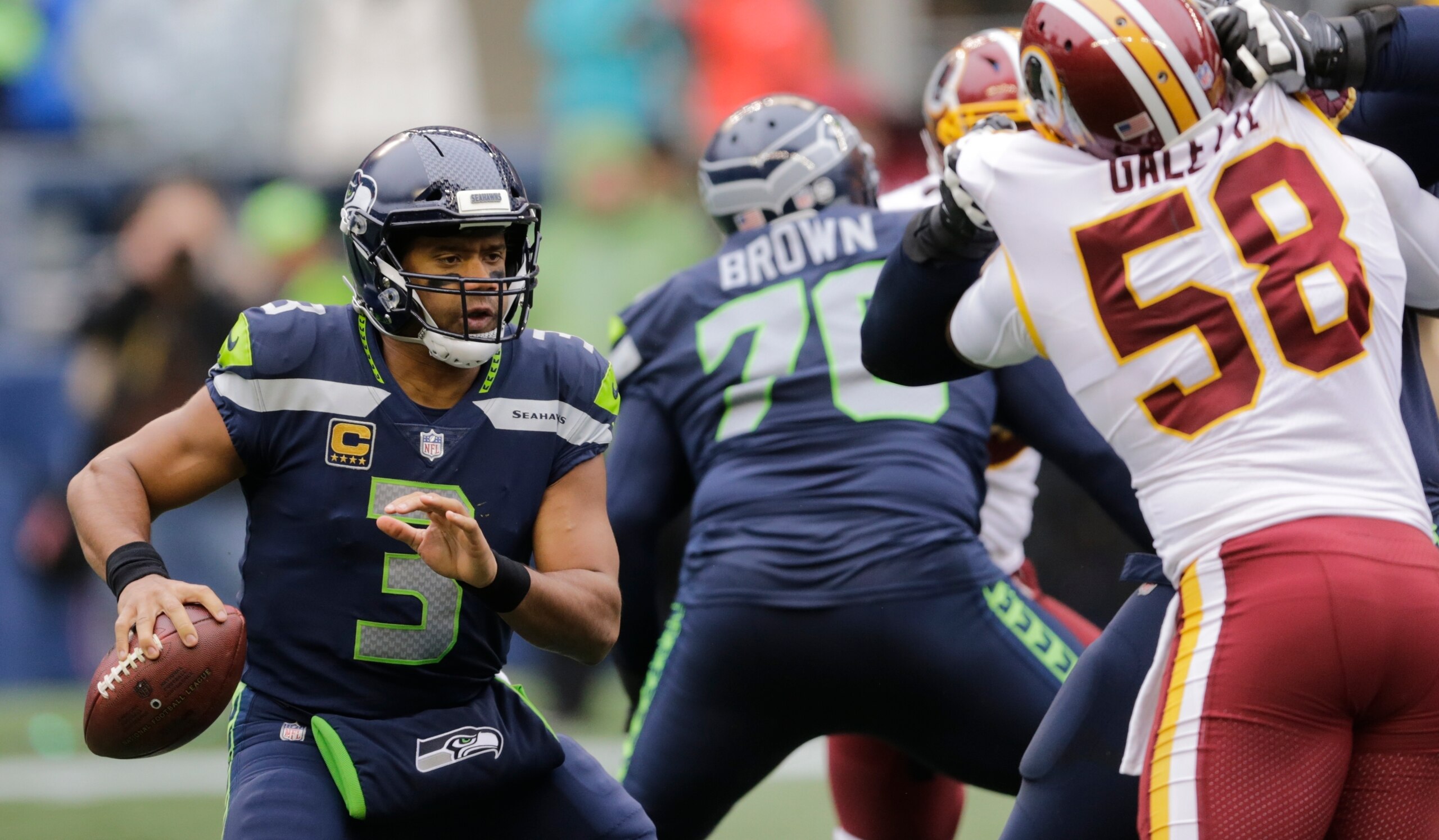
The Seattle Seahawks haven’t been a dominant red-zone team since they had a half-decent offensive line and peak-level Marshawn Lynch running the ball into the end zone with multiple defenders on his back. It’s been a couple of years now where red-zone performance has been a problem, and though the reasons are many, there may only be one short-term solution.
Head coach Pete Carroll wants his offense to be balanced between the run and the pass, but with star rookie Chris Carson out since Week 4 and for the rest of the season with a knee injury, Seattle’s running game has been ineffective unless Russell Wilson is running in free space. Wilson generally doesn’t have loads of time in the pocket because his offensive line pass-blocks only slightly better than it run-blocks, which isn’t well at all, and Wilson has become balky as a result, leaving the pocket at times before he should and running himself into suboptimal situations.
What the Seahawks do have is a high-quality receiver corps, though Wilson doesn’t always have time to feature them in structured situations—more often than not, big plays happen when receivers run with Wilson downfield.
This doesn’t work in more contested and compressed spaces, and the Seahawks are suffering in the red zone as a result. They’ve converted their red-zone opportunities into touchdowns 50 percent of the time, per TeamRankings.com, which is a bit below average for the league.
One way for Wilson to get a clearer read in a hurry in those shorter spaces is for his receivers to run more pick-and-rub routes, where his receivers are using quick crossers and blocks to create designed openings, especially against man coverage. Blocking defenders out is legal within one yard of the line of scrimmage, and there are teams, like the New England Patriots, that have used these concepts for years. It would be a big help for a quarterback like Wilson, who could use all the structural help he can get—especially when he’s close to the end zone.
Denver Broncos: Get the Ball out Quickly with the Quarterback Du Jour
7 of 8
The Denver Broncos are in Quarterback Purgatory this season. They have three signal-callers with different problems. Trevor Siemian has had trouble dealing with pressure in the pocket and throwing anywhere near his open receivers at times. Brock Osweiler usually can’t deal with pressure at all and it affects his ability to get the ball out quickly to open receivers with any mechanical consistency. Second-year quarterback Paxton Lynch has been dealing with a shoulder injury and his maturation process into the NFL.
At this point, the idea seems to be for Osweiler to start in place of the recently benched Siemian until Lynch is fully recovered and ready to try his hand under center. None of Denver’s quarterbacks have shown a great deal of acumen with longer route developments that require timing and anticipation, so the task for Mike McCoy is to work his way around that.
McCoy rightfully earned a ton of credit for making things manageable for Tim Tebow in 2011, the only season in which Tebow remotely resembled an NFL quarterback. McCoy did this by ensuring that no matter the play call, Tebow’s first read would be open based on the offensive concept, whether it was a quick angular route or a combination route of intermediate depth. McCoy needs to do this now with whatever quarterback he’s stuck with from week to week. Denver’s running game is iffy at best, and the offensive line isn’t very stout when it comes to pass protection. If the Broncos don’t want to waste the efforts of their great defense, McCoy will have to create easy openings for his quarterbacks. It’s the only way.
Jacksonville Jaguars: Spread the Field for Blake Bortles
8 of 8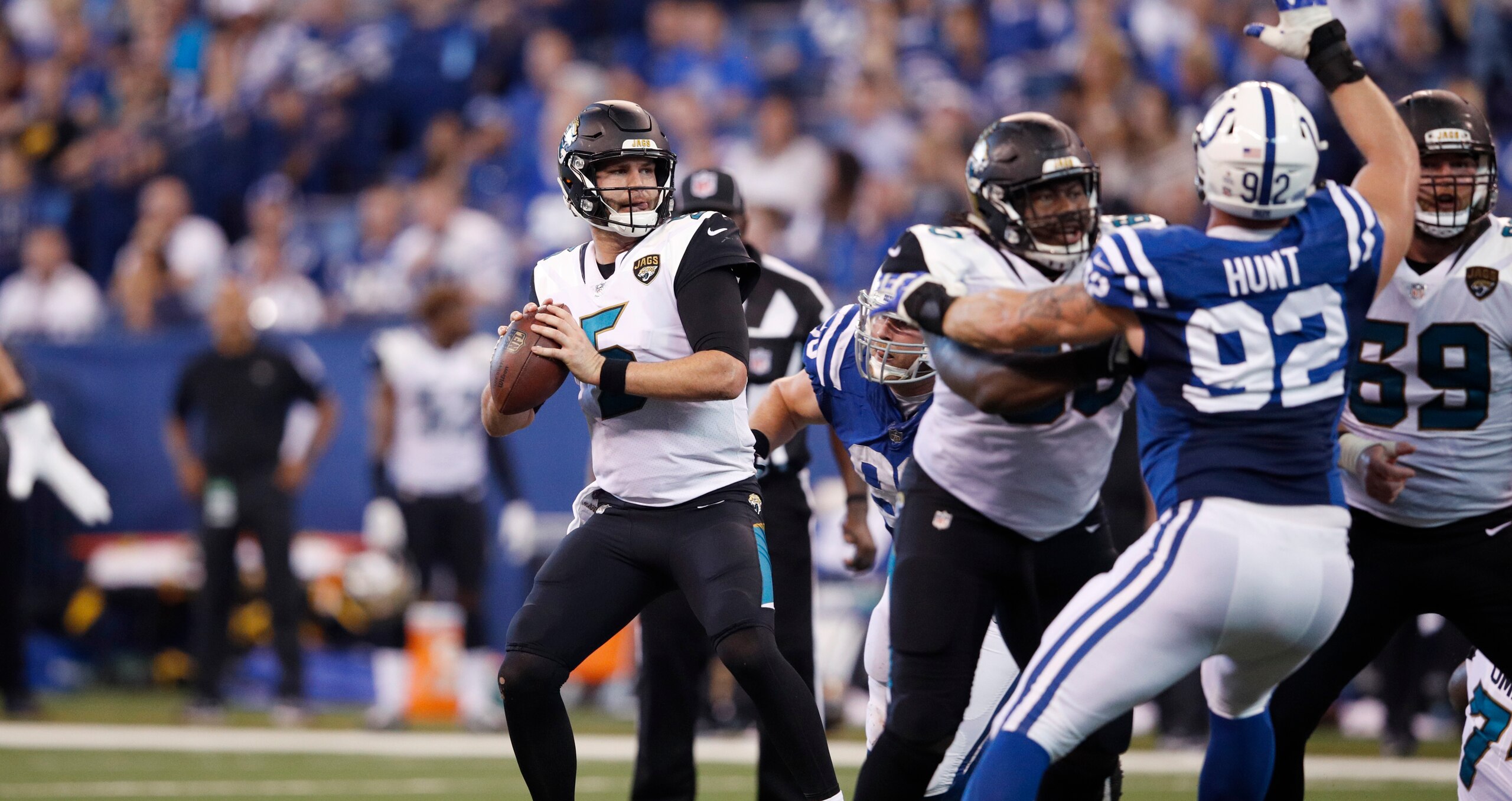
There’s an old saying in football: No matter how hard you try, you can only hide your quarterback for so long.
The Jacksonville Jaguars have been testing this theory all season, and for the most part, it’s worked. The Jags have the NFL’s best defense and a very promising rushing attack, and with those two factors, little is expected of Blake Bortles from week to week. Outside of a four-touchdown performance against the Baltimore Ravens in September, Bortles hasn’t thrown for more than one touchdown in any of Jacksonville’s games, and the team is still 5-3.
But when the playoffs come around, Bortles will almost invariably be thrown into situations where he’ll be asked to do more than "not screw things up"—he’ll have to get out of the Alex Smith Circa 2015 suit and actually make some plays. One way Bortles has found the easy receiver openings he needs is when offensive coordinator Nathaniel Hackett and head coach Doug Marrone spread the receivers out in multi-receiver sets.
Jacksonville’s offensive line is playing well enough, and the Jags are running with enough power, to still get a ground game going with wider sets. And when Jacksonville does that—either in the initial offensive setup or with pre-snap motion—it stretches the defense out enough to give Bortles at least one favorable matchup in which he doesn’t have to overthink the timing of his throw, and he can just release the ball.
This season, the Jaguars are playing well enough at every other position to make a serious playoff run. But at some point, they’ll have to stop hiding their quarterback and find ways for him to do more without overtaxing his limited skill set. The modern NFL demands it.
.jpg?w=2560 "Eagles Jaguars Football")
.jpg?w=2560 "Steelers Saints Football")


.jpg?w=2560 "🚨 Week 8 AP Top 25 Poll")
.jpg?w=2560 "Jonathan Taylor Landing Spots 📍")