Inside the NBA's Most Essential Defensive Tactic
As recently as five years ago, there would be no reason for a player like Caris LeVert to devote offseason time to studying cut-ups of Draymond Green playing defense.
After all, LeVert, now in his second NBA season, was drafted as a guard, and guards have always defended the perimeter. Green, meanwhile, is a forward, and forwards have historically spent the majority of their defensive energy banging bodies with opposing bigs.
And yet: "I wanted to see how [Green] guarded guys bigger than him so I can I get better at it," LeVert told Bleacher Report recently. "I've also been working on my strength to be able to guard guys that size."
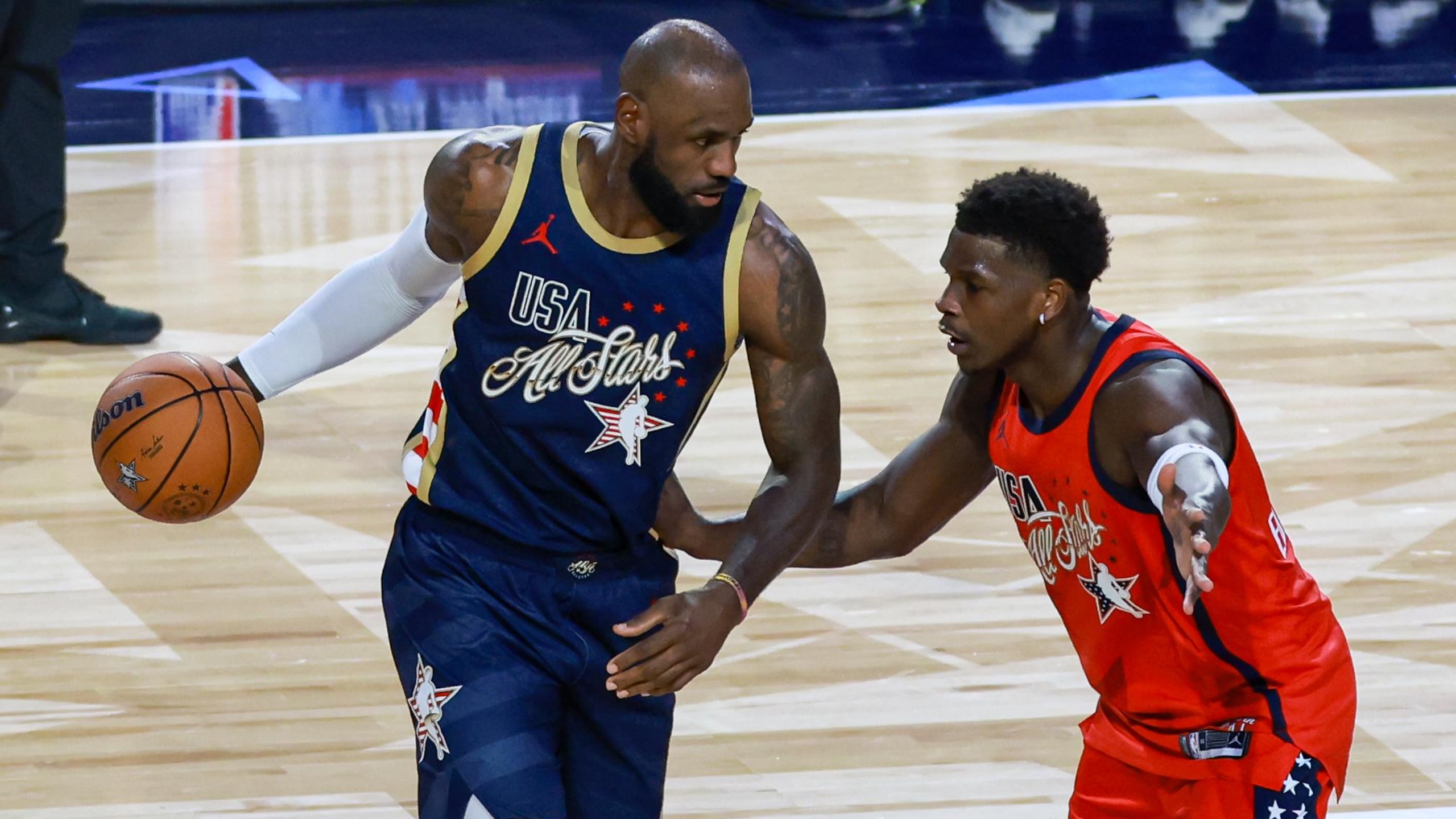

Like many players in the league, LeVert recognized this summer that the NBA ecosystem is dramatically evolving. He too would need to evolve in order to survive.
Traditional positions have, for the most part, been tossed aside. Teams are no longer trotting out five-man units consisting of funny-sounding positions like "power forward" (what constitutes "power"?) and "shooting guard" (aren't all guards supposed to be able to shoot?). As Boston Celtics head coach Brad Stevens recently told the Associated Press (via NBA.com), today's NBA consists of three positions: ball-handler, swingman and big.
Making life even harder for defenses: The majority of professionals, no matter what size or position, can dribble, pass and shoot.
"The players have gotten so much better. They shoot the ball better, [and as a result] offenses have opened up to the three-point line," Houston Rockets head coach Mike D'Antoni said recently. "Offense has changed radically in the last 10 years, and defenses have, traditionally, not changed that much."
Classic schemes for defending pick-and-rolls, the league's most popular play, are no longer capable of containing today's high-octane attacks. In fact, they're what modern analytically inclined teams are built to defeat.
Blitzing pick-and-rolls with traps or "hedges"—meaning the big man guarding the screener has to leap out at the ball-handler before quickly darting back to his original assignment—leave two men on the ball, which triggers rotations. That leads to scrambling, which leaves soft spots vulnerable to triples—especially against teams that pride themselves on whipping the ball around the floor.
It's no accident that over the past two campaigns we've seen both the Rockets and Golden State Warriors shatter records for most three-pointers made in a season.
Ducking under the screen is a no-no when you have snipers like Stephen Curry, James Harden and Damian Lillard (seen in the video below) effortlessly launching moonbeams from 30 feet out.
Going over and letting the man guarding the screener relax invites rim runs, which leads to help, which triggers rotations, which leads to wide-open threes when the ball is rotated.
The solution, some teams have found, is to switch assignments on pick-and-rolls, positions be damned. "Switching lets you guard pick-and-rolls with two men instead of five," an Eastern Conference assistant coach told B/R. "It keeps you out of rotations."
Many NBA coaches, players and insiders believe this tactic is the most effective way to guard the play, and teams are deploying the strategy more and more. It's also one prompting all sorts of changes across the NBA landscape.
"Traditional defense can't guard guys the way they play today," D'Antoni said. "That's why we're starting to see more switching—because defenses can't keep up."
Like most basketball schemes, switching on pick-and-rolls is nothing new.
"It probably goes back as far as the game itself," Jerry Colangelo, the longtime NBA executive who now serves as a special adviser for the Philadelphia 76ers, told B/R.
About 16 years ago, Colangelo met with former NBA Commissioner David Stern in the league's offices. Both, according to Colangelo, felt the game had grown rough on the eyes. There was too much reliance on isolation plays and too many stagnant players. They formed a committee, and in 2001, the league instituted rules to address these concerns. Among the most notable: in 2004, the banning of hand-checking above the perimeter and the calling of the defensive three-second rule.
"That brought the point guards back into action," Colangelo said, "which increased shooting and the style of basketball we see today."
Teams began constructing offenses around dribble drives, which forced defenses—inspired by Tom Thibodeau's playbook—to respond by packing the paint. Offenses countered by spreading the floor with shooters and swinging the ball around the court.
Defenses became rubber bands stretched to their limits. They could spread no further.
Then came the 2014-15 title-winning Warriors and their vaunted Lineup of Death. That group might have been most known for its innovative and overpowering offense, but its defense was just as revolutionary.
Head coach Steve Kerr began utilizing lineups with the swift Draymond Green at the center spot. In Green, the Warriors possessed a weapon no team in NBA history ever had: a 5 with the quickness to repeatedly lock down the game's most fleet-of-foot guards for consistent stretches of time.
To take advantage, Kerr directed Green and the rest of the Warriors to switch pick-and-rolls. The strategy worked. Over the past two years, Golden State's lineups with Green in the middle have formed some of the most tight-fisted units in the NBA.
Just like that, a new blueprint was born.
This, of course, meant the onus was on teams to build rosters capable of these plans—and on the players to learn how to fulfill them.
Because, while relatively simple, there is an art to properly executing a switch.
"[The two defenders] have to come together," Robert Covington told B/R. Covington's ability at 6'9" to guard nearly every player on the floor helped the Philadelphia Sixers hold opponents to 6.6 fewer points per 100 possessions last year when he was on the court. "If you don't, the screener can slip, or the guard can split it."
That's Step 1. According to Rockets forward P.J. Tucker, Step 2 is to aggressively attack the ball-handler.
"As soon as he comes off, you want to make him back-dribble," Tucker told B/R. "It takes time off the shot clock and allows you to, even if it's a mismatch, dictate a bit what they do."
As with all defensive schemes, communication is key. Some teams employ a color or a designated call for switching; others just charge the man guarding the screener with the duty of yelling out "switch" after alerting his teammate that a pick is on the way.
"If you don't call it out early, then you'll have two guys heading towards one player, which defeats the whole purpose," New York Knicks forward Doug McDermott told B/R.
You also have to know the scouting report.
If, for example, the screener is a "big" who can shoot but lacks a post game and the ability to create off the bounce (think Ryan Anderson or Jonas Jerebko types), then the switch should be automatic. There's no downside to having a smaller player wind up on the screener. Many teams also switch everything when the shot clock is running down since there's less time to probe for the resulting soft spot.
But, in the moments following the switch, things can get more complicated on what's known as "the backside." That's where a second switch often occurs. If a guard is stuck on a big man after the initial switch, a third teammate will come over and swap assignments, allowing the first guard to rotate back onto a player closer to his size. This is what coaches and players mean when they talk about everyone being "on a string."
"That's where communication comes in," Rockets center Clint Capela told B/R.
By nature of the sport, offenses in basketball typically have the advantage. Yet over the past two years, switching has allowed defenses to, at times, seize control.
"It's a big pain," Brooklyn Nets head coach Kenny Atkinson said. "When you have a lot of inexperience, [switching] produces a lot of iso basketball. Sometimes you have to punish switching by isolation or punishing that switch, but, you know, we're a ball-movement, player-movement offense. So you have to accept that there will be some iso situations, and you have to take advantage of them."
This dilemma isn't limited to young teams like the Nets. From AAU ball and up, players are taught to seek out and attack mismatches, whether they are of speed or size. Think about what typically happens when a big man rotates onto a guard. The ball-handler frequently yo-yos the ball back a few steps, while his teammates just stand and watch.
"That's the problem," D'Antoni said. "You go one-on-one, and your whole offense comes to a stop. And you take a shot that's not mathematically a good shot."
"That's exactly what the defense wants," Knicks head coach Jeff Hornacek told B/R. "For you to pull the ball back out."
So what's the best method for sidestepping this trap?
There are basic counters. Hornacek mentioned flashing someone to the middle of the floor and trying to create a 4-on-3 advantage, or anticipating a switch and having the screener "slip" (cut to the hoop before making contact with his target) the pick. D'Antoni said he urges his squad to push the pace and initiate the offense before the defense can set up.
But the team whose roster helped foster this evolution has discovered the best answer. No squad set screens for ball-handlers less frequently than the Warriors last year. Instead, Golden State prefers to attack defenses away from the ball. There, offensive players have more freedom to dance and juke, and they can do so against defenders unaccustomed to guarding that far away from the action.
"Cutting is essential to beating it, and they do a great job of cutting," Tucker said. "They'll toss the ball into a big and play two-man games without the ball. It will mess with your head. They'll kind of run circles around each other, and they mess you up."
Teams haven't yet adopted switching as their primary schemes, but it's become prevalent enough that the strategy now plays role in which players they draft and, later on, give major paydays.
"I talk about versatility and stuff like that with clients all the time," B.J. Armstrong, a former player and now prominent agent, told B/R.
Players, aware of this, are making the necessary adjustments.
Capela, a 6'10" center, said he studies film of point guards and now knows the tendencies of all the prominent ones in the league. Tobias Harris, a 6'9" forward for the Detroit Pistons, told B/R that a major part of his offseason regimen consists of developing moves to unleash on smaller defenders who switch onto him.
And then there's Tucker. He went from playing overseas from 2007-08 to 2011-12 to signing a four-year, $32 million deal this offseason, partly because of his comfort switching.
"It," Tucker said of the prevalence of switching, "made me more valuable."
Others around the league have taken notice.
"Three-and-D guys are definitely getting paid right now," LeVert said. And as he and his peers are learning, switching is now a must to fulfill that "D" part in the new NBA.
Yaron Weitzman covers the Knicks and NBA for Bleacher Report. Follow Yaron on Twitter, @YaronWeitzman, and listen to his Knicks-themed podcast here. Advanced stats courtesy of NBA.com.

.jpg?w=2560 "Report: Rams Changing Kickers 😬")
.jpg?w=2560 "Jerry Defends Dak Heckler")
.jpg?w=2560 "Trade for NFL's Best Teams 📦")
.jpg?w=2560 "Buzz: Browns Shopping Jeudy")