
Ranking the Greatest Comebacks in College Football History
It's hard to see a good comeback developing right from its very beginning. Maybe a team gets a quick touchdown or field goal, cutting a four-touchdown lead to three. But it's ultimately meaningless, right?
Then your team gets a turnover or stop and follows it with another fast touchdown. Suddenly, you're looking at the clock and trying to figure out remaining possessions. The comeback is officially on.
This can be a good thing or a bad thing, depending on which side you're rooting for. For most of us, though, the comeback is a lot of fun.
College football's history is littered with improbable wins, last-second scores and overtime victories. They're exciting to watch, especially if they're not happening against your team.
Here's a look at the biggest comebacks in college football history. All were from at least 20-point deficits, and they were ranked based on the degree of difficulty, time remaining and the meaning of the game in which they happened.
10. 2001: Marshall 64, East Carolina 61
1 of 10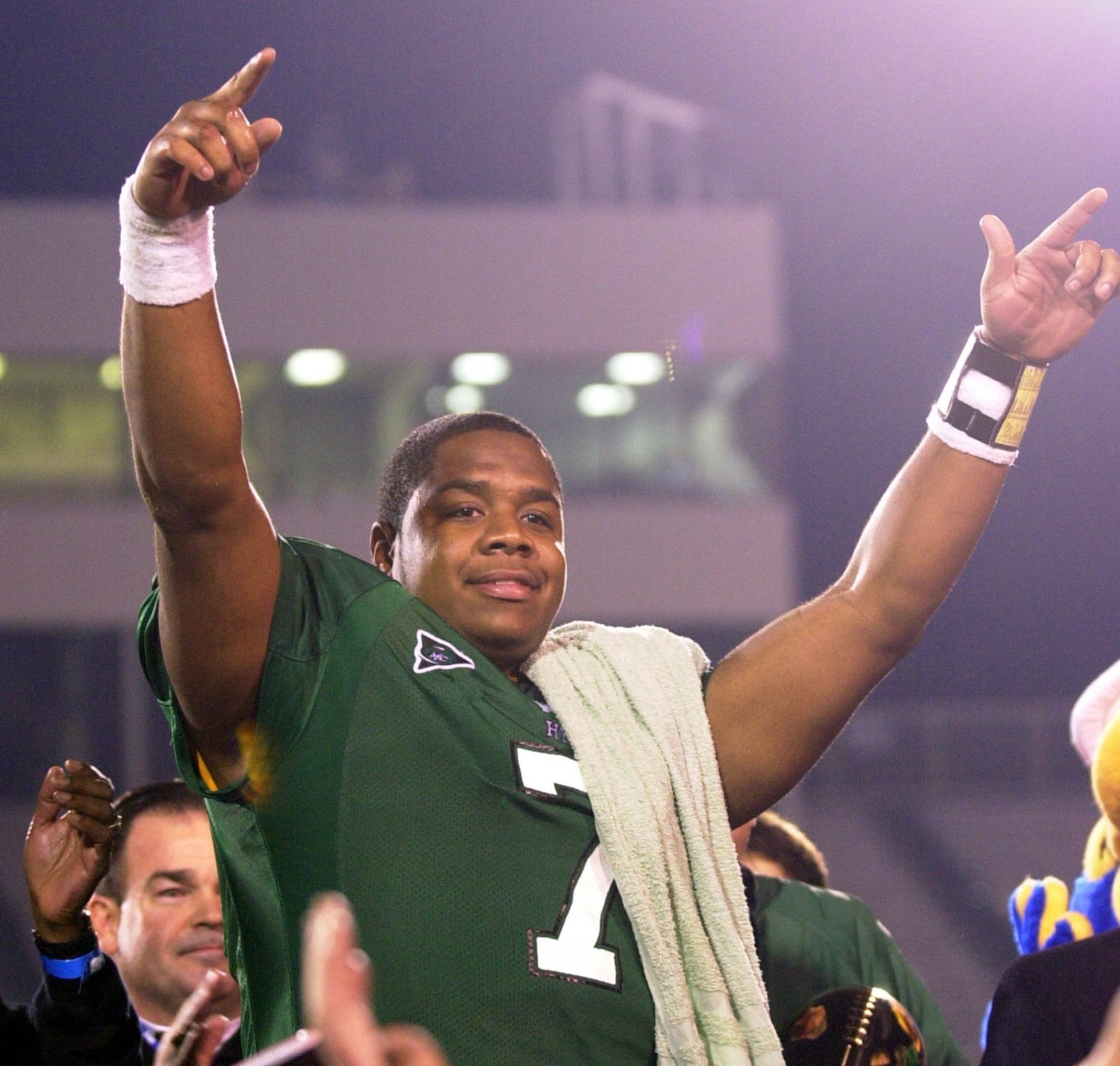
Byron Leftwich and David Garrard both put together solid, if not spectacular, NFL careers as capable passing quarterbacks. On a December 2001 night in Mobile, Alabama, both were much more than solid, and those who tuned in got to enjoy the fireworks.
East Carolina got a huge early edge, building a 38-8 halftime lead. But with a little help from his defense, Leftwich and Marshall rallied after halftime. The Thundering Herd D intercepted Garrard twice in the third quarter for touchdowns, and Marshall added a pair of offensive scores.
With 50 seconds left in the game, Marshall got the ball back at its own 20, trailing 51-45. Leftwich made a trio of 20-plus-yard completions and found Darius Watts in the corner of the end zone for a leaping 11-yard touchdown grab with seven seconds left. A missed extra point sent the game into overtime at 51-51.
With East Carolina leading 61-58 in the second overtime, Leftwich ended it with an eight-yard scoring toss to Josh Davis.
Marshall's 64-61 win was the highest-scoring game in postseason history, and Leftwich finished with an astounding 576 passing yards.
9. 1992: Clemson 29, Virginia 28
2 of 10Clemson has re-emerged as one of college football's biggest powers following its first national title in 35 seasons, but through good and bad times, one thing is constant for the Tigers: They know how to beat Virginia.
Clemson is 38-8-1 all-time against the Cavaliers, including a 29-game win streak that stretched from 1955 through 1989.
The 1992 meeting was one of the rivalry's most memorable, especially if you were a Clemson follower. Unbeaten No. 10 Virginia built a 28-0 second-quarter lead on the No. 25 Tigers, but this game was far from over. Clemson trailed 28-7 at the half but got back into the contest with the run game and defense.
Clemson got 288 of its 402 rushing yards after halftime, and quarterback Louis Solomon sparked the offense. Scoring runs by Rudy Harris and Rodney Blunt cut the lead to 28-20, and the former's 27-yard touchdown run with 5:31 left pulled the Tigers within 28-26. A two-point try to tie the game failed, but Clemson had one final chance.
A Solomon 46-yard pass to Larry Ryans pushed the Tigers to the UVA 9 with 55 seconds left, and Nelson Welch nailed a 32-yard field goal for a wild 29-28 victory. It was Clemson's biggest comeback win and a crushing defeat for the Cavaliers.
8. 2006: Texas Tech 44, Minnesota 41
3 of 10
When you run the Air Raid offense, you're never really out of a game. No one knows this better than Mike Leach, the pass-happy coach who developed the system.
On an Arizona night in December 2006, Minnesota found that out the hard way, and it changed the Golden Gophers' program significantly.
The 2006 Insight Bowl unfolded as a total rout. The Gophers had all the answers for Tech's offense and built a huge 38-7 lead midway through the third quarter. It wouldn't be enough.
Quarterback Graham Harrell jump-started the offense with a 43-yard touchdown pass to Joel Filani, and touchdown drives of 61 and 62 yards cut the deficit to 10 points with 7:47 remaining.
Tech cut it even closer with a nine-play, 56-yard drive capped by Shannon Woods' one-yard scoring run with 2:39 to play, closing within 38-35. The Red Raiders managed to get the ball back, and Alex Trlica's 52-yard field goal on the final play of regulation sent the game to overtime.
Minnesota got the ball first in overtime and kicked a field goal. But Tech's offense wouldn't be denied. Woods plunged in from three yards out for a wild 44-41 overtime victory. Harrell completed 36 of 55 passes for 445 yards with two touchdowns and an interception.
It was a costly night for Minnesota coach Glen Mason; the Golden Gophers fired him two days later.
.jpg?w=2560 "AP Poll Top Five Week 9")

7. 1980: BYU 46, SMU 45
4 of 10
In the 1980s, Jim McMahon became known for his gutsy, tough quarterback play with the Chicago Bears. He flashed those skills while at BYU, with the 1980 Holiday Bowl serving as the peak of his powers. It was a night BYU (and SMU) fans will never forget.
With four minutes left, SMU led the Cougars 45-25 and victory looked assured. But BYU was just getting going. The Cougars scored a fast touchdown and recovered the onside kick, with Scott Phillips finishing the drive with a one-yard touchdown run. McMahon passed to Phillips for a two-point conversion, which cut the lead to 45-39.
But only 1:57 remained, and the Cougars needed the ball back for any chance at a win. BYU forced a punt, and defensive back Bill Schoepflin blocked the punt with 13 seconds left, giving the Cougars an opportunity at the SMU 41.
A pair of McMahon passes fell incomplete, and the Cougars had one final chance. McMahon lofted a Hail Mary pass to Clay Brown, who grabbed the ball in the end zone with triple zeroes on the clock for a stunning score. BYU's extra point lifted the Cougars to a surprising 46-45 win, and the fledgling Holiday Bowl was on college football's map permanently.
6. 1984: Maryland 42, Miami 40
5 of 10In January 1993, the Buffalo Bills put together the greatest comeback in NFL history.
Trailing Houston 35-3 early in the second half of an AFC Wild Card Game, the Bills and quarterback Frank Reich rallied to stun the Oilers, sending the game to overtime at 38-all and eventually winning 41-38 with a field goal.
Reich was Jim Kelly's backup, but the Bills should have known he was perfect for the job. After all, he'd put together an equally amazing comeback while in college at Maryland nine years earlier.
Nothing went right for the Terrapins early on against Miami. The Hurricanes built a 31-0 halftime lead and looked poised to cruise to an easy blowout win. Not quite, said Reich, who entered the game in place of struggling starter Stan Gelbaugh.
He provided an immediate spark, throwing a 39-yard touchdown pass to Greg Hill. It was the first of six consecutive scoring drives for the Terrapins. With 9:20 to go, they trailed 34-28.
Then, Reich threw what looked like an interception into the hands of Miami's Darrell Fullington. But it caromed off his fingertips and into Hill's hands, and he sprinted 30 yards to finish a 68-yard touchdown for a 35-34 lead.
Miami fumbled the ensuing kickoff, and Maryland cashed in again with Rick Badanjek's four-yard run for a 42-34 edge. Miami scored late, but the Terps' Keeta Covington tackled Melvin Bratton to finish off an amazing 42-40 win. At the time, it was the biggest comeback in FBS history.
5. 2006: Michigan State 41, Northwestern 38
6 of 10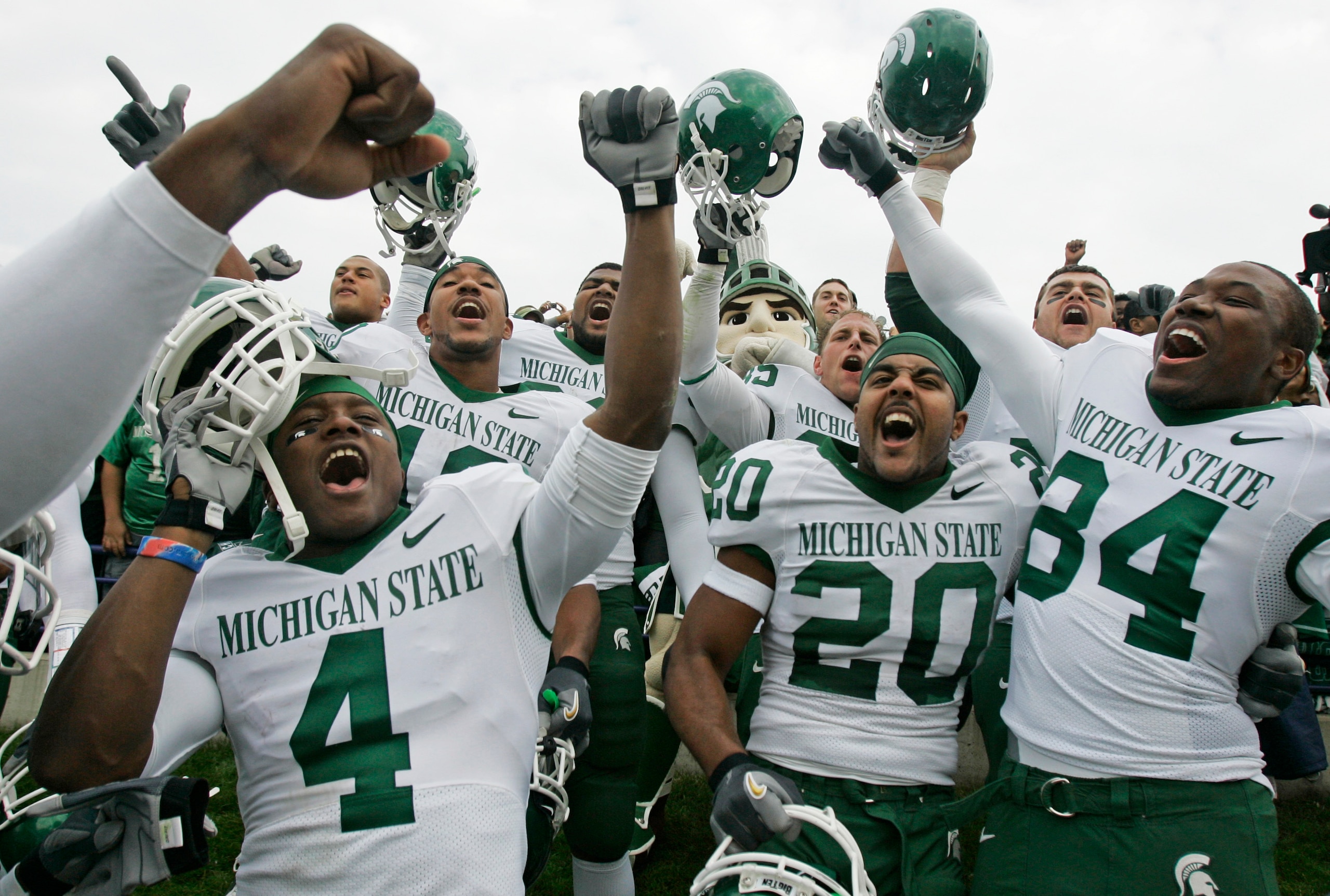
When Michigan State and Northwestern hooked up in late October 2006, it looked like an utterly forgettable matchup. The teams entered with a total of five wins and a 0-7 Big Ten record between them. And for two-plus quarters, the Wildcats did everything they could to dial down the drama.
After Michigan State took a 3-0 lead on the game's first possession, Northwestern—led by quarterback C.J. Bacher's passing—scored the next 38 points and grabbed a 38-3 edge with 9:54 left in the third quarter.
Drew Stanton gave Michigan State some life with an 18-yard touchdown pass to Jehuu Caulcrick, and the Spartans added another score to pull within 38-17 after three quarters. But they still needed help. Lots of it.
Bacher had the Wildcats in scoring range, but his pass was intercepted in the MSU end zone. The Spartans promptly blocked a punt returned 31 yards by Ashton Henderson, and suddenly State had brought the score to 38-24 with 11:22 to go.
Stanton's 12-yard touchdown run cut the lead to a touchdown with 7:54 left, and his nine-yard touchdown toss to T.J. Williams helped tie the game with 3:43 remaining.
Following Travis Key's interception, Brett Swenson's 28-yard field goal won the game with 13 seconds remaining.
It capped a stunning comeback that remains the largest in FBS history. The Spartans lost their final four games to finish 4-8, and coach John L. Smith left at the end of the season.
4. 2016: TCU 47, Oregon 41
7 of 10
The first 30 minutes of the Alamo Bowl in January 2016 looked like an Oregon romp. Quarterback Vernon Adams, playing his final collegiate game, rolled TCU en route to a 31-0 second-quarter lead. Aidan Schneider's 47-yard field goal with 31 seconds left made the score 31-3 for the Ducks at halftime.
However, TCU senior starter Bram Kohlhausen—pressed into action after Trevone Boykin was suspended for a pre-bowl altercation—wasn't going to give in so easily. He found Jaelan Austin for a 26-yard touchdown pass that cut the lead to three scores, and his two-yard touchdown run with 36 seconds left in the third quarter and a Jaden Oberkrom extra point made it 31-17 Ducks going to the fourth.
With 3:31 left in the game, tailback Aaron Green's two-yard touchdown run and subsequent two-point conversion cut the lead to 31-28. And with 19 seconds left, Oberkrom's 22-yard field goal tied the game at 31, stunning the Ducks.
After two overtimes, the score was tied at 41 following a pair of touchdowns in the first OT and dueling field goals in the second. But Kohlhausen had the last laugh. His eight-yard touchdown run in triple overtime gave the Horned Frogs their first lead of the game, and the defense made it last for a 47-41 victory.
It was the biggest comeback in postseason history, and it put Mark Helfrich's job in danger. He demoted defensive coordinator Don Pellum in favor of former Michigan coach Brady Hoke, but it did no good; he would be done at Oregon by the end of 2016.
3. 2010: Auburn 28, Alabama 27
8 of 10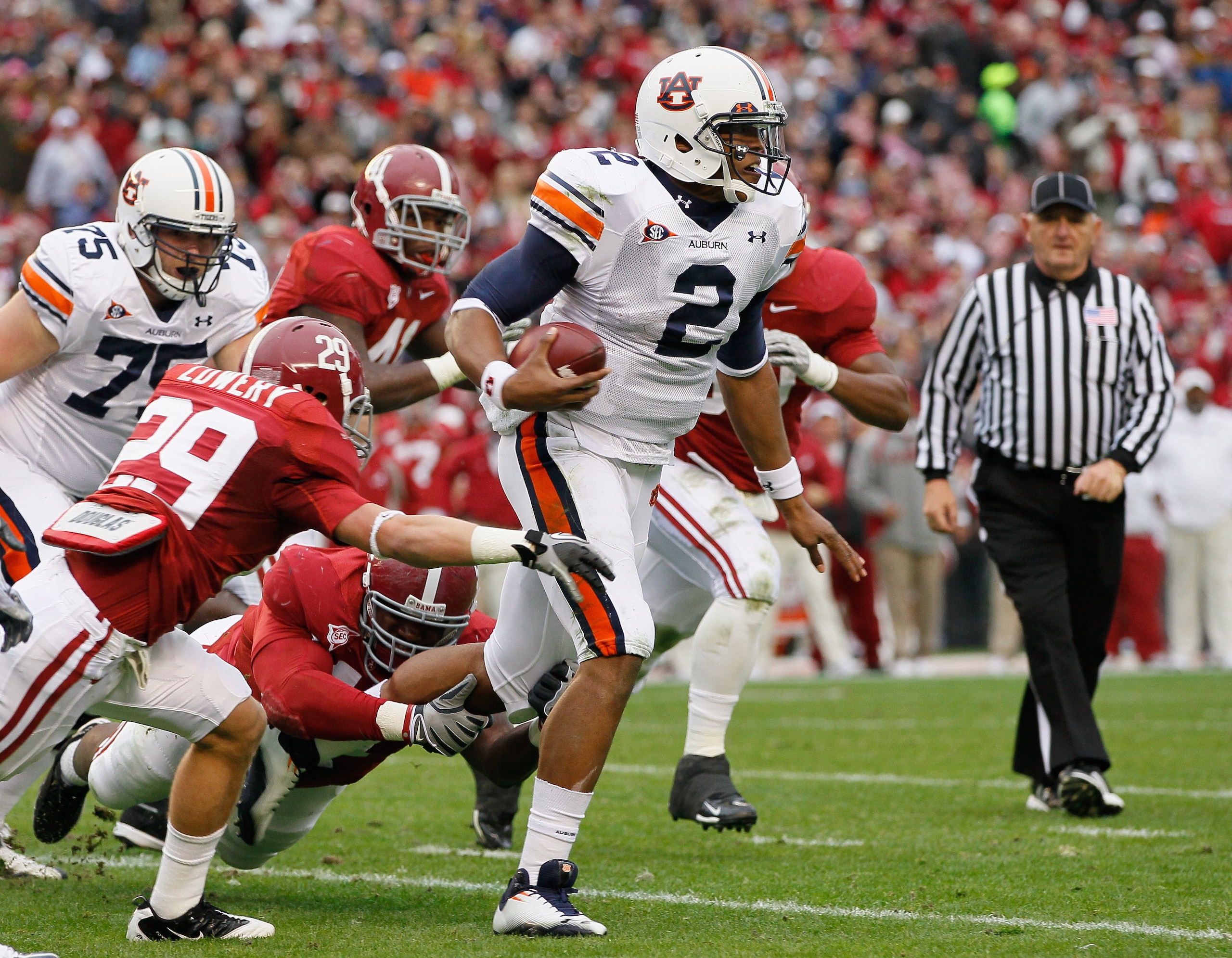
Cam Newton has been a difference-maker for the NFL's Carolina Panthers, winning a league MVP award and leading the Panthers to a Super Bowl appearance. Anyone who watched Auburn's 2010 season knew exactly what he was capable of.
In 2009, the Tigers were good, not great, going 8-5 in coach Gene Chizik's first season at the helm.
When Auburn signed Newton as a junior college transfer, their fortunes skyrocketed. Behind the dynamic dual-threat passer, the Tigers entered the 2010 Iron Bowl at Alabama 11-0 but needing a win to stay in contention for a BCS National Championship.
The Crimson Tide were playing spoiler with a 9-2 record but also protecting a 20-game home win streak. It's not easy playing at Bryant-Denny Stadium, as Auburn quickly discovered.
The Tide bolted to a 24-0 lead and held an early 314-2 edge in total yardage midway through the second quarter, but they couldn't hold Newton down for long.
With 5:08 left in the half, he connected with Emory Blake for a 36-yard touchdown pass. Fifty-six seconds into the second half, the Tigers were back on the board, thanks to Newton's 70-yard touchdown strike to Terrell Zachery.
With 4:25 left in the quarter, Newton finished an eight-play, 75-yard drive with a one-yard touchdown sneak, cutting the deficit to 24-21 after Wes Bynum's extra point. Early in the fourth quarter, he found tight end Philip Lutzenkirchen for a seven-yard score. Bynum's extra point gave Auburn a one-point lead with 11:55 left.
That held up, and Auburn hung on for a thrilling 28-27 win that capped an unbeaten regular season. It is still one of the most thrilling games in Iron Bowl history and maintained Auburn's drive for a national title.
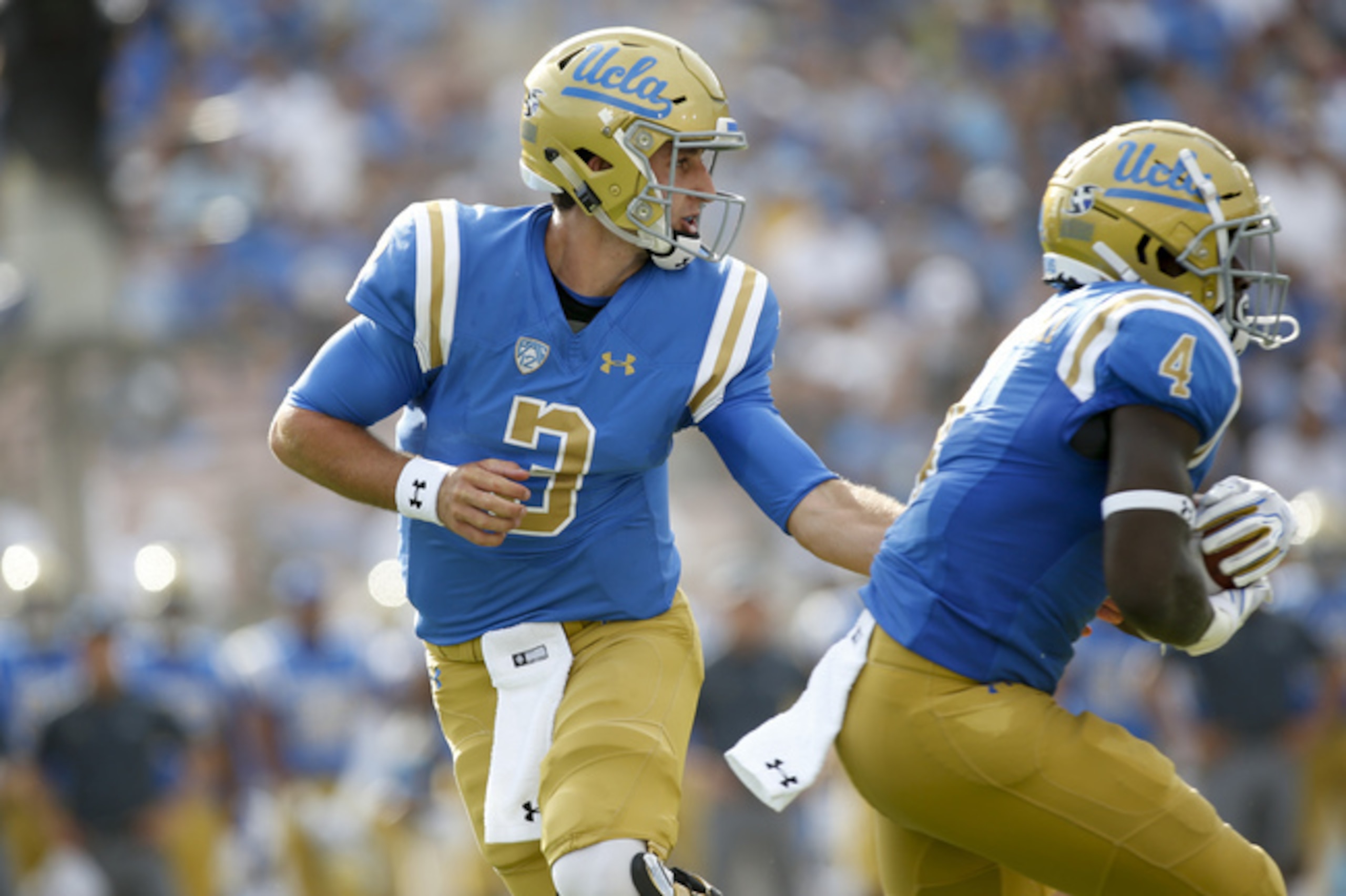
2. 2017: UCLA 45, Texas A&M 44
9 of 10
If you were a UCLA fan or a college football fan in general, no one would have faulted you for doing a little channel-surfing Sunday night. Maybe check out Virginia Tech-West Virginia. Or the local news. Or maybe take the dog for a walk. It was downright ugly.
Through 41 minutes, Texas A&M's run game and defense were completely dominant. Keith Ford and Trayveon Williams combined for five rushing touchdowns, and the Aggies led UCLA 44-10 with 4:08 left in the third quarter.
Then, Josh Rosen happened. And UCLA's defense suddenly found the formula to stop the Aggies offense. And one of the wildest comebacks in college football history happened. A&M began the fourth quarter up 44-17, but Rosen's live arm got the Bruins right back in it.
Consecutive touchdown drives of 85 and 96 yards capped by touchdown passes to Darren Andrews got the Bruins back in the conversation, down 44-31 with 8:12 to go. A&M could have all but iced the game with a field goal, but Adarius Pickett tipped Braden Mann's 43-yard try with 4:41 to go. That gave Rosen the opportunity to kick the door down.
A 16-yard touchdown toss to Theo Howard helped cut the lead to 44-38 with 3:10 left. Rosen got the Bruins in position one more time, and at the A&M 10, he fake-spiked the ball and hit Jordan Lasley in the corner of the end zone for the game-winning touchdown.
It was the second-biggest comeback in FBS history—and the biggest since 2006. Rosen finished with 491 yards and four touchdowns, and he took some heat off head coach Jim Mora Jr. Meanwhile, A&M coach Kevin Sumlin's already-hot seat get even hotter.
1. 1979: Notre Dame 35, Houston 34
10 of 10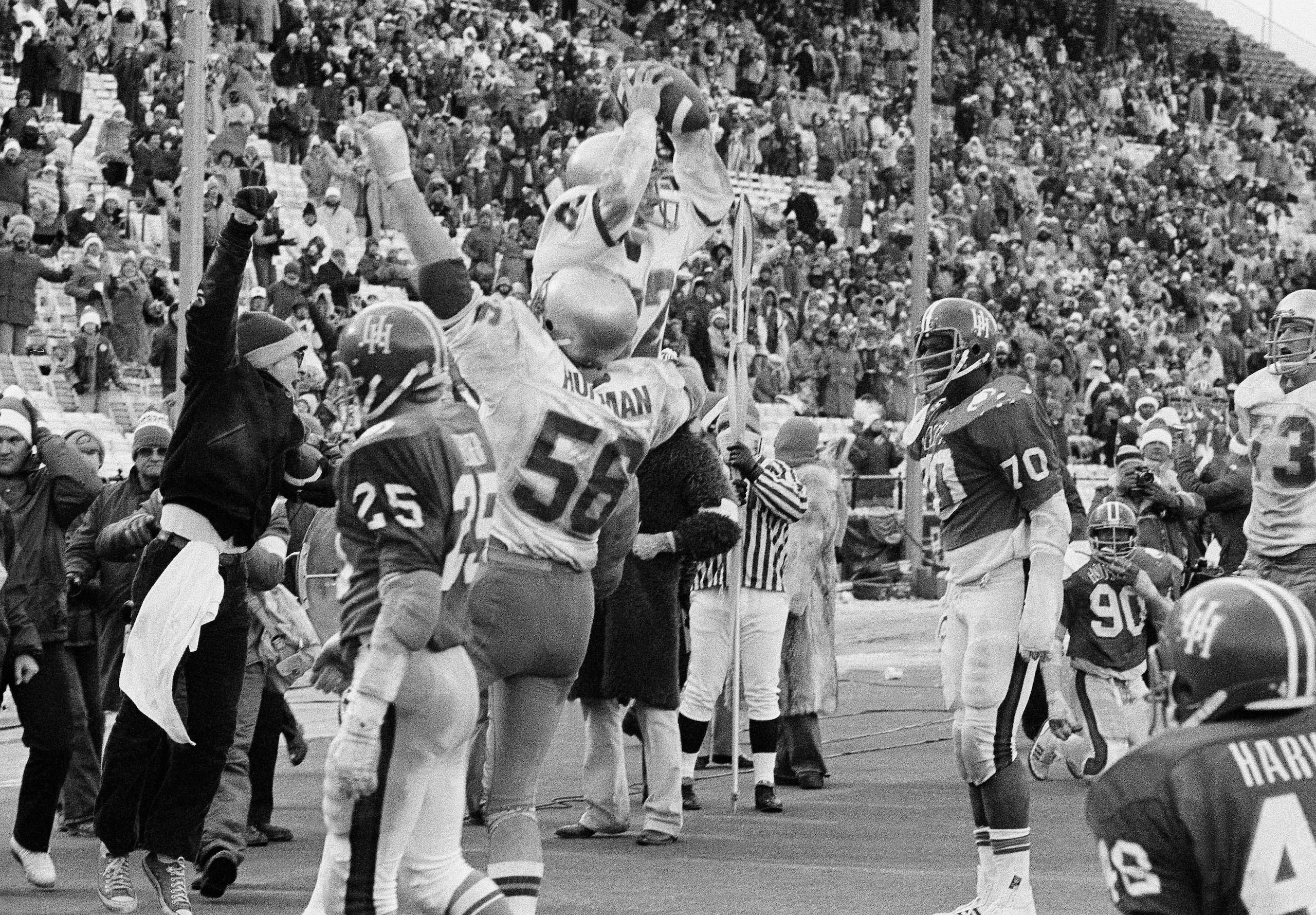
The 1979 Cotton Bowl was cold—very cold. After a nasty ice storm ripped through Dallas, game-time wind chill was minus 7 Fahrenheit, which took its toll on Notre Dame and quarterback Joe Montana.
After taking an early 12-0 lead on Houston, the Cougars roared back and scored 34 consecutive points, taking a commanding 34-12 lead into the fourth quarter.
Montana, the Fighting Irish's star quarterback, was fighting off the flu and hypothermia, and he retreated to the locker room to eat a bowl of chicken soup and find some energy. The plan worked. With 7:37 left, Houston led by 22 points, but Montana was just getting started.
A blocked punt for a touchdown and a two-point conversion pulled the Irish within 14 at 34-20, and Montana helped out himself, finishing a drive with a two-yard touchdown run and adding another two-point conversion, cutting the lead to six points with 4:15 to go.
Then, Notre Dame's defense stood tall, stuffing Houston at its 29 with less than a minute to go. That gave Montana one final opportunity, and he took advantage. On the game's final play, he found Kris Haines for an eight-yard touchdown pass, tying the game at 34.
The extra point with no time remaining gave Notre Dame a shocking 35-34 win in one of the greatest college bowl games and comebacks ever recorded.
.jpg?w=2560 "Colts Texans Football")
.jpg?w=2560)

.jpg?w=2560 "Rodgers Iced Out on Plane 💎")
.jpg?w=2560 "Raiders Could Start Mendoza")
.jpg?w=2560 "Mahomes Told Teammate to Leave Meeting")


.jpg?w=2560 "Lamar Being Out Shocked Ravens")
.jpg?w=2560 "Packers Safety Slams Refs 🤬")