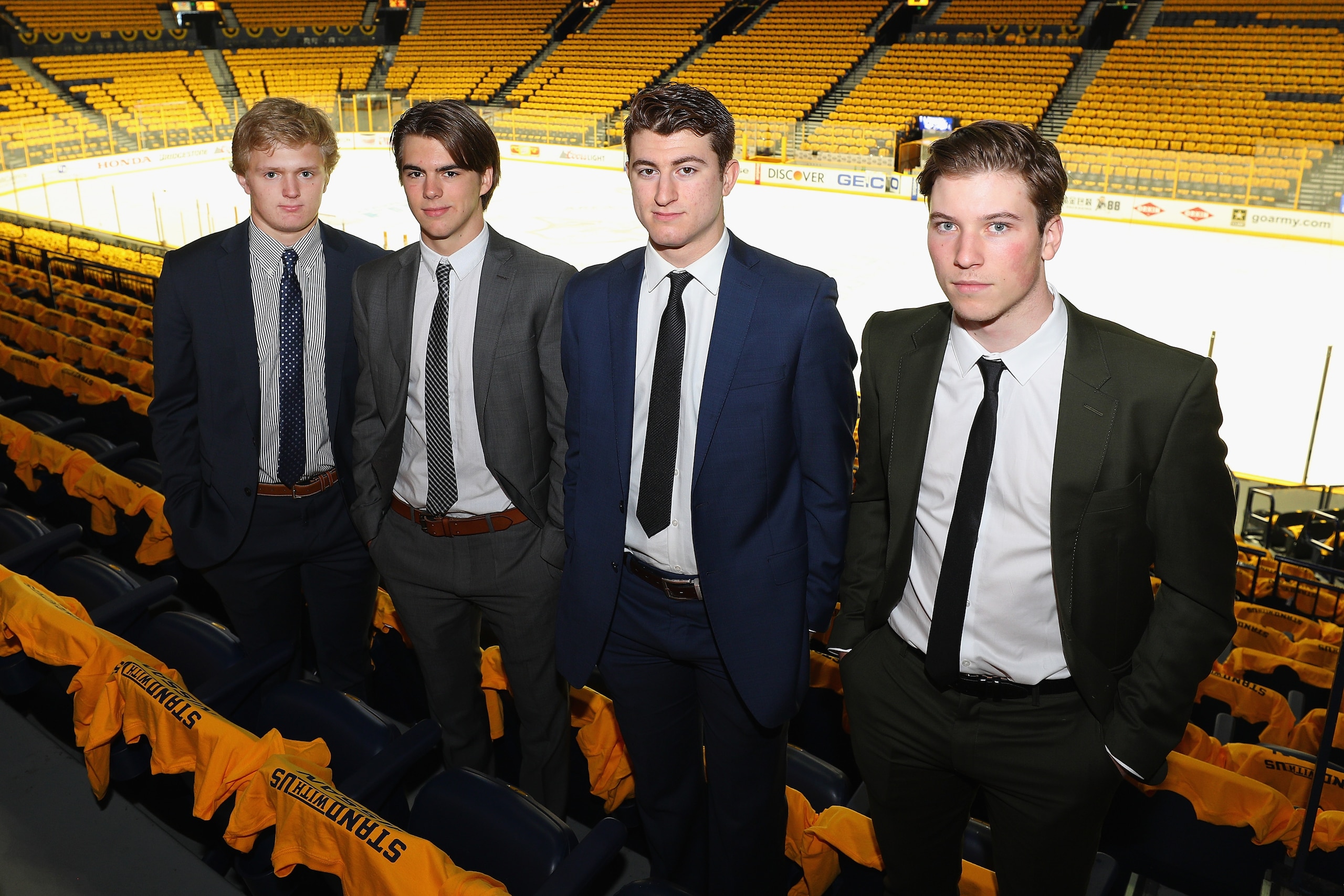

Pros and Cons of Projected Top-10 Picks in 2017 NHL Draft
It won't be long now.
After years of hard work and endless scrutiny of their play, their conditioning and their characters, this year's fresh-faced crop of hockey hopefuls will see their dreams realized at Friday and Saturday's NHL draft.
Even at the top of the draft board, each player has his strengths and weaknesses. This year, there are plenty of differing opinions among the experts on which players are likely to go high—and which ones deserve those picks.
This top-10 list has been drawn from the final ranking of TSN's Craig Button, who has proved to be a pretty solid draft prognosticator. In 2016, he correctly identified nine of the draft's top 10 players, including ranking the top four in the correct order.
Heights and weights are taken from the list prepared by NHL Central Scouting, which was updated after the recent draft combine. Stats from the players' 2016-17 seasons come from HockeyDB and Elite Prospects.
10. Timothy Liljegren, Defense
1 of 10Vital Statistics: Born April 30, 1999; 6'0", 188 pounds.
Junior Team: Rogle, Sweden
2016-17 Stats: 19 GP, 1-4-5
Pros: A smooth-skating right-shot Swedish defenseman who models his game after Erik Karlsson should be catnip to almost every NHL general manager.
"The young Swede's game is exactly what you are looking for in a puck-moving defenceman," writes Ryan Biech at Canucks.com. "He isn't afraid to carry the puck out of the zone or move it tape to tape to his teammates. He is an excellent skater who is very agile and fleet of foot. He is able to take a couple of strides and get up to speed quickly."
Based on strong performances in 2015-16, including winning a silver medal at the 2016 U18 World Championship, Liljegren's skill set had him pegged as a top-three draft candidate coming into this season.
"Back in November, Liljegren sat at No. 2 in Jeff Marek's 2017 NHL Draft Prospect Rankings, with scouts viewing him as the definitive second overall behind only Nolan Patrick at the time," writes Mike Johnston at Sportsnet.
Cons: Liljegren's draft year took a detour because of a bout of mononucleosis. He missed a good chunk of the season and was forced to play catch-up when he did get back on the ice. Needless to say, that wasn't ideal for the many NHL scouts who were eager to get a look at him. He finished up the year ranked sixth among European skaters with NHL Central Scouting.
When healthy, Liljegren is also knocked for his self-admitted high-risk style of defense. His desire to make spectacular plays can cause challenges for his teammates.
9. Casey Mittelstadt, Center
2 of 10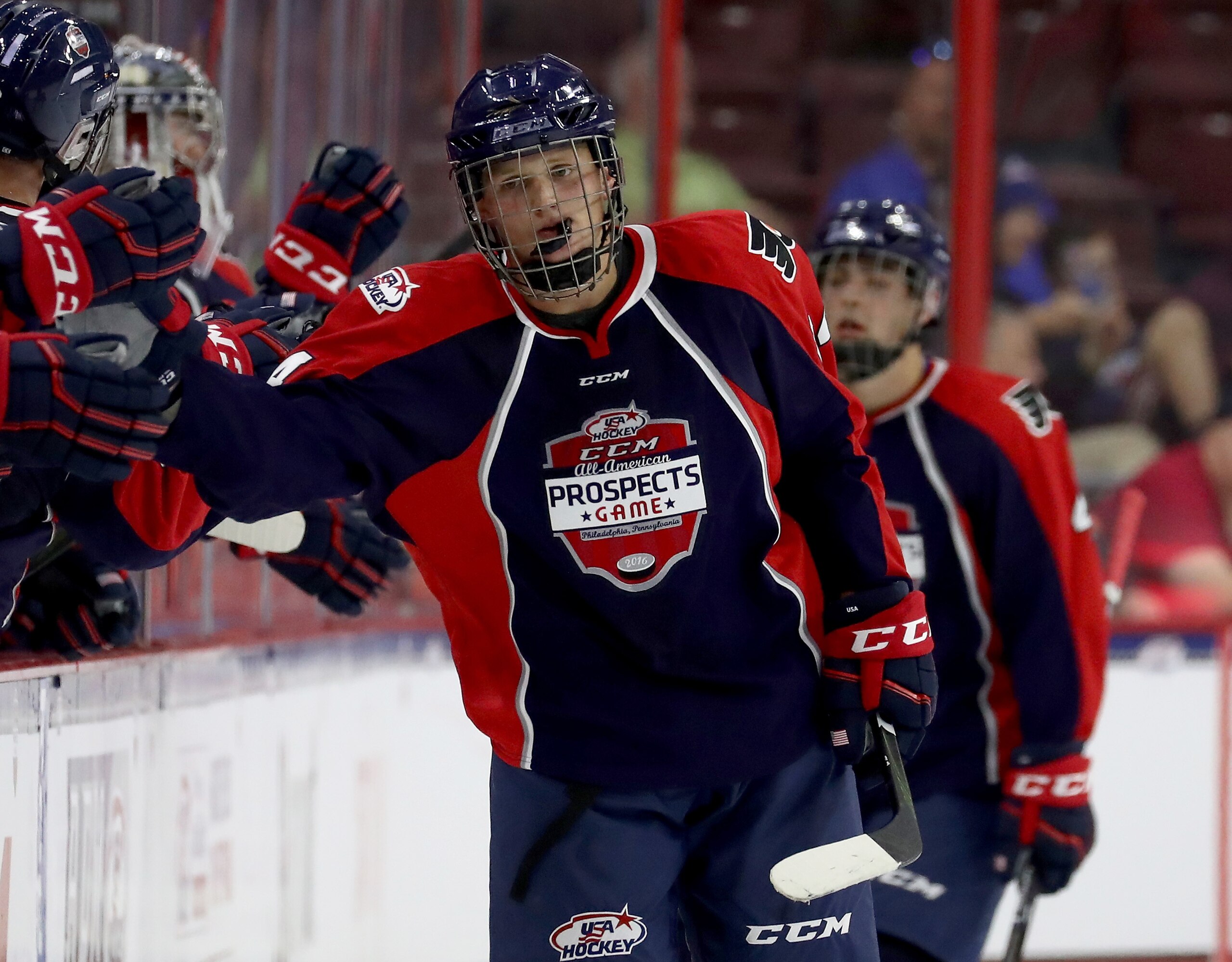
Vital Statistics: Born November 22, 1998; 6'0", 199 pounds.
Junior Team: Green Bay Gamblers, USHL; Eden Prairie, U.S. High School
2016-17 Stats: Green Bay: 24 GP, 13-17-30; Eden Prairie: 25 GP, 21-43-64
Pros: Ranked third by NHL's Central Scouting among North American skaters, Casey Mittelstadt is a highly touted American prospect who won Minnesota's Mr. Hockey award as the top high school player in the state in the 2016-17 season.
Central Scouting says Mittelstadt is "a strong, dynamic skater who has elite quickness both with and without the puck. Demonstrates high-end hockey sense in all areas of the ice—makes decisions with the puck at high speed—has an NHL shot."
"It's his flair for the offensive game, and he's one of those big-play players who can make a difference," Vancouver Canucks general manager Jim Benning told Ben Kuzma of The Province. "He's really good on the power play and carrying the puck through the neutral zone. He sees all the players on the ice and has a good release on his shot, too."
Cons: It seems like there's one prospect every year who takes heat for underperforming in fitness testing at the draft combine. This year, that player was Mittelstadt, who failed to execute a single pull-up and managed just one rep on the bench press, per Mark Scheig of The Hockey Writers.
"I try to work on being a hockey player—I don't try to work on my bench press or pull-ups," Mittelstadt told reporters at the combine, per Kuzma. "I want to be a hockey player, and that's all I train to do.
"I think it's good to be strong—and I think there are things I can get stronger at and work on—but I don't think being able to do a pull-up is going to make me be able to handle the puck better or be a better shooter."
Mittelstadt will get plenty of time in the weight room to work on his strength when he plays at the University of Minnesota next season.
"After two or three years of school, he'll be like a lot of college players who seem mentally and physically prepared by that time to take that jump to pro," Benning said.
Also of concern: Mittelstadt was an early cut from the 2017 U.S. World Junior roster during last summer's evaluation camp. It's no slam dunk for a draft-eligible prospect to make the World Junior team—especially on a roster as strong as the American squad that won gold in Montreal—but it's worth noting.
8. Elias Pettersson, Center
3 of 10
Vital Statistics: Born November 12, 1998; 6'2", 165 pounds.
Junior Team: Timra, Sweden 2
2016-17 Stats: 43 GP, 19-21-40, Playoffs 10 GP, 0-4-4
Pros: "A fast, speedy star, he had a sensational season for Timra in Sweden's second division" said NHL director of European scouting Goran Stubb of forward Elias Pettersson, who produced at nearly a point-per-game pace in a Swedish men's league against much older players last season.
Pettersson is ranked second among European skaters by NHL Central Scouting. His strong season pushed him up many draft lists over the course of the year.
Pettersson's hockey sense is among his best assets, according to Matt Shwayder of the Colorado Avalanche's website. "His biggest gift is that he has an incredible understanding of the game. He sees the game from every angle and he is ahead of you all the time, so he always knows what to do with the puck," former Timra IK head coach Roger Forsberg said in an interview to the newspaper Sundsvall Tidning that was translated by Shwayer. "He finds solutions in the offensive zone that only he can see."
Cons: At 165 pounds, Pettersson needs to fill out out if he is going to realize his dream of following in the footsteps of his countryman Nicklas Backstrom as an elite playmaking center.
General managers might also question Pettersson's ability to finish. He generated plenty of offensive chances as part of a dangerous Swedish team at the 2017 World Junior Championship but ended up with just one assist in six games for the fourth-placed Swedes.

7. Martin Necas, Center
4 of 10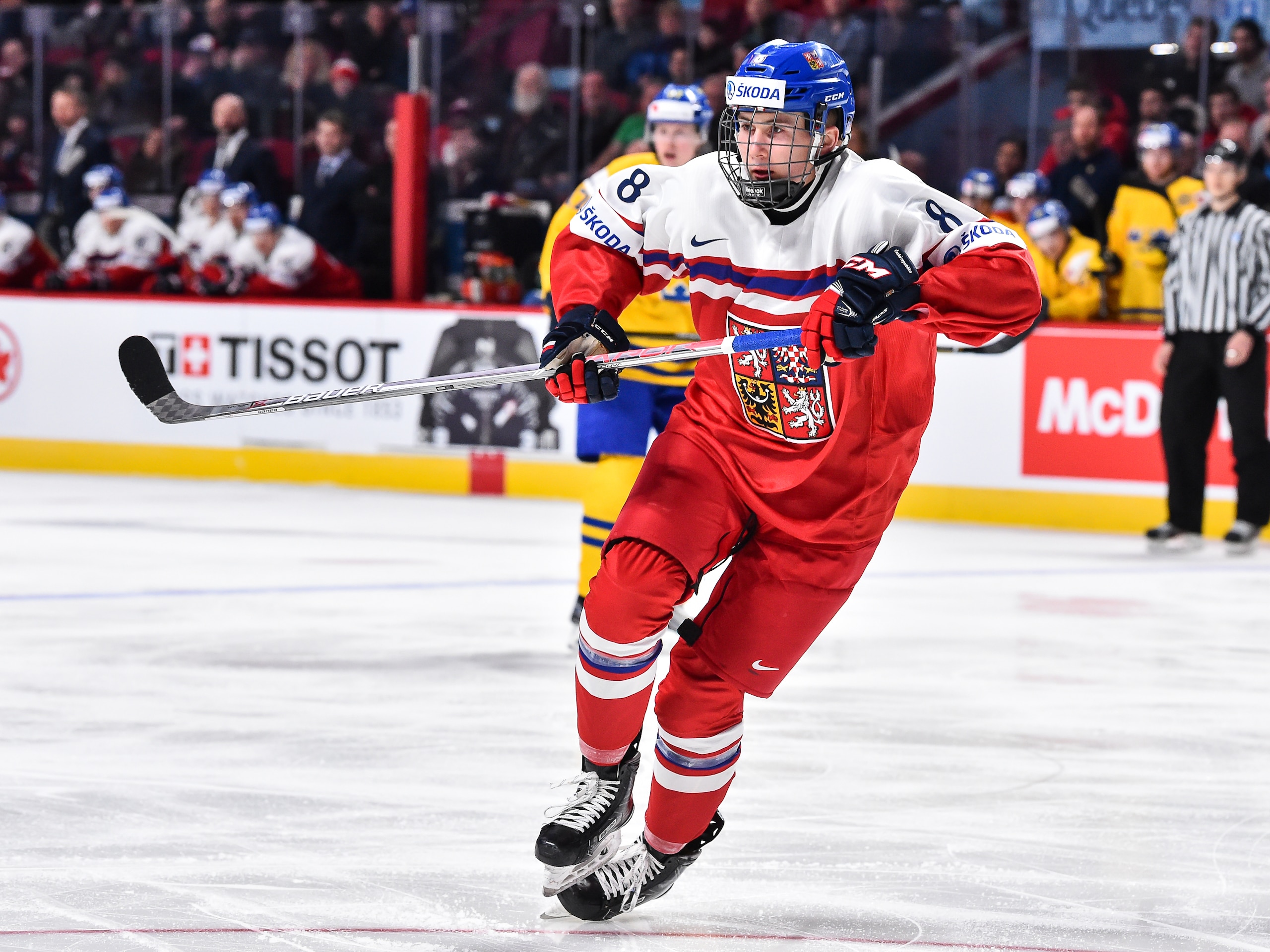
Vital Statistics: Born January 15, 1999; 6'1", 178 pounds.
Junior Team: Brno, Czech League
2016-17 Stats: 41 GP, 7-8-15, Playoffs 10 GP, 0-4-4
Pros: Button is high on the speedy Martin Necas, who compares his playing style to Patrick Kane's and Evgeny Kuznetsov's. He has the dynamic talent to lift fans out of their seats.
At 18, he has already amassed an impressive resume, scoring three points in five games for the Czech team at the 2017 World Junior Championship as well as captaining the gold-medal winning Czech entry in the 2016 Ivan Hlinka Tournament.
At the club level, he's showing himself to be a winner. In 2015-16, he won a league championship as part of HC Kometa Brno's under-18 team, then was part of Brno's first Czech Extraliga-winning group in 2017.
Stubb of NHL Central Scouting called Necas "a very good skater with acceleration and speed. Creates scoring opportunities with his surprising moves and high skill level."
Cons: Central Scouting is more conservative than Button in ranking Necas, listing him fifth among European skaters. As a player who hasn't grown into his body yet, he'll need to get stronger in order to give himself a better chance of winning battles along the boards.
Necas' work without the puck needs to improve before he'll be trustworthy enough to play at the NHL level, particularly if a team hopes to use him down the middle rather than on the wing.
6. Gabe Vilardi, Center
5 of 10
Vital Statistics: Born August 16, 1999; 6'3", 203 pounds.
Junior Team: Windsor Spitfires, OHL
2016-17 Stats: 49 GP, 29-32-61, Playoffs 7 GP, 2-4-6; Memorial Cup 4 GP, 0-7-7
Pros: Gabe Vilardi doesn't turn 18 until August but is already playing in a man's body at 6'3" and over 200 pounds. That strength serves him especially well down low, where he shows tremendous vision as a setup man.
Vilardi was outstanding during the 2017 Memorial Cup, at which he was named to the tournament's all-star team after the host Windsor Spitfires' upset win.
NHL Central Scouting calls Vilardi a "complete offensive threat who demonstrates a great awareness in the offensive zone and a soft touch around the net."
Cons: Vilardi is more of a playmaker than a scorer, so a general manager who's looking for goals from the middle might be tempted to choose one of the other strong centers available in this draft.
Also, Vilardi's skating has been cited as a weakness, but Windsor coach Rocky Thompson told Mike G. Morreale of NHL.com that it was "the most improved area of his game" this season.
5. Miro Heiskanen, Defense
6 of 10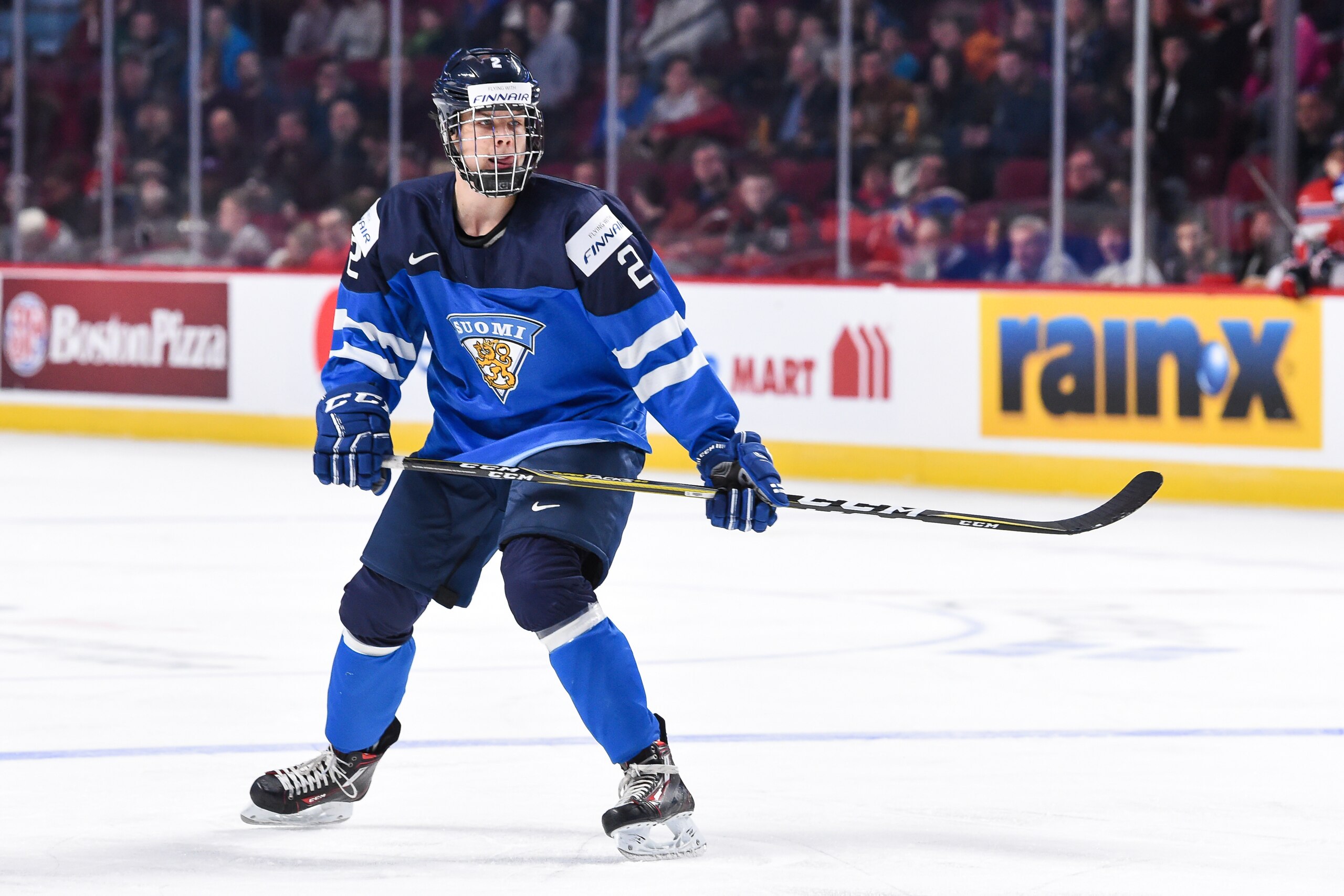
Vital Statistics: Born July 18, 1999; 6'1", 172 pounds.
Junior Team: HIFK, Liiga
2016-17 Stats: 37 GP, 5-5-10, Playoffs 8 GP, 0-3-3
Pros: At the 2016 draft, Finns were all the rage, with forwards Patrik Laine and Jesse Puljujarvi and defenseman Olli Juolevi all picked in the top five.
This year isn't showing the same sort of bounty, but Finland is offering up another excellent defensive prospect in Miro Heiskanen. At just 17, Heiskanen played the entire 2016-17 season on the top pairing of his men's league team, HIFK, which reached the semifinal of the league playoffs before falling to the eventual champion Tappara.
Heiskanen also suited up for Finland at the 2017 World Junior championship at midseason. In April, his 12 points in seven games on a silver medal-winning team were enough to earn him top defenseman honours at the World U18 Championship.
"He is a very smooth skater," Stubb said. "Two-way player with great vision. The most improved player among the international prospects last season."
Cons: It's impressive that Heiskanen was able to hold his own in a men's league as a 17-year-old, but he doesn't turn 18 until three weeks after draft day. His youth could add more waiting time to the typically slow development curve that NHL defensemen usually follow.
As one might expect with someone of his age, Heiskanen needs to fill out his frame—and he's still growing. HockeyDB lists Heiskanen at 5'11" and 174 pounds, which probably dates back to the beginning of the season. His measurement at the draft combine was 6'1" and 172 pounds.
For a general manager in a stable situation who's looking to make long-term improvements to his team, Heiskanen is one of the most tempting packages of potential available in this year's draft.
4. Cody Glass, Center
7 of 10Vital Statistics: Born April 1, 1999; 6'2", 178 pounds.
Junior Team: Portland Winterhawks, WHL
2016-17 Stats: 69 GP, 32-62-94, Playoffs 11 GP, 4-5-9
Pros: A playmaking center who also boasts elite scoring skills, Cody Glass exploded offensively in his second full season with the Portland Winterhawks, going from 27 points in 65 games in 2015-16 to a team-leading 94 points in 69 games in his draft year—tied for seventh in the WHL.
After being left off Team Canada's roster at the U-18 Ivan Hlinka tournament in August of 2016, Glass's strong season in Portland transformed him from an also-ran into a top player to watch. He did make the roster for April's U-18 World Championship, where he chipped in two goals and an assist in three games.
According to Ryan Kennedy of the Hockey News, Glass is drawing comparisons to Mark Scheifele, who had a meteoric rise in his draft year—his only year of major junior. Scheifele ended up being chosen seventh overall by the Winnipeg Jets. After finishing seventh in NHL scoring last season, that turned out to be a steal. Glass could go even higher.
"Glass thinks the game fast, has a high hockey IQ and has great vision combined with soft hands and excellent puck skills," says Peter Harling of scouting service Dobber Prospects.
Cons: With an April birthday, Glass is another young prospect among this year's top group. That could mean he's not as NHL-ready as some of the players he's competing against and that he'll need more time at the junior level to hone his skills and grow into his body.
For teams looking for a quick fix down the middle, Glass might not be their man. But if a general manager is willing to be patient for a couple of seasons—like Kevin Cheveldayoff was with Scheifele—the end result could be outstanding.
3. Cale Makar, Defense
8 of 10Vital Statistics: Born October 30, 1998; 5'11", 187 pounds
Junior Team: Brooks Bandits, AJHL
2016-17 Stats: 54 GP, 24-51-75, Playoffs 13 GP, 5-11-16
Pros: In a draft that's not deep in terms of top-end defenseman, Cale Makar has shown a dynamic playing style that features plenty of offense—good enough to earn him high rankings even though he plays Junior A in the Alberta Junior Hockey League.
Wes Gilbertson of the Calgary Herald reportedt Makar got on to the national radar after a five-point game as a member of Team Canada West at last winter's World Junior A Challenge. That was a tournament record for a defenseman.
"We really wanted to see how he did against elite competition," John Williams of NHL Central Scouting told Aaron Vickers of NHL.com of how Makar's stock improved at that tournament. "We knew he was a good player in the AJHL. We wanted to see him against the best in that tournament against the best players. He was a cut above. He was by far one of the best players there, for sure."
Williams also praised Makar for his hands and his mobility: "It's not just straight-ahead speed—it's being able to create time and space in small areas and he does that exceptionally well."
Cons: Old-school management groups might have concerns about Makar's size, which was a big part of what pushed him down to the eighth round of the WHL draft back in 2013. In today's speed- and skill-oriented NHL, defensemen don't need to be as big as they once were, but it might be tough for a general manager to commit a high pick to a blueliner who doesn't crack 6'0".
Makar will also be fighting against the stigma of being a Junior A player. By choosing the AJHL route, he retained his college eligibility and has committed to UMass Amherst in the fall. Smaller defensemen can derive big benefits from the NCAA program—spending plenty of time in the weight room developing their bodies while playing games only on weekends. Patience will be required for the team that drafts Makar.
One AJHL alumnus who has had no trouble adjusting to the NHL game after a three-year stint of college hockey is Colton Parayko of the St. Louis Blues. Never ranked by NHL Central Scouting, Parayko was drafted 86th overall at age 19 as a member of the Fort McMurray Oil Barons, then went on to the University of Alaska Fairbanks.
Parayko was listed at 6'3" but a slight 181 pounds when he was drafted, according to Hockey's Future. Now, he's a 6'5", 226-pound giant who stacks up among the NHL's best young defensemen after suiting up for Team North America at last fall's World Cup of Hockey.
At No. 3, Button has ranked Makar higher than any other outlets; NHL Central Scouting has him ranked ninth among North American skaters, while TSN's Bob McKenzie listed him seventh in his April rankings.
2. Nico Hischier, Center
9 of 10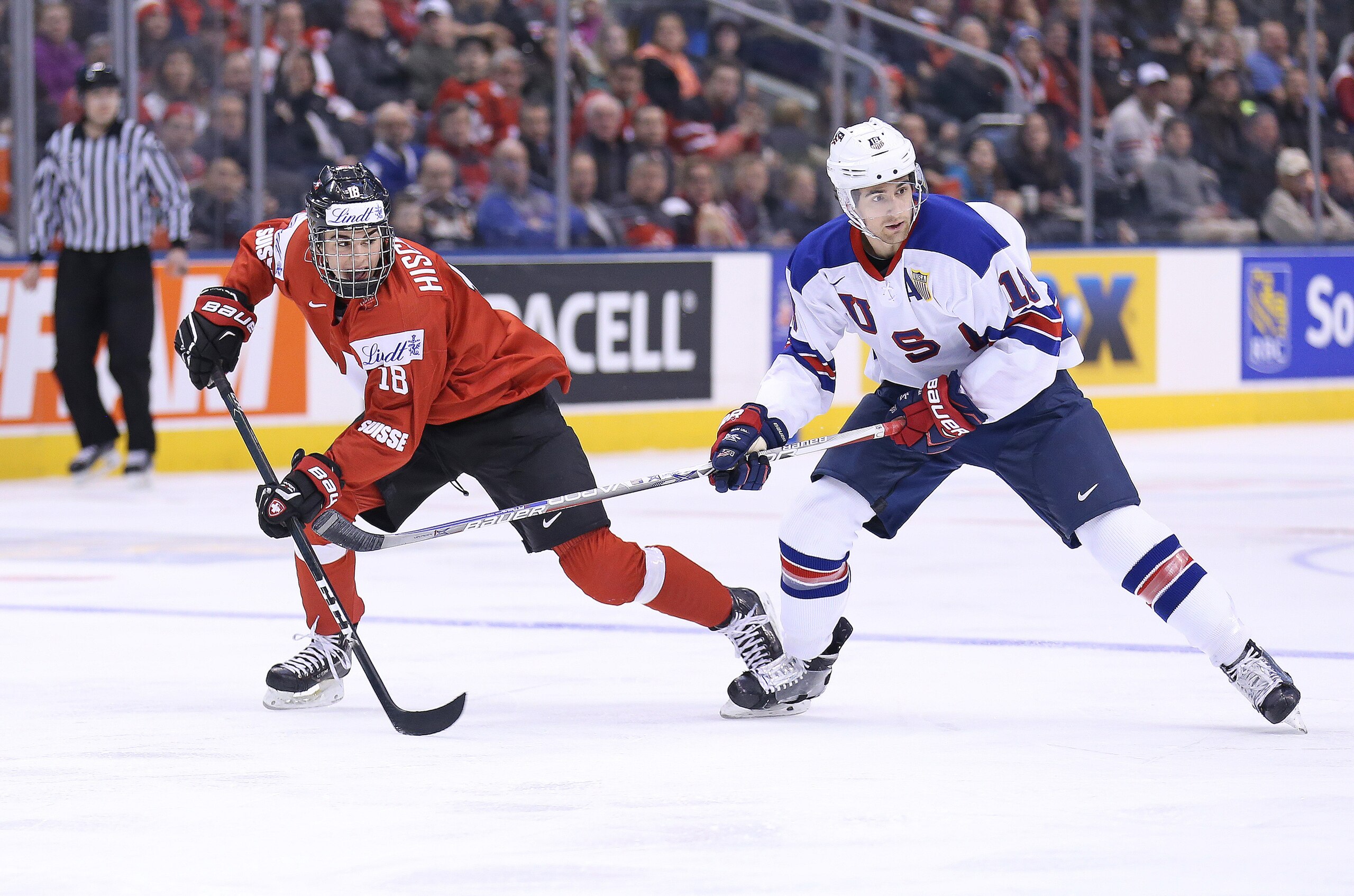
Vital Statistics: Born January 4, 1999; 6'2", 179 pounds.
Junior Team: Halifax Mooseheads, QMJHL
2016-17 Stats: 57 GP, 38-48-86, Playoffs 6 GP, 3-4-7
Pros: With the top-ranked Nolan Patrick sidelined with injuries for much of the 2016-17 season, Swiss center Nico Hischier took full advantage of the opportunity to show his stuff. The unflappable Hischier made his pro debut in his homeland with SC Bern in 2015 but chose to come to Canada to play major junior in his draft year, thinking it gave him a better opportunity to showcase his skills.
Hischier's 86 points with the Halifax Mooseheads were good enough to rank him second on his team and 10th overall in the QMJHL, where he was named the league's rookie of the year.
"Hischier is definitely worth the price of admission," said NHL Central Scouting director Dan Marr. "He has a high skill level, but what's most impressive is the way he competes, his drive and work ethic."
Ottawa Senators bench boss Guy Boucher is a stickler for the defensive side of the game and liked what he saw from Hischier when he coached him in Switzerland. "Great vision, great poise," Boucher told Dhiren Mahiban of the New York Times in April. "But he’s always in the right place defensively too, which puts him ahead of a lot of young guys—they rarely have both sides of the ice figured out, especially at that age."
Cons: Hischier has good height, but going into the draft, he's 20 pounds lighter than the man he's competing with for the first-overall pick.
The Swiss is also fighting the prejudices that come along with his heritage. His highest-drafted compatriot in NHL history, according to Arpon Basu of NHL.com, was Nino Niederreiter, who was chosen fifth overall in 2010, so Hischier's elite ranking is uncharted territory.
After just six seasons and 389 games, Niederreiter is already the third-highest-scoring Swiss-born player of all time according to QuantHockey, with 176 points. He's ranked behind two defensemen—veteran Mark Streit and Nashville Predators anchor Roman Josi.
The Preds have another promising Swiss forward in their system too. Chosen 11th overall in 2014, Kevin Fiala showed great hands in his first full NHL season and looked like he was going to be a difference-maker in the playoffs before he suffered a broken leg in the first game of Nashville's second-round series against the St. Louis Blues.
Hischier's projected role as a top-line center will make him even more effective than a sniper like Fiala. He has shown plenty of skill and tenacity in the run-up to the draft. Will a general manager be willing to bet his team's top pick on Hischier to break through to become the NHL's first true Swiss superstar?
1. Nolan Patrick, Center
10 of 10
Vital Statistics: Born September 19, 1988; 6'2", 199 pounds.
Junior Team: Brandon Wheat Kings, WHL
2016-17 Stats: 33 GP, 20-26-46, no playoffs
Pros: Nolan Patrick is one of the oldest players in this year's draft—he was born just four days too late to be a member of the class of 2016. His maturity shows in his build. He's a big, strong center with a focus on two-way play and great sports bloodlines.
Nolan's uncle, James Patrick, was drafted ninth overall as a defenseman in 1981 and had a 1,240-game NHL career while his father, Steve, a right-winger, was chosen 20th in 1980 and played 250 NHL games over eight seasons.
Patrick's not on the same level as Connor McDavid and Auston Matthews were, but he's expected to play a similar role in the NHL—a big, skilled center who will anchor a team for years to come.
Cons: Injuries limited Patrick to just 33 games in 2016-17 and prevented him from participating in a high-profile showcase at the 2017 World Junior Championship. After being named WHL playoff MVP in 2015-16 as the Brandon Wheat Kings won the league title and advanced to the Memorial Cup, Patrick was unavailable for the 2017 playoffs, and Brandon got knocked out in the first round.
At the draft combine, Patrick told the Associated Press (via Sportsnet) that his injury issues dragged on because he'd suffered a double hernia toward the end of the 2015-16 season, which had been misdiagnosed.
"I've got a little ways to go before I'm 100 per cent healthy," Patrick said. "And after a good summer of training, I think I'll get there."
Despite Patrick's skill set and his impressive physical gifts, a bumpy injury history might be enough to make a risk-averse general manager consider a safer option.


.jpg?w=2560 "Grading WWE Raw 🔠")




.jpg?w=2560 "Viral Rams Coach Vid 🖕")

